DOWNLOAD REPORT
The interactive case study session of the UNTOLD Europe Workshop (Brussels, 21 October 2025) translated critical discussions on colonial legacies, migration narratives, gender, and human rights into comparative policy analysis. Participants worked in four groups examining labour migration to Greece, the EU Migration Pact, the EU–Tunisia Memorandum, and Spain–Morocco circular migration schemes. Across cases, recurring patterns emerged: securitization over protection, racialized labour hierarchies, gendered recruitment structures, and externalisation practices rooted in asymmetrical power relations. By combining structural analysis with creative reframing, the session encouraged participants to challenge dominant narratives and articulate rights-based alternatives. The findings underscore how colonial continuities remain embedded in contemporary migration governance—and highlight the need for dignity-centred, inclusive policy approaches across the Euro-Mediterranean space.
Case Study Session Overview
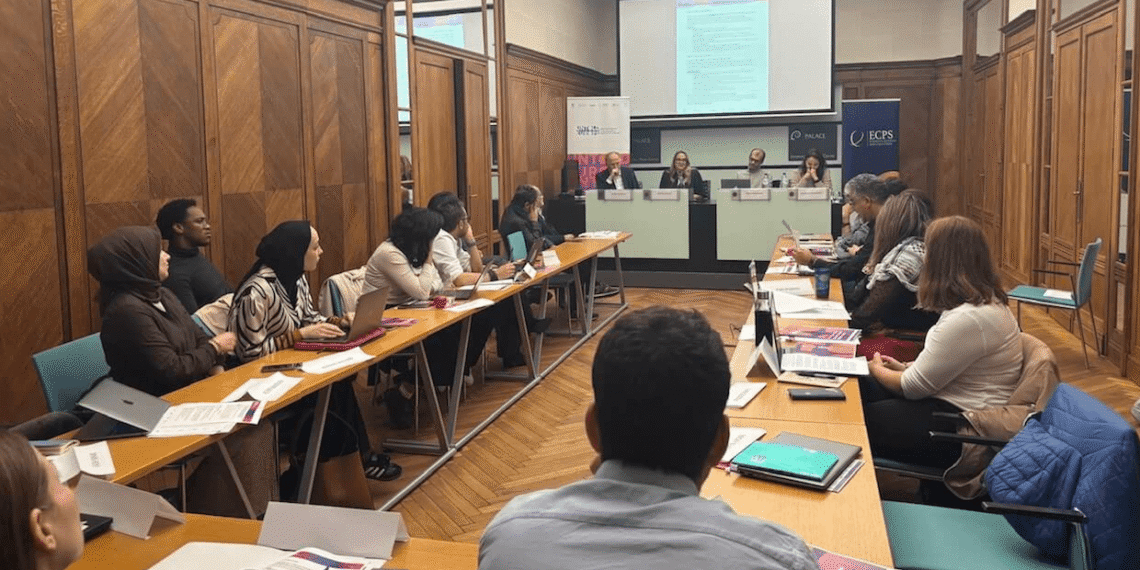
The case study session, held during the UNTOLD Europe Workshop on Migration Narratives on 21 October 2025 in Brussels, constituted a central interactive component of the workshop and was designed to translate the workshop’s conceptual discussions on colonial legacies, migration narratives, gender, and human rights into concrete and comparative analysis.
Participants were divided into four small working groups of 5-person, each focusing on a distinct case reflecting contemporary forms of migration governance and externalisation in the Euro-Mediterranean context. The session combined collective analysis, critical reflection, and creative reframing, encouraging participants to interrogate how historical power asymmetries and colonial continuities remain embedded in current migration frameworks.
Objectives of the Case Study Session
The case study session pursued three interrelated objectives:
– To analyse how colonial legacies, racialised hierarchies, and unequal power relations shape present-day migration policies and narratives;
– To examine the implications of these frameworks for labour rights, gender equality, and human rights;
– To encourage participants to reframe dominant migration narratives and develop alternative, rights-based perspectives.
Structure and Methodology
The session was conducted in two stages. In the first stage, groups familiarised themselves with their assigned case and identified key narrative frames, policy mechanisms, and governance logics. In the second stage, groups shifted from analysis to reflection and creative reframing. Each group concluded by formulating key observations and insights, which were later shared in the closing plenary.
Case Study Groups and Thematic Focus
Group 1: Labour Migration from Egypt and Bangladesh to Greece
This group examined labour migration pathways from Egypt and Bangladesh to Greece, focusing on temporary and irregular labour regimes in sectors such as agriculture and construction. Discussions highlighted how colonial and postcolonial labour hierarchies shape recruitment practices, legal precarity, and working conditions. Particular attention was paid to racialisation, the commodification of migrant labour, and limited access to rights and legal protection.
Group 2: The EU Migration Pact
This group analysed the EU Migration Pact as a framework reshaping migration governance across the European Union. Discussions focused on securitisation, border procedures, and differentiated treatment of migrants, as well as the broader narrative implications of managing migration primarily through control-oriented approaches.
Group 3: The EU–Tunisia Memorandum of Understanding
This group explored the EU–Tunisia Memorandum of Understanding as an example of migration externalisation. The analysis centred on asymmetrical power relations, the delegation of border management, and the implications for accountability and human rights protection.
Group 4: Spain–Morocco Circular Migration
This group focused on Spain–Morocco circular migration schemes, particularly in seasonal agricultural labour. Discussions examined how controlled mobility regimes reproduce colonial patterns of labour extraction, gendered recruitment, and structural dependency.
Conclusion
Across all four case studies, participants identified recurring themes, including the persistence of colonial and racialised hierarchies, the prioritisation of labour and security concerns over rights, and the gendered dimensions of migration governance. The session enabled participants to connect theoretical discussions with concrete cases and to reflect collectively on alternative narratives grounded in dignity and inclusion.
The case study session underscored the value of participatory and comparative analysis in understanding contemporary migration dynamics. By engaging with diverse cases, participants contributed to a shared reflection on how migration narratives can be critically examined and reimagined beyond colonial continuities.