
In this interview with the ECPS, Professor Werner Pascha—Emeritus Professor of East Asian Economic Studies—examines Japan’s evolving political economy amid electoral volatility, fiscal strain, and geopolitical uncertainty. Reflecting on the LDP’s supermajority, he cautions against reading the outcome as systemic rupture, arguing instead for “continuity” and warning of a possible “popularity bubble.” Professor Pascha also clarifies how populism operates differently in Japan, where elite–people antagonism is “very rare,” and highlights the persistence of technocratic governance, noting that “the technocratic model remains very much alive.” Framing Japan’s approach as “strategic pragmatism,” he argues that Western democracies should look beyond “short-term electoral cycles” and take East Asia seriously as “highly instructive.”
Interview by Selcuk Gultasli
In a wide-ranging interview with the European Center for Populism Studies (ECPS), Professor Werner Pascha—Emeritus Professor of East Asian Economic Studies (Japan and Korea) and Associate Member of the Institute of East Asian Studies (IN-EAST) at the University of Duisburg-Essen—offers a nuanced assessment of Japan’s contemporary political trajectory under Prime Minister Sanae Takaichi. At a time when many advanced democracies are grappling with populist insurgencies, fiscal strain, and geopolitical fragmentation, Professor Pascha suggests that Japan’s experience—particularly under Takaichi’s unexpectedly strong mandate—deserves closer scrutiny: “we should not only look at Europe or the US, but also keep East Asia in mind, as it is highly instructive.”
PM Takaichi’s landslide electoral victory, which delivered a two-thirds supermajority for the Liberal Democratic Party (LDP) and its coalition partner, has dramatically consolidated executive authority and provided her government with an exceptional legislative cushion. As Japan’s first female prime minister, she combines a programmatic ideological profile with a distinctive leadership style that voters perceive as both “diligent and tough-speaking.” Her rapid ascent and decisive electoral endorsement have reshaped the political landscape, strengthening conservative forces and enabling her to advance an ambitious policy agenda. This includes large-scale fiscal stimulus, proposed consumption-tax cuts, a renewed industrial strategy focused on technological innovation and artificial intelligence, and a more assertive security posture in East Asia. Her leadership has also been marked by a willingness to take politically risky positions—particularly regarding Taiwan and China—that have resonated domestically while heightening regional tensions.
At the same time, PM Takaichi’s policy agenda has raised significant concerns about fiscal sustainability and market confidence. Japan’s already elevated public debt—among the highest in the developed world—has made investors sensitive to expansionary fiscal measures, and early market reactions to her proposals have underscored the tension between electoral mandates and macroeconomic credibility. Nevertheless, her overwhelming electoral mandate may also provide political space for policy recalibration and more cautious implementation, a dynamic that Professor Pascha identifies as characteristic of Japan’s long-standing pattern of governance.
Crucially, Professor Pascha cautions against interpreting Sanae Takaichi’s rise as evidence of systemic transformation. Rather than signaling a structural rupture in Japan’s political economy, he emphasizes continuity: “I would regard it as continuity. I do not really see a major change developing in Japan.” Even the scale of the LDP’s victory, he suggests, may partly reflect “a kind of popularity bubble” surrounding Takaichi rather than a durable realignment.
Importantly, Professor Pascha resists simplistic narratives about Japan’s supposed technocratic decline. Despite electoral promises and fiscal pressures, “the technocratic model remains very much alive.” While no longer operating in the rigid form of the postwar developmental state, policymaking continues to rest on strategic planning—particularly in areas such as artificial intelligence and economic security.
This continuity is best captured, in Professor Pascha’s view, by the concept of “strategic pragmatism”: the capacity to pursue long-term goals while remaining adaptive in implementation. Japan’s 2022 economic security legislation, he observes, reflects a broader and longstanding logic dating back to the 1980 doctrine of “comprehensive security.” The pattern is strikingly consistent: Japan adapts without abandoning strategic orientation.
This framework helps explain how Japan can accommodate electoral responsiveness, conservative policy shifts, and technocratic governance without sacrificing institutional stability. It also highlights the broader relevance of Japan’s experience for Western democracies facing shorter electoral cycles and increasingly volatile political environments. As Professor Pascha suggests, Japan’s model of calibrated, long-term political management—now embodied in Takaichi’s leadership—offers an instructive counterpoint to the reactive and polarized dynamics visible across Europe and North America. In his view, “Western countries might do well to study this concept more closely and to look beyond short-term electoral cycles.” Japan’s political economy, often underestimated, may thus provide a model of long-term calibration under conditions of uncertainty.
Here is the edited version of our interview with Professor Werner Pascha, revised slightly to improve clarity and flow.
East Asia Is Highly Instructive for Western Democracies
Professor Werner Pascha, thank you very much for joining our interview series. Let me start right away the first question: From a political-economy perspective, do the recent election results suggest a structural transformation in Japanese politics, or are we witnessing an adaptive recalibration of long-standing LDP dominance? How should we distinguish between systemic change and elite-managed continuity in Japan’s case?
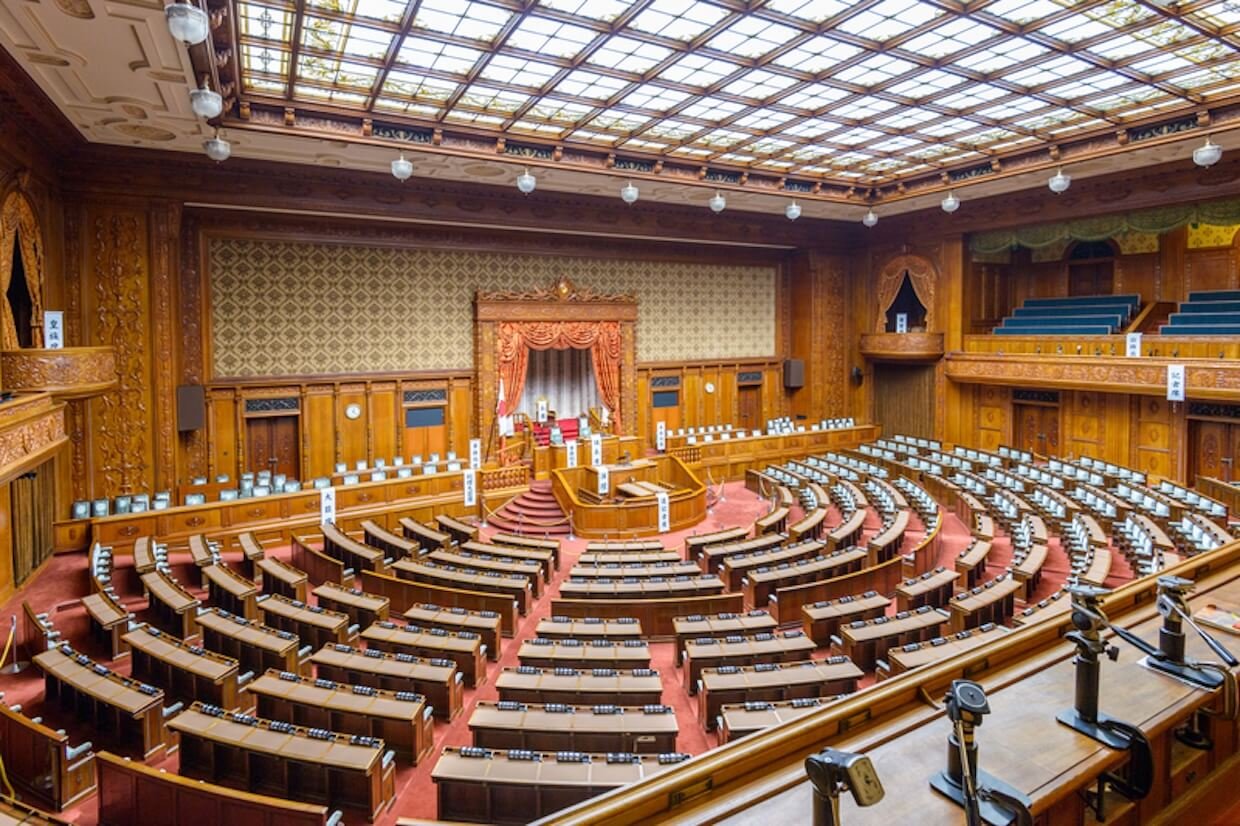
Professor Werner Pascha: First of all, thank you very much for having me. We are speaking three days after this spectacular election result in Japan, in which the LDP earned a supermajority—two-thirds of the seats in Parliament. I find this very interesting, particularly at a time of significant economic and geopolitical challenges. In an established democracy, for the leading party to secure two-thirds of the vote raises many important questions and lessons for other advanced economies. So we should not only look at Europe or the US, but also keep East Asia in mind, as it is highly instructive.
Now, is this continuity or systemic change? I would regard it as continuity. I do not really see a major change developing in Japan. Why? If we look back at recent elections, there have been quite a few. We had the 2024 general election for the lower house, and in 2025, the upper house elections. So there are several elections to refer to.
The results have been shifting, so there is no clear stability. If there were a systemic change, I would expect something to develop year after year, culminating in a breakthrough of this kind. Instead, this appears to be a somewhat surprising result. There are even voices suggesting that it may represent a kind of popularity bubble surrounding Prime Minister Takaichi.
So while this is an important event, the next election may already look different, depending on the extent to which Takaichi is able to meet the enormous expectations currently placed upon her in Japan.
National Security Is a Long-Term Position, Not Populism
To what extent can the LDP’s current policy mix—large-scale fiscal stimulus combined with nationalist security rhetoric—be analytically described as populist rather than pragmatic? Where would you draw the line between crisis-driven redistribution and populist economic signaling?
Professor Werner Pascha: First of all, I should perhaps explain what I understand by populism. I think there are three important dimensions. The first is a kind of ideology that posits the elite on the one hand and the people—the “true” people—on the other, in whose name policy should be made. The second is a performative style of politics, often involving assertive positioning by politicians. The third consists of rather simplistic ideas about how to solve complex issues.
Taking this into account, if we look at national security, this has long been a view held in Japan. I would therefore not argue that this is populist; rather, it reflects a long-term position that has consistently been maintained.
As regards economic policymaking, the issue is somewhat more difficult. The government’s slogan of pursuing “a proactive and responsible fiscal policy” is a very tricky formulation. It almost appears too simplistic, in my view, because achieving both goals at the same time—being proactive, given the enormous public debt Japan already has, while also being responsible and not overdoing it—is no easy matter.
On the one hand, one might say that Japanese governments under LDP leadership have pursued this approach for many years, suggesting continuity. On the other hand, trying to win an election with that slogan, without a really clear-cut understanding of what it implies, sounds somewhat populist.
Elite vs. ‘True People’ Framing Is Rare in Japan
How does Japan’s brand of populism—if we can call it that way—differ from European or American populism in terms of its relationship to technocracy, bureaucracy, and expertise?
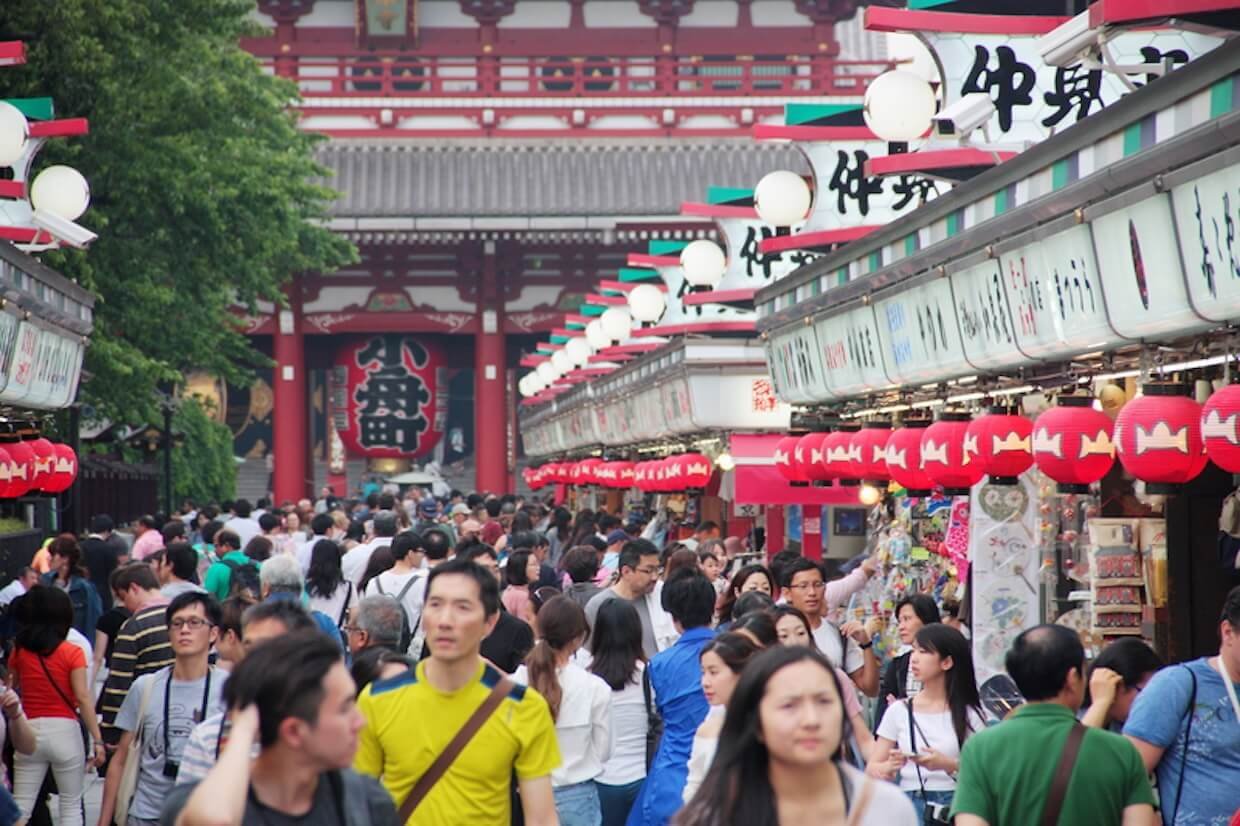
Professor Werner Pascha: Perhaps it is helpful to return to the earlier distinction—the three aspects of populism I mentioned before. Regarding the contrast between the elite and the “true people,” this is very rare in Japan. We do not often encounter this kind of populist framing, except perhaps to a limited extent on the fringes. Among the more established parties, it is quite uncommon. I think the reason is that Japanese politics and society are not particularly confrontational, and politicians would not gain many votes by being highly controversial. That style is generally not appreciated. People do not behave that way in their everyday lives, and they do not wish to see it reflected in politics.
With respect to the other two dimensions, I do not see major differences compared to the West. In terms of personalities and political performance, we do have some unusual figures—you might describe them as strange or simply interesting—but this is true in other countries as well. Such personalities can be found on the fringes, but also within the political establishment. For example, former Prime Minister Koizumi was known for his somewhat flamboyant hairstyle and was sometimes referred to as “the Lion.” Similar phenomena can be observed in many parties.
As for simplistic views, I also do not think Japan differs significantly from other countries. So, while there is a clear distinction along the first dimension, beyond that Japan is not particularly unique—although that first aspect remains noteworthy.
Economic Factors Alone Do Not Explain Japan’s Resilience
What explains the relative resilience of Japan’s political institutions against anti-system mobilization, despite rising inequality, precarity, and demographic stress? Is this resilience cultural, institutional, or economic in nature?
Professor Werner Pascha: Economic—no. Today, the Japanese economy is not fundamentally different from those of other countries in terms of the macroeconomic and socio-economic challenges it faces. Its underlying mechanisms do not really support the idea that this is the decisive factor.
As for institutional and cultural explanations, I tend to view culture as part of institutions in a broader sense. My understanding of institutions is that they consist of patterns of behavior and mutual expectations among actors that create certain regularities. These can be formal institutions, such as Parliament, or informal ones, such as culture.
Regarding formal institutions, I would argue that the differences compared to other countries are not particularly striking. Take the electoral system as an example. Japan has a mixed system that combines proportional representation with single-member constituencies. If anything, it falls somewhere in the middle of the spectrum of arrangements found in advanced economies.
What remains, then, is culture in the sense of informal institutions. Here, I would again emphasize the lack of a confrontational style. This is also visible in public life. Large-scale demonstrations are rare, and when they do occur, they usually involve very clearly defined groups. They have never really spread to the broader population. This kind of sustained pressure from the streets is simply not present in Japanese politics, and I think that is a very important factor.

Gender Was Not the Decisive Factor
Japan has elected its first female prime minister. Beyond symbolic representation, does this shift meaningfully alter power relations within the LDP or Japanese political institutions more broadly?
Professor Werner Pascha: Frankly, no, I do not think so. I do not believe that Ms. Takaichi’s election was based on her gender. She has not emphasized it, and in fact, some of her policies run counter to what might be considered feminist ideas. In many respects, she is quite traditional.
What people seem to appreciate about her is her image as a hard worker. She is characterized as diligent and also tough-speaking. In that sense, she brings a certain freshness to what has often been described as a rather stale environment of blue-suited older men in Japanese politics. So yes, gender may play a role, but it is more about style than gender itself.
If anything, her election conveys the message that being hardworking and capable of delivering results can lead to success. Beyond that, however, I do not see any major implications.
Do you see Prime Minister Takaichi’s leadership style as substantively programmatic, or does it rely more on personalized authority and symbolic politics? How does gender intersect with this dynamic?
Professor Werner Pascha: As I mentioned regarding gender, I do not think it has a strong implication in this context.Her leadership style is programmatic in the sense that she has held her views for many years. If you look at her career, it has experienced ups and downs—at times she has been more successful, at others less so. For example, during the most recent government under the former prime minister, she declined a major party or cabinet position. So her approach is programmatic, and I think most people believe that what she says genuinely reflects her own convictions. Of course, that does not mean she cannot also be very strategic, but this would be the main characterization.
Cabinet Appointments Reflect Merit, Not Symbolism
Could the prominence of a female conservative leader paradoxically reinforce rather than disrupt Japan’s deeply gendered political economy?
Professor Werner Pascha: No, I do not think so, because the reasons why Ms. Takaichi is in office are not related to her being female. The way she is conducting her policies, to the extent that we can already observe, also supports this view.
One aspect to consider is the composition of the cabinet, particularly the role of female ministers. She has appointed only two women, although before the election she indicated that she would look to the example of Northern European states and the number of women in their cabinets. Nevertheless, she appointed only two.
After the election, she explained that she wants to uphold a merit-based system, meaning that positions should be given to those who are genuinely qualified. To some extent, this is reflected in her choices. The more prominent of the two female cabinet members is Ms. Satsuki Katayama, who serves as finance minister—a highly powerful position in Japan. She has the appropriate background, having been a career bureaucrat in the Ministry of Finance for many years. She even worked in the Budget Bureau, which is considered the most powerful department within the ministry. She is clearly an expert and knows what she is talking about. In that sense, this approach reflects the merit-based system that Ms. Takaichi seeks to follow.
A Decisive Victory as Political Cushion
Japan’s post-election fiscal agenda has unsettled markets. How do you assess the tension between electoral mandates and market discipline in Japan today? Is Japan approaching a critical limit in reconciling democratic responsiveness with macroeconomic credibility?
Professor Werner Pascha: Yes, it is certainly a critical situation. So far, many observers have been surprised that fiscal stimulus measures in Japan have been so significant without triggering a market backlash. Japan’s public debt is enormous—around 250% of GDP.
Now, however, we may be seeing the limits of this approach. After Ms. Takaichi announced in late 2025 that she would lower taxes—an important electoral pledge—markets reacted strongly. Long-term interest rates rose, and the exchange rate declined further. This should be understood as a warning signal.
Given the scale of public debt, rising interest rates—reflecting market distrust and doubts about the sustainability of government policy—would significantly increase interest payments. That, in turn, would leave the government with very limited fiscal room for maneuver. In this sense, the market reaction clearly serves as a cautionary sign.
On the other hand, once it became clear how the election would unfold, interest rates eased somewhat and the exchange rate stabilized. Despite the remarkable electoral victory, markets did not appear to fear a turn toward outright fiscal irresponsibility.
Why might that be? It is always difficult to interpret market expectations, but one possible explanation is that the decisive nature of the victory provides the government with a substantial cushion of public support. This may reduce the need to adopt overly expansionary or politically risky policies in the near term, allowing for a more cautious course. Whether this expectation proves justified remains to be seen.
Demographic Pressure Drives Fiscal Strain
Given Japan’s debt levels, aging population, and productivity constraints, are current redistributive promises economically sustainable—or politically unavoidable?
Professor Werner Pascha: To some extent, I think the promises being made are politically unavoidable.
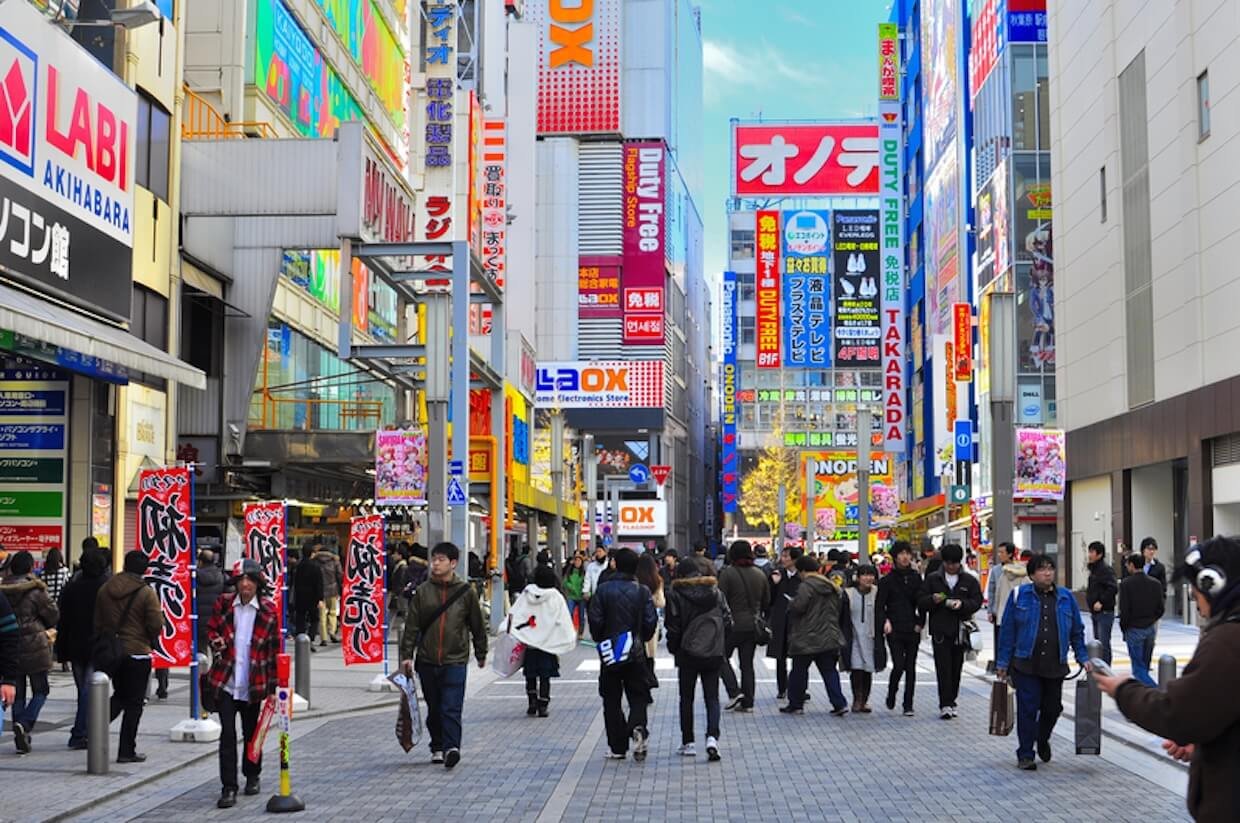
In the past, Japan was often described as a middle-class society in which everyone could enjoy a decent standard of living. However, under the impact of globalization and other structural changes, the Japanese system has evolved. Poverty has become more prevalent, including old-age poverty. It may not be highly visible—if you walk through Tokyo, you may not immediately notice it—but it exists, and old-age poverty in particular is a serious issue.
At the same time, demographic aging is driving substantial increases in healthcare and pension costs. In this sense, efforts to address these challenges are difficult to avoid.
Nevertheless, there are clear limits. How to reconcile these commitments with the promise of a responsible and proactive fiscal policy, as mentioned earlier, remains an open question. So far, no concrete policy framework has been presented. I think Mr. Minoru Kiuchi (Minister of State for Economic and Fiscal Policy) intends to establish a new council to discuss the issue, but that may already be a warning sign. If there is a need to set up a council, it suggests that a very clear-cut strategy is not yet in place.
No Fundamental Shift Toward Short-Termism
Is Japan drifting away from its historically technocratic model of economic governance toward a more voter-responsive, short-term policy framework? What risks and opportunities does this shift entail?
Professor Werner Pascha: I am not entirely convinced that Japan is undergoing a fundamental shift toward more short-term, voter-responsive policymaking. Of course, the country faces serious challenges, and the government must respond. During election periods, promises are inevitably made. However, I would not characterize this as a structural transformation. Such dynamics have always accompanied elections, and when challenges intensify, the number of promises tends to increase. This may reflect correlation rather than a deeper change.
In my view, the technocratic model remains very much alive—albeit no longer in the more rigid form seen in the 1950s and 1960s, when the Ministry of Economy (then MITI, now METI), together with the Bank of Japan, largely shaped the direction of major corporate investment. That era has clearly passed.
Nevertheless, the ambition to guide the economy forward continues to rest on technocratic foundations. In recent years, there has even been renewed interest in a new style of industrial policy, and Japan appears inclined to pursue this course. A key term in this context is artificial intelligence. Japan possesses favorable conditions for supporting AI and its industrial base, and the government seems prepared to move in this direction.
That would be my assessment. There are already signs of a technocratic strategy aimed at advancing this field through a proactive industrial policy.
From Strategic Ambiguity to Clear Signaling
Recent hardline rhetoric toward China has played well domestically. From a political-economy perspective, how risky is this strategy for Japan’s trade-dependent economy?
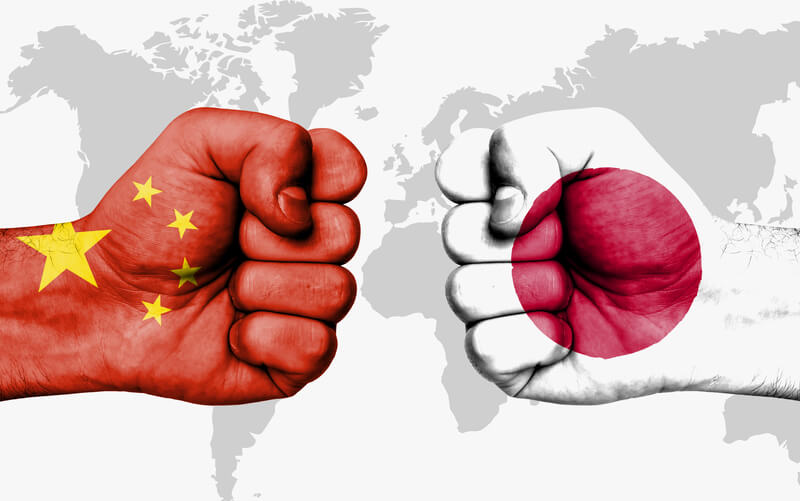
Professor Werner Pascha: It is certainly risky, but the broader context itself is risky. We are living in very difficult times, characterized by geopolitical tensions involving the US, China, Russia—you name it. In such an environment, any course of action carries inherent risks.
Japan’s specific position is shaped by the peace clause in its constitution, the well-known Article 9, which stipulates that Japan maintains only self-defense forces and, beyond that, should not possess armed forces. Since 2014, under the Shinzo Abe government, this has been reinterpreted to allow for collective self-defense. But the scope of that concept has remained subject to debate.
In the autumn, Ms. Takaichi clarified that this interpretation could entail Japan supporting Taiwan if it were subjected to aggression by China. In many respects, this aligns with prevailing views within the Japanese political environment, yet her statement nevertheless provoked considerable discussion.
Was it a mistake? I do not necessarily think so. By clarifying Japan’s potential stance, it signals to other actors in the region what the stakes would be in the event of a Taiwan contingency, thereby increasing the costs for any potential aggressor. Under certain circumstances, strategic ambiguity can be advantageous. However, given the current geopolitical climate and the specific constraints of Article 9, raising the costs of aggression in East Asia may serve as a deterrent. This appears to be the government’s underlying intention.
Foreign Policy Was Not a Top Voter Priority
How should we interpret Japan’s current China policy: as strategic signaling shaped by electoral incentives, or as a durable reorientation driven by structural geopolitical change?
Professor Werner Pascha: As you may have inferred from my earlier remarks, I would lean toward the latter interpretation. Regarding the electoral dimension, an opinion poll conducted before the election asked voters which issues mattered most to them. Around 46%, if I recall correctly, cited the economic and social situation—particularly high inflation and related concerns. Only about 16% mentioned international matters, such as peace and security in the Western Pacific.
This suggests that foreign policy issues were not at the forefront of voters’ minds. Therefore, such statements were likely not primarily driven by electoral considerations—unless one interprets them as a simple miscalculation. Some observers have proposed that explanation, although I do not find it particularly convincing.
I do not believe that electoral incentives were foremost in Ms. Takaichi’s thinking. If anything, her stance may have worked in her favor not because of the China issue itself, but because it reinforced the perception that she is outspoken and clear about her intentions. This sets her apart from more traditional politicians, and that clarity appears to have resonated with many voters in this election.
The LDP’s Strategy of Absorbing Fringe Agendas
To what extent does the rise of parties like Sanseito—and movements such as Reiwa Shinsengumi on the opposite flank—indicate latent populist demand that the LDP is strategically absorbing?
Professor Werner Pascha: Yes, I think that is a very valid point. Parties on the fringes are indeed more populist than the mainstream parties. This is particularly evident in the simplicity of their ideas—again, if we return to the question of what constitutes populism.
On the right wing, there are very simple proposals targeting the role of foreigners in Japan, arguing that their presence should be reduced. On the left wing, there are equally simplistic claims that increasing income for poorer people will resolve broader economic problems. So we do see populist notions on both fringes.
At the same time, the governing LDP has been quite successful in absorbing some of these tendencies. The party has adopted elements of an anti-foreigner agenda—for example, proposing closer monitoring and regulation of foreign purchases of Japanese real estate. In that sense, it is taking up certain issues raised by the right. On the left, promises such as lowering taxes, particularly for lower-income groups, have also been part of its platform. This strategy appears to have worked, as reflected in the election results.
Both the left- and right-wing parties you mentioned lost votes considerably; in some cases, their support was reduced by half compared to previous elections. There were also specific factors at play. For instance, the somewhat flamboyant chairman of the left-wing Reiwa Shinsengumi fell seriously ill in January, which may partly explain the party’s weaker performance.
More generally, however, your point stands. It is also worth noting that new parties continue to emerge. In this election, a new party called Team Mirai—“Mirai” meaning “future”—won almost four million votes. It promotes artificial intelligence and advocates a more participatory political style. I am sure the LDP will respond to this development in one way or another.
A Dual Strategy: Preserve Washington, Diversify Partnerships

How has the return of Donald Trump altered Japan’s strategic calculus regarding the US alliance, especially in relation to Taiwan and regional security guarantees? Is Japan being pushed—implicitly—toward greater strategic autonomy?
Professor Werner Pascha: Yes, certainly. The challenge posed by Trump—particularly the question of whether the United States will remain a reliable partner—is perceived in Japan much as it is in Europe. Perhaps even more so, since Japan has relied heavily on the US nuclear umbrella since the Second World War. In that sense, it is indeed a shock to consider that this arrangement can no longer be taken for granted.
How, then, should Japan respond? There is clearly a move toward greater strategic autonomy—but not in the sense of complete self-reliance. Japan is fully aware that, given potential adversaries such as China and Russia in the region, it cannot manage alone.
Instead, Japan seems to be pursuing a dual strategy. On the one hand, it seeks to preserve strong relations with the United States as far as possible. In this context, Ms. Takaichi’s role as a female leader may even prove advantageous, somewhat comparable to the case of Ms. Meloni in Italy. On the other hand, Japan is reinforcing alternative partnerships. Ties with Australia, for example, have deepened in a manner broadly consistent with US interests. At the same time, Japan maintains longstanding cooperation with European partners such as the UK, France, and Germany, among others.
For now, this dual approach does not appear to create significant tensions. Looking ahead, however, it remains uncertain whether strains might arise—particularly if so-called middle powers, as suggested by the Canadian prime minister at the Davos Conference, move toward closer coordination. Such developments could potentially complicate Japan’s close relationship with the United States.
Transcending Electoral Cycles Through Long-Term Statecraft
And lastly, Professor Pascha, would you characterize Japan’s current response to the converging pressures of rising populist currents, geopolitical fragmentation, and persistent economic uncertainty as one of underreaction or overreaction? More importantly, what underlying political, institutional, or economic logics help explain the nature of Japan’s response at this particular historical moment?
Professor Werner Pascha: You are leaving me with a very difficult question—thank you very much for this. First of all, I would not characterize Japan’s response as either an underreaction or an overreaction. Rather, I would describe it as an appropriate response to the challenges the country is currently facing. As for the underlying logic shaping Japan’s actions, that is more difficult to address, as it touches on broader theoretical considerations. How should we interpret these processes? What conceptual framework is most useful?
Personally, I find the idea of Japan’s so-called “strategic pragmatism” quite persuasive. This term was introduced some 20 or 30 years ago by a German diplomat together with his wife, an international relations specialist. It suggests that Japan pursues long-term strategic objectives while remaining highly pragmatic and adaptive in the way it implements them.
Let me briefly illustrate this with the example of economic security. In response to rising tensions in the Western Pacific, Japan introduced economic security legislation in 2022. Germany, for example, has examined this legislation very closely. The approach moves beyond a narrow focus on military capabilities and instead seeks to strengthen international stability through economic instruments and secure supply chains.
Yet in Japan’s case, this is not an entirely new development. As early as around 1980, under Prime Minister Zenko Suzuki, the concept of “comprehensive security” was introduced. Even then, Japan recognized that relying solely on a military umbrella—even from a close ally such as the United States—was insufficient to protect its interests. A broader, more comprehensive understanding of security was required, encompassing economic dimensions and supply-chain resilience. The continuity is quite striking.
Of course, it is not always easy to distinguish strategic pragmatism from simply muddling through—to differentiate adaptive flexibility from a lack of clear direction. That remains a challenge. Nevertheless, to return to my earlier remarks, Western countries might do well to study this concept more closely and to look beyond short-term electoral cycles, which, as we know, pose considerable challenges for advanced democracies.