
In this ECPS interview, Dr. Soheila Shahriari offers a theoretically grounded diagnosis of Rojava’s most precarious post-ISIS moment. She argues that the Autonomous Administration of North and East Syria should be understood not as a wartime improvisation, but as a long-evolving counter-hegemonic project rooted in democratic confederalism, gender equality, pluralism, and social ecology. Yet Dr. Shahriari underscores a stark geopolitical constraint: without formal recognition and enforceable guarantees from Western actors—especially the EU and the United States—Rojava lacks the diplomatic leverage to secure a durable decentralized settlement with Damascus. The interview explores how instrumental Western engagement, Turkey’s securitization paradigm, and Syria’s recentralization drive converge to endanger non-state democratic experiments. It also examines diaspora mobilization, the global resonance of Kurdish women’s politics, and the fragile future of local partnerships in conflict zones.
Interview by Selcuk Gultasli
Giving an interview to the European Center for Populism Studies (ECPS), Dr. Soheila Shahriari from École des Hautes Études en Sciences Sociales (EHESS) in France offers a wide-ranging and theoretically grounded assessment of the Autonomous Administration of North and East Syria (Rojava) at a moment of profound uncertainty. As shifting regional alignments, great-power bargaining, and Syrian state consolidation converge to narrow the space for Kurdish self-rule, Dr. Shahriari situates Rojava not merely as a wartime anomaly but as a counter-hegemonic democratic experiment struggling to survive in an international system dominated by state sovereignty, realpolitik, and authoritarian resurgence. The interview is organized around a central warning captured in the headline: Without formal recognition and protection from Western actors, Rojava lacks the diplomatic leverage necessary to secure a durable decentralized settlement with Damascus.
Dr. Shahriari argues that the current crisis stems less from military weakness than from structural diplomatic isolation. Despite their decisive role in defeating ISIS alongside the United States, Kurdish-led forces failed to convert battlefield legitimacy into institutional guarantees. The January ceasefire and negotiations over integration into Syrian state structures illustrate the narrowing options available to the Autonomous Administration under pressure from Damascus, Ankara, and shifting US priorities. In this context, Dr. Shahriari emphasizes that external recognition is not symbolic but constitutive of survival: without enforceable guarantees from actors such as the European Union and the United States, any decentralization arrangement risks becoming a temporary tactical compromise rather than a stable power-sharing order.
At the same time, the interview highlights the distinctive ideological and institutional character of the Rojava project. Dr. Shahriari describes it as an anti-statist political paradigm rooted in democratic confederalism, gender equality, pluralism, and ecological principles—an alternative model of governance emerging amid global democratic recession and Middle Eastern authoritarian consolidation. The conversation also explores how women-led institutions function as a “symbolic infrastructure” of resilience, how diaspora activism and transnational networks have reshaped Kurdish political imaginaries, and how the global visibility of Kurdish women fighters transformed international legitimacy. Yet these achievements, she notes, have not translated into formal diplomatic recognition, leaving the experiment vulnerable to geopolitical bargaining among states.
The interview also examines the structural limits of liberal internationalism and the instrumental nature of Western engagement with non-state democratic actors. Dr. Shahriari contends that Western powers’ prioritization of strategic alliances—particularly with Turkey—over normative commitments has undermined both Rojava’s prospects and the credibility of democratic rhetoric. Consequently, the future of Kurdish self-administration depends not only on negotiations with Damascus but on whether Western governments are willing to move from tactical cooperation to institutional protection.
Ultimately, Dr. Shahriari frames Rojava’s predicament as emblematic of a broader tension in contemporary world politics: the clash between innovative democratic experiments and an international order still organized around sovereign states and security competition. Whether Rojava becomes a model of negotiated decentralization or a casualty of regional power politics, she concludes, will depend on the availability of credible external guarantees—without which even the most resilient non-state democracy faces structural vulnerability.
Here is the edited version of our interview with Dr. Soheila Shahriari, revised slightly to improve clarity and flow.
Rojava Should Be Read as a Post-National Political Project, not a Wartime Anomaly
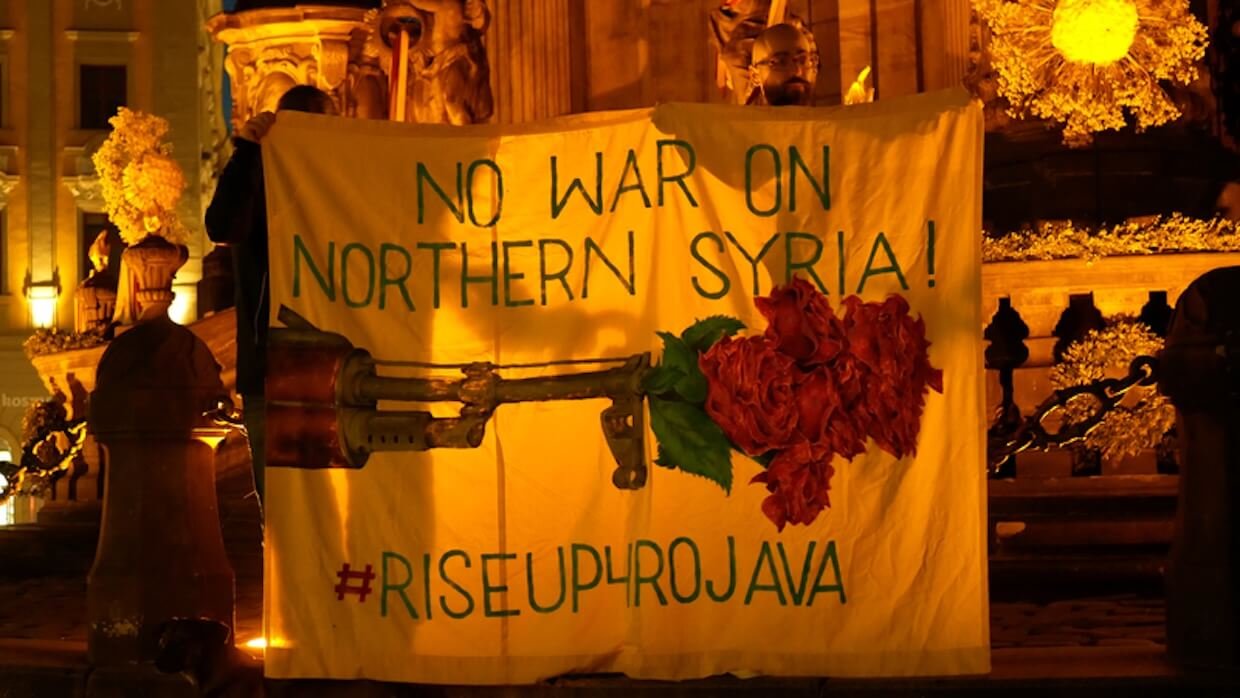
Dr. Soheila Shahriari, thank you so much for joining our interview series. Let me start right away with the first question: Your research frames Rojava as a counter-hegemonic democratic experiment emerging amid global democratic recession and Middle Eastern authoritarian consolidation. To what extent should Rojava be understood as a transformative model of post-nation-state governance versus a context-specific survival mechanism born of state collapse, particularly in a regional environment shaped by authoritarian resilience and populist Islamism and nationalism?
Dr. Soheila Shahriari: Thank you for having me. This is a very interesting question. I think reducing Rojava to a context-specific survival mechanism born of state collapse is analytically insufficient. While the collapse of state authority during the Syrian Civil War created the structural opening for Rojava’s institutional experiment, this was, to use Michel Foucault’s terms, a condition of possibility rather than the cause of Rojava’s emergence. These are two distinct things. Many argue that a power vacuum in Syria, combined with the withdrawal of Bashar al-Assad’s forces, explains Rojava’s emergence. But this was merely a facilitating condition, not the primary cause, and it is a somewhat simplistic way of understanding the issue.
Rojava can be described as post-national in some respects, but it differs from structures such as the European Union due to its distinct sociopolitical development and historical contingencies. It is better understood as an anti-state progressive political project grounded in women’s rights, pluralism, and ecological principles, operating within a hostile and authoritarian Middle Eastern environment.
It represents the institutionalization of a political paradigm that evolved over decades within the Kurdish movement, particularly through the theoretical trajectories associated with Abdullah Öcalan. The shift from Marxist-Leninist national liberation to democratic confederalism reflects a deep epistemological transformation—a move away from state sovereignty toward decentralized, council-based, multiethnic self-governance. Its pillars—radical democracy, women’s liberation, pluralism, and social ecology—are therefore not improvised wartime adaptations, but the product of sustained ideological development.
Rojava Transformed the Kurdish Imaginary from Ethno-Nationalism to Gender-Equal Pluralism
In your dissertation, you analyze how the Rojava revolution reshaped the Kurdish national imaginary in the diaspora, particularly through gender equality and pluralism. How has this transnational reconfiguration fed back into political mobilization within Kurdish regions themselves?
Dr. Soheila Shahriari: When we are talking about the Kurdish diaspora, we have to move beyond the conventional understanding of diaspora because of the particular situation of Kurdistan. Kurdistan has a very distinct dynamism in terms of its diaspora community, marked by intensely reciprocal political, cultural, and social engagement and ties between different parts of Kurdistan and the West. Political developments in one area feed directly and immediately into others. They are highly interconnected, forming a transnational political space shaped by the unique circumstances of the Kurdish question.
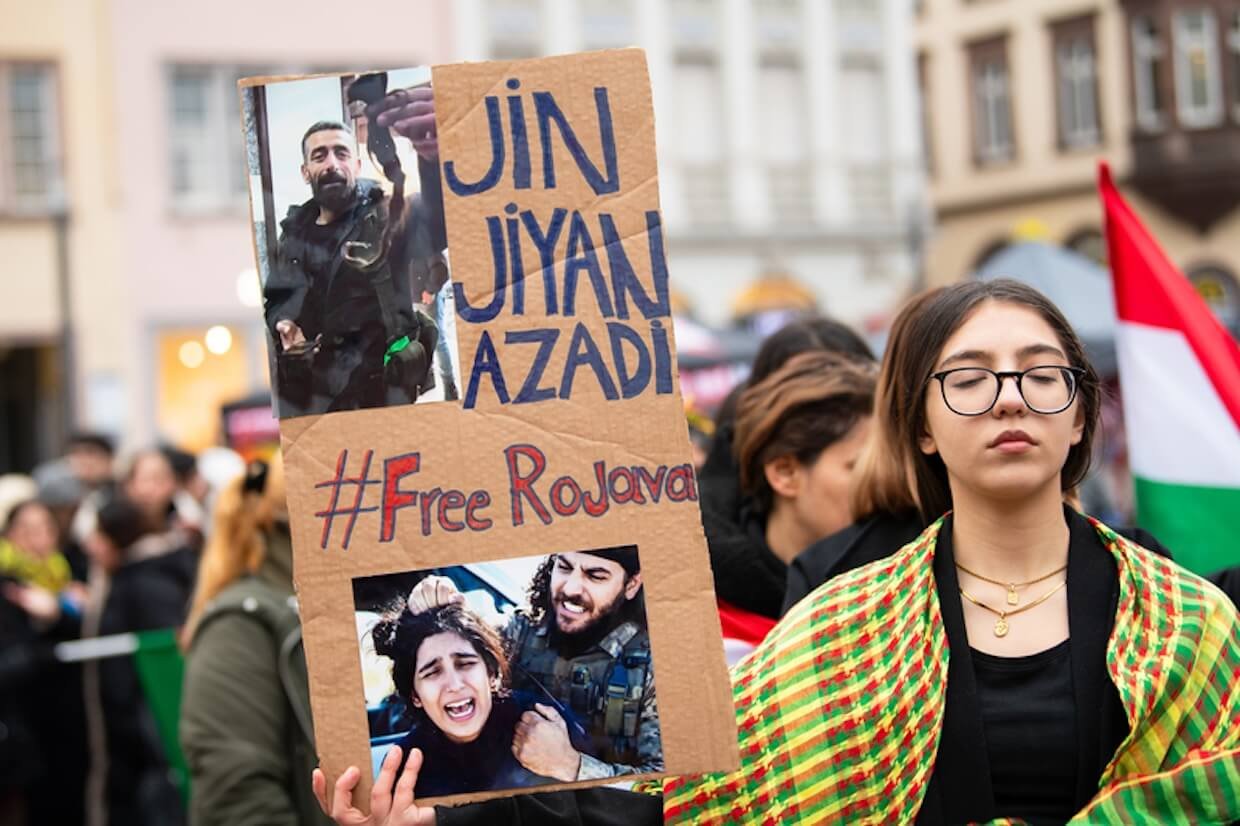
So, the Rojava Revolution has fundamentally reshaped the Kurdish national imaginary in my research, shifting it from a traditional nationalist framework toward a radically gender-equal and pluralistic new system of being. This transformation affects Kurds as a whole, not just in the diaspora or in the West. Evidence for this claim includes the women-led uprising in Kurdistan, inspired very directly by the slogan “Woman, Life, Freedom” (Jin, Jiyan, Azadi), which was the very first slogan of Rojava’s gender revolution.
This is one clear example of how developments in Rojava have fed back into Kurdistan itself. The influence from Rojava toward diaspora communities in the West, and the domino effect of Rojava across the Middle East, was visible in the women-led uprising in Rojhelat, or Iranian Kurdistan. It also elevated Kurdish actors as agents of democratization across the region, not just in Autonomous Administration of North and East Syria (AANES) but more broadly in the Middle East. Politically, this influence is visible in coalition-building and pluralistic alliances.
By coalition-building, I mean Rojava’s alliances with democratic forces—Arabs, Assyrians, Chaldeans, and other minorities—which have inspired Kurdish actors, especially in Iranian Kurdistan, to build coalitions with other national minorities across Iran against authoritarian central regimes. These are two telling examples of Rojava’s domino effect in the Middle East, especially in Iran: the women-led uprising in Iranian Kurdistan in 2022 and coalition-building with other national minority forces inside Iran, inspired by the same experience.
Women-Led Governance Is the Backbone of Rojava
You argue that women-led governance structures in Rojava function as a “symbolic infrastructure” of democratic resilience. How sustainable is this feminist institutional architecture under conditions of militarization, economic blockade, diplomatic isolation, and the surrounding pressures of authoritarian and autocratic regimes?
Dr. Soheila Shahriari: First of all, the sustainability and mobility of Rojava’s feminist institutional architecture rests on its own radical resilience. Women-led governance structures, as you mentioned, are not merely symbolic but constitute foundational pillars of the political project. This is evident in the practical effectiveness of structures such as the co-presidency system, “Jineology” as an intellectual foundation of Rojava, the metamorphosis of the justice system in Rojava, and women-friendly structures like Mala Jin (Women’s Houses), the eco-feminist village of Jinwar, and women’s self-defense initiatives like the Women’s Protection Units (YPJ). These structures have demonstrated durability over a decade of conflict, yet their long-term viability is constrained by a geopolitical zero-sum game.
Again, the engagement of Rojava with Western allies in the fight against ISIS involved immense sacrifices, with 11,000 or 12,000 lives lost in the fight against ISIS, without securing formal international recognition or protection from Western allies. The problem starts here. When we look at the fragility and vulnerability of Rojava today, the crux of the matter is that Rojava made extraordinary sacrifices against the international threat of ISIS, yet this was a zero-sum game for Kurdish actors in Rojava. They did not succeed in securing international recognition or protection from the West.
As you mentioned in your question, the feminist governance model faces severe existential threats from militarization, economic blockade, and the hostility of neighboring states, particularly Turkey, as well as pressure from the central Syrian state of Ahmed al-Shara. In this context, its stability and durability hinge on sustained engagement with Western democracies, which must be held accountable, as a moral necessity, to defend Rojava’s democratic and gender-progressive structures against broader authoritarian and Islamist dynamics.
Decentralization Requires External Guarantees
With the recent military setbacks and integration pressures from Damascus, do you see the Autonomous Administration of North and East Syria (AANES) transitioning from a de facto autonomous entity toward negotiated decentralization, or facing structural dismantlement within a re-centralized Syrian state increasingly characterized by autocratic restoration?
Dr. Soheila Shahriari: The most viable path to avoid the worst-case scenario—I mean, the worst case is the structural dismantlement of Rojava within a re-centralized Syrian state—is sustained diplomatic engagement. Again, I emphasize sustained diplomatic engagement with Western countries. The preservation of the autonomous administration heavily depends on the political will of key actors, particularly the EU and the United States, to counter Turkey’s hostility, the Syrian state’s push for recentralization, and ongoing power pressures. Crucial and strategic steps have already been taken in this direction in recent months.
This includes the European Parliament resolution of February 2026, which explicitly calls on Turkey not to interfere in negotiations between the SDF and the central government. Another example is the invitation of General Mazloum Kobani, Commander-in-Chief of the SDF, along with Ilham Ahmed, co-chair of the Department of Foreign Relations of Rojava, to participate in the Munich Security Conference in February. A further example is the invitation of Ilham Ahmed and the Commander-in-Chief of the YPG to hold a press conference at the European Parliament on February 25, 2026.
These actions are essential to ensure that the rights of Kurds, as a collective entity, not only as individuals, are recognized within the Syrian Constitution. Without international backing and pressure, Rojava faces the risk of enforced decentralization under hostile conditions or full structural dismantlement in a centralized, autocratically restored Syrian state. Without such international recognition from Western actors, especially the EU or the United States, Rojava possesses limited diplomatic leverage to compel Damascus into a permanent decentralized power-sharing agreement.
War Conditions Distort Democratic Experiments
Some critics suggest that Rojava’s multiethnic model struggled to maintain legitimacy among Arab populations in eastern Syria. To what degree were these tensions structural limits of democratic confederalism versus consequences of wartime governance conditions?
Dr. Soheila Shahriari: I do not think that democratic confederalism as a theory contains a structural flaw. It is a highly progressive and democratic theory. It is not built on Kurdish supremacy or exclusionary nationalism; rather, it is explicitly anti-ethnic in its political logic. It seeks to transcend ethnicity as the basis of sovereignty and instead centers pluralism, decentralization, and participatory government.
Where tensions emerge is not at the level of theory itself but at the level of implementation. The translation of radical, ideologically dense thought into heterogeneous, war-torn territory—particularly among Arab populations who were not socialized into the PKK-led movement’s democratic and feminist paradigm—inevitably creates friction. These communities had lived for decades under authoritarian rule without meaningful experience of democratic institutionalization, gender parity mechanisms, or participatory governance.
The sudden introduction of a transformative political model such as Rojava under militarized conditions naturally produces uneven incorporation of Arab populations. Thus, the issue is less of a structural flaw of democratic confederalism itself and more of a gap between normative ambition and historically shaped political socialization under conditions of war.
Without Recognition, Vulnerability Persists
How do you assess the long-term viability of non-state democratic models like Rojava in an international system still dominated by state sovereignty and realpolitik, where authoritarian and populist governments increasingly shape regional norms?
Dr. Soheila Shahriari: The long-term viability of non-state democratic models like Rojava within an international system still structured by state sovereignty and realpolitik, as you mentioned, depends largely on their capacity to secure external guarantees for survival. In Rojava’s case, this means convincingly persuading key international actors, particularly, as I mentioned before, the EU and the United States, to recognize and protect its status as a de facto autonomous region. If I put it differently, I would say that Rojava must engage in sustained and intensive diplomatic negotiation with Western powers—not regional powers—in order to transform its considerable transnational soft power—by soft power, I mean the radical democratic structures, the feminist institutions that I mentioned before, and pluralism and tolerance among religious, sexual, and linguistic minorities in Rojava.
As I mentioned, this negotiation must focus on transforming this considerable transnational soft power into formal diplomatic recognition as a legitimate de facto political entity. Without such international diplomatic recognition, the democratic experiment of Rojava remains structurally vulnerable within a regional order increasingly shaped by authoritarian consolidation and populist realignment, especially given the hostile stance of Turkey.
Autonomy Without Safeguards Risks Re-Centralization
The new Syrian leadership continues to frame Kurdish autonomy as separatism. In your view, what institutional arrangements—federalism, asymmetrical decentralization, or cultural autonomy—could realistically reconcile Kurdish self-administration with Syrian territorial integrity?
Dr. Soheila Shahriari: The reconciliation of Kurdish self-administration with Syrian territorial integrity seems very complicated. While the Syrian leadership continues to frame Kurdish autonomy as separatism, the Rojava project is grounded in democratic confederalism, an explicitly anti-centralist political project that seeks to decentralize sovereignty through bottom-up popular organization rather than secession. So, you see that the political language is not the same. The political language of the Kurdish actors is completely different here. It is not easily understandable for Arabs in Syria, especially when it comes to talking about the central government.
Among the possible institutional arrangements that you mentioned, Rojava should work toward the consolidation of its de facto self-governance as a form of federalism or democratic confederalism. We can put it differently: a constitutionally guaranteed form of political, administrative, and security autonomy within a unified Syrian state could, in principle, reconcile self-administration with territorial integrity. But cultural autonomy alone would likely be completely insufficient, in my view, as it would not secure institutional or security guarantees.
However, the viability of any such arrangement depends, again—I emphasize this time and again—on formal constitutional recognition and enforceable guarantees. Without concrete international diplomatic backing, federalism or decentralization in Rojava or in Syria risks becoming a temporary tactical compromise rather than a durable political settlement in a context where the central government may seek to reconsolidate autocratic authority once stabilized. Any agreement lacking structural safeguards could devolve into a zero-sum game for Kurdish actors in Rojava. Therefore, reconciliation is not merely a question of institutional design, but of credible guarantees and power-balancing mechanisms capable of preventing the re-centralization of the Syrian state.
Turkey’s Security-Only Framing Blocks Strategic Recalibration
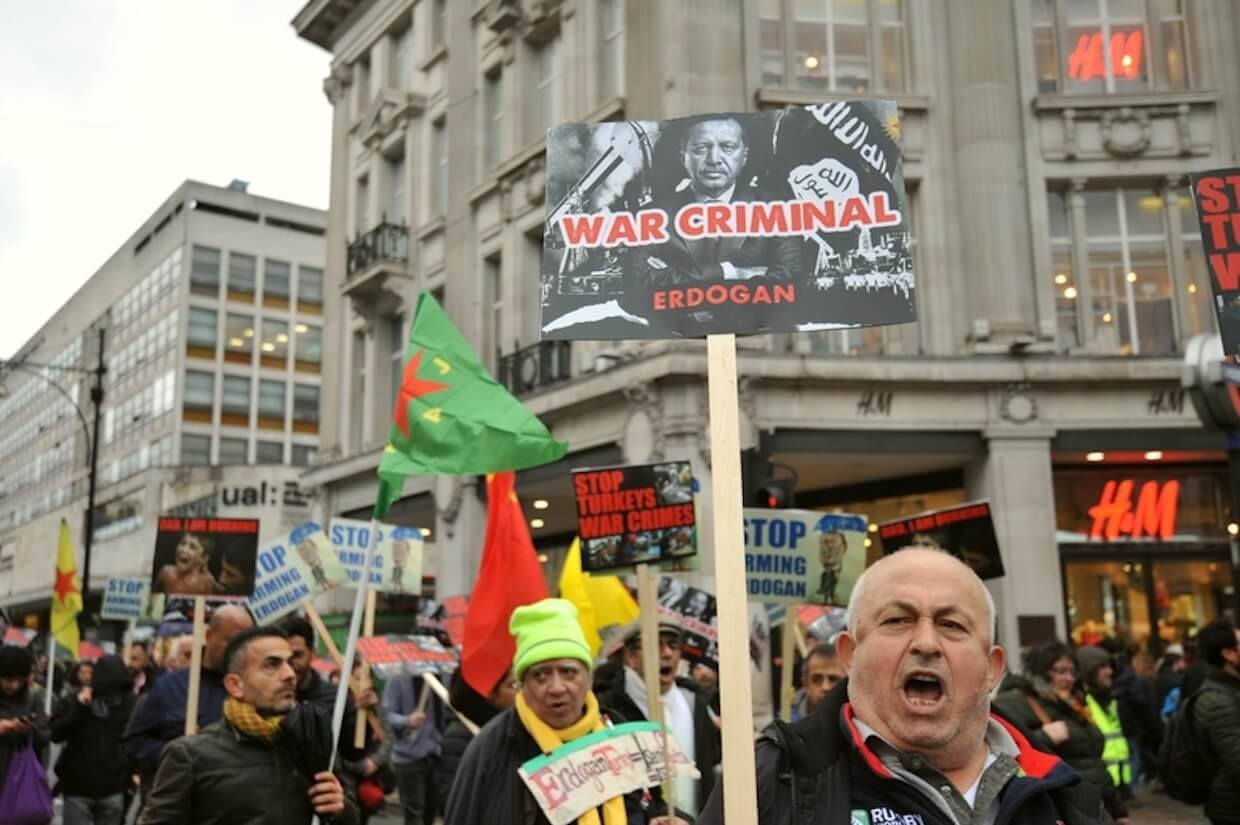
Turkey’s policy toward Rojava has been shaped by a security paradigm linking the region to the PKK, while unresolved domestic Kurdish issues — despite the ongoing so-called settlement process — reinforce threat perceptions. How might an “ethical-geopolitical repositioning,” combining security with legitimacy, alter Ankara’s strategic calculus, particularly within a political environment marked by populist securitization narratives?
Dr. Soheila Shahriari: A very interesting question. Turkey’s approach to Rojava is anchored in a securitization paradigm, viewing the region as an existential threat because of its structural and ideological link to the PKK. Domestic political imperatives reinforce this framing. The AKP uses the label of terrorism to delegitimize Kurdish political claims and consolidate support among nationalist, ultra-nationalist or jingoistic constituencies.
An ethical-geopolitical repositioning would require Ankara to move beyond this monolithic security-centered view and recognize the legitimacy of the international soft power the Rojava project has generated. This would involve deconstructing the entrenched narrative that equates Kurdish self-governance with inherent terrorism and engaging in political and security arrangements that combine oversight with recognition. But in practical terms, for a state like Turkey, shaped by populist securitization narratives and the persistence of the Sevres syndrome in the mentality and psyche not just of the Turkish state but of the Turkish populace as well, such a shift appears to me highly unlikely, unfortunately.
Nation-State Bias Limits Support for Non-State Democracy
Western, especially American engagement with Rojava has often been instrumental—most visibly during the anti-ISIS campaign—yet politically noncommittal. Does this pattern reflect structural limits of liberal internationalism when confronted with non-state democratic experiments?
Dr. Soheila Shahriari: Western, particularly American engagement with Rojava has been largely tactical and situational rather than strategic or politically committed. This shows the structural limits of liberal internationalism which remains anchored in a nation-state-centric world order and struggles to accommodate or integrate non-state actors, especially democratic experiments like Rojava.
At the same time, Western powers consistently prioritize geopolitical and economic interests over democratic or humanitarian principles. Human rights rhetoric often collapses when it conflicts with the strategic value of allies like Turkey as a NATO member. In practice, realpolitik sets aside commitment to progressive non-state actors, unfortunately.
This pattern also illuminates the broader decline of Western democracies and the rise of populist nationalist leadership. The synergy between, for example, leaders like Donald Trump and regional autocrats like Recep Tayyip Erdogan created an environment in which the law of the jungle replaces internationalist norms, highlighting that even the most progressive and resilient non-state societies like Rojava can be sacrificed very easily for the sake of authoritarian resilience and short-term realpolitik.
Abandonment Erodes Trust in Western Alliances
The perceived abandonment of local Kurdish forces after their decisive role in defeating ISIS — alongside growing concerns about a possible resurgence of the organization in the event of instability in northeastern Syria — has raised questions about the credibility of Western alliances. What implications might this have for future local partnerships in conflict zones?
Dr. Soheila Shahriari: The perceived abandonment of the Kurdish forces in Rojava after their decisive role in defeating ISIS raises serious questions about the credibility of Western alliances and the viability of future local partnerships in conflict zones. Such experiences highlight the transactional nature of tactical cooperation and contribute to a broader erosion of trust in Western democratic commitments.
By allowing an authoritarian and Islamist state to challenge a progressive, non-state democratic experiment, Western powers, particularly the United States and, to a lesser extent, the EU, undermine their own moral authority and global leadership. This pattern may push local actors in future conflicts to seek alternative alliances, prioritize defensive nationalism, or act independently, recognizing that even democracies cannot always be trusted or relied upon to protect human rights or progressive governance.
Diaspora Mobilization Reshapes Western Perceptions
Your research highlights diaspora activism aimed at reshaping international perceptions of Kurdish movements, including efforts to de-list the PKK as a “terrorist organization.” How influential has diaspora lobbying been in shaping Western policy debates on the Kurdish question, particularly amid rising populist politics and securitized migration debates in Europe?
Dr. Soheila Shahriari: The Rojava Revolution, and especially the Battle of Kobani, marked a turning point for the Kurdish diaspora, legitimizing transnational political engagement and reshaping Western perceptions of the Kurdish movement. Diaspora activism has intensified and diversified, with efforts to de-list the PKK as a terrorist organization becoming a central focus. While most Western governments maintain the PKK designation under pressure from Turkey, diaspora lobbying has influenced key legal and legislative debates. For example, the Belgium Court of Appeal ruled that the PKK was a party in a non-international armed conflict rather than a terrorist group.
In Sweden and Germany, Kurdish diaspora actors have leveraged parliamentary and public channels to present the Kurdish movement as a vanguard of democratization in the Middle East, advocating for formal cooperation with Rojava authorities. Yet, these efforts face structural limits, as Western states often prioritize realpolitik and Turkey’s strategic value as a NATO ally, maintaining the terrorist label despite democratic claims.
We have two examples of de-listing efforts. One of them is the Belgium Court of Appeal ruling the PKK not to be a terrorist organization. The other was a similar effort at the EU level, which initially moved toward delaying the PKK’s designation as a terrorist organization but, unfortunately, under pressure from Turkey, reinstated the label. So, there has been a clear dynamism in the post-Rojava revolution era within diaspora communities to de-list the PKK.
Feminization Transforms Image, Alliances, and Moral Authority
To what extent has the “feminization” of Kurdish politics—symbolized by the global visibility of Kurdish women fighters and leaders—altered international legitimacy and solidarity networks compared to earlier phases of Kurdish mobilization?
Dr. Soheila Shahriari: Since the Rojava Revolution in 2012–13, the feminization of Kurdish politics has dramatically enhanced the movement’s international legitimacy and expanded its solidarity networks. Earlier phases, particularly in the 1990s and the early 2000s, were dominated by male-dominated nationalist frameworks, with the PKK largely criminalized and marginalized in Western eyes, limiting advocacy and framing Kurds primarily as security threats.
The emergence of the YPJ, the Women’s Protection Units, and their decisive role in the Battle of Kobani in late 2014 and early 2015 marked a turning point. The global visibility of Kurdish women fighters aligned Kurdish political claims with the values of gender equality, secularism, and radical democracy, making the continued terrorist designation of the PKK increasingly incoherent and nonsensical in Western public opinion. Being Kurdish is now associated with supporting progressive governance, women’s rights, and secularism, distinguishing the Kurdish movement from other Middle Eastern actors or movements.
This shift has enabled the Kurdish movement to move beyond traditional ethno-nationalist alliances and cultivate broad intersectional solidarity networks. The transition from a male-dominated nationalist movement to a gender-centered revolutionary project has positioned the Kurds as a recognized driving force for democratization in the Middle East, securing global moral authority and institutional support that were absent in earlier decades.
Self-Determination, Not Statehood, Defines the Kurdish Question
And lastly, Dr. Shahriari, looking ahead, do you foresee the Kurdish political movement evolving toward statehood, a post-state transnational network model, a renewed pursuit of territorial autonomy within existing states, or fragmentation into divergent regional trajectories shaped by Turkey, Iran, Syria, and Iraq?
Dr. Soheila Shahriari: I think it is a very good final question. What I can say is that I will not go into great detail, but the crux of the matter is that the Kurdish struggle over the past century has always centered on one fundamental issue: the right to self-determination. Everything else—the form of governance, whether federalism, autonomous self-rule, radical democracy, democratic confederalism, or full statehood of Greater Kurdistan—is epiphenomenal, or a secondary question.
The fundamental issue is the right to self-determination. These forms are largely, as I said, epiphenomenal and contingent, shaped by regional dynamics, international politics, and the balance of power at a given time. The future of the Kurdish movement will therefore be defined less by ideology and more by the practical ability to secure recognition and exercise collective rights within or across existing state frameworks.
