
As Armenia navigates the aftermath of war, the loss of Nagorno-Karabakh, and a far-reaching geopolitical realignment, one question looms large: Can democratic resilience survive amid regional insecurity and great-power competition? In this compelling ECPS interview, Richard Giragosian—Founding Director of the Regional Studies Center (RSC) in Yerevan—examines Armenia’s evolving relationship with Russia, the democratic implications of Nikol Pashinyan’s populist leadership, and the country’s strategic turn toward Europe. Giragosian argues that many Armenians now view Russia as “part of the problem rather than part of the solution,” while emphasizing that Armenia’s recent election represented a mandate for peace, normalization, and democratic continuity. The conversation explores populism in power, post-war identity transformation, Armenia–Turkey normalization, democratic institution-building, and the future of the South Caucasus. Ultimately, Giragosian suggests that Armenia may be less a model than “an accidental exception” in an era of democratic backsliding and geopolitical upheaval.
Interview by Selcuk Gultasli
As Armenia emerges from one of the most turbulent periods in its modern history, the country stands at the intersection of democratic resilience, geopolitical realignment, and post-war transformation. The aftermath of the 2020 war, the loss of Nagorno-Karabakh, deepening estrangement from Russia, and ongoing normalization efforts with Turkey and Azerbaijan have profoundly reshaped Armenian politics and strategic thinking. Against this backdrop, the 2026 parliamentary elections have been widely interpreted as a referendum not only on Prime Minister Nikol Pashinyan’s leadership but also on Armenia’s future place between Russia, Europe, and the wider region.
In this wide-ranging interview with the European Center for Populism Studies (ECPS), Richard Giragosian—Armenian-American academic, security analyst, and Founding Director of the Regional Studies Center (RSC) in Yerevan—examines the forces driving Armenia’s remarkable political trajectory. He argues that the election result reflected far more than a geopolitical choice. It represented a mandate for democratic continuity, political stability, and the pursuit of diplomatic normalization with Armenia’s neighbors. As Giragosian notes, the vote marked Armenia’s “third consecutive genuinely free and fair vote,” underscoring the country’s democratic consolidation despite war, insecurity, and external pressure.
A central theme of the conversation concerns the evolution of populism in power. Emerging from the 2018 Velvet Revolution, Pashinyan embodied a rare case of successful anti-establishment mobilization driven by nonviolent popular protest. Yet Giragosian argues that the qualities that enabled Pashinyan’s rise have not necessarily translated into effective governance. While acknowledging the historic significance of the revolution as “a rare victory of nonviolent people power,” he contends that Pashinyan remains “as impulsive as ever, as emotional, and sometimes reckless,” while public policy continues to be “overly centralized in the Prime Minister’s office.” In Giragosian’s assessment, the populist style that propelled Pashinyan to power now coexists with persistent institutional weaknesses and governance challenges.
The interview’s most striking insights, however, concern Armenia’s changing relationship with Russia. According to Giragosian, the war of 2020 and the loss of Nagorno-Karabakh fundamentally altered Armenian perceptions of Moscow. Russia is no longer widely viewed as Armenia’s indispensable protector. Instead, he argues, many Armenians increasingly regard Russia as “dangerously unreliable,” adding that the conflict has led them to see Russia “as part of the problem rather than part of the solution.” This shift reflects not simply a foreign policy adjustment but a broader reassessment of Armenia’s security assumptions and strategic dependencies.
The discussion also explores Armenia’s efforts to balance relations with Europe and Russia, prospects for peace with Azerbaijan, normalization with Turkey, democratic institution-building, and the emergence of a more civic and pragmatic understanding of patriotism. Yet Giragosian remains cautious about presenting Armenia as a model for others. Indeed, he suggests that Armenia may be “less of a lesson and more of an accidental exception”—a rare convergence of democratic mobilization, geopolitical opportunity, and regional recalibration. Whether that exception can endure may prove to be one of the defining questions for the future of the South Caucasus.
Here is the revised version of our interview with Richard Giragosian, edited lightly to enhance clarity, readability, and overall flow for publication.
Armenians Endorsed Peace, Stability, and Democratic Continuity
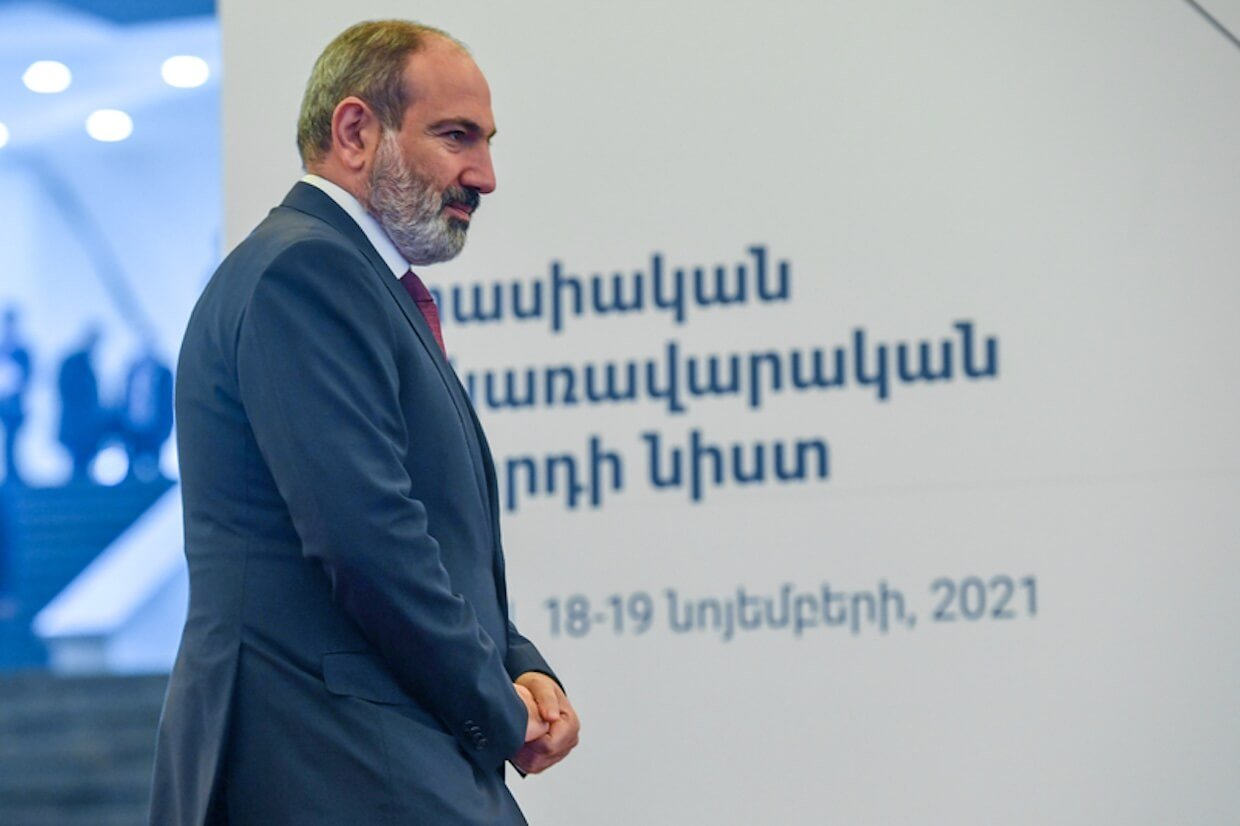
Mr. Giragosian, welcome! To begin, the 2026 Armenian election has been widely interpreted as a public endorsement of Prime Minister Nikol Pashinyan’s strategic reorientation away from Russia and toward Europe. Do you see the result primarily as a geopolitical choice, a democratic mandate for peace, or a vote of confidence in Pashinyan’s leadership despite the trauma of Nagorno-Karabakh?
Richard Giragosian: That’s a very good opening question. The answer is actually all of the above, to varying degrees. In other words, there was undeniably a geopolitical context to this election. But I do think there are two other important elements behind the re-election of the Pashinyan government in Armenia.
First, it is an important mandate for sustaining the positive momentum of the Armenian government’s policies of diplomatic engagement and normalization with its neighbors. This represents a significant post-war adjustment to a new reality.
Second, and this is often underestimated, the election marked the country’s third consecutive genuinely free and fair vote. That is extremely important for the further deepening of democracy and the consolidation of these democratic gains.
So, basically, yes, there was a geopolitical context. But this election was much more a mandate for the government to move forward.
Public Policy Remains Too Centralized in the Prime Minister’s Office
Pashinyan emerged from the 2018 Velvet Revolution as an anti-establishment reformer challenging entrenched oligarchic networks. To what extent does he still embody a populist political project, and how has governing transformed the character of his populism?
Richard Giragosian: What we see, as you correctly identified, is a specific aspect of populism in practice. In 2018, we witnessed a rare victory of nonviolent people power in Armenia. Nonviolence is wonderful, but it usually fails. In this context, it was a unique achievement.
However, Prime Minister Pashinyan’s advantages, assets, and political acumen that allowed him to come to power do not necessarily serve him well in governing the country. In other words, as leader of Armenia, Prime Minister Pashinyan remains as impulsive as ever, as emotional, and sometimes reckless. There is also a degree of inefficiency in governance. Public policy remains overly centralized in the Prime Minister’s office and in the Prime Minister’s hands. So, in this regard, the element of populism that swept him into power does not necessarily make him an effective leader.
Nationalism No Longer Resonates as Strongly in Armenian Politics
Comparative studies often suggest that military defeat weakens incumbents and fuels political backlash. How do you explain Pashinyan’s ability to survive the 2020 war, the loss of Nagorno-Karabakh, and the subsequent political crises while still securing electoral legitimacy?
Richard Giragosian: The re-election of the Armenian government under Prime Minister Pashinyan, despite losing the war, is difficult to explain. But I do have an observation. And it is an observation that remained relevant in the recent election. Simply put, the reality is that there is no alternative to Pashinyan or his government. The opposition then, and the opposition now, remains deeply unpopular, discredited, and too closely tied to the previous authoritarian government. It is also rather weak, given its inability, as an opposition force, to propose any alternative strategy. Simply opposing normalization requires the presentation of an alternative strategy, and that is something the opposition has been unable to offer.
The opposition also reflects the reality that nationalism no longer resonates in Armenia. There are a pronounced acceptance and recognition of the need to normalize relations with Turkey and to engage in diplomatic negotiations with Azerbaijan. Nevertheless, the surprising re-election of the Pashinyan government after losing the war remains an impressive achievement and has sparked a degree of jealousy among many Western leaders.
Armenia Has Passed the Point of Returning to the Pre-War Status Quo
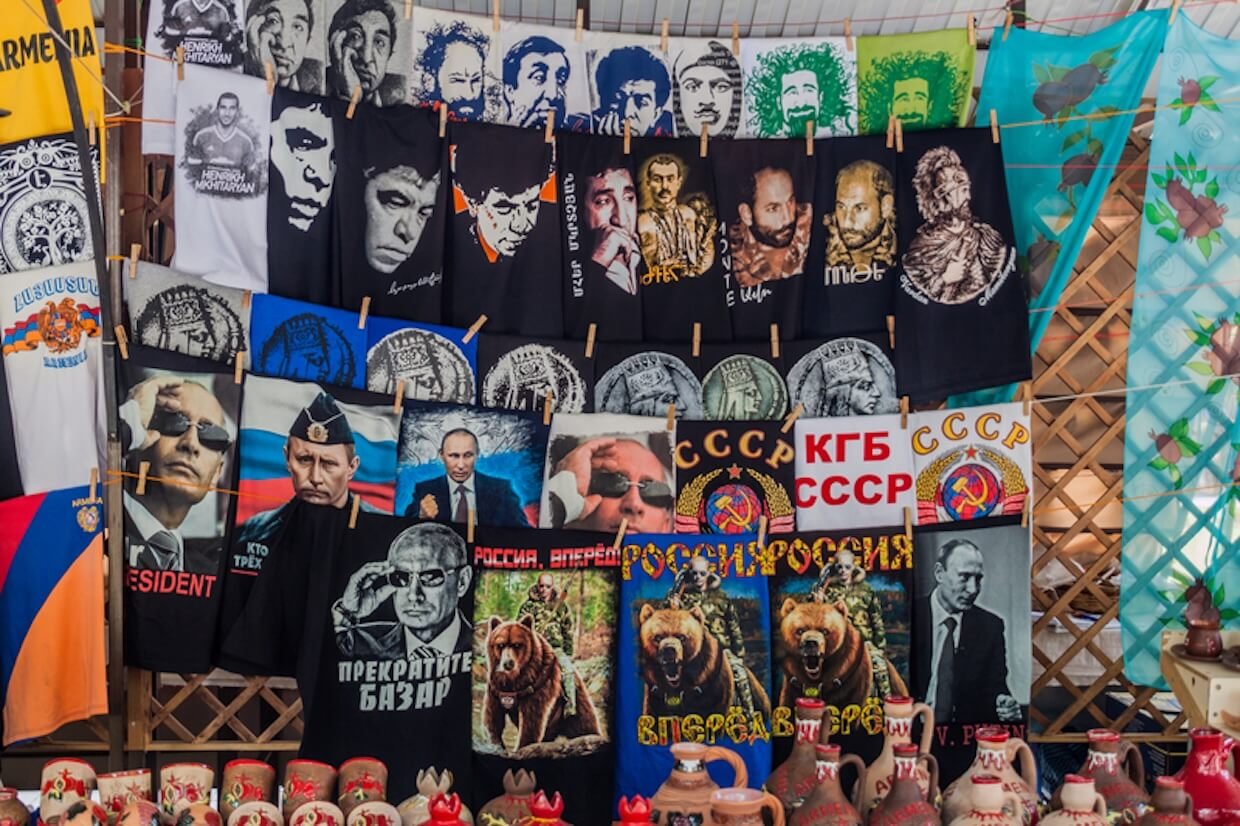
You have argued that Armenia has embarked on its most decisive strategic reorientation since independence. Following the election, how irreversible is this shift toward Europe, and what factors could still derail it?
Richard Giragosian: Very good question, Selçuk. What we see is that Armenia has now gone past the tipping point. There is little real risk or danger of returning to the old reality, to pre-war arrogance and a pre-war aggressive posture. We are past that danger. However, it is not necessarily a matter of embracing the Western European model versus escaping the Russian orbit. It is more about Armenia seeking, delicately and under conditions of fragility, to strike a balance within the West-versus-Russia paradigm. This is driving Armenia to diversify and to seek a number of security partners. For example, the only arms procurement deal since the war of 2020 was with India. Very much on purpose—not with the West, but with a partner that is less provocative to Russia. What Armenia is seeking to do is risky, because it may fail. But it would be a greater failure not to try. That means seeking to challenge Russia, while avoiding an overreaction from Russia and carefully choosing its battles.
At the same time, it represents a return to the region. It is a realization that Armenia, like every country, does not choose its neighbors. We have no choice, no alternative, but to build a relationship with Azerbaijan, to normalize relations with Turkey, and to deal with Iran to the south and Georgia to the north. There is no real alternative to geography.
Russian Influence Has Changed, Not Disappeared
You have described Russia as suffering from both geopolitical distraction and declining power projection following its invasion of Ukraine. Has the recent election confirmed the erosion of Russian influence in Armenia, or does Moscow retain significant leverage through economic, security, and social channels?
Richard Giragosian: The short answer is both. The longer answer is yes. Russia remains overwhelmed and distracted by its failed invasion of Ukraine. But that is rather temporary. We do expect a resurgent Russia to return to the South Caucasus and seek to regain its diminished power and influence.
In the case of Russia-Armenia relations, Russian leverage remains strong, although it is different from what it was in the past. Previously, Russian leverage was based on security dependence, with the Nagorno-Karabakh conflict serving as an instrument of influence. Now, however, Armenia’s vulnerability to Russia lies primarily in economics and trade. Russia is Armenia’s largest import-export partner. Armenia also remains a member of the Eurasian Economic Union, to cite two examples.
But if we look at Armenia-Turkey normalization, it underscores the importance and necessity of reopening that border—not only to lower transit costs, but also to create new economic opportunities capable of countering Russian dominance. At the same time, I do think Armenia has an advantage: a rare degree of legitimacy and stability, unlike many countries within the Russian orbit.
The Armenian Sense of Betrayal by Russia Is Deeply Entrenched
Critics of Pashinyan accuse him of fostering anti-Russian sentiment, while supporters argue that Armenia is simply responding to Russia’s failure to honor its security commitments. Is Armenia witnessing the rise of genuine Russophobia, or merely a more realistic assessment of Russia’s reliability as an ally?
Richard Giragosian: To be quite honest and candid, I think the Armenian government is quite correct, as is the majority of Armenian public opinion, in recognizing the threat from Russia. Russia has, belatedly but now quite markedly, come to be seen as dangerously unreliable. There is a deeply entrenched Armenian sense of betrayal by Russia. The war of 2020 and the loss of Nagorno-Karabakh have led many Armenians to view Russia as part of the problem rather than part of the solution. I think this is a realistic assessment.
I also think the lessons from the relationship with Russia illustrate the absence of any real choice or contest. For example, the European Union and the broader West are engaging with Armenia on the basis of attraction and persuasion. Russian policies toward Armenia, by contrast, have been rooted in coercion and pressure. There is really no contest here.
At the same time, I do think Russia’s arrogance, and its tendency to take Armenia for granted, actually contributed to this pre-existing tension in the relationship. I think Armenia’s future is much more closely tied to self-sufficiency, independence, and its regional role, and much less to being a Russian client, as it was in the past.
Russia’s Election Interference Failed to Deliver the Outcome It Wanted
Reports surrounding the election suggested attempts by Moscow and pro-Russian actors to influence public opinion. How should we understand Russian influence operations in Armenia today, and why did they fail to prevent a pro-Western electoral outcome?
Richard Giragosian: That’s a good question because there is an interesting paradox. Russia’s interference in the election generally failed to achieve any meaningful impact or result. However, we do see a vehemently pro-Russian political opposition garnering seats in the new Armenian Parliament. Two specifically pro-Russian parties were able to secure a significant minority share of the vote. This is an indication that we cannot become complacent about overcoming Russian influence, and that we must also recognize the challenge from within. The old-guard nationalist opposition, which continues to look to Russia, will undermine Armenian independence and challenge its policies toward its neighbors. So, we should not be overly complacent.
At the same time, I do think Russia is quite satisfied with the election result. There was little direct Russian support for the opposition, which would have been a much riskier move. But, for example, Russia is reassured that Armenia remains a member of the Eurasian Economic Union, while Armenia’s room to maneuver toward the West remains relatively limited and constrained. For that reason, I think the next challenge for Armenia will be to succeed in managing this new transactional relationship with Russia.
The European Union Has Become an Important Anchor for Reform
In your writings, you have emphasized that Armenia’s democratic development and European engagement are deeply interconnected. Can the European Union become a genuine democratic anchor for Armenia, or does Brussels still lack the strategic commitment necessary for long-term influence?
Richard Giragosian: I would say this is a rare example of the success of the European Union on the ground in Armenia. Certainly, it has served as an anchor for reform. But even more than that, we are witnessing an unprecedented level of EU engagement in Armenia. We see the deployment of EU monitors along the Armenian border with Azerbaijan to help stabilize the security situation. We also see unprecedented security assistance being provided to Armenia through the European Peace Facility (EPF).
What makes this so remarkable is that Armenia still hosts a Russian military base, remains a member of the Eurasian Economic Union, and is also part of the Russian-dominated Collective Security Treaty Organization. Despite these three realities, none of them has prevented the EU from deepening its engagement.
Part of the reason is the reality that Armenia has overtaken Georgia as the leading democracy in the region. There is also, to some degree, a European Union expectation that Armenia—and Armenia’s normalization with its Turkish partner—could help the EU achieve a broader geopolitical objective. In other words, Armenia–Turkey normalization is seen as a positive game changer not only for Armenia, but for the European Union as well.
And finally, Armenia has to be careful not to be used by the European Union or drawn into the broader paradigm of conflict between the EU and Russia that has intensified since the war in Ukraine. Armenia has to be somewhat cautious. But yes, the European Union’s engagement represents an important new element for Armenia.
The South Caucasus Is Unlikely to Remain a Long-Term US Priority
The United States has become increasingly involved in Armenian-Azerbaijani diplomacy. How do you assess Washington’s growing role in the South Caucasus, and could Armenia emerge as a new arena of strategic competition between the United States and Russia?
Richard Giragosian: I’m rather skeptical. I am skeptical about Armenia and the South Caucasus being a sustainable priority within the American national interest. Moreover, if we consider the unpredictability of the Trump administration, I also question the durability of its commitment to, and interest in, the region.
At the same time, Armenia’s diplomatic achievements with Azerbaijan owe much more to the leadership in both Armenia and Azerbaijan and to their bilateral efforts. They were not solely the result of Western or American involvement. In fact, Armenia and Azerbaijan, acting on their own—without Russia and without the West—were able to achieve much more than before.
That said, there has been one very important achievement in terms of the American connectivity initiative. This modestly named Trump Route for International Peace and Prosperity envisions road and rail connections through southern Armenia, linking Azerbaijan with its exclave of Nakhchivan and onward to Turkey. This is important not only for the restoration of trade and transportation, but also for the return of deterrence, changing the strategic calculus and significantly reducing the risk of renewed hostilities.
So, when looking at American engagement, the record is mixed. But overall, it is a net positive. For Armenia and Azerbaijan, however, it would be a mistake to assume or rely too heavily on American involvement going forward.
Free Elections Are Necessary, but They Are Not Sufficient
You have often argued that democratic legitimacy is itself a strategic asset. To what extent has Armenia’s democratic trajectory strengthened its international standing, especially when compared with the authoritarian models represented by Turkey, Azerbaijan, and Russia?
Richard Giragosian: There are two concrete and practical advantages that we have seen emerge from Armenia’s legitimacy and democratic credentials. First, there has been a significant improvement in the investment climate. This helps explain the breakthrough agreements in the IT sector, Armenia’s establishment of data centers, its growing use of artificial intelligence, and advances in chip production. AI and chip diplomacy are a direct result of this improved investment climate.
A second notable achievement is that Armenia has come to be recognized as a predictable and reliable interlocutor. That is important both for Ankara and Baku—for Turkey and Azerbaijan. Armenia is increasingly accepted as a dependable, reliable, and predictable partner. In this part of the world, that is a rare achievement, and in many ways, it is even more important than democratic credentials alone.
Now, the bad news. Armenia’s institutional weakness in terms of democracy still needs to be addressed, and strengthening those institutions is just as important as holding free and fair elections. An election is not the answer, nor is it the complete recipe for democracy. Armenia still needs to strengthen its democratic institutions.
Concessions Can Contribute to Peace, but They Cannot Be Unilateral
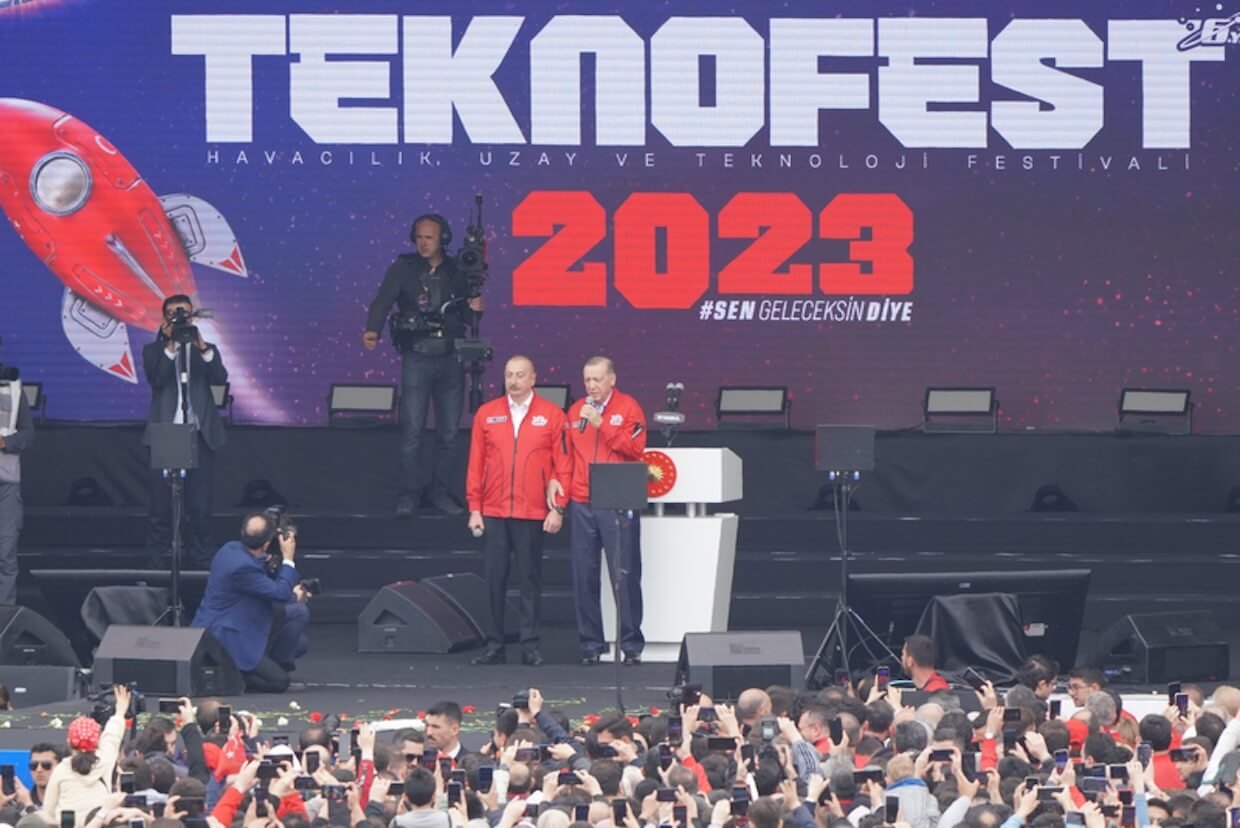
Pashinyan has presented peace with Azerbaijan as a prerequisite for Armenia’s future security and prosperity. Does the election provide him with a stronger mandate to finalize a peace agreement, or do major domestic and external obstacles remain?
Richard Giragosian: Clearly, yes. The government’s re-election provides a renewed mandate to continue engaging with Azerbaijan and to move the process forward. However, there are still significant challenges, especially regarding the Azerbaijani demand that Armenia amend its constitution, as well as the fact that the bilateral peace treaty has been initialed but not yet signed.
The real difference here, however, is that Armenia has been willing to accept its weakness and embrace its defeat, while also turning the page and moving forward with a much less provocative and much less aggressive posture toward all of its neighbors. So, there is reason for justified optimism. But it also takes two countries to achieve bilateral peace and stability.
Therefore, the next move will have to come first from Azerbaijan and then from Turkey in terms of normalizing relations. Armenian concessions and compromises are important, but they should not be unilateral.
The Constitution Will Remain a Potential Source of Friction
One of the unresolved issues concerns constitutional changes sought by Azerbaijan as part of a final settlement. How politically feasible are such reforms after the election, and do they risk creating a new wave of nationalist mobilization inside Armenia?
Richard Giragosian: That’s a very good point, because despite the re-election of the government, with a working majority and a renewed mandate, the government still fell short of a two-thirds majority in Parliament. That would have been much more helpful for constitutional amendments. The government’s working majority will therefore present a challenge in moving forward with a referendum on constitutional change.
However, we do see a demonstrable climbdown on the Azerbaijani side. They have retreated from their previously maximalist position, and the Azerbaijanis have become much more patient and far less demanding regarding the constitutional change requirement. It is no longer such an immediate prerequisite, which suggests there may be some flexibility, as well as an understanding in Baku that the Armenian government lacks the parliamentary majority necessary to guarantee this demand. So, I do think there is room for flexibility. But yes, it will remain a potential source of friction going forward.
Azerbaijan Continues to Shape the Limits of Turkish Policy
You have argued that normalization between Turkey and Armenia represents a rare opportunity for regional stabilization and economic development. Has the election increased the prospects for genuine rapprochement, or does Azerbaijan remain the decisive variable shaping Ankara’s policy?
Richard Giragosian: To be quite honest, despite the positive re-election of the Armenian government, there had already been notable progress before the election between Armenian and Turkish officials in moving incrementally closer to reopening the border. In this regard, when it comes to Armenian-Turkish normalization, the physical border has not yet opened. But the mental border has, and the issue has become much less poisonous and politically toxic within Turkey.
However, unfortunately, the Turkish side remains hostage to Azerbaijan. Azerbaijan’s approval and consent remain necessary for the fulfillment of normalization. Much to the frustration of the Erdoğan government, it is Azerbaijan that continues to limit Turkish options in the region. That reality is also rooted in the economic and commercial influence of SOCAR, the Azerbaijani State Oil Company, within the Turkish economy.
Nevertheless, we are seeing growing support and broader constituencies on the Turkish side in favor of reopening the border. And this is not about the Turkish economy in general. It is about the regional economy of eastern Turkey, particularly the underdeveloped and largely Kurdish-populated areas of the east. For the Turkish state, reopening the border is important not only for economically stabilizing the region but also for countering the PKK through jobs and economic opportunity rather than relying solely on police action. So, there is a clear security dimension as well.
At the end of the day, even for Azerbaijan, Armenia-Turkey normalization represents a rare positive game changer—a genuine win-win.
Armenia May Influence Its Neighbors More Than Its Neighbors Influence Armenia
Armenia’s normalization efforts necessarily involve deeper engagement with two increasingly centralized and authoritarian neighboring states. Do you have concerns that closer political, economic, and institutional ties with Turkey and Azerbaijan could contribute to democratic erosion in Armenia? More specifically, just as Russia has long sought to project its political influence and governance model across the post-Soviet space, is there a risk that Ankara and Baku may also seek to export elements of their own illiberal political models to Armenia? Or do you believe that Armenia’s democratic institutions and growing engagement with Europe are sufficiently resilient to prevent such authoritarian diffusion?
Richard Giragosian: I’m less worried about the potential risk posed by neighboring Turkey or Azerbaijan in terms of eroding the Armenian democratic model, simply because it would be very difficult for Armenia’s population to accept any kind of role for either Turkey or Azerbaijan in shaping Armenia’s political development. The greater risk comes from Russia’s potential external interference.
At the same time, Armenia’s institutions remain rather fragile, vulnerable, and not yet sufficiently resilient. But I do think we are on a positive trajectory. And I also believe that the development of relations between Armenia and Azerbaijan, as well as between Armenia and Turkey, can contribute positively to the democratic outlook of those countries.
So, I would reverse the question and focus on Armenia’s potential positive influence on its neighbors, rather than on the risk of intervention, interference, or democratic erosion emanating from Armenia’s neighbors and affecting Armenia itself.
Normalization Is Only the Foundation for Future Reconciliation
The loss of Nagorno-Karabakh has forced Armenia to reconsider long-standing assumptions about identity, security, and statehood. Are we witnessing the emergence of a new civic understanding of Armenian nationalism, and how might this reshape populist politics in the future?
Richard Giragosian: We are witnessing a sea change in terms of identity. And in this regard, it is not nationalism that resonates. Rather, it is a more mature evolution toward a new concept of patriotism. Specifically, from an Armenian perspective, nationalism can also be very negative, rooted in hatred of the enemy. Patriotism, in contrast, is much more positive. It is based on pride in history rather than hatred of rivals, opponents, or enemies. So, I do think there is a healthy and constructive movement in the right direction.
Nevertheless, it is still grounded in a painful reminder that Armenia was dangerously arrogant, especially in relation to Azerbaijan. There were too many missed opportunities for diplomacy. But Armenia is now cutting its losses and learning painful lessons. And I think the outlook moving forward remains positive. Because for Armenia, the first challenge was recognizing the problem. And that was the first stage in this evolution toward patriotism. It is also about normalization, and understanding what normalization with neighbors is—and is not. For example, in relation to both Turkey and Azerbaijan, this is not reconciliation. It is not even a rapprochement. It is normalization. It is the first step. It is also the basic currency of neighborly relations and the foundation for subsequent reconciliation.
This is why much of the past, including the events of 1915 and the genocide issue, is not part of the normalization process. These issues are not relevant to normalization. They will come later, once that foundation has been put in place.
Armenia May Be Less a Model Than an Accidental Exception
And lastly, at a time when democratic backsliding, authoritarian populism, and geopolitical revisionism are reshaping international politics, Armenia remains one of the few competitive democracies in the post-Soviet space. What lessons does the Armenian experience offer for understanding democratic resilience under conditions of war, external pressure, and geopolitical uncertainty?
Richard Giragosian: To be quite honest, I’m not sure. Armenia may be less of a lesson and more of an accidental exception. In other words, beginning with the change of government in 2018, it was a rare victory of nonviolence, of people power. Despite everything, despite later losing a war, despite Russia, what was the recipe for Armenia? I’m not quite sure. It could have been almost an accident of history.
But theoretically, we would say, sadly, that it took the loss of the war and the subsequent loss of Nagorno-Karabakh before Armenia could begin to rebound. At the same time, much of this opportunity also exists because Russia was distracted by its failed invasion of Ukraine. So, it is somewhat of an accidental convergence of interests.
At the same time, we do see Ankara, Yerevan, and Baku accidentally sharing similar concerns about Russia. There is an understanding that a regional identity, without any third-party involvement, is perhaps the real key to stability in terms of post-war adjustment.
So, the short answer is: I’m not quite sure I have the answer.