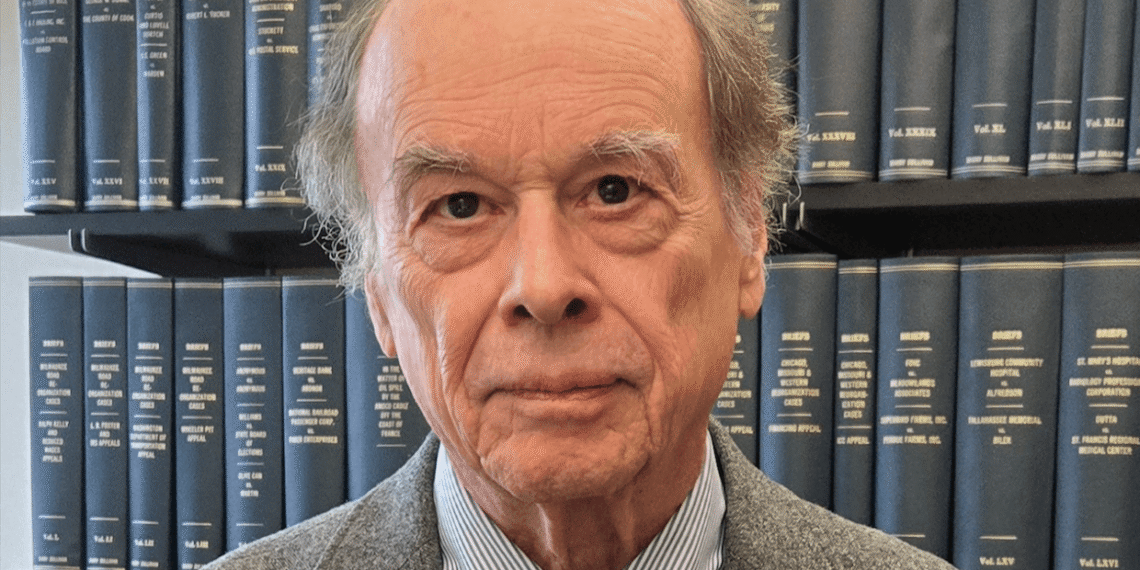
In a penetrating interview with ECPS, Professor Barry Sullivan warns that “the separation of powers does not function as the Framers anticipated,” offering one of the starkest legal assessments yet of America’s constitutional crisis. Drawing on the Supreme Court’s ruling in Trump v. United States, he argues that “the constitutional doctrine and the man have met the moment,” producing a presidency with “virtually total control, without suffering any consequences.” Sullivan traces this shift to a revival of a “Nixonian” view of executive authority—summarized in Nixon’s infamous claim, “If the President does it, it is not illegal.” Such developments, he cautions, create “enclaves of unaccountable power” and dramatically heighten the risk of democratic backsliding, especially amid polarized parties and eroding constitutional conventions.
Interview by Selcuk Gultasli
In a wide-ranging and incisive interview with the European Center for Populism Studies (ECPS), Professor Barry Sullivan—the Raymond and Mary Simon Chair in Constitutional Law and the George Anastaplo Professor of Constitutional Law and History at Loyola University—offers one of the most sobering legal assessments to date of the United States’ ongoing constitutional transformation. As he warns, “the separation of powers does not function as the Framers anticipated,” and the consequences for American democracy are profound.
Speaking against the backdrop of the Supreme Court’s landmark decision in Trump v. United States, Professor Sullivan argues that “the constitutional doctrine and the man have met the moment.” Over the last fifteen years, the Supreme Court has steadily expanded presidential authority, culminating in an immunity doctrine that grants the President “virtually total control, without suffering any consequences.” This shift, Professor Sullivan notes, aligns disturbingly well with Donald Trump’s populist narrative of a personalized leader whose will supersedes institutional constraint.
Calling this new jurisprudence a revival of a “Nixonian” conception of executive power, Professor Sullivan underscores the danger. If the Court has effectively embraced the claim that “if the President does it, it is not illegal,” then the risk of democratic backsliding—especially when paired with the pardon power—becomes “very great.” This combination, he stresses, allows a President not only to immunize himself but “in effect, to grant immunity to those whose efforts on his behalf he needs,” creating what constitutional theorists call enclaves of unaccountable authority.
Throughout the interview, Professor Sullivan situates these developments within broader populist dynamics: the weaponization of “retribution” narratives, the erosion of constitutional conventions, and the increasing collapse of the administrative state under a muscular unitary executive model. His warning is stark: under the Court’s interpretation, the President possesses “virtually unlimited power,” and recent behavior shows “there is nothing that is too great or too small to capture his imagination,” from foreign policy decisions to symbolic renovations of federal buildings.
Crucially, Professor Sullivan emphasizes that the Framers never anticipated the rise of disciplined, polarized political parties—developments that have hollowed out checks and balances. As he notes, the Founders “would be absolutely aghast” at how party alignment now disables Congress and the courts from restraining executive overreach.
Finally, Professor Sullivan stresses that reversing democratic backsliding will require not only judicial recalibration but also broader political and civic reform. The core problem, he argues, is “not a constitutional problem but a political problem” rooted in polarization, unified government, and the abandonment of institutional good faith.
This interview offers an essential window into how constitutional design, judicial interpretation, and populist leadership together shape the current crisis of American democracy.
Here is the edited transcript of our interview with Professor Barry Sullivan, slightly revised for clarity and flow.
This Is Not How the Framers Envisioned Executive Power
Professor Barry Sullivan, thank you very much for joining our interview series. Let me start right away with the first question: In “Trump’s Court, Nixon’s Constitution,” you argue that the Supreme Court’s immunity ruling represents a profound judicial reimagining of the presidency. How does this expanding conception of presidential immunity—articulated in Trump v. United States—intersect with Donald Trump’s populist vision of a personalized, extra-legal leader whose “will” is portrayed as overriding institutional and constitutional constraints?
Professor Barry Sullivan: I think that the constitutional doctrine and the man have met the moment. For the last 15 years, the Supreme Court has been expanding the constitutional power of the presidency vis-à-vis the other branches of government. And with the immunity the President now has, along with the power to pardon those who assist him in the work of government—even if they commit crimes on his behalf—he has virtually total control without suffering any consequences.
The expansion of executive power has been justified, in part, by the idea that the primary check on the President is Congress’s impeachment power. But if we consider the current situation, where both of the politically accountable branches of government are in the hands of the same party—and where that party is tightly structured, not a broad ideological tent but one very much aligned with the President—then the President effectively has near-total control. The separation of powers simply does not function as the Framers anticipated.
So, given the proclivities of the President and the latitude the Court has now provided, the President possesses extraordinarily broad powers at this moment.
Trump Now Holds Power Nixon Could Only Claim
To what extent does the Court’s new approach to presidential immunity signal a structural shift toward what you describe as a “Nixonian” theory of constitutional authority, and how might that shift accelerate democratic backsliding in the US?
Professor Barry Sullivan: The Nixonian theory of the presidency was articulated by President Nixon at the time of Watergate, when he instructed his lawyer, who was arguing in the Supreme Court on his behalf, to tell the Court that the President of the United States had all the power of Louis XIV, except for four years at a time. In other words, there was no check on the President except re-election. He further stated, after he left the presidency, in an interview with David Frost, that if the President does it, it is not illegal—meaning it is legal simply because the President does it.
So, if I’m correct that the decision in Trump v. United States gives the President power similar to the power that Nixon claimed—which I believe it does—then the opportunity for democratic backsliding is very great. And when you combine the President’s very broad powers with the pardon power—which allows him not only to be immune himself but, in effect, to grant immunity to those whose efforts on his behalf he needs in order to do what he wants to do—the risks become even more significant.
Populist leaders often frame legal accountability as partisan persecution. How do judicially expanded immunity doctrines reshape the balance between democratic legitimacy and the rule of law—especially in the face of populist claims to majoritarian or plebiscitary authority?
Professor Barry Sullivan: That’s an interesting question. I think that the President—speaking in terms of populism—repeatedly used the expression in his last campaign for the presidency, “I am your justice, I am your retribution.” And he didn’t say retribution for what or against whom, but I think it was pretty clear that he was suggesting that he had been persecuted during the four years he was out of office, and that he had been persecuted on behalf of his supporters. So, when he returned to power in January of this year, one of the first things he did was to pardon all the people who had been involved in the January 6th invasion of the Capitol.
The Framers Would Be Absolutely Aghast
Does the Court’s emerging immunity jurisprudence risk creating what constitutional theorists describe as “enclaves of unaccountable power?” In your view, how would the Framers—particularly those most concerned about executive aggrandizement, such as Madison and Wilson—have understood a doctrine that shields a president from criminal liability for “official acts”?
Professor Barry Sullivan: This opinion—unless it is substantially narrowed in the future by the Court, which of course is possible—but as it stands now, does create an enclave of unaccountable power. We’ve seen the use of that power in many ways over the last, well, almost a year now.
What would the Framers have thought of it? I think the Framers would be absolutely aghast that the constitutional structure they created was susceptible to this kind of democratic—or Republican, they would say—erosion. The Framers put a great deal of faith in the structure of government: the separation of powers and the checks and balances they built in. And we’ve seen that those checks and balances don’t work in the way they anticipated.
One thing the Framers did not foresee, of course, was the rise of political parties. They thought that political parties—standing parties, not just temporary coalitions of interests—were a bad thing, and that the United States could function without them. That turned out to be wrong. By the end of President Washington’s time in office, political parties had already begun to form.
Over time, parties became more ideologically coherent—really in the last 40 or 50 years—so that you no longer had a broad range of views within the Democratic or Republican parties. The parties became more unitary, in a sense. I think this is something the Founders didn’t anticipate and—if they were around today—would want to address, because the development of strong, ideologically unified parties means the system of checks and balances and the separation of powers simply doesn’t work the way they intended it to.
Independent Agencies No Longer Independent
Your work on “Expert Knowledge, Democratic Accountability, and the Unitary Executive” highlights tensions between technocratic governance and populist distrust of expertise. How does the Court’s embrace of a muscular unitary executive model empower populist presidents to override scientific, technical, or bureaucratic judgment?
Professor Barry Sullivan: I think it does, in the sense that the unitary executive theory—as the Court has interpreted it—means that the President has absolute control over the executive branch. Moreover, the President must have control over all those who exercise executive power in some sense. So, if we assume, as I think we should, that independent agencies exercise executive power in some sense, then the President has the power to overrule whatever an independent agency decides.
We created independent agencies—and they’ve been around since the beginning of the Republic, although they became more important in the 20th century, especially with the New Deal—because we thought there were some areas of governance that shouldn’t be totally dependent on the political will of the President.
To the extent that the Court has now said the President should have power over these agencies—and we’ll probably see before the end of this term how far the Court will go, because there are a couple of pending cases about the President’s removal power over members of these agencies—the President has the ability to dictate what independent agencies or departments of government do, down to the smallest detail. And that is a problem for scientific and other forms of expertise.
We saw in the first Trump administration—and I detailed this in that article—that the weekly morbidity and mortality report the government publishes, which has long been considered the gold standard for reporting on health in the United States and was largely immune from political oversight, had been the domain of medical scientists. During the pandemic, however, non-scientifically trained people were given the opportunity to edit that report, not to reflect the latest scientific evidence but to mirror the President’s political strategy and political interests. And if the Court is truly going to say that the President has that power, then that’s very dangerous for the credibility of supposedly expert determinations by the government.
Policy Was Sold as Science And That Undermined Trust

During the pandemic, you emphasize failures not only of political leadership but also of scientific bureaucracy. How do these failures complicate the conventional narrative that populist erosion is purely anti-expert, and what constitutional reforms might restore calibrated relationships between science and law?
Professor Barry Sullivan: During the pandemic, there were policy determinations that were made by medical experts, but the reasons for some of those determinations—or the real reasons—were not made public. For example, there was a determination by the government that people shouldn’t wear masks at the beginning of the pandemic. It turned out that this really wasn’t based on scientific evidence; it was based on the fact that there weren’t enough masks to go around. The medical authorities decided that priority should be given to medical personnel. So, in a sense, maybe that was the right decision from a policy point of view, but we were being told that it was a medical determination, not a policy determination.
I think those kinds of situations reflected badly on the scientists involved. And these questions of what proper policy is and what is good science, to a large extent, overlap. We have to be told to what extent one or the other is being relied on. I think that’s important. I’m not sure that it is, by itself, a constitutional problem, but it is certainly a legal and administrative law problem—making sure that we separate those things to the extent that they can be separated.
Not Just Law but Good Faith: What’s Disappearing in American Governance
In the landscape of democratic backsliding, how does the Supreme Court’s revival of the unitary executive—combined with skepticism toward independent agencies—reshape the administrative state’s ability to resist authoritarian tendencies?
Professor Barry Sullivan: That’s a wonderful question. I would add to that picture, or to the hypothetical, the fact that the separation of powers between the executive and the legislative branches also is not working.
But the unitary executive, combined with skepticism about administrative or independent agencies, certainly has an impact on the government’s overall ability to withstand authoritarian tendencies. Under the unitary executive theory, the President has virtually unlimited power. And this President has demonstrated an incredible amount of energy. There is nothing that is too great or too small to capture his imagination—whether it is deciding that we need to go to war, in effect, against Venezuela; subsidizing the friendly government in Argentina; painting the Executive Office Building white because he doesn’t like the natural gray color of the stone; or tearing down the East Wing of the White House. There’s virtually nothing to stop him.
Moreover, I would add to that the erosion we’ve seen in what I would call constitutional conventions—not necessarily law, at least in the sense of hard law, but soft law. The idea that there are some things the President could legally do but that would not be within the spirit of the law. I liken constitutional conventions to the ligaments and muscles that propel us, in addition to bones. We can’t run with bones alone; we need these other things. And just as the rule of law doesn’t depend exclusively on law, it also depends on a spirit of good faith and fair dealing that characterizes the relationships among the branches of government.
When Transparency Fails, Authoritarianism Flourishes
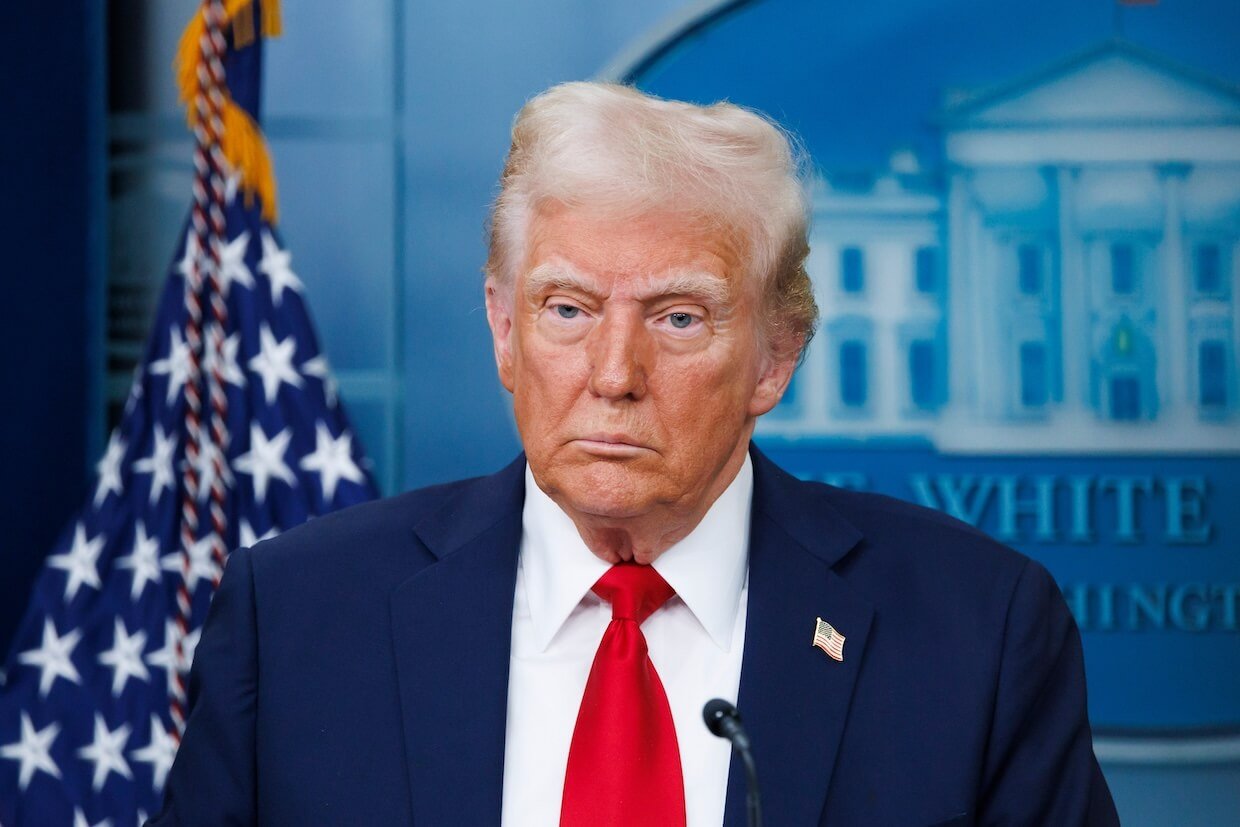
Drawing on “Executive Secrecy,” how do secrecy practices, especially when coupled with expanded presidential immunity, contribute to the erosion of public accountability and provide fertile ground for authoritarian-style governance?
Professor Barry Sullivan: I’ve written extensively on the need in a democratic society for access to government information. I think that access to government information is absolutely critical to any kind of citizenship, or citizen oversight of government.
I gave a lecture a couple of years ago in Bayreuth, and I put up on the board a drawing of the three branches of government—each in its own little box—and then I drew a big box around those three boxes. The big box was meant to represent the people. It’s ultimately the people who have responsibility for government. Without information, the people cannot monitor the government in the way that Madison, in particular, anticipated they would and should in order to sustain a democratic government.
Populist leaders frequently weaponize secrecy, disinformation, and institutional opacity. How should courts conceptualize transparency obligations in an era where executive power is increasingly asserted as a personal mandate rather than an institutional responsibility?
Professor Barry Sullivan: As a general principle, the courts have to insist that executive power must be exercised as an instrument of institutional responsibility rather than as a personal mandate. I think that is one of the essential duties of a constitutional court in a constitutional system: to maintain—or to ensure—that the government acts truthfully and does not wield executive power for personal purposes or personal benefit, but rather fulfills its institutional responsibilities.
Opaque Courts Feed Populist Distrust
In “The Supreme Court and the People,” you stress the Court’s communication failures. How does the persistence of opaque, fractured, and elite-oriented judicial writing exacerbate the populist narrative that courts are disconnected from “the people,” and what risks does this pose for judicial legitimacy?
Professor Barry Sullivan: In that article, my co-author and I compared the way in which the Supreme Court of the United States communicates its decisions to the public. And the article is a little dated at this point because, in addition to what we perceived as the Court’s problems at the time—namely that it didn’t provide meaningful press access or user-friendly summaries of its opinions—we’ve also seen, in the last year or so, the Court increasingly issue decisions in emergency situations without the normal process of adjudication: without extensive briefing, without time for deliberation, and often without any explanation at all. I think this shift toward deciding many important issues in such a summary way—with the justices given little opportunity to do anything other than rely on their predispositions—is problematic from the standpoint of judicial legitimacy.
Justice Robert Jackson, one of the great justices of the Court and the lead US prosecutor at Nuremberg after the Second World War, once said that the door you enter by often determines the door you leave by. In other words, if judges bring certain predispositions into a case, those predispositions often shape the outcome unless a robust adjudicative process intervenes. The normal process of adjudication does everything possible to counteract that tendency. But when judges must decide cases based on very little briefing, a thin record, minimal deliberation, and limited discussion among the justices about what the outcome should be and why, then the likelihood increases that the door you enter by will indeed be the door you exit by.
Canada and Germany Show How Courts Can Reconnect with the Public
Given comparative examples such as Canada or Germany, how might improved judicial communication practices help inoculate the Court against populist attacks that portray it as unaccountable or politically captured?
Professor Barry Sullivan: I think this goes back to my last answer about the way in which the Court has started to decide really important questions summarily. But in addition to that, these other courts have taken steps with respect to the ordinary docket—the ordinary cases—to make sure that the people are given the means to understand what the Court has decided and why. For example, in Canada, the Supreme Court of Canada has created a position, usually held by a law professor, who is available to speak with the press on the day decisions are issued, to advise them about the meaning of the decisions, and to answer their questions.
Moreover, in Germany, there is a similar procedure—a lockup—where reporters who follow the Court are given the opportunity to review the opinion before it is officially released, so that they can be more mindful in the way they discuss it for the public. I think there is a recognition in both Canada and Germany that the press has an important role to play, because most people learn about Supreme Court decisions not from reading the decisions themselves but from reading what reporters say about them.
So, it isn’t just the length or complexity of the opinion. In Germany, the opinions are perhaps even more complex and lengthy than in the US, but other mechanisms exist to provide information to the public about the significance, importance, and meaning of the opinion.
Reversing Backsliding Requires Fixing Congress, Not Just the Court
And lastly, Professor Sullivan, across your writings, there is a through-line stressing how institutional arrangements can unwittingly facilitate populist or authoritarian trajectories. What combination of judicial, legislative, and civic reforms do you believe is most essential for reversing democratic backsliding in the US, particularly in a context where the Court itself is increasingly central to the transformation?
Professor Barry Sullivan: Obviously, a difficult situation. Given the fact that, as you say, the Court has been central to the creation of the problem through this unitary executive theory, I’m not sure how much hope we should hold out that the Court is going to back off of the unitary executive theory. And it’s really a product of the last 20 years. It’s a product of the Roberts Court.
The unitary executive theory really came into prominence during the Reagan administration. Obviously, the seeds of it were sown in the Nixon years because of Nixon’s views of the power of the President. But as a constitutional theory, it really came into its own during the Reagan administration, and Attorney General Meese, in particular, furthered this theory.
I don’t think it is really based in the founding; I think it is principally based in the reaction that some people in government had to the reform measures introduced to limit executive power after the Nixon–Watergate scandal. And virtually from the time of the Ford administration—Ford was Nixon’s last vice president and succeeded to the presidency when Nixon resigned—President Ford kept on many of Nixon’s advisors during his term in office. Many of those advisors, from the beginning, thought that Congress was taking too much power away from the President.
So, this unitary executive theory saw its genesis then and really came into its own in the Reagan administration. But it did not capture the imagination of the Court as late as 1988, in a case called Morrison v. Olson, where the unitary executive theory was being advanced as a way of concentrating power in the presidency. The Court rejected it. There was only one vote in favor of the unitary executive theory, and that was Justice Scalia, who was one of the people in the Ford administration who thought that Congress had gone too far in reforming the presidency.
But once Justice Roberts became Chief Justice, and a group of people joined the Court—Justice Alito, for example, and Justice Thomas—who were very influenced by that theory as young lawyers, we see by this year a complete turnaround on the Court, so that what was essentially a marginal theory in 1988 has now become the majority theory.
As I say, I don’t hold out a lot of hope for the Court changing its mind about that in the near future. Clearly, if we had a Democratic president, and that president made nominations to the Court, perhaps that theory wouldn’t be quite so popular in the Court.
I think the real problem is not a constitutional problem but a political problem: having a unified government, and the separation of powers not working the way the Framers intended because political parties have become extremely polarized. Members of Congress are putting party affiliation above all other affiliations in terms of their governmental duties. And until we can have a more balanced Congress, I think we’re not going to see a lot of progress.
Now, one thing that we need to talk about before we end is the fact that President Trump has managed to persuade people that he won by a landslide. In fact, he won with less than 50% of the vote. Yet, he has been acting as if he did win in a landslide. And, in a sense, he did—but only because he controls Congress as well as the presidency.