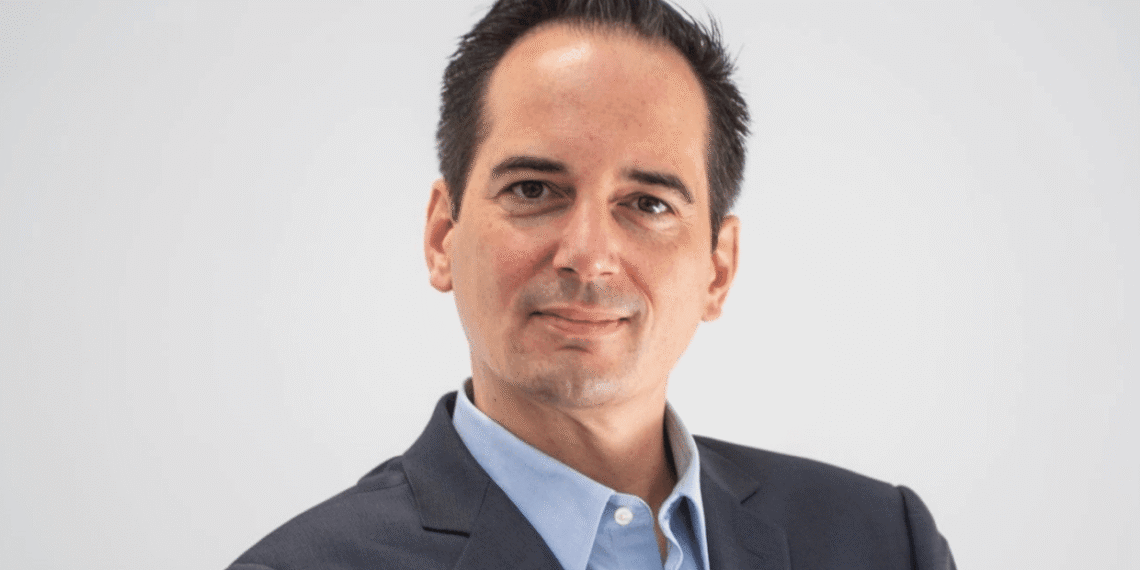
In an interview with the ECPS, Professor Damir Kapidžić examines Bosnia and Herzegovina’s October 4 elections through the intertwined lenses of ethnonationalism, democratic erosion, patronage, institutional paralysis, and foreign influence. He argues that the country’s principal democratic danger lies less in dramatic constitutional breakdown than in the “slow death” of institutions gradually weakened by illiberal practices, elite capture, and political incentives that reward dysfunction. Professor Kapidžić also highlights the durability of ethno-national patronage, the limits of civic alternatives, and the persistence of war memory and religious identity in structuring political competition. Looking beyond the elections, he cautions that Bosnia remains “stuck in the past,” with democratic renewal unlikely without changes in both domestic incentives and the wider external environment.
Interview by Selcuk Gultasli
Bosnia and Herzegovina approaches its October 4 elections at a moment when the country’s post-Dayton political order is once again under pressure over statehood, entity autonomy, ethnic representation, and democratic legitimacy. The campaign is shaped less by a conventional left-right divide than by competing visions of citizenship, constituent peoples, sovereignty, and the future of the Bosnian state. Against this background of ethnonationalism, populism, democratic erosion, and geopolitical influence, the elections offer an important vantage point from which to assess not only who will govern, but also the deeper institutional structures that continue to constrain Bosnia and Herzegovina’s democratic development.
In this wide-ranging interview with the European Center for Populism Studies (ECPS), Professor Damir Kapidžić, Professor of Comparative Politics at the Faculty of Political Science and Director of the Institute for Social Science Research at the University of Sarajevo, argues that Bosnia’s most consequential democratic danger may not take the form of spectacular constitutional collapse. Rather, it lies in the gradual erosion and paralysis of institutions. “We do see the possibility of what I would not call a dramatic constitutional breakdown, but rather a slow death,” he warns, explaining that institutions can simply cease to function when government formation, regulatory bodies, or judicial appointments are left indefinitely unresolved. In his assessment, “the gradual normalization of illiberal practices is likely to continue,”while “a more likely scenario… would simply be a slow demise.”
Professor Kapidžić situates this institutional vulnerability within the contradictions of the Dayton system. While power-sharing has helped prevent renewed large-scale intercommunal violence, he argues that political elites have also “been able to capture the system for their own purposes.” The resulting elite consensus, he observes, has often centered not on effective governance but on “keeping the rule of law weak, not resolving wartime legacies, and capturing state institutions.”
These dynamics are reinforced by deeply embedded patronage networks. Coalition negotiations, Professor Kapidžić notes, are rarely programmatic; instead, they revolve around “the division of power and resources rather than the creation of policies.” Ethnonational parties therefore operate not only as guardians of identity but also as gatekeepers of material opportunity, presenting themselves as protectors of their communities’ access to “resources and employment.”
Looking beyond October 4, Professor Kapidžić remains cautious about the prospect of democratic renewal. Bosnia, he argues, is “very stable, but also stable in a negative sense,” with progress occurring “either very slowly or not at all.” The deeper problem is a political order “stuck in the past”—not simply the wartime past, but “the past 30 years of very little changing.” Without altered domestic incentives and a transformed external environment, Bosnia risks remaining trapped in what he describes as a recurrent political loop, “without clear signposts, clear guidelines about the possibilities, or a clear path forward.”
Here is our interview with Professor Damir Kapidžić, edited lightly to enhance clarity, readability, and overall flow for publication.
Bosnia’s Elections Reflect Deeper Ethno-Political Divisions Over What the State Is and Should Become
Professor Kapidžić, welcome! Bosnia and Herzegovina enters the October 4 elections amid renewed disputes over statehood, entity autonomy, ethnic representation, and democratic legitimacy. Looking at the campaign as a whole, is this primarily an election about who governs—or, more fundamentally, about what kind of state Bosnia and Herzegovina should be?
Professor Damir Kapidžić: In its basic sense, the election is about who will govern for the next four years. But in a broader sense, it is also about competing visions of what the country actually is and what it should become in the future. These visions usually do not collide directly because the parties are not competing for the same voters; they primarily seek support within their own ethnic groups. It is something that I call a sub-divided party system with sub-groups, where competition actually takes place between parties representing the same ethnic group.
Within each group—among Serbs, Croats, or Bosniaks—there is relatively little dispute over the broader vision of how the state should be organized. The major disagreements lie between the three groups, but they are not competing for the same electorate. So, essentially, what we see in the electoral arena is a manifestation of the deeper ethno-political divisions within society.
Power-Sharing Preserved Peace but Failed to Produce the Elite Compromise Bosnia Needs
In your work, you argue that the Dayton system brought peace but failed to overcome tensions generated by ethnic patrimonial elites, weak rule of law, and unresolved wartime legacies. Three decades later, has power-sharing become part of the problem it was originally designed to solve by institutionalizing ethnicity as the principal language of political competition?
Professor Damir Kapidžić: Yes, this is a trick question, because power-sharing has both positive and negative sides, and weighing them against each other can be complicated. Let’s just recap. It has been more than three decades since the war in Bosnia-Herzegovina ended and the Dayton system was put in place, and during that time we have not seen a single major incidence of violence between communities. There has been lived violence, but not known physical violence. This is largely due to the power-sharing system.
At the same time, however, elites have been able to capture the system for their own purposes. This is a key element of consociationalism, the type of democracy established through the Dayton Peace Agreement in Bosnia-Herzegovina: elites are needed to represent the interests of their own groups. But the thinking behind this is that those elites should also be willing to compromise with one another, and that is what we have not seen.
The only compromise that has happened is exactly along the lines you mentioned and that I have written about: keeping the rule of law weak, not resolving wartime legacies, and capturing state institutions. There is agreement among elites on that, but not on how to govern the country effectively or how to make compromises. That is the element of the Dayton system that has never really come forward. Because if elites had the ability to compromise, they would also be able to address the first question: what kind of state do you want Bosnia-Herzegovina to become?
Bosnia’s Populist Polarization Operates Within Ethnically Defined Voter Groups
Would you describe the dominant form of populism in Bosnia and Herzegovina as essentially ethnonational populism? In other words, is the classic populist division between “the people” and “the elite” transformed here into a more dangerous distinction between “our people,” rival ethnic communities, domestic elites, and allegedly hostile foreign actors? And during the current campaign, how important is the invocation of external patrons or enemies in reinforcing these narratives?
Professor Damir Kapidžić: Yes, this is definitely not a typical form of populism in Bosnia. I would probably describe it as a hybrid ethno-national populism, because the main adversary of “us” or “our people” is not so much the other group—although they are also part of it—but rather enemies within our own group.
So, populism here is threefold. It operates within each of the ethnic party groups and is directed not so much against the other groups themselves as against the ideas those groups represent. It is not aimed specifically at politicians or citizens living in other parts of the country. Rather, it targets the “traitors within our own ranks,” so to say. This kind of populism uses the ethnic narrative to polarize within one’s own group, because that is where the electorate is.
You can see this happening among Croats, Bosniaks, and Serbs at the same time. The polarization is there, but it does not transcend these ethnically defined voter groups.
Republika Srpska Still Operates as a Form of ‘Competitive Authoritarianism-Lite’
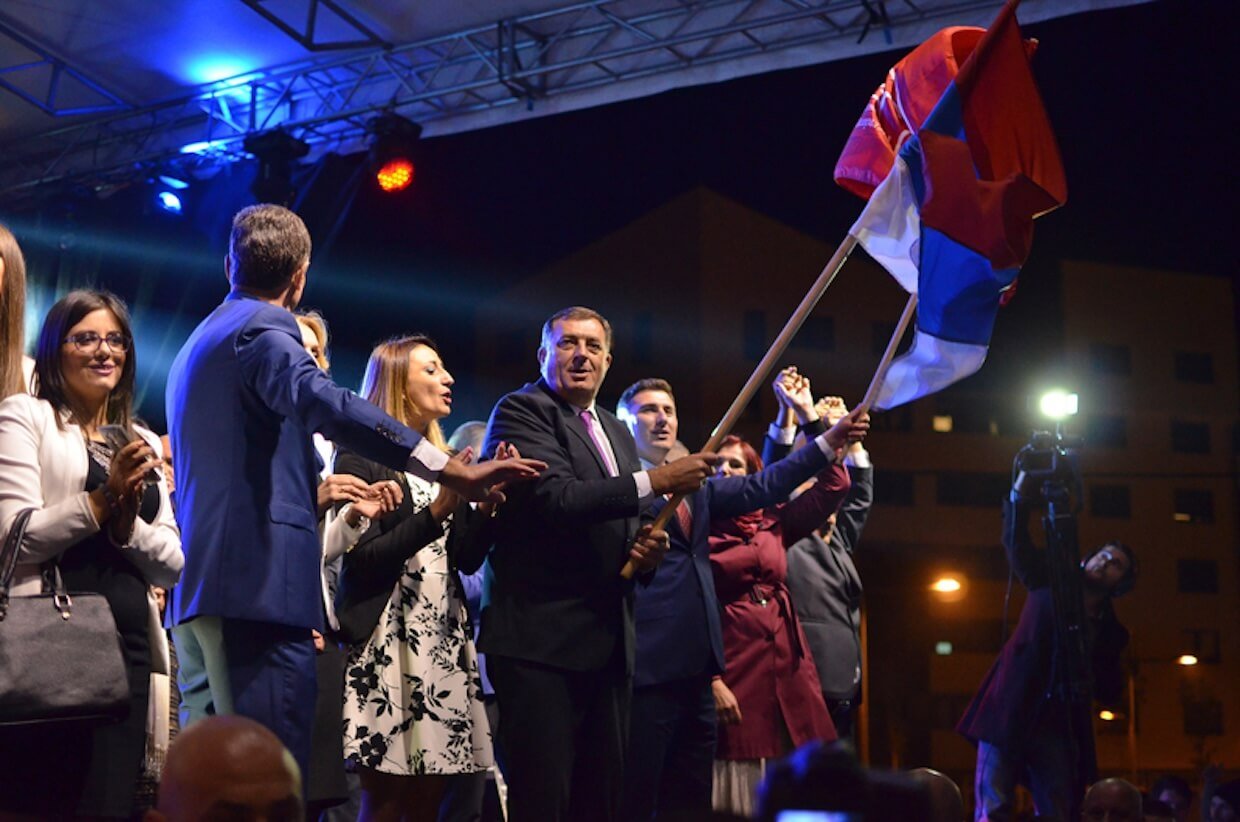
Your research on subnational competitive authoritarianism shows how executive dominance, economic power, patronage, informal party networks, and ethnically bounded political competition can produce uneven autocratization within Bosnia and Herzegovina. To what extent does Republika Srpska under the SNSD still represent the clearest example of this model ahead of the 2026 elections?
Professor Damir Kapidžić: Yes, within Bosnia-Herzegovina, it still represents the clearest example. There has been some reduction in the elements of competitive authoritarianism, mainly due to several court cases that have limited certain powers of the Republika Srpska parliament and government, as well as some backroom deals, with the help of the United States, that have rolled back some of these elements.
However, the system still exists, and Republika Srpska remains the clearest example. We could still characterize its subnational regime as a kind of competitive authoritarianism-lite. This is also reinforced by external patrons and actors that emphasize the ability, or the need, of the Republika Srpska government to retain as much autonomy as it can muster. Of course, this also shapes the way the current SNSD government uses these external patrons to justify the capture of some of these institutions.
Much of Dodik’s External Support Now Comes from the Trump Administration
Milorad Dodik is not himself a candidate, yet his political influence remains central to the SNSD’s campaign and to its framing of Republika Srpska as being under pressure from Sarajevo and international actors. How important is this personalized form of leadership for the persistence of ethnonational populism, and can the SNSD reproduce the same political model without Dodik formally holding office? To what extent can external support—from Serbia, Russia, Hungary, or other actors—help sustain this political strategy during the election period?
Professor Damir Kapidžić: You are correct: Milorad Dodik is not running in these elections, but if you look at the SNSD billboards, he is always there. That reflects the aura he still carries and his ability to influence politics. He remains one of the most relevant politicians in the country, and his narrative is still taken seriously by voters in Republika Srpska.
That said, he no longer has the same institutional influence. There has to be another form of leadership, including personalized leadership among other politicians. He is not going to be the one speaking for the government. So, there is a trajectory in which Milorad Dodik is slowly becoming less present in the country’s politics. It is very likely to follow a similar scenario to Poland under Kaczynski, where taking a backseat from politics allows others to make use of the power they now have.
External support has always been important, but currently Milorad Dodik and the SNSD are no longer receiving support from Hungary, luckily. They are receiving only limited support from Russia, because Russia is focused on other issues. The same goes for Serbia, which is in the midst of its own electoral campaign with an unclear outcome.
But Milorad Dodik has been able to do something that nobody thought was possible: gain support from the United States of America. Much of his external support now actually comes from the Trump administration, including inviting Trump Jr. to Banja Luka, the capital of Republika Srpska, and trying to create both business and political connections with the United States. That can definitely create support for the SNSD, but also for Milorad Dodik personally.
Being in Opposition Does Not Make a Party Less Nationalistic in Republika Srpska
At the same time, the opposition in Republika Srpska challenges the SNSD over corruption, patronage, institutional degradation, and personalized rule without necessarily rejecting a strong Serb national framework. Does this mean that the central contest inside Republika Srpska is less between nationalism and post-nationalism than between competing claims about who can most credibly represent Serb interests?
Professor Damir Kapidžić: Exactly. This is also what I’ve been talking about: competition and polarization take place within these ethnic groups, particularly around issues of corruption and patronage. These are among the main issues driving polarization: the “traitors” who are stealing from us as a people versus those who promise to bring in a clean slate. Nationalism remains present. Being in the opposition does not make a party less nationalistic; the difference lies in the kinds of policies it defines and sets out within its nationalist agenda.
Religion Versus Secularism Remains the Central Cleavage Distinguishing Bosnia’s Party Families
On the Bosniak side, the political spectrum ranges from the SDA’s national-conservative and state-protective discourse to the more civic and social-democratic language of the SDP, Naša stranka, and other actors. How meaningful is this ideological distinction when virtually all major Bosniak-oriented parties operate within a political environment in which the survival and integrity of the Bosnian state remain highly salient?
Professor Damir Kapidžić: They are still ideologically distinct. Both Bosniak nationalist parties and the more civic-oriented social-democratic and liberal parties cater to a very similar electorate. Their main distinction concerns secularism and the role religion should play in politics. The SDA takes a moderate position, viewing religion as important—much like the German Christian Democrats—and as a foundational element of politics. This is clearly rejected by the SDP and Naša stranka, who see the only way forward as a clearly secular state.
They are therefore brought together by the idea that Bosnia-Herzegovina must continue to exist as a unified state, probably even a more centralized one than it currently is. But they are divided by this secular cleavage, which is the main cleavage in the country’s party politics. This distinguishes Serb, Croat, and Bosniak parties on the basis of religion, while also distinguishing the civic, social-democratic parties as the secular element—the fourth element—within this party landscape.
Individual Equality Collides with Collective Representation in Bosnia’s Political System
The Croat political debate continues to revolve around “legitimate representation,” particularly the argument that Croats should be able to determine their own member of the state Presidency. How should we understand this dispute theoretically: as a legitimate minority-protection demand within a consociational system, as ethnonational entrenchment, or as a conflict between two defensible democratic principles—individual equality and collective representation?
Professor Damir Kapidžić: The last element is very important here because individual equality—the equality of voters and candidates themselves—collides with the idea of collective representation of a group as such. For example, this whole debate about collective, “legitimate representation,” as it is called, emerged from voting patterns showing that the Croat representative in the current Presidency did not receive his votes primarily from areas with Croat voters. Territorially, his support was more closely aligned with a Bosniak electorate.
This goes against the principle of collective representation, according to which peoples should be able to vote for their own representative. On the other side, you have individual equality, which means that, as a citizen of the country, ethnicity is very fluid. You can redeclare yourself within a limited timeframe, especially as a politician, and you are not required to vote for your own ethnic group.
So, these two principles—individual equality as personhood and the ability to choose one’s identity—collide with the rigid institutional framework of collective representation. The Croats, who are the smallest constituent people, are the ones who have lost out in this contest. You have to see this from their perspective: as being outvoted, or as a form of majoritarization of institutions that, according to the country’s institutional framework, would belong to them. Individual equality here does not translate into representation, which creates the theoretical problem that something needs to change for the system to work, because in its current form it disadvantages the Croats in particular.
In Bosnia’s Ethnically Divided Party System, Demographics Is Destiny
This leads to a broader paradox in Bosnia’s civic politics. Advocates of a stronger citizenship-based state see civic democracy as a way beyond ethnocracy, while many Croat and Serb actors perceive the same project as a vehicle for Bosniak majoritarianism. Is there a politically viable model of civic democracy in Bosnia and Herzegovina that can overcome ethnic segmentation without weakening the security guarantees of smaller constituent peoples?
Professor Damir Kapidžić: Again, this is mostly a trick question, because in ethnically divided societies such as Bosnia-Herzegovina, demographics is destiny, especially when the political party system is so clearly divided along ethnic lines. The problem is that Bosniaks are now a majority in the country. As in any democratic system with a clear majority, you can define and lead politics in the way you want. Even with minority protections, this would create enormous tensions, because we are not speaking about minorities; we are speaking about almost half the population, which does not agree with what the other 53 or 55 percent would vote for.
The other problem is that these ethnic differences are territorially concentrated. You have areas with clear Croat or Serb dominance, which makes a civic system of majoritarian rule almost impossible.
The only country that has been able to overcome this kind of ethnic gridlock is the Netherlands. Its consociational system began to be dismantled when the main dividing lines between Protestants and Catholics became weaker. As religion receded from public life in the Netherlands, other cross-cutting cleavages became more important.
We are not there in Bosnia-Herzegovina, and I do not know if we ever will be. Religious lines here are more clear-cut than those between Catholics and Protestants. So, as for when this might change, it is probably not going to happen soon.
Religious Identity Is Becoming More, Not Less, Important Among Younger Bosnians
Religion is closely intertwined with national identity in Bosnia and Herzegovina—Islam with Bosniak identity, Serbian Orthodoxy with Serb identity, and Catholicism with Croat identity—yet theological questions themselves are rarely the main electoral issue. How does religion function politically today: primarily as faith, as a marker of ethnonational belonging, or as a symbolic resource that political actors can activate during periods of heightened insecurity? And how significant are transnational religious, cultural, and political networks linked to Serbia, Croatia, Turkey, or Russia in shaping these identities during election campaigns?
Professor Damir Kapidžić: Yes, identity is clearly salient in Bosnia, and in our research we track it over time. It is not becoming less important; if anything, it is becoming more important among younger people and younger voters. So, it remains a clear element of personal identity.
We speak here of what we call an identity package, and you mentioned these pairings: Islam with Bosniaks, Serbian Orthodoxy with Serbs, and Catholicism with Croats. We also add a third element, which is language. These languages are mutually very close, almost indistinguishable, but they are called differently and therefore also belong in this identity basket.
All of this becomes much more pronounced during elections, and religion functions in all the ways you mentioned. It is very much faith-focused and very much individual. As an individual, you would not necessarily use it for political purposes. At the same time, however, it is a marker of belonging, so people may perform more religious rituals—whether Sunday Mass or Friday prayer in the mosque—during periods of electoral campaigning. You want it to be seen as a marker of who you are. The same applies to politicians. All of a sudden, you see them becoming more religious in their practice.
Religion also functions as a symbolic resource, because politicians sometimes revert to old narratives of insecurity and threat, talking about churches and mosques that were destroyed during the war and about rebuilding and protecting them. These elements all come together, with religion used both as a personal marker and as a political campaign resource.
What has changed to a large degree, though not completely, is that religious authorities are no longer directly part of political campaigning. That was more common in the past, when they would play a more active role in suggesting—which they could not do openly—which parties would be in the best interests of a particular ethnic group.
When it comes to transnational players, this is much less present. You mostly see it through cultural identity ties, so not so much through religion itself, but through cultural connections, including folklore groups. From Russia, for example, we had biker gangs a few elections ago with a great deal of Christian Orthodox iconography attached to them. But this is relatively minor compared with the way individuals use religion to signal their own belonging and identity to voters.
War Memories Remain a Key Component of Political Mobilization in Bosnia
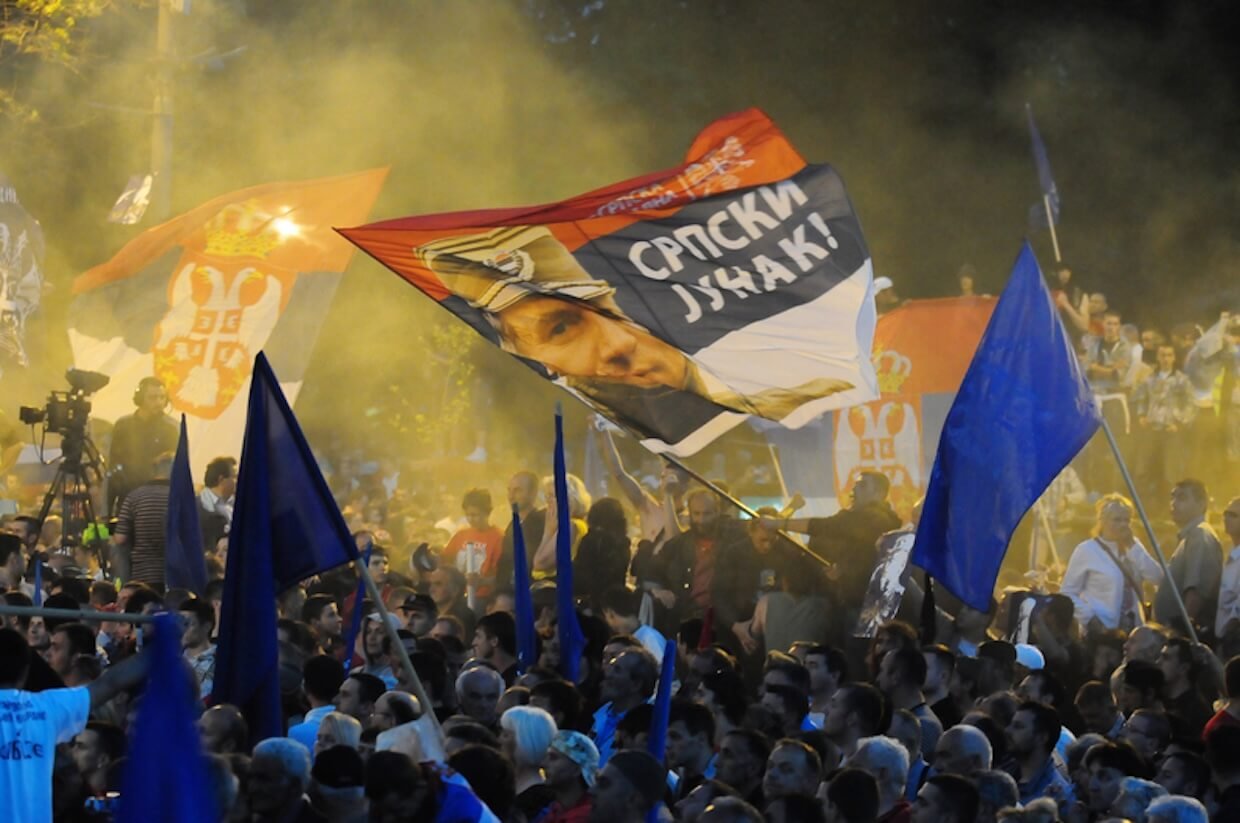
Your work stresses that unresolved memories of the 1992–95 war continue to segment society. How important are Srebrenica, competing narratives of victimhood, the commemoration or glorification of wartime actors, and memories of ethnic cleansing in reproducing contemporary political boundaries? Are these memories still genuinely decisive for voters, or are political elites strategically keeping them alive because they remain effective instruments of mobilization, as seen during Ratko Mladić’s funeral?
Professor Damir Kapidžić: They are a key component of mobilization, in the sense that they serve a purpose when political elites need them. However, I would not say they are genuinely decisive in themselves; rather, the absence or negation of some of these memories can be decisive. For example, a Bosniak politician cannot play down Srebrenica and still expect to be elected. Likewise, a Serb politician cannot place Ratko Mladić firmly in the category of war criminals and still expect to be elected.
In that sense, keeping these figures and events at least in a neutral, and sometimes positive, light becomes an important performative element of campaigning. They also serve to mobilize very specific segments of the electorate. So, political actors need to know who their voters are and strategically when and where these narratives can be used.
Some practices, such as the glorification of war criminals, are prohibited under the laws of Bosnia-Herzegovina, so politicians also have to be careful about how far they go; otherwise, they may face removal from the electoral roll. All of this is therefore used very strategically.
That said, most voters still see key moments and individuals from the war as important in a broader sense. They may be more inclined to support a politician who lays flowers or gives a commemorative speech at a memorial to a person or place that is meaningful to them, whether in Croat-majority areas or elsewhere in the country. So, there is a strong performative dimension, but mobilization also takes shape around these smaller, local sites of memorialization.
The More Likely Scenario for Bosnia Is a Slow Institutional Demise Rather Than Sudden Authoritarianism
You have argued that democratic erosion in Southeast Europe often occurs incrementally: elections continue, but governing parties weaken constraints, dominate institutions, exploit patronage, and tilt the playing field. In the Bosnian context, should we therefore be more concerned about dramatic constitutional breakdown—or about the gradual normalization of illiberal practices within formally competitive elections?
Professor Damir Kapidžić: I would argue both. Primarily, my work analyzes how institutions are gradually weakened over time so that they can be more easily captured. This gradual normalization of illiberal practices is still ongoing, and it is reinforced by a political system that sometimes rewards inefficiency.
However, there is also a flip side to Bosnia’s consociational system: it introduces another layer of checks and balances—ethnic checks and balances—which means that no single politician or party can dominate the entire political system. There are always other ethnic groups that keep that in check. You can see this, for example, at the state level. These institutions are not the main or strongest institutions, but they are almost impossible to capture because other groups are always trying to keep their foot in the door as well.
At the same time, we do see the possibility of what I would not call a dramatic constitutional breakdown, but rather a slow death. Institutions can simply stop functioning because some aspects of government formation, regulatory bodies, or judicial appointments are not strictly defined by time. So, you can simply allow these institutions to slowly die out.
We also have not talked much about the Office of the High Representative, the international body that essentially oversees the implementation of Dayton. It has been weakened to the extent that it cannot intervene effectively if these kinds of political practices intensify.
So, essentially, the gradual normalization of illiberal practices is likely to continue, but only up to a certain point before it becomes authoritarian. A more likely scenario, however, would simply be a slow demise.
Ethno-National Patronage Is Central to How Bosnia’s Dominant Parties Survive
How important are patronage, control of public resources, public-sector employment, party-linked media, and informal economic networks compared with ideology in explaining the durability of Bosnia’s dominant parties? Does ethnonationalism survive partly because political parties have successfully fused identity protection with material dependence on party-controlled institutions?
Professor Damir Kapidžić: Yes, very much so. You can clearly see that patronage is important for most parties. There have very rarely been programmatic coalition talks, even after elections. Most coalition negotiations are about the division of power and resources rather than the creation of policies.
So, you can definitely see that elements such as control over public procurement and the ability to employ people in state-owned enterprises have shaped how parties survive and how they are able to withstand the passage of time and other pressures.
There is, therefore, this element of ethno-national patronage that is clearly important, because patronage itself is also defined within the three groups. Parties see themselves not only as protectors of a group’s identity, but also as protectors of the group’s ability to distribute resources and employment.
Foreign Disinformation Remains Present, but Bosnia’s Fragmented Electoral System Makes Large-Scale Interference Difficult
Your recent work places Bosnia and Herzegovina’s democratic trajectory within a wider geopolitical and transatlantic context. As the country approaches the October 4 elections, how should we distinguish legitimate foreign influence from more problematic forms of electoral interference? What roles are the European Union, the United States, Serbia, Croatia, Russia, Turkey, Hungary, and China playing through diplomacy, party networks, media, religious and cultural ties, economic leverage, lobbying, or disinformation? Are some external actors merely supporting preferred domestic partners, or are they actively reshaping the electoral playing field and reinforcing ethnonational or illiberal politics?
Professor Damir Kapidžić: Here we do see this shifting electoral landscape. I mentioned already that even the support of the United States is shifting in terms of the parties and actors it supports. The most steadfast and clear support has actually come from the European Union, although it is much weaker and more diffuse than that of some of these other actors.
In terms of the type of foreign influence we can see, most of it is very unofficial. It operates through media channels, control of media publishing houses, and the way certain events are framed. Most of these actors are not particularly interested in what happens in Bosnia and Herzegovina, perhaps with the exception of Russia, which still wants to maintain a place where it can gain some influence. But even that has weakened compared with several years ago.
Most of the actors simply see this as a contest in which they can exert influence through what I would mostly call cheap means. If it involves generating online disinformation and specifically tilting the electoral playing field slightly toward one candidate or one party, then they might do that. But again, the problem here is that, in order to govern, you need to tilt several electoral playing fields at the same time within these ethnically defined voter groups, which in itself is a complex problem. Specifically, if we think about how the country is governed, it is not worth it.
It is not a clear yes-or-no situation, such as, for example, in Romania, where you could exert a lot of influence to get a Russia-friendly candidate elected. Here, it would take much more effort across several different voting groups, with sometimes a not-so-clear outcome.
In this sense, a lot of it is simply about supporting particular actors rather than trying to influence the process directly, but you do still see the element of foreign disinformation present.
Citizens Are More Willing Than Politicians to Compromise
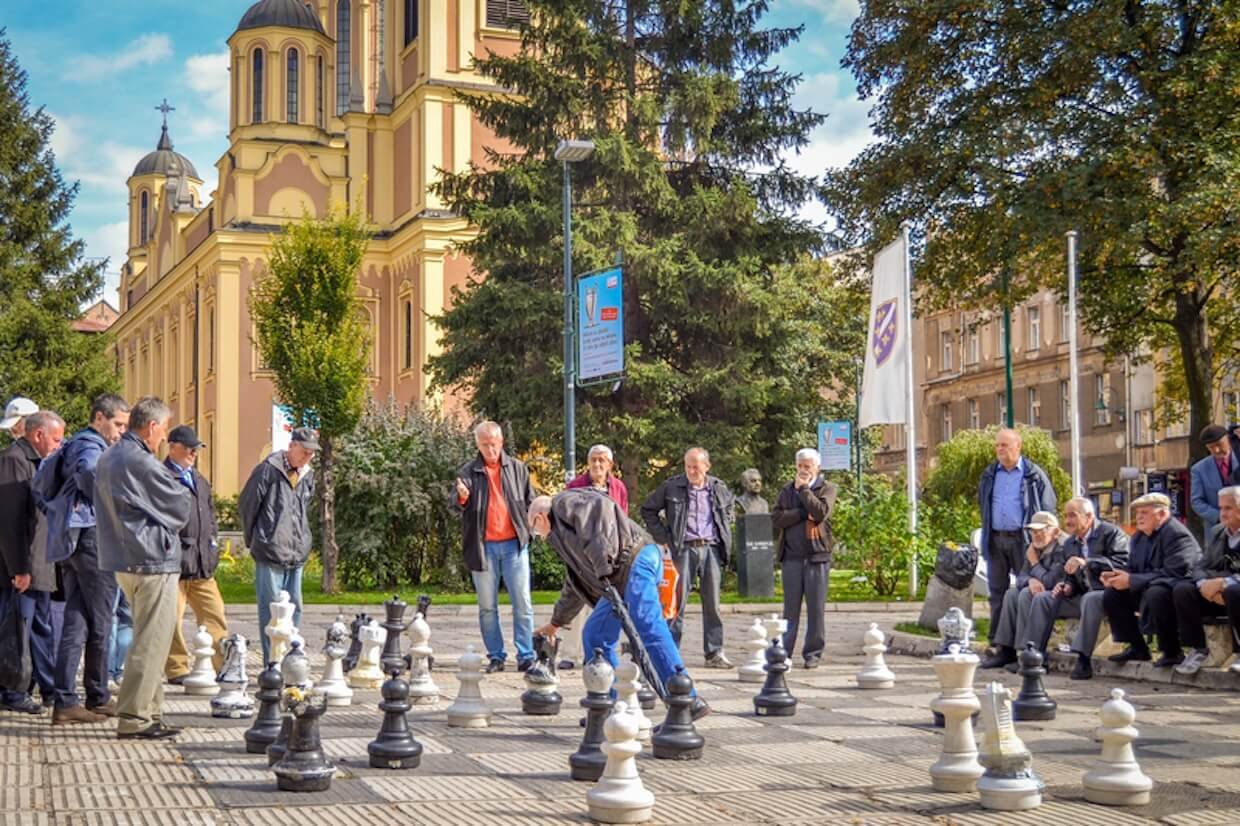
You have also written about citizens’ assemblies and other democratic innovations as possible responses to democratic deficits, polarization, and citizens’ exclusion from decision-making. In a society where representative institutions are heavily structured by ethnicity, could deliberative mechanisms create meaningful cross-ethnic political space—or would they remain too weak to challenge the deeply institutionalized power of ethnonational parties?
Professor Damir Kapidžić: Yes, there were several democratic innovations in the country, including citizens’ assemblies at both the local and national levels. At a very basic level, you could see that citizens, when deliberating among themselves, do not agree on everything, but they are much more willing to compromise and to arrive at solutions that represent a step forward—something that reflects compromise among all the sides involved. So, they are much more willing to do the work that politicians are not willing to do.
This takes place at the level of ordinary citizens: randomly selected groups that mirror the population distribution of the country in terms of ethnicity, age, gender, and so on. But you also mentioned the element of power, and the citizens here, essentially, even though they were sometimes called by city governments or the national parliament to deliberate, do not have the power to challenge these deeply institutionalized rules of governance.
So, their results and recommendations are transferred to decision makers once the citizens are done. In a sense, the citizens do not make the decisions; they create an avenue for decision-making, whether in Parliament or by government, allowing decision makers to legitimately draw on these recommendations in cases where the policy would make the country better as such.
So, in a sense, yes, they can provide a way out of political gridlock. But they themselves do not have the power to do so without institutional support from already existing institutions.
Bosnia Is Stuck in a Loop Without Clear Signposts or a Clear Path Forward
And finally, Professor Kapidžić, looking beyond October 4, what trajectories do you see as plausible for Bosnia and Herzegovina over the next several years? Could these elections open space for more functional cross-ethnic bargaining and democratic renewal, or are the country’s institutional incentives, ethnonational party structures, geopolitical pressures, foreign influence, and unresolved historical divisions more likely to reproduce the existing pattern of recurrent crisis? And what would have to change—domestically and internationally—for Bosnia to become less vulnerable to external interference and move decisively beyond what you have described as being “stuck in the past”?
Professor Damir Kapidžić: I think, by themselves, these elections won’t bring too much change. You might see different parties in government, and this is also one of the good things about the Dayton political system: transfers of power between governing and opposition parties have happened in the past without producing crisis or conflict. So, that might happen. However, a different mode of governing, non-ethnic politics, or even democratic renewal is highly unlikely.
In a political sense, Bosnia is very stable, but also stable in a negative sense, in that progress happens either very slowly or not at all. In a sense, this is best described as being stuck in the past. The past here is not so much the wartime past, but rather the past 30 years of very little changing.
So, what would need to happen for this to change? Mostly, there would need to be a change in the external environment and in the incentives for politicians to act differently. We have not seen any meaningful change in the external environment over the past 20 years, even though globally there have been massive changes, with the Russian invasion of Ukraine, the rise of China, AI, and the United States moving more toward nationalist politics.
But for the region itself, not much has changed, and this is what produces this pattern of recurrence in Bosnia-Herzegovina. You don’t see a clear way forward, whether toward the European Union or elsewhere. There are very few alternatives. You’re stuck in a loop, trying to figure out in which direction you want the country to develop, without clear signposts, clear guidelines about the possibilities, or a clear path forward.