In this ECPS interview, Professor Michael Kazin, a leading historian of American populism, social movements, and the Democratic Party, examines the asymmetrical rise of MAGA and democratic socialism in contemporary US politics. While stressing that the American left can significantly influence Democratic priorities, Professor Kazin argues that it has historically failed to take control of the party and concludes that “the Democratic Party will not become a socialist party anytime soon.” He links this limitation to the decline of organized labor, noting that Democratic class appeals increasingly come “from the top down.” At the same time, Professor Kazin contends that Democrats cannot simply return to the politics of Obama or Biden and must confront inequality, healthcare, housing insecurity, corruption, and distrust in government more fundamentally.
Interview by Selcuk Gultasli
As the United States approaches the November 3 midterm elections, American politics is being reshaped by two powerful but asymmetrical currents: the consolidation of MAGA within a highly personalized Trump presidency and the growing visibility of democratic socialism within a Democratic coalition that remains considerably broader than its left flank. This tension provides the backdrop to the ECPS conversation with Professor Michael Kazin, Professor of History at Georgetown University and Editor Emeritus of Dissent, a leading historian of American populism, social movements, and the Democratic Party. Professor Kazin’s scholarship has long explored the political language of “the people,” the evolution of the American left, and the relationship between social movements, class politics, and party transformation. Georgetown likewise identifies Kazin as a scholar of US political and social movements, while his influential The Populist Persuasion traces recurring conflicts between “the people” and powerful elites across American history.
At the center of the interview is a fundamental question about whether the current revival of democratic socialism can move beyond insurgency and become a durable governing force. Professor Kazin’s answer is deliberately cautious. While the left can exercise substantial influence within the Democratic Party, he stresses that “historically, at least so far, it has not been able to take over the party entirely.” His conclusion is unequivocal: “The Democratic Party will not become a socialist party anytime soon.”
Yet Professor Kazin does not equate this electoral ceiling with political irrelevance. He argues that the contemporary left resembles earlier progressive factions that transformed Democratic priorities without controlling the party. Bernie Sanders demonstrated this dynamic in 2016 and 2020, while the Democratic Socialists of America (DSA) have developed substantial organizational capacity in heavily Democratic cities. For Professor Kazin, their influence illustrates how a faction “does not control the party, but it can have a great deal of influence over it.”
The deeper obstacle, however, is organizational and social. Professor Kazin identifies the decline of organized labor as a critical reason Democrats struggle to construct a persuasive class-based politics. When unions were stronger, working-class appeals came from workers speaking to other workers; today, he argues, “when Democrats make a class appeal, it comes from the top down.”
This diagnosis also shapes Professor Kazin’s understanding of the post-Trump Democratic Party. He argues that Democrats increasingly recognize that they “cannot simply return to some of the policies of Obama or Biden” and must confront long-standing problems including economic inequality, healthcare, housing costs, and distrust of government. In this sense, the interview presents democratic socialism less as an imminent replacement for mainstream Democratic politics than as a persistent force capable of shifting the boundaries of what the party considers politically necessary and possible.
Here is our interview with Professor Michael Kazin, edited lightly to enhance clarity, readability, and overall flow for publication.
The Midterms Are Both a Referendum on Trump and a Traditional Judgment on the Incumbent
Professor Kazin, welcome! The November 3 midterms are taking place with an exceptionally narrow congressional balance, weak public evaluations of the economy, and Donald Trump remaining unusually central to an election in which his own name is not on the ballot. More registered voters have described their congressional vote as a vote against Trump than as a vote for him. Should we understand this election primarily as an ordinary midterm judgment on an incumbent administration—or as a broader referendum on Trumpism as a political regime and governing philosophy?
Professor Michael Kazin: Every midterm election in the United States is primarily determined by voters’ views of the incumbent administration. That has pretty much always been true throughout American history. If Trump were more popular, Republicans would probably retain control of the US Senate and might also be able to retain control of the House. In that sense, this is a typical midterm election. Trump’s popularity is somewhere around 37–38% on average across most polls. Clearly, he is most unpopular on the economy, which is, of course, the major issue for most voters here and in most democratic countries most of the time.
At the same time, as everyone reading this knows, Donald Trump is not like most presidents. He is an authoritarian figure, but a very good performer. Those who love him really love him, and he has a movement behind him that is part of the Republican Party but, in some ways, independent of it: the MAGA movement. At the same time, the antagonism he draws from opponents, both former Republicans and Democrats, is also quite intense.
So, I’m not sure you can say there is a coherent Trumpism. So much depends on what Trump decides he favors or opposes on any given day or week. There are certain elements that have been around for a while, but in general, he is perceived as a particular kind of political personality. People who like him identify with what he hates, and people who hate him identify with what they hate about him.
In that sense, the midterm election is both a traditional referendum on the incumbent party and president and an election driven by an intensity of emotions on both sides because of Trump himself.
Republicans May Keep Trump’s Policies Without Trumpism
You have spent much of your career studying how political movements reshape American parties. Has MAGA now accomplished something historically unusual by transforming the Republican Party not simply programmatically but organizationally and emotionally around a single leader? Is MAGA still best understood as a faction within the GOP, or has it become the party’s dominant political identity, with older Reaganite conservatism reduced to a subordinate tradition?
Professor Michael Kazin: On the one hand, certainly, MAGA and those who support Trump or remain loyal to him pretty much no matter what he does are the dominant force in the Republican Party. Yet, because his administration has been so personalist, so narcissistic, and so focused on whatever Trump believes or says on any given day or week, it is unclear what will happen after he leaves office in 2029.
In fact, the debate over what the Republican Party stands for will probably begin the day after the midterm election, on November 4th, because that is when Republicans who want to run for president will begin thinking: What chances do I have? What relationship will I have with the president?
If Trump continues to be unpopular, many Republicans will try to continue some of his policies without identifying with a movement so closely connected to Trump personally. One analogy, interestingly enough, and perhaps not one you would expect to hear, is between Trump and Franklin Roosevelt.
When Roosevelt was elected in 1932, he was elected, as Trump was in 2016, largely as someone criticizing an incumbent administration that was perceived as having failed to solve the economic problems of ordinary Americans. Of course, there was the Great Depression in 1932, which was very different from the economy Trump inherited in 2017. At the same time, the Democratic Party, which already contained elements of Roosevelt’s politics and of New Deal politics before the New Deal began, was nevertheless very much reshaped by Franklin Roosevelt. The New Deal was very much Roosevelt’s New Deal. The Democratic Party was very much Roosevelt’s party, even after he died in 1945, and arguably remained so until the 1970s or 80s, or, some might say, until Bill Clinton’s administration in the 1990s.
In that sense, the difference is that Roosevelt was all about policy. He was a very charismatic figure. People loved him or hated him, in ways somewhat similar to Trump. Yet he was a more serious world-historical figure. He had a deeper understanding of historical trends and was trying to find a way, when they took power, between fascism and communism, in a way that Trump does not have that perspective.
But both of them, of course, took power at a time of crisis, when many Americans felt that the existing party structures were no longer serving their interests. So, in that sense, there is a similarity.
Trumpism Has Deep Roots in American Populism
In your classic work on American populism, you emphasize the moral language through which political actors divide society between ordinary people and powerful elites. How would you locate Trumpism within that tradition? Does MAGA represent a distinctively American populism because it combines vertical resentment against elites with horizontal antagonism toward immigrants, cultural minorities, and perceived internal enemies—and an institutional conflict between presidential authority and bodies that constrain it?
Professor Michael Kazin: You’re the authority on world populism more than I am, but, just to answer the second part of the question first, I think there are a lot of common elements between Trump’s populism and the populism of Rassemblement National (RN) in France, the AfD in Germany, and maybe the Sweden Democrats in Sweden—some of these right-wing populist parties.
They all share an antagonism toward immigrants; they all seek, in some sense, to revive a notion of French identity, or what it means to be Swedish or German, defending a kind of heritage culture associated with those nations. They also, of course, identify internal enemies, whether globalists or culturally woke people, whatever you want to call them. Of course, this differs from one country to another.
In that sense, there is a commonality between Trump’s form of populism and the populism that is, in many ways, more resurgent in Europe right now than it is in the United States, because as Trump has become unpopular in the United States, so has his particular form of populism.
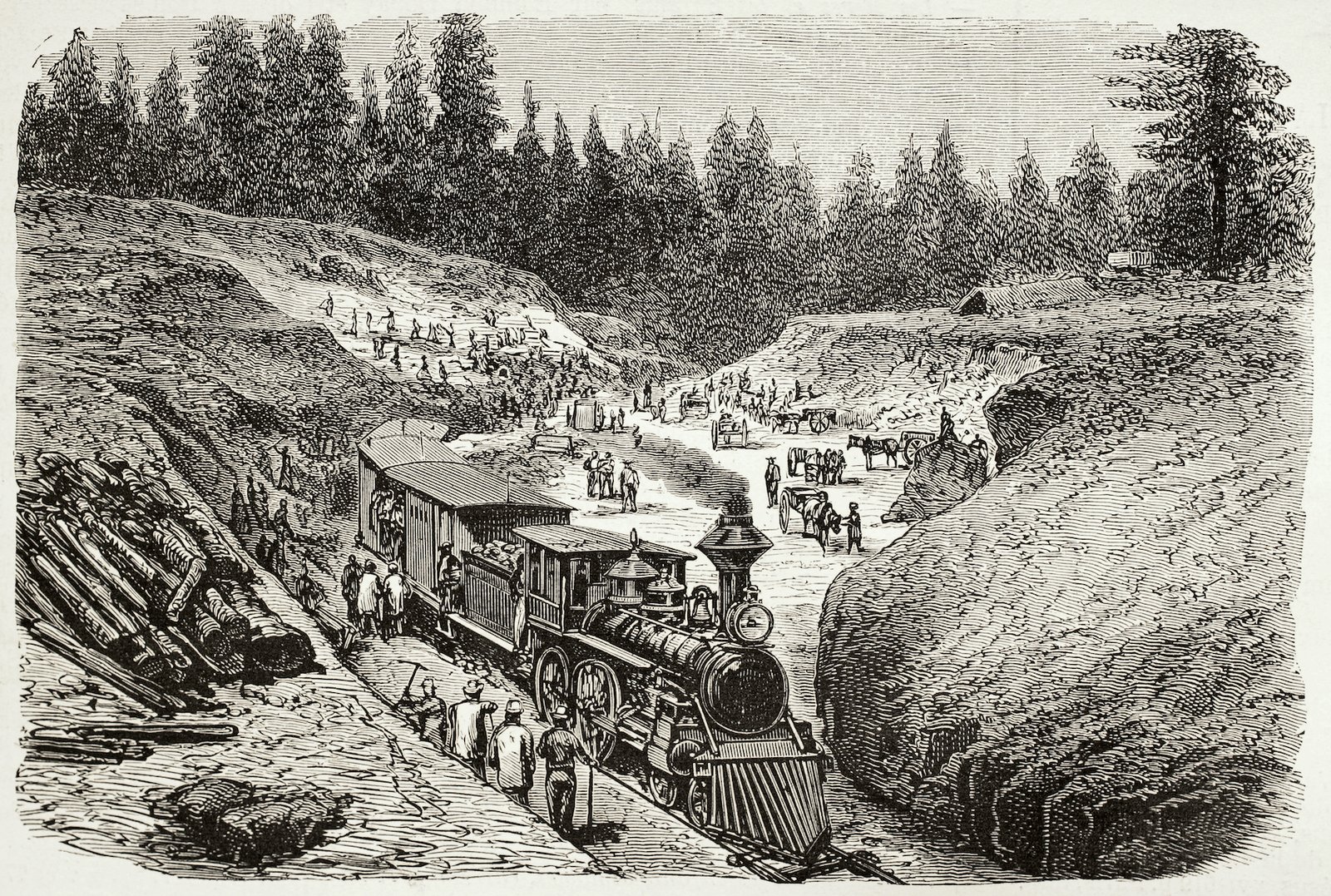
But this is, to a certain degree, different from what I understand about European populism, because many of the themes in Trump’s populism go much further back. I wrote about this in my book, The Populist Persuasion. There have been, for example, labor populists such as the Workingmen’s Party of California, which was a short-lived but very powerful party in California in the 1870s and early 1880s. It took over the government of California with a dual message: regulate the railroads, which were major corporations in America at the time, especially in California, and expel the Chinese.
The Workingmen’s Party brought together white working-class people from a range of European ethnic backgrounds—Irish, Germans, Scandinavians—against the power of the major corporation in America at the time, the Southern Pacific Railroad, and against the Chinese. More and more Chinese immigrants were coming to the United States and were accused of taking jobs away from white Americans.
You can see some parallels in those parts of Trump’s coalition that at least make noises about being pro-labor, even pro-union—people like Senator Josh Hawley from Missouri, some of the post-liberal intellectuals who have had an important impact on J.D. Vance, for example, and Vance himself, who has said positive things about unions.
Father Coughlin, the Canadian-born Catholic priest who was the most popular radio personality in America in the 1930s, based his anti-immigrant, anti-communist populism on the encyclicals of the Catholic Church, Rerum Novarum and Quadragesimo Anno, two important labor encyclicals. Actually, the current Pope Leo named himself Pope Leo after an earlier pope, Leo XIII; he is Pope Leo XIV.
I think there are precedents for a populism on the right that opposes a cultural elite, and sometimes an economic elite, at the top while opposing usually dark-skinned, non-European immigrants at the bottom. That has been powerful at different times, and it almost always contains strong elements of racism. But it also carries a powerful sense that we have to return to a better America—one that was less multicultural and in which there was a much clearer sense of who the real Americans were. In that sense, it is very similar to what Trump is saying now.
Trump’s Personalism Is Powerful but Time-Limited
Much of Trump’s politics revolves around personal loyalty, personal grievance, personal vindication, and the presentation of political victories and defeats as judgments on himself. Without making a clinical judgment about his personality, can we speak historically of a form of political narcissism or, more precisely, extreme personalism? What happens to a party and a constitutional system when the distinctions between leader, movement, party, presidency, and “the people” become progressively blurred?
Professor Michael Kazin: It’s a great question. Every effective authoritarian leader is also personalist and, in some sense, says in their own language, l’état, c’est moi, even though that phrase was originally associated with a monarch, a non-elected ruler.
In that sense, analogies between Trump and Mussolini, Hitler, and Stalin are relevant, but perhaps more relevant are figures like Berlusconi in Italy, who also came from a media background, as Trump did. This kind of personalism can be very effective, at least while it remains effective, because policies matter less, and disagreements over policies matter less, than loyalty to the person in charge of the system. As long as that person remains broadly popular, he can get his policies through to a certain extent, as Trump was able to do when he was more popular.
The weakness is that so much depends on the personality. If that personality dies or becomes unpopular, as Trump is now, it produces not exactly a vacuum, but certainly a competition for leadership. That competition will inevitably be won by someone who does not have the charisma or magnetism that Trump had at his best, because there is no other figure who can simply become another Trump, just as you cannot have another Mussolini, another Hitler, another Stalin, or even another Berlusconi.
People tire, to a certain degree, of that kind of personality. Of course, sometimes such leaders bring the nation to ruin, as Mussolini and Hitler did. So, I think personalism has a time-limited impact on the political system itself.
Trump’s Longer-Term Institutional Impact Will Matter Most
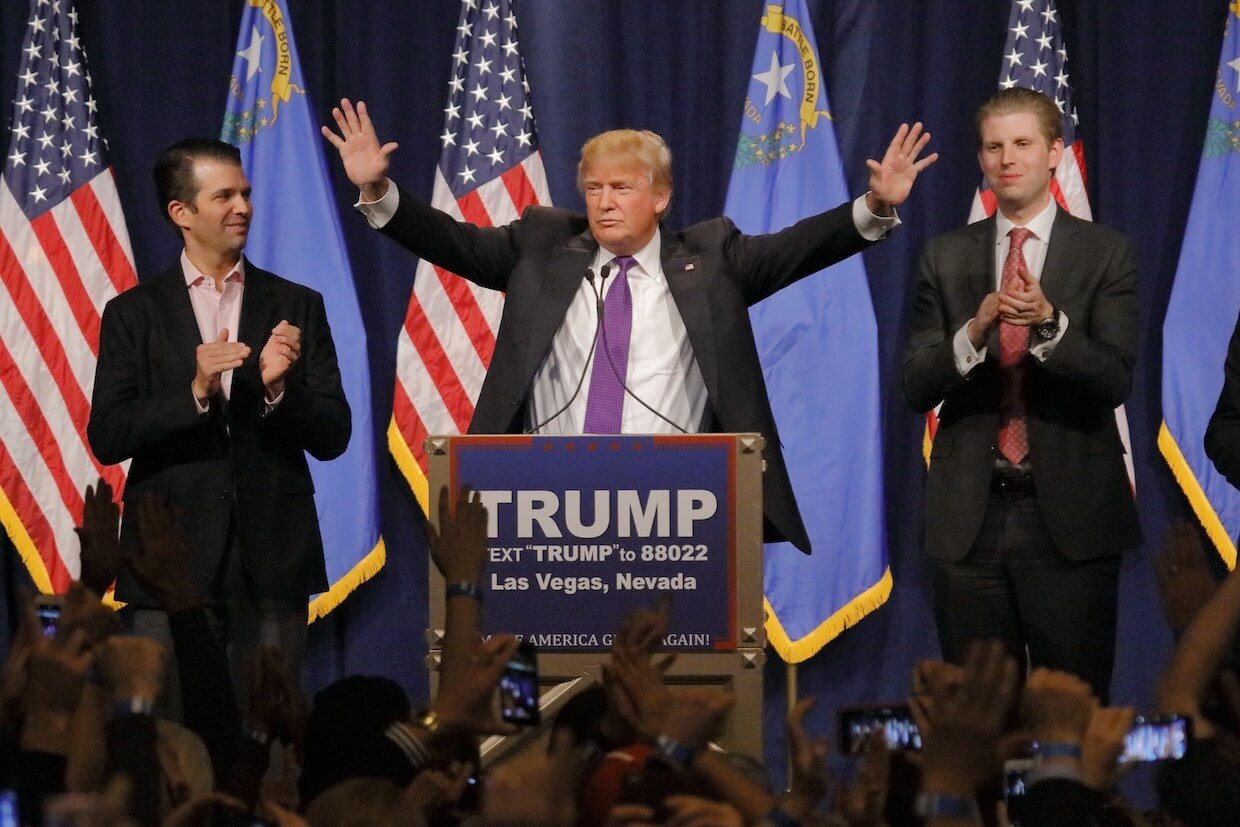
Democracy-monitoring organizations now describe significant deterioration in executive constraints, civil rights, media freedom, and institutional autonomy under Trump’s second administration, while courts, elections, state governments, and civil society continue to function as meaningful counterweights. From the historical perspective of American democracy, should we describe this as democratic backsliding, competitive authoritarian drift, or another episode in the country’s long history of illiberal practices coexisting with electoral democracy?
Professor Michael Kazin: As a historian, I have a hard time predicting the future, and your question really gestures toward the future. What will be the impact of Trump and MAGA after he leaves office? I don’t know. That depends so much on events in this country and events in the world.
The American political system, as much as Americans like to think their country is exceptional and somehow immune from what’s happening elsewhere in the world—the world economy, world politics, wars—is not. It never has been. It cannot be, given the way the modern world is structured.
So, I don’t really know what’s going to happen. I do know, certainly, that Trump has been responsible for some acts that other presidents would not even think about. Take the corruption involved, for example. By some estimates, he has made over $2 billion so far during this term in office because of his investments in cryptocurrency and other investments. Other presidents would not necessarily have been driven out of office over this, but it would have been a major issue: the corruption of the Trump administration. But it is not. The issue is out there, and Democrats are trying to make a big deal of it, but it has really had very little traction among most voters, at least according to public opinion polls.
Other acts, especially things like trying to put his name on the Kennedy Center and trying to change the way history is presented in public museums in America, matter to people like me, as a historian and a political person on the broad left, but I don’t think they matter to most Americans. In the end, their impact will probably be fairly small.
It is interesting that, even though his image is that of a cultural disruptor, it is really the more traditional issues on which he has been failing, and those are the issues historians are likely to judge him by more in the future. These include the tariffs he has imposed rather incoherently on much of the world; the war in Iran, which was immediately unpopular among much of his base as well as others; inflation; and the general deterioration of government agencies like the National Institute of Health, which is a crucial agency for funding health and medical research in this country. Doing away with the foreign aid agency matters as well.
All those acts will be seen as more important in the future, depending on what happens after he leaves office, than the stories that receive the most attention on social media and in the main newspapers. The daily outrages that Trump is responsible for will be less important than the longer-term consequences of some of the structural changes he has tried to make.
Trump’s Attacks on Cultural Elites Have Historical Precedents
Populists have historically attacked establishments for excluding ordinary citizens from power. But under Trump, universities, journalists, judges, prosecutors, civil servants, scientists, and regulatory bodies are increasingly represented not merely as elites but as partisan enemies. Does this constitute a qualitative change in American populism—from challenging concentrated power to delegitimizing institutions whose independence is essential to liberal democracy?
Professor Michael Kazin: Not really. I teach a course on voting and elections in US history, and I’m teaching it right now to undergraduates at Georgetown. We recently had a section devoted to the elections of the 1820s, when Andrew Jackson became president.
When Jackson lost the election in 1824, he accused his opponents of a corrupt bargain funded by the banking elite. Then, when he became president in 1828, he was successful in doing away with the central bank, the Second Bank of the United States, which he accused of trying to further the economic interests of his political opponents.
He used populist rhetoric very strongly, as I discussed in my book on populism—the language of the money power, the financial elite, the monster bank, and so forth. Democrats continued to use that rhetoric, applying those terms to different forces and institutions, for the next 100 years and more, actually through the New Deal.
Republicans, similarly, especially since Ronald Reagan, have talked about a cultural elite made up of un-American or anti-American professors and, sometimes, actors and intellectuals more generally, who are portrayed as always blaming America even though they are making a good living.
In a two-party system such as the one we’ve had throughout the history of the US as a republic, it’s not surprising that each party, at different times, uses populist rhetoric to depict the other side as the party of the elites. The definition of the elites changes, and the definition of the people each party embraces changes as well, depending on that party’s particular ideology at the time.
In that sense, because populism is, after all, a language of opposition between the people and the elites, and because in a two-party system one party will always win and the other will always lose, it makes sense that partisan attacks will often be couched in populist rhetoric.
The Decline of Unions Has Weakened Democratic Class Politics

One of the striking asymmetries of contemporary American politics is that right-wing populism has effectively captured the Republican Party, while left-wing populism remains an insurgent current inside a much broader Democratic coalition. Given your argument that American progressives should revive a class-centered populism, why has the right been more successful than the left in converting anger at economic inequality, globalization, and elite institutions into a durable mass political identity?
Professor Michael Kazin: Again, I would put a caveat on that. The Republican Party under Trump was able to do that for at least a period of time, but now it is having a much harder time doing so because Trump is in power again and is clearly favoring the economic elite, including those AI companies. He is very close to the richest man in the world—or at least he was, and still is to a considerable extent—Elon Musk. So, the Republican Party under Donald Trump is having a harder time advancing that idea than it did before.
Democrats are a coalition of different constituency groups. Even though they are not a majority party right now, they are, demographically, a broader party than the Republicans. Republicans are predominantly a party of white Christians, who are the majority group in the country, but that is more limited. Democrats are a party of more recent immigrants, African Americans, and liberal, progressive, middle-class professionals like me. So, Democrats have a harder time focusing on one unified message, especially one that emphasizes class more than multiculturalism and cultural respect for difference, including transgender people and people of different ethnic and religious backgrounds.
Because Democrats need to keep these different groups together in order to win, they have a harder time saying, no, we have to focus primarily on class and economic inequality. Now they are trying to do that in this election. Affordability is the buzzword, and it really gestures toward economic inequality, because clearly rich people have no problem affording not just the basic commodities and resources they need, but also fancy vacations, first-class air travel, and so forth.
But another real problem Democrats have—and I have written about this a lot, both in my book on populism and in my recent history of the Democratic Party, What It Took to Win—is that Democrats had a much easier time focusing on class antagonisms and class inequality when there was a sizable labor movement that was very much part of the Democratic constituency.
The New Deal, Roosevelt’s great success, and the New Deal Democrats’ dominance of American politics, both nationally and in most states at the time, would not have been possible without the organized labor movement quintupling its membership between 1933 and 1945, from 3 million members when Roosevelt took office to 15 million at the end of the Second World War.
Unions were an important counterweight to the support that big business gave, especially to the Republican Party. Even financially, unions gave almost as much money to Democrats in campaigns in the 1930s, for example, as business gave to the Republican Party, which is astonishing when you think about the difference in potential resources.
Of course, unions, by their nature, are working-class organizations. So, the decline of labor unions has not only contributed to widening economic inequality in America, but has also meant that many working-class people who, in earlier periods of American history—especially in the 20th century—would have been union members, known union members, or at least known how to organize a union because they knew someone who had done it, no longer have that experience.
There has been such a slow but long decline in the size and influence of labor unions in America over the last 30–40 years that, when Democrats make a class appeal, it comes from the top down. By contrast, when labor unions made that appeal—vote for Democrats because they are the party that supports unions, the party that supports working-class interests—it was working-class people talking to other working-class people.
That is always going to be much more powerful in politics in any democratic nation. When people you trust—your family, your neighbors, your coworkers—talk to you about politics, it is always going to be much more powerful and convincing than seeing an ad on the internet or hearing a Democratic president or senator on television saying something about working-class interests, because Americans are pretty cynical about politics and politicians.
I think that is part of the problem Democrats are having. To summarize a long answer, the problem with Democrats making a class appeal is, first, that they are a broad party. There are people, especially those who call themselves socialists now, who want to push a class appeal much more strongly, but they are still a minority in the party, and Democrats also need to keep their broader coalition together. In addition, there is not really a strong group of working-class people who consider themselves Democrats and are able to make that argument within the party.
Populist Rhetoric Usually Contains Conspiracy Thinking
You have argued that Democrats and progressives need a more forceful politics of class inequality, particularly to reconnect with working-class voters who believe the economy is “rigged” against them. But how can a left populism construct a powerful “people versus oligarchy” narrative without reproducing the conspiratorial thinking, scapegoating, and anti-institutionalism associated with much of right-wing populism? Where, in your view, should democratic populism draw its normative boundary?
Professor Michael Kazin: Great question. Populist rhetoric usually contains a strain of conspiracy thinking; it just does. If you’re angry about what you perceive elites are doing when they control your society, and about how they control it, you tend to assume that they are acting not because they have good motives or because they genuinely believe, for example, that a corporate economy that is lightly regulated—or not regulated at all—is better for society than one that is more tightly regulated. Populist speakers tend to attribute very bad motives to their opponents.
I think that’s simply human. You don’t want to empathize with those you oppose, because that weakens the emotional power of what you’re saying and, in turn, the political power of what you’re saying as well.
The People’s Party, the original populists in the United States who gave populism its name in the 1890s, talked in their original platform, the Omaha Platform of 1892, about a conspiracy hatched on two continents. That’s the wrong verb, but they put conspiracy right there in what was essentially the founding document of the Populist Party in America.
I think there are ways to do this without focusing so much on conspiracy. Franklin Roosevelt, for example, in his acceptance speech for the Democratic presidential nomination in 1936, when he was seeking a second term, talked about “economic royalists,” whom he compared to the British monarchy from which the United States had declared and won its independence in the late 18th century.
Roosevelt didn’t accuse corporate leaders of being greedy and simply wanting more money for themselves. He said they had the wrong ideas about how America should be run. It wasn’t apathetic, but it was more respectful toward his opponents. Even though he was angry with them, he understood that they had a different conception of how the economy should be run—more hierarchical and, in effect, more authoritarian.
Bernie Sanders, when he talks about billionaires running American society—oligarchs, another term he uses—similarly does not accuse them of huddling in secret in a conspiracy to deprive ordinary Americans of their liberties and drive down their wages. He says they want things the way they want them. They want to remain in power, and that in itself is immoral.
So, one can put conspiracy behind you, at least as a lesser theme in populist rhetoric. But again, it is often more powerful simply to say that the people you hate are evil personally, not just politically.
Democratic Socialists Can Push the Party Left but Not Take It Over
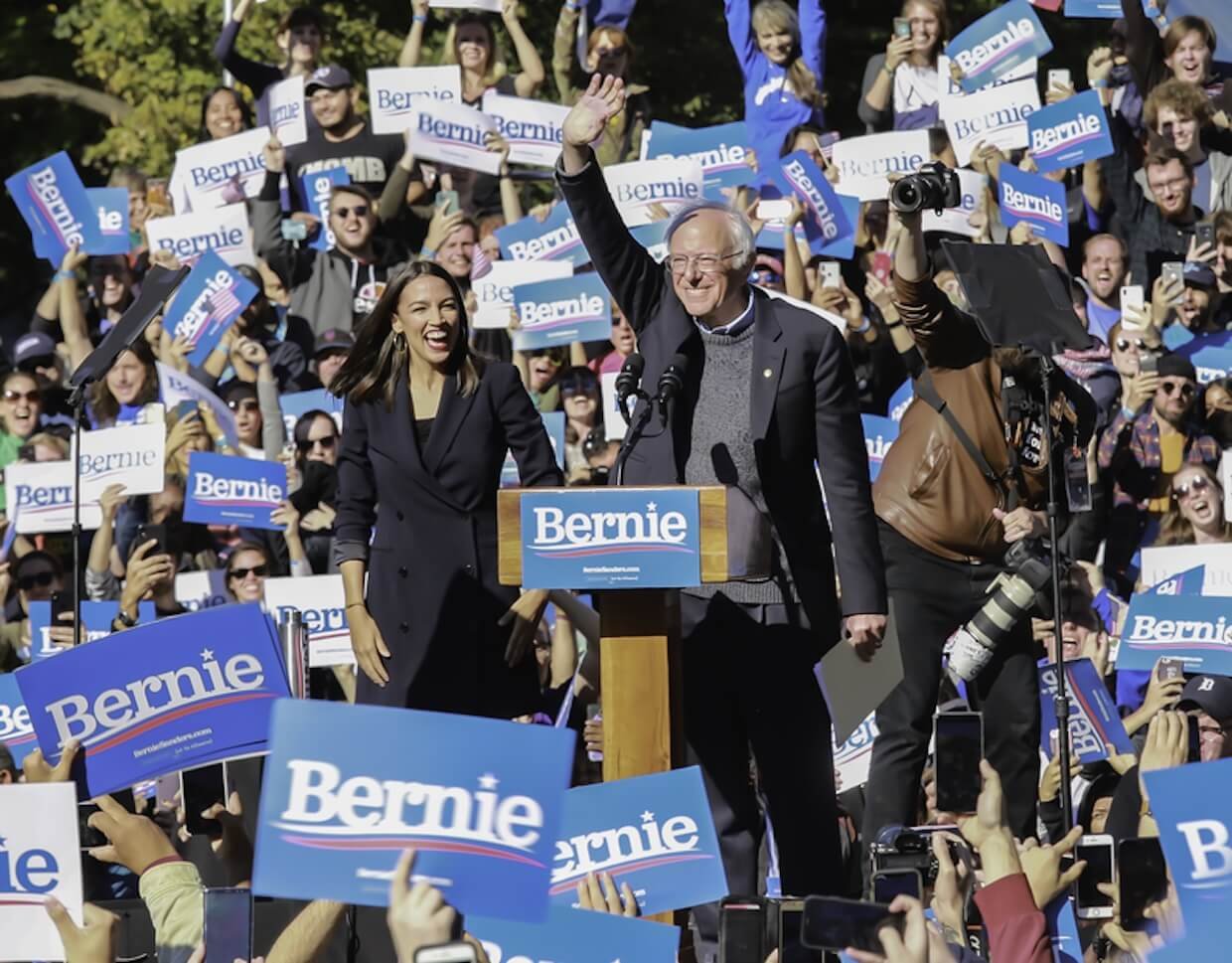
Democratic socialism has gained greater visibility through Bernie Sanders, Alexandria Ocasio-Cortez, Zohran Mamdani, DSA-backed candidates, and a younger activist constituency, yet it remains far from controlling the Democratic Party. You have long argued that leftists and Democrats are mutually dependent because social movements can generate pressure while only electoral power and the state can institutionalize reform. Does the current moment offer democratic socialism a plausible route from insurgency to durable influence within the Democratic Party, or does its geographic and demographic concentration still impose a clear electoral ceiling?
Professor Michael Kazin: Great question. Of course, we won’t know the answer until we know the results of this election and whether a socialist runs for president again the way Sanders did. Sanders won’t run in 2028, but Alexandria Ocasio-Cortez might, although I think she probably will not in the end. That depends on her own ambitions and how she thinks she can best advance them.
As you say in your question, what’s happening now in the Democratic Party is a good example of something that has happened before: a left or progressive faction within the party does not control the party, but it can have a great deal of influence over it.
That is certainly happening now. It happened with Bernie Sanders in his presidential campaigns in 2016 and 2020. After the 2020 campaign, in which he was clearly Joe Biden’s main competitor, the Biden and Sanders factions came together and made a compact, and Biden accepted some of Sanders’ platform proposals. Under Biden, even though many Americans did not realize it, the Democrats actually pursued a more progressive set of policies than they had in a long time, even more than under Barack Obama.
Something else is happening that has happened before in American history: Democrats on the left tend to attract younger people, who are, by their nature, more visionary, more willing to demand much more, and less willing to moderate their demands. The attitude is: let’s say what we really want instead of what we can get in politics.
Then there is the Democratic Socialists of America. Before Bernie Sanders first ran for president, DSA was a very small, fairly inconsequential organization. It now has 120,000 members. That is not huge, but it nevertheless makes DSA the largest socialist organization in America since the Communist Party during World War II. That was a different situation, of course, because the Communist Party was supporting the government at the time in the fight against fascism.
Where DSA is strong—in very Democratic cities like New York, Seattle, Philadelphia, and Washington, DC, my own city—it has put together something like a Democratic machine to support its own candidates within the Democratic Party. The Democratic Party, like the Republican Party, has in many ways become what two political scientists call the “hollow parties.” It’s a very good book, actually, by Dan Schlozman and Sam Rosenfeld.
So, in very Democratic cities, DSA has shown that it can put together a machine of canvassers, mostly volunteers, who go around trying to influence how people vote. When they get behind a particular candidate whose opponent does not have that kind of backing or that kind of moderate centrist machine behind them, DSA candidates have been able to defeat more establishment, more centrist Democrats in congressional districts in New York City, for example, in the recent primary there.
The fact that Mamdani himself was able to defeat a not very popular figure, but still a former governor, Andrew Cuomo, in the mayoral election happened in part because 100,000 people were organized by DSA to canvass for Mamdani. That’s a lot of people, even in a city as large as New York, with 8 million residents. Most of those canvassers were not DSA members, but they were organized by DSA to knock on doors and apartment doors and persuade people to vote for Mamdani. Without that support, Mamdani would not have won.
Going forward, the problem the left faces in the Democratic Party is the same problem it has always faced in American politics: it can be an important influence and even an irritant to more establishment figures, but it has almost never been able to become a majority within the party, with very few exceptions.
In 1972, for example, the Democratic campaign led by George McGovern was basically controlled by the left of that period, but he lost so badly that this dominance did not continue.
This year as well, if the Democrats win a majority in the Senate, which is possible, they will do so because more moderate candidates win elections in very Republican states like Iowa, Alaska, and North Carolina. If Democrats control the Senate, there will be a battle between more left-wing Democrats, whether socialists or not, who want to push policies such as the Green New Deal and probably cutting off all aid to Israel, and more moderate figures who will likely support policies closer to Joe Biden’s on many issues.
So, it’s a perennial problem for the left. It can push some of the party’s policies further to the left and win elections for its own candidates in very pro-Democratic Party areas, districts, and states. But historically, at least so far, it has not been able to take over the party entirely. The Democratic Party will not become a socialist party anytime soon.
Democrats Cannot Simply Return to Obama or Biden
The Democratic debate is often framed as a conflict between moderates and democratic socialists. But is that too simplistic? Is the deeper argument actually between two theories of Trumpism—one holding that restoring constitutional norms, competence, reproductive rights, and institutional stability can rebuild a majority, and another arguing that Trumpism cannot be defeated durably without confronting inequality, concentrated wealth, housing costs, healthcare, and working-class insecurity much more aggressively?
Professor Michael Kazin: That’s a very good question, and all your questions are very good questions, I must say.
A few months ago, I would have said that you were correct: on one side, more centrist and moderate Democrats were saying, just get rid of Trump and return to a more sane, responsible set of government policies; on the other, the left was calling for a completely different kind of government and fundamental changes in the American economy and American politics.
But part of the benefit of Trump to Democrats has been that he has moved almost all Democrats to a position where they realize that, if they take power again, they cannot simply return to some of the policies of Obama or Biden. Biden’s policies were already somewhat further to the left, but most Americans did not even know what they were because he was so poor at communicating them.
Democrats need to address some of the festering problems that have been present in America for 50 years, arguably since the end of the New Deal order: increasing economic inequality, lack of access to good healthcare, the difficulty Americans face in paying for housing, and the broader, more world-historical problem of the gradual decline of the US in the world order since the end of the Cold War.
So, I think even more moderate Democrats, such as Governor Josh Shapiro of Pennsylvania or New York Governor Kathy Hochul, and even figures who are very unpopular on the left of the party, such as Hakeem Jeffries, the minority leader of the House, and Chuck Schumer, the minority leader of the Senate, at least pay lip service to the idea that we need important changes—not radical changes, necessarily, but fundamental changes in the way the economy works.
Part of this focuses on the unpopularity of data centers and fears about artificial intelligence. But part of it is also a response to what has been clear to anyone looking at American society over the past few decades: a large majority of Americans do not trust the government to help them and believe that politics is corrupt—that both parties and politics more generally are corrupt.
There are also many ideas that would be incredibly popular if they were passed and that seem very simple. For example, prohibiting members of Congress from investing in the stock market or other securities while in office has not been passed, even though it would be incredibly popular and has support among a minority in both parties.
So, if Democrats win again, even though the left will not control the party, I do not think you will see the same division you described before. It is already clear that Democratic candidates who are likely to win this year are, for the most part, not just running against Trump. They are running on issues they believe Trump has exacerbated—housing costs, inequality, and corruption.
And there is a hunger here, as there is in Europe and some other countries as well, for politicians who talk and act in ways that are quite different from the establishment center-right and center-left parties.
Now, will Democrats be able to do that? I don’t know. It depends on all kinds of different factions within the party and on what can and cannot be achieved legally. But nevertheless, it is important that the Democrats will not be the same party if they gain control of both houses of Congress this year, and certainly will not be the same party if they win the presidency in 2028, as they were in 2024.
Trumpism Will Not Exist in the Same Form After Trump
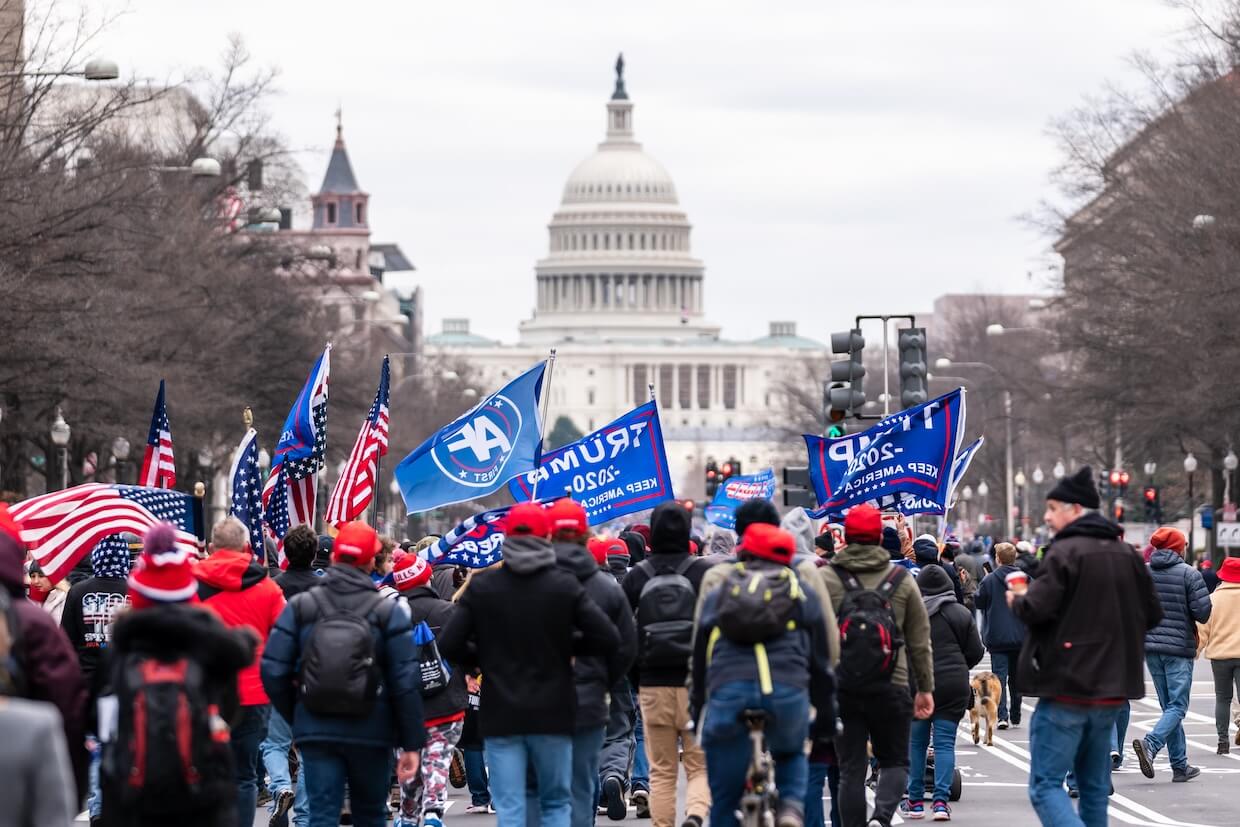
And finally, Professor Kazin, looking beyond November 3 and toward the post-Trump era, do you expect Trumpism to become a durable ideological tradition capable of surviving its founder, perhaps under figures such as JD Vance, or is its extraordinary dependence on Trump’s personal authority ultimately a source of weakness? On the Democratic side, can democratic socialism and a broader class-based left populism move from metropolitan and activist strength toward a national governing coalition? More broadly, are we entering a lasting era in which American politics will be structured by competing populisms—or is there still a plausible route back to a less personalized, less polarized form of mass democratic politics?
Professor Michael Kazin: I’m not a prophet. I’m a historian. I can tell you what happened in the 1890s or 1930s much better than I can tell you what will happen in the 2030s. But, as you know very well, populism is a language, a rhetoric, a worldview that thrives in times of crisis and does less well when most people in a given country are more or less content, more or less satisfied with what is happening in their country. So, in the end, much depends on what happens in the US and on the relationship between the US and the rest of the world.
I do think it is quite likely that America’s slow decline in the world will continue economically, and maybe even militarily, although that is less certain. Leaders of both parties will want to find someone to blame. In a two-party system, they will blame people in the other party. That’s the way it always works in a two-party system.
The question of what kind of populism it will be, of course, is always an open question in America. As a Democrat, I would like Democrats to focus on a politics of populism that is mostly about class inequality and accompanied by policies aimed at narrowing the class gap and making ordinary Americans better off and more secure in their lives.
But there is also the problem of climate change and the question of economic growth. That could make it difficult, I think, to expand the resources available to ordinary Americans, because growth obviously has its own environmental problems, including the way it can exacerbate climate change.
On the right, I think many Republicans will try to return to more of a libertarian, Reaganite policy, including on immigration, even though anti-immigration remains Trump’s most popular policy stance. Americans, like many people in Europe, are afraid of both the economic and cultural impact of recent immigrants on society and the economy.
But even there, I think anti-immigrant populism will probably have declining success because immigrants are not leaving the country, and Republicans want to win as many of their votes as possible once they become citizens. Obviously, it is a zero-sum game in a two-party system: votes you lose, the other party gains.
So, Trumpism, as I said before, is not an “ism” in the way socialism, fascism, or liberalism is. It is not an ideology in that sense. It is, as we’ve been discussing, personalist and narcissistic. It depends so much on the personality of Trump himself.
The elements of it that will continue to be a force, whether popular or not, include anti-immigrant feelings, a sense that the rest of the world is ripping off the United States, and a sense of grievance against immigrants and those outside the United States. That will continue in some form, but these elements will probably be coupled with or combined with older forms of conservatism, such as opposition to corporate regulation.
For example, even though AI companies are not very popular right now, it is hard to imagine Republicans wanting to regulate them as severely as Democrats will want to. It is simply not in their political DNA to want to do that.
To sum up, I think Trumpism as such will not exist after Trump goes away because it is so closely connected to the individual—to what he wants and what he hates.
At the same time, one does not go backward in American politics. One does not really return to an earlier period. That’s not how history works. Once Trump has been the major figure in a major political party in this country, arguably the most important political figure in the world over the last 10 to 15 years, that has consequences that cannot be undone. We don’t know exactly what those consequences will be, but we know there will be consequences.