

In an exclusive interview with the ECPS, Professor Nebojša Vladisavljević of the University of Belgrade examines Serbia’s student-led electoral breakthrough and its implications for populism, competitive authoritarianism, and democratic renewal. Following the October 25, 2026, defeat of Aleksandar Vučić’s ruling coalition, Professor Vladisavljević argues that the Students’ List represents an inclusive democratic movement rather than another manifestation of anti-establishment populism. Highlighting the movement’s commitment to political pluralism, minority inclusion, and the rule of law, he contrasts its grassroots mobilization with Vučić’s personalized authoritarianism, clientelism, and media manipulation. Yet he cautions that electoral victory alone cannot guarantee democratic consolidation. Serbia’s enduring challenge is translating popular resistance into accountable institutions, independent journalism, and sustainable democratic governance.
Interview by Selcuk Gultasli
Serbia stands at a historic crossroads. Nearly two years of student-led protests, sparked by the November 2024 Novi Sad railway-station tragedy, culminated in the October 25, 2026, electoral defeat of Aleksandar Vučić’s ruling coalition. Yet the transition from authoritarian rule to democratic consolidation remains uncertain. Beyond the electoral breakthrough lies a fundamental question: Does Serbia’s student-led movement represent another manifestation of anti-establishment populism, or does it offer a genuinely inclusive alternative to personalized authoritarian rule?
In an exclusive interview with the European Center for Populism Studies (ECPS), Professor Nebojša Vladisavljević, who teaches comparative and Serbian politics at the University of Belgrade and is a former President of the Serbian Political Science Association, examines the relationship between populism, authoritarianism, popular resistance, and democratic renewal. His research encompasses democratization, social movements, nationalism, ethnic conflict, and political communication.
Challenging interpretations that equate popular mobilization with populism, Professor Vladisavljević argues that Serbia’s student movement is fundamentally different from the exclusionary politics associated with Vučić’s personalized rule. “I wouldn’t describe this as an anti-establishment mobilization. The target was Vučić’s authoritarian, personalist rule,” he explains. Rather than rejecting democratic institutions, the movement seeks their restoration through political pluralism, institutional accountability, and the rule of law.
Professor Vladisavljević emphasizes that the movement’s organizational foundations distinguish it from conventional populist mobilization. Unlike Serbia’s democratic breakthrough in October 2000, when political parties dominated the opposition, the recent transformation placed students, universities, and their broader social allies at the center of political resistance. Its explicit goals, he explains, are “democratic renewal and the protection of political pluralism.”
The interview also examines how Vučić’s populist appeals gradually gave way to entrenched clientelism, media manipulation, and institutional abuse. Reflecting on the regime’s declining capacity to mobilize supporters voluntarily, Professor Vladisavljević concludes: “That tells you a great deal about how thin these populist appeals were throughout.”
Equally significant is the movement’s inclusive approach toward Serbia’s national minorities. Cooperation between Serbian and Bosniak students, particularly across Belgrade and Novi Pazar, has opened possibilities for bottom-up democratic integration, challenging longstanding patterns of ethnonational division.
Nevertheless, Professor Vladisavljević cautions that defeating authoritarianism does not automatically guarantee democratic consolidation. The Students’ List must transform its horizontal, deliberative movement into functioning representative institutions while safeguarding independent journalism, reforming the security sector, and dismantling corruption. As he warns, “short-term efforts obviously won’t be sufficient.”
Ultimately, Serbia’s experience raises broader questions for democratic movements confronting competitive authoritarianism elsewhere: whether inclusive civic mobilization can overcome personalized rule without reproducing its exclusionary logic, and whether electoral victory can become the foundation of lasting democratic transformation.
Here is our interview with Professor Nebojša Vladisavljević, edited lightly to enhance clarity, readability, and overall flow for publication.
Serbia’s Student-Led Victory Marks the Beginning of Democratic Renewal
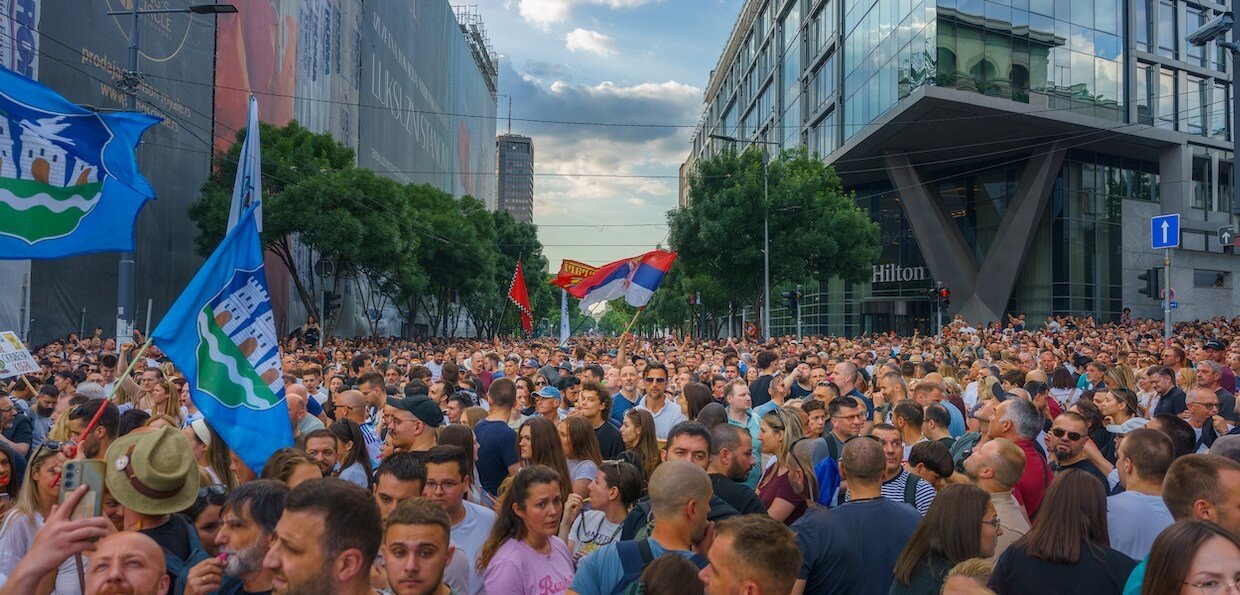
Professor Vladisavljević, thank you for joining us. You have compared the Students’ List victory to October 5, 2000, describing it as a turning point in Serbian history. What makes this electoral breakthrough different from the overthrow of Milošević, and what obstacles could prevent it from producing lasting democratic consolidation?
Professor Nebojša Vladisavljević: I think this was more than an electoral breakthrough. It was the culmination of nearly two years of massive protests and popular mobilization against corruption and authoritarian rule. In terms of the outcome, it was not just another change of government, but actually the end of authoritarian rule and the beginning of democratic renewal. So, in a way, the outcome is comparable to what happened in Hungary just a few months ago.
If you compare the two events, in 2000 and more recently, you see that the opposition coalitions were very broad, encompassing not only political but also social actors. However, 26 years ago, political parties formed the core of the opposition, while other actors remained on the margins. This time, political parties were on the margins, while the student movement and its various allies were at the center. So, that’s quite different from what we had before, and in comparative terms, it represents something of a novelty.
The key unknown now is how this leaderless, horizontally organized student movement and its allies, built on deliberation and inclusion, will make the transition to and adapt to political institutions, particularly those of representative democracy. They’re now entering Parliament and will have to form a government and govern. So, it remains to be seen how this will work out.
Students Seek Legal Accountability, Not Revolutionary Justice
In your November 3 RTS interview, you argued that corruption had become a governing practice under Vučić and questioned his controversial last-minute presidential pardons. How can Serbia dismantle entrenched networks of corruption while ensuring that accountability does not turn into politically motivated retaliation?
Professor Nebojša Vladisavljević: That’s a significant challenge because this regime was not simply authoritarian in the sense that it held competitive but not free and fair elections, allowed independent media to exist while systematically undermining media freedoms, and abused public institutions and resources to its own advantage and against the opposition. It was also a deeply corrupt, clientelist regime.
I think there is no danger of revolutionary justice here. If you look at the range of demands put forward by the student movement and its allies, you see that they aim to root out corruption in the short term while building the rule of law in the long term.
The focus is on using legal means to fight corruption, and we’ve seen this in the last few days, as professionals within institutions that previously failed to address corruption have actually begun to do so. The prosecutorial service, the central bank, and other institutions have suddenly started functioning.
This is unfolding through the legal process, so nobody is actually demanding any kind of revolutionary justice. They simply demand that these institutions start operating and do their part to root out clientelism and corruption.
Vučić’s Authoritarianism Rested on Informal Rule

You have emphasized the need to reform Serbia’s police and security services, which you argue were subordinated to partisan interests. Can these institutions be democratized through leadership changes alone, or does the transition require a more fundamental restructuring of civil-military and security-sector relations?
Professor Nebojša Vladisavljević: Leadership change in the security sector is essential because most top officials were loyal followers of Vučić and his ruling party. Obviously, there were quite a few professionals, and there still are, but they had been marginalized for many years. So, changing leadership is the first step, but reforms need to be pursued more broadly.
In Serbia’s case, the problem lies not so much in the institutional setup of the security sector or political institutions more generally. If you look at the key institutions, they resemble those in the West. The point is that Vučić’s regime, just like Milošević’s in the late 1990s, was based on informal rule, which essentially means the selective application of the law. So, what you need to do is ensure that all institutional actors stay within the law and operate on its basis.
That’s why I think the demands of the student movement and the victory it brought have raised expectations among professionals within these institutions, which have suddenly started functioning. There are quite a few professionals within the civil service, judiciary, local government, and public sector as a whole who were simply sidelined. They routinely dealt with minor cases, while all controversial cases were handled by officials loyal to Vučić. So, this change now opens things up.
Again, the question is whether the Students’ List will have the capacity to pursue those goals in the long term, because short-term efforts obviously won’t be sufficient.
Vučić’s Regime Relied More on Media Manipulation than Political Repression
Your research highlights the relationship between media pluralism, political competition, and democratic quality. Following the reported changes at RTS, what reforms are essential to dismantle partisan media control and restore independent journalism without replacing one form of political influence with another?
Professor Nebojša Vladisavljević: Vučić’s regime relied principally on media manipulation and sophisticated spin rather than repression. There was some repression, but it was more selective, targeting key opponents. The focus was on the media, including major electronic media outlets, the public broadcaster, other national television networks, and a range of cable networks targeting different audiences supportive of the regime. Despite all this, there was still considerable space for independent media, although admittedly limited to low-circulation daily and weekly newspapers, cable television networks with restricted reach—accessible to about 30% of the population—and specialized investigative journalism outlets.
Overall, there was quite a lot of high-quality journalism, even under authoritarian rule. The challenge now is to move this high-quality journalism from the margins to the very center of the media landscape, particularly to the public broadcaster and national commercial television networks.
The experience from the Milošević period suggests that those working at the public broadcaster tend to shift their support quickly from one ruling party to another, so there is some danger of that happening again. However, it seems to me that the two-year struggle against the regime helped most people who supported the Students’ List realize how important independent journalism is, because it was part of that struggle. Such massive popular mobilization over the last two years would have been impossible without independent journalism. In a way, the movement and independent journalists protected each other. That is why many people now recognize the importance of independent journalism and will demand it.
The question, again, is whether the Students’ List will have the capacity to achieve this in the long term, because the transformation will take time. It involves not only the public broadcaster but also other commercial television networks with national coverage and a range of cable channels that the regime developed and funded from the public purse. So, there is quite a lot of work to do.
Student Revolution Was the Culmination of a Decade of Popular Resistance
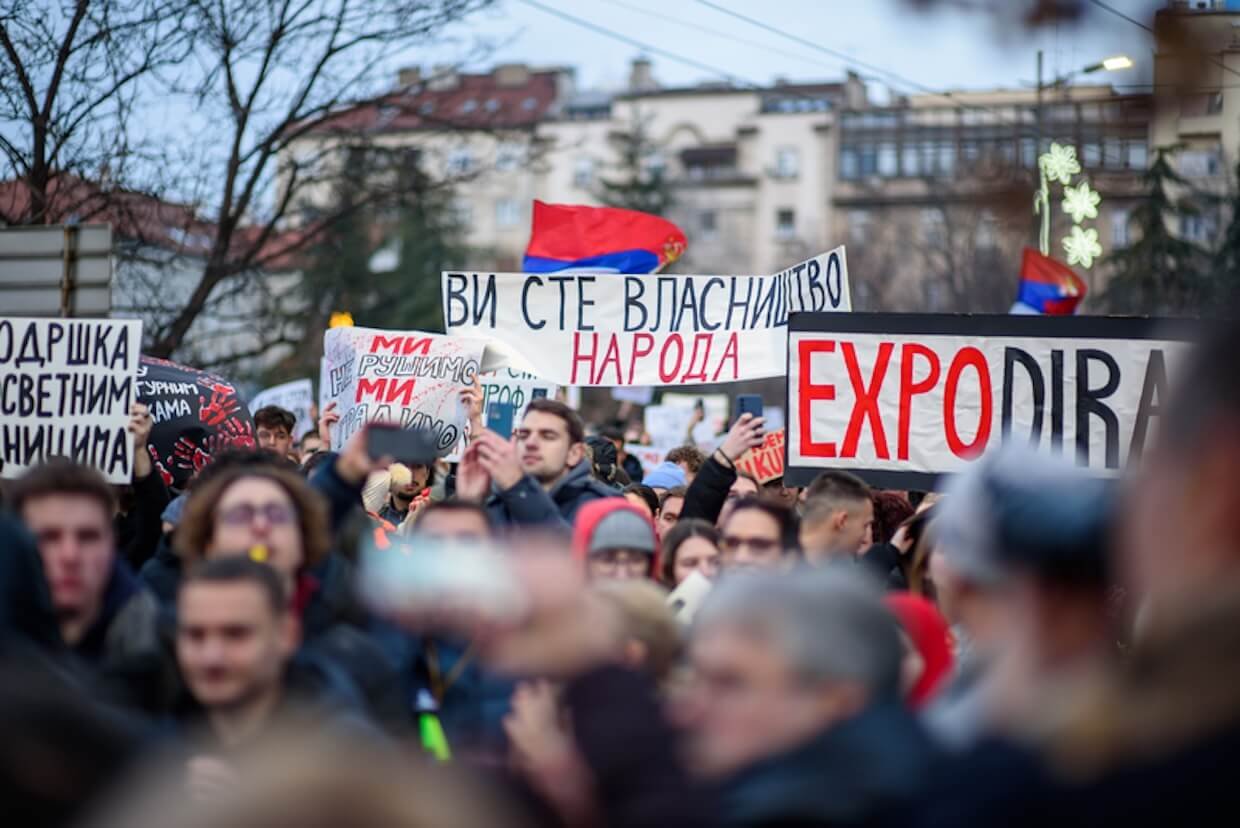
The Novi Sad railway-station tragedy triggered nearly two years of student-led protests that ultimately challenged Vučić’s political dominance. What explains the movement’s success where previous opposition parties and protest campaigns had failed? Was its decisive advantage organizational innovation, moral legitimacy, or the regime’s declining capacity to maintain public consent?
Professor Nebojša Vladisavljević: Obviously, no single factor can explain the movement’s success. I think what really matters is examining the broad mobilization over the last two years. The election campaign and victory were the culmination of this sustained resistance.
You have to understand this popular mobilization as the culmination of previous waves of massive protests over the last decade or so. There were several waves of mobilization in 2018–19, including six months of weekly protests in Belgrade and other cities. Then, in 2023, following the mass murders, there was a similar wave of mobilization. This was followed by a large, more decentralized campaign against lithium extraction across Serbia.
So, in a way, this was just the tip of the iceberg. There were already mobilized constituencies, not only in urban areas but also across the country, as the campaign against lithium extraction had extended into rural areas. The Novi Sad tragedy in November 2024, in which 16 people were killed, was therefore a trigger. It was not simply an accident; it was an accident caused by corruption. The tragedy revived these existing energies.
Now, why was this mobilization broader and more massive than previous protests? One important reason was the involvement of students. Interestingly, Serbia has a tradition of student protests, dating back to 1968 and continuing throughout the 1990s against Milošević. Student mobilization was part of the broader opposition movement during that period, but after 2000, students were no longer involved in politics.
Their renewed involvement was therefore an additional factor. Previously, popular mobilization had been led by opposition parties. This time, several factors came together. As students expanded the mobilization further, their popularity weakened both the regime’s capacity to respond and its public support. So, the movement’s success resulted from a combination of factors coming together at that particular moment.
Students Turned Popular Resistance into Electoral Power
In your research on competitive authoritarianism and popular protest, you emphasize how mobilization can transform political institutions and opposition capacities. How did Serbia’s decentralized student movement convert sustained street protests into an electoral majority, and what does this reveal about the relationship between contentious politics and electoral competition?
Professor Nebojša Vladisavljević: If you look at the mobilization over the last two years, as well as previous waves of mobilization, there has always been an interaction between institutional politics and popular politics outside formal institutions, with spillover from one to the other.
Even during this mobilization, there were such spillovers. People were protesting in the streets, while the opposition was advancing their demands within institutions, including Parliament, local government, and the like. As I mentioned earlier, the election campaign was just the tip of the iceberg of this broad mobilization.
All the key actors—the student movement, organizations, local participant assemblies, and self-organized groups, supported by the logistical resources of opposition parties and civil society organizations—simply shifted their tactics from contentious politics to electoral campaigning.
This transition was not particularly difficult because the students had already shifted their demands. Initially, they demanded accountability from those blamed for the tragedy in Novi Sad. But the government did not respond; it ignored their demands. So, about a year and a half ago, the students began demanding early parliamentary elections.
In a way, everyone expected that elections would eventually take place, and they had been preparing for them through logistical arrangements, training, and other activities. So, the transition was not sudden; everyone had been preparing for it. I think this illustrates a broader point: contentious politics should never be studied separately from institutional politics because the two are closely intertwined.
Opposition Parties Cannot Safeguard Elections Alone
Reports of extensive citizen-led election monitoring suggest that civil society played an important role in protecting the electoral process. Does Serbia demonstrate that defeating competitive authoritarianism requires citizens not merely to mobilize voters but also to compensate for the failures of captured electoral institutions?
Professor Nebojša Vladisavljević: In competitive authoritarian regimes, the political playing field is obviously skewed. This affects not only elections but also involves the ruling party’s abuse of public institutions and resources to its own advantage and against its opponents.
In this context, it is not always easy for opposition parties to mobilize enough well-organized activists to staff polling stations and arrange election monitoring to prevent electoral manipulation, including vote buying. Opposition parties cannot do this on their own; they need others to help. Civil society organizations often provide that support, but these efforts become even more effective when they involve a much broader range of people, including self-organized citizens. In Serbia’s case, this included the student movement and local participant assemblies.
Serbia has never had so many people trained to staff polling stations and monitor elections. There were even mobile groups tasked with protecting polling station personnel and election monitors from regime thugs. Drawing on experiences from local elections, when thugs were used to target these individuals, organizers had to anticipate and address such threats. I think this offers an important lesson for opposition movements in other authoritarian regimes: involve as broad a range of citizens as possible.
Competitive Authoritarian Regimes Unintentionally Create Opportunities for Their Own Defeat
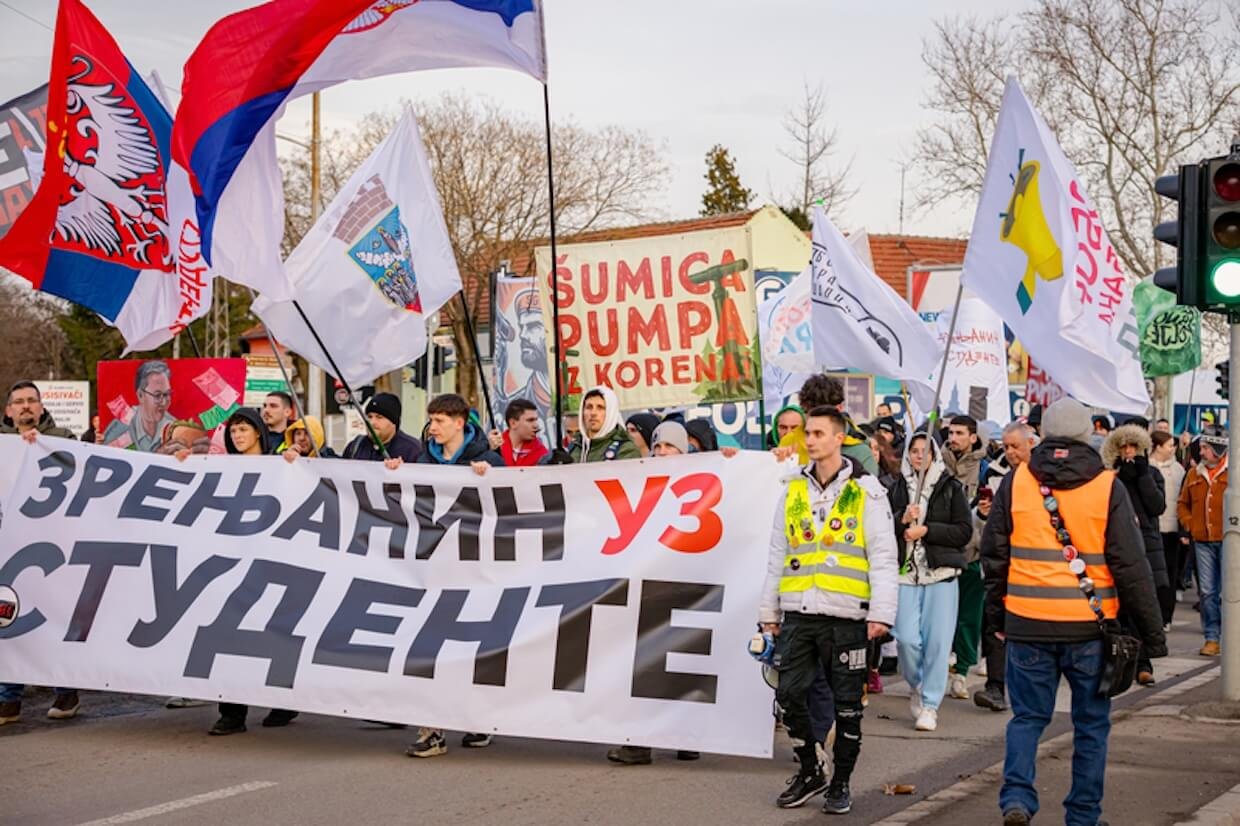
Your scholarship argues that competitive authoritarian regimes create institutional opportunities for opposition mobilization even while restricting democratic freedoms. Did Vučić’s electoral defeat expose this inherent vulnerability, or does Serbia represent an exceptional convergence of mass protest, opposition coordination, and declining regime legitimacy?
Professor Nebojša Vladisavljević: This is an interesting issue. I have studied competitive authoritarian regimes in the Balkans during the 1990s, particularly Milošević’s regime, examining how it responded to protests and how protests emerged and developed under competitive authoritarianism.
I concluded that this sort of context, in a way, unintentionally facilitates popular protests. Under competitive authoritarianism, government opponents have legal opportunities to organize and challenge the government, both within and outside institutions. Elections are not free and fair, but they are competitive, and people participate in them. At the same time, opposition actors are systematically suppressed and restricted in their activities. This context creates grievances through the systematic violation of media freedoms and the abuse of public resources against opponents.
So, there is a combustible mix. You have genuine legal opportunities to organize and space for political organization, even though the system is not democratic. At the same time, opposition actors are systematically suppressed in one way or another, creating additional grievances. You also have rapid spillovers between institutional and contentious politics, which often unfold in parallel and create political crises.
What’s particularly interesting is that this permissive context also facilitates nonviolence among protesters, which is useful for democratization. Protests can have immediate consequences, such as regime crises, but they also have long-term effects—what I call constitutive consequences. This means that protests shape the identities, interests, and capacities of both authoritarian elites and opposition forces.
It’s a complex and very interesting process. In Serbia’s case, this permissive context provided space for the opposition to organize and operate, but that’s only part of the story. Another important question is how these opportunities are taken up and by whom, because in some cases, there simply aren’t many actors capable of doing so.
Serbia also has a tradition of popular mobilization. I mentioned the waves of protest over the last decade, but these actually build on the protests against Milošević in the 1990s. So, what we see today is very much what we saw under Milošević in the 1990s. That tradition helps explain the current developments.
Vučić’s Defeat Exposes the Limits of Populism in Sustaining Personalist Authoritarianism

In your 2023 article with Aleksandra Krstić, you describe populism as the “soft” face of competitive authoritarianism under Vučić. How did populist appeals help normalize authoritarian practices domestically and internationally? Does the regime’s electoral defeat suggest limits to populism’s capacity to sustain personalized rule?
Professor Nebojša Vladisavljević: When Vučić’s party came to power, he was initially second-in-command to Tomislav Nikolić, who had won the presidential election. However, Vučić used his position as Deputy Prime Minister to launch a massive anti-corruption campaign targeting prominent businessmen, which caused his popularity to skyrocket. He then used his personal popularity as an important political resource to confront institutional and other opponents. He promoted the interests of poorer citizens and advocated inclusive economic policies. As I mentioned, there was the anti-corruption drive, along with patriotic appeals and, in parallel, rhetoric supporting EU integration—much like Erdoğan initially.
However, once Vučić consolidated power, he no longer needed to rely so heavily on these populist appeals. Instead, he used and abused public institutions and resources against his opponents, while corruption and clientelism expanded dramatically. What is particularly significant is that, in the early years after 2012, Vučić was able to mobilize supporters to attend rallies voluntarily. Yet, just a few years later, he needed enormous organizational and logistical efforts by public institutions to bring people to similar rallies.
We saw this clearly over the last two years. While the opposition mobilized literally hundreds of thousands of people in this small country, Vučić could not mobilize even a few thousand without coercion or bribing people to attend. That tells you a great deal about how thin these populist appeals were throughout.
The Students’ List Seeks Political Pluralism and Inclusion
The Students’ List defeated not only the ruling establishment but also marginalized much of the traditional opposition. How should we distinguish this anti-establishment mobilization from populism itself? Could the movement’s broad appeal against corrupt elites eventually reproduce the exclusionary political logic it opposed?
Professor Nebojša Vladisavljević: I wouldn’t describe this as an anti-establishment mobilization. The target was Vučić’s authoritarian, personalist rule. The democratic opposition—that is, the opposition parties—was not really a target. Rather, these parties were sidelined or marginalized as less effective partners in the struggle against the regime. At the center of the opposition over the last two years were the universities. The student movement was obviously central, but professors fully supported the students, so it was essentially a movement rooted in higher education, further supported by mobilization in primary and secondary education.
If you look at the Students’ List, which emerged from this mobilization, its representatives are now in Parliament. Most of them have PhDs, so we will have not only a government of experts but also a parliamentary majority of experts. There is therefore no real anti-establishment drive. The explicit goals are democratic renewal and the protection of political pluralism. There is also a strong emphasis on the rule of law as an instrument for fighting corruption and clientelism.
I would also say that there is a broadly inclusive approach toward various previously excluded groups, such as national minorities. They were not politically excluded, but they were co-opted through clientelistic and corrupt practices under Vučić. Now, there is an attempt to include them directly. Several Bosniak and Hungarian candidates will serve as members of Parliament on behalf of the Students’ List. So, there is a very open and inclusive attitude rather than a populist drive. I don’t see that as an issue.
Independent Media and Social Networks Were Essential to Breaking Vučić’s Media Dominance
Your studies of political cartoons, media discourse, and smear campaigns demonstrate how political communication shapes authoritarian power and resistance. How important were alternative media, social networks, and symbolic protest performances in overcoming Vučić’s media dominance and transforming public perceptions of political legitimacy?
Professor Nebojša Vladisavljević: As I mentioned earlier, the regime relied primarily on media manipulation, while repression was highly selective. The regime developed various means to maintain this control. However, opponents of the regime responded, and independent media and high-quality journalism played an essential role in popular resistance. Independent journalists were seen as partners in the struggle, and whenever the government attempted to pressure independent media, the broader movement responded. In this sense, independent media became part of a wider political and social coalition.
Another important factor was the global shift from traditional media to social media. The government also tried to exert influence in this sphere. Vučić had an army of trolls attempting to contain the opposition’s influence on social media. Many of these individuals were employed in the public sector but, instead of performing their official duties, engaged in trolling on Vučić’s behalf.
Nevertheless, he could not counter the popular energies expressed through social media. Opinion polls show that, over the last two years, there has been a major shift toward social media as a primary source of information. The opposition clearly had much greater access to social media than to traditional media. So, once again, it was a combination of several factors.
Vučić Abandoned Ideology in Favor of Power
Serbian politics has long been shaped by Kosovo, Orthodox Christianity, historical grievances, and competing narratives of European identity. To what extent did Vučić incorporate these themes into civilizationalist populism? Can the student-led movement establish a more inclusive democratic identity without reigniting nationalist polarization?
Professor Nebojša Vladisavljević: Vučić began his political career in the early 1990s as a member of Vojislav Šešelj’s extremist and chauvinist Serbian Radical Party. Šešelj was later convicted of war crimes. During the 2000s, after Šešelj went to The Hague, the party gradually moved away from its extremism.
Following successive electoral defeats, Vučić and other leading figures moved toward a more moderate conservative position, eventually forming the Serbian Progressive Party. They realized that they could not come to power on a radical nationalist agenda. They therefore moderated their program and adopted many of their rivals’ positions, emphasizing democracy, EU integration, and even post-conflict reconciliation in the region. By and large, these changes gained acceptance among Western actors and governments.
However, once in power, Vučić gradually abandoned ideology altogether. He delivered different messages to different constituencies and even became quite accommodating toward the government in Pristina over Kosovo. For him, what mattered most was consolidating power and remaining in office.
If you look at the students, they have been very inclusive, particularly toward national minorities. One especially important development during the two years of protests was the connection between students in Belgrade and Novi Pazar—that is, between Serbs and Bosniaks. This opened up new possibilities for bottom-up integration.
At this point, the students remain focused on inclusion, and this resonates with both the Serb majority and national minorities. Many members of national minorities actually voted for the Students’ List rather than for national minority parties, which represents something of a novelty in Serbia.
Vučić Used International Alliances to Project Political Importance Beyond Serbia
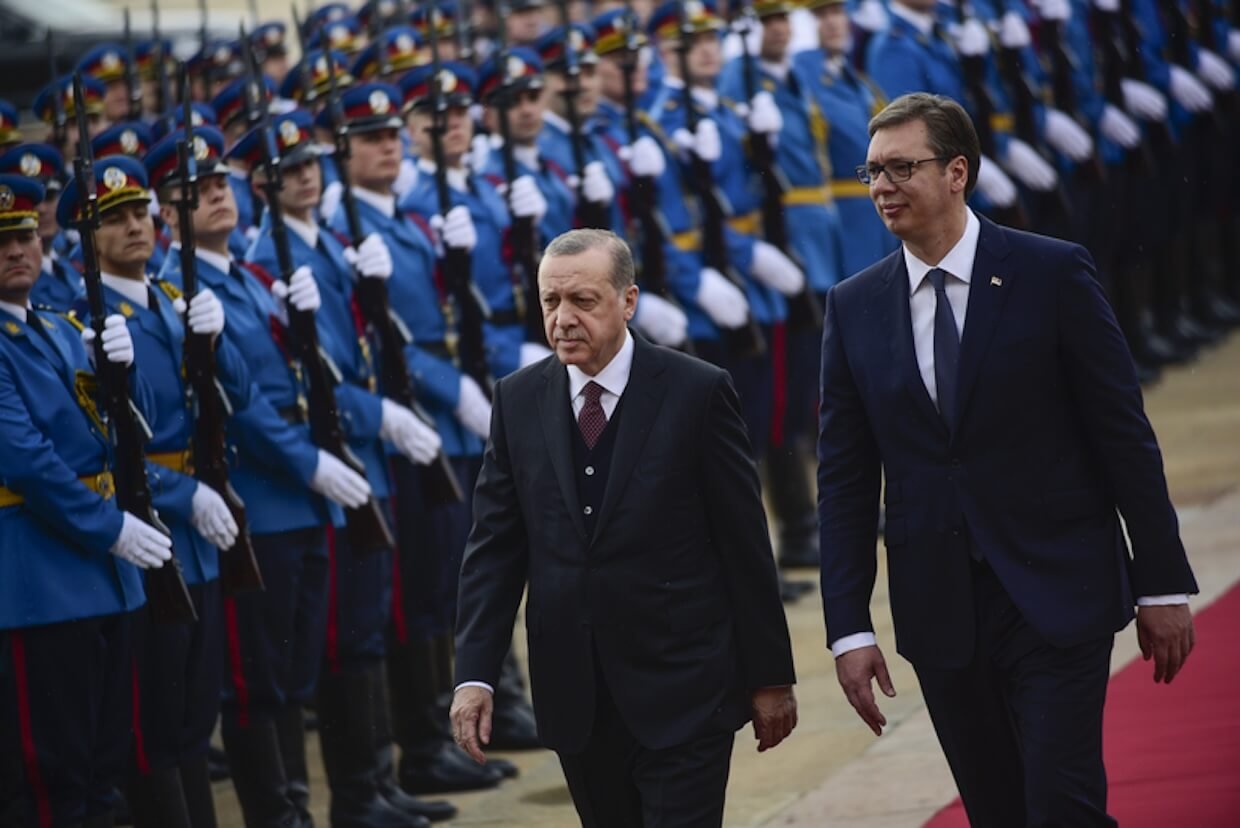
Vučić maintained political relationships with Viktor Orbán and other nationalist and illiberal actors in Europe. How significant were these transnational networks for his political resilience? Could their continued cooperation allow defeated populist leaders to retain influence and obstruct democratic consolidation?
Professor Nebojša Vladisavljević: Obviously, they cooperated for mutual support and protection. Vučić occasionally emphasized his close relationships with Orbán and Fico and claimed to have a similar relationship with Putin.
But I don’t really think these relationships had much influence on his domestic standing. Perhaps his links with Putin mattered to some extent, but those with Orbán mattered less. It was largely an attempt to portray himself as an important figure not only in domestic politics but also on the international stage. However, this was more a matter of appearances than reality.
Student Movement Offers a Bottom-Up Model of Democratic Inclusion
Your research on Yugoslavia and post-conflict societies demonstrates how popular mobilization can produce either democratization or nationalist radicalization. What distinguishes Serbia’s current student movement from earlier nationalist mobilizations, and could democratic renewal create new opportunities for addressing Kosovo and the region’s unresolved ethnic conflicts?
Professor Nebojša Vladisavljević: The international and domestic context today is very different from that of the 1990s and 2000s. In the early 1990s, the disintegration of Yugoslavia reopened all sorts of old issues and animosities. At this point, however, most of these issues have been resolved in one way or another, so many of them will no longer be relevant to the Students’ List.
As I mentioned earlier, the student movement is based on deliberation and inclusion, particularly when it comes to national minorities. This approach will undoubtedly be reflected in broader regional relations. However, whether it will have a lasting effect or become a model for the entire region remains to be seen, because that depends on all sides, not just one.
Again, as I mentioned, the Students’ List advocates a model of integration from below—a bottom-up approach. By contrast, integration efforts proposed in other parts of the former Yugoslavia, such as Bosnia and Herzegovina and North Macedonia, have often followed a top-down approach. So, it remains to be seen how this will work out.
Broad Social Coalitions Are Essential to Challenging Authoritarianism
Your comparative research examines popular protest in Serbia, Ukraine, Poland, and other authoritarian contexts. Which elements of Serbia’s student-led mobilization could inspire democratic resistance in countries such as Turkey, Georgia, or Hungary? What institutional and geopolitical conditions determine whether protest movements can successfully translate mobilization into regime change?
Professor Nebojša Vladisavljević: The breadth of the opposition coalition is essential. Often, a political coalition alone is not sufficient; what is needed is a broader social coalition involving not just political parties but also a wide range of other relevant actors. If you look at Serbia over the last two years, the student movement has obviously been central, but it is not just about the students. The Students’ List brings together a wide range of partners representing a broader social coalition.
You can see similar patterns in other countries. In Georgia, for example, opposition parties have traditionally been weak, while civil society actors play a more significant role, with students also contributing substantially. In Turkey, on the other hand, political parties remain central, so there is a more traditional focus on party politics. Hungary falls somewhere in between, with Tisza, which is formally a political party but essentially functions as a broader social movement.
The general trend is toward broader coalitions than we have seen in the past. New political actors who were previously less important are also emerging. It remains to be seen whether this model will spread to other countries in the coming years. Obviously, such a model cannot easily be transferred from one context to another.
Personalist Authoritarian Regimes Are More Vulnerable Because They Lack Organizational Capacity
Finally, Professor Vladisavljević, your scholarship challenges the assumption that authoritarian regimes are largely immune to pressure from below. Does Serbia’s 2026 experience require us to reconsider prevailing theories of authoritarian resilience and revolutionary change? What broader lessons does it offer for understanding how contemporary autocracies collapse—and why democratization sometimes fails to follow their defeat?
Professor Nebojša Vladisavljević: Some traditional lessons remain highly relevant, although perhaps in a slightly different context. One important factor is the coherence of regime organizations. When you have strong political parties, strong public institutions, and some form of bureaucratic regime supported by ideology, these are difficult for the opposition to confront.
The less coherent these organizations are, the easier they are to challenge. This is particularly true of personalist regimes based on informal rules, such as Milošević’s regime in the 1990s or Vučić’s over the last decade. These regimes are easier for the opposition to confront because they lack organizational capacity.
I also mentioned the breadth and commitment of opposition forces. This has traditionally been an important factor, from classic revolutions to the more urban, nonviolent revolutions of recent decades. However, we now have additional actors who were not previously involved.
The international context also matters, particularly whether autocrats receive substantial external support. At the same time, we are dealing with new types of regimes and political actors.
Many competitive authoritarian regimes differ from the traditional authoritarian regimes that characterized much of the 20th century. They allow considerable space for opposition activities, and this relatively permissive environment facilitates nonviolent action.
So, all these factors come together in different ways, depending on the particular context.