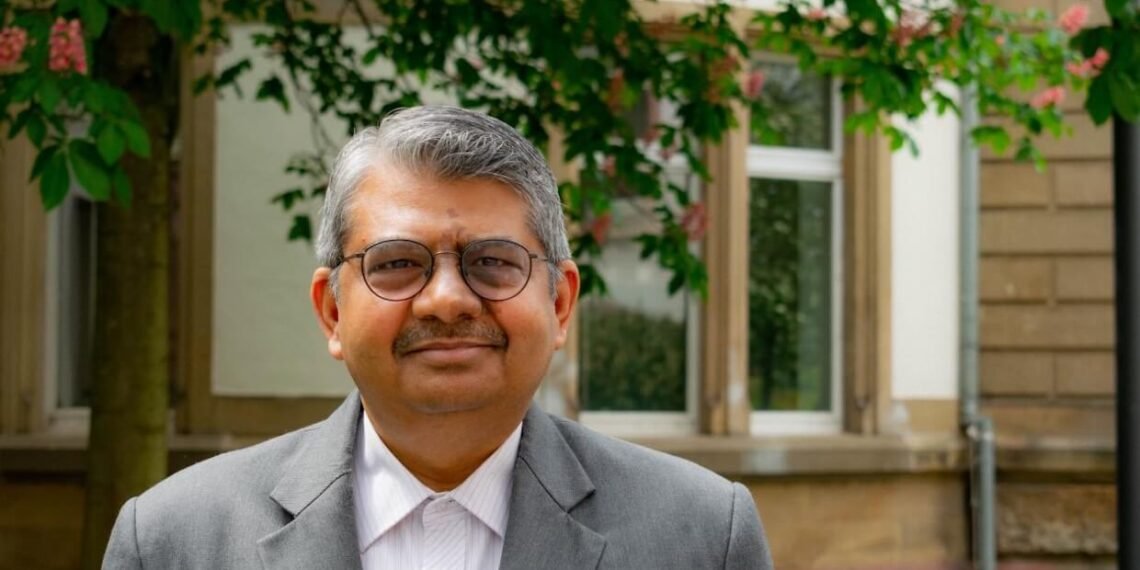
In an interview with the ECPS, Professor Rahul Mukherji, Chair of Modern Politics of South Asia at Heidelberg University, warns that India risks sliding from competitive authoritarianism into closed autocracy unless opposition forces achieve meaningful unity. Examining Narendra Modi’s Hindu majoritarian project, institutional erosion, electoral manipulation, and restrictions on civil society, Professor Mukherji argues that democratic resilience remains possible despite intensifying authoritarian tendencies. Drawing on Karnataka’s electoral experience and emerging youth-led protests, he identifies four priorities for democratic recovery: ideological differentiation from Hindu nationalism, effective factional management, electoral coalition-building, and sustained cooperation between political parties and grassroots movements. Without such coordination, he cautions, India’s transition toward closed autocracy could make democratic restoration considerably more difficult.
Interview by Selcuk Gultasli*
India is confronting intensifying tensions between Prime Minister Narendra Modi’s majoritarian political project and growing demands for democratic accountability. Hindutva-driven polarization, executive centralization, and restrictions on civil society continue to raise concerns about authoritarian consolidation. Meanwhile, youth-led Cockroach Janta Party (CJP) protests over examination irregularities, unemployment, and controversial electoral-roll revisions have brought institutional legitimacy and political exclusion into sharper focus. These developments raise fundamental questions about the resilience of Indian democracy and the possibilities for organized resistance.
In this wide-ranging interview with the European Center for Populism Studies (ECPS), Professor Rahul Mukherji, Chair of Modern Politics of South Asia at Heidelberg University and former Managing Director of its South Asia Institute, examines India’s democratic trajectory under Modi, highlighting both the institutional mechanisms of authoritarian consolidation and the political conditions necessary for democratic recovery.
Professor Mukherji characterizes India as a competitive authoritarian regime whose defining feature is its “Janus-faced nature,” in which “Competitive characteristics of liberal democracy coexist with autocratizing tendencies.” Although the Bharatiya Janata Party’s (BJP) failure to secure an outright parliamentary majority in 2024 demonstrated the continuing possibility of democratic resistance, he warns that authoritarian tendencies have subsequently intensified, particularly through controversial electoral-roll revisions and growing political influence over electoral administration.
Beyond institutional erosion, Professor Mukherji identifies a deeper ideological transformation underway. Modi’s political project, he argues, represents “an effort to institutionalize Hindu majoritarian dominance,” potentially paving the way for a fundamental redefinition of India’s secular constitutional identity. Religious polarization, restrictions on minority rights, and the disciplining of independent civil society organizations illustrate how majoritarian politics increasingly penetrates state institutions and society.
Yet democratic resilience remains possible. Drawing on Karnataka’s electoral experience and emerging youth-led mobilization, Professor Mukherji emphasizes the importance of cooperation between opposition parties and autonomous social movements. He identifies four indispensable priorities: ideological differentiation from Hindu nationalism, effective factional management, strategic electoral coalition-building, and the integration of progressive political parties with grassroots civic mobilization.
The fourth priority is particularly significant: “How effectively can powerful, progressive political parties—parties that are counter-majoritarian—become embedded in social movements on the ground?” For Professor Mukherji, opposition coordination must extend beyond electoral arithmetic to sustained societal engagement.
His concluding warning captures the stakes of India’s democratic struggle: “The alternative is that India moves from being a competitive authoritarian regime to becoming a closed autocracy.” Once that threshold is crossed, he cautions, “bouncing back becomes far more difficult.”
In sum, the interview presents India’s democratic future as an open but increasingly consequential contest between authoritarian institutionalization and the capacity of opposition forces to construct a credible, coordinated, and socially rooted democratic alternative.
Here is our interview with Professor Rahul Mukherji, edited lightly to enhance clarity, readability, and overall flow for publication.
India’s Competitive Authoritarianism and Democratic Resilience
Professor Mukherji, thank you for joining us. In your influential article, “How to Stop India’s Authoritarian Slide” (2024), you document the systematic erosion of democratic institutions under Narendra Modi. Following the BJP’s loss of its parliamentary majority in 2024, how would you characterize India’s political regime today? Has Modi’s authoritarian trajectory weakened, adapted, or intensified?
Professor Rahul Mukherji: I would still characterize India as a competitive authoritarian regime, which has certain salient characteristics. V-Dem uses the term electoral autocracy. Competitive authoritarianism is a term first used by Stephen Levitsky at Harvard. I was the first to apply that term to India in a 2020 article in the Journal of Democracy examining the management of COVID. Subsequently, we have written more about it.
What characterizes a competitive authoritarian regime is its Janus-faced nature. Competitive characteristics of liberal democracy coexist with autocratizing tendencies. In such regimes, incumbents enjoy greater power than the political opposition. However, because the competitive aspects of politics have not been completely subdued, the political opposition still has the possibility of rising. In fact, some scholars argue—and I agree—that competitive authoritarian regimes also have an incentive to bounce back. The autocratizing elements can take over the competitive elements that exist in civil society and political parties. Yet the adjustments required to manage factions and coalitions, make ideological corrections, and connect with civil society involve substantial costs. Competitive authoritarian regimes can often perform these tasks.
In my view, the 2024 elections illustrated this possibility. Despite fairly oppressive conditions, in which the political opposition had limited financial resources and media access, the right-wing Hindu nationalist Bharatiya Janata Party (BJP) could not secure even a simple majority in Parliament. It fell about 32 seats short of a simple majority and had to rely on coalition partners to return to power. This differed from the situation in 2019, when the BJP enjoyed a parliamentary majority. The 2024 election demonstrates that competitive authoritarian regimes can experience a democratic bounce-back. This does not completely reverse the erosion of what scholars call horizontal accountability—the checks and balances within institutions of governance—but it does provide a corrective.
Democratic Resistance Is Still Possible
I wrote a paper in the Journal of Democracy examining the 2023 elections in Karnataka, a significant and wealthy southern Indian state often described as the Silicon Valley of India, which remains governed by the Congress Party. I demonstrated how some of these variables contributed to the BJP’s electoral defeat in 2023. These empirical findings suggest that although competitive authoritarian regimes make life difficult for the political opposition, there are still incentives and opportunities for a democratic bounce-back. However, over time, particularly since the coalition returned to power in 2024, the autocratizing elements have become increasingly evident. This may also be because the government is losing some popularity.
For example, the manner in which state-level elections were conducted in Bihar, a significant heartland state, raised many questions. There are numerous electoral problems one could discuss. But the most significant recent developments in West Bengal suggest that the Election Commission, which has historically enjoyed a very respectable reputation, appears to have made compromises of a kind not seen before. Voter rolls were revised, and more than 9 million voters were removed. Of these, 2.7 million registered protests and sought to have their names restored. Yet the government proceeded with the elections and won without their legal claims being addressed. Now, 2.7 million represents approximately 4.3% of voters, while the margin of victory was something like 4.5% or 6%. I cannot say that the BJP would not have won the elections, but clearly, voters were removed from the rolls despite having made legal claims to their inclusion. Approximately 1,700 or 1,800 of these claims were assessed, and more than 90% were found to be valid.
Something like this creates enormous problems for the government. I could also discuss more recent developments involving the Election Commission and the manner in which these decisions were taken. They led to what is known as the Special Intensive Revision of the Voter Rolls, which has become a major controversy and is constantly debated in Indian politics today. The government has offered no firm or clear defense. The Supreme Court, meanwhile, seems to be dilly-dallying. It allowed certain developments to proceed and is now making observations suggesting that some of those actions should not have occurred.
So, to answer your question, I would certainly say that the autocratizing elements have become more prominent, particularly when we examine how the voter rolls were handled. However, I would not say that India has become a purely autocratic regime. Civil society and the political opposition remain important, and much will depend on how the opposition navigates these challenges and contests future elections.
Modi Is Seeking to Institutionalize Hindu Majoritarian Dominance
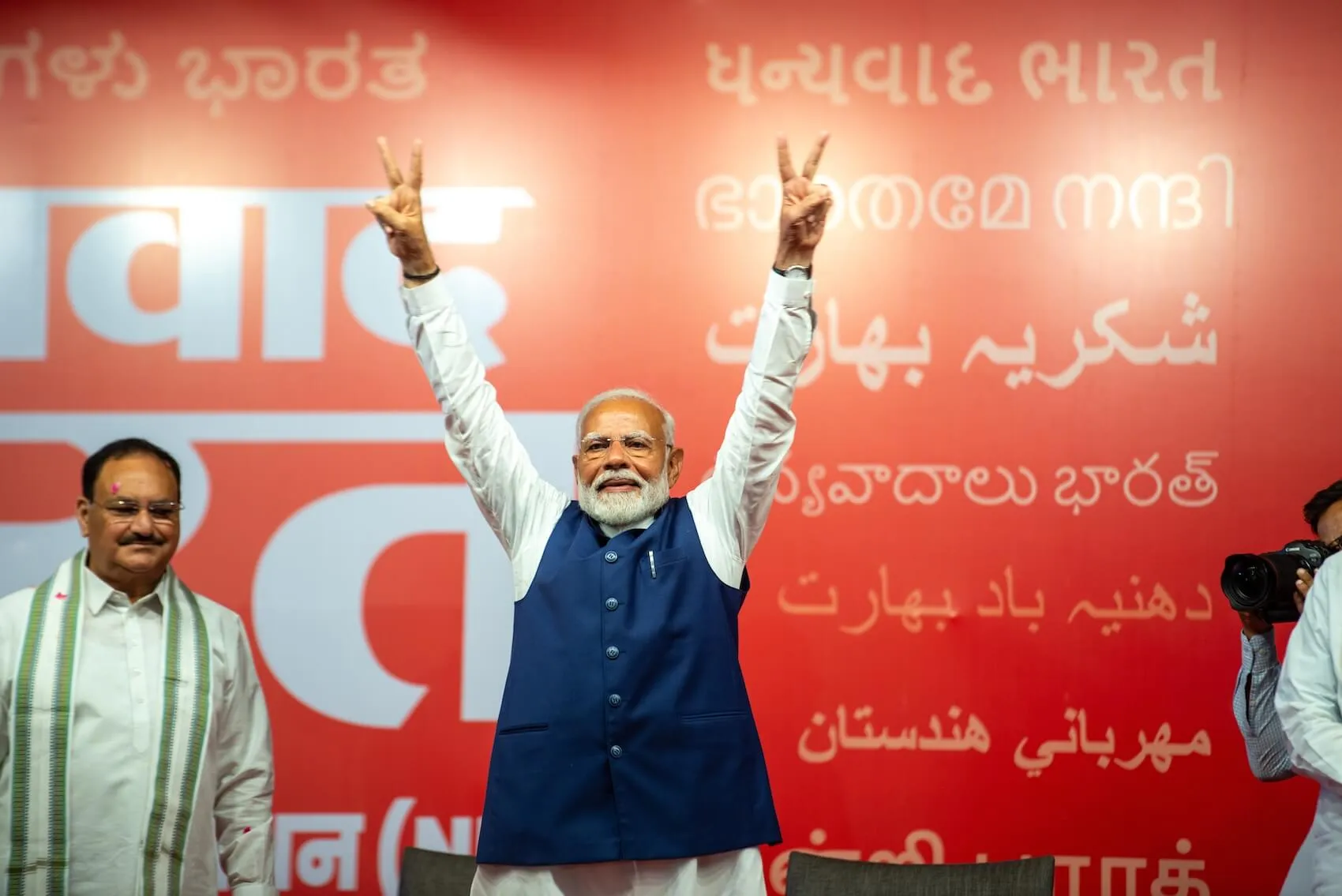
How should we conceptualize Modism at the intersection of populist personalism, Hindutva, and majoritarian nationalism? Does Modi’s political project primarily represent electoral populism, an ideological transformation of the Indian state, or an effort to institutionalize Hindu majoritarian dominance?
Professor Rahul Mukherji: My view is that it is an effort to institutionalize Hindu majoritarian dominance, which could then lead to an ideological transformation of the Indian state. At present, India still has a constitution that includes the term secular. However, minorities, especially the Muslim minority, face many problems. As you know, Jammu and Kashmir, which previously enjoyed special status, was converted into a union territory. This means it is no longer a regular state but a union territory under direct central control. It was the only Muslim-majority state in India.
One can therefore argue that the Indian Constitution, especially its commitment to secularism, is being seriously challenged. There is no question about that. But I am not suggesting that this has already led to an ideological transformation of the Indian state. Rather, the causal mechanism involves institutionalizing Hindu majoritarian dominance so that such an ideological transformation can eventually be achieved. That project is ongoing, and the effort to institutionalize Hindu majoritarian dominance is clearly underway.
The abrogation of Article 370 is one example. Just before Article 370 was abrogated, all the consequential leaders of Jammu and Kashmir, particularly those living in Srinagar, were incarcerated and deprived of regular communication facilities. Under such horrendous conditions, the state was transitioning from special status, not to regular statehood, but to union territory status.
Another example is the demolition of the Babri Masjid. When this 400- or 500-year-old mosque was desecrated in 1992, the Supreme Court took a very critical position regarding its desecration and held that many of those involved were criminals. More recently, however, the Supreme Court overturned that decision, and those who should have been tried were exonerated. It was determined that a temple could be constructed on the site of the mosque. To offer some consolation, a separate location was designated for the construction of a mosque.
Modi’s Political Project Seeks an Ideological Transformation of the Indian State
This whole idea that you can take an existing structure, completely desecrate it on the pretext that it has some connection to Hindu mythology, and replace it with another structure associated not only with religion but also with the great Indian god Ram is significant. Even Mohandas Gandhi invoked Ram’s name, but with a very different purpose. There is an understanding of Ram that is all-inclusive, and then there is this militant Ram who is anti-Muslim. The two Rams are very different. There is a famous song that was sung in Gandhi’s ashrams, Raghupati Raghava Raja Ram. This was one of Gandhiji’s famous bhajans, a form of devotional music.
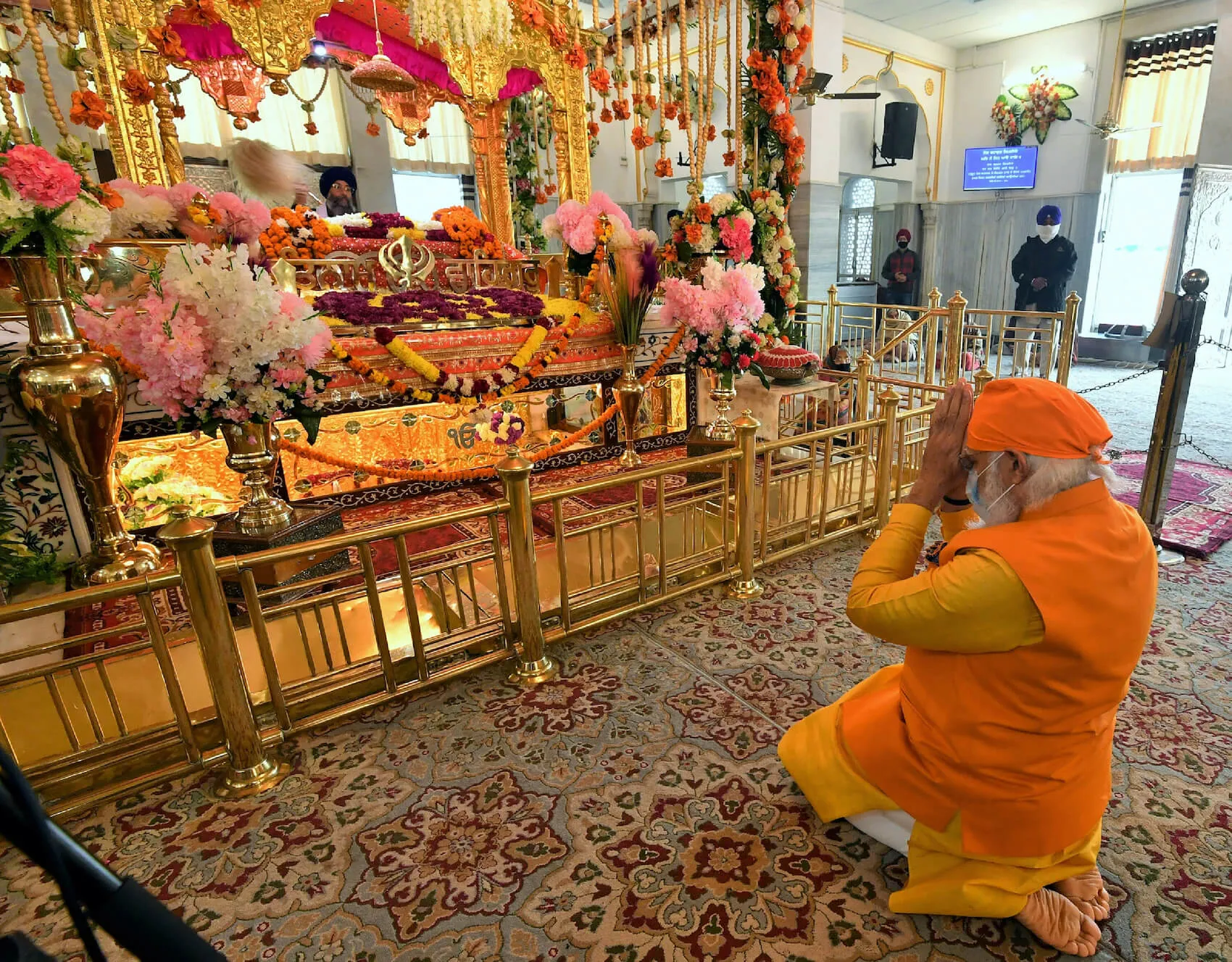
The syncretic tradition is therefore also embedded in the understanding of Ram and among many of his followers. In India, Islam and Hinduism lived side by side, respecting each other in a way that is very unusual in world history. Now, they are trying to create a kind of Hinduism that portrays Islam as an aggressive Other and a foreign religion. The construction of this temple, therefore, seeks to institutionalize Hindu majoritarianism by emphasizing that Muslims are minorities. So, I have given you two examples.
If you turn Kashmir into a union territory, destroy a mosque, construct a temple in its place, and have that temple inaugurated by the Prime Minister of India with great fanfare, then you are clearly attempting to do exactly what your question suggests: institutionalize Hindu majoritarian dominance.
It is not as though previous governments have not made mistakes. We can discuss those. But the mistakes previous governments may have made were primarily aimed at staying in power. I do not think they were so much about institutionalizing Hindu majoritarian dominance. Sometimes governments appeased Muslims, and at other times, they appeased Hindus. Those kinds of things have happened. Today, however, what we are witnessing is a clear effort to institutionalize Hindu majoritarian dominance as the dominant and authentic idea of India.
Authoritarian Consolidation Has Advanced Through Gradual Institutional Change
Your research on policy paradigms and institutional change emphasizes gradual institutional drift and ideational tipping points. How does this framework illuminate Modi’s consolidation of executive authority through the judiciary, electoral institutions, bureaucracy, and federal structures without formally dismantling India’s constitutional democracy?
Professor Rahul Mukherji: This is a very important question. When Mr. Modi came to power in 2014, he did not make many legal changes. Many of the substantial legal changes came after 2019, when he secured a simple majority in Parliament on his own, unlike the current situation, in which he leads a coalition government.
Let me give you one example. The Foreign Contributions Regulation Act (FCRA) is an act of Parliament that regulates foreign funding of Indian civil society organizations. In 2010, the Congress government, which was part of the United Progressive Alliance coalition, amended the act and increased the government’s powers to regulate foreign funding of Indian NGOs. In effect, it gave the state substantial tools to control such funding. But if you look at the number of NGOs that lost this facility between 2010 and 2014, it was about 4,000. Under the same act, between 2014 and 2020, when it was amended again, between 17,000 and 18,000 NGOs lost this facility.
This is something we call drift. The law remains the same, but it can be applied far more aggressively than in the past. In 2020, however, the act was amended, introducing further changes. For example, previously, organizations could use 50% of their funds for administrative purposes, including advocacy and other activities. That proportion has now been reduced to 20%. In the past, a large civil society organization like Oxfam could work with numerous NGOs that also had FCRA authorization. Now, the transfer of funds from one civil society organization with this authorization to another is prohibited.
It was also decided that all FCRA-related activities would be conducted and regulated through the Reserve Bank of India, located on Parliament Street in New Delhi. This makes things very difficult for civil society organizations. India is like a subcontinent. If all your dealings must take place through a single bank branch, it becomes difficult, and regulatory oversight obviously becomes more substantial. This illustrates how a legal framework can drift toward a different interpretation and then, through what we call layered change, lead to increased regulatory oversight through legislative amendments.
I would say the same about the tax laws governing NGOs. Similar developments occurred when the Money Laundering Act was amended to target civil society members as well as opposition politicians. There were many such measures that did not produce enormous changes individually but certainly resulted in substantial legal changes. After all, there is still some political opposition.
Then there were two major changes the government attempted. It succeeded in one case and failed in the other. The first concerned Jammu and Kashmir, where the government was able to deal with political opposition. The second involved an effort to encourage farmers who sold their produce in local markets to reduce their reliance on those markets and instead sell to larger corporations, both national and international. This led to significant protests because the farmers’ lobby in India is very powerful. Within about a year, the government had to withdraw the farm laws. This happened despite the government’s simple majority in Parliament. The government itself had to decide to withdraw its own legislation.
This illustrates how legal changes take place in relation to the political opposition that the government in power either calculates or miscalculates. There are, of course, many other examples, but these provide some understanding of how legal changes take place.
Hindu Majoritarianism Is Making India’s Muslim Minority Increasingly Insecure
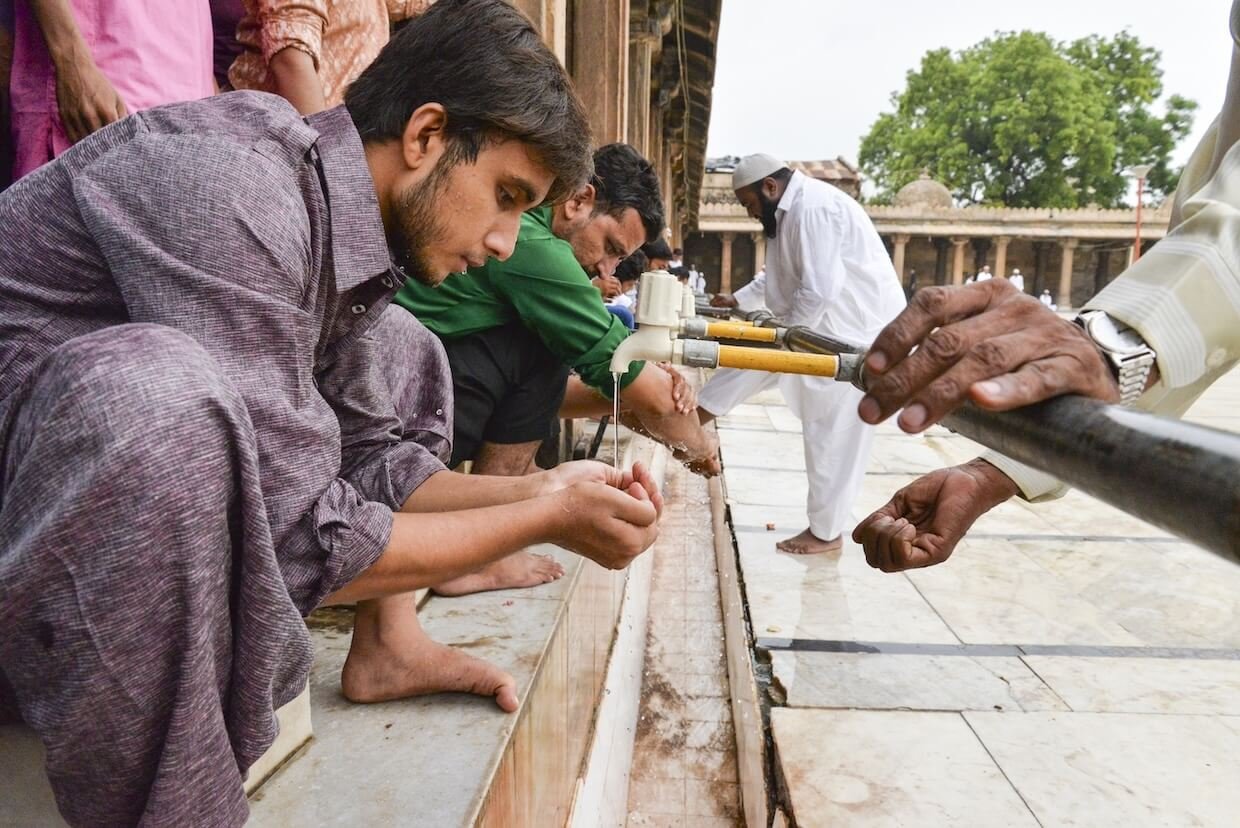
You have warned that Hindu majoritarianism threatens India’s constitutional commitment to pluralism. How have Hindutva politics reshaped Hindu–Muslim relations, minority citizenship, and equal protection under the law? Has religious polarization become an indispensable mechanism of Modi’s political legitimacy?
Professor Rahul Mukherji: One of the reasons Mr. Modi wants to institutionalize this idea of majoritarian dominance is, of course, partly ideological. It is not just a populist slogan; polarization is also a very powerful political force. This is most evident during election campaigns.
There are certain restrictions under the Representation of the People Act that bar politicians from using certain words, and we have found that leading BJP politicians have crossed the line without being chastised by the Election Commission of India. For example, on one occasion when the line was crossed, the Election Commission said that party leaders should discipline their own members. Essentially, it was saying that the BJP leadership should discipline the BJP, and the Congress leadership should discipline the Congress, even when the BJP leadership itself was using hate speech and intimidating minorities.
This is not limited to speeches. Voter repression is also a huge problem. In many places, it is made difficult for Muslims to vote. I was a member of a monitoring panel called the Independent Panel for Monitoring Indian Elections during the 2024 elections. If you look at our reports, you will find that substantial voter repression occurred, especially in places like Sambhal in Uttar Pradesh.
Then, of course, there are lynchings taking place in rural areas. If a Muslim is found carrying a cow, a murder may occur, and that murder may lead to a conviction. But those convicted are then released on bail. This has become a very regularized practice. In the past, there were riots involving Hindu–Muslim violence, and scholars have studied those riots. Now, you find that riots have declined, but Muslims are made to feel insecure through these smaller acts of violence. A killing takes place, convictions follow, but those convicted are released on bail. And the people released on bail then seem to be having a good time. So, in a way, this is being carried out both from the top down and from the bottom up.
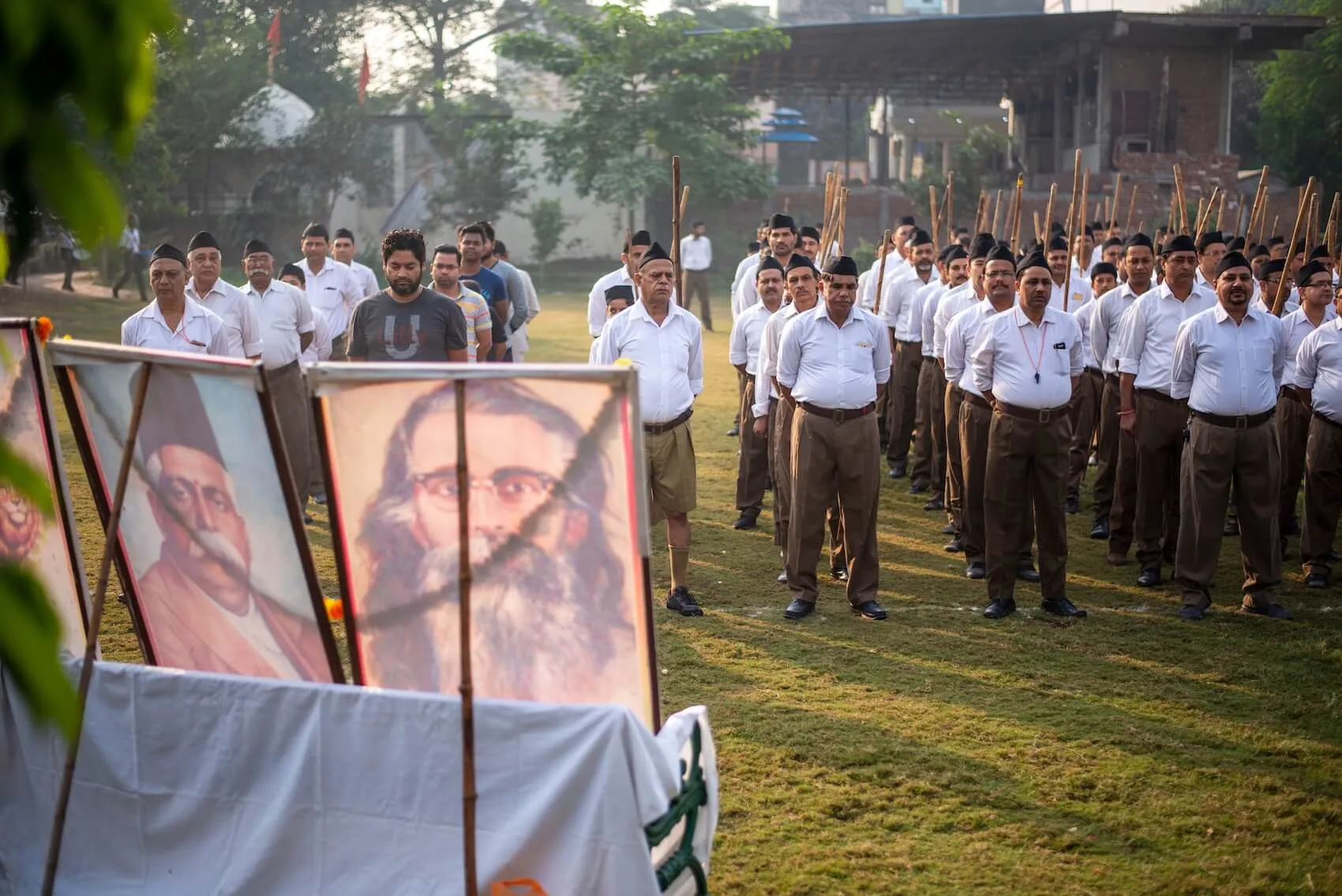
The BJP has a very powerful social cadre-based organization called the RSS, which secular opposition forces in civil society find difficult to match in terms of their ability to organize and come together. Often, much of this work takes place not necessarily within the party itself but through its social arms, which operate in society to generate this kind of hatred toward Muslims because the ideology of the RSS is based on the othering of Muslims. The ideology of the RSS also draws inspiration from fascist thinking. So, there are these bottom-up attempts, which gain legitimacy because the courts behave differently when the BJP is in power. All of this contributes to polarization.
Then, of course, there is the Citizenship Amendment Act and the National Register of Citizens, through which they are trying to define citizens and citizenship in ways that would exclude the minority population. The most recent example is the Special Intensive Revision, which has now created something of a scandal. As I mentioned, its latest implementation in West Bengal produced large-scale deletions from the voter rolls. We still do not have data on who was deleted. We are trying to conduct research on that. But it is very clear that the number of deletions was huge, and even the claims of those who protested or challenged their removal were not considered.
All of this points to the politics of polarization. Through this approach, the BJP has come to power in West Bengal, which had been governed for many years by the Communist Party of India (Marxist) and then the Trinamool Congress. But today, no sooner has the BJP come to power in West Bengal, which borders Bangladesh, than the politics of hate has suddenly become overpowering.
India is a federal country. When the BJP was in power in Karnataka, the politics of hate was being promoted, but it was resisted, and then Congress came to power. Now, in West Bengal, exactly the opposite has happened. So, certainly, polarization can fail, but it is being used instrumentally.
Organizations Defending Muslim Minority Rights Face the Greatest State Repression
In “Seeking to Destroy India’s Civil Society,” you examine the deployment of the Foreign Contribution Regulation Act (FCRA), Prevention of Money Laundering Act (PMLA), and other legal instruments against independent organizations. How has the shrinking civic space transformed relations between the state and society, and what institutional resources for democratic resistance remain?
Professor Rahul Mukherji: We have conducted research on significant civil society organizations in India, examining 13 organizations across 14 cases. We found that organizations fighting for Muslim minority rights have been subjected to the greatest extent of attacks. A similar level of attack has occurred against organizations defending the rights of the poor in opposition to powerful corporate interests.
However, many organizations working on progressive issues, including caste-based and sometimes class-based issues, have not faced the same level of attack, provided they are not challenging significant corporate interests or working intensively on Muslim minority issues. I am simplifying the story considerably. The paper has not yet been published, but I have written an opinion piece.
So, if you are working to protect the rights of the Muslim minority, you face the greatest danger and are likely to be hit very hard. This illustrates how the state is trying to shape civil society. On the one hand, organizations defending minority rights face considerable pressure. On the other hand, civil society organizations closer to the RSS are being promoted.
This kind of disciplining has led many civil society organizations to become more restrained, partly because of changes to the Foreign Contribution Regulation Act, but also because of the more severe penalties that can result from actions by the Central Bureau of Investigation, the application of the Prevention of Money Laundering Act, or excesses by the Tax Department. That does not mean everybody has become disciplined. People like Dr. Harsh Mander of the Center for Equity Studies, Teesta Setalvad of the Center for Justice and Peace, and Aakar Patel of Amnesty International, whose office has been shut down, continue working despite having been hit quite hard. I am not suggesting that there is no resistance, but a large number of organizations have been affected. Even those that continue resisting face constraints, while the less constrained organizations also remain under pressure.
We are examining several organizations that have lost their authorization to receive foreign contributions but have not faced more severe attacks. These organizations can still work on progressive issues using funds from within India. Nevertheless, these developments have clearly made registered civil society organizations fearful of what might happen to them. However, there are social movements, like the Cockroach Janta Party you mentioned, which I can discuss. There are also other spaces beyond civil society organizations, as we define them in terms of registered NGOs, where the opposition space is actually quite exciting. But certainly, the civil society space has been deeply constrained.
Federalism as a Counterweight to Authoritarian Centralization
Your research on India’s federalism and COVID-19 governance highlights the dangers of executive centralization. Has Modi’s concentration of fiscal and administrative power fundamentally weakened India’s federal democracy, or can opposition-governed states still serve as meaningful institutional counterweights?
Professor Rahul Mukherji: Prime Minister Modi is trying to undermine India’s federal structure. However, the country’s federal system remains very strong and has not been fundamentally weakened. For example, when it comes to investment in deregulated India, you have to deal much more with state governments than with the central government because much of India’s administration operates at the state level. This is different from Turkey. I was working on a Turkey–India comparison with my friend Berk Esen from Sabancı University, and I found that India has a more decentralized federal structure.
Now, there are attacks on this structure. There are attempts to reduce the revenues allocated to the states, as well as efforts to reduce the central government’s financial contributions to state governments, for example, through the National Rural Employment Guarantee Scheme and similar programs. So, my short answer is that a clear attempt is being made to dilute the federal structure. However, Indian states remain quite powerful. When a government wins power at the state level, it can still make a significant difference to governance.
India Has Entered an Era of Competitive Populism
Your studies of welfare politics distinguish programmatic redistribution from clientelism and political patronage. How has Modi’s government transformed welfare provision into a source of personalized political legitimacy? Can redistributive policies coexist with democratic erosion while reinforcing populist electoral support?
Professor Rahul Mukherji: This is an era of competitive populism. Recently, in the Bihar elections, very late in the campaign, 10,000 rupees—a substantial amount of money in India, equivalent to about 100 euros—was transferred to 7.5 million women. This decision was taken just before the elections. I am also told that women associated with self-help groups were privately informed that they could receive approximately 2,000 euros as an investment in their work.
Now, I am told that the 10,000 rupees, or approximately 100 euros, were transferred, but the additional 2,000 euros that were supposed to follow did not materialize. Nevertheless, this would have encouraged many voters, especially women, to support the coalition that came to power, led by the BJP and a significant political party in Bihar. But this is not a strategy used exclusively by the BJP. The Congress Party also offered five welfare guarantees in the 2023 elections, and Mamata Banerjee in West Bengal has employed a similar approach. This kind of politics has become very popular in India. Mr. Modi enjoys the greatest advantage because the BJP governs the largest number of states. The BJP’s central programs deliver benefits directly to the poor, accompanied by a particular picture and name, encouraging people to feel that they are beneficiaries of a certain kind of largesse.
This is a very different kind of politics from welfare programs such as the National Rural Employment Guarantee Scheme, where people must work to receive wages. Here, money or food is simply put into people’s pockets, or they are told that their electricity bills will be covered up to a certain amount. This is certainly a very significant problem, from which the right-wing Hindu nationalist BJP benefits the most. However, it is also something that every political party is using competitively in India.
Examination Scandals Reveal the Failures of Overcentralization
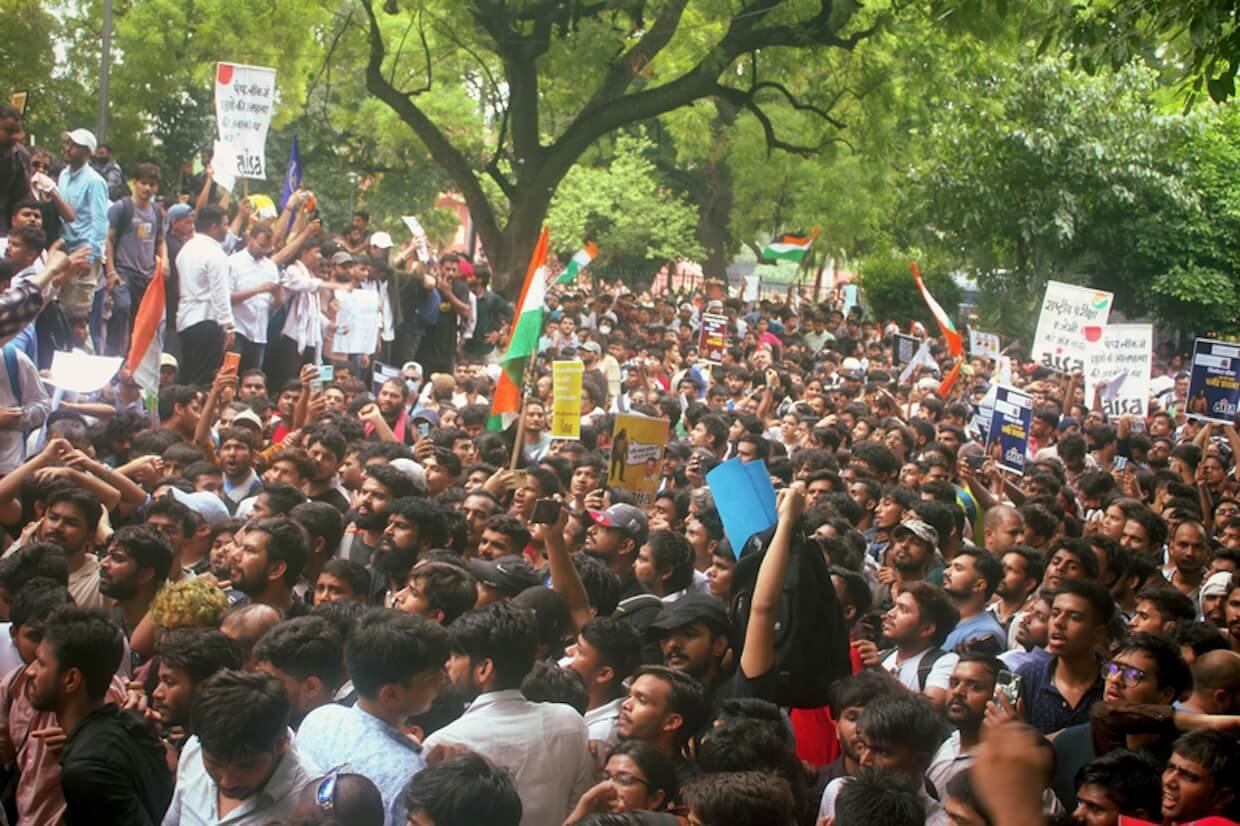
Recent protests over examination irregularities and employment opportunities have exposed growing frustrations among Indian youth. How do these grievances reflect deeper failures of state capacity, meritocratic governance, and socioeconomic inclusion under Modi’s development model?
Professor Rahul Mukherji: There are two aspects to this. The first is the trend toward centralization, which you just asked about. I taught at Jawaharlal Nehru University, which is India’s premier university. It had its own entrance examination, conducted throughout the country for admission to a single university. The faculty would set the examination papers and grade them. Such arrangements were possible for many elite institutions in the country, including the All India Institute of Medical Sciences and Jawaharlal Nehru University. In the past, schools also conducted board examinations, and the results allowed students to enter colleges. Now, many of these arrangements have been replaced by centralized examinations, including one recently affected by corruption, which led to the massive protests we have seen in the streets of Delhi.
So, there are two things happening here. First, there is a tendency for the state to exercise control through centralization. The second issue is that India is an enormous country, with 1.4 or 1.5 billion people, yet the number of institutions available to serve this population is very small. Those who gain admission to these elite institutions are therefore privileged. Alongside centralization, the state lacks the capacity to conduct these examinations with integrity. This was not a problem in the past. It is not that centralized examinations were never conducted before, but the examination system has now become overcentralized for purposes of control, accompanied by a lack of state capacity and investment. And state capacity does not come from investment alone. It also requires coherence, integrity, and technical ability. So, there is an unusual lack of competence in all these areas, which is obviously linked to vested interests seeking to benefit from this centralization.
Youth Protests Reveal Deep Disillusionment Even Among BJP Supporters
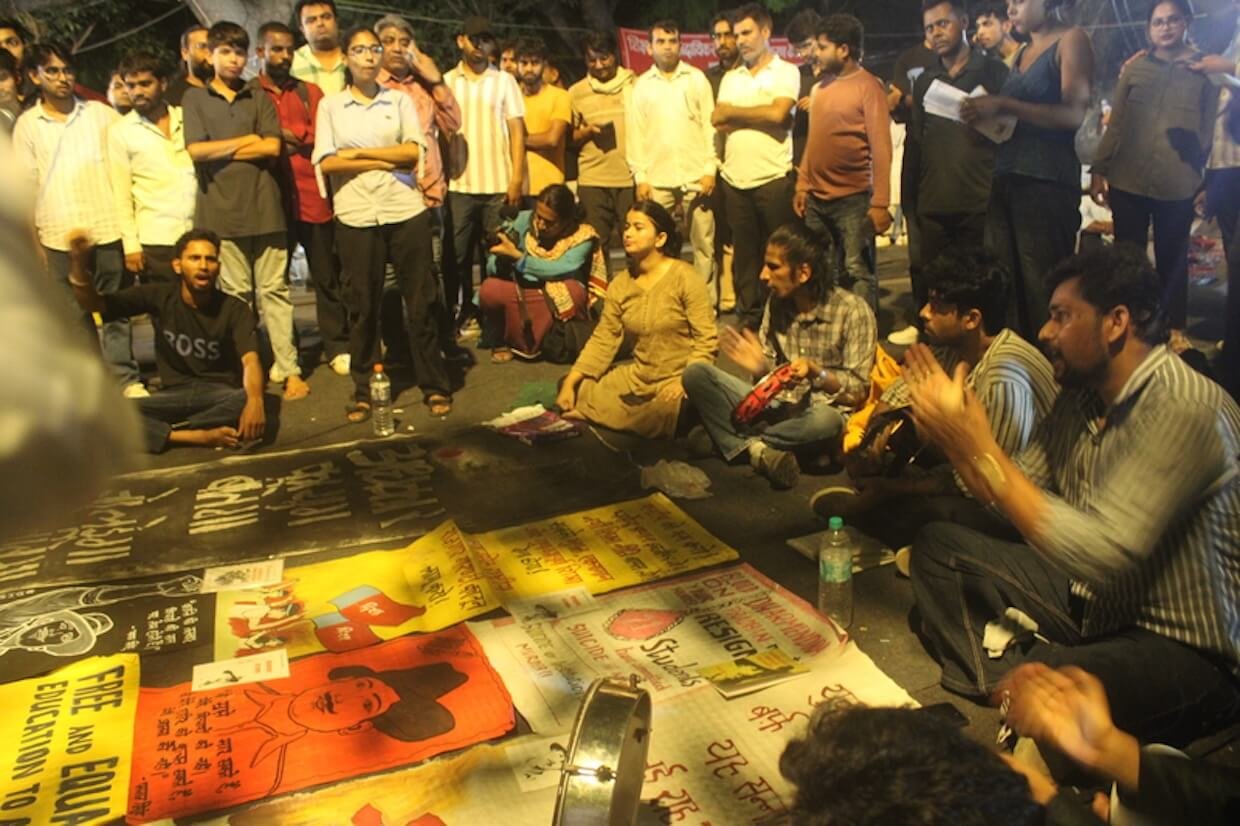
The youth-led Cockroach Janta Party (CJP) emerged from digital satire before organizing protests over examination scandals and political accountability. Does this movement represent democratic counter-populism, a new form of anti-establishment mobilization, or the emergence of a potentially transformative generational political identity?
Professor Rahul Mukherji: It doesn’t seem to me that this is populism, because the movement was essentially demanding a more secure examination system. It led to the resignation of the education minister. However, the minister was replaced by someone who, judging by the appointment, is unlikely to make much difference to the system. Nevertheless, the government’s decision to replace its education minister was no small matter. This is not a government that wants to appear as though it has been forced to reverse its own decisions, and it certainly did not do so willingly.
What the CJP protests demonstrated was that there is considerable anguish. Many participants were middle-class people who had also supported the BJP. Perhaps the appeal of Hindu nationalism does not carry as much weight as one might assume. It may also be somewhat artificial in the Indian context, since many Hindus do not actually believe that Muslims are their enemies.
But when you believe there is widespread corruption and that certain political leaders are going to do a lot of good things for you, you vote for them. Then you realize that they are simply using Hindu nationalism without delivering anything.
In this particular case, the movement became powerful because it took place in Delhi and brought together middle-class participants and many Hindus. So, when the BJP was confronted with these protesters, it faced people who were not necessarily fighting for secularism but were not opposed to it either. One of the leaders, Neha Bora, is a left-wing leader. She is a communist and deeply secular. Even the other leaders who had connections with the Aam Aadmi Party, whose secular credentials had been questioned in the past, were not saying anything that contradicted the secular credo. All of them seemed committed, and despite substantial ideological differences, they came together to protest.
The protest was very spontaneous, which partly explains why it could not be controlled. Nobody expected a protest that began with a hunger strike to become so significant. The political consequences will depend on how effectively political parties can connect with young people. I think there is potential, and I can say more about how I view these connections. But for me, how politics will connect with this movement remains an unsettled question. I have a view about how that needs to happen for political outcomes to materialize.
Electoral-Roll Revisions Represent a Serious Step Toward Authoritarianism
The Election Commission’s Special Intensive Revision (SIR) has generated controversy over large-scale voter exclusions and their possible disproportionate effects on marginalized communities. How should these developments be assessed within the framework of competitive authoritarianism? Where does electoral administration become a mechanism of political exclusion?
Professor Rahul Mukherji: From the perspective of gradual institutional change, there has been a change in the law governing the selection of election commissioners. The new law stipulates that the selection committee consists of the Prime Minister, a Cabinet minister, and the Leader of the Opposition.
There was no such law in the past. Decisions were largely made by the ruling party, but there was a long tradition of distinguished election commissioners who had performed very well, and the Election Commission was considered an excellent institution. Now, a law has been passed under which the political opposition effectively has no say in the selection process. So, when election commissioners are selected in this way and something like the Special Intensive Revision takes place, it clearly represents very serious democratic backsliding in an autocratizing direction.
Now, whether this democratic backsliding will inspire the competitive elements of politics to rise up is another question. In a sense, it also serves as a call to action and a source of inspiration for the political opposition. After all of this happened, all the parties in the INDIA coalition—the Indian National Developmental and Inclusive Alliance, led by the Indian National Congress—came together. Many of these leaders had not met face-to-face in the past. But it is difficult to judge how effectively the political opposition will come together. For me, the problem does not lie solely with the Hindu nationalist BJP. There are also many problems within the political opposition. And it will not help the political opposition if its parties simply continue blaming the ruling party without coming together.
Opposition Unity and Youth Mobilization Are Essential to Challenging the BJP
The crackdown on recent CJP-led demonstrations raises questions about the state’s tolerance of dissent. Building on your arguments about opposition coordination and nonviolent resistance, can youth movements and the INDIA alliance construct a credible democratic alternative without sacrificing their organizational autonomy?
Professor Rahul Mukherji: It is possible, but it is not easy. In my 2023 paper in the Journal of Democracy, where I discussed the Karnataka elections, I argued that a social movement called Wake Up Karnataka, which included Muslims, Scheduled Castes, lower-caste people, farmers, and various other groups, including upper-caste Hindus, came together with the Indian National Congress.
Many of those involved in this movement did not become members of the Congress Party. They remained progressive civil society activists, some working more closely with Congress and others deciding that this was what they needed to do for the BJP to lose. Nonetheless, they came together. There was a civic space and a political party, and in a more recent piece, I describe this as embedding the civic space within the political party. Now, whether this kind of embeddedness will develop between the CJP and the Congress Party is a million-dollar question because Mr. Rahul Gandhi, the Leader of the Opposition, did not really give much importance to the CJP protests.
For a long time, the Congress Party largely ignored the protests. The first person who actually took action was Rahul Gandhi’s mother, Sonia Gandhi, a veteran leader and, in many ways, the real leader of the Congress Party. She said that the people who were fasting should be respected, and she expressed respect for Sonam Wangchuk. A newspaper article clearly mentioned that his father had been recognized by her mother-in-law, who had served as Prime Minister, and that Scheduled Tribe status had been granted to Ladakh by her husband, Prime Minister Rajiv Gandhi. Therefore, his fast deserved recognition.
So, there are elements within Congress who perhaps believe that the CJP is too independent an organization and that the party should work with young people who are more closely aligned with Congress. Others within the party believe there should be a greater degree of embeddedness. The CJP itself has been very mature. Nobody in the CJP has criticized the Congress Party or Rahul Gandhi. Many media outlets have tried to draw them into making critical comments, but none of them have done so. Their motivations seem to be aligned.
At the same time, these young people would like to maintain their independence and autonomy. How well Congress works with them, and to what extent the political party becomes embedded in this social movement, will be important in determining what happens.
So, there are two things. First, how well will coalition management work? This is very important because parties within the INDIA coalition should avoid splitting their votes. Second, how effectively will political parties become embedded in these protests? That is something politicians on the ground will have to accomplish. I don’t think a prophet can decide this.
Reversing Authoritarianism Will Become Far Harder if India Turns into a Closed Autocracy
Finally, Professor Mukherji, your work emphasizes India’s historically resilient democratic institutions and the importance of opposition unity, federalism, and programmatic welfare. What concrete political, constitutional, and societal reforms are indispensable for reversing authoritarian consolidation and restoring India’s pluralist democracy?
Professor Rahul Mukherji: Following up on all the points I have made, there are four things that the political opposition needs to do but often fails to accomplish. I recently wrote a paper in The India Forum outlining these four priorities. It is freely available on the website.
The first is to have an ideological commitment to an idea that differs from the BJP’s Hindu nationalist worldview. The Congress Party, along with many other opposition parties, often makes the mistake of assuming that because Hindu nationalism is very popular, it should copy and mimic it. I have shown in this paper that this approach does not work.
The second is factional management. India is a country of 1.4 billion people, and the state of Uttar Pradesh alone has 180 or 190 million inhabitants. A single state is the size of a large country. So, whether you are a state-level party or a national-level party, there are inevitably many factions. The question is how effectively you manage those factions. We often find that the Congress Party is fighting itself in many states. I don’t know whether this happens to the same extent in many other countries.
The third is coalition management. In the Karnataka elections, there was a Muslim party called the AIMIM. Civil society persuaded the AIMIM to withdraw more than 40 candidates. Otherwise, the Congress could never have won, because without the consolidated Muslim vote going to the Congress Party, there would have been no Congress victory. So, the withdrawal of those candidates was crucial. These kinds of seat adjustments are extremely important.
The fourth, and most important, is the issue we were just discussing, which is largely missing from the political science literature: How effectively can powerful, progressive political parties—parties that are counter-majoritarian—become embedded in social movements on the ground? Now, the right-wing BJP does a great job of this because it has the RSS. I find that, even though civil society organizations have been attacked, there is still considerable social movement activity on the ground challenging majoritarianism. The BJP and the RSS operate under a disciplined umbrella. If the INDIA coalition or the Indian National Congress and this civic space cannot come together under an umbrella that enables them to work cooperatively, then there is a serious problem.
So, addressing these issues is a tall order. But what is the alternative? The alternative is that India moves from being a competitive authoritarian regime to becoming a closed autocracy. Once that happens, bouncing back becomes far more difficult. Statistics and global experience show that reversing such a transformation is much more difficult.
(*) This interview was academically curated and edited by Dr. Bulent Kenes.