
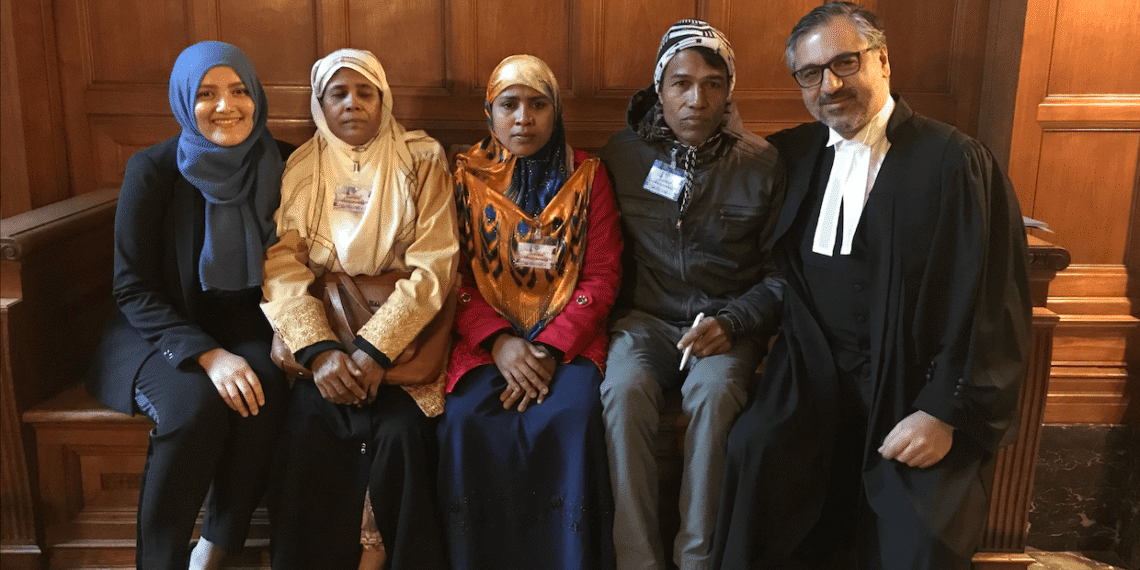
In an interview with the ECPS, Professor Payam Akhavan, Professor of International Law at the University of Toronto and Special Advisor on Genocide to the ICC Prosecutor, examines the historic ICJ judgment holding Myanmar responsible for genocide against the Rohingya. While acknowledging its unprecedented significance, he warns that “the judgment will largely remain symbolic for the foreseeable future.” Professor Akhavan explores the legal complexities of genocidal intent, the destructive convergence of ethnic populism and military authoritarianism, and the geopolitical obstacles undermining international accountability. Emphasizing that “the answer to Myanmar lies in a political solution, not a legal judgment,” he advocates multiethnic democratic transformation, constitutional reform, and universal human rights, insisting that “Despair is not an option.”
Interview by Selcuk Gultasli*
The International Court of Justice’s (ICJ) November 19, 2026, judgment holding Myanmar responsible for genocide against the Rohingya marks a historic moment in international justice. Yet the divided ruling exposes profound legal and political challenges surrounding genocidal intent, state accountability, and enforcement. Decades of authoritarian rule, ethnoreligious exclusion, and institutionalized discrimination have left the Rohingya largely stateless and displaced, raising fundamental questions about justice beyond judicial recognition.
In an interview with the European Center for Populism Studies (ECPS), Professor Payam Akhavan, Professor of International Law, Senior Fellow, and inaugural Chair in Human Rights at Massey College, University of Toronto, offers a critical assessment of this landmark judgment. An Associate Member of the Institut de droit international and Special Advisor on Genocide to the ICC Prosecutor, Professor Akhavan previously served as counsel to The Gambia in the ICJ proceedings and to Bangladesh in proceedings before the International Criminal Court (ICC).
Professor Akhavan argues that the judgment represents an unprecedented achievement while illustrating the structural limitations of international justice. Although the Court’s decision establishes historic state accountability, he cautions that “the judgment will largely remain symbolic for the foreseeable future.” Drawing on his experiences in Bangladesh’s Kutupalong refugee camp, he emphasizes the profound distance between judicial recognition in The Hague and the continuing suffering of displaced Rohingya communities. Their prospects for safe and dignified return, he warns, remain remote.
The interview also examines the jurisprudential controversy surrounding genocidal intent. Professor Akhavan maintains that “even very terrible atrocities are not necessarily genocide,” emphasizing the distinction between genocide, crimes against humanity, and ethnic cleansing. His analysis highlights the tension between strict legal interpretation and victims’ demands for accountability, alongside the possibility of establishing localized genocide.
Beyond jurisprudence, Professor Akhavan situates the Rohingya tragedy within a broader historical trajectory of discriminatory nationalism, statelessness, and authoritarian violence. He warns that when ethnic populism and military authoritarianism coincide, “the consequences become particularly destructive.” Myanmar’s failed democratic liberalization further demonstrates how weak institutions and the political mobilization of imaginary enemies can facilitate mass atrocities.
Addressing geopolitical obstacles, including the UN Security Council veto powers and declining commitment to multilateralism, Professor Akhavan advocates sustained international pressure, sanctions, and complementary judicial proceedings. Nevertheless, he insists that “the answer to Myanmar lies in a political solution, not a legal judgment.” His prescription calls for multiethnic democratic transformation, a new constitution, and a government committed to the rule of law and equal human rights. Ultimately, his message combines institutional realism with moral determination: “Despair is not an option.”
Here is our interview with Professor Payam Akhavan, edited lightly to enhance clarity, readability, and overall flow for publication.
The ICJ’s Genocide Judgment Will Remain Largely Symbolic for the Foreseeable Future
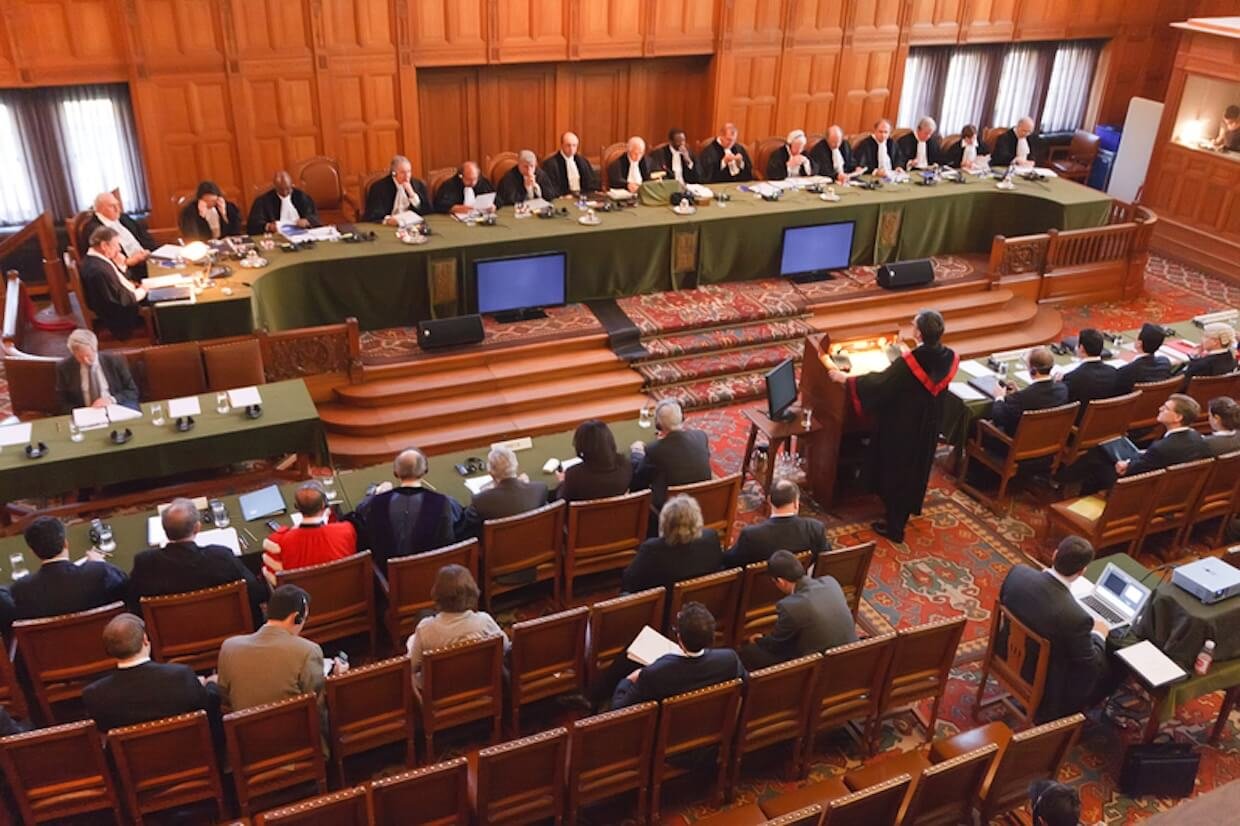
Professor Akhavan, welcome! As counsel for The Gambia in its genocide case against Myanmar, how do you assess the historical and jurisprudential significance of the ICJ’s November 19, 2026, Rohingya judgment? Does it represent a turning point in state accountability under the Genocide Convention, or is its significance primarily declaratory?
Professor Payam Akhavan: Thank you for that question. I should clarify that I had the privilege of serving as counsel to The Gambia during the provisional measures stage, the initial phase of the ICJ proceedings, and also as counsel to Bangladesh in proceedings before the International Criminal Court (ICC), which I think is important to consider in parallel with the ICJ proceedings.
The ICJ judgment is most certainly historic. It is the first time that a state has been held responsible for genocide. The vote was split 9 to 6, demonstrating significant disagreement among the judges. But I also think this historic moment exposes both the potential and the limits of international justice.
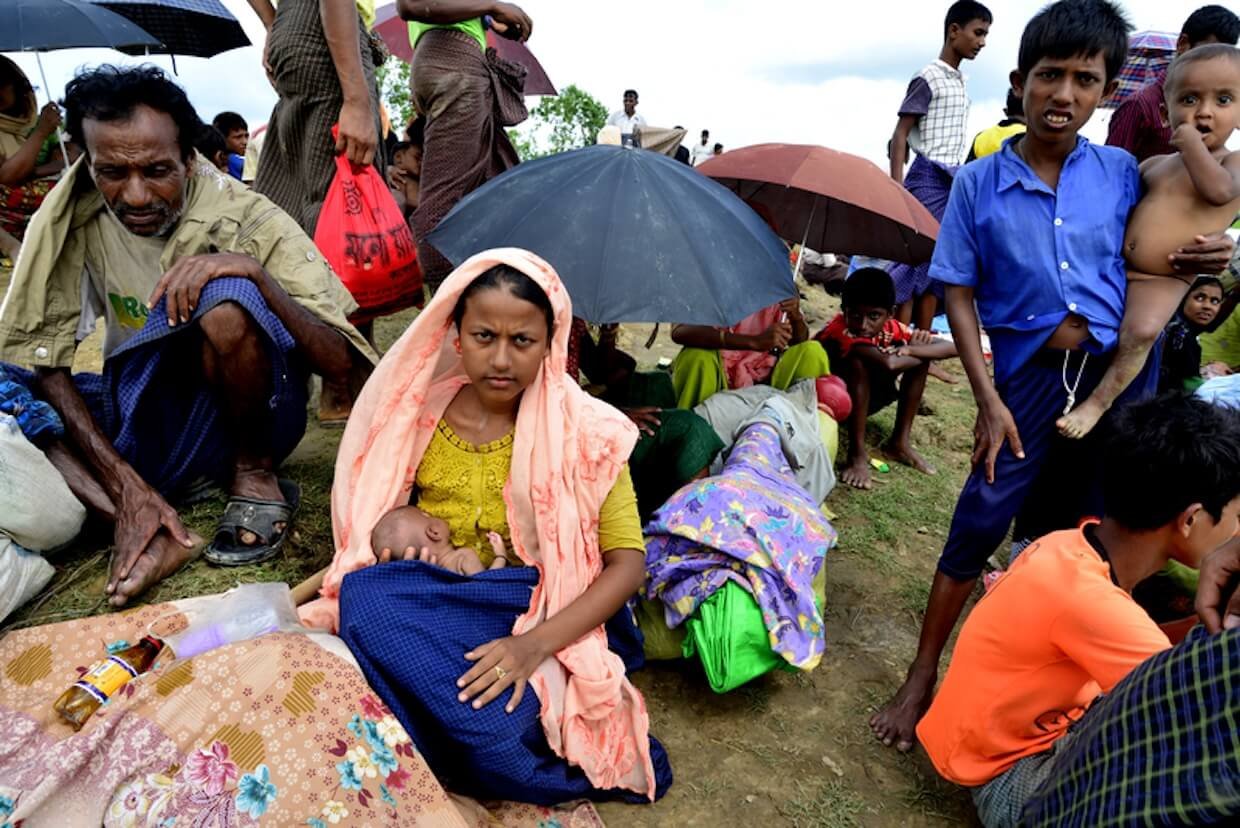
I have spent considerable time in the Kutupalong refugee camp in Bangladesh, where there are currently 1.2 million Rohingya refugees. The conditions are utterly miserable. There is poverty and profound trauma from the violence. The world in the refugee camps is therefore a world away from the so-called Hague bubble. While we must use all means at our disposal to pressure the Myanmar government and hold it accountable for these heinous crimes, the judgment will largely remain symbolic for the foreseeable future.
It is a symbolic judgment, in part because the Myanmar government, as it currently stands, is unlikely to be persuaded by international legitimacy. Even if the matter were raised before the Security Council, China and Russia would surely veto any resolution. Even the United States today is sanctioning the International Criminal Court and is not pleased with either the International Court of Justice or the idea of the rule of law.
But the more important point, which is not really considered in this euphoric moment, is that today, unlike in 2019, when the case began, the Myanmar military controls perhaps 10–20% of Rakhine State. The remaining 80–90% is in the hands of the Arakan Army, an insurgent group. In fact, of approximately 14 townships, only three are under government control; the others are in the hands of the Arakan Army.
The safe and dignified return of the Rohingya therefore depends not so much on the Myanmar government that displaced them, but on the Arakan Army. The problem is that, despite our hopes to the contrary, the Arakan Army has not been treating the Rohingya particularly well, even though it is engaged in an armed struggle against the military junta.
Since 2023, armed conflict between the Arakan Army and the Myanmar military has escalated, and an additional 150,000 to 200,000 Rohingya have been displaced over the past two or three years. The Arakan Army has also subjected the Rohingya to widespread and systematic human rights abuses, including forced displacement and the confiscation of their lands, which is, in effect, ethnic cleansing. These abuses have also involved forced labor, extrajudicial killings, and torture.
So, although it is heartwarming to see refugees in the Kutupalong camp celebrating this judgment because the world has finally recognized, through an official judgment of the UN’s principal judicial organ, what happened to the Rohingya people almost 10 years ago, the prospect of their safe and dignified return, sadly, remains remote.
The Judgment Adopts a More Expansive Interpretation of Genocide
The ICJ found Myanmar responsible for genocide by nine votes to six, with dissenting judges questioning whether the evidence established specific genocidal intent (dolus specialis). Why did the Court divide so sharply despite extensive documentation of atrocities? Does this disagreement reflect legitimate evidentiary concerns or deeper tensions between judicial restraint and accountability?
Professor Payam Akhavan: It’s a very good question, and we should begin from the premise that not all atrocities are genocide. There are other categories. For example, the statute of the International Criminal Court distinguishes among war crimes, crimes against humanity, and genocide. Even very terrible atrocities are not necessarily genocide. When the Genocide Convention was adopted by the UN General Assembly, genocide was intended to be a very narrowly defined crime.
Now, the problem is that the ICJ is not a human rights court. In this instance, it does not have general jurisdiction, so the only basis for the Court’s jurisdiction is Article 9 of the Genocide Convention. This means that the claim has to be shoehorned into the crime of genocide. It is not enough to say that extensive war crimes or crimes against humanity have been committed. There must be a finding that those atrocities qualify as genocide.
This creates a very difficult situation because you have these appalling crimes against the Rohingya, however you characterize them. They have no recourse and look to the ICJ, at least for symbolic recognition of what has happened to them. On the other hand, the crimes must qualify under this very narrow category of genocide. That’s part of the tension one sees between the majority and the dissent.
More specifically, genocide is defined by the requirement of a special intention to destroy a group. It is a crime of collective homicide, and that special intention must be to destroy the group in whole or in significant part. Now, what constitutes a significant part of a group? There is no exact mathematical formula. You cannot say that anything beyond 10,000 killings becomes genocide and anything below that does not. You must also take into account that crimes of sexual violence, deliberately inflicting conditions such as starvation, and preventing measures within the group are also genocidal acts.
So, how is it possible, based on the totality of the evidence, to determine whether that threshold of scale, involving a significant part of the group, has been established? The International Criminal Tribunal for the former Yugoslavia, where I served as a prosecutor, made clear in its jurisprudence that ethnic cleansing, as such, is not genocide. Ethnic cleansing, meaning the forced removal of a population from a territory on discriminatory grounds, is not genocide. There has to be something more, approximating the physical or biological destruction of a significant part of the group.
Ethnic Cleansing Is Not Necessarily Genocide, but Localized Genocide Is Possible
Bearing that in mind, the intention cannot simply be to displace, let’s say, a million Rohingya. The intention must be to physically or biologically destroy them. This is why reasonable judges can reach different conclusions based on their appreciation of the evidence. And it’s difficult not to think that at least some of the judges might have had, at the back of their minds, the concern that we cannot leave these victims empty-handed.
However, there is one other possibility that perhaps was not considered: finding that genocidal acts were committed in specific locations. There does not need to be a global genocide. An example of genocide on a global scale, other than the Holocaust, would be Rwanda, where some 800,000 members of the Tutsi minority were exterminated in three months.
We don’t have that sort of scale here, but we do have specific locations—villages where almost everyone was either exterminated or subjected to horrific sexual violence. It may therefore have been possible to conclude that genocidal acts were committed in specific locations and were attributable to Myanmar. I should add that one of the cases before the Yugoslav tribunal was the Jelisic case. The jurisprudence from its trial and appeal judgments clearly indicates that a localized genocide is possible.
In that sense, the judgment is historic, but it also adopts a more expansive rather than restrictive interpretation of the scope of this crime, certainly compared with the existing jurisprudence, which focuses on Rwanda, the mass murder of 8,000 Bosnian Muslims in Srebrenica over a 20-day period, and the arrest warrant issued against President Omar Bashir and other Sudanese officials in respect of Darfur, where more than half a million people were killed.
The Principle of Legality and the Limits of Progressive Jurisprudence
In “The Perils of Progressive Jurisprudence,” you caution against expansive interpretations that undermine nullum crimen sine lege—no crime without law. How should international courts reconcile strict legal standards with the need to recognize genocidal intent inferred from systematic killings, sexual violence, destruction, and forced displacement?
Professor Payam Akhavan: One of the principles of human rights is the principle of legality, enshrined in Article 15 of the International Covenant on Civil and Political Rights. The nullum crimen sine lege principle not only prohibits the retroactive application of criminal law but also requires its strict interpretation.
Criminal justice has a different sensibility from human rights advocacy. Human rights advocacy is victim-centered, whereas criminal justice is, in fact, defendant-centered. The question is one of the guilt or innocence of the accused. The ICJ is not conducting a criminal trial; it is examining questions of state responsibility. However, its jurisprudence overlaps with that of international criminal tribunals, and vice versa. There is inevitably some degree of mutual influence and harmonization between these bodies of jurisprudence. In that context, there is a requirement to interpret crimes narrowly rather than expansively. That is, in fact, a human rights principle that collides with our instincts as human rights activists to expand the law to provide victims with some form of redress.
The problem here is that nobody could possibly question that what has happened to the Rohingya in Myanmar constitutes, at the very least, a widespread or systematic attack directed against the civilian population. These are plainly crimes against humanity. If this were a trial before the ICC rather than an ICJ case in which the sole basis for jurisdiction is the crime of genocide, perhaps the outcome would have been different. There would have been less pressure to specifically qualify these acts as genocide because, in this case, it’s either genocide or nothing. There is no alternative to genocide because of the basis for jurisdiction.
But that’s also why it was open to the Court, perhaps by an even larger majority, to find that localized genocide had been committed—that genocidal acts attributable to Myanmar had occurred in specific locations. That, too, would have resulted in a finding in favor of The Gambia.
Genocide Lies at the Intersection of Discriminatory Intention and Extreme Violence

In “The Radically Routine Rohingya Case,” you trace decades of institutionalized discrimination against the Rohingya. How did Myanmar’s 1982 citizenship law, ethno-religious exclusion, and successive military dictatorships create the conditions for genocide? What does this trajectory reveal about the relationship between statelessness, authoritarianism, and mass atrocities?
Professor Payam Akhavan: Genocide is a crime that, at its core, lies at the intersection of discriminatory intention and extreme violence. If you look at the Nuremberg Tribunal, for example, genocide was not yet a crime in 1945, when the Charter was adopted. The Genocide Convention was adopted three years later, in 1948, but there was already a crime against humanity of persecution, which was based on discriminatory intention. The crime against humanity of persecution involves the denial of fundamental human rights on discriminatory grounds. Genocide, in fact, falls on the same spectrum as the crime of persecution. It is an extreme and aggravated form of persecution. In that sense, discriminatory policies can escalate into genocidal violence.
At a more sociological level, one can also speak about the necessity of hate propaganda and the demonization of the target group to justify its mass murder. One aspect of the anatomy of genocide is the tremendous effort that goes into demonizing and dehumanizing a group, followed by the mobilization of thousands of soldiers, police officers, and even an entire bureaucracy to carry out a mass atrocity. This cannot simply be characterized as a spontaneous hate crime. It is systematic and widespread; it is state policy. It requires resources, planning, and strategy.
In that sense, it should come as no surprise that the escalation of anti-Rohingya sentiments and hate propaganda into genocidal acts was a long time in the making. That is where one has to situate the question of statelessness. Statelessness is not just a legal category; it is an expression of the idea that the Rohingya don’t belong to Myanmar. The rhetoric and propaganda have consistently portrayed the Rohingya as not being nationals of Myanmar, but rather as so-called Bengali illegal immigrants.
It is very unfortunate that this hatred does not come solely from the central government. We have also seen atrocities committed by the Arakan Army, which is itself an ethnic movement that shares the Buddhist tradition of the Bamar majority. It has not been especially kind to the Rohingya either. So, in a state with such a profoundly multiethnic character as Myanmar, the temptation to incite ethnic hatred and violence as an instrument of power becomes quite compelling for ruthless and unprincipled leaders, whether they lead the central government or insurgencies and militias fighting against it.
Myanmar Demonstrates the Destructive Convergence of Ethnic Populism and Military Rule
Myanmar’s military and Buddhist-nationalist actors portrayed the Rohingya as illegal immigrants, religious outsiders, and security threats. To what extent does this reflect exclusionary populism’s construction of an authentic national community against a threatening Other? How should scholars distinguish such populist narratives from military authoritarianism and institutionalized ethnic persecution?
Professor Payam Akhavan: Populism, particularly ethnic hatemongering, can be distinguished from military authoritarianism. It is possible to have an authoritarian state ruled by a military junta that, in fact, eschews exclusive nationalism and keeps a multiethnic state together by repressing dissent or ethnic-based movements. In that sense, military authoritarianism and ethnic populism or hate-mongering are obviously not the same thing. But when the two coincide, the consequences become particularly destructive, as we have seen in the case of Myanmar.
Creating Imaginary Enemies Is One of Authoritarian Leaders’ Oldest Instruments of Power
The Rohingya atrocities intensified during Myanmar’s partial political liberalization, while Aung San Suu Kyi later defended Myanmar before the ICJ. What does this reveal about the limitations of electoral democratization without minority protections? Can majoritarian nationalism and democratic backsliding reinforce one another when military institutions remain largely unaccountable?
Professor Payam Akhavan: One must always consider that the rise of National Socialism, particularly the rise of the Nazi Party in Germany, was a result of a democratic process. So, when we look at populism, we can understand it not only as rule by the people, for the people, but also in terms of mob violence. The mobilization of the masses through the creation of imaginary enemies and hatemongering is one of the oldest instruments in the toolbox of authoritarian leaders.
In Myanmar, sadly, liberalization was not accompanied by robust institutions that could allow democracy to take root. Moreover, the military had sufficiently strong interests in sabotaging that liberalization, as well as sufficient power to derail it.
In fact, there is a link between the destabilization or derailment of democratic institutions or a democratization process and war and concerted violence against an imaginary enemy. Every authoritarian political system has some enemy that it uses to justify repression and the consolidation of power. Sadly, that is what has happened in Myanmar. Unfortunately, we have now moved from ruthless violence by the Myanmar military to the disintegration of the state amid a prolonged civil war with uncertain results.
The ICC and ICJ Hold Different Pieces of the Puzzle of Accountability for Myanmar
In “The Radically Routine Rohingya Case,” you defended the ICC’s jurisdiction over deportation because the crime was completed in Bangladesh. Following the ICJ’s finding of Myanmar’s state responsibility, how can these judicial processes reinforce individual accountability? Does the ICC’s limited territorial jurisdiction leave a fundamental accountability gap?
Professor Payam Akhavan: The ICC and ICJ have different functions, although they are also mutually reinforcing. First, the ICJ had jurisdiction based on the crime of genocide, whereas the ICC has no jurisdiction over Myanmar because it is not a state party. The prospect of a Security Council referral under Chapter VII, which would vest the ICC with jurisdiction, is unlikely because of opposition from some permanent members with veto power.
The creative theory put forward at the time was that the crime of deportation is inherently transboundary, in the sense that it is completed when victims are pushed across an international border. The crime of deportation began on the territory of Myanmar but was consummated on the territory of Bangladesh. On that basis, the ICC had jurisdiction, and a pretrial chamber accepted that argument in 2019.
In 2024—and this is something very significant that has been forgotten amid the media frenzy surrounding The Gambia–Myanmar judgment—the ICC prosecutor requested an arrest warrant against General Min Aung Hlaing, the most senior member of the Myanmar military. He was also named among six officials responsible for crimes against humanity and genocide in the 2018 report of the UN fact-finding mission. We have not heard anything further since 2024, but it would appear that an arrest warrant may have been issued for General Min Aung Hlaing under seal and therefore not made public.
In that sense, we have a situation in which both the ICC and the ICJ hold a piece of the puzzle. The ICJ has jurisdiction only over genocide, while the ICC has jurisdiction over the crime against humanity of deportation. Neither has full jurisdiction, but that is part of what we need to do as human rights advocates to achieve at least some measure of accountability rather than none at all.
Despair Is Not an Option in the Painfully Slow Struggle for International Justice
You have emphasized how geopolitical interests and Security Council veto powers obstruct accountability for atrocities. Given Myanmar’s relationships with China and Russia, what mechanisms could translate the ICJ judgment into meaningful pressure on its military leadership? Does selective enforcement undermine the legitimacy and universality of international justice?
Professor Payam Akhavan: The Security Council has a number of tools at its disposal. It can impose sanctions and use other means to pressure the government of Myanmar to comply with the Court’s judgment. Of course, a number of governments have very close military, economic, and diplomatic ties with Myanmar, and they are under an obligation under international law not to engage in any act that contributes to or recognizes these acts of genocide.
The problem is not simply that Russia and China have interests in supporting Myanmar and would therefore veto any resolution. Even the United States today is no longer the partial champion of the international rule of law that it once was. There is hostility toward multilateralism and the idea of universal human rights principles, so this is a difficult time to be fighting for the rule of law.
But The Gambia–Myanmar case is a step forward. It provides one of the building blocks that can be used over time to advance the painfully slow cause of international criminal justice. I would conclude by saying that we should be mindful that this has been a work in progress since the Nuremberg Charter was adopted in 1945. Over some 80 years, we have witnessed endless mass atrocities in Ethiopia, Uganda, Sudan, Rwanda, and Bosnia. One could go on and on.
We should be humble and realistic about how many people have to suffer before we can make even a symbolic advancement through a sensational ICJ judgment in The Hague. But we have no choice but to persist. Despair is not an option, so we must use the tools at our disposal. In the long run, however, the answer to Myanmar lies in a political solution, not a legal judgment, as important as that may be.
There must be a multiethnic democratic transformation, a new constitution, and a new government that respects the rule of law and the human rights of all citizens of Myanmar without discrimination. This is ultimately a struggle for the people of Myanmar, but the international community can play an important role in supporting that cause.
(*) This interview was academically curated and edited by Dr. Bulent Kenes.