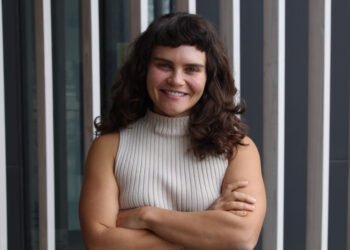

In an interview with the ECPS, Dr. Ana Paula Pellegrino, Assistant Professor at the Pontifical Catholic University of Chile, examines how fear of Bolsonarism fueled Lula’s extraordinary electoral comeback by transforming political anxiety into democratic mobilization. Drawing on her recent Journal of Democracy essay, she explores how decentralized progressive networks, digital activism, and grassroots engagement converted fear into electoral participation. As she argues, Lula’s campaign succeeded because “they were able to transform despair into hope.” Yet she cautions against the authoritarian risks of militarized political communication. Beyond the election, Dr. Pellegrino assesses Bolsonarism’s resilience, organized crime’s influence on democratic citizenship, and the institutional challenges facing Lula’s fourth presidency, emphasizing social media regulation, judicial reform, and coordinated public security policies.
Interview by Selcuk Gultasli*
Brazil’s October 25 presidential runoff delivered a historic comeback for Luiz Inácio Lula da Silva, whose victory over Flávio Bolsonaro demonstrated the mobilizing power of progressive networks and the resilience of electoral competition. Yet Bolsonarism’s enduring strength, a conservative-dominated Congress, deep polarization, and organized crime continue to challenge democratic governance. Beyond the electoral outcome, Lula’s victory raises fundamental questions about the relationship between political emotions, digital mobilization, populism, and democratic resilience.
In an interview with the European Center for Populism Studies (ECPS), Dr. Ana Paula Pellegrino, Assistant Professor at the School of Government at the Pontifical Catholic University of Chile in Santiago, examines these tensions through her research on political mobilization, organized crime, public security, and democratic institutions. Her recent Journal of Democracy essay, “How Did Lula Pull Off the Biggest Political Upset in Modern Brazilian History?”, provides important insights into the decentralized digital and grassroots mobilization behind Lula’s electoral comeback.
Central to Dr. Pellegrino’s analysis is the political significance of fear. Reflecting on the campaign, she emphasizes that “Fear was what drove the mobilization, or what the mobilization was able to tap into and turn into decisive action.” Yet fear does not necessarily produce authoritarian outcomes. Drawing on social psychology and her research on crime and public security, she argues that political emotions can generate either disengagement or democratic participation. In Lula’s case, “they were able to transform despair into hope.”
This transformation was facilitated by decentralized progressive networks that connected digital activism with interpersonal persuasion and electoral participation. Dr. Pellegrino examines André Janones’s militarized communication strategies while acknowledging their democratic risks. She nevertheless emphasizes the enduring value of the “ladder of engagement,” through which digital mobilization becomes sustained political participation.
Beyond Lula’s victory, the interview explores Bolsonarism’s institutional resilience, the weakening of Brazil’s political center, and tensions between the executive and a conservative Congress. Dr. Pellegrino also examines how armed militias convert territorial domination into electoral influence and how punitive security policies can inadvertently reinforce criminal governance. As she warns, expanding imprisonment risks strengthening organizations that already use prisons as recruitment and operational bases.
Looking toward Lula’s fourth presidency, Dr. Pellegrino identifies social media regulation, Supreme Court and broader judicial reforms, and coordinated public security policies as priorities for democratic renewal. She argues that such reforms can help address polarization, institutional distrust, and organized crime’s influence over ordinary citizens. In sum, the interview illuminates a central paradox of contemporary democracy: fear can sustain authoritarian political projects, yet, when transformed into hope and collective action, it can also become a powerful resource for democratic engagement.
Here is our interview with Dr. Ana Paula Pellegrino, edited lightly to enhance clarity, readability, and overall flow for publication.
Fear Was the Driving Force Behind Lula’s Extraordinary Electoral Comeback
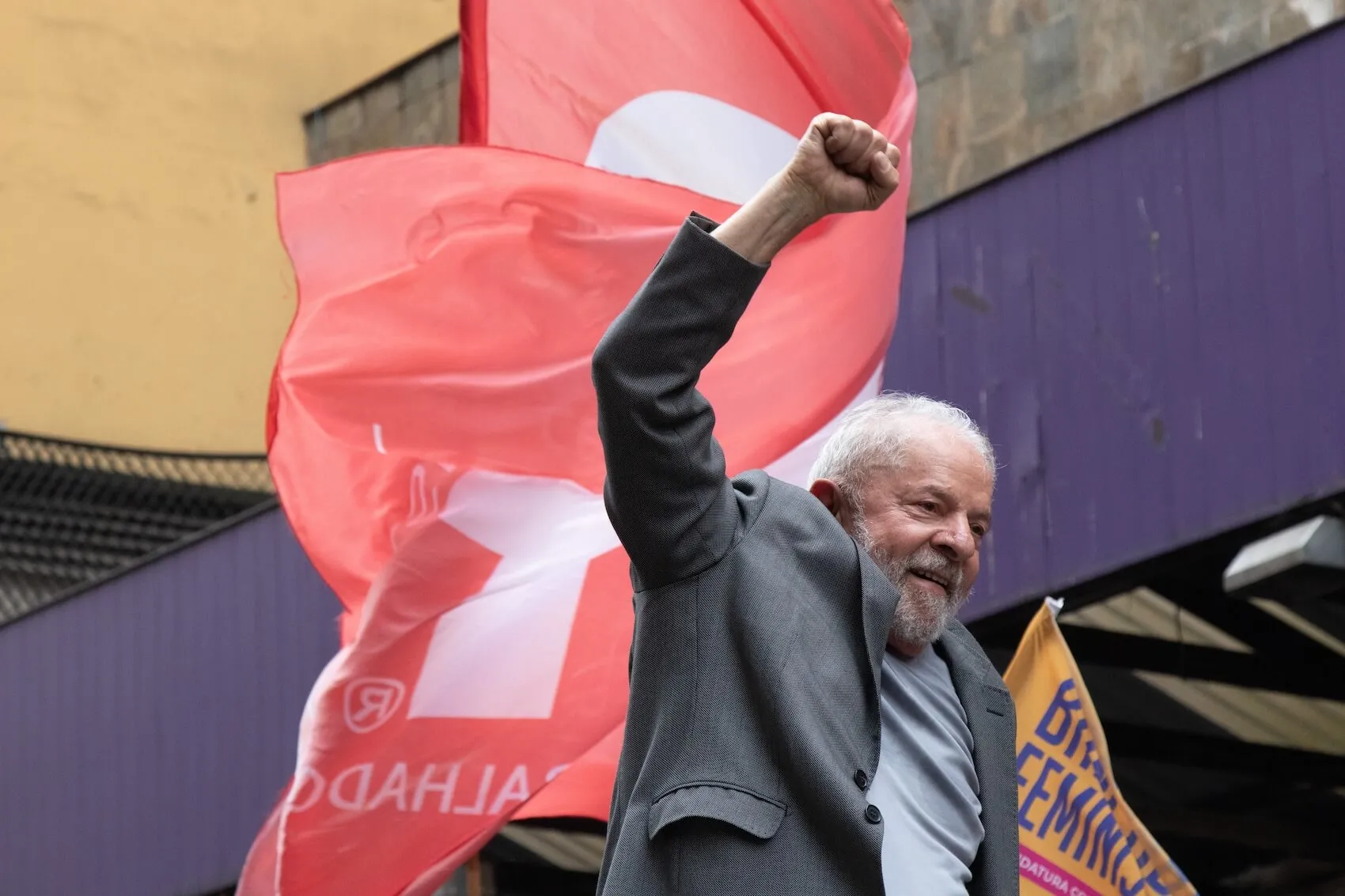
Dr. Pellegrino, welcome! Let me begin with your essay. In your Journal of Democracy essay, “How Did Lula Pull Off the Biggest Political Upset in Modern Brazilian History?” you describe his extraordinary runoff comeback. Does this victory demonstrate the resilience of Brazilian democracy or primarily the effectiveness of an exceptional electoral mobilization?
Dr. Ana Paula Pellegrino: That’s a great question, and one that we’re going to try to answer over the next couple of years. Brazil had already been in the process of recovering from a series of attempts to weaken our democracy. We had the 2022 attempt to prevent Lula from taking office following his election. A significant process was already underway, led by institutions. This was largely in the hands of the Supreme Court, which conducted investigations and prosecutions that ultimately led to the imprisonment of several participants in the attempt to prevent Lula from taking office.
When we compare the effectiveness of that process with what we see now in the mobilization around Lula, I don’t think this is simply a one-off event. It’s important to contextualize how this mobilization happened. I particularly want to emphasize the sentiment that was present in the crowd and served as the underlying force behind this mobilization: fear.
This fear comes not just from looking at Flavio Bolsonaro, but from knowing his family and where they come from, having lived through his father’s government from 2018 to 2022, and having witnessed the mobilization since they lost power. Fear was what drove the mobilization, or what the mobilization was able to tap into and turn into decisive action.
Was this a one-off event? It’s hard to say. Could similar circumstances mobilize this level of fear again? Yes, but I hope we don’t need to. I hope we don’t have to experience that level of fear once more.
But again, this wasn’t the process as it normally unfolds, as we saw, for example, with the investigations and prosecutions surrounding the January 2023 insurrection. Rather, it was the underlying sentiment behind a concerted effort focused on one specific event: the elections.
Brazil’s Progressive Movement Turned Social Media into Streets and Votes
You argue that Lula’s decentralized progressive base converted online participation into interpersonal persuasion, street mobilization, and voter turnout. Which mechanisms proved most decisive, and can this strategy generate durable political organization beyond the electoral cycle?
Dr. Ana Paula Pellegrino: In my essay, I made a point of explaining how the strategy was decentralized. There was no clear direction from the Lula campaign or anyone else to the different actors involved in this decentralized, multi-actor concert of actions. This ultimately led to the digital-to-in-person, social-media-to-streets-and-polling-stations strategy that we saw in the last three weeks of October.
Was this something that had been thought out beforehand? I think much of it was developed on the ground. If we look, for example, at interviews with Janones, the federal deputy who created what I consider the most relevant popular mobilization around this, did he have the full plan from the outset? He himself has said in interviews, “I knew I could get there,” but he was testing things out, and as they worked, he developed the next steps of the strategy.
That’s important. But yes, some elements had been planned beforehand. Many communication strategies had already been developed by the progressive base—not just those connected to the Workers’ Party, but the progressive base in Brazil more generally. They had been organizing, thinking about, and studying which segments of the electorate were less mobilized but could potentially be mobilized. They had been discussing how to get older generations out to vote for some time.
They had been developing that campaign and working on materials, identifying different messages that could be used to reach this particular audience. How do you target the people who will help older members of the electorate get out to vote? You needed different messages to mobilize different actors in this effort, and the same applied to a series of other smaller groups and audiences.
But what really took this to another level was when it became organic. There was only so much that the progressive base, these organized institutions, could do. Brazil has a very strong meme culture, and people began creating these things themselves. That really amplified what was already happening, because in the digital sphere, speed and volume are key.
During the first two weeks, Janones hadn’t yet reached the impressive mark of 10 million people in a single WhatsApp channel. That happened in the final week. In those first two weeks, there weren’t nearly as many people “following orders,” as he would say at the time. But those who were already in this space and mobilized were producing and engaging on their own.
It was a festival of different things. I even had difficulty translating some of this for the essay, but there were short telenovelas featuring fruit characters discussing the perils of a Bolsonaro government. They appealed, for example, to a very traditional type of Brazilian who wants to enter the civil service. So, the mother strawberry might be interested in supporting Bolsonaro, and the young strawberry would say, “Mom, you know, I’ve been studying for the civil service exam for the past five years, and if Bolsonaro is elected, there won’t be any civil service exams anymore, and I won’t be able to get this stable job.” It’s two strawberries talking on the internet. It’s a little unconventional, but that’s what people were creating.
There were also many memes of Lula dancing or appearing on TV shows, including AI-generated TV shows. These caught people’s attention. The sheer volume of this content occupied people’s feeds and created a kind of digital barrier against more pro-Bolsonaro, authoritarian, and right-wing content that would otherwise have been bombarding these middle-of-the-road feeds.
These were the crucial votes that both sides were trying to win. As the mobilization expanded, it increasingly took the form of content circulating in the digital space. Is this replicable outside the electoral cycle? That’s difficult, because it required a great deal of people’s time and effort. Could it be used differently? Probably, and that’s what Janones and Lula have been trying to do.
Lula has now adopted a strategy of producing live videos in which he talks with Janones and speaks directly to the Brazilian people. He’s done basically one livestream per week since being reelected. We’ve seen other presidents and heads of government around the world adopt this strategy. Bolsonaro himself used to do this. He had that direct channel. It’s completely new for Lula, who notoriously didn’t even have a cell phone. You could see the difference even in the aesthetic. The distortion produced by the selfie camera was something completely new. Suddenly, we started seeing his face with that distinctive selfie-camera distortion on social media feeds.
That aspect of having a direct, personalized channel, where someone sends you a message directly, was important. During the campaign, it was Janones speaking. Toward the end, he would also send messages from Lula or something similar. But initially, the communication was very much personalized around Janones. Now we’re seeing Lula enter this sphere much more actively and establish a direct channel with his supporters. Again, this is a very committed, supportive base that is already mobilized, which is another interesting factor. How sustainable this can be is something we’ll be watching closely in the coming months, which should be promising.
Lula’s Digital Army Adopted Right-Wing Mobilization Strategies
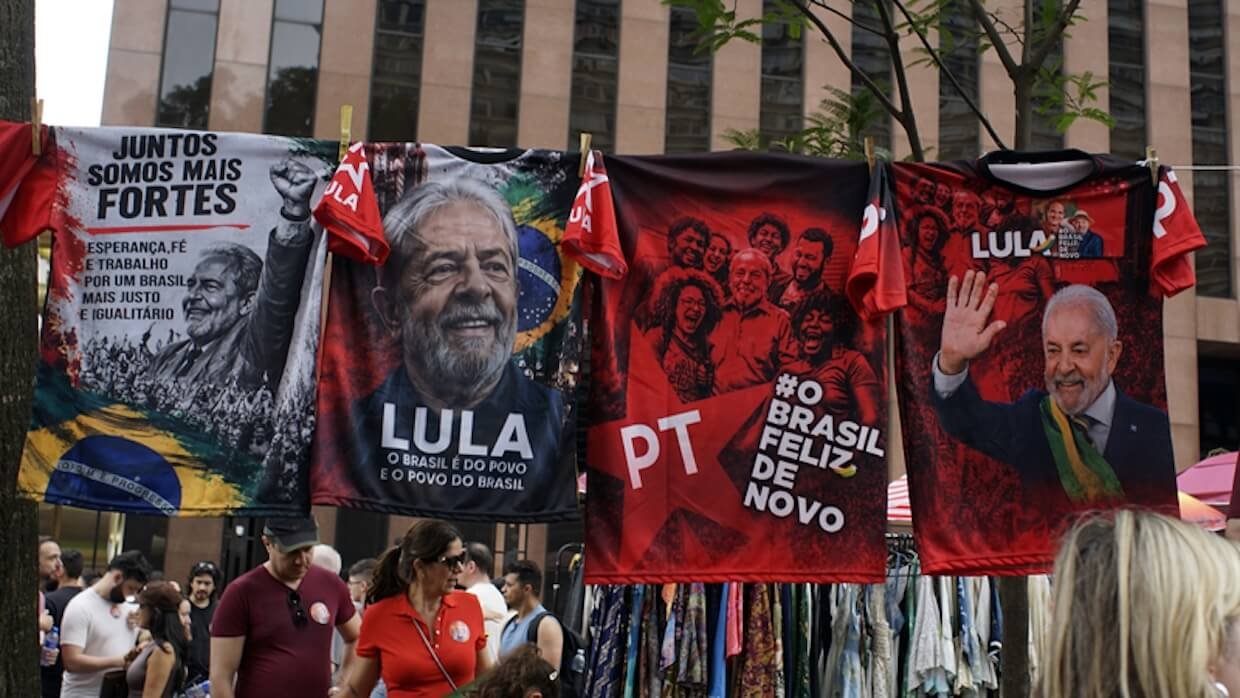
Your essay highlights André Janones’s Exército do Lula (Lula’s Army), which reportedly mobilized over ten million WhatsApp participants. Does this militarized, leader-centered digital strategy represent a distinct form of left-wing populism, and how does it differ from Bolsonarism’s communication practices?
Dr. Ana Paula Pellegrino: There are some similarities with Bolsonaro’s right-wing communication strategy, or that of Bolsonarism. You can identify a figure on the right comparable to Janones on the left. But they operate on fundamentally different ideas. Janones is very aware that the way he mobilized people on the left for this election is both a product of and dependent on the current structure of social media, its algorithms, and its broader architecture. He has commented on this in more recent interviews. Since both sides operate in the same environment, the strategies that work within that environment are likely to be similar.
During the runoff campaign, it became clear, even through the exercises they conducted to make people aware of what was happening, that social media, including the use of AI to generate videos, involved certain imbalances. These tended to favor right-wing messaging over left-wing messages, which had a harder time spreading organically through the algorithms. I’m not a specialist in that area, but researchers have been trying to map the networks and the spread of these materials.
In this context, Janones adopted many right-wing strategies, including their language. In a certain sense, his language was very authoritarian. He was giving orders, saying things like, “I need you guys to do this right now,” or “You have a mission. You need to do this thing.” There was a balance, though. He would also say, “I trust that you’re going to be able to invite people to join this channel.” But there was also an element of threat. For example: “The channel is closed. You won’t get any more information from me until you reach a certain number of members.” At a moment of high anxiety among a specific group, people described entering a sort of political mania and following his orders. The way he communicated those orders was very militaristic.
Now, can this approach survive? As Janones himself has asked, is this the strategy we want to pursue in the longer term? In his speech after winning reelection, Lula said that one of his government’s goals was to introduce legislation regulating social media. Hopefully, that will mean this type of mobilization and strategy will no longer be necessary and may no longer work because of changes in the digital environment.
Such changes would completely reposition the strategies on both sides. But there are enduring lessons that will remain applicable beyond changes in the social media environment. For example, there’s the idea of the ladder of engagement. This involves taking a long-term view of how to move from digital mobilization to in-person persuasion and support for getting people to turn out to vote.
That type of strategy is not necessarily authoritarian. On the contrary, it’s very democratic, and it can survive changes in algorithms and the regulation of the digital space. It’s something these actors have definitely kept in mind since the election. There have been smaller mobilizations here and there since the reelection, particularly around issues in Congress. For example: “Oh, there’s going to be a vote. Please be aware, because I might need you guys to mobilize something.” But the tone has become much less intense. It’s definitely being adjusted to the different environment we’re in right now.
Fear Can Fuel Authoritarianism, but It Can Also Inspire Democratic Engagement
You raise concerns about the militarized language and hierarchical dynamics of Lula’s digital campaign. Can progressive movements appropriate the organizational techniques of radical-right populism without reproducing its authoritarian tendencies or undermining democratic participation?
Dr. Ana Paula Pellegrino: That’s the key question. I’m not aware of the answer, but there is a lot of research to be done. Does it increase or decrease democratic sentiment and values? This is something that can be tested and investigated. A series of papers I’ve been reading, both while writing this essay and thinking about my own work on crime, public safety, and security, deals with the different emotions that are mobilized, particularly the role of fear. As I mentioned earlier, militarized, authoritarian language and orders, along with the certainty conveyed by this type of language, feed on fear and are closely connected to both right- and left-wing authoritarian politics.
Now, what the Lula campaign did was different. Sometimes fear can be connected to despair. In social psychology, that connection is where we see more room for authoritarian-type action and a greater appetite for, or openness to, authoritarian attitudes. On the other hand, and this is how I interpret what the Lula campaign did, they were able to transform despair into hope. That was how they managed to tap into fear while mobilizing a different type of action.
In crime studies, fear can be mobilized in different ways, and sometimes it leads to disengagement. People stop leaving their homes. When you experience a crime, become a victim of crime, or have someone in your family who has been victimized, you can react by saying, “Oh, I’m disengaging. I’m not going to be part of this community anymore. I’m not going to hang out in the square. I’m not going to go out at night anymore because I’m afraid.” But other people have the opposite reaction: “A family member was victimized. I’m going to go out and engage. I’m going to reform the square. I’m going to ask for and run campaigns so that we can have better public lighting, reform the park, and do these things. I’m going to organize as civil society to pressure the government to take action, and I’m going to participate even more.”
We have examples of the Mothers of the Plaza de Mayo in Argentina and other major movements involving families of people who were disappeared or killed by regimes. These families mobilized, providing a specific example of this type of mobilization. Here, we’re not talking about the extreme experience of violence or having someone in your family victimized, but there is the same emotional substrate of fear and the possibility that it can lead either to engagement or disengagement.
Again, both pro-democratic and authoritarian regimes can tap into fear in different ways, generating mobilization on the one hand, when it’s useful and needed, and high levels of demobilization on the other. Now, does doubling down on militaristic language present a risk to democracy? In Brazil, I already see a change in some of the language. Based on interviews Janones has given, I think there is a long-term intention on his part to change and modulate this language in the future. It’s hard to say because we haven’t yet seen how it plays out. But it is a concern. I would keep an eye on that type of language moving forward.
Brazil’s Left Faces a Major Challenge in Finding a Successor to Lula
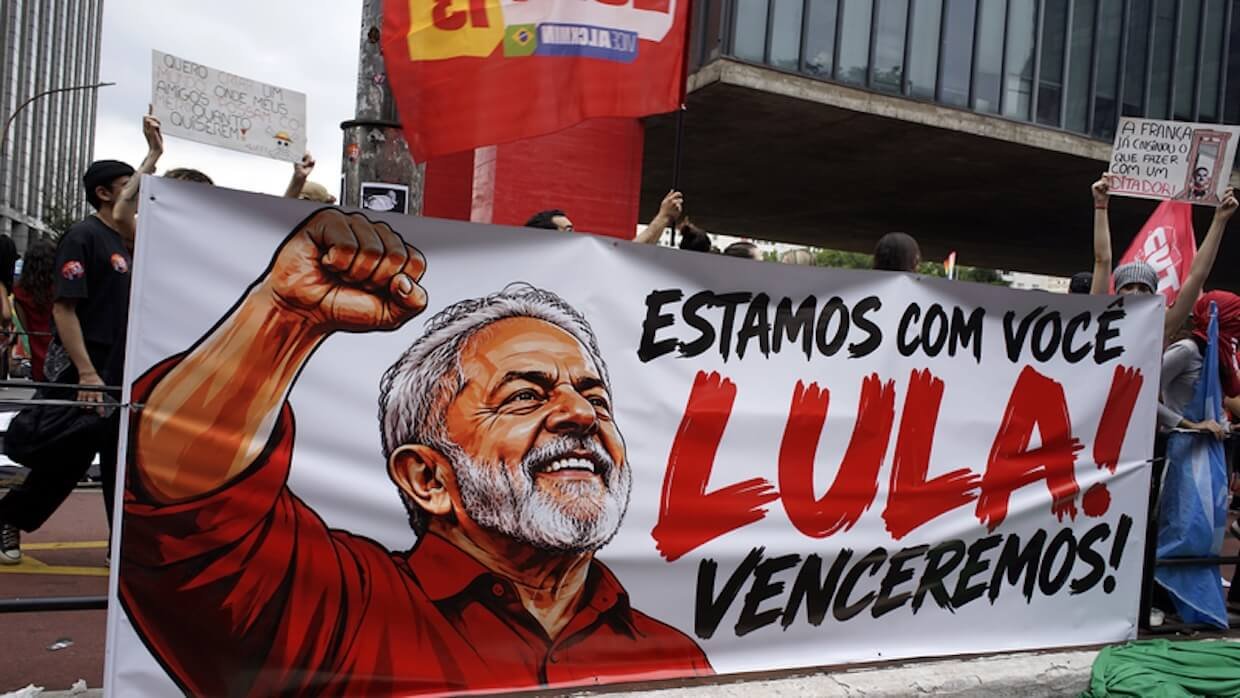
Lula’s comeback relied heavily on his personal authority and extraordinary mobilizing capacity. Can Lulism develop into a sustainable democratic project beyond Lula himself, or does its personalization expose the Brazilian left to long-term organizational vulnerabilities?
Dr. Ana Paula Pellegrino: These questions have been on many of our minds since before this reelection, particularly how much of the left is organized around Lula and the current lack of a clear successor. If we look at potential candidates on the left for the next elections, I think that’s a major concern. There isn’t a clear list of people who could carry forward the strategy—or rather, the legacy—of the Workers’ Party.
Keeping this in mind, though, it’s not just a matter of thinking about the left and the legacy of Lulism. What we’ve also been seeing in Brazil is a real weakening of the center, including the more patrimonialistic, traditional center and its politicians. Parties like the Party of the Brazilian Democratic Movement (PMDB), which used to be a heavyweight in Congress, have also lost significant numbers.
So I see a shift that goes beyond the restructuring of the left. Moving forward, political analysts have started asking: How will things reorganize? We currently have a very right-leaning Congress. In the coming years, the left will probably need to reorganize and reinvest in a legislative strategy, developing and testing potential candidates for Congress, not just for the executive branch in the next presidential elections.
This is also happening at the governorship level. We had a record number of governorships in Brazil decided in the first round, without going to runoffs, and many right-wing governors were elected. This used to be a space where more centrist politicians were often elected. This realignment of political parties in Brazil has been underway for the past 10 years and is far from over. It’s a change that will probably keep political analysts busy and watching closely for at least another 10 years.
Bolsonarism Is Bigger Than Bolsonaros
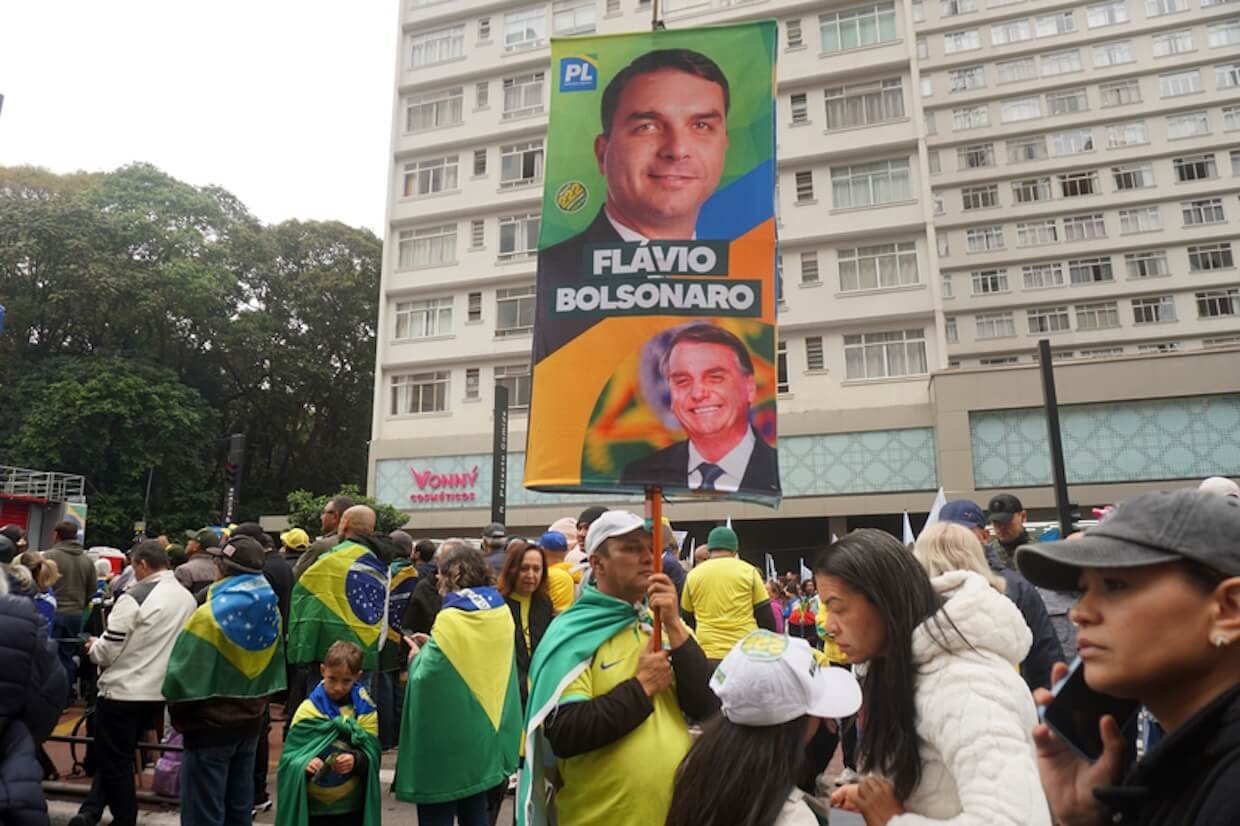
Despite Flávio Bolsonaro’s defeat, nearly half the electorate supported his candidacy, while the right retained substantial congressional and regional influence. What explains Bolsonarism’s resilience, and has it evolved beyond Jair Bolsonaro into an institutionalized radical-right movement?
Dr. Ana Paula Pellegrino: I hinted at this in my previous response. It’s bigger than Flávio. For those who haven’t been following Brazilian politics, until very late in the game, people weren’t sure whether Flávio would be the candidate or, for that matter, the best candidate. The right has different choices and different names. The list is deep, with several potential heirs to Bolsonarism.
Is Bolsonarism bigger than Flávio Bolsonaro? Yes. Is it bigger than Jair Bolsonaro, and has it become an institutionalized radical-right movement? I would say that’s still up for grabs. We’re going to see a repositioning, and we’ve already started to see it following Flávio’s loss. It was a narrow but still substantial defeat. The reaction to that loss, including his flight to the US and the different statements that followed, is also important.
These shifts in alliances on the right will play out in the coming years and will really shape whether this movement remains resilient, whether it becomes institutionalized, and around which institutions. The right currently holds considerable institutional power and has the ability to capitalize on it to create something that could endure beyond Flávio Bolsonaro and the Bolsonaro family as well.
Executive–Legislative Confrontation Remains a Challenge for Brazilian Democracy
Lula secured the presidency, but Brazil’s increasingly conservative Congress constrains his governing agenda. Can democratic institutions withstand persistent executive-legislative confrontation, or might institutional deadlock strengthen authoritarian-populist narratives?
Dr. Ana Paula Pellegrino: This is the big question moving forward, particularly given what we’ve experienced in Brazil since Dilma Rousseff’s second government. At that time, there were highly combative relationships, significant constraints, and persistent confrontations between the executive and the legislature. We saw these tensions culminate in her ouster through impeachment in 2016. This ultimately contributed to the political shift that led to Bolsonaro’s election as president in 2018.
What we witnessed was a shift in which the opposition, previously represented by the Social Democratic Party, weakened and lost power. It continued to operate alongside the traditional center, which eventually threw its weight behind Bolsonaro. He was able to tap into a popular movement—or, more precisely, widespread popular disenchantment with what was happening. Corruption was a major theme. This was the period of the Lava Jato (Car Wash) investigation, which uncovered a series of corruption schemes across different industries in the country and led to the imprisonment of numerous politicians from across the political spectrum. So we had a specific conjuncture in which executive-legislative confrontation ultimately culminated in impeachment.
Could we see something similar happen again? I think that’s still an open question. Lula is not Dilma. The lack of support for Dilma’s government, its declining popularity, and the scale of the corruption scandals, along with the information surrounding them, mobilized people to withdraw their support for the Workers’ Party government at the time. I don’t see those conditions being present now. We’ve recently had the Banco Master corruption trials, which could have provided a focal point for mobilization. But that remains to be seen.
Why do I raise the risk of impeachment? Comparatively speaking, having such an unfavorable legislature, combined with a potential breakdown in popular support for the government, could reproduce conditions similar to those we witnessed before. It’s something worth considering, but it’s not on the radar to the same extent it was around the 2014 election.
So yes, the relationship is combative. Or, more precisely, there is the prospect of confrontation, but not at that level. We’re not entering this government under the same circumstances we witnessed in 2016, when people in Brazil were preparing for such a scenario from the outset. This is not currently on the agenda. It’s not a conversation people are having this time around.
Armed Militias in Rio Have Turned Territorial Control into Electoral Power
Your essay discusses Bolsonaro’s connections to Rio de Janeiro’s militias. Drawing on your research into organized crime, how do criminal organizations, territorial coercion, and informal governance distort electoral competition and undermine democratic citizenship in Brazil?
Dr. Ana Paula Pellegrino: For those who aren’t familiar, in the city of Rio de Janeiro and the wider metropolitan area, we have several armed illicit groups operating in irregular and illegal markets, some of which are called militias. Historically, these groups were created and led by police officers and other public agents. Unlike members of other groups, these individuals did not leave their public positions to form militias. Instead, they maintained their positions as civil or military police officers, firefighters, or other public agents while creating groups that sold protection, extorted businesses and residents, and controlled services such as internet access. So, if you live in an area controlled by these groups, you can only access certain internet services or purchase water or cooking gas from specific providers.
These groups exert territorial control, just like other armed groups in the city. But beyond territorial control, although other groups are now replicating some of these practices, the nature of the markets they established required them to develop relationships with individual residents to charge for protection and collect monthly payments from each household. Through these connections and practices, they realized they had considerable power and the capacity to control people’s behavior. They were then able to leverage these relationships into electoral power.
Starting in the 2000s, they began preventing other candidates from entering these areas to campaign. We know that in-person connections with candidates and the ability to campaign directly are particularly decisive in local elections. So they restricted access while also threatening residents and using their extensive presence throughout these communities to direct people’s votes. They would tell people, “You need to vote for this candidate.”
But voting is secret in Brazil, so how did they do this? According to research conducted at the time, they would ask residents to show their voter registration documents. They would then calculate how many votes they expected at specific polling stations and check the results afterward. These polling stations typically have between 100 and 300 registered voters, sometimes up to 400. By comparing the expected number of votes for their preferred candidate with the actual results, they were able to issue credible threats to residents under their control.
These are armed groups that, once they take power, expel people supposedly connected to drug gangs, including gang members’ families. They use considerable violence and threaten those who don’t pay or adhere to their moral code. They also remove people they consider disorderly. So threats from these groups tend to be extremely credible.
These practices originated with the militias in Rio and are now being replicated elsewhere. They also demonstrate a type of politics in which people occupy public office and use their positions to enrich themselves. These were civil servants and public officials who took advantage of their public authority, connections, skills, and resources—including firearms and professional training—not for the public good but for personal benefit. That’s what my research has shown.
Others have made similar arguments. Bruno Paes Manso, a Brazilian political scientist, for example, argues that the Bolsonaro family has replicated this type of strategy and attitude toward the state and the occupation of public office. This would explain much of the connection beyond personal ties, such as having hired the mother and former wife of a known police officer involved in some of these groups, having given this individual awards, and so on. Beyond these personal connections, it’s also a matter of political style: how public office is used to advance personal interests. This is the approach that Paes Manso argues he sees in the Bolsonaro family.
Criminal Governance, Punitive Populism, and Mano Dura Policies
In your El País interview, you describe how organizations such as the PCC (Primeiro Comando da Capital / First Capital Command) establish parallel systems of rules, discipline, and territorial control. How does criminal governance interact with populist security narratives, and can punitive authoritarian policies inadvertently strengthen these organizations?
Dr. Ana Paula Pellegrino: When we look at the rise of these criminal organizations in Brazil, many of them began as prison gangs and invested heavily in internal governance, developing mechanisms to control their members’ behavior. While many prison gangs failed to expand because of internal conflicts, the two major examples—the PCC (First Capital Command) in São Paulo and the Red Command in Rio—were able to establish internal governance systems and practices. Once they began operating beyond prison walls, they introduced these systems into the territories they entered, initially to control markets and subsequently to control territories and populations.
To illustrate these rules, disciplinary mechanisms, and practices for readers, if someone commits a crime in an area under PCC control in São Paulo, someone from the PCC is normally informed before the police. If there’s an established code to follow or they know what to do, they resolve the matter themselves. But if the situation is serious enough, it can escalate to the point where a meeting of the organization’s leaders is called to decide how to handle that specific case.
Graham Denyer Willis has meticulously documented these dynamics in São Paulo for a long time. Similar practices also exist, although in different forms, in Rio and other parts of Brazil. These systems have been developing over the past 20 years and have been associated, for example, with declining homicide rates, crime, and violence in São Paulo.
How does this interact with populist security narratives? In São Paulo, the establishment of this parallel regime has coincided with a reduction in violence. In Rio, however, there are more criminal groups, and they constantly compete for territorial control. Consequently, violence remains high. We see similar dynamics in Belém do Pará, Salvador, Fortaleza, and many other metropolitan areas across Brazil.
Just because criminal groups exercise governance doesn’t mean they can control violence. In these circumstances, we begin to see growing demands for more mano dura-type policies. The current regional model is what Bukele has done in El Salvador. Mano dura strategies rely heavily on violence on the ground, as well as prisons and imprisonment. But we already have a system in which much of the recruitment into these organizations, and even the organization of their economic activities, takes place inside prisons. Is investing even more in these strategies really how we dismantle a system that already sustains these organizations by providing recruitment grounds and a safe space from which they can run their businesses? No.
Yes, there is a risk of strengthening the organizations themselves, even though the popular demand for action is legitimate. Depending on how you conceptualize and map areas under criminal control, approximately one-third of Rio’s population lives under such control. These residents face the constant risk of gunfights and shootings on their streets and exposure to gunfire. So it’s entirely legitimate for people to demand that something be done. What we need, however, are solutions that actually intervene and reduce the problem rather than contribute to it.
Bolsonarism’s Connections to Transnational Right-Wing Networks Predate Trumpism’s Rise
Your recent research on international conflict demonstrates how external crises reshape nationalist political discourse. How have Trumpism, transnational radical-right networks, and geopolitical polarization influenced Bolsonarism, and what implications do these connections have for Brazil’s democratic institutions?
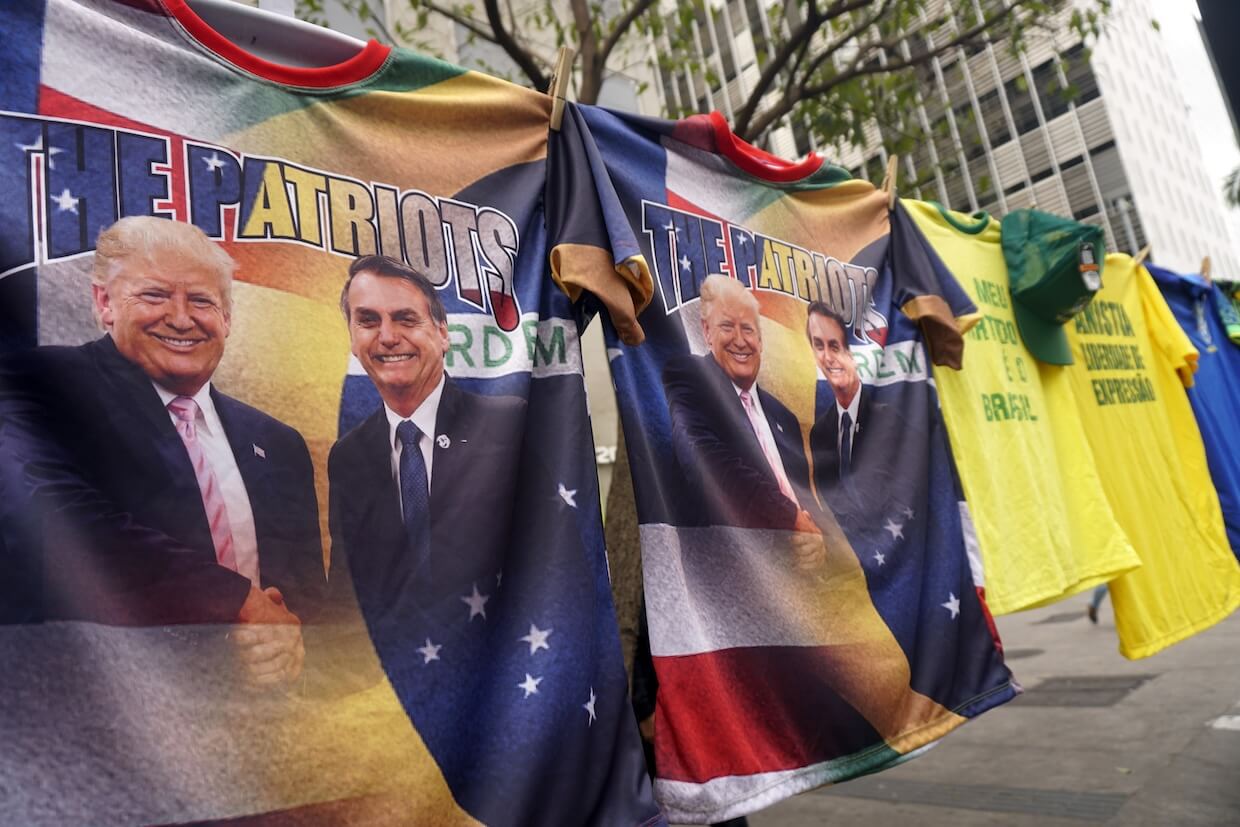
Dr. Ana Paula Pellegrino: There’s been a lot of discussion about the connections between Trumpism, its references, and what Bolsonarism has started to do in Brazil. This isn’t something new. Bolsonaro was already a congressman, holding office and organizing around issues such as the disarmament campaign in Brazil, with which he had strong connections. He was a pro-gun legislator at the time and already had connections to both this discourse and transnational networks such as the National Rifle Association (NRA). So, in a certain sense, these connections have been two-way streets for some time. As Bolsonaro gained popularity and eventually took office, he and his supporters tapped into these networks and the broader geopolitical polarization extending beyond Brazil.
When we consider Brazil and its democratic institutions, several concerns arise. For example, we have stringent campaign-financing rules, yet there have been reports of money regularly coming in to fund presidential campaigns. There have also been reports of various attempts to influence—not necessarily to tamper with elections themselves, but to shape public perceptions of the institutional integrity of free and fair elections in Brazil.
I think a significant vulnerability lies in these networks: how they produce content, where that content circulates, and how people’s opinions are influenced by the different messages being created. When we see certain messaging strategies working with particular audiences in the US, we naturally pay attention. Just as everyone became very interested in the Janones phenomenon and how he was able to mobilize people through messaging, the same process works in the other direction. We look at what is working elsewhere in the world to mobilize political bases, then import and learn from those strategies. So there has been a two-way exchange. People are now very energized by what Brazilians have accomplished, but different political movements in Brazil have also looked abroad for strategies and inspiration.
Lula’s Fourth Presidency: Reforms and Democratic Resilience
And lastly, Professor Pellegrino, looking toward Lula’s fourth presidency, what institutional, social, and political reforms are essential to transform his electoral comeback into lasting democratic resilience? Can Brazil overcome entrenched polarization, criminal influence, and authoritarian legacies without rebuilding the relationship between political institutions and ordinary citizens?
Dr. Ana Paula Pellegrino: In his speech following his reelection, Lula placed considerable emphasis on regulating social media. I’ve already mentioned this, but I think it’s worth emphasizing because it’s one area that will receive significant attention during his presidency.
The second point concerns reform of the Brazilian judiciary. The Supreme Court and the crisis surrounding it were central to much of the debate during the first round of the elections. Many of the congressmen and congresswomen elected this time campaigned on this issue. There was considerable right-wing mobilization around both impeaching sitting justices and expanding the number of justices on the Court.
Lula now has the opportunity to take up this agenda and address the crisis during his presidency. Since he was elected to do so, he will also have to work with Congress on these reforms. But he has time, and he has recognized and accepted responsibility for moving forward on this front.
Can we overcome entrenched polarization through these two major changes? We can take meaningful steps in that direction, especially through social media reform. Supreme Court and broader judicial reforms, however, are higher-level institutional changes. Their effects will be felt in democratic politics over the long term, but they will be less immediately noticeable to the electorate and ordinary citizens.
When we consider criminal influence and how ordinary citizens in Brazil’s large metropolitan areas experience politics, particularly local politics, addressing these challenges requires a range of different strategies. Lula has also signaled that this will be an important priority for his government. A bill reforming several laws has already been approved by Congress. Lula has also promised to establish a Ministry of Public Security to organize what should become a national public security system. The idea is to coordinate the federal government, state governments, and municipalities so they can support one another in developing strategies better suited to controlling organized crime and reducing armed influence in the everyday lives of ordinary Brazilians.
This is one of the biggest challenges, given Brazil’s size, the extent of its borders, and potential disagreements over the strategies that more right-wing governors might favor compared with those of the federal government and municipalities. Policing is organized at the state level in Brazil, but many municipalities, particularly larger ones, also have their own guards. So this is another development we will be watching unfold with great interest in the coming years.
(*) This interview was academically curated and edited by Dr. Bulent Kenes.