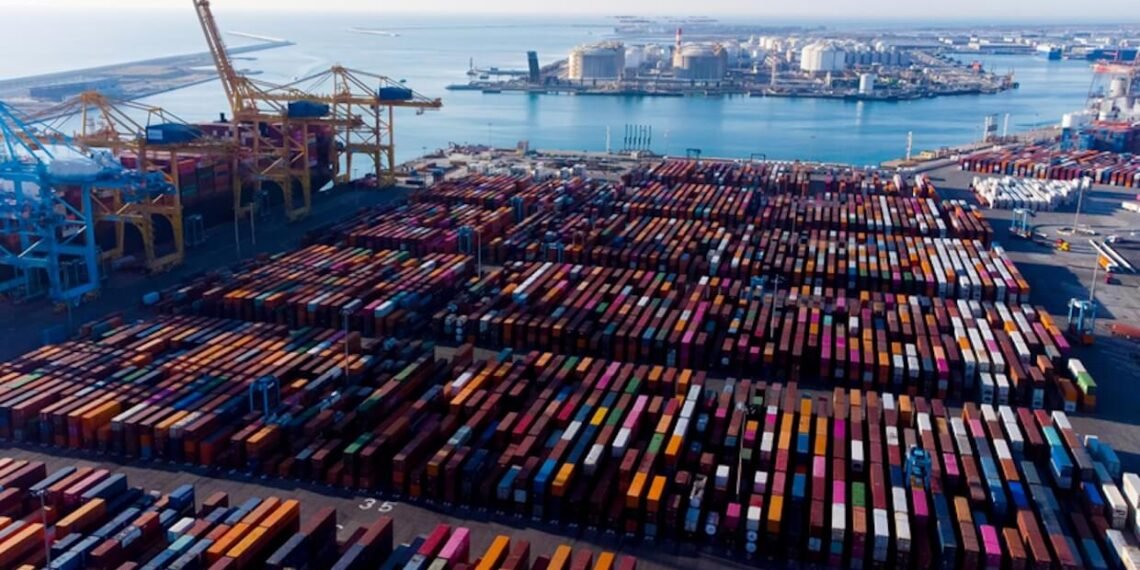
How has the European Union’s trade policy evolved from championing liberal multilateralism to pursuing strategic autonomy in an era of geopolitical rivalry? In his opening lecture at the ECPS Academy Summer School 2026, “Europe Between Oceans: The EU in the Age of Geoeconomics, Populism, and Strategic Competition,” Professor Arlo Poletti examines the historical transformation of EU trade policy against the backdrop of globalization, China’s rise, populist contestation, and the growing weaponization of economic interdependence. Moderated by Dr. Sonali Chowdhry, the session demonstrates that contemporary trade policy can no longer be understood solely through the lens of market liberalization but must increasingly be viewed as an instrument of geopolitical strategy, economic resilience, industrial policy, and European strategic autonomy.
Reported by ECPS Staff
The accelerating transformation of the international political economy has fundamentally reshaped the role of trade in global affairs. Once understood primarily as a vehicle for market integration, economic efficiency, and multilateral cooperation, trade policy has increasingly become intertwined with geopolitical competition, technological rivalry, economic security, and democratic politics. The resurgence of great-power rivalry, the weaponization of economic interdependence, the fragmentation of global supply chains, and the rise of populist and nationalist movements have challenged many of the assumptions underpinning the post-war liberal trading order. As governments increasingly employ tariffs, industrial policy, sanctions, export controls, and investment screening as instruments of strategic statecraft, understanding contemporary trade policy requires a broader analytical perspective that integrates economics, international relations, and political science.
These developments provided the intellectual backdrop for the opening lecture of the ECPS Academy Summer School 2026, held under the theme “Europe Between Oceans: The EU in the Age of Geoeconomics, Populism, and Strategic Competition.” Bringing together leading scholars and participants from around the world, the programme explored how profound geopolitical, economic, and political transformations are reshaping Europe and the wider international order. Within this context, Professor Arlo Poletti delivered a wide-ranging lecture, “The Evolution of EU Trade Policy and the Global Trade Order,” examining how the European Union has evolved from one of the principal architects and defenders of the liberal multilateral trading system into an increasingly geoeconomic actor seeking to balance openness with resilience, strategic autonomy, and economic security. Combining insights from international political economy, European integration studies, and comparative political economy, Professor Poletti demonstrated that contemporary EU trade policy can no longer be understood solely through the lens of market liberalization but must increasingly be analyzed as an instrument of foreign policy, industrial strategy, and geopolitical influence.
The session was thoughtfully moderated by by Dr. Sonali Chowdhry, Research Associate at DIW Berlin and Fellow at the Kiel Institute for the World Economy, whose own scholarship on global value chains, international trade, sanctions, and the distributional consequences of trade policy provided an ideal intellectual framework for the discussion. She observed that the rules-based multilateral trading order that had long provided the foundation for European prosperity could no longer be taken for granted. Rising geopolitical rivalry, intensifying technological competition with China, increasingly protectionist trade policies emanating from the United States, and the disruption of global energy markets following Russia’s invasion of Ukraine have collectively transformed the strategic environment within which European trade policy operates.
She further explained that understanding Europe’s response requires looking beyond individual trade agreements or tariff disputes. Instead, participants needed to appreciate the historical trajectory through which European trade policy evolved—from an instrument primarily concerned with market liberalization into one increasingly intertwined with questions of industrial policy, technological competitiveness, economic resilience, and national security. This broader perspective, she argued, would enable participants to understand not only contemporary EU trade policy but also the wider transformations affecting the international economic order itself.
By situating Professor Poletti’s presentation within the broader transformations affecting the global political economy, Dr. Chowdhry emphasized why the evolution of European trade policy has become central to understanding Europe’s strategic position in an era marked by intensifying geopolitical competition and growing uncertainty. Her moderation effectively established the conceptual foundations for a lecture that encouraged participants to rethink trade not merely as an economic policy domain, but as one of the principal arenas through which power, security, and international order are increasingly contested.
Understanding EU Trade Policy as an Interaction of Institutions, International Structure, and Domestic Politics

Professor Poletti began by proposing a conceptual framework through which the entire historical evolution of European trade policy could be understood. Rather than presenting trade policy as a sequence of isolated policy choices, he argued that its development reflected the interaction of three fundamental dimensions: the institutional architecture governing European trade policy, the changing international environment, and the domestic political coalitions shaping policy preferences.
Although institutional rules have evolved over time, Professor Poletti explained that they have remained relatively stable compared to the profound transformations experienced by international politics and domestic political competition. Consequently, while institutional arrangements provide the structural foundation for European trade policy, it is primarily shifts in the international distribution of power and changes in domestic political conflict that explain the major strategic transformations observed over the past seven decades.
He therefore encouraged participants to think historically rather than episodically. Trade policy, in his view, represents the product of continuous interaction between relatively stable institutional structures and dynamic political and economic environments. Understanding this interaction, he argued, allows scholars to explain why the European Union has repeatedly redefined its external economic strategy while preserving many of its institutional foundations.
The Institutional Foundations of European Trade Power
Before turning to the historical evolution itself, Professor Poletti briefly examined the institutional foundations that have historically made the European Union one of the world’s most influential trade actors.
He identified three institutional characteristics that have consistently strengthened the Union’s negotiating position. First, trade policy has constituted a supranational competence almost since the very beginning of European integration. Member states delegated authority to negotiate external trade agreements to the European Commission, thereby allowing Europe to speak with a single voice in international negotiations. This institutional arrangement significantly enhanced Europe’s bargaining power compared with what individual member states could have achieved independently.
Second, the creation of a common external tariff transformed the European Community—and later the European Union—into one of the largest integrated markets in the global economy. Market size itself became a powerful source of leverage. Foreign governments seeking access to the European market faced strong incentives to negotiate with European institutions, enhancing the Union’s capacity to influence international trade rules.
Finally, Professor Poletti discussed what scholars have described as the “paradox of weakness.” Although European trade negotiations require extensive consensus among member states and often involve complex decision-making procedures with multiple veto points, this apparent institutional rigidity has paradoxically strengthened the Union’s negotiating position internationally. Because European negotiators are constrained by member-state mandates, foreign governments often recognize that the Commission has limited flexibility during negotiations. Rather than weakening the Union, this constrained bargaining position has frequently increased its credibility and leverage.
From Embedded Liberalism to Globalization: The European Union as a Regime Shaper
Having established the institutional foundations of European trade policy, Professor Poletti proceeded to examine the historical circumstances under which the European Union emerged as one of the principal architects of the post-war liberal trading order. He argued that the trajectory of European trade policy cannot be understood without first appreciating the broader political and economic settlement that emerged after the Second World War. Rather than viewing trade liberalization as an isolated economic objective, policymakers embedded it within a wider institutional architecture designed simultaneously to promote economic openness, domestic stability, and international peace.
Professor Poletti explained that the postwar international order rested upon what political economist John Ruggie famously described as “embedded liberalism.” Unlike the laissez-faire globalization of the late 19th century, the post-1945 order sought to reconcile international market openness with governments’ capacity to pursue domestic social protection and macroeconomic stability. International trade was therefore promoted not as an end in itself but as one component of a broader political compromise that recognized the legitimacy of state intervention while preventing the return of destructive economic nationalism.
Within this emerging international framework, Western Europe became one of the principal beneficiaries of expanding multilateral trade. The creation of the European Economic Community complemented rather than challenged the General Agreement on Tariffs and Trade (GATT). Professor Poletti emphasized that European integration itself should be understood as a regional manifestation of the broader liberal international order, with both projects reinforcing one another through reciprocal commitments to openness, rules-based cooperation, and institutionalized dispute resolution.
Rather than pursuing protectionism, European governments increasingly viewed economic interdependence as a source of prosperity and political stability. Trade liberalization reduced barriers among member states while simultaneously strengthening Europe’s position within the broader multilateral trading system. This institutional convergence, Professor Poletti argued, allowed Europe gradually to evolve from a collection of national economies into one of the world’s most influential commercial actors.
Trade Policy as Foreign Policy
Professor Poletti noted that European trade policy gradually acquired significance beyond commercial negotiations alone. As European integration deepened, access to the common market became an increasingly valuable diplomatic resource that allowed the European Community—and later the European Union—to project influence well beyond its borders.
Trade agreements increasingly incorporated political conditionality, regulatory convergence, environmental provisions, labor standards, and development objectives. Commercial policy thus became an important instrument of external governance through which the European Union sought to diffuse its regulatory preferences internationally. This gradual expansion of policy objectives reflected Europe’s growing confidence in the attractiveness of its own institutional model. Rather than relying upon traditional military power, the European Union increasingly exercised influence through economic incentives and regulatory standards. Professor Poletti observed that access to the European market became one of the Union’s most powerful foreign policy instruments, encouraging neighboring countries and trading partners alike to adopt European regulatory norms.
This process, frequently described as the “Brussels Effect,” enabled the European Union to shape global markets even without formal international agreements. Firms seeking access to Europe’s large consumer market often adopted European standards voluntarily, subsequently applying those standards globally because maintaining multiple regulatory systems proved economically inefficient.
The European Union as a Defender of Multilateralism
Professor Poletti argued that throughout much of the post-Cold War period the European Union increasingly came to view itself as the principal defender of the multilateral trading order. While the United States had initially played the dominant leadership role during the creation of GATT, Europe gradually assumed greater responsibility for maintaining and expanding international trade institutions.
The establishment of the World Trade Organization (WTO) in 1995 represented the culmination of decades of multilateral cooperation. Unlike GATT, the WTO created stronger legal mechanisms for dispute settlement, broader institutional competencies, and more comprehensive commitments covering services, intellectual property, and investment-related measures. Professor Poletti emphasized that the European Union enthusiastically supported this institutional strengthening because multilateral rules protected medium-sized powers by reducing arbitrary exercises of economic power by larger states.
For Europe, multilateralism was never merely an abstract normative preference. It served concrete strategic interests. A predictable, legally binding trading system protected export-oriented European economies while reducing uncertainty for firms deeply integrated into global production networks. Stable rules also prevented major powers from using unilateral economic coercion to secure political concessions.
Consequently, throughout the 1990s and early 2000s, European trade policy remained firmly committed to expanding and deepening the multilateral trading order. Successive enlargements of the European Union reinforced this orientation, bringing additional member states into a shared institutional framework built around openness, legal predictability, and international cooperation.
Globalization and the Expansion of European Trade
Professor Poletti then situated European trade policy within the broader acceleration of globalization that characterized the final decades of the twentieth century. Falling transportation costs, advances in information technology, financial liberalization, and the fragmentation of production processes transformed the structure of the world economy. Trade increasingly consisted not simply of finished products crossing national borders but of complex global value chains in which production stages were distributed across multiple countries. European firms became deeply embedded within these international production networks, relying upon cross-border investment, intermediate goods, and integrated supply chains.
This transformation substantially altered the political economy of trade. Large multinational firms became increasingly supportive of trade liberalization because their competitiveness depended upon efficient international production networks. Export-oriented industries similarly benefited from expanding foreign market access. Professor Poletti observed that under these conditions, globalization appeared largely compatible with both European economic interests and broader political objectives. The dominant policy consensus therefore viewed further liberalization as both economically efficient and politically desirable.
Emerging Political Tensions beneath the Surface
Yet Professor Poletti cautioned participants against interpreting this period as one of uncontested globalization. Even while international trade expanded rapidly, underlying political tensions gradually accumulated within many advanced industrial democracies. The benefits of globalization were distributed unevenly across regions, industries, and social groups. Highly skilled workers, internationally competitive firms, and urban export-oriented regions often experienced substantial gains. Conversely, workers employed in import-competing industries, economically vulnerable regions, and sectors exposed to international competition frequently experienced economic insecurity, employment losses, or stagnant wages.
Although these distributional tensions remained politically manageable for much of the 1990s, Professor Poletti argued that they gradually eroded domestic support for trade liberalization. Economic globalization increasingly became associated—not universally but among significant segments of the population—with deindustrialization, inequality, declining economic security, and reduced national policy autonomy.
Importantly, these emerging tensions did not initially transform European trade policy itself. Institutional commitments to multilateralism remained robust, and mainstream political parties largely continued supporting economic openness. Nevertheless, Professor Poletti suggested that the foundations of the postwar liberal consensus had begun to weaken long before they became politically visible.
Domestic Politics and the Rise of Contestation
Professor Poletti emphasized that trade policy can never be understood independently from domestic political coalitions. Governments negotiate internationally, but they remain accountable to domestic constituencies whose preferences evolve over time. As globalization generated increasingly uneven outcomes, political entrepreneurs began mobilizing those left behind by economic transformation. New political cleavages emerged that extended beyond traditional divisions between labor and capital or left and right. Questions concerning globalization, national sovereignty, migration, identity, and international integration increasingly became interconnected within broader political conflicts. This development proved especially significant because it fundamentally altered the political context within which European trade policy operated. Whereas trade liberalization had previously attracted broad cross-party consensus, it now became increasingly contested by populist movements questioning both globalization and European integration itself.
Professor Poletti stressed that this transformation should not be understood merely as an economic phenomenon. Rather, it reflected the interaction of material grievances with broader political narratives concerning sovereignty, democratic accountability, and national identity. These domestic changes would eventually intersect with profound shifts in the international system itself, creating an environment fundamentally different from the one that had sustained Europe’s multilateral trade strategy for decades.
Professor Poletti had demonstrated that the European Union’s emergence as a regime-shaping trade power rested upon a unique historical constellation: a stable liberal international order, expanding globalization, broad domestic support for openness, and institutional mechanisms that amplified European bargaining power. Yet the very forces that had enabled this success were beginning to generate new political tensions whose consequences would become increasingly visible during the following decade. These developments, he suggested, marked the beginning of a much more contested era in which Europe’s longstanding commitment to liberal multilateralism would face unprecedented political and geopolitical challenges.
The Crisis of the Liberal Trade Order and the Rise of Geoeconomics
Having traced the European Union’s emergence as one of the principal architects and defenders of the postwar liberal trading order, Professor Poletti turned to what he described as the most significant transformation in contemporary international political economy: the gradual erosion of the assumptions that had sustained globalization for more than three decades. The world that had allowed Europe to pursue trade liberalization as both an economic and political project, he argued, had fundamentally changed. The result was not merely an adjustment of trade policy but a profound reconceptualization of trade itself—from an instrument of economic integration into an increasingly strategic component of geopolitical competition.
Professor Poletti emphasized that this transformation did not occur suddenly. Rather, it emerged through the interaction of multiple structural developments that gradually undermined confidence in the liberal international order. These included the changing distribution of global economic power, the rise of China as a systemic competitor, the weakening of multilateral institutions, growing skepticism toward globalization within advanced democracies, and the increasing tendency of states to view economic interdependence through the prism of national security rather than economic efficiency. Rather than representing isolated developments, these trends collectively altered the very logic underlying international trade governance.
China’s Rise and the Transformation of Global Competition
Among these developments, Professor Poletti identified the spectacular rise of China as perhaps the single most consequential structural change affecting the international economic system during the twenty-first century. China’s accession to the WTO in 2001 had originally been interpreted by many Western policymakers as confirmation that expanding economic integration would gradually encourage political liberalization and reinforce the rules-based international order. Economic engagement was expected to produce convergence—not only economically but eventually politically. Reality unfolded rather differently.
Professor Poletti explained that China’s remarkable economic transformation dramatically altered global patterns of production, investment, and technological competition without producing the anticipated political convergence. Instead, China’s state-capitalist model demonstrated that rapid economic modernization could coexist with strong state intervention, industrial policy, and centralized political authority. This development fundamentally challenged many assumptions underpinning the liberal trading system.
Unlike earlier emerging economies, China rapidly became both an indispensable trading partner and an increasingly formidable geopolitical competitor. European firms benefited enormously from access to Chinese markets and production networks, yet simultaneously faced growing competitive pressures from Chinese industrial expansion supported by extensive state intervention. The consequence was a growing tension between economic interdependence and strategic competition.
Professor Poletti stressed that European policymakers increasingly found themselves confronting a dilemma for which traditional trade policy offered few satisfactory solutions: how could Europe remain committed to open markets while responding to the strategic implications of China’s expanding technological, industrial, and geopolitical influence?
The Growing Politicization of Global Value Chains
A second major theme of Professor Poletti’s lecture concerned the transformation of global value chains from purely economic arrangements into objects of strategic political concern. For decades, increasingly fragmented international production had been celebrated as evidence of globalization’s efficiency. Firms located different stages of production wherever costs were lowest or capabilities strongest, creating highly integrated transnational production systems that substantially increased productivity. However, Professor Poletti argued that recent crises fundamentally altered perceptions of these global production networks.
The COVID-19 pandemic exposed the vulnerabilities associated with excessive dependence upon geographically concentrated supply chains. Medical equipment, pharmaceuticals, semiconductors, and numerous intermediate goods suddenly became difficult to obtain as production disruptions spread across international markets. Shortly thereafter, Russia’s invasion of Ukraine further demonstrated how energy dependence and commodity supply could become instruments of geopolitical coercion. These experiences fundamentally changed the political discourse surrounding globalization. Where policymakers had previously emphasized efficiency, they increasingly began discussing resilience. Where cost minimization had previously dominated policy debates, security of supply emerged as an equally important objective. Trade policy therefore became inseparable from broader discussions concerning economic security.
Professor Poletti observed that concepts such as friend-shoring, near-shoring, de-risking, and strategic resilience rapidly entered the vocabulary of both policymakers and scholars. Each reflected an important conceptual shift: globalization would no longer be evaluated solely according to economic efficiency but also according to geopolitical reliability.
Populism and the Domestic Politics of Trade
Professor Poletti next examined how international structural changes interacted with domestic political transformations across Europe and other advanced democracies. Trade policy, he emphasized, increasingly became entangled with broader political debates surrounding sovereignty, immigration, national identity, democratic accountability, and economic inequality. The globalization consensus that had characterized much of the 1990s and early 2000s gradually weakened as populist movements successfully mobilized constituencies who believed themselves disadvantaged by economic integration.
Professor Poletti carefully distinguished between legitimate socioeconomic grievances and the political narratives through which these grievances were interpreted. Many communities genuinely experienced industrial decline, employment insecurity, or reduced economic opportunities resulting from structural economic transformation. Yet populist actors frequently reframed these complex developments through simplified political narratives that attributed responsibility to globalization, supranational institutions, international trade agreements, or political elites.
Trade therefore ceased to function as a largely technocratic policy domain.Instead, it became highly politicized. Economic openness increasingly symbolized broader questions concerning national sovereignty and democratic control. This politicization significantly constrained policymakers’ room for maneuver. Whereas earlier governments often negotiated trade agreements with relatively limited public attention, contemporary trade negotiations increasingly generated intense political contestation. Professor Poletti suggested that understanding contemporary European trade policy requires recognizing this changing domestic political environment as much as the evolving international system.
The Decline of Multilateralism
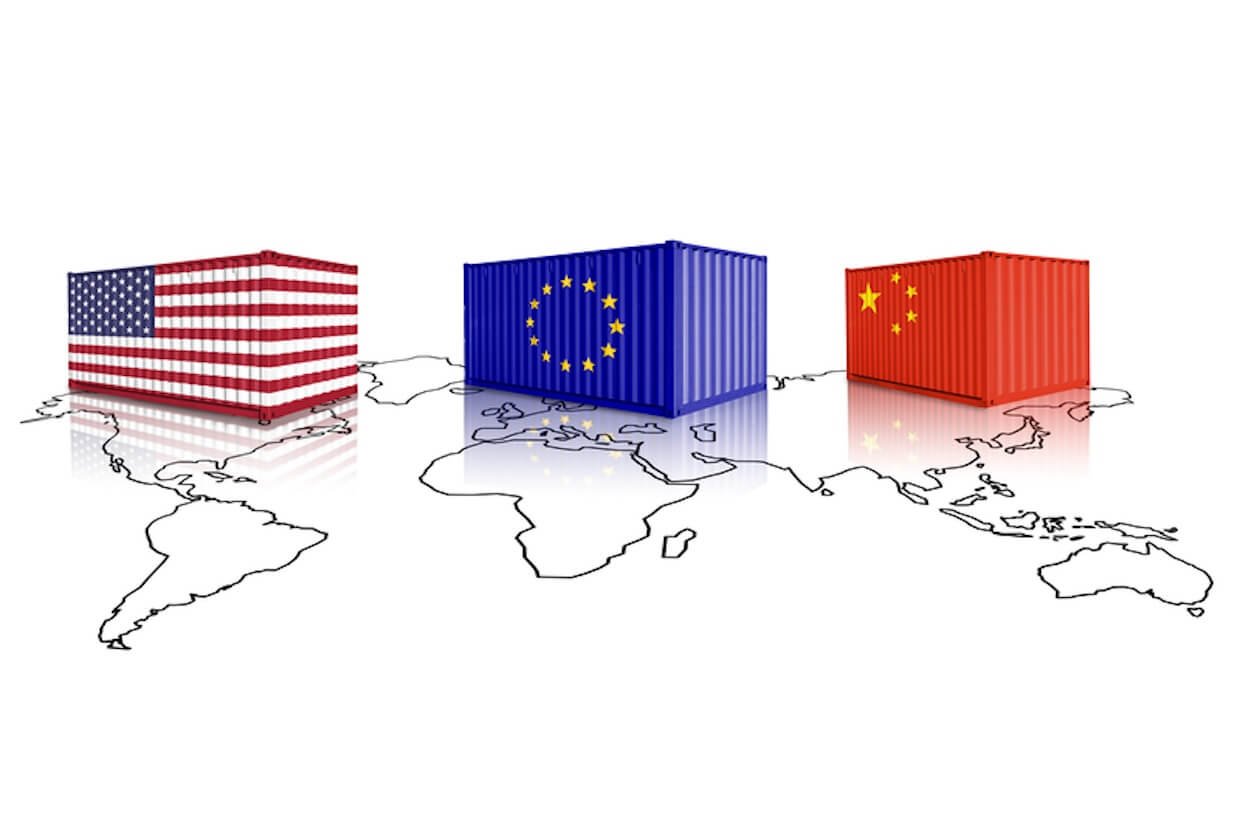
Another central theme of the lecture concerned the weakening of the multilateral institutions that had previously governed international trade. Professor Poletti noted that the WTO experienced increasing difficulties in fulfilling its traditional functions. Negotiations under the Doha Development Round effectively stalled. Consensus among an expanding membership became increasingly difficult to achieve. Perhaps most significantly, the WTO’s dispute settlement mechanism encountered severe institutional paralysis following disagreements over judicial appointments. For a political entity such as the European Union—whose prosperity had long depended upon predictable international rules—this institutional weakening represented a profound strategic challenge.
Professor Poletti emphasized that Europe remained rhetorically committed to multilateralism. However, policymakers increasingly recognized that defending multilateral principles alone would prove insufficient if other major powers adopted more unilateral or coercive approaches. Consequently, European trade policy gradually began adapting to a world characterized by greater geopolitical competition and weaker international institutions. Rather than abandoning multilateralism altogether, Europe increasingly supplemented multilateral commitments with bilateral trade agreements, new defensive instruments, and broader industrial policy initiatives.
Strategic Autonomy as a New Policy Paradigm
Professor Poletti devoted considerable attention to the emergence of strategic autonomy as perhaps the defining concept shaping contemporary European economic policy. He explained that strategic autonomy should not be interpreted as economic isolation or protectionism. Rather, it reflects an effort to preserve openness while simultaneously reducing excessive dependence upon potentially unreliable external partners. The objective is therefore selective resilience rather than comprehensive disengagement.
This distinction, Professor Poletti argued, is crucial. Europe remains deeply integrated within the global economy. Its prosperity continues to depend upon international trade, investment, and technological exchange. Yet policymakers increasingly acknowledge that complete dependence upon external suppliers in strategically important sectors creates vulnerabilities that cannot be ignored. Strategic autonomy therefore seeks to reconcile two objectives that increasingly appear in tension: i) maintaining economic openness; and ii) strengthening geopolitical resilience. Professor Poletti suggested that this balancing act will likely define European trade policy for years to come.
From Liberal Trade Policy to Geoeconomic Statecraft
Perhaps the most important conceptual contribution of Professor Poletti’s lecture was his argument that Europe is witnessing not merely a revision of trade policy but a broader transformation toward geoeconomics. Trade, investment, technology, industrial policy, export controls, sanctions, and supply-chain governance increasingly operate as interconnected instruments of strategic competition. Economic policy itself has become an instrument of foreign policy.
Professor Poletti emphasized that this transformation does not necessarily imply abandoning liberal economic principles. Rather, it reflects recognition that economic relations now operate within a far more competitive geopolitical environment than the one that characterized the immediate post-Cold War decades. Consequently, policymakers must simultaneously pursue prosperity, security, resilience, and political influence. These objectives often complement one another—but increasingly they also generate difficult trade-offs.
Throughout this section of the lecture, Professor Poletti encouraged participants to move beyond simplistic binaries opposing free trade and protectionism. The more significant transformation, he argued, concerns the changing purposes assigned to trade policy itself. Where European trade policy once primarily sought efficiency, market access, and rule-based cooperation, it must now also address technological rivalry, supply-chain resilience, industrial competitiveness, economic coercion, and geopolitical uncertainty. This evolution represents one of the most important structural transformations currently reshaping both the European Union and the international political economy more broadly.
The European Union’s Emerging Geoeconomic Toolbox
In the concluding substantive part of his lecture, Professor Poletti examined how the European Union has begun translating its changing understanding of international political economy into concrete policy instruments. Having demonstrated that trade policy has evolved from a predominantly liberalizing enterprise into an increasingly strategic one, he explained that this conceptual transformation has been accompanied by the gradual development of a new geoeconomic toolkit. These instruments, he argued, reflect Europe’s attempt to reconcile its long-standing commitment to an open global economy with the realities of an increasingly competitive and fragmented international system.
Professor Poletti emphasized that this policy evolution should not be interpreted as a wholesale abandonment of liberal trade principles. Rather, it represents an effort to update the Union’s external economic strategy to meet challenges that did not exist when the contemporary multilateral trading system was established. In today’s international environment, governments increasingly employ economic instruments not simply to pursue prosperity but also to advance geopolitical objectives, secure technological leadership, protect critical infrastructure, and influence the strategic behavior of other states. Against this backdrop, the European Union has sought to develop instruments capable of responding to economic coercion while remaining broadly consistent with its preference for rules-based international cooperation.
One of the most notable developments discussed during the lecture was the adoption of the Anti-Coercion Instrument, designed to provide the European Union with mechanisms to respond collectively when third countries seek to pressure individual member states through economic means. Professor Poletti explained that this initiative reflects lessons drawn from recent international experiences, particularly instances in which economic dependence was deliberately weaponized to influence sovereign political decisions. The emergence of such instruments illustrates how economic security has become inseparable from broader questions of European strategic autonomy. Rather than assuming that commercial interdependence automatically generates political stability, policymakers increasingly recognize that asymmetric dependencies can themselves become sources of vulnerability.
Balancing Openness and Security
Throughout this part of the lecture, Professor Poletti repeatedly returned to what he identified as the central dilemma confronting contemporary European policymakers: how can Europe remain one of the world’s most open economies while simultaneously protecting itself against strategic risks? He argued that simplistic solutions—whether complete protectionism or unrestricted globalization—fail to capture the complexity of today’s international environment. Europe’s prosperity continues to depend fundamentally upon international trade, investment, technological exchange, and participation in global production networks. Attempts to disengage from globalization entirely would therefore impose enormous economic costs and undermine European competitiveness.
At the same time, recent crises have demonstrated that excessive dependence in strategically sensitive sectors may expose governments to unacceptable political and economic risks. The challenge, Professor Poletti suggested, lies not in choosing between openness and security but in designing policies capable of balancing both objectives simultaneously. This balancing exercise increasingly shapes European debates concerning semiconductors, artificial intelligence, digital infrastructure, critical raw materials, pharmaceuticals, energy security, telecommunications, and advanced manufacturing. Across these sectors, policymakers are seeking to strengthen resilience without undermining the economic benefits generated by international integration.
Professor Poletti emphasized that such decisions inevitably involve difficult political trade-offs. Measures that improve resilience frequently impose higher economic costs. Conversely, policies maximizing efficiency may increase geopolitical exposure. Contemporary trade policy therefore requires continuous negotiation between competing priorities rather than straightforward pursuit of a single objective.
Industrial Policy Returns to the Center of European Strategy
Another significant theme concerned the renewed importance of industrial policy within the European Union. For much of the post-Cold War era, industrial policy occupied a relatively modest place within mainstream European economic thinking. Market competition, regulatory harmonization, and trade liberalization were generally viewed as the principal drivers of competitiveness. Professor Poletti argued that this intellectual consensus has shifted considerably. Governments increasingly recognize that technological leadership, innovation capacity, and industrial resilience cannot always be left exclusively to market forces, particularly when competing powers actively employ industrial subsidies, state investment, and strategic planning. The European Union’s recent industrial initiatives therefore represent not merely economic policy but components of a broader geoeconomic strategy.
Professor Poletti cautioned, however, against viewing industrial policy simply as a return to traditional state intervention. Contemporary industrial strategy seeks to strengthen technological competitiveness while remaining compatible with European competition rules, environmental objectives, and international commitments. Achieving this balance remains one of the central policy challenges confronting the Union.
Europe’s Position Between the United States and China
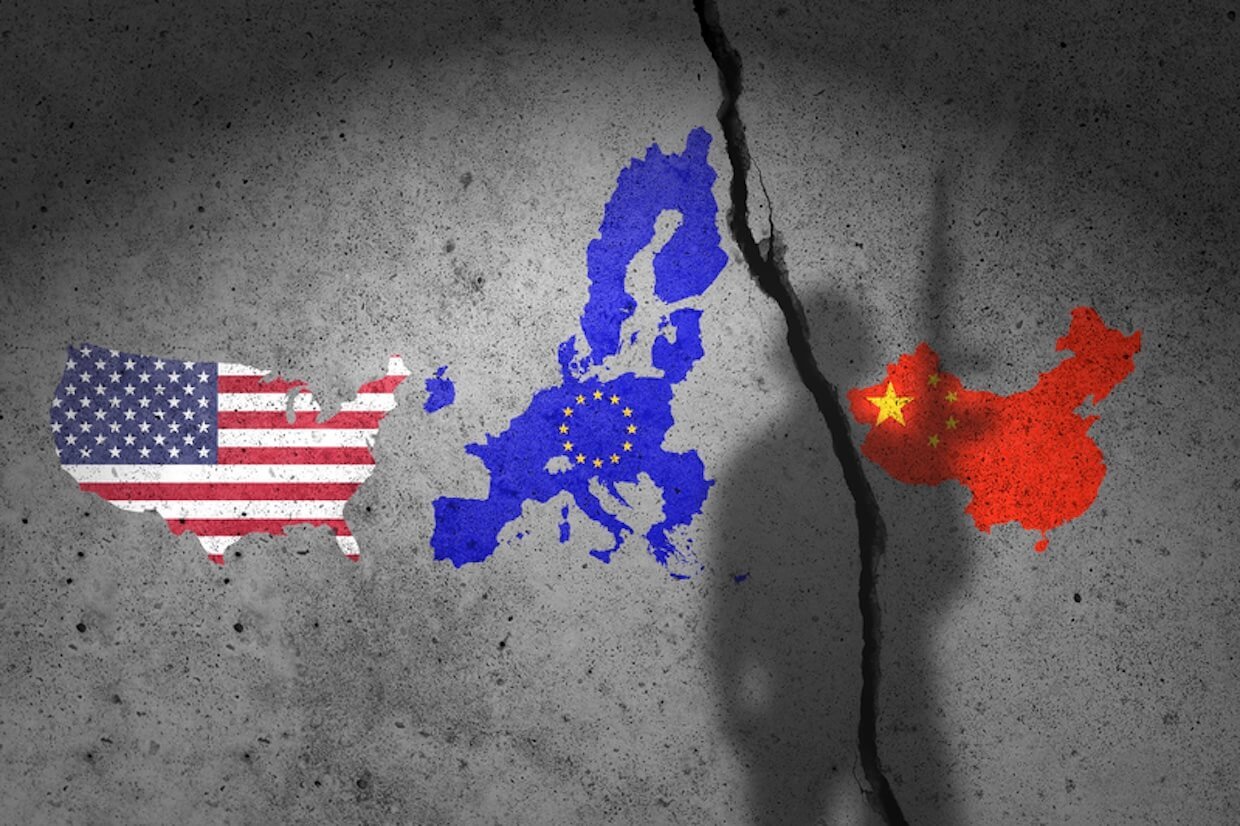
Professor Poletti also reflected on Europe’s increasingly delicate position between the world’s two largest economic powers. Unlike the Cold War bipolar system, today’s international economy remains characterized by deep commercial interdependence even as geopolitical rivalry intensifies. Europe consequently faces pressures from multiple directions. The United States increasingly encourages closer coordination among democratic allies in areas such as technology controls, investment screening, and supply-chain security. China remains simultaneously an indispensable economic partner, a major export market, an important source of investment, and an increasingly significant strategic competitor.
Professor Poletti argued that navigating these overlapping relationships requires a high degree of strategic flexibility. Rather than aligning unconditionally with either pole, the European Union seeks to preserve its own capacity for independent decision-making while maintaining productive economic relationships with both. This aspiration partly explains the growing emphasis placed upon strategic autonomy throughout recent European policy documents.
Conclusion
Professor Arlo Poletti concluded his lecture by demonstrating that the evolution of European Union trade policy reflects far more than successive changes in commercial strategy. Rather, it mirrors the transformation of the international political economy itself. From the postwar embedded liberal order through the expansion of globalization to today’s era of geopolitical rivalry and geoeconomic competition, European trade policy has continuously adapted to changing domestic, institutional, and international conditions.
A central message of the lecture was that the European Union’s identity as a trade power has fundamentally evolved. While Europe remains committed to international openness and multilateral cooperation, these objectives are increasingly pursued alongside concerns for resilience, strategic autonomy, technological competitiveness, and economic security. Trade policy has therefore become inseparable from broader questions of foreign policy, industrial strategy, and geopolitical positioning.
Professor Poletti cautioned against simplistic narratives portraying either globalization or deglobalization as inevitable historical trajectories. Instead, he encouraged participants to recognize that the current period is characterized by selective reconfiguration rather than wholesale retreat from international economic integration. The challenge confronting Europe is not whether to participate in globalization but how to shape globalization under conditions of growing strategic competition.
In sum, the lecture offered participants a sophisticated framework for understanding one of the defining transformations of contemporary international political economy. By integrating institutional analysis, historical development, domestic political dynamics, and geopolitical change, Professor Poletti demonstrated that European trade policy now occupies the intersection of economics, security, and global governance. His presentation underscored that the future of the European Union’s external economic strategy will depend upon its ability to preserve the benefits of openness while developing the resilience necessary to navigate an increasingly uncertain and contested international order. Under Dr. Sonali Chowdhry’s thoughtful moderation, the session provided participants with both a rich historical perspective and an analytical toolkit for understanding how trade has become one of the principal arenas through which power, security, and political authority are exercised in the twenty-first century.