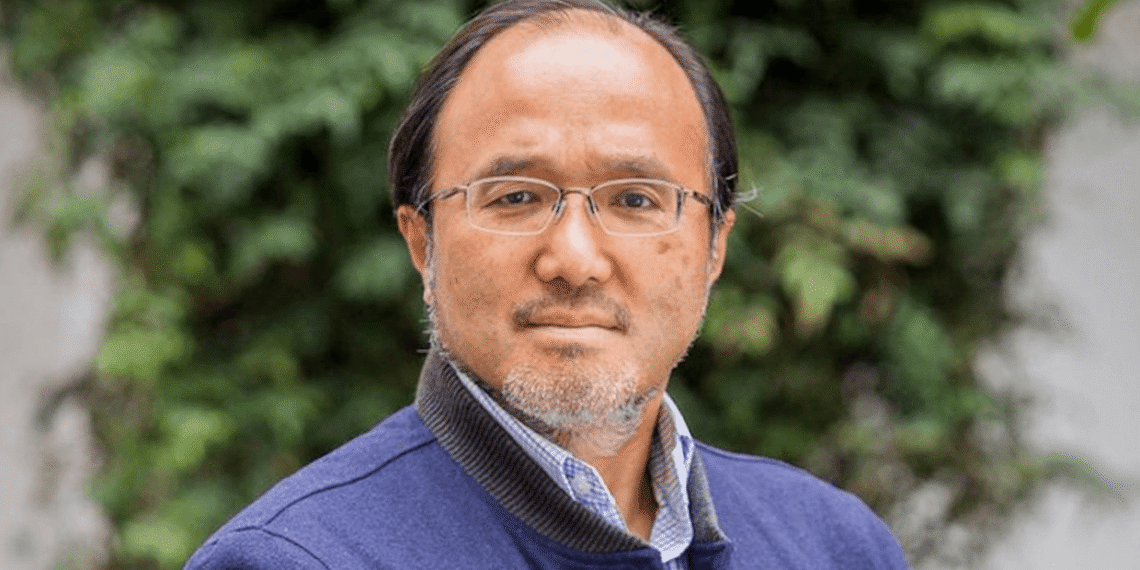
Peru’s 2026 presidential election has reopened fundamental debates about populism, democratic resilience, institutional decay, and constitutional governance in one of Latin America’s most politically volatile democracies. In this timely interview with the ECPS, Professor Martín Tanaka, Full Professor of Political Science at the Pontifical Catholic University of Peru and Senior Researcher at the Institute of Peruvian Studies, argues that while “populism remains a risk,” it is “much more controlled and limited” than many feared. He explains why Peru’s democratic crisis stems less from executive authoritarianism than from party fragmentation, legislative dysfunction, and institutional weakness, while cautiously suggesting that the country’s new political balance may create opportunities for negotiation, institutional reform, and democratic stabilization.
Interview by Selcuk Gultasli
Peru’s 2026 presidential election has once again thrust one of Latin America’s most fragile democracies into the center of international attention. A razor-thin presidential runoff, renewed allegations of electoral fraud, deepening institutional distrust, chronic party fragmentation, and mounting public insecurity have revived long-standing debates over democratic resilience, populism, political representation, and constitutional governance. While Peru has long been viewed as an outlier for combining macroeconomic stability with persistent political instability, the election of Keiko Fujimori has introduced a new layer of uncertainty by reopening unresolved questions about the country’s post-authoritarian trajectory. At a moment when many democracies are struggling with populist polarization and democratic erosion, Peru offers an important case for examining whether institutional recovery remains possible after years of political fragmentation and declining public confidence.
Few scholars are better positioned to assess these developments than Professor Martín Tanaka, Full Professor of Political Science at the Pontifical Catholic University of Peru and Senior Researcher at the Institute of Peruvian Studies. Widely recognized for his pioneering scholarship on weak party systems, ‘brokered democracy’, clientelism, populism, and democratic deterioration, Professor Tanaka has spent more than two decades analyzing why Peru’s democratic institutions have struggled to consolidate despite sustained economic growth. His research has fundamentally shaped comparative debates on party institutionalization, democratic accountability, and the paradoxes of governance in contemporary Latin America.
In this wide-ranging interview with the European Center for Populism Studies (ECPS), Professor Tanaka offers a measured yet cautiously optimistic assessment of Peru’s political future. Although he acknowledges that the 2026 election reproduced many of the structural weaknesses that have characterized Peruvian politics over the last decade—including institutional fragmentation and declining trust—he nevertheless argues that the outcome may represent an important turning point. As he observes, "the results are much better than our worst expectations," because many of the parties most closely associated with irresponsible populism and legislative obstruction suffered significant electoral defeats. Rather than signaling the consolidation of anti-system politics, the new Congress may create stronger incentives for negotiation and coalition-building.
Throughout the interview, Professor Tanaka challenges several conventional assumptions about Peru’s democratic crisis. He argues that Peru’s recent democratic erosion has been driven less by executive aggrandizement than by "the decay of parties and the control of parties by particular interests and very narrow interest groups." Unlike many contemporary cases of democratic backsliding, Peru’s principal danger has not been excessive presidential power but institutional fragmentation, legislative clientelism, and the collapse of effective political mediation. Yet he also sees reasons for cautious hope, emphasizing that "the distribution of political forces puts on the agenda the need to negotiate and to achieve agreements between parties with different perspectives," while noting that "the risk of the continuation of this populist logic still exists, but it is much more controlled and limited."
The conversation also explores broader theoretical questions concerning the evolution of populism, democratic legitimacy, corruption, judicial activism, and institutional reform. Professor Tanaka reflects on Peru’s distinctive combination of economic orthodoxy and political instability, examines why anti-corruption campaigns have generated widespread public disappointment, and assesses whether bicameralism and a more structured party system can help restore democratic governance.
Looking beyond the current electoral cycle, he concludes that rebuilding Peru’s democracy will ultimately depend on strengthening the state’s administrative capacity, professionalizing the civil service, and reconstructing political parties capable of reconnecting citizens with representative institutions. As he puts it, "state reform and civil service reform are the major issues in Peru," alongside political reforms that can begin "to reverse the dynamic of deterioration that we have faced in recent years."
Here is the revised version of our interview with Professor Martín Tanaka, edited lightly to enhance clarity, readability, and overall flow for publication.
Peru Has Entered a New Political Era Beyond the Post-Fujimori Consensus
Professor Tanaka, welcome. Let us begin with the broad political significance of this election before turning to the deeper institutional and theoretical questions it raises. Peru’s 2026 presidential election appears to have reproduced many of the structural pathologies that have characterized Peruvian politics for nearly a decade: extreme party fragmentation, widespread distrust of institutions, and an intensely polarized second round. To what extent do these election results represent continuity with Peru’s post-2016 political trajectory, and where, if anywhere, do you see evidence of genuine political realignment rather than merely another episode in an ongoing cycle of institutional instability?
Professor Martín Tanaka: That’s a very difficult question. If we analyze the election itself, the diagnosis would be that we are facing a repetition of the dynamics we’ve seen over the last decade—and, even more, not only a repetition but a worsening of the situations that we faced before regarding the fragmentation that you mentioned. At the same time, we had a very narrow result. If Roberto Sanchez had won, we would be saying that we are facing something that resembles a repetition of the 2021 election. I mean, a radical leftist, populist candidate who won the presidency and who faces a situation where he is in the minority in Congress.
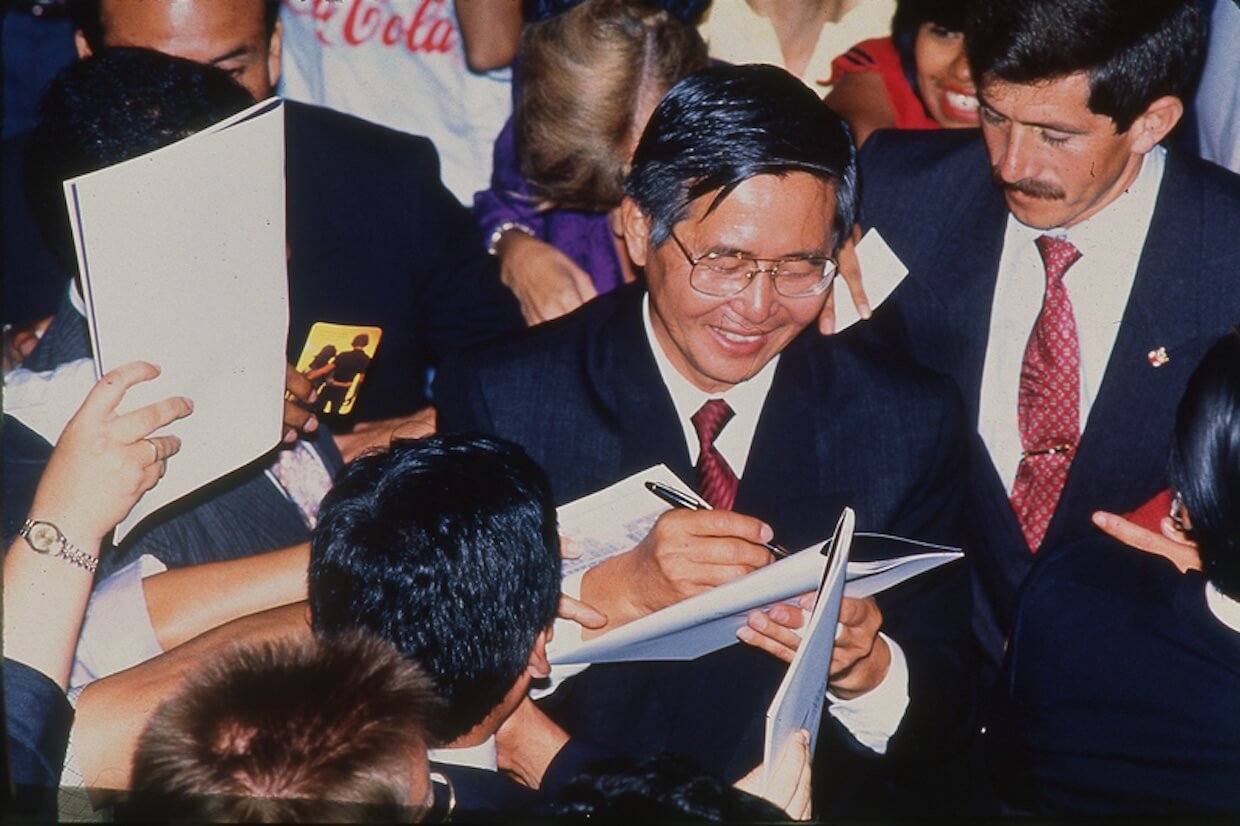
But the result that we’ve had is that Keiko Fujimori won the election. This places us in a very different scenario from the previous years because, during this century, we faced what I call the post-Fujimori era regarding Alberto Fujimori’s presidency, the father of Keiko Fujimori. I mean, the main challenge that Peruvian democracy had in this century was to deal with the heritage of the 1990s neoliberal and authoritarian government that Alberto Fujimori led, and now we are facing this particular situation where her daughter is now the president of Peru.
What is she going to do? Are we going to go back to the 1990s? Are we going to see the continuity of the last 25 years? Is she going to try a different path? Those are the questions that Peruvians are now asking themselves.
Despite Growing Distrust, the New Congress Creates Space for Political Negotiation
The narrow outcome of the runoff, accompanied by competing allegations regarding electoral integrity and the refusal of sections of the political class to fully accept the result, has once again raised concerns about democratic legitimacy. From a comparative perspective, should these post-election disputes be interpreted primarily as symptoms of democratic backsliding, or do they instead reflect the normalization of distrust in a political system whose institutions have already suffered prolonged erosion?
Professor Martín Tanaka: Yes, in this election, we’ve faced these allegations regarding electoral integrity, but I believe that this problem has worsened in this particular election. First, in previous elections, we’ve had allegations, but I believe that the electoral authorities had the credibility to say that the election was correct and the results were fair, and that the allegations were simply the result of bad losers.
We had candidates from the right who behaved in this way, presenting allegations and claiming fraud, but they had no consistent and strong proof to support those allegations. We could say that they were bad losers, and these bad losers developed this kind of behavior because of the polarization and radicalization of some sectors of the political spectrum, mainly on the right. But in this particular election, during the first round, we had a rightist candidate claiming fraud. Now, in the second round, we have a leftist candidate also alleging fraud.
In this particular election, we also had the electoral authorities committing mistakes in the organization of the electoral process regarding, for example, the distribution of electoral material to the voting centers. So, these three things combined have weakened, to a great extent, the credibility of the electoral institutions.
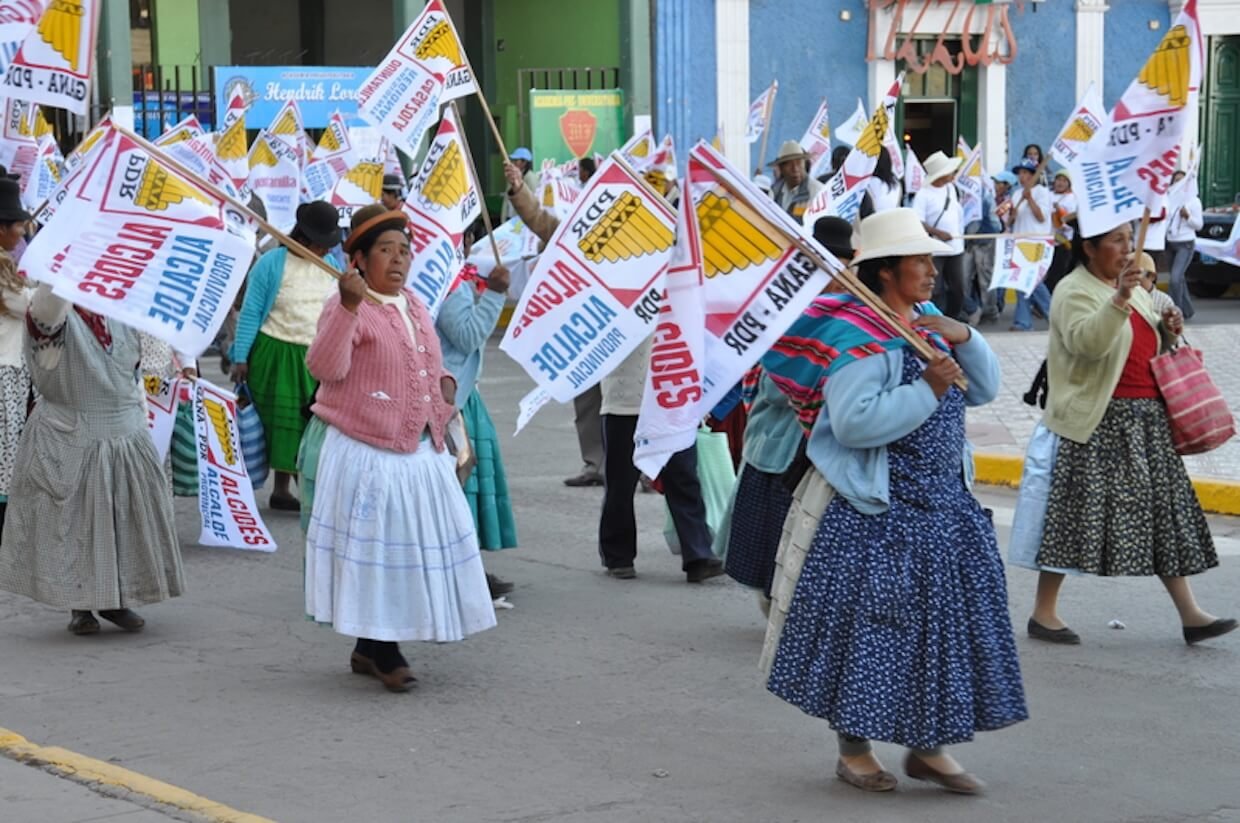
However, the one thing that I believe is important to mention on the positive side is that the composition of the new Congress is based on six political parties that are among the most coherent and promising parties in the competition. We had 36 parties competing, and the six that obtained representation are the ones that one can say are the most consistent or coherent.
The distribution of political forces puts on the agenda the need to negotiate and to achieve agreements between parties with different perspectives. So, this is a promising possibility. The logic of polarization and confrontation can change a little bit and lead to a more negotiated political process.
No Political Bloc Can Govern Alone, and That May Benefit Democracy
Much of your scholarship has emphasized that Peru’s crisis stems less from ideological polarization than from the extraordinary weakness of political parties and intermediary institutions. After the 2026 election, has Peru finally reached the point where party institutionalization can no longer recover through incremental reforms, requiring instead a fundamental redesign of political representation itself?
Professor Martín Tanaka: As I’ve just mentioned, the results and the configuration of Congress open the way to moderate optimism. Because no major bloc has an easy majority. The rightist bloc is near or under a simple majority, so the opposition has some room for maneuver. Therefore, major setbacks will be difficult to implement under the Fujimori government. This kind of balance between a leftist and a rightist sector opens the way to finding an intermediate point where changes and reforms in different areas are possible.
In the economic area, it will be easier to achieve agreements in terms of strengthening market economy institutions. It will be a little more difficult, of course, regarding institutional aspects, such as judicial reform or political reform. Those reforms will be much harder. The clashes will be more intense in that area, but it’s not impossible.
The Election Results Were Far Better Than Our Worst Expectations
In your recent work, you argue that Peru experienced the emergence of a conservative-populist governing coalition that transcended traditional left-right divisions while jointly opposing institutional reforms. Has the 2026 election strengthened this coalition, transformed it, or exposed its internal contradictions? More broadly, what does this tell us about the changing nature of populism in contemporary Peru?
Professor Martín Tanaka: If we compare the results that actually emerged from the election with what we had speculated would happen at the beginning of the campaign, I’m really convinced that the results are much better than our worst expectations. One possibility was that the new Congress would be a continuation of the dynamic that we’ve seen over the last couple of years, where populists and irresponsible politicians were in control of the decisions. The parties most identified with these kinds of practices didn’t win the elections. Most of them received a very low number of votes. They even lost their political registration. They no longer exist in legal terms.
The parties that achieved representation are more structured and have more programmatic lines, both on the left and on the right. So, I believe that the risk of the continuation of this populist logic still exists, but it is much more controlled and limited. Of course, we never know, but I am quite optimistic about the possibility of limiting or changing the dynamic that we’ve seen in the last Congress.
A Centrist Majority Could Limit the Appeal of Populist Politics
Peruvian politics has frequently been described through the lens of anti-establishment leadership, from Alberto Fujimori to Pedro Castillo and, in different ways, several subsequent candidates. Yet these figures often differ substantially in ideology, governing style, and institutional strategy. How useful is the concept of populism for understanding Peru today, and where do you think it risks obscuring more than it explains?
Professor Martín Tanaka: I believe it has been useful. Over the last 10 years—we’ve seen the proliferation of discourses and decisions that can be better understood through the lens of populism. But if we look at the period from 2000 to 2015, the diagnosis would have been the opposite. What struck me most when analyzing Peruvian politics in the context of Latin America was the continuity of the neoliberal orthodox consensus among the major political and social players. Whereas the rest of the region was turning to the left and was being conquered by a populist discourse, Peru maintained continuity under neoliberal, market-oriented reforms. One may even find politicians who won elections by appealing to populist features, but under their presidencies, their administrations maintained a kind of political orthodoxy in terms of political economy, as well as in their management and policy decisions.
However, things changed from 2016. Now, the current results of the last election make us think that maybe Keiko will return, at least to some extent, to the neoliberal orthodoxy. It’s different to be in Congress and in opposition. She has the responsibility to deliver in economic terms, so I believe that things will change a little bit. Although Fuerza Popular also has bases that may pressure it toward populist discourse and redistribution, I believe that we will find a kind of return to orthodoxy.
Regarding the opposition, we have an extreme left that is close to the conventional populist discourse. But they are not in the majority. They are at the extreme of the political spectrum, and there is the possibility of creating a center consensus in Congress that may limit the space for populist discourse and decisions.
Fragmentation, Not Authoritarianism, Remains Peru’s Greatest Democratic Risk
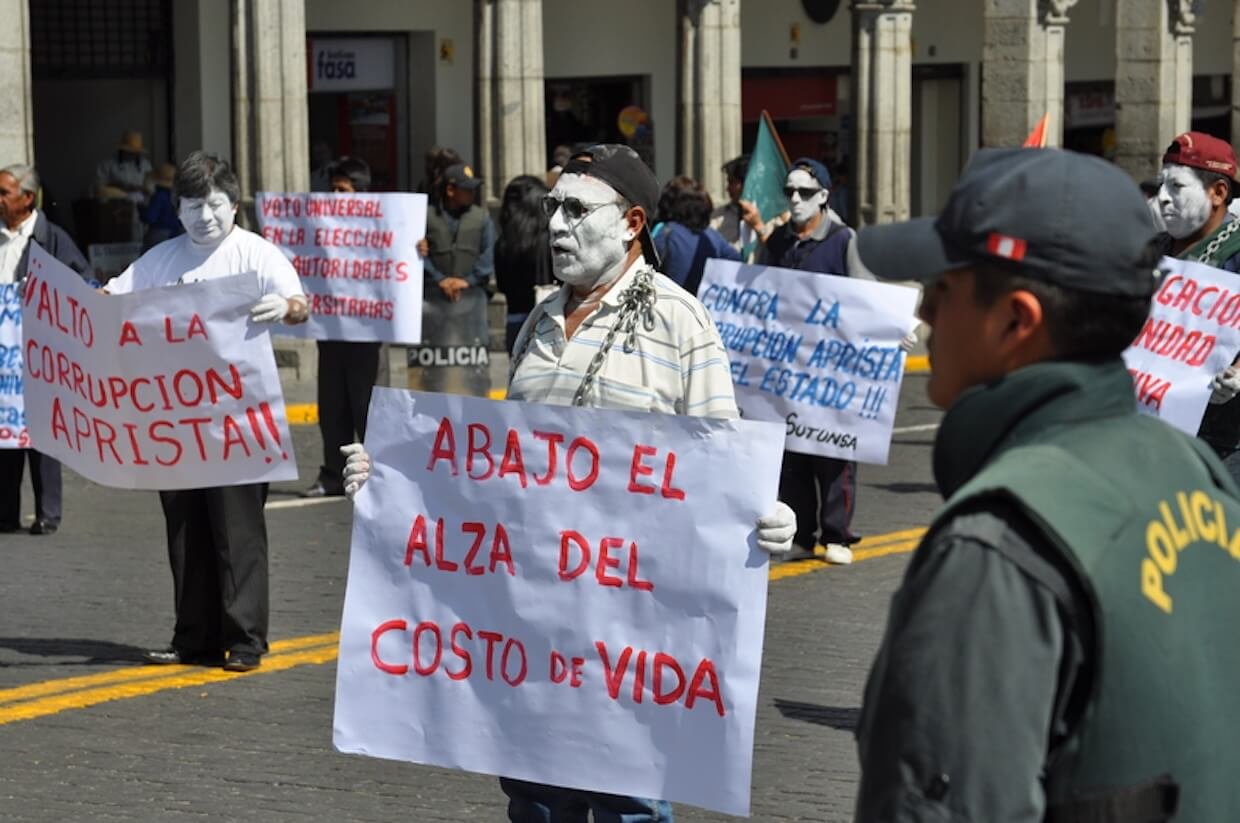
Across Latin America and beyond, democratic erosion increasingly occurs through gradual institutional weakening rather than abrupt authoritarian ruptures. Does Peru illustrate a distinctive pathway of democratic backsliding—one driven less by executive aggrandizement than by the cumulative decay of parties, Congress, and mechanisms of accountability?
Professor Martín Tanaka: In the last 10 years, Peru has been an example of a particular pathway of democratic backsliding, not driven by a strong executive but by the decay of parties and the control of parties in Congress by particular interests and very narrow interest groups. That’s what we have been looking at over the last 10 years.
I believe that this may change. I’m a little bit optimistic. I believe this dynamic may change a little bit. Now we have Keiko Fujimori in the presidency. A lot of colleagues have expressed concern about the possibility of a government with authoritarian features. Keiko Fujimori has vindicated the image of her father and his style of government. But at the same time, the distribution of forces in Congress will not allow it, and the mobilization of civil society would not allow her to follow an authoritarian path. So, the risk and danger of a strong executive are relatively low. That’s my particular opinion. Maybe other colleagues will not agree with me.
The main problem would be disorder, chaos, indiscipline, and fragmentation. This risk is still very strong, very high in Peruvian politics nowadays. The possibility of a dynamic that resembles the last 10 years is still strong. But the parties that obtained representation are a little more structured and coherent than the parties that we had before.
Bicameralism Could Help Contain Peru’s Fragmented Politics
You have long argued that Peru represents a form of ‘brokered democracy,’ in which local intermediaries often substitute for institutionalized political parties. Two decades later, has this brokerage model become even more deeply entrenched, or are we witnessing its transformation into something more fragmented and potentially more dangerous for democratic governance?
Professor Martín Tanaka: That’s a good question. We are now beginning to know each of the representatives who have achieved representation in Congress. In this particular election, there’s an important novelty: we have reintroduced a bicameral system. We had a Congress working with only one chamber. Now we have a Senate and a Chamber of Deputies. So, in the Senate, we have more experienced politicians. Across the different political groups, you can identify strong political leaders who have a long tradition and a clear identification with their political parties. In the lower chamber, things are a little bit different. The representation of the different regions is stronger because of the electoral system. There is a greater presence of inexperienced politicians across all parties in the lower chamber. So, the possibility that these particularistic interests will be present in the lower chamber is very high.
I ask myself whether the main parties will be able to guarantee discipline and build a parliamentary agenda among their individual members. That will be a major challenge for all parties. But ultimately, the political dynamic will be marked by the initiatives of the executive of the central government. And the weight of the Senate will also help to discipline what may happen in the lower chamber.
Peru Still Lives with the Paradox of Economic Success and Institutional Weakness
One striking paradox of Peru is that prolonged macroeconomic stability has coexisted with chronic political instability. How do you explain the persistence of democratic dissatisfaction in a country that, until recently, outperformed many of its regional peers economically? Does this challenge modernization theories that associate economic success with democratic consolidation?
Professor Martín Tanaka: That’s a good and complex question. Peru has had a kind of learning process marked by trauma. We had terrible hyperinflation at the end of the 1980s. We then experienced a very radical, drastic, strong, and traumatic neoliberal reform. The neoliberal reform ultimately stabilized the country, lowered inflation, and allowed Peru to regain growth. So, in the minds of the political and social elite, the continuity of the neoliberal model, or a market-oriented economy, became established as something very important that should not be touched. I believe this consensus has survived even until now. Of course, making changes while preserving the stability of macroeconomic institutions is still a consensus that remains valid in contemporary Peru.
At the same time, the weakness of political parties doesn’t permit, doesn’t allow presidents and politicians to capitalize on macroeconomic stability. For example, there have been many corruption scandals that have weakened and destroyed the legitimacy of political parties and political figures. So, there is still this huge gap between macroeconomic performance and the very low legitimacy of political institutions.
The prospects for the years to come are that Keiko Fujimori will try to make some improvements on the economic front. It will be more difficult to see institutional reforms that go together with these economic reforms. So, Peru will continue to show this paradox of moderate economic success coexisting with very, weak political institutions.
In recent years, the deterioration of democratic institutions has been very striking. We are now wondering in Peru what Keiko Fujimori will do because her political party, Fuerza Popular, was one of the major protagonists of this weakening of democratic institutions in recent years. The question that we may ask ourselves is whether Fuerza Popular will continue to behave as it did while it was an opposition party, and how much it will change now that it has the responsibility of governing.
Peru Must Rethink How It Fights Corruption
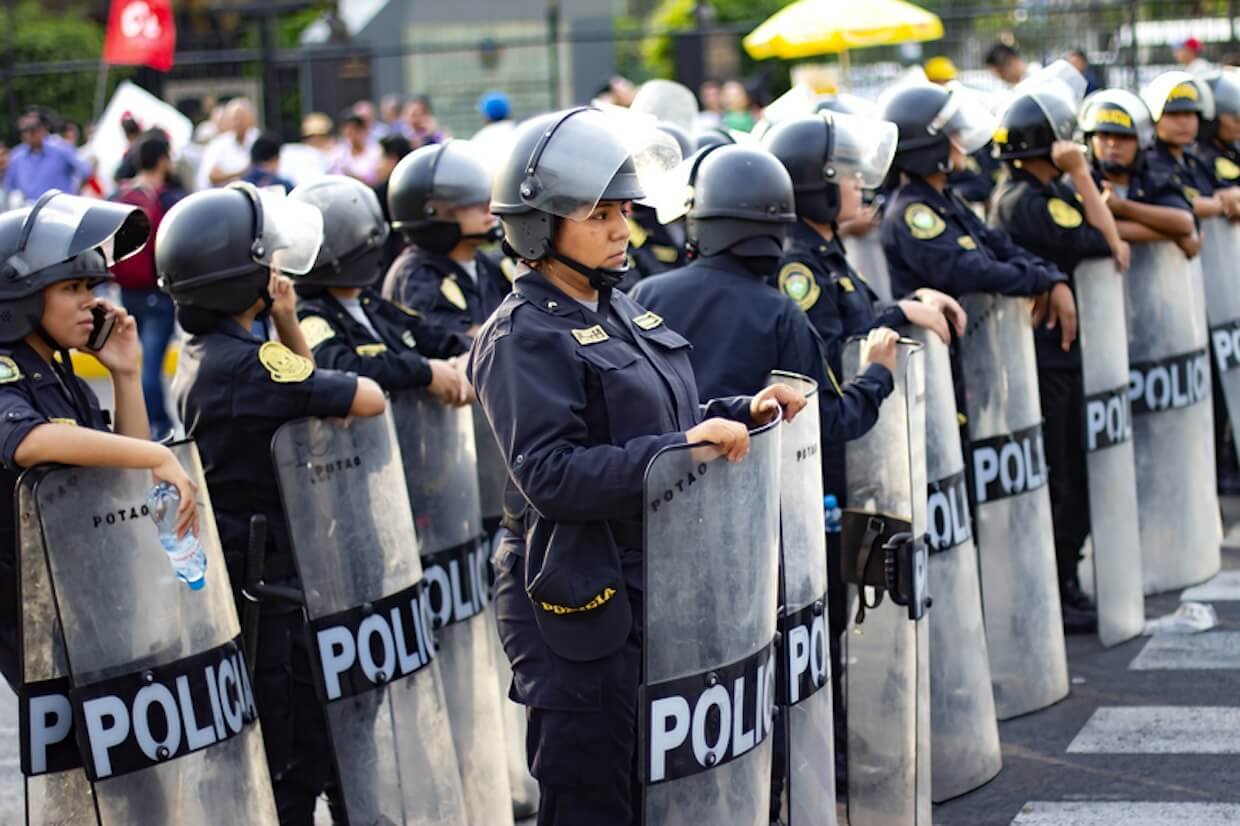
Your work has repeatedly highlighted the interaction between corruption scandals, judicial activism, and political instability. After nearly a decade in which anti-corruption investigations reshaped Peruvian politics, do you believe accountability mechanisms have ultimately strengthened democracy, or have they unintentionally contributed to institutional fragmentation and public disillusionment?
Professor Martín Tanaka: This is a very difficult question to answer. But we may say that this drive to fight corruption, initiate investigations, and judicialize the political dynamics in Peru has been a disappointment. Disappointment is the dominant sentiment among Peruvians. The fact that Keiko Fujimori has won the election is a good illustration of this. The judiciary initiated investigations against Keiko Fujimori. Those investigations even led to her incarceration. Months and years went by, and the cases, the investigations, and the accusations against Keiko Fujimori couldn’t continue. Most of the trials, allegations, and accusations against her ultimately did not proceed. So, she had the opportunity to run for the presidency, and she has now won.
Even more, the fact that she was accused and even incarcerated has turned into political capital for her. She can present herself as a victim, as a martyr. This has helped her in this electoral campaign.
This is a major issue. There is a widespread perception that corruption is everywhere. It is a very important concern for everybody, but at the same time, there is also a consensus that judicial initiatives to fight corruption have not produced good results. So, what to do with anti-corruption initiatives, and what to do with the judicial system, are major issues in Peru—and even more so for Keiko Fujimori, who has been accused and has, in a sense, become a victim of those judicial initiatives.
Moderate Politics Still Has a Chance in Peru
In many democracies, populist leaders portray constitutional checks and independent institutions as obstacles to popular sovereignty. Yet in Peru, citizens often appear equally distrustful of both elected politicians and institutional constraints. How can democratic reformers defend liberal institutions when public confidence in nearly every component of the political system has eroded?
Professor Martín Tanaka: Another difficult question. Of course, the easy answer is that we have to defend and maintain democratic liberal institutions while, at the same time, achieving greater efficiency in addressing the problems that are the main concerns of the population. Of course, this is easy to say but very difficult to achieve. But, 2026 election allows us to be moderately optimistic about the possibility of limiting the spread of extreme discourses and more extreme populist appeals.
It also opens up the possibility of building a majority around centrist politics, with political parties converging around the political center and reaching a consensus that may produce more efficient public policies. This possibility exists. The fact that the distribution of forces in Congress will not permit the adoption of extreme measures puts the need to build consensus firmly on the agenda. This provides a good foundation for better public policies. Of course, that’s only a possibility. We’ll see what happens next.
State Reform and Meritocracy Are Peru’s Most Urgent Priorities
And lastly, Professor Tanaka, looking beyond the immediate electoral cycle, if you were advising Peru’s next generation of political reformers, which institutional reforms would you prioritize to rebuild democratic legitimacy? More fundamentally, what must change if Peru is to move beyond recurring cycles of populism, personalistic leadership, institutional fragility, and democratic uncertainty toward a more resilient constitutional democracy?
Professor Martín Tanaka: The last question is even more difficult. If I had to choose, I would say that state reform and civil service reform are the major issues in Peru. Because one thing that is associated with political instability and corruption is the fact that, in recent years, a patronage logic in the use of the state has become widespread. And, talking about populism, this logic of patronage—this patrimonial use of the state—has been a major problem in recent years.
So, we face this paradox: because of economic growth, we have resources, but because we also have inefficiency and corruption, these resources cannot be translated into good public policies, tangible results, and effective delivery for citizens. This is a major issue. There is a great deal of room for improvement in this area. If the Keiko Fujimori government understands that we need to protect meritocracy and efficiency within the state, it will help her a lot, and it will greatly improve the political system’s ability to legitimize itself.
At the same time, political reform regarding the functioning of political parties, the need to strengthen political parties, and the need to improve their transparency and their relationship with citizens are also major issues. That could help begin to reverse the dynamic of deterioration that we have faced in recent years.