
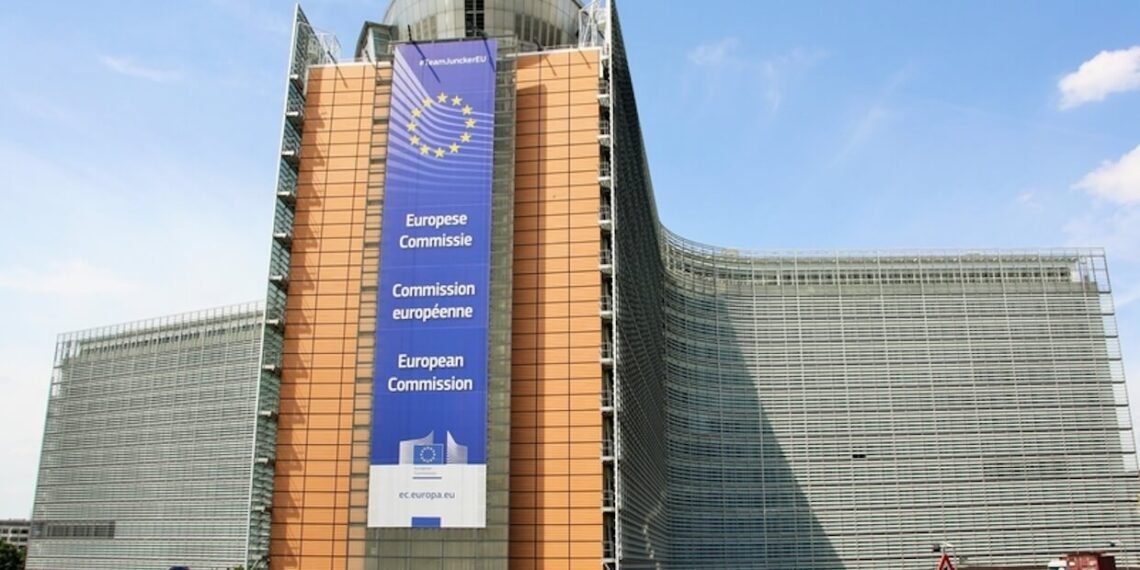
Professor Markus Kotzur’s lecture explored one of the defining questions of contemporary European integration: can the European Union translate its regulatory influence into genuine geopolitical leadership? Rejecting conventional measures of power centered solely on military capability, he argued that the EU’s comparative advantage lies in its constitutional foundations, legal authority, and capacity to shape global norms through regulatory governance. Examining concepts such as Normative Power Europe, the Brussels Effect, and strategic autonomy, the lecture demonstrated how Europe’s economic strength, legal order, and institutional resilience remain essential assets amid intensifying geopolitical competition. Combining European constitutional law with international relations and political economy, Professor Kotzur offered a compelling vision of an EU capable of reconciling values with strategic responsibility in a fragmented international order.
Reported by ECPS Staff
The concluding lecture of the ECPS Academy Summer School 2026, held under the overarching theme "Europe Between Oceans: The EU in the Age of Geoeconomics, Populism, and Strategic Competition," addressed one of the most consequential questions confronting European integration today: Can the European Union exercise genuine geopolitical leadership in an increasingly fragmented international order? While much contemporary debate focuses on Europe’s economic competitiveness, military preparedness, or strategic autonomy, the lecture by Professor Markus Kotzur, Professor of European and International Law at the University of Hamburg and Vice Dean for International Relations, invited participants to examine a more fundamental issue. Before asking whether the European Union possesses sufficient power to lead, it is necessary to clarify what leadership itself means for a political entity that is neither a sovereign state nor a conventional international organization. Drawing upon constitutional law, international law, and European integration studies, Professor Kotzur argued that the future of European leadership depends not merely on accumulating material capabilities but on reconciling legal legitimacy, regulatory influence, political integration, and strategic purpose within a rapidly evolving geopolitical environment.
The session was introduced by Dr. Camille Nessel, who situated the discussion within the European Union’s broader geopolitical transformation initiated during Ursula von der Leyen’s first Commission. Recalling von der Leyen’s ambition to create a "geopolitical Commission" in 2019, Dr. Nessel explained how this initiative fundamentally altered scholarly and policy debates surrounding the European Union’s external role. Whereas previous decades had largely conceived European integration through the lenses of market integration and regulatory governance, recent developments increasingly emphasize economic security, strategic partnerships, critical raw materials, and geopolitical competition. Trade policy, environmental regulation, and technological governance have progressively become instruments of geopolitical influence rather than merely vehicles of economic integration. In this context, concepts such as open strategic autonomy, economic security, and regulatory sovereignty have emerged at the center of European policymaking, raising new questions about how the Union can exercise influence while remaining committed to multilateralism and the constitutional values upon which European integration has historically rested. Dr. Nessel’s introduction effectively framed the lecture by illustrating that Europe’s external policies can no longer be understood independently of broader geopolitical transformations, particularly the rise of China, renewed great-power competition, and increasing skepticism toward globalization.
Can the European Union Lead? Reconceptualizing Power, Political Community, and Global Actorship

Building upon this context, Professor Kotzur proposed that discussions of European leadership often begin from an inadequate premise. Much contemporary commentary measures geopolitical influence primarily through traditional indicators of state power—military capability, coercive capacity, or hegemonic dominance. Such perspectives, strongly associated with realist approaches to international relations, inevitably portray the European Union as structurally disadvantaged when compared with major powers such as the United States or China. Yet Professor Kotzur argued that this comparison overlooks the Union’s distinctive political character. Rather than attempting to evaluate the European Union as though it were an ordinary nation-state, he suggested conceptualizing it as a political community—a unique form of political organization that transcends the conventional distinction between sovereign state and international organization. This conceptual shift, he maintained, fundamentally alters how European leadership should be understood.
For Professor Kotzur, describing the European Union as a political community emphasizes that European integration extends far beyond economic cooperation or market regulation. The Union embodies an ongoing process of political integration grounded in shared constitutional values, institutional cooperation, and collective decision-making. Consequently, Europe’s capacity for leadership cannot be reduced solely to military capabilities or traditional notions of sovereignty. Instead, its influence derives from the interaction of legal authority, regulatory capacity, democratic legitimacy, and institutional resilience. The European Union therefore exercises a form of political leadership fundamentally different from that of conventional great powers—a leadership rooted less in coercion than in governance, coordination, and the production of international norms.
This argument naturally led Professor Kotzur to distinguish between different conceptions of power itself. Realist perspectives traditionally associate leadership with material capabilities, particularly military strength and the ability to impose outcomes through coercive means. Judged according to these criteria alone, the European Union undoubtedly faces significant limitations. Defense remains primarily the responsibility of individual member states, while security has historically depended upon NATO and, above all, the strategic umbrella provided by the United States. Compared with the military capabilities of Washington or Beijing, the European Union possesses only limited autonomous coercive capacity. Yet Professor Kotzur cautioned participants against equating these limitations with geopolitical irrelevance. Power, he argued, also assumes regulatory, legal, institutional, and normative forms that have become increasingly important within an interconnected global economy.
Indeed, one of the lecture’s central themes was that the European Union has historically developed precisely these alternative forms of influence. Rather than aspiring to classical hegemonic dominance, Europe has sought to shape international behavior by establishing legal standards, promoting regulatory convergence, and embedding international cooperation within institutional frameworks. This distinctive mode of influence reflects the constitutional foundations of the Union itself. Article 2 of the Treaty on European Union, which enshrines democracy, human rights, and the rule of law as the Union’s foundational values, provides not only an internal constitutional framework but also the normative basis for Europe’s external engagement. In Professor Kotzur’s view, these legal principles have enabled the European Union to become a global standard-setter whose influence often extends far beyond its territorial borders.
At the same time, the lecturer acknowledged that the international environment sustaining this model has changed profoundly. For much of the post-Cold War period, a functional division of labor characterized transatlantic relations. While the United States largely assumed responsibility for military security through NATO, the European Union concentrated on economic integration, regulatory governance, and the promotion of multilateral norms. This arrangement allowed Europe to exercise considerable international influence without developing equivalent military capabilities. However, shifting geopolitical realities—including Russia’s aggression against Ukraine, intensifying strategic competition with China, and growing uncertainty regarding American security commitments under Donald Trump’s second presidency—have increasingly exposed the limitations of this model. Europe can no longer assume that military security will remain permanently outsourced while it focuses exclusively on regulatory leadership.
These developments, Professor Kotzur suggested, require a fundamental reconsideration of European leadership itself. Rather than abandoning its normative foundations, the European Union must determine how legal authority, economic strength, and strategic capability can be combined within a coherent geopolitical strategy. Leadership in today’s international order demands more than the capacity to regulate markets; it increasingly requires resilience, institutional coordination, technological innovation, and credible security capabilities. Yet Europe’s comparative advantage continues to reside in the constitutional and legal traditions that distinguish it from more conventional great powers. The challenge therefore lies not in replacing normative power with military power but in integrating both within a broader conception of strategic actorship.
By framing the discussion in this manner, Professor Kotzur established the analytical foundation for the remainder of the lecture. The central question was no longer simply whether Europe possesses sufficient power to compete with other global actors, but whether its unique combination of law, regulation, political integration, and democratic legitimacy can provide the basis for effective geopolitical leadership in an era increasingly defined by strategic rivalry and geoeconomic competition. This perspective would subsequently guide his examination of the European Union’s normative influence, the Brussels Effect, and the evolving concept of strategic autonomy.
Normative Power Europe, the Brussels Effect, and the Evolution of Strategic Autonomy

Having established that the European Union should be understood as a distinctive political community rather than a conventional nation-state, Professor Kotzur turned to the sources of Europe’s international influence. If the Union lacks the military capabilities traditionally associated with great-power politics, how has it nevertheless managed to shape global governance and international economic relations? Professor Kotzur argued that the answer lies in Europe’s longstanding role as a normative and regulatory power, a form of influence that derives not from coercion but from the ability to establish legal standards that increasingly structure international political and economic behavior. This regulatory capacity, he suggested, remains one of the European Union’s greatest strategic assets, even as the geopolitical environment becomes more competitive and uncertain.
Central to Professor Kotzur’s argument was the concept of Normative Power Europe, which has occupied a prominent place in European integration scholarship for more than two decades. Unlike traditional powers that project influence primarily through military or economic coercion, the European Union has historically sought to shape international conduct through the diffusion of legal norms, constitutional principles, and regulatory standards. Democracy, human rights, the rule of law, and sustainable development constitute not merely internal constitutional values but also external objectives guiding European foreign relations. According to Professor Kotzur, these principles provide the normative foundation upon which the Union’s international influence has long rested. Rather than compelling other actors to follow European preferences, the Union seeks to encourage convergence by making adherence to these standards increasingly advantageous for states wishing to deepen political or economic cooperation with Europe.
Professor Kotzur explained that this normative influence operates through two complementary mechanisms. The first ispositive conditionality, whereby closer cooperation with the European Union—including association agreements, neighborhood partnerships, accession negotiations, and preferential trade arrangements—is linked to the adoption of European legal and constitutional standards. Countries aspiring to strengthen relations with the Union are encouraged to improve democratic governance, judicial independence, human rights protection, and the rule of law. This "more for more" approach reflects the belief that regulatory convergence strengthens both political cooperation and legal certainty. In this sense, European integration has historically functioned not only as an economic project but also as an instrument for promoting constitutional transformation beyond the Union’s borders.
The second mechanism operates through market access. Access to the European Union’s vast internal market increasingly depends upon compliance with European regulatory requirements. Firms wishing to export products, provide services, or invest within the European market must satisfy standards relating to product safety, environmental protection, digital governance, consumer rights, competition policy, and increasingly artificial intelligence. Compliance therefore becomes not merely a legal obligation but an economic necessity. Through this process, European regulations frequently extend far beyond the Union’s territorial jurisdiction, influencing commercial practices across global markets without relying upon traditional forms of extraterritorial coercion.
This phenomenon, Professor Kotzur observed, is most commonly described as the Brussels Effect. Building upon the influential scholarship surrounding this concept, he explained that the European Union’s enormous market size, combined with its sophisticated regulatory framework, often incentivizes multinational corporations to adopt European standards globally rather than maintaining separate regulatory systems for different jurisdictions. Because complying with a single high regulatory standard is often more efficient than producing multiple versions of the same product, firms frequently extend European rules to operations beyond Europe itself. Consequently, regulations adopted in Brussels may shape business practices in Asia, Latin America, Africa, and North America despite the absence of formal international legal obligations.
Professor Kotzur highlighted several contemporary illustrations of this regulatory influence. The General Data Protection Regulation (GDPR) fundamentally reshaped global approaches to privacy and digital governance by establishing one of the world’s most comprehensive data protection regimes. Similarly, the Artificial Intelligence Act seeks to position Europe at the forefront of regulating emerging technologies through a risk-based legal framework that may influence legislative developments far beyond the European Union. Environmental policies associated with the European Green Deal, including sustainability standards and climate-related regulations, likewise demonstrate how domestic European legislation increasingly generates significant international repercussions. These examples illustrate that regulatory power has become an important dimension of contemporary geopolitics, particularly as technological innovation and global supply chains become progressively integrated.
Yet Professor Kotzur also emphasized that the Brussels Effect should not be understood simply as a technocratic process driven by legal expertise. Rather, it reflects a broader transformation in the relationship between markets and political authority. Regulation itself has become an instrument of geopolitical influence. By determining the conditions under which access to one of the world’s largest consumer markets is granted, the European Union exercises considerable leverage over international commercial behavior. This capacity enables Europe to project influence internationally even where its military capabilities remain comparatively limited. Regulatory governance thus constitutes an alternative form of power, rooted in economic interdependence rather than territorial coercion.
Nevertheless, Professor Kotzur argued that recent geopolitical developments increasingly challenge the sufficiency of normative power alone. The relative stability that once enabled Europe to rely primarily upon regulatory influence has gradually eroded under the pressures of great-power competition, technological rivalry, and economic coercion. Russia’s invasion of Ukraine, intensifying strategic competition between the United States and China, and growing uncertainty surrounding transatlantic relations have all demonstrated that legal standards alone cannot guarantee geopolitical resilience. The European Union therefore faces the difficult task of preserving its identity as a normative power while simultaneously developing greater strategic capacity.
This challenge has given increasing prominence to the concept of strategic autonomy, which Professor Kotzur approached through both linguistic and political analysis. Returning to the Greek origins of the concept, he explained that autonomia signifies the capacity to live according to one’s own laws, while strategy refers to the ability to lead and direct collective action. Strategic autonomy therefore implies far more than economic independence or military capability. It represents the capacity of a political community to formulate and pursue its own objectives independently while remaining faithful to its underlying constitutional values. Europe, in this conception, seeks neither isolation nor disengagement but the ability to make sovereign strategic decisions without excessive dependence upon external actors.
Importantly, Professor Kotzur deliberately omitted the increasingly fashionable adjective "open" from his presentation’s title in order to stimulate critical reflection. Rather than accepting "open strategic autonomy" as an uncontested policy objective, he encouraged participants to consider whether genuine strategic autonomy can remain fully open under conditions of intensifying geopolitical rivalry. This question reflects one of the European Union’s most fundamental contemporary dilemmas. Europe seeks simultaneously to preserve openness, defend multilateralism, strengthen economic resilience, and reduce excessive strategic dependencies. Reconciling these objectives requires careful balancing between economic integration and geopolitical prudence.
By the end of this section, Professor Kotzur had demonstrated that Europe’s future leadership cannot depend exclusively upon either normative influence or strategic power in isolation. The Brussels Effect continues to provide the European Union with remarkable global regulatory reach, yet contemporary geopolitical realities increasingly demand that this regulatory capacity be complemented by greater strategic resilience. Rather than abandoning its identity as a community founded upon law and multilateralism, Europe must learn to integrate regulatory influence with a more comprehensive understanding of geopolitical actorship. In doing so, the Union seeks to transform legal authority into a broader form of strategic leadership capable of navigating an international order that is becoming simultaneously more interconnected and more contested.
From Outsourced Security to Strategic Responsibility: Institutional Limits and the Future of European Defense
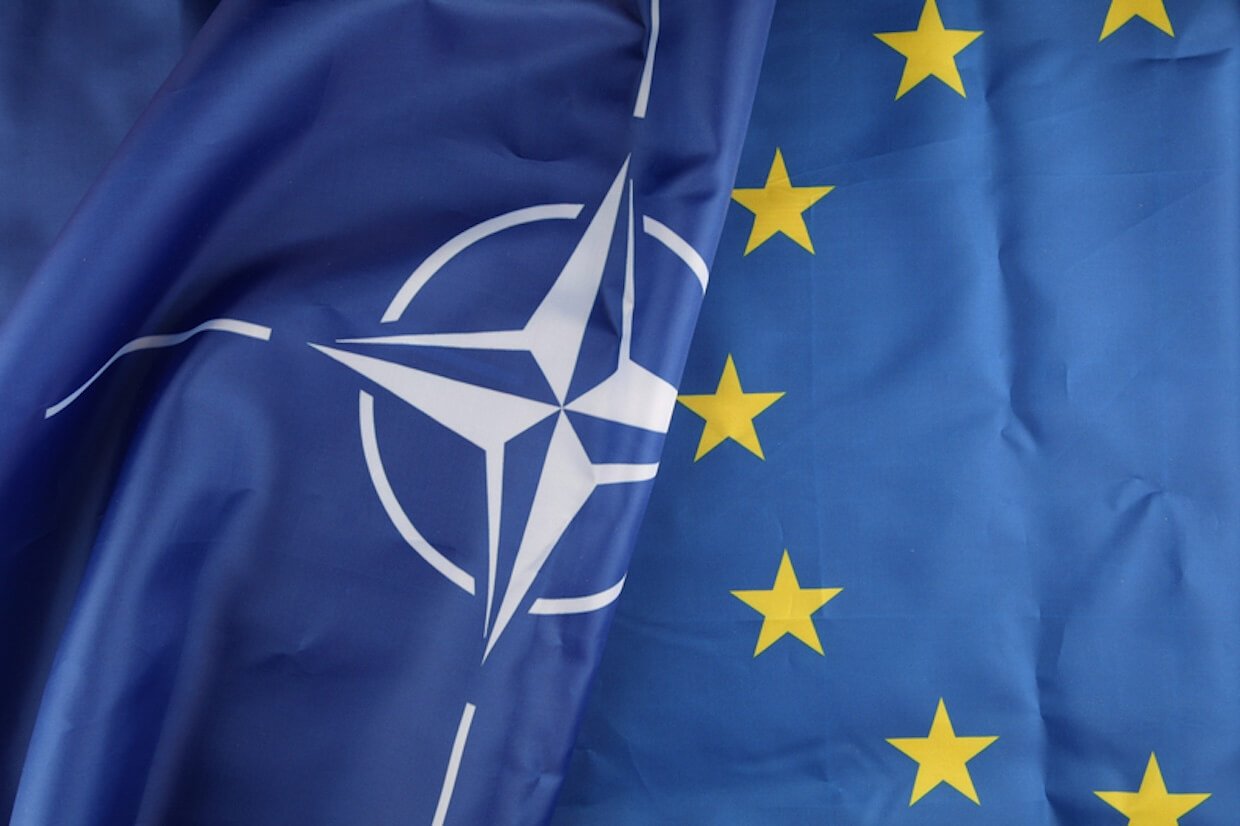
Having examined the European Union’s regulatory influence and the conceptual foundations of strategic autonomy, Professor Kotzur shifted the discussion toward one of the Union’s most persistent structural challenges: the relationship between legal competence, political will, and military capability. Rather than delivering a purely expository lecture, Professor Kotzur transformed this section into an interactive dialogue, inviting participants to reflect upon whether the existing constitutional framework of the European Union is capable of supporting meaningful geopolitical leadership. Their questions and observations became an integral component of the discussion, illustrating precisely the kind of interdisciplinary debate that the ECPS Academy Summer School seeks to foster.
Professor Kotzur began by emphasizing that discussions surrounding European defense cannot be separated from the constitutional architecture established by the EU Treaties. Unlike sovereign states, whose governments exercise inherent authority across the full spectrum of foreign and security policy, the European Union operates according to the principle of conferral, whereby it may act only in areas where competencies have been explicitly transferred by its member states. This legal principle, fundamental to European constitutional law, continues to shape every debate concerning the Union’s geopolitical ambitions. While economic integration has become highly supranationalized, foreign policy and defense remain areas in which national governments retain extensive authority. Consequently, the question confronting Europe is not simply whether it desires greater strategic autonomy, but whether its constitutional framework currently permits such ambitions to be fully realized.
Rather than providing an immediate answer, Professor Kotzur invited participants to consider whether the existing treaty framework already contains sufficient legal instruments for the European Union to become a more significant geopolitical actor or whether meaningful strategic autonomy would ultimately require comprehensive treaty reform. This interactive approach encouraged students from diverse disciplinary backgrounds to engage directly with questions that are often confined to specialist legal scholarship.
Several participants offered observations that significantly enriched the discussion. One participant suggested that European defense integration had historically remained underdeveloped precisely because military security had long been outsourced to the United States through NATO. As long as Washington guaranteed Europe’s security, the incentives to construct genuinely autonomous European defense capabilities remained relatively weak. Professor Kotzur broadly agreed with this historical assessment. He recalled that attempts to establish European defense structures date back to the earliest years of post-war integration but repeatedly encountered political resistance. One recurring concern was that independent European military structures might duplicate—or even weaken—the North Atlantic Treaty Organization. Consequently, NATO became the principal framework for collective defense, while European integration concentrated largely upon economic and political cooperation.
At the same time, Professor Kotzur stressed that the situation has evolved considerably since the adoption of the Treaty of Lisbon, which significantly expanded the legal foundations for cooperation in foreign and security policy. Although the Treaties do not currently permit the creation of a fully-fledged European army, they nevertheless provide important mechanisms through which member states can deepen defense cooperation. The Common Foreign and Security Policy (CFSP) and the Common Security and Defense Policy (CSDP) establish institutional frameworks for joint action, while initiatives such as Permanent Structured Cooperation (PESCO) demonstrate that considerable progress remains possible without immediate treaty revision. From a legal perspective, therefore, the European Union already possesses greater flexibility than is often assumed, even if important constitutional limitations remain.
The discussion subsequently broadened to consider whether recent geopolitical developments have fundamentally altered the political incentives surrounding European defense integration. Professor Kotzur suggested that two historic developments have acted as powerful catalysts. The first was Russia’s full-scale invasion of Ukraine, which fundamentally transformed European perceptions of security by demonstrating that large-scale interstate war had returned to the European continent. The second was the return of Donald Trump to the American presidency, which further intensified doubts regarding the long-term reliability of the United States as Europe’s principal security guarantor. Together, these developments have accelerated debates over strategic autonomy far more rapidly than decades of academic discussion ever achieved.
Drawing upon Germany’s own experience, Professor Kotzur pointed to the profound transformation in domestic political attitudes toward defense spending. The concept of Zeitenwende, introduced following Russia’s invasion of Ukraine, symbolizes a broader shift in German political culture regarding military responsibility. Political parties traditionally associated with pacifism, most notably the Green Party, have increasingly accepted that preserving peace may require greater investment in defense capabilities. This evolution illustrates how external geopolitical shocks can reshape democratic consensus, generating political support for policies that previously appeared unimaginable. What had once seemed politically controversial has increasingly become regarded as a necessary response to changing strategic realities.
Yet Professor Kotzur cautioned that military capability alone cannot create effective European leadership. Institutional legitimacy remains equally important. Another participant questioned whether Europe’s remarkable political diversity—comprising twenty-seven democracies with distinct historical experiences, domestic electorates, and strategic priorities—might itself constitute an obstacle to coherent foreign policy. Professor Kotzur acknowledged this challenge while rejecting the conclusion that diversity necessarily precludes collective action. The European Union’s legal personality under international law, established by the Treaty of Lisbon, enables it to conclude international agreements, participate in international organizations, and exercise meaningful diplomatic influence. Although foreign policy frequently requires consensus among member states, this institutional complexity should not be mistaken for institutional incapacity.
The discussion also addressed the politically sensitive question of hegemonic leadership. Professor Kotzur noted that, unlike the United States or China, European political discourse has historically regarded the very concept of hegemony with considerable suspicion, reflecting the continent’s experience of imperialism, nationalism, and colonial domination. Yet participants observed that even the European Union’s normative ambitions contain elements of hegemonic influence insofar as Europe seeks to encourage—or at times require—other countries to adopt its legal and regulatory standards. Professor Kotzur accepted this observation but distinguished between coercive hegemony and normative leadership. The European Union’s objective, he argued, should not be domination but persuasion, exercising influence through law, cooperation, and mutually beneficial partnerships rather than through military coercion.
Questions concerning Germany’s expanding military role further highlighted the complexity of European defense integration. Participants noted that increasing German defense expenditures inevitably evoke historical sensitivities among neighboring countries. Professor Kotzur acknowledged these concerns but suggested that today’s context differs fundamentally from earlier periods of European history. Germany’s rearmament takes place within dense multilateral institutions—NATO, the European Union, and an extensive network of constitutional safeguards—that substantially reduce the risks traditionally associated with unilateral military expansion. Contemporary defense integration therefore represents not a return to historical rivalries but an attempt to strengthen collective European security within established democratic frameworks.
Ultimately, this interactive exchange illustrated one of the lecture’s central insights: Europe’s future as a geopolitical actor depends not simply upon acquiring greater military capabilities but upon successfully integrating constitutional legitimacy, democratic support, institutional coordination, and strategic purpose. The European Union already possesses important legal foundations for deeper security cooperation, yet translating these possibilities into effective geopolitical leadership requires sustained political commitment from its member states. Strategic autonomy, Professor Kotzur suggested, is therefore neither exclusively a legal project nor solely a military one. It represents an ongoing constitutional and political process through which Europe seeks gradually to assume greater responsibility for its own security while remaining faithful to the principles of democracy, multilateralism, and the rule of law that have long defined the European project.
Europe Between Values and Power: Strengthening the EU’s Global Leadership in an Era of Geopolitical Fragmentation

In the final section of his lecture, Professor Kotzur moved beyond diagnosing the European Union’s geopolitical challenges to outlining a constructive vision of how the Union might strengthen its global leadership without abandoning the constitutional principles that have long defined the European project. Rather than advocating a radical transformation into a traditional military power, Professor Kotzur argued that Europe’s future influence depends upon building strategically upon its existing strengths while adapting to an international environment increasingly characterized by geopolitical rivalry, technological competition, economic coercion, and the erosion of multilateral institutions. His concluding reflections therefore sought to reconcile realism with legal idealism, arguing that effective European leadership requires neither the abandonment of normative values nor naïve reliance upon them alone, but rather a careful integration of power and principle.
Central to Professor Kotzur’s concluding argument was the proposition that the European Union should "strengthen its strengths." Throughout the history of European integration, the Union’s greatest comparative advantage has not been military capability but economic integration, regulatory governance, and legal certainty. Attempting to imitate the geopolitical behavior of traditional great powers would therefore be both unrealistic and strategically counterproductive. Instead, Europe should continue to capitalize upon the assets that have already made it one of the world’s most influential political actors: its single market, its sophisticated regulatory framework, its institutional stability, and its capacity to shape international standards. These resources remain significant sources of geopolitical influence even within an increasingly competitive international system.
Accordingly, Professor Kotzur argued that revitalizing multilateral trade should remain one of the European Union’s foremost strategic priorities. While acknowledging the growing dysfunction of the World Trade Organization (WTO)—particularly the paralysis of its dispute-settlement mechanism—he maintained that Europe possesses both the credibility and the economic weight necessary to champion the renewal of rules-based international commerce. The European Union’s continued commitment to reducing barriers to trade, supporting predictable legal frameworks, and defending multilateral economic governance reflects not only economic interests but also broader constitutional values rooted in openness, cooperation, and legal certainty. In an era when many major powers increasingly employ tariffs, sanctions, and industrial policy as geopolitical instruments, Europe’s defense of an organized multilateral trading system constitutes both a strategic necessity and an expression of its normative identity.
At the same time, Professor Kotzur rejected any suggestion that Europe should distance itself fundamentally from the United States despite recent political tensions. Although the return of Donald Trump and growing uncertainty surrounding American foreign policy have accelerated debates over strategic autonomy, transatlantic relations, he argued, remain an indispensable pillar of European security and prosperity. What requires reconsideration is not the partnership itself but its internal balance. Europe should assume greater responsibility for its own defense while preserving the broader Atlantic alliance. In this sense, strategic autonomy complements rather than replaces transatlantic cooperation. A stronger European defense capability would ultimately reinforce NATO by enabling a more balanced distribution of responsibilities between European allies and the United States. Strategic autonomy should therefore be understood as a process of maturation rather than separation.
Professor Kotzur likewise emphasized that Europe’s geopolitical credibility increasingly depends upon technological innovation and industrial competitiveness. Regulatory leadership alone will prove insufficient if Europe gradually loses its capacity to innovate in emerging sectors. Artificial intelligence, semiconductors, digital infrastructure, renewable technologies, and advanced manufacturing have become decisive arenas of international competition. Should Europe fall behind technologically, its ability to establish global standards through instruments such as the AI Act or environmental regulation will inevitably diminish. Normative influence cannot be sustained indefinitely without corresponding scientific, technological, and economic capacity. Consequently, investment in innovation represents not merely an economic policy but a strategic imperative essential to maintaining Europe’s long-term geopolitical relevance.
Environmental leadership occupied a similarly prominent place within Professor Kotzur’s concluding reflections. The European Green Deal, together with the broader objective of achieving climate neutrality, exemplifies the European Union’s aspiration to combine economic modernization with global environmental responsibility. Yet Professor Kotzur cautioned that successful climate leadership requires greater sensitivity toward historical inequalities and the needs of developing countries. Drawing upon principles of international environmental law, particularly the doctrine of common but differentiated responsibilities, he argued that industrialized European states bear special responsibilities in supporting sustainable development across the Global South. Financial assistance, technological cooperation, and equitable climate partnerships are therefore indispensable if European environmental policies are to retain international legitimacy rather than being perceived as protectionist or neo-colonial instruments.
This emphasis on partnership naturally extended to Professor Kotzur’s discussion of the Global South. One of the lecture’s most forward-looking arguments concerned the need for Europe to diversify its international relationships beyond its traditional geopolitical partnerships. If strategic autonomy ultimately seeks to reduce excessive dependence upon any single external actor, the European Union must cultivate broader and more balanced global networks. Emerging economies in India, Latin America, Africa, and Southeast Asia should therefore be viewed not merely as markets but as long-term strategic partners capable of contributing to a more resilient and diversified international order. Agreements such as the EU–Mercosur trade agreement, although politically controversial, illustrate the broader strategic logic underpinning this approach. Similarly, Africa’s rapidly expanding population and economic potential present opportunities for mutually beneficial cooperation founded upon equality rather than paternalism. Professor Kotzur stressed that such partnerships require honest engagement with Europe’s colonial legacy while simultaneously focusing upon future-oriented cooperation based on mutual respect and shared interests.
Importantly, Professor Kotzur argued that Europe’s normative commitments should continue to shape these partnerships, albeit in a more dialogical manner. Rather than presenting democracy, human rights, and the rule of law as unilateral prescriptions imposed upon others, the European Union should promote these principles through sustained dialogue and cooperative engagement. Such an approach recognizes that constitutional values remain central to the European project while acknowledging the increasingly pluralistic nature of contemporary international politics. Europe’s credibility, he suggested, depends less upon moral preaching than upon demonstrating that liberal democracy, legal certainty, and multilateral cooperation provide practical advantages in addressing common global challenges.
As the lecture drew to a close, Professor Kotzur returned to the question posed in its opening moments: Can the European Union lead? His answer was neither unequivocally optimistic nor unduly pessimistic. Europe possesses significant assets—economic strength, regulatory influence, constitutional legitimacy, and institutional resilience—that continue to distinguish it from other global actors. Yet these advantages cannot be taken for granted. Sustaining European leadership will require continued investment in innovation, stronger defense capabilities, renewed commitment to multilateralism, and deeper partnerships with emerging regions of the world. Above all, the European Union must avoid the false choice between values and power. Its greatest comparative advantage lies precisely in its ability to combine legal legitimacy with strategic purpose, transforming constitutional principles into instruments of effective international leadership.
Taken together, Professor Kotzur’s lecture offered a sophisticated synthesis of European constitutional law, international relations, and geopolitical strategy. By demonstrating that leadership in the twenty-first century increasingly depends upon the interaction of regulatory authority, economic resilience, technological innovation, institutional legitimacy, and strategic responsibility, he challenged simplistic conceptions of power based solely upon military capabilities. Instead, he argued that Europe’s future role in an increasingly fragmented international order will depend upon its capacity to strengthen its existing advantages while adapting pragmatically to new geopolitical realities. In doing so, the lecture encapsulated one of the central messages of the ECPS Academy Summer School: that Europe’s place "between oceans" will ultimately be determined not only by external competition but also by its own ability to reconcile openness with resilience, values with interests, and normative ambition with geopolitical responsibility.