As Europe deepens its engagement with the Indo-Pacific, the region has become far more than a distant theatre of economic opportunity—it has emerged as a central arena where geopolitical competition, technological innovation, supply-chain resilience, and strategic autonomy intersect. In this insightful lecture, Dr. Giulio Pugliese demonstrated how the Indo-Pacific evolved from a Japanese strategic narrative into a defining framework for understanding twenty-first-century international politics. Examining the growing rivalry between the United States and China, Taiwan’s geopolitical and technological significance, and the implications of Washington’s increasingly transactional alliance strategy, he argued that Europe must move beyond traditional regional perspectives and formulate a coherent Indo-Pacific policy rooted in its own interests. The lecture offered participants a nuanced understanding of how Europe’s future security and prosperity are becoming increasingly intertwined with developments across Asia.
Reported by ECPS Staff
The third day of the ECPS Academy Summer School 2026 continued its exploration of Europe’s changing geopolitical environment by shifting attention beyond the Atlantic theatre to the increasingly consequential dynamics unfolding across the Indo-Pacific. Held under the overarching theme, “Europe Between Oceans: The EU in the Age of Geoeconomics, Populism, and Strategic Competition,” the sessions examined how the European Union is recalibrating its external relations amid intensifying strategic competition between the United States and China. Following discussions on strategic autonomy, de-risking, and economic security, the sixth lecture broadened the analytical horizon by investigating Europe’s evolving engagement with Asia and the conceptual transformations that increasingly shape international politics. Against this backdrop, Dr. Giulio Pugliese, Director of the EU–Asia Project at the European University Institute and Associate Fellow at the Istituto Affari Internazionali and King’s College London, delivered a stimulating lecture entitled “The EU’s Policy Towards Asia Amidst Changing US–China Security and Trade Dynamics.” Combining insights from international relations, strategic studies, and Asian regional politics, the lecture challenged participants to rethink the Indo-Pacific not merely as a geographical designation but as a politically constructed strategic space whose emergence has profoundly influenced European foreign policy. <
The session was thoughtfully introduced by Anita Tusor, doctoral researcher at Charles University and Staff Officer at NATO’s Allied Command Transformation, who situated the discussion within one of the defining strategic dilemmas confronting contemporary Europe. She observed that the European Union increasingly finds itself navigating between its two most important economic partners—the United States and China—at a time when their rivalry is reshaping both global trade and international security. Rather than portraying the Indo-Pacific as a distant theatre of commercial interest, Tusor argued that recent geopolitical developments, particularly Russia’s full-scale invasion of Ukraine, have fundamentally altered European strategic thinking. The conflict has created direct linkages between the Euro-Atlantic and Indo-Pacific security theatres, compelling European policymakers to recognize that developments in East Asia now carry direct implications for Europe’s own security calculations. She further suggested that Europe’s growing interest in Japan’s experience of managing long-standing US–China tensions provides valuable opportunities for policy learning as Brussels seeks to navigate an increasingly polarized international environment. Her introduction effectively framed the lecture by emphasizing that Europe’s engagement with Asia is no longer peripheral but has become an integral component of its broader strategy for managing geopolitical competition.
Reimagining the Indo-Pacific: Strategic Narratives and Europe’s Asian Turn

Connecting live from Taipei, Dr. Pugliese began by explaining that his primary objective was not simply to review recent European policy initiatives toward Asia but to unpack the intellectual foundations of one of the most widely used yet insufficiently examined concepts in contemporary international relations: the Indo-Pacific. While the term has rapidly entered the vocabulary of policymakers, diplomats, and scholars alike, he argued that it should not be understood as a politically neutral geographical label. Instead, it represents what strategic communication scholars describe as a strategic narrative—a carefully constructed story designed to simplify complex geopolitical realities, define particular challenges, identify preferred actors, and legitimize specific policy responses. Seen through this lens, the Indo-Pacific is not merely a map but a political project that reflects competing visions of regional order, international leadership, and global governance. Dr. Pugliese invited participants to appreciate that language itself constitutes an instrument of power, capable of shaping perceptions, legitimizing alliances, and influencing strategic behavior.
At the heart of Dr. Pugliese’s analysis lay the argument that the Indo-Pacific concept originated not in Washington but in Tokyo. Drawing extensively upon his own research on Japanese foreign policy, he demonstrated that the contemporary understanding of the Indo-Pacific owes much to the strategic vision developed by the late Japanese Prime Minister Shinzo Abe and a relatively small circle of policymakers who sought to redefine Asia’s geopolitical architecture during the late 2000s and early 2010s. Their objective was to present an alternative regional order capable of responding to China’s expanding economic and strategic influence, particularly the growing prominence of the Belt and Road Initiative (BRI). By advancing the concept of a Free and Open Indo-Pacific (FOIP), Japan deliberately expanded the geographical imagination of Asia beyond a China-centered perspective. Rather than viewing Asia exclusively through East Asia and the Western Pacific, the Indo-Pacific connected the Pacific and Indian Oceans into a single strategic theatre stretching from East Africa to the western shores of the Americas, encompassing India, Australia, Southeast Asia, and maritime democracies across the region. In doing so, the concept challenged what Pugliese described as the increasingly Sinocentric geographical narrative embedded within Beijing’s own regional initiatives.
Dr. Pugliese explained that each element of the FOIP formulation carried important political meaning. “Free” referred not only to democratic governance but also to the provision of alternatives to Chinese-led infrastructure financing and development initiatives. “Open” emphasized freedom of navigation, overflight, and the maintenance of open sea lanes that remain indispensable for international commerce. Collectively, the concept sought to portray the Indo-Pacific as a region characterized by openness, connectivity, transparency, and respect for international law, thereby implicitly contrasting it with perceptions of China’s expanding strategic influence. While acknowledging that such narratives inevitably simplify reality, Dr. Pugliese argued that their political effectiveness lies precisely in their capacity to mobilize coalitions of like-minded states around a shared strategic vision. The Indo-Pacific therefore functions simultaneously as a geographical concept, a diplomatic framework, and a normative narrative through which states articulate competing understandings of regional order.
The lecture further traced the intellectual genealogy of this strategic narrative to earlier Japanese initiatives, including Abe’s conception of an “Arc of Freedom and Prosperity” and the revival of the Quadrilateral Security Dialogue (Quad) involving Japan, Australia, India, and the United States. Dr. Pugliese argued that these initiatives reflected a sustained Japanese effort to cultivate a network of maritime democracies capable of balancing China’s growing influence without necessarily resorting to overt containment. Behind these policy innovations stood a relatively small but highly influential group of Japanese officials and strategic thinkers who consistently sought to integrate economic policy, diplomacy, security cooperation, and strategic communication into a coherent foreign policy vision. Their efforts, he suggested, represented one of the most successful examples of middle-power agenda-setting in contemporary international relations, demonstrating that states need not possess overwhelming material capabilities to shape global strategic discourse.
According to Dr. Pugliese, Japan’s most remarkable achievement was its ability to persuade the United States to adopt this conceptual framework during the first Trump administration. He described this as an exceptionally rare case in which a close ally effectively exported a foreign policy narrative to Washington rather than merely adapting to American strategic preferences. Following intensive diplomatic engagement, the United States officially embraced the Indo-Pacific concept in 2017, replacing the long-established Asia-Pacific terminology within its strategic vocabulary. The subsequent declassification of the US Strategic Framework for the Indo-Pacific further illustrated how the concept had become integrated into American grand strategy, where it served not only to strengthen partnerships among regional democracies but also to provide an overarching framework for managing strategic competition with China. Dr. Pugliese emphasized that this represented far more than a semantic adjustment; it marked the institutionalization of a new geopolitical imagination that would subsequently influence the policies of numerous allies, including those within Europe.
Thus, Dr. Pugliese had fundamentally reframed participants’ understanding of the Indo-Pacific. Rather than accepting it as a self-evident geographical reality, he demonstrated that the concept itself constitutes an important arena of strategic competition, reflecting broader struggles over regional leadership, international legitimacy, and the future architecture of global order. This conceptual foundation established the basis for the remainder of the lecture, which would examine how the intensifying rivalry between Washington and Beijing has increasingly drawn Europe into this evolving strategic landscape, compelling the European Union to rethink both its relations with Asia and its own geopolitical identity.
Europe’s Strategic Recalibration: From the Asia-Pacific to the Indo-Pacific

Having established that the Indo-Pacific is fundamentally a strategic narrative rather than a neutral geographical designation, Dr. Pugliese proceeded to examine how this conceptual innovation gradually reshaped the foreign policies of the world’s leading powers. His central argument was that strategic narratives matter not merely because they influence political discourse but because they can fundamentally alter the way governments define interests, identify partners, and formulate grand strategy. The Indo-Pacific, he argued, evolved from a Japanese diplomatic initiative into the dominant geopolitical framework guiding American policy toward Asia before eventually being embraced—albeit in modified form—by the European Union and several of its member states. Understanding this process, he suggested, is essential to explaining why Europe increasingly views developments in East Asia as directly relevant to its own security and prosperity.
Dr. Pugliese argued that the decisive turning point came during the first Trump administration. While previous American administrations had pursued engagement with China alongside regional balancing, President Donald Trump’s first term marked a more explicit shift toward strategic competition. Rather than viewing China’s rise as an opportunity for deeper integration into the liberal international order, Washington increasingly came to regard Beijing as a systemic rival whose growing technological, economic, and military capabilities required active counterbalancing. The trade war initiated against China, restrictions on Chinese technology firms such as Huawei, and growing concern over supply-chain vulnerabilities all reflected a broader transformation in American strategic thinking. Crucially, however, Dr. Pugliese emphasized that the conceptual vocabulary through which this shift was articulated had largely originated in Tokyo. Japan’s success in persuading Washington to officially adopt the Indo-Pacific framework represented, in his view, one of the rare instances in modern diplomacy where a middle power successfully influenced the grand strategy of the world’s leading superpower.
Particularly significant was Dr. Pugliese’s discussion of the United States Strategic Framework for the Indo-Pacific, a document declassified at the conclusion of the first Trump administration. Unlike carefully crafted public statements, this internal strategic document revealed with unusual candour the objectives underpinning Washington’s regional policy. It openly framed China as the principal strategic competitor and explicitly identified the promotion of a “Free and Open Indo-Pacific” as a means of strengthening alliances while countering Beijing’s expanding influence. Dr. Pugliese drew participants’ attention to the informational dimension of this strategy, noting that the Indo-Pacific narrative was designed not only to organize military and diplomatic cooperation but also to compete with China’s own strategic messaging surrounding the BRI. Strategic communication, public diplomacy, and the contest over international narratives thus emerged as integral components of contemporary great-power competition.
This observation led Dr. Pugliese to one of the lecture’s broader conceptual contributions: the growing importance of information politics within international relations. Great-power competition today extends well beyond military deployments and economic sanctions to encompass competing stories about the international order itself. He pointed to narratives portraying China’s BRI as “debt-trap diplomacy” as examples of what he termed informational contestation. Such narratives sought to shape international perceptions by presenting Chinese infrastructure investment not as development assistance but as a mechanism for creating political dependency. Whether entirely accurate or not, these narratives significantly influenced public debates across Europe, North America, and Asia, reinforcing broader geopolitical efforts to limit China’s expanding influence. The Indo-Pacific, therefore, functions not simply as a strategic framework but also as a powerful communicative device through which competing powers seek to legitimize their preferred regional order.
Against this backdrop, Dr. Pugliese turned to the question of why Europe gradually embraced the Indo-Pacific concept despite its initial reluctance. He recalled that, during its early years, the term carried uncomfortable political connotations within many European capitals because it appeared closely associated with American efforts to contain China. For governments seeking to preserve productive economic relations with Beijing, openly endorsing a framework perceived as anti-Chinese seemed diplomatically unwise. Consequently, European policymakers initially preferred the more familiar Asia-Pacific terminology and avoided language that could be interpreted as aligning Europe too closely with Washington’s increasingly confrontational posture.
Several developments, however, fundamentally altered European calculations. According to Dr. Pugliese, one important factor was the gradual deterioration of EU–China relations driven by persistent trade imbalances, concerns over market access, investment reciprocity, technology transfer, and broader disagreements regarding human rights and political governance. These tensions had already encouraged European institutions to adopt a more cautious approach toward Beijing before the outbreak of the COVID-19 pandemic further exposed vulnerabilities associated with dependence on global supply chains concentrated in China. The pandemic reinforced concerns regarding economic resilience, strategic dependencies, and the security implications of excessive reliance on external suppliers, thereby lending greater credibility to calls for diversification and de-risking.
The most decisive catalyst, however, was Russia’s full-scale invasion of Ukraine in February 2022. Dr. Pugliese argued that the war fundamentally transformed European perceptions of China, not primarily because Beijing directly participated in the conflict but because of its increasingly close relationship with Moscow. Although China formally maintained neutrality, European policymakers became increasingly concerned by evidence suggesting that Beijing had provided Russia with critical dual-use technologies and economic support that helped sustain its war effort. From a realist perspective, Dr. Pugliese explained, such behaviour reflected China’s strategic interest in preventing the emergence of a weakened or pro-Western Russia that might leave China strategically isolated. Yet for many Europeans, China’s unwillingness to distance itself from Moscow significantly weakened confidence in the possibility of a stable strategic partnership.
At the same time, Dr. Pugliese cautioned against interpreting Europe’s Indo-Pacific engagement exclusively through the lens of ideological confrontation with China. Instead, he proposed a more nuanced explanation rooted in strategic bargaining within the transatlantic alliance. Following Russia’s invasion, Europe became even more dependent upon the United States for military assistance, intelligence sharing, energy supplies, and broader security guarantees. This asymmetry inevitably strengthened Washington’s leverage over European foreign policy. In return for sustained American support in Ukraine, the United States increasingly expected its European allies to align more closely with broader American strategic priorities in Asia. Support for Japan, South Korea, Taiwan, the Philippines, and other regional partners thus became part of a wider process of transatlantic strategic coordination extending well beyond the European continent itself. Europe’s growing Indo-Pacific engagement should therefore be understood not only as a response to developments in Asia but also as an indirect consequence of the changing political economy of the transatlantic alliance.
Yet Dr. Pugliese repeatedly emphasized that European alignment with the United States also reflected Europe’s own interests. Asia’s extraordinary economic dynamism provides compelling incentives for deeper European engagement irrespective of American preferences. The Indo-Pacific contains many of the world’s fastest-growing economies, leading centers of technological innovation, and increasingly important markets for advanced manufacturing and defense industries. European firms have substantial commercial interests in expanding cooperation with countries such as Japan, South Korea, India, and Taiwan, particularly in sectors related to semiconductors, green technologies, digital infrastructure, and advanced manufacturing. Consequently, Europe’s Indo-Pacific strategy cannot be reduced to alliance politics alone; it also reflects a broader recognition that the center of gravity of the global economy continues to shift toward Asia.
Dr. Pugliese illustrated this economic dimension by highlighting Europe’s growing interest in securing access to high-end semiconductors produced by Taiwan’s globally significant manufacturing sector. The political signaling directed toward Taipei should therefore be understood not solely as an expression of democratic solidarity but also as part of a broader strategy aimed at attracting investment, diversifying technological supply chains, and supporting Europe’s twin digital and green transitions. The Indo-Pacific thus emerges simultaneously as a security theatre, a technological ecosystem, and a vital economic space whose importance transcends traditional geopolitical categories.
By the conclusion of this section, Dr. Pugliese had demonstrated that Europe’s embrace of the Indo-Pacific reflects the convergence of multiple structural forces: intensifying US–China rivalry, deteriorating EU–China relations, Russia’s invasion of Ukraine, changing transatlantic dynamics, and the growing economic significance of Asia itself. Rather than representing a sudden strategic pivot, Europe’s Indo-Pacific policy emerged as the cumulative product of shifting geopolitical realities that increasingly blur the boundaries between European and Asian security. The lecture therefore invited participants to reconsider the European Union not as a passive observer of Indo-Pacific developments but as an increasingly active participant in the evolving strategic architecture linking the Atlantic and Pacific worlds.
Taiwan, Economic Security, and the Geopolitics of Interdependence
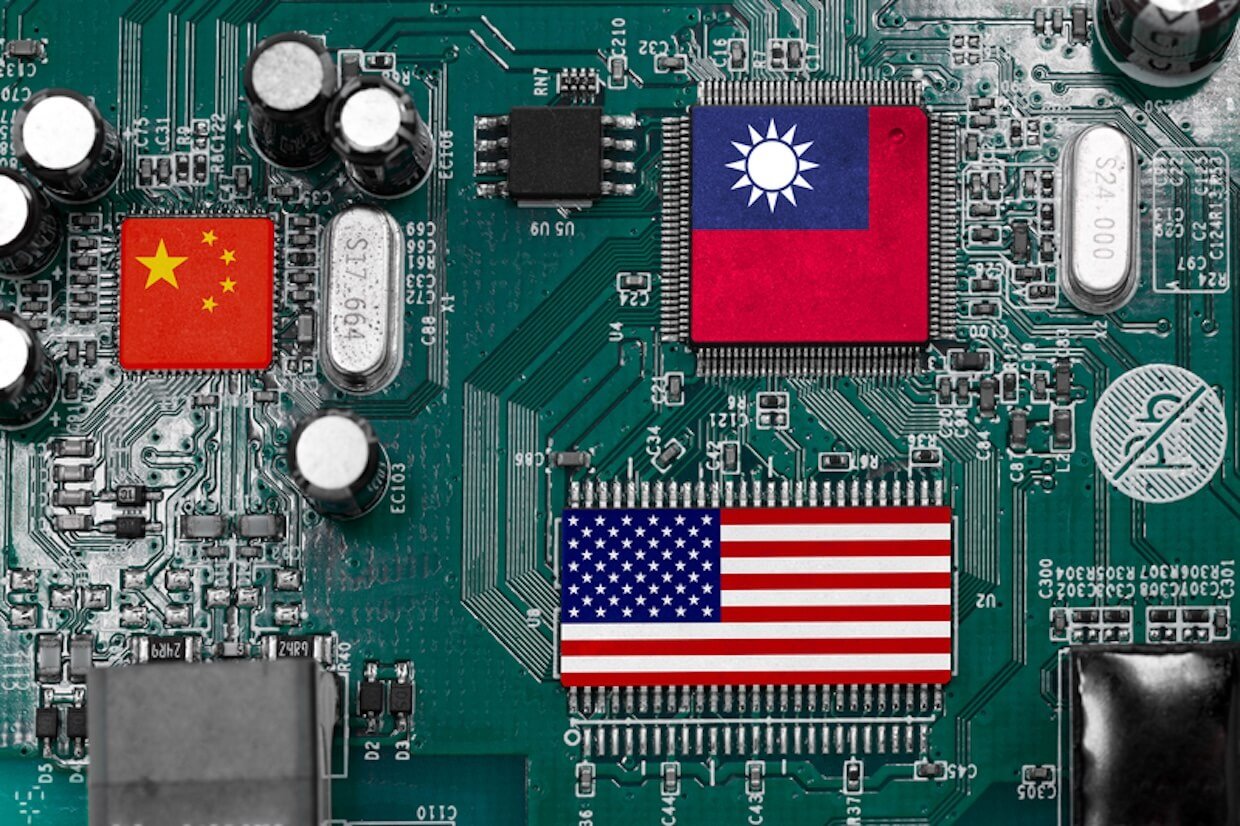
Building upon his analysis of Europe’s gradual embrace of the Indo-Pacific framework, Dr. Pugliese devoted the third section of his lecture to what he described as one of the most consequential developments in contemporary international politics: the growing strategic centrality of Taiwan. While public debate often portrays Taiwan primarily through the lens of cross-Strait tensions or democratic solidarity, Dr. Pugliese argued that the island has acquired a far broader geopolitical significance. Taiwan today occupies the intersection of military strategy, technological competition, global supply chains, and great-power rivalry, making it one of the principal theatres through which the evolving balance of power in the Indo-Pacific is increasingly contested. For the European Union, he suggested, Taiwan represents not merely a distant regional issue but an increasingly important component of its own economic security and technological resilience.
Dr. Pugliese encouraged participants to move beyond simplified narratives that portray cross-Strait relations as an inevitable confrontation between democracy and authoritarianism. Instead, he situated recent developments within a longer historical trajectory. The election of Taiwan’s Democratic Progressive Party (DPP) government in 2016 marked an important turning point because the new administration rejected the political understandings that had underpinned earlier efforts to stabilize relations with Beijing. From the perspective of the Chinese Communist Party, this shift fundamentally altered the trajectory of cross-Strait relations by diminishing prospects for eventual peaceful reunification under previously accepted political formulas. Beijing consequently intensified diplomatic, economic, and military pressure designed to isolate Taiwan internationally while discouraging further movement toward a distinct Taiwanese political identity. Rather than interpreting these developments solely through ideological categories, Dr. Pugliese invited participants to recognize the complex interaction of historical memory, nationalism, domestic politics, and strategic calculation that continues to shape Chinese policy.
The deterioration of cross-Strait relations coincided with a profound transformation in American grand strategy. As the first Trump administration adopted a more confrontational approach toward China, Taiwan assumed an increasingly important position within Washington’s broader strategy of balancing Chinese power. Dr. Pugliese argued that Taiwan gradually evolved into what he repeatedly described as a strategic chess piece within the wider architecture of US–China competition. This characterization did not diminish Taiwan’s own agency or democratic achievements; rather, it reflected the reality that major powers increasingly viewed the island through the prism of broader regional military calculations. Maintaining the status quo across the Taiwan Strait became essential not only because of Taiwan itself but because of its location within the broader maritime geography of East Asia and its implications for regional power projection.
To explain this strategic importance, Dr. Pugliese introduced participants to the concept of the First Island Chain, a geographical arc extending from northern Japan through Okinawa and Taiwan to the Philippines and onward toward Southeast Asia. Far from representing a mere cartographic feature, this chain constitutes one of the most strategically significant maritime corridors in the contemporary international system. Control over—or access through—these waters shape naval mobility, intelligence gathering, anti-submarine warfare, and the broader military balance in the Western Pacific. Dr. Pugliese illustrated how the deployment of advanced surveillance systems, missile capabilities, radar installations, and underwater sensors throughout this maritime corridor has increasingly transformed the region into a densely monitored strategic environment. In this context, Taiwan occupies a uniquely sensitive position because any alteration to the status quo would fundamentally affect the operational environment of both China and the United States, as well as their regional allies.
This strategic logic, he explained, has profoundly reshaped alliance structures throughout East Asia. The United States has pursued what contemporary defense planners describe as integrated deterrence, strengthening operational cooperation with Japan, the Philippines, Australia, and other regional partners while enhancing interoperability, logistical coordination, and joint contingency planning. Japan, in particular, has assumed a much more prominent role within this evolving security architecture, expanding defense cooperation with Washington and adapting its own military posture to the possibility of a Taiwan contingency. The Philippines has similarly increased cooperation by providing greater access to military facilities, while Australia has deepened its participation in regional security initiatives. According to Dr. Pugliese, these developments illustrate that Taiwan has become embedded within a much broader regional deterrence strategy extending well beyond the island itself.
Yet Dr. Pugliese was equally careful to avoid reducing Taiwan’s significance to military considerations alone. One of the lecture’s central themes was the growing fusion of security and economics in contemporary international relations. Taiwan’s extraordinary technological capabilities—particularly its globally dominant semiconductor industry—have elevated the island from a regional security concern to a cornerstone of the global digital economy. Advanced semiconductor manufacturing has become indispensable for artificial intelligence, telecommunications, defense systems, electric vehicles, and countless other technologies underpinning modern industrial production. Consequently, disruptions to Taiwan’s manufacturing ecosystem would carry profound consequences far beyond East Asia, affecting supply chains, industrial production, and technological innovation across Europe and the wider international economy.
For Europe, these developments have acquired increasing policy relevance through the emerging concept of economic security. Dr. Pugliese explained that the European Union’s efforts to diversify supply chains and reduce strategic dependencies have naturally directed attention toward Taiwan’s semiconductor industry. European governments have actively sought to attract investment from leading Taiwanese firms, recognizing that securing access to advanced chip production has become essential for the continent’s digital transformation, industrial competitiveness, and technological sovereignty. Europe’s growing diplomatic engagement with Taiwan should therefore be understood not merely as an expression of support for democratic values but also as a pragmatic effort to strengthen resilience within strategically vital industrial sectors.
This convergence of economic and security considerations extended beyond semiconductors to encompass defense industrial cooperation more broadly. Dr. Pugliese observed that both Europe and East Asia have experienced a dramatic expansion in defense expenditure following Russia’s invasion of Ukraine and the intensification of geopolitical competition. Rising military budgets have created new opportunities for collaboration in defense technologies, weapons systems, logistics, maintenance, and industrial production. European defense manufacturers increasingly view Indo-Pacific markets as important destinations for exports, co-development projects, and long-term industrial partnerships. At the same time, such cooperation contributes to reducing production costs and strengthening Europe’s own defense industrial base. Security cooperation, therefore, increasingly reflects not only strategic necessity but also significant commercial incentives.
Throughout this discussion, Dr. Pugliese repeatedly cautioned against simplistic explanations of Europe’s growing engagement with Taiwan and the wider Indo-Pacific. While democratic values undoubtedly play an important role in shaping European discourse, he argued that material interests remain equally significant. Taiwan matters because it is democratic, but it also matters because it occupies a pivotal position within global technology supply chains, financial markets, and maritime trade routes. Likewise, Europe’s Indo-Pacific strategy reflects concern over regional stability, but it also reflects the continent’s own industrial ambitions, technological needs, and economic future. These multiple motivations coexist rather than compete, producing a more complex picture than narratives centered exclusively upon ideology or security.
An equally important contribution of the lecture lay in Dr. Pugliese’s application of the concept of the security dilemma to contemporary US–China relations. He suggested that many of the military deployments, alliance expansions, and deterrence measures currently unfolding across East Asia are driven by reciprocal perceptions of insecurity. Measures intended by one side to preserve stability may be interpreted by the other as preparations for confrontation, thereby generating self-reinforcing cycles of strategic competition. Taiwan, in this sense, is both an object of genuine political concern and a symbol of broader geopolitical rivalry. Understanding these action–reaction dynamics, Pugliese argued, is essential for avoiding overly deterministic interpretations of current tensions while appreciating the structural pressures confronting policymakers on all sides.
By the conclusion of this section, participants were presented with a nuanced portrait of Taiwan as far more than a regional flashpoint. Instead, the island emerged as a focal point where questions of technological leadership, economic resilience, alliance politics, military deterrence, and strategic communication converge. For Europe, Taiwan increasingly embodies the wider challenges of navigating an international environment in which economics and security have become inseparable. The European Union’s growing interest in the Indo-Pacific, therefore, cannot be understood solely as an extension of transatlantic solidarity or support for democratic partners. Rather, it reflects the recognition that Europe’s own prosperity, technological competitiveness, and strategic autonomy are becoming progressively intertwined with developments unfolding thousands of kilometers beyond its traditional neighborhood.
Transactional Alliances, Strategic Autonomy, and Europe’s Indo-Pacific Future
In the concluding section of his lecture, Dr. Pugliese turned to the question that ultimately linked every preceding discussion: how should the European Union position itself in an Indo-Pacific increasingly shaped not only by intensifying US–China competition but also by profound changes within the United States itself? While much of the strategic debate over the past decade has focused on China’s growing influence, Dr. Pugliese argued that Europe’s most immediate challenge now lies in responding to the transformation of American grand strategy under Donald Trump’s second administration. The issue confronting European policymakers, he suggested, is no longer simply how to manage China’s rise but how to navigate an international environment in which the reliability, priorities, and strategic commitments of the United States have themselves become less predictable.
Dr. Pugliese observed that the second Trump administration has introduced a noticeably more transactional approach to international alliances than its predecessors. While the broader American national security establishment—including the Department of Defense, the State Department, and the defense-industrial sector—continues to regard strategic competition with China as the defining challenge of twenty-first-century international politics, the White House has increasingly emphasized burden-sharing, domestic priorities, and the reduction of costly foreign commitments. Rather than fundamentally abandoning America’s alliances, Washington has sought to redefine them according to a logic that requires allies to assume substantially greater responsibility for their own security. In this sense, Dr. Pugliese suggested, contemporary American strategy reflects not isolationism in the traditional sense, but a recalibration of alliance management designed to reduce American costs while preserving strategic influence.
This changing approach has had profound implications for both Europe and East Asia. Throughout the lecture, Dr. Pugliese repeatedly emphasized that Washington now expects its allies to devote considerably larger shares of national resources to defense. European governments have been encouraged to expand military expenditure well beyond previous commitments, while similar expectations have been directed toward Japan, Taiwan, Australia, and other Indo-Pacific partners. Such demands are presented not merely as financial obligations but as evidence of political resolve and strategic credibility. In practical terms, this means that allies are increasingly expected to shoulder a greater proportion of deterrence, procurement, logistics, and operational planning, thereby allowing the United States to preserve flexibility while maintaining its broader strategic posture toward China.
Dr. Pugliese also highlighted the important economic dimension underlying these developments. Rising defense expenditure is not simply a matter of military preparedness; it has become an increasingly significant component of industrial policy on both sides of the Atlantic. The expansion of defense production stimulates investment, creates manufacturing demand, and contributes to broader efforts at industrial revitalization. Referring to developments in Germany and elsewhere in Europe, Dr. Pugliese observed that defense procurement has increasingly been linked to debates surrounding reindustrialization, technological innovation, and economic competitiveness. Former civilian manufacturing facilities are gradually being adapted to defense production, while military industries have assumed renewed importance within national economic strategies. The security agenda, therefore, cannot be separated from wider questions concerning employment, industrial policy, and technological modernization.
The lecture nevertheless cautioned against interpreting contemporary alliance politics exclusively through the lens of burden-sharing. Dr. Pugliese argued that Washington’s approach toward China has itself become increasingly complex. Although the strategic framework established during the first Trump administration continues to shape American policy, recent developments suggest a greater willingness on the part of the White House to pursue tactical accommodation with Beijing where domestic political or economic interests require it. He pointed to the temporary stabilization of US–China relations following the escalation of tariff disputes and China’s restrictions on exports of rare earth minerals as evidence that geopolitical rivalry increasingly coexists with selective negotiation and pragmatic compromise. Great-power competition, therefore, does not unfold as a linear process of confrontation but rather through continuous cycles of competition, bargaining, and limited cooperation.
Rare earths emerged as a particularly revealing illustration of the changing character of economic statecraft. China’s restrictions on exports of strategically important minerals exposed the extent to which advanced industrial economies remain dependent upon Chinese production in sectors essential to digital technologies, renewable energy, and defense manufacturing. Dr. Pugliese noted that these measures affected not only civilian industries but also the American defense-industrial base itself, demonstrating that economic interdependence continues to constrain even the world’s most powerful states. The resulting negotiations between Washington and Beijing therefore reflected mutual vulnerabilities rather than unilateral leverage. For Europe, this episode underscored the urgency of diversifying critical supply chains while avoiding simplistic assumptions that complete economic disengagement from China remains either feasible or desirable.
Turning once more to Taiwan, Dr. Pugliese argued that recent American policy illustrates the increasingly transactional character of alliance politics. While Washington has continued to announce substantial arms packages and reaffirm its interest in maintaining stability across the Taiwan Strait, implementation has often proven uneven. Delays in weapons deliveries, greater pressure on Taipei regarding trade and tariff issues, and adjustments to diplomatic engagement all suggest a more flexible approach shaped by immediate political considerations, including domestic electoral calculations. Nevertheless, Dr. Pugliese cautioned against interpreting these developments as evidence of strategic disengagement. Beneath the political rhetoric of the White House, the broader American national security apparatus continues to deepen military cooperation with Japan, Australia, the Philippines, and other regional partners. Defense planning, alliance coordination, and operational integration initiated during earlier administrations have largely continued, illustrating the considerable institutional continuity that often characterizes foreign policy despite changes in political leadership.
One of the lecture’s most insightful observations concerned the coexistence of continuity and change within American strategy. Although presidential rhetoric may fluctuate considerably, longstanding institutional commitments frequently persist beneath the surface. Military exercises continue, defense partnerships expand, and strategic planning remains oriented toward balancing China’s growing capabilities. This distinction between political leadership and institutional strategy, Dr. Pugliese argued, is essential for understanding current international developments. It also cautions against interpreting individual diplomatic episodes in isolation from the deeper structural forces that continue to shape US–China competition.
Throughout this concluding discussion, Dr. Pugliese consistently returned to the position of the European Union. Europe, he argued, increasingly finds itself compelled to pursue a delicate balancing act. On one hand, the continent shares important strategic concerns with the United States regarding China’s growing military capabilities, technological ambitions, and economic influence. On the other hand, Europe possesses significant commercial interests in maintaining productive relations with Asian economies, including China itself. Simultaneously, the unpredictability associated with American foreign policy reinforces longstanding European aspirations for greater strategic autonomy. Rather than blindly aligning with either Washington or Beijing, the European Union must therefore cultivate the capacity to pursue its own interests while preserving constructive partnerships across the Indo-Pacific.
Importantly, Dr. Pugliese rejected simplistic narratives portraying Europe as either an unquestioning follower of American strategy or an independent geopolitical pole entirely detached from transatlantic cooperation. Instead, he depicted European policymaking as a process of continuous negotiation among competing priorities: maintaining alliance solidarity, preserving economic competitiveness, protecting critical technologies, strengthening defense capabilities, and avoiding unnecessary escalation with China. The Indo-Pacific strategy adopted by the European Union reflects precisely this balancing effort. Its deliberately inclusive language seeks to strengthen engagement with democratic partners while avoiding explicit endorsement of comprehensive containment strategies. Europe, in other words, is gradually seeking to develop a distinct Indo-Pacific identity that remains compatible with transatlantic cooperation without being wholly defined by it.
As the lecture drew to a close, Dr. Pugliese emphasized that understanding Europe’s evolving role in Asia requires abandoning narrow regional perspectives. The Indo-Pacific and the Euro-Atlantic can no longer be treated as separate strategic theatres. Russia’s invasion of Ukraine, China’s growing global influence, technological competition, supply-chain vulnerabilities, and alliance politics have created an increasingly interconnected geopolitical landscape in which developments in one region inevitably reverberate across the other. Europe’s future prosperity, security, and strategic autonomy will therefore depend upon its ability to engage effectively with both theatres simultaneously.
Taken as a whole, Dr. Pugliese’s lecture provided participants with a remarkably nuanced framework for understanding the European Union’s evolving engagement with Asia. Rather than presenting the Indo-Pacific as merely the latest geopolitical slogan, he demonstrated how strategic narratives, alliance politics, economic interdependence, technological competition, and shifting global power structures have become deeply intertwined. By tracing the intellectual origins of the Indo-Pacific concept, examining the evolution of US–China rivalry, analyzing Taiwan’s strategic significance, and exploring the implications of America’s increasingly transactional alliance policy, the lecture illuminated the profound transformation currently underway in international politics. Most importantly, it underscored that Europe’s future “between oceans” will not be determined solely by the choices of Washington or Beijing but by its own ability to formulate a coherent, strategically autonomous, and globally engaged vision capable of navigating an increasingly contested international order.