
Japan has long been regarded as an outlier in comparative studies of populism, distinguished by political stability, Liberal Democratic Party dominance, and limited immigration. In this thought-provoking lecture, Professor Axel Berkofsky challenged that conventional wisdom, arguing that Japan has entered its own delayed populist moment. Examining the rise of the Sanseito party, demographic decline, labor shortages, identity politics, and the evolution of conservative nationalism, he demonstrated how structural economic pressures and political discourse are reshaping Japanese democracy. The lecture also assessed the resilience of EU–Japan relations, highlighting the enduring importance of the Economic Partnership Agreement despite growing geopolitical uncertainty. Combining comparative politics with international political economy, Professor Berkofsky offered a nuanced framework for understanding populism beyond its traditional European context.
Reported by ECPS Staff
While much scholarly and policy attention has focused on the rise of populism across Europe and North America, Japan has long appeared to constitute a notable exception to this global political trend. For decades, the country’s remarkable political stability, the electoral dominance of the Liberal Democratic Party (LDP), and its comparatively homogeneous social structure appeared to insulate it from the anti-establishment movements that transformed politics elsewhere. Yet recent developments suggest that this exceptionalism may no longer hold. The emergence of overtly populist and anti-immigration political actors, coupled with growing public anxiety over demographic decline, economic stagnation, inflation, and national identity, indicates that Japan is increasingly experiencing many of the political tensions reshaping advanced democracies more broadly.
Against this backdrop, the eighth lecture of the ECPS Academy Summer School 2026, held under the overarching theme “Europe Between Oceans: The EU in the Age of Geoeconomics, Populism, and Strategic Competition,” explored the evolving relationship between domestic political transformation and international economic cooperation through the lens of EU–Japan relations and populism. Delivered by Professor Axel Berkofsky, Full Professor at the University of Pavia and Co-Head of the Asia Centre at the Istituto per gli Studi di Politica Internazionale (ISPI), the lecture combined comparative politics, international political economy, and East Asian studies to examine whether Japan is witnessing the emergence of its own variant of populism and how these developments may shape one of the European Union’s most important strategic partnerships in Asia.
Japan’s Late Encounter with Populism

The session was introduced by Dr. Sébastien Goulard, Manager of Cooperans and an expert on EU–Asia connectivity projects, who situated the lecture within the broader comparative study of populism. He observed that while populism has become a defining feature of European politics over the past three decades—manifesting itself through movements ranging from Brexit in the United Kingdom to the electoral successes of radical-right and radical-left parties across the continent—its development in Asia has followed a more uneven trajectory. Dr. Goulard briefly pointed to examples such as Narendra Modi’s Bharatiya Janata Party (BJP) in India and Rodrigo Duterte’s presidency in the Philippines before posing the central question that would animate the lecture: Does Japan, long regarded as politically exceptional, now face its own populist moment? Equally important, he asked whether any rise of Japanese populism could affect the EU–Japan partnership, particularly given that many populist movements elsewhere have been deeply skeptical of international trade agreements and economic integration. His framing effectively connected domestic political developments in Japan to broader debates surrounding globalization, regional cooperation, and the future of liberal international order.
Rethinking EU–Japan Relations in an Age of Political Discontent
Professor Berkofsky started his lecture by underscoring that Japan has long represented something of a puzzle within comparative studies of populism. While right-wing populist movements expanded across much of Europe during the 1990s and 2000s, and Donald Trump’s election transformed American politics, Japan appeared remarkably resistant to similar developments. Unlike many Western democracies, where established party systems fragmented under the pressure of anti-establishment mobilization, Japanese politics continued to be dominated by the Liberal Democratic Party, whose uninterrupted rule—interrupted only briefly on two occasions since 1955—provided an extraordinary degree of institutional continuity. This prolonged political stability, Professor Berkofsky suggested, delayed rather than prevented the emergence of populist politics.
The lecturer explained that understanding Japan’s political exceptionalism requires appreciating the unique character of the LDP itself. Rather than functioning as a narrowly ideological organization, the LDP historically operated as a broad catch-all party composed of multiple internal factions representing diverse constituencies. Through an intricate system of intra-party bargaining, factional competition, and clientelist networks, the party successfully incorporated competing interests while maintaining overall political dominance. Prime ministers changed frequently, often every twelve to eighteen months, yet the governing party remained the same. Consequently, political stability did not depend upon individual leaders but upon the institutional resilience of the LDP as Japan’s dominant governing organization. This remarkable continuity, Professor Berkofsky argued, insulated Japan from many of the political ruptures experienced elsewhere, reducing opportunities for anti-system movements to gain electoral traction.
Nevertheless, Professor Berkofsky contended that important changes have gradually emerged beneath this surface stability. The watershed moment, in his view, came with the 2025 lower house elections, during which the overtly populist and xenophobic Sanseito (“Japan First”) party secured representation in Japan’s parliament by winning approximately 7.4 million votes and fifteen parliamentary seats. Although modest by European standards, Professor Berkofsky regarded this breakthrough as historically significant because it marked the first time that an explicitly populist, anti-immigration movement had established a meaningful parliamentary presence in post-war Japan. The country’s long-standing immunity to global populist currents had, he argued, effectively come to an end. Japan had become, in his words, a “latecomer” to the global populist wave rather than a permanent exception to it.
Importantly, Professor Berkofsky cautioned participants against interpreting this development as an abrupt rupture with Japan’s political past. Instead, he argued that contemporary populism has developed gradually within an existing political environment where elements of nationalism, cultural conservatism, and skepticism toward immigration had long been present, albeit often in implicit rather than explicit form. Japanese society itself, he stressed, should not be characterized as inherently xenophobic or racist. Having lived and worked extensively in Japan, Professor Berkofsky emphasized both his personal admiration for the country and the openness of Japanese society in everyday life. Yet beneath this generally welcoming social environment there had always existed what he described as a latent distinction between “the Japanese” and “the outsiders.” This distinction did not automatically translate into exclusionary politics, but it provided fertile political ground upon which more overt nationalist narratives could subsequently be constructed.
According to Professor Berkofsky, this gradual normalization of exclusionary political discourse accelerated significantly during the premiership of Shinzo Abe. While Abe remained firmly within the mainstream LDP tradition rather than representing an anti-system outsider, his administration increasingly legitimized political rhetoric that portrayed foreigners with greater suspicion and framed questions of national identity more prominently within public debate. Professor Berkofsky carefully distinguished between Abe’s policies and those of contemporary European radical-right leaders, noting that Japan under Abe did not become a populist regime. Rather, Abe expanded the boundaries of politically acceptable discourse by making previously marginal nationalist themes more mainstream. Discussions surrounding immigration, cultural identity, and national sovereignty became increasingly visible within Japanese political life, creating opportunities for more explicitly populist actors to advance even stronger versions of these arguments in subsequent years.
This trajectory, Professor Berkofsky argued, reached a new stage under Prime Minister Sanae Takaichi, whom he described as representing a more assertive and uncompromising version of the conservative nationalism associated with Abe. Although Takaichi continues to govern through the institutional framework of the LDP rather than through a newly created populist movement, her political rhetoric increasingly revolves around themes familiar to observers of European populism: identity politics, concerns over immigration, anxieties regarding national cohesion, and skepticism toward globalization. Professor Berkofsky drew explicit comparisons with leaders such as Giorgia Meloni in Italy, arguing that although important historical and institutional differences remain, contemporary conservative discourse in Japan increasingly resembles broader international trends evident across numerous advanced democracies. Populism, he suggested, has become a genuinely global phenomenon whose ideological vocabulary increasingly transcends regional boundaries.
One of the lecture’s central analytical contributions lay in Professor Berkofsky’s insistence that Japan’s emerging populism cannot be understood simply by borrowing European categories. Unlike many European countries, Japan remains one of the world’s least immigrant-intensive societies. Foreign residents account for only around three percent of the total population, an extraordinarily low proportion compared to most advanced industrial democracies. Consequently, anti-immigration narratives claiming that foreigners threaten employment opportunities, overwhelm welfare systems, or fundamentally transform Japanese society rest upon empirical foundations that Professor Berkofsky repeatedly described as highly questionable. Indeed, one of the striking paradoxes emphasized throughout the lecture was that Japan’s populist discourse has emerged despite the absence of the large-scale immigration flows typically associated with the rise of anti-immigration politics elsewhere. This paradox would become one of the central themes explored during the remainder of the session, as Professor Berkofsky examined how demographic decline, labor shortages, and economic stagnation have created political opportunities for populist entrepreneurs despite Japan’s continued need for greater levels of immigration.
National Identity, Immigration, and the Political Mainstream: The Gradual Normalization of Populist Discourse
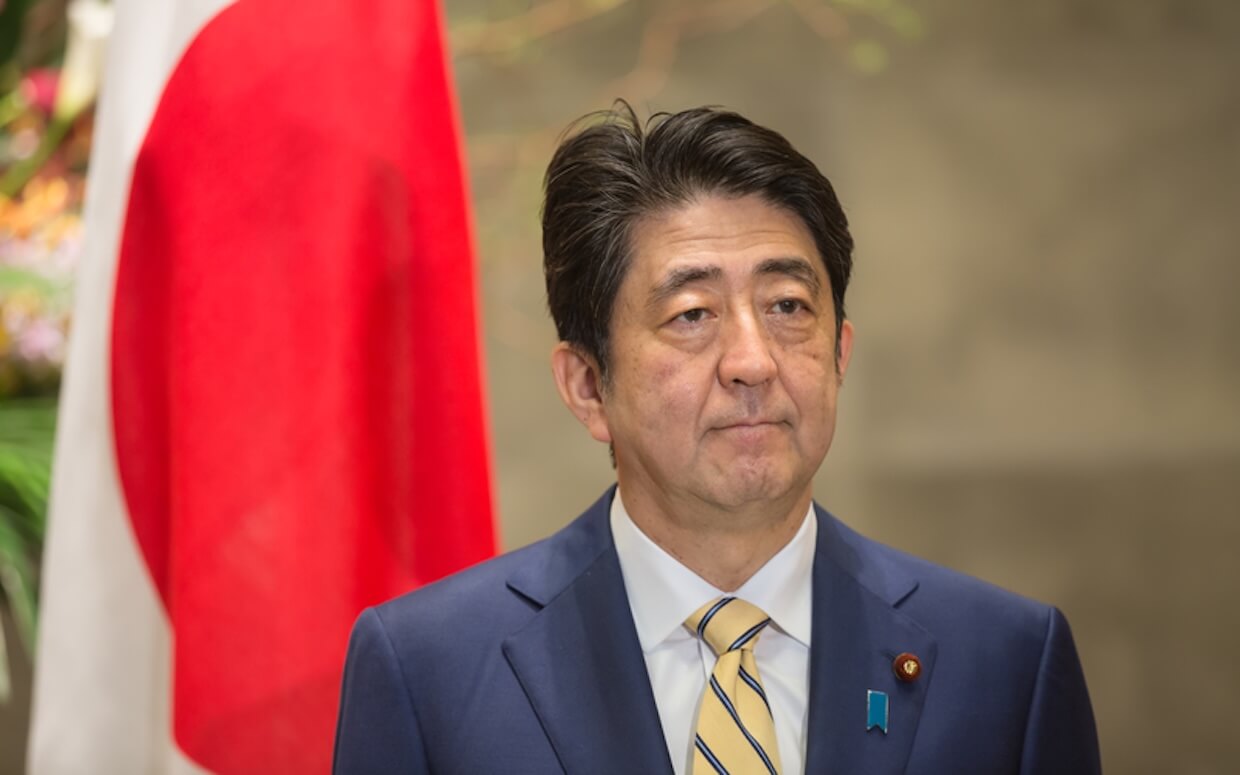
Having argued that Japan has entered what he described as its own delayed populist moment, Professor Berkofsky devoted the second part of his lecture to explaining why this transformation has occurred despite the country’s long-standing reputation for political moderation and institutional stability. Rather than attributing Japan’s changing political landscape to a sudden surge of anti-establishment sentiment, he argued that contemporary populism has emerged through a gradual process of ideological normalization within the political mainstream itself. This process, he suggested, differs significantly from the trajectories observed in many European democracies, where populist parties frequently arose in opposition to established political elites. In Japan, by contrast, important elements of nationalist and identity-based politics developed from within the governing establishment before eventually creating opportunities for more explicitly populist actors to flourish.
Central to Professor Berkofsky’s analysis was the political legacy of Shinzo Abe, whose nearly eight years in office made him Japan’s longest-serving post-war prime minister. Professor Berkofsky was careful to reject simplistic characterizations of Abe as a populist in the European or American sense. Abe neither campaigned as an anti-system outsider nor sought to dismantle existing political institutions. Instead, he remained firmly embedded within the LDP and governed through established institutional channels. Nevertheless, Professor Berkofsky argued that Abe played a pivotal role in shifting the boundaries of acceptable political discourse. Under his leadership, themes of national identity, patriotism, constitutional revision, security normalization, and historical memory acquired far greater prominence within public debate than they had during previous decades. Although these themes remained largely compatible with mainstream conservative politics, they also contributed to the gradual legitimization of rhetorical strategies that later proved advantageous for more overtly populist movements.
According to Professor Berkofsky, Abe’s greatest political innovation lay not in introducing entirely new ideas but in redefining the political center of gravity. Issues that had previously occupied the margins of political discussion gradually entered mainstream discourse. Questions concerning immigration, cultural cohesion, and the preservation of Japanese identity increasingly became legitimate subjects of electoral competition rather than peripheral concerns associated with fringe nationalist organizations. This evolution mirrored broader developments observable across many advanced democracies, where mainstream conservative parties increasingly incorporated elements of populist rhetoric in response to shifting public attitudes. Professor Berkofsky emphasized that such developments should not be interpreted as evidence that Japan had become fundamentally xenophobic. Rather, they reflected the gradual politicization of issues that had previously remained relatively insulated from electoral contestation.
The lecturer then turned to the administration of Prime Minister Sanae Takaichi, whom he presented as representing a further stage in this ideological evolution. While Takaichi continues to govern through the institutional framework of the LDP, Professor Berkofsky suggested that her political style places greater emphasis on themes of national sovereignty, cultural identity, and immigration control than many of her predecessors. Her rhetoric increasingly resonates with narratives familiar from contemporary European conservative politics, particularly those stressing the need to protect national traditions against the perceived pressures of globalization and demographic change. Although important contextual differences remain, Professor Berkofsky drew comparisons with political figures such as Meloni, arguing that conservative politics across advanced democracies increasingly shares a common vocabulary centered upon nationhood, identity, borders, and sovereignty.
Yet Professor Berkofsky repeatedly cautioned participants against assuming direct equivalence between Japan and Europe. One of the lecture’s most important comparative insights concerned the striking disparity between the intensity of anti-immigration rhetoric and the actual scale of immigration into Japan. Unlike Germany, France, Sweden, or Italy, Japan has experienced relatively limited immigration. Foreign nationals constitute only a small proportion of the overall population, and immigration has historically remained tightly regulated. Consequently, political narratives portraying Japan as overwhelmed by immigration bear little resemblance to empirical reality. Professor Berkofsky described this disconnect as one of the defining paradoxes of contemporary Japanese politics: anti-immigration discourse has intensified despite the absence of mass immigration itself.
Demographic Decline, Economic Anxiety, and the Rise of Sanseito

Having demonstrated how nationalist discourse gradually entered Japan’s political mainstream, Professor Berkofsky turned to the structural conditions that have enabled explicitly populist movements to gain electoral traction. Central to this discussion was the emergence of Sanseito, which he identified as the clearest expression of right-wing populism in contemporary Japanese politics. Although the party remains considerably smaller than the dominant LDP, its parliamentary breakthrough marked a significant turning point, establishing an institutional foothold for political narratives long associated with European and American populism. Rather than dismissing Sanseito as a temporary protest movement, Professor Berkofsky argued that its electoral success reflects deeper socioeconomic and demographic transformations reshaping Japanese politics.
Sanseito has positioned itself as a challenger to Japan’s political establishment by combining nationalism, economic protectionism, skepticism toward globalization, and particularly strong opposition to immigration. Presenting itself as the defender of “ordinary people” against detached political elites and international influences, the party’s slogan, “Japan First,” echoes nationalist rhetoric that has become increasingly familiar across advanced democracies. Yet Professor Berkofsky stressed that Japanese populism should not be viewed simply as an imitation of its European or American counterparts. Rather, it represents the adaptation of broadly similar narratives to Japan’s distinctive political institutions, demographic realities, and historical experience.
Immigration occupies the center of Sanseito’s political message. The party attributes rising crime, economic insecurity, and social fragmentation to increasing numbers of foreign workers. Professor Berkofsky challenged these claims as empirically unsupported. Japan remains one of the least immigrant-intensive societies among advanced economies, and available crime statistics provide no evidence that foreigners constitute a disproportionate burden on public safety. Likewise, labor-market data indicate that migrant workers overwhelmingly fill positions in sectors experiencing chronic labor shortages rather than displacing Japanese employees. Agriculture, construction, manufacturing, hospitality, logistics, and elderly care increasingly depend upon foreign labor simply to maintain existing levels of production and service provision. Far from undermining Japanese society, immigration has become an indispensable component of economic sustainability.
This disconnect between political rhetoric and demographic reality formed one of the lecture’s central arguments. Professor Berkofsky emphasized that Japan’s principal challenge is not excessive immigration but the opposite: an insufficient inflow of foreign workers to offset rapid population ageing, persistently low fertility rates, and a shrinking workforce. Employers across the economy increasingly struggle to recruit labor, while long-term demographic projections point toward further decline. Under these conditions, reducing immigration would almost certainly deepen Japan’s economic difficulties rather than alleviate them.
The paradox, Professor Berkofsky argued, illustrates a broader characteristic of contemporary populism. Its political effectiveness derives less from empirical accuracy than from its ability to simplify complex structural problems into emotionally compelling narratives. Long-term economic stagnation, weak wage growth, inflation, declining purchasing power, and demographic decline are multifaceted challenges rooted in economic, technological, and demographic change. Yet populist actors frequently attribute these developments to more visible political targets such as immigration, globalization, or detached elites. Even in a country where immigration remains comparatively limited, these narratives resonate because they tap into broader anxieties surrounding national identity, cultural continuity, and social cohesion.
Professor Berkofsky nevertheless cautioned against reducing Japan’s political transformation solely to economic grievances. While acknowledging that many citizens have experienced genuine economic insecurity after decades of slow growth and rising living costs, he argued that concerns about immigration also reflect deeper questions of identity and national belonging. Public unease cannot simply be dismissed; however, it should not be mistaken for an accurate description of Japan’s demographic realities. Policymakers therefore face the challenge of balancing legitimate concerns over social integration with the country’s undeniable economic need for greater international labor mobility.
Japan’s experience, Professor Berkofsky concluded, offers an important comparative perspective on the global evolution of populism. Unlike many European countries, where anti-immigration movements emerged following sustained immigration, Japan has witnessed the rise of similar political narratives despite maintaining exceptionally low levels of foreign residents. This demonstrates that identity politics need not depend upon large-scale migration alone but can also emerge from broader demographic anxieties, economic uncertainty, and shifting political discourse. By distinguishing carefully between rhetoric and empirical evidence, Professor Berkofsky showed that Japan’s encounter with populism reflects a complex interaction of demographic decline, economic pressures, identity politics, and institutional change rather than a straightforward rejection of globalization itself
The lecture also highlighted the increasingly important role of digital communication in facilitating populist mobilization. Like many contemporary populist movements elsewhere, Sanseito has proven particularly effective at utilizing social media platforms to disseminate simplified political messages, challenge mainstream media narratives, and cultivate direct communication with supporters. Professor Berkofsky noted that such strategies have enabled relatively small political organizations to achieve levels of visibility that would previously have required far greater organizational resources. The digitalization of political communication has therefore lowered barriers to electoral competition while simultaneously amplifying emotionally charged narratives concerning immigration, national identity, and political distrust. Although Japan’s media environment differs significantly from those found in many Western democracies, similar technological dynamics increasingly shape political discourse across advanced industrial societies.
Throughout this section, Professor Berkofsky consistently urged participants to distinguish between the political success of populist narratives and their analytical validity. Anti-immigration rhetoric may resonate with segments of the electorate experiencing economic anxiety, yet demographic evidence overwhelmingly suggests that Japan’s long-term prosperity depends upon attracting—not excluding—greater numbers of foreign workers. Likewise, blaming globalization or immigration for structural economic challenges risks obscuring deeper issues relating to productivity, demographic ageing, labor-market reform, and fiscal sustainability. Populism, in this sense, offers politically powerful narratives but rarely provides comprehensive solutions to the complex problems confronting advanced industrial democracies.
By examining the rise of Sanseito within this broader structural context, Professor Berkofsky demonstrated that Japan’s political transformation reflects far more than the emergence of a new political party. It illustrates how demographic decline, economic insecurity, identity politics, and digital communication increasingly interact to reshape democratic competition across advanced societies. Japan may have entered the global populist era later than Europe or the United States, but the underlying dynamics driving this transition reveal striking similarities. The country’s experience therefore offers valuable comparative insights into how populism adapts to distinct national contexts while drawing upon an increasingly shared repertoire of political narratives, grievances, and electoral strategies.
Populism, Free Trade, and the Future of EU–Japan Relations
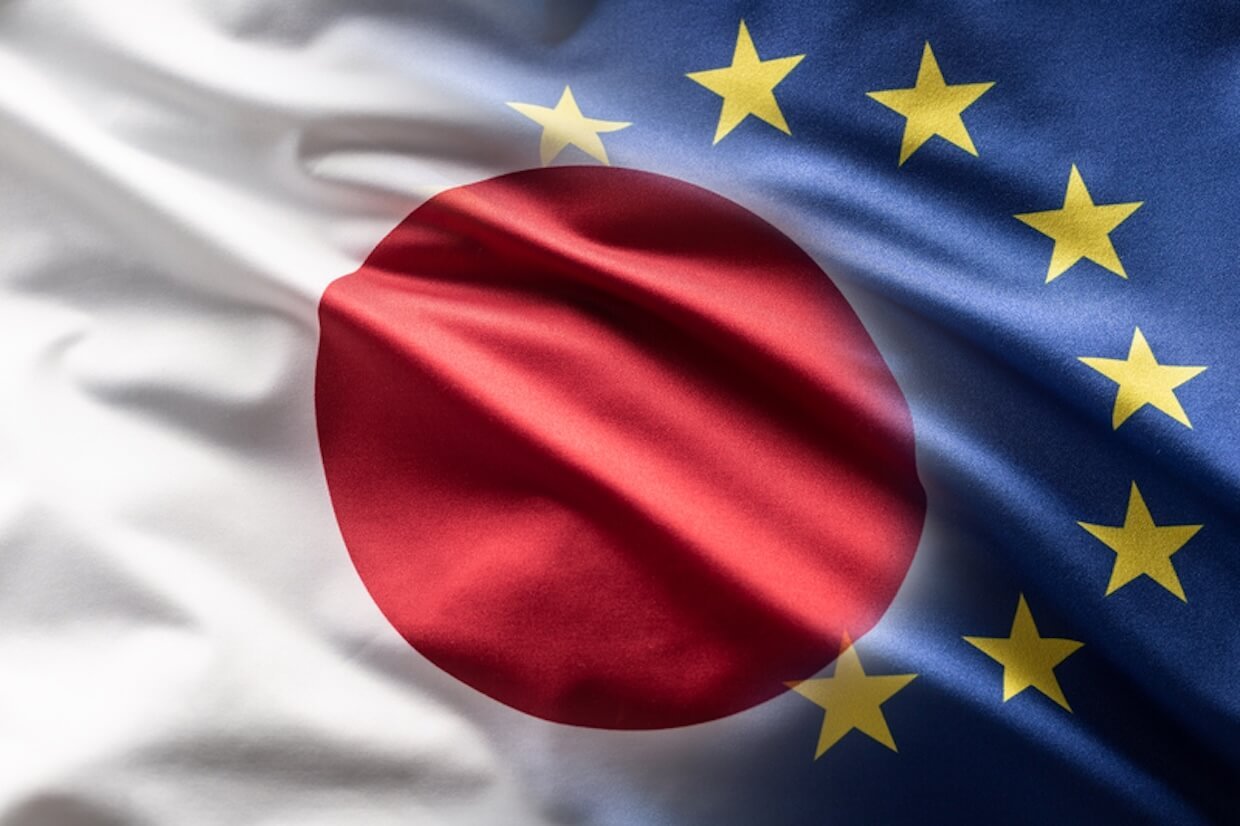
In the concluding section of his lecture, Professor Berkofsky shifted from analyzing Japan’s domestic political transformation to assessing its implications for one of the European Union’s most important strategic partnerships in Asia. Returning to the question posed at the beginning of the session, he asked whether the gradual emergence of populist politics in Japan might ultimately undermine the deepening economic and political cooperation between Tokyo and Brussels. His answer was deliberately cautious. While acknowledging that populist narratives are becoming increasingly visible within Japanese politics, Professor Berkofsky argued that there remains little evidence to suggest that Japan is on the verge of abandoning its long-standing commitment to international economic openness. Unlike many European and North American populist movements, whose electoral success has often been accompanied by hostility toward free trade agreements and multilateral institutions, Japanese populism has thus far developed within a political environment where broad elite consensus continues to support international economic engagement. Consequently, the future of EU–Japan relations appear considerably more resilient than many observers might initially assume.
Professor Berkofsky reminded participants that the EU–Japan Economic Partnership Agreement (EPA), which entered into force in 2019, remains one of the most comprehensive bilateral trade agreements ever concluded by either party. Negotiated against the backdrop of growing protectionist tendencies elsewhere, the agreement represented a powerful political statement in favor of rules-based trade, multilateral cooperation, and open markets. Covering approximately one-third of global GDP and creating one of the world’s largest free trade areas, the EPA extended well beyond tariff reductions to encompass regulatory cooperation, government procurement, intellectual property, environmental standards, and sustainable development. For both Brussels and Tokyo, the agreement symbolized a shared commitment to preserving an international economic order increasingly challenged by geopolitical rivalry and economic nationalism.
At the same time, Professor Berkofsky cautioned against viewing the partnership through overly idealized lenses. Despite its considerable achievements, the EPA has not eliminated all commercial frictions between the two economies. Agricultural market access, sanitary and phytosanitary regulations, public procurement, automotive trade, and steel safeguard measures continue to generate periodic disagreements. European exporters frequently seek greater access to Japanese agricultural markets, while Japanese firms remain attentive to European trade defense measures affecting industrial products. These issues, Professor Berkofsky suggested, should not be interpreted as evidence of weakening relations but rather as normal features of a mature economic partnership between two highly developed economies with occasionally divergent commercial interests. Importantly, such disagreements continue to be managed through institutional dialogue and negotiated compromise rather than escalating into broader political conflict.
This institutional resilience, Professor Berkofsky argued, distinguishes EU–Japan relations from many contemporary trade relationships increasingly characterized by unilateral tariffs, retaliatory sanctions, and economic coercion. Both parties continue to view predictable rules, legal certainty, and multilateral governance as essential foundations of international economic cooperation. Even as governments around the world increasingly embrace industrial policy, supply-chain diversification, and strategic competition, Brussels and Tokyo remain committed to maintaining a broadly liberal trading relationship. In this respect, the EU–Japan partnership has acquired significance extending beyond bilateral commerce itself, serving as an important example of how advanced democracies can continue supporting international economic openness while adapting to a more uncertain geopolitical environment.
The lecture nevertheless acknowledged that domestic political developments could gradually complicate this picture. Should populist parties expand their electoral influence, trade agreements may become increasingly vulnerable to broader political debates concerning sovereignty, globalization, and national identity. Professor Berkofsky noted that this pattern has already become familiar across Europe, where opposition to international trade agreements often extends beyond economic concerns to encompass wider anxieties regarding immigration, democratic accountability, environmental regulation, and cultural identity. While Japan has not yet experienced comparable levels of political contestation surrounding trade policy, the emergence of more vocal nationalist actors suggests that similar debates may become increasingly prominent in future electoral campaigns. The challenge for policymakers will therefore be to preserve public support for economic openness while addressing legitimate concerns regarding inequality, regional disparities, and economic insecurity.
One of Professor Berkofsky’s most important observations concerned the relationship between economic performance and political stability. He argued that Japan’s experience demonstrates how prolonged economic stagnation, declining real incomes, and demographic pressures can gradually erode confidence in established political institutions even where those institutions remain highly stable by international standards. Populist movements frequently gain support not because they offer comprehensive policy solutions but because they provide emotionally compelling narratives that identify clear causes for complex structural problems. Consequently, defending liberal economic cooperation requires more than simply emphasizing the aggregate benefits of free trade. Governments must also demonstrate that globalization generates broadly shared prosperity capable of maintaining democratic legitimacy. Failure to address the distributive consequences of economic change risks creating political opportunities for movements seeking to replace nuanced policy discussions with simplified nationalist narratives.
Professor Berkofsky further suggested that the European Union may itself draw valuable lessons from Japan’s experience. Although Europe and Japan differ substantially in terms of immigration levels, demographic structures, political institutions, and historical development, both confront remarkably similar long-term challenges: ageing populations, labor shortages, technological competition, slowing productivity growth, and increasing geopolitical uncertainty. Both have also sought to balance economic openness with greater strategic resilience without abandoning their commitment to rules-based international cooperation. In this sense, EU–Japan relations increasingly extend beyond traditional trade diplomacy to encompass broader cooperation on economic security, digital governance, technological innovation, supply-chain resilience, and the defense of multilateral institutions. These shared interests provide a strong foundation upon which the partnership can continue to develop despite evolving domestic political landscapes.
Throughout his concluding remarks, Professor Berkofsky repeatedly resisted alarmist interpretations of Japan’s political trajectory. While acknowledging that the country’s immunity to populism has weakened, he argued that contemporary Japanese politics remains fundamentally different from the highly polarized environments observed in several Western democracies. The LDP continues to dominate national politics, institutional continuity remains strong, and broad elite consensus in favor of international engagement persists. Populist actors have undoubtedly entered the political arena, but they have not displaced the established structures that continue to shape Japanese policymaking. Consequently, the emergence of parties such as Sanseito should be understood less as evidence of systemic political rupture than as an indication that Japan is gradually experiencing political dynamics already familiar elsewhere.
As the lecture concluded, Professor Berkofsky returned to the broader comparative perspective that had framed his analysis from the outset. Japan, he argued, should no longer be viewed as an exceptional democracy somehow insulated from the social and political transformations affecting other advanced industrial societies. Rather, it represents a particularly instructive case illustrating how populism adapts to distinctive national contexts while responding to common structural pressures. Demographic decline, economic uncertainty, globalization, identity politics, and digital communication increasingly interact across democratic systems in ways that transcend regional boundaries. Yet Japan’s experience also demonstrates that institutional resilience, pragmatic policymaking, and sustained international engagement can moderate these pressures without eliminating them entirely.
Taken as a whole, Professor Berkofsky’s lecture offered participants a sophisticated comparative framework for understanding the evolving relationship between domestic political change and international economic cooperation. By tracing Japan’s gradual encounter with populism while simultaneously examining the resilience of EU–Japan relations, he demonstrated that contemporary debates surrounding globalization, immigration, and national identity cannot be separated from wider questions of demographic transformation, economic governance, and strategic competition. In doing so, the lecture reinforced one of the central themes of the ECPS Academy Summer School: that Europe’s future “between oceans” will increasingly depend upon its ability to cultivate resilient partnerships with like-minded democracies facing many of the same political, economic, and geopolitical challenges.