
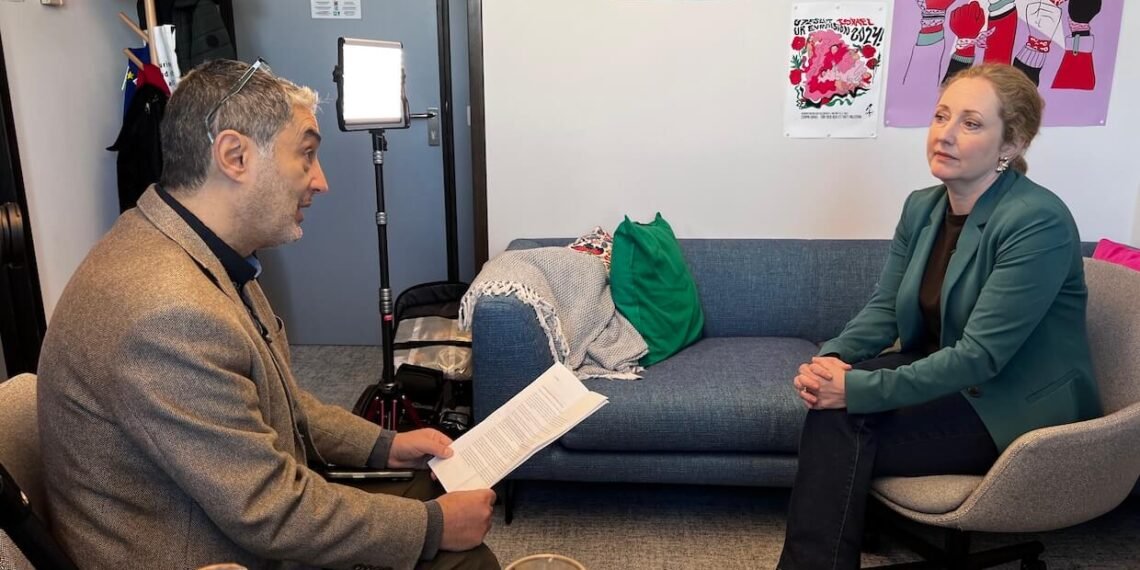
MEP Hanna Gedin argues that the EU’s credibility as a defender of democracy, human rights, and international law is being weakened by political double standards and the growing normalization of radical-right ideas. In this ECPS interview, she warns that “the EU is losing its voice when it comes to upholding international law” and points to inconsistencies in migration policy and relations with Israel and Turkey. Gedin also urges the European left not to adapt to the far right, but to build its own agenda around inequality, housing, energy, and the cost of living. “You need to have your own agenda,” she says, and to “make life a good life without adapting to the far right and their narrative.”
Interview by Selcuk Gultasli
In this wide-ranging interview with the European Center for Populism Studies (ECPS), Hanna Gedin, Member of the European Parliament for Sweden’s Vänsterpartiet (Left Party, V) and Vice-Chair of The Left Group, reflects on Sweden’s post-election political deadlock, the normalization of radical-right ideas in European policymaking, the erosion of international law, and the strategic dilemmas facing the democratic left. Gedin, who works on the internal market, industry, energy, women’s rights, and gender equality, situates these questions within a broader critique of inequality, restrictive migration policy, and the weakening of Europe’s normative credibility.
The interview begins with the struggle to translate Sweden’s new parliamentary majority into a viable center-left government. Gedin rejects the idea that Vänsterpartiet should once again support a government from outside, insisting that “if our votes are needed, if our mandates are needed, of course we should be in the government.” She argues that the Center Party (C) “needs to choose,” because “there is no middle way.” At the same time, she acknowledges the deep economic divide between the two parties but maintains that cooperation remains possible on issues ranging from feminism and climate to international law and support for communities outside major cities.
A central theme of Gedin’s remarks is the extent to which the radical right has reshaped mainstream political agendas. She argues that Swedish parties have been “adapting and moving closer to the Sweden Democrats,” while politics has increasingly shifted away from “bread and butter” concerns toward culture-war issues. For Gedin, the answer is not imitation but political differentiation: “For the left, it’s really important not to adapt.” Instead, she insists, “You need to have your own agenda,” centered on the cost of living, inequality, housing, and material security.
This concern extends to migration policy at both Swedish and European levels. Gedin describes a “shift and an adaptation to the radical right” in EU migration politics and recalls far right and right-wing MEPs cheering “Send them back, send them back” during a vote on return hubs. Yet she also points to Sweden’s debate over teenage deportations as evidence that public attitudes can shift when abstract migration categories acquire “names and faces.”
The interview’s sharpest normative critique concerns international law. Gedin argues that “the EU is losing its voice when it comes to upholding international law” and warns of “a complete erosion of international law” driven by double standards. She contrasts the EU’s firm response to Russia’s war against Ukraine with what she sees as a much weaker approach toward Israel, arguing that such inconsistency undermines European credibility globally.
Ultimately, Gedin presents a distinctly materialist response to the rise of the far right. She argues that the left must make politics concrete: reduce inequality, address rents and energy costs, tax the very rich, and “make life a good life without adapting to the far right and their narrative.”
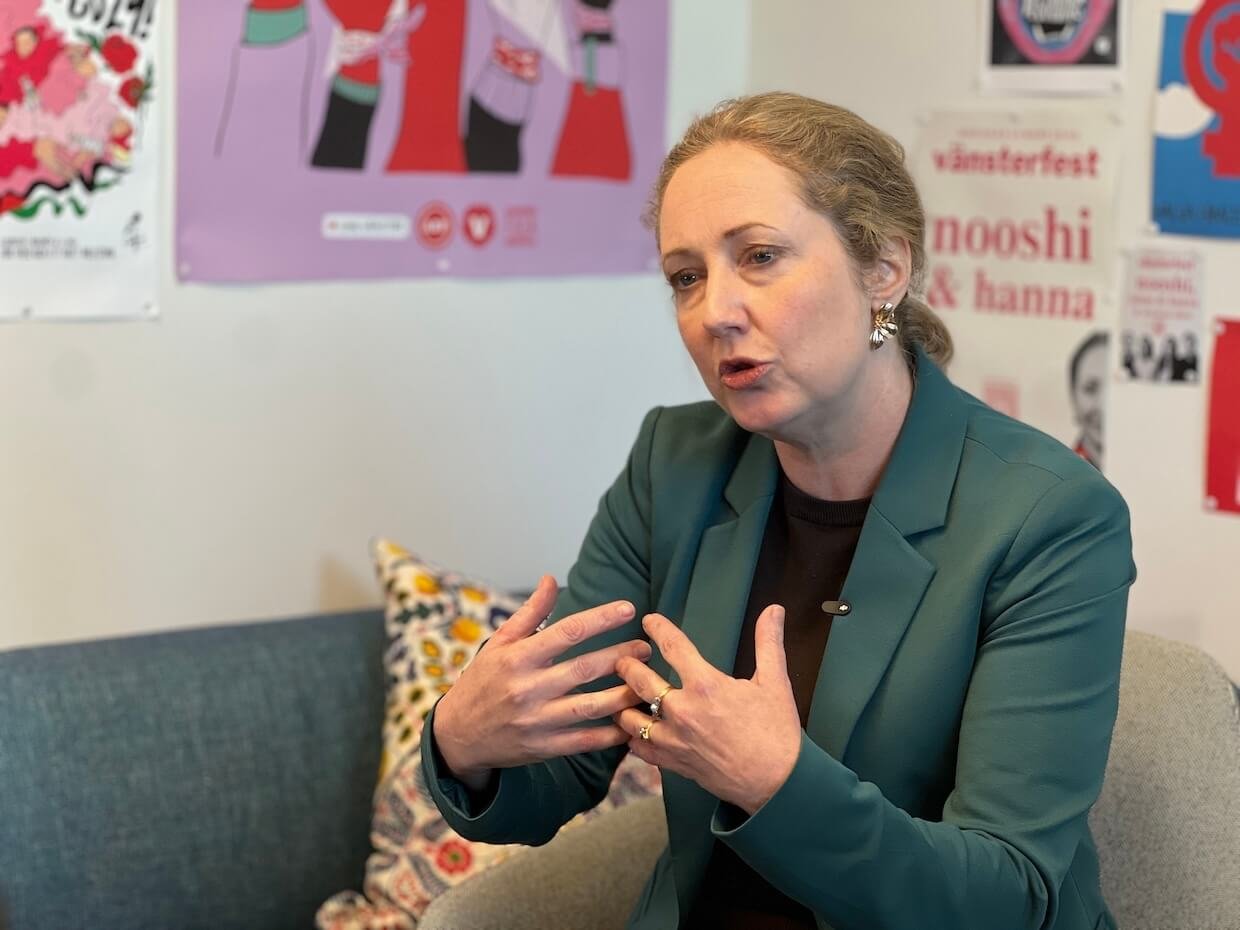
Here is our interview with MEP Hanna Gedin, edited lightly to enhance clarity, readability, and overall flow for publication.
The Center Party Needs to Choose
Ms. Gedin, welcome. Let me begin with the tension between Vänsterpartiet (Left Party) and the Center Party and the prospects for forming a new red-green government. Sweden’s 2026 election produced a parliamentary majority for S, V, C, and MP, but that majority has so far proved difficult to turn into a government. Vänsterpartiet (V) insists that it must be part of the next government, while the Center Party (C) still refuses to accept V in government. Magdalena Andersson has now received a second opportunity to form an administration, and the four parties have at least begun talking together. Where, concretely, do you see a way out of this deadlock?
MEP Hanna Gedin: I’m not stressed or concerned because we have had this situation before, during the 2018 election, and it took a couple of months before we had a government. My party’s position is quite normal. If they want our votes, if they want our support for the government, of course we should, like every other party, be in the government. That’s a very normal position.
The Center Party has not really done its homework because they have said absolutely no to the Sweden Democrats, while at the same time they say absolutely no to us, and then there is no majority. So, they need to choose. There is no possibility in the middle, as they seem to think.
They have also been very clear and vocal in saying that Magdalena Andersson is their prime minister candidate, just as we have been. Then they need to show that and to choose. There is no middle way, and in the end, we will see this government forming.
V Wants a Stable Center-Left Government
The Center Party says it can support Magdalena Andersson as prime minister but draws a red line against Vänsterpartiet entering government. Why should the Left accept supporting a government from outside after an election in which its votes are indispensable to the new majority? And is there any compromise—cabinet participation, a formal cooperation agreement, budget influence—that V could realistically accept?
MEP Hanna Gedin: I’m not part of the negotiating team; I must start by saying that. But our demand is clear. We have been clear for many years now: if our votes are needed, if our mandates (seats) are needed, of course we should be in the government. We can’t support the government from the outside.
We have seen what that did before, in the 2018 election, when we were supposed to support the government from the outside. It became a very weak government. They did not have a majority for their budgets, and in the end, when they proposed a marketisation of the rent system in Sweden, we actually had to vote the government down. We don’t want that situation. We want a stable center-left government. This is our position.
The Ideological Divide Between V and C
Behind the dispute over cabinet seats lies a much deeper ideological conflict. The Center Party remains economically liberal, while Vänsterpartiet wants stronger welfare provision, greater redistribution, public investment, and tighter constraints on market power. If a red-green government is eventually formed, which of these substantive economic disagreements could become more difficult than the present argument over who gets to sit in government?
MEP Hanna Gedin: It is true that the Center Party and the Left Party have quite opposite economic politics. I would even say that the Center Party is quite extreme when it comes to economic politics. However, I have understood for several years now that they might be needed in the government, and we might sometimes have to undertake some very hard negotiations and find some kind of solution on these issues.
We do believe it’s possible, and we also think that we have a lot of issues that unite us—for example, when it comes to support for communities outside the big cities, feminism, international law, and climate. So, we do think that there are a lot of issues that we have in common.
The SD Is Now Seen as an Establishment Party
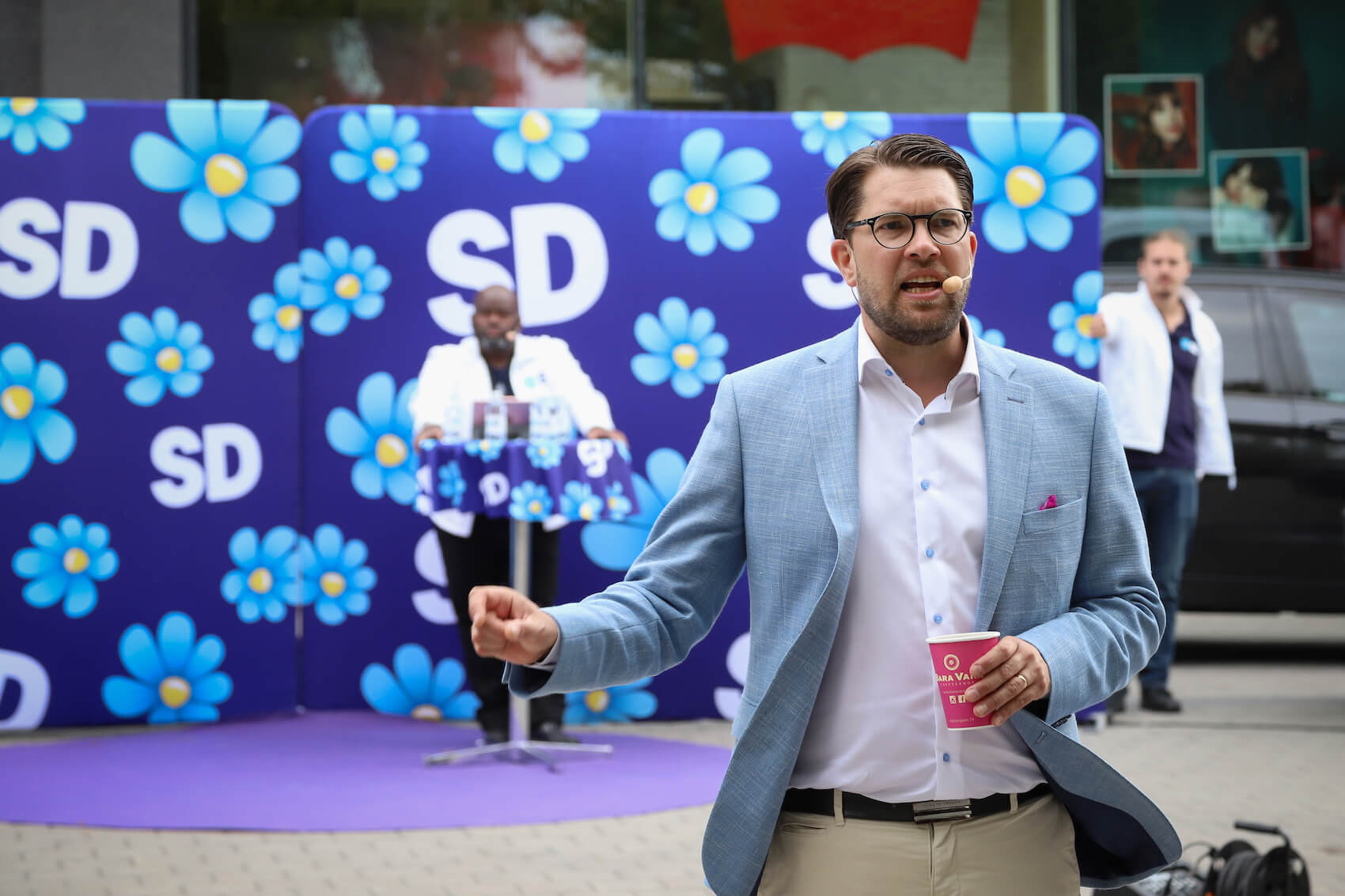
Vänsterpartiet entered the election promising to help remove a government whose policies were heavily dependent on the Sweden Democrats. If the parties that won the parliamentary majority cannot agree on a government, is there a danger that the post-election dispute itself strengthens SD’s argument that the established parties are incapable of governing—and gives the radical right another opening?
MEP Hanna Gedin: What we saw in the Swedish election was that the Sweden Democrats, for the first time since they entered the National Assembly, actually decreased. They had quite a bad election, and this is, in a way, due to the fact that they are now seen as an establishment party. Even though they have not been part of the Tidö government, they have been the biggest party supporting this government.
When it comes to economic issues, they have shown that they are a right-wing party. They support the economic politics of the right-wing parties. So, I don’t think they have a case for saying that they are anything other than an established party nowadays.
I also think that the election results, where our party, the Swedish Left Party, had a very good election and where we can see that the left side actually got stronger, show that people want something else than the politics we have seen from the Tidö government. And I do think that we will be able to form a government.
Mainstream Parties Moving Toward the Sweden Democrats
You argued earlier that the Sweden Democrats, even without formally entering government, exercised enormous influence over migration, crime, and ethnicity, and that ideas once considered politically unthinkable had moved into government policy. After four years of Tidö government, how deeply has SD changed the political center of gravity in Sweden? Is the larger story now less about SD itself than about mainstream parties adopting parts of its agenda?
MEP Hanna Gedin: We have seen in Sweden a lot of parties adapting and moving closer to the Sweden Democrats, and that is something we see in many countries. It’s extremely dangerous. It’s dangerous when politics focuses on things that are not bread and butter. It’s not about the cost of living or what people really feel in everyday life, but about culture-war issues, and what that has done to society in Sweden is very dangerous.
During the Tidö government, the government put forward, and we adopted, snitch laws, so you should snitch on your neighbors or coworkers if they come from a different country. This is quite extreme. We have seen it even when it comes to criminal issues and so on—this kind of obsession that if you are from another country, you should go away, you should go out of Sweden. It’s also linked to the notion of criminality being colored, in a way. It has been quite an extreme development in Sweden.
What the election showed is that people do not want this kind of policy. During the election campaign, we talked about bread and butter. We talked about people’s cost of living. We talked about the skyrocketing rise in rent, for example. We did canvass. We knocked on almost half a million doors, and when we met people, they were not talking about snitch laws or the need to be tougher on criminals. They were talking about things that affected them in their ordinary lives.
A lot of people also said that. I met a woman who said, “You know, I have stomachache. They don’t want me here. They want to throw me out. What this government has done to me and my neighbors is horrible, and I can’t vote for them. I will vote for you.”
So, in a way, it has affected us. But I do think that what we have seen during these four years—this obsession with people of a different color of skin, or criminals, and so on—is not what people want. I really feel a bit like it’s easier to breathe now. It’s like opening a window, and I think a lot of people in Sweden agree with me.
And I think that’s also very important: the first thing these four parties did, even before forming a government, was to stop the deportation of young people that was planned under the Tidö government. We stopped it.
How the Left Should Confront the Far Right
You have described the far right as particularly effective at finding scapegoats, offering simple answers to complex problems, and forcing its issues to the center of public debate. Across Europe, far-right, radical-right, and populist radical-right parties are increasingly shaping policy even where they are not governing. Why has the democratic left struggled to set the agenda with the same effectiveness—and what has it failed to understand about voters attracted to these parties?
MEP Hanna Gedin: In politics, it’s easier to make people vote for something they are afraid of than for something they hope for. If we have been living for several years with this repressive politics and the right-wing agenda, people also forget what solidarity is and what equality is, and you need to be reminded of it sometimes.
But for the left, it’s really important not to adapt, not to only talk about the Sweden Democrats or the right, the extremist parties, and not to adapt to them. What the Social Democrats did in Sweden, mainly during the election campaign—talking about the Sweden Democrats—did not work. You need to have your own agenda, and you need to put forward reforms about the cost of living, for example. That was what we did, and we were rewarded by the election results in Sweden.
Gender, Migration, and the Far Right

The far right increasingly presents itself not only as anti-immigration but as the defender of a particular European cultural order, often combining nationalism with opposition to abortion rights, LGBTQ rights, and gender equality. As an MEP working on women’s rights and gender equality, do you see these struggles as separate policy battles, or as parts of a broader political project to redefine who belongs and whose rights are considered legitimate?
MEP Hanna Gedin: We see these attacks every day in the European Parliament, and you can see them in a lot of countries as well. The struggles are connected, and you can’t just take one struggle; you need to see the fight as a common fight.
In this Parliament, we see attacks from the right-wing parties on trans people and on migrants, for example. We don’t yet see the same number of attacks on abortion rights, but I’m sure it will come if they are successful.
Stopping Teenage Deportations Is a Very Important Step
You recently raised the issue of what you called Sweden’s “teenage deportations”—young people who have grown up in Sweden but face removal when they turn 18. Sweden has moved toward some of Europe’s most restrictive migration policies. If a new Social Democratic-led government takes office, what specific changes would V demand on asylum, deportation, and family reunification, and which policies introduced during the Tidö period should be reversed first?
MEP Hanna Gedin: I’m not a parliamentarian in Sweden, I work mainly with EU policies. But I think it’s very interesting that, in 2015, something changed in Sweden. It was when there was a big migration to Sweden, and we started having these repressive laws.
During the last government, the Tidö government, something changed last year when we first had a mayor in the city of Jokkmokk (a small municipality and town in Norrbotten County, northern Sweden, in Swedish Lapland / S.G.) saying, “I don’t want you to deport my people living in my city,” and a lot of mayors started saying the same: “We don’t accept this kind of very repressive policy.”
Then we had the teenage deportations. As you said, we saw many deportations of teenagers who spoke perfectly good Swedish, who had grown up in Sweden, and who were deported from their families. And the debate started shifting. Instead of saying, “Yes, people should go out, we should send them out, we should have more oppressive laws,” people were saying, “These are my neighbors, these are my coworkers, these are my friends.” They had names and faces, and the debate changed and shifted.
The first thing the four parties—the Swedish Left Party, the Centre Party, the Social Democrats, and the Green Party in Sweden—have been doing, even though we have not yet formed the government, is to stop these deportations. I think this is a very important step.
EU Migration Policy and the Radical Right
At EU level, the Migration and Asylum Pact entered into application in June, while the new Return Regulation creates faster return procedures and opens the possibility of “return hubs” outside the Union. Governments are now discussing even tougher measures. Are we witnessing the normalization at EU level of ideas that only a few years ago were associated primarily with the radical right? And where should the legal and moral limits of European migration policy be drawn?
MEP Hanna Gedin: Yes, we are witnessing a shift and an adaptation to the radical right when it comes to migration, even at the EU level. I was present in the chamber when the return hubs were voted on, and what happened was that the radical right stood up and cheered together with the right-wing parties when they voted this through. They cheered and screamed, “Send them back, send them back.” This would not have been possible a couple of years ago.
This is a situation that we’re actually seeing, and that is why it’s quite hopeful to see what happened in Sweden and how the debate shifted with the teenagers who were deported. I do hope that we will see the same shift in Europe as well.
I also think you need to see the positive things happening in Europe when it comes to the Swedish election, but also the election in Berlin, where you had a very big left-wing party; the election in Copenhagen, a city close to where I live, where the biggest party was the Left Party; and Mamdani in New York. You do have these positive things happening as well.
You have also criticized the prolonged border controls between Sweden and Denmark and warned about allegations of racial profiling. Governments increasingly justify exceptional border measures through migration, crime, or national-security arguments. At what point does a supposedly temporary security measure become a permanent restriction on free movement and equal treatment within the EU?
MEP Hanna Gedin: I live in Malmö, a city close to Denmark. I take the train between Denmark and Sweden almost every week, and there is still this border control that was put in place in 2015. I would say that this is a permanent restriction. It is not allowed according to EU law, and it still goes on and on and on. So, yes, this is a permanent restriction, and that should not be allowed.
The EU Should Show Some Backbone
The EU has traditionally presented itself internationally as a normative power built around democracy, the rule of law, and human rights. Yet critics increasingly point to restrictive migration policies, cooperation with authoritarian governments to stop migration, and inconsistency in the application of international law. Is the EU losing credibility as a normative role model—and how much of that erosion reflects the growing influence of the populist and radical right on mainstream European policy?
MEP Hanna Gedin: Absolutely, the EU is losing its voice when it comes to upholding international law. It’s very important to see that there have always been double standards, in a way, when it comes to the EU, because a lot of countries are still colonial powers.
But now, when you can see the very correct way of handling Russia’s war of aggression in Ukraine—adopting sanction packages and being tough on Russia—that is good. Why do we see this double standard when it comes to Israel? I’m absolutely sure that people see this all around the world, and countries not being part of the EU are then saying, “If the EU does this, why should we adhere to international law?”
We see a complete erosion of international law now, and with the sanctions from the US against the International Criminal Court (ICC), I think the EU should immediately activate the Blocking Statute, show some backbone, and not be as cowardly as we have seen.
One Must Be Critical Toward NATO While Not Being Naive
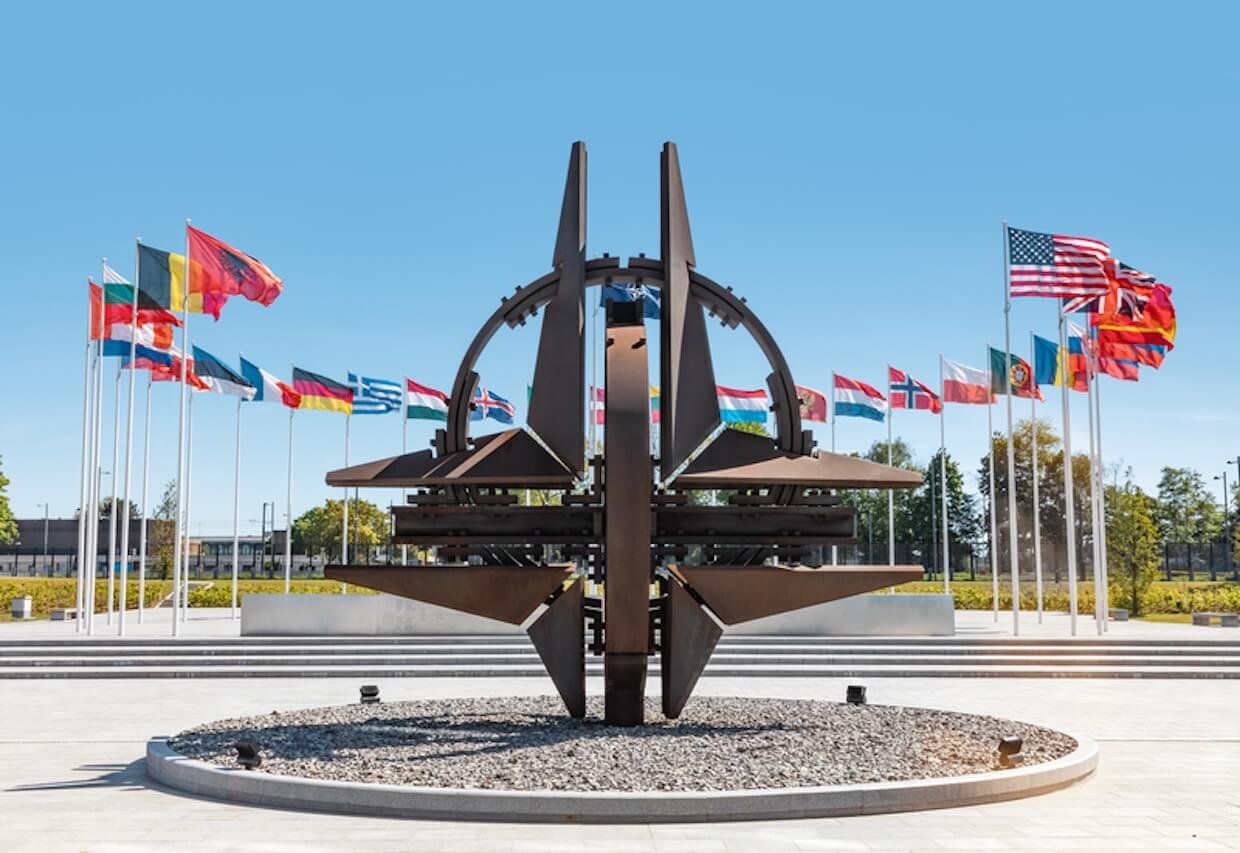
On Ukraine, you have been unequivocal that Russia’s invasion must be resisted, that Ukraine deserves continued support, and that Europe should stop financing Russia through energy purchases. At the same time, Vänsterpartiet historically opposed Swedish NATO membership. How does the European left build a security policy that is credible against Russian aggression without accepting an open-ended militarization of Europe or abandoning its traditional critique of NATO?
MEP Hanna Gedin: I think one must be able to be critical toward NATO while, at the same time, not being naive. Of course, we live in a very dangerous world, and we need cooperation between countries when it comes to defending ourselves.
My party is not against the augmentation that we have seen in Sweden when it comes to military spending. This should not be taken from schools or hospitals and so on, but we want to impose a wealth tax instead. We also want cooperation between countries, the Nordic countries, and parts of the EU.
I don’t think it’s a smart way to militarize the EU as a side project to NATO and then increase military spending there as well. So, one must be able not to be naive while still being able to criticize the notion of building defense on nuclear bombs and so on. You must be able to do both.
Gaza, Israel, and International Law
You have been one of the European Parliament’s most outspoken critics of Israel’s conduct in Gaza and have called for suspension of the EU–Israel trade relationship, sanctions, and support for international accountability. You and Jonas Sjöstedt were also denied entry by Israel in August. What did that episode tell you about Europe’s leverage over Israel—and why, in your view, has the EU struggled to translate its language of international law into a common policy toward Gaza and the West Bank?
MEP Hanna Gedin: I think that the Swedish government and the EU have been too weak when it comes to Israel. As I said earlier, you need to uphold international law wherever you see crimes against humanity, whether it comes to what happens in Ukraine or what happens in Gaza.
What we see in Gaza is actually a genocide, and you can’t just wait for the ICC or the International Court of Justice (ICJ) to say, “This is a genocide.” You have a responsibility, as countries and as politicians, to prevent genocide, and this has not been done at the EU level.
I find it quite appalling that the EU keeps trading with Israel as if nothing has happened and that there are no consequences when you breach international law. Benjamin Netanyahu has an arrest warrant against him. This should, of course, be reflected in EU relations toward Israel.
Economic Cooperation with Turkey Makes the EU Quite Weak on Human Rights
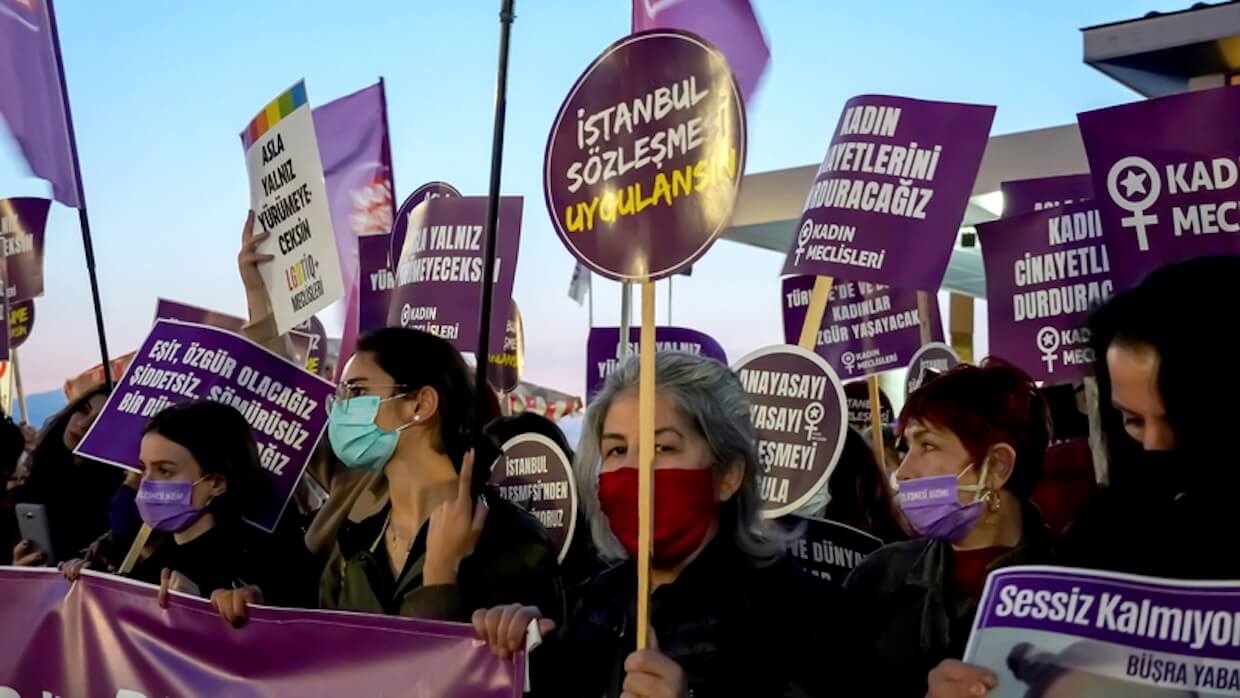
Your parliamentary work has also addressed repression in Iran, women and girls under Taliban rule in Afghanistan, and the imprisonment of journalists and opposition figures in Turkey. How can the EU demand democratic standards from Iran, Afghanistan, or Turkey while avoiding accusations of selectivity when its economic, migration, or security interests lead it to cooperate with governments accused of serious rights violations?
MEP Hanna Gedin: This is also a problem with double standards. The EU’s economic cooperation with Turkey when it comes to migration, of course, makes the EU quite weak in also pushing for the upholding of human rights in Turkey. So, this is a problem with EU politics that you can see toward many countries—being hijacked when it comes to how to handle these countries.
Focusing on the Cost of Living Is the Only Way
You have repeatedly argued that Europe’s market-liberal framework restricts the public investment needed for the green transition, while rising rents, electricity prices, and living costs have intensified inequality. Radical-right parties have often converted economic insecurity into cultural and anti-migrant grievances. Does the left have to win the material argument—on housing, wages, energy, and welfare—before it can successfully challenge the far right’s politics of identity and resentment?
MEP Hanna Gedin: I think this is the only way, and we saw it in the Swedish election as well. My party, the Swedish Left Party, focused mainly on the cost of living, on issues related to bread and butter, and that is what made us the party that gained the most. That was the biggest success for us. We see it when it comes to EU policies as well. This right-wing environment that we’re living in at the EU level and in many countries, which focuses on cultural issues, makes people poor. You need to be able to focus on the cost of living instead.
In Sweden, during these last years, we have seen an explosion of inequality. We have 46 people in Sweden who own as much as eight million Swedish people, and we have 700,000 poor people in Sweden. The number of poor people has doubled in just a couple of years. This is the reality people are living in, and, of course, for the left, it is about focusing on those real issues—on how to make life nice and good and possible to live, and on reducing inequalities.
Rebuilding a Credible European Left
Finally, the European left faces a strategic dilemma. It wants to confront the radical right without simply reproducing its polarizing style, while also distinguishing itself from centrist parties associated with austerity, market liberalism, and restrictive migration policies. What would a credible European left project look like today—one capable of rebuilding working-class support, defending migrants and minorities, advancing gender equality and climate justice, and at the same time persuading voters who have drifted toward populist and radical-right parties that democratic politics can still materially improve their lives?
MEP Hanna Gedin: I think you need to be very concrete about what you want to change in society. When we talk about taxing the very rich, we get a very good response. For example, we see rising inequalities everywhere, and we need to focus on reducing those inequalities by also focusing on the cost of living, on what people pay in rent, on rising electricity bills, and on the fact that a lot of people are struggling to pay for their food. So, you need to be able to make life a good life without adapting to the far right and their narrative.