Geert Wilders (PVV) in House of Representatives during a debating at the Tweede Kamer on April 5, 2023 in Den Haag, Netherlands. Photo: Jeroen Meuwsen.

Dr. Rooduijn on the Normalization of Far-Right Discourse: Mainstream Parties Shift Towards Extremes, Populist Radical Right Persists in Radicalism

In examining the unexpected triumph of populist radical right leader Geert Wilders in the Dutch elections on November 22, Professor Matthijs Rooduijn highlights a noteworthy shift within mainstream parties. He notes their increasing embrace of more radical positions, which challenges the prevailing notion of substantial moderation within populist radical right parties. Delving into the narratives of prominent populist radical right figures like Wilders and Marine Le Pen, Professor Rooduijn contends that the observed changes are primarily stylistic rather than indicative of fundamental shifts in political programs.

Interview by Selcuk Gultasli

In an exclusive interview with the European Center for Populism Studies (ECPS), Dr. Matthijs Rooduijn, Associate Professor in the Department of Political Science at the University of Amsterdam, provides insights into the normalization of far-right discourse globally, particularly in the wake of the surprising election results in the Netherlands on November 22, 2023. Dr. Rooduijn underscores a significant transformation within mainstream parties, as they increasingly adopt more radical positions, challenging the prevailing notion of substantive moderation within populist radical right parties. Examining into the narratives of prominent figures such as Geert Wilders and Marine Le Pen, he argues that observed changes are primarily stylistic, rather than representing fundamental shifts in political programs.

Delving into the complexities of populist radical right movements, particularly in the Netherlands, Dr. Rooduijn identifies nativism as the core feature, following Cas Mudde’s definition. Nativism, characterized by exclusionary nationalism, manifests in various expressions such as antisemitism, Islamophobia, anti-immigration attitudes and racism. The interview provides insights into how Wilders’ anti-Islam agenda fits into the broader narrative of populist radical right ideologies.

Examining the international landscape, Dr. Rooduijn explores both the similarities and differences between populist radical right movements in the Netherlands and other European countries. While leadership may vary, the core ideology resonates with a significant portion of the electorate holding right-leaning cultural views. The interview scrutinizes the normalization of far-right discourse in the Netherlands, highlighting shifts in public perception and electoral strategies. Dr. Rooduijn notes the adaptation of mainstream right parties towards the radical right, contributing to the observed normalization globally.

The discussion extends to Wilders’ stance on immigration, distinguishing his emphasis on Islam from other far-right parties. Dr. Rooduijn provides insights into the intertwining of civilizational populism, nationalism, and their resonance with the Dutch public. The interview further explores the relationship between populism and Euroscepticism in Dutch politics, emphasizing Wilders’ hard-Eurosceptic position and its significance in the broader European context.

Dr. Rooduijn sheds light on the role of social media in the success and visibility of populist radical right parties, acknowledging its transformative impact on political communication. Analyzing the recent Dutch elections on November 22nd, he highlights the unexpected shift in the political landscape and underscores the challenges in forming a government coalition.

Looking forward to the European Parliament elections in June 2024, Dr. Rooduijn expresses concern about the potential surge of populist parties, emphasizing the discordance between their ideas and liberal democratic principles. The interview concludes by addressing the challenges faced by populist radical right movements in maintaining long-term political relevance, particularly the stigma associated with Wilders’ party and its impact on recruiting candidates for political positions.

Here is the transcription of the interview with Dr. Matthijs Rooduijn with minor edits.

How would you characterize the key features of populist radical right movements, both in Western Europe generally and specifically in the Dutch political landscape? In your analysis, how do these features manifest in the context of Geert Wilders’ political ideology, and what societal and political factors have contributed to the rise and sustained presence of populist radical right parties in the Netherlands?

Matthijs Rooduijn: To address the first question, let’s focus on the definition of the populist radical right. I adhere to Cas Mudde’s definition, which identifies nativism as the core feature. Nativism is an exclusionary form of nationalism, where parties center their focus on the nation. Consequently, they argue that elements or people not compatible with the nation pose a threat. This can manifest in various ways, such as antisemitism, Islamophobia, anti-immigration attitudes, and racism – all expressions of in-group and out-group thinking. This thinking places the nation as the in-group and others as the out-group, forming the core of the radical right.

Furthermore, radical right parties exhibit authoritarian tendencies, advocating for a highly ordered society. They believe that severe punishment should be meted out to those who break the law. This authoritarianism is another core aspect of the radical right. Additionally, these parties adopt a populist stance, emphasizing a group of people, typically portraying ordinary citizens as betrayed, corrupted, or ignored by an evil elite. This elite can be political, cultural, or media-related. Populism is often an integral part of the program for these populist radical right parties. Geert Wilders’ party serves as a prototypical example, distinguishing itself with a particularly strong anti-Islam component. This summarizes the essence of the populist radical right and Wilders’ program.

Substantial Segment of the Population Are Potential Voters for the Populist Radical Right

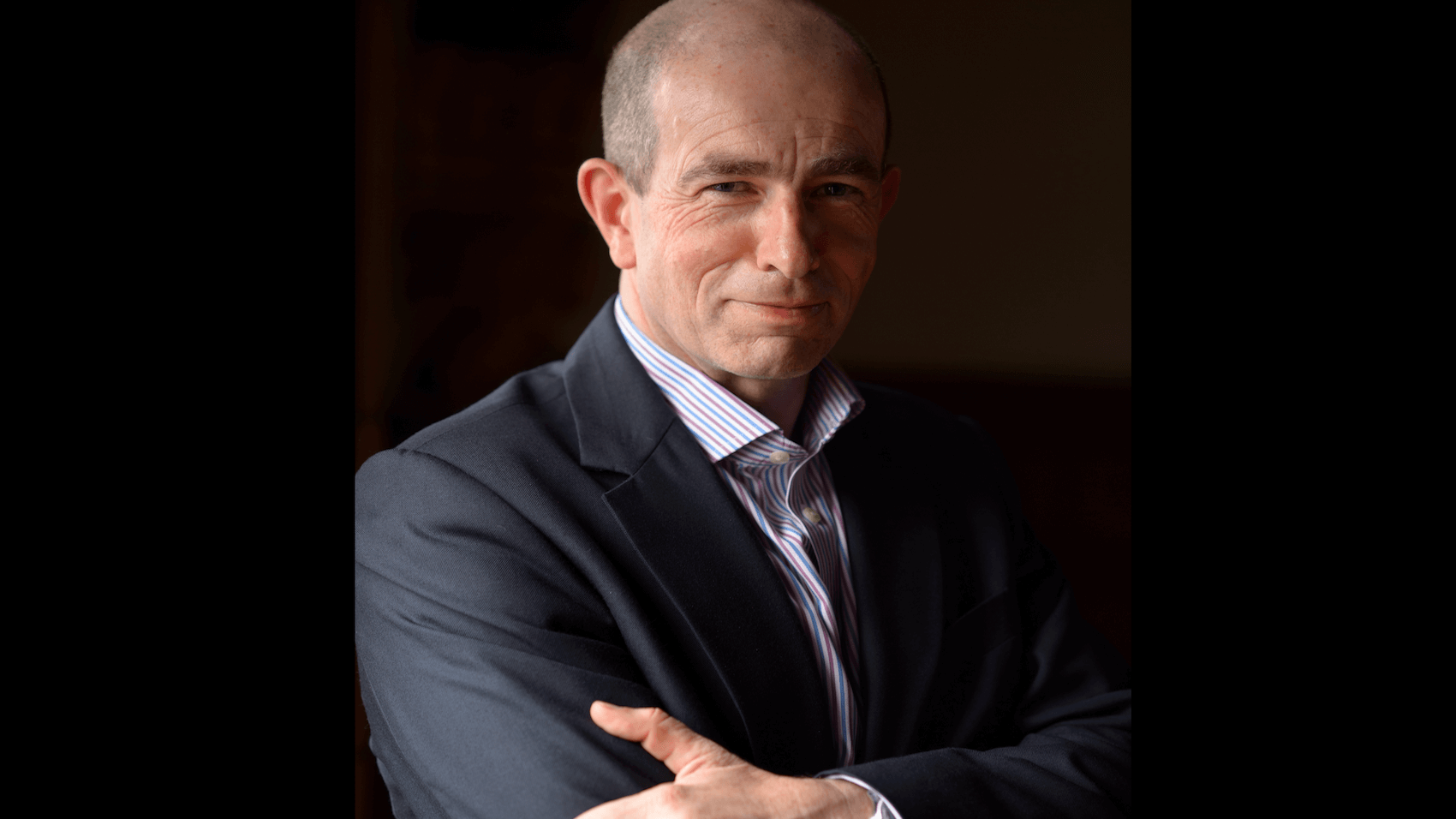
Dr. Matthijs Rooduijn, Associate Professor in the Department of Political Science at the University of Amsterdam.

Considering the international context, are there similarities or differences between the populist radical right movements in the Netherlands, led by figures like Geert Wilders, and those in other European countries?

Matthijs Rooduijn: Yes, there are both similarities and differences. The type of leader varies significantly from country to country. Wilders differs markedly from Marine Le Pen, Matteo Salvini, or Giorgia Meloni. What they share is their ideology. Economic circumstances, party systems, and media landscapes also differ. However, what’s common across most of these countries, and beyond, is a fertile breeding ground for the success of these parties. In Western Europe and elsewhere, there’s a substantial portion of the electorate that leans right on cultural issues, supporting more restrictive immigration policies, often coupled with a general sense of discontent with politics. This sentiment is prevalent in almost all European countries.

The success of populist radical right movements hinges on their ability to tap into this sentiment and discontent and convince voters to vote for them. So, there is a substantial segment of the population that represents potential voters for the populist radical right. The crucial differentiator is the extent to which politicians can effectively appeal to and persuade these voters, influenced by wider contextual factors such as media coverage and actions of other political parties. Success, therefore, really depends on the circumstances surrounding these parties.

Can you discuss any notable shifts or developments in the public perception of populist radical right ideologies in the Netherlands, particularly in relation to Geert Wilders and his Party for Freedom (PVV), and how have these shifts influenced their electoral performance?

Matthijs Rooduijn: So, you’re inquiring about how voters, parties, and media perceive Geert Wilders over the years and the changes in this perception. Broadly, the rhetoric of the far-right has undergone a significant normalization in the Netherlands, a trend not exclusive to the country but observed globally. For instance, in 2002, right-wing populist Pim Fortuyn faced vehement criticism for his perceived radicalism, even being labeled an extremist. However, a comparison of his statements from two decades ago with Geert Wilders’ current rhetoric reveals Fortuyn as relatively moderate. This shift highlights the extent to which the general discourse in the Netherlands has moved towards the radical right.

Academic studies support this observation, indicating that mainstream right parties, both in the Netherlands and elsewhere, have adjusted their election programs towards the radical right. While they haven’t transformed into radical right parties, there has been a noticeable directional shift. This trend is echoed in the general discourse on immigration and identity issues, showcasing a movement towards the radical right’s framing of relevant topics.

Notably, during the recent election campaign, there was a shift in how Wilders and his Party for Freedom (PVV) were portrayed by other parties. After approximately a decade of exclusion by mainstream right parties, Wilders was actively or passively presented as a negotiable political figure during this campaign. The mainstream right party opened the door to potential collaboration with Wilders in a government coalition, contributing to the normalization of the PVV. In conclusion, the normalization of far-right ideas is a prevailing trend not only in the Netherlands but also on a global scale. This normalization extends to both the ideas associated with the far-right and the PVV party led by Geert Wilders.

Geert Wilders Is Very Islamophobic

Geert Wilders and his Party for Freedom (PVV) are often associated with anti-immigration policies. Could you provide insights into how his stance on immigration fits into the broader populist radical right narrative in the Netherlands?

Matthijs Rooduijn: Geert Wilders’ primary focus is on Islam, he is very Islamophobic, and he holds strong Islamophobic views, advocating for the prohibition of the Quran, Islamic schools, and headscarves—issues that have consistently been at the core of his agenda. While these concerns are now intertwined with broader topics like asylum and immigration, they remain distinctive aspects that set Wilders apart from other far-right parties in the Netherlands. For example, the Forum for Democracy (FvD) led by Thierry Baudet also embraces a nativist ideology but places less emphasis on Islam. Similarly, Right Answer 2021 (JA21), another populist radical right party, does not prioritize Islam to the same degree.

During the recent election campaign, Wilders asserted that Islam was not his primary concern at that moment, highlighting immigration and housing as more pressing issues. However, he simultaneously affirmed that Islam remains an integral part of his party’s DNA. Notably, he did not retract any elements from his election program, which unequivocally outlines his stance on Islam. In essence, while nativism constitutes a fundamental element of the populist radical right ideology, Wilders’ specific expression of nativism is rooted in Islamophobia, complemented by general negative attitudes toward immigration and asylum.

How does the relationship between civilizational populism and nationalism play out in the context of Geert Wilders’ political discourse, and to what extent does it resonate with the Dutch public?

Matthijs Rooduijn: Geert Wilders’ nationalism is fundamentally expressed in his views on Islam, asylum, and immigration. He advocates for closed doors and borders, and exclusionary policies, with a primary focus on Islam, Muslims, and cultural symbols like headscarves. This specific form of exclusionary nationalism is a defining feature of his political program. During the recent election campaign, he strongly emphasized these aspects, which remain integral to his party’s identity and are referred to as its DNA.

Wilders’ Hard-Euroscepticism Surpasses the Eurosceptic Rhetoric of Many Other Far-right Parties in Europe

How has the relationship between populism and Euroscepticism played out in Dutch politics, particularly within the context of populist radical right movements?

Matthijs Rooduijn: We observe that most radical right parties tend to be Eurosceptic, although there are instances where some actors within the radical right may display a less overt form of Euroscepticism, framing it as a defense of Europe against external threats. However, Euroscepticism has been a consistent element in the programs of almost all radical right parties, especially in Western Europe, including Geert Wilders’ Party for Freedom. Wilders’ Euroscepticism is multifaceted, encompassing resistance to European elites and technocrats in Brussels, which he perceives as threatening Dutch identity and impeding the nation’s self-determination. This Eurosceptic stance incorporates cultural, identity-related, and political arguments, emphasizing the perceived erosion of national identity by Brussels and the loss of citizens’ control over important matters. 

Additionally, there’s an economic dimension to Wilders’ Euroscepticism, contending that excessive funds are being directed to other countries. Notably, his program advocates for the Netherlands’ exit from the EU, although the feasibility of this stands in contrast to the positions of other parties he is currently negotiating with, making it unlikely. The prospect of compromise on this issue might emerge if he becomes part of a government coalition. Despite this, it remains intriguing that Wilders maintains a hard-Euroscepticism in his election program, surpassing the Eurosceptic rhetoric of many other far-right parties in Europe.

Can you discuss the role of social media and communication strategies in the success and visibility of populist radical right parties in the Netherlands?

Matthijs Rooduijn: I have limited expertise on the subject of social media, as it falls outside my area of study. While I am aware that Geert Wilders is actively engaged on platforms like Twitter or X, I do not know to what extent social media have really helped to his success. In general, it could be argued that social media provides populist politicians, including Wilders, with a direct means of communication with their followers. In Wilders’ case, he has a sizable and devoted following, allowing him to communicate directly with a large segment of the population. This shift in the mode of communication with followers has undergone significant changes over the last two decades. While acknowledging its importance to Wilders, I cannot conclusively assess the specific role played by social media in his success during this election campaign.

Wilders Potentially Being Part of the Gov’t and Assuming the Role of PM Could Impact Int’l Relations

Can you explain what happened on the night of November 22nd in terms of populism in the Netherlands, populism in Europe, and populism across the globe?

Matthijs Rooduijn: What we have witnessed in the Netherlands is a remarkable and unexpected shift in the political landscape. Just a few weeks ago, it wasn’t anticipated that Wilders would emerge victorious in the elections. The last week of the campaign brought about significant changes. A noteworthy revelation is that one in four Dutch voters cast their ballots for a populist radical right party, indicating an unprecedented size for this party family. This figure becomes even more substantial when considering other radical right parties. Interestingly, voters, including Conservative Liberals, have contributed to the increased support for the PVV. It’s worth noting that some of these votes may be strategic and may not necessarily translate into enduring support for the PVV.

While the victory of the far-right is a significant development, the dynamics of forming a government coalition remain uncertain and complex. Predicting the outcome is challenging due to the absence of clear rules, allowing for various possible scenarios. The consequences of Wilders potentially being part of the government and assuming the role of Prime Minister extend beyond the Netherlands and could impact international relations. Additionally, it may influence how mainstream parties in other European countries approach populist radical right parties.

Simultaneously, when considering elections, it’s evident that, in most countries, the issues that resonate with voters on a national level play a pivotal role. The focus tends to be primarily on domestic matters, with international politics having a lesser impact. However, the upcoming European elections in June 2024 will be intriguing to watch. The strong performance of populist radical right parties in polls, not only in the Netherlands but also in other countries, indicates a noteworthy trend. While some projections for these parties in Poland and Spain fell short of expectations, the overall trajectory remains significant.

It’s crucial to recognize the significance of what transpired in the Netherlands. Yet, it’s essential to acknowledge that this represents a single moment in time. The election outcome could have unfolded differently with minor variations in the circumstances within the country. This emphasizes the fluid and contingent nature of political events.

Regarding the upcoming European Parliament elections, how concerned are you about the potential surge and victory of populist parties in Europe?

Matthijs Rooduijn: Undoubtedly, there is a substantial number of voters drawn to these parties. However, what is particularly concerning are their ideas, as several of them are not in harmony with liberal democracy, especially concerning minority rights, checks and balances, pluralism, and freedom of the media etc… This poses a significant problem. We have witnessed the consequences of such ideologies in countries like Hungary, Poland, and others in Europe. If a populist radical right party gains significant influence or becomes the most powerful actor in a government, it could have detrimental effects on liberal democracy. This is indeed a matter of serious concern.

Mainstream Parties Have Substantially Integrated the Discourse of Populist Radical Right Parties

What impact has the populist radical right had on the overall political discourse and policy agenda in the Netherlands, and how has it influenced the mainstream political parties? Or can we safely say that PVV has now been a mainstream party, and its discourse on immigration, the Moroccans, Islam, and the EU has been mainstream as well?

Matthijs Rooduijn: As mentioned earlier, mainstream parties have substantially integrated the discourse of populist radical right parties, and this is evident in the media landscape as well. The views expressed by figures like Pim Fortuyn, which were once considered radical, have now become relatively mainstream. Thus, the discourse of the far-right has been normalized, and mainstream parties have, to a certain extent, legitimized the arguments put forth by populist radical right parties. However, it would be inaccurate to claim that the populist radical right has become more mainstream in the sense of becoming more moderate. That’s not the case. On the contrary, it’s the mainstream parties that have shifted towards more radical positions. Over time, if we analyze the trajectory of populist radical right parties in Europe, they remain as radical as ever. While Geert Wilders may have projected a more moderate image during these elections, his election program retained its radical core. Similarly, in the case of Marine Le Pen in France, despite efforts to present a more moderate image, the National Rally (FN) remains a fundamentally populist radical right party. Therefore, any moderation observed tends to be more in the presentation style rather than a shift in the core elements of their political programs.

In your view, what are the main challenges faced by populist radical right movements in maintaining long-term political relevance, and how has Geert Wilders navigated these challenges in the Dutch political context?

Matthijs Rooduijn: I believe the primary challenge currently confronting Wilders is the persistent stigma attached to his party, making it challenging for him to garner support from other politicians. Despite securing a considerable number of votes, many political figures are hesitant to align themselves with the PVV. This reluctance poses a significant obstacle in recruiting candidates for political positions. For example, with 45 individuals on his list, a total of 37 were elected, leaving Wilders with only 8 potential replacements. In the event that some individuals assume ministerial roles in the government, he may encounter difficulty finding adequate replacements. The scarcity of willing individuals willing to be associated with him and the PVV makes it particularly challenging to identify suitable candidates for ministerial or significant political roles. Compounding this issue is the fact that Wilders faces personnel challenges due to the absence of party members; he is the sole member of his party and harbors trust issues with his colleagues in the PVV. This personnel shortage remains a considerable hurdle, even after his 17 years in politics.

Lastly, you counted anti-semitism as one of the basic features of populist parties. In the case of Geert Wilders, it is not the case. He is pro-Israeli. How do you explain this?

Matthijs Rooduijn: Antisemitism is not necessarily part of their program. What is part of the program is nativism, and nativism can express itself in different ways. It can manifest as antisemitism but also as Islamophobia, and that is how it is articulated in Wilders’ case. Nativism represents a broader framework of in-group and out-group thinking, centering around the nation versus dangerous others. When discussing antisemitism, the dangerous others are Jews. In contrast, when addressing Islamophobia, the dangerous others are Muslims, or, as Wilders argues, Islam as an extremist ideology. Thus, antisemitism is one manifestation through which nativism can express itself. However, Wilders is not antisemitic; he is Islamophobic. Therefore, it’s a distinct form of nativism, representing a different way in which his nativism finds expression.

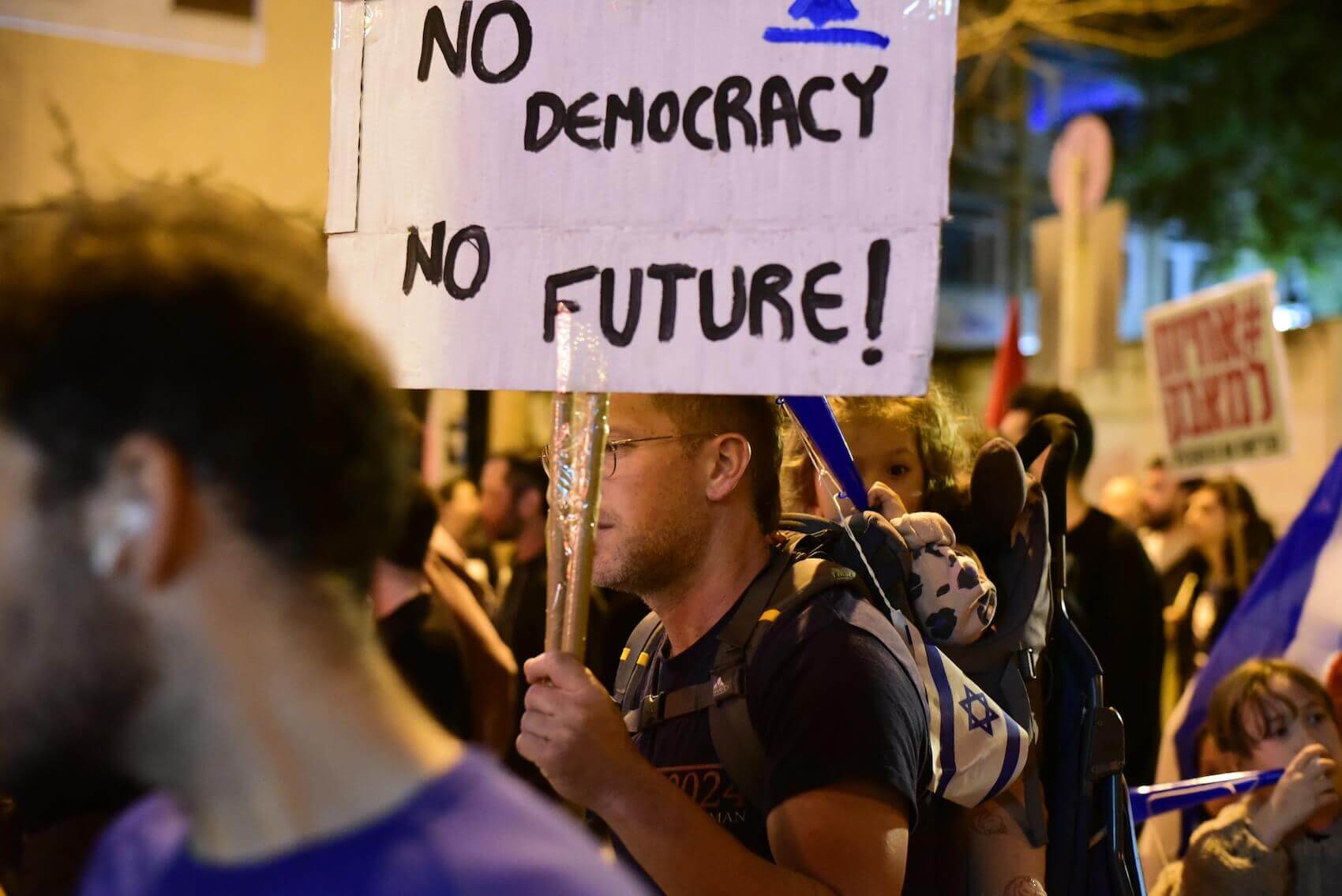
Israelis protest at Tel Aviv against Netanyahu's anti-democratic coup on April 1, 2023. Photo: Avivi Aharon.

Professor Filc: Netanyahu’s Era Is Coming to an End, Influence of Clerical Fascism Will Likely Persist

Offering profound insights into the dynamics of Israeli politics and the evolving role of radical right-wing populism in the country, Professor Dani Filc of Ben Gurion University confidently asserts that the era of Benjamin Netanyahu is on the verge of conclusion. However, he also underscores that the influence of “clerical fascism” in Israel is poised to persist.

Interview by Selcuk Gultasli

In an exclusive interview with the European Center for Populism Studies (ECPS), Professor Dani Filc, a distinguished scholar in the Department of Politics and Government at Ben Gurion University in the Negev, confidently asserts that the era of Benjamin Netanyahu, a longstanding figure in Israeli politics, is on the verge of conclusion. However, he also underscores that the influence of clerical fascism is poised to persist.

Offering profound insights into the dynamics of Israeli politics and the evolving role of radical right-wing populism, the interview delves into the historical transformation of the ruling Likud. From its roots as a radical right vanguard to its current status as a sui generis form of right-wing populism, Likud’s evolution is explored. The discussion tracks Likud’s inclusive elements and examines the ideological shifts that occurred during Netanyahu’s tenure.

Addressing the intersection of populism with identity politics, Professor Filc highlights the dangerous chain of equivalencies used to demonize Israeli Arabs and the instrumental use of religion to differentiate the “in-group” and the “out-group.” Professor Filc also provides insights into Israel’s global alliances, pointing out the alliance with European far-right parties. Filc touches on the evolution of Likud under Netanyahu and its alignment with illiberal, right-wing populist movements in Europe. 

Asserting that the ongoing war in Gaza signals the end of Netanyahu’s dominance in Israeli politics, Professor Filc predicts that “with the conclusion of the war in Gaza, Netanyahu will fall, leading to the abandonment of the judicial reform.” However, he expresses concerns about the lasting impact of the ongoing conflict on populist movements and calls for a just peace in the Middle East, highlighting potential dangers associated with civilizational populism or a clash of civilizations.

In this comprehensive interview, Professor Filc shares invaluable insights into the intricate landscape of Israeli politics, the evolution of populism, and the challenges posed by religious and right-wing populist movements in the country.

Here is the transcription of the interview with Professor Dani Filc with minor edits.

How has populism manifested in Israeli politics historically, and are there specific events or periods that stand out? Can you provide insights into the historical roots and evolution of the radical right in Israel?

I think the first populist moment was when Menachem Begin, who was the then-leader of the Herut Party, the main party of the coalition, became the Likud party, which is the party now in government. Sometime in the early to mid-1950s, Begin led a transformation of the Likud party from a radical right, a vanguard type of party to a populist party. This process was relatively a prolonged one, starting in the mid-50s and reaching its peak when Likud arrived in government in 1977, winning the elections against the Labor party, which had been in government from 1948 until 1977.

Likud, under Menachem Begin’s leadership, was a kind of sui generis type of populism. Why? It was a nationalist party with right-wing views on Israel, a commitment to the idea of Greater Israel, and a denial of the existence of a Palestinian people or a Palestinian state. However, it also had inclusive elements, especially for Mizrahi Jews (Jews from Arab countries). Likud was symbolically inclusive, politically inclusive, and had some material inclusion measures, particularly in areas like housing and education for Oriental Jews. Mizrahi Jews became the central leaders within Likud, ministers, members of the Knesset in a way, and Oriental Jews also became part of the Likud. There were some measures that included Oriental Jews and improved their material conditions. Although there is a kind of commonality between left-wing populism and inclusive populism, and right-wing populism and exclusionary populism, Likud was not more exclusionary than the Labor Party that preceded it while it has not been inclusive towards Israeli-Palestinian citizens. So, Likud’s populism was not stereotypical, and it had some inclusive characteristics, making it a sui generis form of right-wing populism.

Likud Transformed into Extreme Radical Right-wing Populism

On the ideological front, despite Takis Papas define populism as anti-liberalism, Likud under Begin was not anti-liberal. It adopted conservative liberal views, especially in the relationship between judicial power and the executive or legislative power. As people like Ernesto Laclau and Margaret Canovan described, populist ideologies are often framed as against the hegemonic ideology, the ideology of the power, and since the Labor Party in power held socialist rhetoric, Likud’s adoption of a more liberal rhetoric can be seen as opposition to the then-elites or at least to their rhetoric. This situation made Likud under Begin a kind of sui generis populist party. 

With Begin’s departure from politics in 1982, Likud underwent a period of transition, with internal conflicts between the more populist wing and the more conservative liberal wing. This lasted until 1992, when Netanyahu became the Likud leader. Between 1992 and 2006, Netanyahu aimed to make Likud a near-conservative party as Ronald Reagan’s or George W. Bush’s Republican Party with radical neoliberal, nationalist, and realistic in international politics and culturally conservative characteristics. When he was replaced by Ariel Sharon as leader of the Likud and he was Sharon’s minister of finance, he performed more radical neoliberal transformations within Israel.

When Sharon split from Likud in the 2006 elections, the Netanyahu-Sharon split occurred because Sharon supported a one-sided retreat from the Gaza strip without an agreement. Netanyahu opposed Sharon on this issue. Netanyahu became the chairperson of Likud once again, and in the 2006 elections, Likud, led by Netanyahu, obtained only 12 seats in the Knesset, which was 10 percent of the vote. These were the worst elections for Likud since the elections to the second Knesset in the early 1950s.

In my view, Netanyahu understood the limits of the Neo-con project in Israel, leading him to shift towards a radical right exclusionary populist party. However, he wasn’t the pioneer of radical right populism in Israel. The pioneer was Avigdor Levi Lieberman, a former Likud member. When Netanyahu was elected chairperson of Likud in 1992, he appointed Lieberman as the CEO of Likud, the principal executive. In 1999, Lieberman split from Likud and created a party called “Yisrael Beiteinu (Israel Our Home),” which is a clear-cut exclusionary radical right-wing populist party. They even have observers in the radical right populist group in the European Parliament.

Eventually, Lieberman became the first politician with a clear exclusionary rhetoric and policy against Israeli Palestinians. He was also the first to assert that Israeli Palestinians posed a greater threat to Israel than the Palestinians in the occupied territories. Using populist rhetoric, he positioned himself as the voice of the people against the oligarchy. However, he clarified, “we are not anti-elitists because elites are good, but there is not an elite. There is an oligarchy, and we are anti-oligarchic.”

Netanyahu also embraced that exclusionary rhetoric and approach, and their parties ran together in the 2013 elections. Despite Netanyahu’s ability to build a coalition, the merger was not successful. Lieberman eventually split from the alliance. This marks the moment when Likud transformed into a radical right-wing populist party, even verging on extreme radical right-wing populism, with some members exhibiting characteristics almost akin to fascism.

Religion Is Instrumental for Likud

To what extent does populism in Israel intertwine with identity politics, particularly concerning issues such as nationality and religion (Jewishness)? Are there populist narratives that specifically target or resonate with certain social groups?

Okay, so for sure, nationalism is nativism as Cas Mudde calls them are very central element of Likud’s populism. The demonization of Israeli Arabs is achieved by creating a chain of equivalences that asserts ISIS is like Iran, Iran is like Hezbollah, Hezbollah is like Hamas, and Hamas is like the Palestinian Authority. The Palestinian Authority is then equated with Israeli Arabs, and Israeli Arabs are likened to the leftist traitors that support them. This chain of equivalencies places national identity at its core.

Regarding the role of religion, it is more instrumental. Most Likud members are traditionalist, observant Jews. However, they are not explicitly religious, and many do not wear a kippa to cover their heads. While they respect some religious mandates, they disregard others. Religion is primarily used functionally to distinguish between the “in-group” and the “out-group.” This is why Likud is much more tolerant in issues such as the LGBTQ community and women’s rights compared to orthodox religious parties.

How does the media landscape contribute to or counter populist narratives in Israeli politics? Have you identified any patterns in the use of media by populist and radical right figures?

They use social media due to the algorithm and the business model being highly conducive to supporting populist leaders and populist politicians. Social media supposedly enables a direct relationship between the leader and the people, eliminating the need for intermediary organizations such as political parties. It creates a clear distinction between “us” and “them.” The impact of social media is evident globally, from Trump in the US to other leaders. In this context, Netanyahu stands out as a master in the use of social media.

Israel started as a secular country and the Zionist movement strongly supported separation of church and state. Then religious populism gained ground and became so powerful today. What went wrong? How did religious populism become such a strong movement?

At the beginning of Zionism, there was a prominent socialist current. However, when the Labour Party did not succeed, or perhaps chose not to, in 1948 to establish a constitution that would formalize the separation between Church and State, things took a different turn. Due to their political alliance with the national Jewish religious party, decisions regarding the relationship between state and religion were postponed. Consequently, Israel does not recognize civil marriages and civil divorces. The religious establishment often dictates personal matters in many areas such as marriages or funerals. The state funds a national rabbi.

So, from the outset, there was no clear separation between the State and the church. 

I believe populism, in terms of establishing a distinction between the in-group and the out-group, has a strong religious identity at its core. However, Likud’s populism is not strictly religious. There is a party called Shas, an ultra-orthodox party, which has exhibited even more pronounced populist characteristics in the past, though this is not the case for Likud. For instance, one of Likud’s prominent leaders is openly homosexual, illustrating that despite its strong core religious identity, Likud is not a religious party. It seems to use religion in an instrumental manner.

Radical Right Populists in Europe are Strong Allies to Likud

Professor Dani Filc.

In the article you co-authored, ‘Israel’s Right-Wing Populists: The European Connection’, you argue: ‘The partnership between Netanyahu’s Israel and Orbán’s Hungary is indicative of the enormous change that Israel has undergone during Netanyahu’s era. Israel has become, much like Orbán’s Hungary, a right-wing, populist, illiberal powerhouse. And it is not above joining forces with a European far right with antisemitism in its lineage.’ How do you explain this enormous change, what are the dynamics of this change and how did Netanyahu achieve it?

I believe this change is part of a broader global shift marked by the rise of radical right populism in the US and Europe, which supports Likud’s Israel’s policies towards the Arab world. Notably, the Palestinian issue takes precedence over the problematic antisemitic past of many of these leaders. This holds true for figures such as Georgie Melonie and the fascist history of her party, as well as Jean Marie Le Pen and Marine Le Pen and the antisemitic past of the Front National. Considering Likud’s worldview and its current commitment to exclusionary radical right populism, it seems that radical right populists in Europe are strong allies to Likud. This alliance is especially evident in the close relationship between Poland’s PiS and Likud, despite the potential challenge posed by PiS’s revisionist stance on Poland’s attitudes during the Nazi regime. However, the focus appears to be more on the present than on the past.

As for the strength of Likud, its main supporters are the lower middle class, middle class, and upwardly mobile middle class, particularly among oriental Jews. The loyalty of these social groups to Likud can be explained by Likud serving as an instrument of social and political mobility for them. Likud has also evolved into a more populist party. Netanyahu, in particular, was willing to adopt more heterodox economic policies, deviating from his earlier radical neoliberal stance. Between 2009 and 2019, the decade during which Netanyahu held continuous power, there was a notable process of social mobility for these groups. The minimum wage increased by 38 percent, accumulated inflation was no more than 20 percent, and the Gini Index decreased in Israel for the first time since the mid-1980s. The two lower quintiles showed improvement compared to the higher quintiles. During this period, private consumption in Israel surpassed the average private consumption in OECD countries for the first time. From a security standpoint, the conflict remained relatively quiet, and economically, there was positive development for the social groups that constituted Netanyahu’s main support base.

Clerical Fascism Supports Colonization of Occupied Palestinian Territories

In the same article, you mention ‘the ongoing Israeli colonialism in the occupied territories.’ Do you see Israel as a colonizer? If so, what role does religious populism play in colonizing Palestinian lands?

The question is quite tricky in today’s context. I don’t think that the colonization process should encompass all of Israel, as some advocates of “free Palestine from the Jordan to the sea” claim. However, I do contend that the policies within the occupied territories reflect a colonizing approach, and there is a connection between this type of process and the rise of radical right populism, which is associated with the colonization process. Presently, the primary role in the settlement of the occupied Palestinian territories is not played by Likud as a radical right populist party, but rather by the radical religious right, which is not populist at all. They hold an avant-garde, and in many ways, an anti-democratic conception of populism. My understanding of populism is that it is inherently democratic. While it may support an illiberal form of democracy, it is not anti-democratic in my view. This is why fascism cannot be considered a form of populism; these are distinct phenomena. What is referred to as the religious Zionist party in Israel appears to be a form of religious fascism, and some scholars even characterize it as clerical fascism, providing significant support for the colonization of the occupied Palestinian territories.

In the same article, you underlined that ‘Netanyahu has turned to nativism and xenophobia, mostly in the form of Islamophobia.’ What does this Islamophobic populism mean for the Israeli Arabs and Palestinians?

For Israeli Arabs, it entailed the denial of their collective rights and the delegitimization of their political leadership. Netanyahu employed this tactic rhetorically multiple times. During the 2015 elections, he asserted, “Jews come to vote because the Israeli Arabs are coming by the hundreds in buses paid for by leftist NGOs.” This statement was made on election day. Between 2019 and 2021, there were four rounds of elections. In one of these rounds, Netanyahu and Likud advocated for the inclusion of cameras in voting booths to combat fraud. However, it was evident that this measure was targeted specifically against Israeli Arabs with the aim of reducing their voting percentage. This move backfired. In the subsequent round of elections, there was an attempt to mitigate this nativism, but it resurfaced with full force in the latest elections.

How do you explain the close relationship between Netanyahu’s Likud and the far-right populist parties in Europe like Vlaams Belang in Belgium or the Freedom Party in the Netherlands?

As mentioned earlier, Likud is currently a populist radical right party. Its messages closely mirror those of the Vlaams Belang and Freedom Party, and I see Islamophobia as essentially a replay of the traditional role that antisemitism played for the radical right in Europe. In many ways, they are like brothers in their promotion of Islamophobia. Islamophobia takes precedence over antisemitism. Given that Islamophobia seems to supersede and, in a way, legitimize their shared narrative.

What do you think about the fate of the so-called judicial reform being pushed by Netanyahu? Do you think the Israeli people will agree to it?

The proposed judicial reform has faced opposition for quite some time; as you may be aware, there were extensive protests against it, and the nation became divided following the massacre of October 7th. The ongoing war in Gaza seems to mark the end of Netanyahu’s dominance in Israeli politics. I hope for a swift resolution to the war, and I anticipate that with its end, Netanyahu will fall and leading to the abandonment of the judicial reform.

Israelis protest in Tel Aviv, Israel on July 18, 2023, against Netanyahu’s anti-democratic coup as a bill to erase judicial ‘reasonableness clause’ is expected to pass despite 27,676 reservations. Photo: Avivi Aharon.

A Just Peace Is Crucial to Preventing Reemergence of Radical Right Ideologies

How does the current war with Hamas will impact the Populist movements in Israel? Some argue that the era of Netanyahu is about to end. Would you agree with that?

I believe Netanyahu’s era is coming to an end, but the influence of clerical fascism will likely persist. In Israel, as in many democratic countries, populism arises from the blind spots and a lack of self-criticism within liberalism, particularly due to its association with neoliberalism. My optimism is limited concerning a significant shift in liberal self-critique, especially as neoliberalism remains a potent factor contributing to the emergence of populism, specifically the populist radical right in Israel.

While Netanyahu may face setbacks, and there might be a temporary decline in the power of the populist radical right, I am concerned that, in the medium and long term, we may witness a resurgence of the radical right if there are no changes in socioeconomic policies. Additionally, a shift toward a just peace in the Middle East, considering the collective rights of both Israelis and Palestinians, is crucial to preventing the reemergence of radical right ideologies.

Do you believe that the recent conflict in Gaza could potentially trigger a wave of civilizational populism beyond Israel and Palestine, and even beyond MENA region? How would you characterize this wave: as civilizational populism or a clash of civilizations?

I do not categorize all right-wing ideologies as populist. My greater concern lies with the potential emergence of clerical fascism or fascism within right-wing populist movements. It’s important to note that clerical fascism or religious fundamentalism does not necessarily have to be populist, and its non-populist manifestation can be particularly dangerous. I sincerely hope for a swift resolution to the ongoing conflict, as it could prevent an escalation and a clash of civilizations that would only lead to more circles of death and destruction. Ending the war promptly is crucial, and it should be followed by a broader understanding that the only sustainable solution for Palestinians and Israelis, as well as the entire region, is an agreement that respects the right of self-determination and security of both peoples, while safeguarding their collective and individual rights and respect it.

Professor Staffan I Lindberg, Director of the Varieties of Democracy (V-Dem) Institute at the University of Gothenburg, Sweden.  Photo: Johan Wingborg.

V-Dem’s Lindberg and Nord express deep concerns about potential victory of far-right populist parties in 2024 EP elections

In an exclusive interview exploring the intricacies of declining democracy, the rise of far-right populism, and the adaptability of democratic systems, Prof. Staffan I Lindberg and Dr. Marina Nord voice their deep concerns, highlighting that this is a matter of significance for all. Prof. Lindberg emphasizes, “We’ve demonstrated through various publications that far-right extremist parties are not only populist but also hold anti-pluralist views in their rhetoric and policies. When they attain power, they often spearhead the ongoing wave of autocratization. I would be very concerned if that also translates into and materialized in the European Parliament elections.”

Interview by Selcuk Gultasli

The state of democracy across the globe is under intense scrutiny as the world grapples with shifting political landscapes and the rise of authoritarian tendencies. In an exclusive interview, Professor Staffan I Lindberg, Director of the Varieties of Democracy (V-Dem) Institute at the University of Gothenburg and Dr. Marina Nord, Postdoctoral Research Fellow at V-Dem Institute, provide valuable insights into the complexities of this critical issue.

Addressing criticisms from Professor Steven Levitsky in an interview with the ECPS on October 12, 2023, the interview begins with a robust response to his contention that the global democratic decline highlighted in the V-Dem Project’s 2023 report may not be as dire as depicted. Lindberg and Nord emphasize the significance of their data, underlining the approach of population-weighted data, which accounts for the global impact of democratic changes in countries with large populations. 

The interviewees discuss the apparent resilience of democracy and its concurrent decline, emphasizing that these findings are not necessarily contradictory. They point to countries such as that have made significant democratic improvements, as well as others where the situation has deteriorated. These varying experiences contribute to the complex global picture of democracy.

Prof. Lindberg explained the use of population-weighted data to assess the state of democracy worldwide, emphasizing that it gives more weight to countries with large populations due to their greater impact on the global state of democracy. This approach led to the conclusion that the global average for democracy regressed to 1986 levels in the V-Dem Project’s 2023 report

Dr. Nord also pointed out that even when looking at country averages, there is a decline, which dates back to 1997. However, she highlighted the resilience of democracy in terms of the continuation of elections in many countries. The interviewees delve into the multifaceted nature of democracy, highlighting that it encompasses much more than the mere presence of elections. Dr. Nord notes that while elections may still take place in certain countries, the decline in essential democratic attributes such as freedom of speech and freedom of association is a pressing concern. 

Prof. Lindberg also expressed a deep concern about the potential surge of far-right populist parties in the upcoming European Parliament elections in 2024. He emphasized that extremist and anti-pluralist parties often drive the current wave of autocratization, and their rise in Europe is worrisome.

Moreover, the interview explores the adaptation of democratic systems to specific cultural and socio-political contexts. Prof. Lindberg emphasizes the inherent contradiction in the concept of an “illiberal democracy” and highlights that the core principle of liberalism is the acceptance of opposing views, which is not compatible with an illiberal stance.

The interviewees conclude with the discussion of the recent Democracy Report by International IDEA, aligning with the findings in the V-Dem Project’s report. Professor Lindberg and Dr. Nord emphasize the urgency of collective action in the face of the growing number of countries undergoing autocratization.


Here is the transcription of the interview with Professor Staffan I Lindberg and Dr. Marina Nord with minor edits.

Democratic Erosion Prevalent Worldwide Across All Metrics

Prof. Steven R. Levitsky, in his article ‘Democracy’s Surprising Resilience’ co-authored with Professor Lucan A. Way, argues that the data does not support your findings in V-Dem Project’s 2023 report. He writes: ‘The Varieties of Democracy (V-Dem) Project’s 2023 report claimed that global levels of democracy had declined to 1986 levels and, thus, that the global democratic advances of the last thirty-five years had been “wiped out’’. What is your response to Prof. Levitsky’s assessment?

Staffan I Lindberg:  The data supports our findings otherwise, we wouldn’t publish it. It’s essential to note that this is a quote based on our calculations using population-weighted data. This approach gives more weight to larger countries with significant populations. The rationale behind this is that when we assess the overall state of democracy worldwide, the country-weighted averages treat all territories with governments equally. In this method, countries with small populations, like the Seychelles with 90,000 inhabitants, carry the same weight as a giant nation like India with 1.4 billion people. While this approach serves specific purposes, we believe that, in the context of assessing the state of democracy worldwide, it’s more meaningful. For example, when democracy declines in a country as populous as India, with 1.4 billion people, it has a more significant impact than democracy improving in the Seychelles with 90,000 inhabitants. According to the population-weighted measure, the global average regresses to 1986 levels. Marina, do you have anything to add to what I just mentioned?

Dr. Marina Nord, Postdoctoral Research Fellow at V-Dem Institute at the University of Gothenburg, Sweden.

Marina Nord: Well, I would like to add that even when we look at country averages, we still observe a decline. While the decline might not be as dramatic, it harks back to 1997, if I recall correctly. Nevertheless, there is still an overall decline.

Prof. Levitsky highlights ‘Democracy’s Surprising Resilience’ all over the world which is exactly the opposite of your findings in the 2023 Democracy Report. How do you explain the two very different findings?

Staffan I Lindberg: These findings are not necessarily contradictory. It’s important to acknowledge that there are numerous countries globally that have made significant improvements in terms of democracy compared to their state in 1989. Large portions of Eastern Europe, Latin America, and Africa have made substantial progress, to name a few examples. However, there are also countries where the situation has deteriorated, and in some cases, significantly so. It’s entirely possible to have countries that democratized during the third wave of democratization, as Stephen Levitsky mentioned, and have since remained stable or even improved their democratic standing. Yet, the global average declines because other countries have witnessed declines. These two perspectives are not mutually exclusive.

Resilience in Elections Amidst Diminished Democracy Quality

Marina Nord: If one only considers the survival of democracy as the presence of contested elections, then, in many countries, elections are still being held. However, the quality of these elections and other aspects that contribute to democracy, such as freedom of speech and freedom of association, are in decline. This is indeed surprising. So, while we observe resilience in terms of the continuation of elections, the decline in the quality of democracy and its essential attributes is a noteworthy concern. These findings don’t necessarily contradict each other; they provide different dimensions of the overall picture.

Alright. In his article ‘Democracy’s Surprising Resilience’, Prof. Levitsky further argues that: ‘Thus, even if Freedom House and V-Dem are correct in identifying an increase in incumbent abuse over the last decade or so, the consequences of that abuse appear to be modest, for many autocratic-leaning incumbents are failing to entrench themselves in power.’ How would you comment on this judgement?

Staffan I Lindberg: Well, if you were to ask serious observers of countries like Turkey, Hungary, and others, it’s not necessarily a viewpoint shared by many. The term “many” is quite flexible. While it’s true that we’ve witnessed cases where autocratizing incumbents have been defeated or removed from power recently, such as in Poland where transition is still ongoing, like Bolsonaro in Brazil and the Trump administration in the United States, there have also been reversals in countries like Zambia. We’ve seen periods of decline in South Korea that were eventually reversed. So, there are indeed significant instances where the autocratizing incumbents have failed. However, based on our data and assessments by organizations like Freedom House, there are many more countries where autocratizing parties and leaders have continued to undermine democracy and, in many cases, have dismantled democratic institutions. This broader trend is what we observe globally, rather than the isolated instances where incumbents fail to solidify autocracy.

Marina Nord: I would agree with that.

Autocratization Has Worsened Since 2019

In your article ‘A Third Wave of Autocratization is Here: What Is New About It?’ co-authored with Anna Lührmann and published in 2019, you argue that a new wave of autocratization is emerging. Given the time that has passed since its publication, do you still stand by its findings?


Staffan I Lindberg: No. We began our work on that article in 2016-2017, and it was eventually published in 2019. At that time, we observed the emergence of a third wave of autocratization, and it was still unfolding. I would say that it’s still ongoing, but I must clarify that it has worsened. In our subsequent research on waves of autocratization, and also in the work we conducted for the democracy report, that wave has become much worse. In the article, if I recall correctly, the maximum number of countries undergoing autocratization simultaneously was 28. In last year’s democracy report, in which Marina was also involved, we counted 42 such countries. This represents a significant increase. What I would not agree with in that article is the notion that there is no cause for panic and alarm.

Exactly. That’s next question: In the same article you underlined that ‘As it was premature to announce the “end of history” in 1992, it is premature to proclaim the “end of democracy” now.’ You argue that democracy is in decline, but it is no reason to panic. It seems that you agree with Prof. Levitsky when he says that democracy has proved to be resilient.

Staffan I Lindberg: No. I hope it’s still too early to declare the end of democracy globally. However, I find myself in a different position today than Anna Lührmann and I were back in 2018 before that article was published. I believe there is a reason to be very, very concerned, if not to panic, which might be an extreme reaction, but to be deeply concerned. Many others share this sentiment. I think that what Professor Levitsky and some other commentators are doing when they suggest that not much is changing is doing a disservice to the world. When I examine our data and witness daily news reporting, I see democracy under attack in so many places, including my own country, Sweden, where signs of another far-right, extreme anti-pluralist party have emerged. This is putting pressure on our current government and could lead to a trajectory of autocratization. It’s deeply worrisome when established democracies start experiencing these challenges. So, while it may not be a time to panic, I believe it’s essential to be extremely concerned and very worried.

Marina Nord: I agree with the sentiment that “panic” might not be the right word, but being worried is indeed appropriate. To provide you with some statistics, our latest data from 2020 indicates that 43 percent of the world’s population resides in autocratizing countries. This is a global trend. What’s concerning is that not only democratic countries like Brazil, Ghana, or Greece are undergoing autocratization, but already autocratic countries are further regressing into autocracy, such as Hungary, India, the Philippines, and Russia. In the case of Russia, which was already a stable autocracy, we’ve observed further autocratization. This is the reason for concern. So, I would say it’s a time for action, not panic, but to take action and pay attention.

Autocratization and Growing Discontent with Democracy 

One of the findings of the Democracy Report 2023 by V-Dem is that the global advances of democracy achieved in the last 35 years has been wiped out. The level of democracy enjoyed by the average global citizen in 2022 is down to 1986 levels. How do you explain the dynamics of this downfall? What went wrong?

Staffan I Lindberg: Yes, I think that’s what it is called these days as one-billion-dollar question. I don’t think we have an answer, and the explanation is likely quite complex. Various forces are at play simultaneously in many countries and regions of the world, including local dynamics. What’s remarkable is that it’s a global phenomenon. We observe this trend in every region of the world, with countries undergoing autocratization across different levels of socioeconomic development, various ethnic, linguistic, and social identity configurations, ranging from countries with dominant/homogenous groups to highly heterogeneous ones, and varying levels of economic development and pre-existing democracy. 

This diversity suggests that there are global forces at play. We know about some of these forces, such as Russia, which played a role in the third wave of autocratization. Putin in Russia turned things around in the late 1990s and early 2000s, and its subsequent actions, including the invasion of Ukraine, involvement in Brexit, interference in American elections, and support for far-right extremist parties and groups across Europe. Then there is China, which has been pushing back against the democratic wave since the mid-1990s, impacting both established democracies and countries in the global south. Let’s not forget about Saudi Arabia. They have been doing a similar thing by supporting anti-democratic Salafist movements. Salafis used to be the microscopic, little part of the Muslim world. It is no longer. Iran is another player on that side. Of course, there are many versions of practicing Islam, that are compatible with human rights and democracy and women’s rights, and so on. Salafism is not.

There’s a growing body of research suggesting that a significant increase in relative economic inequality, which began in the 1980s and spread worldwide, is providing fertile ground for wannabe dictators to exploit dissatisfaction and fears for the future often associated with inequality. While there’s no solid scientific consensus, a growing body of evidence points in this direction.

Marina Nord: I would agree that each case has context-specific factors, but a general explanation could be a growing discontent with democracy as a regime. In each instance, it might be triggered by factors like inequality, an economic crisis, or migration, which are often country-specific. This discontent can give rise to populist movements, ultimately paving the way for wannabe dictators to come to power within democracies. Once in power, these leaders significantly undermine elections.

What distinguishes contemporary autocratization from historical examples is that it’s often a gradual process, not happening overnight, and it often occurs under the facade of legality. This process is frequently referred to as “democratic backsliding” or “democratic corrosion,” marking a substantial decline in a country’s democracy over time.

Having Legislature Does Not Automatically Translate into a Democracy

In the V-Dem’s Democracy Report 2023, you underline that “Democracy broke down in seven of the top 10 autocratizing countries in the last ten years: El Salvador, Hungary, India, Serbia, Thailand, Türkiye, and Tunisia.” What do you mean by democratic break-down? In Turkey, for example, elections are still held, and the Parliament is open and keeps legislating.

Staffan I Lindberg: The same is also the case in Russia. The mere presence of multiparty elections and a functioning legislature on paper doesn’t equate to having a democracy. Back in the 1990s, Thomas Carothers and others referred to this as the “electoral fallacy.” Democracy necessitates more than just holding multi-party elections. To be considered a democracy, it’s crucial that these elections are genuinely free, fair, and held periodically. Furthermore, even if elections meet these criteria, it’s essential that opposition parties are not harassed, oppressed, prosecuted for political reasons, or otherwise impeded between elections. 

Beyond this, democracy also requires freedom of speech, particularly in terms of media and individual freedom of speech. In a genuinely democratic environment, people can express their opinions freely. However, in cases like Hungary, where, since around 2018, Viktor Orban and his Fidesz party have gained control over 98 percent of the media, it becomes challenging to maintain a climate of free speech. Even if individuals on the street can technically voice their opinions without consequences, having a media regime controlled by those in power can shape public perceptions, leading to beliefs that align with the government’s agenda. In Hungary, for instance, the government-loyal press has propagated stories like Putin being compelled by NATO to invade Ukraine, thereby legitimizing Russia’s actions. Many people in Hungary have accepted this narrative, not because of freedom of speech but because of the media environment. Holding elections and having a functioning legislature does not automatically translate into a democracy. Furthermore, civil society’s ability to express opinions, demonstrate, and criticize the regime is vital for a true democracy. In the case of Turkey, many leaders, academics have been imprisoned or subjected to harassment, making it challenging for civil society to operate freely.

Marina Nord: I would like to emphasize that there are only six countries worldwide that do not hold elections at this moment. Therefore, democracy encompasses much more than just the act of voting. To illustrate, the Soviet Union had regular elections, but they were devoid of meaning. So, the mere presence of elections does not automatically signify the existence of a democracy.

Many pundits argue that the upcoming European Parliament elections in June 2024 will witness a surge of far-rights populist parties. How concerned are you about a possible victory of far-right parties?

Staffan I Lindberg: Very concerned and I think everyone should be. We’ve shown in a number of publications, also using the varieties of parties and party organization data set, which is separate from the regular V-Dem data set, but with data on individual parties that are far right, extremist parties which are not only populist, but they are anti-pluralist in the rhetoric and policies that when they come into power they are the ones in the current wave of autocratization that typically drive those processes. There are also a few instances of left-wing parties and leaders that have also talked recently, but they’re very few and far between

in comparison to the vast majority that are driven by these right-wing. So yes, I would be very concerned if that also translates into and materialized in the European Parliament elections.

Marina Nord: I would agree.

Illiberal Democracy Is an Oxymoron

Leaders like Erdogan and Orban who deviate from democracy and veer towards authoritarianism often claim that they have not strayed from democracy, rule of law, human rights and freedoms. They even argue that they are models for other aspiring democracies. They defend these claims by arguing that they have embraced a form of democracy tailored to their country’s socio-cultural characteristics. What is your response to the claim that beyond the democractic systems with universal values and forms we are familiar with, there can be different forms of democracies adapted to each country and culture?

Staffan I Lindberg: Yes, of course. We already see that among the established democracies. It’s been very different the way democracy has functioned in the United States, since they got a really good democracy in around 1970, very different from France and France is very different from Sweden in many ways. And in Ghana it also functions different as a culture, different cultural background, and so on. We can go down the line, of course. That doesn’t mean that any version of what some leader proclaim is democracy is a democracy. China also claims that they are actually -the last white paper they put out on that- the only democracy that works in the world. That was a white paper they issued after the first democracy summit that the Biden administration put together. 

(Viktor) Orban claims to have or wants to have an illiberal democracy. That is an oxymoron. That is a contradiction in terms. A democracy cannot be illiberal because the founding principle of liberalism is the reciprocal acceptance and tolerance of opposing views. If you’re illiberal, you don’t accept the opposing views and that’s not compatible with democracy. Now, Orban tries to frame this in terms of LGBTQI and women rights and conservative family values and all that. But that’s just a framing. The real politics is about eradication of opposing views and opposing political forces. And that’s not compatible with democracy.

Marina Nord: I would just add that I have heard several times in Russian political circles that Russia is called as a “guided democracy,” and that also contradicts this definition of democracy that we have. 

Lastly, latest Democracy Report by International IDEA found that almost half the countries have suffered a notable decline in democratic values. ‘What may be worse is that it is the sixth consecutive year in which countries with net declines outnumbers those with net advances, the longest such pattern in our data set’ argues the report. Are you surprised or feel vindicated by the findings of the report?

Staffan I Lindberg: These findings align closely with our Democracy Report, and they come as no surprise because most of the data used in the International IDEA report originates from V-Dem. While I don’t have the latest figures, it used around 70 percent of their data sourced from V-Dem. Therefore, the patterns observed in their report, released nine months after ours, closely mirror those in our Democracy Report.

Based on the findings of the IDEA report, what are your thoughts on where this trend is leading us?

Staffan I Lindberg: We are not in a position to make predictions; our role is to present the facts as they are. The stark reality is that the number of countries undergoing autocratization has seen a significant increase in recent years, and we have yet to witness a reversal of this trend. This is a cause for concern that should prompt collective action.

Steven Levitsky during a debate about the death of democracies in São Paulo, Brazil on August 9, 2018. Photo: Marcelo Chello.

Prof. Levitsky: The US and Europe accelerate the decline of Western liberalism through their own errors

“This process of a declining Liberal West, along with its increasing inability and unwillingness to promote democracy, presents a significant challenge in the world. Unfortunately, I don’t believe we can return to the world of 1990 to 2003 when democracy was, in many respects, almost the only game in town. Those days are over, and we now face a much more complex and challenging world,” says Professor Steven R. Levitsky. 

Interview by Selcuk Gultasli

Dr. Steven R. Levitsky, the David Rockefeller Professor of Latin American Studies and Professor of Government at Harvard University, stated that “the process of a declining Liberal West, along with its increasing inability and unwillingness to promote democracy, presents a significant challenge in the world.” In an exclusive interview with the European Center for Populism Studies (ECPS), Professor Levitsky analyzed the state of liberal democracy worldwide, saying, “Unfortunately, I don’t believe we can return to the world of 1990 to 2003 when democracy was, in many respects, almost the only game in town. Those days are over, and we now face a much more complex and challenging world.”

Primarily discussing the article jointly written by him and Professor Lucan A. Way for the Journal of Democracy on October 4, 2023, titled “Democracy’s Surprising Resilience,” where they emphasize that authoritarianism has a hard time consolidating power in countries with weak states, Levitsky argues that democracy promoters exaggerate democratic backsliding and criticizes those scholars for doing so because they want to highlight the degree of autocratization in the world. “I’m concerned that there has been an almost a rush to declare the world in a democratic recession, with an excessive focus on cases of backsliding, which are undoubtedly real. But they’re not the only thing happening in the world… Our assessment indicates modest backsliding over the last 15 years, rather than dramatic backsliding,” underlined Dr. Levitsky.


Here is the transcription of the interview with Professor Steven R. Levitsky with minor edits.

“The Record of Democracy Is Actually Quite Impressive”

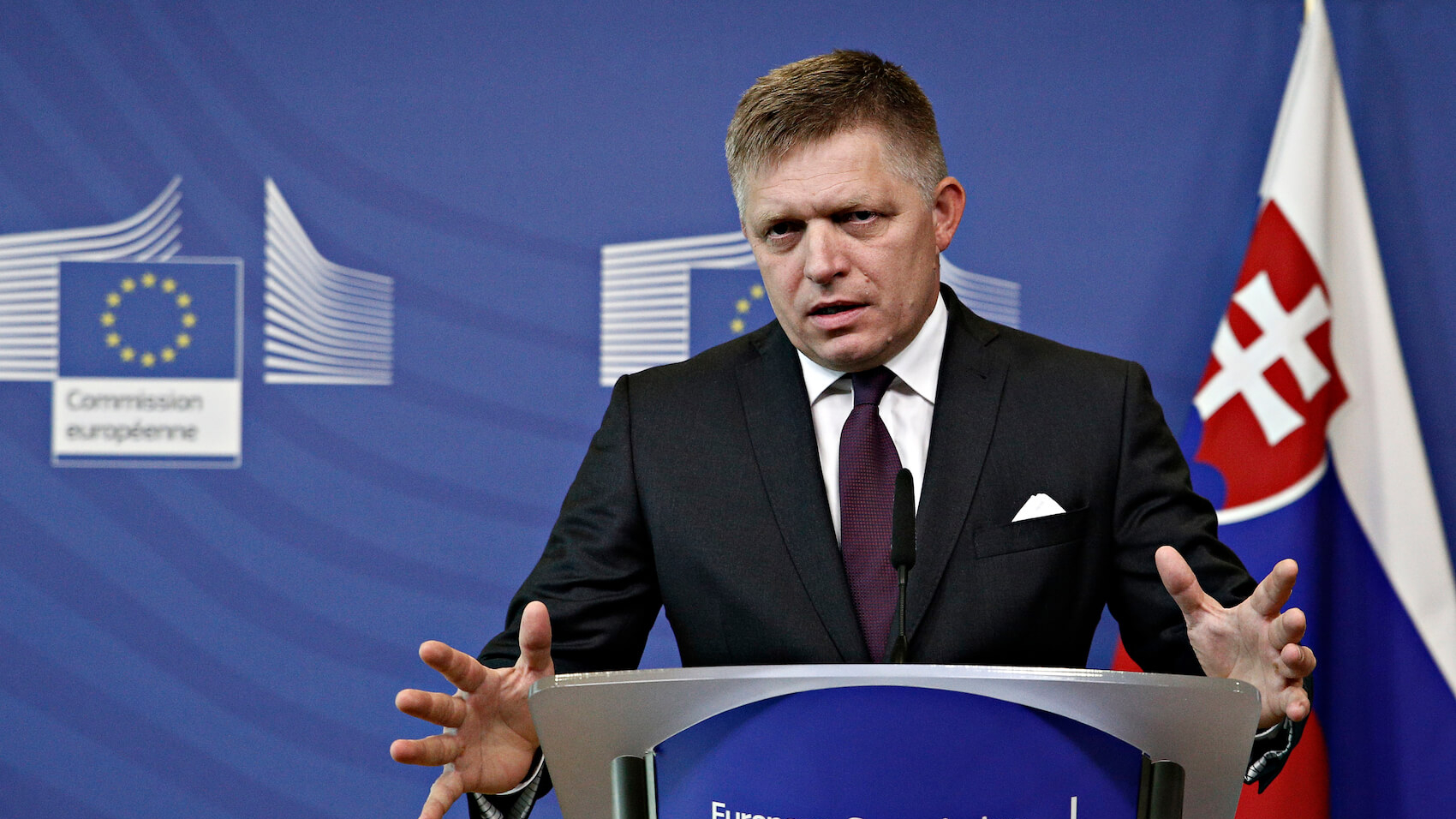
The first question is about Hungarian Prime Minister Viktor Orban and the leader of PiS in Poland, Mr. Kaczynski, who have been shaping their versions of illiberal democracies for over a decade. With Italy governed by the far-right-winger Georgia Meloni, Slovakian populist Robert Fico scoring a victory in recent election, and the far-right Alternative for Germany (AfD) party rising fast in the polls, the signal is that right-wing populism is gaining strength across Europe. Do you not see a looming danger for democracies in Europe?

Steven R. Levitsky: It’s important to note that among the cases you’ve listed, only one could be argued to have seen a significant breakdown of democracy, which is Hungary. Poland has experienced some democratic backsliding, and there is a very competitive election next week in which PiS could find itself without a majority. It is not as if democracy has been extinguished in Poland.

In the other cases, Robert Fico governed for four years in Slovakia without breaking democracy, and he won 23 percent of the vote and needs to form a coalition. So, it is not like seeing a Hugo Chavez-style takeover in Slovakia. In Italy, I don’t like the Brotherhood, and there is obviously much to worry about. However, it’s a coalition government that doesn’t pose an immediate threat to democracy.

The far-right is pretty illiberal in Europe, and of course, there is much to worry about. But in terms of democracy breaking down, the record is actually quite impressive. The only place in all the list that you just named, where democracy is arguably broken down is Hungary. So, my main point is, there’s a difference between being worried about a changing scenario and declaring that democracy is breaking down. We need to be clear about that difference.
Despite the arguments presented in your article, “Democracy’s Surprising Resilience,” we are witnessing the rise of far-right populism in almost every European country. How do you explain this rise of populism in Europe, given the terrible historical experiences with leaders like Hitler, Mussolini, and Stalin?
Steven R. Levitsky: First of all, I am not an expert on far-right populism in Europe. I primarily study political parties in Argentina; I’m a Latin Americanist. I think there are pretty good, persuasive explanations suggesting that a combination of economic anxiety resulting from the 2008-2009 financial crisis and broader economic changes globally, coupled with the increasing ethnic diversity brought about by migration, has generated reactions among segments of the electorate, particularly among non-college-educated, rural, white Christian sectors in Europe. This phenomenon has occurred across the industrialized world, including the United States.

In various places, typically between 15 and 30 percent of the electorate, which is often non-college-educated, residing in small towns, more frequently male, and predominantly white, has supported right-wing populist parties. However, this doesn’t necessarily mean that fascism is imminent. Most far-right parties in Europe, while certainly holding illiberal views, have, for the most part, adhered to democratic norms. Golden Dawn in Greece is a significant exception. Therefore, we should be cautious about jumping from the rise of far-right parties to declaring an immediate threat to democracy, let alone the imminent arrival of fascism in the region. Frankly, I don’t see that on the horizon.

As a Turk, I would like to ask: You list Turkey as one of the three well-known backsliders, along with Hungary and Venezuela. President Recep Tayyip Erdogan has recently announced his desire to draft a new constitution, and most pundits believe this desire stems from his wish to be re-elected for a third term, which is currently prohibited by the existing constitution. Do you foresee any danger to Turkish democracy if Erdogan succeeds in being elected for a third term?

Steven R. Levitsky: The danger to Turkish democracy is already present. Turkey hasn’t been a democracy for very long. Prior to the late 1990s, military power and restrictions on religious parties made Turkey less than democratic. It briefly achieved full democracy in the early 2000s during the early years of the AKP. However, democratic backsliding began in the first decade of the 21st century and escalated significantly after the failed coup attempt in 2016. Today, Turkey can be characterized as a competitive authoritarian regime, with Erdogan acting as an autocrat.

(However) he has not fully consolidated authoritarian rule, and it doesn’t surprise me that he is continuing to try to perpetuate himself in power. What’s interesting feature of Turkey is the degree of democratic pushback and Erdogan’s inability to prevent the opposition from winning power in the major cities even in elections with tilted playing fields that Erdogan had created. I have a very smart former graduate student who tells me if the opposition had nominated the mayor of Istanbul as its candidate, it probably would have won the recent election although Erdogan would almost certainly have tried many shenanigans to try to stay in power. There’s a good chance that Erdogan would have had to cede power. So, on the one hand, Turkey is a competitive authoritarian regime and on the other hand, the democratic pushback is such that elections remain really competitive. So, I don’t think the question is well framed in saying there’s a danger to Turkish democracy. The danger’s been there a long time and Turkey is not a democracy. But I think that the opposition stands as good a chance as of removing Erdogan in the coming years. It’s a pretty sort of evenly matched battle between an autocratic President and a pretty robust opposition.

“American Democracy Is Heading for Some Rough Times”

Turning to the United States, Professor Levitsky, if Donald Trump is re-elected in the US, what kind of strains do you anticipate for democracies worldwide? After Speaker Kevin McCarthy was ousted by the far-right Republicans, what do you foresee for American democracy?

Steven R. Levitsky: American democracy is heading for some rough times. Given the strength of opposition forces, I find it highly unlikely that we will witness the consolidation of an autocracy in the United States, akin to Russia or even Hungary. However, it’s very probable that we will observe what we used to call an unconsolidated democracy—a very unstable regime teetering on the brink of constitutional crises and possibly experiencing periods of weak authoritarianism. I wouldn’t be surprised to see a considerable amount of political violence, considering the level of extremism and the prevalence of firearms in the country.

The most significant problem lies with the Republican Party, which has largely abandoned democratic rules of the game. We see this in its willingness to continue supporting Donald Trump, even though he attempted to overturn the results of an election. If Trump wins, the US will undoubtedly slide into another democratic crisis, with the possibility of an authoritarian attempt. This time, it could be much more severe than before because Trump didn’t anticipate becoming President previously. He didn’t have a comprehensive plan for purging and packing the state as Erdogan and Orban did. However, if he succeeds this time, he will likely make a much more concerted effort to purge state institutions, pack them (with loyalists), and politicize them—similar to what we’ve seen in other cases of elected authoritarianism.

Such a scenario would send a terrible signal and have a detrimental impact on democracies worldwide. We’ve already witnessed this between 2016 and 2021 in countries like El Salvador, Honduras, and even Nicaragua, where autocrats perceived autocratization processes as tacit approval, not being opposed by the United States. Emerging autocrats, feeling emboldened by Trump’s actions, started copying his style by attacking the press and denying election results, which closely followed Trump’s rejection of the election outcome. Similar copycat efforts emerged in Peru and Brazil.

What transpires in the United States has global implications in two ways. First, people worldwide look at the United States as a model, so if it’s acceptable to be an autocrat in the United States, it will embolden autocrats elsewhere. Second, US foreign policy will change. While the Biden Administration could do more to promote democracy, it has at least been relatively active behind the scenes in opposing autocratic behavior. For example, we saw this in Guatemala recently and in Brazil after the election, where the Biden Administration pressured autocratic forces to step back. If Trump regains office, these efforts will likely diminish, and there may even be open support for autocrats in some cases. Consequently, a Trump re-election would have profoundly negative consequences for democracy worldwide.

May Weak State Institutions Be a Chance? 

How does the presence of weak state institutions in low- or middle-income countries with authoritarian tendencies hinder the consolidation of authoritarian rule? Can you explain the role of these same weak state institutions, which have been observed as key factors contributing to insufficient democratic resilience against authoritarianism in cases like Turkey, Serbia, and Hungary, in contrast to the cases of the US and Brazil?

Steven R. Levitsky: Well, Turkey doesn’t have such weak institutions. Turkey possesses relatively strong institutions. Hungary also boasts quite robust institutions. When I refer to weak institutions, I’m mentioning countries like Ukraine, Albania, Benin, Honduras, Zambia, and Malawi. These are countries with weak state institutions. Turkey and Hungary, on the other hand, have relatively strong institutions. Serbia has slightly weaker institutions but is not excessively weak either. When we discuss the failure of democracies and the third wave of democracies, we have extended electoral politics to places where democracy had never previously existed, and where sustaining it is quite challenging. These are very poor countries, marked by high levels of inequality and very weak state institutions, such as Nicaragua, Benin, Albania, Mali, and Malawi. These are nations where almost every existing social science theory would predict that democracy would have a hard time to survive. Indeed, democracy has had hard time in such countries. However, the point we emphasize in the article is that authoritarianism has a hard time in consolidating power in countries with weak states, primarily for two reasons.

First of all, where the state is weak, governments have a hard time getting state officials to do what they want them to do so. That’s a problem for democracies, because democratic governments have a hard time implementing, enforcing their policies and providing public goods. But it’s problematic for autocrats, too. Because, when they want to steal an election, for example, they have a hard time getting bureaucrats and low-level state officials to go along with them. Similarly, when they want to repress or spy on opponents, they have a hard time getting state institutions to go along with them. We’ve seen that notoriously, for example, in Ukraine where, as my co-author Lucan Ahmad Way has shown, autocrats repeatedly have failed to consolidate power. I’m talking about people like Yanukovych, precisely because they couldn’t get the state to go along. So, when the state is weak, autocrats have a hard time enforcing their power.

Secondly, weak states result in poor governance. Governments govern ineffectively when state institutions are weak, and they have trouble ensuring security and implementing policies that matter to people. So, what does it mean for autocrats? It means that autocrats become unpopular. It means people turn against autocratic governments in the same way that they turn against democratic governments in response to poor performance. As long as elections are held, autocrats are going to have hard time to secure victory in countries with weak institutions. We have witnessed this trend in countries like Sri Lanka, Nepal, Honduras, Peru, Ecuador, Bolivia, Ukraine, Zambia, and Malawi. Governments leaning towards autocracy fail, lose elections, and even lose unfair elections because people are dissatisfied with the government’s poor performance. This poor performance is rooted in the weakness of state institutions. Therefore, while democracy remains vulnerable in lower and middle-income countries, particularly those without significant oil resources, autocracies also prove vulnerable in many of these nations. Autocratic regimes often last for about 7-10 years before they collapse.

You have extensively analyzed the influence of internal factors and the general international political climate on democratic backsliding and democratic resilience. Do you believe that the well-coordinated efforts of authoritarian states such as Russia, China, and Iran to export their authoritarian or illiberal governance style through various economic, political, diplomatic, and technological means and projects play a significant role in these processes?

Steven R. Levitsky: I believe that the claim you just made is overstated. I don’t think there is much effective coordination among China, Russia, and Iran. These are three very different states with distinct interests and activities. While it’s true that all these states oppose the Liberal West and seek to counterbalance the power of the United States, they do work together at times and share an interest in limiting and thwarting US power. There’s no question about that and they have at times supported autocratic governments, but they’re not particularly well coordinated. They’re not particularly affective. Russia, in particular, has largely failed in its efforts, even in neighboring countries like Ukraine or Georgia, to prop up authoritarian allies.

Nonetheless, I completely agree with an element of your argument, which is that there is shift in the global balance of power away from US and European hegemony in the 1990s towards a more multi-polar world, in which the US and Europe are weaker and less influential, China and Russia and other powers are more powerful, pose a significant challenge for democracy. This shift limits the US’ willingness and ability to promote democracy in the global South and almost certainly will lead to some erosion of global democracy. However, it’s important not to overstate the extent of coordination among these states. Despite the substantial geopolitical changes that have been unfavorable to liberal democracy, we have only seen a relatively modest decrease in the number of democracies, namely 5-6 fewer democracies that we had 15 years ago. So, while it’s a real threat, we should be cautious not to overstate it, and the actual consequences of this threat have been surprisingly limited thus far.

“Democracy Promoters Exaggerate the Degree of Autocratization in the World”

Is it possible that the experience of democratic backsliding is different in various contexts? A small change in data might have a more significant local and global impact in certain geographic regions. So, even though the data shows resilience, is it possible that the experience of civilians in everyday life has changed catastrophically?

Steven R. Levitsky: Yes, it is possible. However, the term “catastrophically” may be an overstatement. To persuade me, you would need to provide evidence of catastrophic changes. Nevertheless, it is possible that the situation is worse than the data suggests. I believe we should begin with the data and address my critique of many democracy promoters, particularly V-Dem, in recent years. They have tended to overstate the case. For instance, V-Dem previously classified India as an electoral autocracy. I think they made this change in 2017 or 2019. Before that, they focused on the number of democracies and downplayed per capita figures, i.e., the number of people in the world living under democracy. However, when India shifted to electoral autocracy, V-Dem began emphasizing per capita numbers. Why are they doing that? They’re doing that because they want to highlight and even exaggerate the degree of autocratization in the world. We need to exercise caution and balance when interpreting the data. I’m concerned that there has been an almost rush to declare the world in a democratic recession, with excessive focus on cases of backsliding, which are undoubtedly real. But they’re not the only thing happening in the world. To answer your question, yes, it is possible that the situation may be worse than the data suggests. However, we should approach the data in a serious and balanced manner. Our assessment indicates modest backsliding over the last 15 years, rather than dramatic backsliding.

You suggest that if wealth, education, and urbanization continue to grow, authoritarian vulnerabilities may intensify. However, we have observed a different outcome in both the Russian and Chinese contexts, as well as in regimes supported by them. Could these cases be considered exceptions to the general trend you have discussed?

Steven R. Levitsky: When evaluating regimes, I consider their capacity to monopolize resources and control society. I’ve written a book arguing that regimes born of violent revolution, like China, tend to be very durable. It has also been shown that regimes sustaining high levels of economic growth (while China’s economy has changed, it remains a reasonably strong performer) are likely to survive. Revolutionary regimes overseeing economic growth, such as Vietnam and China, are in relatively good shape in the medium term.

Regimes with abundant energy resources, like oil and gas, as in the case of Russia, are also likely to be in good shape because they can monopolize resources, countering the impact of modernization. In Russia, despite it being a relatively wealthy and a relatively educated country, civil society is incredibly weak due to state control over many resources. Thus, Russia and China are relatively easily explained. Our focus is primarily on countries in Africa, Asia, and Latin America, where urbanization and transitioning into lower-middle-income status are occurring. They are no longer considered poor. Some countries like Burundi and Mali remain very poor. However, countries like Kenya, Senegal, Ghana, and others are experiencing significant modernization, which makes autocratization more difficult.

In Central Europe, Southern Europe, and South America, we see countries graduating into upper-middle-income status with large civil societies, developed private sectors, and robust opposition. This doesn’t make authoritarianism impossible, but it makes it much less likely. In these regions, despite some autocratization, the conditions make it much harder for authoritarian rule to solidify.

We’re seeing in Central Europe, Southern Europe and in South America the graduation of countries into sort of upper middle-income status with large civil societies, developed private sectors and robust opposition that doesn’t make authoritarianism impossible, but it makes it much less likely.

In the cases of South America, Central Europe, and Southern Europe, autocratization is evident primarily in Venezuela, which has abundant oil resources, and Hungary, which is a real outlier. Hungary is a case that theory predicts should not be an autocracy. The fact that the regime doesn’t lock up anybody, doesn’t kill anybody, doesn’t ban anybody and the fact that elections are still competitive suggest that this regime also may not consolidate long-term.

There are valid reasons why China and Russia are authoritarian, and we are not predicting global democratization in the short or medium term. Especially in countries with highly statist economies, impoverished societies, or revolutionary legacies, there are valid reasons to expect stable authoritarianism. However, in much of the world, from the Baltics to Central Europe, South America to parts of East Asia, levels of economic development provide democrats with a fighting chance in many more places than during the beginning of the third wave of democratization.

Lastly, in your famous book “How Democracies Die,” you wrote, “The 1990-2015 period was easily the most democratic quarter-century in world history—partly because Western powers broadly supported democracy. That may now be changing.” Do you still think so? How is that change unfolding?

Steven R. Levitsky: Unfortunately, but inevitably, the Western dominance of the initial third wave period—the extraordinary liberal Western hegemony from the fall of the Berlin Wall or perhaps even the era of Perestroika to the Iraq War, spanning the first decade of the 21st century—that era, the extraordinary liberty of 1989 to 2003 is gone, it is eroding, and will continue to erode. Both the United States and Europe, especially the United States, have accelerated the decline of Western liberalism through their own errors, internal conflicts, and strife. US democracy has become almost dysfunctional, making it extremely difficult to promote or defend liberal democracy globally.

This process of a declining Liberal West, along with its increasing inability and unwillingness to promote democracy, presents a significant challenge in the world. Unfortunately, I don’t believe we can return to the world of 1990 to 2003 when democracy was, in many respects, almost the only game in town. Those days are over, and we now face a much more complex and challenging world.

BillWatson

COMTOG Interview with Bill Watson on ‘Path Out’

Bill Watson is an associate professor of learning design and technology and director of the Purdue Center for Serious Games and Learning in Virtual Environments. According to Dr Bill Watson, video games are extremely powerful in engaging students’ attention, but it is the role of the teachers to focus their attention. The game allows students to step out of the classical learning environment and interact with their subject material on a more personal level. Path Out successfully teaches people about the realities of conflict due to its well-researched background, appealing art direction, authentic storytelling and exploration opportunities. Path Out is a unique game providing students with an education in empathy and acts as an interesting template for how niche commercial games are able to find success in formal education.

FrederikSmets

COMTOG Interview with Frederik Smets on ‘Path Out’

Frederik Smets is a UNHCR Education Officer. Path Out is a part of the UNHCR’s broader catalogue of teaching materials on refugees, asylum, and migration. Frederik Smets, UNHCR Education Officer, noted that this initiative was a direct response to the requests of teachers. In 2015, the peak of the migration crisis, educators contacted the UNHCR for help tackling classroom discussions about why people are crossing the Mediterranean. Today, conversations on migration are still highly politicised and frequently misinformed, which makes education and open discussions on this topic vital.

GeorgHobmeier

COMTOG Interview with Georg Hobmeier on ‘Path Out’

Georg Hobmeier is Path Out’s lead designer. Path Out is an example of a successful game that employs its format to express the consequences of conflict effectively. The autobiographical adventure game recounts the story of a young Syrian man’s life before the war when the war started and how he had to flee his home country in the wake of the Syrian uprising and civil war. The game was created by Vienna-based production company, Causa Creations, in collaboration with its refugee protagonist, (now called) Jack Gutmann. The game’s playful yet honest tone has been very well received by players and critics alike and has even been adapted into a teaching aid by the UNHCR for lessons on refugees and migration.

WojciechSoczewica

COMTOG Interview with Wojciech Soczewica on games and ‘My Memory of Us’

Wojciech Soczewica is the Chief Executive Officer of the Auschwitz-Birkenau Foundation. “My Memory of Us” integrates real stories from individuals into its fictional narrative. By including these stories, the game’s creators, Jablonski and Janczuk, gave players a more personal and emotional connection to the events of the Second World War and the Nazi invasion of Poland. Even Soczewica, who expressed some reservations about using video games to address past traumatic events, acknowledged the importance of personal stories in shaping our Collective Memory. By incorporating individual perspectives into its narrative, “My Memory of Us” highlights the importance of preserving and sharing these stories to enhance our collective historical memory.

Étienne Quintal and Daniel Collen

COMTOG Interview with Étienne Quintal and Daniel Collen on ‘The Light in the Darkness’

Étienne Quintal and Daniel Collen are researchers from the Sarah and Chaim Neuberger Holocaust Education Centre responsible for the Online Hate Research and Education Project (OHREP) and Hatepedia project of the Centre. The Light in the Darkness is a narrative-driven, educational game about the Holocaust written by a survivor of the 1942 Vel’ d’Hiv’ Roundup. It tells the story of a working-class immigrant family of Polish Jews in Vichy, France, during World War II from before the occupation until the Vel’ d’Hiv’ Roundup. The game conveys the painful, tragic, real-life stories of Jews in vivid detail. It helps to keep them alive in the hearts and minds of the next generations by teaching their stories in ways that will help others learn and help humanity avoid repeating its worst mistakes.

Alexis M. Lerner

COMTOG Interview with Alexis M. Lerner on ‘The Light in the Darkness’

Dr Alexis M. Lerner is an assistant professor of Political Science at the US Naval Academy and a Visiting Scholar at New York University’s Jordan Center for the Advanced Study of Russia, who has surveyed North American youth about the Holocaust and antisemitism. The Light in the Darkness is a narrative-driven, educational game about the Holocaust written by a survivor of the 1942 Vel’ d’Hiv’ Roundup. It tells the story of a working-class immigrant family of Polish Jews in Vichy, France, during World War II from before the occupation until the Vel’ d’Hiv’ Roundup. The game conveys the painful, tragic, real-life stories of Jews in vivid detail. It helps to keep them alive in the hearts and minds of the next generations by teaching their stories in ways that will help others learn and help humanity avoid repeating its worst mistakes.