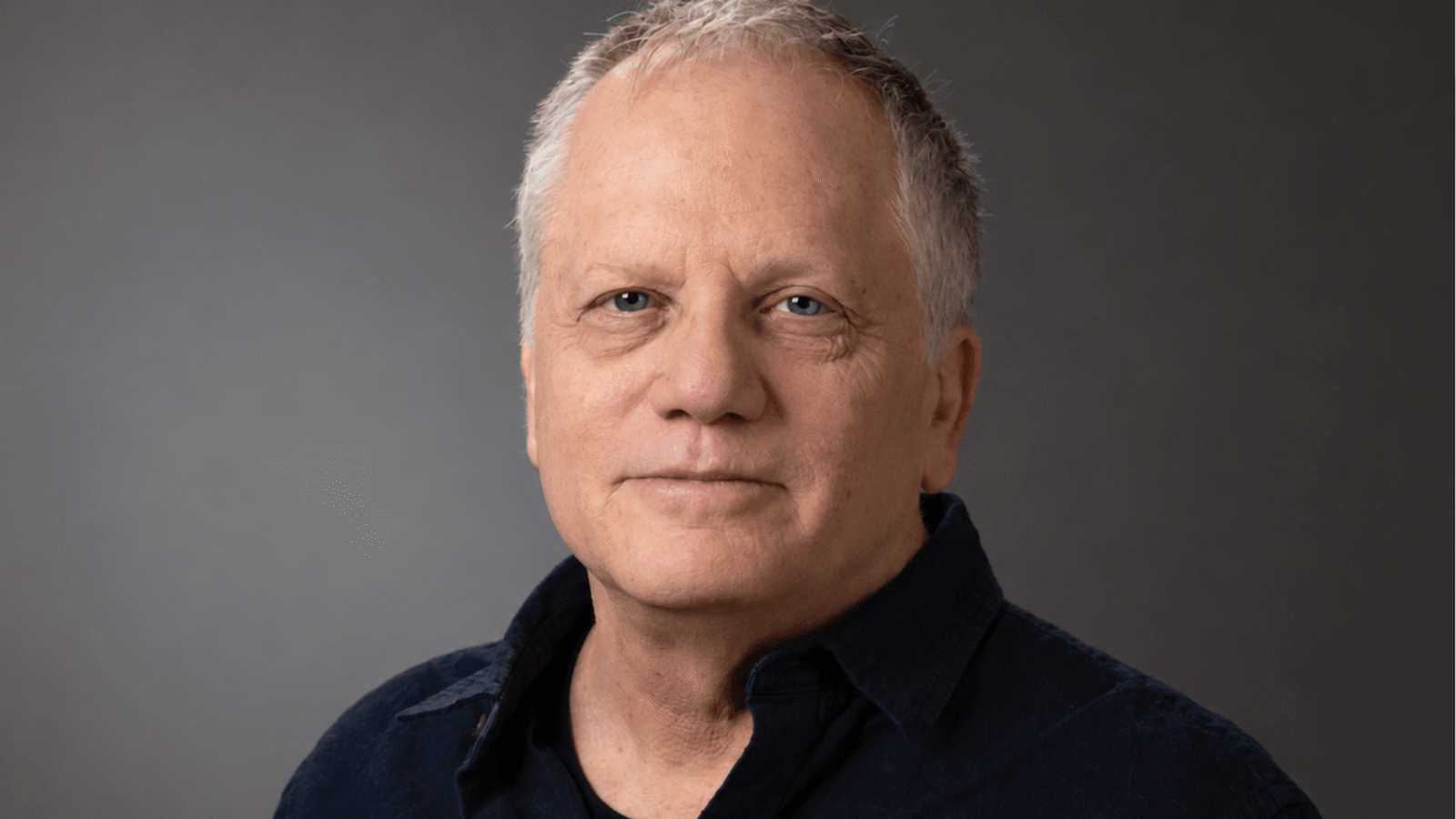
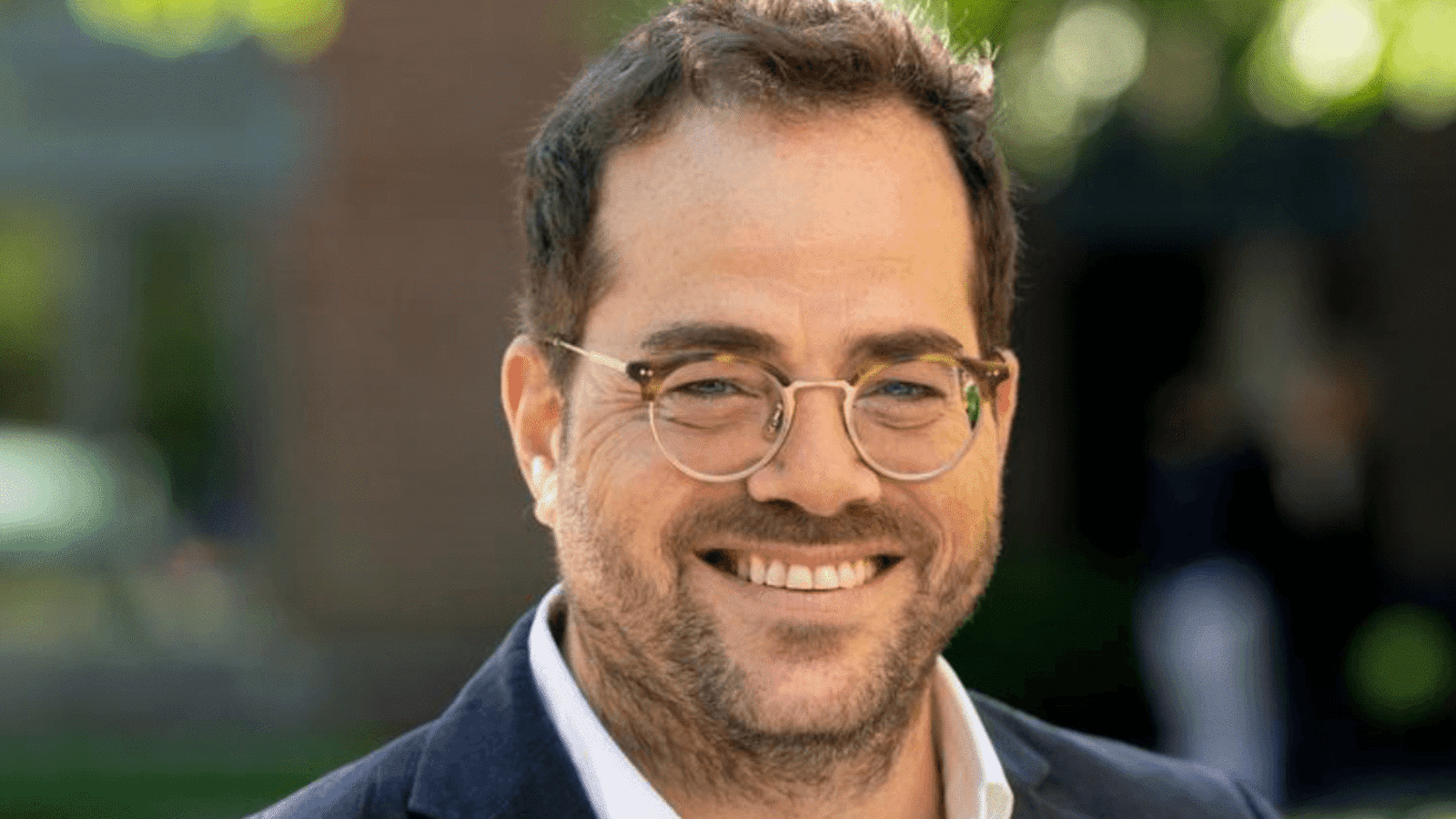
Associate Professor Emilia Zankina.

Assoc. Prof. Zankina: Radev’s Strategy Is to Walk a Fine Line Between Moscow and Brussels

In this ECPS interview, Associate Professor Emilia Zankina, Dean and Associate Professor of Political Science at Temple University Rome, analyzes Rumen Radev’s rise after Bulgaria’s 2026 parliamentary election. She argues that Radev’s success reflects “growing frustration” with instability and mainstream parties, as well as his ability to combine “the pro-EU versus pro-Russian divide” with the “corruption versus anti-corruption divide.” While Radev presents himself as an anti-corruption reformer and defender of sovereignty, Assoc. Prof. Zankina warns that his strategy is to “walk a fine line—embracing pro-Russian positions on issues such as energy while maintaining pro-EU policies.” Despite persistent Russophilia and political fragmentation, she stresses that “the majority of the Bulgarian population remains fundamentally pro-European.”

Interview by Selcuk Gultasli

Bulgaria’s 2026 parliamentary election has opened a new and uncertain chapter in European politics. After years of fragmented parliaments, unstable coalitions, caretaker governments, and anti-corruption protests, Rumen Radev’s Progressive Bulgaria secured a decisive parliamentary majority and unveiled a new cabinet promising stability, institutional reform, and a break with what it describes as Bulgaria’s “oligarchic governance model.” Yet Radev’s rise also raises profound questions about populism, democratic resilience, Euroscepticism, corruption, and Bulgaria’s geopolitical positioning between Brussels and Moscow. Is this a democratic correction against institutional paralysis and elite capture, or the emergence of a more sophisticated form of personalized populist rule within the European Union?

To explore these questions, the European Center for Populism Studies (ECPS) spoke with Associate Professor Emilia Zankina, Dean and Associate Professor of Political Science at Temple University Rome, whose scholarship on populism, democratic backsliding, corruption, and party politics in Eastern Europe offers important insight into Bulgaria’s evolving political landscape.

In this wide-ranging interview, Assoc. Prof. Zankina argues that Radev’s victory reflects “growing frustration among the population with recent instability” and widespread “disillusionment with the mainstream parties.” Yet she stresses that his success rests above all on his ability to merge two enduring cleavages in Bulgarian society: “the pro-EU versus pro-Russian divide” and “the corruption versus anti-corruption divide.” According to Assoc. Prof. Zankina, Radev has successfully positioned himself as both an anti-corruption outsider and a defender of Bulgarian sovereignty, while simultaneously appealing to voters disillusioned with the established political class.

At the center of the discussion is the geopolitical balancing act captured in the headline of this interview. As Assoc. Prof. Zankina explains, “he will try to walk a fine line—embracing pro-Russian positions on issues such as energy while maintaining pro-EU policies, especially in matters related to EU funding.” She repeatedly emphasizes that, despite political fragmentation and persistent pro-Russian sentiment, “the majority of the Bulgarian population remains fundamentally pro-European.” This structural reality, she suggests, places important limits on how far Radev can move Bulgaria away from the European mainstream.

The interview also explores the deeper historical and sociological roots of Bulgarian Russophilia, including Orthodox and Slavic cultural ties, communist-era modernization, energy dependency, and economic anxieties linked to inflation and insecurity. At the same time, Assoc. Prof. Zankina warns against underestimating Radev’s populist strategy. Drawing on her research on Eastern European populism, she argues that Radev exemplifies a “transaction-cost approach” to politics that bypasses formal institutions in favor of direct, personalized leadership and media-centered political communication.

Throughout the conversation, Assoc. Prof. Zankina offers a nuanced and cautious assessment of Bulgaria’s trajectory. While she acknowledges that there is “some genuine political will” for anti-corruption reform, she also warns that oligarchic networks may simply adapt to new political realities. Whether Bulgaria ultimately moves toward democratic renewal or toward a softer form of hybrid governance, she argues, will depend on institutional reforms, opposition cohesion, media pluralism, and the willingness of political elites to resist the temptations of centralized power.

Here is the edited version of our interview with Associate Professor Emilia Zankina, revised slightly to improve clarity and flow.

Radev Unified Bulgaria’s Two Deepest Political Divides

Bulgarian President Rumen Radev.
Then-Bulgarian President Rumen Radev speaks to the media following his meeting with European Commission President Jean-Claude Juncker at EU headquarters in Brussels, Belgium, on January 30, 2017. Photo: Dreamstime.

Professor Zankina, welcome. Bulgaria’s 2026 election appears to mark the end of a prolonged cycle of fragmented coalition politics and repeated snap elections. To what extent should Rumen Radev’s victory be interpreted as a democratic correction against institutional paralysis and corruption, and to what extent does it reflect the broader European trend of populist personalization of politics?

Assoc. Prof. Emilia Zankina: The first thing I would like to say is that Rumen Radev’s success is a result of growing frustration among the population with recent instability, but also disillusionment with the mainstream parties. More than anything, however, his victory reflects his ability to combine two deep divisions within Bulgarian society. One is the pro-EU versus pro-Russian divide, and the other is the corruption versus anti-corruption divide. Let me say a little about each of them.

More than one party in Bulgaria has won elections on anti-corruption platforms. In fact, twice in recent history, we have had a new savior emerge and sweep parliamentary elections without even existing as a party before the campaign. One example is the 2001 victory of Bulgaria’s former king, Simeon Saxe-Coburg-Gotha, who received 43 percent of the vote with a party formed only a few months before the election. Certainly, he was not a new public figure and had been widely respected throughout the years.

He ran on an anti-corruption and pro-European platform. After serving a full four-year mandate, his party became a junior coalition partner in the next government and then disappeared altogether. Boyko Borisov’s GERB, on the other hand, has been much more successful.

Borisov similarly emerged as a well-known political figure, having served as General Secretary of the Interior Ministry and later as Mayor of Sofia. He formed a party and swept the 2009 elections with 43 percent of the vote, again running on an anti-corruption platform and promising to save the country. Unlike Simeon’s movement, however, Borisov proved far more successful in maintaining power and, with a few exceptions, governed almost uninterruptedly until 2021, when the current instability began.

So once again, we see a population searching for a new savior—someone promising to clean the slate and eliminate corruption. The problem, of course, is that corruption is easy to mobilize voters around, but extremely difficult to address in practical terms and within specific institutions. It is therefore quite possible that voters may once again become disappointed with a government promising to eradicate corruption.

Disillusionment with Elites Helped Radev Consolidate a Broad Coalition

The second division I mentioned is even deeper. Pro-Russian and anti-Russian sentiments have shaped Bulgarian politics since independence in the late nineteenth century. Bulgaria has always had camps of Russophiles and Russophobes, and this divide has played out throughout Bulgarian history, including during the communist period and throughout the post-communist era.

Rumen Radev is clearly pro-Russian. He is a pilot who trained with both NATO and Russian forces, and he has repeatedly expressed support for Russia and Putin’s regime. For example, during the war in Ukraine, he refused to call it a war and continued referring to it as a “military operation.” When the caretaker government of Andrei Gurov signed a ten-year military cooperation agreement with Ukraine, Radev criticized it forcefully. He has also opposed sanctions, especially in the energy sector involving Russian gas and oil, as well as military aid to Ukraine, arguing that such measures threaten Bulgaria’s sovereignty and risk dragging the country into a war that is not its own.

Clearly, he has been able to draw on strong pro-Russian sentiment. If we look at the voters his newly formed party attracted, we see support coming from across the political spectrum. He has certainly taken votes from GERB, especially from voters disillusioned by Borisov’s association with Delyan Peevski, the leader of the ethnic Turkish party whom Borisov effectively co-opted. Peevski was sanctioned under the US Magnitsky Act and by the United Kingdom for corruption. He has become the epitome of the corrupt political model and the “octopus” that has penetrated Bulgarian politics. Borisov’s association with Peevski clearly damaged him, and many GERB voters shifted to Radev.

Radev also attracted voters from the urban democratic opposition, Democratic Bulgaria, which discredited itself to some extent through a short-lived coalition arrangement with Borisov in recent years.

Despite Russophilia, Bulgaria Remains Fundamentally Pro-European

Bulgaria-EU flags.
Photo: Dreamstime.

Most interestingly, however, he has almost completely displaced the Bulgarian Socialist Party (BSP), the successor to the Communist Party and historically the country’s most consistently pro-Russian—though also pro-European—party. The BSP fell from one million votes in 2017 to failing to pass the four-percent threshold, losing more than tenfold of its support.

He has also taken more than half the support of the radical-right, pro-Russian party Revival. Bulgaria has a long history of radical-right pro-Russian parties receiving Russian funding, with one replacing another over time. Revival is simply the latest in this line, following parties such as Ataka. Radev succeeded in attracting more than half of their voters. He also drew support from various flash parties, such as There Are Such People, Glory, and Sword.

So we see that he has managed to combine these two major cleavages within Bulgarian society and successfully mobilize voters around them.

As for whether this reflects the broader trend of personalist politics, we have certainly seen this across Europe and beyond—in the United States, in India under Modi, and in Turkey under Erdoğan. With a few exceptions, such as Péter Magyar defeating Orbán in Hungary, strong personalities with increasingly illiberal tendencies have continued to attract support. So yes, Radev is certainly part of that broader trend.

The question, however, is whether he will be able to consolidate such a diverse coalition of support. It is one thing to win elections with heterogeneous backing; it is quite another to pursue concrete policies while maintaining that support. I think he will try to walk a fine line—embracing pro-Russian positions on issues such as energy while maintaining pro-EU policies, especially in matters related to EU funding.

If he were to threaten Bulgaria’s EU affiliation or seriously obstruct Bulgaria’s entry into the Eurozone, which he has publicly opposed, we would immediately see massive protests in the streets. Despite political fragmentation, the majority of the Bulgarian population remains fundamentally pro-European.

Populism Thrives Where Institutions Lose Trust

In your work on populism in Eastern Europe, you conceptualize populism not merely as an ideology but as a political strategy that reduces reliance on formal institutions while privileging direct, personalized political action. How does Radev’s rise illustrate this “transaction-cost” logic of populism, particularly in a context where public distrust toward parties, parliament, and the judiciary has become deeply entrenched?

Assoc. Prof. Emilia Zankina: It’s an excellent question, and I think Radev is a perfect example of this transaction-costapproach because he entered politics as an independent and won two consecutive presidential elections.

From his presidential position, he has been able to spearhead criticism of and opposition to the governing party, GERB. He has skillfully utilized the visibility of the presidency and his ability to address the population directly. For example, on January 1 at midnight, on New Year’s Eve, the president is the only political figure who addresses the nation. Radev used this privilege to advocate for a referendum on the euro. No other politician enjoys such a platform. At the very moment the euro issue became politically salient, he was speaking directly to the entire nation, advocating for a referendum and opposing euro adoption.

He has therefore used presidential authority in a very strategic way, expanding his influence far beyond the office’s formal constitutional limits. He has benefited from extensive media attention and has exercised his veto power more than any other Bulgarian president. Although the presidential veto carries limited institutional weight in Bulgaria, since it can be overturned by a simple parliamentary majority, he nevertheless used it to expand his political influence significantly.

The fact that Bulgaria lacked regular governments for five years also allowed him to appoint caretaker governments chosen by him without parliamentary approval. So, even though he acted nominally within legal limits, he effectively bypassed numerous checks and balances and institutional constraints in order to augment his power, increase his popularity, and, above all, create a direct link with voters in the absence of a party structure and institutional parliamentary mechanisms.

And it is no surprise that it almost did not matter what the party itself was going to be. If you look at his government, it is a hastily assembled coalition made up of people from previous political parties, some experts, and individuals from his presidential cabinet. It is clear that he does not have a deep bench. It is clear that this is not a solid organization. It is clear that he is cashing in precisely on this non-intermediated approach to politics.

Moderate Rhetoric Can Mask a Euroskeptic Agenda

People protesting on the main streets of the capital, demanding the Prime Minister’s resignation, in Sofia, Bulgaria, on July 14, 2020. Photo: Shutterstock.

Radev presents himself simultaneously as an anti-corruption reformer, a defender of Bulgarian sovereignty, and a pragmatic critic of Brussels. How should we analytically distinguish between democratic sovereignty claims and the gradual normalization of Eurosceptic majoritarian politics in the Bulgarian case?

Assoc. Prof. Emilia Zankina: I personally do not trust his arguments. He is very clever, highly educated, and extremely erudite. He comes across as very professional and speaks excellent English. He is, in many ways, a polished and highly skilled politician. The arguments he makes are delivered in a moderate and reasonable tone, but we should not fool ourselves about what lies behind them.

In a situation of geostrategic chaos, when America appears to be abandoning its European allies and adopting increasingly unpredictable behavior under the current Trump administration, Bulgaria, as a country of under seven million people, has very limited options for security, whether military or economic. Bulgaria’s future therefore lies with the European Union for both economic and security reasons. EU membership, together with accession to Schengen and the Eurozone, has demonstrated that Bulgaria has been following a path that has led to significant growth in average income, despite current inflation, which is a global phenomenon.

Moreover, despite the political instability of the last five years, Bulgaria’s integration into the European project has limited politicians’ ability to seriously damage the country’s economic situation. Despite public complaints, wages are rising, labor opportunities are improving, and Bulgarians are far more connected to Europe and travel much more frequently. One simply cannot compare life in Bulgaria before and after EU membership in 2007.

So, when Radev makes arguments that may sound reasonable—for example, claiming that Europe is imposing this or that directive—he is taking advantage of the fact that, within such a large union, some directives will inevitably be unpopular. Take a simple example from years ago: anti-smoking regulations. In Eastern Europe, this was a major issue because people in the region tend to smoke and drink heavily. When these regulations were introduced, they generated significant resistance, partly because they required investments in ventilation systems and imposed additional costs on the hospitality sector.

It is therefore very easy to take a directive that is actually quite straightforward—there is no serious debate about the health benefits of non-smoking—and politicize it by claiming that Europe is imposing laws that contradict local culture or create unnecessary financial burdens.

So again, I would interpret the cautious remarks he makes about sovereignty and Bulgaria asserting its proper role within the European Union as reflecting a hidden Euroskeptic and pro-Russian agenda.

Dictators Are Not Born, They Become Dictators

Many observers compare Radev to Viktor Orbán or Robert Fico, while others argue he is more ideologically flexible and strategically ambiguous. In comparative terms, where would you place Radev within the broader family of contemporary European populist leaders?

Assoc. Prof. Emilia Zankina: I would agree with the argument that he is much more flexible and ideologically unbound. He is a political survivor, so I do not think we would immediately see an Orbán-type figure in Radev. But again, we should not forget that Orbán became who he is over the course of several decades. In the late 1980s, before the collapse of communism, Orbán was strongly criticizing the communist regime and was among the first to give a pro-NATO speech. Orbán became a dictator over time.

And this is important to note here: dictators are never born; dictators become dictators. When Erdoğan first came to power, he was not a dictator. Even when Putin first won elections, he was not a dictator. What happens is that once leaders gain power and begin accumulating more and more control, their willingness to relinquish that control declines very sharply. Most of the dictators we see today actually began as democratically elected leaders. They started that way and then gradually chipped away at democratic mechanisms.

So, for Radev to become an Orbán-type figure, it would take time, even if that is ultimately where he is headed. But I do agree that he is much more ideologically flexible and less rigid than either Orbán or Fico.

If I were to place him within the broader European landscape, especially in the absence of Orbán, I would say that he would probably resemble Fico, though not as firmly positioned. The moment Orbán was no longer there, the €90 billion aid package to Ukraine was immediately approved. So Fico standing alone is not the same as Fico standing together with Orbán. Yes, Fico was the only European leader to attend the May 9 parade in Moscow, but he has not voted as aggressively within the European Union as Orbán has.

So, I would expect Radev to subvert European politics where possible, but he would not dare to do so as explicitly as Orbán has done. Partly, this is because he still does not have a fully consolidated party structure or support base in Bulgaria, and he would risk once again bringing people into the streets in protest.

Replacing Figureheads Does Not Dismantle State Capture

Bulgaria has long suffered from what many analysts describe as “captured institutions,” oligarchic patronage networks, and weak judicial independence. Do you believe Progressive Bulgaria possesses the institutional depth and political discipline necessary for genuine democratic reconstruction, or is there a risk that anti-corruption rhetoric merely legitimizes a new configuration of centralized power?

Assoc. Prof. Emilia Zankina: People are cautiously hopeful that he at least has the motivation to dismantle that model, even if he may not yet possess the institutional resources to do so. However, one of the first votes in Parliament by his new majority—an absolute majority, something Bulgaria has not seen in many years—was, in fact, a vote against investigating Borisov and Peevski.

Some analysts argue that Bulgaria first needs a chief prosecutor before any serious investigation can begin, and that Radev is being strategic by delaying investigations until the judicial system and the prosecutor’s office are cleaned up. I remain very skeptical of that argument.

On the other hand, he did retain the General Secretary of the Interior Ministry, who distinguished himself by cleaning up the ministry within just a few months, removing individuals involved in electoral manipulation, and, together with the Interior Minister and the caretaker Prime Minister, organizing what was probably the fairest and most transparent election in Bulgaria’s post-communist history.

So, on the one hand, I do think there is some genuine desire to combat corruption among many of the people who joined Radev’s project, even if not necessarily from Radev himself, including some of the individuals he is now appointing to key positions. Institutionally, however, the challenge is extremely difficult. Simply removing people would not solve the problem. Constitutional reforms require a supermajority, and we already saw under the previous GERB, DPS, and Democratic Bulgaria majority that constitutional reforms did pass, but they were very poorly designed to address corruption in any meaningful way.

So, I do believe, certainly, there is some genuine political will. At the same time, however, there are many obstacles. There will also be enormous pressure from oligarchic circles to preserve the system simply by replacing one figurehead with another, while continuing to operate through behind-the-scenes deals and informal arrangements. The temptation will therefore be very strong, and it will become a real ethical test for every individual in every position whether they will be able to resist.

Progressive Bulgaria Fits the Classic Populist Formula

Boiko Borisov, leader of the center-right GERB party, during voting in Sofia, Bulgaria, on October 5, 2014. Photo: Julia Lazarova / Dreamstime.

Your research on Bulgarian populism highlights the role of personalist parties and informal political mechanisms. To what extent does Progressive Bulgaria represent another iteration of Bulgaria’s recurring cycle of charismatic anti-establishment movements that mobilize frustration but struggle to institutionalize durable democratic governance?

Assoc. Prof. Emilia Zankina: Progressive Bulgaria fits the perfect recipe for winning elections through a personalist, populist, anti-establishment appeal. What is really interesting—and what scholars have only recently started examining more rigorously—is not how populist parties win. We already know that formula. The more important question is why some of them survive while others disappear so quickly.

If we look at the Bulgarian case, why was it that Simeon Saxe-Coburg-Gotha’s party and the NDSV did not survive for more than eight years, while Boyko Borisov’s party has endured for almost twenty years? And let us not forget, GERB is still not finished—it remains the second-largest party in Parliament.

So, the key question regarding Radev is how quickly this new party will be able to establish local structures. If we examine the GERB example, we can distinguish between two types of local structures. One consists of entirely legitimate local branches, ranging from youth organizations to various municipal party organizations that legitimately mobilize voters, recruit candidates, and so forth.

The second, however, is GERB’s ability to engage in pork-barrel politics by distributing EU funds, legal protection, and other advantages to local businesses. Those businesses then remain loyal and deliver votes through what is known in Bulgaria as “corporate voting.” This differs from direct vote-buying, where individuals are simply paid to vote. In the corporate voting model, entire companies effectively vote for a given party because management instructs employees to do so. And management does so because it benefits from favorable treatment, contracts, and protection from government sanctions.

So, the real question is whether Rumen Radev will be able to establish a local presence, what type of local presence he will build, and how quickly he can do so. It is clear that he has swept the national vote. It is also clear that he can probably attract some of the strongest local supporters from existing party structures and convert them into supporters of Progressive Bulgaria.

But building local networks was one of GERB’s greatest strengths. Borisov’s longtime second-in-command, Tsvetan Tsvetanov, essentially replicated military- and police-style organizational networks in constructing the party’s local structures. He was extremely skilled at doing that. I do not know whether Radev has someone capable of performing a similar role for him.

Radev Balances Electoral, Geopolitical, and Ideological Interests

Radev has repeatedly criticized military support for Ukraine while simultaneously insisting that Bulgaria will remain committed to its European path. Is this strategic ambiguity primarily ideological, geopolitical, or electoral in nature?

Assoc. Prof. Emilia Zankina: Actually, it is probably a combination of all three. Electorally speaking, he can simultaneously appeal to fears of Bulgaria being dragged into the war, to pro-Russian sentiments, and, of course, to the strong pro-European sentiments held by the majority of the Bulgarian population. So, electorally, this positioning is certainly advantageous.

Geostrategically, he genuinely believes he can be the clever actor who secures cheap Russian gas and oil while also benefiting from European funds at the same time. And he is not the first to think this way. Borisov believed something similar before him. Erdoğan also positioned himself as a mediator between Russia and the European Union. And let us not forget that Germany, under Angela Merkel, practiced this approach for decades—benefiting from cheap Russian gas and maintaining bilateral relations with Putin while simultaneously serving as a pillar of the European Union. So, geostrategically speaking, one could argue that this is not necessarily a foolish strategy; it may, in fact, be a clever one.

Ideologically, again, Radev is very flexible. But I do think he has a profound appreciation for Russia’s power and its historical ability to withstand external attacks and survive. Certainly, Russia and the Soviet Union lost many wars, but they did not lose wars fought on their own territory. Whether we look at Napoleon or Hitler during World War II, no one was able to defeat Russia on its own soil. Of course, it is a different matter when Russia fought in Afghanistan, Chechnya, Georgia, and, most recently, Ukraine.

So, I do think he harbors some genuine admiration for the Russian military tradition. And, this is one aspect of his ideological worldview that I would emphasize, even though his views remain much more flexible than those of hardline pro-Russian politicians.

Bulgarian Russophilia Has Deep Historical Roots

Demonstration commemorating May 9, Russia’s Victory Day over Nazi Germany, with participants expressing their emotions and displaying slogans in Sofia, Bulgaria, on May 9, 2022. Photo: Yulian Staykov.

How do you interpret the persistence of pro-Russian sentiment in Bulgaria despite the country’s integration into NATO, Schengen, and the eurozone? To what extent is this sentiment rooted in historical memory, cultural affinity, energy dependency, economic insecurity, or disappointment with liberal democratic elites?

Assoc. Prof. Emilia Zankina: You listed all of the reasons, so let me say a few things about each of them. The historical legacy is very strong. Bulgaria is an Orthodox, Slavic country that speaks a language very similar to Russian. During the Russo-Turkish War of 1876–78, Russian soldiers fought side by side with Bulgarian fighters to secure Bulgaria’s independence from the Ottoman Empire.

When the Red Army crossed the Danube in 1944, it was certainly what many historians—and large parts of the population—would describe as an outright Soviet invasion. But many people also saw it as yet another liberation of Bulgaria, this time from fascism. Then, of course, there were 45 years of Soviet-backed communist rule, which brought industrialization to the country and improved living standards for many people, especially those living outside the large cities.

At the outset of communist rule, Bulgaria was around 70 percent agrarian, and it emerged from communism as a country that was roughly 70 percent industrialized. People who had lived in villages without indoor plumbing or running water suddenly gained privileged access to universities in major cities. So, the social stratification of society was fundamentally reshaped. Many people therefore support Russia because of the communist legacy, historical ties, and linguistic affinity.

Others support Russia because of economic interests, especially in tourism. Bulgaria receives a large number of Russian tourists, and many people along the Black Sea coast depend economically on that tourism sector. They therefore feel genuinely anxious when geopolitical developments threaten the ability of Russian tourists to travel to Bulgaria.

And then, of course, there is the energy sector. Before the war in Ukraine, Bulgaria’s dependence on Russian gas was around 90 percent. This dependence has since fallen to below 40 percent because of sanctions, European policies, and external pressure—mostly external pressure rather than internal willingness. Nevertheless, people remain highly sensitive to energy prices. Energy costs in Bulgaria are much higher as a percentage of income—and often even in absolute terms—than in many Western European countries. Part of this is due to the country’s long-term dependence on a single supplier, as well as the lack of diversification and investment in green energy.

People become anxious very easily because they understand that once energy prices rise, everything else becomes more expensive as well. So, this is a complex combination of factors, with different elements playing different roles for different people. In the current context, uncertainty and inflation are probably more important than cultural arguments, but the historical and cultural dimensions should certainly not be underestimated either.

Bulgaria Could Become a Softer Voice for Moscow

Some analysts argue that Bulgaria risks becoming Moscow’s new “voice” inside the European Union after Orbán’s defeat in Hungary. Do you consider such fears exaggerated, or do you see the emergence of a broader East-Central European bloc seeking to challenge the EU consensus on Ukraine, sanctions, energy, and strategic autonomy?

Assoc. Prof. Emilia Zankina: I do think that Rumen Radev would try to challenge the consensus when it comes to Russia, sanctions on Russia, and especially energy policies affecting Russian oil and gas. He would have Fico as an ally in that regard.

We need to remember, however, that he can only do this at the level of the EU Council and meetings of heads of state and foreign ministers. He cannot do this in the European Parliament, because there are still another three years until the next European parliamentary elections. By that time, who knows whether his party will still be in power and whether, in the 2029 elections, he will be able to secure a strong presence in the European Parliament.

So, his ability to influence the broader European agenda will be somewhat limited, but he will certainly try to challenge the existing consensus. At the same time, Bulgaria remains highly dependent on EU funds. The idea that these funds could somehow be replaced by Russian support would be catastrophic in terms of maintaining popular support within Bulgaria.

Bulgaria Stands Between Reform and Hybrid Rule

Finally, Bulgaria now seems to stand at a crossroads between democratic stabilization and the possibility of a softer, more sophisticated form of hybrid governance. What indicators should scholars and European policymakers watch most carefully during Radev’s first year in office to determine whether Bulgaria is moving toward democratic renewal—or toward a new model of populist state capture?

Assoc. Prof. Emilia Zankina: Fortunately, one very important indicator we need to watch is the ability of the opposition to remain united and provide a coherent alternative through parliamentary debates, upcoming local elections, and so forth. The first thing that happened after Radev’s victory, however, was that the largest opposition force, Democratic Bulgaria, split into its component parts. So, this is not particularly encouraging.

The other major opposition party is GERB, which is also problematic because it is currently behaving in a very neutral and very cunning way. Borisov, for example, did not vote against the new government. When the government was approved on Friday, he abstained, and his party abstained as well. Borisov is very smart and very experienced. He is a strong political animal, as we say. So, he will likely pursue a very calculated strategy of waiting for Radev to commit a faux pas, especially on European issues, and then step in and say: “You see, I respected the will of the people. You wanted a consolidated government, but it turned out not to be a truly pro-European government, and GERB remains the only genuine pro-European force.”

So, Borisov will probably be more successful than the fragmented parts of Democratic Bulgaria, which are now divided into separate formations instead of remaining in coalition. They performed pitifully, both electorally and in terms of their internal politics. And it is a shame, because they were really the mobilizing force behind the latest anti-government protests, yet all of that energy went to waste, and Radev was able to capitalize on it while PP completely lost it. I am afraid that their political inexperience and naivety caused them a major political defeat.

SummerSchool

ECPS Academy Summer School — Europe Between Oceans: The Future of the EU Trade Between the Atlantic and the Indo-Pacific (July 6-10, 2026)

Are you interested in global trade politics and the future of Europe in a shifting world order? Do you want to understand how populism, great-power rivalry, and geopolitical tensions are reshaping EU trade between the Atlantic and the Indo-Pacific? The ECPS Academy Summer School 2026 offers a unique five-day program where leading scholars and policymakers explore the EU’s role in an era of economic uncertainty and strategic competition. Participants will engage in interactive lectures, small-group discussions, and a dynamic simulation game on EU trade strategy, gaining hands-on experience in policy analysis and recommendation drafting. Join an international, multidisciplinary environment, exchange ideas with peers worldwide, earn ECTS credits, and become part of a global network studying populism, political economy, and international relations.

Overview

In today’s rapidly shifting global order, the European Union can no longer afford to think in one direction. For decades, the transatlantic relationship has been the backbone of global trade, built on shared institutions, economic interdependence, and liberal values. Yet this foundation is no longer stable. As highlighted in the ECPS report Populism and the Future of Transatlantic Relations, domestic political polarization and the rise of populism on both sides of the Atlantic are reshaping trade policy, weakening trust, and challenging the very principles of open markets and multilateralism. The EU now faces a critical question: how to remain a global trade power when its closest partner is becoming less predictable.

At the same time, the center of gravity of global trade is shifting toward the Indo-Pacific. This region has become the epicenter of economic dynamism and geopolitical competition, where the future of global trade rules is increasingly being contested. The growing rivalry between the United States and China is not only a security issue but also a trade and technological struggle shaping supply chains, investment flows, and regulatory standards. As the US adopts more unilateral and strategic approaches to trade, moving away from traditional multilateralism, the EU must navigate a complex environment where cooperation, competition, and coercion coexist. Ignoring the transpacific dimension would mean missing where the future of global trade is being written.

For the European Union, the challenge and opportunity lie in managing both arenas simultaneously. The transatlantic relationship remains indispensable for economic scale, regulatory cooperation, and political alignment, while the transpacific region is crucial for diversification, resilience, and strategic autonomy. As scholars increasingly argue, the EU is no longer just a “junior partner” but an actor that must define its own role within a triangular system shaped by US–China competition. To lead in international trade today means mastering this dual engagement: stabilizing relations with the United States while actively shaping the Indo-Pacific order. This requires not only policy innovation but also a new generation of thinkers who understand trade through a geopolitical lens.

Against this backdrop, ECPS Academy Summer School-2026 brings together leading scholars and policymakers to examine how populism and great-power competition are reshaping EU trade policy across both transatlantic and transpacific arenas. 

It offers a unique opportunity to explore:

  • The future of EU–US trade relations in an era of populism
  • The strategic importance of the Indo-Pacific and the US–China trade rivalry for the EU
  • How global trade is being reshaped by geopolitics, security, and ideology
  • The populist discourse around trade, policy, and power, and its implications for the EU’s trade relations
  • It also allows participating in an enjoyable and dynamic simulation game on the EU’s trade relations, trying to bring policy suggestions.

You will learn and actively engage in discussions, develop your own policy ideas, take part in simulation games, have the opportunity to publish on ECPS venues, and become part of an international network working at the intersection of political economy, international relations, and populism studies.

Tentative Program

Day 1 – Monday, July 6, 2026

Theme: The EU in the Global Trade Order: From Liberalism to Geoeconomics

This opening day sets the conceptual stage. It introduces how EU trade policy evolved from embedded liberalism to strategic autonomy, and how trade is now intertwined with security and geopolitics. It also establishes the role of populism and domestic politics in reshaping trade preferences and legitimacy crises in Europe and beyond.

Lecture One: (15:00-16:30) – Evolution of EU Trade Policy and Global Trade Order

Lecturer: Arlo Poletti (Professor of International Relations at the Department of Sociology and Social Research of the University of Trento).

Lecture Two: (17:30-19:00) – Populism, Legitimacy, and the Politicization of Trade

TBC

Day 2 – Tuesday, July 7, 2026

Theme: EU–US Trade Relations under Pressure: Cooperation, Conflict, and Populism

Focuses on the transatlantic pillar, still central but increasingly unstable. It examines tariff disputes, regulatory divergence, and how populist and protectionist politics in the US and Europe challenge long-standing cooperation and WTO-based norms.

Lecture Three: (15:00-16:30) –  Political Economy of EU–US Trade Relations

Lecturer: Erik Jones (Professor of European Studies and International Political Economy, Director of the Robert Schuman Centre for Advanced Studies at the European University Institute and Non-resident Scholar at Carnegie Europe).

Lecture Four: (17:30-19:00) – Populism and the Erosion/Reconfiguration of Transatlantic Trade Cooperation

Lecturer: Alasdair Young (Professor and Neal Family Chair in the Sam Nunn School of International Affairs, Georgia Tech).


Day 3 – Wednesday, July 8, 2026 

Theme: The EU Between the US and China: Trade, Power, and Strategic Autonomy

This session introduces the triangular dynamic (EU–US–China) and how the EU navigates between partnership and rivalry. It highlights de-risking, economic security, supply chains, and competing models of globalization.

Lecture Five: (15:00-16:30) – EU–US–China Trade Relations and Global Power Competition

Lecturer: Ramón Pacheco Pardo (Professor of International Relations at King’s College London and the KF-VUB Korea Chair at the Brussels School of Governance of Vrije Universiteit Brussel).

Lecture Six: (17:30-19:00) – Strategic Autonomy, De-risking, and EU Economic Security Tools

Lecturer: Reuben Wong (Associate Professor, Department of Political Science, National University of Singapore).

Day 4 – Thursday, July 9, 2026

Theme: The Indo-Pacific Turn: EU Trade Strategy in a Shifting Global Centre

This session shifts focus to the transpacific dimension, emphasizing that the future of trade is increasingly shaped in the Indo-Pacific. It explores how US strategies toward China and the region reshape global trade, and how the EU responds through diversification and partnerships.

Lecture Seven: (15:00-16:30) – US Indo-Pacific Strategy and Its Trade Implications

Lecturer: Kristi Govella (Associate Professor of Japanese Politics and International Relations in the Nissan Institute of Japanese Studies and the Oxford School of Global and Area Studies at the University of Oxford). 

Lecture Eight: (17:30-19:00) – EU Engagement in the Indo-Pacific (FTAs, Partnerships, Strategic Positioning)

Lecturer: Axel Berkofsky (Associate Professor at the University of Pavia and Co-Head of the Asia Centre at ISPI).

Day 5 – Friday, July 10, 2026

Theme: The Future of EU Trade Power: Between Fragmentation and Leadership

This session will ask whether the EU can become a global trade power amid fragmentation, populism, and great-power rivalry. It also allows for normative and policy-oriented discussions.

Lecture Nine: (15:00-16:30) –  Scenarios for the Future of Global Trade Governance (Fragmentation vs Reform)

Lecturer: Manfred Elsig (Professor of International Relations and Managing Director of the World Trade Institute of the University of Bern). (TBC)

Lecture Ten: (17:30-19:00) – Can the EU lead? Policy Tools, Regulatory Power, and Global Influence

Lecturer: Markus Kotzur (Professor of European and International Law, Vice Dean for International Relations and Chair for Public Law, European and International Public Law, Hamburg University). 

Methodology

The program will take place on Zoom, consisting of two sessions each day and will last five days. The lectures are complemented by small group discussions and Q&A sessions moderated by experts in the field. Participants will have the opportunity to engage with leading scholars in the field as well as with activists and policymakers working at the forefront of these issues.

The final program with the list of speakers will be announced soon.

Furthermore, this summer school aims to equip attendees with the skills necessary to craft policy suggestions. To this end, a simulation game will be organized on a pressing theme within the broader topic to identify solutions to issues related to the future of the EU trade relations.

Who should apply?

This course is open to master’s and PhD level students and graduates, early career researchers and post-docs from any discipline. The deadline for submitting applications is June 16, 2026. As we can only accept a limited number of applicants, it is advisable to submit applications as early as possible rather than waiting for the deadline.

The applicants should send their CVs to the email address ecps@populismstudies.org with the subject line: ECPS Summer School Application.

We value the high level of diversity in our courses, welcoming applications from people of all backgrounds. 

Evaluation Criteria and Certificate of Attendance

Meeting the assessment criteria is required from all participants aiming to complete the program and receive a certificate of attendance. The evaluation criteria include full attendance and active participation in lectures.

Certificates of attendance will be awarded to participants who attend at least 80% of the sessions. Certificates are sent to students only by email.

Credit

This course is worth 5 ECTS in the European system. If you intend to transfer credit to your home institution, please check the requirements with them before you apply. We will be happy to assist you; however, please be aware that the decision to transfer credit rests with your home institution.

Amsterdam, Muslims.

Part IV — Rethinking the Nexus of Racialization and Populism: Lessons from the Study

In the concluding installment of her series, Lianne Nota offers a theoretically and empirically grounded reassessment of the relationship between populism and racialization. Moving beyond conventional assumptions, she demonstrates that while racialization is central to certain forms of right-wing populism, it is not an inherent feature of populism itself but contingent upon broader ideological configurations. By foregrounding the role of “new racism” and the discursive linking of categories such as migration, religion, and security, Nota reveals how exclusionary boundaries can be constructed without explicit reference to race. At the same time, the analysis highlights the possibility of de-racializing political discourse through more inclusive articulations of “the people.” The article thus advances a nuanced framework for understanding how language shapes political belonging and exclusion.

By Lianne Nota*

This series set out to explore a question that is often overlooked in populism research: how and under what conditions does racialization shape the construction of the populist ‘people’? By analyzing parliamentary debates in the Netherlands, the findings point to a clear but nuanced conclusion. While racialization plays a significant role in right-wing populism, it is not an inherent feature of populism as such.

Is Racialization Inherent to Populism?

A key takeaway from this study is that populist actors do not automatically produce racialized understandings of ‘the people.’ Both Dutch populist parties under examination relied on a populist logic separating ‘the people’ from ‘the elite,’ yet only one consistently constructed these categories in racialized terms.

This suggests that the presence of racialization depends less on populism itself, and more on the ideological context in which populism is articulated. In the case examined here, right-wing populist discourse constructed ‘the people’ through exclusionary boundaries that essentialized cultural and religious differences, while left-wing populist discourse emphasized inclusivity and resisted such essentialization.

At the same time, this finding should not be taken to mean that left-wing populism is inherently immune to racialization. Rather, it highlights the importance of examining these dynamics empirically, rather than relying on a priori assumptions regarding the presence (or absence) of racialization in populism.

New Racism

Another important insight is that racialization often operates indirectly. Throughout this study, explicit references to race were absent. Instead, references to culture, religion, and civilization performed a similar function. By presenting religious and cultural differences as fixed and immutable, the discourse created boundaries that closely resemble racial hierarchies, without ever using the language of race itself. 

This reflects what scholars have called ‘new racism,’ where cultural differences replace biological difference as the basis for exclusion. Another word to describe this type of racism is cultural racism. Cultural or new racism is not necessarily less innocent than ‘traditional’ biological racism, for the cultural boundaries that separate people from each other are presupposed to be absolute, meaning no ‘outsider’ can ever be assimilated into ‘the people (MacMaster, 2001: 194-195). In other words, “cultural racism as a discourse performs the same task as biological racism, as culture functions in the same way as nature, creating closed and bounded cultural groups,” (Wren, 2001: 144). 

Understanding racialization in this broader sense is especially important in contexts like the Netherlands. As mentioned in the first article, discussions of racism are often avoided by a majority of academics and policymakers in the Netherlands (Grosfoguel & Mielants, 2006). However, this does not mean that racism is absent from the Netherlands. In fact, as Weiner (2014) argues, racism takes a peculiar form in the Netherlands, rooted in the denial of race as significant and the particular Dutch history of colonization. Building on this, this study shows us how exclusionary logics can persist even in the absence of explicit references to race or racism.

The Importance of Discursive Linkages

The analysis also shows how racialization does not occur only through how ‘the people’ are described, but also through how different categories are linked together.

In right-wing discourse, groups such as Muslims, migrants, and terrorists were frequently connected, forming a broader threatening ‘Other.’ This process can be understood as kind of a discursive chain, where distinct categories are treated as equivalent.

This finding builds on existing scholarship on populism. While scholars have used the idea of a ‘chain of equivalence’ to explain how demands are linked together (Laclau, 2005), this study suggests that a similar logic can operate in the construction of perceived threats. By linking different groups into a single category, the boundaries of ‘the people’ become sharper and can exclude large portions of society from ‘the people’.

Looking Forward

Taken together, these findings draw attention to how processes of (de-)racialization are implied in the construction of the populist ‘people.’ In doing so, this study suggests that race, racism, and racialization are concepts that should be considered more systematically in relation to populism. Societally, this study demonstrates (again) that discourse has real consequences for real people. How something or someone is talked about has real-world implications that can affect the inclusion or exclusion of particular groups from society. In particular, this study warrants us to pay attention to how exclusion is naturalized through language and how groups of people are systemically excluded even in absence of terms like ‘race.’

At the same time, this article series also suggests that such exclusionary discriminatory framings are not inevitable. By emphasizing inclusivity, the protection of human rights, and the rule of law, more pluralistic understandings of ‘the people’ can be advanced. 

However, like any study, this analysis has its limitations. It has focused on a single country, a specific time period, and a limited number of political actors. As such, the findings cannot be generalized to all cases of populism across the world. 

This opens up avenues for future research. Comparative research across different countries could help determine whether similar patterns emerge elsewhere. It would also be interesting to analyze less traditional platforms like social media networks in order to examine whether racialization plays out differently depending on the platform of choice. Finally, future research could link the discursive dimension of racialization more to the material or institutional dimensions of racialization, for example, by examining how racializing or de-racializing discourse translates into policy decisions and institutional practices. 

Ultimately, this article series highlights a broader point: how we talk about ‘the people’ matters. The boundaries drawn through language shape who is included and who is excluded. Paying attention to these boundaries is therefore not only an academic exercise, but also a necessary step in understanding and potentially challenging the dynamics of exclusion in contemporary politics.


(*) Lianne Nota is an ECPS intern and Research Master’s student in International Relations at the University of Groningen, with a focus on identity, populism, ontological security, and the ethics of global affairs. These article series is based on her paper “Constructing ‘The People’: The Role of Racialization in Dutch Populist Discourse” that she wrote for her specialization phase at RUG.


References

Grosfoguel, R., & Mielants, E. (2006). “Introduction: Minorities, Racism and Cultures of Scholarship.” International Journal of Comparative Sociology47(3–4), 179–189. https://doi.org/10.1177/0020715206065780

Laclau, E. (2005). On Populist Reason (1st edn). Verso.

MacMaster, N. (2001). Racism in Europe, 1870-2000. Palgrave. http://dx.doi.org/10.1007/978-1-4039-4033-9

Weiner, M. F. (2014). “The Ideologically Colonized Metropole: Dutch Racism and Racist Denial.” Sociology Compass8(6), 731–744. https://doi.org/10.1111/soc4.12163

Wren, K. (2001). “Cultural racism: Something rotten in the state of Denmark?” Social & Cultural Geography2(2), 141–162. https://doi.org/10.1080/14649360120047788

See other parts of the series

Part 1 — Constructing ‘The People’: The Role of Racialization in Dutch Populist Discourse

Part 2 — Studying “the People”: A Discourse-Analytical Approach to Populism

Part 3 — (De-)racializing ‘the People’: Who Is the Dutch Populist ‘People’?

Geert Wilders

Part III — (De-)racializing ‘the People’: Who Is the Dutch Populist ‘People’?

In the third installment of her series, author Lianne Nota presents a nuanced comparative analysis of how “the people” are constructed within Dutch populist discourse. Drawing on parliamentary debates, she demonstrates that right- and left-wing populist actors do not merely differ in tone but articulate fundamentally distinct logics of political belonging. While the Partij voor de Vrijheid (PVV) constructs a homogeneous and exclusionary “people” through the racialization of a Muslim “other,” the Socialistische Partij (SP) advances a more inclusive, civic conception that actively resists such boundary-making. By juxtaposing processes of racialization and de-racialization, Nota offers a compelling empirical contribution that challenges prevailing assumptions about populism’s relationship to exclusion, highlighting instead the contingent and discursive nature of political community formation.

By Lianne Nota*

In the previous parts, we outlined the project in terms of literature, method, and data. In this part, the findings of the analysis will be shared. To reiterate, this study analyzed parliamentary debates about migration, Islam, terrorism, and radicalization in the Netherlands during the 2015 refugee crisis. Through a comparison of how a right- and left-wing populist party spoke about ‘the people’ and various Others, the role of racialization in the construction of ‘the people’ was analyzed. What emerged is not just a difference in tone or emphasis, but a fundamentally different understanding of who belongs and who doesn’t.

PVV: The Homogenous Judeo-Christian People, the Tacialized Muslim Other and the Culpable Elite

The Construction of ‘the People’

PVV consistently presented itself as the party for the ordinary, hardworking, overlooked people. For example, in the debate on the terrorist attacks in Paris at the beginning of January 2015, frontman Geert Wilders stated that I am [emphasis added] one of the victims, and not just me, but the entirety of the Netherlands and lots of others” (Tweede Kamer der Staten-Generaal, 2015a). As part of the common Dutch people, the PVV thus insisted on representing their voice.

For the PVV, ‘the people’ consisted of an innocent Judeo-Christian community that is being threatened by ‘Islamization.’ For example, one speaker expressed that “Islam is alien [‘wezensvreemd’] to the Judeo-Christian and humanist norms, values and traditions on which the Dutch society is based” (Tweede Kamer der Staten-Generaal, 2015b). In the context of the terrorist attacks in Paris, Wilders stated that he was “furious that, because of Islam, innocent victims fell again: jews, Islam critics and innocent people” and that “Islam simply does not belong to the Netherlands and is a danger to it,”(Tweede Kamer der Staten-Generaal, 2015a).

Islam was portrayed as slowly taking over and threatening ‘our’ culture, for example, through an expression like “we are having to put our [emphasis added] Christian culture with the garbage” (Tweede Kamer der Staten-Generaal, 2015c).Wilders even explicitly mentions that he does not see the encounter with Islam as a clash of civilizations, but rather as “a clash, a confrontation, between civilization and barbarism” (Tweede Kamer der Staten-Generaal, 2015a). Entire population groups (primarily Muslims) are thus systematically excluded from ‘the people’ along civilizational lines.

The Construction of ‘the Other’ and ‘the Elite’

The construction of ‘the people’ by PVV happened also through constructing a foreign Other. In this regard, PVV speakers positioned themselves as warriors for freedom fighting against Islam, and simultaneously as experts in Islam. For example, Wilders declared that “I am standing here to fight the root of all evil. That root of all evil is called Islam. I-s-l-a-m. Islam,” (Tweede Kamer der Staten-Generaal, 2015d). At the same time, one of the PVV speakers portrayed an SP opponent as ignorant in claiming that “it takes a lot of work to know exactly what Islam represents and how you can recognize it. I’m not going to give a lecture about it. To Ms. Karabulut of the SP, I say: bury yourself in the books, in the Quran, in hadith, and in the sira. Then you have enough to read and maybe you’ll find out,” (Tweede Kamer der Staten-Generaal, 2015b). This signaled the PVV’s anti-Islam and anti-Muslim position in the debates, while at the same time bolstering their claims as authoritative speakers.

For PVV, the boundaries between Muslims, immigrants, and terrorists were fundamentally blurred. This becomes most clear in the debate about the terrorist attacks in Paris, where Wilders claimed that “of course not all Muslims are terrorists, but almost all terrorists nowadays are Muslims,” (Tweede Kamer der Staten-Generaal, 2015a). He continued, “For decades, mass immigration has brought hundreds of thousands of people with an alien culture into Europe, into our country. Why do we import all this misery? Islam brings hate and violence everywhere it goes,” (Tweede Kamer der Staten-Generaal, 2015a).

In passages like these, it is assumed that terrorism stems from Islam, and through mass immigration, we are inviting Islamist terrorists to our country. Importantly, PVV speakers also linked these categories discursively through attributing physical features. Immigrants were portrayed as “masses of young men of around 20 years with beards” singing “allahu akbar-like songs” (Tweede Kamer der Staten-Generaal, 2015c). This obviously refers to young Muslim men. But in the data, terrorists were described by Wilders as “people who scream allahu akbar” as well, linking terrorists to immigrants and Muslims (Tweede Kamer der Staten-Generaal, 2015d). 

As for the elite, PVV speakers depicted political opponents and ruling parties not only as failing to address issues like terrorism and migration, but also as actively enabling them. For example, in the context of the Paris terrorist attacks, Wilders starts by saying that “of course the government is not responsible for every attack.” Still, he continues that “if someone who could have been stopped from returning to the Netherlands, if someone who the government has stopped from returning to Syria, if someone from another Schengen country comes to the Netherlands and commits a terrorist attack, then this government has blood on its hands,” (Tweede Kamer der Staten-Generaal, 2015a). Statements like these elevate responsibility into moral blame. 

These kinds of accusations were blended with portrayals of political opponents as “the political elite who look away,”(Tweede Kamer der Staten-Generaal, 2015a), “incompetent” (Tweede Kamer der Staten-Generaal, 2015a) and “scandalously neglecting its duty” (Tweede Kamer der Staten-Generaal, 2015a). 

PVV speakers also frequently used a kind of rhetoric that was meant to ridicule political opponents, for example declaring that “I was scared for a moment that clown Bassie [a famous clown in a children’s tv programme] was standing in front of me, but it was mister Kuzu” (Tweede Kamer der Staten-Generaal, 2015b). As opposed to these political opponents, PVV was depicted as telling the uncomfortable but necessary truth. For example, Wilders mentions that “it’s an awkward truth, but one that must be told: we are talking today about an invasion, an Islamic invasion of Europe, of the Netherlands,”(Tweede Kamer der Staten-Generaal, 2015c). The mixing of these strategies creates a sharp moral divide between ‘the people’ as represented by the PVV and the elite who are portrayed as detached from or indifferent to concerns of ‘ordinary’ Dutch people.

Presence of Racialization in the Discourse

The framing of ‘the people’ by the PVV can be seen as an instance of racialization. There is a boundary that is drawn very clearly between ‘us,’ ‘the people,’ and ‘them,’ Islam or Muslims. In addition, Islam is constructed not merely as a set of beliefs, but as an essentialized and homogeneous category that is incompatible with ‘our’ Dutch identity. In this regard, ‘we’ are clearly presumed superior vis-à-vis ‘them.’ 

Furthermore, the PVV construction of ‘the elite’ did not directly racialize ‘the people’ but could indirectly reinforce how racialization happens. The strong moral opposition between ‘the elite’ and ‘the people’ heightens the sense of urgency and crisis, which indirectly strengthens the exclusionary boundaries drawn between ‘people’ and ‘other.’ Overall, the PVV thus constructed a threatening racialized ‘other’ which, in turn, sharpened the boundaries of ‘the people’ as a homogeneous collective. 

SP: The Inclusive People, the De-racialized Other and the Irresponsible Elite

The Construction of ‘the People’

In contrast to the PVV, the SP tried to portray itself as the protector of the rule of law and individual freedoms by emphasizing “the freedom to think, believe, draw, and write whatever you want” as a central part of ‘our’ democracy (Tweede Kamer der Staten-Generaal, 2015a). SP speakers also stressed that they represented the ‘ordinary’ people in terms of wealth. For example, a speaker assertively stated that “nothing is shared fairly. Everything is for the rich, and those who are poor are screwed” (Tweede Kamer der Staten-Generaal, 2015e). 

SP members also emphasized that the Netherlands is generally a rich country, such as claiming that “in a rich country like the Netherlands, nobody sleeps under a bridge and we don’t eat from trash bins” (Tweede Kamer der Staten-Generaal, 2015f). SP thus positioned itself as defenders of the law and the less wealthy.

The ‘people’ constructed by SP was also a far more inclusive category compared to PVV. For example, regarding the terrorist attacks in Paris, the frontman of SP at the time, Emile Roemer, stated that “I am also here to protect the freedom of all [emphasis added] Dutch people. That means I have a lot of trouble with Mr. Wilders describing 1 million Dutch people with an Islamic background as potential terrorists,” (Tweede Kamer der Staten-Generaal, 2015a). 

In the other debates as well, it becomes clear that, for the SP, Muslims are explicitly included in their understanding of ‘the people.’ For example, in one debate, a SP member stated that “I want to clarify that we should all stand firm for the freedoms and fundamental rights of all people, whether it concerns Islamic people, non-religious people, or people of a different religion,” (Tweede Kamer der Staten-Generaal, 2015b). In this way, ‘the people’ is constructed not as a homogeneous entity but as a diverse collective united by the law.

The Construction of ‘the Other’ and ‘the Elite’

As for the construction of a foreign Other, the SP presented itself as a protector of vulnerable communities and their human rights, often explicitly opposing the PVV. For example, Roemer expressed that “people fear attacks in the Netherlands and wonder how they can defend themselves when terror comes so close. But people also fear that divisions between population groups are growing, between Muslims and non-Muslims, and that people of good will are being pitted against each other,” (Tweede Kamer der Staten-Generaal, 2015a).

SP also expressed their involvement in these communities by positioning itself as an eyewitness to the experiences of these minorities, especially migrants. For example, Roemer stated that “my party members have seen with their own eyes how vulnerable children are who are in the region of Syria, Libanon or Turkey,” (Tweede Kamer der Staten-Generaal, 2015g). SP thus saw itself as defender of the human rights and safety of vulnerable people, especially migrants.

For the SP, the boundaries between Islam, migrants, and terrorists were very clearly maintained. While SP speakers also addressed issues such as terrorism, they did so mostly from a legal point of view, describing terrorism as “a horrible form of criminality” or terrorists as “people who try to overthrow or harm the legal order here or in other parts of the world,” (Tweede Kamer der Staten-Generaal, 2015h). SP speakers were adamant that terrorists should be seen as “extremists that attack our freedoms under the flag of Islam,” instead of ordinary Muslims (Tweede Kamer der Staten-Generaal, 2015a). As such, rather than Islam or Muslims being framed as ‘other,’ terrorists are the clear ‘other’ of a ‘people’ that expressly includes Muslims.

As implied before, migrants and refugees were frequently constructed as vulnerable individuals rather than a potential threat. This was done, for example, by explicitly including children in descriptions of migrants. In this regard, Roemer talked about “children of 3, 4, 5 years old selling flowers in those camps to be able to buy something like a slice of bread,” (Tweede Kamer der Staten-Generaal, 2015g). Thus, just like ‘the people’ are seen as victims of terrorism, refugees and migrants are seen as victims of war and conflict, similarly in need of protection by the government.

As for their attitude towards the elite, the SP was markedly less aggressive and condemning towards the ruling parties and the government than the PVV. The SP did frame political elites as naïve and detached, such as in statements like “the prime minister is bailing again” (Tweede Kamer der Staten-Generaal, 2015g) or calling on a minister to “do his job better” and asking whether “he still has all his ducks in a row” (Tweede Kamer der Staten-Generaal, 2015h). However, in general, SP discourse was fairly institutional and targeted towards policy effectiveness. Rather than accusing the government of betraying the people, it was (constructively) criticized for not doing enough or not taking the right actions.

Presence of De-racialization in the Discourse

As a result, the framing of ‘the people’ as including multiple diverse population groups could be seen as an act of de-racialization that can be summed up by the following contribution: “Whether it concerns people who are black or white, whether they are being persecuted because of their race or their religion; people are people, European or not, and they remain people,” (Tweede Kamer der Staten-Generaal, 2015e). Here, race and religion are both explicitly invoked to argue that they should not be used as discriminatory bases. Therefore, the SP’s discourse constructs ‘the people’ largely in a more inclusive and civic way, rather than drawing divisions between groups of people in society.

Two Logics?

Taken together, the analysis demonstrates that the constructions of ‘the people,’ ‘the other,’ and ‘the elite’ are combined in different ways with different effects by PVV and SP. While PVV consistently constructed a homogeneous ‘people’ through racializing a threatening ‘other’ reinforced by a strongly antagonistic ‘elite,’ SP constructed a more inclusive understanding of ‘the people’ by resisting the racialization of out-groups. These findings highlight not only important differences between right- and left-wing populist actors but also raise important questions about the relationship between populism and racialization in general. In the following and final part, we will therefore reflect on what these findings mean for how we understand the relationship between populism and racialization more broadly.


(*) Lianne Nota is an ECPS intern and Research Master’s student in International Relations at the University of Groningen, with a focus on identity, populism, ontological security, and the ethics of global affairs. These article series is based on her paper “Constructing ‘The People’: The Role of Racialization in Dutch Populist Discourse” that she wrote for her specialization phase at RUG.


References

Tweede Kamer der Staten-Generaal. (2015a). “De aanslag in Parijs.” https://www.tweedekamer.nl/kamerstukken/plenaire_verslagen/detail/2014-2015/41#40d004c2

Tweede Kamer der Staten-Generaal. (2015b). “Komst moskee in Gouda.” https://www.tweedekamer.nl/kamerstukken/plenaire_verslagen/detail/2014-2015/95#b73a0f77

Tweede Kamer der Staten-Generaal. (2015c). “Gemeenschappelijk asielbeleid in Europa.” https://www.tweedekamer.nl/kamerstukken/plenaire_verslagen/detail/2014-2015/111#07cd76b4

Tweede Kamer der Staten-Generaal. (2015d). “Aanslagen in Parijs.” https://www.tweedekamer.nl/kamerstukken/plenaire_verslagen/detail/2015-2016/27#d0f39abf.  

Tweede Kamer der Staten-Generaal. (2015e). “Instroom asielzoekers.” https://www.tweedekamer.nl/kamerstukken/plenaire_verslagen/detail/2014-2015/68#e3e2931c

Tweede Kamer der Staten-Generaal. (2015f). “Uitkomsten onderhandelingen inzake bed, bad en brood.” https://www.tweedekamer.nl/kamerstukken/plenaire_verslagen/detail/2014-2015/83#ae18d915

Tweede Kamer der Staten-Generaal. (2015g). “Gemeenschappelijk asielbeleid in Europa.” https://www.tweedekamer.nl/kamerstukken/plenaire_verslagen/detail/2014-2015/111#d573540e

Tweede Kamer der Staten-Generaal. (2015h). “Ontnemen van het Nederlanderschap bij terroristische misdrijven.” https://www.tweedekamer.nl/kamerstukken/plenaire_verslagen/detail/2014-2015/60#9ad08f9e


See other parts of the series

Part 1 — Constructing ‘The People’: The Role of Racialization in Dutch Populist Discourse

Part 2 — Studying “the People”: A Discourse-Analytical Approach to Populism

Part 4: Rethinking the Nexus of Racialization and Populism: Lessons from the Study

Amsterdam, people.

Part II — Studying ‘the People’: A Discourse-Analytical Approach to Populism

In the second installment of her series, the author Lianne Nota advances the analysis by developing a rigorous methodological framework for studying the construction of “the people” in populist discourse. Moving beyond abstract theorization, she introduces a discourse-analytical approach grounded in Critical Discourse Analysis and the Discourse-Historical Approach (DHA), emphasizing the interplay between language, power, and historical context. By operationalizing racialization through boundary-making, essentialization, and moral differentiation, Nota provides a precise analytical toolkit for identifying how political actors construct inclusion and exclusion—even in the absence of explicit racial references. Focusing on Dutch parliamentary debates during the 2015 refugee crisis, this contribution bridges conceptual and empirical inquiry, offering a nuanced pathway for examining how populist narratives produce and legitimize social hierarchies.

By Lianne Nota*

To analyze how and if Dutch populist actors have constructed ‘the people’ in racialized terms, we are in need of an empirical approach to actually study these processes in practice. This approach needs to be attentive to how ‘the people’ is not a concept determined a priori, but how they are actively constructed by populist parties in particular contexts. This is where a discourse-analytical perspective comes in.

Adopting a Discursive Approach

While discourse is a notoriously hard concept to define, for this article series, it is enough to understand that discourse refers to how language use in speech and writing functions as a form of ‘social practice.’ This means that a discourse constitutes situations, people, and objects of knowledge, but is also socially conditioned by them (Fairclough & Wodak, 1997: 258). In other words, discourse treats language not as a neutral medium, but as a form of social practice. Language does not merely reflect social and political reality but also constitutes it.

To capture these dynamics, this series draws on Critical Discourse Analysis (CDA), and more specifically on the Discourse Historical Approach (DHA) in order to analyze racialization in populist discourse.

The Discourse-Historical Approach

The DHA is particularly well-suited for studying questions of racialization because the original purpose of the DHA was to examine racism and discrimination in the context of antisemitism (Reisigl, 2017: 44-45). What distinguishes DHA from other types of CDA is that it links linguistic analysis to broader political and historical contexts (Wodak & Reisigl, 2016: 583). 

In practice, this means that DHA combines three levels of analysis: (1) identifying key topics within a discourse, (2) examining discursive strategies through which different groups are constructed, and (3) analyzing the linguistic means through which these strategies are realized (Reisigl & Wodak, 2016). This means paying close attention to how political actors name certain groups, what characteristics they attribute to them, how they justify these attributions, and how they position themselves in relation to them.

The Data

Empirically, the analysis focuses on parliamentary debates in the Netherlands that have as their main topic migration, Islam, terrorism, or radicalization, because these debates are most salient in terms of racialized constructions of ‘the people’ (de Koning, 2020; Silverstein, 2005; Selod & Embrick, 2013; Woodbridge et al., 2025). In terms of periodization, I look at the year 2015 when debates surrounding these topics were highly relevant due to the 2015 refugee crisis. 

The analysis will be organized around two distinct but interrelated categories: ‘the people’ and “the Other.” These ‘Others’ can be further divided into two categories: the elite and the foreign Other. While the foreign Other typically only plays a role in right-wing populism (which is assumed to be exclusionary), it is included here as a separate category to allow for a systematic comparison between PVV and SP. This structure allows for a distinction between how ‘the people’ themselves are directly constructed, how ‘the people’ are (or are not) constructed in contrast to a foreign Other, and how ‘the people’ are constructed in opposition to ‘the elite’.

Identifying Racialization in Practice

Building on the earlier discussion of racialization (see the first article in this series), this study operationalizes it through three criteria.

  1. Boundary-making: a distinction is drawn between ‘the people’ and others;
  2. Essentialization: groups are portrayed as homogenous and defined by fixed characteristics;
  3. Moral differentiation: these groups are evaluated in normative terms (e.g. as good, dangerous, inferior etc.) 

By analyzing how these elements appear in populist discourse, it becomes possible to identify whether and how racialization happens, even without explicit mentions of race.

Looking Ahead

What happens when we apply this approach in practice?

In the next article, we turn to the empirical analysis and examine how Partij voor de Vrijheid (PVV), a Dutch right-wing populist party, and Socialistische Partij (SP), a Dutch left-wing populist party, constructed ‘the people’ in parliamentary debates. By looking closely at how groups are named, described, and contrasted with others, we begin to see how different versions of ‘the people’ take shape. As we will see, while both parties drew on a populist logic separating ‘the people’ from ‘the elite,’ they constructed these boundaries in fundamentally different ways, raising important questions about how and when racialization enters populist discourse.


(*) Lianne Nota is an ECPS intern and Research Master’s student in International Relations at the University of Groningen, with a focus on identity, populism, ontological security, and the ethics of global affairs. These article series is based on her paper “Constructing ‘The People’: The Role of Racialization in Dutch Populist Discourse” that she wrote for her specialization phase at RUG.


References

de Koning, M. (2020). “The racialization of danger: Patterns and ambiguities in the relation between Islam, security and secularism in the Netherlands. “Patterns of Prejudice54(1–2), 123–135. https://doi.org/10.1080/0031322X.2019.1705011

Fairclough, N., & Wodak, R. (1997). “Critical discourse analysis.” In: Discourse as Social Interaction (pp. 258–284). SAGE.

Reisigl, M. (2017). “The Discourse-Historical Approach.” In: J. Flowerdew & J. Richardson (Eds), The Routledge Handbook of Critical Discourse Studies (pp. 44–59). Routledge. https://www-taylorfrancis-com.proxy-ub.rug.nl/chapters/edit/10.4324/9781315739342-4/discourse-historical-approach-martin-reisigl?context=ubx&refId=5b29f8d0-009b-41bb-863b-946150a3bfc4

Reisigl, M., & Wodak, R. (2016). “The discourse-historical approach (DHA).” In: R. Wodak & M. Meyer (Eds), Methods of Critical Discourse Studies (3rd edn, pp. 23–61). SAGE.

Selod, S., & Embrick, D. G. (2013). “Racialization and Muslims: Situating the Muslim Experience in Race Scholarship.” Sociology Compass7(8), 644–655. https://doi.org/10.1111/soc4.12057

Silverstein, P. A. (2005). “Immigrant Racialization and the New Savage Slot: Race, Migration, and Immigration in the New Europe.” Annual Review of Anthropology34(Volume 34, 2005), 363–384. https://doi.org/10.1146/annurev.anthro.34.081804.120338

Wodak, R., & Reisigl, M. (2015). “Discourse and Racism.” In: D. Tannen, H. E. Hamilton, & D. Schiffrin (Eds), The Handbook of Discourse Analysis (pp. 576–596). John Wiley & Sons, Ltd. https://doi.org/10.1002/9781118584194.ch27

Woodbridge, E., Vanhouche, A.-S., & Lechkar, I. (2025). “The racialization of radicalization and terrorism: Belgian political language on Muslims and Islam.” Ethnicities25(5), 701–723. https://doi.org/10.1177/14687968251329926

See other parts of the series

Part 1 — Constructing ‘The People’: The Role of Racialization in Dutch Populist Discourse

Part 3 — (De-)racializing ‘the People’: Who Is the Dutch Populist ‘People’?

Part 4: Rethinking the Nexus of Racialization and Populism: Lessons from the Study

People skating on the frozen canals at the crossing of Leidsegracht and Keizersgracht in Amsterdam, the Netherlands. Amsterdam’s canals rarely freeze, allowing residents and visitors to walk and skate on the ice. Photo: Wessel Cirkel.

Part I — Constructing ‘The People’: The Role of Racialization in Dutch Populist Discourse

In this incisive opening to a multi-part series, ECPS intern Lianne Nota interrogates one of the most taken-for-granted concepts in populism studies: “the people.” Moving beyond conventional definitions that treat the category as self-evident, she foregrounds racialization as a critical—yet often neglected—dimension in its construction. By shifting the analytical lens from race as a fixed attribute to racialization as a dynamic process of boundary-making, the study offers a conceptually rigorous and empirically grounded intervention. Focusing on the Dutch case, Nota situates populist discourse within broader debates on “new racism,” identity, and political representation. The series promises to advance the field by systematically examining how both right- and left-wing populist actors construct “the people” through implicit and explicit forms of differentiation.

By Lianne Nota*

Populism is everywhere in contemporary politics, from Europe to the Americas. At its core lies a simple but powerful idea: ‘the people’ should be at the center of politics (Canovan 1999). But who exactly are ‘the people’ and how are they constructed?

This question is more complicated than it seems. In much of academic literature, populism is understood as a ‘thin ideology’ that divides society into two camps: the ‘pure’ people and the ‘corrupt’ elite (Mudde & Kaltwasser, 2017). While this understanding captures something important, it often takes ‘the people’ for granted, overlooking the essentially contested and flexible nature of that category.

This four-part article series explores a crucial but often overlooked dimension of the construction of ‘the people’: racialization.

Beyond Race: Why Racialization Matters

While much has already been written on the people-centeredness of populism, this article series aims to focus the discussion on the construction of the populist ‘people’ through racialization. Using racialization as a concept instead of race, this series aims to avoid reifying race and emphasizes the inherent social constructedness of race (Small, 1994).

As such, racialization refers above all to a process through which differences between groups are constructed, whether cultural or biological. This understanding of racialization draws on the understanding that, nowadays, ‘new racism’ often uses culture and religion as proxies for race to create orders that resemble racial hierarchies, even in the absence of any explicit biological references (MacMaster, 2001). In addition, racialization often serves to subordinate a specific group (Woodbrige et al., 2025). This article series therefore uses racialization to refer to the discursive process of boundary-making by which (political) subjects are constituted and morally differentiated through the attribution of racial meanings, whether those are explicitly biological or not.

What Has Already Been Said?

Existing research on race and populism reflects the assumption that right-wing populism is inherently exclusionary while left-wing populism is inherently inclusionary (Mudde & Kaltwasser, 2013). As such, the relationship between race and right-wing populism has been addressed by numerous scholars (Krzyżanowski, 2018; Krzyżanowski, 2020; Thorleifsson, 2021; Mondon & Winteri, 2020), while the relationship between race and left-wing populism has been largely overlooked. 

Following existing literature, this series does not make any assumptions about the conduciveness of either right- or left-wing populism to racialization. Instead, it asks the open-ended question: how do different populist actors construct ‘the people’ and to what extent does racialization play a role in that process?

Case Study: The Netherlands

To explore this question, we turn to the Netherlands, a country with a long history of both left- and right-wing populism. Interestingly, Dutch political discourse often avoids explicit references to race, favoring terms like ‘ethnicity’ or ‘culture’ (Essed & Trienekens, 2008). This makes the Netherlands a particularly interesting case study for studying how racialization can operate indirectly through seemingly neutral language.

What This Series Will Show

In the upcoming articles, we will work towards answering the puzzle of how Dutch populist actors construct ‘the people’ and, if so, how racialization plays a part in that process. Drawing on a series of Dutch parliamentary debates held in 2015 during the height of the refugee crisis, this series compares how/if Partij voor de Vrijheid (PVV), a right-wing populist party, and Socialistische Partij (SP), a left-wing populist party, constructed ‘the people’ in racialized terms. The findings suggest that, while both parties mobilized a populist divide between ‘the people’ and ‘the elite,’ they differed significantly in how they constructed ‘the people,’ and only one party constructed the ‘people’ in racialized terms. 

Let’s dive into existing literature on the role of race in populist politics first. 

Where Is Race in Populism Studies?

We have already asked a deceptively simple question: who are ‘the people’ in populist politics? Surprisingly, within mainstream populist research, this question is not often framed in terms of race or racialization. To illustrate, let us take a look at the major handbooks on populism in scholarly literature. For example, the Oxford Handbook of Populism, contains no chapter on race, racism, or racialization, despite dedicating large parts of the book to ‘issue-centred’ discussions surrounding populism (Kaltwasser et al., 2017). Similarly, the Research Handbook on Populism and the Palgrave Handbook of Populism also do not systematically address race as a core issue in populist politics (Oswald, 2022). This relative silence suggests that race, racism, and racialization have not been regarded as central elements of populism within mainstream (theoretical) debates.

When research on the relationship between race and populism does exist, it mostly focuses on right-wing populist parties and movements. For example, Krzyżanowski (2018, 2020) argues that racist and xenophobic ideas have become normalized in Poland as a result of anti-refugee and anti-immigration rhetoric introduced by the Polish PiS party, a right-wing populist and nationalist party. This kind of research shows that culture and religion are often used as proxies for race to create orders that resemble racial hierarchies, even in the absence of any explicit biological references. This kind of cultural racism is sometimes called ‘new racism,’ to distinguish it from the biological racism that characterized the pre-1945 era (MacMaster, 2001). While this body of work has been crucial in drawing more attention to the role of race and racialization in populist ideology, it has also contributed to a relative neglect of how similar processes might (or might not) unfold beyond right-wing populist parties.

Two notable exceptions in this regard are worth mentioning. A study by Chazel and Dain (2021) found that left-wing populist movements may also draw on notions like ‘the homeland,’ albeit in more inclusive ways than their right-wing counterparts do. Drawing on narratives about belonging and national identity always engages in some exercise of boundary-making, introducing the possibility for racialization. In their study of Hugo Chávez’s political rhetoric, this leads Barreto and Maldonado (2025) to conclude that left-wing populism can also include racial rhetoric. 

Therefore, rather than assuming a priori that left-wing populism is immune to racialization, this article series critically examines the role racialization plays in left-wing populism and whether this role differs from how racialization operates in right-wing populism. The next article turns to how we can study racialization empirically by outlining a discourse-analytical approach to this process.


(*) Lianne Nota is an ECPS intern and Research Master’s student in International Relations at the University of Groningen, with a focus on identity, populism, ontological security, and the ethics of global affairs. These article series is based on her paper “Constructing ‘The People’: The Role of Racialization in Dutch Populist Discourse” that she wrote for her specialization phase at RUG.


References

Barreto, A. A., & Maldonado, D. (2025). Race and populism on the left: Political rhetoric in Hugo Chávez’s Venezuela. Latin American and Caribbean Ethnic Studies20(3), 387–402. https://doi.org/10.1080/17442222.2024.2393506

Chazel, L., & Dain, V. (2021). “Left-Wing Populism and Nationalism: A Comparative Analysis of the Patriotic Narratives of Podemos and France insoumise.” Journal for the Study of Radicalism15(2), 73–94. https://www-jstor-org.focus.lib.kth.se/stable/48642382

Canovan, M. (1999). Trust the People! Populism and the Two Faces of Democracy. Political Studies47(1), 2–16. https://doi.org/10.1111/1467-9248.00184

Essed, P., & Trienekens, S. (2008). ‘Who wants to feel white?’ Race, Dutch culture and contested identities. Ethnic and Racial Studies31(1), 52–72. https://doi.org/10.1080/01419870701538885

Kaltwasser, C. R., Taggart, P., Espejo, P. O., & Ostiguy, P. (Eds). (2017). The Oxford Handbook of Populism. Oxford University Press. https://doi.org/10.1093/oxfordhb/9780198803560.001.0001

Krzyżanowski, M. (2018). Discursive Shifts in Ethno-Nationalist Politics: On Politicization and Mediatization of the “Refugee Crisis” in Poland. Journal of Immigrant & Refugee Studies16(1–2), 76–96. https://doi.org/10.1080/15562948.2017.1317897

Krzyżanowski, M. (2020). Discursive shifts and the normalisation of racism: Imaginaries of immigration, moral panics and the discourse of contemporary right-wing populism. Social Semiotics30(4), 503–527. https://doi.org/10.1080/10350330.2020.1766199

MacMaster, N. (2001). Racism in Europe, 1870-2000. Palgrave. http://dx.doi.org/10.1007/978-1-4039-4033-9

Mondon, A., & Winter, A. (2019). Whiteness, populism and the racialisation of the working class in the United Kingdom and the United States. Identities26(5), 510–528. https://doi.org/10.1080/1070289X.2018.1552440

Mudde, C., & Kaltwasser, C. R. (2013). Exclusionary vs. Inclusionary Populism: Comparing Contemporary Europe and Latin America. Government and Opposition48(2), 147–174. https://doi.org/10.1017/gov.2012.11

Mudde, C., & Kaltwasser, C. R. (2017). Populism: A Very Short Introduction. Oxford University Press. (1378915). https://research.ebsco.com/linkprocessor/plink?id=0a98f106-01e2-39bf-9f0c-7ff265fff45d

Oswald, M. (Ed.). (2022). The Palgrave Handbook of Populism. Springer International Publishing. https://doi.org/10.1007/978-3-030-80803-7

Small, S. (1994). Racialised Barriers: The Black Experience in the United States and England in the 1980s. Routledge.

Thorleifsson, C. (2021). In pursuit of purity: Populist nationalism and the racialization of difference. Identities28(2), 186–202. https://doi.org/10.1080/1070289X.2019.1635767

Woodbridge, E., Vanhouche, A.-S., & Lechkar, I. (2025). The racialization of radicalization and terrorism: Belgian political language on Muslims and Islam. Ethnicities25(5), 701–723. https://doi.org/10.1177/14687968251329926

See other parts of the series

Part 2 — Studying “the People”: A Discourse-Analytical Approach to Populism

Part 3 — (De-)racializing ‘the People’: Who Is the Dutch Populist ‘People’?

Part 4: Rethinking the Nexus of Racialization and Populism: Lessons from the Study

Ajay Gudavarthy1

Assoc. Prof. Gudavarthy: India’s Opposition Cannot Break Majoritarianism Without Breaking Neoliberal Consensus

In this ECPS interview, Associate Professor Ajay Gudavarthy analyzes India’s 2026 state elections as a critical moment in the consolidation of Hindutva populism, neoliberal governance, and majoritarian politics. He argues that the BJP’s electoral successes cannot be understood merely as victories of cultural nationalism, but as part of a broader “hegemonic project” that fuses welfare delivery, infrastructural populism, caste reconfiguration, emotional polarization, and centralized state power. For Assoc. Prof. Gudavarthy, the opposition’s crisis is not only electoral or organizational, but also ideological: it has failed to offer a compelling alternative to both majoritarianism and neoliberalism. As India moves toward 2029, he warns that “India’s opposition cannot break majoritarianism without breaking neoliberal consensus.”

Interview by Selcuk Gultasli

India’s 2026 state elections have dramatically reshaped the country’s political landscape while intensifying debates over populism, democratic erosion, federalism, and the future of constitutional pluralism under Narendra Modi’s Bharatiya Janata Party (BJP). The BJP’s historic breakthrough in West Bengal, consolidation in Assam, the continuing erosion of Left politics, and the disruptive rise of Vijay’s Tamilaga Vettri Kazhagam (TVK) in Tamil Nadu together reveal a transformed political order increasingly structured by emotional polarization, welfare nationalism, charismatic leadership, cultural majoritarianism, and institutional centralization. At the same time, controversies surrounding voter-roll revisions, anti-Muslim rhetoric, bureaucratic exclusion, digital mobilization, and the growing fusion of state power with majoritarian narratives have deepened anxieties about the trajectory of India’s democracy and the resilience of its federal constitutional framework.

To examine these developments, the European Center for Populism Studies (ECPS) spoke with Associate Professor Ajay Gudavarthy of the Centre for Political Studies at Jawaharlal Nehru University (JNU), one of India’s leading scholars of populism, political emotions, democratic transformation, and contemporary Hindutva politics. Across a wide-ranging conversation, Assoc. Prof. Gudavarthy situates the BJP’s electoral successes within what he describes as a broader “hegemonic project” that combines neoliberal governance, infrastructural populism, cultural nationalism, and emotive majoritarian mobilization.

For Assoc. Prof. Gudavarthy, the significance of the 2026 elections lies not simply in the BJP’s electoral victories, but in the deeper social and ideological reconfiguration underpinning them. He argues that “market integration, modernity, and modern technology do not necessarily dilute traditional religious or caste identities. On the contrary, they can strengthen them further by nationalizing them and making them even more emotive.” In this sense, contemporary Hindutva emerges not merely as a nationalist ideology, but as a comprehensive populist assemblage linking “big development, big growth, majoritarian imagination, and a theocratic centralized state” with charismatic leadership and welfare delivery.

A central theme running throughout the interview is Assoc. Prof. Gudavarthy’s insistence that the BJP’s dominance cannot be understood apart from the persistence of neoliberal consensus in India. According to him, the opposition’s crisis is not only organizational or electoral, but also ideological and cultural. “The opposition cannot effectively challenge majoritarian consensus without simultaneously confronting neoliberal consensus,” he argues. “The crucial question as India approaches 2029 is whether the opposition will be able to articulate a radical social democratic agenda capable of breaking neoliberal consensus and, through that, also disrupting the majoritarian political imagination.”

Assoc. Prof. Gudavarthy further contends that the BJP has successfully transformed cultural nationalism into a hegemonic social condition by combining aspirational development with affective politics centered on belonging, civilizational memory, and anxieties surrounding immigration, identity, and social insecurity. Drawing on thinkers such as Antonio Gramsci, Michel Foucault, Zygmunt Bauman, David Goodhart, and Partha Chatterjee, he explains how populist politics in India increasingly operates through what he calls the convergence of right-wing populism and subaltern pragmatism.”

At the same time, Assoc. Prof. Gudavarthy cautions against reducing the current conjuncture to irreversible authoritarian consolidation. While he acknowledges that the BJP has succeeded in constructing “a comprehensive hegemonic project built around a powerful cultural narrative,” he also identifies growing “social, political, and constitutional excesses” as potential openings for democratic resistance.

This interview offers a theoretically rich and empirically grounded exploration of how populism, neoliberalism, emotions, welfare politics, and majoritarian nationalism are reshaping democratic politics in contemporary India—and what these transformations may mean for the future of democracy as the country moves toward 2029.

Here is the edited version of our interview with Associate Professor Ajay Gudavarthy, revised slightly to improve clarity and flow.

Associate Professor Ajay Gudavarthy of the Centre for Political Studies at Jawaharlal Nehru University (JNU).

Assoc. Prof. Gudavarthy: India’s Opposition Cannot Break Majoritarianism Without Breaking Neoliberal Consensus

In this ECPS interview, Associate Professor Ajay Gudavarthy analyzes India’s 2026 state elections as a critical moment in the consolidation of Hindutva populism, neoliberal governance, and majoritarian politics. He argues that the BJP’s electoral successes cannot be understood merely as victories of cultural nationalism, but as part of a broader “hegemonic project” that fuses welfare delivery, infrastructural populism, caste reconfiguration, emotional polarization, and centralized state power. For Assoc. Prof. Gudavarthy, the opposition’s crisis is not only electoral or organizational, but also ideological: it has failed to offer a compelling alternative to both majoritarianism and neoliberalism. As India moves toward 2029, he warns that “India’s opposition cannot break majoritarianism without breaking neoliberal consensus.”

Interview by Selcuk Gultasli

India’s 2026 state elections have dramatically reshaped the country’s political landscape while intensifying debates over populism, democratic erosion, federalism, and the future of constitutional pluralism under Narendra Modi’s Bharatiya Janata Party (BJP). The BJP’s historic breakthrough in West Bengal, consolidation in Assam, the continuing erosion of Left politics, and the disruptive rise of Vijay’s Tamilaga Vettri Kazhagam (TVK) in Tamil Nadu together reveal a transformed political order increasingly structured by emotional polarization, welfare nationalism, charismatic leadership, cultural majoritarianism, and institutional centralization. At the same time, controversies surrounding voter-roll revisions, anti-Muslim rhetoric, bureaucratic exclusion, digital mobilization, and the growing fusion of state power with majoritarian narratives have deepened anxieties about the trajectory of India’s democracy and the resilience of its federal constitutional framework.

To examine these developments, the European Center for Populism Studies (ECPS) spoke with Associate Professor Ajay Gudavarthy of the Centre for Political Studies at Jawaharlal Nehru University (JNU), one of India’s leading scholars of populism, political emotions, democratic transformation, and contemporary Hindutva politics. Across a wide-ranging conversation, Assoc. Prof. Gudavarthy situates the BJP’s electoral successes within what he describes as a broader “hegemonic project” that combines neoliberal governance, infrastructural populism, cultural nationalism, and emotive majoritarian mobilization.

For Assoc. Prof. Gudavarthy, the significance of the 2026 elections lies not simply in the BJP’s electoral victories, but in the deeper social and ideological reconfiguration underpinning them. He argues that “market integration, modernity, and modern technology do not necessarily dilute traditional religious or caste identities. On the contrary, they can strengthen them further by nationalizing them and making them even more emotive.” In this sense, contemporary Hindutva emerges not merely as a nationalist ideology, but as a comprehensive populist assemblage linking “big development, big growth, majoritarian imagination, and a theocratic centralized state” with charismatic leadership and welfare delivery.

A central theme running throughout the interview is Assoc. Prof. Gudavarthy’s insistence that the BJP’s dominance cannot be understood apart from the persistence of neoliberal consensus in India. According to him, the opposition’s crisis is not only organizational or electoral, but also ideological and cultural. “The opposition cannot effectively challenge majoritarian consensus without simultaneously confronting neoliberal consensus,” he argues. “The crucial question as India approaches 2029 is whether the opposition will be able to articulate a radical social democratic agenda capable of breaking neoliberal consensus and, through that, also disrupting the majoritarian political imagination.”

Assoc. Prof. Gudavarthy further contends that the BJP has successfully transformed cultural nationalism into a hegemonic social condition by combining aspirational development with affective politics centered on belonging, civilizational memory, and anxieties surrounding immigration, identity, and social insecurity. Drawing on thinkers such as Antonio Gramsci, Michel Foucault, Zygmunt Bauman, David Goodhart, and Partha Chatterjee, he explains how populist politics in India increasingly operates through what he calls the convergence of “right-wing populism and subaltern pragmatism.”

At the same time, Assoc. Prof. Gudavarthy cautions against reducing the current conjuncture to irreversible authoritarian consolidation. While he acknowledges that the BJP has succeeded in constructing “a comprehensive hegemonic project built around a powerful cultural narrative,” he also identifies growing “social, political, and constitutional excesses” as potential openings for democratic resistance.

This interview offers a theoretically rich and empirically grounded exploration of how populism, neoliberalism, emotions, welfare politics, and majoritarian nationalism are reshaping democratic politics in contemporary India—and what these transformations may mean for the future of democracy as the country moves toward 2029.

Here is the edited version of our interview with Associate Professor Ajay Gudavarthy, revised slightly to improve clarity and flow.

Bengal’s Parallel History of Right-Wing Mobilization

West Bengal.
Cyclists participate in a political procession on the streets of Kolkata, West Bengal, India. Photo: Arindam Chowdhury | Dreamstime.

Professor Gudavarthy, welcome. In your work, you conceptualize contemporary Hindutva as a form of populist hegemony that fuses neoliberal governance, cultural nationalism, and emotive majoritarianism. To what extent does the BJP’s breakthrough in West Bengal represent the consolidation of such a hegemonic formation in a region historically shaped by anti-colonial cosmopolitanism, Left politics, and subaltern mobilization?

Assoc. Prof. Ajay Gudavarthy: Bengal is not marked only by anti-colonial cosmopolitanism and subaltern politics; it has also had a parallel history shaped by Partition in 1950. It is interesting to note that the term Hindutva itself was coined by Chandranath Basu in the 19th century. Later, in the 20th century, Savarkar—who became the principal ideologue of the BJP and the RSS, the right-wing cultural organization in India—transformed it into a political ideology. 

In fact, in 1951, the Jansangh, the predecessor of the Bharatiya Janata Party (BJP), was founded by Shyama Prasad Mukherjee, who himself came from Bengal. His primary concern during Partition was the condition of Hindu refugees arriving from Bangladesh. It is also significant that after the BJP’s victory in Bengal, Narendra Modi invoked the memory and political legacy of Shyama Prasad Mukherjee.

In that sense, Bengal always had a parallel history of right-wing mobilization, which under the current regime has been transformed into a populist mobilization combining emotive majoritarianism with a narrative of Muslim appeasement allegedly practiced by Mamata Banerjee and the Trinamool Congress.

At the same time, one also witnesses the terminal decline of the Left and of working-class and peasant mobilization around social and egalitarian issues in Bengal. The Left itself has increasingly operated within the broader neoliberal consensus, which has contributed to this shift. In parallel, sections of the middle class have moved toward the BJP because of its aspirational narrative centered on growth and development—big growth, big development.

As a result, one sees a broader Hindu consolidation, with sections of the middle class and the bhadralok (gentleman, Bengali for the new class of ‘gentlefolk’) moving toward the BJP, alongside shifts among Dalit and subaltern groups as well. Altogether, this has produced a comprehensive social reconfiguration, accompanied by the electoral malpractices that became visible in the recent Assembly elections.

Caste, Purity, and the Imagined Infiltrator

You have argued that contemporary right-wing populism in India thrives through the simultaneous production of “hierarchical fraternity” and “polarized differences.” How do the 2026 elections—particularly in West Bengal and Assam—demonstrate the ability of the BJP to forge cross-class Hindu consolidation while intensifying the political marginalization of Muslims and migrant populations?

Assoc. Prof. Ajay Gudavarthy: What the BJP does, if you look at its broader political strategy, is to construct a sense of cultural unity in response to growing social conflicts. If you look at states such as Assam and Bengal, there is undoubtedly a new kind of Hindu consolidation emerging behind the BJP, built around the trumped-up narrative of “Muslim infiltrators” coming from Bangladesh. This imagined figure of the immigrant creates deep anxieties among the local Hindu population.

In this context, I would recall the writings of cultural sociologist Zygmunt Bauman, who argued that Europe also went through a similar phase of anxiety surrounding immigrants. He makes the interesting observation that immigrants generate anxiety because they remind the well-off indigenous or local population that they, too, could end up in a similarly precarious position—without basic rights, legal protection, or social security. This is precisely the kind of anxiety that the BJP and the RSS have successfully cultivated among the Hindu majority: the fear that large-scale “infiltration” will produce a citizenship crisis, intensify competition over resources, and create multiple related insecurities.

At the same time, the Indian context differs from the European one because the narrative of infiltration intersects with caste mobilization and caste consciousness, both of which are rooted in the purity-pollution model. India already possesses a dominant collective subconscious structured around notions of purity and pollution. In other words, the hierarchical order of the caste system has historically produced multiple forms of exclusion. The infiltrator thus becomes the new “other,” identified with the polluted outsider, in contrast to the pure, authentic, local, indigenous population.

Nationalized Markets, Nationalized Hindutva

Volunteers of Rashtriya Swayamsevak Sangh (RSS) on Vijyadashmi festival, a large gathering or annual meeting during Ramanavami a Hindu festival in Ghaziabad, Uttar Pradesh on October 19, 2018. Photo: Pradeep Gaurs.

In your theorization of populism, the “authentic people” are not merely electorally aggregated but affectively produced through narratives of injury, humiliation, and civilizational recovery. How did the BJP’s Bengal campaign operationalize this politics of authenticity, especially through the rhetoric of “infiltration,” women’s insecurity, corruption, and anti-elite resentment?

Assoc. Prof. Ajay Gudavarthy: Part of the issue surrounding “infiltration” I have already explained. But the broader theoretical point I would make is that, in post-neoliberal and post-globalization India, market integration and the expansion of market forces at the national level have been unfolding in parallel with the discourse of nationalist Hinduization.

People who are becoming increasingly integrated into the market through technology and expanding economic opportunities are also—somehow, and this requires careful theorization—developing a collective consciousness centered on a pan-national Hindu identity. In other words, the emergence of a pan-national standardized market is becoming coterminous with a pan-national ethnic, theocratic, and majoritarian identity.

The important question, then, is why the spread of markets and the greater integration of social groups into market structures—which standardize social aspirations, social status, and forms of social integration—also contribute to the consolidation of a majoritarian imagination. This is something we need to theorize further.

Market integration, modernity, and modern technology do not necessarily dilute traditional religious or caste identities. On the contrary, they can strengthen them further by nationalizing them and making them even more emotive.

How Populism Links Growth, Identity, and Memory

You have written extensively about the role of emotions—fear, anxiety, resentment, betrayal, shame, and moral injury—in sustaining the contemporary Right. Which affective registers do you believe were most politically consequential in these elections, and how were they transformed into durable electoral consent rather than episodic outrage?

Assoc. Prof. Ajay Gudavarthy: I have long argued in my writings on populism that anti-secular discourse, which we often understand primarily as exclusionary and majoritarian, also overlaps with an anti-elitist discourse and mode of political mobilization. Today, parties associated with secularism, cosmopolitanism, and multiculturalism are increasingly perceived as elitist formations. This creates an important conjuncture that we need to decode more carefully: why secularism in many post-colonial societies has come to signify an elitist discourse.

A useful reference here is David Goodhart’s The Road to Somewhere, where he distinguishes between the “Anywheres” and the “Somewheres.” Goodhart argues that contemporary societies are increasingly divided between a small cosmopolitan class of “Anywheres” and a much larger provincial population of “Somewheres” seeking to recover their local roots and cultural belonging.

Something similar is unfolding in states such as Bengal and Assam. The more Bengal seeks integration with the market, globalization, and economic opportunity, the more it simultaneously searches for its local roots and civilizational identity. At the same time, it is also turning backward, politically and emotionally, by reviving memories of Partition.

This relationship between the global and the local is both a fascinating and crucial dynamic in populist mobilization. Populist politics simultaneously advances a hyper-modernist discourse centered on corporate economy, infrastructure, and high growth, while also mobilizing localized identities, cultural idioms, ethnic belonging, purity, and authenticity. These two tendencies do not contradict one another; rather, they reinforce each other.

That is precisely what Bengal has witnessed. Bengal has not experienced particularly high economic growth. After three decades of communist and Left rule, Bengal—and Kolkata in particular—remains one of the cheapest urban spaces in the world. It has retained a pro-poor social structure: street food is inexpensive, and housing and real estate remain relatively affordable.

At the same time, however, there emerged an aspirational middle class—the bhadralok and caste Hindus—who became dissatisfied with this image of Kolkata because it lacked swanky malls, large highways, and visible symbols of affluence and modernization.

As a result, the aspirational desire for greater market integration has also produced a stronger attraction toward authentic mobilization and identity-based politics. This parallel and mutually reinforcing process has been extremely beneficial for BJP mobilization because the party simultaneously invokes an authentic Hindu identity and a corporatized global economy.

Constitutional Discourse Needs Cultural Symbolism

Narendra Modi.
Narendra Modi files his nomination papers from the Vadodara Lok Sabha seat in Gujarat amid tight security and supporter turnout. Photo: Nisarg Lakhmani | Dreamstime.

In “Politics, Ethics and Emotions in ‘New India’,” you suggest that liberal-democratic frameworks often fail to adequately engage the emotional foundations of political belonging. Do the opposition’s defeats in West Bengal and elsewhere reveal not merely an organizational crisis, but a deeper inability to articulate a compelling emotional and ethical counter-public to Hindutva nationalism?

Assoc. Prof. Ajay Gudavarthy: Absolutely, there is no doubt about it. In some of my recent writings, I have argued that the current moment in India is fundamentally shaped by a conflict between a constitutional discourse and a cultural discourse. The constitutional discourse speaks the language of constitutional morality, justice, egalitarianism, and inclusion. The cultural discourse, by contrast, revolves around cultural nationalism, belonging, civilizational memory, and the politics of the past. This is the central conflict unfolding in contemporary India. My argument has been that constitutional discourse, despite its progressive and inclusive character, often lacks the emotional and affective depth that cultural and civilizational narratives are capable of generating.

Therefore, I am not suggesting that one should abandon constitutional discourse. Rather, the challenge is to connect constitutional discourse to cultural narratives. There has to be a cultural symbolism attached to constitutional discourse. Otherwise, what we are witnessing today is that the BJP and the RSS are successfully projecting constitutional discourse as an elite discourse. Consequently, BJP mobilization begins to appear as a form of subaltern backlash, which in turn contributes to democratic backsliding. 

This is the conundrum we need to overcome. Secular, progressive, Left, and social democratic parties remain particularly weak when it comes to articulating compelling cultural narratives. After 15 years of populist rule in India, I would still hesitate to say that opposition parties possess a credible cultural narrative of their own. What might such a narrative look like? Can opposition forces draw upon myths, mythologies, historical memory, and broader cultural resources in order to reinforce constitutional discourse? I believe India’s long civilizational history offers ample resources for doing so.

If one turns to a historian like Romila Thapar, she argues that India’s collective subconscious is fundamentally shaped by dissent. Beginning with Buddhism, continuing through the Bhakti movement, and extending to Bhagat Singh—what I call the “three Bs”: Buddhism, the Bhakti movement, and Bhagat Singh—Indian history contains multiple traditions deeply rooted in dissent. So, why have opposition parties failed to construct a parallel historical and cultural narrative capable of demonstrating that constitutional discourse is not merely a modernist framework borrowed from outside, but something that also emerges organically from India’s own historical experience? India possesses a long history of struggle, subaltern culture, and subaltern mobilization. I think opposition parties have completely failed to establish that connection.

Voter Deletions as a Tool of Political Exclusion

How should we interpret the controversy surrounding the deletion of millions of names from electoral rolls in West Bengal? Does this episode signal a transition from electoral majoritarianism toward what might be called a procedural or administrative majoritarianism, where democratic legitimacy is increasingly mediated through bureaucratic exclusion?

Assoc. Prof. Ajay Gudavarthy: Absolutely, there is no doubt about it. If you look at the Bengal results, the data that emerged afterward made it extremely clear that 27 lakh (100K) voters had been deleted from the electoral rolls. The difference between the BJP, the winning party, and the TMC was 15 lakhs. Most of the 27 lakh deleted voters were Muslims. That, effectively, is the margin. Had the TMC received those remaining 27 lakh votes—which were essentially Muslim votes—it would have won the election.

So electoral roll manipulation and voter deletions are undoubtedly a key part of the BJP’s strategy. That is not to say the BJP won only because of exclusions, because the party still secured around 35–40% of the vote on its own. The crucial factor, however, was the remaining 5% edge. Both parties had roughly 40%, but it was this additional 5% advantage, produced through what I would call illegal and illegitimate electoral deletions, that ultimately determined the difference between victory and defeat.

Having said that, I should also add that the opposition has failed to transform electoral deletions into an issue of mass mobilization. Opposition parties are claiming that 27 lakh voters were removed, but one can legitimately ask: why have they been unable to bring those affected onto the streets? Why have there been no large-scale popular demonstrations around these exclusions?

This raises a deeper question: can electoral malpractice become an issue of popular mobilization? Can it be transformed into a mass political issue? As I have argued, issues such as electoral malpractice and electoral deletions through special intensive revision have largely remained confined to political parties themselves. The BJP has successfully converted elections into an intra-elite issue.

As a result, it appears as though political parties are merely fighting among themselves, while the everyday concerns of ordinary people remain absent from public debate. None of the political parties are seriously talking about joblessness, unemployment, inflation, and other bread-and-butter issues affecting common people.

What the BJP has done very effectively is to confine opposition parties within an administrative and procedural domain, while simultaneously offering a powerful cultural narrative and, at another level, delivering welfare policies more effectively on the ground. Consequently, the BJP appears to be the party most connected to the masses and to mass mobilization, whereas the opposition remains preoccupied with its own survival and with issues such as electoral malpractice, the role of the Chief Election Commission, and constitutional violations.

These are not perceived as mass issues. And the opposition has failed to understand that, even if it wants to mobilize people around such concerns, it must connect them to the concrete realities of everyday life. The opposition is once again failing to establish that connection between macro-level administrative issues and the micro realities of ordinary people’s lives.

Muslim fruit vendors
Muslim fruit vendors sell produce from handcarts on a street in Junagadh, Gujarat, India, on January 18, 2015. Photo: Rafał Cichawa | Dreamstime.

How Neoliberal Transactionalism Weakens Federal Resistance

In your engagement with populism and authenticity, you note that populist regimes often combine claims of democratic immediacy with institutional centralization. How do these election outcomes reshape the balance between India’s federal structure and the BJP’s increasingly unitary imagination of sovereignty and governance?

Assoc. Prof. Ajay Gudavarthy: This is a very important question because Indian electoral autocracy has had its most direct impact on India’s federal structure. One of the key reasons India remained an open, functional, and inclusive democracy for so long was precisely because of its federal framework. India is constitutionally described as a union of states—federal in structure, though with unitary features. As a result, states historically enjoyed a considerable degree of autonomy, including substantial financial devolution from the center.

Since the BJP came to power, however, it has systematically altered state-center relations. The party has initiated a process of extreme centralization, increasingly making states financially dependent on the center. At the same time, I would also stress another important question: despite this steady erosion of state autonomy and the expansion of patronage networks controlled by the center, why is there so little public anger within the states themselves? Thirty or forty years ago, if the center had overridden state autonomy in this manner, there would have been widespread public unrest. People would have taken to the streets over issues such as the imposition of Hindi, disputes over financial devolution, or the blocking of economic opportunities.

To understand this transformation, we need to return to the neoliberal reforms India underwent in the 1990s. In my recent writings, I have argued that neoliberalism is not merely an economic phenomenon; it is also a cultural phenomenon. Neoliberalism reshapes consciousness itself. It transforms how people understand social and political processes. Increasingly, citizens are encouraged to think in transactional terms, in terms of quid pro quo (something for something) relationships. This is where the BJP has been particularly effective. It argues that states should align politically with the center. If the BJP governs both the center and the state, then the state will receive greater funding. If a state refuses alignment, funding is restricted.

Indeed, opposition-ruled states across India have experienced such financial restrictions. One can constitutionally critique this practice by asking how the BJP can withhold programs such as MNREGA (The Mahatma Gandhi National Rural Employment Guarantee Act), one of India’s largest rural employment welfare schemes. In many non-BJP states, such funds have been curtailed or delayed, despite the fact that such actions are constitutionally questionable.

Yet once again, the deeper question remains: why has this not generated large-scale protests against the center or the BJP? I would argue that this shift reflects a broader transformation in social behavior. People increasingly think in transactional terms and therefore come to believe that it is more beneficial for states to align with the center in order to secure resources and financial support. Wherever the BJP governs both the center and the state, those states tend to receive greater funding. And, at least for now, many people appear willing to accept this arrangement. Confronting the center or mobilizing mass protest is no longer widely seen as an effective way to secure economic benefits.

This points to a much deeper transformation in the social character of the Indian state itself. India was once a more centrist polity, but today it has increasingly moved toward a model shaped by corporate global capitalism. The older tensions between regional elites and the national bourgeois elite have significantly weakened. There are many economic and political-economic reasons behind this transformation, and one cannot go into all of them here. But broadly speaking, I would argue that it is the neoliberal and transactional character of contemporary social behavior that is enabling the BJP to erode the federal structure with relatively little resistance.

Subaltern Pragmatism and the Decline of Dissent

The BJP’s victory in West Bengal appears symbolically significant because Bengal historically represented an intellectual and political counterweight to Hindu nationalism. Do you see this result as marking the exhaustion of older secular-progressive political cultures, or their inability to adapt to the changing grammar of contemporary populist mobilization?

Assoc. Prof. Ajay Gudavarthy: Absolutely. As I mentioned earlier, the opposition is struggling to develop a new social and cultural imagination. Today, the central conflict in India is increasingly between the Constitution on one hand and culture on the other. In the post-neoliberal period, there have been no significant new developments on the cultural front. Questions of dignity and equality, for instance, are increasingly being tied to consumption and aspirational lifestyles. I would, therefore, argue that a certain form of subaltern pragmatism has emerged, and that post-neoliberal populist mobilization in India is closely linked to this pragmatism. This convergence between right-wing populism and subaltern pragmatism is something we need to explore more seriously, because it has effectively pushed opposition parties into a political cul-de-sac.

Today, I would even argue that protest itself has become a site of privilege in India. By and large, people increasingly perceive those who protest as privileged individuals—people who possess the social grounding and security necessary to take to the streets and confront power. In everyday life, however, protest is no longer widely viewed as the natural response, despite India’s long history of dissent. In the post-neoliberal era, this political imagination has undergone a profound transformation: while elites continue to engage in protest politics, subaltern groups are increasingly turning toward what might be described as contextual negotiations.

This is what the postcolonial scholar Partha Chatterjee refers to in Politics of the Governed as “contextual negotiations.” Although Chatterjee himself does not fully elaborate on the long-term consequences of this process, I would argue that one major consequence of these pragmatic and contextual forms of subaltern politics has been the rise of unchecked theocratic majoritarianism.

People are no longer engaging with larger political questions. As a result, there is now a profound vacuum in political imagination. What opposition parties urgently need to do is find ways to connect larger questions—democracy, constitutionalism, equality, and justice—to the everyday lived realities of ordinary people. Otherwise, these ideas risk becoming little more than slogans of the privileged and the elite.

From Citizenship Rights to Hindu Developmentalism

BJP supporters celebrate Narendra Modi’s victory during the 2019 assembly elections in Bhopal, India. Photo: Dreamstime.

In your writings, you distinguish between earlier developmental populisms and the contemporary fusion of welfare politics with authoritarian mobilization. How does the BJP’s model of welfare delivery—framed through personalized leadership, direct transfers, and symbolic nationalism—reshape the relationship between citizenship, dependency, and political loyalty?

Assoc. Prof. Ajay Gudavarthy: That is a very important question. Some scholars in India have described the BJP’s approach to welfare as a form of “new welfarism.” The central thrust of this model lies in infrastructural development—what is often referred to in the literature as infrastructural populism. One important example is the way the BJP constructs major highways and transport corridors. These roads are frequently designed to connect significant pilgrimage and religious centers. For instance, when large infrastructural quadrangles are developed, they often link multiple major pilgrimage sites across India. In this way, infrastructural development becomes deeply intertwined with cultural and religious symbolism.

This has been one of the BJP’s major political masterstrokes: linking infrastructural development to cultural meaning and attaching what Michel Foucault might describe as a cultural heterotopia to physical space. Infrastructure is no longer merely functional. Roads, highways, and high-speed developmental projects increasingly acquire cultural and, more specifically, religious meanings. The BJP then connects these religious meanings to broader narratives of religious majoritarianism and cultural unity. As a consequence, the discourse of welfare and development gradually shifts away from citizenship. Citizens are no longer positioned as rights-bearing subjects demanding development. Instead, development itself becomes linked to a culturally defined nationalist Hindu identity.

Part of what this process does is displace the discourse of rights. It weakens the normative language of constitutional morality, inclusion, and equality. In that sense, the BJP is engaged in a very deep symbolic political project, and it is executing it with remarkable effectiveness, which helps explain its repeated electoral successes. What makes this political imagination so powerful is its comprehensiveness: large-scale development, rapid economic growth, majoritarian cultural identity, a centralized theocratic state, and a personality cult all come together as a single political package. I would describe this as a populist assemblage. Precisely because this assemblage is so comprehensive, it leaves very little political space for the opposition to articulate an alternative vision. That is why the opposition urgently needs to construct what, in Gramscian terms, would be a counter-hegemonic cultural narrative capable of disrupting this assemblage.

Post-Ideological Populism in Tamil Nadu

Tamil Nadu’s election introduced a different populist phenomenon through Vijay’s TVK, rooted less in overt majoritarianism than in celebrity-mediated anti-establishment politics. How should scholars conceptualize this development: as a post-ideological populism, a digitally mediated “Gen-Z populism,” or a reconfiguration of Dravidian political idioms under neoliberal conditions?

Assoc. Prof. Ajay Gudavarthy: That is, again, a wonderful question. The rise of Mr. Vijay and TVK in Tamil Nadu has been one of the biggest surprises of the recent elections. And I think your framing is quite accurate: should this phenomenon be understood as a form of post-ideological populism, or as a reconfiguration of Dravidian political idioms under contemporary conditions? I would argue that it is actually a combination of both.

Support for Mr. Vijay appears to have come primarily from three social groups: women, Gen-Z voters attracted by his celebrity status and star power, and Dalits, who remain at the bottom of India’s caste hierarchy. This development has to be understood within the broader transformation of Indian politics. Both the BJP and newer political formations such as TVK are emerging by strategically engaging with existing social structures within Indian society. Many earlier progressive and secular movements—including the Dravidian movements that emerged in the 1950s and 1960s—eventually became associated with the interests of dominant caste groups, especially dominant OBC (The Other Backward Class) castes, whether in North India or South India.

One of the BJP’s major political strategies has been its ability to penetrate smaller caste groups, mobilize them politically, and isolate older progressive parties that once represented broader social coalitions. In North India, for instance, many backward-caste parties have gradually become identified with only one or two dominant sub-castes. The BJP has then consolidated the remaining sub-castes against these dominant groups. So, this is a highly complex political process. What parties like the BJP—and now TVK in the South—are doing is constructing a new social configuration by mobilizing new social groups within a broadly post-ideological framework.

The important question, however, is why these parties keep their social agendas deliberately vague, even while mobilizing new constituencies. Under Mr. Vijay, TVK did not announce any major social or ideological program. Although there are now suggestions that it may evolve into a welfare-oriented party, there is still little clarity. The party did not position itself as explicitly social democratic or ideologically committed in any conventional sense. Instead, it deliberately kept people guessing.

In that sense, TVK functioned as a kind of empty political category—mobilizing older social structures while simultaneously creating space for Gen-Z voters to enter politics through the appeal of celebrity culture and star power.

Authoritarianism as a Middle-Class Phenomenon

Your work often situates Indian populism within a broader global conjuncture of authoritarian-democratic transformations. How do the 2026 state election results compare with analogous developments elsewhere—such as Erdoğan’s Turkey, Orbán’s Hungary, Bolsonaro’s Brazil, or Trump-era America—in terms of institutional capture, emotional polarization, and the remaking of “the people”?

Assoc. Prof. Ajay Gudavarthy: This is a very important comparison. I have myself worked comparatively on movements such as Occupy Wall Street in the United States, the Free Fare Movement in Brazil, the autonomy movement in Egypt, and the anti-corruption movement in India roughly a decade ago. One of the central conclusions I arrived at was that, by and large, authoritarianism across these different contexts has been strongly supported by the middle class. In that sense, authoritarianism today is fundamentally a middle-class phenomenon. Historically, if one goes back to the 1950s, the middle class served as the social base of democracy and the welfare state. But we have now moved into a phase where authoritarianism itself is increasingly emerging through middle-class consensus.

The more important question, however, concerns the subaltern classes: why are subaltern groups often indifferent to authoritarianism, and how exactly are they responding to it? One of the most interesting findings from my own field surveys was that what appears to middle-class, social democratic, or progressive observers as authoritarianism is often perceived very differently on the ground. For many people, it appears not as authoritarianism, but as being authoritative. This distinction between authoritarianism and being authoritative is conceptually very important for understanding populist mobilization. When people describe leaders as authoritative, they often mean that such leaders possess a stronger grip over governance and are therefore capable of delivering outcomes more decisively and effectively.

What progressive critics may interpret as authoritarianism is therefore experienced differently by subaltern groups, particularly under conditions of growing economic insecurity and social anxiety. In such contexts, people increasingly look toward paternalistic leadership. That is one of the reasons we are witnessing a broader convergence between paternalism and libertarian neoliberalism. And this combination is precisely what seems to be operating across many of these different political contexts.

Breaking Majoritarianism Requires Breaking Neoliberalism

Members of the All India Muslim Students Federation (MSF) protest against the Karnataka Government’s Hijab ban in educational institutions, at Delhi University, New Delhi, India, on February 9, 2022. Photo: Pradeep Gaurs.

And finally, Prof. Gudavarthy, do these elections indicate the emergence of what Antonio Gramsci might call a “new historic bloc” under Hindutva—one capable of integrating welfare beneficiaries, aspirational middle classes, sections of subaltern castes, and corporate power into a relatively stable majoritarian order—or do you see unresolved contradictions that could still destabilize this project in the lead-up to 2029?

Assoc. Prof. Ajay Gudavarthy: That is a wonderful question with which to conclude our conversation. As Antonio Gramsci argued, hegemony is fundamentally a social condition. It is not something simply imposed from above. Rather, hegemony emerges when social conditions are created in such a way that people are organically drawn to give their consent. That, essentially, is what Gramsci means by hegemony. And I think that, to a considerable extent, the BJP has succeeded in constructing precisely such a hegemonic order.

Through its reconfiguration of caste contradictions and social conflicts, the BJP has advanced a cultural narrative of unity while simultaneously rendering social groups and individuals vulnerable to incorporation within that project of cultural unity. In that sense, there is indeed a comprehensive hegemonic project built around a powerful cultural narrative. At the same time, however, I would caution against assuming that this process is irreversible. The BJP’s majoritarian consensus is also producing social, political, and constitutional excesses. And that, in fact, remains the principal opening available to the opposition if it seeks to challenge and disrupt this majoritarian populist consensus.

A second and equally important point is that the opposition cannot effectively challenge majoritarian consensus without simultaneously confronting neoliberal consensus. The opposition will have to articulate a genuine alternative social agenda—free education, education as a public good, universal healthcare as a public good, the right to work, and full employment. These could become transformative political demands. But the problem, as we can clearly see, is that the opposition in India still largely operates within the ideological terrain of neoliberalism. Despite remaining out of power for nearly fifteen years, it has yet to formulate a coherent and compelling alternative.

So, the crucial question as India approaches 2029 is whether the opposition will be able to articulate a radical social democratic agenda capable of breaking neoliberal consensus and, through that, also disrupting the majoritarian political imagination. That is the real counter-hegemonic project the opposition needs to construct. It cannot challenge majoritarian consolidation without also challenging neoliberal consensus.

At present, however, the opposition is attempting to resist majoritarianism primarily through constitutional discourse alone, and not even through a sufficiently compelling cultural narrative. What is required instead is a simultaneous effort to challenge majoritarianism through a counter-cultural project, a renewed constitutional discourse, and a decisive break with neoliberal consensus. That will remain one of the most important political questions to watch as India moves toward 2029.

Professor Alexandre Lefebvre.

Prof. Lefebvre: Liberals Must Become More Generous with Both Their Resources and Their Attention to Others

In this ECPS interview, Professor Alexandre Lefebvre of The University of Sydney argues that liberalism’s crisis is not merely institutional but also ethical and existential. Against populist and post-liberal portrayals of liberalism as morally hollow, elitist, and radically individualistic, Professor Lefebvre insists that liberalism historically rested on “freedom and generosity, liberty and liberality.” Yet neoliberalism, he argues, “forgot one half of this tradition,” narrowing liberalism into a doctrine of individual freedom, market rationality, and procedural neutrality. For Professor Lefebvre, liberal renewal requires recovering liberalism as a “way of life” grounded in fairness, reciprocity, moral self-reflection, and generosity. His remedy is clear: liberals must become “more generous with their resources and more generous in the attention they give to others.”

Interview by Selcuk Gultasli

At a moment when liberal democracy is confronting intensifying pressures—from populist radical-right mobilization and democratic backsliding to widening distrust in institutions and deepening social fragmentation—the future of liberalism has become one of the defining political and philosophical questions of our time. Across much of the contemporary world, liberalism is increasingly portrayed as morally exhausted, technocratic, elitist, and detached from the existential concerns of ordinary citizens. In political discourse, it is frequently reduced either to market orthodoxy or procedural neutrality, stripped of any deeper ethical or cultural substance. Against this backdrop, the work of Professor Alexandre Lefebvre offers a strikingly different interpretation of the liberal tradition.

In this wide-ranging interview with the European Center for Populism Studies (ECPS), Professor Lefebvre—Professor of Politics and Philosophy and Chair of Discipline, Philosophy at the Faculty of Arts and Social Sciences at The University of Sydney—argues that liberalism cannot survive as a purely procedural doctrine. Rather, it must recover its ethical, existential, and even spiritual dimensions if it is to respond effectively to the global rise of illiberalism and populism. Central to his argument is the claim that liberalism historically contained not only a commitment to freedom, but also to generosity. As he puts it, liberalism originally rested on “two fundamental values at its core,” namely “freedom and generosity, liberty and liberality.” Yet, according to Professor Lefebvre, neoliberalism emerged when liberal societies “forgot one half of this tradition” and elevated freedom while neglecting generosity, solidarity, and fairness.

Throughout the interview, Professor Lefebvre challenges widespread assumptions about liberalism’s moral emptiness. While acknowledging that many populist critiques rely on “an unfair and highly reductive interpretation of what liberalism actually stands for,” he nevertheless argues that liberals themselves have often “invited this criticism by effectively performing the role of the caricature.” Liberalism’s retreat into technocracy, proceduralism, and elite self-management, he contends, has weakened its emotional and moral appeal while intensifying public perceptions of inequality and exclusion. “Liberalism,” he warns, “has to rediscover generosity and solidarity through institutions rooted in justice and fairness.”

Drawing on thinkers ranging from John Rawls and Henri Bergson to Aristotle and John Stuart Mill, Professor Lefebvre develops a conception of liberalism not simply as a political arrangement, but as a “way of life” shaping everyday practices, relationships, and moral sensibilities. He argues that liberal democracies are facing not merely an institutional crisis, but “an existential crisis” rooted in the erosion of meaning, belonging, and ethical orientation.

Perhaps most strikingly, Professor Lefebvre insists that the renewal of liberal democracy depends less on technocratic management than on moral reconstruction. Liberalism, he argues, must once again become capable of inspiring attachment, solidarity, and self-reflection without succumbing to authoritarian perfectionism. In his concluding remarks, he summarizes this challenge with remarkable clarity: “If I had two wishes for liberalism, they would be these: that liberals become more generous with their resources and more generous in the attention they give to others.”

Here is the edited version of our interview with Professor Alexandre Lefebvre, revised slightly to improve clarity and flow.

Javier Pérez Sandoval1

Dr. Sandoval: The Erosion of Trust Outlasts Electoral Change

In this ECPS interview, Dr. Javier Pérez Sandoval examines how democratic erosion is increasingly shaped by forces operating beyond conventional accounts of executive aggrandizement and electoral backsliding. Drawing on his research on global illiberalism, state erosion, populism, political violence, and subnational authoritarianism, Dr. Sandoval argues that the international democratic environment has become less supportive of opposition forces and more permissive of illiberal practices. He warns that while populist leaders may be defeated electorally, the institutional damage they leave behind is far harder to reverse. The interview also explores Mexico’s “ballots, bots, and bullets” dynamic, where digital manipulation and criminal violence reshape democratic competition from below, while declining trust undermines democratic recovery at both domestic and international levels.

Interview by Selcuk Gultasli

The accelerating crisis of liberal democracy is no longer confined to domestic arenas of polarization, institutional decay, or electoral contestation. Increasingly, democratic erosion unfolds within an international environment that has itself become more permissive of authoritarianism, more tolerant of illiberal governance, and less capable of sustaining democratic norms across borders. In this context, the European Center for Populism Studies (ECPS) spoke with Dr. Javier Pérez Sandoval, Postdoctoral Research Associate in Democracy at the Kellogg Institute for International Studies at the University of Notre Dame, whose research explores the intersections of global illiberalism, populism, state capacity, political violence, democratic resilience, and subnational authoritarianism. Across a wide-ranging conversation, Dr. Pérez Sandoval offers a rich analysis of how contemporary democracies are being reshaped not only from above by executive aggrandizement, but also from below through institutional hollowing, criminal governance, digital manipulation, and declining public trust.

At the center of the interview is Dr. Sandoval’s argument that the international democratic order itself has undergone a profound transformation. Drawing on his recent Journal of Democracy article, he argues that the post-Cold War assumption that “linkages to the West” would provide a reliable democratic impetus has weakened considerably. As democratic turbulence intensifies within the United States and Europe themselves, “it is no longer certain that these linkages to the international arena, and specifically to Western democracies, provide robust support for democratic forces around the globe.” In their place, long-established autocracies have become “increasingly organized and much more sophisticated in how they operate internationally,” contributing to what he repeatedly describes as the “normalization of illiberal practices” both domestically and internationally.

This transformation, Dr. Sandoval argues, has profound consequences for democratic oppositions operating in hybrid regimes and eroding democracies alike. Global illiberalism raises the costs of resistance, fragments opposition coalitions, and produces what he terms a “credibility gap,” in which democratic actors may sacrifice long-term democratic commitments for short-term electoral viability. The result is an increasingly zero-sum international environment in which “policy preferences and regime preferences are becoming increasingly aligned.”

The interview also explores Dr. Sandoval’s influential work on state erosion and populist governance. In his collaborative research with Andrés Mejía Costa, he distinguishes democratic backsliding from the “hollowing out” of state institutions through mechanisms such as the dismantling of bureaucracies, the rearrangement of state agencies, fiscal centralization, and judicial reconfiguration. While populist leaders may be removed electorally, the institutional damage they leave behind is far more enduring. As he warns, “state erosion and state damage are much harder to undo.”

Particularly striking is Dr. Sandoval’s discussion of democratic trust in both domestic and international contexts. Reflecting on transatlantic relations, he observes that “a partner that was once regarded as reliable may suddenly appear far less trustworthy,” adding that “even when a government leaves office or is voted out, the damage to trust may already have been done.” This erosion of institutional confidence, he argues, extends from citizens’ relationships with the state to alliances such as those between the United States, NATO, and Europe. Hence the interview’s central warning: the erosion of trust often outlasts electoral change itself.

The conversation further examines Mexico as a paradigmatic case of democratic vulnerability under conditions of criminal governance, digital misinformation, and political violence. Discussing the country’s 2024 elections—described through the now familiar formula of “ballots, bots, and bullets”—Dr. Sandoval analyzes how criminal organizations increasingly shape electoral competition and democratic participation. He warns that when political elites are effectively “vetted by criminal organizations,” the minimal democratic principles of electoral contestation and elite rotation become fundamentally distorted.

Yet despite the gravity of these developments, Dr. Sandoval does not embrace fatalism. Instead, he repeatedly returns to the importance of democratic diagnosis, documentation, institutional rebuilding, and civic cooperation. Democratic resilience, he argues, begins with the ability “to diagnose and call things what they are,” and with the willingness of democratic actors to unite around minimal democratic thresholds rather than maximalist ideological positions. In sum, this interview presents a sobering but deeply illuminating reflection on the contemporary condition of democracy—and on the difficult but necessary work required to defend it.

Here is the edited version of our interview with Dr. Javier Pérez Sandoval, revised slightly to improve clarity and flow.