

In this ECPS interview, Dr. Maggie Paul argues that India under Narendra Modi is best understood as a “civilizational populist electoral autocracy,” in which Hindutva politics operates not only through elections and state coercion, but also through affective mass culture, media infrastructures, and majoritarian common sense. Drawing on her work on “futurist nostalgia,” saffronization, and the securitization of the “Bangladeshi infiltrator,” Dr. Paul examines how the BJP mobilizes emotions, historical memory, migration anxieties, and cultural narratives to reshape democracy and citizenship in contemporary India. The interview also explores the transnational dimensions of Hindutva mobilization, democratic erosion, bureaucratic exclusion, and the emerging cracks within the BJP’s hegemonic project.
Interview by Selcuk Gultasli
In an era marked by democratic backsliding, affective polarization, and the global resurgence of majoritarian populism, India under Prime Minister Narendra Modi has become one of the most consequential cases for understanding how nationalism, media, religion, and state power can converge to reshape democratic life. Far from operating solely through electoral competition or overt repression, the contemporary Hindutva project increasingly functions through what Dr. Maggie Paul describes as a broader “affective economy” that mobilizes emotions, historical memory, cultural nostalgia, and civilizational anxieties to construct a new political common sense.
In this wide-ranging interview with the European Center for Populism Studies (ECPS), Dr. Maggie Paul, Lecturer in Politics at La Trobe University, examines how the Bharatiya Janata Party (BJP) has transformed Hindutva from a political ideology into what she calls an “affective mass culture” embedded across cinema, digital media, bureaucracy, migration policy, and every day public life. Drawing on her influential co-authored work on “futurist nostalgia,” Dr. Paul argues that Hindutva politics “does not merely romanticize the past” but instead projects “a future-oriented civilizational populism” centered on the promise of restoring a glorious Hindu civilization through the symbolic framework of Ram Rajya.
According to Dr. Paul, the BJP’s political success rests not simply on electoral dominance, but on its ability to institutionalize a majoritarian cultural common sense. “What the BJP has achieved,” she argues, “is the normalization of a particular way of being Indian—of shaping what ‘being Indian’ is supposed to feel like.” Through multi-platform media infrastructures, WhatsApp ecosystems, cinema, religious spectacle, and transnational networks, Hindutva mobilization has generated what she describes as “a majoritarian fear and anxiety circulating across multiple platforms.”
The interview also explores how migration and citizenship have been securitized through the figure of the “Bangladeshi infiltrator,” a discourse that Dr. Paul traces back to colonial governance structures. In her analysis, Hindutva politics has expanded these colonial categories into a broader process of “migrantizing the citizen,” particularly targeting Muslims and marginalized communities through bureaucratic exclusion, citizenship legislation, and mass electoral revisions such as the Special Intensive Revision (SIR) exercise.
At the same time, Dr. Paul emphasizes that coercion remains central to the Hindutva project. “Hindutva populist mobilization legitimizes coercive practices,” she explains, noting how violence, incarceration, bulldozer demolitions, and punitive state measures are reframed as acts of national protection within a broader civilizational narrative.
Reflecting on the broader trajectory of the Modi era, Dr. Paul ultimately argues that contemporary India cannot be adequately understood through a single conceptual framework. Competitive authoritarianism, ethnocratic majoritarianism, and civilizational populism each capture only part of the picture. Instead, she concludes, “the current Indian regime is best understood as a hybrid of all these elements,” which she characterizes as “a civilizational populist electoral autocracy.”
Yet despite the apparent hegemony of Hindutva populism, Dr. Paul also points to emerging cracks within the system—particularly among younger generations confronting unemployment, precarity, and frustrated aspirations. Echoing Antonio Gramsci, she reminds us that “hegemony is never total or complete,” and that democratic resistance in India may ultimately depend not only on institutional opposition, but also on the mobilization of alternative affective imaginaries rooted in India’s pluralistic and syncretic traditions.
Here is the revised version of our interview with Dr. Maggie Paul, lightly edited for clarity and readability.
Civilizational Populism and the Reimagining of India’s Future

celebration of VHP – a Hindu nationalist organization on December 20, 2014 in Kolkata, India. Photo: Arindam Banerjee.
Dr. Maggie Paul, welcome! To begin, in your work on “futurist nostalgia,” you argue that Hindutva politics does not merely romanticize the past but projects an idealized Hindu future through mythological symbols such as Ram Rajya. In light of the BJP’s sweeping victories in Assam and West Bengal in the 2026 state elections, to what extent do these outcomes reflect the consolidation of a future-oriented civilizational populism built around cultural nostalgia, Hindu majoritarianism, and the promise of national renewal under Narendra Modi?
Dr. Maggie Paul: Thank you for that question, Selçuk. The concept of futurist nostalgia is something my co-author, Associate Professor Priya Chako—who is essentially the primary author—and I developed while analyzing the case of India and the BJP’s populist mobilization strategies through Ernesto Laclau’s theorization of populism. In other words, we approached populism as a logic of political articulation, or a discursive construction of “the people.” In the paper, we sought to foreground the role emotions play in this discursive construction, which we understand as a unificatory rather than a homogeneous formation.
What we argued is that emotions help cultivate a vague sense of solidarity among disparate groups and actors who may otherwise be divided along lines of religion, caste, class, or region, but are nevertheless brought together into a broader collective identity. We highlighted that this process often operates through a populist signifier. In many contexts—not only in India—this signifier is embodied in the figure of the leader himself. In the Indian case, this is reflected in the figure of Narendra Modi, but also in affective signifiers such as the Hindu deity Ram and the reformulated concept of Ram Rajya.
This is essentially an affective formation rooted in nostalgia for a lost golden age of “Hindu civilization.” However, in our paper, we also frame it as projecting a future-oriented aspiration. We emphasize how emotions are central to empowering this affective populist signifier. These emotions include negative ones, such as a sense of historical injury, woundedness, and victimization at the hands of multiple actors, but also positive emotions, including pride and a sense of collective purpose directed toward realizing the ideal of Ram Rajya.
BJP’s Bengal Victory and the Politics of the ‘Outsider
We therefore characterized this phenomenon as a future-oriented civilizational populism, one in which a market-based cultural infrastructure is constructed for a “new India” that combines modern developmentalism and neoliberal growth with a broader cultural reawakening. It is a vision of India that fuses these various emotional registers through the populist signifier of Ram Rajya. That was the core idea behind futurist nostalgia.
Turning to the present elections, I do think this kind of affective mobilization of civilizational populism played a significant role. In Bengal, for example—which represented the BJP’s most important victory—the incumbent Trinamool Congress was characterized as an anti-Hindu party aligned with the figure of the “outsider,” namely Muslims.
I should add that this affective mobilization around Ram Rajya serves not only a unificatory function, but also the creation of an antagonistic frontier. In other words, it constructs an “outsider.” Most prominently, this can refer to minorities such as Muslims, but it can also include established elites or opposition parties portrayed as catering to these outsiders and thereby obstructing the realization of a glorious civilizational future. So, the framework operates simultaneously as a unifying force and as a mechanism for constructing political antagonism.
In the Bengal elections, this formulation was clearly visible. The Trinamool Congress was portrayed as a party serving “outsiders” or Muslims and therefore as anti-Hindu. The figure of the “infiltrator” also played a central role. The ruling party was accused of encouraging illegal immigration, framed in India as “infiltration,” and its electoral success was attributed to these alleged outsiders.
Why Bengal’s Resistance to Hindutva Began to Fracture
At the same time, there was the introduction of an acontextual celebration of Ram Navami, a Ram-associated festival that historically has not been particularly prominent in Bengal. The BJP nevertheless promoted it consistently in the years leading up to the election as it sought to establish itself in the region. In other contexts, Ram Navami mobilization has often been associated with a more aggressive or masculinized form of Hinduism, and that dynamic was also imported into Bengal. This, in turn, compelled the Trinamool Congress to engage on the terrain of Hindutva politics as well.
So yes, these affective and civilizational populist strategies certainly contributed to the BJP’s remarkable success in Bengal. However, I would also complicate the argument somewhat, because the concept of futurist nostalgia alone cannot fully explain the outcome.
First, the Trinamool Congress had been in power for more than fifteen years, which generated strong anti-incumbency sentiment. There was also a widespread perception of economic stagnation, alongside forms of syndicalist politics associated with everyday criminality and highly extractive relationships between party cadres and ordinary citizens. These grievances against the incumbent government were significant.
Second, Bengal’s own political history must be taken into account. Bengal has often been portrayed as a region resistant to Hindutva-style populism for a variety of reasons: the intellectual project of the Bhadralok, or upper-caste and upper-class elites associated with the Bengal Renaissance; the long legacy of Left governance; and a trans-religious regional Bengali identity. All of these factors historically constrained the success of BJP-style Hindutva mobilization.
At the same time, however, Bengal also contains historical roots of Hindu nationalist mobilization. An insightful analysis published in Himal Mag discussed how the conflation of Indian civilization with Hindu civilization has important roots in Bengal nationalism led by upper-caste elites. In that sense, there has long existed a latent Islamophobia and a mobilization around “Hindu identity” and civilizationalism within Bengal’s own political history.
But third, and perhaps most importantly, we must also consider institutional corruption. Several scholars of Hindu nationalism and populism, including Christophe Jaffrelot, have shown how the BJP and the broader Hindutva right have captured institutions—not only the legislature, but also the judiciary and executive. What these elections highlighted, however, was not merely institutional capture, but institutional corruption as well.
Competitive Authoritarianism and BJP’s Electoral Consolidation
This is why concepts such as competitive authoritarianism are also important explanatory frameworks for understanding the Bengal victory. Factors such as systematic gerrymandering in Assam, designed in ways that benefit majoritarian voting and the ruling party, are crucial. Similarly, opposition leaders facing corruption allegations were absorbed into the BJP, after which those allegations were effectively abandoned. All of this matters politically.
There is also the issue of the Special Intensive Revision (SIR) exercise, which involved an extensive revision of electoral rules that disproportionately affected minorities and contributed to mass disenfranchisement. Broadly speaking, around nine million potential voters were removed. Although this was framed as a neutral bureaucratic and technical exercise, the reality is that it disproportionately affected minorities, as well as women, who often face more complicated challenges in proving citizenship through official identification documents.
So, I think institutional corruption and competitive authoritarianism also need to be incorporated as central explanatory factors in understanding these electoral outcomes
The BJP’s Construction of an Affective Mass Culture
Your scholarship highlights how nostalgia operates as a political technology that binds collective identity through emotional attachment to a mythologized past. To what extent has the BJP succeeded in transforming Hindu nationalism from an ideological project into an affective mass culture embedded in cinema, digital media, and every day public life?
Dr. Maggie Paul: I really appreciated the term you used — “affective mass culture.” I think the BJP has been remarkably successful in constructing an affective infrastructure through multiple forms of media. It is distributed, multi-platform, and operates across a wide range of media ecosystems in order to produce what you rightly describe as an affective mass culture—one that promotes a particular “common sense” within Indian public life. It circulates the affective economy I referred to earlier: positive emotions associated with pride in “Hindu civilization”, alongside animosity toward constructed antagonistic frontiers. In that sense, it has been extraordinarily effective.
This reminds me of the work of the cultural anthropologist Arjun Appadurai, who speaks about cultural resonance. What the BJP has achieved is the normalization of a particular way of being Indian—of shaping what “being Indian” is supposed to feel like. In that regard, its success has been substantial.
At the same time, I want to emphasize that this phenomenon must also be understood in relation to neoliberal governance. The concept of Ram Rajya, for instance, is not only about the construction of temples or monuments. It is equally tied to aspirational middle-class cultural consumption and to religious tourism as a broader circuit. All of this is deeply connected to neoliberal governance structures.
Additionally, this phenomenon cannot be understood solely within the domestic sphere. It is fundamentally transnational. A recent article published by the Transnational Institute described Hindutva mobilization as one of the most effective forms of transnational right-wing populist mobilization. Beginning with Hindu right-wing organizations and networks operating across various parts of the world—particularly in Western countries—these actors are able to advance Hindu culture wars even beyond India itself.
Modi’s Global Spectacles and the Transnationalization of Hindutva
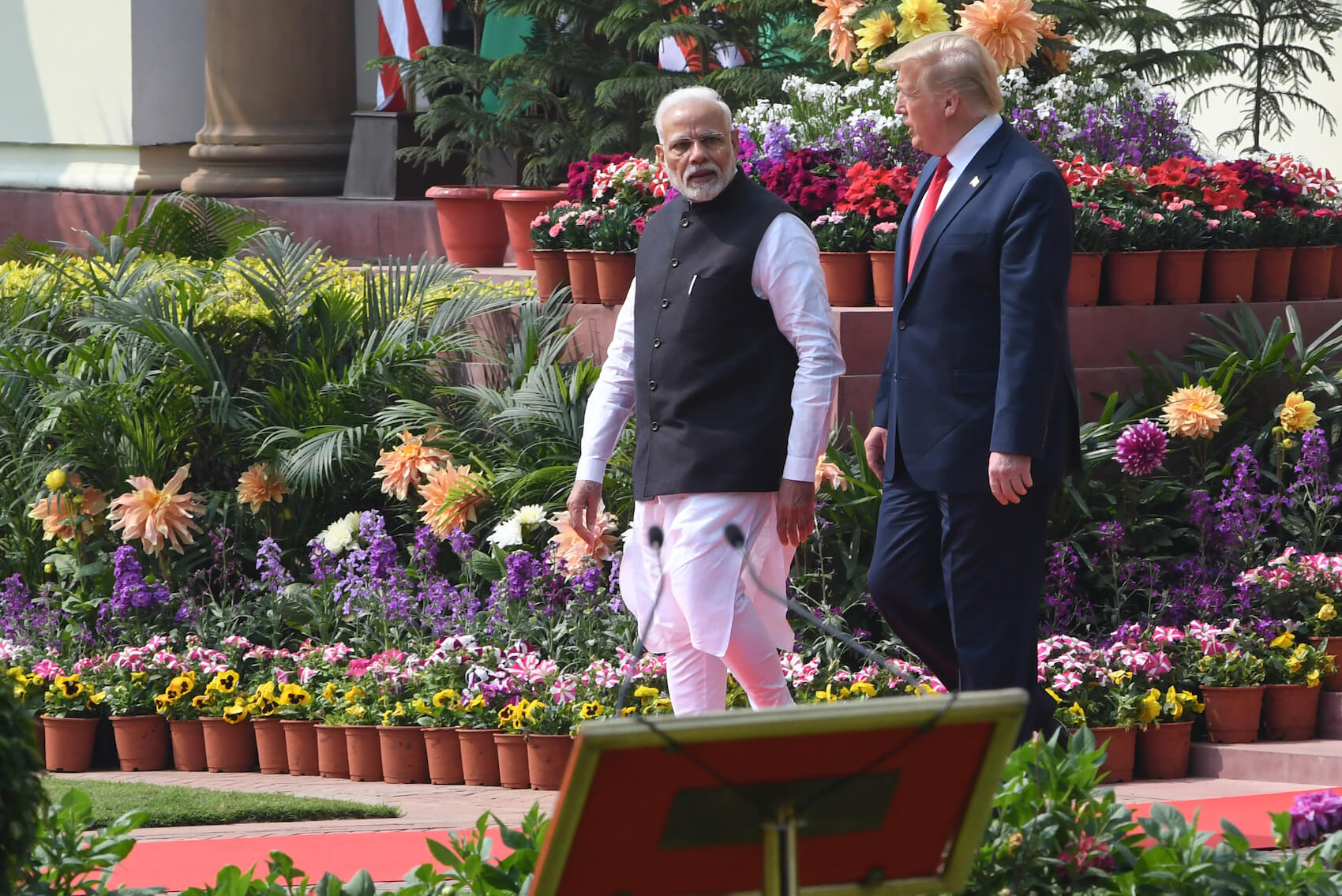
At the same time, they create large-scale spectacles centered around Modi as the symbolic focal point: Modi at Madison Square Garden, Modi leading the G20, or Modi at the White House. These spectacles are then reflected back into the domestic affective economy, reinforcing and intensifying populist mobilization within India. So, this is very much a transnational phenomenon and must be understood in those terms.
I also draw on Appadurai’s discussion of the “fear of small numbers,” particularly his analysis of the role minorities play in affective mobilization. What emerges is a kind of predatory anxiety among the majority directed toward minorities—most prominently Muslims in this case. Importantly, this anxiety is not grounded in empirical data or any objectively measurable threat. Rather, it stems from a subjective feeling that minorities obstruct the achievement of cultural completeness.
This is therefore a deeply affective phenomenon, and I do not think it can simply be countered through logic or rational argumentation. That is precisely what this form of mass culture has managed to sustain and mobilize: a majoritarian fear and anxiety circulating across multiple platforms.
Moreover, this process is not confined to television alone, although television—often referred to as “godi media” (the term refers to Indian media outlets perceived as excessively supportive of the ruling Bharatiya Janata Party. S.G.)—certainly plays a major role in reproducing populist narratives through primetime broadcasts. It also operates through other infrastructures, especially the WhatsApp networks that the BJP has built with remarkable effectiveness. This has been extensively studied by scholars, as well as by digital wellness platforms examining the BJP’s expansive WhatsApp ecosystem.
This infrastructure consists of numerous WhatsApp groups, alongside thousands of workers associated with the BJP IT Cell, who continuously circulate and recirculate narratives centered on the “fear of small numbers.” In doing so, they sustain this broader affective economy of civilizational populism.
So, this kind of multi-sided mobilization—the infrastructure the BJP has managed to construct—is extremely potent.
The Saffronization of India’s Cultural Imagination
In “Ram Rajya 2.0,” you discuss how popular cinema increasingly reifies binaries between the “native Hindu” and the “foreign Muslim invader.” How significant has the saffronization of Indian cinema and popular culture been in normalizing authoritarian majoritarian politics under Narendra Modi?
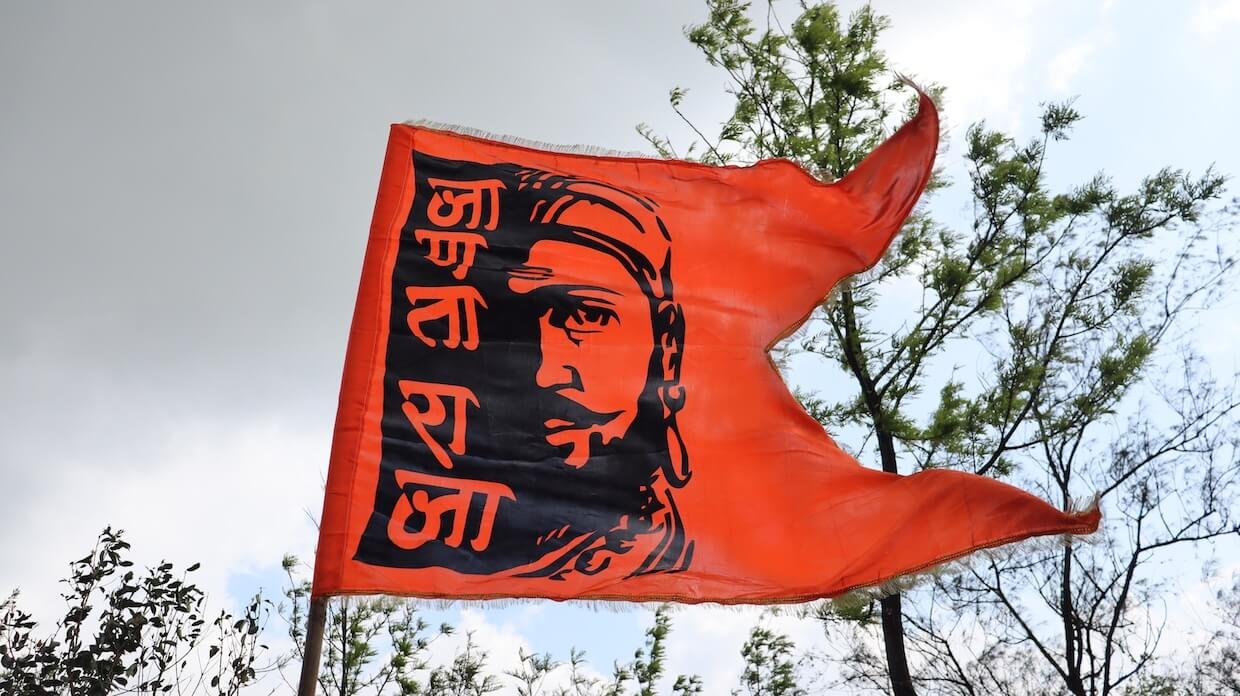
Dr. Maggie Paul: By saffronization, we mean a kind of re-contextualization or re-telling of the country’s history in ways that suit the Hindutva agenda, while also invoking pride in a muscular Hindu identity. It cements an upper-caste, upper-class Hindu past, as well as a Hindu future, while marginalizing other histories—those of minorities, lower castes, and others. That is essentially what we mean by the saffronization of popular culture.
What I would emphasize, however, is that this process is structurally complex. It is not simply straightforward propaganda, and propaganda theory alone cannot fully explain it. Rather, it involves the creation of an ecosystem that simultaneously incentivizes these narratives while also incorporating coercive elements, thereby producing a broader process of normalization. So, it is far more complicated than direct propaganda.
That said, there are also very explicit examples. In our article for Red Pepper, we highlighted the phenomenon of Hindutva pop culture, in which a form of violent spectatorship is cultivated. This includes pop music with blatantly Islamophobic lyrics set to highly catchy tunes. It also operates through the neoliberal dynamics of digital algorithmic profit-making. In other words, platform economies themselves reward such content because algorithmic systems generate visibility, engagement, and profit for those producing it. Kunal Purohit has written an excellent book, H-Pop, which explores this phenomenon in considerable detail.
We also discuss in our article how, since 2014 and the rise of the BJP, there has been a wave of films built around remarkably similar plotlines. I will not go into all of them, but examples include Padmaavat, Tanhaji, and Kesari. These films tend to retell medieval history through a recurring narrative structure in which an excessively villainous Muslim ruler or invader is positioned against a Hindu warrior hero who, against all odds, struggles to defend Hindu dharma from this threatening Muslim figure. There has been an entire wave of films circulating this type of storyline. What this does is draw audiences into the perception of an ongoing civilizational struggle through these narratives.
Building an Affective Mass Culture Through Reward and Coercion
At the same time, there is also an infrastructure of reward. Films that explicitly advance Hindutva mobilization narratives are strategically encouraged by the government. Modi, for example, has publicly praised films such as The Kashmir Filesand The Kerala Story, both of which were highly controversial and presented highly selective or empirically questionable histories rather than nuanced accounts. These films are systematically encouraged by the government, granted tax-free status, and in some cases formally rewarded—The Kerala Story, for instance, received a National Award.
Alongside this reward structure, however, there is also a coercive structure. Celebrities who become even mildly critical can face retaliation in the form of tax raids or other punitive state measures. What emerges, therefore, is a complex ecosystem in which the promotion of civilizational narratives aligned with the current political order is rewarded, while those who are even slightly critical are penalized through state mechanisms.
So yes, it is a complex structure, but one that has nevertheless been highly effective in instituting what you described as an affective mass culture.
How Cultural Common Sense Legitimizes Coercion

You describe saffronization as both overt and subtle, confrontational yet normalized. How should we understand the relationship between cultural normalization and democratic erosion in India today? Is authoritarianism becoming embedded less through coercion alone and more through cultural common sense?
Dr. Maggie Paul: There is definitely both. In my previous answer, I discussed how multi-sided media platforms, together with various cultural projects, have been highly successful in instituting the kind of common sense you referred to.
Sometimes this process is explicitly confrontational, as in the plotlines of films I mentioned earlier, such as The Kashmir Files or The Kerala Story, where there is a stark Manichean divide. But at other times it operates much more subtly. For instance, the recent success of the highly controversial film Durandar was widely praised for its technological innovation and cinematic sophistication, and, like many earlier films, it performed extremely well commercially. Yet it relied on much subtler forms of mobilization. Fantasy was textured with fragments of evidence, creating a hybridized narrative structure that partially obscured its ideological messaging. It was not as overtly confrontational or straightforward as some of the other films I discussed earlier. So, there are both explicit and subtle cultural projects operating simultaneously.
At the same time, coercion has never disappeared. It has always been present, and I do not think coercion can be treated as secondary. In fact, it has been a primary feature of Hindutva populist mobilization from the very beginning. We should not forget that, particularly because it is not only continuing but escalating.
This includes the lynching of Muslims, which was in many ways how this entire process began, as well as violence directed against other communities, including Christians and Dalits. It also includes the neoliberal extraction of resources in tribal areas and the heavy policing of resistance to that extraction, alongside the incarceration of political activists—particularly student activists, and especially Muslim student activists. There has also been the jailing of political opponents, something the BJP engaged in quite explicitly during the previous general elections.
The Civilizational Logic Behind Authoritarian Enforcement
So, coercion has never gone away. It remains a very significant feature of Hindutva populist mobilization in India. What civilizational populism and affective mobilization do, however, is to lend legitimacy to this coercion in the eyes of the broader public.
For instance, the jailing of political opponents or student activists can be framed as a form of law enforcement or as something necessary for the protection of the nation, because these individuals are characterized as anti-national within this broader civilizational framework. In that sense, Hindutva populist mobilization legitimizes coercive practices.
Similarly, explicit violence against minorities can be presented as a form of “justice” or “swift justice.” This is reflected in the distinctly Indian phenomenon of “bulldozer nationalism,” in which anyone perceived as creating trouble can have their property demolished—most often members of minority communities.
So, coercion is always there: ever-present and escalating. But the creation of this broader common sense around populist mobilization lends that coercion a far wider legitimacy within Indian public life.
How Migration Became a Civilizational Security Threat
Your work on the “Bangladeshi infiltrator” demonstrates how migration has been securitized through the language of war, invasion, and demographic aggression. How central was this discourse to the BJP’s electoral consolidation in Assam and West Bengal during the 2026 elections?
Dr. Maggie Paul: This question is directly connected to the work I have been doing for my doctoral thesis. I want to introduce a certain degree of nuance here, because my central argument is that scholarship often presents Hindutva as a rupture within Indian nationalism—a radical break from the secular postcolonial polity that emerged after independence.
What I explore in my doctoral dissertation, which focuses on the securitization and political history of the “Bangladeshi infiltrator,” is how labor migration from Bangladesh came to be framed through the language of security and invasion. My research demonstrates that this discourse is deeply rooted in the colonial state apparatus and extends far beyond the postcolonial period. In fact, it goes back to the colonial era, and the state infrastructures established during India’s experience under British rule. These infrastructures were inherited by the postcolonial state, and what Hindutva politics has done is to further perfect and radicalize them.
What I mean by this is that the legal architecture used to police “foreign nationals”—most notably the Foreigners Act of 1947—is itself a colonial phenomenon. The postcolonial state largely retained this framework, and it remains the principal legal apparatus used to punish “foreigners.” It is important to foreground the colonial origins of this law because it was originally designed to establish British monopoly control over Indigenous mobility. In practice, it was highly racialized: during colonial rule, it was overwhelmingly used against Indians, while Europeans were never targeted under the same legislation. It also granted local state authorities extensive discretionary powers to determine who could be suspected of being a “foreigner.” Much of this structure has remained intact within the postcolonial state apparatus. Indeed, some scholars argue that it has been further strengthened under the BJP, particularly through newer legislation such as the Immigration Foreigners Act, which significantly expands the state’s punitive capacity.
Secondly, the figure of the “infiltrator” itself has colonial precedents. During the late colonial period, particularly in Bengal and Assam, the figure of the land-hungry peasant migrant was already being constructed as an invading presence. Colonial governance technologies such as the census and identity categorization were mobilized to produce the image of the peasant migrant as a demographic threat. This became the precursor to what later evolved into the postcolonial figure of the “infiltrator.” So, the image of the migrant as invader unquestionably has colonial roots.
From Citizen to ‘Infiltrator’ in Modi’s India
What the BJP and Hindutva populism have done, however, is redirect this colonial category toward the citizen. One of the central findings of my research is that the category of the “infiltrator” has been mobilized in order to shift minority and marginalized citizens into the category of migrant. In other words, it is a process of migrantizing the citizen.
Importantly, this was not something invented by the BJP. Even before the BJP came to power, bureaucratic mediation over who counted as an Indian citizen and who did not was already taking place at the local level. What the BJP has done is scale this process up dramatically through large bureaucratic projects such as the NRC, the National Register of Citizens, and now the SIR, combined with citizenship amendment legislation. So, the key transformation lies in the expansion of scale.
At the same time, within the Hindutva universe, the figure of the “infiltrator” acquires a specifically civilizational meaning. Because Hindutva mobilization is fundamentally a form of civilizational populism, the enemy is understood not only in geopolitical terms, but also in demographic terms. “The infiltrator”—essentially coded as Muslim, whether a transnational migrant or an internal Muslim citizen—is framed as a form of demographic aggression against the Hindu nation.
As a result, bureaucratic violence directed against this infiltrator figure is not presented as violence at all, but rather as protection and security for the Hindu nation. That is why this discourse is politically so powerful.
And to answer your question directly: yes, this discourse was absolutely mobilized in Assam and West Bengal during the 2026 elections. These are border states, and the issue of “infiltration” carries enormous affective and political resonance there. Whether through the SIR exercise, or through portraying the incumbent government in Bengal as a party appeasing infiltrators, this discourse played a major role in electoral mobilization. In Assam, for instance, the chief minister openly boasted that he had pushed “infiltrators” “back into Bangladesh.” So, the figure of “the infiltrator” was unquestionably central to the BJP’s mobilization strategies in both Assam and West Bengal.
India as a Civilizational Populist Electoral Autocracy
And finally, Dr. Paul, after the BJP’s dramatic expansion across India’s states and the weakening of regional and Left alternatives, how should scholars conceptualize the current Indian regime? Are we witnessing competitive authoritarianism, ethnocratic majoritarianism, or the emergence of a new model of populist civilizational democracy under Modi?
Dr. Maggie Paul: I think it is something of a hybrid. All of these concepts can only do partial work in fully describing what is unfolding in India today.
When we speak of competitive authoritarianism, for instance, the concept points to formally democratic but fundamentally unfair electoral practices. That is certainly part of the picture, but it remains incomplete, because Modi’s popularity cannot be explained solely through electoral victories. He has also been remarkably successful in projecting himself as a signifier of the will of Hindu civilization. He has effectively become the “Hindu Hriday Samrat,” the prince of Hindu civilization, as we discussed earlier. So, competitive authoritarianism alone does not fully capture the phenomenon.
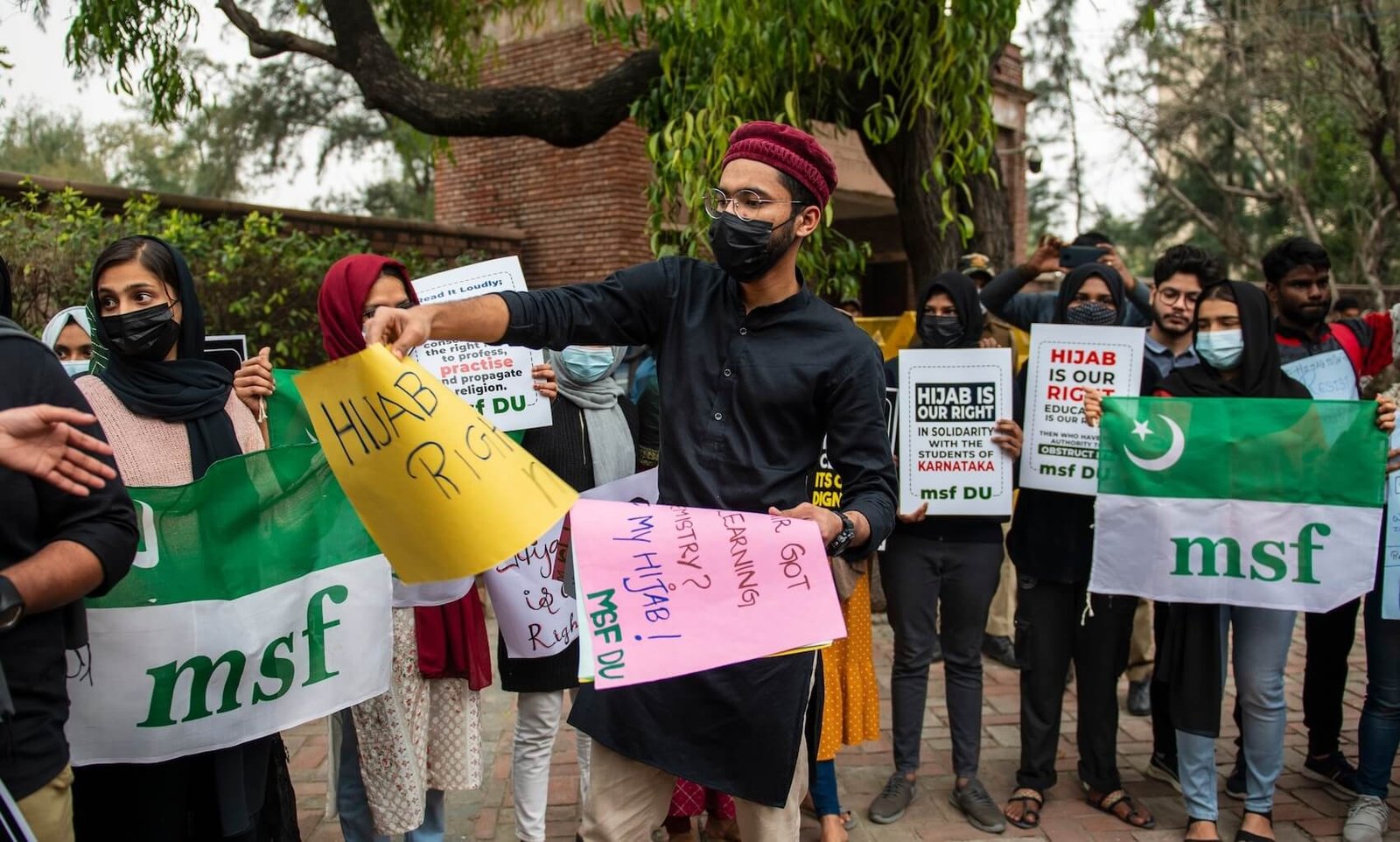
Similarly, ethnocratic majoritarianism points to the emergence of a two-tiered citizenship structure in which Hindus become primary citizens, while minorities are relegated to second-tier citizenship. That is also clearly happening through bureaucratic violence and legislative practices, including amendments to citizenship laws in India. But again, that concept is also incomplete.
And finally, there is civilizational populism. As we discussed earlier, the affective mobilization around restoring a glorious Hindu past for a future Hindu civilization has been extremely successful. Yet that concept alone risks overlooking the coercive practices and institutional corruption highlighted by frameworks such as competitive authoritarianism.
So, I think the current Indian regime is best understood as a hybrid of all these elements. I would characterize it as a civilizational populist electoral autocracy.
At the same time, I want to emphasize that this project contains significant internal contradictions. At the moment, it is undeniably hegemonic. It has successfully instituted a majoritarian common sense through the affective economy of mass media and cultural mobilization, as we discussed earlier. But, as Antonio Gramsci argued, hegemony is never total or complete.
This kind of populist mobilization brings together disparate actors who project their own aspirations onto a common populist signifier—whether that is Ram Rajya or the figure of Modi himself. These groups carry their own histories of marginalization. This includes lower-caste and lower-class voters who, for instance, voted for the BJP in significant numbers during the Bengal elections, which itself represents an important political development.
The ‘Cockroach Janta Party’ and Youth Disillusionment
What I want to stress is that all of these actors bring their own experiences of marginalization and aspirations into this populist project. For the time being, the populist signifier is able to contain these aspirations. But if the promised renewal associated with this futurist Ram Rajya does not materialize in tangible ways—if there are no meaningful material benefits—then cracks begin to appear.
I think this became particularly visible in a very recent phenomenon that emerged just within the past week: a youth-led mobilization in digital spaces calling itself the “Cockroach Janta Party.” It began as a form of parody after comments by the Chief Justice of India comparing unemployed youth to cockroaches and parasites engaged in anti-national activities instead of productive work.
This parody movement became a vehicle for expressing broader material frustrations, particularly among young people facing rising unemployment, blocked aspirations for government jobs, repeated examination leaks, and wider forms of economic precarity. In many ways, the “Cockroach Janta Party” reflected a crack in the cultural common sense that BJP-style civilizational populism has managed to institutionalize.
So, I think this demonstrates that the current hegemonic project is not complete. Spaces of resistance remain possible. Much of that resistance, however, also has to operate at the level of affect. It cannot rely solely on logic or rational critique. It must mobilize alternative affective politics rooted not only in material realities, but also in alternative historical imaginaries and traditions within India itself.
India remains a deeply pluralist society, and many people continue to be emotionally attached to its syncretic and pluralistic traditions. That affective register, too, can potentially be mobilized as a counter to the hegemonic project of Hindutva civilizational populism.