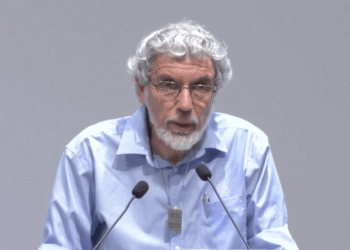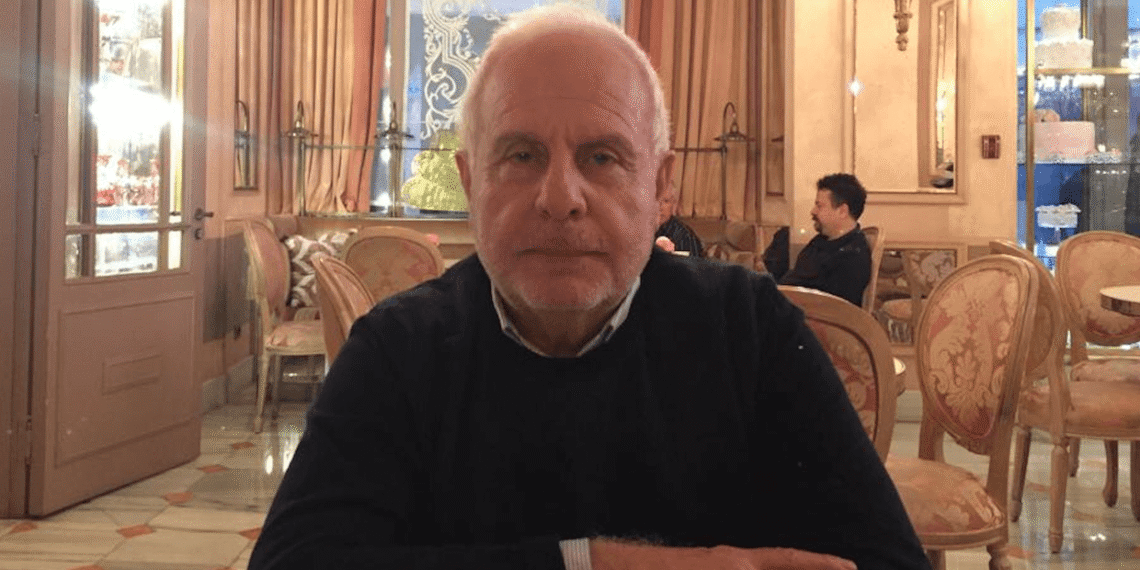
Giving an interview to the ECPS, veteran Turkish political analyst, legal expert, author, and poet Dr. Ümit Kardaş argues that Turkey is experiencing not merely democratic backsliding but a profound constitutional rupture that has pushed the country toward what he calls a “form of pre-1876 absolutism.” Reflecting on the judicial intervention into the CHP congress, the imprisonment of opposition figures, and the growing use of courts as instruments of political control, Dr. Kardaş contends that the constitutional order has effectively ceased to function, elections and representation have lost much of their democratic substance, and the regime has evolved into a system of “civil absolutism.” He further warns that Turkey has become a “might makes right regime” sustained through arbitrariness, coercion, and a permanent state of exception. Yet he also argues that democratic renewal remains possible through a new social contract and a comprehensive process of democratic reconstruction.
Interview by Selcuk Gultasli
Giving an interview to the European Center for Populism Studies (ECPS), veteran Turkish legal expert, academician, author, and poet Dr. Ümit Kardaş argues that Turkey is undergoing a profound constitutional and political rupture that extends far beyond the recent judicial intervention into the Republican People’s Party (CHP). According to Dr. Kardaş, the annulment of the CHP’s 2023 congress, the imprisonment of opposition figures such as Ekrem İmamoğlu, and the growing use of judicial mechanisms against political opponents are not isolated developments but symptoms of a broader transformation in the nature of the regime itself.
Recent events have intensified concerns that Turkey is entering a new phase of authoritarian consolidation. The court decision overturning the CHP congress that elected Özgür Özel and reinstating former leader Kemal Kılıçdaroğlu has triggered a leadership crisis within the country’s main opposition party, while legal pressure on opposition municipalities and political actors continues to mount. Against this backdrop, questions are increasingly being raised about the future of electoral competition, constitutional governance, and democratic representation in Turkey.
In this wide-ranging interview, Dr. Kardaş contends that Turkey has effectively “returned to a form of pre-1876 absolutism,” arguing that although a constitution formally exists, it no longer functions as a meaningful constraint on power. He maintains that “the constitution is being violated almost on a daily basis,” that “the social contract has, in a sense, disappeared,” and that the country is moving beyond competitive authoritarianism toward what he describes as a system of “civil absolutism.”
Dr. Kardaş further argues that elections and political representation have been stripped of much of their democratic substance, while opposition parties are increasingly prevented from functioning as autonomous political actors. In his view, the regime has evolved into a “might makes right regime,” sustained through arbitrariness, coercion, and the gradual erosion of legal guarantees. He also warns that the concentration of power, the weakening of judicial independence, and the normalization of a permanent state of exception have generated a deep crisis of legitimacy and a widespread sense of political helplessness within society.
At the same time, Dr. Kardaş insists that Turkey’s problems can no longer be resolved through limited reforms or institutional patchwork. Instead, he argues that the country requires a fundamentally new democratic foundation based on a “new social contract” capable of bringing together all segments of society within a genuinely pluralist constitutional order. As he puts it, “Turkey needs a new process of reconstruction” because it is “in no position to move forward through reforms or by patching things up here and there.”
In this interview, Dr. Kardaş discusses constitutional breakdown, judicialized politics, opposition fragmentation, democratic backsliding, legitimacy, decentralization, the Kurdish question, and the prospects for democratic reconstruction in contemporary Turkey.
Here is the revised version of our interview with Dr. Ümit Kardaş, translated from Turkish and lightly edited for clarity, readability, and publication.
A Court Cannot Invalidate What the Supreme Election Council Has Finalized
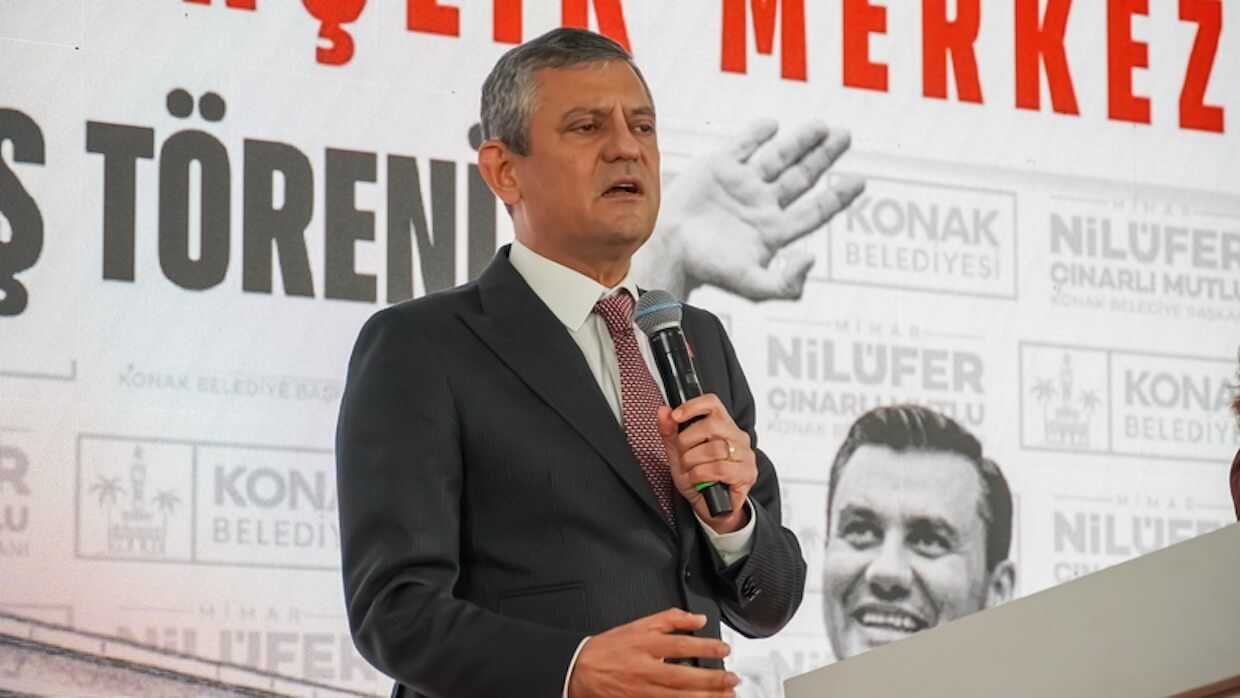
Dr. Ümit Kardaş, welcome. Should the “absolute nullity” (mutlak butlan) ruling regarding the CHP congress be viewed merely as an internal party legal dispute, or does this decision signal a broader regime transformation in which electoral law, political representation, and constitutional legitimacy are being redefined in Turkey?
Dr. Ümit Kardaş: Of course, the latter. We cannot view this as merely an internal party dispute. It is true that one of the most significant deficiencies of our democracy is the absence of internal party democracy. However, what has recently occurred must certainly be regarded as a violation of the constitutional order and the Constitution itself.
This is because elections take place under the guarantee of legal certainty and under the supervision and oversight of judges. This is how the process operates. It is finalized through the decisions of the district electoral board, the provincial electoral board, and ultimately the Supreme Election Council. This is a constitutional arrangement. Former CHP presidential candidate Muharrem İnce has also pointed this out. Article 79 of the Constitution is very clear.
Election results must be legally finalized in order to ensure stability. Otherwise, everyone would object to something, and chaos would emerge. For this reason, electoral law constitutes a completely separate legal sphere. It is not possible for any other authority to review, audit, or invalidate decisions that have been finalized by the Supreme Election Council.
If you are doing this through the ordinary judiciary, through a court that lacks jurisdiction, and obtaining such a result, then it has no meaning. Legally, this amounts to “absolute nullity” (mutlak butlan). Nothing built upon such a legal void can be lawful or valid. Such a situation can only produce chaos, instability, and unrest.
There Is a Constitution, but It Is Not Being Implemented
You stated in a post on X that Turkey has “regressed to the pre-1876 period of constitutional absence.” How do you conceptualize the current political regime, as distinct from classical authoritarianism? Is the process unfolding in Turkey better explained through Carl Schmitt’s theory of the “state of exception,” or through the contemporary literature on populist authoritarianism?
Dr. Ümit Kardaş: This needs to be explained in the following way. Carl Schmitt associates the exception and the state of exception with law; he evaluates it within the framework of law. Walter Benjamin, by contrast, describes it as a zone of lawlessness outside the law. When I say that Turkey has returned to the pre-1876 period, I am referring to the absolutism of that era. At that time, there was no constitution. We adopted our first constitution, the Kanun-i Esasi, in 1876. In fact, even 1876 was a late date. Many of the provinces affiliated with us had already acquired their own national identities and adopted constitutions much earlier. In other words, with 1876, you place limits on absolutism.
When you look at the present situation, there is a constitution, but it is not being implemented in practice. In fact, the constitution is being violated almost on a daily basis. Under such circumstances, it is not possible to say that the regime rests upon a constitutional foundation.
Given the social polarization and tensions that exist today, it is equally impossible to speak of harmony or consensus. In other words, the social contract has, in a sense, disappeared. In that respect, we have returned to a form of pre-1876 absolutism. This is because those exercising executive power now dominate everything and conduct the process to a large extent in an arbitrary manner.
Of course, when examining this issue, I think one must begin with the founding of the Republic. At the core of the Republican regime lies a monist ideology based on the Turkish-Islamic synthesis. This monist ideology has been reinforced and preserved up to the present day. Whenever attempts were made to move beyond it—that is, whenever efforts were made to replace this monist regime with a more pluralist one, in which legal rights and freedoms would be more fully guaranteed and a more libertarian order established—there were repeated military interventions. These interventions caused setbacks and once again served to reinforce the regime. Later, when political governments stepped beyond these red lines, they too were threatened and pulled back within the established boundaries.
In this regard, the Justice and Development Party (AKP) government initially offered hope. It claimed that it would advance in harmony with the European Union, implement the Copenhagen criteria, and build a more democratic regime governed by the rule of law. This genuinely gave many of us hope. Indeed, it was supported up to a certain point. However, particularly after the December 17–25, 2013 corruption investigations and subsequently the July 15, 2016 coup attempt, the regime embarked on a path of re-entrenching and reproducing itself, almost with the logic of a counter-coup.
This suggests that throughout our century-long experience, the monist ideology based on the Turkish-Islamic synthesis has occasionally appeared to be in retreat, only to resume its course shortly thereafter. With the People’s Alliance (Cumhur İttifakı or AKP-MHP alliance), this process became even more firmly entrenched.
You come to power with certain promises. You promise more democracy, more law, and greater prosperity. When you arrive in office, you try to implement those promises. But events unfold in such a way that, while you believe you have captured the state, the state captures you instead, reshapes you in its own image, and draws you within its own boundaries.
This has perhaps become an unbearable burden. As the regime has tried to secure its own legitimacy, almost nothing has remained upon which that legitimacy can be based. As a result, hardening has steadily intensified; repression and coercion have been applied with increasing intensity. Turkey has experienced this throughout roughly the last hundred years, and it continues to experience it today.
The Opposition Failed to React When the Kurds Were Targeted
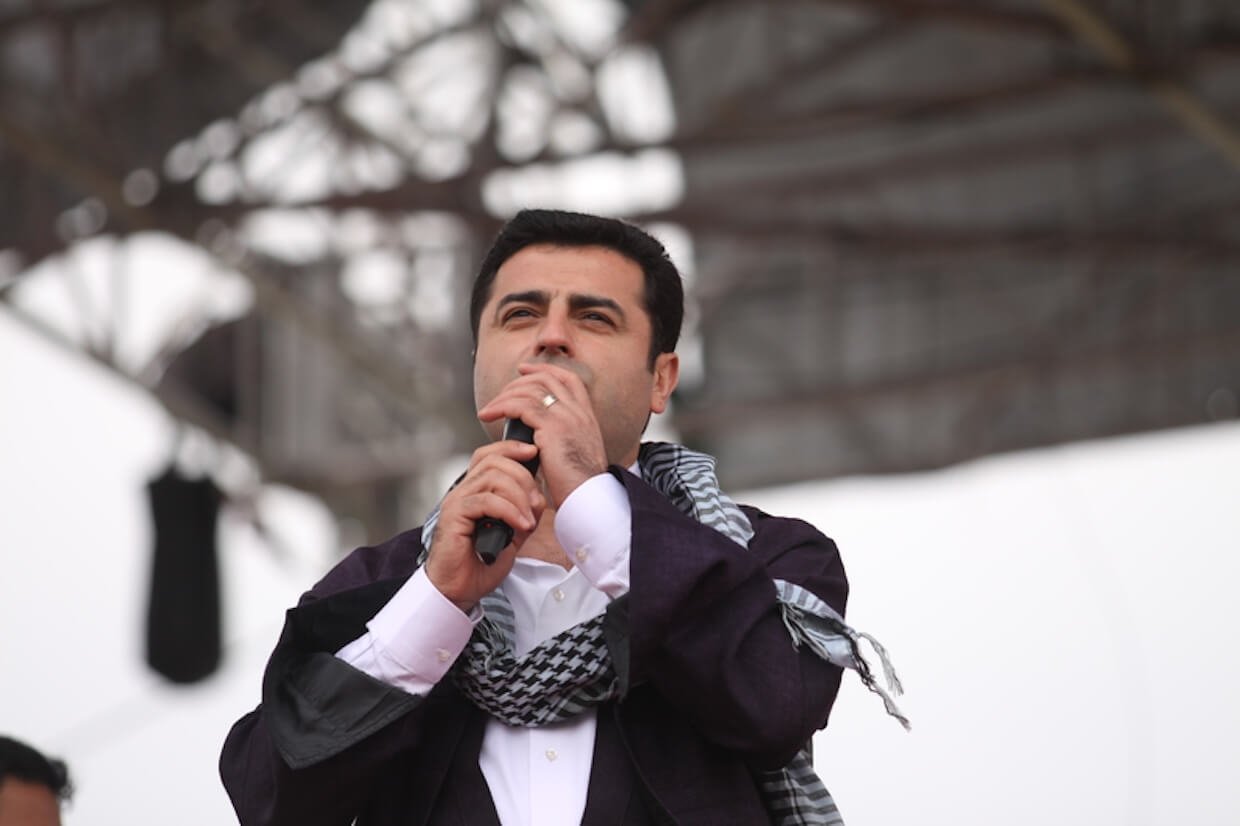
Do you see the judicial intervention against the CHP as a new stage in the trustee regime imposed on the Kurdish political movement in the past, the practice of party closures, and broader mechanisms of “political liquidation through the judiciary”? How has the opposition’s long-standing failure to mount a sufficiently strong objection to these practices contributed to the current situation?
Dr. Ümit Kardaş: Of course, there is something else that needs to be considered here. Within the boundaries that have been drawn, it is not possible to imagine and implement a pluralist regime. Political parties, that is, opposition parties, appeared to exist. But their functions also remained within these red lines. In other words, politics became incapable of solving problems. And it still is.
Of course, the state exercised enormous violence against the Kurds, against their political demands and political organizations. It suppressed them. Perhaps even more severe things happened than what is now being done to the Republican People’s Party (CHP). Trustees were appointed. Yet we did not see the opposition react to this in a comprehensive manner. It was brushed aside with a few minor statements. In other words, the opposition also failed to fulfill its duty here. As a result, this process eventually turned toward the CHP.
What I mean is that political parties did not genuinely act as an opposition. Even today, we can see that there is no particularly strong unity. There are various statements and declarations, but these are not enough. Then a series of setbacks begins. Because the regime is so powerful that it prevents opposition parties from uniting around certain principles and is able to push them backward. This is Turkey’s problem. The opposition, too, failed to perform its function properly. It was unable to react where it should have reacted. It always remained on the line of thinking: “They are doing it to them; they are not doing anything to us.”
Political parties in Turkey are structured in the following way: they operate within a monist framework based on the Turkish-Islamic synthesis. They all become nationalist parties. Look, someone says, “I am a left-wing party,” yet a vein of nationalism emerges from within it. That is why we need to change this paradigm, this mentality. We must overcome it. We must move beyond it and transition to a pluralist regime—that is, to a participatory democracy and a system based on the rule of law. But with this mentality and with this opposition structure, there is no possibility of achieving that.
So how can it happen? A new political idea and a new political actor must emerge. This is, in fact, what the masses long for. People want justice, they want law, they want rights, they want social welfare, they want economic prosperity, they want equality, they want equality before the law, and they want freedom. These are genuinely the things that people want today. Because there is both economic deprivation and a restriction of freedoms, and there is neither law nor justice.
Now there is a need for a political actor capable of channeling this reaction and this anger. There is a need for a vanguard force. The matter has now moved beyond political parties. It has been left to the will of the people, to the people’s choice. This is also why Özgür Özel is being targeted and threatened. It is related to his desire to move slightly beyond the line that has been prescribed. The regime does not want to allow that. Within its own plan and program, it wants to carry the process forward through Abdullah Öcalan, Devlet Bahçeli, and Recep Tayyip Erdoğan, while incorporating the other political parties into this framework as well.
This Intervention Is Entirely Null and Void in Legal Terms
Despite the constitutional provision that designates the Supreme Election Council (YSK) as the “final authority” in electoral law, what kind of rupture does the intervention of the ordinary judiciary in the CHP congress create in terms of the separation of powers and the rule of law? Can this situation be explained through the concepts of “judicial usurpation of authority” and “legal nullity”?
Dr. Ümit Kardaş: I regard this as a case of nonexistence. In fact, I regard it as a state of nothingness. We are now living in a state of nothingness. What matters now is how we are going to fill this void and emptiness.
From this point on, I do not engage in these discussions. When I watch them, I find it difficult even to continue watching. Various comments are being made as if that court decision were valid. People debate whether this or that will happen depending on the next court ruling. I see these as meaningless discussions. Turkey is genuinely in a state of nothingness.
We will now see how we are going to emerge from this situation, and we will discuss it. We will see in which direction this process evolves. From this perspective, I certainly believe that this intervention is entirely null and void in the legal realm.
Opposition Parties Are Allowed to Oppose Only Within Prescribed Limits
Do you think that the leadership crisis unfolding along the Özgür Özel–Kemal Kılıçdaroğlu axis is part of the government’s strategy to fragment and redesign the opposition? Are opposition parties in Turkey ceasing to be “autonomous political actors” in the classical sense?
Dr. Ümit Kardaş: Of course I do. There is undoubtedly an intervention. This is now very clear and obvious. It can be seen that, in order to ensure Recep Tayyip Erdoğan’s re-election, a kind of political “clearing operation” is being carried out. What is being done? Potential rivals and candidates are being eliminated. Ekrem İmamoğlu’s university diploma is being annulled. Perhaps something will also be done against Özgür Özel. We do not know.
In addition, the CHP, which is the most ambitious party and currently the leading party, is also being sidelined and divided. Therefore, this is genuinely an intervention. I see it as an operation aimed at ensuring the continuation of the current regime with its current actors. As I mentioned earlier, opposition parties are not autonomous entities. They are parties that are allowed to engage in opposition only to the extent permitted within the regime.
The Electoral Mechanism Has Been Reduced to a Formality

Considering together the arrest of Ekrem İmamoğlu, the operations against CHP municipalities, the appointment of trustees to DEM Party municipalities, and now the intervention in the CHP congress, is it still possible to say that elections in Turkey retain their character as a genuine mechanism for changing political power?
Dr. Ümit Kardaş: No, it is not. Nor will it be possible from this point onward. I am saying that elections and representation no longer exist in any meaningful sense.
Can we still trust the elections that will be held? Can we trust that there will be no intervention in those elections and their results? For this reason, representation itself has been crippled.
In other words, this is a period of nothingness in which elections and representation no longer exist. There is nothing left. There is no constitution either. There is no possibility of expecting anything from this situation.
That is why I think this way. From now on, the mechanism of elections and representation will no longer perform any real function. It will remain merely as a formal mechanism envisaged for the continuation of the regime.
Indeed, while criticizing the opposition, it is necessary to point this out: the results of the 2017 referendum. As you know, two million unstamped ballots were deemed valid. At that point, the country should have been shaken to its core. The main opposition, and the leader of the main opposition, should have pursued this matter relentlessly. Instead, today we are realizing how severely this process was compromised and how little importance was attached to it.
The Regime Has Exhausted Its Capacity to Produce Legitimacy
In your writings, you frequently use the concepts of a “crisis of legitimacy” and the “collapse of the foundational consensus.” In your view, is the problem Turkey faces today merely the instrumentalization of law, or has the state also exhausted its capacity to produce legitimacy?
Dr. Ümit Kardaş: Of course, its capacity to produce legitimacy has also been exhausted. The state can no longer generate internal legitimacy. Because you are obliged to fulfill the minimum requirements of democracy. Elections are held, representation is established, and as a result of elections a government comes to power and carries out its policies. This provides you with legal legitimacy. But real legitimacy is related to your practices and policies.
If you violate the constitution, abolish the separation of powers, destroy the rule of law, eliminate the right to a fair trial, and restrict rights and freedoms, you lose your legitimacy. That is what legitimacy is. You lose it afterward. In other words, winning an election does not always mean that you possess legitimacy.
Now, in Turkey, the government is trying to derive its legitimacy not from within, but from outside. From whom? It is trying to obtain it from Trump in the United States. Steve Bannon already said this: “We are giving him legitimacy.”
This is something tragic. It is a sad situation. You are deriving your legitimacy from Trump, but Trump himself is not legitimate. In fact, Trump’s own legitimacy is open to debate. So now you are trying to obtain legitimacy from outside, from a source that itself lacks legitimacy.
That is the issue of legitimacy. And I think it is very important. Because the reactions of the people are also related to the presence or absence of that legitimacy. If you possess legitimacy, you become a more peaceful, more stable society living in harmony. There would not be much conflict. If your legitimacy declines, violence, tension, and polarization increase. This is an inverse relationship.
Now look: there is already a crisis of legitimacy. There is no legitimacy internally. Where is it being sought? Abroad. And no good result will come from that.
What We Are Witnessing Is Civil Absolutism
Do you think that the Erdoğan government’s strategy toward the opposition has moved beyond competitive authoritarianism? Is Turkey now an electoral authoritarian regime, or a new form of “civil absolutism” in which elections and institutions of representation have effectively ceased to function?
Dr. Ümit Kardaş: I believe that this is a system of civil absolutism. I definitely regard it as such. It is not possible to speak of competitive elections. There is no such thing in Turkey anymore. How can we speak of that in a situation where there is so much intervention? That is why I think this entirely. Exactly so.
Turkey’s Political Axis No Longer Runs Through Europe
How do you assess the reactions from the European Union, the Socialist International, and various international actors following the “absolute nullity” intervention against the CHP? Do you find these reactions sufficient and sincere? Moreover, do international democratic pressure mechanisms still have any meaningful influence on Turkey?
Dr. Ümit Kardaş: Now, these international organizations, the European Union and the like, are of course important institutions. But when you look at the situation, every state, every nation-state, has its own interests. And certain inconsistencies emerge in line with those interests.
There is also another point. I do not want to exclude the European Union entirely, but the government in Turkey does not derive its legitimacy or support from the European Union. There is a tendency toward, and support from, the axis of the United States, the United Kingdom, and Israel.
There is already tension between the European Union and the United States, particularly in the Trump era. Under the NATO umbrella, will the European Union be able to provide for its own security? Trump opposes this. How will security against Russia be ensured? Europe is concerned about this.
And of course, European Union values are important—very important. But the extent to which those values are implemented in other countries, and the extent to which they can be supported, remains a question mark. Moreover, the European Union is itself searching for ways to ensure its own security. At present, it appears to be seeking answers to the question: “How can we provide our own security?” outside the framework of NATO.
Since Turkey’s preference lies along the axis of the United States, the United Kingdom, and Israel, European Union sanctions do not carry much importance from Turkey’s perspective. The government openly declares: “I do not recognize the decisions of the European Court of Human Rights. I do not implement them.” In such a situation, sanctions would have to be imposed. You would have to expel it from the Council. Those processes do exist. But at a certain point, they come to a standstill.
The European Union is also thinking along the lines of: “If we do this, are we going to lose Turkey?” In that respect, there is a deadlock. The European Union’s influence over Turkey is diminishing. At present, Turkey also has a particular attitude toward the European Union. In its foreign policy, it is operating on a completely different axis.
And then there is the question of maintaining a relationship with the Trump administration, with which the European Union is in conflict. There is a deadlock there as well, of course.
Law Has Become a Mechanism for Producing Political Loyalty
In your writings, you emphasize that law in Turkey has been transformed into an “instrumentalized technique of governance.” When considered together with the cases of Osman Kavala, Selahattin Demirtaş, Can Atalay, and the victims of the emergency decrees (KHKs), has the primary function of law in Turkey today become the generation of political loyalty rather than the generation of justice?
Dr. Ümit Kardaş: Of course it has become that. It has virtually become a mechanism for producing political loyalty. The presumption of innocence has also been reversed. In other words, there is now a situation in which everyone is treated as though they are guilty until they prove their innocence.
There is no separation of powers. There is no right to a fair trial.
When you look at all of this, the regime in Turkey has truly transformed into such a system. I do not know whether there are examples of it. There probably are, but they would be found in very backward countries. It is a situation that can only be encountered in countries where democratic culture has not developed.
Human Dignity Was Ignored in the Treatment of KHK Victims

Has the process that began with the State of Emergency Decrees (KHKs) and that you, like many others, describe as “civil death,” evolved into a broader governing paradigm that increasingly encompasses not only certain social groups but the entire opposition?
Dr. Ümit Kardaş: Yes, it already has. The situation of the KHK victims is already grave. Approximately 125,000 people were dismissed from public service. Their legal rights were never recognized. Judicial processes did not function.
Many injustices were caused through these decrees, and they continue to this day. These people have no possibility of serving as witnesses in certain contexts or carrying out transactions at land registry offices. Together with their families, they constitute a broad segment of society, affecting a community of more than one million people.
I believe that what has occurred here is an injustice. I believe that human dignity has been disregarded.
“Civil death” can certainly be defined in this way. I think this is a very serious problem, a deep social wound.
Of course, the situation of the KHK victims will not be remedied under the current circumstances. But I believe that, following a change of government, their rights should be restored.
And then there are Osman Kavala, Selahattin Demirtaş, Can Atalay, and others. All of these people have been victimized. Think about it: they have lost the best years of their lives, and there is no real basis for the accusations leveled against them.
There are also judgments of the European Court of Human Rights concerning these individuals, and those judgments are not being implemented. These are grave consequences. All of these are actions and practices that can be regarded as violations of the Constitution.
The Regime Silences Those Who Move Beyond Prescribed Limits
You argue that, as the judiciary in Turkey lost its independence, the opposition continued for a long time to conduct politics as if the rule of law still existed. Do you think the current crisis is also a consequence of the opposition’s prolonged misreading of democratic backsliding?
Dr. Ümit Kardaş: I have stated this before as well. The opposition either misread the situation or failed to read it at all. Or perhaps it understood it but was unable to do what was necessary.
Certainly, the opposition also bears responsibility for this democratic backsliding. However, within the regime framework we have described, we do not believe that the opposition has ever been a genuine opposition.
Nor is there any real possibility of acting as a genuine opposition. Look at what happened to Özgür Özel. Perhaps he wanted to move slightly beyond the prescribed line. He was immediately punished, and Kılıçdaroğlu was brought in, entirely unrelatedly. This is an intervention carried out solely to prevent votes from shifting toward the CHP and to ensure the continuation of the AKP’s rule.
In that respect, yes, we are witnessing that the opposition does not really have such a possibility. The moment you step beyond those limits, you are punished. In other words, the system, the regime, either destroys you, renders you ineffective, or simply ignores you.
As the Turkish poet Ahmet Hamdi Tanpınar put it, I think you become the victim of an “assassination by silence” (sükût suikastı). In the end, that is what happens.
Democracy Cannot Exist Under Such Heavy Centralization
You argue that the centralized structure of the state is one of the greatest obstacles to democratization. Do the recent interventions against the CHP make it necessary to rethink debates on decentralization, local democracy, and pluralist governance in Turkey?
Dr. Ümit Kardaş: It makes it absolutely necessary. Look, Turkey has a very rigid centralized structure. The administrative system is still a colonial system. It is a system of a colonial type. You appoint governors from the center, district governors from the center, directors of health, directors of national education, directors of public works and zoning from the center. The state has penetrated into the capillaries of society. In other words, there is a process of statization. Democracy cannot exist under such heavy colonization. It is unacceptable. Perhaps some dictator in a remote corner of Africa could administer such a system, but you cannot call this democracy.
Decentralization is extraordinarily important, and pluralistic participation is a fundamental principle of democracy. In fact, I have written extensively about this in my articles. It is called consociational democracy. There are many examples of consociational democracy in the world. They exist everywhere. Even countries that were once highly underdeveloped transferred powers from the center to the regions. Because democracy takes place at the local level.
You need local parliaments, and you need to transfer certain powers from the center to them. Then the democratic system begins to function there. If necessary, when a law concerning the region is being discussed in a regional parliament, local citizens should be able to go there and speak for five minutes. In this way, democratic education, civic culture, and democratic habits develop.
If you do not do this, if you try to do everything from the center, you simply cannot manage it. It will not work. And then you will be unable to solve any problems. Because regions have their own specific issues. Only the people of those regions know them, and only regional parliaments can address them. This is how the system works in Europe.
This does not harm the unitary structure of the state. On the contrary, it strengthens the unitary state’s capacity to represent political unity. If you transfer powers in this way, democracy develops.
Let us look at the process of resolving the Kurdish question in Turkey. In my view, the process is being handled incorrectly in certain respects. There is no point in conducting a process solely through Abdullah Öcalan. Abdullah Öcalan is already someone who is close to reaching an accommodation with the state. But Selahattin Demirtaş remains in prison. There is considerable interest in him among the Kurdish electorate. And Selahattin Demirtaş’s democratic stance resonates with a broad audience. Therefore, this issue should be resolved together with him and on the basis of Turkey’s democratization.
What the government wants to do is proceed along the line of: “How can I win this election? How can I secure Kurdish support?” The MHP itself says: “Citizenship is not open to debate.” It has already drawn its red lines by saying that this cannot be discussed and that cannot be discussed.
If none of these issues are going to be debated, and if the outcome is merely that some people are released from prison—of course they should be released. I support a general political amnesty. But limiting the process to that alone carries no real meaning. If that happens, the regime will simply reinforce itself by making a few concessions. That is not our objective.
Our objective should be this: we are currently in a state of nothingness. We have entered a period without a constitution. Therefore, we need a new social contract. To achieve this, we need to open a blank page, set taboos aside, and sit down together again. All actors, all stakeholders, and all segments of society must be included in this process. We must write the principles together on that blank page. What principles should guide us if we are to live together with our differences and under the protection of the law? On what principles will we agree?
This is what Turkey must do. Turkey needs a new process of reconstruction. Turkey is in no position to move forward through reforms or by patching things up here and there. Not at this moment.
Authoritarianism in Turkey Is Drifting Toward Totalitarianism

Do you think that the lawlessness, arbitrariness, and political polarization observed in Turkey in recent years have created a widespread sense of “helplessness” and “political ineffectiveness” within society? Can we say that authoritarian regimes become entrenched precisely on this psychological foundation?
Dr. Ümit Kardaş: Yes, we can certainly say that. Unfortunately, this is how things are unfolding. We can think about it in the way you suggest.
There is an authoritarian regime in Turkey, but it appears almost as if authoritarianism is transforming into totalitarianism. The separation of legislative, executive, and judicial powers has been completely eliminated, and everything has been concentrated in the executive. The right to a fair trial has also disappeared.
In that case, legal security no longer exists. Then what are we supposed to debate? The nature of the regime is no longer the most important issue, because the regime has already destroyed the very foundation upon which it rests. Even authoritarian regimes may have a certain legal framework, but in our case arbitrariness has reached an extreme point. In other words, you can do whatever you want on whatever grounds you choose.
For a long time, I have described the regime in Turkey as a “might makes right regime.” You see one power at the center forming an alliance with another power and saying, “Let’s beat this person.” They say, “He misbehaved,” and they beat him. Then you look again, and another power forms an alliance with yet another power, and this time they victimize someone else.
Turkey needs to escape this impasse. Instead of constantly joining forces to beat one another, we need to think about how to ensure legal security for everyone—for Kurds, for Alevis, for non-Muslims; in other words, for all citizens. Regardless of gender differences, how are we going to guarantee this security for everyone? That is what we should be pursuing.
Instead, we act according to the mentality of “Let us obtain power and govern through power.” We do this as if law still exists. It is made to appear as though law exists, but there is no law. Nor can this have a legal foundation.
There is only naked violence. The reason the state is granted a monopoly on violence is the assumption that it will use that violence within the framework of legal rules. Otherwise, when state power—governmental power—uses violence in a naked and unrestrained manner, it becomes no different from any other organization that does not operate according to law.
There is also something else I would like to say. The issue of political struggle in Turkey is causing us to drift outside the legal framework. The permanent state of exception that law professor Adem Sözüer has spoken about is not seen merely as something created through decrees. He argues that it is reinforced through criminal law. In other words, by incorporating the rules of the law of war into criminal law, a practice emerges in which the opposition is treated as if it were an enemy.
This is also the observation of Jean-Claude Paye, who, if I am not mistaken, is a French diplomat and writer. It is a correct observation. As I said earlier, this is a century-long process. Our penal code itself was derived from a fascist penal code. When the penal code was rewritten in 2005, many of these provisions were preserved exactly as they were. There are still numerous articles that remain from that fascist penal code.
What does this mean? It means importing the principles of enemy law and the law of war and applying them against political opponents.
Now, leave aside the decrees. If your regime’s penal code is already structured in this way, and if there is also an Anti-Terror Law, then how are you going to build a democracy and a state governed by the rule of law with all of these instruments?
What emerges, then, is this: beyond this permanent state of exception, a constituent law is needed. Perhaps even a somewhat abstract law.
The Future Lies in Reconstruction, Not Restoration
Finally, in light of all these developments, do you think that Turkey still has the potential for democratic restoration? Or is the issue now, rather than restoring the existing system, to develop what you have emphasized as a “new democratic social contract” and a new constituent political imagination?
Dr. Ümit Kardaş: Definitely the latter. I have already explained why the former is not possible. This is now a regime that has completed its course, surviving with difficulty and increasingly through violence. That is what Turkey needs, what Turkish society needs, and what the Turkish people need. I believe that is also what the Turkish people want.
But how will this happen? By which path will it happen, and through which political party? We have already discussed the condition of these political parties. That is why a new construction is needed. And, as I said, we are moving toward a new construction on a blank page. We will all come together again.
This is precisely what Nelson Mandela did in South Africa. After serving his prison sentence, he emerged and was able to transform the apartheid regime through a certain compromise, without succumbing to feelings of revenge. Today, South Africa has 11 official languages, all of which are recognized in the constitution. And there are also nine autonomous regions.
There are many examples of this in different countries. This can also be overcome. But Turkey has now reached a point where society is no longer in a position to carry this burden. This society deserves much better things.
Instead of following Trump and those like him, Turkey should seek to improve its relations with the European Union. The European Union will also provide support in this regard. Ultimately, certain standards will be attained. Even if Turkey does not become a member of the European Union, it is important to adopt those standards.
The issue is not becoming Western-like, but being compatible with the West. Because under the previous (Kemalist) regime, we also had the mentality that we would become Western-like, dress like them, act like them, and become modern. But when it came to democracy and the rule of law, there was nothing there. There is no meaning in such an approach. You do not need to become Western-like. Be compatible with the West. That is the whole issue. Turkey should be able to make its choice in that direction.