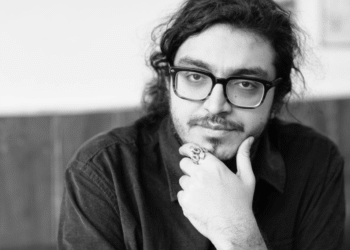
Dr. Arash Azizi of Yale University argues that the Iran Islamic Republic is likely to survive, but in a transformed form shaped less by ideology and more by pragmatism. In this ECPS interview, he suggests that Iran’s longstanding strategy of “sustained hostility toward the United States and enmity toward Israel… is not sustainable,” pushing the regime toward recalibration. Rather than collapse, Dr. Azizi foresees a shift: the decline of “Soleimaniism,” the rise of a securitized political order, and a growing emphasis on regional integration and diplomatic engagement. While power consolidates around military-security elites, Iran may simultaneously pursue normalization and reconstruction. The result, he argues, is not the end of the Islamic Republic, but its reconfiguration into a more technocratic, less ideological, and strategically adaptive state.
Interview by Selcuk Gultasli
Amid an intensifying cycle of confrontation between Iran, Israel, and the United States, the Middle East is entering what can only be described as a structurally transformative moment. Long characterized by proxy conflict and calibrated ambiguity, regional dynamics have now shifted toward direct interstate confrontation, leadership rupture, and accelerating geopolitical fragmentation. The killing of Iran’s Supreme Leader, the subsequent consolidation of power within a narrower elite, and sustained US–Israeli military pressure have together transformed a protracted shadow war into an overt systemic crisis. These developments raise urgent questions about the durability of the Islamic Republic, the reconfiguration of its strategic doctrine, and the broader implications for regional order.
In this context, this ECPS interview with Dr. Arash Azizi, who is a Postdoctoral Associate and Lecturer at Yale University, offers a timely and analytically rich intervention. As a scholar of Iranian politics and regional geopolitics, Dr. Azizi situates current developments within a longer trajectory of ideological evolution, institutional transformation, and strategic recalibration. His central argument—captured in the headline assertion that “the Islamic Republic will survive, but in a less ideological, more pragmatic form”—provides a unifying thread through the discussion.
At the heart of Dr. Azizi’s analysis lies the contention that the foundational logic of Iran’s revolutionary project is undergoing erosion. The model of regional power projection associated with Qassem Soleimani—what he describes as a “collection of militias that functioned very much as a unified multinational army”—has, in his view, reached the limits of its historical relevance. “That era is now largely over,” he notes, emphasizing that even prior to the latest war, “Soleimaniism was already under significant strain.” The cumulative effects of internal dissent in Iraq and Lebanon, combined with Israel’s military campaign and the collapse of allied structures in Syria, have rendered the “axis of resistance… even more out of vogue.”
Yet Azizi resists narratives of imminent regime collapse. Instead, he identifies a process of transformation rather than breakdown. The Islamic Republic, he argues, has come to recognize that its long-standing strategy of “sustained hostility toward the United States and enmity toward Israel… is not sustainable.” In its place, a more pragmatic orientation is emerging—one oriented toward “regional integration,” “a business-like relationship with the United States,” and eventual diplomatic normalization. This shift does not imply liberalization in a conventional sense, but rather a rebalancing of ideological ambition and strategic necessity.
Simultaneously, however, this transformation is unfolding alongside the consolidation of a more securitized political order. The post-Khamenei landscape, Dr. Azizi suggests, reflects “the rise of a security state, a militarized state… with important elements from the IRGC calling the shots.” This dual movement—toward external pragmatism and internal securitization—defines the paradox of Iran’s current trajectory.
Taken together, Dr. Azizi’s analysis points to a hybrid future: a state that sheds elements of its revolutionary identity while preserving—and in some respects intensifying—its coercive core. The result, as he suggests, is not the end of the Islamic Republic, but its reconstitution: less ideological, more technocratic, and increasingly embedded within a shifting regional order.
Here is the edited version of our interview with Dr. Arash Azizi, revised slightly to improve clarity and flow.
Iran’s Axis Strategy Is Fading as a New Regional Logic Emerges
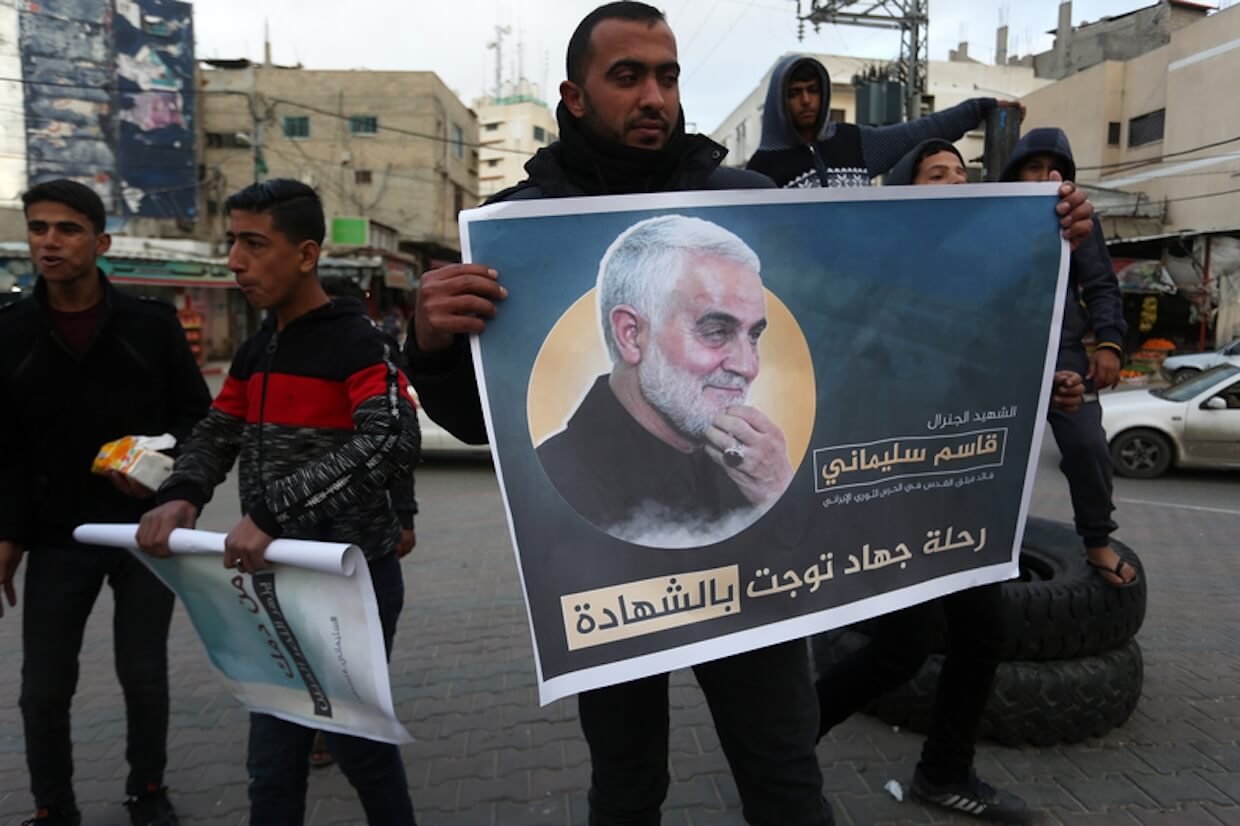
Dr. Azizi, welcome. Let me begin with the broader picture: In “The Shadow Commander,” you show how Qassem Soleimani institutionalized a model of regional power projection that fused ideological militancy, informal diplomacy, and IRGC autonomy. After the killing of Ali Khamenei, the elevation of Mojtaba Khamenei, and the direct US-Israeli war on Iran, how should we now think about the afterlife of “Soleimaniism” within a post-charismatic, wartime Islamic Republic?
Dr. Arash Azizi: Thank you—that’s a very good question. Soleimaniism, or the axis of resistance as it existed under Soleimani—namely, a collection of militias that functioned very much as a unified multinational army capable of operating across multiple battlefields simultaneously—had particular relevance at its height. That era is now largely over. The killing of Soleimani, of course, was significant.
But there were also important challenges in Iraq and Lebanon, the two heartlands of the axis of resistance. Within the Shia communities in both countries, the mass protests of 2019 posed a serious challenge to established parties. There is a clear and growing desire within Iraqi and Lebanese societies for more integrated, sovereign states, as well as for stronger connections with the Arab world—through the Arab League and a renewed emphasis on Arab identity. This, in turn, makes it problematic for large parts of their political systems to remain beholden to a non-Arab power like Iran.
For all these reasons, even if you had asked me this question in early 2023, I would have said that Soleimaniism was already under significant strain.
In the aftermath of October 7, with Israel’s decimation of several members of the axis, and the fall of the Syrian regime, the axis of resistance has become even more out of vogue. While there are now claims, in the context of the current war, that the axis has regained relevance, I remain skeptical. I do not think that “Soleimaniism,” as you call it, has a future in this sense.
This raises the question: if not, what will Iran’s relationship with these various militias look like going forward? I think the answer is that it will become more closely tied to Iran’s broader effort to act as a regional player, primarily through political support for these groups. That support is likely to become more political and less military in nature. As a result, power in Tehran will be transformed, and Iran’s relationship with these groups will also evolve. We are therefore likely to see greater integration of Iran into the region, and less reliance on the revolutionary militia model that operated under Soleimani.
Endless Hostility to the US and Israel Is No Longer Sustainable for Iran
To what extent do the recent US–Israeli strikes and aggression—explicitly coupled with regime-change rhetoric—redefine the Islamic Republic’s threat perception from chronic containment to acute existential insecurity, and how might this shift alter its long-term grand strategy?
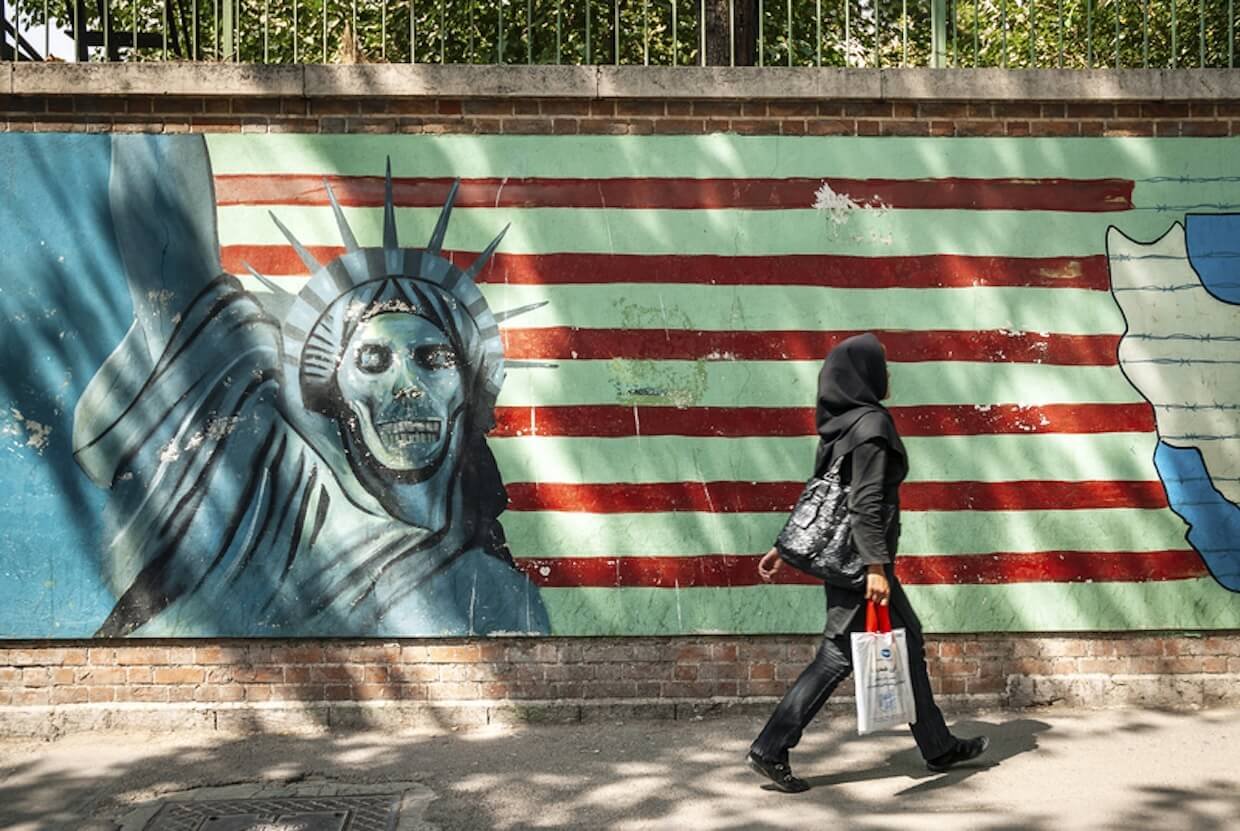
Dr. Arash Azizi: The Islamic Republic has just withstood 40 days of fighting with the United States and Israel. In the long term, I think the Iranian state—whether it is the Islamic Republic or whatever might replace it, and there may well be internal transformations—has realized that this trajectory of hostility, this grand strategy, to use the words of some like Vali Nasr, of sustained hostility toward the United States and enmity toward Israel, is not sustainable. As a result, I think they will increasingly look toward regional integration, an end to the historic dispute with the United States, and the emergence of Iran as a regional power that may still have disputes—within the region and beyond—but does not incorporate them into its revolutionary identity.
Tehran Is Trying to Trade Brinkmanship for Regional Recognition
Recent cease-fire agreement suggests that Tehran is demanding not a temporary end of hostilities but binding guarantees against renewed attack, reparations, and recognition of its coercive leverage in the Strait of Hormuz. Do these demands indicate strategic weakness dressed up as defiance, or a regime conclusion that controlled brinkmanship has enhanced Iran’s bargaining position?
Dr. Arash Azizi: If you really look at these demands, they are an attempt to redefine Iran’s role in the region and a recognition that the status quo does not work. So, Iran’s thinking in terms of non-belligerence is significant, because it would mean that it also needs to end its belligerence toward the US.
Demands such as recognition of its control over Hormuz and recognition of its power make sense, not for a revolutionary revisionist actor, but for one that seeks to be part of—and recognized within—the status quo. So, while they still hold on to ambitions of expelling US forces from the region, they understand that the more likely outcome is Iran’s integration into the region and its recognition by its neighbors—Saudi Arabia and others.
Saudi Arabia, Turkey, Egypt, Pakistan—these powers recognizing Iran—and a more business-like relationship with the United States. So, if the new leadership in Iran—and we should remind ourselves that this is a new leadership about whom we know relatively little; this is not about Mojtaba Khamenei, who is absent anyway, but about Bagher Ghalibaf and similar military figures who are now in charge—if they are able to press ahead and achieve some results in the talks in Islamabad or in future negotiations, they would have truly transformed the Islamic Republic and ushered Iran into a new era, one likely to be defined not by international isolation but by regional integration and global recognition by the US.
What We Are Seeing Is the Rise of a Militarized Security State
How has the death of Ali Khamenei and the contested authority of Mojtaba Khamenei changed the internal architecture of power? Are we witnessing a succession that strengthens clerical supremacy, or one that accelerates the long-term transfer of effective authority toward the IRGC and security institutions?
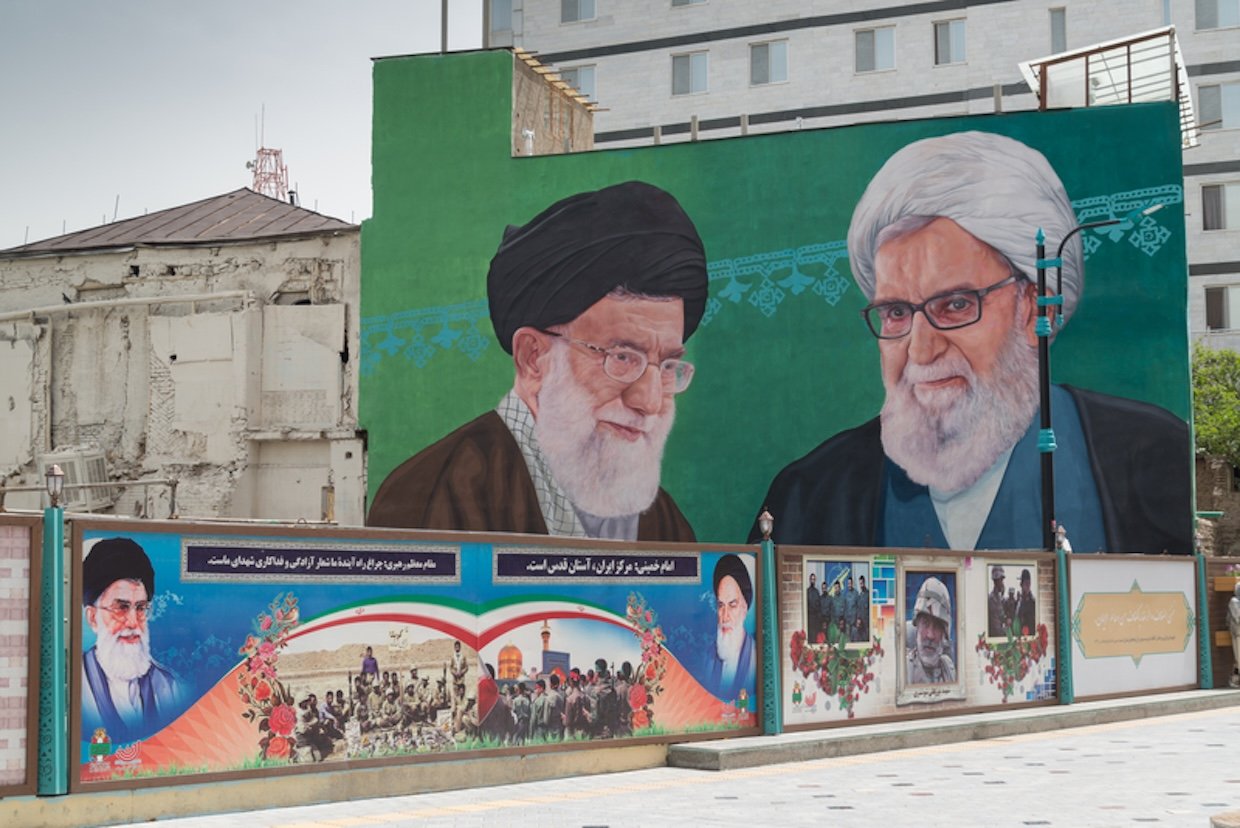
Dr. Arash Azizi: It is the latter. The death of Khamenei and the rise of Mojtaba, who is very much a stand-in for the security services of the regime, further the rise of security and militarized elements to power—those in the IRGC and beyond. Bagher Ghalibaf is very much an embodiment of the IRGC, and he is now the strongest man in Iran. In many ways, he is Iran’s de facto leader. The new National Security Advisor, Ali Akbar Ahmadian, is also an embodiment of IRGC insiders. So, this is very much the rise of a security state, a militarized state in Iran, with important elements from the IRGC calling the shots.
The question is what shape this order will take, and that is harder to answer. Will it be more like North Korea or more like Vietnam? That is one way of thinking about it. So far, we have seen many more signs pointing toward Vietnam than North Korea. The evidence for that can be seen, for example, in how Ghalibaf is operating. We should not forget that he has been a partner of reformists and centrists. He is now effectively praised by Rouhani and also by President Pezeshkian, who is a reformist. When he ran for president in 2024, he very much ran as a centrist. So, it looks like this militarized Iran will move toward a more centrist and more diplomatic direction, perhaps also a more technocratic and pragmatic one.
Iran May Survive, but It Will Not Resemble the Islamic Republic We Knew
In your recent writing, you argue that the Islamic Republic may survive, but in a different form. What, precisely, is that altered form likely to be under wartime conditions: a more naked military-security state, a narrower dynastic-clerical regime, or an unstable hybrid unable to restore prewar equilibrium?
Dr. Arash Azizi: The main differences would be that Iran would drop a couple of the core policies of the Islamic Republic. It would abandon its social puritan repression. It will be less obsessed with being an Islamist puritan society, where women have to cover up and so on, and will liberalize in this respect.
It would also replace its traditional, ideologically Islamist, anti-American, anti-Israeli foreign policy with one that is more realpolitik-oriented and based on regional integration, a business-like relationship with the United States, and the resumption of diplomatic ties with the United States.
So, it will appear more like a country such as Pakistan, or in some ways Turkey, in terms of foreign policy. Of course, Turkey is different, as it is a member of NATO and has a democratic structure, with important distinctions. But Iran will become more of a non-aligned player, part of a multipolar world order that centers its own interests, rather than one that seeks to position itself within an anti-American order.
As I said, this would mean resuming diplomatic ties with the United States, and the overall shape of the regime would change significantly. It would be a country open to business with the West, and it would no longer resemble the Islamic Republic we have seen over the past few decades.
Tehran Is Using Escalation to Redefine Its Place in the Region
Iran’s retaliation across Israeli territory, US assets, and Gulf-linked energy infrastructure suggests that regionalization is no longer a latent option but an active strategy. Should we read this as a coherent deterrence doctrine, or as evidence that Tehran’s escalation ladder is becoming more improvised and risk-acceptant under existential pressure?
Dr. Arash Azizi: Iran has long had a plan that, if attacked, it would regionalize the conflict and raise its costs for everyone. I see these chaotic attacks on major neighbors—Kuwait, Cyprus, Qatar, Oman, and Saudi Arabia—as an attempt to redefine its role in the region and, ultimately, to gain recognition as a regional power.
This is part of the current interregnum after Khamenei, during which the Islamic Republic—the Iranian state—is trying to redefine its place in the region. It is engaging in various forms of maneuvering in order to eventually reach some form of peace and secure recognition of its position.
At the same time, it is plausible that IRGC generals who have now experienced war with these countries will continue to pursue a policy of brinkmanship. They may become accustomed to using kinetic action whenever they fail to achieve their goals, which could, at some point, reignite a larger war—one that might involve a regional effort to defeat Iran and force it to submit.
The Regime Is Increasingly Ruling over Ruins
Israeli strikes on petrochemical facilities, transport infrastructure, and broader economic assets appear designed not only to degrade military capability but to impose systemic economic pain. How might this reshape the regime’s social base, especially among urban middle classes, workers, and peripheral populations already strained by sanctions and repression?
Dr. Arash Azizi: The regime already has a very small base. Should wartime conditions end now, it will face massive economic problems. Iran has been severely degraded not just in military terms, but in its civilian capabilities as well. To give just one example, Iran barely has any civilian aircraft left. It faces major problems: most of its airports are destroyed, and even where airports remain intact, civilian aircraft have been destroyed. It is, in many ways, a regime ruling over ruins.
All of this makes it very difficult for the regime to continue without facing further social alienation and, ultimately, renewed protests and insurrections. The only way out is a deal with the United States that would lift sanctions, improve its regional status, and provide some financial relief—something it is also trying to secure through its control over the Strait of Hormuz. In other words, it needs diplomatic pathways if it is to reach any kind of social equilibrium. Otherwise, it will face recurrent crises.
The War Mobilized the Regime’s Base, but It Did Not Legitimize the Regime
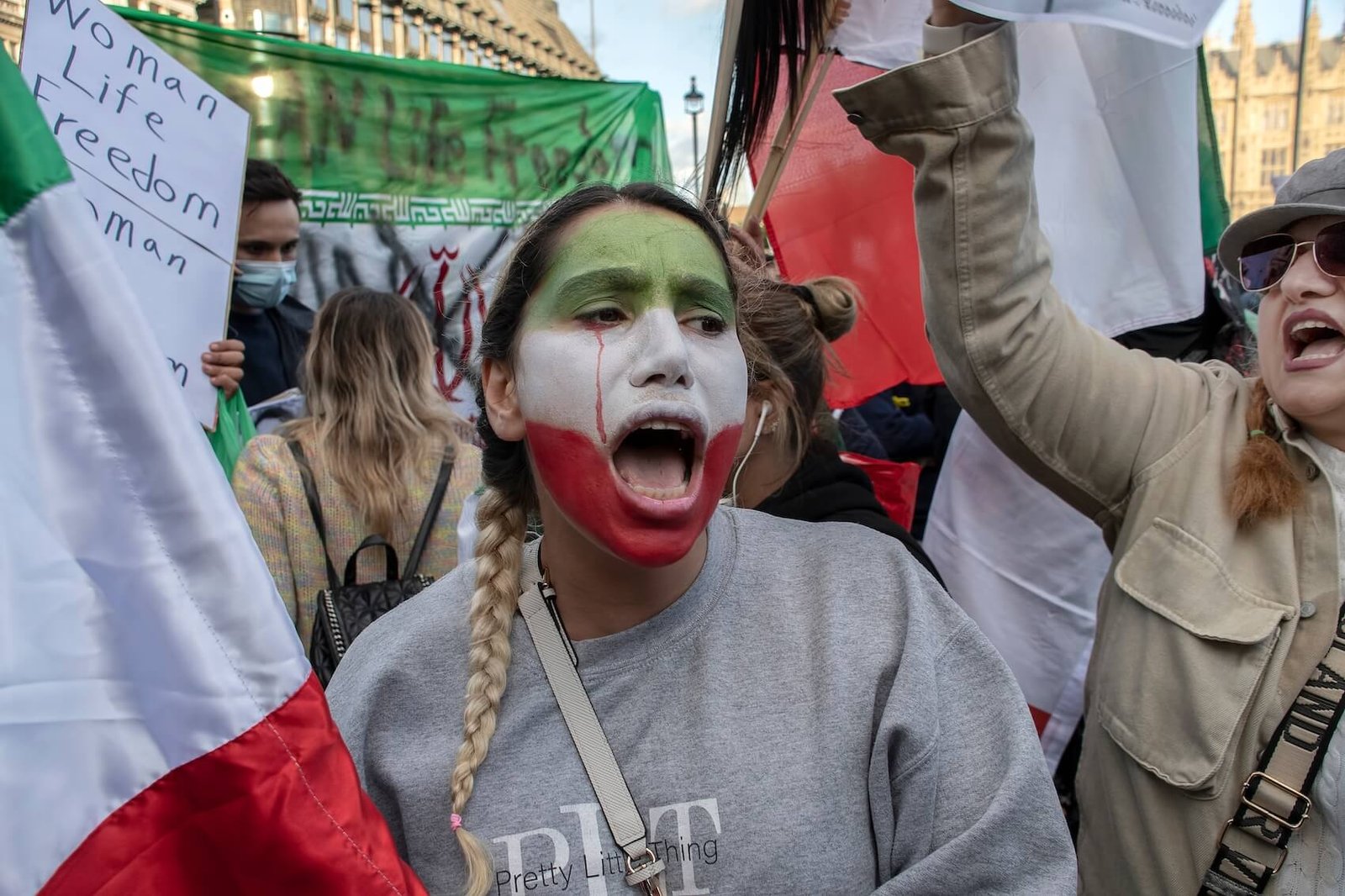
Comparative research often shows that war can produce either nationalist rally effects or heightened de-legitimation. In Iran’s case, do you think external attack is more likely to temporarily consolidate the regime, or to deepen the public’s sense that the state is both repressive and strategically ruinous?
Dr. Arash Azizi: It has mobilized the regime’s base; it has not expanded it, but it has mobilized it. One reason for this is that the opposition had created a facade—an illusion that the regime was easy to bring down and that external attacks would quickly lead to its collapse. This meant that the regime’s very survival could be framed as a major victory. In many ways, it was the opposition that made this equation possible. So, the effect has been a mobilized base and, in many ways, a demoralized opposition.
But the regime has not gained legitimacy. There remains a deep gap between it and much of Iranian society, and this war has not helped; if anything, it has made matters worse. It has once again revealed itself as a trigger-happy state, one willing to engage in conflict without prioritizing the economic well-being of its citizens. Unless it changes course, it will continue to face serious crises of legitimacy.
Iran’s Democratic Opposition Still Lacks a Credible Unified Front
You have recently stressed that Iran lacks a credible, organized democratic alternative ready to inherit power. In light of wartime devastation and elite fragmentation, what would have to happen for a domestically rooted democratic bloc to emerge with sufficient legitimacy, coordination, and national reach?
Dr. Arash Azizi: Different opposition groups, both inside and outside Iran, would need to put their differences aside, come together, and build a united front, offering a credible, coherent, and solid alternative. This remains a tall order, but that is what needs to happen. Efforts such as the Iran Freedom Congress, recently launched in London, are a step in the right direction, but much more needs to be done. There also needs to be serious coordination with elements inside Iran. Still, it remains a very tall order, and it is harder to achieve in wartime than it would be in peacetime.
The Opposition Needs Discipline, Cohesion, and a Credible Forward-Looking Platform
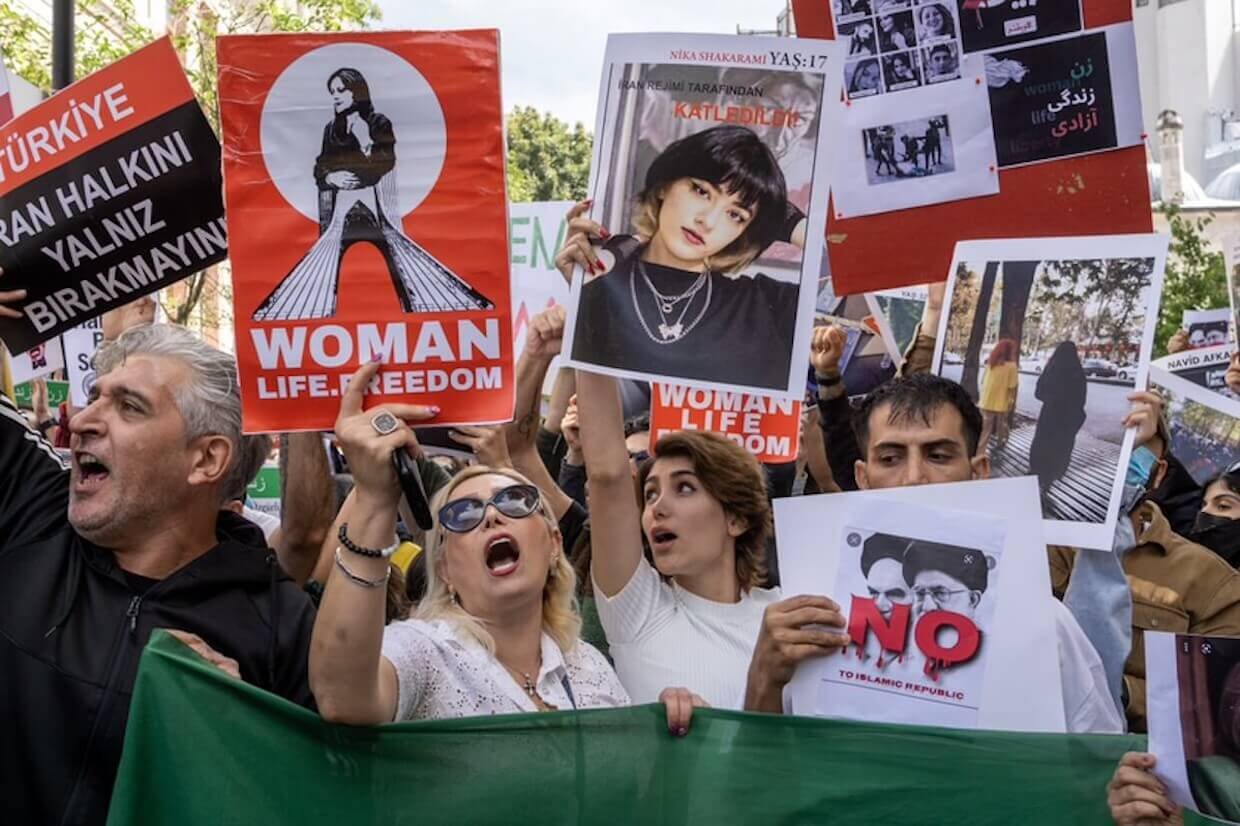
For exiled opposition figures seeking relevance at this moment, what institutional commitments would be indispensable for credibility inside Iran: constitutional guarantees, transitional justice mechanisms, minority protections, civilian control of the military, or something more foundational?
Dr. Arash Azizi: First of all, they would need to build organizations abroad that demonstrate a degree of political discipline, unity, and flexibility. They would need to create actual membership-based organizations that bring together different elite figures and reflect a degree of political cohesion. They have not done that.
They would then need to offer a political platform that seeks both to unify the opposition and to remain flexible. This would require balancing transitional justice mechanisms with amnesty provisions, for example, to signal that there is a path open to former security forces or other figures of the regime—and perhaps even a possibility of negotiating with them. They would also need to demonstrate an ability to galvanize public opinion and mobilize constituencies abroad.
In short, they would need to present a credible, forward-looking political alternative that can also be taken seriously internationally. This is a very tall order, and the opposition has done little that resembles it so far. What exists instead is a highly fragmented landscape.
In what might be described as the Republican, center-left segment of the opposition, there is fragmentation, a lack of organization and cohesion, and no meaningful strategic unity. The Iran Freedom Congress represents an attempt to address this. On the right-wing side, among Reza Pahlavi and monarchist groups, one finds a revanchist, somewhat chauvinistic, and disorganized opposition, marked by hostility toward other opposition actors. Much of its strategy appears tied to the Israeli-American attack, which has already occurred and is no longer particularly popular among Iranians.
Under these conditions, both sides of the opposition find themselves in disarray. Other groups, such as the MEK (The People‘s Mojahedin Organization of Iran), have long functioned as a cult-like organization with a limited base and continue to struggle for relevance. Moreover, if negotiations between Iran and the United States were to succeed—improving Iran’s international standing not only with the US but also with Europe and others—this would further undercut the opposition.
In your recent analysis, you warned about the dangers of a Kurdish incursion strategy encouraged from outside. How serious is the risk that attempts to weaponize Iran’s peripheries could simultaneously weaken the regime and undermine the prospects for a democratic, territorially coherent post-Islamic Republic order?
Dr. Arash Azizi: They are not even that likely to weaken the regime. Rather, they are likely to send Kurds, Baluch, and others—especially the Kurds—into a strategic dead end, where the Iranian regime would be able to amass significant forces and crush them in blood. Moreover, to the extent that such efforts succeed—if they manage to “liberate” any part of Iranian territory—they would risk triggering prolonged civil war and fragmentation and would be unlikely to improve the prospects for any kind of democratic transition in Iran.
Brute Repression Has Become the Regime’s Main Instrument of Rule
How should we understand the regime’s current repression strategy—including executions and intensified securitization—under wartime conditions? Does conflict give the state a renewed ideological cover for crushing dissent, or does it reveal the extent to which coercion has become the regime’s primary remaining instrument of governance?
Dr. Arash Azizi: The Islamic Republic is very much relying on brute repression, and it believes that it has beaten back the opposition to some extent. It has significantly mobilized its base, energizing it after the war, and is now using that opportunity to clean house and to display naked brutality toward its opponents. But this is not sustainable in the long term. You cannot bring thousands of people onto the streets every day, as it has been doing during the war, especially when economic problems arise—and they will. The economic problems already exist, but they will deepen into specific crises.
In that sense, the repressive apparatus will eventually encounter limits. At present, however, figures such as Mohseni Eje’i, the head of the judiciary, Ali Akbar Ahmadian, the National Security Advisor, and the police chief are key political actors whose entire portfolios and profiles are rooted in judicial and security repression.
It may well be that those seeking to argue that Iran has changed and can offer a new social pact to its people would need to marginalize these figures—perhaps replace them, remove them from office, or constrain their power—in order to gain broader public support. At some point, the regime will need to expand its social base, and repression alone will not achieve that.
If Iran Overplays Hormuz, It Risks Alienating the Entire Region
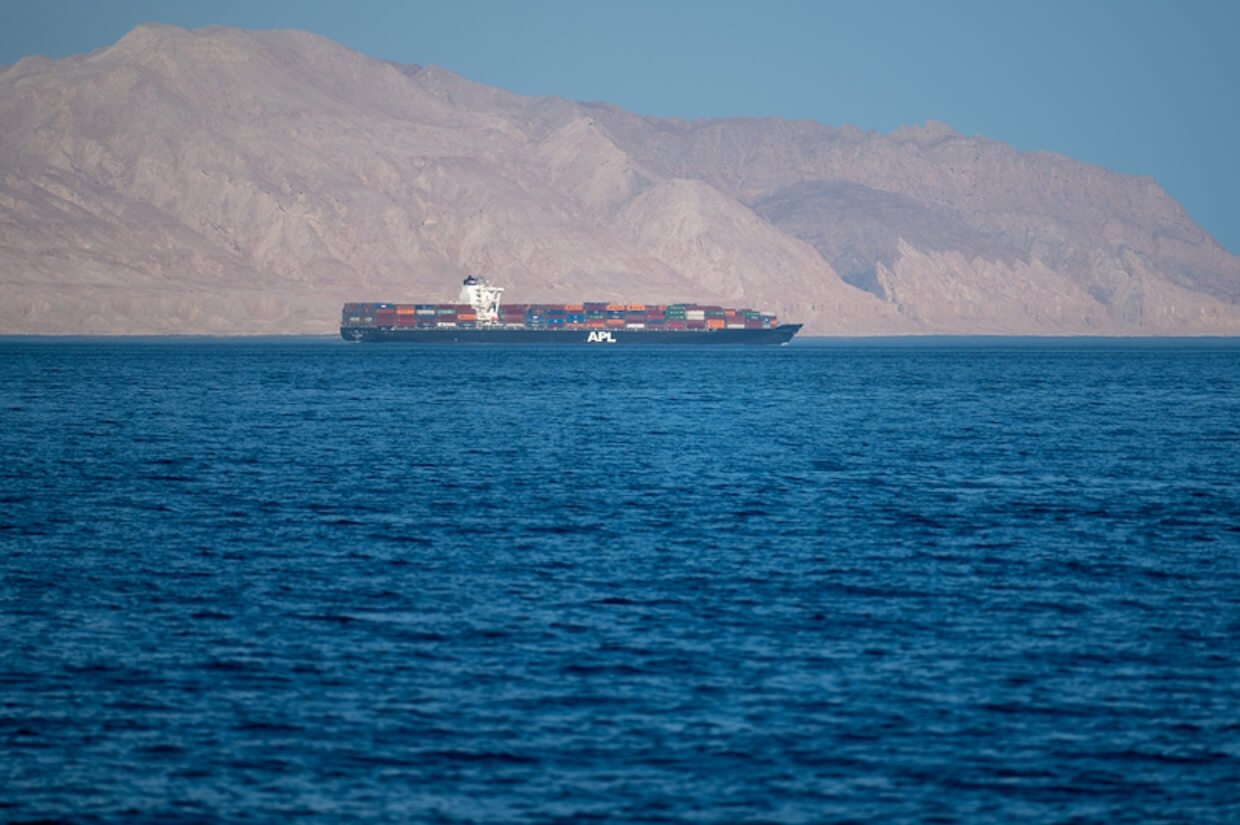
The Strait of Hormuz has reemerged as both a military lever and a diplomatic bargaining chip. From the standpoint of regime survival, is Hormuz best understood as Tehran’s strongest deterrent asset, or as a dangerously costly instrument that internationalizes the conflict and narrows Iran’s room for political recovery?
Dr. Arash Azizi: Iran is not drunk on the power of using Hormuz. For many decades, it had threatened to close it, and now it has. It has obviously worked in a way: it has helped disrupt global trade. You could say it is the single most important element in the eyes of President Trump, and it is very clear that it is going to emerge as an important part of the negotiations.
At the same time, Trump has shown some openness to dealing over this issue, including the idea of using crypto as payment, and this may even be linked to some crypto companies that would be seen as favorable by the US. This shows that there are unprecedented aspects to the situation. At the same time, the European Union has strongly objected to Iran’s posture of wanting to claim tolls over the Hormuz Strait.
So, this is a new area. If Iran handles it well, it could gain recognition of its importance and control here, and perhaps even derive some financial benefits from it as part of its attempt to integrate into the region and gain recognition. If not, and if it overplays its hand, it will further alienate the countries of the Gulf Cooperation Council and the broader international community, and at some point, perhaps even China and others will not be pleased if it continues to disrupt trade. So far, that has not been the case. China has been somewhat shielded from the war. It has strategic oil reserves, and Iran does allow some ships to pass, which can benefit China. But if this continues in the long term, it will become a liability.
Washington Wants an Interlocutor in Tehran More Than a Total Collapse
From a comparative and historical perspective, do the policies pursued by Donald Trump and Benjamin Netanyahu reflect a coherent long-term strategy aimed at restructuring Iran’s regional role, or do they risk generating unintended consequences such as regime hardening, regional fragmentation, or the empowerment of more radical actors within Iran’s security apparatus? In this context, how viable is externally induced regime change in Iran today, and which outcomes appear most plausible?
Dr. Arash Azizi: Externally induced regime change has not quite worked yet. Of course, President Trump claims that there is regime change, and that there has been important change within the regime, but it is still very much the same regime. Whether the strategy of the United States was for Khamenei to be replaced by Ghalibaf, I doubt that. It appears that their strategy was based on the hope that there could be some sort of capitulation or collapse of the regime—something of that sort—which did not occur.
The Israelis have a more long-term view, and also a more contingent one. By this I mean they were satisfied with some of the military degradations. They would have welcomed a national uprising to bring down the regime, but they were not necessarily relying on it. They may also try to activate elements inside Iran in the future, hoping that the post-war period will provide an opportunity to facilitate the regime’s fall. So, they maintain a longer-term, and as I said, more contingent perspective.
Ultimately, the United States, under President Trump, wants to engage with Iran and incorporate it into its regional security architecture—as a partner, or at least as an interlocutor. If Ghalibaf is willing to cooperate in certain ways, they would likely consider that a satisfactory outcome. Israel would be more cautious about such a development. However, if a deal with the United States includes the degradation of Iran’s nuclear program and the shipment of its enriched uranium abroad, Israel may also, perhaps reluctantly, come to view it as the least bad outcome.
Most Regional Powers Want Iran Contained, Not Broken
Regional actors are recalibrating in real time as the war disrupts energy markets and threatens wider escalation. How do you see Gulf monarchies, Turkey, and Russia interpreting a weakened but still dangerous Iran: as a partner to contain, an adversary to exploit, or a collapsing center whose instability could spill across the region?
Dr. Arash Azizi: Indeed, the countries you named are very different. Each of them has a distinct view of Iran. But let’s start with the GCC and Saudi Arabia. I think they would want an Iran that is contained, but not broken, and not driven into civil war. Not too weakened either, but contained and defined within a clear framework, so that it becomes less of a revolutionary, disruptive actor, less of a revisionist force, and more confined within its place.
Turkey would even more sympathetically prefer such a contained Iran that is also a partner, and one that could maintain its historic relationship with Turkey.
Russia is re-evaluating the importance of the Middle East in its strategy. At the moment, it has to deal with the fall of the Syrian regime, and it has been able to maintain a relationship with the new Syrian leadership. But, it is reassessing its Middle East policy and would be content to sustain relations with different regional actors, from Iran to Israel and others. I am not sure, however, that the Middle East occupies a central place in its broader strategic priorities.
Of course, one would be eager to see the work of scholars specializing in Iran and Russia–Middle East relations, such as Dr. Nikolay Kozhanov and others, who are better placed to offer a more precise prognosis of Russia’s evolving role.
The Most Plausible Outcome Is Transformation, Not Total Collapse
And finally, Dr. Azizi, looking ahead, which trajectory do you regard as most plausible: negotiated de-escalation with mutual guarantees, prolonged regional war, hardline consolidation under a narrower security elite, or a messy transition in which the Islamic Republic survives institutionally but loses much of its ideological and social coherence?
Dr. Arash Azizi: A few of these—a combination of several of these trajectories. I think the Islamic Republic will transform. It will lose its ideological coherence. I think we will see negotiated de-escalation. In due time, we are also likely to see Iran’s integration into the region and the opening of diplomatic ties with the United States, but this will occur alongside the persistence of a securitized state at the top.
That is my general prognosis. This outcome is more likely than a permanently mobilized, revolutionary, revisionist, ideological, North Korea-like state in Iran. That scenario remains less probable.
It is much more likely that Iran—the new Iran—will be more cynical but also more pragmatic and technocratic, and that it will attempt to undergo post-war reconstruction. And by post-war, I do not mean only the recent conflict, but also the longer period shaped by sanctions and Iran’s shadow war with the United States and Israel. I therefore expect the next phase to be one of economic development and reconstruction for Iran.