
What happens when the political foundations of the transatlantic partnership begin to erode? In his lecture at the ECPS Academy Summer School 2026, “Europe Between Oceans: The EU in the Age of Geoeconomics, Populism, and Strategic Competition,” Professor Erik Jones argues that Europe is entering a “post-Atlantic” era in which the assumptions that sustained EU–US cooperation since the Second World War are being fundamentally reconfigured. Moderated by Professor Elaine Fahey, the session examines how globalization, democratic polarization, populism, and geopolitical rivalry are reshaping transatlantic trade relations, European strategic autonomy, and the liberal international order. Combining historical perspective with political economy, the lecture offers a compelling framework for understanding Europe’s changing role in an increasingly fragmented world.
Reported by ECPS Staff
The rapid transformation of the transatlantic relationship has become one of the defining developments of the contemporary international political economy. For much of the post-war period, the partnership between Europe and the United States rested upon a remarkably durable combination of shared democratic values, expanding economic integration, multilateral cooperation, and common strategic interests. While periodic disagreements over security, trade, and foreign policy repeatedly tested the alliance, they rarely challenged its underlying political foundations. Today, however, intensifying geopolitical rivalry, democratic polarization, the uneven consequences of globalization, and the resurgence of populism have fundamentally altered the assumptions that long sustained the Atlantic order. As questions of economic security, industrial policy, strategic autonomy, and democratic resilience increasingly intersect, understanding the future of EU–US relations requires moving beyond traditional analyses of trade disputes or diplomatic disagreements to examine the deeper structural transformations reshaping both societies and the international system.
These questions stood at the center of the ECPS Academy Summer School 2026, held under the title "Europe Between Oceans: The EU in the Age of Geoeconomics, Populism, and Strategic Competition." Bringing together leading scholars and participants from across the world, the programme explored how geopolitical competition, economic fragmentation, democratic backsliding, and the changing architecture of globalization are redefining Europe’s place in an increasingly contested international order. Within this broader intellectual framework, Professor Erik Jones delivered a thought-provoking lecture, "The Political Economy of EU–US Trade Relations," in which he challenged conventional understandings of the contemporary transatlantic partnership. Rather than interpreting recent tensions as merely another cyclical crisis in EU–US relations, Professor Jones argued that Europe is entering what he described as a "post-Atlantic"era, in which many of the political, economic, and strategic assumptions underpinning the post-war transatlantic relationship are being fundamentally reconfigured. Combining historical analysis, international political economy, European integration studies, and comparative politics, he demonstrated that the current rupture extends far beyond disagreements over tariffs, NATO burden-sharing, or trade negotiations, reflecting instead a deeper erosion of domestic political solidarity, institutional trust, and the liberal consensus that historically sustained transatlantic cooperation.
The session was expertly moderated by Professor Elaine Fahey, Professor of EU Law at City Law School, City St George’s, University of London, whose distinguished scholarship on European Union external relations, international economic governance, cybersecurity, and transatlantic legal cooperation provided an ideal intellectual setting for the discussion. Her own research, situated at the intersection of European law and global governance, closely complements many of the themes explored throughout Professor Jones’s lecture, particularly the evolving legal and institutional architecture of EU–US relations.
Opening the session, Professor Fahey warmly welcomed participants and underscored Professor Jones’s long-standing contributions to the study of European politics, international political economy, and transatlantic relations. She highlighted his extensive body of scholarship, noting that his work has profoundly shaped contemporary understanding of European integration, economic governance, and the changing dynamics of the Atlantic partnership. Describing his research portfolio as both extensive and intellectually influential, she emphasized that his lecture would offer participants a valuable opportunity to engage with one of the foremost scholars examining Europe’s evolving international position. Her moderation helped situate the discussion within the broader challenges confronting Europe as it navigates an era of geoeconomic rivalry, democratic uncertainty, and strategic realignment.
Drawing on decades of research into European integration, globalization, and international political economy, Professor Jones argued that the future of transatlantic relations will depend less on repairing individual policy disagreements than on rebuilding the domestic political foundations that have historically enabled international cooperation. His lecture offered participants not only a penetrating reinterpretation of EU–US trade relations but also a broader analytical framework for understanding how globalization, democracy, strategic autonomy, and geopolitical competition collectively reshaping Europe’s role in the twenty-first-century international order are.
The Myth of the “Permanent Crisis”: Reinterpreting the Transatlantic Relationship

Professor Jones began his lecture by challenging one of the most deeply embedded assumptions in the study of transatlantic relations: the notion that contemporary tensions between Europe and the United States represent merely another cyclical crisis that, like many before it, will eventually pass. Drawing upon more than two decades of scholarship on European political economy and transatlantic relations, he argued that while crises have repeatedly punctuated the Atlantic partnership since the end of the Second World War, the current rupture differs fundamentally in both its origins and implications. Previous periods of discord occurred within a shared strategic, ideological, and institutional framework that ultimately enabled reconciliation. Today, however, it is precisely those underlying foundations that are being called into question. Consequently, Europe is not simply experiencing another episode of diplomatic disagreement with Washington but entering what Professor Jones described as a "post-Atlantic Europe," a fundamentally different geopolitical and economic environment requiring a profound reassessment of Europe’s strategic assumptions.
To illustrate this argument, Professor Jones reflected upon his own scholarly trajectory, recalling that throughout his academic career he had repeatedly written about crises in transatlantic relations. Whether during the presidency of George W. Bush, the economic tensions of the Obama years, or the debates preceding Russia’s full-scale invasion of Ukraine, earlier analyses had consistently been met with reassuring responses from more senior scholars who regarded such crises as temporary disturbances rather than existential challenges. Each previous period of tension, they argued, eventually gave way to renewed cooperation because the Atlantic alliance rested upon enduring political commitments that transcended short-term policy disagreements. Professor Jones acknowledged the historical validity of this interpretation while simultaneously arguing that it no longer adequately explains contemporary developments. The historical pattern of recurring crisis followed by reconciliation, he suggested, has now been fundamentally disrupted.
Historical Crises and the Resilience of Atlantic Cooperation
To demonstrate why the present moment represents a qualitative rather than merely quantitative change, Professor Jones guided participants through several defining episodes in the history of post-war transatlantic relations. His purpose was not simply to catalogue historical disagreements but to show that previous crises unfolded against a backdrop of shared political purpose that consistently enabled institutional recovery.
The first example was the Suez Crisis of the 1950s, when Britain and France launched military operations against Egypt without American support. Rather than standing alongside its closest European allies, the United States openly opposed their intervention, producing one of the earliest and most serious political ruptures within the Atlantic alliance. At precisely the same time, the Soviet Union’s successful launch of Sputnik dramatically transformed strategic calculations by demonstrating its growing missile capabilities, thereby raising profound doubts concerning the credibility of American nuclear protection for Europe. These simultaneous developments generated widespread uncertainty regarding the future of NATO and the reliability of the United States as Europe’s principal security guarantor. Yet despite these tensions, the alliance endured because both sides remained committed to the broader objective of defending liberal democracy against Soviet communism.
Professor Jones enriched this historical discussion by referring to contemporary cultural representations of Cold War anxieties, including the films Fail Safe and Dr. Strangelove. Far from being mere cinematic references, these works illustrated the profound uncertainties surrounding nuclear deterrence, strategic credibility, and American leadership that characterized the period. They also demonstrated that European concerns regarding the reliability of the United States are by no means unprecedented. Indeed, fears of abandonment have accompanied the Atlantic alliance since its earliest years.
The lecture then turned to the 1960s and 1970s, another period frequently described as a crisis of transatlantic relations. The Vietnam War generated inflationary pressures throughout the international economy, while President Richard Nixon’s unilateral suspension of the dollar’s convertibility into gold effectively dismantled the Bretton Woods monetary system without prior consultation with America’s European allies. These decisions profoundly unsettled European governments, who viewed them as evidence of Washington’s willingness to prioritize domestic interests over alliance coordination. Nevertheless, cooperation ultimately resumed because disagreements remained confined to specific policy issues rather than challenging the fundamental legitimacy of the Atlantic partnership itself.
Reagan, Yugoslavia, Iraq, and the Persistence of Strategic Solidarity
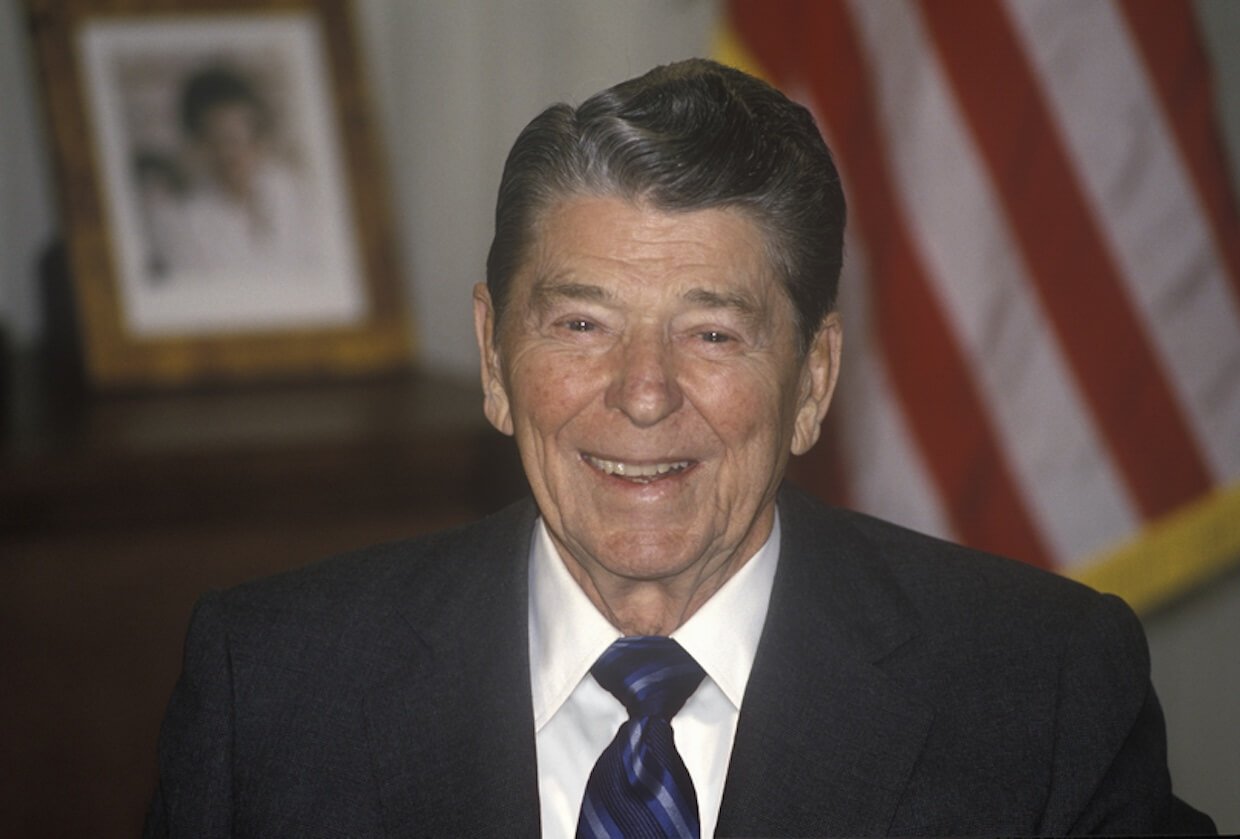
Professor Jones proceeded chronologically through later episodes of transatlantic tension, further reinforcing his argument that historical crises consistently differed from the present rupture. During the 1980s, President Ronald Reagan’s assertive rhetoric toward the Soviet Union and debates concerning the deployment of nuclear weapons generated considerable anxiety among European governments. Simultaneously, divergent macroeconomic policies produced additional economic friction between Europe and the United States. Ironically, however, these disagreements also encouraged deeper European integration, particularly through the Single European Act and the ambitious project of completing the European Single Market by 1992. In this sense, earlier transatlantic tensions often stimulated European cooperation rather than undermining it.
The 1990s brought another difficult period as violence engulfed the former Yugoslavia. Europeans increasingly perceived the United States as reluctant to assume leadership in resolving conflicts on their own continent. Although the Balkan wars exposed important weaknesses within European foreign and security policy, they did not fundamentally weaken transatlantic solidarity. Instead, subsequent cooperation during the Kosovo intervention reaffirmed NATO’s central role in European security.
Similarly, the Iraq War under President George W. Bush produced perhaps the most visible political divisions within the Atlantic alliance since the Suez Crisis. Major European governments openly opposed the American-led invasion, while disagreements concerning international law, multilateralism, and preventive war generated intense diplomatic conflict. Yet, as Professor Jones observed, these disagreements remained disputes among partners who continued to share fundamental commitments to liberal democracy, NATO, and the broader institutional architecture established after 1945. The first Trump administration likewise represented a period of significant tension, yet many Europeans interpreted it as a temporary deviation that would eventually be corrected through subsequent electoral change. President Joe Biden’s election appeared to reinforce precisely this expectation by restoring more conventional forms of diplomatic engagement.
The historical lesson emerging from these examples was clear. Each previous crisis, however serious, ultimately remained manageable because Europeans and Americans continued to accept common assumptions concerning democratic values, European integration, multilateral cooperation, and collective security. Those shared assumptions acted as institutional anchors that limited political conflict and enabled eventual reconciliation.
Why This Time Is Different: The Domestic Roots of Transatlantic Rupture
Having demonstrated the resilience of earlier crises, Professor Jones introduced the central analytical proposition of his lecture: the current deterioration of transatlantic relations differs because it originates not primarily in foreign policy disagreements but in profound transformations occurring within domestic political systems on both sides of the Atlantic.
According to Professor Jones, globalization undoubtedly generated remarkable economic achievements. Hundreds of millions of people were lifted out of poverty, international trade expanded dramatically, and global prosperity increased to an unprecedented degree. As an economist, he acknowledged having enthusiastically defended these developments for many years. Yet experience has demonstrated that globalization also produced consequences insufficiently anticipated by its strongest advocates. While aggregate prosperity increased, the distribution of economic gains became increasingly unequal, generating social fragmentation, political dissatisfaction, and declining confidence in democratic institutions.
Professor Jones emphasized that the central challenge lies not in globalization itself but in its uneven domestic consequences. Economic liberalization transformed labor markets, altered patterns of industrial production, weakened local communities, and intensified socioeconomic inequalities. These developments gradually undermined domestic political solidarity, creating fertile conditions for populist movements across both Europe and the United States. Publications that Professor Jones discussed during the lecture—including his work on democracy without solidarity, European populism, and political disintegration—represent sustained attempts to understand precisely these domestic transformations.
This perspective marked an important departure from conventional analyses of transatlantic relations. Rather than portraying populism as an external shock disrupting otherwise stable institutions, Professor Jones argued that domestic political fragmentation has become the principal driver of international instability. Governments increasingly struggle to sustain international commitments because they face electorates that no longer perceive globalization, multilateral cooperation, or European integration as serving their interests. Consequently, the crisis of the Atlantic partnership reflects the erosion of domestic political consensus rather than merely disagreements between national leaders.
TTIP and the Failure of Domestic Political Consensus
Perhaps the clearest illustration of this broader transformation was Professor Jones’s discussion of the Transatlantic Trade and Investment Partnership (TTIP). Originally conceived during the Obama administration as an ambitious effort to deepen economic integration between the European Union and the United States, TTIP appeared, from an economic perspective, to represent an exceptionally promising initiative. High-level expert groups identified numerous opportunities for reducing unnecessary regulatory barriers, improving investment conditions, and creating employment through enhanced transatlantic cooperation. Economists widely regarded the agreement as "low-hanging fruit" capable of generating mutual gains with relatively limited political cost.
Yet precisely the opposite occurred. Rather than receiving broad public support, TTIP provoked widespread political resistance on both sides of the Atlantic. Large demonstrations took place throughout Europe, particularly in Germany, while substantial opposition also emerged within the United States. Professor Jones emphasized that this reaction profoundly surprised policymakers and scholars alike. The agreement’s failure revealed that domestic political divisions had become so deep that even initiatives promising mutual economic benefit could no longer command democratic legitimacy.
For Professor Jones, TTIP’s collapse represented a critical turning point. It demonstrated that repairing transatlantic relations could no longer be achieved solely through diplomatic negotiation or economic cooperation. Unless domestic political cohesion could first be restored, international agreements would continue to encounter growing public resistance. Instead of healing these domestic divisions, however, subsequent political developments—including the rise of increasingly assertive populist movements and Donald Trump’s return to office—would deepen them further, thereby transforming domestic fragmentation into an enduring crisis of the Atlantic partnership itself.
Trump’s Second Presidency and the Emergence of a “Post-Atlantic Europe”
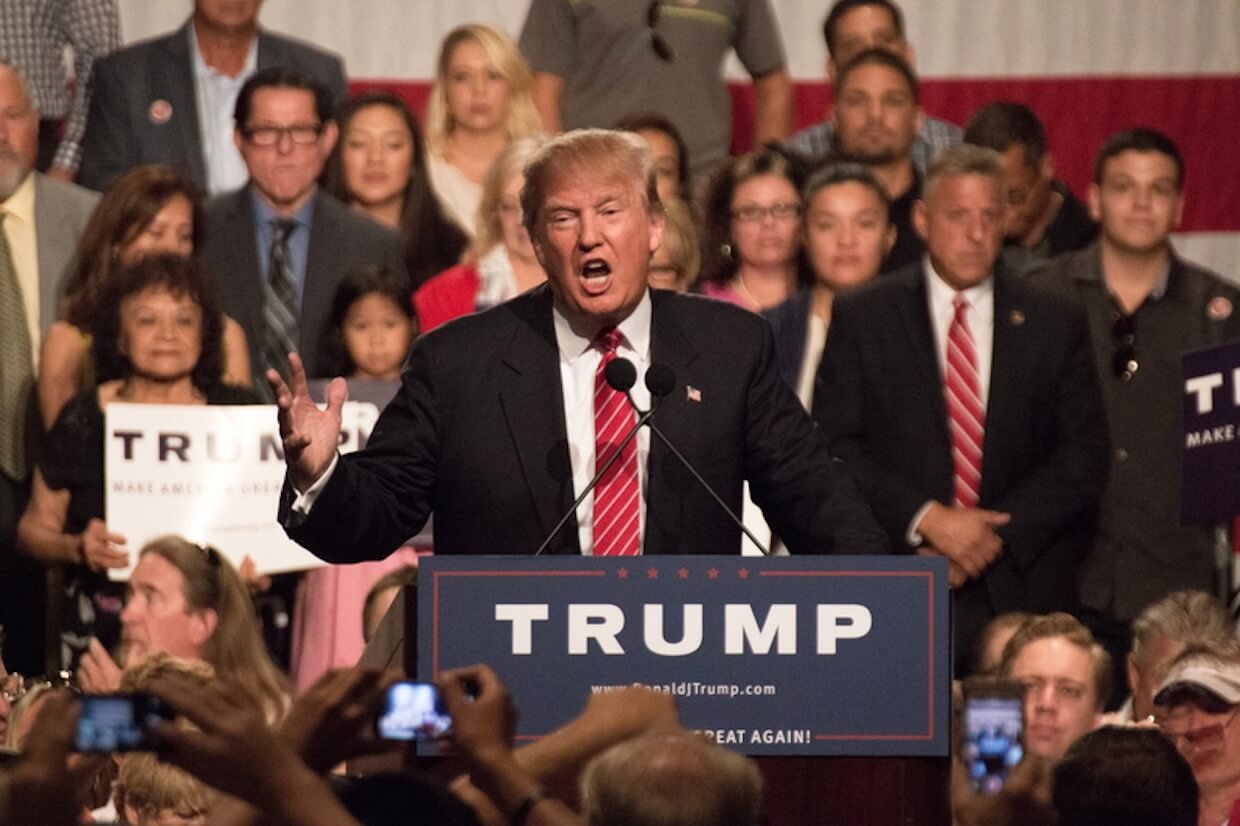
Having established that the current transatlantic crisis originates in deepening domestic political fragmentation rather than temporary diplomatic disagreement, Professor Jones turned to the question that lies at the heart of his lecture: why does Donald Trump’s second presidency represent a fundamentally different moment in the history of EU–US relations? While cautioning against attributing all contemporary tensions exclusively to Trump himself, Professor Jones argued that the current administration has exposed—and significantly accelerated—structural transformations that had already begun reshaping the Atlantic partnership. Trump’s return to office, he suggested, should be understood less as the cause of the crisis than as its most visible manifestation, reflecting profound changes within American politics that have altered Washington’s understanding of Europe and the wider liberal international order.
Unlike previous episodes of transatlantic disagreement, which generally revolved around particular policy disputes, the present rupture challenges the normative foundations upon which post-war cooperation was built. Professor Jones argued that three developments occurring during the early months of Trump’s second administration illustrate the magnitude of this transformation. Individually, each appears to concern a discrete policy issue; collectively, however, they signal a fundamental redefinition of the political, institutional, and strategic assumptions that have governed the Atlantic alliance for more than seventy years.
Three Signals of Strategic Rupture
The first illustration concerned the speech delivered by Vice President J. D. Vance at the Munich Security Conference in early 2025. Rather than focusing primarily on Russia, China, or conventional security threats, Vance criticized European governments for marginalizing the German far-right party Alternative für Deutschland (AfD) and argued that the greatest threat to European democracy stemmed from restrictions on political speech rather than from extremist political movements themselves. Professor Jones emphasized that Europeans interpreted these remarks very differently from their American authors. From Washington’s perspective, the speech reflected concerns about freedom of expression. From Europe’s perspective, however, it appeared to repudiate decades of shared commitment to defending liberal democracy against anti-democratic political forces.
The second example concerned President Trump’s repeated assertion that the European Union had been created to exploit—or, in his own blunt formulation, to "screw"—the United States. Professor Jones argued that such statements represent much more than rhetorical provocation. They directly challenge one of the central pillars of post-war American foreign policy: sustained support for European integration. Since the Marshall Plan, successive American administrations—Republican and Democratic alike—had consistently viewed European integration as essential for securing peace, prosperity, and democratic stability on the continent. To portray the European Union as fundamentally hostile to American interests therefore represents a striking reversal of decades of bipartisan strategic thinking.
The third illustration came from remarks delivered by Secretary of Defense Pete Hegseth, who suggested that European governments should assume primary responsibility for their own conventional defense while the United States concentrated increasingly upon nuclear deterrence and strategic competition elsewhere. Although debates over NATO burden-sharing are hardly new, Professor Jones argued that this formulation implied something much more significant: the gradual disengagement of the United States from the conventional military commitments that have underpinned European security since the beginning of the Cold War. Together, these three developments questioned the legitimacy of liberal democracy, the value of European integration, and the credibility of American security guarantees—the three institutional foundations of the post-war Atlantic order.
Liberal Democracy as the Original Foundation of the Atlantic Partnership
Professor Jones next explored the historical origins of these three pillars, beginning with liberal democracy itself. One of the lecture’s most thought-provoking contributions was its insistence that the transatlantic relationship was never merely an alliance of convenience organized around military cooperation or economic exchange. Rather, from its inception, it represented a normative project centered upon the defense and consolidation of liberal democratic values. The Atlantic partnership emerged not simply to contain Soviet military power but to safeguard democratic political systems against both communist and fascist alternatives.
Professor Jones reminded participants that this commitment often required active American involvement in European domestic politics. During the immediate post-war decades, Washington consistently encouraged European governments to exclude explicitly anti-democratic political movements from executive power, regardless of their electoral strength. Communist parties in countries such as Italy and France were regarded not simply as ordinary political competitors but as potential threats to the democratic order itself. Consequently, successive American administrations openly intervened—politically, diplomatically, and sometimes covertly—to preserve liberal democratic institutions across Western Europe.
To illustrate this point, Professor Jones discussed the example of Richard Gardner, the United States ambassador to Italy during the late 1970s, who openly described preventing the Italian Communist Party from entering government as one of his principal diplomatic achievements. From today’s perspective, such intervention may appear extraordinary. Yet it reflected the prevailing understanding that the transatlantic alliance rested upon shared commitments to a particular model of constitutional democracy, one that required defending democratic institutions against forces regarded as fundamentally hostile to liberal constitutionalism.
Against this historical background, Vice President Vance’s Munich speech acquired a significance extending well beyond debates concerning freedom of expression. By criticizing European efforts to isolate parties widely regarded as extremist, the speech appeared to repudiate one of the central political principles upon which transatlantic cooperation had historically been built. Europeans interpreted this not merely as disagreement over electoral competition but as evidence that the United States itself was reconsidering its long-standing commitment to defending liberal democracy as a foundational value of the Atlantic community.
European Integration and the Political Economy of Atlantic Cooperation
Professor Jones then turned to the second pillar of the Atlantic relationship: European integration. Here again, he challenged simplistic interpretations that portray integration as an exclusively European project. Instead, he demonstrated that American support proved indispensable throughout its historical development.
Following the Second World War, the United States sought to stabilize Europe by encouraging forms of economic cooperation capable of reducing interstate conflict while preserving democratic self-government. Although early American proposals for extensive economic planning attracted only limited enthusiasm, European leaders gradually developed alternative institutional arrangements beginning with the European Coal and Steel Community, later expanding through the European Economic Community and ultimately the European Union. Throughout each stage of this process, successive American administrations consistently treated European integration as a strategic asset rather than an economic threat.
Professor Jones emphasized that American support extended beyond diplomatic rhetoric. Washington negotiated directly with European institutions, particularly the European Commission, recognizing them as legitimate representatives of a progressively integrated European economy. Far from disadvantaging the United States, integration generated enormous economic opportunities. American firms accumulated roughly $19 trillion in investments across Europe, while European investment in the United States reached approximately $9 trillion, creating one of the most deeply integrated economic relationships in world history. Such figures underscore Professor Jones’s central point: European integration has long benefited both sides of the Atlantic.
Against this historical record, President Trump’s characterization of the European Union as an organization designed to exploit the United States appeared fundamentally inconsistent with the historical evolution of transatlantic political economy. Rather than reflecting objective economic realities, such claims illustrate how contemporary populist narratives increasingly reinterpret long-established institutions through the lens of nationalist political grievance.
NATO, Deterrence, and the Transformation of European Security
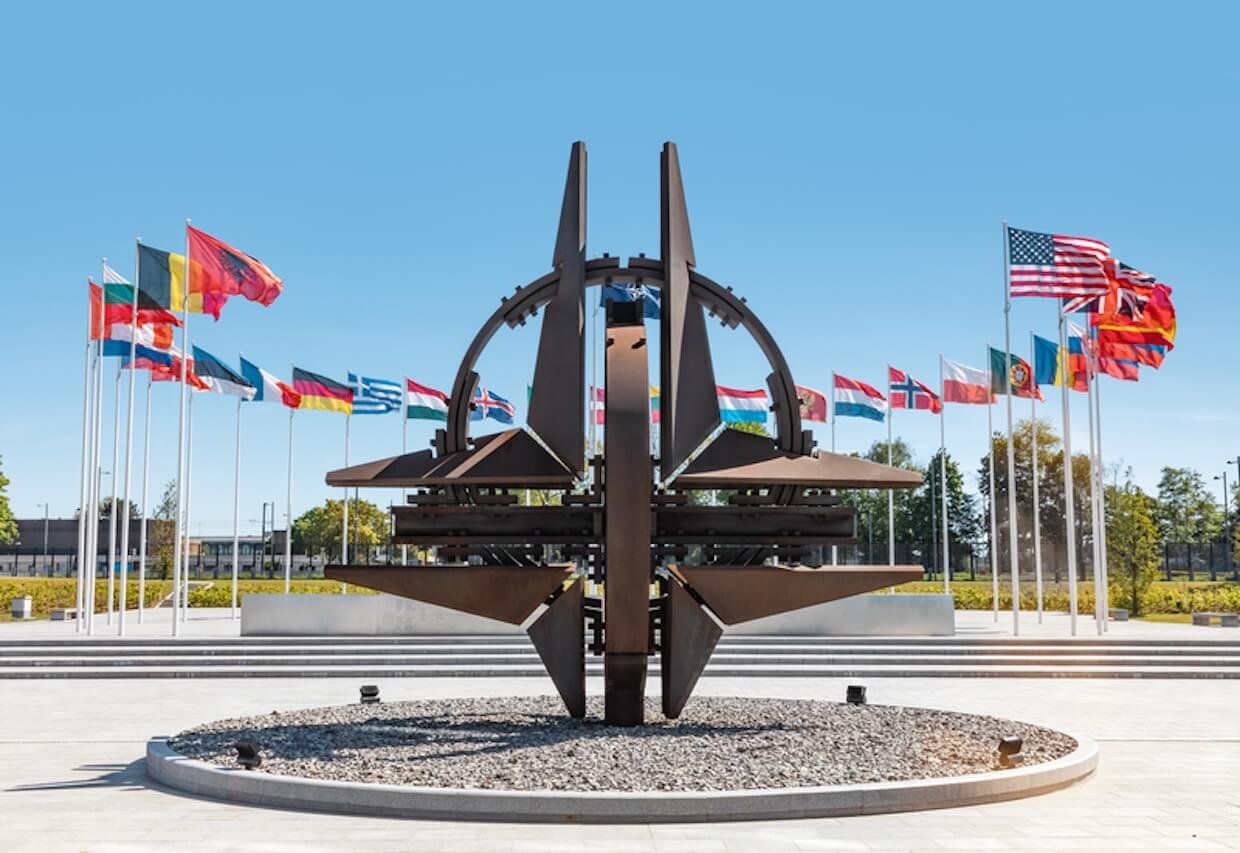
The lecture’s third major theme addressed the evolution of European security architecture. Professor Jones reminded participants that NATO was never simply a military alliance; it represented a carefully constructed institutional framework designed simultaneously to reassure European states, constrain renewed German militarism, and deter Soviet expansion. American military commitments formed the indispensable foundation of this arrangement.
Particularly important was Professor Jones’s explanation of the evolution of nuclear deterrence strategy. During the early Cold War, the United States relied heavily upon the doctrine of massive retaliation, threatening overwhelming nuclear response to any Soviet aggression. As strategic realities evolved, however, NATO gradually adopted the doctrine of flexible response, later conceptualized as extended deterrence. Under this framework, deterrence depended not merely upon nuclear weapons but upon credible American participation at every stage of military escalation—from conventional forces through tactical nuclear capabilities to strategic deterrence.
Professor Jones argued that recent suggestions that Europe should assume primary responsibility for conventional defense while the United States concentrated largely upon nuclear capabilities fundamentally undermine this strategic logic. If American conventional forces withdraw from Europe, the credibility of subsequent stages of deterrence becomes increasingly uncertain. European governments therefore interpret such proposals not simply as burden-sharing adjustments but as indications that the United States may no longer regard European security as an essential strategic priority.
From Domestic Disintegration to International Fragmentation
Throughout this section of the lecture, Professor Jones consistently returned to the relationship between domestic political change and international institutional transformation. The weakening of liberal democratic consensus within the United States has simultaneously altered American attitudes toward European integration, multilateral cooperation, and collective security. International fragmentation thus mirrors domestic political disintegration.
The cumulative consequence, Professor Jones argued, is the gradual emergence of a "post-Atlantic Europe." This does not imply the complete disappearance of transatlantic cooperation or the collapse of NATO. Rather, it suggests that Europe can no longer assume the permanence of institutional arrangements that once appeared almost immutable. As shared democratic values weaken, domestic political divisions deepen, and American strategic priorities evolve, European governments increasingly recognize the necessity of developing greater strategic autonomy across trade, industrial policy, defense, and technological innovation.
Accordingly, the current transformation extends well beyond temporary diplomatic disagreement. It represents the beginning of a new political economy in which Europe must increasingly redefine its international role under conditions of diminished American leadership and growing geopolitical uncertainty. The challenge confronting European policymakers is therefore not simply how to repair relations with Washington but how to adapt the European project itself to an international order that no longer guarantees the stability upon which post-war integration was originally constructed.
Globalization’s Unintended Consequences: From Economic Integration to Political Disintegration
In the concluding section of his lecture, Professor Erik Jones shifted from historical diagnosis to broader structural explanation, asking why the transatlantic partnership has become increasingly vulnerable despite decades of unprecedented economic integration. His answer challenged one of the central assumptions underpinning the liberal international order: that expanding globalization would naturally reinforce both prosperity and political stability. While acknowledging that globalization generated extraordinary economic gains and contributed to lifting hundreds of millions of people out of poverty, Professor Jones argued that its domestic political consequences proved far more disruptive than policymakers and economists had anticipated. The crisis confronting the Atlantic partnership, therefore, cannot be understood without examining the social and political transformations produced by globalization itself.
Reflecting on his own intellectual evolution, Professor Jones candidly acknowledged that, like many economists of his generation, he had long defended free trade as an almost unequivocal public good. The promise of globalization rested on a persuasive logic: greater openness would increase efficiency, expand markets, stimulate innovation, and ultimately improve living standards across societies. In aggregate terms, this prediction proved remarkably accurate. Yet aggregate success concealed profound distributive consequences that gradually undermined domestic political cohesion. The benefits of globalization, while substantial, were distributed unevenly across regions, industries, firms, and social groups. As inequalities widened and local communities experienced industrial decline, economic insecurity increasingly translated into political dissatisfaction.
Crucially, Professor Jones argued that these developments should not be interpreted merely as the inevitable "losers" of globalization resisting economic change. Instead, they reflected structural distortions within the organization of global production itself. Global trade increasingly became concentrated around highly integrated logistics networks, dominant shipping companies, large-scale retailers, and sophisticated infrastructure managers capable of exercising considerable market power. While globalization appeared to promote open competition, in practice it often strengthened large multinational corporations at the expense of smaller firms embedded within local economies.
One of the lecture’s most illuminating illustrations concerned the transformation of retail competition in the United States. Large corporations such as Walmart could exploit global supply chains on terms unavailable to smaller businesses. Their purchasing power enabled them to obtain lower prices, preferential shipping arrangements, and economies of scale that local retailers simply could not match. Consequently, globalization altered competitive conditions not only internationally but also within domestic markets, contributing to the decline of independent businesses and weakening local economic ecosystems. Similar processes unfolded across Europe, where increasing market concentration reinforced regional inequalities and accelerated socioeconomic polarization.
Professor Jones therefore invited participants to reconsider globalization not simply as an international phenomenon but as a force fundamentally reshaping domestic political economy. The erosion of local economic resilience gradually weakened social solidarity, increased distrust toward governing institutions, and created fertile political opportunities for populist entrepreneurs promising to restore national control over markets, borders, and economic policy. In this sense, domestic political fragmentation became an unintended consequence of the very international economic integration that the transatlantic partnership had so successfully promoted.
Europe’s Strategic Response: From Atlantic Integration to European-Centered Geoeconomics
If globalization weakened the domestic foundations of Atlantic cooperation, Professor Jones argued, Europe’s contemporary policy response reflects a growing recognition that previous assumptions concerning international economic openness can no longer be taken for granted. European policymakers increasingly accept that they cannot simply wait for future American administrations to restore earlier patterns of transatlantic cooperation. Instead, they have begun constructing a more autonomous economic and strategic framework capable of protecting European interests irrespective of political developments in Washington.
Importantly, Professor Jones emphasized that this transformation did not begin with Donald Trump’s second presidency alone. Several initiatives emerged during the later years of the first Trump administration and expanded significantly following Russia’s invasion of Ukraine. Recent American political developments have accelerated rather than initiated Europe’s broader strategic reorientation. The essential objective is not to abandon the Atlantic partnership but to reduce Europe’s structural dependence upon external political decisions over which Europeans exercise little influence.
This shift is particularly visible in the field of industrial policy and public procurement. Professor Jones highlighted the emergence of local content requirements within European defense procurement; whereby publicly funded contracts increasingly favor production located within Europe itself. Initially confined to defense industries, this principle subsequently expanded through policy initiatives such as the Draghi Report on European Competitiveness and later legislative proposals including the Industrial Accelerator Act. Together, these developments illustrate the emergence of a distinctly European approach to geoeconomic governance in which industrial resilience, supply-chain security, and technological sovereignty increasingly complement traditional commitments to market openness.
The significance of these reforms extends well beyond procurement rules. Local content requirements encourage firms operating within Europe—including subsidiaries of American multinational corporations—to source components, technologies, and services increasingly from European suppliers. Likewise, European firms operating in North America will become progressively integrated into North American production networks. As a result, transatlantic corporations may remain formally multinational while becoming economically embedded within increasingly separate regional production systems.
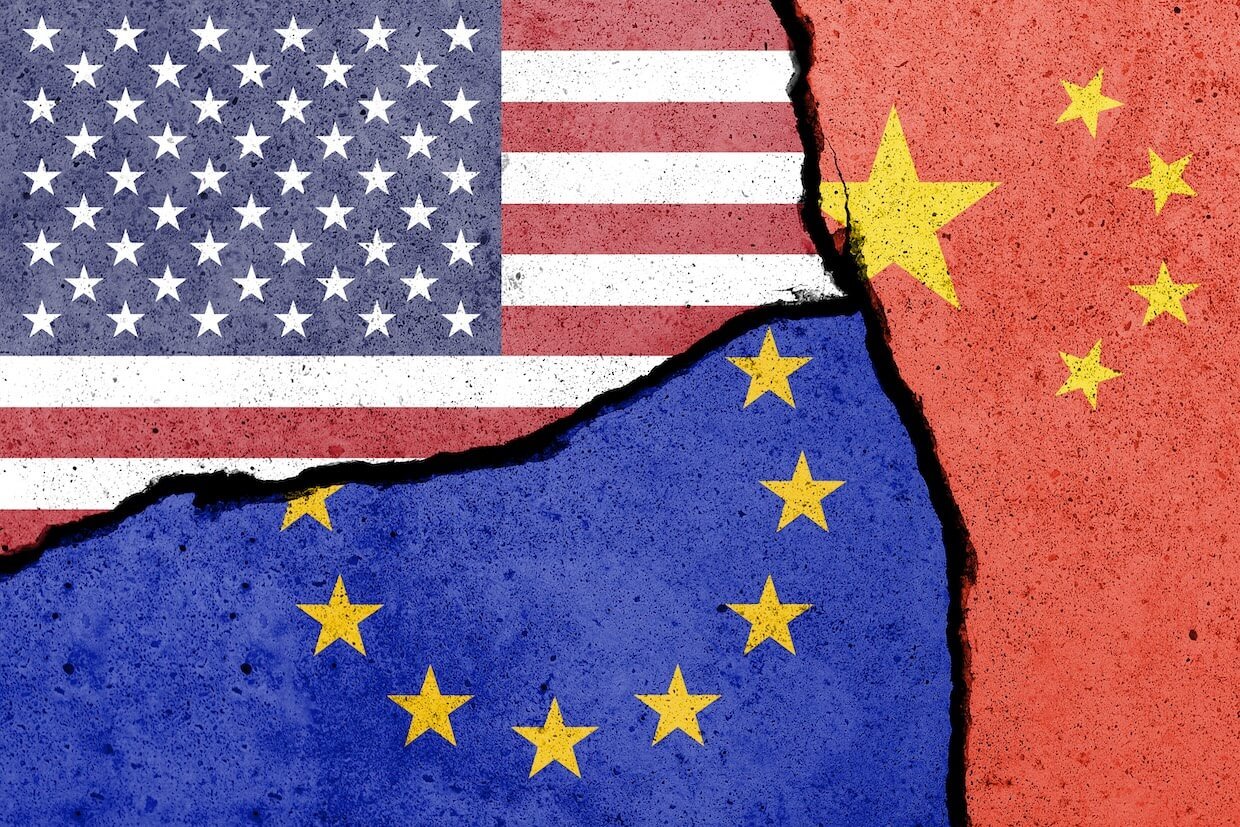
Professor Jones argued that this gradual regionalization of global value chains represents one of the most important structural transformations currently reshaping the international political economy. Rather than a complete reversal of globalization, it signals the emergence of a more fragmented form of globalization organized around competing regional economic blocs. Europe, North America, and China increasingly seek to secure critical technologies, strengthen domestic industrial capacity, and reduce strategic dependence upon external actors. The consequence is not economic autarky but a more compartmentalized global economy in which geopolitical considerations increasingly shape commercial relationships.
A Fragmenting International Order
Professor Jones further suggested that these developments should not be interpreted as unique to Europe. Similar tendencies are already visible across other major economies, particularly China, which has likewise introduced increasingly restrictive policies governing foreign investment, technology transfer, and participation within strategically significant sectors. Across the global economy, governments are placing greater emphasis upon resilience, redundancy, and strategic control rather than efficiency alone.
This transformation represents a profound departure from the assumptions that guided globalization during the final decades of the twentieth century. For much of that period, policymakers regarded expanding interdependence as both economically desirable and politically stabilizing. Contemporary governments, by contrast, increasingly perceive excessive dependence itself as a strategic vulnerability. Economic openness therefore becomes conditional rather than universal, shaped by concerns regarding national security, technological competition, and geopolitical rivalry.
Professor Jones described this evolving landscape as one in which the West itself is becoming rewired. The United States and Europe will undoubtedly remain close economic partners, yet the institutional mechanisms through which they cooperate are likely to differ substantially from those characterizing the post-war Atlantic order. Firms operating on opposite sides of the Atlantic may increasingly participate in separate regulatory frameworks, production systems, technological ecosystems, and industrial strategies despite maintaining shared ownership structures. The Atlantic partnership thus survives, but in a significantly altered institutional form.
Conclusion
Professor Erik Jones delivered an intellectually ambitious and historically grounded examination of one of the defining transformations confronting Europe in the twenty-first century. Rather than interpreting current tensions between Europe and the United States as another temporary diplomatic dispute, he argued persuasively that the Atlantic partnership is entering a qualitatively new phase shaped by domestic political fragmentation, declining social solidarity, and the geopolitical restructuring of the global economy. His concept of a "post-Atlantic Europe" offers an important analytical framework for understanding why contemporary challenges extend beyond disagreements over tariffs, defense spending, or trade negotiations to encompass the very political foundations of transatlantic cooperation.
One of the lecture’s greatest strengths lay in its ability to integrate historical perspective with contemporary political analysis. By tracing successive crises from the Suez intervention and the collapse of Bretton Woods through the Cold War, the Iraq War, and the Trump presidencies, Professor Jones demonstrated that previous periods of tension unfolded within an enduring consensus concerning liberal democracy, European integration, and collective security. The current moment differs precisely because these shared assumptions are themselves increasingly contested. This insight represents a significant contribution to contemporary debates concerning European integration, transatlantic relations, and international political economy.
Equally compelling was Professor Jones’s explanation of how domestic political developments reshape international institutions. Rather than portraying globalization solely as a story of expanding prosperity, he highlighted its unintended distributive consequences, demonstrating how widening inequalities, concentrated market power, and declining local economic resilience gradually undermined democratic solidarity. Populism, in this account, emerges not simply as a reaction against international cooperation but as a political response to structural transformations embedded within globalization itself.
The lecture also provided participants with an important conceptual framework for interpreting Europe’s evolving pursuit of strategic autonomy. European industrial policy, procurement reform, technological resilience, and regional supply-chain development are not isolated policy innovations but components of a broader effort to adapt to an international environment characterized by geopolitical competition and declining certainty regarding American leadership. Europe is increasingly seeking to preserve openness while simultaneously strengthening its capacity to act independently when necessary.
Perhaps the lecture’s most enduring message was that the future of Europe will depend less upon restoring an earlier version of the Atlantic partnership than upon successfully navigating a profoundly altered international landscape. The transatlantic relationship is unlikely to disappear; however, it will increasingly operate within a fragmented global economy marked by competing centers of production, differentiated regulatory systems, and more regionally organized value chains. Understanding this transition, Professor Jones argued, is essential for scholars and policymakers alike.
For participants in the ECPS Academy Summer School 2026, Professor Jones’s lecture provided far more than an analysis of EU–US trade relations. It offered a sophisticated reinterpretation of the evolving relationship between globalization, democracy, European integration, and geopolitical order. Combining historical depth, theoretical sophistication, and contemporary relevance, the lecture challenged participants to rethink some of the most enduring assumptions of post-war international politics while providing a compelling analytical lens through which to understand Europe’s changing place in an increasingly fragmented world.