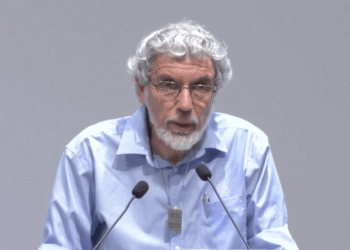
In this ECPS interview, Thomas de Waal, Senior Fellow at Carnegie Europe and one of the leading scholars of the South Caucasus, examines Armenia’s post-Karabakh transformation following the 2026 parliamentary elections. Reflecting on Prime Minister Nikol Pashinyan’s renewed mandate, de Waal explores the interplay between populist leadership, democratic resilience, geopolitical diversification, and regional peacebuilding. While describing Pashinyan’s political style as remaining “very populist,” he argues that Armenia’s long-term democratic future depends less on charismatic leadership than on the strength of institutions. The interview discusses Armenia’s evolving relationship with Russia, prospects for normalization with Azerbaijan and Turkey, the role of the European Union, and the challenges of constructing a new national identity after the end of the Karabakh era.
Interview by Selcuk Gultasli
The South Caucasus is undergoing one of the most consequential geopolitical transformations since the collapse of the Soviet Union. Armenia’s devastating defeat in the 2020 war, the loss of Nagorno-Karabakh in 2023, Russia’s declining credibility as a security guarantor, and the emergence of new opportunities for regional connectivity have collectively reshaped the country’s strategic outlook. At the center of this transformation stands Prime Minister Nikol Pashinyan, whose government has sought to redefine Armenia’s foreign policy, normalize relations with Azerbaijan and Turkey, and deepen ties with Europe and the United States. Yet these developments raise profound questions about democratic resilience, institutional consolidation, populist leadership, and the risks of excessive personalization in periods of political transition.
To explore these issues, we spoke with Thomas de Waal, Senior Fellow at Carnegie Europe and one of the foremost scholars of the South Caucasus. Through influential works such as Black Garden and decades of research on conflict, democratization, and regional geopolitics, de Waal has established himself as one of the most authoritative interpreters of the region’s complex political landscape.
The interview comes in the wake of Armenia’s June 2026 parliamentary elections, in which Nikol Pashinyan’s Civil Contract party secured a renewed mandate. While many observers interpreted the result as a geopolitical endorsement of Armenia’s movement away from Russia and toward Europe, de Waal offers a more nuanced assessment. The election, he argues, was simultaneously “a kind of referendum” on peace with Azerbaijan and Turkey, on Armenia’s foreign-policy diversification, and on Pashinyan’s domestic record. Rather than representing a simple choice between Russia and the West, Armenia’s evolving strategy reflects what de Waal describes as a broader effort to avoid renewed dependence on any single patron.
A central theme of this conversation concerns the relationship between democratic resilience and personalized leadership. Although de Waal describes Armenia as remaining “a democratic country, if a flawed one,” he warns that troubling trends should not be ignored. In particular, he notes that Armenia’s democratic checks and balances remain weak internally, making external democratic conditionality from Europe and, to a lesser extent, the United States especially important.
It is in this context that de Waal offers one of the interview’s most important observations. Drawing lessons from Georgia’s post-Rose Revolution trajectory, he cautions Western governments against treating Armenia as a geopolitical project centered on a single leader. While welcoming unprecedented European attention to Armenia, he warns that such support can unintentionally reinforce personalized rule. As he puts it, international engagement can “feed the ego of a leader who may begin to feel that he can do no wrong.” Consequently, he argues that “this is not a personal endorsement of one man; it is a broader endorsement of a process,” emphasizing that any durable democratic transformation “needs to be grounded in institutions rather than in personalized government.”
The conversation also examines Armenia’s changing relationship with Russia, the prospects for peace with Azerbaijan, the strategic significance of the TRIPP corridor, Turkey’s role in regional normalization, the growing gap between diaspora nationalism and domestic political realities, and the long-term challenge of forging a new Armenian identity after the end of the Karabakh era.
In an era marked by democratic backsliding, geopolitical fragmentation, and the return of great-power competition, de Waal offers a measured and deeply informed assessment of Armenia’s uncertain future. His reflections remind us that democratic resilience depends not merely on elections or charismatic leaders, but on the gradual construction of institutions capable of surviving political transitions and geopolitical shocks alike.
Here is the revised version of our interview with Thomas de Waal, edited lightly to enhance clarity, readability, and overall flow for publication.
Armenians Endorsed Pashinyan’s Vision Despite the Karabakh Trauma
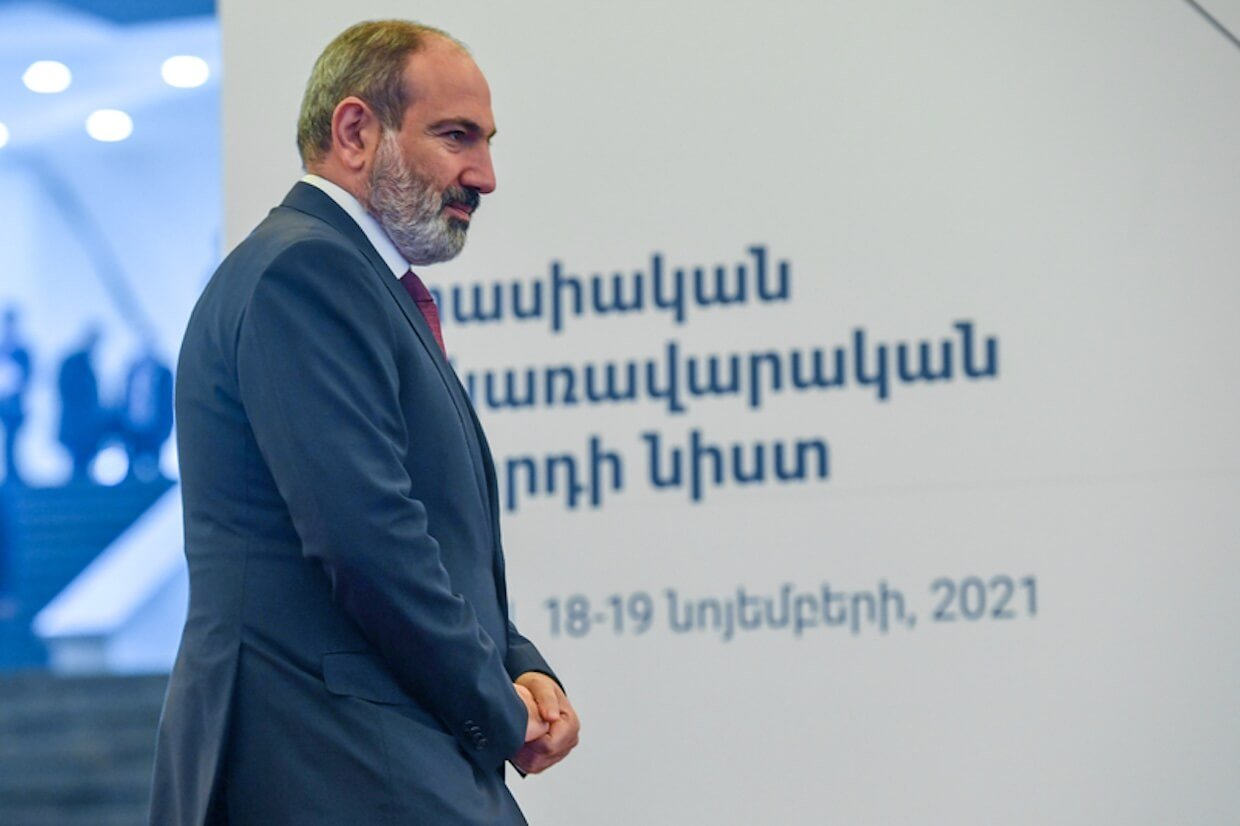
Thomas de Waal, welcome! To begin, Armenia’s 2026 election has been widely interpreted as a public endorsement of Prime Minister Nikol Pashinyan’s strategic reorientation away from Russia and toward Europe. Do you see the result primarily as a geopolitical choice, a democratic mandate for peace, or a vote of confidence in Pashinyan’s leadership despite the trauma of Nagorno-Karabakh?
Thomas de Waal: This election was many things at once. Obviously, like all elections, it had its domestic aspects. The Armenian economy has been doing quite well in recent years, so that was one reason Mr. Pashinyan secured a third term in office. But, as you say, it was also a kind of referendum on his vision of peace with Azerbaijan and Turkey, following through on the peace agreement and recognizing Azerbaijan’s territorial integrity, which basically means saying goodbye to Nagorno-Karabakh.
It was also a referendum on his foreign policy, which has been slightly misinterpreted as a complete shift from reliance on Russia to the West. I would say it is more of a diversification policy, maintaining some connections with Russia, particularly economic ones. Armenia remains, for example, part of the Eurasian Economic Union, while also strengthening its political and economic ties with both Europe and the United States.
So, he won a mandate, albeit with a reduced number of votes compared to last time. We can discuss why it was the case.Pro-Russian parties also performed better than they did previously, but again, not well enough to prevent him from securing a full mandate. Mr. Pashinyan’s party, Civil Contract, received around 50 percent of the vote, while the pro-Russian opposition parties won around 37–38 percent.
Pashinyan’s Style Remains Populist, but His Political Base Has Changed
Pashinyan emerged from the 2018 Velvet Revolution as an anti-establishment reformer challenging entrenched elites. Does he still fit within the broader category of populist leadership, or has his project evolved into something fundamentally different as he has shifted from revolutionary mobilization to statecraft?
Thomas de Waal: It’s a very interesting question. His style remains very populist. He is very much a man of the street. He came to power, as you mentioned, in 2018 on the wave of street protest—people’s protest—what Armenians then called the Velvet Revolution of 2018. He likes talking to crowds, dresses informally, and travels on the Yerevan Metro. He has a very personal, personalized style of government, which is also a bit problematic.
But, for sure, he no longer appeals to the younger urban electorate that swept him to power in 2018. In this election, he cast himself very much as the stability candidate—the candidate for peace rather than war, for continuity rather than change. He actually received support from outside the capital city, Yerevan, including from villages and government workers—the kind of constituencies from which a traditional ruling party in the post-socialist world typically draws its support.
Armenia Remains Democratic, but There Are Worrying Trends
In your recent writings, you describe Armenia as the most democratic state in the South Caucasus while simultaneously warning about Pashinyan’s highly personalized style of governance. How should scholars reconcile democratic resilience with concerns about excessive personalization of political power?
Thomas de Waal: This is a tricky issue. Armenia certainly remains a democratic country, albeit a flawed one. There is a fairly free and competitive media. There were, obviously, problems with this election, but voters definitely had a choice and could vote freely for the opposition, which many of them did. This is in contrast to Georgia, which we always considered the most democratic and pluralist country in the region, but which has experienced a rapid decline over the last two or three years, with many people in jail and so on.
What I am talking about here is more of a concern about trends. For example, several opposition candidates were detained during the election. Some faced allegations of vote-buying and so on, but others were detained with less justification. The main opposition leader was under house arrest for the duration of the election. Mr. Pashinyan also makes some quite fierce remarks about the opposition, saying that they need to know their place.
So, what we are looking at is actually something similar to what we used to have in Georgia: a moderately democratic government where the checks and balances are not so much internal, because the judiciary is still very weak and under government control. Instead, the checks and balances are external. It is the conditionality we are seeing from Europe in particular, and to some degree from the United States, that will check what could otherwise become a tendency toward less democratic and more personalized rule on the part of Prime Minister Pashinyan.
The Georgian Experience Offers an Important Warning for Armenia
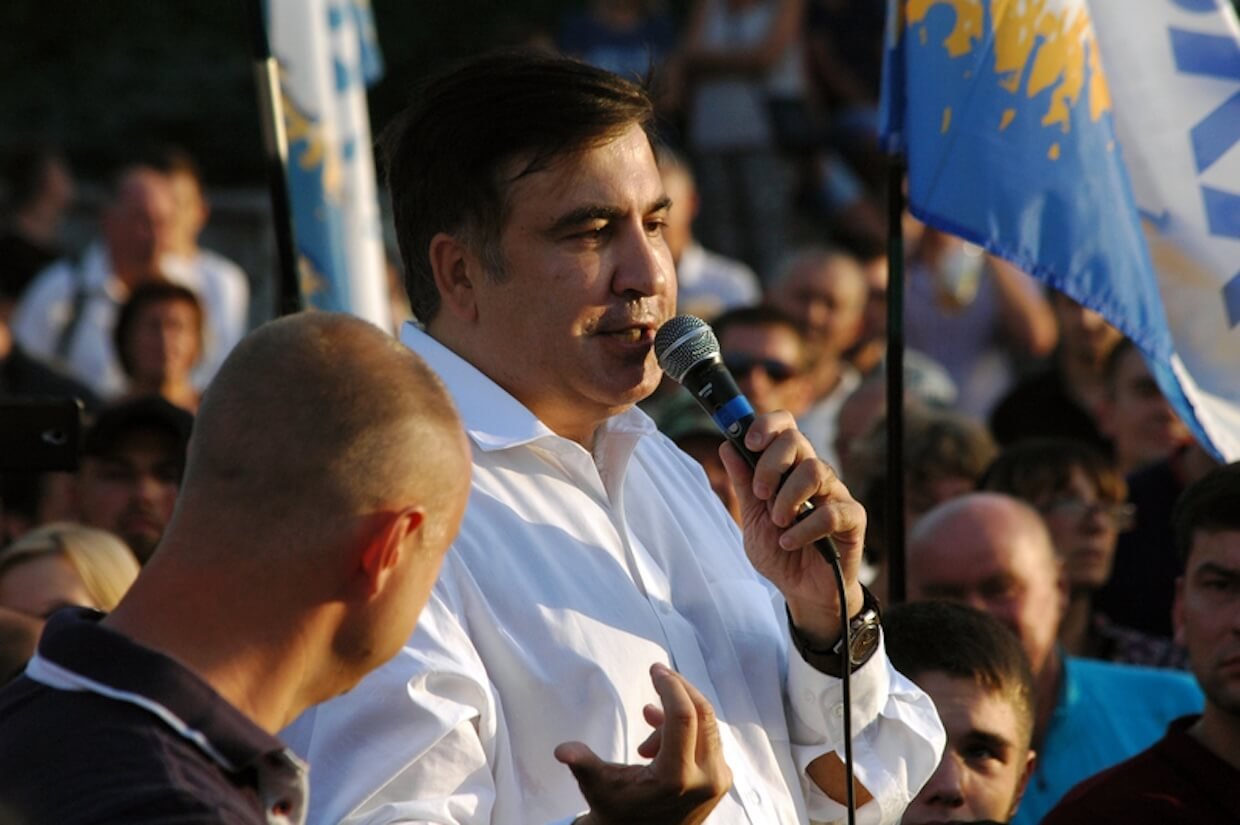
You have cautioned Europe against treating Armenia as a geopolitical project centered on a single leader. How serious is the risk that Western support for Pashinyan could inadvertently reproduce the mistakes made in other post-Soviet democracies, where institution-building lagged behind leader-centered reform?
Thomas de Waal: For sure, this is an issue, and it is not an easy one to deal with. We have the example of Georgia in the mid-2000s. There was also a peaceful revolution led by a young, charismatic leader. There are some obvious parallels there: Mikheil Saakashvili and the Rose Revolution in Georgia in 2003. What followed, however, was both a highly personalized regime in Georgia—where you can clearly see the parallels—and a gradual retreat from democratic norms. Because of the geopolitical stance that Saakashvili adopted, namely joining Western institutions in opposition to Russia, he received very enthusiastic support, particularly from the United States. In the process, some of the more problematic aspects of his government were overlooked. So, I think there is a lesson there.
Fortunately, some of Armenia’s European partners, the French in particular, understand these issues. We have seen unprecedented European attention focused on Armenia, first at the European Political Community Summit in Yerevan and then at the EU summit in May. That is obviously a positive development. And it was not only European leaders who attended—we also saw Canadian Prime Minister Mark Carney and Ukrainian President Volodymyr Zelenskyy there.
That is all good, but such attention can also feed the ego of a leader who may begin to feel that he can do no wrong. So, it is important to convey the message that this is not a personal endorsement of one man; it is a broader endorsement of a process. And if that process is to endure, it needs to be grounded in institutions rather than in personalized government.
The South Caucasus Is More Complex Than a Russia–West Contest
Many observers have described Armenia’s election as a contest between competing geopolitical orientations. Yet you have characterized the South Caucasus as a “geopolitical marketplace” rather than a binary struggle between Russia and the West. How does this framework alter conventional understandings of regional politics?
Thomas de Waal: There is a paradigm that you see in some of the Western media, where Armenia is portrayed as making a pivot to the West. Certainly, the Russian way of thinking is also very zero-sum and binary. President Putin actually said that Armenia should hold a referendum on whether it chooses the Eurasian Economic Union or the European Union. Prime Minister Pashinyan does not want that. He does not want to make that choice. He wants a diversification strategy. The Eurasian Economic Union has actually been very helpful to Armenia during the Ukraine war because Russia needed its traditional economic partners when its economic links with the West were cut off.
For those reasons, if he has a choice—and perhaps the Russians will force him to make one—Mr. Pashinyan is looking not only to the European Union and the United States, but also to India as a partner. India is selling weapons to Armenia, and you see many Indian guest workers in the country. The Gulf states are another option, as are countries such as Kazakhstan.
What Mr. Pashinyan rightly says is that what led Armenia to military defeat and isolation was its sole reliance on one patron, namely Russia. Russia became the security patron, with its border guards and military base; the economic patron, owning large parts of the economy; and also the energy patron, because Armenia is reliant on Russian gas. Around 90 percent of its gas comes from Russia.
For all those reasons, Armenia was relying on a partner that turned out to be unreliable. And I think one reason why he continues to enjoy support from the population, despite all the other issues they may have with him, is that he is the only one articulating that vision—that Armenia should not return to sole reliance on Russia.
Threatening Armenia May Further Weaken Moscow’s Position
Russia’s attempts to influence Armenian politics appear increasingly overt, ranging from economic pressure to disinformation campaigns. Does the Kremlin’s approach toward Armenia represent a broader transformation in how Russia manages its influence in the post-Soviet space?
Thomas de Waal: Objectively, Russia is not doing very well if you look at recent elections. Take Moldova last year. Hungary is a bit further afield, but they were clearly betting on Prime Minister Orbán there as well. So, Russia is not doing particularly well in its attempts to influence electoral politics. You could say that securing 36–37 percent of the vote through a group of parties in Armenia was not a bad result. But this is also a country in which many people are economically reliant on Russia, so some level of support is to be expected.
Russia’s problem is that it has responded to the Pashinyan government by threatening economic punishment. That is more likely to alienate voters than encourage them to wish they were closer to Russia. We have seen bans on agricultural exports and various others rather threatening statements coming from Moscow.
The Russian elite faces a choice. Does it adopt the kind of neo-imperialist stance we see in Ukraine—the idea that it must plant the flag and that countries essentially belong to Russia or to its sphere of influence? Or does it seek to get the best out of a partnership with a sovereign state, one based on economic cooperation, which of course works both ways? If Russia is banning imports from Armenia, that is not only bad for Armenia; it is also not good for Russia. And, we can see elements of both approaches in Russian policy toward Armenia: the more emotional one and the more pragmatic one.
I would like to think that, with Russia focused on other priorities and deeply preoccupied with its confrontation with the West and the war in Ukraine, it simply does not have the time or capacity for a neo-imperialist push toward Armenia. Instead, it may ultimately default to the previous relationship—perhaps not a happy one, but a relatively pragmatic one.
Most Armenians Want New Partnerships Without Severing Old Ones
You have said that most Armenians seek diversification rather than divorce from Russia. How sustainable is Armenia’s current balancing strategy, especially given its economic dependence on Russia and its growing political engagement with the European Union?
Thomas de Waal: Obviously, the plan of this ruling party, now returned to office, is to continue pursuing this course. Whether it can do so successfully depends, really, on what Russia decides to do. Will Russia, for example, choose to inflict economic punishment on Armenia? We have seen previous instances of Russia attempting this with Georgia and Moldova. In both cases, there was short-term pain, with people losing their jobs and facing economic hardship. But, ultimately, it accelerated a process of economic diversification.
Armenia’s situation is more complicated. I think Armenia is more economically reliant on Russia. But this is also a question for Armenia’s partners, especially the European Union, in terms of whether they are willing and able to provide financial assistance.
It is also a question for Azerbaijan and Turkey. If the border opens—particularly the border with Turkey—that would provide Armenia with significantly more economic options. Such a development would also be beneficial for eastern Turkey. So, this issue of Armenia’s relationship with Russia really puts the spotlight on Ankara in particular. What kind of policy, and what kind of relationship, does Turkey want to have with Armenia?
The Message of Peace Has Resonated More Than Many Expected
The trauma of Nagorno-Karabakh continues to shape Armenian politics. To what extent has Pashinyan successfully reframed the loss of Karabakh as a foundation for a new national project rather than a symbol of national humiliation?
Thomas de Waal: This depends on which Armenians you’re talking to, obviously. For almost 40 years, going back to the late 1980s, the Armenians of Karabakh and the Karabakh cause were a kind of central idea for Armenians: the belief that Karabakh had been unjustly given to Azerbaijan in the 1920s and should instead be part of Soviet Armenia or, later, independent Armenia. The war of the 1990s was fought with Azerbaijan on that basis and was won by Armenia, which held on to Karabakh at great cost. Then, in 2020 and again in 2023, Azerbaijan used military force to recover the territories it had lost and, in 2023, to take over Karabakh entirely, causing the exodus of the entire Karabakh Armenian population of around 100,000 people.
The question, then, was how Armenians would respond to what was obviously a huge trauma. Many people expected, particularly in the Armenian diaspora, that voters would punish Pashinyan for his handling of the issue. But actually, what we see now is that Karabakh had a kind of dual meaning for Armenians in the Republic of Armenia. On the one hand, it was indeed a very important holy cause. On the other hand, it was also a millstone around their necks. It was a reason why sons and brothers went to fight and sometimes lost their lives. It was a reason why borders were closed. It was a drain on the economy. It was a problem internationally for Armenia.
So, to many people’s surprise, after losing Karabakh and hearing Pashinyan’s message that now that this place had been lost, Armenia needed to move on, many Armenians actually responded cautiously but positively. And he has consistently hammered home the message that there is no alternative—that Armenia must make peace with its neighbors, and that peace means no more war. I think that message resonates with a large part of the electorate, if not all of it. Certainly not all of it, but it does resonate with a large part of it.
The Constitution Has Become a Powerful Instrument of Political Leverage
Azerbaijan insists that Armenia amend its constitution before a final peace agreement can be concluded. Do you see this demand primarily as a legitimate security concern, a diplomatic bargaining tool, or a mechanism for maintaining leverage over Armenia’s domestic political trajectory?
Thomas de Waal: That’s a great question. When you talk to Azerbaijani officials, they are very insistent on this issue. The reference is actually quite indirect, but it is there. The current Armenian constitution refers to the Declaration of Independence, and the Declaration of Independence from 1990 refers to the union of Armenia and Karabakh. So, the Azerbaijani position is essentially that Armenia should not have a constitution which, even indirectly, constitutes a territorial claim over Azerbaijan. They want to see proof that the people of Armenia are rejecting any territorial claim over Karabakh, and therefore they want to see a new constitution.
You can see the logic of that argument, but it is not something that people had particularly noticed before. It is definitely being used as an instrument of leverage over the Armenian government—a way of signaling that Armenia should not ask for too much and that Azerbaijan still retains this instrument of pressure. The problem we have now is that Mr. Pashinyan’s party has won around 64 out of 101 seats, and he needs a few more than that to secure a constitutional majority. He needs two-thirds of the seats in parliament to call a referendum on a new constitution. That now looks pretty difficult.
We should also note that even if a referendum were called, there appears to be considerable opposition to it within Armenia. So it is quite possible that, even if he somehow managed to initiate a referendum, the voters would reject it. So, the question becomes this: Azerbaijan has made this a prerequisite for signing a peace agreement and moving forward. How do we get out of this particular impasse?
This issue is currently under active discussion in all sorts of places—in Baku, Ankara, Yerevan, Europe, and the United States. Some people are suggesting that perhaps a signed peace agreement is not immediately necessary. Instead, the parties could move forward on practical measures. They could, for example, open the border. Many things could be done without establishing formal diplomatic relations, which would normally follow from a peace agreement.
This is particularly a question for Turkey. For many reasons, Turkish officials want to normalize relations with Armenia and open the border. They believe they have a uniquely useful partner in Prime Minister Pashinyan, and they see a window of opportunity while Russia is distracted—a window that may eventually close. I hope we will see a greater sense of urgency on the Turkish side, given that Ankara has largely outsourced its decision-making on this issue to Azerbaijan.
Two of my colleagues—and their commentary is well worth reading—Garo Paylan, the well-known former parliamentarian and Armenian-Turkish citizen now based in the United States, and Alper Coşkun, a former Turkish diplomat who is also with us in the United States, wrote a commentary last week that I would strongly recommend. Their argument is that Turkey should move forward, in particular by enabling trade with Armenia, even if the political issues have not yet been fully resolved.
Peace Agreements Endure Only When Societies Embrace Them
You have repeatedly emphasized that peace agreements require societal buy-in, not merely elite bargains. Given the deep historical grievances and mutual distrust between Armenians and Azerbaijanis, how fragile is the current peace process beneath its diplomatic successes?
Thomas de Waal: There is a well-known finding among scholars of peace processes: roughly half of all peace agreements fail within five years. The agreements that fail are generally those that lack societal buy-in and broader inclusion, and are instead negotiated exclusively at the elite level. When elite calculations change, those agreements can quickly unravel.
I am fairly optimistic, in general, about the peace process between Armenia and Azerbaijan for two reasons. First, both societies are tired of conflict. They do not want their sons and brothers to fight. Second, there is now a significant level of engagement from both the United States and Europe. The projected rail route connecting Azerbaijan with its exclave of Nakhchivan through Armenia even bears Donald Trump’s name. It is called the Trump Route for International Peace and Prosperity (TRIPP), which suggests a degree of personal investment in the success of a peace agreement.
What worries me, however, is the possibility that we will not achieve a properly signed agreement and that societies—particularly Azerbaijani society—will continue to receive highly propagandistic messages about Armenians through schools and the media. If that continues, progress will inevitably slow. Even if there is meaningful progress in the short term, over the next few years, the political landscape could look very different in five or ten years’ time. I do not think we will return to full-scale war. But there could still be recurring tensions between Armenia and Azerbaijan around the border, around the so-called Trump Route, and on other issues, simply because societies have not been brought along at the same pace as their leaders.
TRIPP Could Transform Geography Into Economic Interdependence
The proposed TRIPP corridor has become one of the most ambitious geopolitical projects in the region. Beyond its economic significance, do you see TRIPP as a mechanism for building lasting interdependence and reducing the likelihood of future conflict?
Thomas de Waal: That’s the idea, and I think TRIPP has progressed fairly well. It has managed to square the circle of the competing demands of the two sides: Armenia’s insistence that any route crossing its territory fully respect Armenian sovereignty, and Azerbaijan’s desire for quick and easy access to its exclave of Nakhchivan through Armenian territory. I think the modalities have been sorted out, the financing is there, and the United States is working on that. The Iran war definitely slowed things down and complicated matters. But hopefully, we now have a ceasefire in Iran, which means that construction can begin.
There are obviously some question marks about how much private-sector investment can be attracted to this route, given that it passes through a rather strategically vulnerable and remote area. But I am sure the Americans are working on that as well. So, I think it is going pretty well. And this gets back to my previous point: we may see cargo beginning to flow along this route within three or four years, creating an important trading link. But if there is not a proper peace agreement, then the local communities may not be as involved, and it could prove more problematic for passengers to use the route.
The Key Obstacle Remains Erdoğan’s Deference to Aliyev
Turkey appears increasingly interested in normalization with Armenia, yet remains closely aligned with Azerbaijan. How much strategic autonomy does Ankara actually possess in shaping Armenian-Turkish relations, and what obstacles still stand in the way of a historic breakthrough?
Thomas de Waal: Of course, Turkey has as much strategic autonomy as it chooses to exercise. It is a much larger and more powerful country than Azerbaijan. What we are seeing is very much the result of a personal decision by President Erdoğan not to move faster than President Aliyev on the peace and normalization track. This is despite the fact that many officials at the medium and upper levels of the Turkish government, as I have already mentioned, see significant strategic advantages in normalizing relations with Armenia and opening the border. Such a move would weaken Russian influence, strengthen Turkey’s role in the South Caucasus, and benefit the Kars-Iğdır region in eastern Turkey, among many other areas. It would also help neutralize many of the difficulties Turkey faces in its relations with the Armenian diaspora in France and the United States.
So, there are plenty of reasons to move forward. However, the decisive factor up to now has been President Erdoğan’s determination to keep his personal commitment to President Aliyev and not move ahead of him. Now, if there is a moment that could prompt a reassessment of that policy, it is this one. The rather inconclusive outcome of the Armenian election may provide such an opportunity.
It will be interesting to see whether this issue is discussed at the upcoming NATO summit in Ankara, particularly among European and American officials. I suspect we will not see much of those discussions publicly, but we will be relying on informed journalists and analysts to shed light on them. Because, for sure, this is the moment when Turkey—perhaps not toward full normalization, but certainly toward a more proactive approach—needs to pick up speed.
European Support Must Be Accompanied by Democratic Expectations
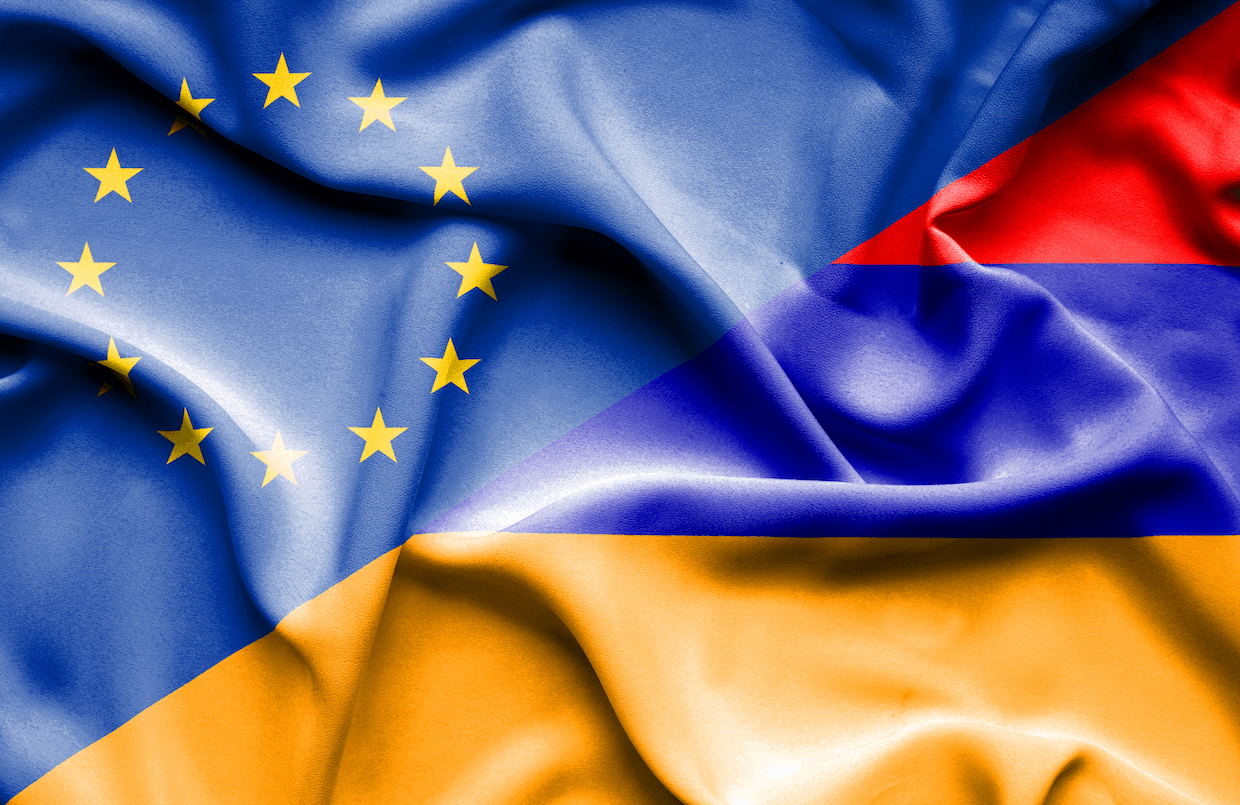
Some critics argue that the European Union has largely overlooked democratic shortcomings within Armenia because it prioritizes the country’s geopolitical reorientation away from Russia. How would you assess the tension between strategic interests and democratic conditionality in the EU’s approach to Armenia?
Thomas de Waal: That’s a good question. Obviously, the European Union is not a monolith. There are different opinions within the EU, and even within different parts of the Brussels institutions. There is a feeling that, for geopolitical reasons, it is important to invest in this government and in its tilt toward Europe—even if it is not a complete shift—and, more broadly, to invest in Armenia. People on the ground have no illusions that this is not a fully democratic government.
That said, I think some degree of conditionality would be beneficial. The question, really, is how that conditionality is presented to the Armenian side. One particularly problematic area is the judiciary. There have been appointments of judges without due process. And, as in many countries of the region, the prosecutor’s office remains far too powerful and can be used as an instrument by the governing party against its opponents. That is certainly something to watch.
France is a key partner in this regard. If anyone has replaced Russia as Armenia’s principal patron, it is definitely France. President Macron clearly has a strong interest in Armenia. And I think the French are also aware of these concerns. Hopefully, the message to Mr. Pashinyan is: congratulations on your victory, but now do not do anything stupid. We support you, but our support is not unconditional.
The Diaspora and Armenia Are Increasingly Speaking Different Languages
The Armenian diaspora has historically played a powerful role in shaping national narratives, particularly regarding Nagorno-Karabakh and relations with Turkey. How significant is the growing divide between diaspora nationalism and Pashinyan’s “Real Armenia” agenda?
Thomas de Waal: When we talk about the Armenian diaspora, we have to be a bit careful, because there are obviously millions of Armenians outside Armenia, mainly descendants of Armenians from the Ottoman Empire who fled in 1915 and 1916 during what later became known as the Armenian Genocide. These communities are concentrated in places such as the Middle East, France, and the United States. Many of those people are not particularly political. However, there are powerful diaspora political organizations, particularly those associated with the Dashnak Party, the traditional nationalist Armenian party, and groups such as the ANCA in the United States. It is within these circles that we see a significant break with Pashinyan. There have been very critical commentaries directed at his government, with many expressing outrage at what they perceive as his abandonment of territorial claims relating to Turkey and Azerbaijan.
So, there is undoubtedly a substantial divide. What is striking, however, is how little influence this appears to have on political developments inside Armenia itself. The Dashnak Party in Armenia, I do not think, even contested this election, or, if it did, it received a very small share of the vote. Armenians inside Armenia were voting on other issues—certainly not on the questions that much of the diaspora continues to hold particularly dear. So, I think this may be a moment when diaspora organizations need to reassess and reconfigure their own understanding of reality. What exactly do they want from Armenia when the government of Armenia is articulating such a different vision of the country’s future?
It Is Still Too Early to Call Armenia a Success Story
More broadly, does Armenia represent a new model of post-Soviet transformation—one in which democratic consolidation, geopolitical diversification, and conflict resolution reinforce one another—or is that interpretation still premature?
Thomas de Waal: I think it is still premature. If you look at what happened in Georgia, there was a general assumption—including on my part—that democracy was fairly well consolidated and that the country’s pro-European trajectory was firmly established. Yet both of those assumptions have since been challenged, and quite dramatically so. So, it is always possible that Armenia could follow a different course than many currently expect.
The governing party did not win this election by a landslide. It secured many votes by default, largely because there was no credible democratic—or, indeed, any other credible—opposition. For that reason, we need to be cautious about drawing firm conclusions regarding Armenia’s future. It is entirely possible that a new third force could emerge, one that is neither aligned with the ruling party nor with Russia. It could even be a populist movement, perhaps resembling the Georgian Dream phenomenon that emerged in Georgia in 2012.
So, there remain many uncertainties. I do not think Armenian voters are yet fully consolidated in their support for the transformation the country has undergone. Things could still change, for sure.
Forging a New National Identity Will Be a Generational Project
Looking ahead, if Armenia succeeds in normalizing relations with Azerbaijan and Turkey while reducing dependence on Russia, what do you believe will be the most difficult challenge: institutionalizing democracy at home, managing external geopolitical pressures, or forging a new national identity after the end of the Karabakh era?
Thomas de Waal: Wow, I mean, all of those things are obviously difficult. Some of them will take years, perhaps even decades, to accomplish. A new national identity does not emerge overnight, and institution-building is a long-term process. And, of course, learning to live alongside former adversaries and adjusting to open borders with countries once regarded as enemies is not easy either. For all of those reasons, Armenians are understandably cautious about change.
That is precisely why change needs to be gradual and steady rather than abrupt. If the border is opened, for example, it should not be thrown fully open overnight to a large influx of people from across the border, which could trigger negative reactions.
But I suppose the good news is that Armenia is a small country receiving unprecedented levels of international attention. That, in itself, is a positive development. There are powerful and wealthy countries willing to support Armenia. And, just let’s hope that the government understands properly how to utilize that help for good purposes.