Bangladesh’s 2026 election—the first since the 2024 uprising that toppled Sheikh Hasina—has been widely framed as a democratic turning point. Yet in this interview with the ECPS, Samzir Ahmed, a Bangladeshi politics expert, argues that the moment should be interpreted more cautiously. Rather than a democratic restoration, he describes the upheaval primarily as “a restoration of politics itself,” following what he calls a long period of depoliticization. Ahmed contends that the institutionalization of actors such as Jamaat-e-Islami represents a critical turning point, emphasizing that “institutionalization is an acid test for populist politics.” While populist and Islamist movements often thrive outside formal power structures, their integration into institutional politics may fundamentally reshape their strategies—and expose new constraints on their influence.
Interview by Selcuk Gultasli
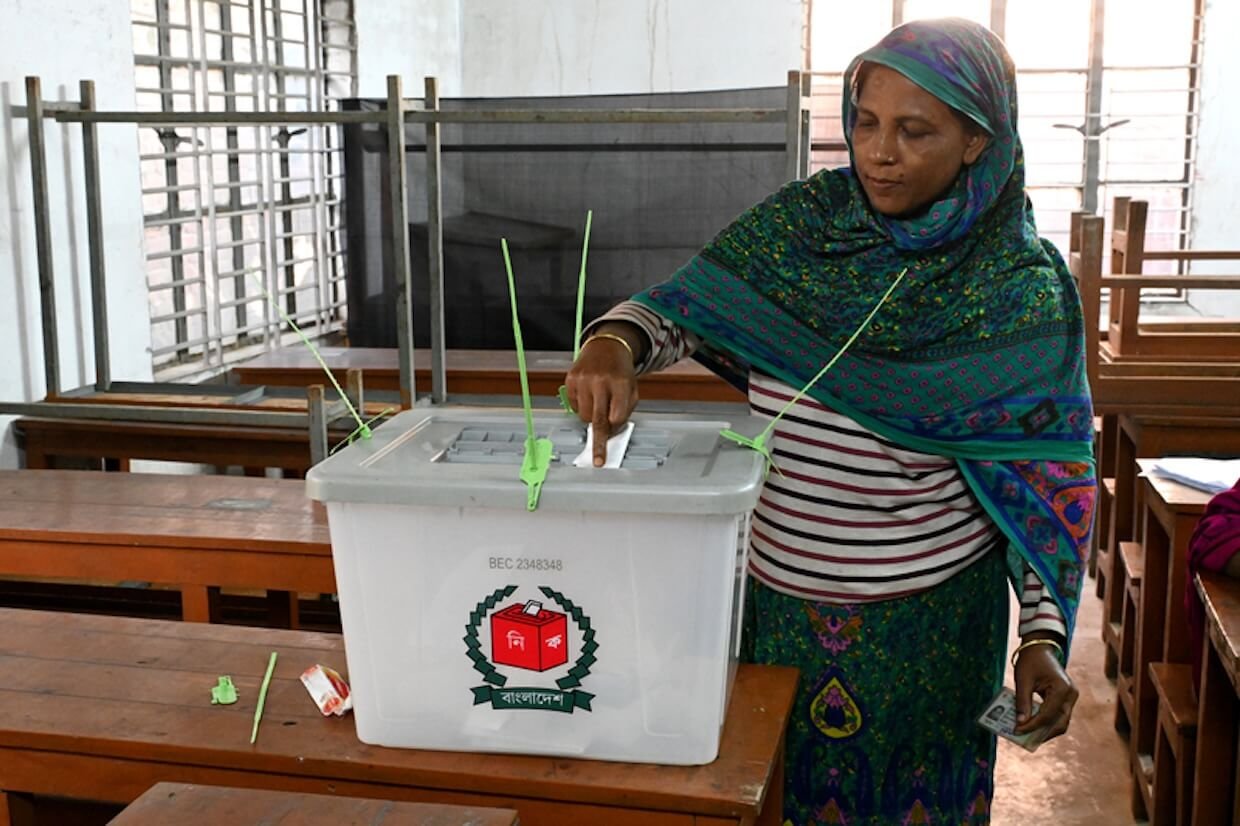
Bangladesh’s February 2026 general election marked the country’s first national vote since the Gen Z–led uprising of August 2024 that toppled Prime Minister Sheikh Hasina after fifteen years in power. The uprising followed a violent crackdown on protesters that, according to UN reporting, left around 1,400 people dead and precipitated the collapse of one of South Asia’s most entrenched hybrid regimes. Widely viewed as a test of whether Bangladesh could transition from revolutionary protest to institutional politics, the election unfolded largely peacefully. Turnout approached 60%, and many voters described the moment as an opportunity to cast ballots “without fear” after years of elections marred by intimidation and allegations of manipulation.
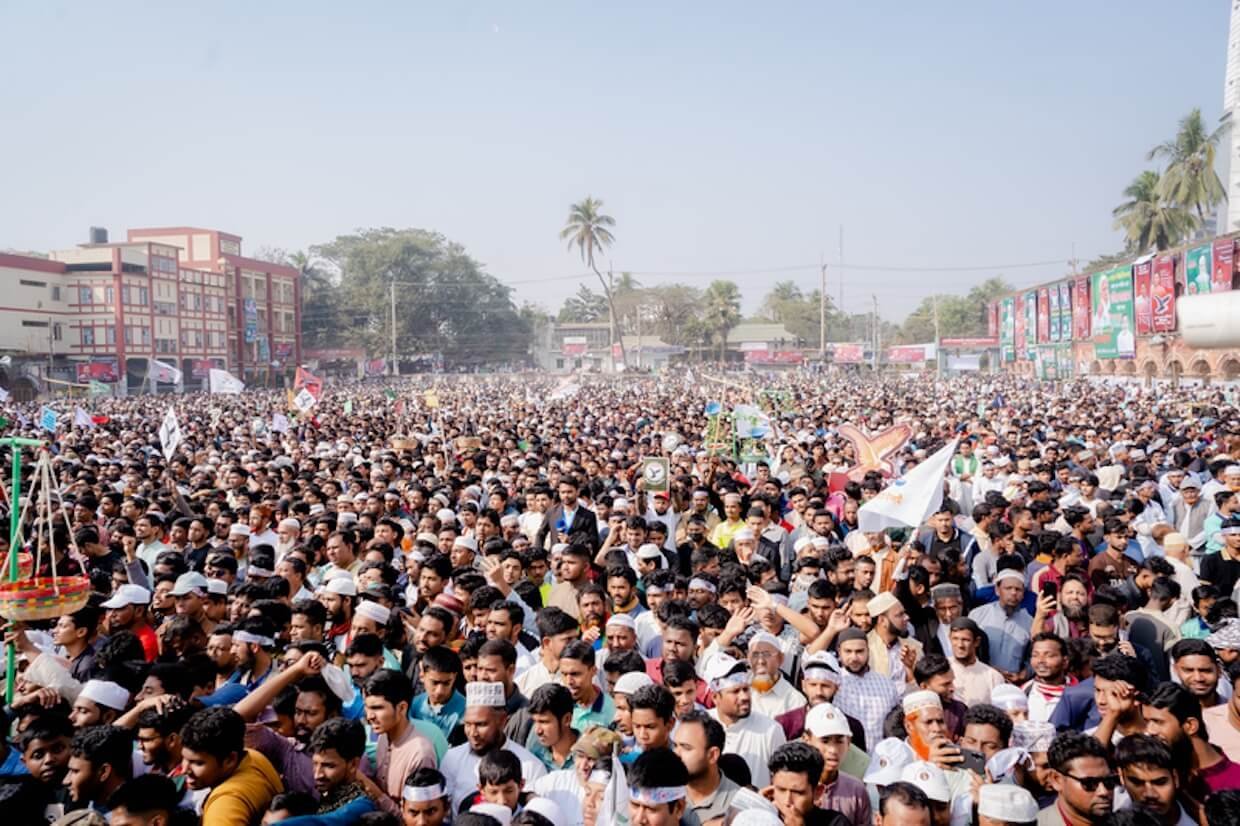
The results reshaped the country’s political landscape. The Bangladesh Nationalist Party (BNP), led by Tarique Rahman—who returned to Bangladesh in December 2025 after seventeen years in exile—won a sweeping victory with roughly 212 parliamentary seats, returning the party to power after two decades. The Islamist Jamaat-e-Islami–led alliance secured about 77 seats, marking its strongest parliamentary showing and establishing it as the principal opposition. Alongside the parliamentary vote, citizens also endorsed the reform-oriented “July Charter” in a referendum, which proposes significant constitutional reforms, including term limits for the prime minister, bicameralism, and strengthened judicial independence. Yet the broader political transition remains contested: the Awami League was barred from contesting the election, Sheikh Hasina remains in exile in India following a war-crimes conviction, and debates over justice, accountability, and political inclusion continue to shape Bangladesh’s fragile post-uprising order.
Against this volatile backdrop, the incoming BNP government faces daunting challenges: rebuilding institutions weakened by years of authoritarian consolidation, restoring law and order after a turbulent transitional period, reviving an economy strained by inflation and youth unemployment, and navigating complex regional diplomacy as India, the United States, and Pakistan recalibrate relations with Dhaka. These overlapping pressures raise a deeper question about whether the 2026 election represents a genuine democratic turning point—or merely the beginning of another cycle in Bangladesh’s long history of majoritarian power and polarized politics.
In this interview with the European Center for Populism Studies (ECPS), Samzir Ahmed, Lecturer at the Department of Bangla at Netrokona University, offers a sobering interpretation of this moment. Drawing on his concept of the “compromised strongman,” Ahmed argues that the election should not be interpreted as a democratic restoration. Rather, he situates the upheaval within a deeper historical pattern in which Bangladesh oscillates between depoliticization and renewed political mobilization. As he explains, the country had been experiencing “a long trend of depoliticization,” and the July uprising marked a rupture that represents primarily “a restoration of politics itself.” In his words, “democracy, however, remains far away.”
Ahmed also highlights the structural dynamics behind the BNP’s victory and the reconfiguration of Bangladesh’s ideological landscape. While the election signals a rightward shift in political gravity, he notes that such a development reflects a longer process that accelerated during the final years of Hasina’s rule. At the same time, the institutionalization of Islamist political forces—particularly the emergence of Jamaat-e-Islami as the main parliamentary opposition—signals a transformation in how populist and religious movements operate within Bangladesh’s political system. For Ahmed, this transition is crucial because “institutionalization is an acid test for populist politics.” Populist movements, he suggests, often flourish when they remain outside formal power structures but face new constraints once they become embedded within institutions.
More broadly, Ahmed situates the country’s current uncertainties within the unresolved dual nationalist structure that has shaped Bangladeshi politics since independence. With the Awami League banned and its leadership in exile or imprisoned, the political vacuum raises unresolved questions about representation and polarization. Whether secular constituencies will eventually reorganize under a revived Awami League, find accommodation within the BNP, or generate a new political formation remains uncertain.
Moreover, Ahmed reflects on the generational dynamics unleashed by the student-led uprising that triggered the transition. The protests, he argues, reflected “generational frustration with traditional patronist-centric politics.” Yet the digital hyperconnectivity that enabled rapid mobilization against authoritarian rule may simultaneously complicate the creation of durable political alternatives. In one of the interview’s most striking observations, Ahmed captures this dilemma succinctly: “The present is denied, but the future is not invited either.”
Ahmed’s reflections suggest that Bangladesh is entering another phase of intense political contestation rather than a settled democratic transition. Whether the July Charter reforms, ideological reconciliation, and institutional reconstruction can transform this turbulent moment into genuine democratic consolidation remains, for now, an open question.
Here is the edited version of our interview with Samzir Ahmed, revised slightly to improve clarity and flow.
Strongman Politics Has Always Been a Structural Possibility in Bangladesh
The 2026 election has been described as both a democratic restoration and an ideological rightward shift. In light of your concept of the “compromised strongman,” do you interpret the BNP’s supermajority as a democratic reset—or as the beginning of a new configuration of strongman politics under altered ideological conditions?
Samzir Ahmed: I would not describe it as a democratic restoration. Rather, I would say that Bangladesh has been experiencing a long trend of depoliticization. The July upheaval—or uprising—marked a significant break in that trajectory. In this sense, what we are witnessing is, first and foremost, a restoration of politics itself. Democracy, however, remains far away.
I do agree that a rightward shift is taking place, but it is largely a continuation of a process that began several decades ago and gained considerable momentum during Hasina’s time in power. It was the outcome of the compromise that I discussed in my paper. Strongman politics has always been a structural possibility in Bangladesh. The ban on our military’s political activities has also contributed to this dynamic. At this stage, what matters most is the nature and depth of this new form of re-politicization and how it will shape the future trajectory of politics in the country.
Given your argument that democratic erosion in Bangladesh is rooted in unresolved nationalist fractures, how should we interpret the BNP’s two-thirds majority? Does it risk reproducing the same executive centralization that enabled Sheikh Hasina’s consolidation?
Samzir Ahmed: I think the BNP lacks a strong ideological rhetoric. That is a major problem for the party. Their brand of Bangladeshi nationalism, although it sounds inclusive, has always tilted toward the right. For now, the nationalist structure is dormant—albeit very temporarily. However, with the resurgence of Islamist politics, the factional divide is bound to return with greater force. So that would be my take on this.
The Banning of the Awami League Has Created a Political Vacuum in the Secular Bloc
You argue that split nationalist identity has repeatedly destabilized democratic consolidation. How does the banning of the Awami League reshape that dual nationalist structure? Does exclusion deepen polarization or temporarily suppress it?
Samzir Ahmed: Yes, it is going to deepen polarization. The question is: who is going to represent the secular bloc? In this election, they voted for the BNP, but historically Awami movement—at least on paper or during elections—represented them. Their activities have been banned, and their major leaders are either fugitives or in jail. So, there is now a vacuum. The unresolved question, then, is whether the deepening split will make their return inevitable, whether the BNP will serve as a proxy, or whether a new party will emerge. At this moment, however, I am not very hopeful about the third option. So, we are essentially left to choose between the other two possibilities.
With Jamaat-e-Islami emerging as the principal opposition, do we see a normalization of political Islam and Islamist populism within parliamentary competition—or the institutionalization of the religious pole in Bangladesh’s long-standing nationalist split?
Samzir Ahmed: Yes, we are witnessing a normalization of political Islam and its institutionalization. However, I see this as an advancement in a particular sense. For a long time, Jamaat-e-Islami has practiced politics in a rather unpolitical way. They run school programs and try to influence school students. Even when they ask for votes, they tend to present themselves as some kind of Islamic messiah. In universities, they have run campaigns such as “I Hate Politics” or “We Don’t Want Politics on Campus.” Their success is evident in their clean sweep of student union elections.
Now, as they appear more visibly in an institutional political form, the rhetoric of anti-politics is likely to lose its force. This rhetoric— “I hate politics”—served Jamaat-e-Islami very well for a long time. But as they move more openly into the political arena, that narrative is unlikely to remain effective.
So, as they have now formally entered politics in a more visible way, something interesting is really taking shape. I am not saying that they were not formally present in politics before, but their strategy was largely unpolitical. Now they are losing that strategy, which is why I say that something interesting is unfolding.
The Uprising Was Against Something—Not Clearly for Something
The student-led uprising that toppled Hasina seemed to signal generational democratic aspirations. Yet the National Citizen Party’s limited electoral success suggests something more complex. Does this reflect ideological fragmentation, populist volatility, or structural resistance to centrist pluralism?
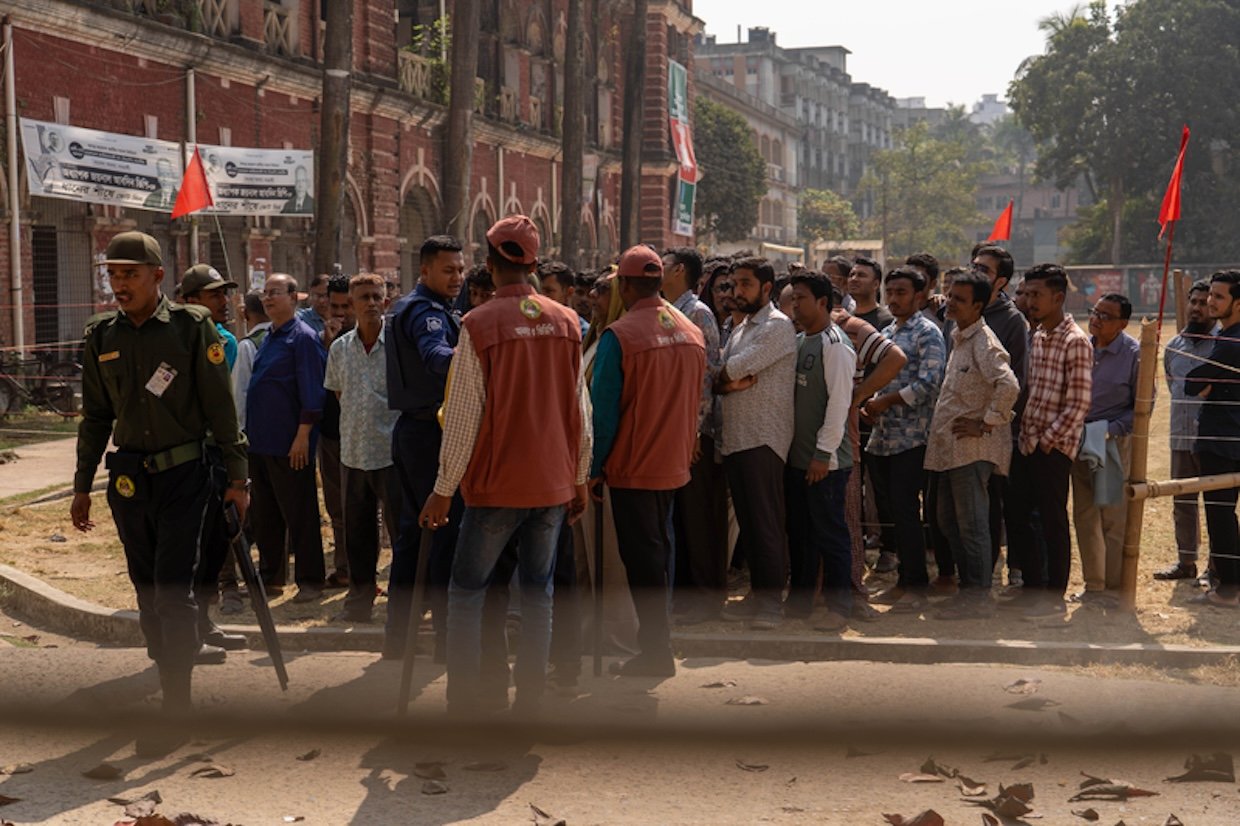
Samzir Ahmed: I think something more complex is at play. The uprising was against something, but not clearly for something. So, the signal should be read as generational frustration with traditional patronist-centric politics, rather than a straightforward aspiration for democracy.
The NCP’s political trajectory suggests that they were never actually prepared for this moment or for the kind of political opportunity they have enjoyed. In the age of digital hyperconnectivity, which facilitates a new wave of populist politics, it is relatively easier to build consensus against power. But this form of connectivity, at the same time, makes it equally difficult to rebuild or reconstruct our polity. The present is denied, but the future is not invited either.
You note that radical right groups in Bangladesh historically function as “kingmakers” despite limited electoral dominance. In the current context, is Islamism transitioning from pressure politics to institutionalized parliamentary leverage?
Samzir Ahmed: Yes, they have gained leverage, but it may work in their favor—or it may risk their future. I think institutionalization is an acid test for populist politics. Populist politics functions really well when such actors are not in power or not operating within an institutionalized setting.
In Bangladesh, although Jamaat-e-Islami is now positioned as the opponent, we have to keep in mind that it has historically been a close ally of the BNP. So, they are likely to enjoy some share of power. In that sense, they will gain leverage, but that leverage also comes with risks.
Opposing Women’s Empowerment Is Politically Counterproductive
Reports of increasing gender-based anxieties and Islamist rhetoric during the election cycle suggest a societal shift. Do you interpret this as an organic religious revival, a strategic mobilization by political elites, or a symptom of nationalist identity re-negotiation?
Samzir Ahmed: I do not think the increasing gender-based anxiety suggests a broader social shift. Jamaat-e-Islami generated controversy by taking a position against women’s leadership and empowerment. They are ideologically bound to produce such controversies unless they prioritize voting strategy over ideology. But this has already proved counterproductive.
Female participation in education and in the labour market is very high in Bangladesh, and women’s political participation is also rising. So, going against women’s empowerment may prove counterproductive for any political party. I am not forgetting that there are other forms of gender identity, but female identity has found a place in populist rhetoric, while others have not.
Institutional Design Alone Cannot Resolve Political Contradictions
If the July Charter’s constitutional reforms (term limits, bicameralism, judicial independence) are only partially implemented, does this reinforce your thesis that institutional design alone cannot overcome foundational nationalist contradictions?
Samzir Ahmed: That’s an interesting question. The future of the July Charter is very unclear at the moment. Foundational nationalist contradictions are political problems, and they cannot be solved simply through institutional design. I myself proposed a design for police reform. But without political resolutions, these reform initiatives are bound to face difficulties. We have some good laws, but the problem is that we are not in any shortage of ways to bypass them.
For example, faculty recruitment in universities is highly politicized. Previously, recruitment was only merit-based. To ensure better accountability, many universities introduced written examinations, but that has become even more problematic. Delays are often created during the written examination stage. Politically biased recruitment can now even find written evidence in its favor. So, I could give any number of such examples. In that sense, I reassert my position that institutional design alone cannot overcome foundational nationalist contradictions, which is fundamentally a political problem.
Public Support for Both Democracy and Sharia Is an Enigma
You describe Bangladesh’s democratic oscillation as driven by “anti-incumbency” rooted in split identity. Has the 2026 election broken this cycle, or does it represent another turn in a structurally reactionary political pattern?
Samzir Ahmed: I think it represents another turn in a structurally reactionary political pattern. The BNP-led government has already started receiving serious backlash, at least in the digital sphere. So, I think it is going to be another turn, but it is still early days. We have to wait and see how it unfolds.
In your analysis, strongman leaders have historically sought legitimacy through Islamization. Could the BNP now rely less on populist compromise and more on explicit religious-nationalist consolidation—or would that destabilize its broader electoral coalition?
Samzir Ahmed: It is an interesting scenario. While autocratic leaders have always used varying degrees of Islamic legitimacy, the situation for the BNP is quite unprecedented. Structurally, direct Islamic rule may appear to be the easiest option if they move toward electoral autocracy. However, this time they came to power with substantial secular support. So, this is very new. The future is, therefore, very challenging for the BNP.
Survey data cited in your work suggest simultaneous support for democracy and Sharia-based governance. How should scholars interpret this apparent normative contradiction? Is it cognitive dissonance, layered sovereignty, or alternative conceptions of democratic legitimacy?
Samzir Ahmed: The recent survey by Prothom Alo, the major national daily in Bangladesh, has also shown strikingly similar results, depicting overwhelming support for both Islamic law and democracy. So, this requires serious further research. I would prefer to avoid being speculative here, but it is a kind of enigma that I am genuinely interested in exploring further. Perhaps in the near future.
Bangladesh’s Foreign Policy Direction Remains Unclear
With renewed balancing among India, China, Pakistan, and the United States, how does Bangladesh’s foreign policy reflect its unresolved nationalist duality—particularly between anti-Indian sentiment and pragmatic economic alignment?
Samzir Ahmed: The BNP-led government’s foreign policy is still not very clear. There are some hints, but there are still many things to watch for. At the same time, there is constant pressure from the United States regarding some controversial agreements. However, anti-Indian sentiment has had a rollercoaster trajectory in Bangladesh. It rises whenever the Awami League is in power and declines when its opponent holds power. So, this dynamic is very much connected to the reactionary political pattern.
Comparatively, do you see Bangladesh moving toward competitive authoritarianism, hybrid populism, or another variant of strongman governance? How does your “compromised strongman” framework travel beyond Hasina to the current moment?
Samzir Ahmed: It is still very early to comment on this. I see the election as the institutionalization of another cycle of re-politicization. However, the structural possibility and template for strongman politics are always there. So, autocratic solutions are traditionally available. What a government needs is the right kind of problem. So, yes, I see it in this way.
Democratic Consolidation Requires Reconciliation First
And lastly, your article suggests that the failure to build a cohesive nation of equal citizens underpins authoritarian drift. What would genuine democratic consolidation require in Bangladesh: institutional reform, ideological reconciliation, or a re-founding narrative of national identity?
Samzir Ahmed: Bangladesh needs all three. If I were to rank them, I would put ideological or political reconciliation first. Then, based on that reconciliation, a re-founding narrative of national identity. And finally, institutional reform. Institutional reform, which has been given much emphasis this time, would therefore come last in this order. So, yes, I think Bangladesh needs all three.