Please cite as:
Sharma, Dinesh; Romagna, Britt; Lowenthal, Zara & Perez-Hosein, Jamilla. (2026). “Daughters of the Dynasties: Father-Daughter Succession in Asia and the United States.” Journal of Populism Studies (JPS). June 30, 2026. https://doi.org/10.55271/JPS000125
Abstract
Why do some democracies consistently produce female national leaders from political dynasties while others—with equally prominent political families—do not? This article addresses this puzzle through a comparative analysis of father–daughter succession in South and Southeast Asia and the United States. Although both regions feature competitive electoral democracies, influential political families, and mass media politics, they have produced markedly different patterns of female executive leadership. While South and Southeast Asia has generated numerous female prime ministers and presidents from political dynasties, the United States has produced no comparable case of a daughter of a president ascending to the presidency. Drawing on psychohistory, political psychology, comparative politics, and gender studies, the article argues that populism assumes different institutional forms across democratic contexts. In much of South and Southeast Asia, populist politics frequently operates through dynastic legitimacy, allowing daughters to inherit symbolic authority from charismatic or martyred fathers. By contrast, American populism has historically defined itself against entrenched political dynasties, making hereditary succession a political liability rather than a source of democratic legitimacy. The analysis combines two complementary studies. The first compares patterns of political and corporate father–daughter succession across Asia and the United States, including contemporary comparisons such as Chelsea Clinton and Paetongtarn Shinawatra. The second presents a psychohistorical comparison of Indira Gandhi and Rosemary Kennedy, demonstrating how family socialization, gender norms, disability, political culture, and historical context shaped radically different life trajectories. The article concludes that female dynastic succession is shaped not by democracy alone but by the interaction of political institutions, populist narratives, patriarchal norms, historical memory, and elite family structures. By integrating comparative politics with psychohistory, it offers a novel framework for understanding how democracies construct legitimacy, political inheritance, and pathways to female executive leadership across cultures
Keywords: Populism, Political Leadership, Female Political Leadership, Political Dynasties, Leadership Succession, Gender and Politics, Political Psychology, Chelsea Clinton, Indira Gandhi, Rosemary Kennedy, India, United States, Paetongtarn Shinawatra, Thailand
By Dinesh Sharma, Britt Romagna, Zara Lowenthal & Jamilla Perez-Hosein
Introduction
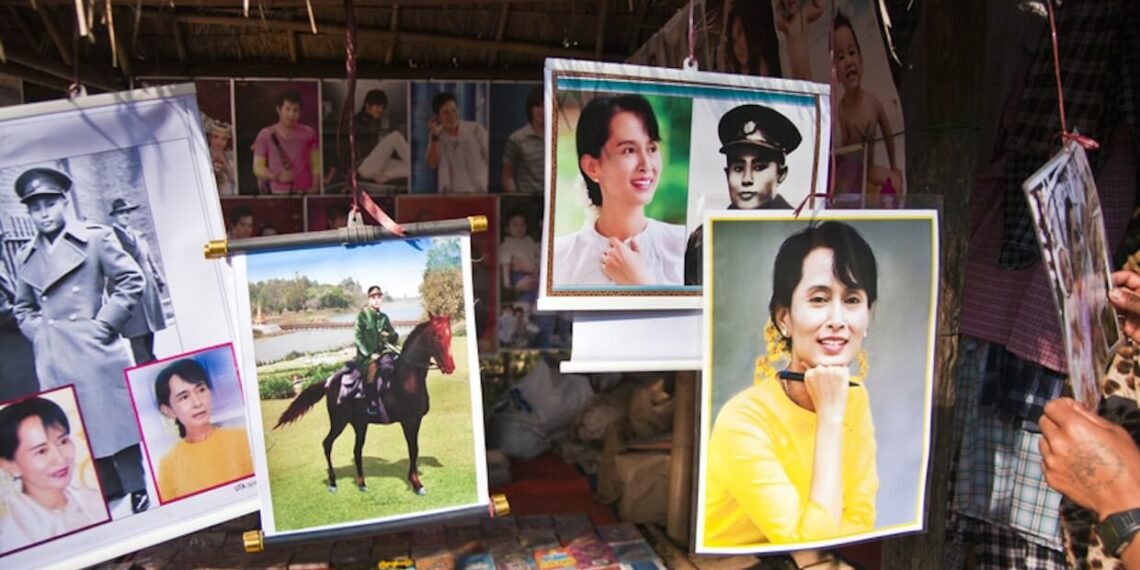
During the late twentieth and early twenty-first centuries, South and Southeast Asia produced an unusually large number of female national leaders compared with global trends. Many of these women—including Indira Gandhi in India, Benazir Bhutto in Pakistan, Corazon Aquino in the Philippines, and Aung San Suu Kyi in Myanmar—emerged from powerful political dynasties as daughters, widows, or wives of assassinated, persecuted, or charismatic male leaders. Scholars argue that these women inherited symbolic legitimacy through family lineage, particularly in contexts where political parties and nationalist movements were deeply personalized around founding fathers and political martyrs (Richter, 1990; Derichs et al., 2011).
Paradoxically, patriarchal political cultures sometimes facilitated rather than prevented the rise of elite women leaders. Because these women were viewed through traditional gender roles—as mothers, daughters, or widows of the nation—they were often perceived as morally virtuous and less threatening than male rivals (Choi, 2015). This gendered moral capital enabled them to unify fragmented political movements and inherit charismatic authority from deceased or persecuted male relatives. In the case of Aung San Suu Kyi, for example, her identity as the daughter of Burmese independence hero Aung San provided symbolic continuity that strengthened opposition to military rule (Fleschenberg, 2008).
However, scholars also note that the same patriarchal structures that enabled women’s political ascent often constrained their authority once in power. Female dynastic leaders frequently faced military coups, assassination, corruption allegations, or resistance from male political elites who expected them to serve symbolic rather than executive roles. Moreover, many studies conclude that these leaders did relatively little to advance broader women’s rights or challenge patriarchal systems, often relying instead on traditional gender norms and dynastic legitimacy to maintain political authority (Blackburn, 2004; Jalalzai, 2013). Thus, the rise of female dynastic leaders in Asia illustrates the complex relationship between patriarchy, populism, political inheritance, and gendered legitimacy in democratic and postcolonial societies.
Research Question
Why are some democracies able to consistently produce powerful female leaders from political dynasties, while others exhibit a lack, or near absence, of national female leadership? Utilizing a quasi-experimental design and a naturalistic or qualitative methodology that examines the life histories of the daughters of national leaders in different democratic contexts—namely South and Southeast Asia and the United States—reveals important differences in how these political systems construct female power and authority (Mahoney & Thelen, 2010). Both regions contain large electoral democracies with mass political participation, modern media environments, and long traditions of competitive politics (Dahl, 1971). Yet, the trajectories of the daughters of national leaders differ strikingly across these settings, with many prominent female leaders emerging from South and Southeast Asian political systems (Jalalzai, 2013). This paper attempts to address this comparative difference by using a multi-method approach.
By contrast, daughters of US presidents have rarely entered formal political leadership. Figures such as Chelsea Clinton, daughter of Bill Clinton, and Ivanka Trump, daughter of Donald Trump, participated in political campaigns or held advisory roles, yet neither became a nationally elected leader. Despite the prominence of political families in the United States, dynastic succession through daughters has not produced a female president or equivalent national executive leader (Kazin, 1995; Lipset, 1996).
This contrast creates a useful naturally occurring comparative experiment. Both regions share electoral democracy and highly visible political families, yet they produce different outcomes in the political careers of daughters of national leaders. Examining these divergent life histories helps illuminate how political institutions, dynastic networks, gender norms, and populist narratives shape pathways to female national leadership (Mudde & Kaltwasser, 2017).