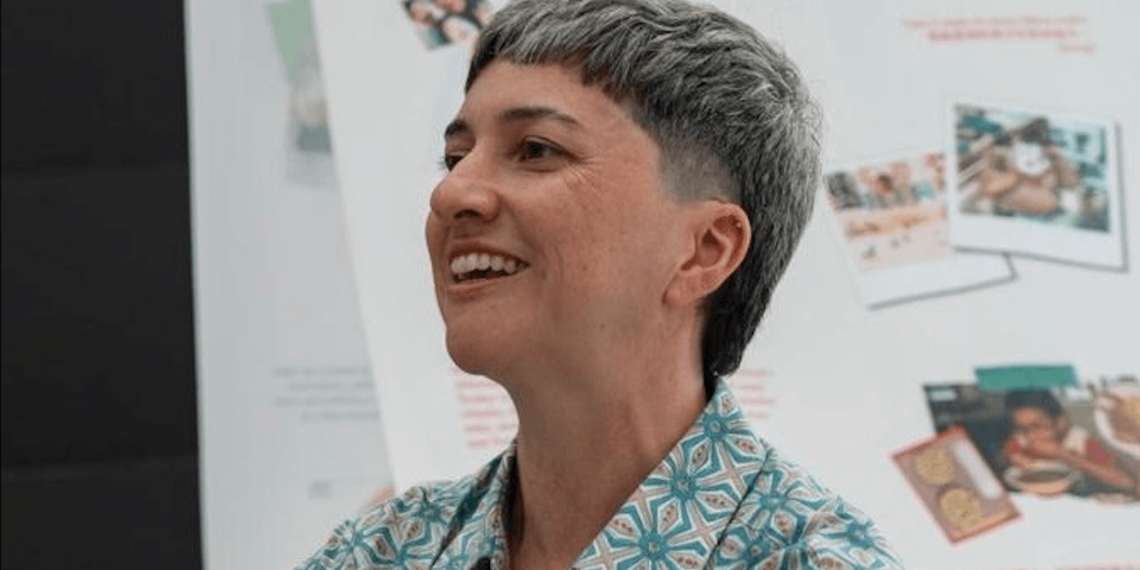
In this ECPS interview, Dr. Mara Nogueira examines Brazil’s 2026 presidential election through the intertwined dynamics of US influence, Bolsonarism, Lulism, religion, labor, and political identity. She argues that the role of the United States—and particularly the alignment between Donald Trump and the Bolsonaro family—has become a consequential new element in the contest, describing the election as “a very important and dangerous one.” Dr. Nogueira also reflects on the durability of Bolsonarism, the increasingly defensive character of Lulism, the political weight of evangelical networks, and the effects of precarious work, entrepreneurialism, and social media. More broadly, she situates Brazil within a transnational landscape of authoritarian and revanchist populism while stressing the importance of class, region, religion, and changing expectations of the state.
Interview by Selcuk Gultasli
As Brazil approaches the October 4, 2026 presidential election, the contest is unfolding amid persistent polarization, a resilient yet more defensive Lulism, the continued strength of Bolsonarism beyond Jair Bolsonaro himself, and increasingly salient cleavages around religion, public security, welfare, and regional inequality. These dynamics are particularly significant in light of the research of Dr. Mara Nogueira, Senior Lecturer in the School of Social Sciences at Birkbeck, University of London, whose work examines the intersections of populism, urban politics, labor, inequality, informality, and political belonging in Brazil, with particular attention to revanchist populism, antipetismo, and the social and spatial foundations of Bolsonarism.
In this interview with the European Center for Populism Studies (ECPS), Dr. Nogueira emphasizes that Brazil’s 2026 election cannot be understood exclusively through domestic political cleavages. Alongside the enduring influence of anti-PT sentiment, regional divisions, gender, class, and religion, she identifies the role of the United States—and particularly the Trump administration—as a new and consequential element in the electoral landscape. “One thing that you didn’t mention in your question and that I think is worth pointing out is the influence of the US in this election,” she stresses, adding pointedly: “They’re not hiding it.”
For Dr. Nogueira, this external dimension became especially visible when President Donald Trump imposed tariffs on Brazil, measures that she interprets as carrying “a very high political element.” She also points to broader American strategic interests in Brazil and argues that political influence should be understood alongside economic considerations, including US interest in Brazilian mineral resources. “There are several interests at play,” she notes, “political influence being one of them.”
The contrast with the 2022 election is, in her view, particularly significant. While Washington inevitably had interests in Brazilian politics under President Joe Biden, Dr. Nogueira argues that the current situation is qualitatively different because “the alignment between Trump and the Bolsonaro family is very well known.” This relationship, she cautions, constitutes “a dynamic there that will need more attention and more scrutiny.”
It is in this context that Dr. Nogueira describes the 2026 election as both unusually consequential and potentially dangerous. According to her, the presence of “one political project that’s very well aligned with American interests”means that, “with Trump in government,” the consequences “could be a very disastrous thing for Brazil and Latin America.”
The interview therefore situates Brazil’s electoral contest not only within the domestic struggle between Lulism and Bolsonarism, but also within a broader transnational configuration linking Trumpism, far-right populism, economic restructuring, religious mobilization, and changing expectations about the role of the state.
Beyond the question of US influence, the interview also explores the changing balance between Lulism and Bolsonarism as political projects. Dr. Nogueira argues that Lulism remains anchored in the Northeast and among lower-income voters, but has become increasingly defensive. She suggests that “Lulism has perhaps become a victim of its own success,” as social mobility has altered popular aspirations and Lula’s political appeal has become more closely associated with defending past achievements than promising transformative change.
Religion is another central theme. Dr. Nogueira stresses that evangelical identity has become deeply embedded in everyday social networks and political value formation, particularly in Brazil’s urban peripheries. At the same time, she cautions against treating “the evangelical vote” as a homogeneous bloc, emphasizing the intersection of religion with class, region, gender, and other identities.
The interview further situates Brazil within broader transformations in labor and political communication. Dr. Nogueira connects precarious employment, entrepreneurialism, and changing expectations of the state to the appeal of authoritarian and revanchist populism, while also highlighting the growing importance of social media and algorithmic echo chambers in shaping political identities and limiting communication across electoral divides.
Here is our interview with Dr. Mara Nogueira, edited lightly to enhance clarity, readability, and overall flow for publication.
The Election Will Probably Be Decided by a Very Tight Margin
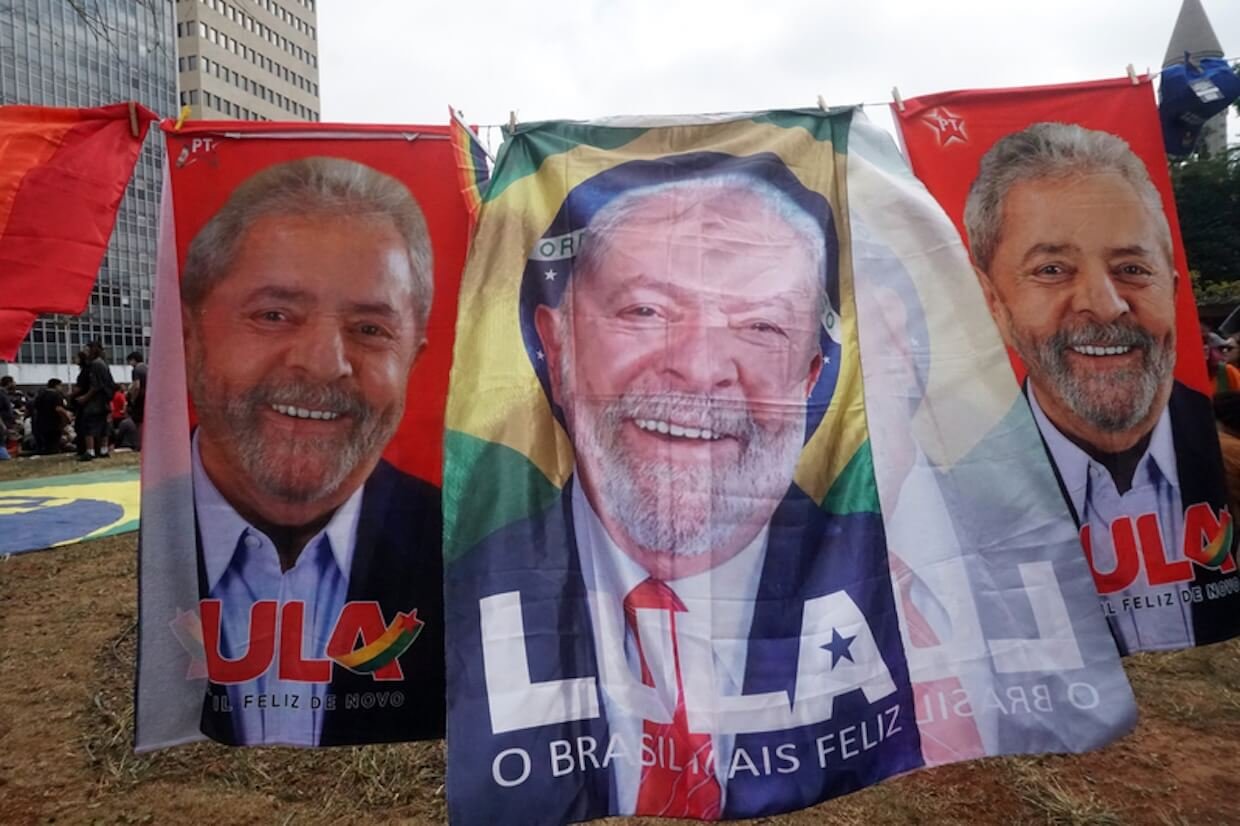
Dr. Nogueira, welcome! Brazil enters the October 4 election with Lula and Flávio Bolsonaro separated by only a few points in recent polls, while runoff scenarios also remain extremely tight. What, in your view, are the most important forces currently shaping this contest: evaluations of Lula’s government, the persistence of anti-PT sentiment, the durability of Bolsonarism, economic concerns, public security, religion, or something else? And which of these factors do you think scholars have tended to underestimate?
Dr. Mara Nogueira: Thanks again for having me. As you mentioned, this is turning out to be a very tight race. There’s been some oscillation in the polls, and we can talk about those as we progress. But what the polls have shown since the beginning of the electoral campaign is that a large chunk of the electorate is very stable, showing loyalty to the two sides of this contest: electoral support for Lula on the one hand and for Flávio on the other. So, what we are seeing is that the election will probably be decided by a very tight margin and by a group of voters who are more moderate and not necessarily aligned with either of the two main political groups in Brazil.
All the reasons you have mentioned are relevant explanations for the contest. They’re playing different roles. But I thought that, before we went into the analysis, it would be worth mentioning a bit more about the polls—a more broken-down analysis of what they’re showing. They reveal some of the important factors shaping the contest.
Lula, for instance, is leading in nine states, according to the latest Quest poll. Out of those nine, eight are in the northeast of Brazil. The northeast remains one of his strongholds. Flávio is leading in eight states, and his support is not as centered in any specific region in Brazil. It’s a little more spread out. They are technically tied in nine states, so there are a lot of places where you can’t call a winner yet. Although you can’t call a winner anywhere right now, two of the places where they are tied are São Paulo, which is obviously Brazil’s largest electoral college of voters, and Minas Gerais, which is where I’m from and has perhaps also been Brazil’s swing state, to borrow an American term.
In the last two elections, in 2018 and 2022, whoever won in Minas Gerais won the national election. The margins have been very close as well. In the latest election, Lula won by something like 0.5% of the voters, and that was more or less the margin by which he won in Minas Gerais as well.
So, you have this sort of regional aspect to the race. The other thing to consider is gender. Lula is ahead amongst women, whereas Flávio is ahead amongst men. This is a polarization that is not uncommon in other electoral races around the world.
Lula is ahead in all age groups at the moment, but his lowest margin is amongst younger voters, 16 to 34 years old. Lula is leading in the lowest income bracket, which is up to two minimum wages, and leading by a very high margin. They are almost tied in the middle-income bracket, which is between two and five minimum wages, and Flávio is leading amongst those with higher incomes, which is more than five minimum wages.
Finally, religion, as you mentioned, is also another important element. Lula is leading amongst Catholics, and Flávio leads amongst evangelicals. So, you have some important aspects that are revealed by the polls, and what people have talked about since the beginning is that women’s votes would be very important in this contest.
US Influence Is Shaping Brazil’s Election
It also shows that there are several internal factors shaping this election. But one thing that you didn’t mention in your question and that I think is worth pointing out is the influence of the US in this election. They’re not hiding it. Even before the electoral race began, when Trump imposed tariffs on Brazil, those tariffs had a very high political element to them. He mentioned Bolsonaro, for instance, the father, in his tweet when he announced the tariffs.
Now, in Latin America, in the latest elections, the US has had some role in influencing the race in all of them. Brazil is no different. Brazil is a very important country in the regional context, and the US is very interested in some minerals that Brazil owns. There are several interests at play, political influence being one of them.
I think this is one element that is shaping the election, and perhaps it’s a new element in comparison with the 2022 contest. Not to say that the US wouldn’t have had any interest in Brazil’s election back then, but we had Biden in the American government, whereas now, with Trump, the alignment between Trump and the Bolsonaro family is very well known. So, there is definitely a dynamic there that will need more attention and more scrutiny.
That also makes this election for Brazil a very important and dangerous one, because there is one political project that’s very well aligned with American interests and, with Trump in government, that could be a very disastrous thing for Brazil and Latin America.
Anti-PT Sentiment Shapes the Race a Lot
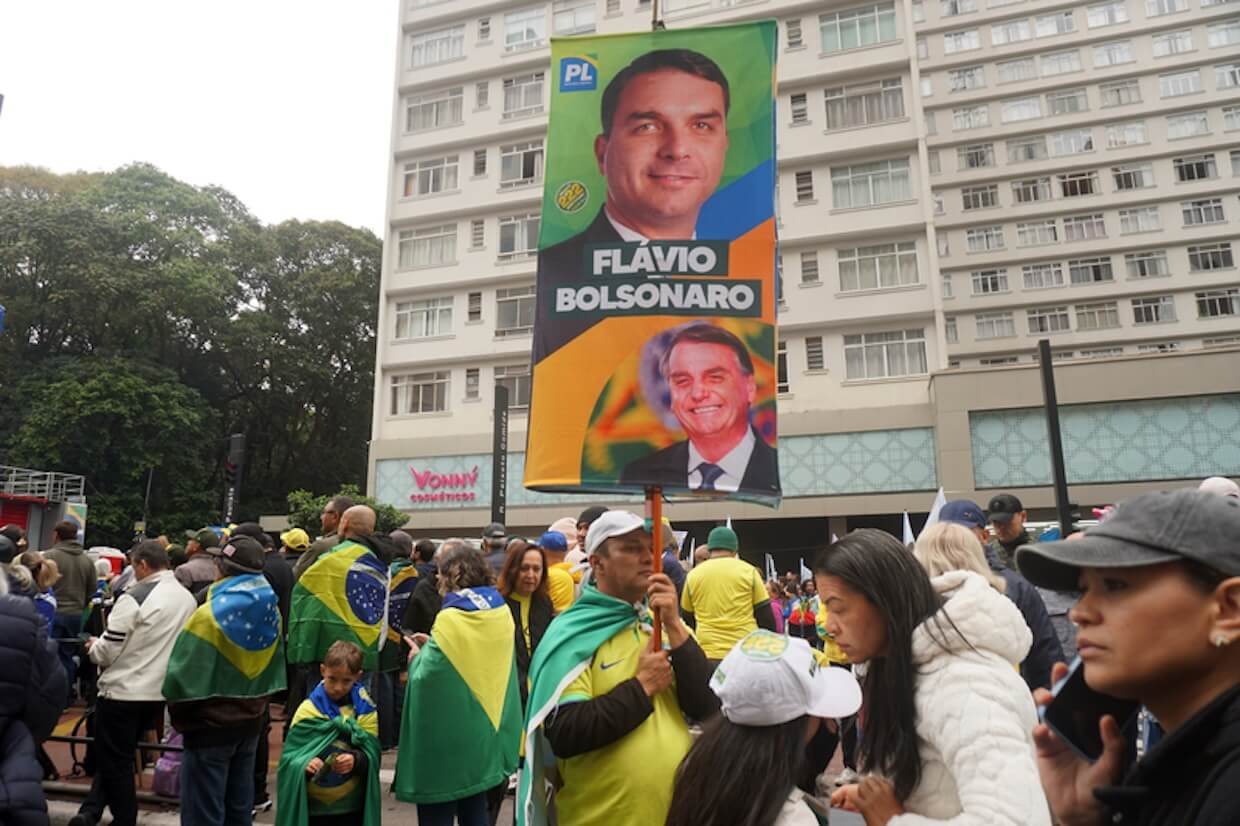
The 2026 election is striking because Jair Bolsonaro is absent from the ballot, yet Flávio Bolsonaro remains highly competitive. Does this suggest that Bolsonarism has successfully outgrown Jair Bolsonaro as an individual leader and become a more durable political identity? Or does the reliance on another member of the Bolsonaro family indicate that the movement remains fundamentally personalistic and dynastic?
Dr. Mara Nogueira: The one thing that you mentioned in your first question, which was the anti-PT sentiment, is very relevant here as well to understand. Because if you look at the polls for the second round at this stage, we can’t take them seriously because things will change, for sure, after the first round. But what they show is that any candidate—because what’s happening now is that you have Lula on the one side, which represents the center left in Brazil, and all the other candidates with any meaningful vote base are on the right and on the far right. They’re all somehow in the Bolsonarism political force that you mentioned. What the polls show is that Lula would be more or less in a similar position. So, anti-PT sentiment does shape the race a lot. And that sentiment has been very enduring in Brazilian society. The question is: does anti-PT sentiment necessarily mean Bolsonarism?
I don’t think it’s a coincidence that we have Flávio as a contestant rather than, for instance, Tarcisio Gomes de Freitas, who is the current governor of Sao Paulo and who is running again for election in Sao Paulo, and whom a lot of the elites in Brazil would have preferred as a candidate rather than Flávio. But his father—the family has an interest in the continuity of their dynasty in government.
Bolsonarism Is Part of a Wider Trend of Far-Right Populism
When we’re talking about Brazilian elections, we have to think about it in a context as well, because the far right is a global phenomenon. It’s not just a Brazilian thing. In Brazil, Bolsonaro was, and perhaps remains, even if in prison, the leader of this movement. So, as I already mentioned, despite the numerous scandals surrounding Flávio’s candidacy, he remains competitive partially because of his surname, and partially also because he’s the candidate who has the highest chance of winning against Lula. He’s surfing the wave of his father’s popularity, even if he lacks much of the charisma and the passion that his father had. His voters as well are much less passionate and much less vocal about their support. But they are still very loyal.
So, on the one hand, Bolsonarism is part of a wider trend of far-right populism that I see as a result of multiple factors. And some of those are global, like changes in the global market and the rise of entrepreneurialism as an individualistic response to worsening economic conditions. Also, the limits of representative democracy have to be mentioned. And little is said about how the traditional right has been shattered in multiple places, like the US with the rise of Trumpism, and in the UK with the rise of Reform UK and the demise of the Tory Party.
In Brazil, we saw the shrinking of parties like PSDB, which, for several elections, was the antagonist of the Workers’ Party, with Fernando Ricardozo and later José Serra and Geraldo Alckmin who is now Lula’s vice president. They have lost a lot of support, lost importance. Some have called this polarization, but there are critics who see this term as painting a false equivalence between these two political forces, because what has really happened in Brazil, and in much of the world, is that the political spectrum has been pushed to the right. As a result, even some left-wing parties have had to move a little bit more towards the center. Yes, it’s a polarization, but there’s one on the extreme right, and the other one has been pushed much more to the center.
The question then remains to be asked: what makes the far right so successful in the world right now? In my work, I have talked about the notion of revanchist populism, which, together with my colleague Ryan Sentner, we termed to talk about political movements of people wanting to take back the nation from undeserving groups. If you think about the Global North, if you think about the UK and the US, the most visible element of this political movement is the anti-migration sentiment. Whereas in Latin America, the main issue has been about criminality. These are two political questions that the left has a very difficult time addressing, and the right is quick to respond to with aggressive politics that cater to people’s concerns without actually delivering solutions to very real problems.
For instance, in Brazil, people are facing insecurity in their daily lives. Bolsonaro’s pro-gun agenda, which his son also sponsors, is completely harmful according to all serious research that you have around security, but it appeals to a part of the electorate who is dealing with the real issues of lacking safety in their everyday lives.
In my own research, I also talk about changes in the labor market, which are very important to think about, not only in the Brazilian election but in this changing panorama of politics in the whole world, and which explain the rise of authoritarian populism. Stable jobs are becoming less common, and social democratic states were very much founded on the role of the state as the mediator between capital and work. What we see now is a dissolution of this pact as a result of decades of neoliberal policies and austerity, and the rise of entrepreneurialism as an individual solution towards essentially a collective problem creates a situation in which people are less supportive of the government.
So, this question around what is the government and what’s the role of the government is very important in the current election. Because if you’re a worker, for instance, the state can protect you. Social protection for workers has been one of the key roles of the state in democracies. But when you are an entrepreneur, the state is the one who is taxing you and regulating you. So, there is less appreciation for what the state represents, which is a collective provider of services and rights.
Of course, in Brazil, corruption scandals like the most recent one, which is the Banco Master or the Master Bank fraud, reinforce the idea that the state is nothing but a corrupt machine that exists to suck resources from working people rather than provide rights. In my conversations in the field, I have tried to talk to people about the corruption of private actors, which is something very few people talk about. And I have talked about how billionaires don’t pay taxes, but people don’t seem to care about that as much because they see taxes as being poured into inefficient and corrupt states.
In that context, candidates like Flávio in Brazil and Javier Milei in Argentina are gaining ground because they promise essentially to axe the state, which, for a proportion of the electorate, sounds like a good idea because they perceive the state as a hindrance rather than something which is providing them with services and rights.
I think another element worth mentioning is social media, because the way people consume information has changed massively as well. In each election in Brazil, we have had—the first one where social media had an impact was in 2018. When Bolsonaro was first elected, when the TV ads that were usually the TV political campaign, which had been very important up until 2018, had very little impact because people were consuming news and information much more through WhatsApp and other social media than they were through the TV.
That trend has continued and has become even deeper with time. The way that algorithms create echo chambers means that the information that I see is very different from the information other people see. Sometimes, obviously, it’s hard for candidates to really reach across and reach other candidates’ bubbles with information. There’s very little that can do that. Just big scandals can cross those bubbles.
Religion is a main factor as well, but I think you have a question about that later, so I’ll save my answer.
Lulism Has Perhaps Become a Victim of Its Own Success

At the same time, Lulism appears resilient but more defensive than during Lula’s earlier presidencies. Lula remains strong among lower-income voters, Catholics, older voters, and in the Northeast, but his government enters the election without overwhelming approval. How would you characterize the current state of Lulism? Is it still a transformative political project, or has it become increasingly a coalition organized around social protection, democratic stability, and resistance to the radical right?
Dr. Mara Nogueira: What the polls show, as I mentioned in the response to your first question, is that Lula is very strong in the Northeast and also very strong with the poorest voters, up to two minimum wages. This group remains, like the Northeast, a stronghold of Lulism, and the poorest electorate also remains a stronghold of Lula. In the case of the Northeast, the region, which is the poorest in the country, has benefited from Bolsa Familia and other social programs that are essentially the backbone of what has been termed Lulism.
I look back at André Singer’s article, when he first coined this term, and in that article, what he was doing was calling attention to a change in the composition of Lula’s voters from 2002 to 2006, which were the first two elections that Lula won. In 2006, he had lost ground with the more educated, the middle and upper class, which was his main electorate in 2002 and also had been his main electorate throughout the three elections that he lost in ’89, ’94, and ’98. But this loss of this electorate, which was more loyal to him, was compensated for with electoral gains in what Singer called back then the subproletariat, which essentially means the poorest and the precarious workers, who are generally also informal—not waged workers. Also the unemployed, who benefited most from Lula’s social programmes, particularly Bolsa Familia.
So, when you ask if Lulism is still a transformative political project, or has it become increasingly a coalition organised around social protection, democratic stability, and resistance to the radical right, I think you’re pointing to something relevant, because Lula’s major achievement in his political life has been to uplift a huge amount of people from poverty. And a lot of people remember that, and a large amount of those who benefited are still loyal to him, as we can see from the poll numbers. He’s strong in office and amongst those with the lowest incomes.
But Lulism has perhaps become a victim of its own success, and there are other people talking about that, such as Rosana Pinheiro-Machado and Laura Carvalho. Both have published interesting articles recently in Brazil’s main media outlet, which is from Sao Paulo, talking a bit about these changes in people’s aspirations in recent years in Brazil, mostly people’s economic aspirations.
So, a lot of those who left poverty, as well as their sons and daughters, now want more. They are not the poorest of the poor anymore. They want—they aspire to something else. They aspire to social mobility, to being able to afford services and goods that would represent that transition. And I think, again, social media has an important role here because it really shapes people’s aspirations to access products and services that they are not able to access at the moment.
The Left Has Become Conservative While the Right Is Promising Change
I think what has been happening is that Lula’s campaign has been very focused on defending his legacy, defending the achievements of his previous governments, which are very important. He took Brazil out of the hunger map twice. He lifted a lot of people out of poverty. But this legacy is not taking him far enough at this point, because he needs to promise more than what he’s done already. He needs to perhaps promise a more transformative project.
It’s not just Lula who is struggling with that. That is an issue with all kinds of social democratic parties in the world, which also explains the rise of the right, which has become the more disruptive group. The left, and Lula is an example of that, has become conservative in the sense that it’s about defending a legacy, it’s about defending rights, it’s about conserving social gains, and the right is promising change.
I don’t believe that it’s change for the better, that it’s radical change that necessarily delivers what people want—these aspirations. But for a lot of people, that promise of radical change is very appealing. I think that shaped the 2018 election in which Bolsonaro won, is shaping a lot of the changes that we see in the UK, for instance, with Reform UK gaining ground, and explains a bit Trump’s win in the US. So, this idea that what people have right now is not enough and they want more, and they want radical transformation that the left has not been able to promise.
Lula Is a Victim of His Conciliatory Agenda
The government has placed renewed emphasis on Bolsa Família, debt relief, fuel prices, and household income during the final phase of the campaign. To what extent can the classic material foundations of Lulism still mobilize voters in a political environment where religion, security, morality, and cultural identity have become increasingly salient? Has the relationship between redistribution and electoral loyalty weakened?
Dr. Mara Nogueira: The impact of some of Lula’s more recent actions is yet to be captured by the polls. There was a rise in Bolsa Familia, for instance, and the most recent of his political moves has been to ban betting in Brazil, which has been identified as a huge problem connected to growing indebtedness, but also as a health problem in Brazil. You have addiction to betting becoming a key issue, sucking resources out of an already strained public health system.
Some of those moves haven’t been reflected in the polls yet. So we are waiting to see if they will have an impact on those swing voters that, as I said in the beginning, will be the most important in deciding the election.
But there is definitely a limit to the ways that better economic indicators, such as low inflation and low unemployment, are affecting people’s votes. There are other people—Laura Carvalho, in this journal article that I was talking about, mentions that. I think we have partially two issues.
One is that we have low inflation, but price levels are very high, and these high price levels are still an enduring consequence of the pandemic, and also perhaps Bolsonaro’s government, when we saw rising prices during his four years in government. We have low inflation, but what low inflation means is that prices are growing at a lower pace. So people are still perceiving that they’re spending a lot of money on products and services. There’s not a lot of money left after you’ve paid for your rent, and for food, and for fuel, and so on and so forth.
The other thing is that, yes, we have very low unemployment, historically low in Brazil, but Brazil remains a low-salary economy. If you look at the 2022 census results, which are now a bit old but give us a snapshot of Brazil, they showed that almost 70% of Brazilians earn up to two minimum wages. So there’s low unemployment, and incomes are growing ever so slowly, but you have a huge amount of Brazilians who are very low paid. With two minimum wages in Brazil, you’re very strained if you’re paying rent, if you’re paying for food and for fuel. There’s very little left at the end of the month.
When people post a show and people were asking, “Do you think you have enough money to pay for your monthly expenses?” a lot of people are saying no to that. Then you have indebtedness as an issue. As you mentioned, Lula has responded to that with several programmes. But one of the impediments to these policies being effective is that Brazil has a very high interest rate. That is a legacy of the Real Plan in 1994. When we controlled inflation, one of the elements of that plan was high interest rates. That has been a crucial characteristic of the Brazilian economy ever since. So indebtedness will be very difficult to deal with as long as we have high interest rates.
What I think is worth mentioning is that, just going back a little bit to Lulism and so on, and its constraints or its limitations, as I already mentioned, Lula delivered lower poverty rates and a stable economy, but without any radical changes in terms of the economic structure. I’m not saying that Flávio’s programme of government is better. It’s very unclear in its economic proposals. But there’s definitely a limit to the inclusion without structural change, or without challenging established elites, that Lula has promoted.
Lula, in some senses, is a victim of his conciliatory agenda, which makes him a very skillful politician, but brings limits when you are trying to please groups with very divergent needs and agendas. You’re bound to be unable to deliver radical change because, to do that, you have to actually step into very established interests.
For instance, if we go back again to Lula’s first election that he won in 2002, back then he assured markets by choosing a businessman as his vice president and promising to keep the main elements of his predecessor’s economic policy in place: inflation targets, primary budget surpluses, and a floating exchange rate. This macroeconomic tripod has become so key that nobody even mentions it anymore as something that’s challenged.
The Challenge for the Left Is to Offer a Political Project of Real Change
Rather than breaking sharply with the previous government, Lula signalled back then continuity in macroeconomic management by expanding social programmes. So the growth that he achieved and the inclusion were via taking people out of poverty and into the market, with real increases in minimum wages also boosting domestic demand. And as many have observed, it was a process of inclusion via consumption, essentially. People became consumers. The issue is that, when you’re a consumer, the state does not enter your life as a provider of rights, but as a tax collector.
You can see reflections of that in his government’s attempt to tax international purchases, aiming at websites such as Shein and Alibaba, which have grown immensely in Brazil. This tax was an attempt to help local businesses that are unable to compete with international brands, particularly Chinese. The reaction was so intense that the government has had to make a U-turn on that policy.
So the challenge for Lula and for the left in the world right now is to offer a political project of real change that can appeal to people’s aspirations. But this is not a very easy task, as shown by the difficulties of left-wing parties in various places, particularly in Latin America right now.
Religion Is Definitely a Big Factor Shaping Brazilian Politics
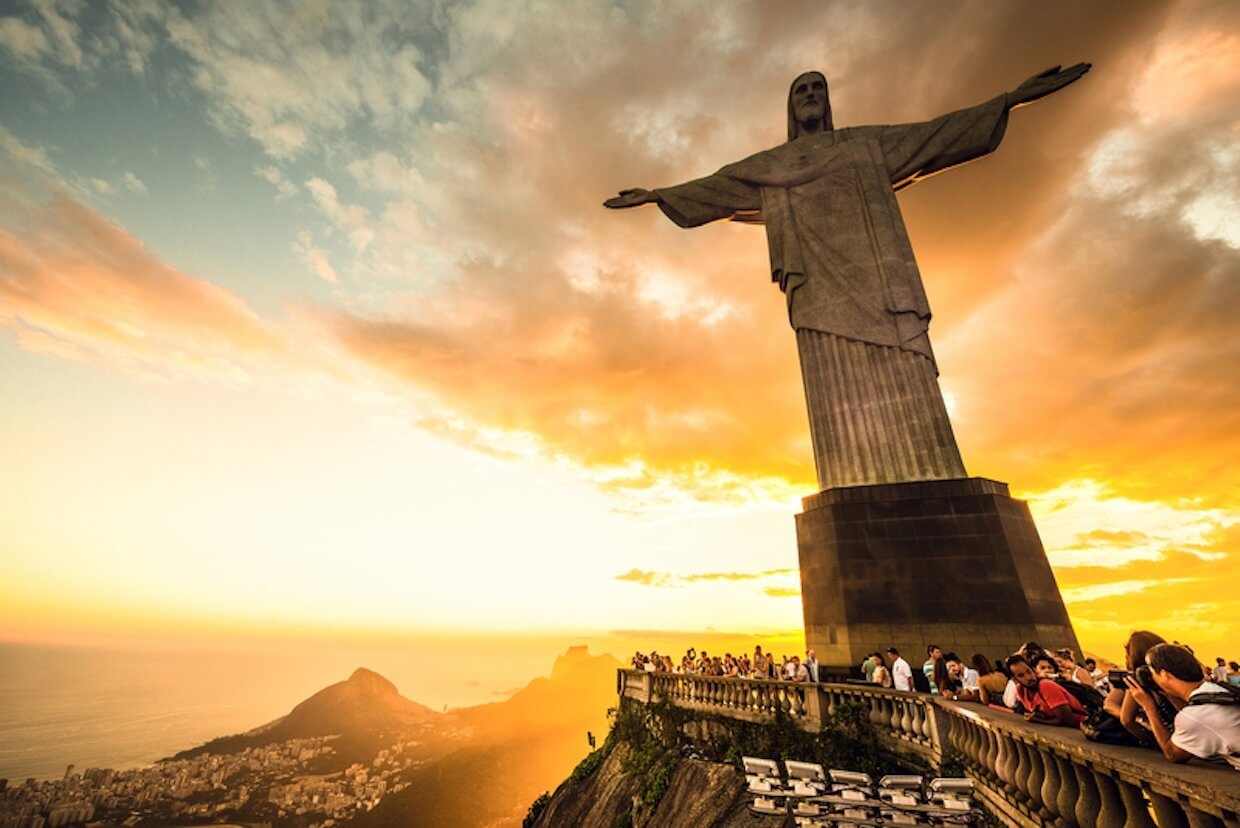
Recent polling reveals one of the clearest religious divides in Brazilian politics: Flávio Bolsonaro has a substantial advantage among evangelicals, while Lula remains considerably stronger among Catholics. How decisive is this religious cleavage for the 2026 election, and what mechanisms actually convert religious affiliation into electoral behavior—pastoral leadership, church-based social networks, moral issues, digital communication, or broader perceptions of social order and threat?
Dr. Mara Nogueira: When I was talking about the polls in the beginning, I mentioned that Flávio Bolsonaro is leading amongst evangelicals, whereas Lula is leading amongst Catholics. In Brazil, religion is definitely a big factor that has been shaping society and politics for a longer period now.
It’s interesting to notice that Brazil is the only country in the world where we have observed a massive change in religious identity without any influence of the state. You have about a third of Brazilians right now, as shown by a recent research survey, who are evangelicals. If you look at Brazil in the 1950s, you had 90% of Brazilians who were Catholic back then. You have this huge change in religious identity in the country, which is bound to have a lot of societal consequences.
One of the things to notice is that the evangelical church has become, for a lot of people, the main way through which they find community and belonging, particularly in the peripheries of urban centers. In any peripheral neighborhood in Brazil, there are a number of evangelical churches. You might not find any sort of public services, you might not find many public schools or public health centers, but you will find evangelical churches almost anywhere in Brazil.
This religious identity is not just about values. It’s about people’s everyday lives, who forms their social networks, who they talk to, and how they form their values as well. When you mention that there are different aspects through which religion enters political life, I think the main one is through the formation of values. For years now, essentially, the ways that people see the world have been shaped by religious identities. When the electorate comes in and one candidate says things that are aligned with those values, this candidate is bound to attract more voters amongst those religious communities.
Obviously, it’s not just about values. You have different political figures in Brazil, like Silas Malafaia, for instance, who use their religious communities to support particular candidates. There is also pastoral leadership, as you mentioned: people who are leaders of religious communities, who really tell the community who to vote for.
Religion Shapes Electoral Behavior, but It Intersects with Other Identities
There has been a recent survey that Quest, alongside the Institute of Religious Studies in Brazil, has just published, and it shows a lot of interesting things about how religion shapes politics in Brazil. One of the things that it mentions is that when you think about people having religious identities, it’s not the only identity that they have.
For instance, if you take a person who is evangelical, the polls show that the majority of evangelicals vote for Flávio, but if you take, for instance, an evangelical person who lives in the Northeast and makes up to two minimum wages, there’s a big chance as well that this person might vote for Lula. So, you have these intersecting identities with religion, which also shape people’s votes, apart from religion itself.
One of the things that I thought was interesting that this survey showed is that about eight in 10 respondents were opposed to political discussions in churches. Around nine in 10 reject the presence of electoral candidates in religious services. Yes, religion might shape their identities, might shape their political votes, but people don’t want people asking for votes inside churches or asking for support or talking about politics inside churches. That doesn’t stop it from happening, but there is a rejection of that.
There’s an interesting point despite this idea that religion alone cannot explain people’s behaviors. There’s a new controversy every week in Brazil that is shaping the election. The most recent one has to do with Brazil’s patron saint, which is Nossa Senhora de Aparecida, or Lady Aparecida, who is Brazil’s patron saint.
Rumors are circulating that Flávio wins, due to an old bill proposed by one of his supporters to change Brazil’s patron saint, he will propose a change in Brazil’s patron saint. That has had such an effect that he had to record a video saying that he wouldn’t do that, holding a little doll of Lady Aparecida to cater to the Catholics. Because he can’t afford to lose. If you take people who are more educated, who are older, but are not very aligned with either of them, they are swing voters. So, the race is so tight that you can’t really lose voters in demographics where otherwise a candidate is more dominant.
This anecdote shows the importance of religion in Brazil and how it’s really shaping people’s electoral behaviors, but at the same time, it intersects with other identities when you’re thinking about how people actually vote.
Lula Is Trying to Reach Evangelicals Through Their Other Identities
At the same time, the category of “the evangelical vote” risks obscuring major denominational, class, gender, racial, and regional differences. Are there signs that evangelical support for Bolsonarism is becoming more politically differentiated? And could Lula’s attempts to engage evangelical constituencies meaningfully narrow this gap, or has evangelical identification with the Bolsonaro camp become too deeply institutionalized?
Dr. Mara Nogueira: As I already said, what this survey that I was mentioning shows is that religion alone cannot explain it. You have all these other social differences—class, gender, race, but also regional differences—which are shaping people’s electoral identities and votes.
Even though religion alone also has an impact, not just because of values but, as I mentioned before, also because certain key religious figures, particularly in the evangelical church, have very strong political affiliations with Bolsonarism. I didn’t mention before that it’s not just about the presidential race, but also the Congress. You have a whole group in the Congress, which is the Bible group, which is very much aligned with evangelical identities.
When you’re thinking about religion, there’s also the Congress to think about. Because we are very focused on the presidential race—because obviously it’s the tight race, it’s the one that polarises Brazil the most—the race to the Congress, and the power that the Congress has gained recently in Brazilian politics, is also very worth talking about.
But in relation to your question more specifically, Lula trying to gain the evangelical vote through a particular lens, like the evangelical vote, will not be very successful. But he’s trying to reach the evangelical vote through their other identities. For instance, if you look at the survey that I was talking about, which was with people throughout the whole of Brazil and people who are religious independently of their religion, what the survey shows is that there are divides between evangelicals and Catholics, but there are also a lot of convergences. One of them is that they support Bolsa Familia as a social program.
When Lula increases the Bolsa Familia payments, he is somehow trying to cater to the evangelicals who are supportive of Bolsa Familia. When he bans betting in Brazil, he is catering to the evangelicals to an extent. Rejection of betting in Brazil was at 75%, so he’s definitely going to get to evangelical families as well.
Whether they’re going to swing the vote to him remains to be seen, but there are measures that he’s taking that aim at groups that will also be evangelical. If he tries to cater to evangelicals through their evangelical identity, it’s going to be ineffective because he doesn’t have a history of connection to evangelicals, and he’s going to look fake, and I don’t think that would be very useful for him.
Bolsonarism Is Part of a Global Phenomenon
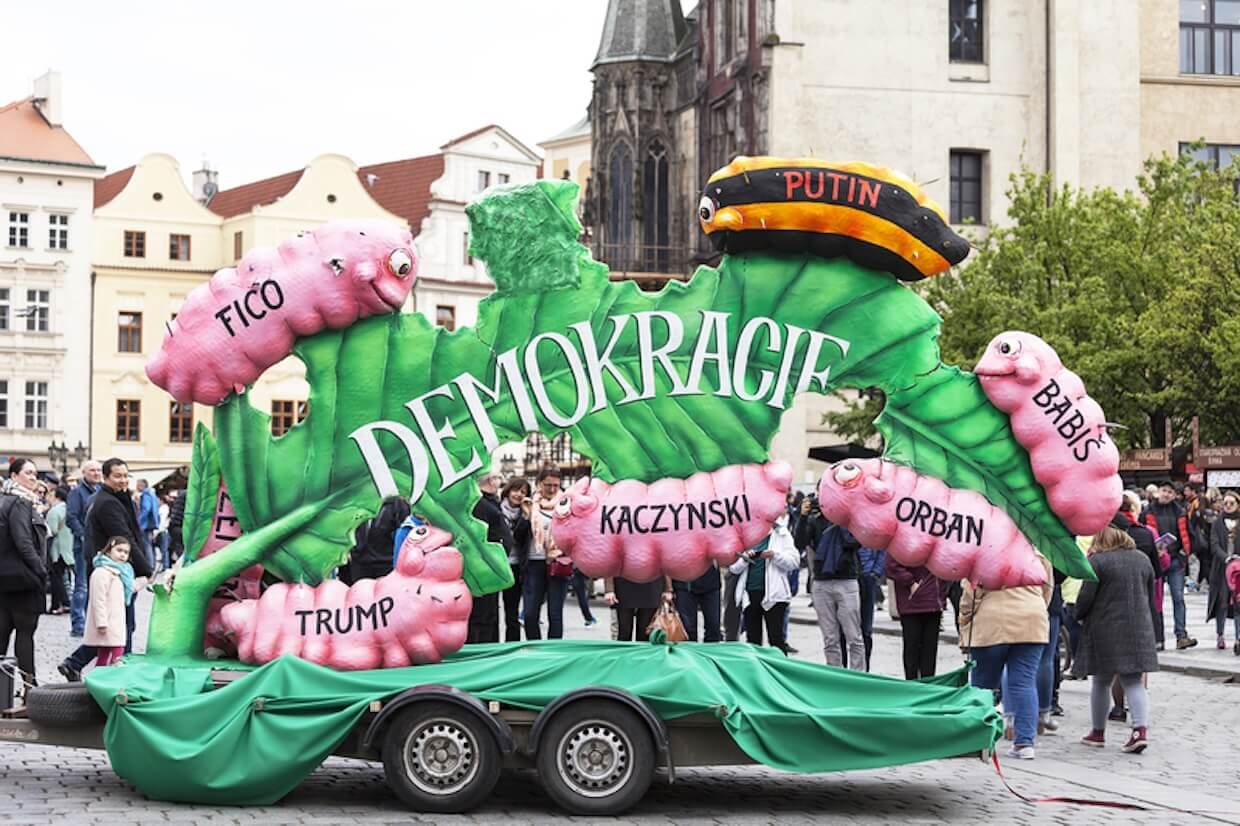
Photo: Jolanta Wojcicka.
Bolsonarism is frequently compared with Trumpism, and your work on revanchist populism situates Brazil within a broader geography of angry, restorative populisms. Yet Brazil differs sharply from the United States in its party system, religiosity, racial formation, labor informality, welfare state, and territorial inequalities. Which dimensions of Trumpism and Bolsonarism are genuinely comparable, and where does that analogy obscure more than it reveals? How would you situate Brazil alongside cases such as Milei’s Argentina or Bukele’s El Salvador?
Dr. Mara Nogueira: As I mentioned in the beginning, Bolsonarism in Brazil is part of a global phenomenon: the rise of the far right, or the authoritarian right, or revanchist populism, to use the term that Brian Sentner and myself have coined. It has to do with what I was talking about, which is this promise of radical change and this promise to retake the nation from undeserving populations. That is at the abstract level. But who those undeserving people are will be shaped by the different geographies and the different cultures and societies that we are talking about.
In the special issue that we had that talked about revanchist populism, one of the cleavages that we looked at in the US is this very clear division between the urban and rural vote. The urban vote tends to go to the Democratic Party, and the rural vote tends to go to Trump. In Brazil, we don’t necessarily have that.
You have the urban peripheries as key sites to think about swing votes—how peripheries have changed from supporting the left to supporting the right in 2018, and have remained divided ever since. What we see in Brazil, which is worth noting, is that urban peripheries are places where people are dealing with lack of infrastructure, where people are facing long commutes to work, and where people are using a very strained public health system.
Flávio Looks to Milei for the Economy and Bukele for Security
So, it ties back to that question of the government and of the state more broadly that I mentioned earlier: What’s the role of the state, and what is the state doing in my life? What candidates like Trump, Flávio, Milei, and Bukele promise is a liberal state in the economic sense and a strong state in the sense of controlling criminality and migration. Flávio, for instance, when he’s talking about his economic agenda and his agenda for public security, mentions Milei for the economy and Bukele for security. Those are two very important reference points for his campaign.
What you see is what the state should be doing. The state should not be taxing, and it ties back to that question that I mentioned earlier of how inclusion via consumption, on the one hand, as a policy, has turned people into consumers, and the demise of stable jobs. That’s not just a Brazilian thing. That’s also a very global phenomenon.
In Brazil, informality has been an issue for a much longer time, but uncertainty in the job market has become more relevant, and people become entrepreneurs as an individual response to problems around the lack of stable jobs. It turns people into entrepreneurs on the one hand and consumers on the other hand. For both of those positions in society, the state is not a provider of rights, it’s not a provider of services. The state is collecting taxes and regulating.
You see that, as I mentioned, just going back to the attempt of the state to tax international purchases. It’s a very interesting thing to look at, and how it backlashed against the government, because people want to consume, and they want to buy as cheaply as possible. That also has to do with their aspirations, which is another thing that I mentioned shaping people’s political choices and identities.
So, yes, there’s a lot of difference between Brazil and the US, but at the abstract level, you have that question around radical change and the role of the government. And this promise of freedom in the economic sense with conservatism and a strong state against migration and criminality.
Bolsonarism Is Very Much Alive and Will Stay with Us for Many More Years
And finally, Dr. Nogueira, the 2026 election appears to test two succession problems at once: whether Bolsonarism can survive Jair Bolsonaro through a wider political, religious, congressional, and digital ecosystem, and whether Lulism can survive beyond Lula’s personal authority. From the perspective of your work on space, labor, popular governance, and political affect, what would a genuinely post-Lula and post-Jair Brazilian political order look like? Which social forces are most likely to shape that transition?
Dr. Mara Nogueira: Unfortunately, Bolsonarism is very much alive and will last and stay with us for many more years, whereas Lulism is very attached to Lula at the moment. And that’s another one of the limitations of the Workers’ Party political agenda for Brazil, because there is no succession. Who is Lula’s successor? Fernando Haddad, for instance, who ran in 2018, didn’t attract as many voters as Lula does, and he’s not being very successful now against Tarcisio in Sao Paulo. He is Lula’s preferred choice to replace him in the future. But he doesn’t have the same charisma and the same capacity that Flavio has to attract his father’s voters. So, I don’t think you will see such a neat transition of voters from Lula to his successor as you see from Jair Bolsonaro to Flavio Bolsonaro, because they are related. But anti-Lula, anti-PT sentiment shapes a lot of people’s political choices.
If you were asking me how I see that in relation to my work, I already mentioned the changes in the labor market, which will also remain and will become even more relevant in the future. We are not seeing a movement towards more stability in jobs. On the contrary, with AI and other changes in the world, job stability is becoming more of a question. So, whoever wants to capture the political votes and also the political identities of people will have to deal with that change, will have to address people’s concerns and address people’s aspirations.
The other thing is social media, which we already talked about, that’s shaping how people consume content and news, and how they form their opinions. It is also not something that will change unless we have a very united front—not only in Brazil; it would have to be a more global thing—to regulate social media and to change the way algorithms and social media are working right now.
Unfortunately, I would like to have a more hopeful answer. But I think if Lula wins this election, I don’t see the Workers’ Party having a strong successor for the next round, for the 2030 election.
Young Voters Are Where Lula Is the Weakest
On the other hand, just going back to the polls, young voters are where Lula is the weakest. That’s another element to pay attention to. How do you capture the political vote of young people, or how do you cater to the needs of young people who are also dealing with the impact of climate change?
We didn’t talk about this during the interview because it’s not something that has been part of the political agenda at the moment. Neither Flavio nor Lula are very strong on climate change. Flavio is a climate change nihilist, whereas Lula has made some steps towards becoming a leader of the Global South in terms of the environmental transition and so on, but he also has such a strong attachment to the oil industry in Brazil. Thus, he doesn’t have a very stable position on the environmental agenda.
That might be something that could capture young voters, although it hasn’t played much of a role in this election contest, and could perhaps do so if someone appears on the left, such as Mamdani, whom you see in New York City. I think he’s one of the most interesting political figures on the left right now, because he’s promising radical change. The young voters and those struggling with all the issues that we’ve been talking about in this interview are hopeful together with him.