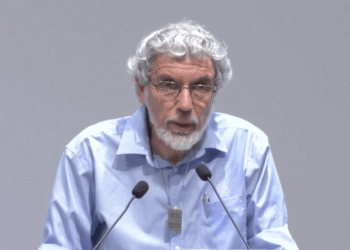
In this ECPS Voice of Youth (VoY) interview, Dr. Amedeo Varriale reflects on the study of populism, the responsibilities of scholars, and the boundaries between public engagement and political activism. Working primarily within the ideational tradition, he stresses conceptual clarity, methodological pluralism, and intellectual humility, arguing that “there is not necessarily one correct answer” in populism research. Dr. Varriale maintains that scholars should contribute to public debate through empirical evidence, theoretical transparency, scientific rigor, and procedural validity while resisting political advocacy. He also emphasizes the need to acknowledge uncertainty, present competing interpretations fairly, and remain transparent about research limitations. Ultimately, scholarship should inform democratic debate without attempting to determine its political outcome or replace citizens’ own electoral choices.
Interview by Natalia Crane
As part of the ECPS Youth Program’s Voice of Youth (VoY) interview series, Dr. Amedeo Varriale reflects on the intellectual, methodological, and ethical challenges confronting a new generation of scholars studying populism. A political scientist specializing in populism, the radical right, and contemporary European politics, Dr. Varriale traces his research interests to the political transformations that followed the 2015 refugee crisis, Donald Trump’s 2016 election, and Italy’s 2018 League–Five Star Movement coalition. His work subsequently developed around questions of how populism should be conceptualized, measured, and distinguished from more explicitly authoritarian and anti-democratic phenomena.
A central theme running through the interview is the importance of intellectual openness in a field characterized by competing definitions and methodological traditions. Although Dr. Varriale works primarily within the ideational approach associated with Cas Mudde, he emphasizes that populism studies contain legitimate theoretical disagreements. For him, scholars should resist the temptation to transform conceptual preferences into unquestionable certainties: “There is not necessarily one correct answer.” Instead, they should “recognize ambiguity and avoid presenting one interpretation of populism as an absolute truth.” His broader methodological principle is correspondingly straightforward: “The most important thing is to keep an open mind when approaching political science.”
This commitment to scholarly pluralism is closely connected to Dr. Varriale’s understanding of the public role of academics. He argues that “scholars have some responsibility to intervene in public discussions,” particularly because research on politics, society, and democratic life can produce consequences extending far beyond universities. Yet public engagement, in his view, requires clearly defined boundaries. “I am skeptical of academic activism,” he stresses, adding that “engaging with the public should not turn into political advocacy or activism.” Instead, academics should contribute “empirical evidence, theoretical transparency, scientific rigor, and procedural validity,” while maintaining sufficient humility to acknowledge that scholarship remains fallible and that research findings “cannot be treated as absolute truths.”
Dr. Varriale extends this principle to democratic decision-making itself. Scholarship, he argues, can clarify the opportunities and risks associated with populism, distinguish democratic protest from challenges to democratic norms, and communicate evidence to journalists, policymakers, educators, and civil society. But its democratic function should remain informational rather than prescriptive: “Scholars can provide evidence to society, but democratic societies and the demos ultimately make their own political and electoral decisions.” Academia, he concludes, should “facilitate democratic debate without attempting to determine its outcome.”
Across discussions of populism, authoritarianism, digital methods, early-career research, and public engagement, the interview therefore presents scholarly rigor, conceptual humility, and openness to competing interpretations as essential foundations for politically relevant—but politically independent—research.
The interview with Dr. Amedeo Varriale is lightly edited to enhance clarity, readability, and overall flow for publication.
From the Refugee Crisis to the Study of Populism

Please introduce yourself, outline your academic journey, and explain how your research interests developed. Why do you believe your area of research is particularly significant in today’s global environment?
Dr. Amedeo Varriale: I am a politics graduate of the University of East London, and I completed my PhD in 2024. I am currently a non-resident research fellow at the European Center for Populism Studies, and I am also a research fellow at a center focused on the study of the radical right and populism.
My interest in populism developed over several years. There were three major events between 2015 and 2018 that particularly shaped my research interests: the refugee crisis in 2015, Donald Trump’s election in 2016, and Italy’s 2018 coalition between the League and the Five Star Movement.
The refugee crisis was particularly significant because it created a major divide in public opinion and between political parties, with some advocating for greater openness towards immigration and others strongly opposing it. This contributed to the rise of populist and nationalist parties, particularly on the right.
Trump’s election in 2016 was another important moment. It attracted enormous international attention because the United States, as the leading country of the liberal democratic world, had elected a president whose political language was very different from the traditional language of liberal democracy.
The third event was the most important for me personally. In 2018, for the first time, a key EU member state, Italy, had a government coalition led by fully Eurosceptic populist forces from the right and left: the League and the Five Star Movement.
I eventually studied this coalition during my PhD. I became increasingly interested in understanding what populism was and how it functioned ideologically and rhetorically, particularly because it appeared to me as something very different from mainstream consensus politics on the center-right and center-left.
I believe studying populism today is extremely important. Approximately half of EU member states have a populist party either in government or as the largest opposition party, and this is only within Europe. There are many more populist parties and leaders around the world.
Populism can have a significant impact on political systems. When populists come to power, they do not necessarily abolish democracy altogether, but they can significantly alter democratic institutions. They can erode checks and balances, the rule of law, and minority rights. If we want to understand how liberal democracy is affected, we need to understand why, how, and by whom it is challenged.
Defining Populism Through the Ideational Approach
Do you have your own definition of populism that you use in your research? And do you have a particular conceptual approach that you use? And has your understanding and your definition of populism changed throughout the trajectory of your research?
Dr. Amedeo Varriale: I primarily adhere to the ideational school of thought. I am a big fan of the ideational approach to the study of populism, particularly as conceptualized by the prominent Dutch scholar Cas Mudde.
In my PhD thesis, I used Mudde’s definition of populism. Essentially, populism is an ideology that considers society to be ultimately separated into two homogeneous and antagonistic groups: the pure people versus the corrupt elite. It argues that politics should be an expression of the volonté générale, or the general will of the people.
There are three reasons why I think this is a particularly useful approach.
First, it allows us to distinguish between populism and non-populism and therefore establishes relatively clear boundaries. There are two opposites to populism: elitism and pluralism.
Secondly, Mudde’s definition allows for cross-national and cross-regional applicability. There will always be populists to study around the world because anti-elitism and anti-pluralism are recurring features on both sides of the political spectrum.
Third, the ideational approach has a certain versatility. It can be applied at different levels of analysis, including qualitative studies at the mass level. Observing or measuring anti-elitism and people-centrism is possible not only when studying party leaders, but also when studying citizens.
The only aspect of the ideational approach that I am not completely convinced by is Mudde’s argument that populism is thin centered. Unlike thick ideologies such as liberalism, socialism, and communism, populism supposedly offers relatively few specific views on political, institutional, or socioeconomic issues.
I personally believe that populists do share a number of common views. They tend to support a strong majoritarian popular mandate, strong executive power, limitations on the privileges of politicians, and direct democracy. On socioeconomic issues, they can support welfare chauvinism, lower taxation for small and medium-sized businesses, and less or no immigration.
So, I believe populism has a Weltanschauung. While anti-elitism and people-centrism may be its core characteristics, as I argued in my PhD thesis, it also has other important characteristics, such as sovereignism, producerism, reformism, and direct democracy.
My understanding of populism has not radically changed throughout my research. However, I would say that I am now slightly more open to the idea that populism can be thin-centered in some cases.
Populism, Fascism, and the Importance of Conceptual Boundaries

Are there any theoretical debates that you have considered most consequential for the future of the field of populism studies? And what kind of misconceptions do you frequently encounter, both in and out of academia when doing your research?
Dr. Amedeo Varriale: One important debate for the future of populism studies may be whether different approaches can eventually be brought together. Rather than asking whether populism is an ideology, strategy, discourse, or style, scholars may increasingly examine how ideas, political agency, discourse and performance, institutions, and citizen reception interact to create populist politics or populist societies. Perhaps in the future, these different approaches can be complementary rather than mutually exclusive. That is, however, speculation.
Regarding misconceptions, I would say there is a recurring blurring of boundaries between populism and fascism, or between populist radical-right actors and the extreme right. This is particularly common in political journalism, but it also occurs to a lesser degree in academia. It is important to distinguish between populist radical-right actors, who are illiberal but not necessarily anti-democratic, and neo-fascist extreme-right actors, who are both illiberal and anti-democratic.
Populism is reformist. It is not revolutionary. It is anti-establishment rather than anti-system. Once it ceases to be anti-establishment and becomes genuinely anti-system, it starts to become something else and potentially something much more authoritarian.
Populists can be skeptical of or opposed to the rule of law and minority rights, but they generally believe in popular sovereignty and electoral democracy. They do not necessarily believe in liberal democracy.
The Italian scholar Marco Tarchi, for example, distinguishes populists and fascists based on their views of the state, markets, sovereignty, the nation, and other important political questions. We therefore need to be careful not to conflate the two.
Measuring Populism Across Different Contexts
Every research agenda can encounter conceptual and methodological challenges. How do you operationalize and how do you measure populism in your own work? Particularly when comparing different systems, different contexts, or different countries, different case studies. So, how can you balance qualitative and quantitative approaches when doing your research?
Dr. Amedeo Varriale: Many scholars have developed different ways of measuring populism. For example, Pippa Norris with her Global Party Survey, Kirk Hawkins, Akkerman, Mudde and Zaslove, Kurt Weyland, and many others. Personally, I usually observe and interpret populism through qualitative methods, sometimes comparing one case to another. I use party manifestos, thematic content analysis, and discourse analysis.
During my PhD, however, I developed a methodology to measure the ideological populism of two Italian parties. I identified six populist themes from the literature: anti-elitism, people-centrism, sovereignism, reformism, producerism, and direct democracy. I identified these themes in interviews with politicians and in party manifestos. My method also had a quantitative component because I counted the occurrence of these themes to assess the degree of populism.
I used a gradational approach inspired by Charles Ragin’s fuzzy-set methodology. The values were 0, 0.3, 0.7, and 1, corresponding to not populist, barely populist, considerably populist, and full-blown populist. If none of the themes were present, the result was not populist. One or two themes meant barely populist, three or four meant considerably populist, and five or six meant full-blown populist.
I interviewed ten political figures, five from each party. The themes occurred consistently in the interviews, and the manifesto analysis resulted in the Italian parties being classified as full-blown populist.
I have not, however, measured populism in a strict sense across different countries, political systems, and historical contexts. In most of my work, I have analyzed and interpreted it qualitatively.
I think qualitative and quantitative approaches work best in a complementary way. Quantitative approaches can identify broad patterns across different historical and geographical contexts, while qualitative research can explain the significance, mechanisms, and context behind those patterns.
The Digital Transformation of Populism Research
The study of populism increasingly relies on digital data, social media, and computational methods. What role have these tools played in your own research, and how have they transformed the way scholars investigate contemporary political phenomena?
Dr. Amedeo Varriale: In my own research, computational methods and software have essentially played no role so far. I was once a research assistant working on a book where I helped identify themes. Other researchers subsequently used NVivo to locate these themes in tweets, but I was not directly involved in that part. These tools have nevertheless transformed populism studies. Researchers can now examine political communication on a much larger scale and almost instantaneously. They can analyze thousands or millions of posts on platforms such as X, Truth Social, Facebook, and Instagram, as well as online engagement and digital networks. This makes it possible to identify populist themes such as anti-elitism, appeals to the nation, and other forms of political discourse.
Text mining and sentiment analysis can also help researchers measure political discourse and understand relationships between party leaders, parliamentarians, citizens, grassroots activists, and journalists. These tools are particularly useful during major events such as political crises and election campaigns.
There are, however, limitations. Algorithms can contain biases, and social-media users are not necessarily representative of the population or electorate as a whole. There are also ethical and privacy concerns surrounding online data, which can affect research funding or institutional approval, particularly for PhD and postdoctoral research.
Right-Wing and Left-Wing Populism in Italy

Research can often produce unexpected discoveries. What has been the most surprising finding in your work? Have you encountered evidence that fundamentally challenged your original assumptions or redirected your research idea?
Dr. Amedeo Varriale: During my PhD fieldwork, when I interviewed politicians from the League and the Five Star Movement, I was struck by an interesting difference between right-wing and left-wing populism in Italy. The two parties had a similar overall agenda because of their anti-elitist populism, but their Euroscepticism was different.
The Italian populist right criticized Europe and wanted a Europe that did less but better. They envisioned a Europe that would gradually return to something closer to its pre-Maastricht status.
The Italian populist left criticized Europe from a different perspective. Their Euroscepticism was based more on the idea that the EU should do more but better, particularly regarding fiscal and environmental policy integration.
Overall, both populist right-wing and left-wing actors tended to favor reforming the EU from within rather than leaving it altogether.
The left’s Euroscepticism was aimed more at international corporate elites because of their economic power and influence over sovereign states. Right-wing Euroscepticism was aimed more at national and international liberal-progressive elites because of their positions on immigration, globalization, and popular sovereignty.
Of course, there are also areas where right and left populism overlap. I would not say these findings fundamentally challenged my original assumptions or redirected my research agenda, but they did reveal some interesting differences between right- and left-wing populism.
Conducting Research in Polarized Political Environments
Populism can frequently involve politically polarized environments, disinformation campaigns, and contested narratives. Have these dynamics affected your ability to collect data, access reliable sources or to conduct objective research? And how do you navigate politically sensitive topics while maintaining scholarly rigor?
Dr. Amedeo Varriale: I would not say these dynamics have significantly affected my ability to collect data, access reliable sources, or conduct objective research. However, they can certainly make research on populism more daunting.
Accessibility, accuracy, and reliability can be influenced by polarization, disinformation, and competing narratives. The best way for scholars to address this is to distinguish between sources that provide verifiable evidence, those that provide political or scholarly opinions, and subjective or partisan journalism.
Whenever possible, researchers should collect their own data through fieldwork. If that is not possible, primary sources, peer-reviewed academic sources, and respected independent organizations can be useful. Using multiple sources and avoiding a predetermined ideological perspective can increase the objectivity and reliability of research.
In populism studies, it is also normal to encounter different approaches and conclusions. There are competing ideational, sociocultural, and political-strategic approaches to populism.
There is not necessarily one correct answer. Scholars need to recognize ambiguity and avoid presenting one interpretation of populism as an absolute truth. The most important thing is to keep an open mind when approaching political science.
Research Beyond Academic Publication
Looking beyond academic publication, what impact would you ideally like your research to have? How can scholarly work contribute to addressing democratic challenges associated with populism while avoiding becoming politicized itself?
Dr. Amedeo Varriale: Scholars have some responsibility to intervene in public discussions. Research often deals with questions concerning society and democratic life, and those findings can have real-life consequences for communities.
That said, I am skeptical of academic activism. Engaging with the public should not turn into political advocacy or activism. Academics should try to be as objective as possible and contribute empirical evidence, theoretical transparency, scientific rigor, and procedural validity. They should also have the humility to recognize that their research is not flawless and that findings cannot be treated as absolute truths.
Communicating academic findings to the public, policymakers, politicians, and journalists can be difficult. Academic language needs to be simplified for wider audiences and made reader friendly. Findings should also be summarized clearly and concisely, particularly for journalists and policymakers. There should be concrete examples, and unnecessary jargon should be avoided. Finally, academics should be transparent about the limitations and weaknesses of their research frameworks and methodology.
The Importance of Academic Networks
So, I’m going to shift gears a little bit for my next question. And I would like to ask you about international collaboration. Because contemporary research increasingly involves collaboration with other researchers, how has cooperation with other scholars, with other academic networks and initiatives, such as the ECPS Early Career Researchers Network, influenced your research, your professional development, and your intellectual outlook?
Dr. Amedeo Varriale: I have not directly used the ECPS Early Career Researchers Network yet, but I have had the opportunity to write and publish different articles with ECPS. Earlier this year, I participated in the ECPS Virtual Workshop Series, We, the People and the Future of Democracy: An Interdisciplinary Approach. I served as a discussant for several sessions and as a moderator or chair for one. These workshops gave me the opportunity to engage with scholars who are more experienced than me, and I learned a great deal simply by listening to them. Preparing to act as a discussant also expanded my knowledge and research skills because I had to engage closely with other scholars’ work and prepare meaningful discussion points.
I also participated in a workshop on the New Right in Copenhagen, where I presented research on Giorgia Meloni’s Brothers of Italy.
These experiences allowed me to meet people with similar interests and career objectives. Although I have not yet co-authored anything through these networks, I now have professional contacts and people I can approach for opinions, advice, or potential academic collaboration. I also really value meeting people from different countries, age groups, and areas of expertise.
The Role of Research in Democratic Decision-Making
What impact would you ideally like your research to have? How could scholarly work contribute to addressing democratic challenges associated with populism while avoiding becoming politicized itself?
Dr. Amedeo Varriale: Looking beyond academic publication, I would like my research to contribute by better informing the public about the opportunities and threats associated with populism. I would like citizens to understand what they are likely to get in terms of policymaking and institutional reforms when they vote for a populist party or leader.
I think it is a moral duty to explain how populism affects liberal democracy, not only in terms of institutions but also political representation and public debate. Once citizens are informed, however, they should be left alone to decide who they want to vote for.
Research can also be useful to journalists, educators, policymakers, and civil society organizations. It can help these groups distinguish between legitimate and spontaneous forms of democratic protest and more serious challenges to democratic norms. It can also identify ways democratic institutions can respond to those challenges while addressing everyday concerns without abandoning the rule of law and political pluralism.
To avoid excessive politicization, I think scholarship should do four things: use methodology transparently; present competing interpretations fairly; acknowledge uncertainty and new evidence that contradicts one’s own argument; and be honest about the limitations and weaknesses of research.
Scholars can provide evidence to society, but democratic societies and the demos ultimately make their own political and electoral decisions. If academics dislike populists, that does not mean they should demonize citizens who support them. Academia should facilitate democratic debate without attempting to determine its outcome.
Challenges Facing Early-Career Researchers
Next, I would like to talk about career obstacles. What has been the greatest personal or professional challenge that you may have faced? Particularly as an early career scholar, and what has enabled you to overcome these obstacles?
Dr. Amedeo Varriale: One of the biggest challenges during my PhD was having to restructure and rewrite a large part of my thesis. Fortunately, I managed to do so successfully, and I was actually happier with the second version of my thesis than the original. My examiners gave me valuable feedback, particularly on how to connect my theoretical framework to the existing literature.
Another challenge has been finding the right postdoctoral position. Populism studies is a very niche subfield of political science, so there are not as many postdoctoral positions as one might expect, and the ones that are available are extremely competitive. This can be particularly challenging for someone who cannot relocate anywhere in the world for personal reasons.
It can be frustrating, but it is important not to give in to that frustration. Continue studying, continue reading other people’s work, continue publishing, get up early every morning, and keep trying.
The Rewards of Academic Research
I want to ask you about what has felt rewarding in your research journey, but also if there is anything that you would have approached differently.
Dr. Amedeo Varriale: The most rewarding aspect has undoubtedly been being published and seeing a well-presented, well-written, and aesthetically pleasing article with my name on it published in an important journal or magazine. This makes me proud, but it also makes my parents, friends, family, and partner proud.
A couple of weeks ago, I received a hard copy of a policy journal containing one of my articles, and it was a very fulfilling experience. It made me realize that all the hard work had served a purpose and, in a complex and not immediately noticeable way, contributed to knowledge.
The pursuit of truth is a noble aim. It is also rewarding to contribute to common knowledge and, indirectly, to society, by producing in-depth work that helps explain how political systems function.
Intellectual Influences on the Study of Populism
Are there any particular scholars, books, experiences, or even unexpected sources of inspiration that have fundamentally shaped your thinking and your research?
Dr. Amedeo Varriale: Certainly. I have several favorite authors and books that have contributed to my intellectual development. When I first started studying populism at a higher level during my PhD, I encountered the work of Cas Mudde and many other scholars who examined populism primarily from an ideological and qualitative perspective. I would particularly recommend Mudde’s books to young scholars entering the field. His writing is conceptually sophisticated without being unnecessarily difficult to understand.
I would also recommend the British scholar Paul Taggart and his seminal book Populism, which helped me understand the origins of populism, including its development in the late nineteenth-century United States with the People’s Party and in Russia with the Narodniks.
I am also a great admirer of Marco Tarchi because he comparatively analyses populism and the fascist extreme right.
Another scholar I would recommend is Benjamin Moffitt. His book Populism examines similarities and differences between populism and other ideologies, including liberalism, socialism, and nationalism.
These scholars have been fundamental to my intellectual development, and I think it is difficult to study populism without becoming familiar with their work.
Advice for the Next Generation of Political Scientists
If there are any skills that you believe young political scientists need in order to thrive. And what advice do you offer to the next generation of scholars entering the field, especially regarding to the fact that universities are becoming increasingly internationalized, and research has become more competitive than it has ever been before?
Dr. Amedeo Varriale: I think computational methods and the ability to work with large amounts of digital data are increasingly important. Learning how to use tools such as NVivo and RStudio, as well as platforms such as MTurk, can be valuable. I myself need to develop these skills further.
Another important skill is teaching experience. It is useful to gain teaching experience early, preferably during the PhD, because it can make a significant difference to your CV and can be valuable when universities are hiring postdoctoral researchers.
But the most important piece of advice I can give is very simple: read, read, and read. Read academic books, political journalism, history, sociology, and even things that are completely unrelated to your research, such as novels and classical literature. Reading widely allows you to develop intellectual connections beyond your immediate field.
Ultimately, an academic needs to be well-read.
The Future of Populism Studies

Looking ahead, where do you see populism studies evolving over the next decade? Which research questions or neglected areas deserve far greater scholarly attention than they currently receive?
Dr. Amedeo Varriale: I think it is reasonable to speculate that populism studies may become increasingly connected with research on authoritarianism. Populism is often described as democratic or even hyper-democratic to the point of becoming illiberal. We have seen populists moderate themselves after entering government, but we have also seen political actors that began as populists evolve into something different.
I am thinking particularly about developments such as Donald Trump’s second term, the AfD, and National Future in Italy, which have advanced policies that are considerably more radical or extreme than those of many populists of ten or twenty years ago.
One example is remigration. This concept does not simply refer to returning illegal immigrants. It can also involve legal immigrants and second-generation citizens who are considered insufficiently integrated. That goes beyond populism and raises questions about authoritarianism and democratic norms.
I therefore think future research should examine more carefully where the boundary lies between populism and extreme-right authoritarianism, particularly in terms of policymaking. This area has been somewhat neglected. Academia has not always provided clear ideational distinctions between neo-populism, neo-fascism, and reactionary right-wing authoritarianism. Scholars such as Marco Tarchi and Robert Paxton have made important contributions to distinguishing these concepts, although in different contexts.
Sometimes parties are described as populist when they are actually neo-fascist or extreme right. In those cases, calling them populist can obscure important distinctions. The opposite can also happen. I think we should try to call political phenomena by their appropriate names. Of course, this can be difficult in political science, and particularly in political journalism, where terminology is often used inconsistently.
A Large-Scale Taxonomy of Populist Parties
If resources, time, and institutional constraints were no obstacle for you, what research project would you most like to pursue? More broadly, what do you hope will ultimately be the lasting contribution of your work to both scholarship and to public understanding?
Dr. Amedeo Varriale: If time and resources allowed me, I would like to undertake a large-scale project with the ultimate aim of developing a taxonomy of populist parties based on their relationship with liberal democracy, their conceptualization of anti-elitism, and their views on important aspects of the political system, including the state, economy, and markets.
This has been done before to some extent. Margaret Canovan conducted similar work in the 1980s and 1990s, and Mudde did something similar in his 2007 book Populist Radical Right Parties in Europe. However, these classifications are now somewhat outdated.
There may therefore be a gap in the literature for a new taxonomy. If I pursue a postdoctoral project in the future, this is likely to be the kind of proposal I would put forward.
I would like to use interviews as a primary methodology, as I did during my PhD, and speak with populist leaders in countries such as Argentina, Britain, Italy, and Poland, potentially expanding the research beyond Europe.
I also think it would be useful to move beyond the simple division between right-wing and left-wing populism. There are different subgroups, including neoliberal or centrist populists on the right and different varieties of socialist populism on the left. Right and left can be treated as broad categories, but there are more detailed distinctions between populists in Western Europe, Eastern Europe, Asia, and the Americas in terms of their beliefs and overall worldviews.
I would hope that developing these kinds of distinctions could become one of the lasting contributions of my research, alongside my work distinguishing between neo-populism and neo-fascism.
The public also needs to understand that populism is not necessarily undemocratic or anti-democratic. It can give a voice to silent majorities or minorities in political systems that are authoritarian or competitively authoritarian.
At the same time, populism can obstruct the rule of law and minority rights in liberal democracies. It can therefore have different effects depending on the political context.
More research needs to be produced and communicated not only within academic circles but also through the media, which plays an important role in shaping public narratives. People need to understand the good, the bad, and the ugly sides of populism.
If I could write a book that brought together all of these aspects, I think that would be a lasting contribution that I would be proud of for many years.