

In this ECPS interview, Associate Professor Nick Beauchamp of Northeastern University examines the evolving relationship between MAGA, democratic socialism, political communication, and the institutional structure of American politics. Assoc. Prof. Beauchamp argues that MAGA’s dominance of the Republican Party should not be confused with uniform ideological agreement among Republican voters, emphasizing that “there’s a difference between how much the beliefs have spread and how much the ideology or the party has taken over.” He suggests that democratic socialism could exert comparable national influence even without achieving majority support, noting that a progressive or DSA-aligned faction could still have “similar effects nationally.” The interview also explores media selection, institutional trust, polarization, AI-driven political persuasion, and the persistence of anti-establishment politics.
Interview by Selcuk Gultasli
As the United States approaches the November 3 midterm elections, the political landscape is defined by an unusually narrow congressional balance, weak public evaluations of the economy, declining approval of President Donald Trump, and an election increasingly interpreted through attitudes toward Trump himself. At the same time, MAGA has become deeply embedded in the Republican Party, while Democrats remain divided over how far an economically populist and democratic-socialist agenda should shape their response to Trumpism. Against this backdrop of personalized politics, ideological polarization, institutional conflict, and an increasingly fragmented information environment, the relationship between insurgent movements and the established two-party system has become especially consequential.
In this interview with the European Center for Populism Studies (ECPS), Associate Professor Nick Beauchamp of Northeastern University’s Department of Political Science and Network Science Institute offers a structural interpretation of the apparent asymmetry between MAGA’s transformation of the Republican Party and democratic socialism’s more contested position within the Democratic coalition. Rather than treating MAGA as equivalent to the Republican electorate as a whole, Assoc. Prof. Beauchamp stresses that “there’s the MAGA further-right faction and then the center-right faction. Those two things still exist.” He consequently distinguishes between the diffusion of ideological beliefs among voters and the institutional capture of a political party: “there’s a difference between how much the beliefs have spread and how much the ideology or the party has taken over.”
That distinction underpins one of the interview’s most consequential observations. Assoc. Prof. Beauchamp argues that democratic socialism does not necessarily have to become nationally majoritarian in order to acquire transformative political influence. Even if the Democratic Socialists of America (DSA) or the broader progressive left were unable to move substantially beyond their current “core of urban, educated, young, left-leaning liberals,” he maintains that “they could still have similar effects nationally.” There is also, he adds, a possible route toward a broader populist coalition appealing to “economically distressed rural or suburban voters,” although such expansion is “not necessary for having a MAGA-sized effect.”
More broadly, Assoc. Prof. Beauchamp situates both MAGA and democratic socialism within the institutional architecture of American politics. Because the presidential and first-past-the-post systems sustain two large parties, he argues, ideological movements operate as factions competing for control within them. Political outcomes therefore depend not only on ideological appeal but also on contingency: “Trump almost lost the primary in 2016, and Sanders almost won the primary in 2016.” Had those outcomes shifted, he observes, “we’d be living in a very different world.”
The interview thus moves beyond a simple comparison of left- and right-wing populism to examine how factional capture, institutional structure, media selection, political communication, AI-driven personalization, and anti-establishment sentiment may shape the next phase of American democracy.
Here is our interview with Associate Professor Nick Beauchamp, edited lightly to enhance clarity, readability, and overall flow for publication.
Trump’s Unpopularity Adds to Republican Midterm Problems
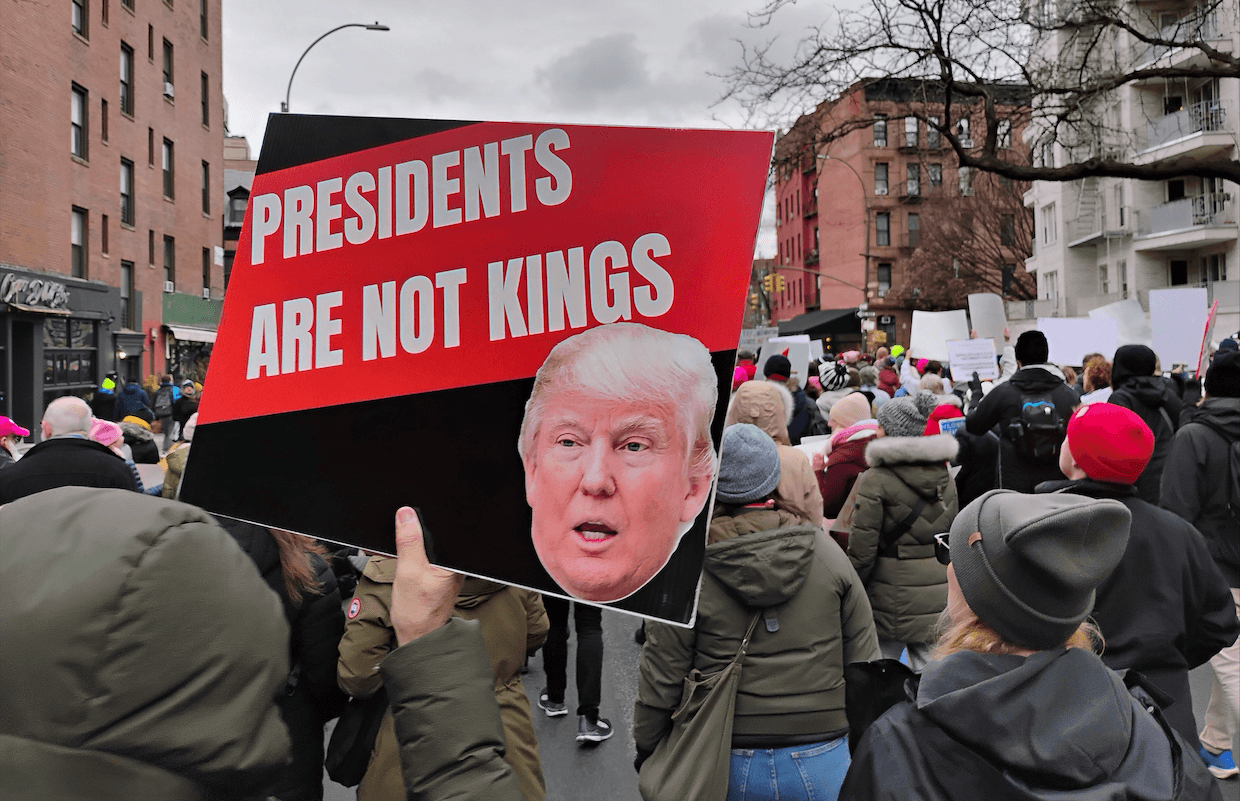
Professor Beauchamp, welcome! Let me begin with the broader meaning of the November 3 midterm elections: The November 3 midterms are taking place with an exceptionally narrow congressional balance, weak evaluations of the economy, and Donald Trump remaining unusually central to an election in which he is not himself on the ballot. Should we understand this primarily as a conventional midterm judgment on an incumbent administration, or as a broader referendum on Trumpism as a governing project and on the MAGA transformation of the Republican Party?
Assoc. Prof. Nick Beauchamp: It’s a little bit of both. In general, based on historical patterns, you would expect the incumbent party to lose ground simply because it’s a midterm election. When you add the poor state of the economy, particularly inflation, you would expect even greater difficulties for the incumbent party.
Then there is Trump’s own unpopularity, reflected in his low approval rating, which may or may not be separate from his role as an ideological figure within the MAGA movement.
So, whether we can identify an additional effect specifically attributable to Trumpism or MAGA, beyond all these other factors, is difficult to say. Given the broader circumstances, we would already expect the incumbent party to be struggling in a midterm election.
MAGA Is a Faction—but It Now Controls the Party
The Republican Party has changed markedly from the Reagan-era combination of free trade, limited government, and internationalist conservatism toward economic nationalism, immigration restriction, cultural conservatism, and a stronger conception of executive power. From your perspective as a scholar of ideology and political text, do you now see MAGA as one faction among several inside the Republican Party, or as the dominant ideological grammar through which most Republican candidates are compelled to communicate?
Assoc. Prof. Nick Beauchamp: Those two things don’t have to be incompatible; it can be both. A theme I’ll probably return to is that MAGA is a faction within the Republican Party. There are two broad factions within the party, the farther right and the center right, and similarly, there are two factions within the Democratic Party, the farther left and the center left.
At the moment, the Republican Party apparatus has shifted rightward because the farther-right faction represented by Trump has taken over, beginning with the 2016 primary. But there are still other factions within the Republican Party that continue to operate, even if they are, as you were saying, compelled to use the dominant grammar of the faction that now controls the party.
Trumpism and Trump Are Very Well Fused

The 2026 campaign has become highly personalized around Trump, with loyalty to him functioning as an important criterion of Republican identity. How should we analytically distinguish Trumpism as an ideology from Trumpism as a leader-centered political relationship? If the presidency, the movement, the party, and the leader increasingly become rhetorically fused, does this change the way voters process political information and partisan identity?
Assoc. Prof. Nick Beauchamp: That’s a hard question. The sense in which they are potentially more readily fused than some combinations of leader and ideology is that leaders and ideology, no matter what your ideology, tend to be fused together in various ways. Regardless of the ideology, many voters take their cues from leaders under any circumstance.
The sense in which it is more fused for the current Republican Party is that the ideology itself tends to be more authoritarian in its structure and therefore has a much more directly and explicitly privileged role for the leader. So, in that sense, the ideology and the leader are naturally compatible with each other, in the way that maybe there’s a little bit of tension between a strong leader and the more traditional liberal individualist ideology.
So, they’re definitely very well fused, and in part that’s just due to the compatibility between the two of them at this particular moment.
Left and Right Populism Both Emphasize Enemies
Right-wing populism under Trump often constructs several antagonisms simultaneously: ordinary Americans against elites, the nation against immigrants or cultural outsiders, and the elected president against institutions that constrain him. In your work on political language and stance detection, how important is this combination of moral judgment, identity, and blame in making populist messages especially effective?
Assoc. Prof. Nick Beauchamp: Maybe the answer is similar, in the sense that both left and right populism, in particular, tend to put a pretty strong emphasis on enemies. Often, the enemies are different versions of the elite, whether the elite are the rich or the cultural elite. Certainly, during a period of anti-establishment fervor right now, both can agree that the establishment, although they disagree about what the establishment is, is a locus for the enemy.
So, in a sense, that is one of the symmetries between the further left and the further right. I’m not somebody who believes that there are lots of symmetries between these two sides, but that’s certainly, structurally, one of these things.
It’s particularly, again, compatible with far-right populism because, along with authoritarianism, you tend to have the opposites—the enemy—that are structurally playing an important role in these things. So, yes, I’d say that having a distinct enemy, or indeed many different enemies, is really constitutive of the ideology and thus feeds into the engine of the far right in the US.
Loss of Institutional Trust Depends on What Institutions Do
The current debate over American democratic backsliding centers on executive power, attacks on institutional constraints, media freedom, immigration enforcement, political retaliation, and the legitimacy of opposition. But democratic erosion also depends on how citizens interpret those developments. To what extent is the durability of democratic norms now a problem of political communication—specifically, whether voters perceive courts, election officials, journalists, universities, and civil servants as legitimate referees or merely as partisan actors?
Assoc. Prof. Nick Beauchamp: That’s a tricky question. The literature on faith in democratic institutions is often portrayed as a matter of communication—showing that these institutions are unbiased, procedural rather than personal, and have these other characteristics. Often, that’s portrayed, as your question was implying, as a task of political communication.
Maybe I’m just an optimist. But my sense, at least in the US context, is that the loss of faith in institutions is driven primarily by what those institutions do, not by how they’re packaged. So, when the courts or the Department of Justice are seen to be operating in a fairly methodical and law-oriented way, it’s very hard to re-describe all of that as unjust. Conversely, when they’re acting in an unjust or personalized way, it’s hard to re-describe that as just.
Again, this is maybe just me being an optimist, but the fundamental problem with loss of faith in democratic institutions, at least maybe just on the left side, is due to how they’re actually operating, not a matter of communication. That doesn’t change the fact that there are other sources of loss of faith in democratic institutions, such as believing that there’s widespread fraud in mail-in voting that has no particular grounding in the truth and thus must be driven by political communication. Maybe there is a bit of an asymmetry there between the two.
A Democratic Congress Would Intensify Confrontation
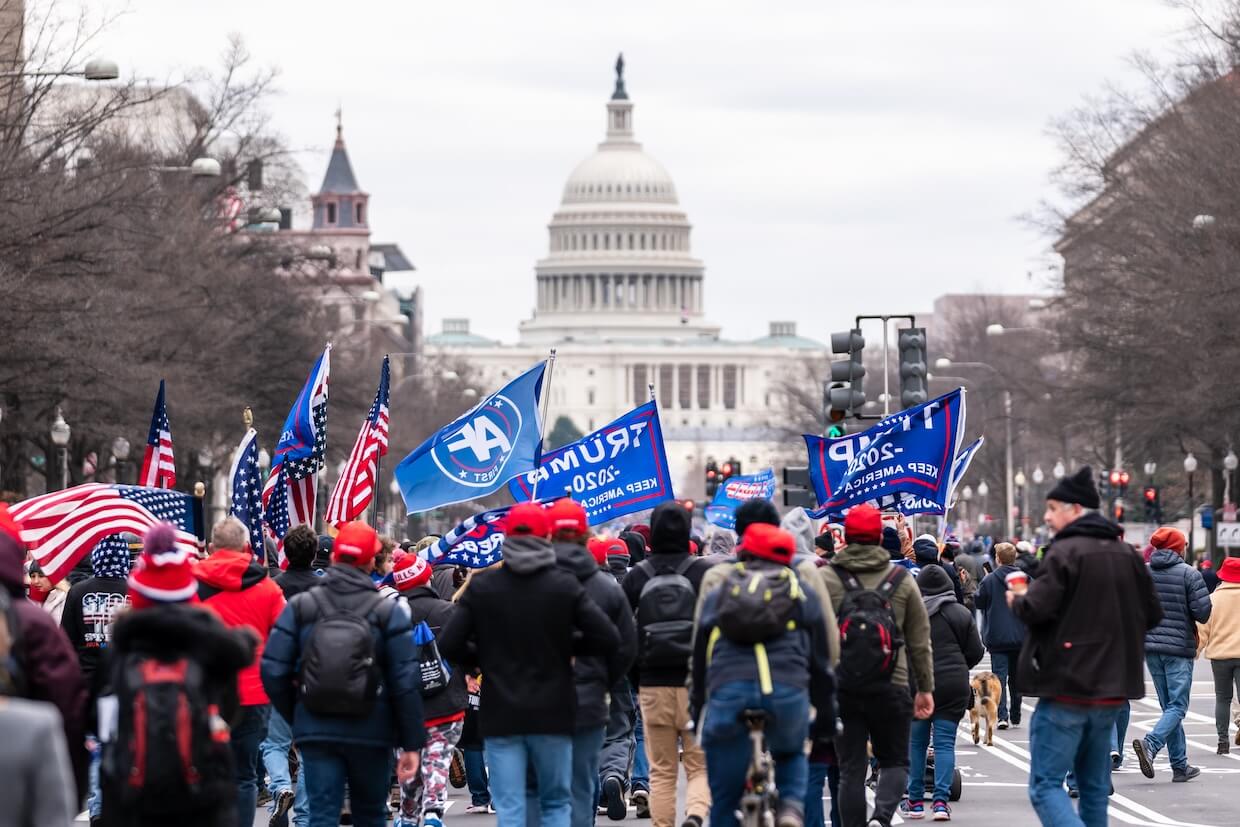
If Democrats were to secure majorities in both the House and the Senate after the midterms, how consequential could that be for the remainder of Trump’s presidency? Beyond blocking legislation, could a Democratic Congress meaningfully challenge Trumpism through oversight, investigations, subpoena power, appropriations, confirmation politics, and the defense of institutional autonomy? Or, given the intensity of partisan polarization and the growing tendency to portray institutional checks as illegitimate obstruction, might divided government simply shift the conflict from electoral competition toward an even more confrontational struggle between Congress and the executive?
Assoc. Prof. Nick Beauchamp: It certainly will shift the emphasis to an even more confrontational struggle. If the Democrats take the House in particular, surely there will be a bunch of investigations. If they take the Senate, there will be larger fights about confirmations.
Whether either of those things has direct effects on policies will depend on the bills they’re trying to put through. Trump, as we know, has not had a particularly strong emphasis on legislating. It’s part of their philosophy of executive power, and they much prefer to do things through executive orders and other direct effects. So, the ability of Democrats to block bills might not change things that much, but their ability to hold hearings, in particular, will give them an opportunity to raise the salience of all issues and to have an ongoing narrative.
The big challenge for them in that case will just be picking and choosing, because there are literally hundreds of different things that they could choose to investigate or prosecute, and there’s probably a dozen different reasons that they could justify at least having an impeachment vote.
So, the challenge for them, from a political communication perspective, from a PR perspective, is going to be: how do they sequence these things to keep the attention up? That’s not an easy task. As a media consultant or political consultant, I have no idea how they’re gonna do it, but, again, strategically, if they’re smart, they’ll figure out a way to organize the television narrative to keep things moving along for the next two years. That will certainly lead to much more confrontation if they’re successful in that strategy.
What Media Make Salient Has Large Political Effects
Your research shows that media bias can operate not only through partisan wording but through the strategic inclusion or omission of events, even in outlets with strong norms of objectivity. In the highly polarized 2026 campaign, is the more consequential form of media influence often not what outlets say, but which facts, actors, conflicts, or consequences they choose to make visible—or invisible—to their audiences?
Assoc. Prof. Nick Beauchamp: That’s been a perspective I’ve been exploring and testing in research for a number of years now, because there are all these norms, particularly in the major media, about non-bias and so forth. That shapes the way they describe what they’re talking about. But there are very few norms about what they choose to talk about or not, although people try to bring this up occasionally. As a result, they’re fairly unconstrained in what they choose to focus on.
In many ways, this has more latitude in intra-party disagreements. So, the New York Times or other arguably liberal media outlets can choose which things to report on, and those choices can have strong effects on intra-Democratic, intra-left disagreements. If they choose to focus, or if the party apparatus chooses to focus a lot, on what a particular YouTuber has been saying, whether various candidates have an opinion about this YouTuber, or, most recently in the Boston Globe, what happened in a very small bar in western Massachusetts, they might not be directly biased in terms of what they’re saying about it. But the fact that they focus on these particular things has strong effects on these intra-party arguments.
Similarly, they talk more or less about what’s going on in Gaza, or they talk more or less about Trump’s corruption. Or, to choose another example from the headlines just today, if Barry Weiss, who’s taken over the long-running 60 Minutes show, decides not so much to change the tone of the show but to change who’s being interviewed by the show, that, too, has lots of downstream effects on where the attention of viewers is, what kind of judgments they’re making, and what things they consider salient or not for the upcoming elections.
So, much more than changes in their language, it’s changes in what they’re choosing to report on. Those do have large effects, particularly in the primary season for the general election now and again comes around.
Compartmentalized News Is Not Necessarily a Problem
If news organizations on the left and right systematically emphasize different events, different moral stakes, and different political actors, are American voters effectively inhabiting parallel campaign realities? And does this make it harder for elections to function as shared democratic judgments, because citizens may no longer be evaluating the same set of political facts?
Assoc. Prof. Nick Beauchamp: This is where the normative questions diverge from the descriptive questions. Most of the research I’ve done has been empirical and quantitative, looking at these selections and the effects of the selections. Then there’s a normative question: what do we think about that? What should be done about that? That one is more of a subjective perspective.
My perspective is that the selection effects are, in some ways, inevitable—you have to choose, because there’s a finite amount of space and a finite amount of time to report on things. The main problem is not so much the choice, but that the choices themselves are hidden from the viewers. They’re not made explicit as part of the editorial or reporting process.
So, for me, it may not be a problem if there’s a bunch of compartmentalized news organizations that have different foci, as long as the news consumers understand how that works and make their choices in an informed way. This is where I diverge a little bit from some of the people in the polarization world who think that every news organization should cover all the articles in an equally unbiased way.
I’m very cognizant of the fact that this marketplace of ideas does not necessarily work very well in practice, but it still seems the best of a number of incomplete or insufficient solutions here. So, yes, there is this tendency towards bubbles, as they call it, but it’s better to be transparent about the bubbles than to try to erase them altogether.
Authoritarian Ideology Pairs Leaders with Enemies
Immigration remains one of the most durable MAGA issues, combining border control, sovereignty, crime, demographic anxiety, and national identity. From the standpoint of political communication, why is the language of “invasion,” threat, or loss of control so effective? Does anti-immigration politics work primarily because of policy concerns, or because it provides a morally and emotionally simplified narrative that links cultural change to political grievance?
Assoc. Prof. Nick Beauchamp: This gets back to your earlier point about having enemies. We know that, structurally, part of authoritarian ideology is to have an authority figure that you revere and, on the opposite side, a series of enemies that are challenging the structure or have already ruined the structure that needs to be reclaimed from them.
The anti-immigration politics of Trump, in particular, fits into that structure pretty well. But structurally, it doesn’t have to be anti-immigration. It can, in fact, be trans people right now, and it has historically been Black people and various other minority groups and so forth. All of those have slightly different ways of framing the enemy problem, but structurally, they’re similar.
Immigration is certainly well suited to it, and we see that in quite a lot of far-right European parties and so forth. But there’s nothing necessarily about immigration per se that doesn’t function structurally similarly to other out-groups like trans people, Black people, and other minority groups that are threatening the power structure that authoritarians prefer.
Economic Grievances May Be More Fixable Than Identity-Based Enemies
The current US landscape contains two different populist projects. MAGA tends to define “the people” in national-cultural terms against elites, immigrants, globalists, and liberal institutions, while democratic-socialist actors tend to define “the people” socioeconomically—as workers, renters, debtors, and consumers confronting billionaires, corporations, and concentrated wealth. From your perspective, how different are these two populisms in their communicative structure, emotional appeal, and capacity to build durable coalitions?
Assoc. Prof. Nick Beauchamp: That again gets back to the enemy structure, where both of them have things that they’re opposing, both of them have things that they consider to be responsible for the problems here. But, of course, they target different things.
In terms of their capacity to build durable coalitions, both of them, obviously, historically, are quite durable as ideologies, in part because neither of them manages to solve the purported problem that they point to.
Going further in terms of their capacities, one would have to get into the actual truth of the matter: whether a series of policies that progressively restrict immigrants, liberal institutions, and so forth would feed back on itself and produce a more—Jonathan Bein—secure, happy, and wealthy world, or whether that sequence of policy pursuits would, in fact, work counter to that.
Similarly, you would have to answer whether an ideology that’s directed towards supporting debtors and against billionaires would produce a better or wealthier society. My version is that I tend to lean towards the latter, and so, in a sense, one might be more durable than the other. Although perhaps it’s not durable in the sense that one of these sets of things—the economic ones—are potentially fixable, whereas the existence of immigrants, liberal institutions, minority groups, and so forth is not something that is likely to be fixed, absent some extreme set of policies.
MAGA and Democratic Socialism Are Both Party Factions
One of the most striking asymmetries of the current party system is that MAGA has become a governing project and a dominant force inside the Republican Party, whereas democratic socialism remains influential but contested within a much broader Democratic coalition. Is this principally an organizational difference, a media and communication difference, or a difference in how effectively each movement has translated grievance into a simple and emotionally resonant political identity?
Assoc. Prof. Nick Beauchamp: As with all your questions, it’s a little bit of all these things. What I’m coming back to repeatedly is that these are both factions within these parties. Because of our presidential system, because of our first-past-the-post, winner-take-all electoral system, we have two parties, and so the structure, essentially, of our political system is a hierarchical tree, where you have two parties here. Then, within each of the parties, you have the more extreme and the more centrist faction, and all those factions continue to exist, even with Trump and so forth.
The importance of that is to be cognizant of how important accidents and contingency are. Like, Trump almost lost the primary in 2016, and Sanders almost won the primary in 2016. If either of those things had happened, we’d be living in a very different world, because a different faction would have taken over each of those parties under each of those circumstances.
And we’d have a world in which we’d be talking about Sandersism or whatever; we’d be talking about that versus center-right Republicans. Had political opinion shifted by only 10 points or so in these primaries 10 years ago, maybe the current faction that’s dominating in the Democratic Party, which is the center-left faction, might be more durable than the center-right faction was. The center-right faction obviously had lots of concentrated wealth, but didn’t have quite as much cultural clout, whereas the Democratic faction that currently runs the party has both a lot of wealth and a lot of cultural capital.
So, it may be that we’ll see this recurrent pairing between the furthest, most extreme faction on the right and the centrist faction on the left. But again, a lot of this really depends on the contingency of national presidential politics and who runs and who wins in a couple of years.
The Far Left Could Have a MAGA-Sized Effect Without Majority Support
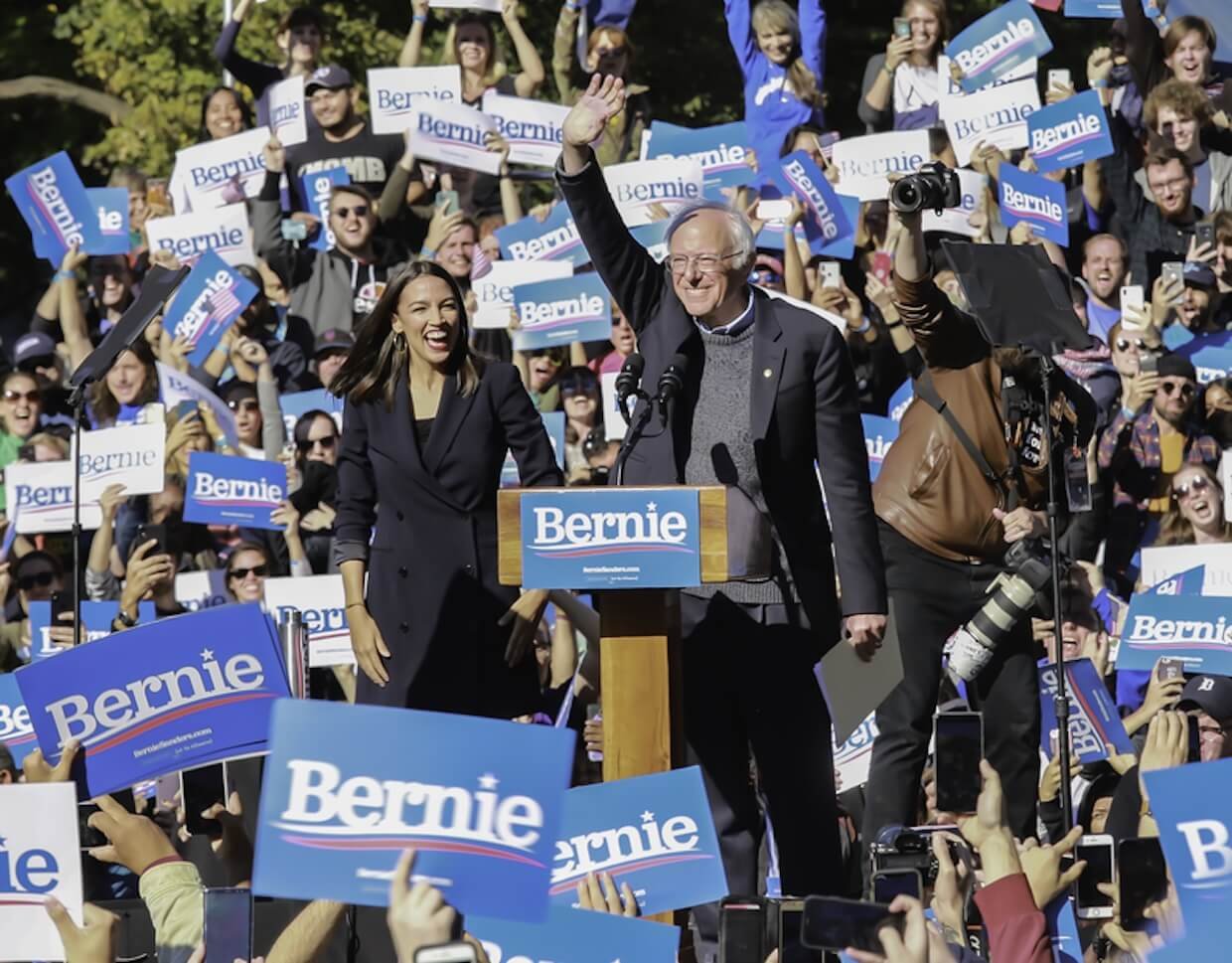
The democratic-socialist current has gained visibility through Bernie Sanders, Alexandria Ocasio-Cortez, DSA-backed candidates, and a younger activist constituency, but its strongest support remains concentrated in metropolitan areas and particular primary electorates. Do you see democratic socialism developing into a genuinely national current inside the Democratic Party, or is its ideological and geographic appeal still too uneven to reshape the party in the way MAGA reshaped the GOP?
Assoc. Prof. Nick Beauchamp: Maybe there, too, I’d push back a little bit on the degree to which MAGA has reshaped the GOP. It certainly reshaped the GOP in the sense of the party itself, the candidates, and what the candidates are doing. But it’s still the case that, at least among voters, and probably even among the actual representatives, if they were able to honestly respond to surveys or questions, there’s the MAGA further-right faction and then the center-right faction. Those two things still exist.
By analogy, you could have very much the same thing happening on the left, where the progressive or maybe DSA faction, if that’s what it ends up being called, wins the primaries, takes over the Democratic Party, the Democratic Party wins the presidency, and takes over the reins of the government. Structurally, you’d have something very similar, where it would seem that the far left has become dominant. But in terms of the actual opinions of the actual people, it would be analogous to what’s happened with MAGA, where, if you actually look at the surveys that ask people what their views are, probably only half of Republicans and therefore only maybe 1/6 or so of the actual country shares these core, strong far-right beliefs.
So, there’s a difference between how much the beliefs have spread and how much the ideology or the party has taken over. In that sense, even if the DSA couldn’t, or the far left couldn’t, extend beyond their core of urban, educated, young, left-leaning liberals, they could still have similar effects nationally.
That said, there’s also a pathway towards an even broader populist movement where this is what they want, where they appeal to economically distressed rural or suburban voters that aren’t the traditional far left of the Democratic Party. That’s certainly possible, but it’s not necessary for having a MAGA-sized effect.
People Can Still Learn in a Polarized World
Your work on online political conversations found that people often engage across wide ideological divides and that negative or unpleasant exchanges can sustain participation, while extended interaction can sometimes bridge differences rather than simply reinforce information bubbles. Does that finding still give grounds for optimism in the current environment, or have social-media incentives become so dominated by outrage, identity signaling, and algorithmic amplification that cross-partisan argument now more often deepens polarization than reduces it?
Assoc. Prof. Nick Beauchamp: The nuance to emphasize there, in terms of my own research, is that I’ve looked at long-term changes in opinion—radicalization, shifts in people’s positions, or at least how they talk on social media. But one of the things we’ve tended to find is that, while there can be large shifts over time, these tend to occur across smaller differences rather than across the partisan gap between the two sides.
You can still have long-term shifts, long-term changes, long-term evolution, and, if you want to be optimistic, long-term learning, without necessarily having this huge conversation across gigantic political divides. There’s this tendency to lose faith in the deliberative system because the far left and the far right can’t talk to each other, but that doesn’t necessarily have to be the case for people to move, change, and learn more as they go along.
Maybe across the exact middle, there’s going to be a problem because, as people become more polarized or learn more about politics, that gap is large. But at the same time, what we’ve learned is that this unidimensional ideological spectrum doesn’t really capture the way actual people’s opinions work. Actual moderates, or even liberals or conservatives, have a mixture of different policy opinions. As a result, you can have people talking to people about specific policies where they don’t necessarily disagree very much, even across apparently wide divides in their overall voting politics.
So, all of this is, in some ways, a more optimistic view that, even in a heavily polarized world, you can still have changes in people’s views and learning, and become more knowledgeable about politics through these smaller, more gradual changes in conversations.
AI Is Not Fundamentally Different from Existing Campaign Practices
Your recent work on personalized large language models shows how systems can adapt to users’ histories, preferences, and evolving beliefs. In an electoral context, does this create the possibility of a qualitatively new form of political persuasion—where campaigns no longer send one message to millions of voters but generate millions of individually tailored messages, each calibrated to a person’s ideological priors, emotional triggers, and political history? Can AI make political persuasion radically more personalized?
Assoc. Prof. Nick Beauchamp: Now we’ve moved on to the AI side of things. Often, my perspective there is that, despite what the discourse says, at least at the moment, what AI is doing is not fundamentally different from what people are already doing.
The move towards personalized persuasion, micro-targeting, and messaging has been happening in politics for decades now. The dream has always been that, even if the blanket television advertisement doesn’t have much of an effect, maybe if we find just the right message for just the right people by measuring their views very precisely and delivering just the right thing to each door, we can get much more leverage than with these blanket approaches.
In my reading of the research and the evidence, this may be true in a laboratory setting, but in the real world, the overall effects are fairly small in terms of persuasion. The additional effects of personalized persuasion are even smaller; they’re very uncertain outside of the laboratory, even inside the laboratory.
There’s an empirical limit on just how well this can work, due to the inherent noisiness of the human mind. Then the question is: if we have the ability to ramp this up through AI, where we can call up each individual person and have a long conversation with each of them on the telephone, with an AI on the other side, can we get some miraculous additional boost?
The evidence we already have suggests that there are inherent limitations on just how far that can go and that, even though it can probably increase the amount of harassment we all get from campaigns, it might not really change the discourse, particularly when both sides have the capacity to use the same tools.
Personalized Messages Are Not Necessarily Bad for Accountability
If AI-generated political communication becomes increasingly personalized, what happens to democratic accountability? A candidate might present one version of immigration, another of taxation, and another of foreign policy to different voters without those messages ever entering a common public space. Could AI therefore move campaigning from micro-targeting toward something closer to individualized ideological worlds—and make it harder for journalists, opponents, or voters to hold politicians accountable for a coherent public position?
Assoc. Prof. Nick Beauchamp: That, too, is a similar type of question, where we’ve had a lot of these effects already operating before AI. Obviously, within the world of social media studies, there has been a huge amount of attention to bubbles. This is not necessarily about political campaigns, or just about algorithms or other types of things where everybody’s getting their own world, as it were.
What the research suggests is that, again, here too, there are inherent limitations on this: the idea that somebody would be completely in a bubble and unaware of all the other things going on out there just is not the way social media or human interactions actually work.
They could certainly try to make it more targeted to emphasize certain things that matter to each voter. But I don’t think that would necessarily entail voters losing knowledge about other things outside of their world. Without that loss, it’s not necessarily normatively bad if individuals learn more about the things they care more about.
So, again, this is AI aside, just saying that it’s not necessarily the case that personalized messages or campaigns are bad, because maybe a climate-sensitive moderate who’s trying to choose between Democrats and Republicans could really benefit from learning more about the climate policies of the two candidates. As long as that doesn’t exclude their knowledge of the other things, it’s not necessarily bad for democratic accountability, public knowledge, voting, or that sort of thing.
Isolationism Ends When American Dominance Is Challenged
The Iran war has exposed a significant tension within Trumpism: one strand of MAGA rejects “endless wars,” another favors overwhelming force when US power or prestige is challenged, while traditional Republican hawks remain influential. Does this suggest that “America First” is less a coherent foreign-policy doctrine than a flexible political narrative? And from a communication perspective, how can the same movement successfully frame both non-interventionism and military escalation as expressions of the same nationalist principle? How should we understand the tension between “America First” and military intervention?
Assoc. Prof. Nick Beauchamp: I don’t know. I agree that that’s a contradiction. I’m not a campaign strategist for the right, so I don’t really know how to sell those two things. I guess one would try to understand them from the framework of the authoritarian mindset, where your ideal is a world of uncontested American hegemony, where there are no wars and there’s no intervention. They leave us alone in the sense that America is not being attacked. But we’re not being left alone in the sense that America still has economic domination and military bases around the world. There’s no effort to rein those things in prior to any of these wars starting.
On the international stage, maybe the position of America is closer to the authoritarian ideal than it is domestically, in the sense that America’s dominance in the world has been fairly unique, or at least there have only been a few countries in all of human history that have been that dominant. So, it’s closer to what their utopia would already be.
In a sense, they can speak about America First and isolationism in the context of that utopia, but as soon as there’s any challenge to that utopia, where Iran or the Palestinians or other types of groups are pushing back against it, then the traditional structure of suppressing the enemies comes back.
Those two poles go together. In the US context, the story is that the enemies have largely ruined the greatness of America, and it needs to be reclaimed. Whereas in the external context, it’s more like the greatness of America is already in place to some degree, and these things just need to be suppressed.
The Anti-Establishment Mood Will Continue to Shape US Politics
Finally, looking beyond the midterms, what indicators would you watch to judge the future direction of American politics: whether MAGA can survive Trump as a durable ideological movement; whether democratic socialism can move from insurgency toward broader influence inside the Democratic Party; whether institutional trust continues to erode; and whether AI-driven political communication further fragments the public sphere? In other words, are we moving toward a durable system of competing populisms operating inside increasingly personalized and technologically segmented information environments—or is there still a plausible route back toward a more shared, deliberative democratic politics?
Assoc. Prof. Nick Beauchamp: There are six big questions. Maybe working backwards, shared deliberative democratic politics was largely a fiction, or, if it existed, it was a brief product of a very limited television media environment in the 50s, 60s, and 70s. So, I don’t think there’s a route back to this, if it ever existed. Nor do I normally think that we necessarily want such a route as believers in democracy and so forth.
A fragmented media landscape with personalized news, personalized campaigns, and so forth is compatible with deliberation, as long as one’s able to explore this space freely and is not completely unaware of the things going on outside of it. That said, there are much more serious problems with democratic institutions. A lot really turns on the contingency of power in the US or even in the world.
Presumably, in 2028, some form of MAGA Republican, whether it’s J.D. Vance, Trump again, or some other figure, will probably be representing the Republican Party. So, it’s hard for me to believe that, absent some giant catastrophe, the center-right faction, which I still think exists, is gonna succeed in taking over the party. Usually, that happens after the party’s in the wilderness for a while, when you have this change of power.
So, the bigger question is going to be whether that MAGA candidate, whoever they are, is running against a progressive-left candidate or a center-left candidate. In terms of gaming out the election, if it’s a center-left candidate—and there are many more strong center-left candidates than there are progressive candidates, just in terms of polling at the moment—it’s gonna be a structurally challenging approach for the Democrats, because they’re going to be working within what I presume will still be an anti-incumbent, anti-establishment, pro-populist mood, both on the left and the right, and they’ll be running a more centrist establishment figure.
That figure will try to present themself as a figure of change, often probably using strong anti-MAGA or anti-Trump language and so forth. But they won’t necessarily be proposing anti-establishment policies in many cases. So, that’s going to create an interesting structure where, as they are in various primaries, the center left will be adopting many of the tones of the anti-establishment, but not many of the policies, while running against a far-right candidate who will presumably still be running on these very anti-establishment policies, but also will be running as the party that has been running the country for four years.
So, in that case, it’ll be an interesting mix of anti-establishment policies and pro-establishment identity or messaging on both sides. If, on the other hand, the contingency is such that a DSA or far-left candidate wins on the Democratic side, then we’d have a very different debate happening here, and the possibility of a very different set of outcomes.
So, again, unfortunately for scientists who like to study regularities rather than accidents, a lot of these things really depend on the accident of what’s going to happen. The only thing we can be fairly confident of is that I expect this anti-establishment mood will continue and will be shaping the environment in which these figures are contesting things in the near future.