

“Anti-gender discourses are very interlinked and interconnected; we see these floating narratives repeated across countries like Latvia, Poland, and Russia,” says Dr. Monika de Silva. She explains that populist actors strategically exploit linguistic ambiguity around concepts such as gender, transforming technical legal terms into polarizing political symbols. “Language is never neutral… this linguistic openness is used to argue that because gender replaces the word sex, we can no longer talk about men and women,” she notes. The Istanbul Convention—intended to prevent violence against women—has thus been reframed as an LGBTQ+ threat or “radical feminist project.” Yet Dr. de Silva stresses the importance of civic resistance: Latvia’s mass protests “undoubtedly shaped” the president’s decision to return the withdrawal bill to parliament.
Interview by Selcuk Gultasli
In recent weeks, Latvia has become a focal point in Europe’s ongoing struggle over gender equality, human rights, and democratic resilience. On October 31, 2025, the Saeima (Latvian Parliament) voted 56–32 to withdraw from the Council of Europe’s Istanbul Convention—only a year after ratifying the treaty designed to prevent and combat violence against women. The move relied heavily on claims that the Convention promotes “radical feminism” and “gender ideology,” echoing narratives with well-documented transnational origins. President Edgars Rinkēvičs soon returned the bill to parliament for reconsideration, warning that overturning ratification within a single legislative term would send “a contradictory message… to Latvian society and Latvia’s allies internationally.” He urged postponement until after upcoming elections, noting that Latvia risked becoming the first EU member state to renounce a human-rights treaty.
The backlash triggered the country’s largest civic protests since the 1990s. On November 6, 2025, more than 10,000 demonstrators gathered in Riga under the slogan “Let’s Protect Mother Latvia,” signaling a groundswell of civic resistance. At stake is not only the institutional integrity of gender-equality policy but also the credibility of Latvia’s constitutional and international commitments, especially given that the EU itself acceded to the Convention in 2023, making certain provisions binding regardless of national withdrawal.
It is against this turbulent backdrop that the European Center for the Study of Populism (ECPS) spoke with Dr. Monika de Silva, a political scientist at the University of Gothenburg. Her research, situated at the intersection of international relations and EU studies, examines how contested normative frameworks travel across borders. Her 2025 doctoral dissertation, “‘Gender Wars’ in Europe: Diplomatic Practice under Polarized Conditions,” traces how bilateral diplomacy and Council of the EU negotiations have been reshaped by conflicts over gender equality and LGBTQ+ rights. She is also affiliated with the Gender and Diplomacy project (GenDip) and the Centre for European Research (CERGU).
In the interview, Dr. de Silva argues that anti-gender discourse is best understood as a transnationally circulating narrative rather than merely a domestic reaction: “Anti-gender discourses are very interlinked and interconnected… we see manifestations of that as floating narratives that are very similar, whether we look at Latvia, Poland or Russia, etc.”
She identifies both supply and demand factors driving the spread of “gender ideology” rhetoric across Europe, noting that populist radical right actors strategically translate technical legal language into ideologically charged frames, exploiting linguistic ambiguity: “Language is never neutral… this linguistic openness is definitely used to advance such narratives.”
Dr. de Silva further highlights how withdrawal debates are reframing the Istanbul Convention away from its core purpose—preventing violence against women—toward narratives that depict it as an LGBTQ+ threat or “radical feminist project.” These interpretations, she warns, are not new; similar tropes have circulated across Europe for nearly a decade.
Yet her analysis also highlights agents of democratic resilience. Civil society mobilization, she observes, has already influenced decision-making: “The president… decided to return the law to parliament, and I am sure that seeing the largest protests in Latvia helped shape this decision.”
Finally, she issues a clear warning about governance consequences. Withdrawal would remove Latvia from GREVIO’s monitoring regime, generating critical transparency and implementation gaps: “A state not part of the Convention would not report to GREVIO… whatever it does is therefore less transparent, especially internationally.”
This interview thus offers rich insight into how legal, discursive, and geopolitical forces converge to shape contemporary anti-gender mobilization—and how democratic institutions and civil society may yet respond.
Here is the edited transcript of our interview with Dr. Monika de Silva, slightly revised for clarity and flow.
Latvia’s Withdrawal from the Istanbul Convention Signals Deep Democratic Trouble
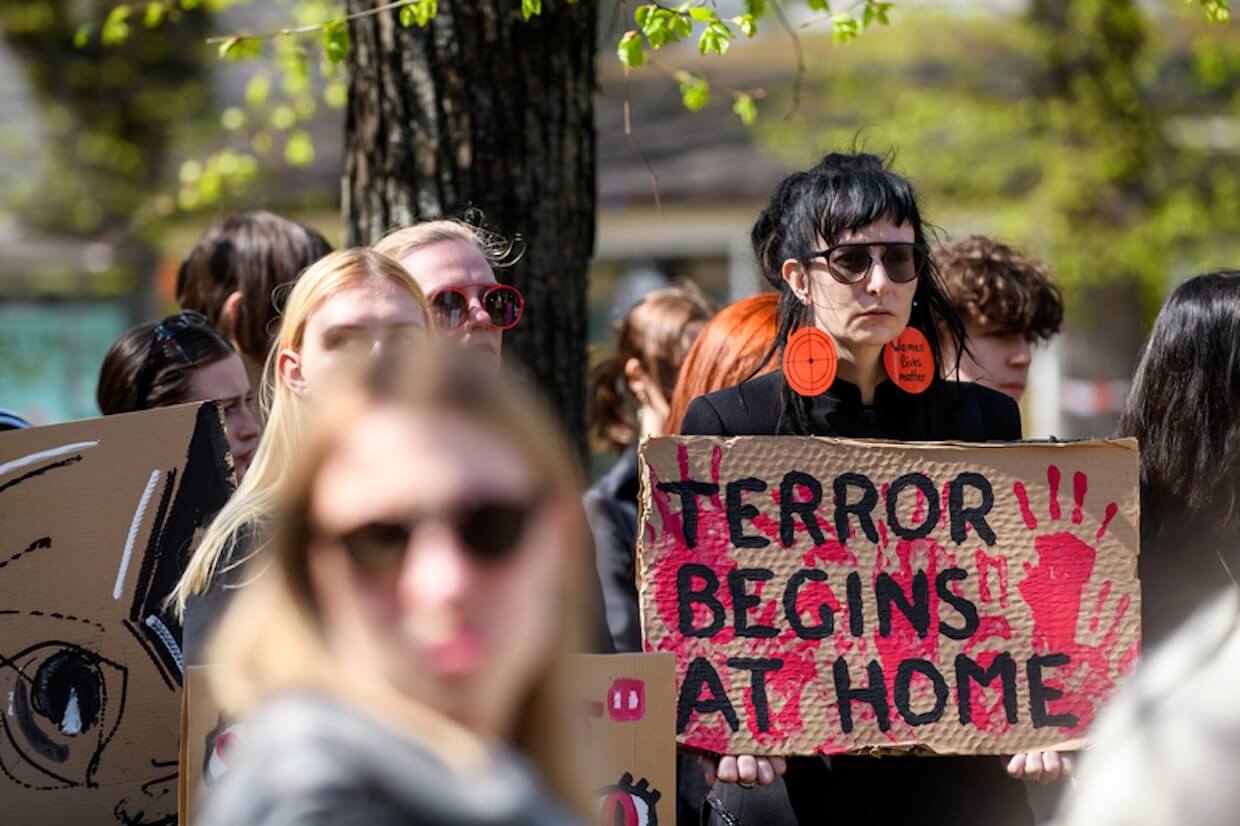
Dr. Monica de Silva, thank you very much for joining our interview series. Let me start right away with the first question: Latvia became the first EU state to vote to withdraw from the Istanbul Convention—just a year after ratifying it. The move, driven by the right-wing Latvia First party and backed by a governing coalition partner, relied on claims that the treaty promotes “gender ideology,” echoing Kremlin-style narratives. It triggered Latvia’s largest civic protests since the 1990s, despite the country having the highest femicide rate in Europe; President Edgars Rinkēvičs has since sent the bill back to parliament for review. How do you interpret this backlash—primarily as a cyclical conservative reaction, a structural anti-gender countermovement, or a strategic tool of PRR mobilization?
Dr. Monika de Silva: Of course, the fact that populist radical right parties like Latvia First mobilized around the Istanbul Convention and now seek to withdraw from it is not surprising; it is a continued strategy of populist radical right parties. What is different—and concerning—in this case is that a conservative party, the Union of Farmers and Greens, has joined these radical right actors in pursuing withdrawal from the Convention.
The Union has always had reservations about the Convention, which is typical not only of radical or far-right parties but also of more mainstream conservative parties. However, what distinguishes this situation is that the Union is part of the government, and, as such, agreed to a coalition deal in which the Latvian government committed to ratifying the Istanbul Convention. Now they are backing away from a commitment they made to the Latvian public and to their coalition partners, which is deeply troubling for the state of our democracy.
It has been a very long process from Latvia’s signing of the Istanbul Convention to its ratification just last year. During this period, we saw extensive democratic debate in parliament, as well as a case before the Constitutional Court, which confirmed that the Convention complies with the Latvian Constitution. Upon ratification, Latvia also adopted an interpretive declaration affirming that it would not replace the word “sex” with “gender” in national legislation, and so on. Many voices participated in this process, and concerns—for example, about the legal implications of the Convention—were duly assessed.
It is therefore very worrying that, at this stage, we still face efforts to retract this commitment. This raises questions not only about Latvia’s commitment to its own citizens—particularly women—but also to other states that are parties to the Convention.
The Supply and Demand of Anti-Gender Politics in Europe
In your view, what explains the political salience of “gender ideology” narratives in opposition to the Istanbul Convention across such varied contexts as Latvia, Bulgaria, Turkey, and Hungary?
Dr. Monika de Silva: I like to think about the gender ideology narrative as having a supply side and a demand side. On the supply side, we have in all of these countries very strong populist radical right parties, but also other political movements that are very effective at mobilizing against the Convention and transnationalizing this issue. So this is the supply side of the narrative.
But what is even more interesting is the demand side. This strategy would not work without the resonance of this argument among a certain part of the population. What is similar in all of these countries—you mentioned Latvia, Bulgaria, Turkey, Hungary—is that they all participate in European integration but are not at the core of this project. They are not Western European countries; they are Central and Eastern European countries, or even countries on the boundary between Europe and other continents.
There are also many interlinkages between European identity and gender equality norms. We see that adopting certain norms or laws gives states a certain status within European integration. The case of Turkey is illustrative. The Istanbul Convention is named the Istanbul Convention for a reason. It was adopted in Turkey, and Turkey gained a lot of status points by hosting the conference; it was able to brand itself as European, liberal, etc.
But let’s remember that this was over 10-15 years ago, and now we live in a different moment. Today, Turkey’s accession to the European Union is much less likely. We also live in a moment where the European Union does not have as much power as it used to. So, this linkage between Europeanness and gender equality does not work as well as it once did, and it creates backlash.
Gender equality norms are very dear to people; they are part of people’s social identity, whether on the left or on the right. So, it is not something that can be easily changed. People also do not want to feel that something is being imposed on them, so it is very easy to mobilize against this narrative in these countries—arguing that this is Western Europe, or the EU, or the Council of Europe, etc., or the elites forcing them to change their core norms.
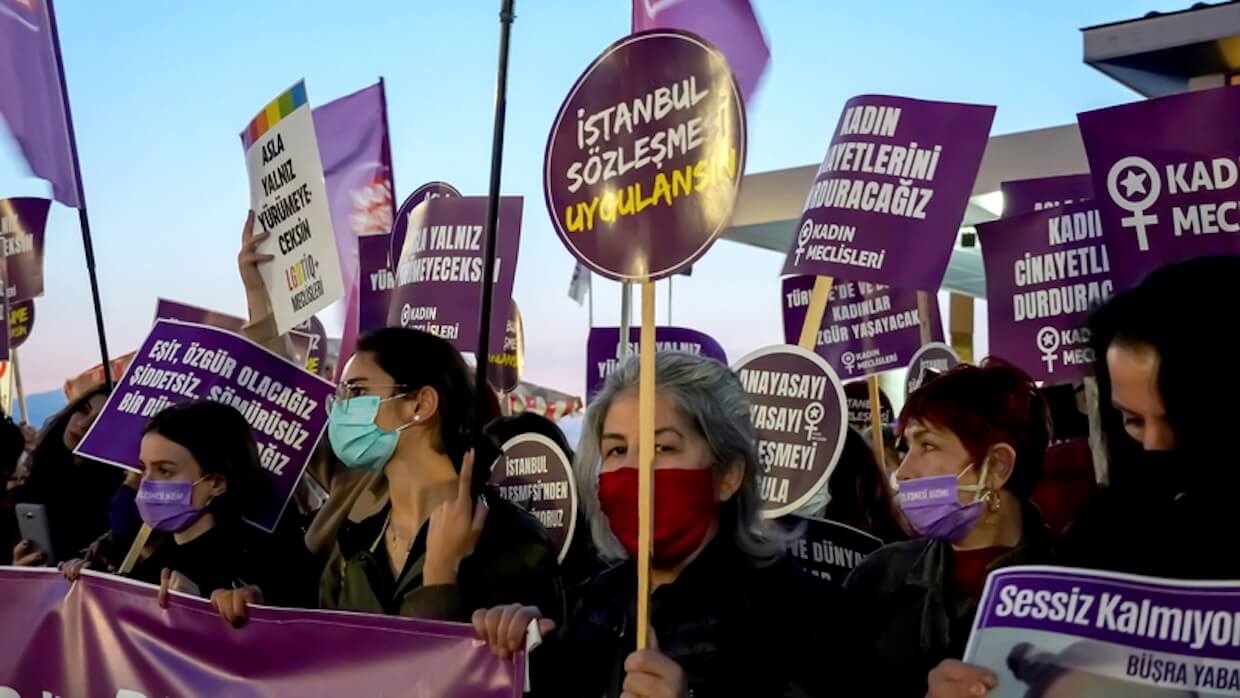
Populism, Geopolitics, and the Cross-Border Spread of Gender Backlash
To what extent is anti-gender discourse a domestic phenomenon, and to what extent is it borrowing transnational scripts, including Kremlin-linked rhetoric that frames the Convention as destroying “traditional family values”?
Dr. Monika de Silva: Of course, anti-gender discourses are very interlinked and interconnected, and we see manifestations of that as floating narratives that are very similar, whether we look at Latvia, Poland or Russia.
In the Latvian case, for example, I have not seen any new tropes in the anti-gender discourse, even though we have had this conversation since 2015–2016. So now, almost ten years on, there is nothing new. The Istanbul Convention is presented as a threat to the family, sneaking in certain gender-equality or feminist or LGBT norms that states did not initially think were in the Convention, or that it will make states allow for non-binarity in their legal systems, or make more lenient laws regarding transgender rights.
We see this over and over again, across time and space. What is the reason for that? To some extent, it is coordinated. We have coalitions of states that cooperate with each other in venues like the United Nations—traditional-values coalitions and so on—and they exchange and build their discourses together. We also have non-state, transnational organizations like the World Congress of Families that do this.
Regarding the link between these narratives and Russia or the Kremlin: we definitely see why there would be an incentive for Russia to stir up the conversation around the Istanbul Convention in Latvia and other Baltic states. This creates a lot of mistrust between countries like Latvia and other Western European countries and the EU, especially in a situation where we have this aggression on the eastern border of Europe. This is a problem that can steer the fate of this country one way or another.
We have elections in Latvia next year, and the Istanbul Convention will surely be a significant part of the campaigns. Hopefully, it will not steer the political scene in this country toward a pro-Russian direction. I hope we will see well-informed, democratic debate on the Istanbul Convention. But of course, since this is such a polarizing topic, there are certain risks involved.
Populist Actors Exploit Linguistic Ambiguity in EU Gender Debates
How do PRR actors transform technical legal language into ideologically charged rhetoric, especially around contested terms like “gender,” which your work has shown can be strategically mistranslated or emptied of meaning in EU negotiation spaces?
Dr. Monika de Silva: The discussion around the term “gender” shows us that language is never neutral. It is always politically charged, whether it is adopted as technical or legal. In the case I studied, several EU member states at some point decided that they did not want to use the word “gender” in EU-adopted documents. This, of course, stirred a lot of contestations around what gender even means for the EU, and so on. The fact is that what gender means, or what gender equality means for the EU, has never been a settled issue.
As you know, all EU languages have equal legal value. In different languages, gender equality is translated basically as equality between men and women. This had not been an issue for a long time because it did not spark as much discussion as it does now, with many states being very attached to the idea that gender should include more than men and women, and some countries being attached to the idea that it should not.
So, there is this discursive openness in what gender means for the EU. It existed before the so-called gender-language crisis. Populist parties, populist governments, are very skilled at using this discursive openness. Because if we do not know what the exact boundaries of a certain word are—and this is not atypical in political discourse—it is very easy to argue that this word means something essentially ridiculous. For example, because gender replaces the word sex, we can no longer talk about men and women. This is, of course, not what the word “gender” means, but this linguistic openness is definitely used to advance such narratives.
Why Some States Avoid Ratification: The Limits of EU Influence

In your research, you explore “language bargaining” and diplomatic-legal talk. How have these dynamics influenced EU-level negotiations on the Istanbul Convention, and how did they enable states such as Hungary or Slovakia to avoid ratification?
Dr. Monika de Silva: Definitions and decisions in the EU are always outcomes of negotiations. There are diplomacy and negotiation involved in reaching a jointly acceptable outcome. That, of course, is a good, healthy thing if we have parties that are not always expecting to arrive at their maximalist outcome. This is not possible in an organization with 27 member states.
The ability to make these compromises and negotiate was something that enabled the European Union to accede to the Istanbul Convention, even though several member states decided that they themselves would not accede to the Convention. But they accepted the fact that, within a legitimate process and based on the rule of law—with also a case in the Court of Justice of the EU confirming that the EU can accede to the Istanbul Convention—yes, sometimes you win, sometimes you lose.
So, there is very little that the EU can do to make other member states ratify the Convention. This is their sovereign decision; they are not obliged to ratify the Convention under EU law. Even given the narratives that we talked about—the imposition from the EU and so on—this may actually have a reverse effect, a backlash against this sort of narrative of imposition.
So, I think the way to go is to maintain a culture of compromise, which assures these governments and their populations that this is the way we work in the EU, including in cases like the Istanbul Convention.
How a Women’s Protection Treaty Became a Culture-War Symbol
Could you reflect on how the Istanbul Convention became symbolically detached from its core purpose—preventing violence against women—and reframed instead as an LGBTQ+ threat or “radical feminist” project?
Dr. Monika de Silva: Of course, this is very unfortunate—what we see is that a convention intended to protect women from violence, gender-based violence, and protect domestic-violence victims, not only women, suddenly becomes a token in political discussions.
Even if some political movements would like the Istanbul Convention to stand for LGBT rights and feminist projects to a larger extent, it does not do so, as populist parties would like us to believe. That is why it is very important to counter misinformation around the Istanbul Convention and always go back to what it actually stands for and what it actually says. This is how movements across Europe will succeed in ensuring that the Convention is a successful tool—by returning to its true purpose, which is largely consensual. If we look at public opinion across Europe, most people agree that violence against women is not something they want to see in their societies.
We may have different ideas about the scope of the problem and how to tackle it, but returning to this core purpose is something that can mobilize support for the Convention. Bringing the Convention back to its purpose and localizing that purpose—not as something imposed or defined by other countries on Latvia, for example, but as something important within Latvian society itself—is very important.
We see civil society learning to do that—to focus on these two things. When we look at the protests in Latvia, I have seen a lot of Latvian flags; the protest itself has this motto of protecting Mother Latvia. So, it gives you the idea that this is about the citizens and population of Latvia. It is not about the EU; it is not about how we look in the eyes of EU bureaucrats. This is a local issue.
People Power Matters: Protest as a Deterrent to Anti-Gender Politics
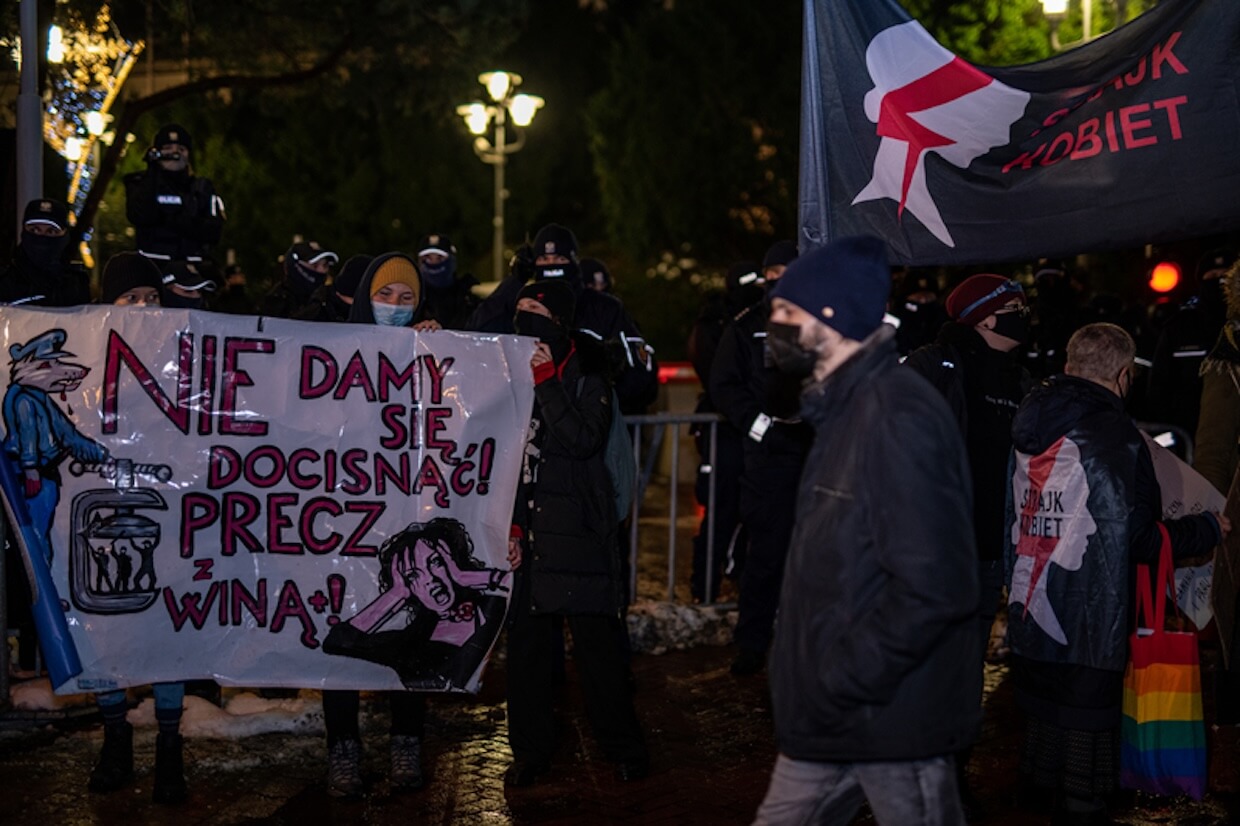
What role does civil society mobilization play against gender backlash? Latvia has seen some of its largest protests since independence—can such mobilization create durable political resistance?
Dr. Monika de Silva: Of course it matters, and we have seen this in the case of Latvia. The president of Latvia decided to return the decision about the Istanbul Convention to parliament, and I am sure that seeing the mobilization of people and witnessing the largest protests in Latvia helped shape this decision.
We have other cases as well. Poland is a very good example of how civil society mobilization really works. Think about the Women’s Strike in Poland, and the fact that even though Poland had a populist government for over eight years, very much threatening gender equality, Poland has not withdrawn from the Istanbul Convention. This was, to a large extent, the success of civil society mobilization, acting as a deterrent to incumbents—showing that if you take a decision that is against our core values and beliefs, we will not continue supporting you.
At the end of the day, people want to stay in power, and civil society mobilization shows them that they can only do so if they take into account what civil society wants. This mobilization has to continue until the elections in Latvia next year, and hopefully in a way that mobilizes a large part of society rather than polarizing it.
Can EU-Level Binding Offset National Withdrawal?
How has EU legal accession to the Istanbul Convention (2023) shaped the political field? Does EU-level binding partially compensate for national withdrawals or refusals to ratify?
Dr. Monika de Silva: This is a complex legal issue—really an issue for legal nerds—but it is important for the public to understand it, too. Some parts of the Istanbul Convention are ratified by the EU, and the majority of the Convention can be ratified by EU member states, depending on who has competence in a given issue.
So, the EU—regardless of whether member states ratified the Convention or not—will have a certain part of the Convention apply, for example in the case of Latvia, just because the EU ratified it. But this is a very limited scope: it includes transnational cooperation between national court systems on violence against women and domestic violence.
A second area is asylum and refugee policy, because the EU has competence over this policy. And third, the EU has to implement the Convention within its own institutions.
So, this is a limited scope—this is one thing. Another issue is that although in theory it may sound all well and good, a division of competences, in practice this is a bit of a mess. Even though the EU is legally responsible for asylum policy, it is actually member states that implement it. It is states that run asylum-seeking centers, states that receive asylum requests, and so on. So, in practice, it may be difficult to differentiate who is responsible for what, and we have yet to see how this will work in practice.
The Real-World Costs of Leaving the Istanbul Convention
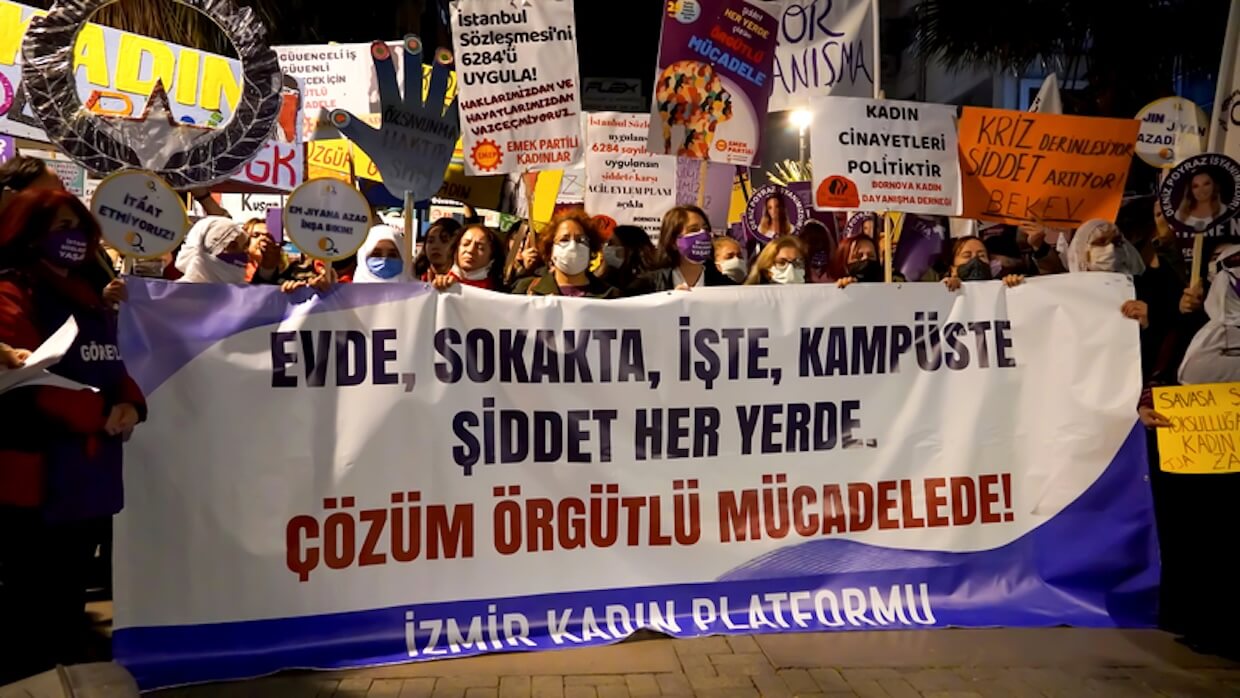
And lastly, Dr. de Silva, from a governance-effects perspective, what are the tangible consequences of withdrawal or non-ratification for women’s lives, particularly in terms of monitoring gaps and legal reform trajectories?
Dr. Monika de Silva: In the case of Latvia specifically, the Istanbul Convention is still in force and will be so until the parliament votes otherwise. But this will likely not happen until the next parliamentary elections in Latvia next year. So, in the case of Latvia, we are so far safe.
But what would happen if Latvia withdrew from the Convention? Let’s think about this. Many provisions of the Convention are already implemented in this case, and then we would have to focus on keeping these provisions in place. This is also a strategy in countries where it is very clear that they will not ratify the Convention in any foreseeable future. Think about Hungary. This is where civil society should focus on national law on domestic violence and violence against women being as strong as possible and perhaps reflecting the provisions of the Convention to the largest extent possible.
Latvia has already reported to GREVIO, the expert body of the Convention that monitors its implementation, and from this report we know that there are still gaps. The government itself says, for example, that it does not yet have assistance centers for rape victims. Now the government is legally obliged to establish them in the foreseeable future. If Latvia were not a member of the Convention, it would not have a legal obligation to do so.
There are situations like that. But the biggest and most immediate difference we would see is that a state not part of the Convention would not report to GREVIO. Whatever it does is therefore less transparent, especially internationally. There is less scrutiny, because once a state reports to GREVIO, it is evaluated by this body of experts—experts on violence against women and domestic violence who know what the Convention requires and how it should be implemented. States outside the Convention would also not face scrutiny from other member states or from international civil society.
So, this would be the biggest difference.
