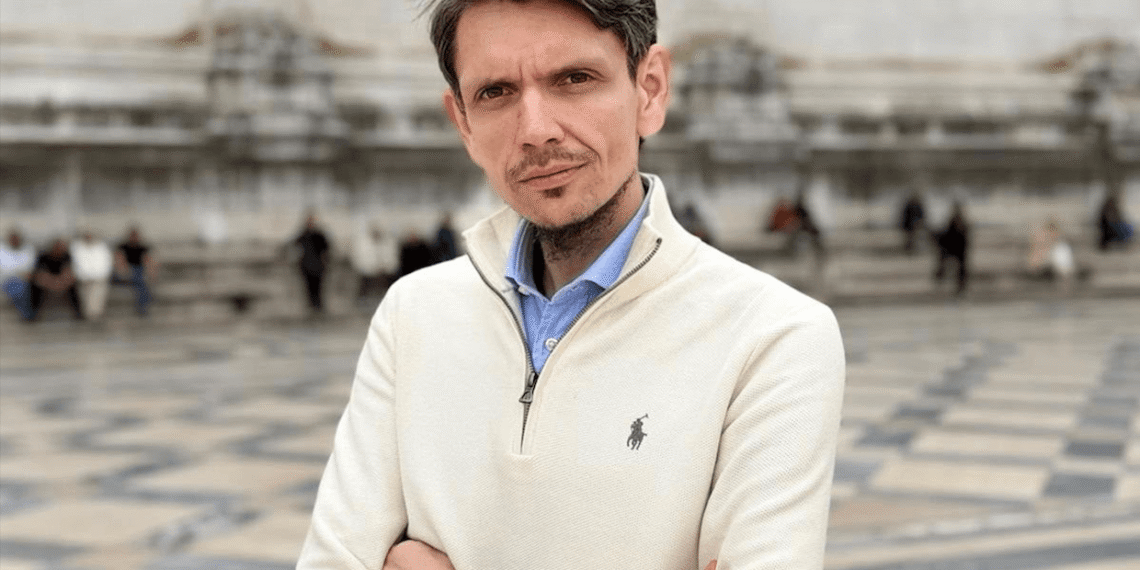
In this ECPS interview, Dr. Jasmin Hasanović analyzes Bosnia and Herzegovina’s October 4 elections through the lens of inter-, intra-, and cross-ethnic populism. He argues that the post-Dayton order continues to structure political competition around ethnically segmented constituencies, allowing parties to present themselves not merely as representatives but as protectors of threatened communities. This dynamic, he contends, helps explain why political change often fails to produce systemic transformation: institutional safeguards become “political currency,” while blockades and recurring crises reproduce the same underlying logic. As Dr. Hasanović puts it, “the algorithm that continually reproduces the crisis” is ethnically defined power sharing. The interview also explores the limits of civic alternatives, the weakness of cross-ethnic mobilization, and the prospects for a credible democratic left.
Interview by Selcuk Gultasli
Bosnia and Herzegovina’s October 4 elections combined an important procedural innovation with striking political continuity. Biometric voter identification strengthened the integrity of the electoral process, yet turnout fell to around 42 percent, while the country’s major ethnonational parties remained dominant within their respective constituencies. SNSD consolidated its position in Republika Srpska, SDA retained substantial strength among Bosniak voters despite Bakir Izetbegović’s defeat in the presidency contest, and HDZ BiH secured the Croat seat in the state presidency. These outcomes provide the immediate backdrop to our conversation with Dr. Jasmin Hasanović, Assistant Professor of Political Science at the University of Sarajevo, about populism, ethnopolitics, democratic representation, and the structural legacies of the Dayton order.
At the center of Dr. Hasanović’s analysis is the argument that Bosnia’s political crises cannot be understood simply as the product of particular leaders or parties. Rather, they are embedded in a system in which ethnicity has become “a central organizing principle, not only in politics, but also in public and social life.” Electoral competition, he argues, operates largely through ethnically segmented party systems, while the populist construction of “the people” takes place between, within, and across ethnic communities. The October 4 elections, in his view, therefore illustrate “a continued dominance of inter-ethnic politics,” even as significant intra-ethnic competition persists, and cross-ethnic alternatives remain comparatively weak.
The interview’s central argument is captured most sharply in Dr. Hasanović’s assessment of the Dayton system itself. The power-sharing architecture, he argues, has tied access to power to ethnic representation in ways that make it politically rewarding for leaders to present themselves as “protectors, not only representatives, of their communities.” Institutional safeguards can consequently become “political currency,” while blockades and crises are repeatedly reproduced. As he puts it, replacing a governing party or overcoming a single institutional blockade does not alter “the algorithm that continually reproduces the crisis.” That algorithm, he concludes, “is ethnically defined power sharing.”
This structural perspective also helps explain why political change so often fails to become systemic change. In Republika Srpska, opposition to SNSD may challenge corruption or personalized rule without challenging the underlying ethnonational framework. Among Bosniaks, party pluralism can itself be portrayed as weakness when Serb and Croat political blocs appear more consolidated. And even when citizens share grievances over corruption, unemployment, inequality, public services, or institutional failure, Dr. Hasanović warns that “having the same problems does not produce a shared political identity.”
The interview therefore moves beyond the question of who won or lost on October 4. It asks whether Bosnia can generate a political subjectivity capable of transcending ethnic exclusivity—and whether democratic, socioeconomic, and civic demands can eventually reshape a system whose institutional logic continues to reproduce the very divisions it was designed to manage.
Here is our interview with Dr. Jasmin Hasanović, edited lightly to enhance clarity, readability, and overall flow for publication.
Inter-Ethnic Politics Still Dominates
Professor Hasanović, welcome! Your recent article distinguishes between inter-ethnic, intra-ethnic, and cross-ethnic forms of populism. If we treat the October 4 elections as an empirical test of that framework, which of these dynamics appears to have been strengthened most clearly by the election results? Or does the election demonstrate that all three operate simultaneously, with different political consequences across Bosnia and Herzegovina?
Dr. Jasmin Hasanović: First of all, let me try to clarify what I understand by populism, because I think that would be the most important point at the beginning. I also want to distinguish populism from something that may appear as opposition politics within an ethnic community. That doesn’t have to be populist at all.
My understanding of populism, which is also described in the paper that you mentioned, is very much Laclauian. I see populism not as a kind of thin ideology or something like that, but as a political logic through which different unmet demands are brought together to construct a collective political subject, “the people.” And those demands establish a dividing line between “us” and “them.” So, the political identity of “us” is then constructed in relation to “them,” whether a ruling elite, another ethnic community and its political elites, or the institutional order itself.
Why I see this framework as important for understanding and explaining populism in Bosnia and Herzegovina is that, after the Dayton Peace Agreement was signed, Bosnia and Herzegovina has operated under a power-sharing system designed to ensure the political representation of the three dominant ethnic groups: the Bosniaks, the Croats, and the Serbs. They are defined as constituent peoples of the country. But the politicization of ethnicity very soon extended beyond the political aim of representation. It made ethnicity a central organizing principle, not only in politics, but also in public and social life.
This has two important consequences for Bosnia and Herzegovina. On the one side, we see that electoral competition takes place within ethnically segmented party subsystems, so voters are not formally required to vote along ethnic lines. However, the institutional arrangements, territorial divisions, and party mobilization, which we saw very clearly in those elections, strongly reinforce that pattern.
Secondly, given this ethnically structured political order, the populist construction of political subjectivity can take place in relation to ethnic communities. It cannot construct a political identity without referring to ethnic communities. So, depending on how it relates to ethnic communities, it can relate either between them, within them, or across them. That is why I made this distinction between inter-ethnic, intra-ethnic, and cross-ethnic populism, rather than relying on a simple, linear division between horizontal and vertical forms of populism.
Now, going back to your question and referring to the recent elections, I wouldn’t see the elections as an empirical test. Rather, I would see them as an illustration of how this framework works and interacts. What those elections demonstrated was, as you already mentioned, a continued dominance of inter-ethnic politics. So, the dominant parties remain the ethnonationalist parties, which mobilize around competing political claims and visions over the country. And every political party claims to represent and protect the demands of its respective community.
However, if we take a closer look, we will see that there is still significant competition, of course asymmetrical, within the ethnic groups and within the ethnic electoral arenas. For instance, we see the tension surrounding the dominant Bosniak political party, SDA, the Party of Democratic Action. As you mentioned, there is this tension between its relative electoral performance, which, of course, dominated in the elections within the areas of the country where Bosniaks are the dominant ethnic group, and, on the other side, the fact that its leader was defeated for the presidency.
What we also saw was the emergence of a stronger opposition within the Croat camp than there used to be before. What I want to say here is that ethnic homogenization was driven not only by opposition to other ethnic groups, but also by competition within them, as rival parties try to establish themselves as more credible defenders of the ethnic groups than the dominant ethnic political parties.
On the other side, cross-ethnic demands are still present, but they have not developed into a comparably strong electoral project, partially because electoral competition remains concentrated largely within monoethnic party subsystems, which makes it quite difficult for shared grievances to be connected across ethnic boundaries.
Dodik’s Influence Extends Beyond Office
Perhaps the most striking result came from Republika Srpska: Milorad Dodik was not himself on the ballot, yet SNSD retained its dominance, Željka Cvijanović won the Serb seat in the state presidency, and the party remained overwhelmingly powerful at entity level. Does this suggest that Dodik’s populism has become institutionalized beyond his personal leadership, or is this better understood through your category of inter-ethnic populism, in which voters are ultimately choosing their national “side” rather than an individual leader?
Dr. Jasmin Hasanović: It doesn’t mean that he was not an active part of the campaign. He remained the central political figure of SNSD during the campaign. He was present on billboards and at party rallies, so he was not missing from the public sphere. And not to forget that he also visited Moscow, where he met Vladimir Putin only days before the elections, together with the then Prime Minister of Republika Srpska, Savo Minić, who is now elected as the president of the entity. Vladimir Putin explicitly expressed support for the governing SNSD-led coalition.
When we see the results, it is obvious that Dodik’s political influence extends beyond holding an elected office. But what we also see is that SNSD probably could not reproduce the same dominance without him. He was not running, but he was still a dominant political figure. It is definitely the case that Dodik will remain and have influence behind the scenes in the political life of Bosnia and Herzegovina. His political party and all the ideology behind it, which he dominantly shapes, will remain central to government formation in Bosnia and Herzegovina.
This also shows the inefficiency of the Troika coalition in suspending Dodik and Dodik’s politics. I mean, he’s not running for office, but still, his presence is dominant, as we can see. Most Bosniak voters saw this as evidence that the Troika didn’t succeed in efficiently eliminating Dodik’s political rhetoric, which is threatening to the country. But also, Dodik’s victory was a slap in the face of the European Union and the internationals in this election.
Also, I don’t want to forget SNSD’s organization and patronage networks, because they allow Dodik’s leadership to operate through other candidates and through the established institutions of Republika Srpska. On the other side, his inter-ethnic populism reinforces that power by equating support for the party with support for Republika Srpska and the Serb people in the country.
Replacing Dodik Would Not Transform the Framework
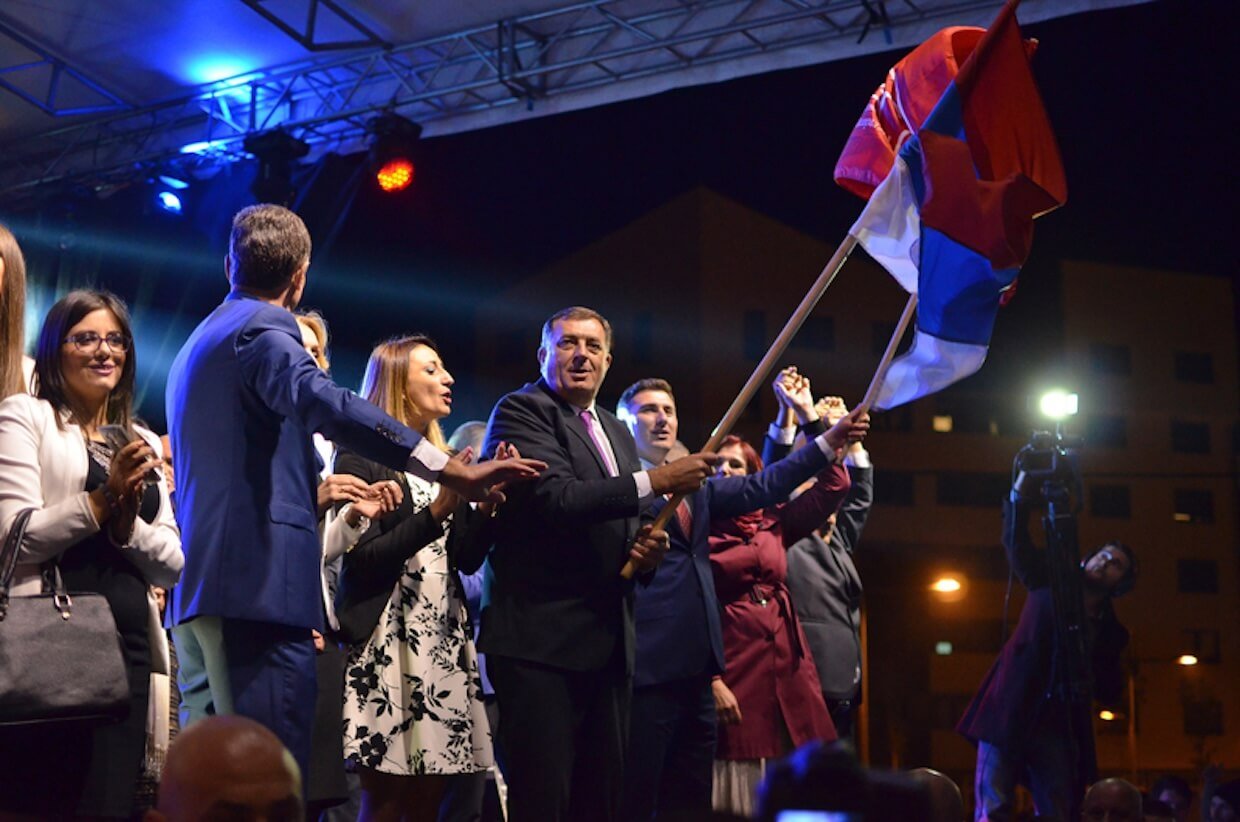
Your concept of intra-ethnic populism is especially useful because it distinguishes opposition to an entrenched ethnonational elite from opposition to ethnonationalism itself. In Republika Srpska, opposition actors may challenge SNSD over corruption, patronage, or personalized power while remaining committed to Serb autonomy and national interests. Does the October 4 result reinforce your argument that intra-ethnic competition can pluralize an ethnic political arena without necessarily weakening the underlying ethnonational conception of “the people”?
Dr. Jasmin Hasanović: Yes, here the distinction is between challenging the ruling elite of one ethnic community, on the one side, and challenging the ethnic principle of political representation, on the other. As we saw, and as you mentioned, opposition actors can mobilize around corruption, injustice, and personalized power, as was the case with Dodik’s opposition or the opposition to HDZ, although we also didn’t have Dragan Čović running for the presidency. But they do so without constructing, to go back to the case of Republika Srpska, a political people beyond Republika Srpska and Serb national interests.
That might open space for accountability, but it doesn’t produce different politics. The politics remains basically the same. This is most visible within the opposition in Republika Srpska. All the actors of the opposition in Republika Srpska share the same idea of what Republika Srpska is and should be. They share the same idea that Republika Srpska needs to remain a part of Bosnia and Herzegovina, even with stronger autonomy, and everything is understood as the main Serb national interest.
Every time Dodik defined Republika Srpska as being under threat, opposition parties aligned with Milorad Dodik. We saw that in practice. The recent reactions of prominent opposition leaders in Republika Srpska, mourning and paying tribute after the death of Ratko Mladić, who was a convicted war criminal and died while serving a life sentence, convicted of genocide and crimes against humanity, illustrate that ethnonationalist and revisionist positions remain, unfortunately, deeply embedded in Serb politics in Bosnia and Herzegovina. This extends beyond SNSD as a political party or Milorad Dodik as a leader.
So, replacing Dodik or SNSD at this point would not by itself transform the political framework within which both sides compete. The democratic potential of intra-ethnic competition depends on whether the demands for justice can become substantive commitments to creating a new political subjectivity, rather than simply claiming that another leadership will defend the same national project better than the previous one.
Because if you have a competition between the original and the fake copy, of course, you will always go for the original. So, I would explain that as one of the reasons why Milorad Dodik and SNSD still maintain a dominant position.
SDA Shapes Bosniak Political Identity
The Bosniak result presents an intriguing variation: SDA performed strongly at the party level, yet Bakir Izetbegović lost the presidency contest to Denis Bećirović. How would you interpret this apparent separation between party strength and leadership preference? Could it represent precisely the kind of intra-ethnic differentiation you describe—where voters challenge who legitimately represents the community without necessarily abandoning the ethnically structured political field itself?
Dr. Jasmin Hasanović: Yes, that’s something I already mentioned when I started answering your first question. What I would also like to point out here is that the relative success of SDA should be distinguished from an absolute expansion of its electorate. If we look at the preliminary results, we see that SDA mobilized and retained its voters more efficiently than its other competitors. Of course, we need to wait until all the results are finalized. But I see neither that SDA gained more votes nor that SDA lost some votes. I see that SDA is very stubborn in general and that it succeeded in mobilizing its strong voting base.
But I have to be very clear here regarding Izetbegović, because Izetbegović’s candidacy was a political risk for SDA from the very beginning. There were earlier signs of dissatisfaction with his leadership, so SDA was not really sure whether Izetbegović should be the candidate or not. There were also speculations about some other possible candidates before he was officially nominated to run for the presidency. It gave me the impression that SDA was not sure whether he was a good option or whether he would be a political risk for them, while, on the other side, also showing some inner weakness in lacking an adequate candidate to run for the presidency.
So, Izetbegović’s defeat, despite SDA’s strong performance, shows that support for the party goes beyond loyalty to its current leader. Where SDA gains its political power is rather symbolic. It comes from, of course, reliance on religion, the wartime legacy, and the symbolic authority of Bakir’s father, Alija Izetbegović, who was the founder of SDA and the first president of Bosnia and Herzegovina.
SDA has connected these sources of legitimacy with the claim that excluding SDA from power means excluding Bosniaks from political representation. This brings different demands together around the idea that SDA is not only the authentic political voice of Bosniaks, but also a defining force in shaping and safeguarding Bosniak national identity as a political nation.
Its ability to maintain a stable core of voters, despite a lot of splinter parties that have formed over the last 10 years, suggests that this identification that SDA is pushing forward remains very powerful in the relationship between SDA and the construction of Bosniaks as a political identity. What we also saw is that a lot of former leading figures who left SDA, after leaving SDA and trying other political organizations or forming their own political parties, failed to maintain comparable influence outside SDA.
Referring to Bećirović, unlike Izetbegović, who was the candidate of SDA in both election cycles, Bećirović was gaining broad coalition support in both cycles. Yet what we saw is that his lead over Izetbegović has now narrowed. He had more than 100,000 votes more than Izetbegović in 2022, and now the difference is only around 20,000 in the preliminary results of 2026. So, I believe that his earlier victory mobilized votes against Izetbegović rather than for himself.
This year, however, Semir Efendić, the president of the Party for Bosnia and Herzegovina, complicated this dilemma between Izetbegović and Bećirović and offered an alternative outside that binary.
So, the point is that voters may distinguish between the party and its leadership but still choose within an ethnically structured political field. Maybe that was not part of the question, but it’s also interesting that, although the presidency members are elected from one of the constituent peoples, they only have to present those constituent peoples in the presidency, not to represent them. However, their campaigns took place within a predominantly monoethnic political arena, so the candidates largely addressed only monoethnic electorates and the interests of the group they want to present and represent.
Collective Representation Is Not Automatically Populist
Among Croats, HDZ BiH again demonstrated its capacity to present itself as the principal guardian of collective representation, with Darijana Filipović winning the Croat presidency seat. How does the longstanding discourse of “legitimate representation” fit into your distinction between ethnonationalism and populism? At what point does a constitutional claim about group representation become a populist claim that one party uniquely embodies the authentic will of the Croat people?
Dr. Jasmin Hasanović: The demand for collective representation is not automatically populist. But it can become populist when the demand for legitimate representation connects different demands, from electoral reform to autonomy, under a common narrative of collective ethnic vulnerability. It can also become populist when it politically constructs the Croat people as a political subject whose rights and interests are under threat. This is the logic through which HDZ has largely shaped the discourse and agenda of Croat politics in Bosnia and Herzegovina.
The dispute over representation, together with the asymmetrical federal system in Bosnia and Herzegovina, which generated unmet political demands among Croats, helped HDZ consolidate its dominance within the Croat political arena. We also had, during the last 10 years or even more, very weak parts of the Croat opposition to HDZ. But that opposition also adopted the same narrative, challenging HDZ’s leadership while still sharing the central demands from which HDZ gains political relevance.
The victory of Darijana Filipović now gave HDZ something that it was lacking after previous elections: representation inside the presidency. Her victory also institutionally aligned HDZ’s political influence in the country, giving power to HDZ across all levels of the political system.
What may arise as a question right now is whether HDZ’s presence in the presidency can make it harder to sustain the claim that Croats are being excluded by Bosniaks outvoting their candidates, potentially exposing how the representation issue has also served HDZ in consolidating the party’s power. Filipović announced during the election campaign a plan to open an office in Mostar, the office of the Croat member of the presidency in Mostar, something similar to what Milorad Dodik also did regarding the office of the Serb member of the presidency in Republika Srpska.
That can be read not only as something that reinforces the deeper ethnic segregation of the country and the territorial identification of a state-level position with a particular ethnic constituency, but also as an aim of HDZ to consolidate its power.
Also, regarding the opposition, it is interesting territorially that the opposition to HDZ comes from political organizations of Croats from the central part of Bosnia and Herzegovina, while HDZ has a strong political base in Herzegovina, in the south of the country.
The question is whether this consolidation of power that HDZ gained can now weaken the narrative that was connecting different grievances around the idea of legitimate representation. Can it now allow the opposition to mobilize around other demands? That opening is possible, but it will depend on whether the opposition can offer more than a competing claim to defend the same national interests of Croats. Of course, those national interests are being defined exclusively by HDZ.
The People Is Not a Fixed Category
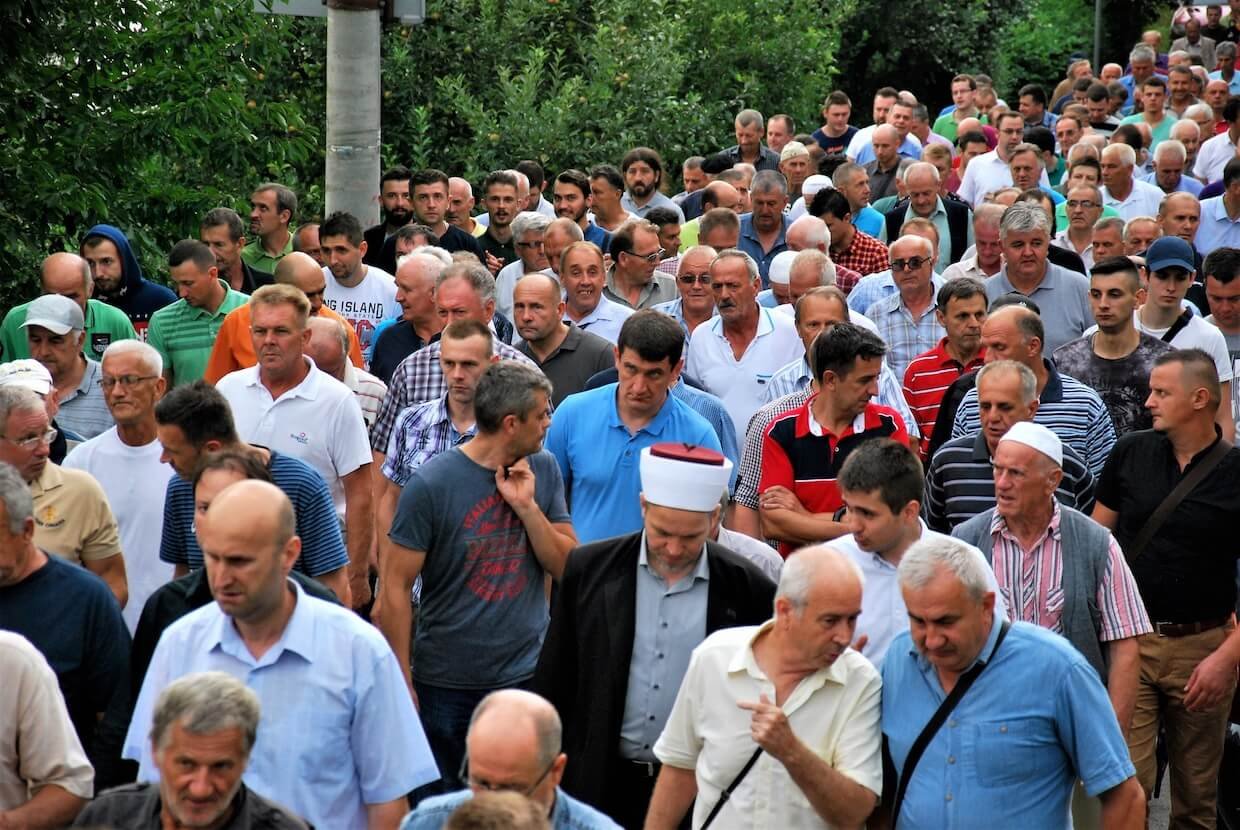
Your article argues that Bosnia is distinctive because political actors compete not only over who represents “the people,” but over which people constitutes the legitimate political community in the first place. After this election, we again have powerful Serb, Bosniak, Croat, and civic conceptions of political belonging operating simultaneously. Does this make Bosnia a particularly revealing case for populism theory precisely because the demos itself remain fundamentally contested?
Dr. Jasmin Hasanović: Yes, because Bosnia makes visible something that the dominant theories of populism take for granted: that the people is politically constructed rather than simply being a fixed category waiting to be represented. In terms of Bosnia and Herzegovina, we do not talk about Serbs, Croats, and Bosniaks as fixed and essential ethnic groups, but rather as political identities that are defined and constructed through their political demands, which interact with institutions, territorial divisions, and struggles over the state itself. This is because all three dominant ethnic political parties do not share the same perception of how Bosnia and Herzegovina should be, how it should be defined, or what the future of the country should be. Of course, their political identities are also defined in relation to the boundaries of what and who can represent them, not only among themselves, but also within the same ethnic group and ethnic community.
Without Alternatives, Abstention Becomes Rational
The election introduced biometric identification and significantly reduced opportunities for manipulation, yet turnout fell to roughly 42 percent and established ethnonational patterns remained remarkably resilient. How should we interpret this combination of cleaner electoral procedures and deep political disengagement? Does it suggest that improving electoral integrity is insufficient when citizens perceive the underlying structure of political choice as closed, repetitive, or ethnically predetermined?
Dr. Jasmin Hasanović: It was very important to secure those new voting technologies. It was interesting to see that, before introducing the new technologies, you always had complaints from political parties that didn’t gain enough votes, claiming that they had been defrauded or whatever. Now, only one political actor claims that somebody stole his votes or whatever. It gave a bit of legitimacy to the process, and securing electoral procedures is very important.
But I wouldn’t say that electoral integrity and democratic engagement are separate questions, because biometric identification can reduce fraud and make the election procedure more transparent, so that you know that nobody voted who was not supposed to vote, or voted twice, or so on. But it doesn’t do anything if citizens do not see a meaningful political alternative. So, you can have a very transparent and good electoral procedure, but the question is what is offered in the elections.
One of my concerns is that Bosnia and Herzegovina, in recent years, has very often offered changes in governing personnel, but it leaves the main structures of political choice and power largely intact. Even if we have new political actors, those are, in many ways, splinter parties from previously dominant political parties. So, you don’t have new leaders; you just have unsatisfied politicians who could not agree with leaders from their previous political parties, so they decided to form a new political party.
If people do not see alternatives, if they are not satisfied with the previous government but also don’t want to choose the previous actors again, or they simply feel that no party represents their demands strongly, then, in those circumstances, abstention from elections seems to be rational. It can reflect either frustration, a lack of choice, or just the weak mobilization potential of some of the political parties.
However, what I would like to point out here about the turnout, which is around 42%, is that we need to consider that percentage more carefully, because it is based on the official electoral register, which is not the same as the resident population. Citizens who have moved away may remain officially registered, even if they are not participating in the elections. So, we cannot simply conclude that 42% of adults actually living in Bosnia and Herzegovina really voted. What I want to say is that a turnout of 42% of registered voters does not mean that 42% of adults actively living in Bosnia and Herzegovina and registered really voted. They are still on the electoral register, but they are not in the country anymore.
Civic Alternatives Are Needed Across All Constituencies
Your work has repeatedly examined the difficulty of constructing political alternatives to Bosnia’s ethno-determined order. The multi-ethnic Troika suffered an electoral setback while established ethnonational parties remained resilient. Does this result expose a structural weakness of civic politics in Bosnia—namely, that civic actors must compete within institutions that already define political representation through constituent peoples?
Dr. Jasmin Hasanović: The preliminary results really show an electoral setback for Troika, but I would say it is an uneven setback within Troika. Individual parties of Troika received fewer votes, which is true. But the overall vote share of Troika remained roughly stable—not as influential as before, but roughly stable. Again, I’m saying this based on preliminary results, and it may change in the meantime.
Most of the losses within Troika were concentrated in the People and Justice Party and Naša Stranka (Our Party), while SDP experienced only a smaller decline. This increased SDP’s power within Troika and made Troika, if the coalition lasts—which I’m a bit skeptical about—more dependent on SDP’s electoral strength.
The previous mandate, as I also mentioned in the beginning, shows that replacing one party with another party or coalition does not automatically change the system or the political practices that are being institutionalized. Taking this experience of Troika, Troika is a very unusual ideological and political project. Troika replaced SDA as the predominant Bosniak component of the power-sharing government. But Troika’s alternative to nationalism remained concentrated only within the Bosniak electoral space, without comparable support among the Croat and Serb electorates.
This is the reason why parts of the public interpreted Troika’s compromises with nationalist coalition partners from the Serb and Croat political camps, with whom they shared power, as concessions at the expense of Bosnian political interests. This strengthened the narrative in which pluralism among Bosniak parties appears as fragmentation and weakness against two other more consolidated ethnopolitical blocs.
Overcoming that asymmetry would require credible civic alternatives within all three electoral constituencies, capable of constructing the people around shared democratic and socioeconomic demands beyond ethnic belonging. If such alternatives develop sufficient support and cooperation, they could make coalitions with nationalist parties less politically unavoidable. Otherwise, actors presenting themselves as alternatives to nationalism remain dependent on agreements with those parties.
Shared Problems Do Not Produce Shared Identity
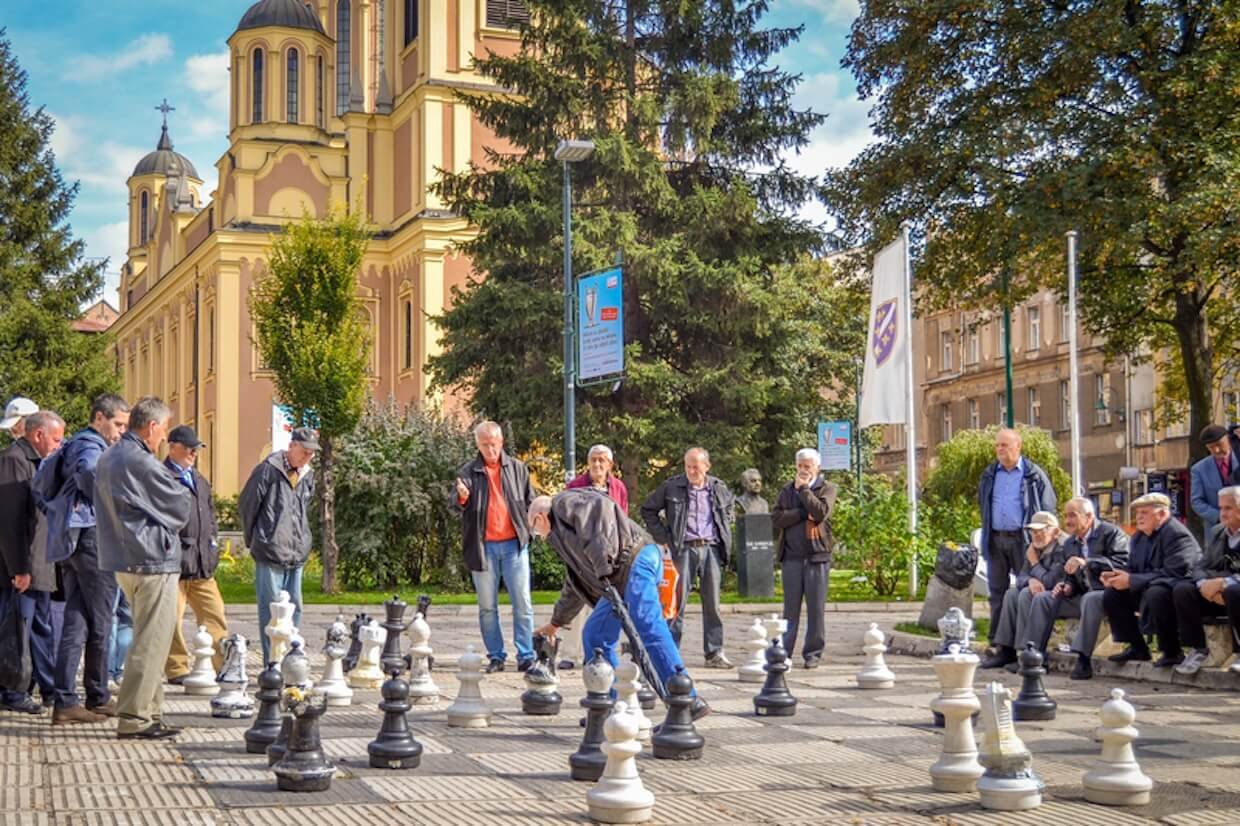
Your concept of cross-ethnic populism suggests that common grievances—corruption, unemployment, inequality, institutional failure, lack of accountability—can potentially construct a political “people” across ethnic boundaries. Yet such mobilizations have repeatedly struggled to become durable electoral projects. Why are socioeconomic grievances so easily re-ethnicized in Bosnia, and what does the October 4 result tell us about the ability of ethnonational elites to convert class, governance, or anti-corruption conflicts back into questions of collective ethnic survival?
Dr. Jasmin Hasanović: What we saw is that having the same problems does not produce a shared political identity. We also see that, on the other side, ethnonationalist parties can use and reinterpret demands about jobs, corruption, or public services as questions of ethnic politics: who controls resources and whether our community is being disadvantaged in relation to other communities.
We could hear this narrative very clearly at the SDA’s final central rally in Sarajevo, where restoring positions to Bosniaks was linked to returning SDA members to those positions. Its control over employment and institutions is seen as a way of restoring Bosniak political strength. We see the same pattern in SNSD, Dodik’s party, in HDZ, and in other political parties.
Meanwhile, as you mentioned, why can’t these mobilizations construct the people across ethnic boundaries? The other problem is that we have a very fragmented media and public sphere in the country, and because of that, it is difficult for citizens to recognize similar problems and similar conflicts that are more essential and existential elsewhere in the country.
Overcoming this would require organizations that can collect everyday grievances into an equivalential chain of demands that can be sustained beyond a single protest or election, which is not happening. This may be a very unpopular option, but those organizations must first build credible support within the ethnic groups, within their own ethnic electoral arenas, and then connect those struggles across ethnic boundaries.
Because there is a significant ideological gap within monoethnic electoral arenas, where opposition to national elites does not develop around redistribution or public services, but around ethnic representation. Of course, only within the Bosniak electoral subsystem do we also see some kind of ideological opposition, but not within the Serb or Croat constituencies.
That is where I see an opening for—and this also may be very unpopular—a populist left within the ethnic groups to bring those demands together and construct the people around shared experiences of inequality and exclusion, rather than their ethnic belonging or party loyalty.
Dayton Rewards Leaders Who Act as Protectors
One of the most important implications of your recent article is that Dayton does not merely constrain populism; its power-sharing architecture may actually structure and reproduce populist possibilities. Thirty years after Dayton, do these election results strengthen the argument that institutional incentives themselves continuously reproduce the political need for Serb, Croat, and Bosniak leaders to demonstrate that their communities are threatened and therefore require exclusive political protection?
Dr. Jasmin Hasanović: Yes, it is a paradox, and it is interesting that the power-sharing principle in Dayton tied access to power to ethnic representation, which made it politically rewarding for leaders to present themselves as protectors, not only representatives, of their communities.
All three ethnic groups have different views of the country and, based on those views, different views of Dayton and the peace that was established. But the common ground among all three ethnic groups is that the Dayton framework is not satisfying for the group.
That’s the reason why the same actors can control institutions, on the one side, while, on the other side, portraying the constitutional order as a threat to their people and claiming that if we, as the legitimate representatives of our people, are not present in the institutions, then the other two groups are present, so we are threatened again.
So, refusing to cooperate with other ethnic representatives can also increase their power, while the institutional safeguards can very easily become political currency rather than simply a tool of protection against domination. Then you have different ways of blocking institutional procedures, meaning blocking the country from fulfilling its basic duties.
This is also why replacing a governing party or overcoming one institutional blockade doesn’t change the consequences—the algorithm that continually reproduces the crisis. The algorithm, of course, is ethnically defined power sharing.
Bosnia Needs a New Political Subjectivity
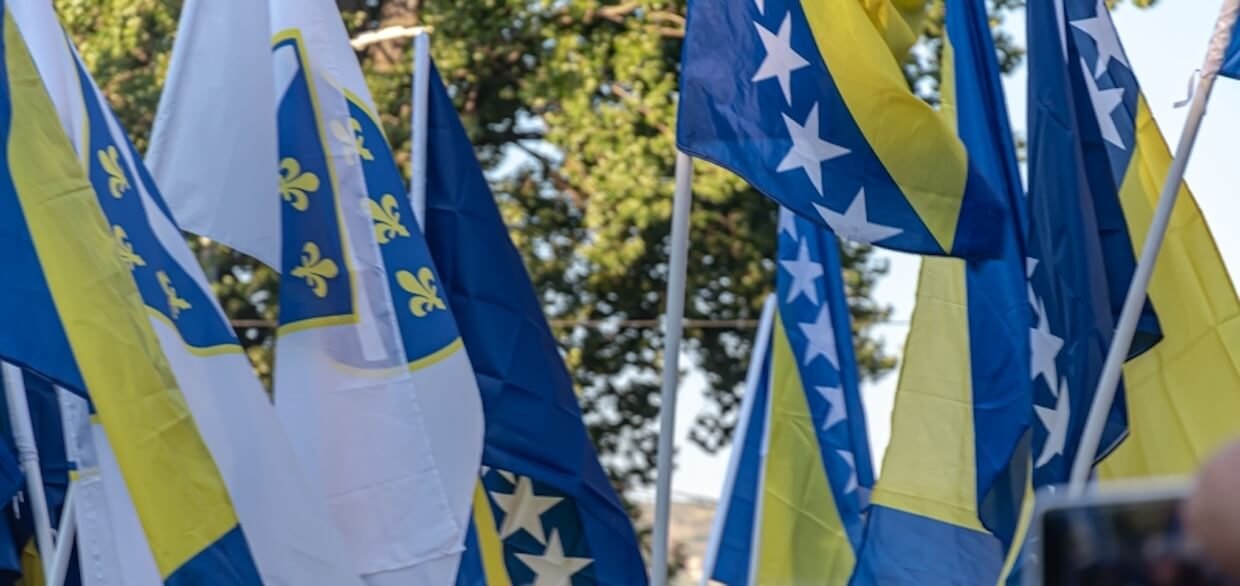
You make the provocative argument that intra-ethnic populism can, under some conditions, have a democratizing effect by breaking monopolies of representation within monoethnic political subsystems. Looking at the October 4 results, do you see evidence of such productive pluralization anywhere in Bosnia? Or has intra-ethnic competition largely remained competition over who can more credibly represent the same ethnonational project?
Dr. Jasmin Hasanović: Yes, much of that competition still concerns who can defend the same national interests more credibly. So, its potential democratizing effects still remain limited. There is also this dangerous asymmetry, where we can see this pluralism best among predominantly Bosniak parties. But this pluralism can be framed as weakness when the other two ethnic blocs appear more consolidated, which strengthens the ethnonational political party among Bosniaks by claiming that Troika is not sufficient to represent Bosniaks because it is more liberal or whatever and is making concessions to the other two very consolidated ethno-political projects. So, Bosniaks also need a very strong ethno-political project to represent Bosniaks.
The problem is that positioning themselves as intra-ethnic successors to the dominant ethnonationalists means, now in a theoretical way, that you are sharing the same inter-ethnic signifier, which risks becoming a floating signifier whose meaning is suspended or contested between two alternative equivalent frontiers. What you need is another political subjectivity, because sharing the same inter-ethnic signifier complicates the construction of a populist subjectivity that would reconfigure already existing demands and incorporate new demands needed for creating a new political subjectivity beyond the ethnic subjectivity.
Bosnian Populism Is Both Horizontal and Vertical
Bosnia’s populist politics also involves an unusual vertical dimension because “the elite” can mean not only domestic political establishments but also the Office of the High Representative, EU institutions, foreign embassies, and other international actors. How does this external layer alter the classic populist opposition between “the people” and “the elite”? Can international supervision itself become a resource through which domestic actors construct popular sovereignty against an allegedly external governing establishment?
Dr. Jasmin Hasanović: Yes, international involvement, which is described and defined within the Dayton Peace Agreement, complicates the distinction because domestic leaders can be part of the governing establishment while presenting themselves as opponents of an external elite. It also provides a way to redirect responsibility for their own failures, not only horizontally towards other ethnic groups, but also vertically towards decisions presented as externally imposed.
One example I mentioned in the paper is Milorad Dodik’s description of opposition leaders as “Schmidt Serbs,” associating them with the High Representative, Christian Schmidt, and portraying them as political groups representing the interests of foreigners rather than those of genuine Serb people. SDA also repeatedly portrayed Troika as imposed by international actors against the will of the Bosniak people. This brings an external enemy into an internal political struggle. That’s what I meant by saying that it complicates this distinction, because opponents are framed as serving foreign authority against their own people.
That’s also the reason why we cannot easily place populism in Bosnia and Herzegovina only on a horizontal or vertical line, because it has these overlapping moments and dynamics in relation to ethnic groups, as well as to the political framework and institutions within which the groups are functioning and operating.
The ‘Original Dayton’ Claim Is Paradoxical
Dodik responded to SNSD’s victory by reviving the language of returning to the “original Dayton,” including demands to restore competencies to Republika Srpska. How should we understand such claims within your framework? Is this primarily inter-ethnic populism, a sovereignty discourse, or a particularly Bosnian form of populism in which the constitutional order is simultaneously invoked as legitimate and attacked as having been corrupted by hostile elites?
Dr. Jasmin Hasanović: That’s an interesting claim. Dodik’s appeal to the original Dayton combines inter-ethnic populism with a claim to sovereignty, but it also involves SNSD presenting itself as giving the genuine interpretation of Serbian interests intra-ethnically. What this means in practice is that it presents Republika Srpska and the Serb people as victims of a political order that is not in their political interests. Their political interest in the 1990s was either autonomy or the idea of remaining in a Serb-dominated Yugoslavia, or something like that. Bosnia and Herzegovina is seen as a political project that was, and is, made up by international actors.
Politically, what I see as important is the question of what this language authorizes in practice. Is it further obstruction of the country and its institutions? Is it building parallel institutions? Or is it a general attempt to weaken the state, rather than simply a dispute about the constitutional history of the country?
It is also interesting why the original Dayton is important for Dodik and his populist claims: in the first version of the Constitution, the authority of state institutions used to be very weak. Referring to the original institutions also means that there is a stronger reliance on international actors. He claims to want to avoid the interference of international actors, which again is a paradox.
Justice Became Trans-Ethnic, but Not Political
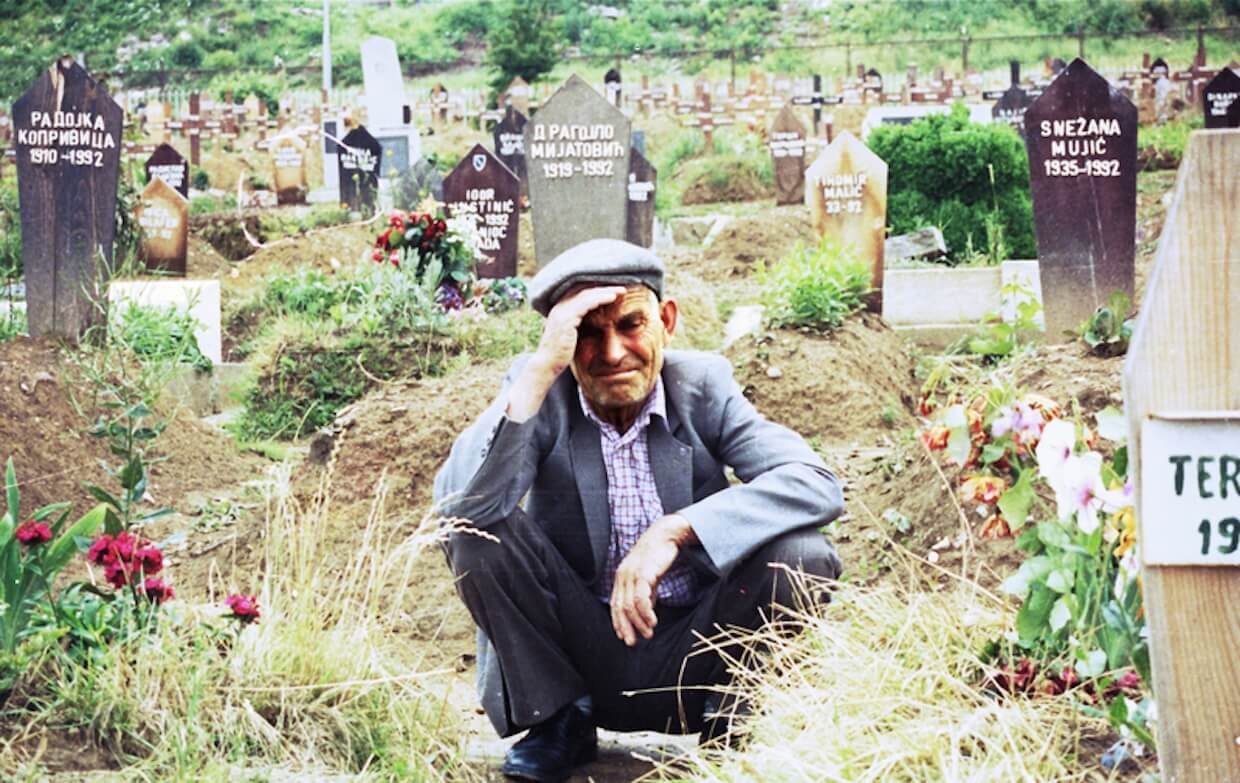
Your wider research on social movements and civic participation asks whether citizens can construct political subjectivities outside established ethnopolitical structures. From the 2014 plenums to accountability movements and other forms of civic mobilization, Bosnia has periodically produced moments in which ordinary citizens articulate an “us” against unresponsive institutions. Why have these moments proved so difficult to translate into sustained cross-ethnic electoral organization? Is the problem organizational weakness, institutional design, depoliticization, elite co-optation—or the absence of a sufficiently powerful alternative conception of “the people”?
Dr. Jasmin Hasanović: I will start with the last one: a sufficiently powerful alternative conception of the people has not been able to be politically constructed because of a combination of organizational weaknesses, institutional obstacles, very strong ethnonationalist backlash and countermobilization, and the difficulty of sustaining a common political identification that crosses ethnic borders.
The movements around Dženan Memić in Sarajevo and David Dragičević in Banja Luka are an important example because that was the first time there was one political idea—the idea of justice—that became trans-ethnic, that both ethnic groups could rely on and see as a strong political demand. However, that demand could not create a stable chain of equivalence that would provide a joint, common construction of the people capable of crossing ethnic identification.
As my research shows, that common demand for justice also carried different objectives. It was not sufficiently an empty signifier in that manner because, in the Federation of Bosnia and Herzegovina, in Sarajevo, it required stronger institutional accountability, while in Republika Srpska, it was a more direct challenge to the ruling regime.
But both actors in the protests never challenged the political system or the political constitution and never had any other goal beyond fighting for their own problem, for their own aim, which was very personal and very tragic because of the personal experience they faced. There was also no political actor that could transfer those demands into one wider political project.
So, solidarity crossed entity and ethnic borders, but it did not engage all constituencies equally. For instance, it was a matter between Bosniaks and Serbs, but it was not something that affected Croats in any way. It also did not consolidate into a shared political project capable of constructing a political identity in the first place.
A Credible Left Is Needed Across All Communities
And finally, Professor Hasanović, your work on the post-Dayton possibilities for the Left asks whether an alternative to ethno-determined politics can emerge from within the very system that entrenches it. After October 4, what pathway appears more plausible: attempting to construct an immediately cross-ethnic civic demos, or first pluralizing political competition within Serb, Bosniak, and Croat constituencies so that ideological, socioeconomic, and democratic cleavages gradually become more important than ethnic ones? Could such intra-ethnic pluralization eventually provide the bridge toward genuinely cross-ethnic politics?
Dr. Jasmin Hasanović: I believe that you referred to my work on the paper about the Left after Dayton—the earlier attempts to build a multi-ethnic left failed to gain support across electoral arenas. SDP is the best example of that because SDP presents itself as multi-ethnic, which is true, but its electoral support remains concentrated in predominantly Bosniak arenas.
Also, SDP’s prominent figures, like Denis Bećirović, who has now again been re-elected to the presidency from SDP, often speak in terms of exclusively Bosniak concerns. It is understandable that parties adapt their language to the voters who elect them. But, in that way, a multi-ethnic identity would require more than a declaration. It would require building support and trust across communities, which is very hard.
SDP has often been criticized for becoming a Bosniak left. My criticism is different. My criticism is not that SDP is becoming a Bosniak left, but that SDP is not a Bosniak left. It has neither articulated what a left would stand for—and, in practice, it shows very un-left politics—nor managed to build a convincing political left project among Bosniaks.
The problem is less where its voters come from than which demands mobilize them and whether those demands can be connected with similar struggles among Serbs and Croats. If you are democratizing and pluralizing within Serb, Bosniak, and Croat constituencies, but that pluralization is only for the continuation of ethnic representation, that is not the point.
What I see as a way of building the left is to work within the ethnic constituencies while deliberately building connections across them. So, a credible left is needed among Serbs and Croats as much as among Bosniaks. A credible left, even if that can be unpopular, can populistically create a political subjectivity demanding secure jobs, decent wages, and affordable housing. For instance, housing is a very common problem, not only in the world, but also in Bosnia. Universal healthcare, education, the problem of depopulation—a lot of people from Bosnia, from all three ethnic groups, are leaving the country.
Also, the credible left should talk about freedom from dependence on party connections but also oppose historical revisionism and the glorification of war criminals in all of its forms and be built on anti-fascist ideas. Such a politics must challenge elites within each community first, while refusing to make ethnic exclusivity the basis of its own program. But this development might be uneven between different ethnic groups. This is something that is still a challenge to be built, and those oppositions that I mentioned earlier are opening the space, but the dynamics that will shape those possibilities remain to emerge.