André Ventura’s qualification for the presidential runoff marks a critical moment in Portuguese politics, long viewed as resistant to far-right breakthroughs. In this interview with the ECPS, Dr. Hugo Ferrinho Lopes (EEG-UMinho & Iscte-IUL; ICS-ULisbon) argues that Ventura’s advance is “less a sudden presidential earthquake than a clear manifestation” of an ongoing party-system shift—deepened by fragmentation on the mainstream right and declining abstention. Dr. Lopes explains how Chega mobilized “latent populists” once a viable radical-right option emerged, while also stressing the limits of authoritarian and nativist appeals in a second-round contest that requires broader legitimacy. The result, he suggests, is a normalized but still constrained radical right: agenda-setting and organizationally consolidated, yet facing ceilings shaped by elite incentives, affective polarization, and presidential norms of moderation.
Interview by Selcuk Gultasli
The qualification of André Ventura, leader of the populist radical right party Chega, for the presidential runoff marks a watershed moment in contemporary Portuguese politics. Long regarded as an exception within Southern Europe for its resistance to far-right breakthroughs, Portugal now finds itself grappling with a transformed party system, declining abstention, and the normalization of a radical right actor at the highest symbolic level of the state. In this wide-ranging interview with the European Center for Populism Studies (ECPS), Dr. Hugo Ferrinho Lopes, an invited assistant professor at EEG-UMinho and Iscte-IUL, and an associate researcher at ICS-ULisbon, offers a nuanced and empirically grounded analysis of what Ventura’s rise does—and does not—signify for the future of Portuguese democracy.
At the core of Dr. Lopes’s argument is a rejection of the idea that Ventura’s presidential advance represents a sudden rupture. Instead, he situates it within a longer trajectory of party-system transformation. As he notes, Ventura’s runoff presence is “less a sudden presidential earthquake than a clear manifestation of a party-system shift that has already been underway,” one that began with Chega’s parliamentary breakthrough and was accelerated by fragmentation on the mainstream right. In Sartorian terms, Portugal is experiencing increasing ideological distance and fragmentation, dynamics that presidential elections—through personalization and strategic voting—tend to amplify.
A central theme running through the interview is the role of political supply. Dr. Lopes emphasizes that Chega did not emerge because Portuguese voters suddenly radicalized, but because a long-standing gap on the cultural and conservative dimension of party competition was left unfilled. This allowed Ventura, an experienced political communicator with extensive media exposure, to capture what Dr. Lopes describes as “latent populists who were activated once a viable alternative became available.” Importantly, this mobilization was facilitated by institutional conditions—such as a lower effective electoral threshold in 2019—and by Chega’s rapid transition from entrepreneurial project to organizationally consolidated party.
Yet the interview also highlights the limits of Ventura’s appeal. Despite declining abstention disproportionately benefiting Chega, Dr. Lopes stresses that Ventura’s electorate remains strikingly stable rather than expansive. “Ventura is competing against himself,” he observes, as voters from eliminated candidates increasingly coalesce behind his opponent in the runoff. This pattern reflects what he characterizes as a de facto cordon sanitaire driven less by formal elite coordination than by affective polarization and voter hostility toward the far right.
Perhaps most importantly, Dr. Lopes cautions against overestimating the governing potential of authoritarian rhetoric in Portugal. While Chega has successfully imposed issues such as immigration and security on the national agenda, “relying solely on authoritarian and nativist appeals is insufficient” in a second-round presidential contest that demands broader democratic legitimacy. The interview thus paints a picture of a radical right that is normalized, agenda-setting, and organizationally entrenched—but still constrained by institutional structures, elite incentives, and the enduring appeal of moderation in Portuguese presidential politics.
Together, these insights offer a sober prognosis: Chega has reshaped the political landscape, but its path toward governing viability remains uncertain, contested, and far from inevitable.
Here is the edited version of our interview with Assistant Professor Hugo Ferrinho Lopes, revised slightly to improve clarity and flow.
Ventura’s Runoff Is No Shock—It’s the Symptom of a Shifting Party System
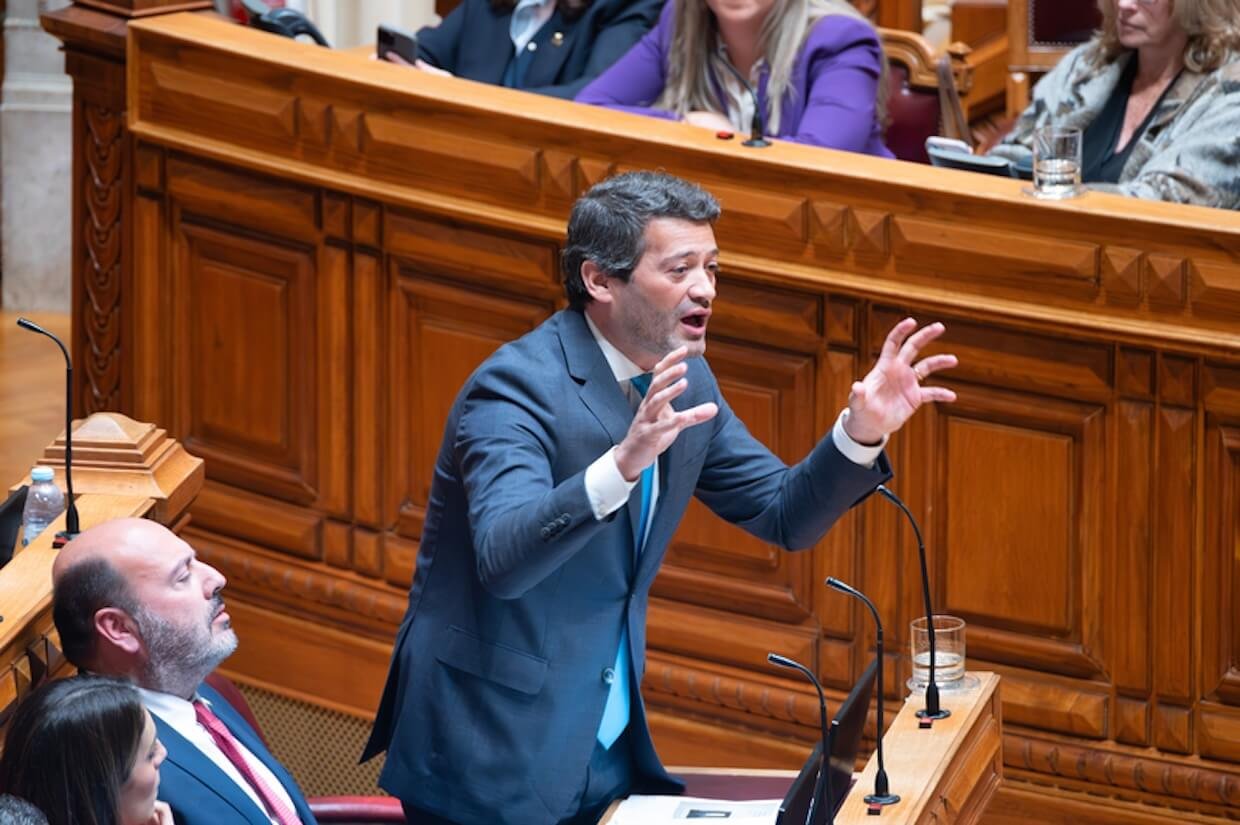
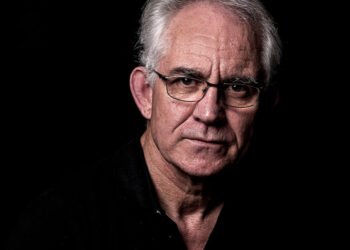
Dr. Hugo Ferrinho Lopes, thank you very much for joining our interview series. Let me start right away with the first question: Ventura’s qualification for the presidential runoff marks an unprecedented moment for the Portuguese far right. How should we interpret his first-round performance in relation to the 2024 snap elections? Should it be understood as a continuation of party-system transformation toward polarized pluralism, or as a distinct presidential dynamic reshaping existing voter coalitions?
Dr. Hugo Ferrinho Lopes: Thank you very much for having me. I would argue that this development largely reflects the ongoing transformation of Portugal’s party system. Ventura’s presence in the runoff is less a sudden presidential earthquake than a clear manifestation of a party-system shift that has already been underway.
What I mean is that, one year earlier, in the general parliamentary elections, Chega’s legislative breakthrough signaled a departure from the traditional two-party system. In the first round of the 2026 presidential election, this shift was further reinforced by a coordination problem on the mainstream right. We witnessed several viable center-right and right-wing candidates competing simultaneously, which fragmented the vote and lowered the threshold for Chega to secure second place—an outcome that Ventura ultimately achieved.
In Sartorian terms, the longer-term trend in Portugal points to increasing fragmentation and growing ideological distance among the main parties and candidates. The distinct dynamics of presidential elections—shaped by personalization and strategic voting—are likely to accelerate a transformation that is already well underway in the Portuguese political system.
Why Declining Abstention Worked in Ventura’s Favor
The decline of abstention has been one of the most striking features of recent Portuguese elections. To what extent does the 2026 first round confirm your earlier finding that increases in turnout disproportionately benefit Chega, and what does this suggest about the political activation of previously disengaged voters?
Dr. Hugo Ferrinho Lopes: There are two main points I would like to emphasize here. First, the incumbent president, Marcelo Rebelo de Sousa, is constitutionally barred from running for a third term. In Portugal, when presidential elections take place without an incumbent seeking re-election, turnout tends to increase and abstention tends to decline, because the perceived odds of victory for competing candidates are higher. Historically, all Portuguese presidents who have run for a second term have been re-elected. From this perspective, it was expected that abstention would decrease in this election, at least in the first round.
Second, and more importantly, we know that turnout is closely related to voting for the far right in Portugal. In this election in particular, voting-intention data from public opinion polls show that Ventura had the most stable base of support. This means that he retained the largest share of voters who had previously voted for Chega in the legislative elections, compared to any other candidate.
By contrast, António José Seguro, who also advanced to the runoff, was less stable among socialist voters. Similarly, Luís Marques Mendes —supported and endorsed by the center-right PSD and CDS, the governing coalition—lost a significant number of votes from his party to other right-wing candidates.
As a result, we observed a first round in which Ventura amassed the largest number of votes from his own party relative to any other candidate. Other contenders not only needed to mobilize their core constituencies but also attempted to attract voters from different ideological camps. This proved far more difficult for them, and this dynamic is closely related to patterns of abstention.
Issue Ownership Opened the Door for Chega
In your work on the 2024 elections, you emphasize the “supply side” of party competition. Which supply-side factors—party fragmentation, leadership credibility, agenda ownership, or organizational reach—were most decisive in enabling Ventura’s advance to the runoff?
Dr. Hugo Ferrinho Lopes: That is a very interesting question. The first factor I would highlight is issue ownership. Applying a supply–demand logic to politics, Portugal experienced, for more than four decades, what is often described as “Portuguese exceptionalism” toward the far right: unlike in many other countries, the far right was unable to break through to Parliament. However, this situation left an opening on the supply side of party competition—particularly in the cultural and conservative dimension—for a new challenger party on the right to emerge.
For example, while the radical left in Portugal has been strong in Parliament for decades and has enjoyed stable representation—indeed, more than one radical left party has been represented—no radical right party managed to enter Parliament until 2019, with the emergence of André Ventura and Chega. Why did this happen?
First, it was due to this long-standing breach on the supply side of party competition. Second, it was related to leadership. André Ventura is an experienced politician who came from the PSD. He left the party following an internal split and benefited from extensive media coverage. Prior to founding Chega, he was a football commentator, which gave him a level of public visibility that previous far-right candidates had lacked.
There is also an additional institutional explanation. In the 2019 elections, the effective threshold of the electoral system was lower, making it easier for parties to enter Parliament with fewer votes than in previous elections. A recent example is LIVRE—a left libertarian party—which failed to enter Parliament in 2015 but secured one MP in 2019. Chega and the Liberal Initiative on the right similarly entered Parliament in 2019 with fewer votes than would have been required in earlier elections.
Once inside Parliament, the media coverage Ventura received and the institutional space to disseminate his message made further growth much easier in the years that followed.
The De Facto Cordon Sanitaire Around Chega
Portugal’s presidential elections traditionally reward moderation and cross-party appeal. Does Ventura’s strong showing indicate a weakening of this logic, or has Chega successfully adapted its populist appeal to the presidential arena without fundamentally expanding its social base?
Dr. Hugo Ferrinho Lopes: Ventura’s presidential campaign is, in many ways, a continuation of the strategy he pursued in the parliamentary elections one year earlier. That said, presidential elections in Portugal have historically favored moderation and centrist candidates, and this pattern was still visible in the first round. If we look at the vote shares, candidates occupying moderate ideological positions collectively garnered far more support than Ventura. We are seeing a similar dynamic unfold in the runoff campaign.
Although we have only limited data so far, as the second-round campaign has just begun, most supporters of the eliminated candidates indicate that they are inclined to vote for Seguro rather than Ventura in the runoff. This reinforces my earlier point: Ventura’s support base is remarkably stable, with only marginal expansion beyond his core voters, while supporters of other candidates tend to coalesce around the alternative contender.
What does this imply? Essentially, Ventura is competing against himself, attempting to marginally expand his vote share, while all other candidates—now consolidated behind Seguro, who placed first in the opening round—are effectively competing against Ventura. In this sense, it becomes a contest of Ventura versus everyone else. This pattern aligns with findings in the literature on affective polarization, which show that the far right tends to be the primary target of hostility and negative affect, often to a greater extent than the hostility expressed by right-wing voters toward other parties. In practice, this amounts to a de facto cordon sanitaire around Chega in the second round.
Grievance, Not Poverty, Fuels Chega’s Regional Strength
Chega has performed particularly well in regions historically dominated by the center-right and, in some cases, the left. How do you assess the role of territorial grievance, regional economic restructuring, and perceived political neglect in shaping Ventura’s first-round electoral geography?
Dr. Hugo Ferrinho Lopes: That’s a very good question. Ventura’s electoral geography fits a broader European pattern. Places that feel bypassed by economic growth and unheard by the political center—namely Lisbon—tend to become more receptive to anti-establishment political entrepreneurs. Recent work on Portugal, for example a study by João Cancela and Pedro Magalhães links radical right support in these regions—often rural and formerly left-wing, even communist, strongholds—to perceived political neglect and broader economic transformations, rather than to a simple story of poverty.
What this suggests is that the key mechanism is often mediated: grievance, distrust, and resentment create openness to punitive, nativist, and anti-elite messaging, rather than voting behavior being driven solely by material hardship. In southern Portugal and in rural areas more broadly, voters are therefore more likely to support the radical right because they feel politically neglected and marginalized by decision-makers.
The Youth Gender Gap and Chega’s Electoral Future
Post-2024 analyses highlighted Chega’s disproportionate support among young, less-educated men and the emergence of a “modern gender gap.” How does the 2026 first-round vote confirm or complicate this sociological profile, and what does it imply for long-term ideological realignment?
Dr. Hugo Ferrinho Lopes: At this stage, we have very limited data from the first round, so any assessment must remain tentative. More robust evidence will emerge in the coming months. That said, existing data for Portugal point to a pronounced youth gender gap in far-right support, with young men far more likely than young women to back far-right parties—Chega in particular. This pattern is also consistent with trends observed across other European and Western democracies.
If this profile is reproduced in the second round of the 2026 presidential elections, it would suggest the presence of a pipeline for long-term ideological realignment. If, however, the pattern softens, it would indicate that Ventura’s presidential surge reflects coalition broadening rather than cohort deepening. Ultimately, more data will be needed to assess this dynamic conclusively.
Is Chega Still Expanding—or Hitting Its Limits?
Your research on party membership switching suggests that Chega mobilized “latent populists” rather than converting ideologically moderate voters. Does Ventura’s presidential performance suggest that this reservoir of latent support is still expanding, or are we approaching a ceiling effect?
Dr. Hugo Ferrinho Lopes: We may be approaching a ceiling effect, but it is still too early to tell. What we know so far relates to the supply-side dynamics I mentioned earlier. Many party members who were previously housed in other parties switched to Chega once a viable radical-right alternative became available. These were politically interested citizens who had already chosen to participate in politics through the options available to them at the time. When this new option emerged and became electorally viable—which is crucial—they felt able to switch to it.
That said, we do not yet know whether a ceiling effect has been reached, because this would require observing at least one election in which Chega or Ventura stops growing. At this stage, we cannot determine whether citizens’ preferences are stabilizing or continuing to shift over time.
What we do know, however, is that the far right has been increasingly successful in imposing its agenda on the media and on other political parties. These actors are now responding to the incentives set by the far right by prioritizing issues such as security and immigration. Immigration is a good example. For decades, Portugal stood out as one of—perhaps even the—European countries where the salience of immigration was lowest. In the standard Eurobarometer question asking citizens to name the three most important issues facing their country, immigration was frequently mentioned in most European democracies, but far less so in Portugal.
Although immigration remains less salient in Portugal than in many other countries, its importance has increased significantly over the past two years. This signals that Ventura and Chega have been able to place this issue firmly on the political agenda. We have also seen other parties responding to this rising salience, not only by positioning themselves against it, but also through concrete policy responses—for example, government legislation on the issue.
From Abstainers to the Right: A Narrow Path to Expansion
Chega’s rise has been driven largely by voters defecting from the mainstream center-right. How has this pattern shaped Ventura’s claim to leadership of the “non-socialist space” in the presidential election, and what limits does it impose on his runoff strategy?
Dr. Hugo Ferrinho Lopes: Ventura can plausibly claim that he represents the pole of the non-socialist electorate, but there are two important caveats. First, he draws more support from former abstainers than from the mainstream right, even though he does attract some voters from the PSD and CDS. Overall, however, his gains come primarily from previously disengaged voters rather than from direct transfers within the center-right.
Second, the runoff presents a different strategic context. In the second round, Ventura must rely on voters from parties that are unwilling to formally endorse him. A clear example is the PSD leadership, which refused to support either of the two candidates who advanced to the runoff. In this context, mobilizing center-right voters through individual-level choices rather than party-led coordination is far more difficult, creating a ceiling for Ventura’s expansion. Without elite cues and under greater public scrutiny, it becomes harder for Chega—and for Ventura in particular—to move beyond its core protest electorate.
Ventura the Brand, Chega the Machine
Presidential elections personalize politics more strongly than legislative contests. To what extent is Ventura’s success best explained by André Ventura as a political entrepreneur, rather than by Chega as a party organization?
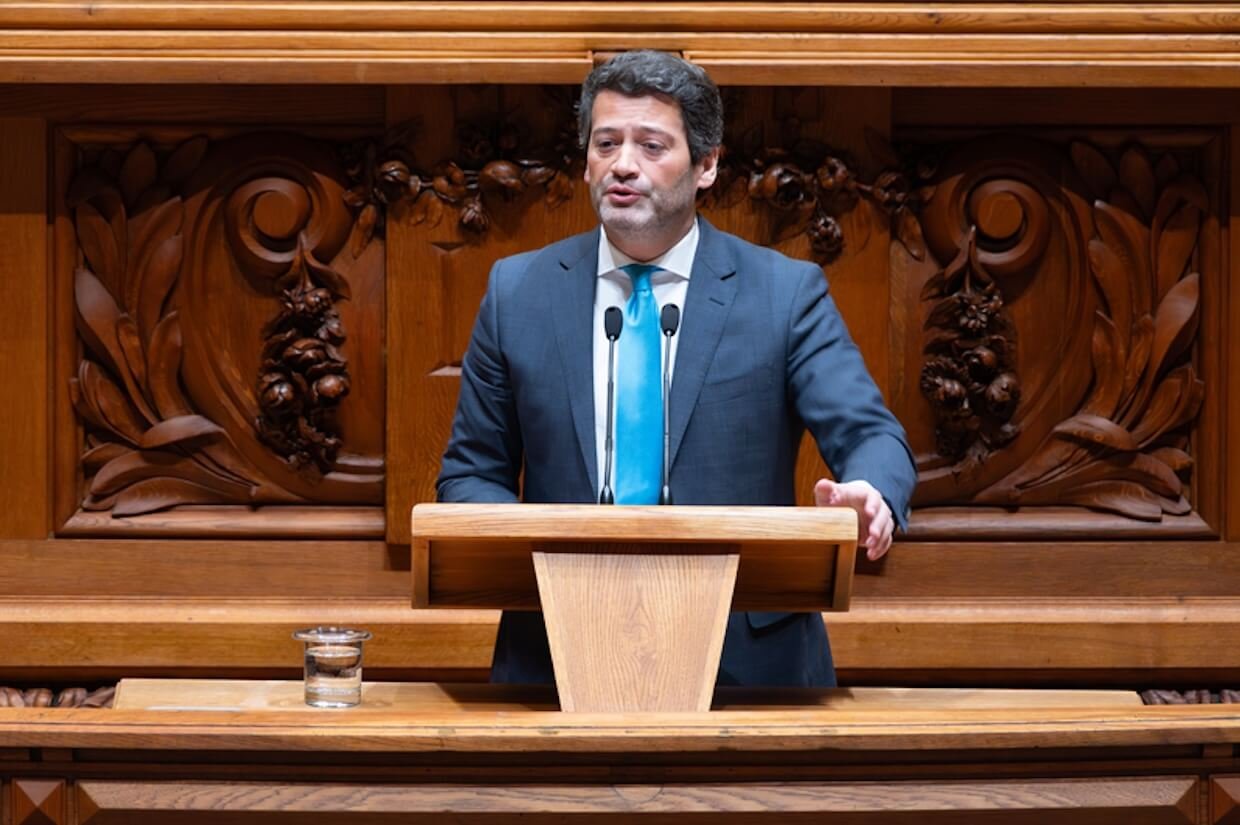
Dr. Hugo Ferrinho Lopes: Ventura is clearly the brand; he is a political entrepreneur, as I have noted before. At the same time, Chega as a party has increasingly become the organizational machine that makes this brand effective. Ventura is electorally viable, and when he is not running, Chega’s results tend to be significantly lower than when he is on the ballot. Still, the party structure matters, and Chega now has a substantial grassroots base actively working on its behalf.
In presidential elections, voters tend to reward candidate-centered campaigns, making the contest highly personalized. In this respect, Ventura’s media skills are a clear asset. Yet Chega’s rise as a major political actor also signals growing organizational penetration and normalized visibility. What we are witnessing is a shift from an initial entrepreneurial breakthrough driven by Ventura toward a gradual—but increasingly solid—process of party institutionalization by Chega itself. This is an incremental development, not one that occurs overnight.
Authoritarian Appeals Mobilize Some—but Not Enough
Your findings indicate that Chega switchers often exhibit higher authoritarian attitudes than first-time party members. How might this shape Ventura’s rhetoric and positioning in a second-round contest that requires broader democratic legitimacy?
Dr. Hugo Ferrinho Lopes: First, my findings suggest that switchers resemble latent populists who were activated by the rise of Chega as a viable alternative. However, when we examine the data in more detail, we see that the higher levels of authoritarian values are driven mainly by former right-wing party members who switched to Chega.
What does this mean? It means that most of Chega’s base—around 74 percent—consists of first-time members who joined the party for a variety of reasons. In contrast, those coming from right-wing parties joined Chega primarily because they felt that the PSD and CDS no longer represented what they considered important in the sociocultural domain, particularly in terms of values and authoritarian preferences. As a result, these attitudes are not evenly distributed across Chega’s grassroots.
Second, in the context of the presidential runoff, Ventura needs to appeal to a much broader electorate. Relying solely on authoritarian and nativist appeals is therefore insufficient, as he must attract voters from the center-right. Voters who have not previously switched electorally to Chega are unlikely to do so based only on authoritarian cues. Consequently, Ventura needs to go beyond these appeals in the second round.
Anti-System Rhetoric Meets Institutional Trust
Some Chega supporters display relatively higher institutional trust than expected for a populist radical right electorate. How does this tension shape Chega’s “anti-system” discourse when competing for an institutionally symbolic office like the presidency?
Dr. Hugo Ferrinho Lopes: Chega’s base within the party generally distrusts politicians and political institutions. However, within its grassroots—at the level of party membership—those who switched from another party to Chega tend to display higher levels of institutional trust. This points to a legacy effect among those who were politically experienced prior to joining Chega, even though overall trust in institutions remains quite low. This suggests that many of these switchers moved to Chega primarily for ideological reasons, not solely because of institutional distrust or anti-elite sentiments. They are therefore mobilized more by ideological cues than by explicitly anti-system appeals.
This tension produces a dual message for the party. On the one hand, Chega needs to argue that the system is broken; on the other, it must present itself as capable of safeguarding the nation’s institutions. This balancing act is particularly difficult in presidential elections, given the debates surrounding the limits of presidential power and the Constitution—whether Ventura embraces those limits or seeks to revise them. Since the president does not hold executive power, the role is closer to that of a moderator. Ventura must therefore convince his electorate that he can still meaningfully influence policy despite not being part of the executive or the cabinet.
Between Containment and Accommodation
The refusal of the PSD to endorse a runoff candidate highlights elite fragmentation on the right. How does Ventura’s runoff presence recalibrate elite incentives around containment, tacit accommodation, or strategic neutrality?
Dr. Hugo Ferrinho Lopes: The PSD’s neutrality is a way of avoiding two risks at once: legitimizing Ventura on the one hand, and alienating voters who might defect if given explicit instructions on the other. In terms of party competition, this reflects a form of elite coordination failure with a strategic rationale. The party is attempting to contain Chega organizationally while allowing individual voters the space to vote strategically in the runoff.
Over time, this situation recalibrates elite incentives. Some elites double down on non-accommodation, while others experiment with selective or tacit accommodation toward Chega. Despite this, most PSD elites are, in practice, supporting Seguro against Ventura in the runoff.
Above all, the governing party is trying to avoid giving Ventura the opportunity to claim that it is aligned with the Socialists or the left, or to be accused of accommodating the left rather than the right. Nevertheless, the reality is that most governing party elites are backing Seguro against Ventura.
This stance is neither full strategic coordination nor outright accommodation; rather, it represents an attempt to occupy a middle ground. That strategy carries risks for PM Luís Montenegro and the governing party, because they do not want Ventura to secure even a single vote more than Chega obtained in the legislative elections. Otherwise, Ventura could claim—despite losing the presidential race—that he enjoys greater electoral legitimacy than the prime minister, on the grounds that more voters support him than the government. There is therefore a shadow form of strategic coordination aimed at preventing Ventura from achieving further electoral success.
Normalizing Chega at the Presidential Level

Portugal’s semi-presidential system grants the president significant agenda-setting and veto powers. Even if Ventura is unlikely to win, how might his normalization as a runoff contender reshape expectations about presidential authority and democratic restraint?
Dr. Hugo Ferrinho Lopes: If Ventura loses the election, then there is no immediate risk. What it does is normalize the idea that a Chega-aligned presence in the presidential arena is thinkable, and it extends the party’s shadow over issues such as veto power, agenda-setting, and signaling—particularly through the president’s ability to publicly highlight certain issues as priorities when meeting weekly with the prime minister. International coverage of this election has often emphasized that the Portuguese presidency, despite frequently being described as largely ceremonial, still retains meaningful powers, including the veto and the dissolution of Parliament, which can be consequential under minority governments, such as the current one. However, with Ventura remaining outside the presidency, it is unlikely that expectations regarding presidential powers themselves—rather than government stability or future alternation in office—will change in any significant way.
An Uncertain Path for Portugal’s Radical Right
And finally, Professor Lopez, taken together—rising turnout, party-system fragmentation, youth realignment, and Chega’s organizational consolidation—what is your best scholarly prognosis for the populist radical right in Portugal? Are we witnessing a durable opposition hegemony, a future coalition actor, or the gradual construction of governing viability?
Dr. Hugo Ferrinho Lopes: That is a very good question, and one to which I do not have a clear answer—both in the absence of a crystal ball and because current government signals point in different directions. The government has been pursuing piecemeal deals with both the Socialists and the radical right to pass legislation, while the opposition often coordinates to block the government, including cooperation between the Socialists and the far right. As a result, the situation remains difficult to assess.
That said, as long as Luís Montenegro remains the leader of the PSD, the party is unlikely to enter a coalition with the radical right or include it in government. However, if Ventura were to win an election at some point, Montenegro would likely resign as PSD leader, and it is unclear who would succeed him or what strategy a new leader would adopt—whether a German-style cordon sanitaire or a path toward accommodation or coalition-building with the far right.
At this stage, the trajectory remains highly unpredictable. I realize this may not be the definitive answer you were hoping for, but it is the most accurate one that can be offered at present.