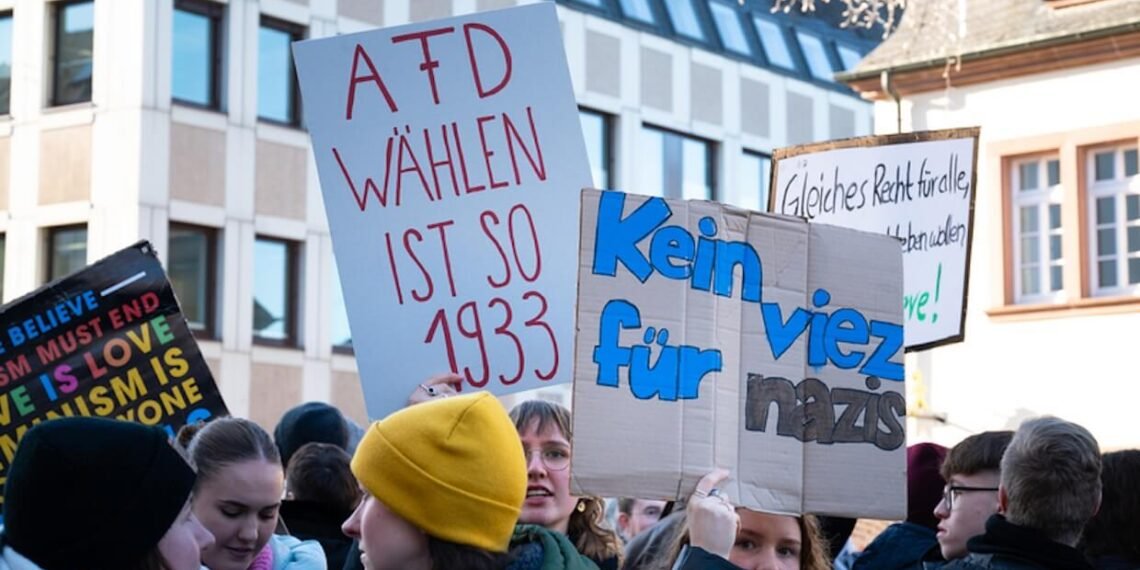
In this ECPS interview, Dr. Sophie Suda, Postdoctoral Researcher in Comparative Politics at the University of Basel, examines the AfD’s transformation from a protest party into a broader political force capable of mobilizing multiple grievances across Germany. She argues that the party’s rise cannot be explained by eastern German exceptionalism or immigration alone, but reflects the interaction of structural neglect, economic insecurity, political distrust, and effective grievance mobilization. Dr. Suda cautions that dismantling the Brandmauer or imitating AfD positions would further legitimize the radical right rather than win voters back. Instead, she emphasizes effective policy delivery, sustained investment in neglected regions, political representation, and clearer party differentiation as the more viable democratic response to the AfD’s continued advance.
Interview by Selcuk Gultasli
Germany’s party system is entering a period of profound strain as the Alternative für Deutschland (AfD) expands beyond its earlier identity as a protest formation and establishes itself as a durable force across an increasingly broad range of policy domains. In this interview with the European Center for Populism Studies (ECPS), Dr. Sophie Suda, Postdoctoral Researcher in Comparative Politics at the University of Basel, argues that the AfD’s recent trajectory cannot be reduced either to eastern German exceptionalism or to a single grievance such as immigration. Instead, she describes a party that has become “a broader political phenomenon rather than simply a vehicle for protest,” increasingly credited by voters not only on migration and security but also on the economy and social security.
For Dr. Suda, the AfD’s rise reflects the convergence of long-term structural grievances, economic insecurity, distrust of political elites, demographic decline, and the party’s capacity to mobilize disaffected and previously non-voting citizens. In eastern Germany, post-reunification legacies still matter: unemployment, infrastructure deficits, regional neglect, and the perception that political elites “did not care about” large parts of the population have created fertile ground for the party. Yet she cautions against treating this as a uniquely eastern phenomenon, stressing that far-right and nativist attitudes have existed elsewhere as well and that the crucial change is the emergence of a party capable of effectively mobilizing them.
At the center of the conversation is the increasingly contested question of how mainstream parties should respond. Dr. Suda firmly rejects the idea that the Brandmauer, or firewall, has failed simply because the AfD has continued to grow. Its purpose, she argues, is not “to keep the AfD small,” but to define the limits of political cooperation and prevent its entry into office. Bringing the party into government, in her view, would produce “greater legitimization and inclusion, not fewer voters for the AfD.” Nor does she expect governing responsibility to moderate the party ideologically: institutional constraints may limit what populist or extremist parties can do, but “participation in government is more likely to lead to legitimization.”
Her prescription for mainstream parties is therefore sharply defined: do not dismantle the firewall, do not imitate the AfD, but deliver. Copying its positions—particularly on immigration—“does not win voters back either; it simply legitimizes those positions, while voters still choose the original in the end.” The more promising strategy lies in effective governance, sustained investment in neglected regions, political representation, and clear programmatic differentiation. As Dr. Suda puts it, parties must remain “distinguishable while also demonstrating that [they] can deliver.”
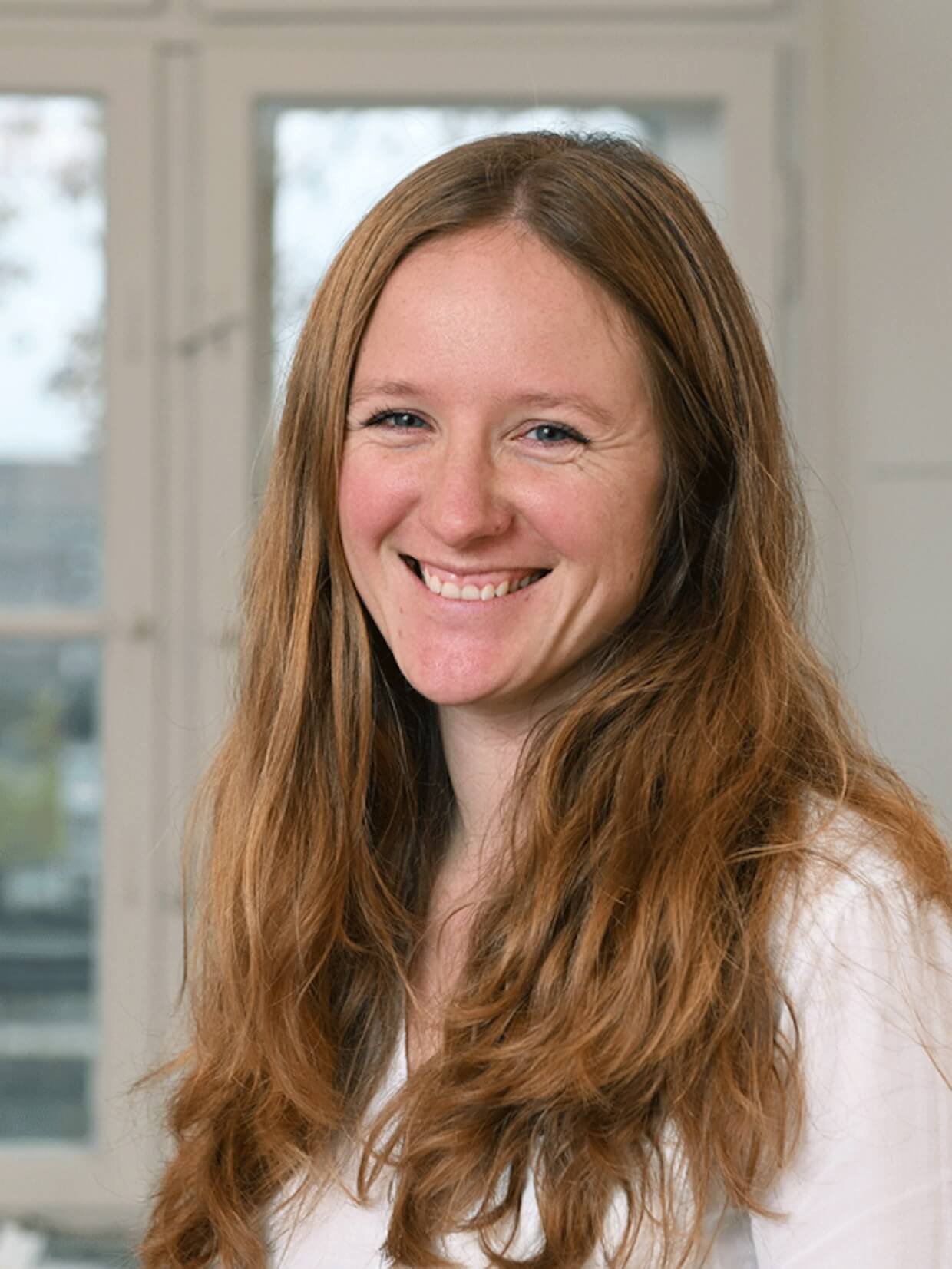
Here is our interview with Dr. Sophie Suda, edited lightly to enhance clarity, readability, and overall flow for publication.
The AfD Is No Longer Simply a Protest Party
Dr. Sophie Suda, welcome! Let me begin with Saxony-Anhalt. AfD’s 43.8% victory appears to mark more than the consolidation of a marginal protest constituency. Should we interpret this primarily as the deepening of an eastern German exceptionalism rooted in post-reunification grievances and regional alienation, or as evidence that AfD has crossed a more consequential threshold—from protest party to potential governing force, with implications for Germany’s national party system and coalition politics?
Dr. Sophie Suda: In general, the AfD is strong across Germany, not only in the east. What is particularly striking is the extent of its strength and the positive trajectory it has shown, including doubling its vote share compared with the previous election there. So, this is not necessarily a phenomenon specific to Eastern Germany. What is especially interesting is how the party has evolved. You mentioned that it may once have been described as a protest party, but we have now reached a point where that characterization no longer seems adequate.
We can see this particularly in the policy areas in which citizens attribute competence to the AfD. Traditionally, these include migration and security, where the party is perceived as highly competent, but increasingly also areas such as the economy and social security. This suggests that the AfD has become a broader political phenomenon rather than simply a vehicle for protest. There are, of course, regional differences within Germany, but these relate more to the degree of legitimization than to a phenomenon confined to particular regions.
The AfD Has Been Able to Exploit Multiple Grievances
Germany was long regarded as one of Europe’s most resilient party systems, with strong institutions, stable coalitions, and a powerful cordon sanitaire against the radical right. What, in your view, went most fundamentally wrong: economic stagnation, migration politics, distrust of elites, weak political leadership, eastern German alienation, failures of representation—or the mainstream parties’ own strategic choices?
Dr. Sophie Suda: You mentioned a lot of points, and there isn’t really one reason I can give. There are long-term grievances, including economic grievances, as well as crises and weaknesses among other parties, and all of these factors contribute to one another. Some have longer-term effects, while others are more immediate.
Especially in Eastern Germany, many people have long felt that political elites did not care about them. After reunification, unemployment was high, and there are still infrastructure problems compared with the West. At the same time, nativist attitudes have always been present, and the AfD has been able to mobilize around them. What we can see, particularly in the last election but also more generally, is that the party is very effective at mobilizing people, especially non-voters. It managed to attract more non-voters than all other parties combined.
So, there is no single reason. It is more about all these factors coming together and the AfD being able to exploit them. There is also demographic decline in many areas. All of this contributes to distrust of political elites, the federal government, and incumbents, along with the perception that people are being left alone with their problems. So, it is more about this broader sense of how people perceive politics and political elites than about any single wrongdoing.
Cooperating with the AfD Would Lead to Greater Legitimization
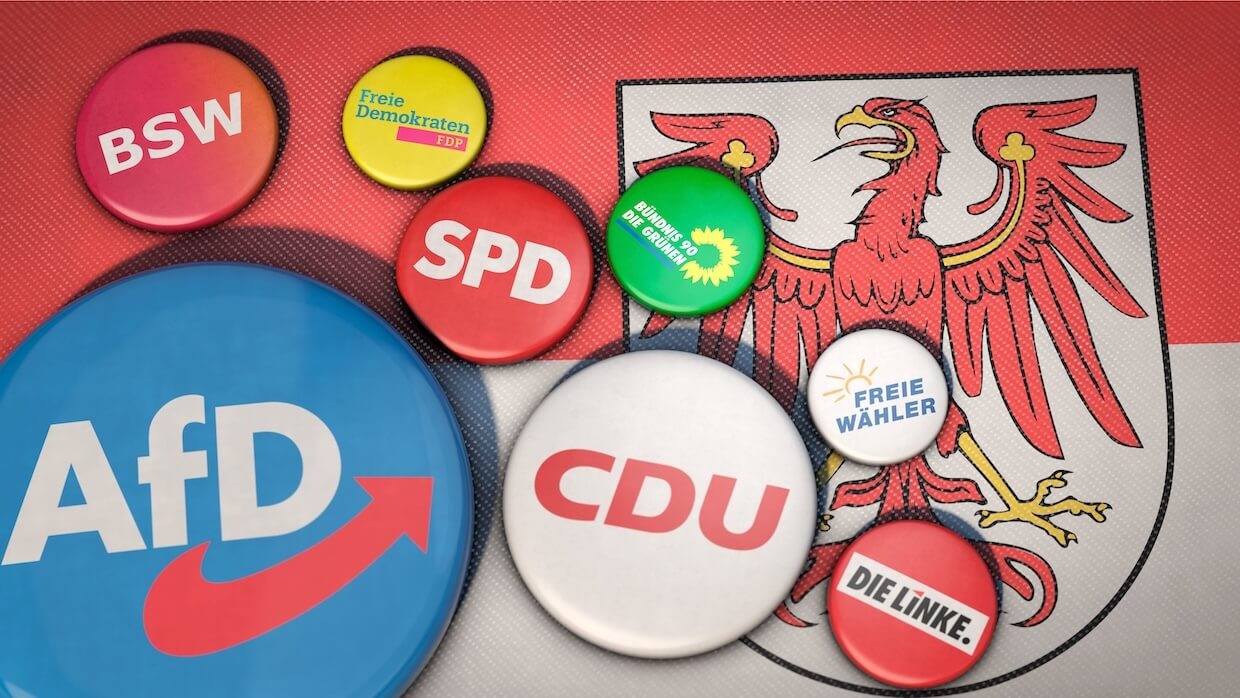
The Brandmauer (firewall) was designed to isolate the AfD, yet the party has continued to grow. Has exclusion protected democratic norms, or has it unintentionally reinforced AfD’s outsider narrative by allowing the party to claim that an entire political establishment is conspiring against its voters? At what point does democratic containment risk becoming electorally counterproductive?
Dr. Sophie Suda: As you mentioned, the Brandmauer is not there to keep the AfD small, but rather to make clear which parties you are willing to cooperate with, allow into office, or include in your decisions. So, it is not a failure in any way, because it has kept, and continues to keep, the AfD out of office.
The first question is what the alternative would be. If the alternative were to bring the AfD into office or cooperate with it, that would lead to greater legitimization and inclusion, not to fewer voters for the AfD. Another important point is that the AfD is an anti-democratic party and, at least in Saxony-Anhalt, is classified as right-wing extremist. So, parties do not really have a great deal of choice. Where they can differ, however, is between cooperating with the AfD, on the one hand, and, on the other, taking the concerns of its voters seriously and responding to this part of the population.
Parties Should Not Adapt to and Tolerate the AfD
In your research with Andorff-Woller and colleagues, you find that coalitions including populists tend to be less stable, but that this destabilizing effect diminishes where populist participation becomes more common. Does Saxony-Anhalt suggest Germany may now be approaching precisely that moment—where the question is no longer whether AfD can be excluded indefinitely, but whether the system will begin adapting to its presence?
Dr. Sophie Suda: Yes, it’s quite a difficult situation. We do find, in general, that having populist parties in government correlates with premature government dissolution. At the same time, they are also more likely to enter government in situations where there is already instability, which may further reinforce this lack of cooperation.
So, if the question is whether the political system should adapt simply to their presence, this relates to the point I mentioned earlier: they are undemocratic and an extremist party. The real question is whether other parties should adapt to that and tolerate it, and I believe they should not. They should draw a clear line where certain forms of behavior begin to pose a risk of democratic decline.
Populists in Government Do Not Generally Become More Moderate
Your work raises a difficult possibility: populist parties may become institutionally normalized without becoming ideologically moderate. If AfD eventually enters a state government, should we expect governing responsibility to constrain it, or could normalization instead legitimate radical positions while leaving its anti-pluralist core largely intact?
Dr. Sophie Suda: To some extent, they would be institutionally constrained, because in a state or federal government, you cannot simply do whatever you want. There are constraints from the courts, the EU, and the federal government. But those constraints are institutional, not ideological. Ideologically, extremist or populist parties in government do not generally change their positions or become more moderate. Instead, participation in government is more likely to lead to legitimization.
Other research also shows that when such parties enter government—whether as a junior partner, senior partner, or in a single-party government—democratic quality immediately declines, particularly in terms of minority rights and liberal freedoms. So, this is not a situation in which governing responsibility would necessarily make them more moderate.
The AfD Is No Longer Defined Primarily by Anti-Immigration

AfD’s victory in Saxony-Anhalt coincided with deep dissatisfaction with the CDU-led political establishment, economic insecurity, cost-of-living pressures, and very low confidence in Chancellor Merz. Yet immigration was not necessarily the dominant concern for all voters. Does this suggest AfD is now succeeding because it has transformed itself from a single-issue anti-immigration party into a broader vehicle for accumulated anti-system discontent?
Dr. Sophie Suda: The AfD has always been quite effective at incorporating many different sources of dissatisfaction. Even when it began as an anti-EU party and later became strongly associated with immigration, its appeal was never limited to that issue. During COVID, around pro-Russian attitudes, and amid various other crises, the party was able to capitalize on a wide range of grievances.
I think the main difference now is this broader approach. At least in Saxony-Anhalt, immigration was not even such a major issue, nor the most important one. Yet the AfD manages to gain credit, or to be perceived as competent, across a wide range of policy areas. That is what is new. So, becoming broader and being seen as competent in almost all policy areas marks a significant change.
Reunification Provided Fertile Ground for AfD Support
Your earlier work on Mecklenburg-Vorpommern highlighted persistent east-west differences, weaker economic performance in eastern districts, border effects, and the importance of regional neglect, while also warning against monocausal explanations. How much of AfD’s strength today can still be explained by post-reunification grievances, and how much has become a more contemporary rebellion against the Federal Republic itself?
Dr. Sophie Suda: Looking only at historical explanations is definitely too simplistic. Historical legacies matter, and they matter considerably in shaping the level of support, but they do not really explain why the AfD suddenly doubled its number of voters, or its vote share, and why this increase occurred.
There are still many structural factors that were, or are, the result of reunification, such as economic problems and infrastructure. Many companies were also dissolved or bought up by Western German firms. These are structural factors that can benefit the AfD everywhere, but in eastern Germany many of them come together. There are also longstanding far-right strongholds that the party can now draw on. In that sense, reunification created many of the conditions that help explain why people vote for the AfD and provided fertile ground for its support.
At the same time, when we look at social norms and the way far-right ideas have become normalized, this is not something specific to eastern Germany. Far-right and nativist attitudes existed elsewhere as well; what has changed is that there is now a party capable of mobilizing them. So, the recent increase is better explained by shorter-term factors that the AfD has been able to exploit and mobilize around.
Neglected Areas Can Be Won Back
Your 2021 analysis showed that targeted regional investment, stronger political attention to neglected areas, and a popular, credible incumbent helped the SPD cut into AfD strongholds in Mecklenburg-Vorpommern. Does the current AfD resurgence there suggest that those gains were temporary, or that mainstream parties failed to institutionalize the lesson that territorial neglect and political distance must be addressed continuously rather than episodically?
Dr. Sophie Suda: To some extent, it shows the latter. In 2021, several factors came together to explain why the SPD performed so well. There were a number of short-term factors: the incumbent was quite popular, the AfD candidate was very weak, and there was also a favorable federal trend for the SPD.
But the previous government had also pursued this Vorpommern strategy, especially in the east of Mecklenburg-Vorpommern, where the AfD was, and remains, strong, and where it had previously been particularly strong. They had a long-term strategy of investing in the region. So, it was not only about short-term factors. They also had a parliamentary state secretary who focused on this region. It was therefore also about political attention and representation.
They also managed, perhaps more than now, to deliver on a number of policies, such as childcare. So, it was this combination of short-term factors and a longer-term strategy of reaching voters, especially in the East.
Saxony-Anhalt Could Produce Either AfD Momentum or Counter-Mobilization
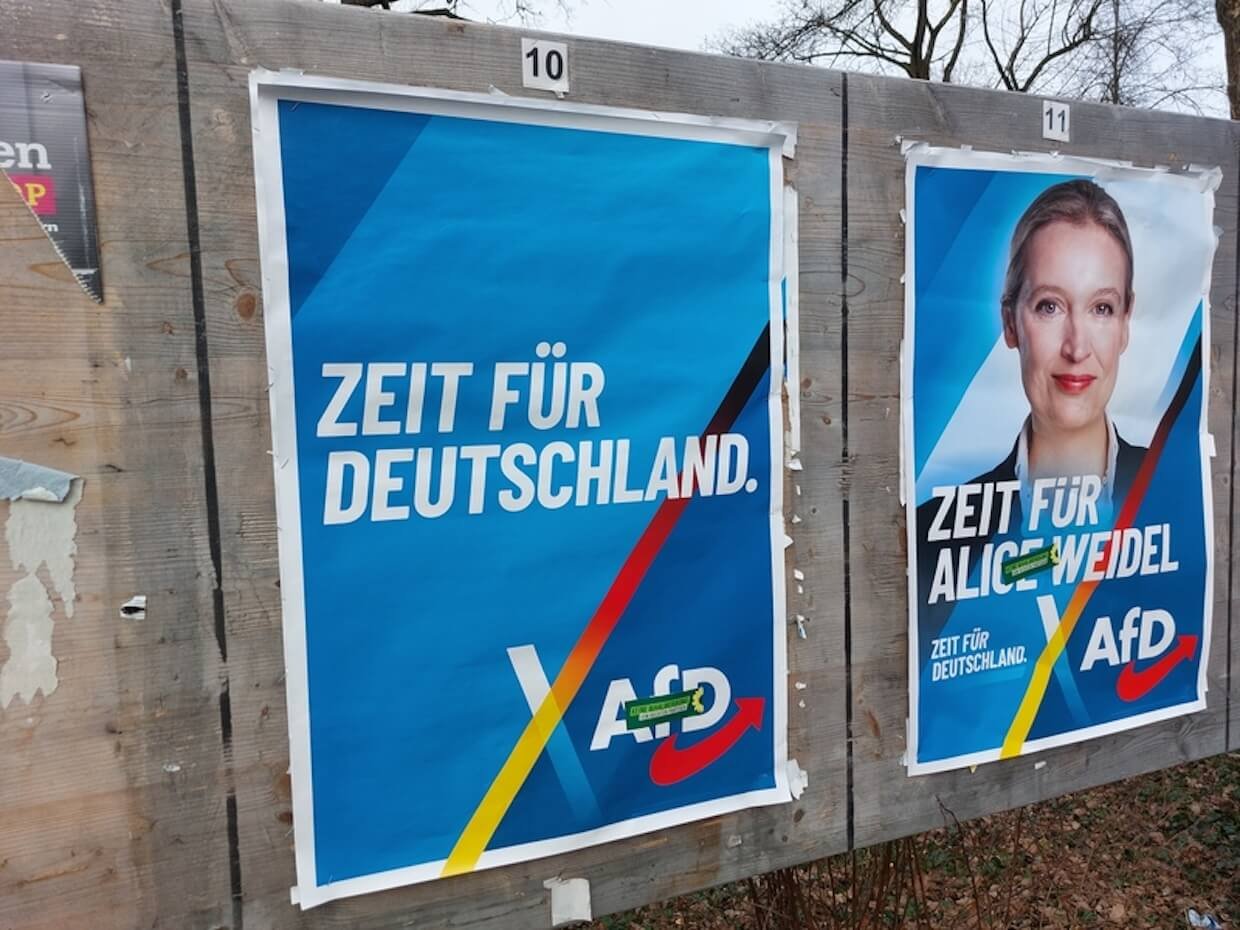
AfD now leads the latest Mecklenburg-Vorpommern poll with 35%, while the SPD has recovered to 32%. Given that AfD received only 16.7% there in 2021, what would a possible AfD victory on September 20 signify? Would it confirm a durable realignment of eastern German politics, or could candidate effects, government satisfaction, and late mobilization still reproduce something closer to the 2021 outcome?
Dr. Sophie Suda: Looking at the polls now, it seems quite likely that the AfD will make enormous gains. At the same time, the candidate effect still favors (Minister-President of Mecklenburg-Vorpommern) Manuela Schwesig, whom voters across most of the political spectrum continue to prefer over AfD’s Leif-Erik Holm —though not, of course, among AfD voters.
There are also still many undecided voters, so the key question now is who will be able to mobilize them. It will also be important to see whether the AfD can benefit from the momentum generated by its success in Saxony-Anhalt, or whether that result instead produces a counter-mobilization among other voters.
Berlin Would Show That the AfD Is Not Just a Rural Party
Berlin presents almost the opposite social and political environment: a large, diverse, metropolitan electorate in which CDU, Linke, Greens, and AfD are all competing near the top while the SPD has fallen sharply. If AfD approaches or exceeds 18–20% in Berlin, would that be more consequential than an even larger result in eastern rural Germany because it would demonstrate that AfD’s appeal has broken decisively out of its traditional geographic and sociological strongholds?
Dr. Sophie Suda: Yes, perhaps symbolically to some extent, because they can show that they are not just a rural party. But, in general, they are strong across all German states, and the difference is that in Berlin they will not be able to govern. So, the actual consequences would not be as significant as they potentially are in Saxony-Anhalt. This result would therefore confirm that the AfD is strong, but it would not necessarily have the same consequences as the party reaching almost 44% in other states.
Parties Must Cooperate without Losing Their Political Identity
Germany’s mainstream parties have increasingly been forced into ideologically awkward coalitions whose principal common denominator is excluding AfD. Can such alliances remain democratically persuasive if voters perceive them as programmatically incoherent? At what point does coalition engineering to contain AfD begin to deepen the very anti-establishment resentment on which AfD thrives?
Dr. Sophie Suda: It fits the AfD narrative quite well when all other parties are portrayed as the same and as part of a corrupt elite, while the AfD presents itself as the only alternative that looks after voters. But the AfD makes that claim regardless of who is governing. So, while this fits its narrative, it does not necessarily change what the party is doing or the approach it takes.
I think the more important point is that these coalitions have to govern and cooperate effectively. That is, of course, difficult when they bring together more parties with greater ideological differences. On the one hand, they have to cooperate; on the other, they must show voters what they stand for and demonstrate that not all elites are the same. Each party has to maintain a clear identity, deliver for its voters, and show that it can produce effective policies. That is the greater difficulty with these coalitions.
Cooperation and Efficiency Can Reinforce Each Other
Your research with Detlef Jahn shows that executive efficiency and consensus capacity need not be opposites and can jointly improve policy performance. Has Germany’s current problem become precisely a failure to combine the two—a political system still oriented toward consensus but increasingly perceived by citizens as unable to deliver decisively on growth, migration, infrastructure, energy, and public services?
Dr. Sophie Suda: Yes, this is exactly what we find. Sometimes cooperation and efficiency are perceived as a trade-off, but in fact they can reinforce each other and produce better policy outcomes. The key question is how to combine them, in which areas, and how governments coordinate effectively enough to achieve both.
There has always been competition between parties, and there still is. But when parties govern together, they also have to cooperate across many areas. At the same time, they need to remain sufficiently distinct for voters to understand what each party stands for. So, you need consensus to reach decisions, but also efficiency in implementing them.
To some extent, this is where Germany has struggled in the past. We had many grand coalitions in which center-left and center-right parties governed together, but the compromises they reached did not necessarily satisfy voters on either side. In recent years, parties have probably failed to communicate clearly enough what they stand for.
The AfD Is Very Effective at Exploiting Crises
Your recent work on critical events finds that governing parties tend to converge and project unity during externally driven shocks, whereas opposition parties have incentives to differentiate themselves and exploit grievances. Has AfD become unusually effective at turning successive crises—Ukraine, migration, inflation, energy insecurity, the Middle East, and economic stagnation—into a permanent opposition advantage?
Dr. Sophie Suda: Yes, they are quite good at exploiting this. In general, this is what all opposition parties do to some extent when there is a crisis or external event. They can use that to show how they are different, and they can criticize the government, especially when it is an important event. There have been many crises now, which also leads to a lot of insecurity, and the AfD works on that, builds on that, and exploits it, essentially.
We Should Not Expect a Change in German Foreign Policy
AfD’s pro-Russian orientation and opposition to continued support for Ukraine distinguish it sharply from the German foreign-policy mainstream. Your research shows that critical foreign-policy events usually strengthen cohesion among governing parties while opposition parties strategically distance themselves. Could AfD’s electoral rise eventually break Germany’s post-2022 foreign-policy consensus and constrain Berlin’s ability to lead within NATO and the EU?
Dr. Sophie Suda: At the moment, no. Part of the campaign in Saxony-Anhalt focused on foreign policy, but state governments do not decide foreign policy, so they have little power to change it. Supporting Ukraine, for example, is an essential part of Germany’s foreign policy, and there is no intention to change that.
Our research on cohesion shows that governing parties tend to stick together and become more cohesive during foreign-policy crises, at least to some extent and for a certain period. This is also an area where Friedrich Merz enjoys support within his own party and among voters, especially compared with other policy areas. So, for him, this is probably one area he should not change.
I therefore do not think he will. Of course, there will be pressure from the AfD, and there are other parties with different foreign-policy positions, such as the Bündnis Sahra Wagenknecht (Sahra Wagenknecht Alliance -BSW). But these parties are not governing at the federal level. So, there will certainly be debate, but I do not think we should expect a change in German foreign policy.
Don’t Break the Firewall, Don’t Imitate the AfD—Deliver
And lastly, Dr. Suda, stepping back, what should mainstream German parties do now? Continuing the firewall may reinforce AfD’s anti-establishment appeal; accommodating AfD risks normalizing its radical positions; imitating its migration and cultural agenda may validate its diagnoses; and broad anti-AfD coalitions can appear incoherent. Is there still a viable democratic strategy for defeating AfD electorally—and if so, does it require better policy delivery, renewed social and territorial representation, clearer ideological differentiation, or a fundamental reconstruction of Germany’s party system?
Dr. Sophie Suda: Unfortunately, there is no single strategy for winning back 44% of voters. But the first thing parties should not do is break the firewall, because that would only lead to further legitimization of the AfD and the radical right, normalize those attitudes, and reinforce those positions. It would not win voters back.
The same applies to trying to imitate the AfD, which is something the CDU in particular, but also other parties, have tried to do in the past, including by adopting its positions on immigration. That does not win voters back either; it simply legitimizes those positions, while voters still choose the original in the end.
What parties can do—and this is easier said than done—is deliver effective policies. We saw in Mecklenburg-Vorpommern that neglected areas can be won back if there is a long-term strategy to address voters, respond to their concerns, and give them a sense of being represented, including through policies on the economy, infrastructure, and public services.
This does not require a fundamental reconstruction of the party system. It may instead require parties to adapt how they work together so that politics is not reduced to the AfD versus all other parties. At the same time, each party has to ensure that its policies remain distinguishable while also demonstrating that it can deliver. I think that is the more difficult trade-off parties are facing now.