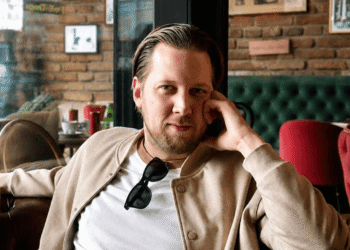

In an interview with the ECPS, Professor Dušan Spasojević of the University of Belgrade examines Serbia’s student-led electoral victory and the challenges of democratic consolidation following Aleksandar Vučić’s defeat. While mass mobilization and civic solidarity helped overcome the structural advantages of competitive authoritarianism, Professor Spasojević cautions that entrenched political divisions, Serbian nationalism, and ethnonational tensions persist. He highlights the difficulties of maintaining unity within the ideologically diverse Students’ List and rebuilding democratic institutions. Drawing lessons from Milošević’s overthrow in 2000, he warns that without lustration and accountability, former authoritarian elites may return sooner than expected. Judicial independence, media freedom, and effective enforcement of existing laws, he argues, are essential to preventing renewed authoritarianism.
Interview by Selcuk Gultasli*
Serbia’s October 25, 2026, parliamentary elections marked a historic political turning point, with the student-backed Students’ List securing 140 of 250 seats and ending Aleksandar Vučić’s longstanding political dominance. Emerging from protests following the November 2024 Novi Sad railway station tragedy, the movement transformed demands for accountability into a nationwide challenge to institutional capture, political clientelism, and personalized rule. Yet electoral victory raises profound questions about democratic consolidation, institutional reform, and the resilience of entrenched authoritarian networks.
In this interview with the European Center for Populism Studies (ECPS), Professor Dušan Spasojević, Professor of Political Science at the University of Belgrade, offers a nuanced assessment of Serbia’s democratic breakthrough, highlighting both the transformative power of student-led mobilization and the formidable obstacles confronting democratic renewal.
Drawing parallels with Slobodan Milošević’s overthrow in 2000, Professor Spasojević identifies transitional justice as a decisive test. Warning against the complacency that characterized Serbia’s earlier transition, he argues: “If we fail to carry out lustration or establish some form of accountability, they will return, and sooner than we might expect.” Indeed, he cautions that “the return of the previous regime might be even easier now than it was in 2000.” His central recommendation is to prioritize accountability, judicial independence, media freedom, and implementation of existing laws.
Yet Professor Spasojević emphasizes that electoral victory has not erased Serbia’s deep political divisions. Although student mobilization attracted previously disengaged citizens and former government supporters, entrenched urban–rural and socioeconomic cleavages persist. Moreover, the Students’ List encompasses ideological positions ranging from the far right to the far left. Consequently, “Maintaining that unity will be a key challenge for the new government and the list itself.”
The interview also illuminates how mass mobilization can challenge competitive authoritarianism. Through nationwide canvassing, citizen participation, and election monitoring, students countered the ruling party’s institutional advantages. As Professor Spasojević observes, “the elections were ultimately neither free nor fair, but they were sufficiently competitive to make victory possible.”
Importantly, the movement’s anti-authoritarian success did not necessarily entail an ideological rupture with Serbian nationalism. Professor Spasojević argues that students “didn’t challenge Serbian nationalism,” pointing to their ambiguous positions on Kosovo, Russia, and European integration. Similarly, while solidarity between Serbian and Bosniak students represented meaningful civic progress, entrenched ethnonational divisions remain. The movement’s silence surrounding Srebrenica and the limited public participation of Albanian students illustrate the constraints of reconciliation through mobilization alone.
Professor Spasojević’s analysis distinguishes electoral transformation from democratic consolidation. Serbia’s experience demonstrates the importance of solidarity and collective action, but also the necessity of dismantling authoritarian structures. His overarching warning is unequivocal: “Democracy should never be taken for granted,” even after authoritarian incumbents lose power.
Here is our interview with Professor Dušan Spasojević, edited lightly to enhance clarity, readability, and overall flow for publication.
Serbia’s Student Revolution Was Two Years in the Making
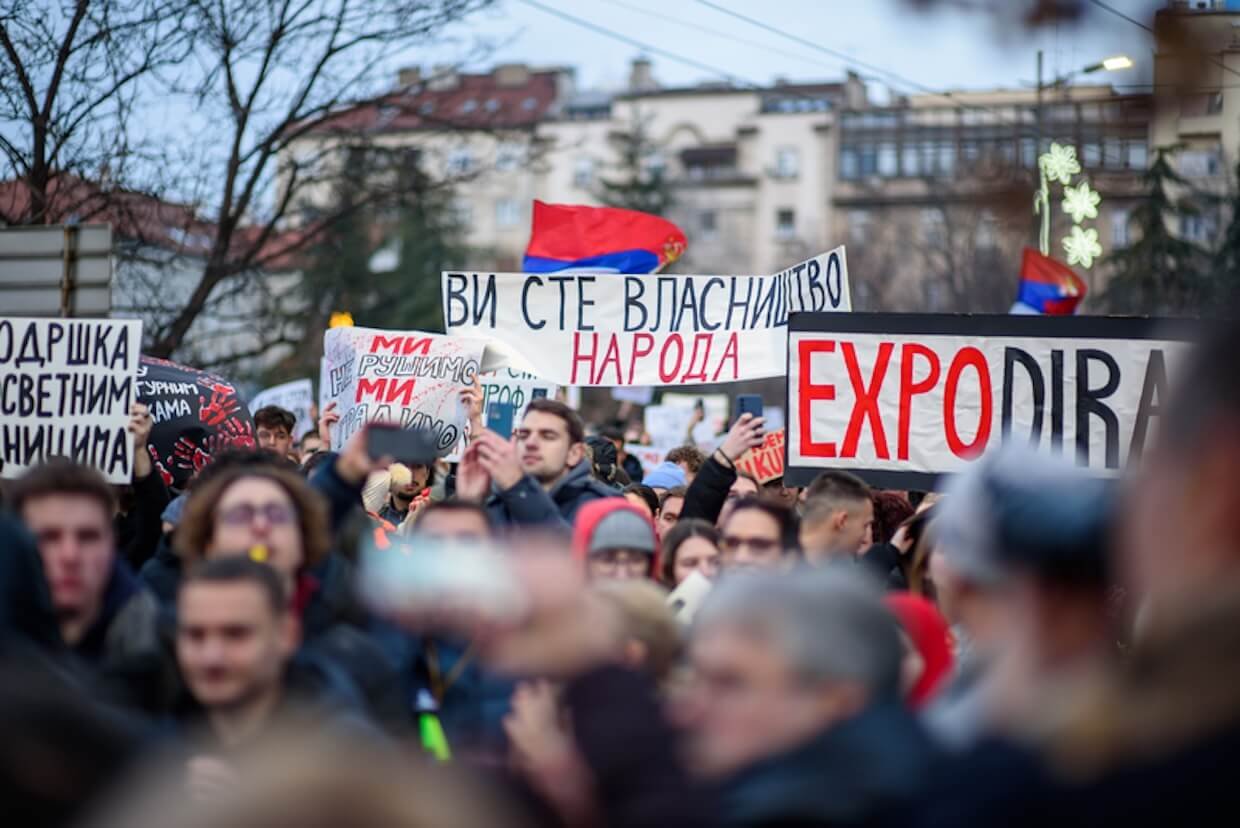
Professor Spasojević, thank you for joining us. Let me begin with the extraordinary transformation of Serbia’s student movement from civic protest into electoral victory. The student movement that emerged after the November 2024 Novi Sad railway station tragedy culminated in the Students’ List’s electoral victory on October 25, 2026. How do you explain this remarkable transformation from a movement demanding accountability into a nationwide political force capable of defeating Aleksandar Vučić’s entrenched political establishment?
Professor Dušan Spasojević: First of all, we should recognize that this was a two-year-long transformation. Students initiated protests and blockades in late 2024, and even at that early stage, they enjoyed significant public support. According to polls, more than 60% of Serbian voters supported their initial demands for accountability, providing an excellent starting point.
However, transforming a very fluid social movement into a political force capable of competing in and ultimately winning elections required considerable time and resources. Support from different parts of society was also crucial.
Finally, the students largely followed the established rules of electoral campaigning. Of course, this was not a conventional campaign, but by the end, they resembled a proper political party, albeit without notable leaders and with certain distinctive characteristics. Nevertheless, they followed the rules of electoral competition to a significant extent.
Unity Without a Single Leader Was the Students’ Greatest Strength
In your study “Civic Mobilization as a Response to Institutional Deficit,” you examine how student plenums, decentralized leadership, and nonviolent mobilization challenged Serbia’s established political practices. What made these organizational innovations more effective than previous anti-government protest movements?
Professor Dušan Spasojević: I would return to the same point I made in response to the previous question. In the early days, the student plenums were massive. Hundreds of thousands of students gathered, creating a snowball effect and lending legitimacy to the movement itself. This was extremely important at the beginning of the process.
The fact that the students had no single leader and remained united despite their differences was also important. This distinguished them from the Serbian opposition. In the later stages, oligarchic elements emerged, but the oligarchy remained sufficiently pluralistic and democratic to sustain support throughout the process. The students thus used different forms of political organization depending on the stage of the movement and the particular moment in the political crisis.
Electoral Victory Has Not Erased Serbia’s Deep Political Divisions
Students mobilized support well beyond universities through marches, rural outreach, local assemblies, and solidarity networks. How did the movement overcome Serbia’s urban–rural and generational divides, and what role did these grassroots connections play in its electoral success?
Professor Dušan Spasojević: As I mentioned, the movement already enjoyed 60% support by January or February 2025. At that point, we realized that its appeal extended beyond the usual political divisions, attracting a significant number of governing party voters. This was very important.
Door-to-door campaigning and canvassing across Serbia in the later stages of the movement were also extremely important. However, I wouldn’t go too far in claiming that the students overcame traditional political divisions. The government remains much stronger among rural voters and those with lower levels of educational attainment, reflecting a divide that persists.
Nevertheless, the students managed to attract median voters and those further removed from the government’s core constituency. In a sense, they gained what support they could, but the underlying divisions remain and cannot be overcome easily.
Rejecting Traditional Parties Helped Serbia’s Students Win
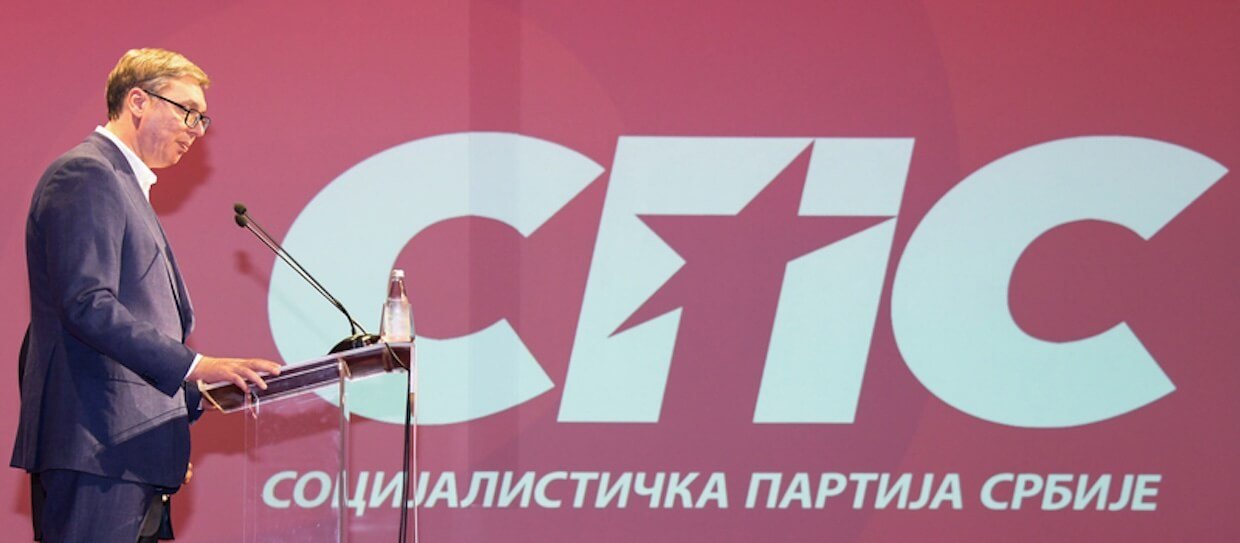
In your article “Antipolitics as a Challenge to Political Parties,” you examine the democratic implications of rejecting conventional politics. Did the students’ refusal of traditional party leadership create a new form of democratic representation, or did their electoral victory ultimately demonstrate the necessity of institutionalized political organization?
Professor Dušan Spasojević: This remains an open question to some extent. The students rejected cooperation with established political parties, which was tactically wise. But there was also an element of anti-politics and anti-partyism that helped attract certain segments of the population. We should probably acknowledge that this contributed to their success. However, in the medium to long run, I wouldn’t conclude that the success of the Students’ List demonstrates the need for new forms of political participation or organization. This appears to be a unique case, shaped by several factors, including the inability of established political parties to challenge the regime.
More concretely, the opposition parties had a good opportunity in the 2023 parliamentary elections but failed to build on that success in the 2024 local elections. Their failure to act when they had the opportunity created more space for alternative forms of political behavior. In that sense, at least for now, this appears to be a genuinely unique phenomenon. I expect that, in two or three years, political parties will once again become the dominant actors. Of course, they will not necessarily be the same parties we know today. But I don’t think this movement has the capacity to fundamentally change the way political organization works in Serbia.
Maintaining Unity Will Be the Students’ List’s Greatest Challenge
The Students’ List won 140 of 250 parliamentary seats in October, displacing both the ruling SNS alliance and established opposition parties. Does this represent a fundamental realignment of Serbia’s party system or an exceptional anti-incumbent coalition whose internal diversity may become a source of instability?
Professor Dušan Spasojević: I would lean toward the second option, as the Students’ List’s key strength was its unity. We knew that its members ranged from the far right to the far left, but they remained united under specific circumstances. Maintaining that unity will be a key challenge for the new government and the list itself.
I don’t expect a split to happen very soon, but in a year or two, differences among them will become more visible to the general public. Of course, we have already noticed these differences. That will be the first major challenge.
When we consider political alignment or realignment, there may be room to rethink Serbia’s political landscape, party system, and key social cleavages. However, if we look at how the movement has functioned so far, it has operated along these existing lines of division. I would therefore expect at least some of them to persist over time, meaning that new political actors will have to confront the same questions as their predecessors.
Some of the most important issues remain unresolved, particularly Serbia’s EU membership and the future status of Kosovo. Numerous other identity politics issues also remain highly salient in Serbian politics.
Electoral Transformation Was Driven by Unprecedented Participation
Your research with Vujo Ilić highlights persistent inequalities in electoral participation. To what extent did the students’ victory depend on mobilizing previously disengaged citizens, particularly younger voters, and what does this reveal about the relationship between civic participation and electoral transformation?
Professor Dušan Spasojević: First-time and younger voters were extremely important, but I think mobilizing people who usually abstain from voting was also decisive. I would identify three key groups: previous abstainers, young voters, and a few hundred thousand voters who switched from the former ruling parties. Mobilizing these groups was essential to winning the elections.
Overall, turnout was exceptionally high, at around 70%. However, we know that of the 6.5 million registered voters, at least one million live abroad and are unlikely to vote, although they remain on the voter rolls. Taking this into account, turnout was effectively closer to 80%, which is remarkable.
This brings us back to our experience with the downfall of Milošević and similar moments of significant political change. High turnout and broad participation are crucial to challenging such a dominant opponent. We knew, and polls also suggested, that the students only had a chance if turnout exceeded 60–65%. Of course, no one could have anticipated such a decisive victory.
Mass Mobilization Can Challenge the Structural Advantages of Authoritarian Regimes
In your research with Jelena Lončar, you characterize Serbia’s political system through the framework of competitive authoritarianism. Given the SNS’s institutional advantages, media influence, and patronage networks, how did the student-backed opposition overcome the structural asymmetries that had constrained previous electoral challenges?
Professor Dušan Spasojević: We have already mentioned some of the key elements. The students relied on their manpower. They canvassed, walked, cycled, and marched across Serbia for more than a year, trying to overcome the ruling party’s advantage in media coverage. They also benefited from strong support from independent and opposition media, particularly Nova TV and N1, which were closely aligned with the students.
Another crucial factor was the massive mobilization of citizens who became involved in the movement from its earliest days and remained engaged throughout the process. The only way to tackle the uneven playing field under competitive authoritarianism is to have sufficient numbers, resources, and people to mobilize, thereby making electoral competition somewhat fairer. Of course, the elections were ultimately neither free nor fair, but they were sufficiently competitive to make victory possible.
Citizen Election Monitoring and Democratic Self-Defense
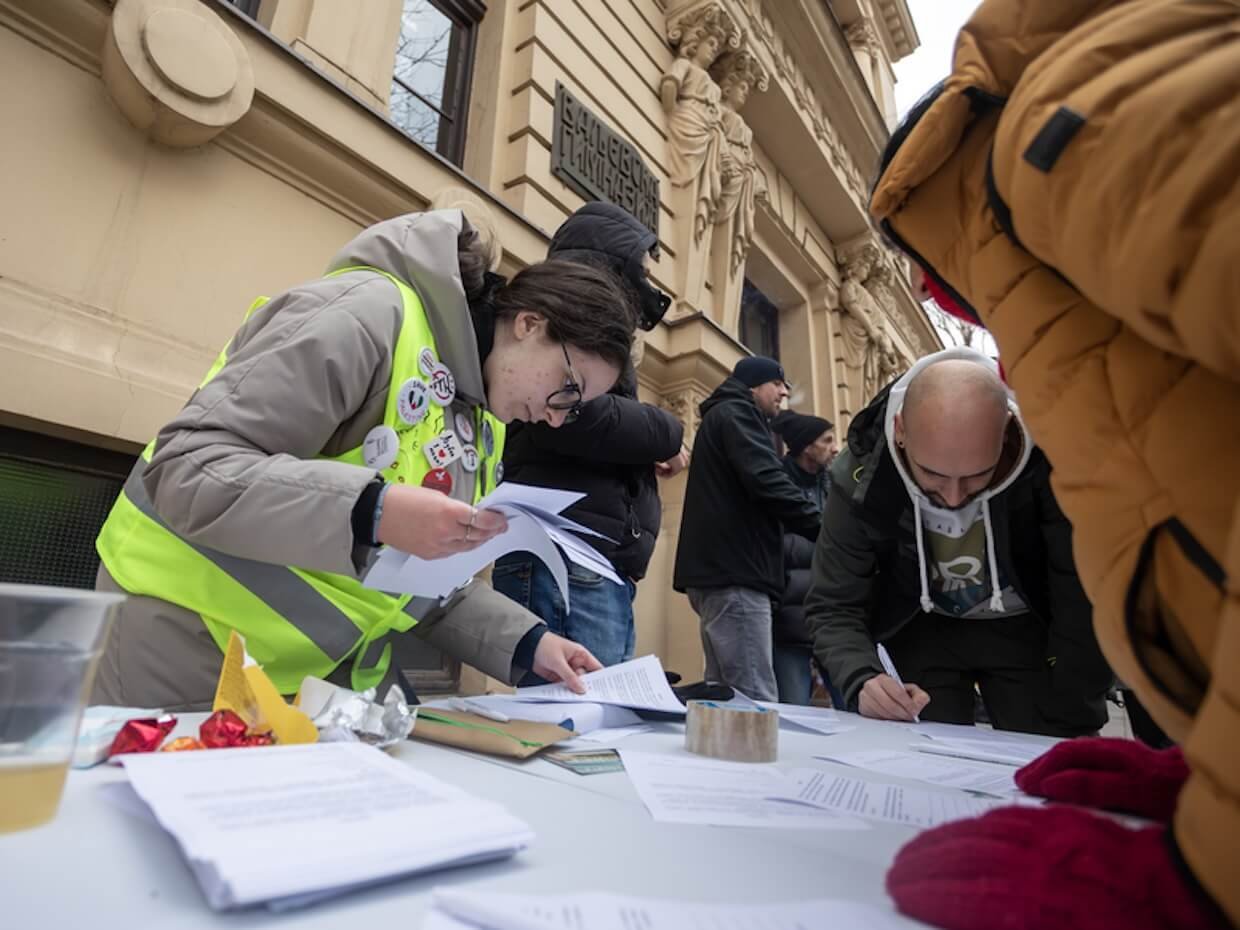
Reports of extensive citizen-led election monitoring suggest that grassroots observers played a significant role in protecting the October vote. Can this mobilization be understood as a form of democratic self-defense, and what does it reveal about elections conducted under conditions of institutional distrust?
Professor Dušan Spasojević: We had already learned this lesson during the final years of Milošević’s rule, particularly in 2000, when protecting the vote and monitoring elections were essential. The challenge in confronting the Serbian Progressive Party, as with most contemporary hybrid regimes, is that these regimes are becoming smarter, developing methods of electoral fraud that are difficult to anticipate.
For example, the 2024 local elections presented the first major opportunity for Vučić to lose some of his leverage. The SNS essentially stole the Belgrade elections by registering an estimated 20,000 to 30,000 voters in Belgrade just before the vote. These voters did not actually move there; they were simply registered in the city. This was a form of electoral fraud that was difficult to anticipate.
On election day, it was therefore essential not only to protect every vote at polling stations but also to track ballots and voter registers as they were transported to the Central Electoral Commission. We had a veritable army of people on the streets, organized into what we called mobile teams. Traveling in several cars, they monitored every step of the process.
Hundreds of thousands of people were involved, with the aim of protecting the electoral process from beginning to end. Another objective was to limit the SNS’s ability to organize activities near polling stations, where they would typically engage in vote buying or mobilize their voters. The strategy was to prevent these activities, slow down the SNS’s operations, and reduce its influence. Ultimately, that was the central objective: to make the party less effective than it had been in previous elections.
Authoritarian Regime Has Fallen, but Democratic Consolidation Remains Uncertain
In “Transforming Populism—From Protest Vote to Ruling Ideology,” you analyze how populism becomes institutionalized within governing parties. Does the student movement’s victory mark the defeat of Vučić’s authoritarian populism, or merely the electoral interruption of a political system whose ideological foundations remain resilient?
Professor Dušan Spasojević: The victory of the Students’ List marks the end of the authoritarian regime, in the sense that the regime’s levers and mechanisms are no longer in place. The SNS developed an entire system rooted partly in the state and partly in the political party. They blurred the boundaries between the state and the party, allowing them to use state institutions at will. Their electoral defeat has already significantly improved the level of democracy in Serbia because they can no longer misuse these mechanisms.
Whether we will be able to restore a deeper, higher-quality democracy in Serbia, and what the long-term legacy of this transformation will be, remain open questions. I hope we will succeed, but that remains to be seen in the months ahead.
Student Movement Was Too Ideologically Diverse to Be Classified as Populist
The student movement constructed a broad political identity around accountability, justice, and opposition to corruption. How does its conception of “the people” differ from Vučić’s populist discourse, and could the movement’s anti-establishment rhetoric itself develop into a form of democratic or counter-populism?
Professor Dušan Spasojević: If you look at the students’ ideological profile, it is very diverse. You could characterize them as far right, far left, centrist, or anything in between. All these positions are represented within the movement.
In terms of populism, I wouldn’t characterize them as populists because they lacked an anti-elitist or xenophobic stance, as well as other typical elements of populism. To some extent, however, we could argue that there was a form of anti-populism. The students often referred to the people in affirmative terms, but they also contrasted the people with the government, those in power, or Vučić himself. This reflected a somewhat populist, perhaps slightly anti-party or anti-political sentiment. It was a clever move.
Nevertheless, I would still find it difficult to classify the students ideologically. There were significant right-wing elements, particularly in the Serbian context. For example, opposition to sanctions against Russia and a strong interest in the position of Serbian minorities in the post-Yugoslav space are traditionally associated with right-wing parties in Serbia. Therefore, I wouldn’t expect a significant difference in their overall ideological position. However, authoritarianism and populism, in the sense of anti-elitism and the exercise of power, are out of the picture, at least for now.
Students Challenged Vučić Without Challenging Serbian Nationalism
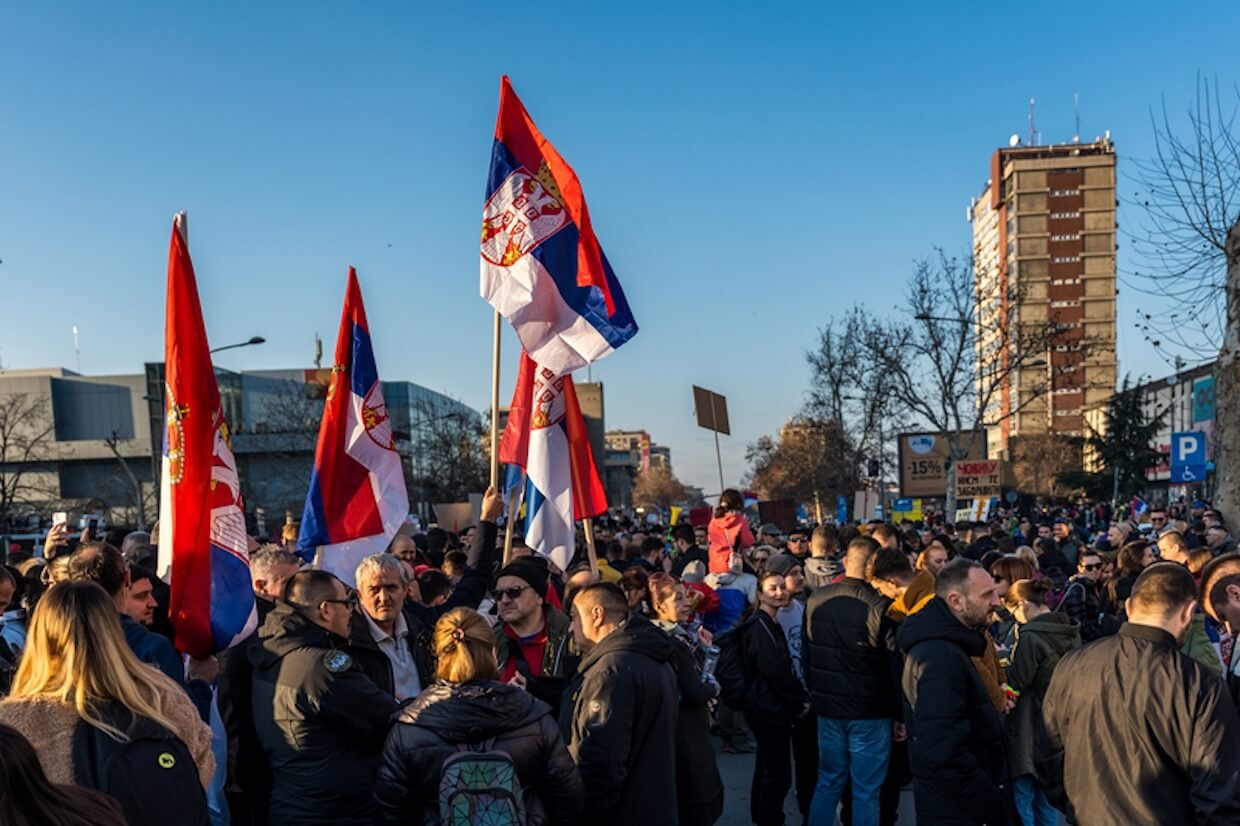
Vučić’s political dominance was sustained partly through nationalist narratives, historical grievances, and the identification of internal and external enemies. How did the student movement challenge these ethnonationalist and ethno-populist narratives without alienating voters who remain attached to Serbian national identity?
Professor Dušan Spasojević: They actually didn’t challenge most of these narratives, as is evident in their positions on Russia and Kosovo. The Students’ List also lacks a clear position on Serbia’s membership in the EU. So, they didn’t challenge Serbian nationalism and even tried, to some extent, to adopt a similar approach. But again, we return to the fact that the Students’ List was a very broad catch-all coalition.
The real question is how much this mattered to voters. For example, the majority of Students’ List voters are pro-European, yet they supported the list despite its inability to formulate a clear pro-European position. That’s why I believe the process remains open to some extent, and we will have to see how the list operates under pressure.
Let me give you an example. Yesterday, the list held its first meeting with representatives of the US Embassy in Belgrade, which was symbolically important. However, it also met with representatives of the Russian Embassy on the same day. So, they are trying to maintain a balance as much as possible. They can do that for now, but we will see how this approach works in the months ahead.
Student Mobilization Alone Cannot Overcome Entrenched Ethnonational Divisions
The participation of Bosniak students from Novi Pazar and solidarity across ethnic communities gave the protests a civic dimension. Can this solidarity reshape majority–minority relations in Serbia, particularly concerning Bosniaks in Sandžak and Albanians in the Preševo Valley, or will entrenched ethnonational divisions limit its transformative potential?
Professor Dušan Spasojević: That’s an excellent question and a very good example. During the protests, relations between Serbian and Bosniak students from Sandžak were excellent. For the first time, Bosniak students expressed a sense of belonging to Serbia, and you could see Bosniak flags alongside Serbian flags. That was an extremely strong and positive message.
However, there are limits to interethnic reconciliation. For example, during the summer, there was the usual debate about the genocide in Srebrenica, but the student movement remained silent. Then, when General Ratko Mladić, who was convicted of genocide in Srebrenica, died, some members of the student movement mourned him as a hero. This illustrates just how deep these divisions remain.
The fact that Albanian students from the Preševo Valley were not publicly involved in the student movement is also telling.
There is no doubt that progress will occur, and progress has already been made. Nevertheless, I would be very cautious about expecting long-term change. This is not solely the responsibility of student leaders; it also involves regional relations. These issues cannot be resolved or improved through the actions of a single actor.
Students Won Power but Still Lack a Unified Decision-Making Structure
The Students’ List now faces the challenge of transforming a decentralized protest movement into an effective governing organization. How can it preserve the participatory ethos of student plenums while developing coherent leadership, policy coordination, and democratic accountability?
Professor Dušan Spasojević: The plenums are already largely part of history, having begun to decline in May or June of last year. Power now rests primarily with working groups, although there are numerous such groups at each university and across different levels. So, this remains a movement involving many people.
From a political scientist’s perspective, it is fascinating to observe how they make decisions. They still lack a single center of decision-making and continue to struggle with the relationship between the parliamentary group and the movement itself. This remains an open question, not only because the shift in power has yet to be established but also because they have not decided how that relationship should function.
Similarly, part of the movement is considering becoming a political party. This has not been publicly confirmed, but there are rumors to that effect. An additional problem is that almost everything happening within the student movement remains hidden from public view. I know certain things because I can talk to my students, but this situation needs to change, particularly as the public is already expressing concerns.
For example, people want to know who is proposing the candidate for prime minister. If this were a conventional political party, we would know whether the decision came from the main board, the assembly, or another body. In this respect, the situation remains very fluid. There is some tolerance for this lack of transparency because the movement emerged under an authoritarian regime. Its members faced surveillance and harassment, so they had to operate secretly. However, there is now a growing demand for these processes to become more public as soon as possible. At this point, there is no clear answer.
Of course, some elements of the movement are becoming increasingly effective, but it is still far from being a fully functioning organization capable of responding to a question within a few hours. I therefore hope they will enjoy a relatively long, quiet honeymoon period without pressure to make rapid decisions on crucial issues, because that could make things very difficult.
Removing Vučić’s Control Could Allow Serbia’s Institutions to Function Again
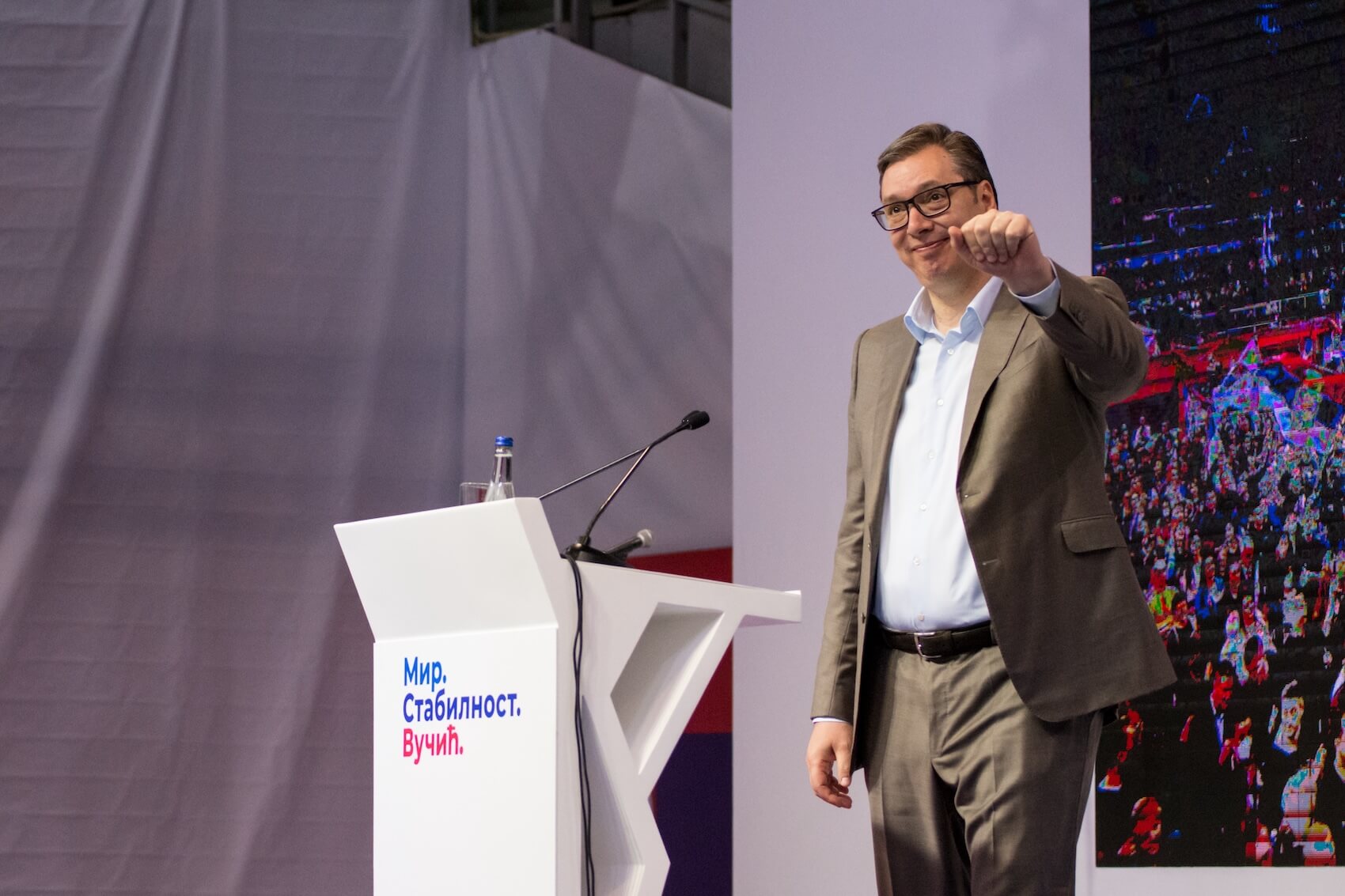
In your research with Irena Fiket, you examine opposition politics under conditions of institutional capture and competitive authoritarianism. Following Vučić’s electoral defeat, what reforms should take priority in restoring judicial independence, media pluralism, electoral integrity, and institutional checks on executive power?
Professor Dušan Spasojević: That’s a huge question. If you look at the students’ program and its key priorities, the judiciary comes first. Strengthening its independence from the executive would be the initial step.
The second priority would be media freedom. The problem is that achieving media freedom takes considerable time. We have just seen the Hungarian experience, where Magyar’s government suspended the national public broadcaster for several days, then hired new staff and granted them some degree of freedom.
In Serbia, however, there is still debate about what the first steps should be. I don’t think we need an out-of-the-box solution. The existing Serbian laws are already good enough; the problem is that they are not being implemented. If you remove the force preventing institutions from functioning—and that force is Aleksandar Vučić—then those institutions will function much better.
This is also evident in the students’ electoral manifesto. Many of its proposals are already part of the existing legal framework. So, we don’t necessarily need new laws; we need to find a way to implement those already in place.
The Return of Former Authoritarian Regime May Be Easier Than After 2000
Serbia’s democratic transition after Milošević’s overthrow in 2000 left significant authoritarian networks and political practices intact. What lessons should the student-backed government draw from that experience regarding transitional justice, lustration, and the danger of reproducing the patronage structures it seeks to dismantle?
Professor Dušan Spasojević: What we have learned over the last decade is that democracy should never be taken for granted and that we must always defend it. Even the strongest democracies can experience democratic backsliding.
In Serbia’s case, drawing on the experience of Milošević’s overthrow, the key lesson is the importance of holding people accountable for what happened over the previous 14 years. When Milošević was toppled, we were so enthusiastic and optimistic that we neglected this aspect. People tend to be forgiving, and when there is so much work to be done, no one wants to deal with someone who was mayor five or ten years earlier.
But this is crucial because these people have the skills, capacity, and considerable financial resources. If we fail to carry out lustration or establish some form of accountability, they will return, and sooner than we might expect. This is especially important because the Students’ List is not necessarily here to stay. By comparison, the coalition that defeated Milošević consisted of political parties that wanted to govern and remained in power for roughly 12 years.
The Students’ List has certain advantages, but when it comes to managerial and governing skills, its members are not yet at the top of their game. They will need substantial support. In that sense, comparing the two situations suggests that the return of the previous regime might be even easier now than it was in 2000. That’s why it is extremely important to invest considerable effort in restoring democracy and reducing the authoritarian capacity of society.
Solidarity and Unity Were the Foundations of Serbia’s October Revolution
And finally, Professor Spasojević, viewed comparatively alongside anti-authoritarian movements in Hungary, Poland, Turkey, and the wider Western Balkans, what makes Serbia’s student-led electoral victory distinctive? What lessons can societies struggling under authoritarian populist regimes draw from the movement’s success in transforming civic resistance into electoral victory, and to what extent can the Serbian experience inspire broader democratic renewal?
Professor Dušan Spasojević: It’s clear that the Serbian case is already inspiring people, just as other examples inspired Serbian students. That’s a positive development. However, we need to be very careful because we cannot simply copy and paste methods from one country to another. The fact that students led this movement was partly a result of local circumstances. I don’t see the same conditions, for example, in Albania, where protests are currently taking place.
What we can certainly learn from the Serbian experience is the importance of solidarity and unity. The willingness to support and defend people, even when you strongly disagree with their political positions, was fundamental to the strength of this movement. Solidarity between students and the rest of society was another crucial element. Having a common enemy, so to speak, and a common goal provided the foundation for Milošević’s overthrow 26 years ago, just as they were central to the current struggle. I think that should be the key message drawn from the Serbian October Revolution of 2026.
(*) This interview was academically curated and edited by Dr. Bulent Kenes.