

In an interview with the ECPS, Professor Frances E. Lee of Princeton University examines the implications of the November 2026 US midterm elections, which delivered Democratic majorities in both chambers of Congress. Challenging interpretations of Trump’s presidency as consolidated competitive authoritarianism, Professor Lee argues that authoritarian ambitions have encountered significant institutional constraints, particularly decentralized election administration, federalism, and judicial independence. While warning that Trump’s expansive use of emergency and tariff powers has exposed constitutional vulnerabilities, she emphasizes the importance of congressional oversight and bipartisan accountability. Looking toward 2028, Professor Lee questions whether Trump’s personalistic coalition can survive his departure, even as populist rhetoric remains influential. Despite Democratic electoral gains, she anticipates continued polarization and intense partisan confrontation: “I anticipate very hardball politics over the next two years.”
Interview by Selcuk Gultasli*
The November 2026 US midterm elections delivered a significant political setback for President Donald Trump, with Democrats securing majorities in both chambers of Congress. Driven partly by public dissatisfaction with inflation, rising prices, and the cost of living, the results underscored the continuing relevance of electoral accountability while raising fundamental questions about democratic backsliding, institutional resilience, and the future of authoritarian populism. With divided government returning in January 2027, the next two years will test Congress’s capacity to constrain presidential power and restore institutional accountability.
In an in-depth interview with the European Center for Populism Studies (ECPS), Professor Frances E. Lee, Professor of Politics and Public Affairs, jointly appointed in Princeton University’s Department of Politics and School of Public and International Affairs, offers a nuanced assessment of Trump’s electoral defeat and its implications for American democracy. Drawing on her research into congressional politics, party competition, and institutional constraints, Professor Lee challenges interpretations that equate authoritarian ambitions with successful democratic capture.
Addressing the debate over competitive authoritarianism, Professor Lee distinguishes between the administration’s attempts to undermine democratic institutions and its actual capacity to manipulate electoral competition. Despite serious concerns about attacks on civil society, universities, due process, and the rule of law, she emphasizes that “what the administration attempted to do looked like something straight out of the authoritarian playbook. But what it actually achieved was far more limited.”
Central to this resilience, Professor Lee argues, is America’s decentralized electoral system. State and local control over election administration prevented Republicans from changing electoral rules nationwide, even amid unprecedented mid-cycle redistricting efforts. As she explains, “A key source of that resilience is the decentralization of the US electoral system.” Federalism, judicial independence, and presidential term limits provide additional barriers against authoritarian consolidation.
Yet institutional resilience does not eliminate constitutional vulnerabilities. Professor Lee warns that Trump’s expansive interpretation of emergency authorities and tariff powers has exposed previously unrecognized weaknesses. She urges Congress to “rein in presidential emergency powers” by imposing time limits and reconsidering executive authorities that have enabled presidential overreach. She also advocates restraint in congressional investigations, emphasizing the greater credibility of bipartisan oversight.
Looking toward 2028, Professor Lee questions whether Trump’s personalistic political coalition can survive without its founder. “It may be that the Trump movement has reached its limits,” she observes. Nevertheless, populist rhetoric, anti-establishment appeals, and impatience with liberal-democratic constraints remain deeply embedded in American politics.
Finally, Professor Lee cautions against interpreting Democratic electoral gains as the beginning of partisan reconciliation. Given the continuing intensity of party competition and Republicans’ expectations of recovering power, she predicts: “I anticipate very hardball politics over the next two years.” Her analysis thus presents American democracy as simultaneously resilient, institutionally vulnerable, and politically polarized.
Here is our interview with Professor Frances E. Lee, edited lightly to enhance clarity, readability, and overall flow for publication.
America’s Decentralized Electoral System Is a Source of Democratic Resilience
Professor Lee, thank you for joining us. In your September 2026 article, Normal Politics Under Stress, you predicted that the midterms would follow conventional electoral patterns. Following the Democrats’ victories in both chambers, does the outcome simply confirm your expectations, or does it reveal something more significant about American democracy’s resilience against authoritarian populism?
Professor Frances E. Lee: The election outcomes conform to historical norms. You would have expected the president’s party to lose seats in Congress, given that it was a midterm election and the president’s approval ratings were low. In fact, the president’s party lost roughly the number of seats you would expect based on his approval rating.
Everything proceeded as normal. The elections were held on time, their administration went smoothly, and the results were accepted afterward, with losing candidates conceding. It looked like a normal election. But, of course, the circumstances were not normal. There was considerable anxiety about potential election interference and whether the president would acknowledge his party’s defeat, given his history of refusing to accept adverse election results.
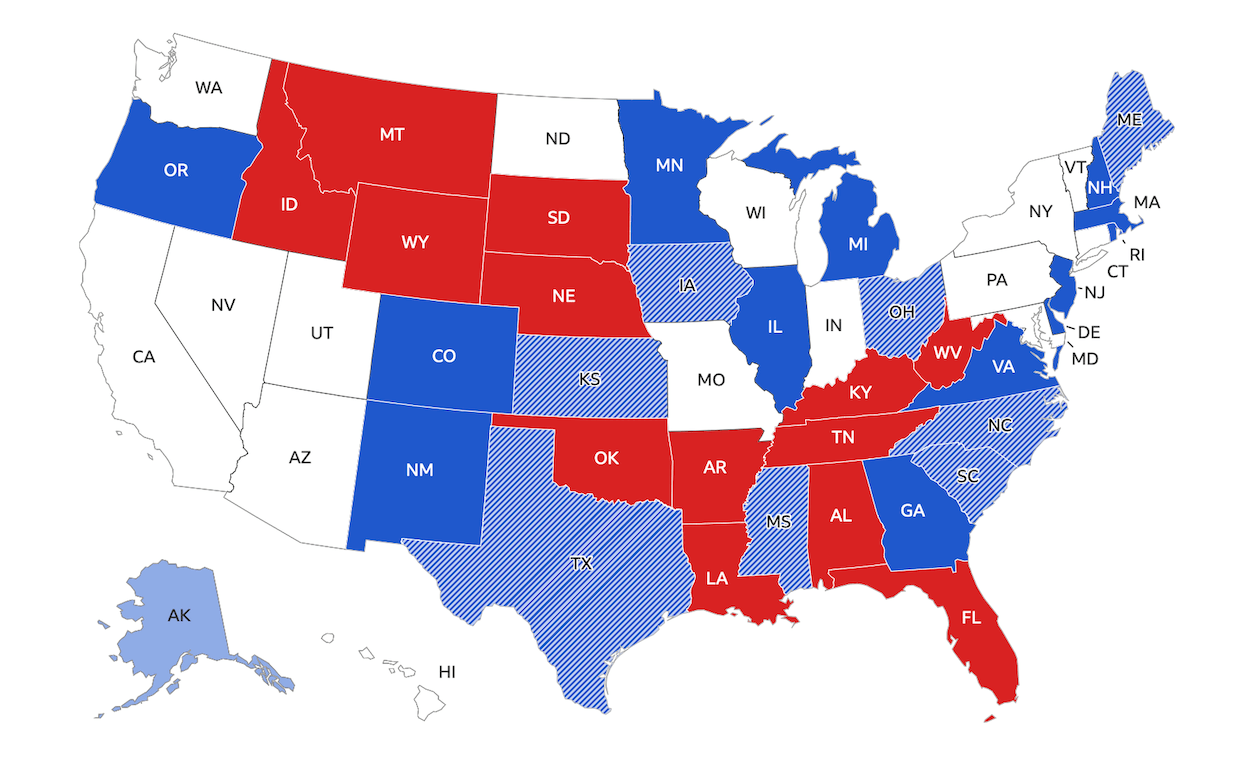
In the lead-up to the elections, the president’s party made a major effort across the country to insulate itself from electoral reversal. This included attempts to gerrymander and redraw congressional district boundaries to reduce the number of seats it was expected to lose in the midterms. This was far outside the norms of American politics. We had never seen this level of change to the electoral system in the middle of a census cycle. Normally, redistricting takes place once every ten years, but these changes were clearly undertaken with the upcoming elections in mind. There were therefore substantial reasons for concern. Nevertheless, the elections proceeded normally. Judging solely by the outcomes, you would never know that anything out of the ordinary had occurred.
What does this tell us? I would argue that there is significant institutional resilience against efforts to stack the deck in favor of one party or another. A key source of that resilience is the decentralization of the US electoral system. The party in power had no mechanism through which it could change the rules of the game nationwide.
Instead, President Trump could pressure states that already leaned Republican to redraw their district boundaries, and some did. But there was less to be gained from this because Republicans already performed well in those states. Meanwhile, he could not persuade Democratic-leaning states to redraw their districts to his advantage. In fact, they did the opposite. California, for example, redrew its district boundaries to benefit Democrats and counter what the administration was doing.
This decentralization makes it impossible for a party holding power at the national level to control the electoral process sufficiently to protect itself against electoral reversal. It is a form of institutional resilience that political scientists do not necessarily favor because the absence of national standards can create problems for election administration. Nevertheless, it is also a source of strength because it protects the electoral system against manipulation.
Trump’s Authoritarian Tactics Have Had Limited Electoral Impact
Steven Levitsky and Lucan Way have characterized the United States under Trump as a form of competitive authoritarianism. You have questioned this assessment, particularly regarding electoral fairness. Does the 2026 outcome undermine their argument, or can democratic backsliding persist despite an opposition electoral victory?
Professor Frances E. Lee: In assessing the claim that the US has become a competitive authoritarian regime, I would distinguish between what the party in power, or a president, attempts to do and what they can actually achieve in terms of shifting the balance of power in the electoral arena.
There has been considerable pressure on civil society since the administration took office in 2025. We have seen federal funding used as leverage to induce compliance among civil society organizations, universities, and researchers, as well as immigration enforcement used to suppress debate on college campuses. These actions and the pressure exerted by the administration are troubling. Due process has not been respected, and the rule of law has been disregarded in numerous ways. Many of these issues are still being litigated, but the courts are simply too slow to effectively police such actions. These are serious concerns, and they are precisely what Levitsky, Way, and Ziblatt emphasize most strongly.
However, the question is whether these actions actually have the power to tilt the electoral playing field in favor of the governing party. Here, I think the case is much weaker. When the administration pressures news organizations and threatens them through the Federal Communications Commission (FCC), there remains a wide range of media beyond its regulatory reach, including social media and online discussion. Even if we focus exclusively on mainstream broadcast media, they continue to be highly critical of the administration. It receives relatively little positive news coverage, as was documented during Trump’s first administration and is being documented again. In other words, the administration continues to face criticism.
Civil society also remains vibrant. Numerous organizations oppose the administration, and many states are governed by Democrats, the party opposing the president. So, there is still a free-for-all in public debate. Political discourse is not controlled in any meaningful sense.
Moreover, the election was decided largely by issues voters could experience directly, such as rising prices, inflation, and gas prices. These reactions do not require elaborate discussion in the news media. People were frustrated by their everyday experiences and responded by voting against the administration. Ultimately, the administration experienced the electoral reversal normally expected in midterm elections. In many cases, what the administration attempted to do looked like something straight out of the authoritarian playbook. But what it actually achieved was far more limited.
Trump Still Holds Extraordinary Power Over Republican Political Careers
In your research on the post-2020 Republican Party, you emphasize how congressional Republicans maintained institutional autonomy while avoiding direct confrontation with Trump. Will the 2026 defeat weaken Trump’s dominance over the Republican Party, or could Trumpism survive independently of his electoral fortunes?
Professor Frances E. Lee: The 2026 election outcomes undoubtedly weaken President Trump in some respects within his own party. It’s clear that his low approval rating was an electoral liability for Republicans. Many incumbents lost because of their association with the president, which harmed their electoral prospects and made it harder for them to win the November general elections.
Another factor is that Trump cannot run for president again. We’re now past the midterm elections of his final term, so the Republican Party must begin looking toward succession. That will increasingly preoccupy members of Congress over time. Both factors weaken the president’s position. The question is how strong Trump’s support remains among voters who still identify with the Republican Party. Congressional Republicans still need those voters. They cannot afford to alienate Trump supporters in their constituencies because they depend on them for their own electoral standing.
This brings us to Trump’s influence over Republican primaries. He has ended the careers of many congressional Republicans, demonstrating an ability that exceeds what we normally see from presidents. Typically, presidents do not succeed in purging their parties of internal opponents to the extent that Trump has. Congressional Republicans will therefore remain attentive to that influence. Nevertheless, Trump’s power is waning because of the constitutional limit on his presidency and the party’s increasing focus on the 2028 election.
America’s Political Parties Remain Vulnerable to Populist Takeovers
In “Populism and the American Party System,” you argue that American institutions constrain organized populist parties while leaving mainstream parties vulnerable to populist insurgencies. Does the Republican Party’s experience under Trump demonstrate the enduring strength or the limits of these institutional constraints?
Professor Frances E. Lee: I would say it’s both. Trump illustrates both the power of populism and its limits. The US system of open primaries is highly vulnerable to populist takeover. To take control of one of the national parties, all you need to do is win the presidential primary by being more appealing than the other candidates in the race. Trump’s success demonstrates that this path remains open to other populists. Others tried it before him, but Trump succeeded where they failed.
Nothing closes off that path, and it is available in both parties. There is also good reason to believe it remains viable in terms of voter preferences. If you listened to the discourse during the 2026 elections, you heard candidates from both parties using considerable populist rhetoric. There was widespread denunciation of the establishment as out of touch. This kind of language pits the establishment against the people and positions the speaker on the side of the people. All these traditional populist tropes were very much in evidence during the 2026 midterms. So, there is still a strong appetite for populism among the American electorate. That path remains open, and there is reason to believe it can succeed. Both establishment parties remain deeply unpopular, leaving them vulnerable to someone like Trump in the future.
Nevertheless, the institutional constraints remain real. At the constitutional level, these include federalism, the importance of the states, and the fact that winning power at the national level is not sufficient to govern. Judicial independence is another constraint. Judicial checks have remained important, even though Democrats have been frustrated that the courts have not blocked more of the administration’s actions. Nevertheless, the courts have prevented many things the administration wanted to do. There is also decentralized election administration, which we discussed earlier, making it difficult to stack the electoral deck.
Then there are term limits. Populist leaders build direct relationships with voters and constituents, often with a strong personalistic dimension. This is certainly true of Trump. Many people admire Trump as a person and political figure. But he cannot remain in office beyond two terms. Consequently, that personalistic connection with his coalition disappears from the presidency and must be rebuilt.
There are many constraints, but I would highlight one final political limitation on populist leaders: the polarization of American politics. No leader has demonstrated an ability to achieve overwhelming popularity in US politics during the polarized era. Trump was unpopular, Biden was unpopular, and Obama had the approval of roughly half the electorate. Obama performed relatively well, but his approval was still around half. George W. Bush became deeply unpopular after the Iraq War and left office with very low approval ratings following the financial crisis. So, we have experienced a series of presidents with limited popularity. That limits what they can accomplish in ways that constrain authoritarianism.
Closely Matched Parties Have Little Incentive to Moderate Their Political Strategies
Your research suggests that intensified party competition can exacerbate polarization rather than encourage moderation. Could the Democrats’ unexpectedly broad electoral gains reduce partisan antagonism, or will heightened competition further radicalize congressional politics?
Professor Frances E. Lee: One of the distinguishing characteristics of contemporary US politics is the close balance of power between the two parties and the fact that every national election seems to offer the prospect of a change in party control of one institution or another. This incentivizes parties in Congress to focus constantly on the next elections. Both parties feel insecure. The party in power worries about losing its majority, while the party out of power looks for a way back in and believes it can succeed.
In this context, the parties amplify their differences. They’re constantly posturing, trying to appeal to their voters, emphasize the stakes, and energize their supporters. I wouldn’t necessarily call this radicalism because the policies they pursue and enact haven’t really been radical. There have been no large-scale changes, at least in domestic policy. There have been some bold actions in foreign policy, but when the parties must reach an agreement in Congress, they check each other. Very little legislation passes solely with the votes of one party. Lawmaking usually requires some degree of bipartisanship, which constrains what either party can accomplish. However, their rhetoric frequently includes appeals such as “This is the most important election of our lives.” These kinds of statements reflect the intense competition between the parties.
The question is whether the 2026 elections change that calculation. I don’t think they do, at least not yet, even though Democrats won very significant majorities. We don’t know the exact numbers because some races remain undecided, but these will be the largest majorities we’ve seen in the polarized era. They’re comparable to, and perhaps slightly larger than, the Democratic majorities during the first two years of Obama’s presidency. So, these are substantial majorities. However, the majorities Democrats secured after the 2008 elections were wiped out in 2010, when Republicans regained control.
I therefore don’t think Republicans see themselves as being out of power for an extended period. They don’t know when they’ll return to power, but I don’t think they’re discouraged. I expect them to pursue the same strategies we’ve seen throughout the polarized era: highlighting disagreements with the Democratic Party, forcing Democrats to take difficult votes, and withholding cooperation in Congress. I anticipate very hardball politics over the next two years.
If Democrats were to win again, and win decisively, Republicans might begin to reconsider their approach, saying to themselves, “We need to do some rethinking here. We’re not going to get right back in at the next elections. Maybe the people have spoken, and we need to cooperate.” We might then see a return to some of the political practices more common in the 20th century. But what I’m describing is essentially how American politics has functioned in the 21st century, with the two parties closely matched in power.
Congress Can Block Trump’s Agenda but Cannot Easily Compel Him to Act
You have described divided government as the Constitution’s ordinary remedy for an unpopular president. With Democrats controlling both chambers from January 2027, how effectively can Congress constrain Trump’s executive overreach, particularly regarding immigration enforcement, politicized prosecutions, and institutional accountability?
Professor Frances E. Lee: The party controlling Congress can rarely win a direct confrontation with the president. It cannot force the president to take actions he doesn’t want to take. The president has veto power. Congress can attempt to legislate changes to immigration policy or impose restrictions on the administration, but the president can veto those measures. Overriding a veto would require Republican support. So, it is very difficult for Congress to win a direct confrontation and compel the administration to do something it opposes.
Congress’s power comes primarily from its ability to block the administration’s initiatives. The administration needs funding. In fact, it is currently requesting a supplemental appropriation to fund the war in Iran. It also needs Senate confirmation of its nominees. The administration must therefore come to Congress for these things, and Congress can use that leverage to secure concessions. However, under divided government, both parties must consent. Congress cannot simply force the president to do things he doesn’t want to do. Instead, it can block the president when he requests something. That’s how we should assess what Congress can accomplish under these circumstances. Its power is limited, but it remains important.
I would also add that Congress’s role in shaping political discourse in the US will change after these elections. Criticism from Congress, the hearings it holds, and the investigations it conducts will receive news media coverage, forcing the administration to react and respond. This has the potential to influence public opinion in ways that Congress could not, or would not, when the same party controlled both branches. In that sense, Congress can shape the broader political environment.
Democrats Must Avoid Partisan Overreach
Drawing on your recent book, A Case for Congress, what should be the principal institutional priorities of the incoming Democratic Congress? How should it balance legislative oversight, investigations, institutional reform, and constructive policymaking?
Professor Frances E. Lee: Oversight is going to change the most. Congress’s oversight role will change significantly after these elections because of the Democratic Party’s new agenda-setting power. The kinds of hearings held, the investigations conducted, and the demands for information from Congress will all change.
The main thing Democrats, as the new party in power, need to watch out for is overreach. If they conduct too many investigations, they risk diluting their impact. If those investigations begin to appear highly partisan, the news media may simply roll their eyes and conclude that there’s nothing substantial there. Democrats therefore need to exercise restraint and pursue only the most egregious cases—those that are undeniably important and, ideally, attract some Republican support. Investigations with bipartisan support carry much greater weight with the news media, which regard them as far more credible than investigations pursued solely by the administration’s partisan opponents. That’s the biggest change these elections will bring to Congress’s role.
When it comes to lawmaking, however, it doesn’t matter whether government is divided or unified. Very little legislation passes with support from only one party. Right now, on questions of government funding, the administration meets with the bipartisan, bicameral congressional leadership—the so-called Big Four, consisting of the majority and minority leaders in both chambers. That’s how they’re currently negotiating government funding.
We have unified government at the moment, but the same process will continue under divided government next year. Much about Congress’s role simply doesn’t change. I would characterize that as a kind of institutional strength. Congress serves as a ballast; it is difficult to move. With both parties as unpopular as they are, the fact that they check each other in Congress is quite useful in terms of institutional performance.
Divided Government Makes It Easier for Democrats to Maintain Party Unity
Your research with James Curry demonstrates that intraparty disagreement can obstruct legislative agendas as much as the Senate filibuster. How should Democrats manage divisions between progressive and moderate factions while confronting presidential vetoes and institutional constraints?
Professor Frances E. Lee: The Democratic Party now has an easier task than it would under unified Democratic control. Democrats can get their moderates and progressives on the same page to pass legislation, even when they expect the president to veto it. In other words, divided government allows for considerable symbolic action, through which a party communicates to its constituencies what it would like to accomplish while recognizing that it cannot do so without bipartisan support. This actually makes it easier to hold the party together. What is really difficult is when a party has unified control and the power to enact legislation, provided it can reach agreement internally. That’s when different factions end up holding each other hostage.
We saw Republicans struggle with this under Trump in 2017. Their biggest priority that year was repealing and replacing Obamacare. They spent most of the year trying to do so but ultimately failed because they couldn’t reach an internal agreement. Similarly, under President Biden, following the Democrats’ return to unified control after the 2020 elections, there was the so-called “Build Back Better” agenda. This was a very ambitious domestic policy agenda, encompassing a wide range of measures intended to strengthen what they called the care economy, including healthcare, childcare, elder care, and related areas. But Democrats couldn’t reach an internal agreement. In the end, they passed a significantly watered-down version of the agenda, called the Inflation Reduction Act.
So, parties have difficulty reaching internal agreement when they hold unified control of government. But after these elections, we have divided government. In a sense, that makes things easier for Democrats. They don’t have to negotiate as seriously because much of what they attempt to do cannot become law. That makes it easier to reach internal agreement. The consequences, however, will be very limited at present.
Decentralized Elections Are a Strength of American Democracy
Given the erosion of democratic norms under Trump, which reforms should Congress prioritize to reinforce electoral integrity, judicial independence, congressional oversight, and the constitutional separation of powers?
Professor Frances E. Lee: I wouldn’t actually advocate doing much on the electoral front at the national level. One of the clearest lessons from recent years in American politics is that decentralized election administration, with states and localities running their own elections, is a strength of the American system. So, anything Congress might do to federalize election rules is somewhat dangerous. It’s better to keep election administration decentralized. Congress can provide funding to help administer elections and protect election workers against threats of violence, for example, by involving the FBI. But I don’t think strengthening the national government’s role in election administration is a good idea.
On judicial independence, I don’t anticipate any significant reforms. However, the president will face considerable difficulty getting more of his nominees confirmed to the federal bench. That will help balance things out by leaving some judicial seats vacant. Depending on who wins the next presidential election, we could see greater partisan balance in the judiciary as a consequence of these elections, even without an explicit reform agenda.
I also hope Congress will work to rein in presidential emergency powers, particularly the open-ended emergency powers the president has been claiming, by imposing some form of time limit on them. The president’s tariff powers also need to be restrained in ways that were not previously evident to Congress. The president has been very creative in his use of existing authorities, and I hope Congress will be willing to revisit those powers.
These changes may not happen immediately, but clearly, a vulnerability in the American political system has emerged that had not previously been recognized.
Electoral System Produces More Proportional Outcomes Than Many Would Expect
Your research on geographic representation and electoral institutions highlights structural inequalities in American democracy. What lessons should Democrats draw from the failure of Republican gerrymandering to prevent electoral reversal, and what reforms could strengthen fair representation without reproducing partisan manipulation?
Professor Frances E. Lee: There was considerable pessimism among Democrats and progressive organizations about the way Congress seemed to be tilted in favor of Republicans, making it easier for them to win. The typical state, which, of course, elects senators, was more Republican-leaning than the country as a whole. There were similar concerns about how congressional district lines were drawn for the House of Representatives, making it easier for Republicans to win power. Democrats would need a larger share of the national vote to secure a corresponding share of seats. So, there was considerable anxiety about that. But then came the 2026 elections, and Democrats ended up winning in places where you would never have expected them to win. This weakens the impetus for reform on these issues. Democrats demonstrated that, whatever imbalances exist, they could overcome them quite dramatically. They achieved very large majorities.
We can also compare these with the majorities Republicans have achieved. The Democrats’ House majority is much larger than any Republican majority during the polarized era. It also looks as though their Senate majority will be larger once the final races are called. One of the things I examined in my latest book, A Case for Congress, is that there’s less imbalance between congressional and presidential election outcomes than you might expect. In fact, they correspond quite closely.
For example, the share of the vote Democrats received in the 2024 elections corresponds fairly closely to the share of seats they won in the House and Senate. The same was true in 2020 and 2016. If we were to move to a proportional representation system, it would be difficult to improve on what we’ve already been seeing in national politics. It’s strange because there’s no particular reason to expect it to work out that way. We have a very old-fashioned electoral system. Nevertheless, the two parties have ended up winning shares of seats that are reasonably proportional to their support in the national electorate.
So, I’m not an advocate for electoral reform based on the patterns we’ve been observing. I understand the problem in theory, but in practice, it hasn’t really manifested itself. As the saying goes, “If it ain’t broke, don’t fix it.” So, I’m somewhat skeptical.
The Republican Party Faces a Profound Struggle Over Its Post-Trump Identity
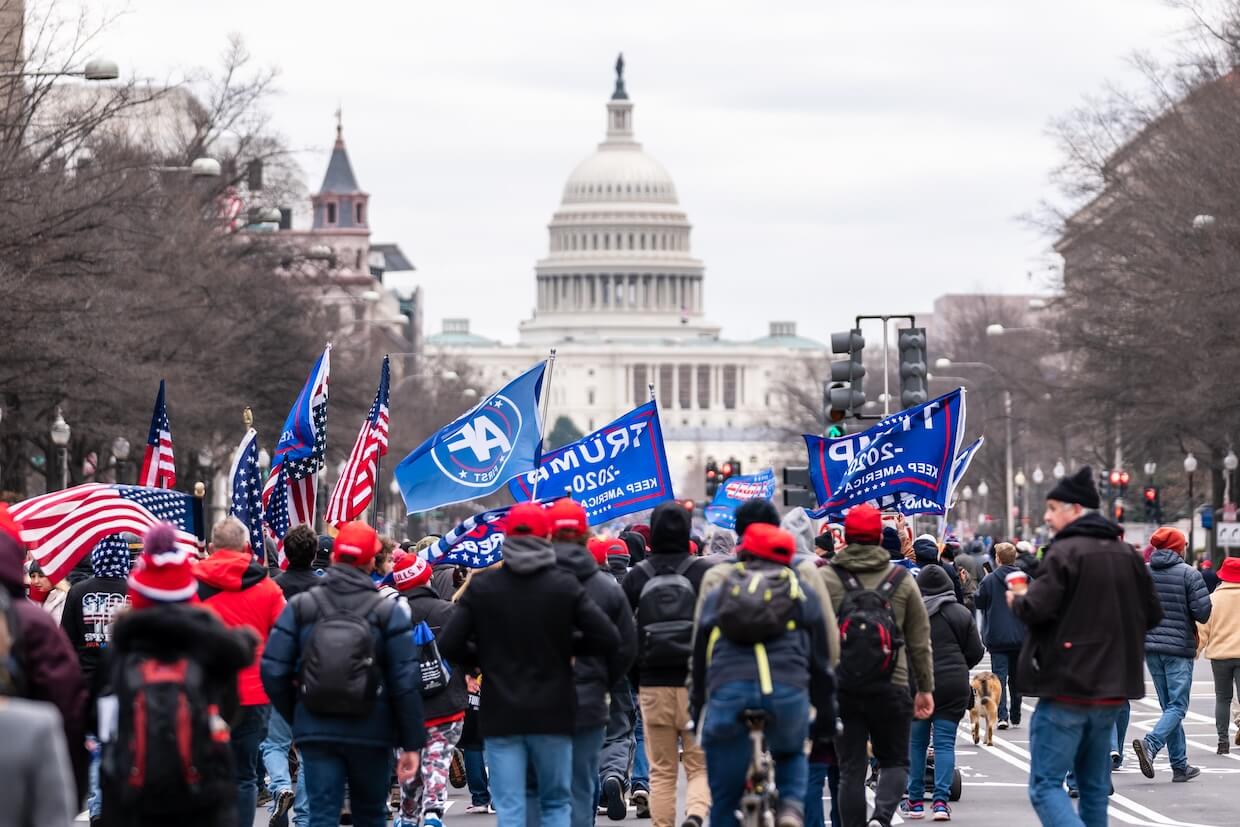
Does the 2026 electoral backlash suggest that authoritarian populism has reached its political limits in the United States, or might Trumpism reconstitute itself through new leaders, grievances, and strategies ahead of the 2028 presidential election?
Professor Frances E. Lee: That’s a big and outstanding question. Is the Trump coalition sustainable without Trump? Is there a successor who can hold together the party he has built?
The Republican Party is going to face a major internal battle looking toward 2028. Many organizations and Republicans at all levels of government in the US would like to return to pre-Trump conservative orthodoxies on trade, entitlements, budget deficits, and other aspects of traditional conservatism against which Trump rebelled. They would like to move back in that direction. So, will the succession produce a Trump-style Republican Party rooted in populist conservatism or a return to more traditional conservatism? That remains very much an open question.
Democrats also face internal battles between progressives and moderates, but I would say the questions are more profound for Republicans. They will have to work them out among themselves.
I personally think much of Trump’s appeal is personalistic, rooted in his unique celebrity and charisma. I have doubts about whether anyone can step into his shoes and continue to hold the party together as he has. So, it may be that the Trump movement has reached its limits.
Nevertheless, as we discussed earlier, populist rhetoric remains popular and widely used. Those kinds of appeals, the impatience with the institutions and processes of liberal democracy, and the tendency to strain against statutory constraints—all these elements of that political style may well continue, given the rhetoric we hear. But who will represent that style of politics and what they will stand for in both parties remain open questions.
Trump’s International Unpopularity Has Turned Political Association Into a Liability

Photo: Jolanta Wojcicka.
And finally, Professor Lee, viewed comparatively alongside the populist radical right in Europe and authoritarian-populist movements elsewhere, how might Trump’s electoral setback affect their political legitimacy, transnational networks, and strategic calculations? Could the American experience offer broader lessons for reversing democratic backsliding?
Professor Frances E. Lee: I think these networks will persist, but I’m not sure what they’ve yielded. Transnational right-wing populist movements collaborate, discuss ideas, and share information. I would expect all of that to continue. But what does it actually get them? Vice President Vance went to Hungary to campaign for Orbán, and yet Orbán lost.
If Trump is no longer president after 2028, and he has already demonstrated the limits of his political appeal here in the US, how inspirational will he be to other figures around the world who might want to pursue similar policies? He doesn’t provide an example of what you would call a path to sustained electoral success. It’s difficult for right-leaning leaders around the world, whether in Europe or Canada, to be friendly with Trump because he is so unpopular internationally. Association with Trump can be embarrassing for these leaders.
It looked as though a conservative in the Trump mold was going to come to power in Canada. All the polls seemed to indicate that. Then Trump launched a trade war against Canada, which rallied the country around the liberal leadership and effectively tanked that conservative leader’s chances.
So, looking around the world, I don’t think Trump has been particularly helpful to the right-wing populist cause. Even where he has tried to help, his efforts have backfired. I’m sure these movements will continue to collaborate, but they are now on the defensive here in the US, and it’s unclear what the future holds.
(*) This interview was academically curated and edited by Dr. Bulent Kenes.