Israel’s October 27 elections have exposed deepening ideological polarization, parliamentary fragmentation, and mounting challenges to democratic legitimacy. In an interview with the ECPS, Assistant Professor Roi Zur of the University of Essex examines Netanyahu’s electoral resilience, Likud’s transformation into a populist radical-right party, and the normalization of religious-nationalist extremism. Highlighting the growing ideological convergence between Likud and its far-right allies, Dr. Zur warns that prolonged coalition deadlock could further consolidate authoritarian-populist forces. He also examines the political exclusion of Arab parties, the decline of Israel’s liberal-left, and emerging claims of electoral fraud resembling Trumpian populism. Ultimately, the interview explores how political instability and ethnonationalist polarization threaten Israel’s democratic institutions and future political trajectory.
Interview by Selcuk Gultasli
Israel’s October 27 elections have produced a fragmented political landscape, exposing the deepening ideological polarization, institutional vulnerabilities, and shifting boundaries of political legitimacy that characterize Israeli democracy. Although Likud remains the largest party, neither Benjamin Netanyahu’s religious-nationalist bloc nor his opponents have secured a parliamentary majority. The results reveal the resilience of Netanyahuism, the growing dominance of competing right-wing formations, Labor’s historical decline, and the potentially decisive role of Arab parties. Together, these developments raise fundamental questions about populism, democratic backsliding, secularism, and Palestinian rights.
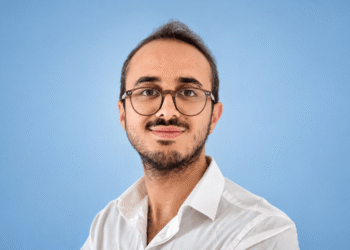
In an extensive interview with the European Center for Populism Studies (ECPS), Assistant Professor Roi Zur of the Department of Government at the University of Essex, whose research examines electoral competition, party strategies, and political polarization, offers a theoretically informed assessment of Israel’s evolving political landscape. His central warning is that prolonged political deadlock could further strengthen the forces responsible for Israel’s democratic deterioration. As Dr. Zur observes, “What seems more likely, in my view, is that we are heading into several months, or perhaps even a year, of political instability.” Crucially, he emphasizes that “Historically, such instability has helped the populist radical right maintain and consolidate its power.”
Dr. Zur situates this danger within Netanyahu’s transformation of Likud from a conventional conservative party into an increasingly radicalized populist formation. By systematically directing public frustration toward judicial authorities, security institutions, and allegedly unaccountable elites, Netanyahu has redefined political accountability through antagonistic populist narratives. As Dr. Zur argues, “Likud is no longer a classic center-right party. It increasingly resembles a European populist radical-right party.”
Equally consequential is the normalization of religious-nationalist extremism. Dr. Zur explains that Netanyahu’s cooperation with Itamar Ben-Gvir’s Otzma Yehudit and Bezalel Smotrich’s Religious Zionism has legitimized positions previously excluded from mainstream political discourse. These developments have fundamentally altered debates over territorial sovereignty, Palestinian rights, military conduct, and international law. Indeed, he argues that the ideological proximity between Likud and its radical-right partners makes it “increasingly difficult to differentiate between them.”
The interview also explores the structural obstacles confronting an alternative government, particularly the exclusion of Arab parties from legitimate coalition-making, disputes over ultra-Orthodox military exemptions, and the weakness of Israel’s liberal-left. Despite unprecedented Arab parliamentary representation, ethnonationalist boundaries continue to constrain coalition possibilities, while the Israeli–Palestinian conflict remains central to ideological competition.
Perhaps most disturbingly, Dr. Zur identifies emerging allegations of electoral illegitimacy as evidence of democratic erosion. He notes that “Likud is making statements claiming that the elections were stolen, much like Trump’s claims in the United States after his electoral defeat.” Against this backdrop, the interview illuminates how electoral fragmentation, populist delegitimation, and radical-right normalization could interact to reshape Israel’s democratic future.