
As the European Union implements its new Migration and Asylum Pact amid growing populist pressures, fundamental questions are emerging about the future of European constitutionalism. In this exclusive interview with the ECPS, MEP Juan Fernando López Aguilar argues that the Return Regulation represents “a violation of EU fundamental values” and warns that migration governance is increasingly being reshaped by radical-right narratives. Reflecting on the erosion of the cordon sanitaire, the “Melonization” of European migration policy, and the normalization of exclusionary rhetoric, MEP López Aguilar contends that “migration is a fact, not a crisis,” while insisting that “asylum is a right” that must remain protected. The interview offers a timely reflection on populism, democratic backsliding, human rights, and the future of European integration.
Interview by Selcuk Gultasli
At a moment when migration has become one of the most polarizing issues in European politics, the European Union finds itself confronting a profound constitutional dilemma. The implementation of the Migration and Asylum Pact, together with the Return Regulation, has reignited fundamental debates about sovereignty, solidarity, fundamental rights, and the future of European integration. Once conceived as a legal and political project founded upon supranational cooperation, shared responsibility, and the protection of human dignity, the European Union is increasingly facing accusations that it is redefining migration governance under the growing influence of populist radical-right politics. Against a backdrop of geopolitical instability, demographic change, electoral realignments, and increasingly contested debates over migration, the central question is no longer simply how Europe manages migration, but whether it can continue to do so without compromising the constitutional and humanitarian values upon which the Union itself was built.
Few policymakers are better positioned to reflect on these developments than Juan Fernando López Aguilar. A Member of the European Parliament (MEP) representing Spain’s Spanish Socialist Workers’ Party (PSOE) since 2009, López Aguilar previously served as Spain’s Minister of Justice and chaired the European Parliament’s Committee on Civil Liberties, Justice and Home Affairs (LIBE) between 2019 and 2024. Trained as a constitutional lawyer and widely recognized as one of Europe’s foremost authorities on constitutionalism, the rule of law, migration governance, and fundamental rights, he has played a central role in shaping EU migration and asylum legislation over the past decade. His long engagement with the negotiations surrounding the Migration and Asylum Pact places him at the heart of one of the Union’s most consequential constitutional debates.
In this wide-ranging conversation with the European Center for Populism Studies (ECPS), MEP López Aguilar argues that the Return Regulation represents far more than a technical adjustment to migration management. Rather, he contends that it constitutes "a violation of EU fundamental values" and departs from the legal architecture painstakingly constructed through the Migration and Asylum Pact. Rejecting the growing trend toward externalizing asylum responsibilities, he warns that "migration management cannot come at the expense of the rule of law," insisting that migration must be addressed through a genuinely European response grounded in "shared responsibility and binding solidarity" rather than bilateral arrangements with third countries.
Throughout the interview, MEP López Aguilar situates the transformation of European migration policy within broader processes of democratic and political change. He argues that the European People’s Party’s (EPP) increasing cooperation with radical-right parties has effectively dismantled the traditional Brandmauer or cordon sanitaire, allowing what he calls the "Melonization" of European migration policy to become mainstream. In his assessment, attempts to externalize migration control, normalize return hubs, and securitize asylum are inseparable from the wider normalization of populist narratives within European politics. At the same time, he cautions that Europe risks undermining its own credibility as a global defender of human rights through increasingly visible double standards in both migration and foreign policy.
Perhaps most strikingly, MEP López Aguilar rejects the assumption that migration itself constitutes Europe’s principal challenge. "Migration is a fact, not a crisis," he argues, insisting that "reducing migration to zero is not only impossible—it is stupid." Likewise, he defends asylum as a non-negotiable legal obligation, declaring that "asylum is a right. It must be respected, no matter the cost." For MEP López Aguilar, the real danger lies not in migration itself but in the gradual erosion of Europe’s constitutional identity through the normalization of policies and rhetoric that once belonged exclusively to the political fringes. The interview therefore offers not merely a critique of current migration policy, but a broader reflection on populism, democratic backsliding, constitutionalism, and the future of the European project itself.
Here is the revised version of our interview with MEP Juan Fernando López Aguilar, edited lightly to enhance clarity, readability, and overall flow for publication.
Migration Management Cannot Come at the Expense of the Rule of Law
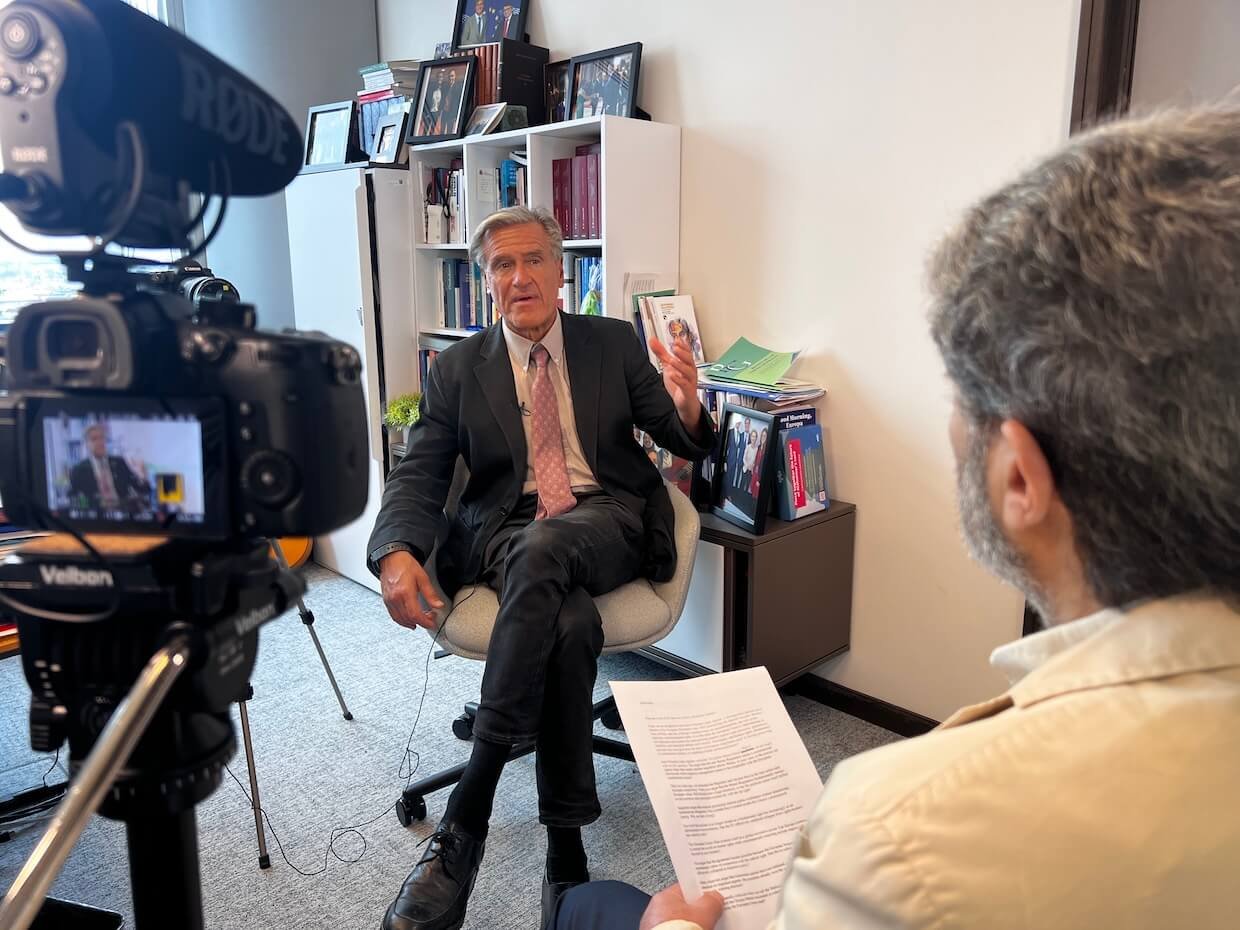
Juan Fernando López Aguilar, welcome! You argue that the new Return Regulation marks a constitutional rupture rather than merely another migration reform. Where, in your view, is the precise red line beyond which migration management ceases to be compatible with the European constitutional project?
MEP Juan Fernando López Aguilar: The red line is the lack of a European scale of response and the lack of consistency with EU fundamental values. Let me explain. We worked really hard to fulfil the mandate of the Treaty on the Functioning of the European Union, which is part of the Treaty of Lisbon. Article 67 and Article 77 make it clear that there should be not only an EU migration and asylum policy but also a migration and asylum system based on EU law. It wasn’t easy because migration is obviously the most divisive issue around, and it contaminates not only asylum policy and lawmaking in the member states but also policymaking at the European level. Yet there should be a European migration and asylum system based on law, and we worked for two consecutive mandates—10 years—to make it happen by combining eight pieces of legislation.
The underlying idea is that there should be a European-scale response. You know why? Because no member state can deal with it on its own. It cannot be only a Greek problem when migrants arrive on the Greek islands in the Aegean. It cannot be an Italian problem when migrants arrive on the Pelagic Islands, such as Lampedusa, in the Mediterranean, coming from the African shore. Nor should it be a Spanish problem that we receive 47,000 people a year on the island of El Hierro in the Canaries, coming from Senegal, Mauritania, Guinea-Bissau, and Guinea-Conakry. No, there should be a European-scale response, based on shared responsibility and binding solidarity.
That is the idea behind the Migration and Asylum Pact. But what is the idea behind the Return Regulation? It is to give the member states back the competence to negotiate bilateral agreements with third-country rulers so that, in exchange for money, they keep migrants out of our sight. Is it worthy? Is it consistent with EU values? My answer is no.
There is no European-scale response in Melonizing Europe, in Melonizing migration policy. Giving member states the authority to negotiate bilaterally with whomever is willing to be paid to keep migrants out of our sight in a so-called return hub—which is, let’s face it, a concentration camp for an unlimited period of time—should not happen under EU law. That is inconsistent with the very idea of the Migration and Asylum Pact. And, of course, in my view, it amounts to a denial of EU fundamental values, which are rooted in the principle that the EU is bound by international law, including human rights and international humanitarian law, which encompass shelter, rescue, and disease.
So, the conclusion is that this Return Regulation is not only a mistake; it is a violation of EU fundamental values and of EU law as enshrined in the Migration and Asylum Pact.
Reducing Migration to Zero Is Not Only Impossible—It Is Stupid
Only two years ago, you defended the Migration and Asylum Pact as the best achievable European compromise. Today, you argue that the Return Regulation fundamentally betrays European values. Did Europe cross a legal threshold, or has the political center itself shifted toward positions once associated exclusively with the far right?
MEP Juan Fernando López Aguilar: Both. We worked so hard to put in place a migration and asylum system based on EU law precisely because it is difficult and deeply divisive. It is obvious that migration is geographically divisive. The perception in the Baltics is not the same as it is in the western member states of the European Union, let alone along the southern external border—namely Greece, Italy, Malta, Cyprus, or Spain—not only in the Mediterranean but also in the Canaries. Different member states have different views of the problem, and they also have different views of the importance of a European-scale response.
Still, it was possible precisely because the balance of forces in the previous mandate of the European Parliament made it possible. Of course, it took time. It was only after a long and difficult struggle that, at the end of the previous mandate—in December 2023—we finally reached an agreement, and the entire package of regulations was ultimately adopted in June 2024. That is why, two years later, in June 2026, it has finally entered into force. But what has happened since the 2024 elections? Yes, we now have a balance of forces leaning to the right and the far right more than ever before.
For the first time in the history of the European Parliament, the EPP, together with three far-right political groups, accounts for 60% of the vote, marginalizing the second-largest group, the Socialists, as well as the Greens, Renew, and the Left. The far right is dominating the House and shaping policy. And that means a great deal when we talk about migration and asylum policy.
It means that a negative vision of migration is dominating the political landscape in Europe. In my view, that is a terrible mistake. Migration is not a threat, let alone a crisis. Migration has always been a fact. It is a permanent fact in the history of mankind. Should we panic because migrants are hoping or longing to make it to Europe? We should not panic. We can handle it. We can handle it as long as we do it together, according to EU law, and without betraying EU values. If we do it that way, then we may succeed. If we do it separately, member state by member state, in contradiction with EU values, then we are doomed to fail. And, of course, trying to reduce migration to zero is also doomed to fail. It is not only impossible, but also stupid.
Return Hubs Without Legal Safeguards Betray European Values

Supporters argue that external processing restores public confidence without abandoning humanitarian obligations. You contend that it instead erodes the Union’s constitutional identity. Why are they wrong?
MEP Juan Fernando López Aguilar: Because once you authorize returns to third countries with no meaningful link to the returnees, you are prepared to transfer human beings—their families, vulnerable people, trafficked women, and minors—to countries where they do not belong, where it is impossible to ensure that their fundamental and human rights are respected. It is equally impossible to ensure that the Charter of Fundamental Rights is implemented because there is no obligation to apply the Charter when they are in Egypt, Niger, Tunisia, or Rwanda. Yet this has become the obsession of too many around the table of the Council of Ministers of the Interior of the European Union and also within the European Parliament. That is absolutely inconsistent with the obligation to put in place an EU-scale response that is bound by EU law and consistent with EU values.
You’ve got to make sure that fundamental rights are observed and respected. Even when you return people, there has to be a meaningful link, whether it is a country of transit or a country of origin. But it is unacceptable to send them back anywhere, as long as you are paying the ruler there to keep them out of your sight for an unlimited period of time.
Once they are in the European Union—and this is also, of course, subject to criticism—you may hold them in a retention center, in a so-called migration facility, for two years. That’s much too long. But once they are in a third country with no meaningful link to the returnees, there is no time limit. They can be held there forever, stockpiled forever. Is that acceptable? Is that consistent with EU law? The beauty of the Charter of Fundamental Rights lies precisely in the fact that it protects all human beings, not only European citizens. That’s the beauty.
Anyone under EU law is protected by the Charter of Fundamental Rights, whether you are a European citizen or not. If you, a Turkish citizen, are on European soil, you are also protected by the Charter of Fundamental Rights. It is not the case that it does not apply to you because you are not a European citizen. No, you are protected by EU law, by the EU Charter of Fundamental Rights, because you are under EU law and on European soil. That is the beauty of it. And that is also denied by the fact that people are being returned to third countries to which they do not belong, simply for the sake of paying a ruler who is willing to accept them. That is absolutely, in my view, in contradiction with the very idea of European law and the European Charter of Fundamental Rights.
Treating Migration as a Threat Is a Terrible Mistake
You write that asylum is no longer treated as a fundamental right but increasingly as an administrative inconvenience. Has the EU effectively redefined refugees from rights-holders into security risks?
MEP Juan Fernando López Aguilar: The EU is a union of 27 member states. But the majority, for now, is leaning in that direction. It is allowing a negative approach to migration to prevail as the dominant political view: the denial of migration, the belief that migration can be reduced by discouraging migrants, and the idea that you can simply send them back.
As the far right chanted in a stunning ovation following the adoption of the Return Regulation in the plenary session in Strasbourg—and I quote—"Send them back, send them back, send them back." The idea that you can send back all migrants in the European Union is preposterous. It is self-damaging and ultimately self-defeating. The European Union is ageing. We are losing weight. We are losing GDP in comparison with the world’s major powers and global competitors. We are also losing population in comparative terms. So we need to change our stance on migration.
In Spain, there is an alternative. In Spain, there is a positive view of migration because there is a progressive government. For one thing, Spain has, for several years now, surprisingly become the number one engine of growth and job creation. Spain is growing four times as fast as Germany, France, and Italy, while creating jobs and making economic growth compatible with social justice. That means the minimum wage is rising, pensions are rising, social protection is expanding, and social services also benefit from the contribution of migrants who are willing to pay taxes in order to finance the services needed to fulfil social rights and fundamental rights altogether. So, Spain is demonstrating that there is an alternative. Yet Spain is not only being minoritized; it is actually isolated in this approach. The prevailing view is a negative one, and that approach is both self-defeating and self-damaging for the future of the European Union.
Double Standards Are Undermining Europe’s Global Credibility

The European Union often presents itself as a global normative power. Can Europe continue to lecture the world on human rights while simultaneously exporting asylum responsibilities beyond its own borders?
MEP Juan Fernando López Aguilar: Of course, I share the ambition that the European Union should grow—and grow fast—and become a relevant global actor. Of course, I agree that the European Union has to exercise hard power, not only soft power. I also agree that the European Union should join forces to build a truly credible and effective European diplomacy and combine its strengths so that it can become a meaningful actor in the global arena—one that is heard, respected, and worth listening to when engaging with other global powers. I mean talking to the United States, talking to Russia, talking to China, talking to India. That is what becoming global means. So, yes, I share that ambition. And yet I am also among those who criticise the fact that the European Union is still far from reaching that goal.
On the contrary, I am deeply critical of the evidence that the European Union is indulging in double standards. It is absolutely unforgivable that the European Union has tried to be hard and tough on Russia after Putin’s aggression against Ukraine while saying nothing about the genocide in Gaza and doing nothing about the genocide in Gaza. In my understanding, it is absolutely obnoxious and unacceptable that the Trump administration has imposed unilateral sanctions on members of the International Criminal Court who dared to call genocide a genocide.
And the European Union has not activated the Blocking Statute to protect members of the International Criminal Court who happen to reside in the EU. The International Criminal Court is located in The Hague, in the Netherlands, within the European Union. They should be protected by EU law. Yet the European Union says nothing, so as not to disturb Trump—the abuser, the bully, the bullying abuser in the global arena. That double standard, of course, damages the European Union’s reputation and credibility. I say this with sadness. I am not complacent.
I say it harshly because I am a fighter. I would like to bring about change so that we overcome those contradictions and double standards and actually gain leverage in the global arena by setting an example, by leading through example. That should be the idea. That should be the inspiration. Of course, I hope we learn how to do that in the foreseeable future.
There Is No Brandmauer Left in European Politics
You argue that the agreement became possible because the European People’s Party increasingly relies on cooperation with the radical right. Has the so-called cordon sanitaire effectively collapsed in migration policy?
MEP Juan Fernando López Aguilar: Absolutely. There is no cordon sanitaire anymore. In German, they call it Brandmauer. Es gibt keine Brandmauer mehr (there is no firewall anymore) in the European Union. There is no cordon sanitaire whatsoever. I have seen it with my own eyes. I have chaired the Committee on Civil Liberties and Human Rights for 10 years now, and I am the spokesperson of the S&D Group on constitutional affairs. And what do I see? Ever since we voted to invest the second European Commission with the votes of the EPP, the S&D, the Liberals, and the Greens, from that very moment—which marked the beginning of this parliamentary legislature—a so-called new majority has emerged, the Neue Mehrheit (New Majority), as they call it in German. It consists of the EPP together with three far-right political groups. They call themselves Conservatives, Patriots, and Sovereignists.
They are the majority. They are the ruling majority in the Parliament, in the Commission, and in the Council. And, of course, that means a great deal. In practical terms, it means there is certainly no cordon sanitaire anymore. None whatsoever. The EPP has broken all barriers against the rise of the far right. On the contrary, it is cooperating actively with the far right, and it is serving the far right’s self-congratulatory agenda. We saw that in the European Parliament when the far right, together with the EPP, secured the majority to adopt the Return Regulation, which was notorious and obnoxious in my view. They all stood up in a standing ovation and began chanting, "Send them back, send them back." That is the picture. No Brandmauer, no cordon sanitaire anymore.
Progressives Have Been Better at Diagnosis Than at Therapy
Many observers argue that mainstream parties have not defeated populism but instead absorbed its migration agenda. Has populism already won the migration debate without necessarily winning elections?
MEP Juan Fernando López Aguilar: I’ll tell you something. I am a progressive. I am a Spanish socialist, and I have been involved in socialist- and progressive-led platforms and think tanks for many years now. That means I have taken part in countless roundtables, seminars, symposiums, congresses, and conferences of progressive parties dealing with the populist agenda and the rise of populism. My first point is this: we progressives are very good at diagnosis, but we are very bad at therapy. We are very good at analyzing what is going on, but we have not been effective so far in reversing the rising tide of populism.
Of course, we do know what populism is about. Populism is a way of simplifying complexity. It is a way of lying to people, of infantilizing them by scapegoating individuals or entire groups in order to exploit the anger directed against those who are being scapegoated. The idea is simple. You’re in pain, you’re in trouble, you’re in disarray, you feel discomfort. Are you angry? I tell you something: I don’t have a solution for you. I have something better. I have someone for you to hate, and I will point my finger at someone for you to hate.
Of course, migrants are the number one choice. But it can also be Muslims, Black people, LGBTQ people, or women, because men are supposedly becoming impoverished as women advance. That is also a very common idea on the far right. You, a young man, are told that you have fewer opportunities than your father did because your father did not have to compete with so many empowered women. Because women are empowered, you have fewer opportunities. And then young people move to the far right all over the place. It’s very tempting, but it’s stupid.
Of course, it should be challenged. It should be fought against. But still, populism is on the rise. Of course, it has heavily contaminated the migration agenda. Populism has managed, first and foremost, to spread fear everywhere: We have been invaded. Migration is out of control. Sooner or later, you’re going to be replaced. Europe is not going to be white and Christian by tomorrow evening. By tomorrow evening, Europe is going to be Black and Muslim. Don’t you see? They are invading us. They are out of control. You have to react. You have to do something about it.
That kind of fear is spreading everywhere. Of course, it is evil rhetoric. It has to be fought against. It has to be dismantled. To begin with, it is not true. It is not true that migration is massive. It is not true that migration is out of control. It is not true that it is a conspiracy. It is not true that Europe is changing color or religion. It is simply not true. It is simply a lie. But still, it works.
That is why we progressives have a challenge: not only to be good at diagnosis, but also to become good at therapy. What should we do to reverse this trend? That is a huge challenge for progressive thinking and for progressive policymaking.
The Return Regulation Europeanizes the Meloni Model
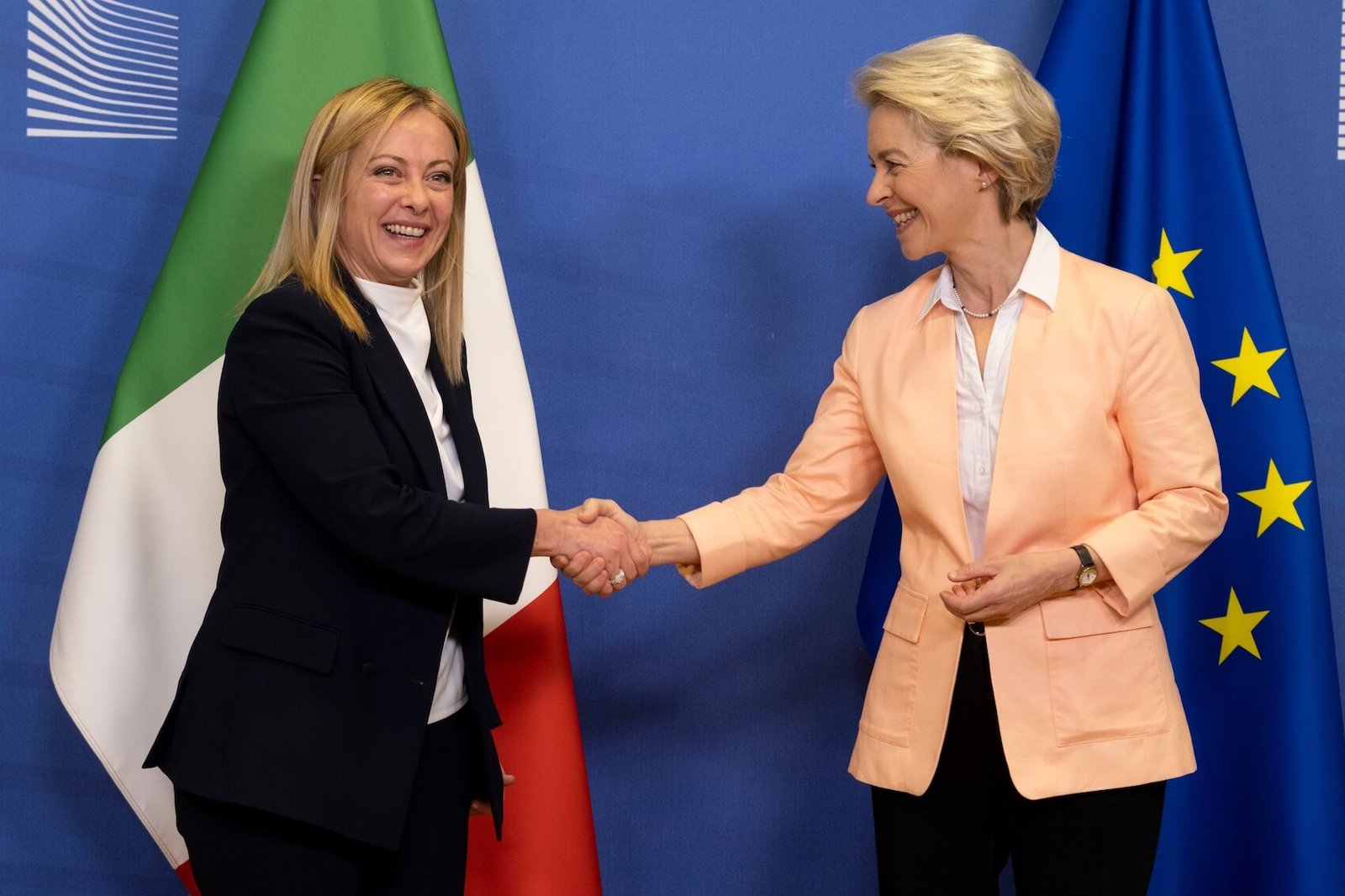
You have repeatedly criticized what you call the ‘Melonization’ of European migration policy. To what extent has Giorgia Meloni succeeded in redefining the migration agenda not only in Italy but across the European Union itself?
MEP Juan Fernando López Aguilar: Take a look at the Return Regulation. What happened? First, Meloni tried to strike a deal with neighbouring Albania in order to establish return hubs outside Italy through an agreement based on an exchange of money. But then, the Italian courts struck down what is, in my understanding, a sick idea. They rejected the initiative on the grounds of Italian law.
Meloni then went to the European Commission and essentially said: "Hey, listen, I need an umbrella. I need an EU umbrella for this because the Italian umbrella is not enough. The Italian courts are rejecting the legality of what I’m trying to do with Albania. We should put it into EU law." And that is how they Melonized the return policy. They effectively elevated the Italian idea—the Meloni idea—to the European level. But the bad news is that the Return Regulation contradicts the very principle that migration and asylum legislation at the European level should be based on shared responsibility and binding solidarity. There is no shared responsibility in negotiating with a third-country ruler to establish a return hub financed by your own budget. There is no European added value in legalizing and Melonizing return policy and legislation.
There is simply no added value. It is left to the member states to negotiate. Of course, Spain is not compelled to do that. Spain is not doing it, as long as the Spanish government remains in progressive hands. But others may try. They may ask, "Why shouldn’t I pay the ruler of Tunisia? Why shouldn’t I pay some African dictator so that I can fly some Black people out of my country?" Of course, as I have already explained, the idea itself is evil-minded. To begin with, I heard many times during the negotiations: "Fly them to Rwanda." And my question was always: "Why Rwanda?" Only because you think it makes no difference as long as they are Black. As long as they are Black, you think it doesn’t matter whether they are in Rwanda. It doesn’t matter whether they come from Mali, Niger, or Uganda—you simply fly them to Rwanda because, supposedly, it makes no difference there as long as they are Black.
Is that not racism? Is it racist? Absolutely racist. You have to care about people, about human beings. You cannot fly a Malian or a Nigerian to Rwanda because there is no purpose. There is simply no point in flying them to Rwanda just because you are paying Paul Kagame, the ruler of Rwanda for 35 years now. That is a preposterous idea. And yet, that is the Melonization of return policy.
Asylum Is a Right That Must Be Respected, Whatever the Cost
The Commission argues that stronger returns are indispensable for preserving public support for legal asylum. Is Europe sacrificing liberal constitutionalism in an attempt to save political legitimacy?
MEP Juan Fernando López Aguilar: Respect for asylum seekers must remain unwavering. The European Union is bound by international law, which includes both international humanitarian law and human rights. And, of course, the Geneva Convention relating to the protection of asylum seekers—the Refugee Convention—is international law, indeed one of the fundamental pillars of international law. So, yes, migration is a fact, not a crisis, not a threat. It is simply a fact. But you know what? Asylum is a right. It must be respected, no matter the cost, no matter what. It must be respected.
The problem is that there is now a prevailing idea within the current political landscape we have been discussing, one that is increasingly leaning to the right and the far right. That idea is that most asylum seekers are fraudulent. They are portrayed as economic migrants seeking better opportunities. According to this logic, they all have to be discouraged. Migrants are discouraged, and asylum seekers are discouraged as well. Because, as the ministers of the interior argue, most asylum seekers are actually fraudulent. They are not people being persecuted. They are not people whose physical integrity is at risk. They are simply people seeking better opportunities. So seeking asylum is presented as nothing more than legal advice given to them by their counsel. And they, too, have to be discouraged. That is deeply worrisome.
We should protect asylum seekers because that is part of the European Union’s identity and its commitment to human rights. It is both a fundamental principle and a legal obligation. Every member state, individually, is a signatory to the Geneva Convention. And the European Union itself is bound by international law, including international humanitarian law and human rights.
No Human Being Should Ever Be Described as Illegal

And lastly, you have warned that Europe risks normalizing practices that were once politically unthinkable. Looking beyond migration, do you see this normalization as part of a broader process of democratic backsliding within the European Union itself?
MEP Juan Fernando López Aguilar: We’ve got to care about it. I do care. I’m a fighter against that trend. I’ve always tried to stand up whenever I have seen signs of it unfolding before my eyes, here in the European Parliament and elsewhere. Of course, you can see that things are changing for the worse in the European Parliament in that regard as well.
For instance, when I first came to the European Parliament, no one talked about illegal migrants. They spoke about irregular arrivals, but never about illegal human beings. Now it’s the new normal. You hear it a thousand times in every plenary session in Strasbourg. And you know what? No one notices anymore. No one stands up anymore and says, "Hey, listen, this is unacceptable. Are you talking about illegal human beings or what?" That’s unacceptable.
Migrants are not guilty because they tried, even in the worst of circumstances. Take, for instance, the boats coming to El Hierro in the Canary Islands. We receive 46,000 people a year in the Canaries, arriving by wooden boats departing from the western coast of Africa. It is the most perilous and deadliest route to the European Union. The Atlantic is much rougher than the Mediterranean. The waves are much higher in the Atlantic. And you know what? None of those trying to reach the European Union through the Canary Islands—because the Canary Islands are part of the European Union, absolutely—ignores the risk of perishing in the attempt, the risk of losing their lives. And still they try.
When they sink to the bottom of the sea, tragically, they are, in effect, saying, "Hey, listen, I’m dying, but still I had to try. I do not regret it because I had to try." It’s terrible. That means a great deal. It means they are not taking a frivolous step, or trying to commit fraud, or trying to be troublemakers, or trying to create problems, or bring their problems to a foreign land. They are trying to do something with their lives out of despair. And that life is the only one they have. They are willing to sacrifice it for the sake of making it. That deserves respect.
The point I’m making is that the new normal is losing that human understanding of the tragedy I am describing. Instead, through aggressive rhetoric, those human beings are portrayed as illegal, as an invasion, as a threat to your security or to your identity. That is completely unworthy of the European Union. The European Union should not be like that.
So, I’m a fighter. Whenever I see that happening in the European Parliament, I react. But still, the question is: how long will it go?