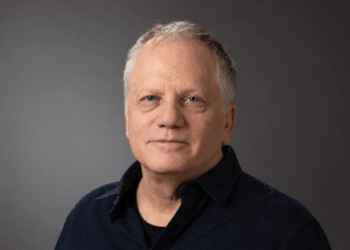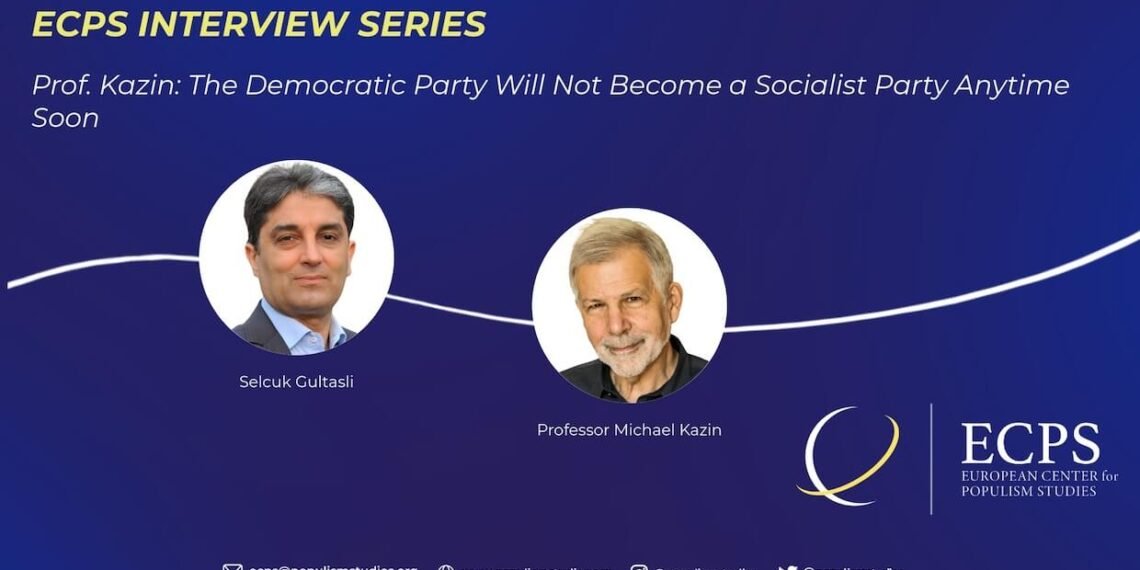
In this ECPS interview, Professor Michael Kazin, a leading historian of American populism, social movements, and the Democratic Party, examines the asymmetrical rise of MAGA and democratic socialism in contemporary US politics. While stressing that the American left can significantly influence Democratic priorities, Professor Kazin argues that it has historically failed to take control of the party and concludes that “the Democratic Party will not become a socialist party anytime soon.” He links this limitation to the decline of organized labor, noting that Democratic class appeals increasingly come “from the top down.” At the same time, Professor Kazin contends that Democrats cannot simply return to the politics of Obama or Biden and must confront inequality, healthcare, housing insecurity, corruption, and distrust in government more fundamentally.
Interview by Selcuk Gultasli
As the United States approaches the November 3 midterm elections, American politics is being reshaped by two powerful but asymmetrical currents: the consolidation of MAGA within a highly personalized Trump presidency and the growing visibility of democratic socialism within a Democratic coalition that remains considerably broader than its left flank. This tension provides the backdrop to the ECPS conversation with Professor Michael Kazin, Professor of History at Georgetown University and Editor Emeritus of Dissent, a leading historian of American populism, social movements, and the Democratic Party. Professor Kazin’s scholarship has long explored the political language of “the people,” the evolution of the American left, and the relationship between social movements, class politics, and party transformation. Georgetown likewise identifies Kazin as a scholar of US political and social movements, while his influential The Populist Persuasion traces recurring conflicts between “the people” and powerful elites across American history.
At the center of the interview is a fundamental question about whether the current revival of democratic socialism can move beyond insurgency and become a durable governing force. Professor Kazin’s answer is deliberately cautious. While the left can exercise substantial influence within the Democratic Party, he stresses that “historically, at least so far, it has not been able to take over the party entirely.” His conclusion is unequivocal: “The Democratic Party will not become a socialist party anytime soon.”
Yet Professor Kazin does not equate this electoral ceiling with political irrelevance. He argues that the contemporary left resembles earlier progressive factions that transformed Democratic priorities without controlling the party. Bernie Sanders demonstrated this dynamic in 2016 and 2020, while the Democratic Socialists of America (DSA) have developed substantial organizational capacity in heavily Democratic cities. For Professor Kazin, their influence illustrates how a faction “does not control the party, but it can have a great deal of influence over it.”
The deeper obstacle, however, is organizational and social. Professor Kazin identifies the decline of organized labor as a critical reason Democrats struggle to construct a persuasive class-based politics. When unions were stronger, working-class appeals came from workers speaking to other workers; today, he argues, “when Democrats make a class appeal, it comes from the top down.”
This diagnosis also shapes Professor Kazin’s understanding of the post-Trump Democratic Party. He argues that Democrats increasingly recognize that they “cannot simply return to some of the policies of Obama or Biden” and must confront long-standing problems including economic inequality, healthcare, housing costs, and distrust of government. In this sense, the interview presents democratic socialism less as an imminent replacement for mainstream Democratic politics than as a persistent force capable of shifting the boundaries of what the party considers politically necessary and possible.