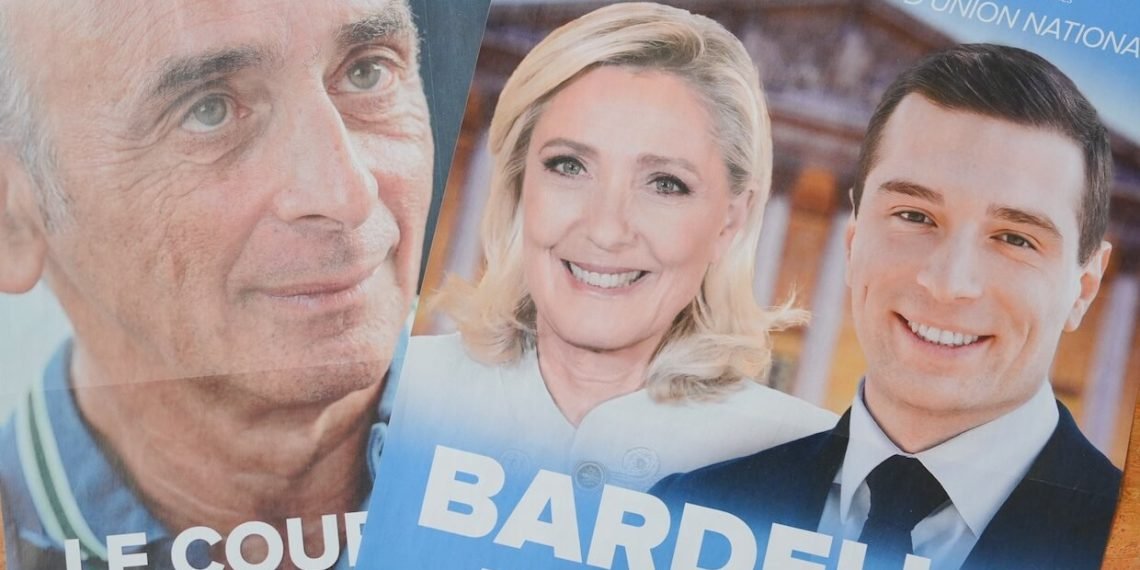
In an era marked by intensifying polarization and electoral fragmentation, France’s 2026 municipal elections offer a revealing lens into the country’s shifting political equilibrium. In this ECPS interview, Professor Philippe Marlière argues that while mainstream parties retain urban strongholds, the populist radical right continues to consolidate its territorial and sociological base. Crucially, he underscores that “polarization… tends to benefit the far right,” enabling the National Rally to advance its normalization strategy within an increasingly conflictual political environment. Beyond electoral outcomes, the interview highlights deeper structural transformations—from cross-class realignment to the erosion of centrist politics—suggesting that France is not experiencing a rupture, but a gradual reconfiguration that may decisively shape the dynamics of the 2027 presidential contest.
Interview by Selcuk Gultasli
Giving an in-depth interview to the European Center for Populism Studies (ECPS), Philippe Marlière, Professor of French and European Politics at University College London, offers a nuanced and empirically grounded assessment of France’s evolving political landscape in the wake of the 2026 municipal elections.
Held against the backdrop of an increasingly polarized European political environment, the elections revealed a fragmented yet structurally revealing electoral map. While mainstream parties retained control of major metropolitan centers such as Paris, Marseille, and Lyon, the populist radical right—anchored by the National Rally (RN)—continued to expand its territorial base across smaller municipalities and peripheral regions. Notably, the RN and its allies consolidated support in medium-sized towns and traditional strongholds in northern deindustrialized zones and the Mediterranean southeast, while also making inroads into previously resistant regions such as western France. At the same time, opinion polls suggest that RN candidates remain above the 30 percent threshold ahead of the 2027 presidential race, underscoring their growing electoral competitiveness.
As Professor Marlière emphasizes, these results must be understood through the dual lens of fragmentation and consolidation. “The French electoral landscape is deeply fragmented and also polarized,” he observes, highlighting the coexistence of institutional instability with the strengthening of ideological blocs. Indeed, he notes a “consolidation of the two blocs at the extremes,” with both the far right and the radical left reinforcing their positions without producing a decisive electoral rupture.
At the core of his analysis lies a striking argument captured in the headline insight: polarization itself has become a structural driver of far-right normalization. “This kind of polarization tends to benefit the far right,” Professor Marlière explains, as it enables the RN to position itself as a seemingly “reasonable, ‘moderate’ political force” within an increasingly conflictual political field. In this context, the long-term strategy of dé-diabolisation appears to be advancing, albeit unevenly. While the RN remains constrained in major urban centers, it has become, in Professor Marlière’s words, “a party that is increasingly on course to become normalized.”
Equally significant is the sociological transformation of the far-right electorate. No longer confined to economically marginalized groups, the RN now draws support across a broader cross-class coalition, including professionals and retirees—a shift he identifies as a critical turning point since the 2024 European elections.
Taken together, the 2026 municipal elections do not signal a dramatic rupture but rather a deepening of structural trends. As Professor Marlière cautions, “the tectonic plates… are aligning in a way that looks favorable for the National Rally,”even as electoral uncertainty persists. In this interview, he unpacks the implications of these developments for democratic resilience, party competition, and the high-stakes trajectory toward 2027 presidential elections in France.

Here is the edited version of our interview with Professor Philippe Marlière, revised slightly to improve clarity and flow.
France’s Electoral Landscape Is Fragmenting While Extremes Consolidate Their Ground
Professor Marlière, welcome, and let me start right away with the first question: The 2026 municipal elections seem to have produced a fragmented but revealing map of French politics; the far right advanced in many provincial towns, mainstream parties held key metropolitan strongholds, and the left remained unevenly competitive. From your perspective, what do these results tell us about the current stage of France’s populist realignment?
Professor Philippe Marlière: I think the main lessons of that local election are, first of all, the very high level of abstention. That confirms that, when it comes to voting, the French are voting less and less. Some would call it civic disengagement. It does not necessarily mean that the French are no longer interested in politics; it simply means that they vote less. Turnout was also lower in 2014, which was the last “normal” local election, as the previous one took place during the COVID pandemic and is therefore not really comparable.
The second point, as you mentioned, is fragmentation. The French electoral landscape is deeply fragmented and also polarized. I think we will return to this later.
Thirdly, there is a form of consolidation of previous electoral trends. I am thinking here of the two major elections in 2024—the general election and the European election. There was no major upset or breakthrough, but rather a continuation of existing dynamics. Notably, as you pointed out, there is a consolidation of the two blocs at the extremes: on the far right with the National Rally, and on the far left—the radical, populist left—with Jean-Luc Mélenchon’s France Insoumise. Both camps can claim gains, and their positions appear to have strengthened.
So, overall, that would be my general assessment of this local election.
The National Rally Consolidates Territorially but Still Struggles in Major Cities
The National Rally expanded its local presence but again struggled to convert momentum into decisive victories in major cities. Should this be read as evidence that the populist radical right is becoming structurally embedded in French politics, or do these results still reveal significant sociological and territorial ceilings to its expansion?
Professor Philippe Marlière: I think for the National Rally it is hard to say that this was a bad election. It is not a fantastic election, because a fantastic result would have meant winning a number of large cities, and in France a big city is one with over 100,000 people. They did not manage to do that. They had hoped to win the city of Toulon. That said, they did win one, and, to be fair, that is at least a good result in Nice, which is, of course, one of the bigger French cities. They won in Nice with Éric Ciotti. Technically, he is not a member of the National Rally, but he is the former leader of Les Républicains, who left the party in 2024 and now runs a small party allied with the National Rally. So that is a significant gain.
Apart from that, however, the election highlighted the weakness of the National Rally in big cities and urban areas, which are now strongholds of the left. My assessment, therefore, is that this was not a breakthrough in terms of winning major cities; it did not achieve that. What it did do, however, is to consolidate its power base in medium-sized cities—places with around 20,000 inhabitants or fewer. It is now a party with a solid and territorially widespread base.
There are also three regions where it is particularly dominant: in the north, especially in former mining areas that were once socialist bastions but are now strongholds of the far right; in the southeast, which has long been a strong area for the National Rally; and in parts of the southwest as well. So I would not describe this as a setback, but neither is it a major victory. It is a party that is increasingly on course to become normalized—people in small towns now vote for the National Rally in ways that were not typical before.
At the same time, when you look at opinion polls—which is what ultimately matters for a presidential election in a year’s time—they are very favorable for the National Rally. Any candidate, whether Marine Le Pen or Jordan Bardella, is polling well above the 30% threshold, while all other competitors remain significantly behind.
A Weakening Center and Identity-Driven Politics Reshape French Populism

In your work, you have emphasized that populist projects must be understood in relation to their national political cultures rather than as interchangeable European phenomena. What, in your view, is specifically French about the current configuration of populism and the populist radical right revealed by these municipal elections?
Professor Philippe Marlière: It is an important point to contextualize the rise, or sometimes the setback, of the populist far right across Europe. You cannot compare all situations; they are not entirely similar. However, there are similar trends. There are differences, but also common patterns.
So, while sharing similarities with other national contexts, the French case may be specific in the sense that it exacerbates some of these trends. One example is polarization. The French political landscape is extremely polarized, and that makes a very significant difference. Polarization means that you have left-wing parties, right-wing parties, and a political center, which in France is weakening—Macron’s party did not perform well in this election, which is not a surprise.
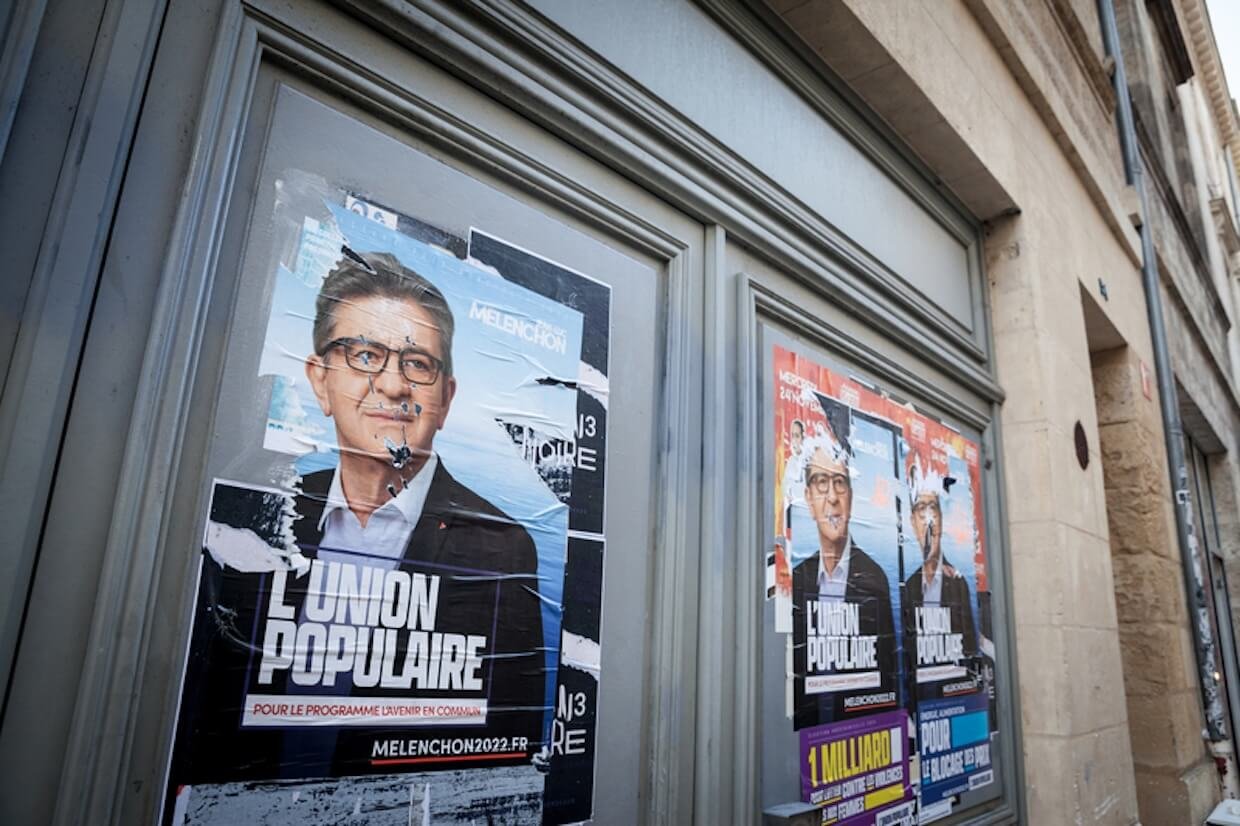
When polarization intensifies, it creates a climate of tension in which debates revolve less around economic and social issues and more around personalities and questions of identity. We have seen a great deal of that. In the end, this kind of polarization tends to benefit the far right. The far right has used this climate to position itself as a reasonable, “moderate” political force, in contrast to other parties that have contributed to this polarized environment. I am thinking here in particular of the populist radical left associated with Jean-Luc Mélenchon.
This dynamic becomes a tool that enables the National Rally to present itself—rightly or wrongly—as a more mainstream party. The mainstreaming of the National Rally is still ongoing. It is a process that could potentially enable the party to win the presidential election in a year’s time.
So far, there has been what is often described as a “glass ceiling” in presidential elections: the far right could not win because it was perceived as too extreme, prompting a counter-reaction from voters. This time, however, if the party succeeds in presenting itself as part of the mainstream—regardless of whether that perception is accurate—it may facilitate its path to electoral victory.
From Peripheral Protest to Nationwide Presence, the RN Vote Is Expanding
The far right’s local breakthroughs were especially visible in smaller towns, deindustrialized areas, and parts of Mediterranean France. How far do these results confirm that support for the populist radical right continues to be rooted in a combination of territorial abandonment, social insecurity, and cultural anxiety?
Professor Philippe Marlière: There are aspects of the National Rally vote which clearly underline what you have just said—social insecurity, anxiety, and a feeling of being abandoned by the central state. There are some strong indicators, such as people feeling that when you live, for instance, in a small town, or in a suburban or peri-urban area, you lack many of the things that make life easier, such as good public transport and good public services. There are issues around that, and studies have shown that this feeds and strengthens the National Rally vote in general. So there is clearly that aspect.
But I think what is new, and something which will worry anyone concerned about a major National Rally victory in France in a year’s time, in the presidential election, is that this vote has not only nationalized. You mentioned the three zones of strength of the National Rally in the north, in the southeast, and the southwest—that is true—but it is also present in other parts of France. Think, for instance, of Brittany in the western part of France, a place where traditionally the National Rally would get very few votes. Now, the party can also get very decent scores in that part of France.
So, there is a nationalization of the vote, but it is also a vote that has spread across different social classes. It is no longer only the vote of the young, unemployed, relatively uneducated working class, or the working class in general. It also includes professionals and retired people, which is a new development. The turning point was the European election of 2024, when, for the first time, retired people—who had been the main supporters of Macron—switched en masse to the National Rally. That is a sign of electoral strength, because retired people tend to vote more than younger people, who abstain more.
All in all, the tectonic plates, so to speak, are aligning in a way that looks favorable for the National Rally. That said, I am not suggesting that the presidential election is a foregone conclusion or that the far right will win. A great deal can happen between now and April 2027, notably a last-ditch reaction from French voters who might prefer to vote for another candidate simply to prevent the far right from winning the highest political office in France. Much will also depend on the candidate who faces the National Rally in the second round.
Education and Class Remain Key Barriers to Far-Right Urban Expansion
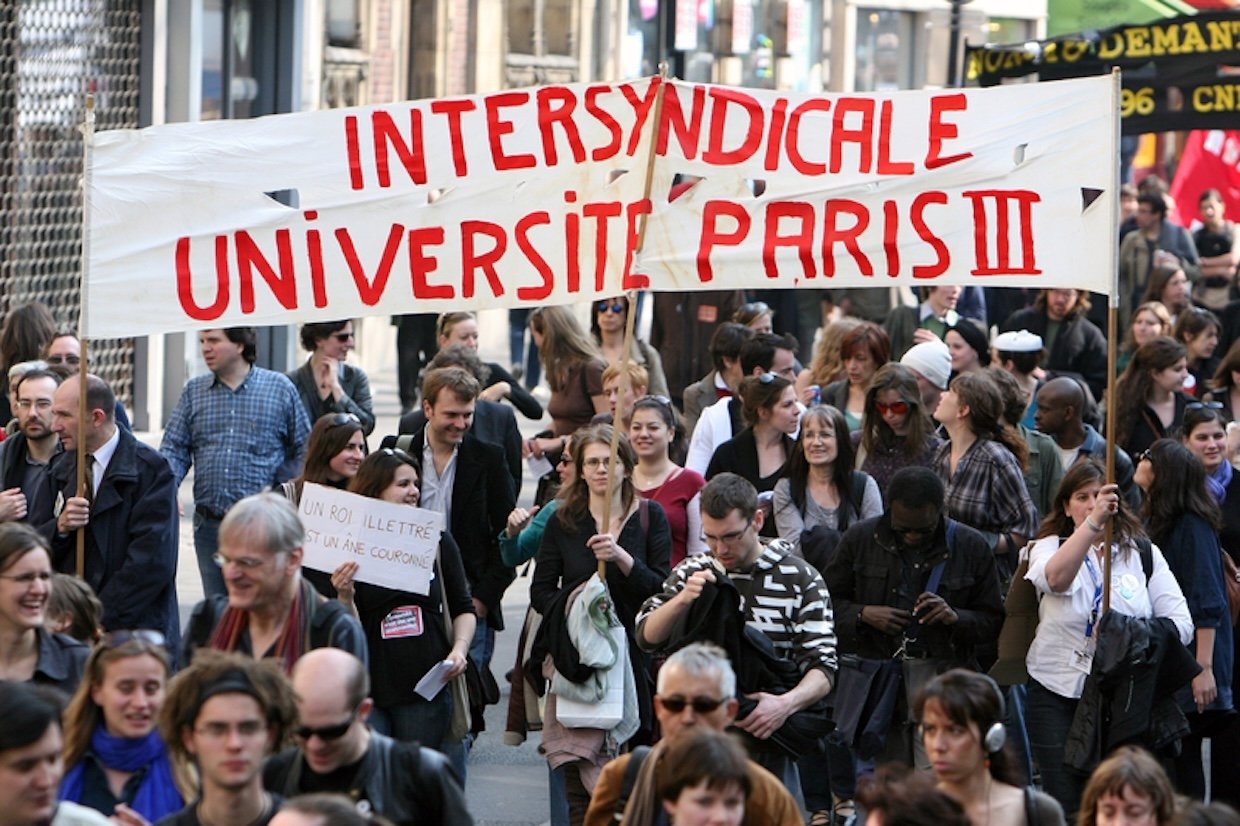
Conversely, the RN’s continuing weakness in many large metropolitan centers suggests that urban France still resists the populist radical right. To what extent is this an effect of class composition, educational attainment, immigration-linked demography, or the continued political toxicity of the far-right label?
Professor Philippe Marlière: There are very strong sociological variables or indicators that explain why some populations and categories of voters support the far right, and why others distrust and resist it. I think there are such sociological variables at play.
Gender is one of them. Women still tend to vote less, in general, than men for the far right. The gender gap has narrowed compared to 20 or 30 years ago, but it remains. Interestingly, among younger voters—the 18–24 age group, for instance—the gender gap is even wider. There is a broader trend, not only in Europe but globally, of young men being more attracted to the far right than young women. Women, in fact, are often put off by the far right and tend to resist it.
The second variable is education, and here again the French case is not particularly unique. It is a pattern observed in many countries. The general sociological rule is that the more educated you are, the more likely you are to vote for the left. Conversely, those with lower levels of education—primary or secondary schooling, possibly the baccalaureate but no university education—are more likely to support the National Rally.
This also applies to younger voters. While Jean-Luc Mélenchon does appeal to the youth, his support is concentrated among more educated young people—those pursuing higher education and living in urban areas—as opposed to young salaried workers who left school early and live in rural areas, who tend to support the National Rally. In this sense, education is an even more decisive factor than age.
This helps explain why France’s major cities are now governed by the left. Paris and Marseille have socialist mayors, while Lyon has re-elected a Green mayor. This reflects the sociological profile of urban electorates, which tend to be more educated and relatively well-off, and therefore more inclined to support left-wing parties. By contrast, in smaller localities across France—where there is a lack of public services and higher unemployment—the National Rally performs more strongly.
The RN’s Normalization Is Aided as Much By Opponents as by Strategy
In light of these municipal results, do you think Marine Le Pen’s long strategy of dé-diabolisation has reached its limits at the local level? Or has it succeeded enough to normalize the RN in parts of France even if it still falls short of full urban legitimacy?
Professor Philippe Marlière: De-demonization is to start with—yes, you are right to stress that—a process. If it is a process, it has been initiated by political forces, and obviously, the forces that want de-demonization to happen are the National Rally, to begin with. Marine Le Pen has been very clear about this in the past. “We have been demonized,” she has said several times, and that has to stop.
So, what do you do about that? You adopt a strategy. First, you try to appear less radical, less far-right in the way you conduct your political activities and in your discourse. You remove the more radical, extremist elements within your party. This has been done.
However, I would say this has mainly been implemented among RN officials—that is, those in elected positions, particularly at the national level. For instance, considerable effort has been made by the National Rally to ensure that, within its group of MPs in the National Assembly, there are no sympathizers of extremist or fascist groups, and that no one makes anti-Semitic or Islamophobic statements. A great deal of work has gone into this. Marine Le Pen herself and Jordan Bardella present a very polished image to the public, unlike Jean-Marie Le Pen, who was repeatedly convicted for racist or anti-Semitic statements. That marks a clear difference.
Nonetheless, there are still, among supporters and even at the local level, elected RN representatives who occasionally—and quite often—make such statements. So the process is not entirely complete. Much has been achieved, but it remains ongoing.
There is also another dimension to de-demonization. It can only succeed if it receives some assistance from opponents, and in France, opponents of the far right have, in fact, contributed to this process. This is not a recent development; it began some time ago. Parties on the center-right and the right have progressively adopted elements of the RN’s discourse, and sometimes even aspects of its policy agenda. By doing so, they contribute to making the RN appear more moderate and more mainstream. If mainstream parties frame issues in similar terms to the far right, then the far right no longer appears as extreme or dangerous.
A certain degree of support has also come from the media. French media, as studies suggest, have shifted to the right. Some private channels, such as CNews, owned by the billionaire Bolloré Family, as well as formerly mainstream radio stations with large audiences, have clearly moved in that direction, if not toward the radical right. In such a context, de-demonization becomes more likely.
However, as you pointed out, there is still resistance, particularly at the grassroots level. We saw this again in 2024. After the first round of the general election, the far right was ahead and appeared on track to secure a possible absolute majority. Then what the French call a “Republican front” emerged, involving significant tactical voting between left-wing parties and also between the left and Macron’s supporters. This tactical coordination led to the defeat of many RN candidates, and in the end, the RN did not win.
So, overall, de-demonization has been underway and has been quite successful for the RN. However, the process is not yet complete. There remains a kind of anti–far-right reflex among the electorate, which has so far prevented the RN from winning major elections.
The Boundary between Mainstream Right and Far Right Is Increasingly Blurred
One of the most striking outcomes of the elections was Éric Ciotti’s victory in Nice and the broader sense that parts of the mainstream right are moving closer to the RN. Do you see this as a local anomaly shaped by specific rivalries, or as a more durable sign that the boundary between mainstream conservatism and the populist radical right is eroding?
Professor Philippe Marlière: That is a very important point, and it concerns the future not only of the far right—whether it will eventually win a major election, such as a presidential or general election—but also the future of the mainstream right, the post-Gaullist right, which is what Les Républicains represent, with their legacy of de Gaulle and Chirac. I would say it also concerns the future of French politics in general, because having a far-right president and government would be a major development not only in French politics, but also in European and even global politics.
The mainstream right, notably Les Républicains (LR), plays a pivotal role in this, because figures and studies show that there is a porosity between the LR electorate and the far-right electorate. In some constituencies, voters from both sides support each other’s candidates when needed, for instance in the second round of an election. If the only candidate facing a left-wing contender is from the National Rally, you will often see a significant transfer of votes from LR voters to RN candidates, and vice versa. So it works both ways.
However, the rising and dominant force is not LR. LR is now a shadow of what used to be the dominant party on the right in French politics, particularly until the Sarkozy era. It is a party that has been losing votes and representation with each election.
As a result, LR finds itself in a kind of impossible situation. If it forms an alliance with the far right—which some within the party are now considering—it risks accelerating its own decline. That was Éric Ciotti’s choice in 2024, when he was leader of LR. He argued that the party should form an alliance and work with the far right. This represented a complete break with the tradition of figures like Charles de Gaulle and Jacques Chirac, who were firmly opposed to the far right. When the party rejected this line, Ciotti left, taking with him more than 20 MPs. Yet this has not resolved LR’s dilemma, as there remains a strong temptation among some of its officials and elected representatives to cooperate with the RN.
The problem is that by working closely with the far right, LR further legitimizes it and signals to voters that there is little difference between the two. This could lead to a scenario similar to what happened on the left in the 1970s, when the Socialists, under François Mitterrand, formed an alliance with the Communists and eventually became the dominant force.
In the current context, however, with a de-demonized far right and potentially a figure like Jordan Bardella running a relatively mainstream campaign, not very different from LR on socioeconomic issues, there is a real risk that what remains of the LR electorate could shift further toward the RN.
So, it is a very complex situation for LR. What we may be witnessing is a broader recomposition of the right, with the RN potentially becoming the dominant party and LR relegated to the role of a junior partner. This would represent a complete reversal of the post-war political order, where the far right becomes the main party, and what is considered the mainstream right becomes a junior partner.
The Macronite Center Has Given Way to a Reconfigured Right-Wing Bloc
More broadly, do these elections suggest that the French right is moving toward a process of recomposition in which traditional conservatism, Macronite liberalism, and the populist radical right are being forced into a new and unstable relationship?
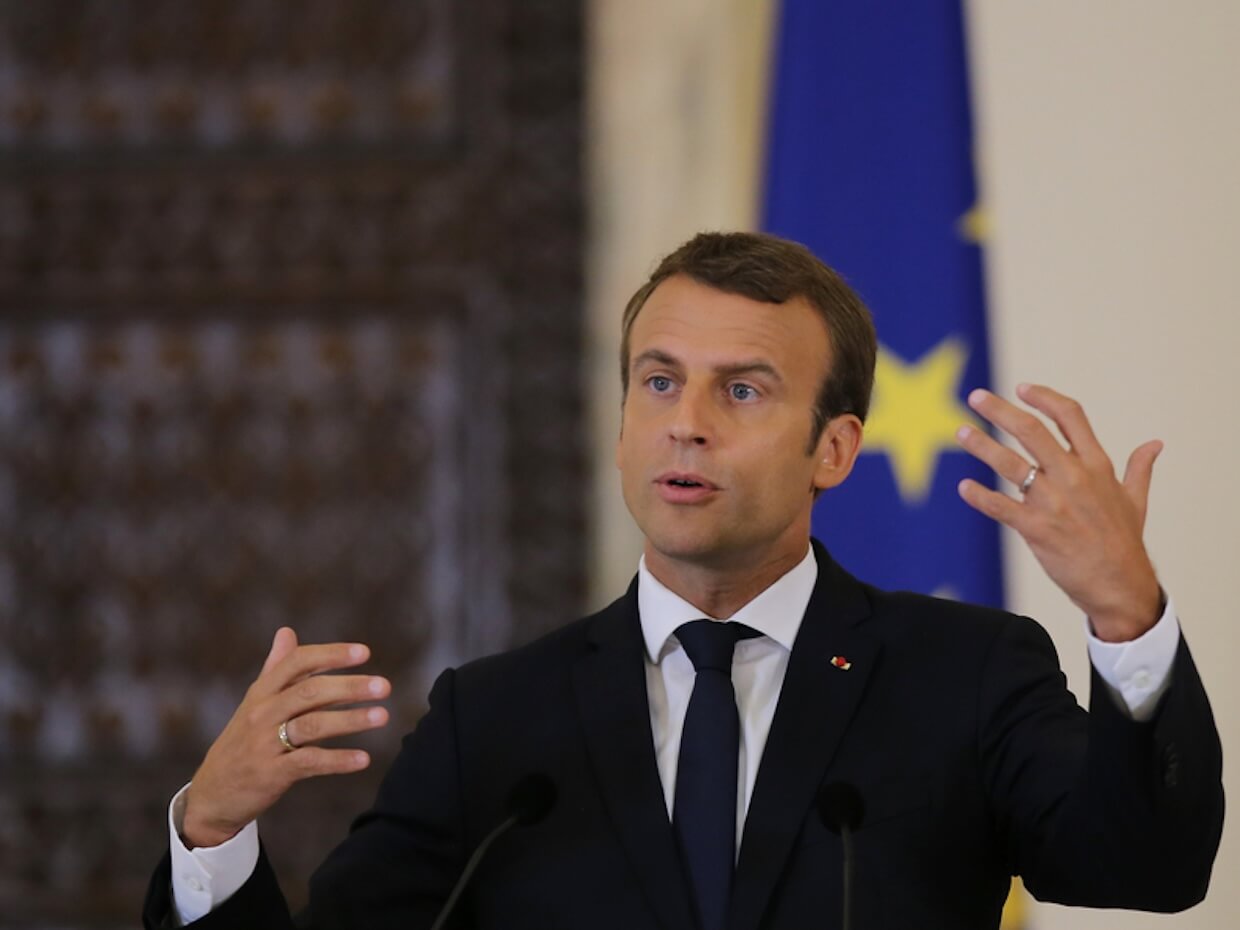
Professor Philippe Marlière: Yes, the striking thing about that local election is that it really marks the end—although we already knew this—of the Macronite center. It was, in a way, positioned both on the left and on the right. Macron wanted to strike a balance between the moderate left and the moderate right. That was his project in 2017, when he was first elected. We saw that during his first term there was a shift to the right, and in his second term nothing has changed. The Macron party is now firmly on the right and has been governing with right-wing forces. It has been in power with LR, for instance. So there is no doubt that this marks the end of the attempt to find a kind of centrist position in French politics, where one could combine elements of the center-right and the center-left. That is over. The Macron party is firmly on the right.
Moreover, the local election showed that the electorate of Macron, in general, clearly supports the forces of the right in the second round when their candidate cannot run. So this very original attempt to create a genuine center that synthesizes the moderate left and right has come to an end.
As for the rest of the right, I have already addressed this in my previous answer. LR finds itself between a rock and a hard place. It has tried to cooperate with the Macron party in government, but that has not really helped, as it continues to lose votes. At the same time, it faces the major and direct challenge from the RN. So it is a very complex situation for the right.
Just one more point about LR: it did relatively well in this local election, and the reason is the same as for the Socialist Party—they entered the election from a position of strength. They already governed many cities across France. LR is the party that runs the greatest number of cities. The difference with the Socialist Party is that the latter tends to be strong in large cities with over 100,000 inhabitants, whereas LR is stronger in medium-sized cities with fewer than 100,000 inhabitants, where it governs many municipalities. So it has managed to survive this election and perform relatively well.
This illustrates the paradox of French politics. The two parties that dominated French politics from the 1970s until 2017, when Macron was elected—the Socialists and LR—are no longer in a position to win national elections. However, they remain dominant at the local level, where they still have strong territorial bases.
Republican Discourse Now Normalizes Formerly Far-Right Themes
Your work on laïcité and the “islamo-gauchisme” controversy has shown how republican language can be reworked in increasingly exclusionary ways. Do you think the municipal campaign confirmed that themes once associated with the far right have now migrated into broader mainstream discourse, thereby indirectly strengthening the populist radical right?
Professor Philippe Marlière: Yes, you are right on that. It is not only the far right, the National Rally, that has been normalized and mainstreamed; a certain type of racist discourse has also become quite mainstream, particularly around Islamophobia. But that is not new. This is part of the debate on so-called Islamo-gauchisme. Islamo-gauchisme was essentially directed at French academics or intellectuals who were allegedly in cahoots with Islamists in France. That was never demonstrated, but nonetheless it became a central claim. And, of course, when such claims are made, they give a significant boost to the far right, because the far right does not even need to intervene in that debate. That debate was largely carried out by the Macron government and by LR. So this is where we are.
What is interesting is that the election also showed that, in some areas—particularly in the outskirts of major cities, including several cities around Paris—mayors from ethnic minorities were elected. They are French citizens, but they come from minority backgrounds. The most notable example is Saint-Denis, a large city of around 150,000 inhabitants. It was traditionally a communist stronghold, then governed by a socialist mayor for one term, and has now been won by a La France Insoumise candidate who is Black. This is very good news for Mélenchon, who has recently advanced the idea of a “new France.”
What does this “new France” represent? It is a multicultural France shaped by immigration. France has long been a country of mass immigration, and the sons and daughters of migrants—born on French soil and holding French citizenship—are now increasingly involved in political life. Some have been elected as mayors, local councillors, and even MPs, which marks an important shift. Twenty years ago, the French political class was overwhelmingly white. While this remains the case for some parties, others—particularly on the left—have increasingly incorporated this diversity.
This is what Mélenchon has gained. He won a number of cities, I believe up to seven, which is a solid result. It is not a major breakthrough, given that La France Insoumise is a relatively young party that started from scratch, but moving from zero to seven is significant. These include important cities such as Saint-Denis, Roubaix, Vénissieux, Vaulx-en-Velin, La Courneuve, and Créteil—places with substantial populations of ethnic minorities.
What La France Insoumise is doing is quite specific. It reflects Mélenchon’s broader strategy of mobilizing young voters—particularly those pursuing higher education and living in urban areas—alongside ethnic minority communities in the banlieues. He believes that by consolidating this electorate, he can position himself to reach the second round of the presidential election.
Without Alliances, the Far Right’s Path to the Second Round Appears Assured
And finally, Professor Marlière, looking ahead to the 2027 presidential election, do these municipal results suggest that France is still moving toward a contest structurally shaped by the RN and the populist radical right, or do they also reopen the possibility that broader democratic coalitions—of the mainstream left, center, and moderate right—can still contain that trajectory?
Professor Philippe Marlière: That is an important question. It is also a difficult one to answer, because the situation is so fluid and things can change from one month to another. It will very much depend on the work on the ground by political parties. Can they enter into an alliance? It seems that, if you want to defeat—or to qualify for the second, decisive round of the presidential election, you need to enter into an alliance. If you go it alone, if you do not make an alliance on the left or on the right, you will further split the total vote of your political family. And if you further split the vote, everyone expects the far right to qualify, given how strong it is in the polls.
There are two places in the second round, and it seems that one is already taken by the far right. It used to be a major upset when the far right qualified for the second round; now it would be a major upset if it did not. So, let us assume the far right will be in the second round. The question then becomes: who will face it? I think there are three possible scenarios.
One appears to be a lose-lose scenario, but paradoxically it is quite plausible today. This would be the qualification of Jean-Luc Mélenchon. He is a well-known figure who can appeal to highly mobilized segments of voters—particularly young people and ethnic minorities. In a fragmented electoral landscape, the threshold to qualify for the second round could be relatively low, around 15–17 percent, which he could reach. However, this would be a lose-lose scenario because, despite the de-demonization of the far right, Mélenchon himself has been heavily demonized. According to polls, he is the most disliked political figure in France, even more so than far-right leaders. In such a case, he would likely be defeated, and the far right would have a relatively easy path to victory.
The two other scenarios would involve either a candidate from the center-left or from the right reaching the second round. For the center-left, this would likely require unity, possibly through a primary election to select a common candidate. I am quite pessimistic about this, as the left remains highly fragmented. Some support the idea of a primary, while others oppose it. For instance, former President François Hollande may be considering another run and does not favor a primary.
On the right, a similar question arises: will they unite and organize a primary to choose a candidate? There are significant differences between figures such as Édouard Philippe, a former prime minister under Macron, and Bruno Retailleau, the leader of LR, whose discourse and policies are closer to the RN. So there is a clear gap.
Without such unity, the first scenario remains plausible. In that case, one could say, as a scholar of populism, that the two populisms in France are converging—one on the radical left and the other on the far right. And, unfortunately, it seems that of these two, the one that repels more voters is Mélenchon.