

Professor Jean-Yves Camus, a leading scholar of the far right and researcher at the Observatory of Political Radicalities at the Jean Jaurès Foundation in Paris, argues that France’s 2026 municipal elections revealed more than the continued advance of the National Rally (RN): they exposed a deeper reconfiguration of the French right. In this interview with ECPS, Professor Camus shows how the RN’s local gains—57 municipalities and over 3,000 council seats—coexist with persistent weakness in major metropolitan centers. More importantly, he underscores that “the boundary between the mainstream and the radical right is blurring locally,” particularly where segments of Les Républicains and RN voters increasingly converge. The interview offers a nuanced account of electoral realignment, selective republican resistance, and the uncertain road to 2027.
Interview by Selcuk Gultasli
Giving an interview to the European Center for Populism Studies (ECPS), Professor Jean-Yves Camus, a researcher at the Observatory of Political Radicalities at the Jean Jaurès Foundation in Paris, underscores that France’s 2026 municipal elections reveal not only the continued advance of the National Rally / Rassemblement National (RN) but, more importantly, a gradual reconfiguration of the right in which the lines separating mainstream conservatism and radical populism are increasingly porous at the local level.
Reflecting on what he calls a “mixed bag” outcome, Professor Camus notes that the RN has achieved “a substantial gain” by winning 57 municipalities and securing over 3,000 council seats, yet “failed in all major cities and metropolises.” This dual pattern—territorial expansion alongside persistent urban resistance—captures the paradox at the heart of contemporary French politics. While the party has consolidated its presence in “small and medium-sized cities”and in economically distressed regions such as Pas-de-Calais and Moselle, it continues to face structural limits in gentrified metropolitan centers like Paris, where “the extreme right is very weak for obvious sociological reasons.”
Yet, the most consequential development, as Professor Camus emphasizes, lies not simply in where the RN wins or loses, but in how it increasingly interacts with the broader right-wing ecosystem. In several regions, particularly along the Mediterranean corridor, “the core voters of the Conservatives… are very close to voters of the National Rally,”facilitating patterns of vote transfer and informal cooperation. This dynamic signals a shift from the once rigid cordon sanitaire toward what Professor Camus describes as a more “selective” Republican front, contingent on local contexts and strategic calculations.
The significance of Éric Ciotti’s victory in Nice further illustrates this transformation. While rooted in the city’s longstanding conservative and post-colonial sociological profile, the result also points to a deeper convergence: “locally… the Republicans and the National Rally have platforms that are very similar.” In this sense, Ciotti’s ascent functions as both a local phenomenon and a symbolic “vitrine,” enabling the RN to present itself as part of a broader conservative continuum rather than an isolated extremist force.
At the national level, however, this convergence remains contested. Professor Camus highlights an unresolved strategic dilemma within Les Républicains, torn between maintaining ideological autonomy and pursuing alignment with the RN. As he cautions, any such coalition would likely be asymmetrical: “the dynamic is on the side of the National Rally… the agenda will be set by the National Rally.”
Taken together, the interview suggests that France is not witnessing a straightforward normalization of the far right, but rather a more complex process of political recomposition. The RN’s rise is embedded in enduring socioeconomic grievances and cultural anxieties, yet its ultimate trajectory will depend on whether the boundaries that once separated it from the mainstream right continue to erode—or are strategically reasserted—in the run-up to 2027.
Here is the edited version of our interview with Professor Jean-Yves Camus, revised slightly to improve clarity and flow.
The RN Has Expanded Locally, but Still Hits a Metropolitan Ceiling
Professor Jean-Yves Camus, welcome, and let me start right away with the first question: The 2026 municipal elections seem to have produced a paradoxical outcome: the National Rally / Rassemblement National (RN) expanded its local footprint yet failed to secure the kind of major urban victories that would have symbolized full normalization. How should we interpret this mixed result—does it confirm the RN’s structural implantation, or does it reveal enduring sociological and territorial ceilings?
Professor Jean-Yves Camus: You’re right to say that the outcome of this election is very much a mixed bag for the Rassemblement National (RN). On the one hand, they significantly increased the number of seats they gained on city councils—up to more than 3,000. They won 57 cities, which is, of course, a substantial gain compared to the 13 cities they secured in 2020. But they failed in all major cities and metropolises, with very significant losses. They expected to win Toulon and secured 42% in the first round, but ultimately did not win. Due to a consolidation of votes against the National Rally, they were also expected to seize Marseille but did not. Paris remains a territory where the extreme right is very weak, for obvious sociological reasons. It is a gentrified city, which is largely alien to the ideology of the party. So, the cities they seized are small and medium-sized. The largest is Perpignan, which they retained in the first round with just over 50%, but this is the only city with more than 100,000 inhabitants that will be in the hands of the Rassemblement National.
So, I would say there is still significant progress to be made. In view of the presidential election, winning 57 cities is a notable achievement, but when it comes to the presidency, you need votes from the main metropolises. It remains to be seen whether, in a presidential contest, the outcome will be more favorable for the party. Let us remember that city council elections are based on proportional representation, which is not the case for presidential elections. These are local votes that rely heavily on the personality of the candidate for mayor, making this a very different mode of voting, with distinct patterns. Most voters in city council elections focus on very local issues, whereas presidential elections operate on an entirely different level.
What I take from this vote is that the party has expanded its reach to many small cities where it already had a number of strongholds. For example, in the département du Pas-de-Calais, one of the former industrial areas in northern France, they were highly successful and captured more than 10 small cities with populations between 3,000 and 10,000—a significant gain. On the other hand, if you look at a department with a similar sociological profile just north of Pas-de-Calais—the département du Nord, at the border with Belgium—they did not seize any towns, contrary to expectations. This suggests that electoral success depends heavily on how well the local branches of the party are organized, the quality and performance of the candidates, and whether there is genuine local momentum.
They also performed very well in the former industrial area of Lorraine, particularly in the département of Moselle, which borders Belgium, Luxembourg, and Germany. These are areas where unemployment remains high, where we see multiple generations struggling with long-term economic insecurity, and where many people face difficulties maintaining stable and adequately paid employment. Unsurprisingly, the party performs strongly there. They also did well in the Mediterranean belt, from Perpignan at the Spanish border to Menton at the Italian border—an area where the party has long enjoyed support. However, despite failing to win Toulon or Marseille, they made a very significant gain in Nice, a major city with international appeal.
That said, it was not the Rassemblement National itself that won Nice. Rather, it was a smaller party, Les Républicains, led by Éric Ciotti, now the mayor of Nice, who identifies as a Gaullist and is working toward uniting the right ahead of 2027.
Populism in France Is Deeply Rooted, Not a Temporary Surge
You have long argued that right-wing populist parties must be understood through their specific national histories rather than as a perfectly homogeneous European bloc. In the French case, what do these local election results tell us about the specifically French configuration of populism, nationalism, and anti-elite politics in 2026?
Professor Jean-Yves Camus: This situation tells us, first of all, that in most cases the Rassemblement National is still unable to build a coalition with the mainstream conservative right. In many cities, Les Républicains, the mainstream conservatives, remain strong. I think the main outcome of this election is that both Les Républicains on the right and the Socialist Party—the Social Democrats on the left—retain most of their strongholds. They are still the most important and relevant parties at the local level.
The National Rally has two options. The first is that of Marine Le Pen, who said after the vote: “My party is neither left nor right. I want to call on all people, regardless of their political affiliation, to vote for us in 2027. So, not left, not right.” The second option is that of Jordan Bardella, the new president and chairman of the party, who argues that, if they want to win in 2027, they must work toward a coalition of the right. But this coalition of the right is still very much contested from within among mainstream conservatives. Some of them, like Xavier Bertrand, chairman of the northern region of France, or Valérie Pécresse, chairperson of the Île-de-France region, argue that if they ally with the National Rally solely to defeat the left, they will probably lose their specificity. If they enter into a coalition with the National Rally, the policies of the National Rally will prevail, and they will not be able to act as the driving force in recovery.
That is a very wise analysis of the situation. If the conservative right enters into a coalition with the National Rally, the dynamic is on the side of the National Rally. Politically, the agenda will be set by the National Rally—by Le Pen or Bardella—and the conservatives will become a second-ranked partner in the coalition.
Another specificity of France is that it has a populist far-right party that has been above the 10% mark since 1984—over 40 years. Contrary to what many analysts have suggested, this is not a short-term political phenomenon. It is a structural part of political life, both at the local and national levels.
This also means that the French right, which until the 1980s had been divided between a liberal wing and a conservative wing, is now divided into three segments: a liberal, center-right one; a mainstream conservative one; and an identitarian, populist, anti-EU family. This is a major challenge.
Finally, there were elections in Denmark yesterday (March 24, 2026), and the outgoing Prime Minister, Mette Frederiksen, stated in her acceptance speech that there is a broad consensus on restricting immigration policy in Denmark, which is true. This consensus ranges from the Social Democrats to right-wing populists. In France, however, this is not the case. Immigration and asylum policies remain highly contentious issues, and there is no way the Socialist Party—the Social Democrats—can find common ground even with the mainstream conservative right. Restricting immigration and limiting the rights of asylum seekers is still associated with a small segment of the right wing of the Conservative Party, within Éric Zemmour’s party, which does not perform very well at the local level. Yet this remains central to the ideology of the National Rally. Any coalition, any cohesion of the right for 2027 will therefore have to confront these policy differences on immigration. No agreement, no coordination.
Blocking the RN Remains Possible, but No Longer Automatic
Marine Le Pen and Jordan Bardella framed the elections as evidence of a historic breakthrough, yet the two-round system once again appeared capable of blocking the far right in key urban contests. Does the municipal vote suggest that the so-called “Republican Front” is weakened, resilient, or merely transforming into more selective and local forms?
Professor Jean-Yves Camus: The so-called Republican front has become more selective. Obviously, in the southern part of the country, from Perpignan to Menton, the fan base—the core voters of the Conservative Party, the Republicans—are very close to voters of the National Rally. So they tend to transfer their votes to National Rally candidates in the second ballot because they share common ideas: mostly rejection of the left, even when it is moderate, a desire to curb immigration, and a very strong stance against what they call Islamic fundamentalism. Sometimes, the distinction between fighting Islamism and opposing Islam and Muslim immigrants becomes blurred. So, there is considerable cooperation at both the membership level and among voters between the Republicans and the National Rally.
In other cases, such as Toulon, it seems—although it is still too early to say definitively—that one of the reasons why the National Rally did not win is that the local bourgeoisie and business community had concerns about what the city would look like under National Rally governance. This is a very local situation. Toulon was won by the Front National in 1995, and the way the city was governed at the time was widely regarded as dreadful. It was a total failure, both economically and administratively. There may still be lingering negative memories from that period. You must remember that this whole area of France is heavily dependent on foreign investment and tourism, including mass tourism, with foreigners building and buying homes and condominiums, sometimes for retirement and sometimes for vacation. In such a context, how the city is perceived by outsiders—especially from other countries—is extremely important. I believe that the Rassemblement National is still not seen by these foreign investors as a fully normalized party. There remains a fear of what it might do, a fear of the future, and uncertainty about how things would look under its rule.
But this is only one example; Toulon is a very specific case. In Marseille, it was a completely different story. First of all, turnout was much higher in the second round than in the first. Secondly, the candidate from the radical left chose to withdraw, and it appears that a significant portion of his voter base supported the Socialist Party candidate in the second ballot, thereby limiting the National Rally’s chances of winning. This is particularly interesting because voters from the far left seem to have backed the Socialist candidate, despite Jean-Luc Mélenchon, the leader of the radical left La France Insoumise, being highly critical of the Socialist Party.
It, therefore, appears that left-wing voters still seek to block the National Rally from winning their cities. They may not like the Socialist Party—they may view it as too moderate, too pro-business, too pro–free market, and too strict on immigration—but when faced with a choice between the National Rally and the left, they ultimately vote for the left.
There is, therefore, still a possibility that in 2027, if Jordan Bardella or Marine Le Pen reach the second round, some form of Republican front will re-emerge to block the National Rally from winning the presidency. Why? Because Marine Le Pen remains associated with an embezzlement case involving funds from the European Parliament, and she is expected to stand trial next June. Jordan Bardella, meanwhile, is a 32-year-old, relatively inexperienced politician who has never been a mayor or a member of the National Assembly. He is a Member of the European Parliament but has never served in the National Assembly.
France still sees itself as one of the world’s major powers. It possesses nuclear weapons and plays a role in numerous international negotiations, as seen in both the Ukraine conflict and the Iran–Israel–United States tensions. Many French people may therefore feel that it is somewhat unwise to entrust such responsibility to someone who, while undoubtedly capable, lacks the necessary experience.
In 2017, France elected the youngest president in its history—Emmanuel Macron—who was only 39. By the end of Macron’s second term, many French citizens may feel that he lacked sufficient experience, as he had not been a Member of Parliament and had only briefly served as a minister. He may be seen as one of those figures from the higher administrative elite with limited experience at the grassroots level—someone who had never previously been elected—and that this, in hindsight, may have been a mistake.
Ciotti’s Victory Signals Convergence Between Republicans and the RN
How significant was Éric Ciotti’s victory in Nice for the broader right-wing ecosystem? Should we read it as an isolated local triumph shaped by personal rivalry, or as a more durable sign that the boundary between the mainstream right and the Le Pen camp is continuing to erode?
Professor Jean-Yves Camus: There are two different things here. The first is the Nice election, with Éric Ciotti winning over Christian Estrosi, who had the backing of the center-right and President Macron. And then there is what it represents at the national level.
Nice has always been a very peculiar city. Back in the 1970s and 1980s, the mayor was Jacques Médecin, who was officially a center-right member of the government but was very close to the local extreme right, even before the Front National was founded in 1972. This has traditionally been a stronghold of the arch-conservative right. That was the situation before World War II, and it remained so afterward. The Gaullist movement was never very strong, especially after 1962, when Algeria was granted independence. A large number of what we call repatriés—repatriated people—settled in the area, and they were strongly opposed to de Gaulle for obvious reasons. They were also very right-wing, particularly on the issue of immigration and the Muslim population. That remains an issue to this day.
In addition, Christian Estrosi performed very poorly. You have probably heard about the many controversies that emerged during the campaign, and there are ongoing inquiries into some of them. So he is partly responsible for his own failure.
So, the election of Éric Ciotti aligns very well with the sociology of this city and with expectations for change. It also reflects the fact that, locally, between Nice and Menton, the Republicans and the National Rally have platforms that are very similar, or at least very close to each other.
At the national level, Ciotti’s party is, in a way, a Gaullist formation. Marine Le Pen and Bardella also refer to General de Gaulle when it comes to the idea of France being independent, both from the United States and from other powers. They claim to be Gaullist in their approach to relations with the European Union and in their economic policy, emphasizing a return to strong industry, and so on.
This movement, when it was launched as a splinter group from the Republicans, was both a personal project of Éric Ciotti—he wanted to achieve something he felt he could not achieve within the Republicans—and a reflection of a broader trend within the Gaullist movement to drift toward a more right-wing stance on immigration and on relations with, especially, Muslim immigration.
This group has captured several cities, such as Montauban, Vierzon, and Sablé-sur-Sarthe. These are medium-sized cities. It can serve as what we call in French a vitrine—a kind of showcase demonstrating that there is an ally which is, in fact, part of the mainstream conservative right and not burdened by the controversies that have surrounded the history of the National Front and the National Rally. So Marine Le Pen and Bardella can say: look, we have mayors from a Gaullist party, which shows that we do not belong to the extreme right. We are simply the real conservative right, while the Republicans are no longer truly conservative because they have governed alongside Macron’s ministers and are, ideologically, closer to the center-left than to traditional right-wing ideas.
Republicans Remain Strong Locally but Divided Nationally

At the same time, Les Républicains retained or regained a number of municipalities. Do these results indicate that the traditional right still possesses a meaningful territorial base independent of the RN, or is it increasingly being forced into a strategic choice between centrism and nationalist realignment?
Professor Jean-Yves Camus: Les Républicains retain a significant base at the local level. The controversy within the Republicans concerns the presidential contest. What we have seen after the city council vote is two leaders from the Republicans, Laurent Wauquiez and Bruno Retailleau, expressing opposing views regarding the presidential election. One explanation is that both of them are, in fact, candidates for the presidency. Retailleau argues that if they retain traditional conservative ideology, and perhaps go a little further on the issue of immigration, they can still win the presidency. Wauquiez, by contrast, argues that if they remain alone as Les Républicains, they will not succeed.
So, he suggests that they already have much in common with the National Rally. What, then, are the differences between them? On this basis, he proposes organizing a primary among all right-wing candidates, from Édouard Philippe on the center-right to the National Rally, to Zemmour’s party and its candidate, who will obviously be Sarah Knafo. They would then rally behind whoever wins the primary election.
Retailleau, however, rejects this approach outright. In other words, he insists that they have nothing in common with Zemmour’s party. So, why hold a primary contest with actors who do not share the same platform and ideology?
In other words, part of the center-right does not want to become hostage to the most right-wing parties in the country, especially since Zemmour’s party stands to the right of the National Rally. Zemmour’s party promotes the idea of the “Great Replacement.” It also advances the view that Islam is not compatible with French citizenship and supports the idea of “remigration,” that is, the compulsory return of all non-European immigrants. This is, therefore, a completely different ideological framework.
My view is that this controversy will continue for many months to come, especially since we do not yet know who the National Rally’s candidate will be. As I mentioned earlier, Marine Le Pen will stand trial on appeal next June, and the outcome will be known then. She may be disqualified from running. If that happens, Bardella will carry the colors of the National Rally. This means that, for the time being, the National Rally faces some difficulty in entering the pre-campaign phase, and this gives the Republicans time to take advantage of the situation and clarify their strategy.
Perceived Cultural Loss, Not Just Reality, Drives RN Support
Your previous work has emphasized the role of cultural insecurity, as well as socioeconomic dislocation, in shaping support for the populist right. Did these local elections confirm that diagnosis, especially in provincial France and smaller towns where the RN performed more strongly than in metropolitan centers?
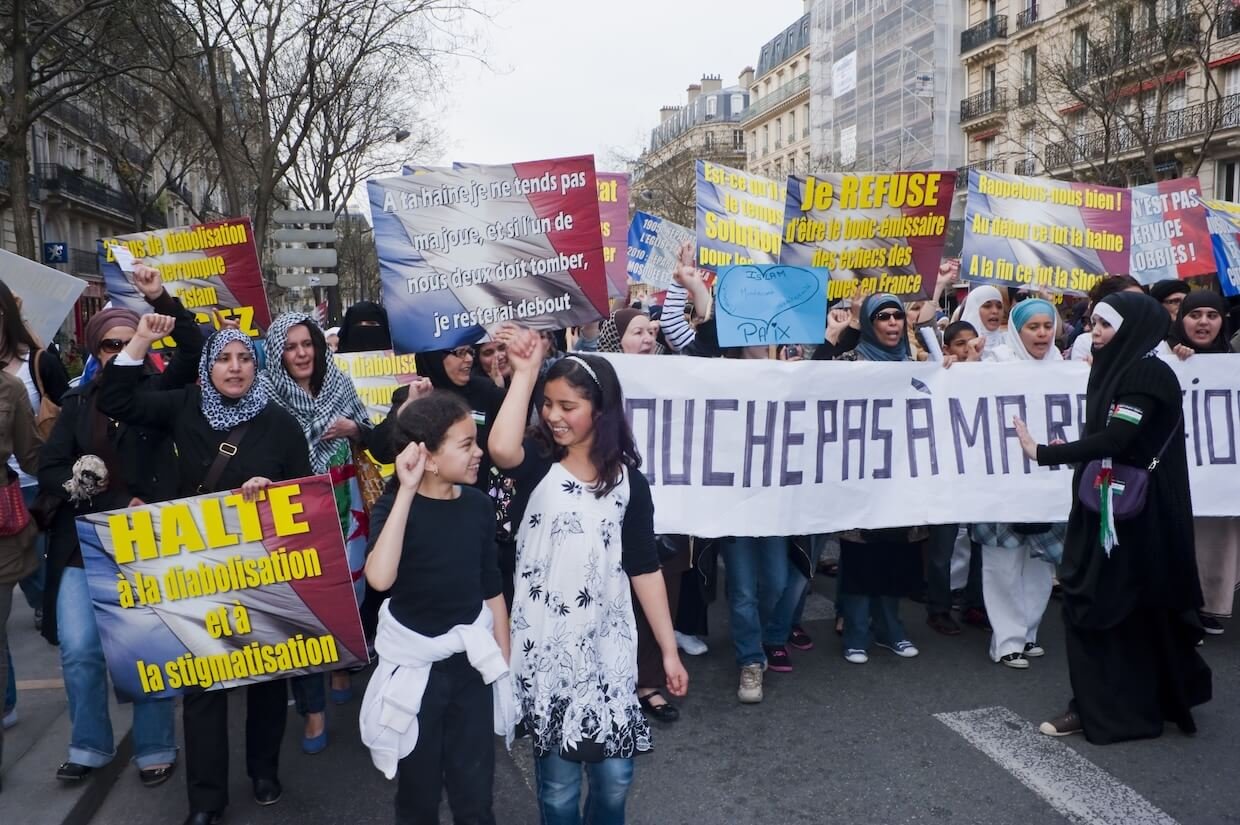
Professor Jean-Yves Camus: It is absolutely true. When we look at the map of the cities won by the National Rally, what we see are many small and medium-sized cities where there is a strong feeling of cultural loss—a perception that there is more immigration, more mosques being built, and more immigrants and refugees arriving. Many people feel very uneasy about this. It is a perception of insecurity, even in cases where there is no actual crime or insecurity. That is very important to understand.
It is not because you live in a safe city that you do not believe immigration is increasing—10, 20, or even 50 kilometers away in a larger city—and that sooner or later immigrants will come to your own town and change its cultural history, what you consider necessary to be truly French, and what you think is required to live in your community.
I think we still have a problem with immigration from former French colonies, whether from North Africa or West Africa. It is as if we have not fully come to terms with our colonial past, and with the fact that we not only accepted these immigrants but actively encouraged them to come. Large industries and major business interests brought them to this country. So, they deserve recognition for what they contributed and for the role they played in building the country’s industrial base. Yet, they remain disadvantaged, and racism and xenophobia persist.
On the other hand, among native French people—those whose families have lived in the country for generations—especially in today’s unstable international context, there is a growing perception of a clash of civilizations between the West and the Muslim world. This perception plays an important role, particularly along the Mediterranean coast, in shaping support for the National Rally.
The social situation is also very important. As I mentioned earlier, in many parts of France, these areas have been deindustrialized since the late 1970s, and there is no realistic prospect that these jobs will return. You may recall that President Trump, during his campaign in Pittsburgh, told steelworkers that their jobs would come back—but they did not. The same is true in northern France: industrial jobs will not return.
In other words, people feel they have no future, no new forms of employment or specialization for younger generations. There is a strong sense of dispossession, alienation, and abandonment. In some small towns, public services are also disappearing. Public services include the post office, the local school, the railway station—everything that signals the presence of the state. This also includes the presence of police or access to hospitals. Many hospitals have been closing in this country, and when people have to travel an hour to reach emergency care, they understandably feel that the state is no longer taking care of them. So, a protest vote in favor of the National Rally emerges in this context.
Major Cities Favor Stability Over Populist Alternatives
Conversely, how do you explain the RN’s continuing difficulty in major cities? Is this primarily a matter of candidate quality, urban demography, coalition arithmetic, class composition, or the party’s still-incomplete process of dédiabolisation?
Professor Jean-Yves Camus: In major cities, you have to remember that most of them, including Paris, have become gentrified. A gentrified city means a high proportion of people with higher education, better-paid jobs, and incomes above the average wage. There is also a tendency to reject extremes and to seek stability.
If you look at cities like Marseille, Paris, Lille, Strasbourg, and so on, there is also a significant share of the population that comes from an immigrant background and who, obviously, do not want to vote for the National Rally. So the conditions are in place to prevent the National Rally from winning in the largest cities, such as Lyon, Paris, and Marseille.
This is not the case in small or medium-sized cities. There, the population is different, often with incomes below the average and facing many difficulties, including in rural areas where the National Rally has made very significant inroads.
Moreover, the organizational apparatus of the major parties still retains some hold over the electorate in major cities, whereas the electorate in small and medium-sized cities and rural areas is much more volatile.
Municipal Results Do Not Predict Presidential Outcomes
Finally, Professor Camus, do these municipal elections offer any reliable indication for the presidential race ahead? More specifically, do they suggest that France is still heading toward a Le Pen– or Bardella-centered contest, or do they reopen the possibility that broader coalitions of the mainstream left, center, and moderate right could yet alter the expected scenario?
Professor Jean-Yves Camus: First of all, in political science, we know that we cannot infer from city council elections what the outcome of a presidential election will be. These are two very different types of elections, not the same mode of scrutiny, and, of course, a very different context—especially in a country like France, where the presidency is very powerful. We are a semi-presidential system.
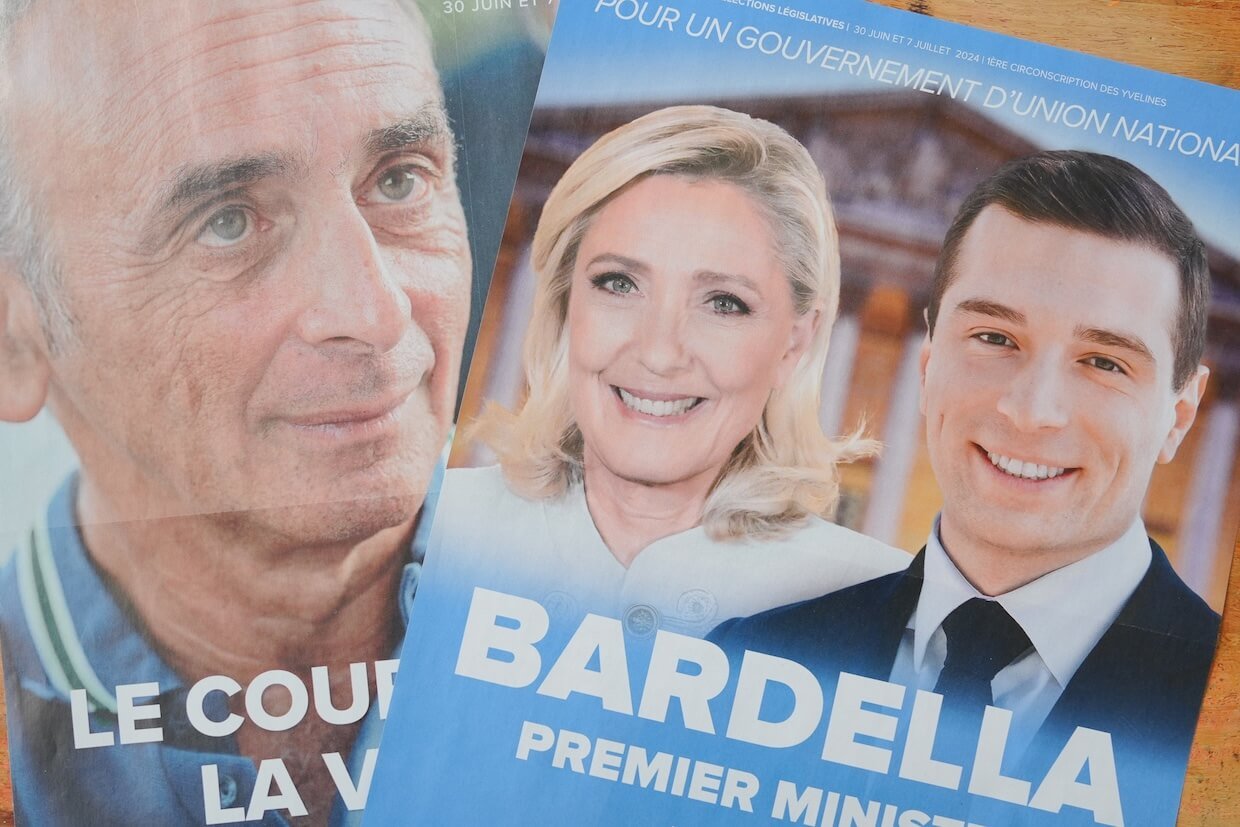
Second, I would insist that there is still one year to go until the election. The only thing we know for sure is that Emmanuel Macron is not allowed to seek a third term. As for the other contenders, we know quite a few—especially Édouard Philippe, who retained his mayorship of Le Havre last Sunday and is one of the contenders for the center-right—but there are others, and there are many contenders within the Republican Party. We do not yet know who will be the candidate of the Social Democratic left; there may even be several. The only thing we know for sure is that the candidate of the National Rally will be either Le Pen or Bardella, and we know that the candidate of the radical left will be Jean-Luc Mélenchon. So let us wait until we really know who will stand for president, and then look at the first polls.
What the National Rally expects is a second round between Mélenchon and Bardella. Why? Because opinion surveys show that the dédiabolisation of the National Rally has progressed to such an extent that the radical left is now rejected by a higher proportion of voters than Le Pen or Bardella. This is something we would not have said 10 or even 5 years ago. The rejection level of the radical left is around 60%. Fewer than 50% of French people today say that the National Rally is a threat to democracy—49% still see it as such, but that is no longer a majority. So, the hope of the National Rally is a second round between two candidates from the extremes, which would allow it to win.
On the other hand, what I see emerging is what we call the central bloc—that is, Macron’s majority—playing the card of stability: you do not want to vote for one or another extreme, so let us vote for stability. Maybe you do not agree with everything the center-right has done over the past decade, but if you are faced with the National Rally in the second round, please vote for stability—keeping France a democracy and keeping France within the European Union. This kind of strategy may work.
The only problem is that in 2017 and in 2022, the majority of the French did not vote for Macron because they shared his ideas; they voted for him because they rejected Le Pen. And if, in 2027, we again have to vote for a candidate whose policies we do not truly support, only out of rejection of the National Rally, then I would expect very difficult times. Because voting for a president, at least in the French context, should mean supporting his ideology, his project for the country, what he wants to do, and the kind of legislation he wants to pass. If you vote only to avoid what you perceive as a threat, then democracy is not very solid.