
As the tenth anniversary of the Brexit referendum approaches, debate has shifted from slogans to evidence. In this interview, Professor Mark Corner offers a measured but clear conclusion: “the UK has lost more than it has gained.” Drawing on political economy, constitutional analysis, and historical perspective, he revisits Brexit not as a singular rupture but as a dual crisis affecting both the European Union and the internal cohesion of the United Kingdom. Professor Corner highlights the paradox at the heart of Brexit—“taking back control” did not strengthen parliamentary sovereignty, but instead elevated popular sovereignty. At the same time, expectations of global economic freedom have given way to the enduring realities of geography and interdependence. His reflections situate Brexit as a revealing case of the gap between political promise and institutional consequence.
Interview by Selcuk Gultasli
As the tenth anniversary of the Brexit referendum approaches, public debate has moved decisively beyond the binary language of Leave and Remain toward a more empirically grounded reckoning with Brexit’s long-term political and economic consequences. In this context, Professor Mark Corner, Emeritus Professor at the University of Leuven, offers a particularly valuable perspective. His work situates Brexit not simply as a rupture in Britain’s relationship with the European Union, but as a dual constitutional and political crisis—one affecting both the European project and the internal cohesion of the United Kingdom. Bringing together political economy, constitutional analysis, historical memory, and populist mobilization, his reflections illuminate how Brexit has reshaped not only policy but also political imagination.
In his interview with the European Center for Populism Studies (ECPS), Professor Corner advances a sober conclusion captured in the headline of this conversation: “With Brexit, the UK has lost more than it has gained.” That judgment is not presented as a dramatic slogan, but as the outcome of a broader reassessment now taking place in British public life. As he puts it, “most economists would agree that the UK has lost more than it has gained,” and if that were not so, “the present government would [not] be trying so hard to move back toward a closer economic relationship with the EU.” In this sense, Brexit appears less as a fulfilled promise of renewed sovereignty than as a strategic rupture whose costs have become increasingly difficult to deny.
Yet Professor Corner’s account is more layered than a narrow economic audit. He draws attention to one of the central ironies of Brexit politics: that a project framed around “taking back control” did not, in fact, restore parliamentary sovereignty. On the contrary, he argues, the referendum “assert[ed] popular sovereignty over parliamentary sovereignty,”since most MPs would have preferred to remain. Similarly, the promise that Britain could flourish once “freed from the shackles of the EU” has, in his view, been undermined by the enduring reality of geography, interdependence, and trade. The fantasy of becoming “Singapore-on-Thames” has largely faded, replaced by the quieter recognition that “a very large share of our trade is conducted with Europe.”
The interview also places Brexit within a broader political and historical frame. Professor Corner shows how populist and radical-right actors have successfully shifted the argument away from economic performance toward sovereignty, border control, and cultural identity. In doing so, they have helped transform British political conflict from an older class-based divide into a more complex terrain shaped by “social and cultural division alongside economic division.” At the same time, he warns that Brexit’s most profound destabilizing effects may ultimately be domestic rather than European. While the feared cascade of exits from the EU never materialized, the United Kingdom itself remains vulnerable to centrifugal pressures, particularly in Scotland and Northern Ireland. In his words, “in the long run, [these] may prove more troubling than the difficulties in the EU.”
In sum, Professor Corner’s reflections offer a penetrating and historically informed account of Brexit’s legacy. Far from vindicating the claims of its proponents, Brexit emerges here as a case study in the gap between populist promise and institutional consequence—one that continues to shape the future of Britain, Europe, and the politics of sovereignty itself.
Here is the edited version of our interview with Professor Mark Corner, revised slightly to improve clarity and flow.
Brexit Strains Britain More Than Europe
Professor Corner, welcome. In A Tale of Two Unions, you argue that Brexit must be understood simultaneously as a crisis of both the European Union and the British Union. Ten years on, how would you assess the relative degree of strain placed on each union, and has Brexit ultimately proven more destabilizing domestically than internationally?
Professor Mark Corner: I think it has. When the UK left in 2016, I remember seeing a book titled The EU: An Obituary.A lot of people thought that the UK’s departure would trigger a stampede. People began to talk about Nexit or Swexit after Brexit. But it didn’t happen.
It is important to note that, despite all the recent difficulties with Hungary, it did not leave the EU. It was not expelled from the EU. Yes, pressure was brought upon it, and in the recent election, it got rid of Orbán. But all this has happened with Hungary remaining a member of the EU.
In the case of the UK, there is an instability built into the fact that it is effectively a multinational state: England, Wales, Scotland, and Northern Ireland. It seems to me that the UK has done very little to develop some kind of stable constitutional structure around which these different nations can coalesce. I think there are difficulties. The forthcoming elections next month will show that there are difficulties. In fact, there will quite possibly be a nationalist first minister in Scotland, similarly in Wales, and there already is Michelle O’Neill in Northern Ireland. So, there will be difficulties in the UK, and in the long run, they may prove more troubling than the difficulties in the EU.
Economic Reality Undercuts Sovereignty Claims
Your work highlights the tension between parliamentary sovereignty and supranational governance. To what extent does the post-Brexit economic record—particularly reduced trade and investment—challenge the political narrative that “taking back control” enhances state capacity?
Professor Mark Corner: There are certain ironies here. There was a great deal of talk about taking back parliamentary control in 2016. But in fact, the Brexit vote did the very opposite. If Parliament had had the authority to decide on Brexit, a majority of MPs were against it. Effectively, what the referendum did was to assert popular sovereignty over parliamentary sovereignty. Members of Parliament—most of whom would have preferred to remain—accepted that this popular vote must be binding. I think that was the correct decision. But it hardly amounted to strengthening parliamentary sovereignty. So, I am not sure Brexit really led to that. It strengthened an idea of popular sovereignty, and that is something about which there can be a number of questions. But I do not think it strengthened parliamentary sovereignty.
As for the trade arguments, the general view in the UK now is that Brexit has not been beneficial to trade. In 2016, many people had the idea that, freed from the shackles of the EU, we could go out and strike ambitious trade deals with the far corners of the world—a deal with Japan, a deal with India—we would be free, no longer moored to Europe. But the reality is that, even in the 21st century, geographical proximity remains crucial, and a very large share of our trade is conducted with Europe. You can see the present government trying, as far as it can, to nudge itself back toward a closer economic relationship with the EU. This is quite different from the atmosphere under Boris Johnson, with all the talk of becoming “Singapore-on-Thames”—the idea that Britain could roam the world and secure major trade deals simply by freeing itself from Europe. That notion has largely disappeared.
Policy Shifts Signal Economic Costs
If we move beyond rhetoric to measurable indicators—GDP performance, trade volumes, FDI, labor market shifts—how would you construct a balanced “Brexit scorecard”? Does the empirical record validate or undermine the core claims of Brexit proponents?
Professor Mark Corner: Scorecards differ, and economists always arrive at different figures. You know the saying that an economist is someone who, if you ask for a phone number, gives you an estimate.
I would have to speak in general terms: most economists would agree that the UK has lost more than it has gained. If that were not the case, I do not think the present government would be trying so hard to move back toward a closer economic relationship with the EU.
In the last few days, there has been discussion of whether the UK could align with EU rules without having to secure a vote in Parliament on every measure. That is, in political terms, a dangerous way to proceed, but it is being considered because, economically, the government perceives the scorecard as pointing toward as close an alignment as possible for the UK’s benefit. I do not think it would pursue this course otherwise.
Populists Shift Debate to Identity
How has populist discourse, particularly on the radical and far right, managed to reinterpret or neutralize the economic costs of Brexit by shifting emphasis toward sovereignty, identity, and cultural autonomy?
Professor Mark Corner: That is an important point to make: the arguments are not simply about whether Brexit is economically beneficial. They also involve these other questions, and even during the 2016 campaign there were people on the Remain side who said, look, we are talking too much in terms of economics alone—we should think more broadly.
There is no doubt that issues like immigration were a very important factor in precipitating the Brexit vote. The idea that the UK could take back control of its borders, decide who was going to come in if it left the EU, and thereby maintain its cultural identity and its sovereignty was a very powerful argument at the time, and that has to be recognized. At the same time, there are some very powerful arguments against that position. There is a strong case in favor of multicultural and multinational society that has been built up in the UK over the last 50 years, and I do not think that is emphasized enough.
Because I am old, I can go back to the 1960s and 1970s. At that time, there were arguments about admitting members of the former British Empire, and there was talk of an “Asian” or “Black” invasion—the language was very racist. Yet at that time there was actually net emigration from the UK, so there was no real issue of rising numbers. The only objection could have been that people did not like those who were not white coming in.
I do not see that in the 21st century. There is still racism, of course, but it is not like it was in the 1960s or 1970s. People generally accept that society is made up of many different cultural backgrounds, and that this is worthwhile—that it is a benefit.
There is, however, a different kind of problem, which is that overall numbers—irrespective of color or ethnic background—have been rising very quickly. Any country whose population is increasing rapidly year by year is going to face difficulties adapting to that, whether or not it is beneficial in the long run. So, the nature of the argument is different from that of the 1960s or 1970s.
I also think it is rather unfortunate that even in 2016, when David Cameron tried to renegotiate terms with the EU, he did not say that we need a period in which to stabilize the numbers coming into the UK, regardless of their background. Within the EU, there are countries like Bulgaria, whose population fell from 9 million to 7 million and which face the opposite problem—they cannot stabilize their numbers because too many people have been leaving.
So, there might have been an opportunity to say that, yes, there is the principle of the four freedoms, but there are also moments when it is reasonable to argue that we need to stabilize population flows.
It has all become rather ironic, because the main issue over the last five or ten years since Brexit has not been large numbers of people coming from other parts of the EU, but from outside the EU. That is not in itself a problem, but rapid shifts in numbers, whether upward or downward, can create difficulties.
I find the idea of identity quite interesting. If you look at London, it has a Muslim mayor, Sadiq Khan. He has won three times and may win a fourth in 2028. He is very keen on rejoining the EU. He is 100 percent a Londoner, but also 100 percent a Muslim. It seems to me that there is a very positive sense of a multinational, multicultural identity—certainly in cities like London, but also in other parts of the UK—which should not be underestimated.
Identity Politics Deepens Divisions
Recent research suggests Brexit has produced enduring identity-based polarization (“Leavers” vs. “Remainers”). How does this align with your analysis of narrative construction and “historical arcs” in British political consciousness?
Professor Mark Corner: There is no doubt that there is a divide between Leavers and Remainers—you are right about that. It is reflected, for example, in the fact that the Reform Party at present shows a strong degree of continuity with UKIP and the Brexiteers of ten years ago. So, there is certainly a divide in the country.
But, of course, there has always been a political divide in the UK; it has simply been understood in different terms. Traditionally, people spoke of UK politics in terms of a strong class divide between the middle class and the working class, with Labour representing the working class and the Conservatives the middle class. That has largely broken down.
To some extent, this kind of division—once seen primarily in economic terms—has not been replaced but rather supplemented by a division in more cultural and identity-based terms: between those who are comfortable living in a multinational society and those who are not, and who feel that they are losing their identity.
Of course, the question then becomes: within the UK, do we mean identity as English, Welsh, Scottish, Irish, or British? There are all sorts of questions about which identity we are referring to. So, there has always been division, but it has perhaps become more complex—combining social and cultural divisions alongside economic ones.
You can now see people who might traditionally have voted Labour, who are working class, choosing instead to vote Reform because they feel their identity is under threat, and that this matters more than protecting their economic livelihood. It has become a more complicated picture.
Narratives Replace Clear Policy
You warn against selective historical narratives that privilege moments of “splendid isolation.” To what extent has the far right—particularly figures like Nigel Farage and his UK Reform—successfully mobilized such narratives to legitimize Brexit and its aftermath?
Professor Mark Corner: The key point about the far right is that it largely consists of people who feel fed up with the way things are but do not have a very clear idea of how they could be better. My idea of what a populist is—though this may be a definition open to question—is someone who does not actually have a very clear idea of what they believe in. For them, politics becomes something like a sport. They latch onto people’s resentments and think about how to express them more effectively, how to take them further, and how to turn them into a real political campaign. I do not think they necessarily have a clear policy agenda. You may disagree with this, but I think for many people populism is a kind of sport—a very dangerous one—in which they do not generate ideas themselves but instead observe what people are saying and try to express those views even more forcefully.
So, it is often very difficult to pin things down exactly. Who, for example, can say precisely what the economic program of Nigel Farage is? This is partly a reaction to the fact that it is also quite difficult to say what the economic program of Keir Starmer is. There is a kind of vacuum in the center of British politics as well. To that extent, the rise of the Green Party is rather significant, because it does appear to be offering—at some risk to itself—some very clear ideas about what it would like to see happen. I do not see that coming from any other part of the British political spectrum.
Reform UK Channels Public Discontent
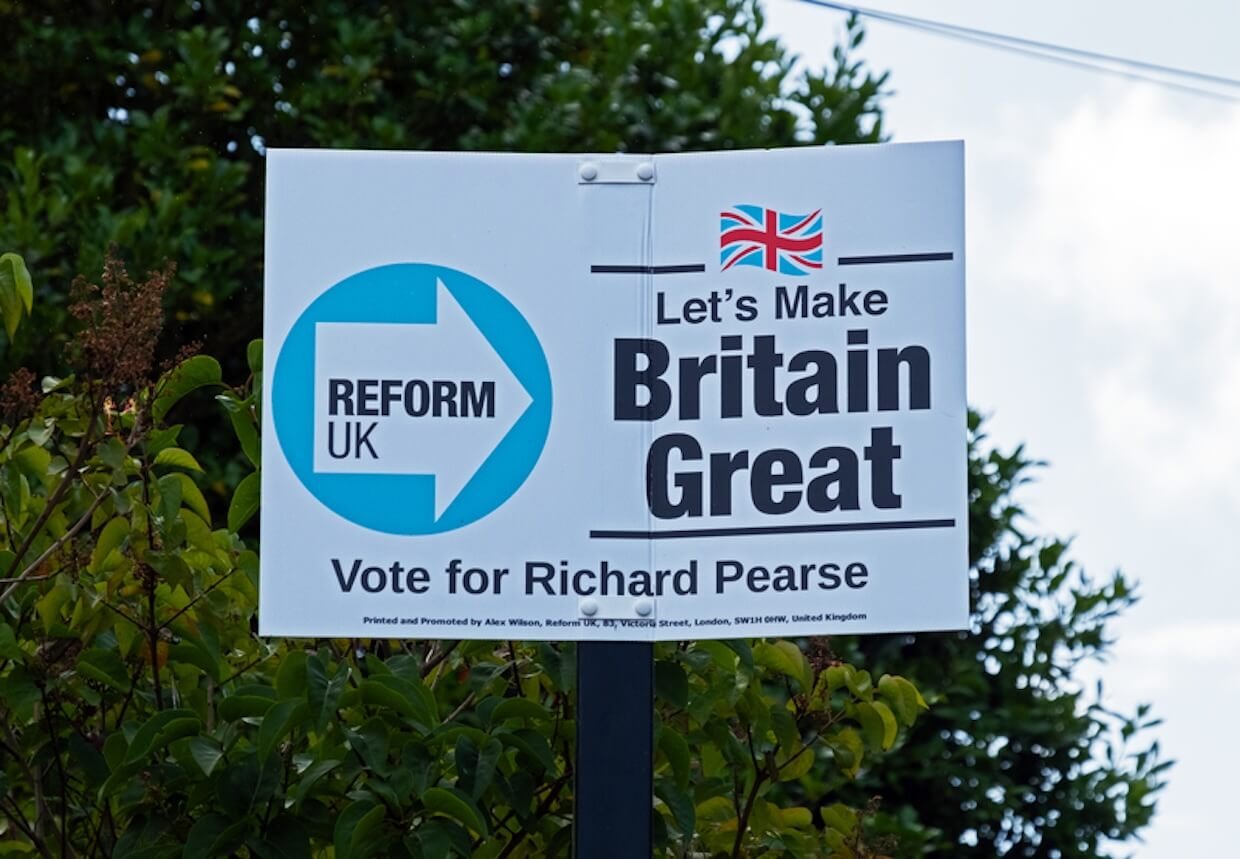
How do you interpret the rise of Reform UK within the broader trajectory of populist radical right (PRR) politics in Britain? Is it a continuation of Brexit-era mobilization or a transformation into a more permanent political force?
Professor Mark Corner: It is certainly linked to the Brexiteers, but it is more a reflection of feelings of resentment and of being left out on the part of a significant minority of the population—people who feel they have been bypassed and ignored by the mainstream parties. To some extent, I think that is true. The Labour Party has notoriously taken for granted the support of people in poorer areas of the country and has not paid sufficient attention to their needs. That is perfectly true.
But, as I said, the idea that the Reform Party has really developed a clear program that attracts some and rejects others, beyond its hostility to immigration, is questionable. If you take the other side of the political spectrum, one may disagree with what the Greens propose, but it comes down to some very concrete proposals. For example, a 2% tax on the very rich—one may think this would lead to them all running off to the Bahamas and be economically catastrophic, or one may think it is a very good way of raising money—but it is at least clear. I do not see that sort of clarity from Reform, and I therefore wonder whether it is more than an expression of disaffection.
Populists Turn EU Skepticism into Power
Before 2016, Euroscepticism was not a dominant voter concern. In your view, how did it become the central axis of political mobilization, and what role did populist entrepreneurs play in this transformation?
Professor Mark Corner: Oh, gosh—there is a long answer to that. There has always been a problem in the UK in seeing EU membership as being in its economic interest. It is partly because of when we joined in 1973, after dealing with a couple of vetoes from de Gaulle in the 1960s—we first applied in 1961. We got in at the very moment when the post-war boom collapsed. There was an oil crisis, a little bit similar to today, and this precipitated very difficult economic circumstances in the 1970s. So, it was very easy for people in the UK to say that it was when we joined that economic community that all our troubles began. The 1960s were good years economically, and then we joined at the moment of crisis.
We also joined when there were the Common Agricultural Policy and the Common Fisheries Policy, which, whether good or bad, did not particularly benefit the UK, given its relatively small agricultural sector. Then there were all those arguments in the 1980s, when it was said that Britain was paying too much into the EU budget, and Mrs. Thatcher was running around saying, “we want our money back.” In that situation, it was very difficult to argue that, overall, EU membership was economically beneficial.
Then, of course, you had the campaign in 2016, with Nigel Farage and his big red bus, saying this is what we pay into the EU, and that we would get all our money back and invest it instead in the National Health Service, as he wrote on the side of the bus—totally ignoring all the money that came the other way. But he got away with it, because there was a fairly widespread feeling in the UK that it had not done well economically from being in the EU, and had not from the beginning. There is more of a sense now that the UK would do well economically by being part of the EU than there was for a long time when we were inside it.
Brexit Accelerates Culture Wars
To what extent has Brexit accelerated the shift from class-based politics to culture-war polarization, and how has this benefited Populist Radical Right (PRR) actors in structuring political competition?
Professor Mark Corner: I think it has. If you leave a group of 28 and say, no, we want to be on our own—we had too much cooperation, we were too close to you, and we want to get further away—then it does rather support the idea that people want to shut themselves up within their own separate identity.
But at the same time, there is perhaps a greater awareness now that we benefit more by working together. That includes cooperation with other EU countries. If you think of how vulnerable the UK feels at the moment—in terms of everything happening in Ukraine and the perceived unreliability of Trump—there is a growing sense that we really do need to work together with the EU, because otherwise we could be picked off separately. Then, that you can see, in political as well as economic terms, a strong incentive to engage with European countries, for instance in sharing the defense burden. Every week, I read articles about how the UK needs to spend more money on defense, warning that otherwise we are going to be attacked at dawn.
One of the things to note is that there is a great deal of wasted spending in defense, partly because different European countries do not cooperate. Eight years ago, President Macron suggested a common European army, but you do not hear much about that when UK defense chiefs argue that we must increase defense spending.
So, there is a strong case—not just in the economic sphere but also in the defense sphere—for taking a much more serious European approach. That may be one of the most important factors in the years ahead, because there is no doubt that we are in a very dangerous and vulnerable situation, and in such circumstances, people naturally think we should come together with those who are our friends—and that is, obviously, the other European countries.
Brexit Costs Fail to Shift Votes
Given the documented decline in trade integration and investment, why has this not translated into a sustained electoral backlash against Brexit-aligned parties? Does this reflect the resilience of populist framing?
Professor Mark Corner: I do not think it is simply a matter of populist framing. Getting back into the EU would not be easy, and one cannot simply assume that 27 countries would welcome the UK with open arms. The UK has caused a good deal of difficulty by leaving, and people might reasonably ask whether it would create further complications by returning. So, I do not think there is an easy path back in.
We might also have to accept certain conditions if we were to rejoin—things that have not been popular in the past. For instance, the EU might say that, as a new applicant, the UK would have to join the Eurozone. One could easily imagine political arguments arising from that. So, it is not a straightforward route.
In some ways, it might be preferable for the UK to approach the question more along the lines of Norway. Norway voted not to join the EU, partly because of the Common Fisheries Policy and its 2,000 miles of coastline. At the same time, however, it is part of the single market and contributes financially in order to participate. It may be that something along these lines would be a better option for the UK.
There is a genuine debate about how the UK should move closer to Europe. There is, however, a growing sense that it should be closer—not only for economic reasons, but also for political ones. When one considers the current geopolitical context—one superpower pressing in from the east, as in Ukraine, and another expressing interest in places such as Greenland in the west—it may be sensible to work more closely with allies in between.
I do not want to see this only in economic terms. Cultural considerations matter as well, and one of those is the defense of democracy. Whatever our ethnic backgrounds, we are part of democratic societies, and on either side, there are powerful, sometimes autocratic states. So democratic values are something we may wish to emphasize when thinking about cultural identity—values that are shared with the rest of Europe, including Hungary, I am glad to say.
Brexit Fuels UK Fragmentation Risks
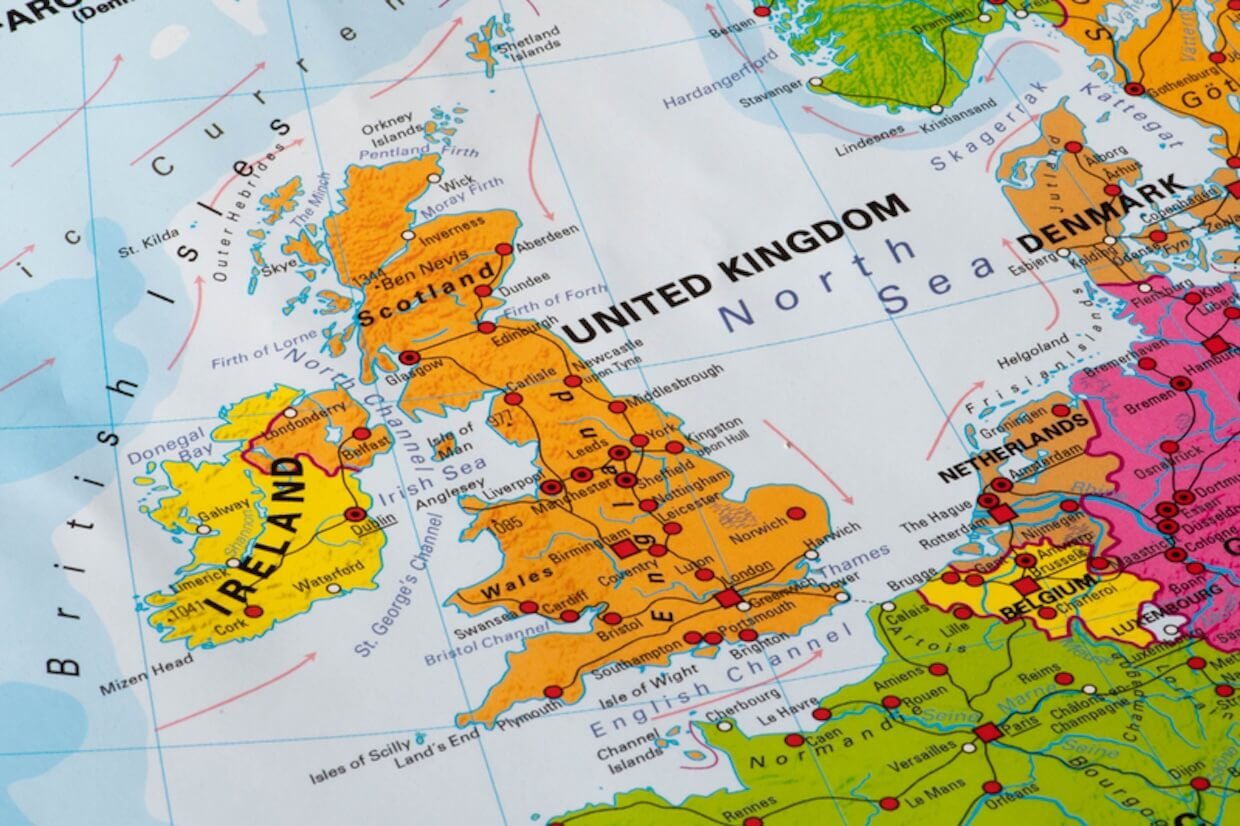
Your book raises the possibility that Brexit could trigger centrifugal pressures within the UK itself. Ten years on, how do you assess the risks of fragmentation—particularly in Scotland and Northern Ireland—and their connection to Brexit politics?
Professor Mark Corner: I think it could happen. Imagine yourself as a Scotsman for a moment. You had a vote in 2014 on whether to stay inside the UK, and David Cameron argued that leaving the UK would mean finding yourself outside the EU—and that this was not desirable. The Scots were quite influenced by this and voted to remain in the UK. Two years later, in the Brexit vote, the Scots voted to stay in the EU, yet the rest of the UK—England and Wales, at any rate—dragged them out. They may well feel that they were misled two years earlier. It is not surprising that many Scots feel betrayed. Another referendum is hardly impossible. At the time, it was described as a once-in-a-generation event. Well, fine—once in a generation—that was 2014. 2039 is not that far away; it is just over a decade from now. So, I would not be surprised if there were another referendum in the 2030s.
What has the UK done about this? It could have taken steps, and perhaps still could. It might say: look, we have this House of Lords—what is it actually doing? It is appointed, not democratic. It is, in effect, “North Korea on Thames.” It could be transformed into a second chamber in which the different nations and regions are represented, rather like the Bundesrat in Germany. This is especially relevant now, because it has often been argued that the imbalance in population—3 million Welsh, 5 million Scots, and 60 million English—makes such a structure unworkable. But the 60 million English can now be broken down: there is Andy Burnham in Manchester, a mayor of Liverpool, a mayor of the Northeast Combined Authority, and a mayor of London. They could form part of a second chamber with real powers, including, arguably, some veto authority. If that kind of constitutional reform were seriously developed in the UK—it has been suggested but never pursued very far—that is what is needed.
Without real constitutional reform, such as a powerful second chamber in which the nations and regions are represented, the centrifugal forces you mention are likely to prove too strong. It is not enough simply to talk about devolving more powers to Wales, Scotland, and Northern Ireland; they need to be brought into a genuinely national second chamber where they can exercise central authority.
Pressures Grow Within States, Not Between Them
Finally, do you see Brexit as a unique case, or as a broader “laboratory” illustrating the structural tension between globalization and national sovereignty—one that continues to fuel populist radical right movements across Europe?
Professor Mark Corner: There are obviously other dimensions to this. There are really two questions: do I think that other countries, or other member states, will try to leave the EU? In the short to medium term, I do not see that happening. There are, however, movements within member states—one might think, for example, of Catalonia—where there are quite powerful pressures, and it is possible that these will create certain difficulties in the years ahead. But they may not.
If nation-states are prepared to share power internally, in the same way that, as members of the EU, they share power externally, then such outcomes can be avoided. Of course, I cannot predict the future. But what I do not see is the kind of queue of member states leaving the EU that was once suggested — John Gillingham wrote The EU: An Obituary ten years ago. That scenario is not materializing. The pressure to leave exists primarily within nation-states rather than between them.