
As the United Kingdom nears the tenth anniversary of the 2016 Brexit referendum, Professor Jonathan Portes offers a sober, evidence-based reassessment of its economic and political legacy. In this ECPS interview, Professor Portes argues that Brexit did not resolve the structural problems it promised to overcome; rather, “the UK still confronts the same fundamental problems it did 10 years ago,” and, in key respects, they have worsened. Drawing on a decade of research on trade, migration, labor markets, and policy autonomy, he shows how weakened investment, reduced integration, and persistent political tensions have defined the post-Brexit settlement. Moving beyond slogans, Professor Portes situates Brexit within broader debates on sovereignty, interdependence, and populist politics in an increasingly unstable international order.
Interview by Selcuk Gultasli
As the United Kingdom approaches the tenth anniversary of the 2016 Brexit referendum, the debate has moved decisively from slogan to scrutiny, from promises of restored sovereignty to the measurable consequences of economic and political separation. In this context, the European Center for Populism Studies (ECPS) is pleased to host Professor Jonathan Portes, Professor of Economics and Public Policy at the School of Politics & Economics, King’s College London, whose extensive scholarship has been central to understanding the economic and labor-market consequences of Brexit. Throughout the past decade, Professor Portes has offered one of the most rigorous and evidence-based assessments of how trade, migration, policy autonomy, and public expectations have evolved under the post-Brexit settlement.
This interview is framed by a stark and sobering conclusion that runs through Professor Portes’s reflections: Brexit did not resolve the structural dilemmas it claimed it would overcome. Rather, as he puts it, “the UK still confronts the same fundamental problems it did 10 years ago.” The core promise of Brexit, he argues, was that it would allow Britain to escape the constraints associated with globalization, immigration, and post-2008 economic stagnation. Yet the reality has been quite different. “Rather than solving those problems,” he observes, Brexit “has probably made them worse.” In Professor Portes’s analysis, the UK remains what it always was: “a middle-sized, advanced Western European economy,”still grappling with familiar pressures, but now doing so from a more exposed and less advantageous position.
The interview explores this argument across several interrelated domains. On the economic front, Professor Portes notes that the evidence on growth, trade, productivity, and investment has broadly confirmed the mainstream pre-referendum consensus: Brexit was never likely to produce collapse, but it would impose “significant and material long-term damage”on British economic prospects. Trade, especially goods trade, emerges in his account as the most enduring site of disruption, while weakened investment and reduced integration with the European market suggest an adaptation process that may culminate in a “permanent loss of integration.”
On migration, Professor Portes offers an especially illuminating account of Brexit’s unintended consequences. Rather than simply reducing immigration, Brexit reconfigured it, replacing free movement from within the EU with larger-than-expected inflows from outside it. That outcome, he suggests, exposed a contradiction at the heart of the Leave campaign: the demand for both lower migration and greater economic flexibility under national control. More broadly, the interview shows how the promise of sovereignty often failed to produce meaningful control in practice. As Professor Portes cautions, sovereignty “in the abstract legal and political sense does not necessarily translate into having control.”
Taken together, Professor Portes’s reflections offer a penetrating assessment of Brexit not as a completed nationalist correction, but as a prolonged and costly reconfiguration of Britain’s political economy. His analysis challenges triumphalist narratives from both the sovereigntist and populist right, while posing deeper questions about the limits of national autonomy in an interdependent world.
Here is the edited version of our interview with Professor Jonathan Portes, revised slightly to improve clarity and flow.
Brexit Has Intensified, Not Resolved, Structural Economic Pressures

Professor Portes, welcome. You have been among the most careful and empirically grounded observers of Brexit’s economic and political consequences over the past decade. As we approach the ten-year mark since the 2016 referendum, how would you characterize the overall trajectory of the UK economy and policy landscape under Brexit? What stands out most when you step back and take a long view?
Professor Jonathan Portes: I think what stands out most, perhaps, is that the UK still confronts the same fundamental problems it did 10 years ago. The UK remains very much a middle-sized, advanced Western European economy, with many of the same issues and problems as other such economies. The difference, however, is that Brexit was, in some ways, touted as a means for the UK to escape some of those problems, issues, and constraints relating to globalization, immigration, and economic stagnation since 2008, as well as a range of political problems within the UK that arose from those economic challenges.
But rather than solving those problems, as Brexit was presented as doing by some of its proponents, it has probably made them worse. This is partly because it led, obviously, to a period of political chaos in the UK. Even after that, and despite a degree of relative stability being restored, it has possibly caused some damage to the UK’s political institutions. At the same time, rather than resolving any of these political economy problems, it has arguably exacerbated them.
In other words, the difficulties of managing globalization and its impacts were already very apparent when the UK was a member of the EU. They manifested themselves partly through EU membership and partly outside it. However, outside the EU, these difficulties have become even starker. Rather than being resolved by Brexit, as was hoped, they have become more visible and more difficult. This is partly due to the structural contradiction of Brexit itself. It is also, of course, partly the result of global developments since then—most notably the election of Trump—which have made the UK’s position outside the EU more difficult for fairly obvious reasons.
Growth, Trade, and Investment Have Weakened as Expected
Much of your work highlights the gap between political expectations and economic outcomes—particularly in areas like growth, trade, and migration. Looking across the evidence now available, how should we understand the real costs of Brexit compared to what was anticipated or promised at the time?
Professor Jonathan Portes: Of course, politicians on both sides said a lot about Brexit. In terms of the economic impacts of Brexit on things like growth, trade, and investment, this is one area where we economists can actually be rather pleased with ourselves. Economic forecasts rarely turn out to be accurate, and of course there is still quite a lot of debate about the precise impacts of Brexit. But we now have a wide range of economic evidence on the impact on growth, trade, and investment, and it is pretty much entirely consistent with the mainstream economic consensus that I and others formed part of, before Brexit: that Brexit would not be a complete catastrophe for the UK economy, but it would do significant and material long-term damage to our economic prospects by reducing growth, productivity growth, trade, and investment. And all of those have been fairly clearly borne out.
The interesting difference is on migration, where both I and others thought that Brexit would reduce migration through the free movement channel within the EU, which would only be partly offset by increased inflows from outside the EU. In fact, it has turned out that the direction for both of those numbers has been correct. But the relative magnitudes were wrong, and the increase in migration from outside the EU has more than offset the reduction in flows within the EU. As a result, the UK population and labor force are actually larger than they would have been without Brexit, not smaller. That provides, not a small, offset to the negative impacts of Brexit, although it has also generated a great deal of political backlash. From an economic point of view, however, this is a positive—though certainly not by anywhere near enough to offset the negative impacts of Brexit on trade and investment.
Trade Took the Hardest Hit, While Services Showed Resilience
If we think of Brexit as a large, multi-dimensional economic shock, where do you see its most significant and lasting effects—across trade, investment, labor markets, and productivity—and which of these have proven more resilient than many expected?
Professor Jonathan Portes: The biggest persistent shock has been to trade, particularly trade in goods. The UK did quite well out of EU membership in terms of being integrated into pan-European and hence pan-global supply chains for goods. We have seen that small and medium-sized exporters benefited from being able to export to the EU without regulation or red tape. And, of course, British consumers benefited from frictionless imports from within the EU. None of that has disappeared completely—you still have trade under the Trade and Cooperation Agreement, and the EU remains by far our largest trading partner. But nonetheless, there has been a significant impact, particularly for those manufacturers integrated into global supply chains, who have faced increased costs as a result, and also for some of those small and medium-sized businesses that benefited from frictionless trade within the single market.
On the more resilient side, there has also been some damage to the financial services sector, which, of course, was a major issue in the run-up to Brexit. Again, the UK’s financial services sector is large and resilient, and London remains by far the largest financial center in Europe, but it is nonetheless somewhat smaller than it would have been without Brexit. There has been some damage there, but the sector is not going anywhere and will continue to be an important part of the UK economy.
There has been more resilience in other areas of the high-productivity tradable services sector—things like consultancy, legal services, and accountancy—where trade barriers were never that large, because there are no tariffs and there is less in the way of regulation than in financial services. Hence, the UK has actually done pretty well; it has not just been resilient but has also seen very fast growth in those sectors. This has helped preserve the overall picture and means that the economic impacts have not been as clear, as severe, or as visible as they might have been, as some people at one end of the spectrum feared.
And then on the labor market, there was considerable concern that the end of free movement would do quite a bit of damage to sectors that relied on European migration. While migration from outside the EU is not a perfect substitute—because it involves different types of people in different sectors with different skills and so on— overall, the rather large increase in non-EU migration has done a lot to cushion the UK labor market and sectors that are dependent on migrant labor from what the impacts would otherwise have been. So, it has been a mixed picture.
Short-Term Adjustment, Long-Term Disintegration
There is now substantial evidence that UK trade with the EU has underperformed relative to its pre-Brexit trajectory, alongside signs of weakened investment. How should we interpret these developments in structural terms—do they reflect a permanent loss of integration, or an ongoing process of economic adaptation?
Professor Jonathan Portes: I think the answer is, in some ways, both. It is an ongoing process of adaptation that, eventually, leads to a permanent loss of integration, assuming that the new situation continues as it is. Of course, because this has done significant damage to the UK economy, both politicians and the public are now trying to think of ways to reverse that damage, at least in part. So, we do not know exactly where we will be in five or ten years. But if the current status quo continues, then you have, as you suggest, a process of adaptation that has partly happened but still has some way to run, leading to a permanent loss of integration.
On the other hand, as I said, there are now active discussions acknowledging that this is a bad outcome—recognized as such from an economic perspective by the UK public and policy establishment—and efforts are being made to think of ways to reverse it, at least to some extent.
Migration Fell from the EU, Rose from Elsewhere
Your research shows that Brexit fundamentally reshaped the composition of migration rather than reducing it overall, with declines in EU-origin workers offset by increases from non-EU countries. How should we interpret this outcome in relation to the central political promise of “taking back control”?
Professor Jonathan Portes: This is absolutely fascinating, because there was a very large implicit contradiction in some of the arguments made by pro-Brexit campaigners, which sought to present it both as a way of substantially reducing immigration overall and, by taking back control, ensuring that migration policy would be tailored to the needs of the UK economy or labor market, rather than dictated by EU rules.
But it turned out that, particularly at the time of Brexit and in the aftermath of the pandemic, the interpretation of the then-government—which was the government that delivered Brexit—was that what the UK economy needed was a significant increase in migration, and that is what we got. So, you had people within the Brexit movement saying, “We have been betrayed, immigration is going up,” and others saying, “No, we have control—yes, immigration is going up, but it is immigration that is entirely under our control and dictated by the needs of the UK economy and labor market.”
That contradiction was always implicit in some of the claims made by Brexit proponents at the time of the referendum, when it was never entirely clear whether they were making a concrete pledge to reduce immigration or not. But nobody, certainly not me, expected that contradiction to become so obvious and so large as it did in the post-pandemic period, because of the significant labor shortages that emerged post-Brexit and post-pandemic in the UK, and, to some extent, in other countries as well.
The result is that the UK political system has not really been able to cope with this. It has done a great deal of damage to the Conservative Party and has been one of the significant factors behind the rise of the Reform Party, contributing to divisions within the Conservative Party. Despite the fact that the Labour Party opposed Brexit but is now having to manage this new post-Brexit immigration system, it is also leading to very severe tensions within the Labour Party and the current government between those who believe that immigration needs to be reduced regardless of the needs of the economy, and those who, for economic or broader political reasons, think that, on the whole, a relatively liberal and open immigration system is a good thing.
Migration Policy Reveals the Limits of Political Steering
In your analysis, the UK has moved from a largely automatic free-movement regime to a highly managed, points-based system—yet with outcomes still strongly shaped by labor demand and external shocks. Does this suggest limits to how far governments can actually steer migration and labor markets?
Professor Jonathan Portes: It illustrates the difficulties and contradictions in having control. One of the perceived disadvantages, from a political point of view, of free movement was that we could not say who could come. People would simply come and go as they wished, and we had no control over that because of EU rules. But the upside, of course, was that this had two advantages. From an economic perspective, it meant that these flows were, to a significant extent, determined by the market. Labor demand led to people coming in, a weak labor market led to people leaving, and these things happened more or less automatically. From an economic perspective, that, on the whole, is a good thing.
But the second advantage was political, and I think people did not fully appreciate it. Governments could largely sit back and say, “well, these are market decisions, and we do not have the remit to interfere with them,” so migration could be somewhat removed from the political process. The disadvantage of the current system, as it has turned out, is that having control means there is a great deal of political pressure on governments to do something about migration, regardless of whether it is actually a problem in economic terms.
That leads to sharp swings in policy, and often, as we are seeing at the moment, swings that are somewhat counter cyclical. This reflects an old problem that we used to discuss as macroeconomists with demand management through fiscal policy in a Keynesian framework: in principle, it is good to cut taxes when the economy is weak and increase taxes when the economy is strong. But in practice, because governments react slowly and economic data comes through with delays, it often turns out that policies are implemented at the wrong time—by the time you cut taxes, the economy is already recovering, or by the time you raise taxes, the economy is already weakening.
We seem to be seeing something similar with migration. The government was panicked by the large rise in migration in 2022 and 2023 and has now put in place very draconian measures to reduce migration at exactly the time when migration to the UK was already falling very sharply. That is a very bad way of making policy. We have control—this is all entirely under government control—but we have ended up with policy where that control is being exercised in a way that is quite damaging economically and does not really convince the public that we actually have control. To the public, it looks as though the government is just flailing around and does not really know what it is doing. To be honest, they are not wrong about that.
Mismanaged Migration Policy Fuels Shortages and Bottlenecks
You have described post-Brexit migration patterns as producing “unintended consequences,” particularly in terms of scale and sectoral distribution. To what extent do these dynamics help explain persistent labor shortages, sectoral imbalances, and broader economic bottlenecks?
Professor Jonathan Portes: I think it goes back to what I just said, which is that, as in many other things, a relatively free market is the worst possible way of managing the matching of supply and demand, except for all the other ways of doing it. So, when you have a government that is trying, in some way, to use the migration system to match supply and demand and is also doing so in an environment where it faces all these political constraints, real or imagined, it ends up getting things wrong.
Partly this is because you simply cannot manage an economy or a labor market in that way, and partly it is due to politics. Once you have said you are in control, and that everything is under control, you face pressure to make policy changes that are not necessarily justified by anything in particular, except perceived political pressures. As a result, the government ends up getting a number of things wrong.
This has been particularly evident in the health and care sector, where the government liberalized probably too much, too quickly, in a way that did not take account of the dynamics of the immigration system or the labor market, and has now tightened up too much, too quickly, again without taking those dynamics into account, or considering how the labor market works or its own role in shaping pay and conditions in this workforce.
The result is both poor policymaking and poor political outcomes—shortages, bottlenecks, and broader imbalances. It also causes significant harm to individuals caught up in this system, including migrants, who can find the rug pulled out from under them and are sometimes treated very badly, both by their employers and by the government, as well as the people who depend on care—the consumers of these services—who ultimately should be our primary concern.
Widespread Impact Undermines Claims of Uneven Gains
Brexit’s economic consequences have not been evenly distributed. How important are these distributional effects—for workers, firms, and regions—in shaping both the economic outcomes and the political sustainability of Brexit?
Professor Jonathan Portes: In one sense, there has been a great deal of work on the regional impacts of Brexit, and I am not sure it has demonstrated that they are as differential as one might expect. You can, of course, point to very specific examples, such as the loss of European regional funding in some disadvantaged areas. There has also been a particularly negative impact on parts of the food and agriculture sector. I mentioned the City of London and the financial services sector, but overall, the impact has been quite diffuse across the economy as a whole.
So, you can point to individuals or particular businesses that have been put out of business by Brexit, and there are people who are especially dependent on certain sectors. But beyond that, there has mostly been a general pattern of lower growth, lower trade, and lower investment, affecting pretty much the entire UK economy to a greater or lesser extent.
You can see that in the opinion polling. The view that Brexit has been an economic failure is very widely shared across UK society. It is very hard to find a section or interest group that says Brexit was great for them, even if it was bad for others. Rather, there is a broad consensus that, from an economic point of view, Brexit has been a failure across the board. So, while you can identify individuals or businesses that have suffered much more than someone like me, for the most part it has been a broadly shared, generalized negative impact.
Formal Sovereignty Cannot Override Economic Realities
Your work suggests that while Brexit restored formal policy autonomy, outcomes have remained difficult to control in practice. Does this point to a deeper structural tension between political sovereignty and economic interdependence in advanced economies?
Professor Jonathan Portes: Yes, and I think that goes back to what I was saying before. You may or may not have thought it was plausible for the UK to argue, in 2016, that as a middle-sized, advanced economy—like other European countries—dependent on global trade and investment, there were nonetheless various structural, political, and economic reasons why it should not be part of the EU. Partly political—we have a different political tradition—and partly structural and economic. We are much more dependent on services trade, particularly high-value services, and while we are economically integrated with the EU, it is not to the same extent as countries like Germany or France. So, the UK could, and should, for this combination of reasons, be independent, make its own trade policy, and make its own, to some extent, foreign policy, retain close economic links with the EU, but not subordinate its political, economic, or trade decision-making to the EU. And we could make a success of it as a global economy, just as some other countries—whether Singapore or Australia, or to some extent Switzerland—have done. That case was always flawed, and most economists thought it was flawed, but it was not obviously unreasonable.
But it is now pretty clear that geopolitical developments over the last ten years have been very unfavorable to that strategy. It is much easier to pursue such a strategy when there is a benign, liberal hegemon—or perhaps two hegemonic powers, the US and China—both with a strong interest in a stable, liberal international trading order that accommodates countries in the position I have just described. You can argue about what might have happened without Trump. I think it is plausible that even without Trump, we would have been moving, to some extent, in the direction we are already going, which would have made that strategy increasingly implausible. But it is clear that Trump has accelerated this trajectory, to the point where that strategy now looks unrealistic.
That is where we are now, unfortunately. Even if Trump himself were reversed, it is very hard to see a return to the sort of benign, liberal international trading order I described—one in which a middle-sized power like the UK can comfortably pursue an independent path while still participating fully in global trade.
Brexit Reconfigures Long-Standing Migration Debates
In your work on free movement and the UK, you situate Brexit within a longer trajectory of labor mobility and political contestation. From that perspective, does Brexit represent a rupture, or a reconfiguration of deeper structural tensions within the British political economy?
Professor Jonathan Portes: It is very much the latter. Immigration—both its political, economic, and social consequences—has been an issue in British politics that has gone up and down in prominence for a very long time, certainly in the post-war era, from the mid-1950s to now, over the last 70 years. Brexit has clearly changed things. It has changed the system, as we have just discussed, and it has changed the environment. But many of the issues being contested now are very much the same as those that were contested in the 1960s, in the Powell era, were contested again in the 2000s immediately after enlargement, and are being contested today.
These include questions such as: to what extent is the UK—like other European countries, albeit in a different context—a country shaped by migration? What is the role of migration in a modern economy and labor market? What is its role given the demographic challenges and ageing that all our countries face? And what are the implications of migration for a country’s national and cultural identity?
We are not, for the most part, countries of immigration in the same way as the US, but equally, certainly in the UK—and in most of Europe—we are no longer monocultural or ethnically homogeneous societies either. Those who seek to take us back to that are very dangerous. So, the question becomes: what is the model of a multi-ethnic European democracy? That is something we are all struggling with. The UK was struggling with it before Brexit, and it is struggling with it now.
Brexit Pushed the Far Right Toward a European Strategy
Brexit was widely seen as a landmark moment for populist and sovereigntist politics, including the rise of far right and populist radical right mobilization around migration and national control. Looking back, how do you assess the relationship between Brexit and these broader political currents—both at the time and in their evolution over the past decade?
Professor Jonathan Portes: It has been quite interesting in that Brexit has, in a sense, forced European far-right movements to reconfigure their offer. What most of them seem to have recognized is that Brexit is neither a success nor is it perceived as a success, either domestically in the UK or in their own countries. So, you have far-right movements that were, at the time and immediately afterwards, flirting with their own ideas of exit from the European Union, but have now reconfigured themselves to retain the same focus on migration issues while embedding those concerns within a European frame rather than a purely domestic one.
This has, if anything, been bolstered by what we see from across the Atlantic, with figures such as J.D. Vance talking about European culture or European Christian values, rather than Italian or French values. So, you have this form of ethnically based, anti-immigrant nationalism that has, in a sense, shifted toward a European-level identity, alongside a domestic one.
In that respect, these movements have been, whether one likes it or not, quite effective in adapting. When you look at figures like Le Pen and Meloni, they have pivoted away from overt anti-Europeanism toward a form of European white nationalism.
Populist Right Is Here to Stay—but Its Shape Is Uncertain
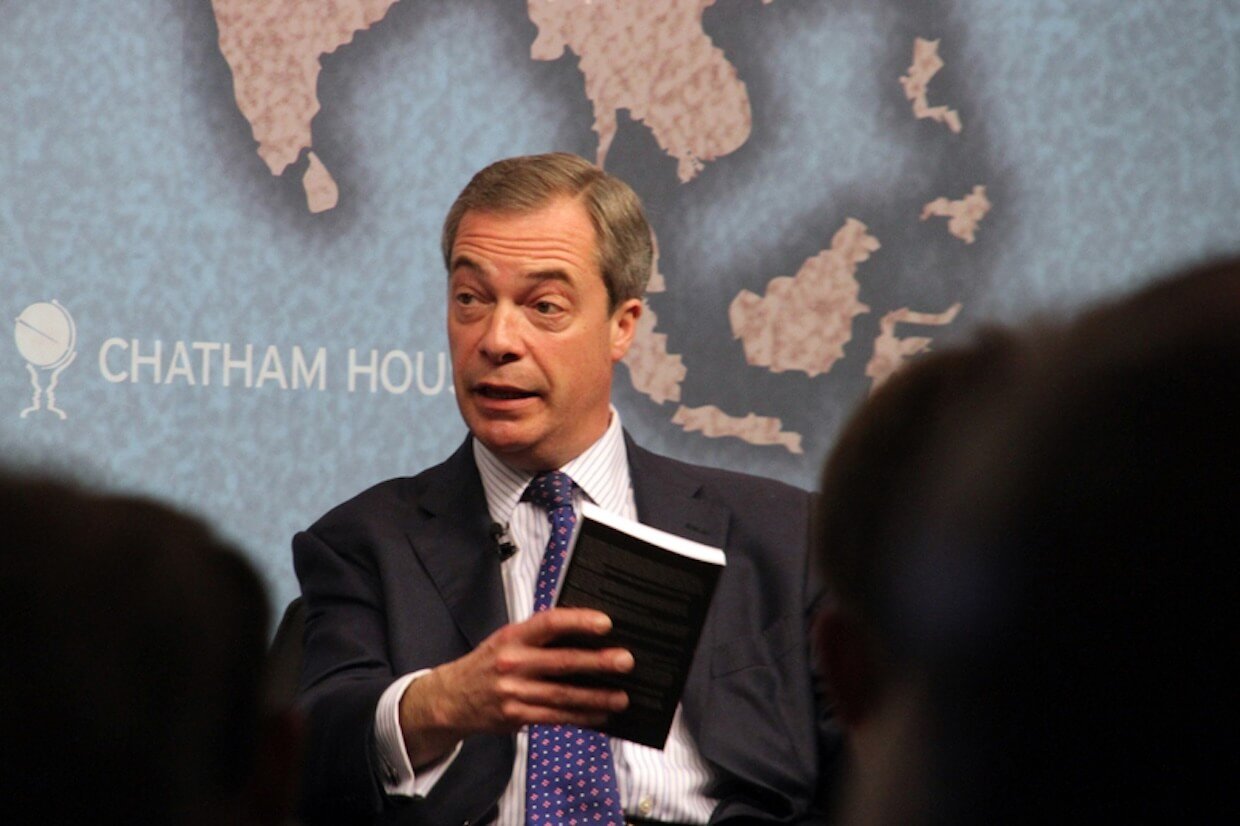
In the same context, how do you interpret the continued prominence of Nigel Farage and the rise of Reform UK within the UK’s political landscape? Does their trajectory suggest that Brexit has consolidated a durable populist radical right (PRR) and far-right constituency, or are we witnessing a more fluid and contingent phase of political realignment?
Professor Jonathan Portes: I hesitate to make predictions on this. But the obvious answer is a bit of both. The presence of Farage and the populist right in the UK is now well established; it is no longer a flash in the pan. We now have some years of it, so I think it is not going away. But how the current political shake-up in the UK plays out is very difficult to assess.
Structurally, our political system is configured around a two or two-and-a-half-party system. We have a roughly 50–50 division between right and left blocs, with a group of voters in the middle who are willing to support either side on occasion. That is a reasonably stable political configuration. But when you have four or five parties, the system becomes much more unstable, especially when these cleavages cut across both economic and socio-cultural dimensions.
It is not clear that the current first-past-the-post system is well suited to this new context. Whatever one thinks in the abstract about first-past-the-post versus different forms of proportional representation, the dynamics look very different in a two or two-and-a-half-party system than in a four or five-party system, where instability increases significantly.
So, it is very unclear how this will shake out. Populism—and in particular far-right populism—is certainly not going away in the UK. But how it will reconfigure the right of the UK political spectrum, and to what extent the more traditional conservative right, which still has a constituency in the UK, can reassert itself and regain control, remains very uncertain at the moment.
Economic Reality Challenges Populist Narratives
To what extent do the economic and migration outcomes of Brexit challenge or reinforce the core claims of populist narratives about globalization, elites, and national sovereignty?
Professor Jonathan Portes: As discussed, they illustrate some of the limitations of national sovereignty and the fact that sovereignty in the abstract legal and political sense does not necessarily translate into having control. There is a fundamental issue here: people felt that they wanted more control over their lives, and Brexit was sold to them as a way of achieving that, yet they certainly do not feel that this has been delivered. That is a fundamental problem.
It is also a fundamental problem for politicians, because it is very difficult to explain to people that, on the one hand, politicians need to demonstrate concretely that they have given people back some control over their lives, while on the other hand they must also be honest about the fact that there are areas where national governments simply cannot exercise control and must be realistic about those limits.
We are seeing this right now with oil and gas prices. The UK government cannot stop global oil and gas prices from rising. At some point, politicians have to be honest and say that we can try to protect the most vulnerable households and mitigate the impact of this economic shock, but it remains an economic shock, and that means the country as a whole is poorer, and we have to live with that.
Populists Shift Strategy as Exit Loses Appeal
Finally, for other sovereigntist or “exit” movements across Europe that have looked to Brexit as a model, what lessons—economic, political, or institutional—should be drawn from the UK’s experience over the past decade?
Professor Jonathan Portes: As I said, populists have correctly learned that Brexit, or its equivalent, is largely going to be a political loser, and they have pivoted away from that. They have shifted towards a more pan-European, ethnically based opposition to immigration—a form of pan-European white nationalism that mirrors some of what is going on in the US at the moment. To some extent, they have done this quite successfully in countries such as France and Italy.
To my mind, the challenge is for those of us who are not part of these movements and do not want to see them succeed: what is the narrative—economic, political, and cultural—that we use to push back against this and say that this is not the sort of Europe we want? The kind of Europe we seek to build is not one that will be economically successful, nor one that most people would want to live in. That is the challenge, and frankly, I do not think we have met it yet.