Urban waste governance in Nigeria reveals a critical yet overlooked nexus between environmental management, informality, and political legitimacy. This policy brief introduces the concept of survivalist populism to capture how structural exclusion within the informal waste economy generates distinct political subjectivities rooted in precarity, distrust, and disengagement. Despite underpinning material recovery and urban sustainability, informal waste workers remain marginalized, stigmatized, and criminalized—exposing a contradiction at the heart of state governance. The analysis demonstrates that exclusionary environmental regimes not only produce inefficiencies but also erode democratic legitimacy and risk fostering grievance-driven political mobilization. By advocating inclusive, circular governance frameworks, the brief positions environmental policy as a key site for democratic renewal, social inclusion, and the mitigation of emerging populist discontent.
By Dr. Oludele Solaja*
Policy Problem
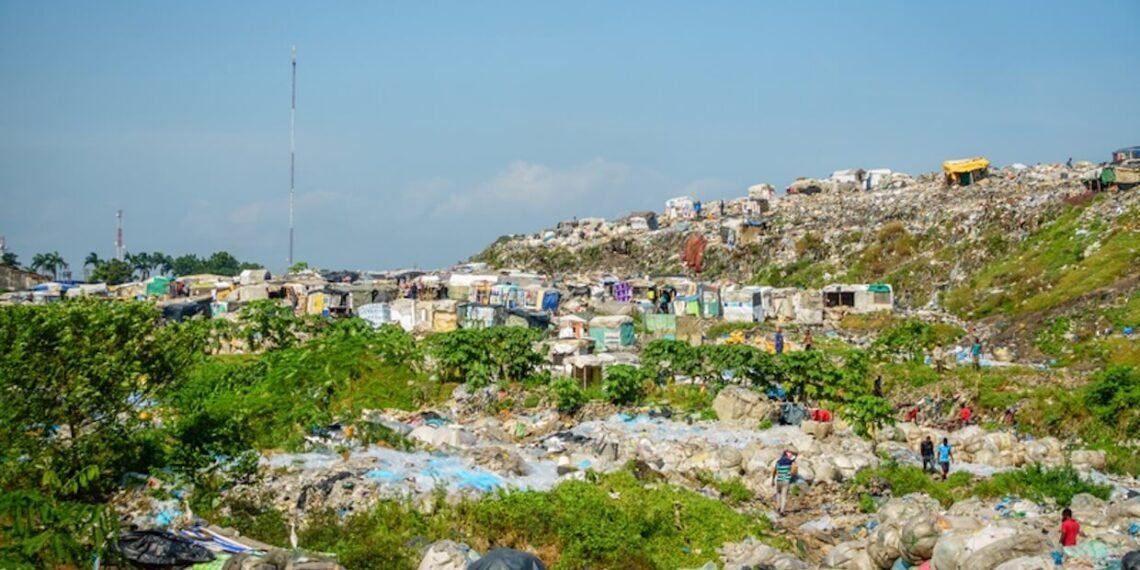
In Nigeria, urban waste governance has remained an under-researched domain where the intersection of political contention, social marginalization, and emerging populist subjectivities can be observed. It is estimated that more than 32 million tons of solid waste are produced annually across the country, with approximately 13,000–15,000 tons generated daily by metropolitan Lagos alone, of which less than 40% is managed by formal waste collection systems (World Bank, 2020). This structural deficit has given rise to a vast informal waste sector, including scavengers, mobile waste traders, and community-based collectors, who constitute the backbone of material recovery systems—particularly for plastics and metals—thereby contributing to urban environmental sustainability.
Despite their indispensability for material recovery, the sector remains largely institutionally marginalized, socially stigmatized, and increasingly criminalized. This apparent contradiction—the necessity of these informal actors for material recovery alongside their political exclusion—points to a broader challenge in environmental governance at the nexus of urban informality and state legitimacy. Building on an urban political sociology perspective, alongside environmental governance scholarship, this policy brief argues that waste governance in Nigeria is fundamentally an issue of political legitimacy and citizenship at the urban level (Migdal, 2001; Davis, 2006).
Survivalist Populism and Urban Exclusion
This policy brief proposes the term survivalist populism to capture the emergence of political consciousness driven by structural exclusion in the informal economy. Survivalist populism describes a political orientation shaped by a lack of material security, institutional exclusion, and the daily struggle for urban survival. Distinct from programmatically oriented ideological populism and electorally driven populism, survivalist populism is affective, experience-driven, and rooted in the everyday conditions of survival.
In the informal waste economy, this type of political consciousness typically manifests through: (1) deep and entrenched distrust in state institutions; (2) narratives of neglect and exclusion; and (3) pragmatic avoidance of formal politics. This orientation signals a weakening of state legitimacy, as governance is often perceived as coercive rather than as a mechanism for welfare delivery.
As Norris and Inglehart (2019) argue, such dynamics often reflect a sustained political backlash rooted in prolonged social insecurity and inequality affecting marginalized populations. Phrases such as “we are unseen by government,” commonly used by actors in the informal waste sector, convey a sense of injustice and represent a redefinition of political identity beyond formal politics. This aligns with studies of informality demonstrating how marginalized groups often construct their own systems of governance in the absence of adequate state engagement (Hart, 1973; Migdal, 2001).
Informality, Labor and Urban Survival
Nigeria’s informal waste sector provides employment for millions and is a cornerstone of the wider informal economy, which supports more than 60 percent of national employment. The sector comprises a diverse group of predominantly young, often vulnerable and economically deprived individuals excluded from the formal economy. Their employment conditions are characterized by extreme income volatility, with earnings frequently falling below minimum wage benchmarks. At the same time, work is marked by precarious health and safety conditions, as it is typically carried out without personal protective equipment and often involves encounters with state agents, leading to harassment, evictions, and displacement.
Paradoxically, these informal workers are integral to urban environmental governance processes, recovering well over 50 percent of plastics across several Nigerian cities, reducing pressure on landfills, and supporting local manufacturing value chains. This situation exemplifies what Davis (2006) describes as the “structural indispensability of the urban poor within systems that simultaneously exclude them,” reflecting a persistent, state-induced failure to integrate informal labor, even as it continues to be tolerated and relied upon.
Governance Failures and Democratic Risks
The systemic exclusion of informal waste workers results in significant governance and democratic risks.
First, it reinforces the state’s dominant reliance on punitive, rather than inclusive, approaches to environmental governance by criminalizing participation in the sector. Informal waste picking is often banned or tightly regulated at the state level without providing viable livelihood alternatives.
Second, enforcement-led approaches to environmental regulation erode state legitimacy, as interventions are primarily experienced as coercive rather than enabling, particularly among excluded groups (Migdal, 2001).
Third, there are emerging signs of the political instrumentalization of exclusion and grievance, whereby marginalized groups are invoked in electoral rhetoric but excluded from substantive policymaking—a pattern that may transform social and environmental exclusion into a tool for political leverage.
Finally, these dynamics generate environmental inefficiencies, as the marginalization of recyclers weakens waste sorting and recovery systems, thereby increasing pressure on landfills. Collectively, these processes risk fostering long-term political disillusionment and undermining stability in urban governance.
Policy Recommendations: Toward Inclusive Circular Governance
Achieving effective environmental governance requires a critical shift toward inclusive, circular economy frameworks that recognize informal labor as essential to urban environmental sustainability.
Formal Integration and Recognition: Relevant environmental agencies at both state and national levels should take measures to formally recognize and register workers in the informal waste economy and ensure their inclusion in urban waste management systems through collaborative arrangements and partnerships among the state, the formal sector, and informal waste actors.
Circular Economy Integration: Circular economy strategies at both subnational and national levels must clearly identify and define informal waste workers as central participants in sustainable waste management, with targeted incentive packages to support small recycling enterprises and strengthen informal material recovery value chains.
Social Protection Measures: Support for these workers should be complemented by a targeted system of social protection that provides access to essential services such as microcredit and health insurance, as well as structured livelihood development and transition support programs.
Participatory Governance Structures: Urban waste management authorities should develop and operationalize structured participatory mechanisms that provide informal waste workers with a platform for engagement and a voice in decision-making processes affecting their livelihoods and the environment.
Narrative Reframing and Public Recognition: The persistent social stigmatization of informal waste workers should be actively challenged through reframing their roles as valuable contributors to urban environmental sustainability, rather than as nuisances within the cityscape, by both state institutions and the media.
Policy Implications for Europe and the Global South
The findings from Nigeria’s informal waste sector offer important lessons for European policymakers transitioning toward a circular economy, as well as for cities in the Global South undergoing rapid urbanization, where informality remains integral to urban service provision, but policy responses often oscillate between marginalization and criminalization. In Nigeria, neglecting informal environmental actors not only undermines the efficiency of environmental systems but can also lead to significant political consequences, including alienation, disengagement, and the emergence of populist responses.
This case underscores for European actors—particularly in contexts of increasing migration, urban informalization, and the shift toward circular economy models—the imperative of designing inclusive governance mechanisms that integrate vulnerable labor into formal systems rather than pushing it to the margins. More broadly, the findings highlight the need to conceptualize environmental governance as a tool of social inclusion and political consolidation, not merely technical efficiency. Failure to implement such reforms is likely to deepen urban political disaffection and accelerate the rise of grievance-driven populist mobilization.
Conclusion
The crisis of waste management in Nigeria is a manifestation of the structural tension between environmental governance and democratic inclusion. The persistence of exclusionary waste regimes reinforces a survivalist populist orientation grounded in precarity and institutional marginality, which may contribute to political instability. Conversely, the inclusion of marginalized informal waste collectors in formal policymaking processes offers mutually beneficial outcomes in terms of environmental efficiency and democratic legitimacy, thereby repositioning waste governance beyond a purely environmental imperative toward a nexus for inclusive urban democracy.
(*) Dr. Oludele Solaja is a faculty member in the Department of Sociology, Olabisi Onabanjo University, Ago-Iwoye, Nigeria and Nonresident Research Fellow at the ECPS.
References
Davis, M. (2006). Planet of slums. Verso. London
Hart, K. (1973). “Informal income opportunities and urban employment in Ghana.” The Journal of Modern African Studies, 11(1), 61–89.
Migdal, J. S. (2001). State in society: Studying how states and societies transform and constitute one another. Cambridge University Press.
Mudde, C. (2004). “The populist zeitgeist.” Government and Opposition, 39(4), 541–563.
Norris, P., & Inglehart, R. (2019). Cultural backlash: Trump, Brexit, and authoritarian populism. Cambridge University Press.
World Bank. (2020). Nigeria: Enhancing solid waste management for sustainable urban development.