Please cite as:
ECPS Staff. (2026). “ECPS Virtual Workshop Series / Session 16 — Voices of Democracy: Art, Law, and Leadership in the Era of Polarization.” European Center for Populism Studies (ECPS). April 20, 2026. https://doi.org/10.55271/rp00147
The final session of the ECPS Virtual Workshop Series offered a rich interdisciplinary reflection on democracy under conditions of deepening polarization. Bringing together legal, historical, and political perspectives, the panel illuminated how “the people” is constructed, contested, and mobilized across different contexts—from defamation law in the United States to institutional legitimacy in Israel, classical rhetoric in Athens, and emotion narratives in contemporary European populism. A central insight concerned the interplay of law, emotion, and symbolic representation in shaping democratic resilience and vulnerability. By foregrounding the cultural and affective dimensions of politics, the session underscored that democracy is not only institutional but deeply interpretive—sustained, challenged, and reimagined through competing narratives of identity, legitimacy, and belonging.
Reported by ECPS Staff
On Thursday, April 16, 2026, the European Center for Populism Studies (ECPS) convened the sixteenth and final session of its Virtual Workshop Series, “We, the People” and the Future of Democracy: Interdisciplinary Approaches, under the title “Voices of Democracy: Art, Law, and Leadership in the Era of Polarization.” Bringing together perspectives from legal studies, political science, history, and discourse analysis, the session examined how democratic life is shaped—and at times distorted—through struggles over representation, institutional legitimacy, collective identity, and the symbolic construction of “the people” in contexts marked by deepening polarization.
The participants of the session were introduced by ECPS intern Daniela Puggia, whose introductory remarks on behalf of ECPS set the stage for the discussion and helped situate the panel within the wider aims of the workshop series. Chaired by Dr. Joni Doherty (Kettering Foundation), the session was organized around a broad but urgent set of questions: how are democratic norms defended when truth itself becomes contested? In what ways do institutional arrangements persist under conditions of deep social division? How do political leaders transform grief, fear, or resentment into collective identity and consent? And what role do art, speech, and symbolic representation play in either sustaining or undermining democratic life?
The panel featured four intellectually rich and conceptually complementary presentations. Professor Ciara Torres-Spelliscy (Stetson University) examined the role of defamation law in defending democracy in the United States, focusing on the legal and political significance of the Freeman and Moss case in the aftermath of the 2020 election. Dr. Niva Golan-Nadir (Reichman University), co-authoring with Dr. Michael Freedman (Hebrew University of Jerusalem), explored how religious policy and balanced dissatisfaction shape institutional legitimacy within the Israeli military. Professor Elizabeth Kosmetatou (University of Illinois Springfield) offered a historically grounded reinterpretation of Pericles’ Funeral Oration as a rhetorically sophisticated form of populist mobilization in wartime Athens. Dr. Cristiano Gianolla (University of Coimbra), together with Lisete S. M. Mónico and Manuel João Cruz, analyzed the exclusionary identity of “the people” in radical right populism through a comparative study of emotional narratives in Portugal and Italy.
The session was further enriched by the interventions of its discussants, Dr. Justin Patch (Vassar College) and Dr. Amedeo Varriale (University of East London), whose comments drew connections across the presentations and raised broader questions concerning aesthetics, institutional resilience, populist rhetoric, and democratic contestation. Together, the contributions of chair, speakers, discussants, and moderator produced a wide-ranging interdisciplinary dialogue on the fragility, adaptability, and symbolic politics of democracy in an age of polarization.
Dr. Joni Doherty: Art, Speech, and the Politics of ‘the People’

In her opening remarks for the sixteenth and final session of the ECPS Virtual Workshop Series, Dr. Joni Doherty offered a concise yet conceptually rich framing of the session’s intellectual terrain. Originally designed to engage with the intersection of art, law, and education in an era of deepening polarization, the session underwent a modest recalibration due to the postponement of contributions addressing the artistic dimension. Nevertheless, Dr. Doherty briefly reintroduced this element, situating it within a broader reflection on populism and the ambivalent role of “the people” in contemporary political discourse.
Her remarks underscored a central tension: while populism often invokes “the people” as a normative good—an embodiment of democratic legitimacy—it can equally serve as a mechanism of exclusion and manipulation. In this sense, the category of “the people” is neither neutral nor inherently virtuous, but rather contingent and politically constructed. Dr. Doherty drew a parallel with the domain of art and free expression, noting that while freedom of speech and artistic autonomy are foundational democratic values, they are not immune to instrumentalization. Both can function as vehicles of propaganda, capable of mobilizing affect, distorting reality, and obscuring empirical truths.
This duality, she suggested, provides a unifying thread across the session’s presentations. The cases to be discussed—ranging from electoral manipulation in the United States to competing value claims in Israeli society, from classical rhetorical strategies in Pericles’ Funeral Oration to contemporary identity-based narratives in Italy—each illuminate how emotional appeals and symbolic constructs can reinforce or undermine democratic norms. Particularly striking is the recurring interplay between legitimacy and exclusion, where competing visions of “the people” are mobilized against one another.
Dr. Doherty concluded by posing a guiding question for the session: how can scholarly inquiry into free speech and populism reveal their inherent complexities in ways that enhance our capacity to interpret—and respond to—contemporary political developments? Her remarks thus set a reflective and critical tone, inviting participants to move beyond binaries and engage with the nuanced dynamics shaping democratic life today.
Prof. Ciara Torres-Spelliscy: “‘I Miss My Name’: Why Black American Election Workers Like Ruby Freeman Turn to Defamation Law to Defend Democracy”
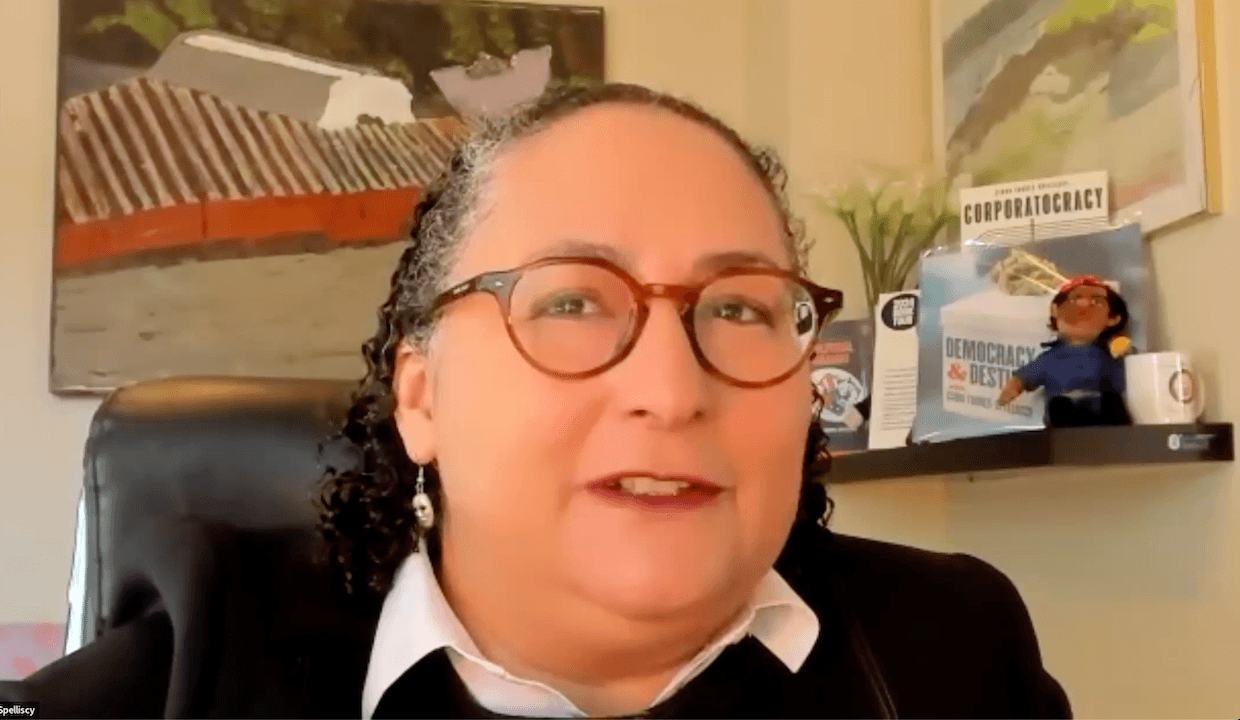
In her presentation, Professor Professor Ciara Torres-Spelliscy offered a penetrating legal and normative analysis of the role of defamation law in defending democratic institutions in the United States. Drawing on her longstanding research at the intersection of corporate law, election law, and political corruption, she situated her remarks within a broader intellectual trajectory shaped by a fundamental question: what is the proper role of money—and, more recently, truth—in a democracy under strain?
Opening with a personal reflection, Professor Torres-Spelliscy invoked an early lesson from her father, an African American artist, who urged her to “ask the big questions.” This intellectual orientation has guided her scholarship over two decades, from examining the influence of corporate money in politics to confronting the more urgent contemporary concern of democratic survival. Her recent work, focusing on why election workers have turned to defamation law, reflects this shift in emphasis from structural distortions of democracy to the immediate threats posed by disinformation and institutional erosion.
At the core of her presentation was an exploration of defamation as a distinct category within First Amendmentjurisprudence. While much of her earlier work engages with campaign finance law—where the US Supreme Court has controversially equated money with speech—this paper turns to the limits of protected expression. Defamation, defined as the publication of false statements that harm an individual’s reputation, occupies a narrow but significant exception to constitutional free speech protections. Yet, as she emphasized, the legal threshold for proving defamation—particularly for public figures or officials—remains exceptionally high, requiring demonstration of “actual malice” under the landmark precedent of New York Times v. Sullivan.
This doctrinal background framed her analysis of the events surrounding the 2020 US presidential election and its aftermath. Professor Torres-Spelliscy provided a detailed account of the multi-pronged efforts to overturn the election results, commonly referred to as “the big lie”—the false claim that Donald Trump had won the election. She unpacked the mechanisms through which this narrative was constructed and disseminated, highlighting its reliance on a series of interlocking falsehoods and legal maneuvers. These included attempts to seize voting machines, orchestrate the “fake elector” scheme across key swing states, pressure state officials to alter vote counts, and pursue extensive litigation challenging electoral outcomes.
Particularly striking in her account was the role of legal and institutional settings in amplifying disinformation. False claims were not merely circulated through partisan media but were presented in formal venues—legislative hearings and court filings—where audiences typically expect a higher standard of truthfulness. This institutional embedding of falsehoods lent them a veneer of credibility, contributing to their widespread acceptance. Among the most consequential instances were the defamatory allegations made against two Georgia election workers, Ruby Freeman and Shay Moss, whose routine administrative duties were recast as evidence of electoral fraud.
Professor Torres-Spelliscy then turned to the question of accountability, observing that traditional mechanisms—most notably criminal prosecution—largely failed to produce meaningful consequences. Efforts to prosecute Trump and his associates, including federal proceedings led by Special Counsel Jack Smith and state-level cases in Georgia, ultimately collapsed due to legal, procedural, and political constraints, including the Supreme Court’s controversial expansion of presidential immunity and longstanding Department of Justice policies regarding sitting presidents.
In this context, she argued, two avenues of accountability proved more effective: professional disciplinary actions against attorneys and civil litigation through defamation suits. The disbarment of figures such as Rudy Giuliani and others signaled a form of institutional sanction within the legal profession. More significantly, however, defamation lawsuits brought by Freeman and Moss demonstrated the potential of tort law to address harms that the criminal justice system could not.
The case against Giuliani was particularly illustrative. Based in part on his dissemination of manipulated video footage—a so-called “cheap fake”—the lawsuit resulted in a nearly $150 million jury award in favor of the plaintiffs. While subsequent settlements limited the broader legal impact of the case, Professor Torres-Spelliscy underscored its symbolic and deterrent value. The magnitude of the damages signaled that even in a permissive speech environment, there remain boundaries beyond which legal consequences can be severe.
At the same time, she acknowledged the limitations of this pathway. Settlements, while providing compensation to victims, curtailed the possibility of appellate rulings that might have clarified or recalibrated the “actual malice” standard. Thus, the opportunity for doctrinal evolution in defamation law—potentially lowering barriers for plaintiffs in cases of egregious disinformation—was foreclosed, at least for now.
The human dimension of these events remained central to her analysis. Professor Torres-Spelliscy highlighted the profound personal and social costs borne by election workers, who faced harassment, threats, and racialized abuse. Their experience underscored the vulnerability of those tasked with administering democratic processes and the extent to which disinformation can destabilize not only institutions but also individual lives.
In conclusion, the presentation advanced a cautiously optimistic argument: while many institutional safeguards failed in the face of coordinated efforts to undermine electoral integrity, defamation law emerged as a residual mechanism of accountability. It does not, in itself, resolve the structural challenges facing democracy, but it offers a tangible means of redress for those harmed by falsehoods and a potential deterrent against future abuses. In an era marked by the strategic manipulation of truth, this legal avenue, however limited, may remain an essential component of democratic defense.
Dr. Niva Golan-Nadir: State Institutions in Divided Societies: Religious Policy and Societal Dissatisfaction in the Israeli Military”

In her presentation at the session, Dr. Niva Golan-Nadir offered a theoretically grounded and empirically rich examination of how state institutions sustain legitimacy in deeply divided societies. Focusing on the intersection of religion, policy, and military cohesion in Israel, her analysis advanced a nuanced challenge to conventional democratic theory, particularly regarding the relationship between citizen satisfaction and institutional stability.
At the heart of her intervention lay a reconsideration of the democratic process as it operates under conditions of persistent social division. In standard accounts, institutional design is expected to respond to public dissatisfaction: when policies lose legitimacy, citizens express discontent, and democratic mechanisms facilitate adjustment or reform. Yet, as Dr. Golan-Nadir emphasized, this model often fails to capture the dynamics of real-world political systems. In many cases, institutional arrangements remain remarkably stable despite enduring dissatisfaction, suggesting the presence of structural barriers that inhibit policy change. These “policy barriers” can lock in contested arrangements, producing long-standing gaps between public preferences and institutional outcomes.
To explain this apparent paradox, she introduced what she termed the “balanced dissatisfaction hypothesis.” In divided societies—where multiple groups hold conflicting preferences—policy arrangements may generate dissatisfaction across the board, but not in a manner that disproportionately burdens any single group. Under such conditions, dissatisfaction becomes diffused and symmetrical, preventing the emergence of a unified opposition capable of driving institutional change. Rather than destabilizing the system, this equilibrium of discontent can, counterintuitively, sustain institutional legitimacy and cohesion.
The Israeli case provided a compelling empirical context for this argument. Defined as both a Jewish and democratic state, Israel maintains a complex and historically rooted relationship between religion and state institutions. Dr. Golan-Nadir traced these arrangements back to pre-state agreements forged in 1947 by David Ben-Gurion, who sought to ensure unity among Jewish factions by embedding religious authority within key areas of public life. These included observance of the Sabbath, regulation of kosher food in public institutions, religious control over marriage, and the segmentation of educational systems along religious lines. Over time, these arrangements expanded to encompass additional domains such as burial practices, conversion, and questions of military service.
The result is a highly institutionalized form of religion-state integration that shapes both civilian and military life. In the context of the Israel Defense Forces (IDF), these dynamics become particularly salient. As a central state institution with mandatory conscription, the IDF brings together individuals from across the religious spectrum—secular, traditional, religious, and ultra-Orthodox—within a single organizational framework. At the same time, it incorporates formal religious structures, including a military rabbinate that oversees the implementation of religious guidelines.
Dr. Golan-Nadir highlighted how these arrangements generate friction across different segments of society. Secular Israelis often view religious regulations—such as restrictions on activities during the Sabbath—as intrusive, while religious groups may perceive the military environment as insufficiently accommodating of their practices. The issue of ultra-Orthodox conscription, in particular, has emerged as a focal point of contention, especially in light of ongoing military demands and personnel shortages. Yet despite these tensions, the IDF continues to enjoy relatively high levels of public trust, in stark contrast to other political institutions such as the parliament or government, where distrust levels are significantly higher.
Empirical data presented in the study reinforced this paradox. Surveys indicate widespread dissatisfaction with religious policies across Israeli society, with a majority expressing discontent. However, perceptions of institutional fairness remain strikingly balanced. When asked which groups benefit most from military policies, respondents distributed their answers almost evenly among secular, religious, and mixed categories. This symmetry suggests that no single group perceives itself as systematically disadvantaged relative to others, even if all experience some degree of dissatisfaction.
From a theoretical standpoint, this finding challenges the assumption that legitimacy depends on the satisfaction of preferences. Instead, Dr. Golan-Nadir’s analysis suggests that legitimacy may derive from a perceived equilibrium of burdens and benefits. In other words, institutions can maintain cohesion not by fully satisfying any group, but by ensuring that dissatisfaction is shared in a relatively even manner. This insight has important implications for the study of civil-military relations, where cohesion is often understood as contingent upon alignment between institutional practices and societal preferences.
The presentation also engaged with broader theoretical frameworks concerning divided societies. Drawing on concepts such as confessionalism and power-sharing, Dr. Golan-Nadir situated Israel alongside other cases—such as Lebanon or Belgium—where deep social cleavages shape institutional design. In such contexts, the state often seeks to balance competing interests through proportional representation and negotiated arrangements. However, the Israeli case demonstrates that balance can also emerge through less formal mechanisms, including the distribution of dissatisfaction itself.
A further dimension of the analysis concerned the role of religion as both a source of identity and a structural constraint. When embedded within state institutions, religion acquires an organizational form that can limit pluralism and create barriers to alternative expressions. This monopolization of religious authority can alienate segments of the population, yet it also stabilizes expectations and reduces uncertainty. In the military context, this duality is particularly evident: religious norms may constrain individual behavior, but they also provide a shared framework that contributes to organizational coherence.
Dr. Golan-Nadir concluded by reflecting on the normative implications of her findings. One might expect that periods of acute external threat—such as ongoing conflict—would prompt a reevaluation of contentious policies, particularly those affecting military effectiveness. Yet the persistence of existing arrangements suggests that even existential pressures may not suffice to overcome entrenched institutional barriers. This underscores the resilience of policy frameworks rooted in historical compromise and collective identity.
At the same time, her analysis invites a more cautious interpretation of institutional stability. The endurance of the status quo does not necessarily indicate the absence of conflict, but rather its containment within a structured equilibrium. Whether such an equilibrium can be sustained indefinitely remains an open question, particularly in light of shifting demographic patterns and evolving political dynamics.
In sum, the presentation offered a sophisticated account of how democratic institutions operate under conditions of division and constraint. By foregrounding the concept of balanced dissatisfaction, Dr. Golan-Nadir provided a novel lens through which to understand the persistence of contested policies and the resilience of institutional legitimacy. Her analysis not only enriches debates on religion and state in Israel but also contributes more broadly to the study of democracy in fragmented societies.
Professor Elizabeth Kosmetatou: “Pericles’ Funeral Oration: A Populist Rhetoric for War and Politics”

In her presentation, Professor Elizabeth Kosmetatou offered a striking reinterpretation of one of the most celebrated texts of classical antiquity: the Funeral Oration attributed to Pericles in Book II of Thucydides’ History of the Peloponnesian War. Long regarded as the quintessential affirmation of Athenian democracy and civic virtue, the speech was reassessed not simply as a noble statement of political ideals, but as a carefully calibrated act of political persuasion delivered at a moment of mounting anxiety, military uncertainty, and personal risk for its speaker. Rather than treating the oration as an uncomplicated monument to democratic values, Professor Kosmetatou situated it within the realities of war and argued that it may also be understood as an early and remarkably sophisticated example of populist rhetoric.
She began by recalling the speech’s conventional status in modern scholarship and public memory. For generations, the oration has been read as a defining expression of classical Athens at its democratic height, a speech in which Pericles appears as the model statesman articulating the virtues of a free and self-confident polis. Yet this familiar reading, she argued, obscures the urgency of the political circumstances in which the speech was delivered. The funeral took place in 431 BCE at the public cemetery in the Kerameikos, at the end of the first year of the Peloponnesian War. This was no ordinary ceremonial occasion. It followed the city’s first military losses in a conflict that would eventually last twenty-seven years, devastate Athenian power, and end with the city’s defeat and submission to Sparta. The event therefore carried far more than commemorative meaning: it was also a politically charged moment in which public grief, wartime expectation, and the credibility of leadership converged.
Professor Kosmetatou stressed that Pericles had entered the war with enormous confidence and had persuaded the Athenians that victory would be swift and assured. Athens, he believed, possessed the naval strength, wealth, and strategic advantages necessary to prevail. But by the time of the funeral, the war had already begun to expose the fragility of those expectations. Spartan invasions had ravaged the Athenian countryside, casualties had mounted, and the prospect of a quick victory was fading. In this setting, the oration had to do more than honor the dead. It had to restore confidence, legitimize sacrifice, and preserve the political narrative that Pericles himself had helped create.
One of the most revealing features of the speech, in Professor Kosmetatou’s reading, is precisely what it does not do. Although it is ostensibly a funeral oration, the fallen soldiers occupy relatively little space within it. Their deaths are acknowledged, but they do not stand at the center of the address. Nor does the speech dwell on personal mourning. On the contrary, women—mothers, wives, sisters, and daughters—are sternly instructed to observe restraint and silence. Pericles’ famous admonition that a woman’s greatest glory lies in not being talked about “for good or for evil among men” was interpreted here as more than a conventional reflection of gender norms. It also functioned politically: women, as the group most likely to express grief publicly and emotionally, were discouraged from turning mourning into a spectacle that might spread panic, resentment, or resistance.
Instead of foregrounding the dead, the speech foregrounds Athens itself. Its laws, institutions, customs, military courage, openness, intelligence, refinement, and civic spirit become the real object of celebration. Pericles constructs a portrait of Athens as uniquely balanced and superior: a city that cultivates beauty without extravagance and wisdom without softness, a city open to the world yet strong in war, intellectually vibrant yet disciplined in public duty. In one of the most enduring phrases of the speech, Athens becomes “the school of Hellas,” not merely one polis among others, but the model and teacher of the Greek world. Professor Kosmetatou showed how this move transforms the speech from an elegy into an affirmation of collective identity. The war dead are honored primarily because they embody the city’s virtues; their deaths serve as evidence of Athens’ greatness rather than as an occasion for reflection on loss.
This rhetorical strategy, she argued, performs distinctly political work. By emphasizing Athens as an exceptional community, the speech dissolves internal differences among citizens and subsumes social variation into a single, idealized people. Wealth, status, local loyalties, and divisions within the demos are rhetorically erased in favor of a unifying civic identity. The Athenians are not represented as a plural or contested body politic, but as a morally coherent collective defined by its superiority over others. In this sense, the speech constructs “the people” in a way that is highly recognizable to modern analyses of populist discourse: a unified moral community is imagined into being and then mobilized in support of political aims.
Professor Kosmetatou further argued that the oration establishes a powerful contrast between Athens and its enemies, especially Sparta, even when Sparta is not explicitly named. Athens is portrayed as open, free, flexible, cultured, and self-confident; its adversaries, by implication, are secretive, rigid, austere, and inferior. War is thereby reframed. It is no longer simply a contest over power, territory, or strategic interests. It becomes a struggle between ways of life and between political systems. If Athens represents the highest form of civic and cultural development, then defending Athens becomes synonymous with defending civilization itself. Such a framing gives the war moral meaning and renders continued sacrifice not merely necessary, but noble.
The speech’s treatment of death is crucial in this regard. Pericles transforms the deaths of the soldiers into proof of civic excellence. The dead are not mourned primarily as individuals; they are elevated into symbols of the city’s enduring glory. His famous declaration that “For the whole earth is the tomb of famous men” was examined as a rhetorical device that universalizes and immortalizes sacrifice. Professor Kosmetatou noted as well the significance of the unknown soldier in the funeral procession, perhaps the earliest instance of this powerful symbolic figure. In a culture where burial and bodily integrity mattered deeply, the decision to honor an unidentified soldier at the head of the procession offered a potent answer to the anguish of those whose loved ones had vanished in war. Even in the absence of physical remains, the city would provide meaning, honor, and public remembrance.
Yet this elevation of sacrifice also contains a darker implication. By transforming private loss into collective glory, the speech prepares the city for further deaths. The dead are presented less as an occasion for caution than as a model to be imitated. Fathers are urged to take pride in their sons’ courage; young men are called to emulate the fallen; bereaved couples still capable of having children are implicitly or explicitly invited to replenish the ranks. The management of grief here becomes a means of sustaining war. The speech channels emotion into renewed commitment and turns mourning into a form of political mobilization.
Professor Kosmetatou also placed the funeral oration alongside the other speeches Thucydides attributes to Pericles, particularly the later speech in which the statesman adopts a markedly different tone. There, as public frustration intensifies, Pericles responds more harshly, effectively reminding the Athenians that they themselves voted for the war. This contrast is illuminating. The funeral oration appears as a moment of rhetorical confidence, a speech designed to inspire and unify before the harsher realities of protracted conflict become undeniable. Read together, the speeches reveal both the brilliance and the limits of Periclean leadership. The oration’s exalted vision of democratic identity stands in tension with the suffering, resentment, and eventual political backlash that followed.
The presentation concluded by insisting on the ambiguity of the funeral oration’s place in democratic thought. It remains one of the most eloquent surviving celebrations of civic community and democratic pride. But it is also a reminder that democratic rhetoric can be used to mobilize populations for destructive purposes, to suppress dissenting emotions, and to sustain a political narrative in the face of mounting evidence that reality has diverged from promise. In this sense, the speech is not only a monument to Athens, but one of the earliest and most enduring examples of how a political leader can transform collective grief into consensus, and shared identity into support for prolonged conflict. Professor Kosmetatou’s reading thus restored to the text its unsettling political edge, revealing its brilliance not only as literature or philosophy, but as an instrument of power.
Dr.Cristiano Gianolla: “The Exclusionary Identity of ‘The People‘ in Radical Right Populism”

In his presentation, Dr. Cristiano Gianolla offered a conceptually ambitious and methodologically innovative analysis of the exclusionary construction of “the people” in radical right populism. Drawing on research conducted within the broader project Unpacking Populism: Comparing the Formation of Emotional Narratives and Their Effects on Political Behavior, he explored the interplay of discourse, emotion, and political identification in two distinct yet revealing European settings: Portugal and Italy. The presentation moved beyond familiar accounts of populism as merely a politics of resentment or anger, instead proposing a more layered understanding of how emotion narratives structure belonging, exclusion, and political allegiance.
At the core of Dr. Gianolla’s intervention was the claim that radical right populism cannot be adequately understood without attention to its emotional architecture. While much of the earlier literature on populism tended to emphasize negative affects—fear, hatred, ressentiment, or anxiety—his work sought to capture a fuller emotional spectrum. Populist politics, he argued, does not mobilize only aversion toward enemies; it also generates positive emotions such as pride, admiration, security, and joy. These emotions are not incidental to populist discourse but constitutive of it. They help define who belongs to the people, what is worth defending, and which forms of political action become desirable or legitimate.
This argument was developed through the heuristic of the “emotion narrative,” an analytic device intended to bridge the cognitive and affective dimensions of politics. Rather than treating emotions as irrational residues external to political reasoning, Dr. Gianolla conceptualized them as embedded in narrative structures that orient individuals toward objects, values, and collective identities. Emotion narratives, in his formulation, are long-term, identity-related configurations that link political discourse to feelings about belonging, threat, and protection. They are produced not simply through isolated messages or campaign rhetoric, but through the circulation of meanings around what he called “deep objects” and “shallow objects.”
The theoretical inspiration for this framework was drawn from the work of Sara Ahmed on affective economies and from discourse-analytic approaches to emotions developed by scholars such as Manuel Alcántara-Pla. Deep objects, in Dr. Gianolla’s use of the concept, refer to those entities or values endowed with enduring emotional significance: homeland, family, liberty, security, national identity, and authority. These are perceived as both valuable and vulnerable. Shallow objects, by contrast, are the immediate figures, institutions, or groups that are interpreted as either threatening or protecting these deeper values. Migrants, minorities, political opponents, the European Union, or liberal elites can be cast as threats; leaders, parties, or certain favored groups may be represented as opportunities or safeguards. What matters is not the object in itself, but the emotional relation constructed around it.
To investigate how these dynamics operate, Dr.Gianolla and his co-authors adopted a mixed-methods approach that combined qualitative and quantitative tools. On the supply side, the research examined semi-structured interviews with members of parliament from two radical right parties: Fratelli d’Italia in Italy and Chega in Portugal. This allowed the study to trace how political elites articulate emotion narratives in their own language, linking political projects to particular visions of community, danger, and restoration. On the demand side, the team conducted surveys with representative samples in both countries shortly before national elections—Italy in 2022 and Portugal in 2024. Importantly, respondents were not asked only what they thought about certain political statements or scenarios, but what they felt about them. This shift from opinion to emotion marked a crucial methodological intervention.
For the survey component, Dr.Gianolla relied on the Geneva Emotion Wheel, a tool designed to capture a broad range of emotional responses across different levels of arousal and valence. Rather than reducing reactions to a simple positive/negative dichotomy, the instrument allowed the researchers to track several emotional families, including both high- and low-intensity forms of affect. Respondents were offered a range of emotional responses to political facts and hypothetical scenarios, thus making it possible to compare the affective profiles of radical right voters with those of other citizens.
The comparative design of the project was particularly instructive. Portugal and Italy provided two contrasting cases: one of recent far-right breakthrough, the other of long-standing populist entrenchment. In Portugal, the emergence of Chegasince 2019 represented a relatively new development within a political system historically resistant to far-right parliamentary success. In Italy, by contrast, Fratelli d’Italia (FdI) entered the study as part of a much longer tradition of populist and right-wing mobilization, and at a moment when it was poised to become the leading party of government. This asymmetry enabled Dr. Gianolla and his collaborators to examine how similar emotional mechanisms may operate differently depending on whether a party presents itself as insurgent outsider or imminent governing force.
The analysis of parliamentary interviews revealed strong thematic convergence across the two cases. Deep objects such as nation, security, family, liberty, and authority appeared consistently as emotionally charged values at the center of radical right discourse. These values were presented as under siege and in need of protection. Threatening shallow objectsincluded “bad” migrants, minorities associated with disorder or un-deservingness, and political actors on the left, who were portrayed as undermining national cohesion, weakening social norms, and privileging outsiders over the authentic people. Welfare chauvinism was especially visible in these narratives: social rights were not rejected in principle but redefined as benefits to be reserved for the deserving national in-group.
At the same time, the discourse also relied on positive emotional objects. “Good” migrants—particularly Ukrainians in the cases discussed—could be represented sympathetically, not as a contradiction but as a selective confirmation of the rule. Likewise, the leader and the party themselves emerged as positive shallow objects, invested with proximity, authenticity, and emotional attunement to the people. The party is not simply an instrument of representation; it becomes a medium through which citizens feel recognized, protected, and emotionally anchored.
The survey findings complemented these qualitative observations. When asked how they felt about certain political realities—such as membership in the European Union, the presence of populist parties in parliament, or the prospect of authoritarian leadership—radical right voters consistently displayed emotional patterns distinct from the rest of the electorate. In relation to the European Union, for example, these voters expressed less pride and more fear, sadness, or anger than others, especially in Italy. This suggested not only cognitive Euroscepticism but an affective distancing from supranational belonging. By contrast, the fact that populist parties had parliamentary representation generated stronger emotions of pride and admiration among radical right voters, alongside lower levels of shame or fear. These parties were not merely tolerated or strategically supported; they were emotionally embraced.
One of the most provocative results concerned hypothetical authoritarian leadership. In both Portugal and Italy, those aligned with the radical right were more likely to respond to the idea of an authoritarian leader with pride, joy, or admiration, and less likely to react with fear or anger. Dr. Gianolla did not present this as evidence of straightforward authoritarianism in a simplistic sense, but rather as an indication that centralized and personalized executive power can acquire positive emotional resonance within a populist political culture, especially when it is associated with order, decisiveness, and national protection.
These results fed into a broader argument about democratic vision. The political culture articulated through radical right populist emotion narratives privileges strong leadership, centralized executive authority, and representative identification over participatory pluralism. Referendums and direct democracy may still be invoked, but not necessarily as expressions of deliberative inclusion. Instead, the leader and party are themselves imagined as the direct embodiment of the people, reducing the need for more complex forms of mediation or plural negotiation. Diversity, in this framework, is not valued as a democratic resource but framed as a source of insecurity or dilution. The people become culturally homogeneous, morally superior, and emotionally bound to a threatened national core.
At the same time, the differences between the Portuguese and Italian cases underscored the importance of political context. Dr. Gianolla noted that Chega, still operating more clearly as an outsider force, retained a stronger anti-systemic tone in Portugal, while Fratelli d’Italia, campaigning to govern, moderated some of its outsider rhetoric and located its antagonism more visibly at the European rather than the national level. This distinction is revealing emotion narratives do not disappear as parties move closer to power, but they are recalibrated to fit different strategic positions.
In sum, Dr. Gianolla’s presentation offered a compelling contribution to the study of populism by showing that the exclusionary identity of “the people” is built not only through ideological content or institutional strategy, but through structured emotional worlds. Radical right populism succeeds, in part, because it provides emotionally coherent narratives that bind citizens to protected values, identify threatening others, and promise moral and political restoration. By integrating discourse analysis, affect theory, and survey research, the presentation illuminated how populism is felt as much as it is believed—and why its appeal cannot be understood without taking those feelings seriously.
Discussants’ Feedback
Feedback by Dr. Justin Patch
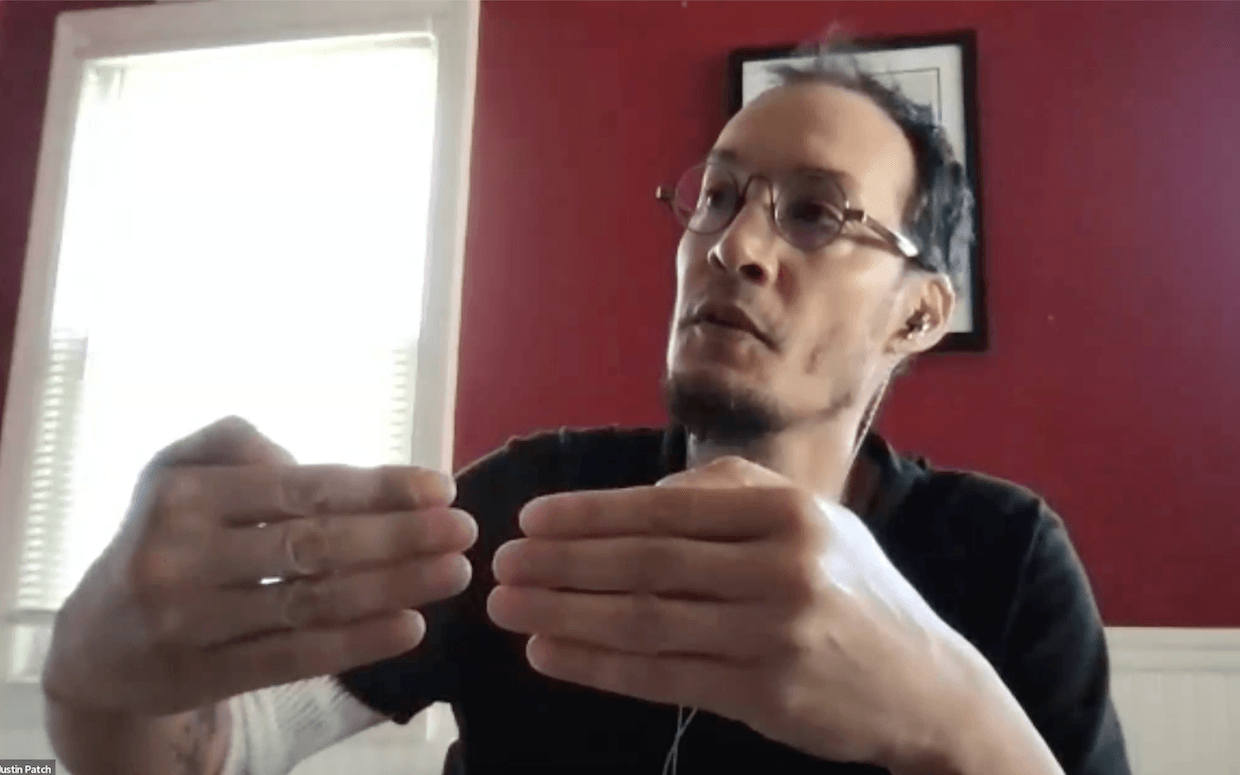
In his discussant remarks, Dr. Justin Patch offered an unusually integrative reflection that drew the session’s presentations into a shared conceptual frame. Although he positioned himself, with some self-awareness, as an apparent outsider—given his own work on art, music, and political campaigns—his response revealed precisely the opposite. By following the threads of representation, emotional formation, symbolism, and aesthetic mediation across the presentations, he illuminated a deeper common structure underlying the session’s discussions. What emerged from his comments was a compelling argument that art, broadly understood, is not peripheral to politics but constitutive of the ways in which power persuades, identities are shaped, and democratic or populist formations are sustained.
His first set of reflections addressed Professor Ciara Torres-Spelliscy’s presentation on defamation law, election disinformation, and the weaponization of manipulated images in the aftermath of the 2020 US election. Dr. Patch read this case not only through legal or political categories, but through the history of aesthetic techniques. What stood out to him in the Giuliani case—especially the use of edited video to defame election workers—was the appropriation of artistic practices that historically relied on believability, illusion, and the manipulation of perception. He suggested that the “cheap fake” in question belongs to a much longer genealogy of visual deception, one that stretches from Renaissance perspective to twentieth-century cinematic montage. In this view, edited political media is not merely a technological distortion; it is the contemporary deployment of old artistic logics designed to make the eye believe what is not in fact true.
Dr. Patch’s observation was especially significant because it shifted the discussion from content to form. The problem was not simply that falsehood circulated, but that it did so through aesthetic means whose persuasive power is rooted in the history of representation itself. Renaissance perspective, he noted, originally involved mathematical and scientific precision, yet in art it became a means of grandeur and illusion. Likewise, cinematic techniques developed by masters such as Sergei Eisenstein demonstrated how editing could construct meaning, emotion, and even political consciousness by shaping what viewers believed they were seeing. In the hands of contemporary political actors, such techniques no longer elevate a public ideal but instead foster atomization, credulity, and manipulated subjectivity. Dr. Patch thus cast disinformation not merely as lying, but as the instrumentalization of artistic practice for anti-democratic ends.
Turning to Dr. Niva Golan-Nadir’s presentation on religious policy and social dissatisfaction within the Israeli military, Dr. Patch reframed the discussion around symbolism and representation. He was struck by her argument that relatively balanced dissatisfaction across different religious groups may help sustain cohesion within the IDF, and he posed a different but related question: through what symbolic means are these hardships rendered collectively meaningful? His comparison with the US military was instructive. In the American case, he suggested, institutions such as the Navy have become highly adept at romanticizing hardship, using what he called a form of “industrial art” to produce emotional identification with service, sacrifice, and discipline. Through these representational practices, suffering is not merely endured but made noble, even beautiful.
This led him to wonder whether something similar might operate in the Israeli case. If soldiers from distinct secular and religious backgrounds remain within a shared institutional framework despite dissatisfaction, perhaps this is not only because burdens are evenly distributed, but because hardship is symbolically represented in ways that make it appear shared, dignified, and necessary. Dr. Patch’s invocation of Jean-Paul Sartre’s preface to Frantz Fanon’s The Wretched of the Earth deepened this interpretation. The line he paraphrased—about humanity one day being judged by the similarity of its needs rather than the quality of its wants—served as a suggestive lens through which to view Dr. Golan-Nadir’s findings. Common dissatisfaction, in this reading, does not simply produce tension; it may create a basis for solidarity when different groups recognize one another as giving something up for a larger collective purpose.
In responding to Professor Elizabeth Kosmetatou’s interpretation of Pericles’ Funeral Oration, Dr. Patch found perhaps the clearest illustration of the intimate relation between populism, democracy, and artistic form. He read her account as making a bold historical claim: that populism is not a late distortion of democracy but may be bound up with democracy from its earliest rhetorical and political expressions. What particularly drew his attention was the way sacrifice is aesthetically rendered in wartime democracies. The glorification of death, he suggested, cannot operate through argument alone. It must be mediated through artistic representation—through speech, statuary, ritual, and symbolic pilgrimage.
In this respect, Dr. Patch emphasized that the transformation of sacrifice into civic glory depends on forms that give the bereaved something visible and collective in which to see their loss reflected. The tomb, the monument, the unknown soldier, the stylized oration—all are artistic mediations that transform individual grief into public meaning. He linked this insight to classic scholarship on nationalism, especially the work of Eric Hobsbawm and Terence Ranger on the invention of tradition. Collective identities, he implied, are never simply discovered; they are staged, performed, and materialized through representational forms that allow individuals to recognize themselves in something larger than themselves. What Professor Kosmetatou had shown in relation to Pericles, Dr. Patch suggested, was the early democratic-populist power of this aestheticization: a leader creates a collective subject not only by naming it, but by giving it visible, emotional, and commemorative form.
His response to Dr. Cristiano Gianolla’s presentation on emotional narratives in Portuguese and Italian radical right populism then brought the discussion into the present with explicitly theoretical force. Dr. Patch strongly endorsed the proposition that emotion is not secondary to politics but central to it. Against the still influential assumption—often traced to Enlightenment rationalism—that political judgment ought to be or can be separated from feeling, he insisted that emotion is “the engine” of politics and democracy. Here he connected Dr. Gianolla’s framework of deep and shallow objects to the sociological work of Zygmunt Bauman on friendship and enmity. What interested him was the way populism appears to collapse or recombine these categories. Rather than placing political objects on a linear scale of affinity or hostility, populist discourse creates a circle in which friendship and enmity operate simultaneously, binding identity and threat together in a mutually reinforcing emotional structure.
Dr. Patch then pushed Dr. Gianolla’s framework in a philosophical direction by suggesting that the distinction between deep and shallow objects echoes two competing Enlightenment notions of identity. One, associated with Kant, assumes that identity is something original and essential, obscured by false additions that must be stripped away. The other, associated with Rousseau, imagines the self as initially open or blank and gradually formed through accumulation and development. Populism, he suggested, appears to rely heavily on the first model: deep identity is imagined as something already there—national, authentic, prior—and politics becomes the work of clearing away the debris of modernity, pluralism, migration, or liberal mediation so that the “true” self or people can re-emerge. In this sense, radical right populism is not merely exclusionary in content; it is aesthetic and philosophical in form, presenting political identity as revelation rather than construction.
It is in the final segment of his remarks that Dr. Patch most fully articulated the broader significance of the arts across the session. Drawing on John Dewey, he argued that art is fundamental to democratic life because it enables people to create and express a sense of self rather than simply receive one from external authorities. Dewey’s claim that democracy requires widespread access to the arts was invoked not merely as a cultural ideal but as a political necessity. If people lack the means to represent themselves—to make poetry, music, images, performances, and other forms of expressive abstraction—then they are more vulnerable to having others tell them who they are. Under such conditions, strong leaders can step in and define the collective self on behalf of the population: this is who “we” are, this is who we have always been. Populism thrives, in part, where self-formation is impoverished and identity is outsourced.
This culminated in the central question Dr. Patch left with the group: how is art being used across these cases, by whom, and to what ends? More importantly, is there a counter-aesthetic, a “weapon of the weak,” capable of resisting homogenizing populist formations and their powerful emotional machinery? Rather than offering a definitive answer, he opened a crucial line of inquiry. Across legal disinformation, military cohesion, classical rhetoric, and contemporary populist discourse, he identified the arts not as decorative supplements but as active forces in the making of political realities. His remarks thus gave the session an unexpected but coherent conclusion: if populism and democracy are both inseparable from emotion and representation, then the arts remain one of the most contested and consequential terrains on which the struggle over political identity is fought.
Feedback by Dr. Amedeo Varriale

Dr. Amedeo Varriale’s remarks as discussant offered a measured, conceptually attentive engagement with each presentation, marked by both appreciation and careful analytical distancing. His intervention moved across legal theory, democratic legitimacy, classical political thought, and contemporary populism, drawing out both convergences and tensions within the panel’s contributions. Rather than imposing a single interpretive frame, he treated each paper on its own terms while situating it within broader debates on populism, democracy, and institutional resilience.
He began with Professor Ciara Torres-Spelliscy’s presentation on defamation law and the role of legal accountability in the aftermath of the 2020 US election. What struck him most was the combination of narrative accessibility and legal sophistication through which a highly complex issue had been rendered intelligible. The Freeman and Moss case, in his reading, served as a powerful illustration of the enduring importance of independent institutions—particularly courts—in safeguarding truth and protecting individual rights. He emphasized that the right not to be defamed is not merely a private concern but a fundamental component of democratic life, as reputational harm can effectively destroy civic participation and personal security.
From this starting point, Dr. Varriale drew a broader lesson about the nature of electoral integrity. While acknowledging that minor irregularities—clerical errors or isolated procedural mistakes—may occur in any electoral system, he underscored that such imperfections do not invalidate outcomes. This distinction, he suggested, is one that populist actors often blur or ignore. The “big lie” surrounding the 2020 election thus represents not simply a political strategy but a profound distortion of democratic norms. Yet he was careful to qualify this observation by noting that such denialism is not intrinsic to populism as a general phenomenon. In Europe, he observed, even radical right leaders have typically conceded electoral defeat. For this reason, he proposed understanding Trumpism as an “extremification” of populism—a trajectory in which populist rhetoric risks evolving into something closer to authoritarianism. Drawing implicitly on the work of Paul Taggart, he suggested that once populism crosses a certain threshold—abandoning electoral competition and institutional constraints—it ceases to be populism in any meaningful sense and becomes a qualitatively different political form.
Turning to Dr. Niva Golan-Nadir’s presentation on the Israeli military, Dr. Varriale approached the argument through the lens of institutional legitimacy in divided societies. He noted that a degree of dissatisfaction with state institutions is not only normal but structurally embedded in representative democracies. What distinguished the Israeli case, however, was the persistence of legitimacy in the face of such dissatisfaction. He attributed this, in part, to the unique position of the Israel Defense Forces (IDF) as a central institution tied to national survival and collective identity. Universal conscription, in particular, transforms the military into a shared social experience rather than a distant bureaucratic apparatus.
At the same time, he highlighted the paradox at the heart of Dr. Golan-Nadir’s findings: dissatisfaction is not only widespread but symmetrically distributed. Religious and secular groups alike perceive the institution as insufficiently responsive to their respective norms and expectations. Yet precisely because no single group can claim ownership of the military, this dual dissatisfaction appears to sustain its cross-cutting legitimacy. Dr. Varriale interpreted this as a form of equilibrium—fragile but functional—where competing grievances prevent the monopolization of the institution by any one ideological camp. Still, he raised a crucial question for further inquiry: how durable is this balance? At what point might shared dissatisfaction shift from a stabilizing force to a source of delegitimization, particularly as social divisions deepen?
In his engagement with Professor Elizabeth Kosmetatou’s analysis of Pericles’ Funeral Oration, Dr. Varriale underscored the value of historical perspective in understanding contemporary populism. He praised the contribution for drawing a line of continuity between ancient and modern forms of political rhetoric, particularly in relation to war, identity, and leadership. The oration, as he interpreted it, framed the Peloponnesian War as a collective civic project, mobilizing citizens through appeals to shared identity and moral purpose. This, he suggested, resonates with modern political efforts to shape public opinion around conflict, including claims—such as those associated with Donald Trump—that complex wars can be resolved swiftly through decisive leadership.
However, Dr. Varriale was careful to distinguish between populism and demagogy, especially in the classical context. While figures such as Pericles are often labeled demagogues, contemporary populism, he argued, has developed into something more structured and ideologically articulated. It is no longer merely a rhetorical strategy to incite mass emotion but a broader political logic with programmatic elements. Even so, he acknowledged that Pericles’ rhetoric displayed key features associated with modern populism: a direct appeal to “the people,” the construction of an antagonistic other, and the moral elevation of the collective. In this sense, the Athenian case offers not a direct equivalence but a historically grounded analogy, illuminating the enduring dynamics of leadership, persuasion, and collective identity.
Dr. Varriale’s final set of reflections addressed Dr. Cristiano Gianolla’s study of emotional narratives in radical right populism in Portugal and Italy. Here, his emphasis fell on methodology and conceptual clarity. He commended the ambitious empirical design, particularly the combination of elite interviews and survey data capturing emotional responses.
He regarded this dual approach—linking the “supply side” of political discourse with the “demand side” of voter emotion—as a notable strength, especially in a field where affective dynamics are often acknowledged but less rigorously measured. The effort to map emotions systematically, rather than treating them as diffuse background conditions, struck him as both innovative and necessary for advancing the study of populism.
At the same time, Dr. Varriale introduced a series of careful conceptual reservations. He expressed some skepticism toward the proposition that a perceived “crisis of democracy” constitutes the central core of populist ideology. In his view, populism’s defining features remain more firmly anchored in anti-elitism and people-centrism, often accompanied by a critique not of democracy per se but of liberalism—especially in its neoliberal or technocratic forms. This distinction, he implied, matters analytically: framing populism primarily as a response to democratic crisis risks mischaracterizing actors who, rhetorically at least, claim to defend democracy against its perceived distortions.
He also engaged critically with the classification of contemporary parties, particularly the Italian case. While acknowledging that many scholars continue to place Fratelli d’Italia within the radical right family, Dr. Varriale suggested that such categorizations may lag behind political developments. He pointed to what he sees as a process of ideological moderation: softened positions on immigration, alignment with transatlantic institutions, and a more pragmatic engagement with European governance structures. This raised a broader question about whether certain parties are genuinely transforming or whether their positions are being normalized by a wider shift in the political center. The ambiguity, in his account, is not easily resolved.
This line of reflection led him to a more general observation about the contemporary European landscape. If positions once associated with the radical right—on migration control, sovereignty, or welfare chauvinism—are increasingly echoed by mainstream center-right actors, then two interpretations become plausible. Either the radical right has moderated, or the political mainstream has moved closer to it. In practice, he suggested, elements of both dynamics may be at play. The consequence is a blurring of ideological boundaries that complicates both scholarly classification and political judgment.
Despite these critical notes, Dr. Varriale’s overall assessment of Dr. Gianolla’s work remained strongly positive. He emphasized the clarity with which key concepts were defined, particularly the distinction between radical and extreme right—an analytical boundary that is often neglected in the literature. He also acknowledged the practical difficulty of conducting elite interviews and assembling comparative datasets, recognizing the empirical labor underpinning the study. These methodological achievements, in his view, contribute meaningfully to a field that still grapples with how best to integrate qualitative and quantitative insights.
Across all four interventions, a consistent thread in Dr. Varriale’s remarks was the importance of analytical precision without rigidity. He resisted sweeping generalizations, instead favoring distinctions that preserve the complexity of political phenomena: between populism and authoritarianism, dissatisfaction and delegitimization, demagogy and ideology, moderation and mainstreaming. His comments suggested a concern not only with what populism is, but with how it is studied—how categories are drawn, how evidence is interpreted, and how contemporary developments are situated within longer historical trajectories.
In closing, his tone returned to one of collegial appreciation. He acknowledged the intellectual range of the session and the quality of the contributions, framing his own interventions as prompts for further reflection rather than definitive critiques. What emerged from his discussion was less a unified theory than a set of carefully posed questions—about institutional resilience, emotional mobilization, historical continuity, and conceptual clarity—that linger beyond the session itself.
Q&A Session
The concluding Q&A session unfolded as a reflective and intellectually generative exchange, drawing together the conceptual threads of the presentations while opening new avenues of inquiry. Rather than merely clarifying points of detail, the discussion turned toward deeper questions about the nature of “the people,” the role of identity and exclusion, and the cultural and institutional conditions under which populism operates. What emerged was less a set of definitive answers than a layered conversation about tensions—between inclusion and exclusion, individuality and collective identity, emotion and reason, and, perhaps most strikingly, between democracy’s ideals and its practices.
The discussion opened with a question by moderator Dr. Joni Doherty that subtly shifted the analytical lens: how might the concept of intersectionality—associated with Kimberlé Crenshaw—complicate the populist construction of “the people” as a unified entity? This intervention introduced a productive dissonance. If populism depends on the simplification of social divisions into a singular collective subject, then intersectionality, by contrast, insists on the irreducible plurality of identities—race, class, gender, and more—that shape political experience. The question lingered over the session, prompting participants to consider whether populism necessarily erases complexity or whether, in some instances, it can accommodate it.
Dr. Justin Patch responded by reframing populism itself as a variable form, distinguishing between inclusive and exclusive variants. Drawing on theoretical currents associated with Ernesto Laclau and Margaret Canovan, he suggested that populism can function as an “empty signifier,” capable of incorporating diverse constituencies under a shared symbolic banner. In this reading, populism is not inherently exclusionary; at its most expansive, it allows individuals from different social locations to recognize themselves as part of “the people.” His reference to the broad—if unstable—coalitions in contemporary American politics illustrated this possibility, even as he acknowledged their fragility.
Dr. Cristiano Gianolla’s intervention both extended and qualified this perspective. While accepting that populist movements may attract support across intersecting social categories, he emphasized that their discursive structure often remains exclusionary. Drawing on the conceptual distinction developed by Cas Mudde and Cristóbal Rovira Kaltwasser, he argued that many of the cases under discussion—particularly on the radical right—should be understood as exclusionary populisms, insofar as they construct a bounded national identity in opposition to perceived outsiders. At the same time, he pointed to the existence of more inclusionary forms, particularly in certain strands of left-wing populism, where the “people” may be articulated in more expansive, pluralistic terms. The implication was not that populism resolves the tension between inclusion and exclusion, but that it navigates it differently depending on context and ideological orientation.
Dr. Niva Golan-Nadir’s reflection drew the discussion back to a more foundational level. What united the presentations, she observed, was the persistent presence of an “us versus them” dynamic—an insight resonant with the political theory of Carl Schmitt. Whether in legal disputes, military institutions, historical rhetoric, or contemporary party politics, the construction of collective identity appeared inseparable from the delineation of an adversary. In this sense, the logic of populism was not an anomaly but an intensification of a broader political grammar in which enmity and solidarity are intertwined.
Dr. Amedeo Varriale offered a further refinement by challenging the distinction between inclusive and exclusive populism. In his view, all populisms are, at some level, exclusionary, because they necessarily define a boundary around “the people.” The difference lies not in whether exclusion occurs, but in whom it targets—immigrants, elites, or other groups. This observation shifted the emphasis from typology to structure: populism, by its nature, tends toward anti-pluralism, even if degrees and forms vary. Dr. Cristiano Gianolla’s subsequent response suggested a partial convergence. While acknowledging that populist practice often results in homogenization, he maintained that the discursive construction of “the people” may initially aspire to inclusivity, even if it ultimately collapses internal differences.
At this point, Dr. Doherty returned to the earlier invocation of intersectionality, grounding it in a more human register. Beneath the abstraction of “the people,” she noted, lie individuals with multiple, overlapping identities and interests. The process of subsuming these individuals into a singular collective inevitably produces tension—especially for marginalized groups whose experiences cannot be easily reconciled with dominant narratives. This observation resonated particularly with the discussion of divided societies, where competing identities must coexist within shared institutions. The question, implicitly, was whether populism can ever accommodate such complexity without erasing it.
A further shift occurred when Dr. Patch posed a more speculative question: is a “utopian populism” possible, or is populism inherently bound to struggle against an adversary? The responses suggested a cautious skepticism. Professor Elizabeth Kosmetatou drew on historical examples from antiquity, recalling attempts to construct egalitarian political communities—most notably the failed insurrection led by Aristonicus in Pergamon. These episodes, while imaginative, underscored the fragility of utopian projects and their vulnerability to political and military realities.
Professor Ciara Torres-Spelliscy, in turn, approached the question from a contemporary perspective, offering a dual outlook. On one hand, she expressed concern about ongoing institutional pressures and the instrumental use of legal processes for political ends. On the other, she pointed to the resilience of civic action and the role of artistic and journalistic practices in countering misinformation and sustaining democratic engagement.
The conversation then turned more explicitly to the role of the arts—a theme that had surfaced throughout the session.Professor Torres-Spelliscy emphasized the importance of visual documentation and grassroots media in shaping public understanding, suggesting that creative practices can serve as a counterweight to manipulative narratives. ProfessorKosmetatou added a note of caution, highlighting the vulnerability of the humanities in the face of political and financial pressures. The contraction of support for the arts, she suggested, may weaken precisely those capacities—critical reflection, symbolic expression—that enable societies to resist authoritarian tendencies.
Yet this view was not left uncontested. Dr. Patch offered a counterpoint, arguing that artistic expression is not wholly dependent on institutional support. Drawing on examples such as graffiti culture, he suggested that creativity and resistance often emerge independently of formal funding structures. This exchange revealed a subtle tension: while institutions can enable and amplify artistic production, they may also constrain it, and their withdrawal does not necessarily extinguish creative expression.
As the session drew to a close, the discussion retained a sense of openness rather than resolution. The final reflections returned implicitly to the central paradox that had animated the exchange: populism, democracy, and identity are bound together in ways that resist simple categorization. The effort to define “the people” remains both necessary and fraught, entangled with questions of inclusion, exclusion, and representation. The Q&A session, in this sense, did not seek to resolve these tensions but to illuminate them—leaving participants with a richer, more nuanced understanding of the terrain they had collectively explored.
Conclusion
In its final session, the ECPS Virtual Workshop Series concluded with a timely and intellectually compelling reflection on the fragility, resilience, and contested meanings of democracy in an age of polarization. What bound the diverse contributions together was a shared concern with the political and symbolic construction of “the people” and with the institutional, rhetorical, and emotional mechanisms through which democratic legitimacy is either defended or distorted. Across legal, historical, political, and cultural registers, the session showed that democracy cannot be understood solely through formal procedures or constitutional design. It must also be examined through the narratives, affects, and representations that shape how communities imagine themselves and their adversaries.
The presentations collectively demonstrated that populism is not a singular phenomenon but a flexible political logic capable of operating through different institutional settings and historical contexts. Whether through disinformation and defamation in the United States, balanced dissatisfaction in Israeli state institutions, the rhetorical transformation of grief in classical Athens, or the emotional narratives of radical right populism in contemporary Europe, each case illuminated a distinct mode through which democratic orders are strained, mobilized, or reproduced. At the same time, the session made clear that democratic vulnerability does not imply democratic collapse. Law, institutional equilibrium, historical memory, artistic expression, and civic action all emerged as possible sites of resistance, even if each remains partial, contingent, and politically contested.
A particularly valuable contribution of the session was its insistence on the centrality of culture and emotion to democratic life. Art, speech, and symbolic performance were shown to be neither ornamental nor secondary, but integral to the ways political identities are formed and collective realities sustained. In this respect, the session moved beyond narrow oppositions between reason and emotion, law and culture, structure and agency. Instead, it offered an interdisciplinary account of democracy as a field of ongoing struggle over meaning, legitimacy, and belonging.
In sum, Session 16 provided a fitting conclusion to the workshop series. It left participants not with closure, but with a sharpened awareness of the complexity of democratic life and of the urgent need to study its tensions with analytical rigor, historical depth, and interdisciplinary openness.