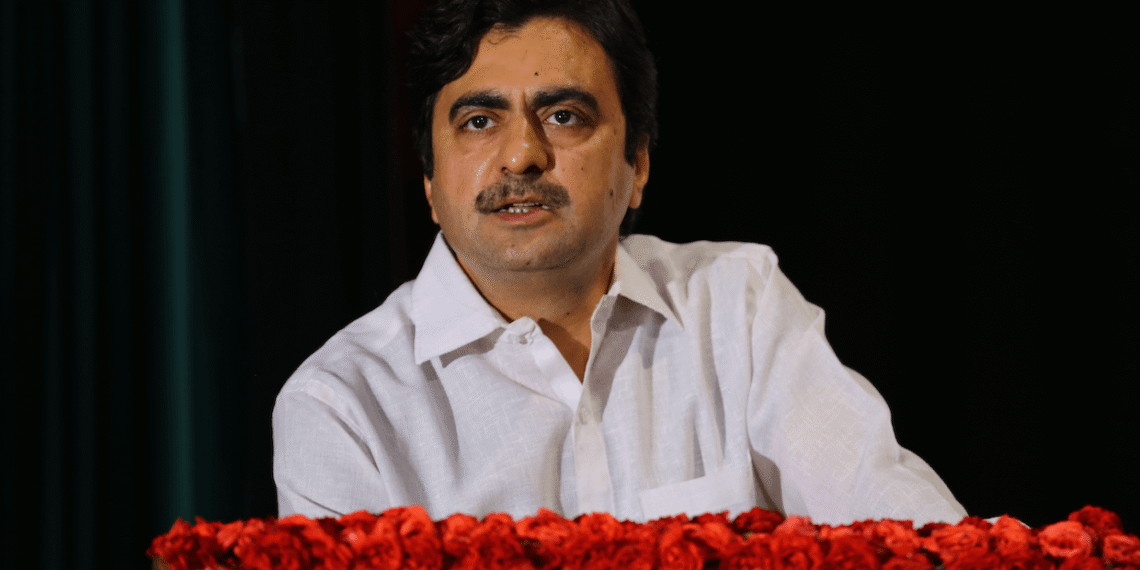
In this ECPS interview, Associate Professor Ajay Gudavarthy analyzes India’s 2026 state elections as a critical moment in the consolidation of Hindutva populism, neoliberal governance, and majoritarian politics. He argues that the BJP’s electoral successes cannot be understood merely as victories of cultural nationalism, but as part of a broader “hegemonic project” that fuses welfare delivery, infrastructural populism, caste reconfiguration, emotional polarization, and centralized state power. For Assoc. Prof. Gudavarthy, the opposition’s crisis is not only electoral or organizational, but also ideological: it has failed to offer a compelling alternative to both majoritarianism and neoliberalism. As India moves toward 2029, he warns that “India’s opposition cannot break majoritarianism without breaking neoliberal consensus.”
Interview by Selcuk Gultasli
India’s 2026 state elections have dramatically reshaped the country’s political landscape while intensifying debates over populism, democratic erosion, federalism, and the future of constitutional pluralism under Narendra Modi’s Bharatiya Janata Party (BJP). The BJP’s historic breakthrough in West Bengal, consolidation in Assam, the continuing erosion of Left politics, and the disruptive rise of Vijay’s Tamilaga Vettri Kazhagam (TVK) in Tamil Nadu together reveal a transformed political order increasingly structured by emotional polarization, welfare nationalism, charismatic leadership, cultural majoritarianism, and institutional centralization. At the same time, controversies surrounding voter-roll revisions, anti-Muslim rhetoric, bureaucratic exclusion, digital mobilization, and the growing fusion of state power with majoritarian narratives have deepened anxieties about the trajectory of India’s democracy and the resilience of its federal constitutional framework.
To examine these developments, the European Center for Populism Studies (ECPS) spoke with Associate Professor Ajay Gudavarthy of the Centre for Political Studies at Jawaharlal Nehru University (JNU), one of India’s leading scholars of populism, political emotions, democratic transformation, and contemporary Hindutva politics. Across a wide-ranging conversation, Assoc. Prof. Gudavarthy situates the BJP’s electoral successes within what he describes as a broader “hegemonic project” that combines neoliberal governance, infrastructural populism, cultural nationalism, and emotive majoritarian mobilization.
For Assoc. Prof. Gudavarthy, the significance of the 2026 elections lies not simply in the BJP’s electoral victories, but in the deeper social and ideological reconfiguration underpinning them. He argues that “market integration, modernity, and modern technology do not necessarily dilute traditional religious or caste identities. On the contrary, they can strengthen them further by nationalizing them and making them even more emotive.” In this sense, contemporary Hindutva emerges not merely as a nationalist ideology, but as a comprehensive populist assemblage linking “big development, big growth, majoritarian imagination, and a theocratic centralized state” with charismatic leadership and welfare delivery.
A central theme running throughout the interview is Assoc. Prof. Gudavarthy’s insistence that the BJP’s dominance cannot be understood apart from the persistence of neoliberal consensus in India. According to him, the opposition’s crisis is not only organizational or electoral, but also ideological and cultural. “The opposition cannot effectively challenge majoritarian consensus without simultaneously confronting neoliberal consensus,” he argues. “The crucial question as India approaches 2029 is whether the opposition will be able to articulate a radical social democratic agenda capable of breaking neoliberal consensus and, through that, also disrupting the majoritarian political imagination.”
Assoc. Prof. Gudavarthy further contends that the BJP has successfully transformed cultural nationalism into a hegemonic social condition by combining aspirational development with affective politics centered on belonging, civilizational memory, and anxieties surrounding immigration, identity, and social insecurity. Drawing on thinkers such as Antonio Gramsci, Michel Foucault, Zygmunt Bauman, David Goodhart, and Partha Chatterjee, he explains how populist politics in India increasingly operates through what he calls the convergence of “right-wing populism and subaltern pragmatism.”
At the same time, Assoc. Prof. Gudavarthy cautions against reducing the current conjuncture to irreversible authoritarian consolidation. While he acknowledges that the BJP has succeeded in constructing “a comprehensive hegemonic project built around a powerful cultural narrative,” he also identifies growing “social, political, and constitutional excesses” as potential openings for democratic resistance.
This interview offers a theoretically rich and empirically grounded exploration of how populism, neoliberalism, emotions, welfare politics, and majoritarian nationalism are reshaping democratic politics in contemporary India—and what these transformations may mean for the future of democracy as the country moves toward 2029.
Here is the edited version of our interview with Associate Professor Ajay Gudavarthy, revised slightly to improve clarity and flow.
Bengal’s Parallel History of Right-Wing Mobilization
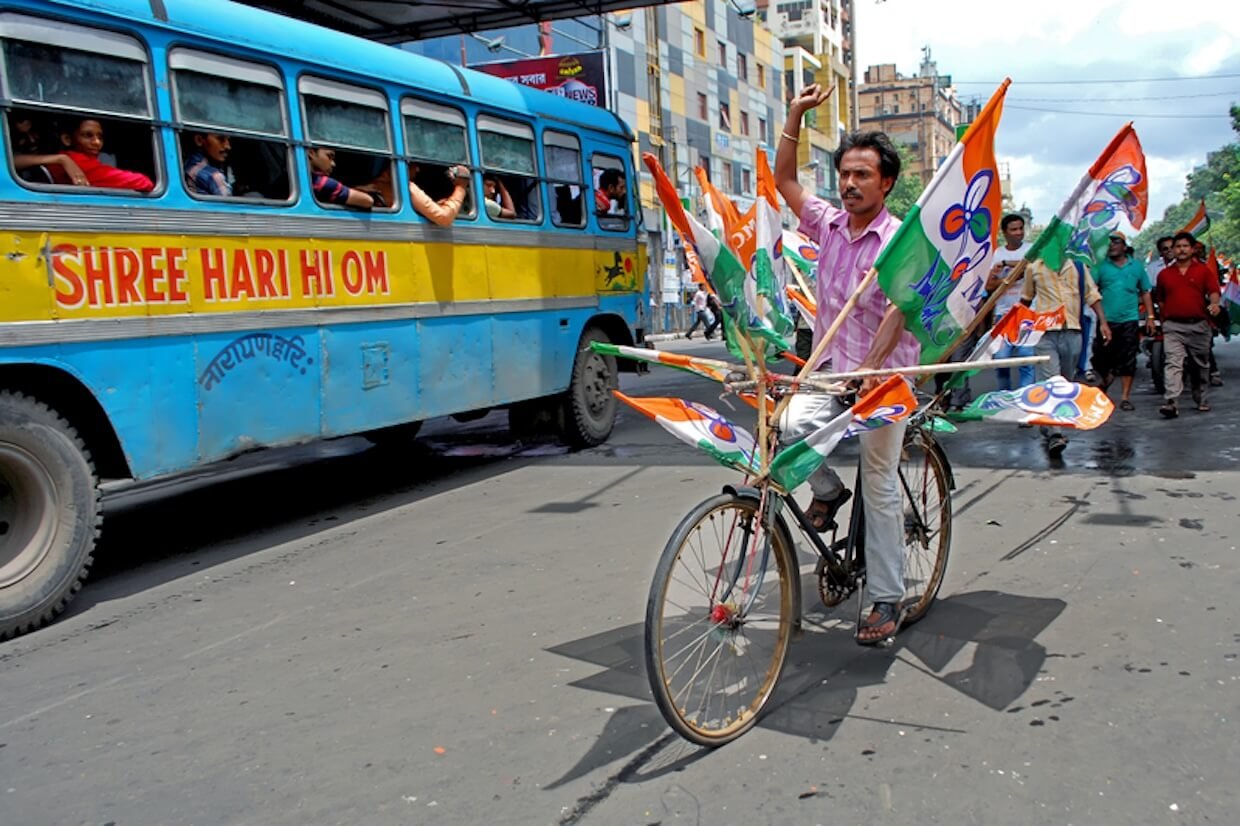
Professor Gudavarthy, welcome. In your work, you conceptualize contemporary Hindutva as a form of populist hegemony that fuses neoliberal governance, cultural nationalism, and emotive majoritarianism. To what extent does the BJP’s breakthrough in West Bengal represent the consolidation of such a hegemonic formation in a region historically shaped by anti-colonial cosmopolitanism, Left politics, and subaltern mobilization?
Assoc. Prof. Ajay Gudavarthy: Bengal is not marked only by anti-colonial cosmopolitanism and subaltern politics; it has also had a parallel history shaped by Partition in 1950. It is interesting to note that the term Hindutva itself was coined by Chandranath Basu in the 19th century. Later, in the 20th century, Savarkar—who became the principal ideologue of the BJP and the RSS, the right-wing cultural organization in India—transformed it into a political ideology.
In fact, in 1951, the Jansangh, the predecessor of the Bharatiya Janata Party (BJP), was founded by Shyama Prasad Mukherjee, who himself came from Bengal. His primary concern during Partition was the condition of Hindu refugees arriving from Bangladesh. It is also significant that after the BJP’s victory in Bengal, Narendra Modi invoked the memory and political legacy of Shyama Prasad Mukherjee.
In that sense, Bengal always had a parallel history of right-wing mobilization, which under the current regime has been transformed into a populist mobilization combining emotive majoritarianism with a narrative of Muslim appeasement allegedly practiced by Mamata Banerjee and the Trinamool Congress.
At the same time, one also witnesses the terminal decline of the Left and of working-class and peasant mobilization around social and egalitarian issues in Bengal. The Left itself has increasingly operated within the broader neoliberal consensus, which has contributed to this shift. In parallel, sections of the middle class have moved toward the BJP because of its aspirational narrative centered on growth and development—big growth, big development.
As a result, one sees a broader Hindu consolidation, with sections of the middle class and the bhadralok (gentleman, Bengali for the new class of ‘gentlefolk’) moving toward the BJP, alongside shifts among Dalit and subaltern groups as well. Altogether, this has produced a comprehensive social reconfiguration, accompanied by the electoral malpractices that became visible in the recent Assembly elections.
Caste, Purity, and the Imagined Infiltrator
You have argued that contemporary right-wing populism in India thrives through the simultaneous production of “hierarchical fraternity” and “polarized differences.” How do the 2026 elections—particularly in West Bengal and Assam—demonstrate the ability of the BJP to forge cross-class Hindu consolidation while intensifying the political marginalization of Muslims and migrant populations?
Assoc. Prof. Ajay Gudavarthy: What the BJP does, if you look at its broader political strategy, is to construct a sense of cultural unity in response to growing social conflicts. If you look at states such as Assam and Bengal, there is undoubtedly a new kind of Hindu consolidation emerging behind the BJP, built around the trumped-up narrative of “Muslim infiltrators” coming from Bangladesh. This imagined figure of the immigrant creates deep anxieties among the local Hindu population.
In this context, I would recall the writings of cultural sociologist Zygmunt Bauman, who argued that Europe also went through a similar phase of anxiety surrounding immigrants. He makes the interesting observation that immigrants generate anxiety because they remind the well-off indigenous or local population that they, too, could end up in a similarly precarious position—without basic rights, legal protection, or social security. This is precisely the kind of anxiety that the BJP and the RSS have successfully cultivated among the Hindu majority: the fear that large-scale “infiltration” will produce a citizenship crisis, intensify competition over resources, and create multiple related insecurities.
At the same time, the Indian context differs from the European one because the narrative of infiltration intersects with caste mobilization and caste consciousness, both of which are rooted in the purity-pollution model. India already possesses a dominant collective subconscious structured around notions of purity and pollution. In other words, the hierarchical order of the caste system has historically produced multiple forms of exclusion. The infiltrator thus becomes the new “other,” identified with the polluted outsider, in contrast to the pure, authentic, local, indigenous population.
Nationalized Markets, Nationalized Hindutva

In your theorization of populism, the “authentic people” are not merely electorally aggregated but affectively produced through narratives of injury, humiliation, and civilizational recovery. How did the BJP’s Bengal campaign operationalize this politics of authenticity, especially through the rhetoric of “infiltration,” women’s insecurity, corruption, and anti-elite resentment?
Assoc. Prof. Ajay Gudavarthy: Part of the issue surrounding “infiltration” I have already explained. But the broader theoretical point I would make is that, in post-neoliberal and post-globalization India, market integration and the expansion of market forces at the national level have been unfolding in parallel with the discourse of nationalist Hinduization.
People who are becoming increasingly integrated into the market through technology and expanding economic opportunities are also—somehow, and this requires careful theorization—developing a collective consciousness centered on a pan-national Hindu identity. In other words, the emergence of a pan-national standardized market is becoming coterminous with a pan-national ethnic, theocratic, and majoritarian identity.
The important question, then, is why the spread of markets and the greater integration of social groups into market structures—which standardize social aspirations, social status, and forms of social integration—also contribute to the consolidation of a majoritarian imagination. This is something we need to theorize further.
Market integration, modernity, and modern technology do not necessarily dilute traditional religious or caste identities. On the contrary, they can strengthen them further by nationalizing them and making them even more emotive.
How Populism Links Growth, Identity, and Memory
You have written extensively about the role of emotions—fear, anxiety, resentment, betrayal, shame, and moral injury—in sustaining the contemporary Right. Which affective registers do you believe were most politically consequential in these elections, and how were they transformed into durable electoral consent rather than episodic outrage?
Assoc. Prof. Ajay Gudavarthy: I have long argued in my writings on populism that anti-secular discourse, which we often understand primarily as exclusionary and majoritarian, also overlaps with an anti-elitist discourse and mode of political mobilization. Today, parties associated with secularism, cosmopolitanism, and multiculturalism are increasingly perceived as elitist formations. This creates an important conjuncture that we need to decode more carefully: why secularism in many post-colonial societies has come to signify an elitist discourse.
A useful reference here is David Goodhart’s The Road to Somewhere, where he distinguishes between the “Anywheres” and the “Somewheres.” Goodhart argues that contemporary societies are increasingly divided between a small cosmopolitan class of “Anywheres” and a much larger provincial population of “Somewheres” seeking to recover their local roots and cultural belonging.
Something similar is unfolding in states such as Bengal and Assam. The more Bengal seeks integration with the market, globalization, and economic opportunity, the more it simultaneously searches for its local roots and civilizational identity. At the same time, it is also turning backward, politically and emotionally, by reviving memories of Partition.
This relationship between the global and the local is both a fascinating and crucial dynamic in populist mobilization. Populist politics simultaneously advances a hyper-modernist discourse centered on corporate economy, infrastructure, and high growth, while also mobilizing localized identities, cultural idioms, ethnic belonging, purity, and authenticity. These two tendencies do not contradict one another; rather, they reinforce each other.
That is precisely what Bengal has witnessed. Bengal has not experienced particularly high economic growth. After three decades of communist and Left rule, Bengal—and Kolkata in particular—remains one of the cheapest urban spaces in the world. It has retained a pro-poor social structure: street food is inexpensive, and housing and real estate remain relatively affordable.
At the same time, however, there emerged an aspirational middle class—the bhadralok and caste Hindus—who became dissatisfied with this image of Kolkata because it lacked swanky malls, large highways, and visible symbols of affluence and modernization.
As a result, the aspirational desire for greater market integration has also produced a stronger attraction toward authentic mobilization and identity-based politics. This parallel and mutually reinforcing process has been extremely beneficial for BJP mobilization because the party simultaneously invokes an authentic Hindu identity and a corporatized global economy.
Constitutional Discourse Needs Cultural Symbolism
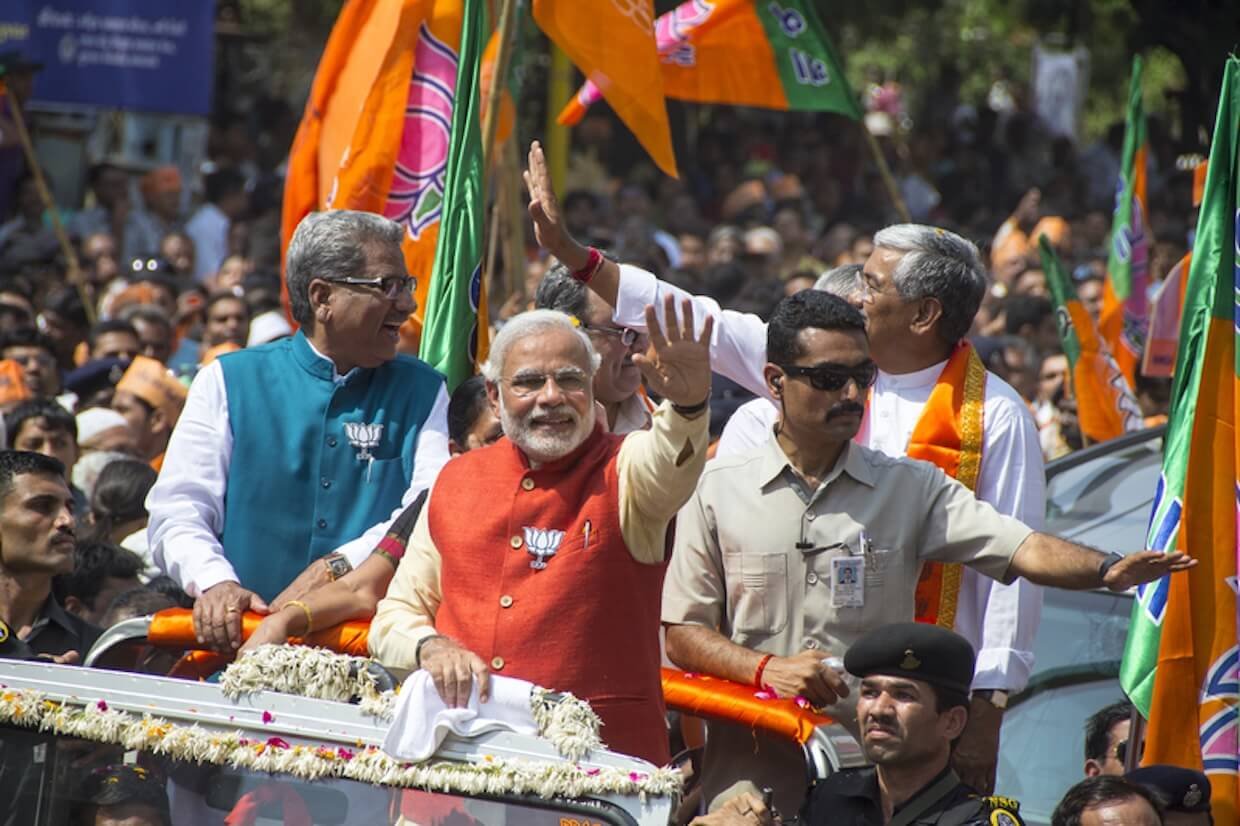
In “Politics, Ethics and Emotions in ‘New India’,” you suggest that liberal-democratic frameworks often fail to adequately engage the emotional foundations of political belonging. Do the opposition’s defeats in West Bengal and elsewhere reveal not merely an organizational crisis, but a deeper inability to articulate a compelling emotional and ethical counter-public to Hindutva nationalism?
Assoc. Prof. Ajay Gudavarthy: Absolutely, there is no doubt about it. In some of my recent writings, I have argued that the current moment in India is fundamentally shaped by a conflict between a constitutional discourse and a cultural discourse. The constitutional discourse speaks the language of constitutional morality, justice, egalitarianism, and inclusion. The cultural discourse, by contrast, revolves around cultural nationalism, belonging, civilizational memory, and the politics of the past. This is the central conflict unfolding in contemporary India. My argument has been that constitutional discourse, despite its progressive and inclusive character, often lacks the emotional and affective depth that cultural and civilizational narratives are capable of generating.
Therefore, I am not suggesting that one should abandon constitutional discourse. Rather, the challenge is to connect constitutional discourse to cultural narratives. There has to be a cultural symbolism attached to constitutional discourse. Otherwise, what we are witnessing today is that the BJP and the RSS are successfully projecting constitutional discourse as an elite discourse. Consequently, BJP mobilization begins to appear as a form of subaltern backlash, which in turn contributes to democratic backsliding.
This is the conundrum we need to overcome. Secular, progressive, Left, and social democratic parties remain particularly weak when it comes to articulating compelling cultural narratives. After 15 years of populist rule in India, I would still hesitate to say that opposition parties possess a credible cultural narrative of their own. What might such a narrative look like? Can opposition forces draw upon myths, mythologies, historical memory, and broader cultural resources in order to reinforce constitutional discourse? I believe India’s long civilizational history offers ample resources for doing so.
If one turns to a historian like Romila Thapar, she argues that India’s collective subconscious is fundamentally shaped by dissent. Beginning with Buddhism, continuing through the Bhakti movement, and extending to Bhagat Singh—what I call the “three Bs”: Buddhism, the Bhakti movement, and Bhagat Singh—Indian history contains multiple traditions deeply rooted in dissent. So, why have opposition parties failed to construct a parallel historical and cultural narrative capable of demonstrating that constitutional discourse is not merely a modernist framework borrowed from outside, but something that also emerges organically from India’s own historical experience? India possesses a long history of struggle, subaltern culture, and subaltern mobilization. I think opposition parties have completely failed to establish that connection.
Voter Deletions as a Tool of Political Exclusion
How should we interpret the controversy surrounding the deletion of millions of names from electoral rolls in West Bengal? Does this episode signal a transition from electoral majoritarianism toward what might be called a procedural or administrative majoritarianism, where democratic legitimacy is increasingly mediated through bureaucratic exclusion?
Assoc. Prof. Ajay Gudavarthy: Absolutely, there is no doubt about it. If you look at the Bengal results, the data that emerged afterward made it extremely clear that 27 lakh (100K) voters had been deleted from the electoral rolls. The difference between the BJP, the winning party, and the TMC was 15 lakhs. Most of the 27 lakh deleted voters were Muslims. That, effectively, is the margin. Had the TMC received those remaining 27 lakh votes—which were essentially Muslim votes—it would have won the election.
So electoral roll manipulation and voter deletions are undoubtedly a key part of the BJP’s strategy. That is not to say the BJP won only because of exclusions, because the party still secured around 35–40% of the vote on its own. The crucial factor, however, was the remaining 5% edge. Both parties had roughly 40%, but it was this additional 5% advantage, produced through what I would call illegal and illegitimate electoral deletions, that ultimately determined the difference between victory and defeat.
Having said that, I should also add that the opposition has failed to transform electoral deletions into an issue of mass mobilization. Opposition parties are claiming that 27 lakh voters were removed, but one can legitimately ask: why have they been unable to bring those affected onto the streets? Why have there been no large-scale popular demonstrations around these exclusions?
This raises a deeper question: can electoral malpractice become an issue of popular mobilization? Can it be transformed into a mass political issue? As I have argued, issues such as electoral malpractice and electoral deletions through special intensive revision have largely remained confined to political parties themselves. The BJP has successfully converted elections into an intra-elite issue.
As a result, it appears as though political parties are merely fighting among themselves, while the everyday concerns of ordinary people remain absent from public debate. None of the political parties are seriously talking about joblessness, unemployment, inflation, and other bread-and-butter issues affecting common people.
What the BJP has done very effectively is to confine opposition parties within an administrative and procedural domain, while simultaneously offering a powerful cultural narrative and, at another level, delivering welfare policies more effectively on the ground. Consequently, the BJP appears to be the party most connected to the masses and to mass mobilization, whereas the opposition remains preoccupied with its own survival and with issues such as electoral malpractice, the role of the Chief Election Commission, and constitutional violations.
These are not perceived as mass issues. And the opposition has failed to understand that, even if it wants to mobilize people around such concerns, it must connect them to the concrete realities of everyday life. The opposition is once again failing to establish that connection between macro-level administrative issues and the micro realities of ordinary people’s lives.
How Neoliberal Transactionalism Weakens Federal Resistance
In your engagement with populism and authenticity, you note that populist regimes often combine claims of democratic immediacy with institutional centralization. How do these election outcomes reshape the balance between India’s federal structure and the BJP’s increasingly unitary imagination of sovereignty and governance?
Assoc. Prof. Ajay Gudavarthy: This is a very important question because Indian electoral autocracy has had its most direct impact on India’s federal structure. One of the key reasons India remained an open, functional, and inclusive democracy for so long was precisely because of its federal framework. India is constitutionally described as a union of states—federal in structure, though with unitary features. As a result, states historically enjoyed a considerable degree of autonomy, including substantial financial devolution from the center.
Since the BJP came to power, however, it has systematically altered state-center relations. The party has initiated a process of extreme centralization, increasingly making states financially dependent on the center. At the same time, I would also stress another important question: despite this steady erosion of state autonomy and the expansion of patronage networks controlled by the center, why is there so little public anger within the states themselves? Thirty or forty years ago, if the center had overridden state autonomy in this manner, there would have been widespread public unrest. People would have taken to the streets over issues such as the imposition of Hindi, disputes over financial devolution, or the blocking of economic opportunities.
To understand this transformation, we need to return to the neoliberal reforms India underwent in the 1990s. In my recent writings, I have argued that neoliberalism is not merely an economic phenomenon; it is also a cultural phenomenon. Neoliberalism reshapes consciousness itself. It transforms how people understand social and political processes. Increasingly, citizens are encouraged to think in transactional terms, in terms of quid pro quo (something for something) relationships. This is where the BJP has been particularly effective. It argues that states should align politically with the center. If the BJP governs both the center and the state, then the state will receive greater funding. If a state refuses alignment, funding is restricted.
Indeed, opposition-ruled states across India have experienced such financial restrictions. One can constitutionally critique this practice by asking how the BJP can withhold programs such as MNREGA (The Mahatma Gandhi National Rural Employment Guarantee Act), one of India’s largest rural employment welfare schemes. In many non-BJP states, such funds have been curtailed or delayed, despite the fact that such actions are constitutionally questionable.
Yet once again, the deeper question remains: why has this not generated large-scale protests against the center or the BJP? I would argue that this shift reflects a broader transformation in social behavior. People increasingly think in transactional terms and therefore come to believe that it is more beneficial for states to align with the center in order to secure resources and financial support. Wherever the BJP governs both the center and the state, those states tend to receive greater funding. And, at least for now, many people appear willing to accept this arrangement. Confronting the center or mobilizing mass protest is no longer widely seen as an effective way to secure economic benefits.
This points to a much deeper transformation in the social character of the Indian state itself. India was once a more centrist polity, but today it has increasingly moved toward a model shaped by corporate global capitalism. The older tensions between regional elites and the national bourgeois elite have significantly weakened. There are many economic and political-economic reasons behind this transformation, and one cannot go into all of them here. But broadly speaking, I would argue that it is the neoliberal and transactional character of contemporary social behavior that is enabling the BJP to erode the federal structure with relatively little resistance.
Subaltern Pragmatism and the Decline of Dissent
The BJP’s victory in West Bengal appears symbolically significant because Bengal historically represented an intellectual and political counterweight to Hindu nationalism. Do you see this result as marking the exhaustion of older secular-progressive political cultures, or their inability to adapt to the changing grammar of contemporary populist mobilization?
Assoc. Prof. Ajay Gudavarthy: Absolutely. As I mentioned earlier, the opposition is struggling to develop a new social and cultural imagination. Today, the central conflict in India is increasingly between the Constitution on one hand and culture on the other. In the post-neoliberal period, there have been no significant new developments on the cultural front. Questions of dignity and equality, for instance, are increasingly being tied to consumption and aspirational lifestyles. I would, therefore, argue that a certain form of subaltern pragmatism has emerged, and that post-neoliberal populist mobilization in India is closely linked to this pragmatism. This convergence between right-wing populism and subaltern pragmatism is something we need to explore more seriously, because it has effectively pushed opposition parties into a political cul-de-sac.
Today, I would even argue that protest itself has become a site of privilege in India. By and large, people increasingly perceive those who protest as privileged individuals—people who possess the social grounding and security necessary to take to the streets and confront power. In everyday life, however, protest is no longer widely viewed as the natural response, despite India’s long history of dissent. In the post-neoliberal era, this political imagination has undergone a profound transformation: while elites continue to engage in protest politics, subaltern groups are increasingly turning toward what might be described as contextual negotiations.
This is what the postcolonial scholar Partha Chatterjee refers to in Politics of the Governed as “contextual negotiations.” Although Chatterjee himself does not fully elaborate on the long-term consequences of this process, I would argue that one major consequence of these pragmatic and contextual forms of subaltern politics has been the rise of unchecked theocratic majoritarianism.
People are no longer engaging with larger political questions. As a result, there is now a profound vacuum in political imagination. What opposition parties urgently need to do is find ways to connect larger questions—democracy, constitutionalism, equality, and justice—to the everyday lived realities of ordinary people. Otherwise, these ideas risk becoming little more than slogans of the privileged and the elite.
From Citizenship Rights to Hindu Developmentalism
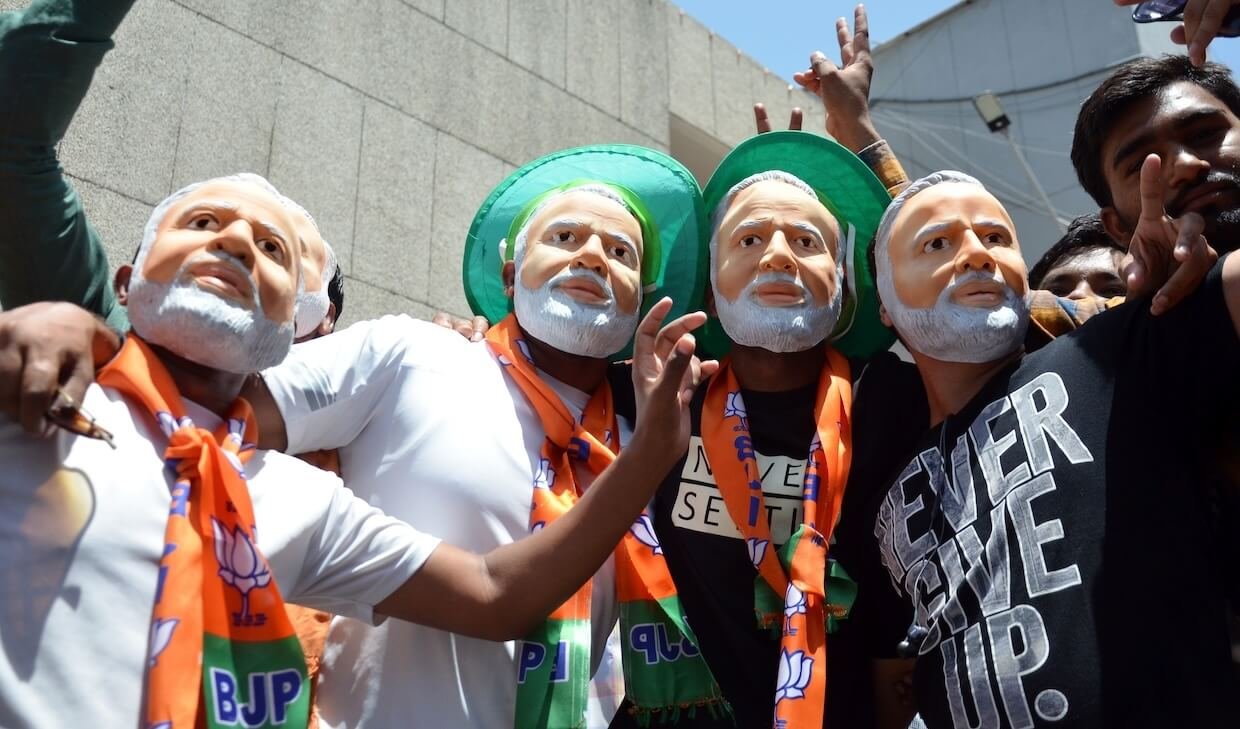
In your writings, you distinguish between earlier developmental populisms and the contemporary fusion of welfare politics with authoritarian mobilization. How does the BJP’s model of welfare delivery—framed through personalized leadership, direct transfers, and symbolic nationalism—reshape the relationship between citizenship, dependency, and political loyalty?
Assoc. Prof. Ajay Gudavarthy: That is a very important question. Some scholars in India have described the BJP’s approach to welfare as a form of “new welfarism.” The central thrust of this model lies in infrastructural development—what is often referred to in the literature as infrastructural populism. One important example is the way the BJP constructs major highways and transport corridors. These roads are frequently designed to connect significant pilgrimage and religious centers. For instance, when large infrastructural quadrangles are developed, they often link multiple major pilgrimage sites across India. In this way, infrastructural development becomes deeply intertwined with cultural and religious symbolism.
This has been one of the BJP’s major political masterstrokes: linking infrastructural development to cultural meaning and attaching what Michel Foucault might describe as a cultural heterotopia to physical space. Infrastructure is no longer merely functional. Roads, highways, and high-speed developmental projects increasingly acquire cultural and, more specifically, religious meanings. The BJP then connects these religious meanings to broader narratives of religious majoritarianism and cultural unity. As a consequence, the discourse of welfare and development gradually shifts away from citizenship. Citizens are no longer positioned as rights-bearing subjects demanding development. Instead, development itself becomes linked to a culturally defined nationalist Hindu identity.
Part of what this process does is displace the discourse of rights. It weakens the normative language of constitutional morality, inclusion, and equality. In that sense, the BJP is engaged in a very deep symbolic political project, and it is executing it with remarkable effectiveness, which helps explain its repeated electoral successes. What makes this political imagination so powerful is its comprehensiveness: large-scale development, rapid economic growth, majoritarian cultural identity, a centralized theocratic state, and a personality cult all come together as a single political package. I would describe this as a populist assemblage. Precisely because this assemblage is so comprehensive, it leaves very little political space for the opposition to articulate an alternative vision. That is why the opposition urgently needs to construct what, in Gramscian terms, would be a counter-hegemonic cultural narrative capable of disrupting this assemblage.
Post-Ideological Populism in Tamil Nadu
Tamil Nadu’s election introduced a different populist phenomenon through Vijay’s TVK, rooted less in overt majoritarianism than in celebrity-mediated anti-establishment politics. How should scholars conceptualize this development: as a post-ideological populism, a digitally mediated “Gen-Z populism,” or a reconfiguration of Dravidian political idioms under neoliberal conditions?
Assoc. Prof. Ajay Gudavarthy: That is, again, a wonderful question. The rise of Mr. Vijay and TVK in Tamil Nadu has been one of the biggest surprises of the recent elections. And I think your framing is quite accurate: should this phenomenon be understood as a form of post-ideological populism, or as a reconfiguration of Dravidian political idioms under contemporary conditions? I would argue that it is actually a combination of both.
Support for Mr. Vijay appears to have come primarily from three social groups: women, Gen-Z voters attracted by his celebrity status and star power, and Dalits, who remain at the bottom of India’s caste hierarchy. This development has to be understood within the broader transformation of Indian politics. Both the BJP and newer political formations such as TVK are emerging by strategically engaging with existing social structures within Indian society. Many earlier progressive and secular movements—including the Dravidian movements that emerged in the 1950s and 1960s—eventually became associated with the interests of dominant caste groups, especially dominant OBC (The Other Backward Class) castes, whether in North India or South India.
One of the BJP’s major political strategies has been its ability to penetrate smaller caste groups, mobilize them politically, and isolate older progressive parties that once represented broader social coalitions. In North India, for instance, many backward-caste parties have gradually become identified with only one or two dominant sub-castes. The BJP has then consolidated the remaining sub-castes against these dominant groups. So, this is a highly complex political process. What parties like the BJP—and now TVK in the South—are doing is constructing a new social configuration by mobilizing new social groups within a broadly post-ideological framework.
The important question, however, is why these parties keep their social agendas deliberately vague, even while mobilizing new constituencies. Under Mr. Vijay, TVK did not announce any major social or ideological program. Although there are now suggestions that it may evolve into a welfare-oriented party, there is still little clarity. The party did not position itself as explicitly social democratic or ideologically committed in any conventional sense. Instead, it deliberately kept people guessing.
In that sense, TVK functioned as a kind of empty political category—mobilizing older social structures while simultaneously creating space for Gen-Z voters to enter politics through the appeal of celebrity culture and star power.
Authoritarianism as a Middle-Class Phenomenon
Your work often situates Indian populism within a broader global conjuncture of authoritarian-democratic transformations. How do the 2026 state election results compare with analogous developments elsewhere—such as Erdoğan’s Turkey, Orbán’s Hungary, Bolsonaro’s Brazil, or Trump-era America—in terms of institutional capture, emotional polarization, and the remaking of “the people”?
Assoc. Prof. Ajay Gudavarthy: This is a very important comparison. I have myself worked comparatively on movements such as Occupy Wall Street in the United States, the Free Fare Movement in Brazil, the autonomy movement in Egypt, and the anti-corruption movement in India roughly a decade ago. One of the central conclusions I arrived at was that, by and large, authoritarianism across these different contexts has been strongly supported by the middle class. In that sense, authoritarianism today is fundamentally a middle-class phenomenon. Historically, if one goes back to the 1950s, the middle class served as the social base of democracy and the welfare state. But we have now moved into a phase where authoritarianism itself is increasingly emerging through middle-class consensus.
The more important question, however, concerns the subaltern classes: why are subaltern groups often indifferent to authoritarianism, and how exactly are they responding to it? One of the most interesting findings from my own field surveys was that what appears to middle-class, social democratic, or progressive observers as authoritarianism is often perceived very differently on the ground. For many people, it appears not as authoritarianism, but as being authoritative. This distinction between authoritarianism and being authoritative is conceptually very important for understanding populist mobilization. When people describe leaders as authoritative, they often mean that such leaders possess a stronger grip over governance and are therefore capable of delivering outcomes more decisively and effectively.
What progressive critics may interpret as authoritarianism is therefore experienced differently by subaltern groups, particularly under conditions of growing economic insecurity and social anxiety. In such contexts, people increasingly look toward paternalistic leadership. That is one of the reasons we are witnessing a broader convergence between paternalism and libertarian neoliberalism. And this combination is precisely what seems to be operating across many of these different political contexts.
Breaking Majoritarianism Requires Breaking Neoliberalism
And finally, Prof. Gudavarthy, do these elections indicate the emergence of what Antonio Gramsci might call a “new historic bloc” under Hindutva—one capable of integrating welfare beneficiaries, aspirational middle classes, sections of subaltern castes, and corporate power into a relatively stable majoritarian order—or do you see unresolved contradictions that could still destabilize this project in the lead-up to 2029?
Assoc. Prof. Ajay Gudavarthy: That is a wonderful question with which to conclude our conversation. As Antonio Gramsci argued, hegemony is fundamentally a social condition. It is not something simply imposed from above. Rather, hegemony emerges when social conditions are created in such a way that people are organically drawn to give their consent. That, essentially, is what Gramsci means by hegemony. And I think that, to a considerable extent, the BJP has succeeded in constructing precisely such a hegemonic order.
Through its reconfiguration of caste contradictions and social conflicts, the BJP has advanced a cultural narrative of unity while simultaneously rendering social groups and individuals vulnerable to incorporation within that project of cultural unity. In that sense, there is indeed a comprehensive hegemonic project built around a powerful cultural narrative. At the same time, however, I would caution against assuming that this process is irreversible. The BJP’s majoritarian consensus is also producing social, political, and constitutional excesses. And that, in fact, remains the principal opening available to the opposition if it seeks to challenge and disrupt this majoritarian populist consensus.
A second and equally important point is that the opposition cannot effectively challenge majoritarian consensus without simultaneously confronting neoliberal consensus. The opposition will have to articulate a genuine alternative social agenda—free education, education as a public good, universal healthcare as a public good, the right to work, and full employment. These could become transformative political demands. But the problem, as we can clearly see, is that the opposition in India still largely operates within the ideological terrain of neoliberalism. Despite remaining out of power for nearly fifteen years, it has yet to formulate a coherent and compelling alternative.
So, the crucial question as India approaches 2029 is whether the opposition will be able to articulate a radical social democratic agenda capable of breaking neoliberal consensus and, through that, also disrupting the majoritarian political imagination. That is the real counter-hegemonic project the opposition needs to construct. It cannot challenge majoritarian consolidation without also challenging neoliberal consensus.
At present, however, the opposition is attempting to resist majoritarianism primarily through constitutional discourse alone, and not even through a sufficiently compelling cultural narrative. What is required instead is a simultaneous effort to challenge majoritarianism through a counter-cultural project, a renewed constitutional discourse, and a decisive break with neoliberal consensus. That will remain one of the most important political questions to watch as India moves toward 2029.