
Professor Justin Gest argues that democratic resilience depends not only on institutions but also on the citizens who remain to sustain them. In this ECPS interview, Professor Gest discusses his concept of “democratic drain”—the depletion of liberal democratic political capital through emigration—and explains how large-scale departures can weaken resistance to populist and authoritarian backsliding. He warns that democracies are “highly susceptible to demographic change” and that the phenomenon is spreading beyond its European “poster child” to countries including Turkey, Israel, India, and potentially the United States. Professor Gest also examines immigration politics, demographic ageing, and populist mobilization, arguing that migration should be framed in terms of the national interest and that “the way countries treat their most vulnerable” is indicative of the state of their democracy.
Interview by Selcuk Gultasli
In an era when democratic backsliding is typically diagnosed through institutional erosion—the weakening of courts, legislatures, electoral safeguards, and checks on executive power—Professor Justin Gest directs attention to a less visible but potentially consequential force: the changing composition of the citizenry itself. Professor and Director of the Public Policy Program at George Mason University’s Schar School of Policy and Government and the award-winning author of seven books, including Democratic Drain: Global Migration and the Struggle for Democracy, Professor Gest argues that understanding democratic resilience requires taking demographic change seriously. “What I think has been missing is the human dimension,” he tells the European Center for Populism Studies (ECPS), emphasizing that democracies “are also highly susceptible to demographic change.”
At the heart of Professor Gest’s argument is what he calls a “depletion effect”: when citizens with liberal democratic values leave in large numbers, their departure can diminish the political and civic resources available to resist authoritarianism. Migration remains, he stresses, “an expression of human freedom and human agency,” yet hundreds of thousands or millions of individual decisions to leave can produce “a very significant collective effect.” The result is a provocative reconsideration of emigration not simply as individual mobility, but as a process capable of reshaping the democratic prospects of countries of origin.
This dynamic may also strengthen populist and authoritarian governments. Professor Gest argues that the depletion of democratic human capital can allow “populist governments or authoritarian-leaning governments to get away with the backsliding” that might otherwise have been politically punished. Europe remains “the poster child for democratic drain,” particularly Central and Eastern Europe, but Professor Gest sees the phenomenon broadening to countries including Turkey, Israel, India, and potentially the United States. Indeed, he warns that “we are seeing the beginnings of a democratic drain in the United States,” even as American institutions, civic associations, and the judiciary continue to provide important sources of resilience.
The interview also situates democratic drain within the wider politics of migration, populism, and demographic transformation. Professor Gest argues that immigration politics is “principally driven by political entrepreneurs” and challenges narratives of invasion and chaos, while advocating immigration as a pursuit of the national interest. Most importantly, migration governance itself becomes a democratic test. “The way countries treat their most vulnerable,”Professor Gest argues, including foreigners and ethnic or religious minorities, “is indicative of the state of their democracy”—an observation he says may constitute an indictment of several countries, including the United States.
Here is the revised version of our interview with Professor Justin Gest, edited lightly to enhance clarity, readability, and overall flow for publication.
Democracies Are Highly Susceptible to Demographic Change
Professor Gest, welcome! Your recent Journal of Democracy article challenges the conventional literature on democratic backsliding by arguing that scholars have focused too heavily on institutional erosion while overlooking the political consequences of selective emigration. In many ways, you shift the analytical focus from what governments do to who remains within the polity. Do you see democratic drain as a complementary mechanism within existing theories of democratic erosion, or are you proposing a fundamentally new paradigm that requires us to rethink how democratic resilience itself should be conceptualized?
Professor Justin Gest: That’s a great question. No, I see this as complementary rather than a fundamentally new paradigm. There has been some excellent scholarship on the prospects for democratization, the forces that drive it, and the forces that generate backlash. What I think has been missing is the human dimension. Democracies, for all their institutions and their susceptibility to structural change, are also highly susceptible to demographic change.
So, if there is—as I argue and demonstrate—this depletion effect, whereby people with liberal democratic values leave a country in large numbers, that, too, will have consequences. It complements, supplements, and helps contextualize the institutional changes that scholars have traditionally focused on.
Migration Is an Expression of Human Freedom and Human Agency
One of the article’s most original contributions is its reinterpretation of Albert Hirschman’s “Exit, Voice, and Loyalty.” Traditionally, exit has been viewed as an individual response to political dissatisfaction. Your argument suggests that, when aggregated, millions of individual exits become a collective political force with systemic consequences. Does this imply that emigration should no longer be understood merely as a personal freedom but also as a phenomenon carrying democratic externalities? How should liberal democracies reconcile the individual’s right to leave with the collective costs that large-scale democratic exit may impose on countries of origin?
Professor Justin Gest: I certainly don’t think that we should be blaming anyone for making these very personal choices, and I don’t think we should be restricting them from doing so. Ultimately, migration is an expression of human freedom and human agency, of instantiating the democracy, the rights, and the freedoms that people want. But it is certainly complicated because of the effect that it has on the prospects for future democracy in the countries that people leave behind. And, of course, one person, one family, or one household’s decision doesn’t change a country. But when hundreds of thousands or even millions of people make the same choice, then that can have a very significant collective effect.
Your work implicitly treats democracy as something sustained not only by constitutions and institutions but also by what might be called democratic human capital—citizens willing to organize, protest, deliberate, and defend democratic norms. Has political science underestimated the demographic foundations of democratic resilience? Should future democracy indices begin measuring civic composition alongside institutional quality? In other words, can a democracy remain institutionally intact while gradually losing the civic foundations necessary for its long-term survival?
Professor Justin Gest: Yes, it certainly could. And it would be brilliant to be able to measure this. It does take some monitoring, but in many ways, the large-scale departure of people with democratic political values could be a signal of what’s to come in fragile democracies, or even not-so-fragile democracies. So, it would be wise to measure these things. It’s not especially costly. These are data that are collected and can be collected via regular survey research. It can be very predictive of the prospects for democracy thereafter.
When You Have Brain Drain, You’re Also Encountering Some Democratic Drain

Your concept deliberately extends—but also departs from—the classic literature on brain drain. Highly educated citizens are not necessarily the same people as those most committed to democratic participation. Conceptually, what distinguishes democratic drain from brain drain, and what does each explain that the other cannot?
Professor Justin Gest: That’s a great question. Brain drain is a reference to the phenomenon of the departure and depletion of economic capital when immigrants leave. They take their intellectual capital, their ideas, and their skill set with them when they leave. What democratic drain is looking at is a phenomenon of political capital—the departure of people with certain values and proclivities.
These two very well overlap. People with democratic values tend to have middling levels of education compared to their countrymen. So it is very likely that there’s a lot of overlap—that when you have brain drain, you’re also encountering some democratic drain.
What they predict is really different because brain drain has been shown to be accompanied by what’s called a brain gain, where people can remit the ideas and the things that they learn from abroad, and in some cases the money that they make from abroad, into capital investment, remittances, and social remittances back home. It’s not clear that it’s so easy to diffuse democracy across borders in the same way. Diaspora politics are certainly lively and active, but how impactful they are in actually creating regime changes is really more dubious.
Democratic Drain and Authoritarian Resilience
Your findings suggest that politically engaged, educated, and internationally connected citizens are often the most likely to emigrate from countries experiencing democratic decline. Could this selective emigration unintentionally strengthen populist and authoritarian movements by reshaping not only the electorate but also the broader ecology of civil society? In other words, does democratic drain help explain why some populist governments appear to become electorally stronger even as dissatisfaction with their governance increases?
Professor Justin Gest: The short answer is yes. That’s, in many ways, precisely what I expect and what I observe. Because of that decline of human capital, because of that depletion, it basically allows populist governments or authoritarian-leaning governments to get away with the backsliding that we otherwise would be observing and that would otherwise be punished, potentially, if, in the counterfactual, those immigrants had never left.
One possible criticism is that emigration merely reflects democratic decline rather than contributing to it. How confident are you that democratic drain becomes a self-reinforcing mechanism of authoritarian resilience rather than simply another consequence of poor governance? What evidence would most convincingly establish that causal relationship?
Professor Justin Gest: That’s a really good question. I think it’s likely to be both. You have certain democratic-leaning, liberal-leaning citizens who are very alert to changes and quick to respond when they see that there is further decline in the future, when they anticipate that decline. So, that is possible. That is certainly possible.
In my own research, there’s good evidence to suggest that elections that place people into office who have authoritarian leanings trigger people to want to leave. In that case, we observe that it comes after. However, what I also observe in the book is that there’s everyday migration of people who are not triggered by politics but are actually triggered by economic opportunities, by the opportunity to reunify with family members, loved ones, and relatives, or by people pursuing their educations abroad. Those people are not leaving for political reasons, and they are leaving in large numbers before any authoritarian backsliding might be taking place.
So, it’s likely to be both. It’s likely that more economically driven and family-driven migration is taking place independently of political backsliding. But there are also responses to political backsliding as well.
Nostalgic Deprivation Helps Explain That Backlash

Across your work—from “Roots of the Radical Right” to your comparative research on nostalgic deprivation—you argue that perceptions of social, political, and economic decline shape populist support. How do these earlier findings relate to Democratic Drain? Do you see nostalgic deprivation and democratic drain as two sides of the same process: one explaining why citizens embrace populism, the other explaining why others decide to leave?
Professor Justin Gest: That’s a really interesting point. Rarely do I deliberately connect my books together. They are certainly contributing to what we are witnessing, yes. And they are, in some ways, two sides of the same coin, because one of the biggest paradoxes of democratic drain is that when immigrants come over to the destination country, they are bringing with them ostensibly liberal, democratic political capital that they’re removing from their country of origin.
However, they’re not necessarily creating a sort of democratic renaissance in the country of destination. They’re not necessarily seeing those values enrich the democracy where they’re going. Quite the opposite: we have seen in many examples across the world today that immigrants’ arrival actually triggers a populist authoritarian backlash.
And so, yes, I think that nostalgic deprivation, which yearns for an earlier period, helps explain that backlash. But technically we’re talking about two different groups of people. We’re talking about one group of people who are remaining in their country of origin and witnessing the arrival of immigrants, and the other is referring to the immigrants themselves and their countries of origin.
Management, Order, and Control Do Not Prevent a Country from Being Open to Migration
Throughout Europe, mainstream parties have increasingly adopted stricter positions on immigration, often in an effort to contain the electoral rise of the radical right. From a comparative perspective, does this strategy reduce support for populist challengers, or does it instead contribute to the normalization of their political agenda?
Professor Justin Gest: It’s a really good, important question. I think it depends on how it’s being done by mainstream parties. I certainly think that mainstream, and particularly center-left, parties have been very politically vulnerable to attacks and criticism that they are too lenient about migration and that their approaches lead to chaos or, at least, to indiscriminate admissions policies. In some cases that might be fair.
I think that many center-left parties have historically been reluctant to talk about management, control, and order, using words like these on the campaign trail and in the design of their policies. But management, order, and control do not prevent a country from being open to migration. Having managed, controlled, and orderly flows of people coming in and out does not mean that you’re stopping people from coming in and out. It just means that you actually are in control of it. It means that you’re being discriminatory in who you are letting in and whether they support national political and policy goals, and who do not.
So I think that, yes, ostensibly it does legitimize what some of the far-right and populist parties are saying, but not in a way that necessarily obviates or prevents center-left and center-right parties from facilitating the normal flows of immigrants coming in and out of their borders. So, it’s complicated. It really does depend on the governments.
Certainly, there are going to be a lot of lazy politicians that ape what they hear on the far right rather than actually thinking about how to mechanically manage an orderly immigration system. Shame on those lazy politicians. But, it doesn’t have to be that way.
Immigration Is a Very Emotional Political Subject Matter
Your work has consistently shown that demographic change becomes politically consequential when it is interpreted through narratives of identity and belonging. To what extent is the contemporary success of populist movements driven by demographic realities themselves, and to what extent by the political entrepreneurs who frame those realities as existential threats?
Professor Justin Gest: I think it’s principally driven by political entrepreneurs. What research has shown—not my own personal research, but others’—is that the general public is broadly not very numerate when it comes to the extent to which immigrants are arriving at borders, especially in a really big country like Germany, the United Kingdom, France, or the United States.
These are large countries where immigrants can blend in very easily and diffuse across big cities and smaller suburbs. So, it’s largely a feeling. Immigration is a very emotional political subject matter, and far-right political entrepreneurs have told people that their countries are being invaded. They’ve told people of chaos and massive influxes of people coming into the country.
There certainly have been increases, and there certainly has been an upward trajectory in numerous places, particularly when you put it as a share of the national population, which is often declining due to aging and lower fertility rates. But it’s certainly not the chaos and the invasion that people are describing. So, broadly, I would say that this is driven by political entrepreneurs, even if the numbers do have an upward trend.
Immigration Should Be Framed as a Pursuit of the National Interest
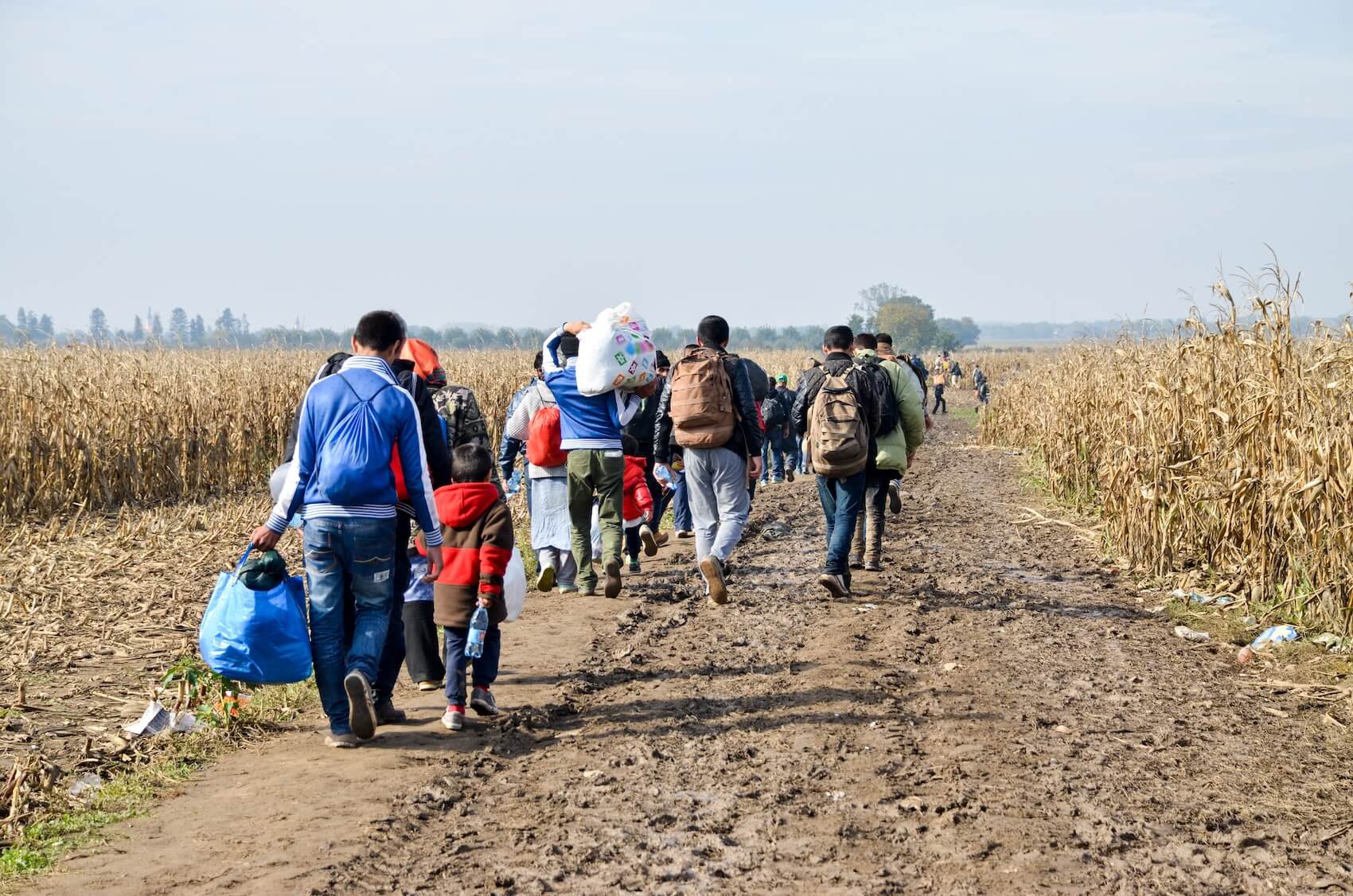
Recent demographic projections suggest that aging societies across North America, Europe, and East Asia will increasingly depend on immigration to sustain economic growth and labor markets, even as anti-immigration politics continue to gain electoral traction. Migration is therefore often presented either as an economic necessity or as a political and cultural threat. Your scholarship suggests that this binary is overly simplistic. How do you explain the growing disconnect between demographic realities and political demand, and how should democratic societies approach migration if the objective is to preserve democratic legitimacy, social cohesion, and long-term economic sustainability?
Professor Justin Gest: They should really switch to a lens on immigration that is much more directly related to the national interest. I think that so much of the debate around immigration, and in some cases the policy design, has really been framing immigration as a humanitarian act—that immigration systems are rescuing vulnerable, susceptible, and weak people from poorer and conflict-driven societies.
And certainly humanitarian migration is an element of many countries’ immigration programs, and a very important one, I’ll say, and one that I think we ought to expand. However, the vast majority of immigrants do not fit that profile.
Immigrants are some of the most significant contributors to our economies, to the enrichment of our societies, and to the sustainability of our populations. And so, bringing them in is not doing anyone any favors except the country itself. I should say it’s doing everyone a favor, including the country itself. So, framing immigration as a pursuit of the national interest is the best and most accurate way to be pursuing it politically.
How Countries Treat Migrants Is Indicative of the State of Their Democracy
In your work on migrant rights and immigration governance, you argue that migration policy reflects broader democratic values rather than simply border management. Do you believe the treatment of migrants has become an increasingly reliable indicator of the health of democratic institutions?
Professor Justin Gest: To some extent it has been. I think there are exceptions where you have a not very democratic institution facilitating the humane entry and exit of immigrants with minimal violations of their rights. A place like that could be Singapore. I’d say Singapore is more of an exception, though.
Certainly, Singapore’s rights profile is not perfect. It’s not what you’d see in a place like Denmark or France. In Denmark, interestingly, they have an excellent rights profile and a very strong democracy, but their policies towards immigrants have become steadily less generous over time. But they’re not violating anyone’s rights, at least certainly not to the extent that we see in other countries.
So, yes, I do think that the way countries treat their most vulnerable, and treat people who are from other places who are members of ethnic or religious minorities, who are foreigners, is indicative of the state of their democracy. That’s probably an indictment of a number of countries, including the United States and its decline democratically over the last 10 years.
Much of your research emphasizes that public attitudes toward immigration are shaped not only by economic realities but also by political narratives and elite framing. In an era of misinformation and social media, have political entrepreneurs become more influential than demographic realities themselves in shaping public perceptions of migration?
Professor Justin Gest: Without a question, yes.
Immigration Is a Way of Creating a Sort of Population Equilibrium Globally
Across advanced democracies, governments increasingly face a paradox: ageing populations and labor shortages make immigration economically necessary, while anti-immigration politics remain electorally attractive. Is this contradiction becoming one of the defining governance challenges for contemporary liberal democracies?
Professor Justin Gest: It has been one of the most fundamental and intractable challenges, certainly. But my prescription really relates to what I said earlier about reframing this as a national interest. I think that each policy should be framed in such a way that the public understands that when the state is admitting people they’re not doing immigrants a favor without actually pursuing the national interest as well.
Immigration is where these different interests become mutual. They come together. And that’s one of the most wonderful things about this. It’s particularly poignant at this moment in demographic history, because we have Global North countries, fundamentally or primarily, that are experiencing rapid aging and very severe drops in fertility rates. And we have many countries in the Global South, in lower-income countries, that are experiencing population booms that are unsustainable, given their economies and their ability to give people jobs.
So, actually, immigration is a way of creating a sort of population equilibrium globally, while also addressing critical problems for politicians and public officials in both the Global South and the Global North.
We Are Seeing the Beginnings of a Democratic Drain in the United States

Photo: Jolanta Wojcicka.
Following the 2024 US presidential election, there has been renewed discussion about Americans—particularly academics, journalists, scientists, and young professionals—considering relocation abroad. Is the United States beginning to exhibit early symptoms of democratic drain, or do its institutional resilience and federal structure make it fundamentally different from the countries examined in your research?
Professor Justin Gest: I think both are true. We are seeing the beginnings of a democratic drain in the United States. The phenomenon has clearly reached US shores, and it’s beginning to take place now, even if it’s just in the early days. But at the same time, the United States possesses certain unique advantages in its institutions, civic associations, and judiciary that act as a form of resilience against this creep of democratic backsliding.
Interrupting the Democratic Drain Cycle
Across Europe, several countries that have experienced democratic backsliding—including Hungary, Serbia, and Slovakia—have also witnessed sustained outward migration. Do you see Europe as the principal laboratory for democratic drain, or are similar patterns now emerging across a much broader range of democracies?
Professor Justin Gest: Europe is certainly the poster child for democratic drain, and it’s one of the reasons why I focus so much of my research on Central and Eastern Europe—places like Hungary, Serbia, Poland, etc. However, democratic drain is broadening now, and it surely already has before this. You know, other countries to look at would certainly include places like Turkey, Israel, India, and, as I mentioned earlier, potentially the United States.
If democratic drain becomes a self-reinforcing cycle—where democratic decline encourages emigration, which in turn further weakens democratic resistance—what practical steps can democratic governments take to interrupt that cycle? Are institutional reforms, economic opportunities, or renewed civic engagement likely to be the most effective response?
Professor Justin Gest: I’m not sure about the latter question, but certainly in terms of what to do about this at the countries-of-origin level. When you have this steady depletion of people leaving, the most direct solution is to cultivate the regeneration of more people with democratic political values. And so that comes from education and public information campaigns, and supporting movements for democracy that educate people and cultivate an appetite for freedoms and rights, such as those that democracies promise and protect. So, that is the best way: supporting the organizations, the civil society groups, the political parties that are seizing and doing their best to cultivate more liberal and democratic norms in the people that they represent.
The Future of Migration and Democracy
And lastly, Professor Gest, taken together, your scholarship explores the intersections of migration, identity, inequality, populism, and democratic representation. Looking ahead, which emerging development—whether artificial intelligence, demographic ageing, climate mobility, rising nationalism, or growing geopolitical instability—do you believe will most fundamentally reshape the relationship between migration and democracy over the coming decade?
Professor Justin Gest: It’s a strong list you put together. It’s clearly all of the above. Each of the meta-phenomena that you mentioned plays a role. Ultimately, I think that the first step we can take to address the challenges that migration poses for democracy and democratization is to recognize those challenges. I think that more and more public officials are coming to realize that there is this relationship.
There is a relationship, and that means that if you care to protect democracy, but you also understand and recognize the critical benefits of a healthy, orderly, and well-managed immigration system, then you have to work to pursue them both, and you have to be cognizant of their relationship to each other as you make policies.
You also have to recognize that there are actors in this world who do not care about the protection of democracy, who do not care for immigrants—sometimes for very hateful reasons, and others just because they don’t think that they’re necessary. In any case, those actors will seize upon the vulnerabilities of this relationship between migration and democracy.
So, people who want to protect them both have to recognize this relationship and act accordingly. Otherwise, the temptations and the allure of easy solutions, slogans, and disinformation are going to win.