In an interview with the European Center for Populism Studies (ECPS), Andrej Ševo, student movement activist and researcher at the University of Belgrade’s Institute for Philosophy and Social Theory, examines Serbia’s historic student-led democratic breakthrough following the October 25 elections. Drawing on firsthand experience and scholarly research, Ševo explains how leaderless organization, participatory decision-making, and “Gen Z creativity” challenged Aleksandar Vučić’s personalized authoritarian rule. Arguing that “the students made democracy seem cool again,” he explores the movement’s populist dimensions, unprecedented civic mobilization, and emerging interethnic solidarity. Yet he warns that transforming electoral victory into durable democracy requires institutional innovation, judicial accountability, and lustration to prevent the return of entrenched authoritarian networks and another unfinished democratic transition.
Interview by Selcuk Gultasli*
Serbia’s October 25 elections marked a historic political turning point, with the student-backed list securing 140 parliamentary seats and ending Aleksandar Vučić’s longstanding political dominance. Emerging from protests following the November 2024 Novi Sad railway station tragedy, the movement transformed demands for accountability into a nationwide challenge to corruption, institutional capture, and personalized authoritarian rule. Yet electoral victory raises fundamental questions about democratic consolidation, transitional justice, and the resilience of entrenched authoritarian networks.
In an in-depth interview with the European Center for Populism Studies (ECPS), Andrej Ševo, a student movement activist, researcher at the Institute for Philosophy and Social Theory at the University of Belgrade, and PhD candidate at the Faculty of Political Sciences, examines this extraordinary transformation. Combining scholarly analysis with firsthand experience as an activist, election observer, and campaign organizer, Ševo explores how decentralized civic resistance evolved into a powerful electoral force.
At the heart of his analysis is the movement’s democratic innovation. Unlike conventional opposition parties, the students relied on plenums, horizontal decision-making, and rotating representation. According to Ševo, the government struggled to confront this unprecedented organizational model because “it did not know whom to attack.” By rejecting personalized leadership, the movement challenged the authoritarian, leader-centered logic of Serbian politics.
Equally important was what Ševo describes as the movement’s “Gen Z creativity.” Memes, humorous videos, songs, and innovative digital communication undermined the government’s established propaganda strategies. As he observes, “We were angry and disappointed, but we were also full of hope, creativity, and original ideas.” This cultural transformation accompanied a deeper democratic awakening: “The students made democracy seem cool again.” Ševo argues that younger generations increasingly embraced democratic participation over authoritarian leadership, while the movement’s deliberative practices helped overcome its own populist tendencies.
Yet the transition from protest to government presents an unprecedented institutional dilemma. Ševo acknowledges that the movement must develop new organizational arrangements without reproducing the hierarchical structures it opposed. “We simply have to try to create a system that has never existed before,” he explains, emphasizing the absence of historical precedents.
Looking ahead, Ševo warns that electoral defeat alone cannot dismantle entrenched authoritarian networks. Drawing on Serbia’s unfinished democratic transition after October 2000, he advocates “thorough criminal prosecutions” and “lustration” to prevent former regime figures implicated in abuses from returning to political power. Without sustained institutional transformation, he cautions, Serbia risks “another great disappointment.”
In sum, the interview examines whether Serbia’s democratic awakening can translate electoral victory, civic solidarity, and participatory innovation into durable democratic institutions.
Here is our interview with student movement activist, researcher Andrej Ševo, edited lightly to enhance clarity, readability, and overall flow for publication.
The Students Succeeded Where Serbia’s Opposition Parties Had Failed
Andrej Ševo, thank you for joining us. Let me begin with the origins of this remarkable movement. The November 2024 Novi Sad railway station tragedy transformed public grief into nationwide mobilization against corruption and institutional capture. What explains the students’ success in turning a specific demand for accountability into a broader challenge to Aleksandar Vučić’s political order?
Andrej Ševo: The easiest answer to your question would be that the students approached the public with a very new way of decision-making and problem-solving, one that was unfamiliar to previous opposition actors.
What do I mean by that? If we go back to the 2023 elections and the repeated elections in 2024, the mood among the Serbian public was very lethargic. The great opposition coalition had fallen apart, and people were left feeling helpless because there was no unified and potent challenger to the Serbian Progressive Party’s rule. As you can imagine, the disappointment was very significant. The public was predominantly anti-government, but this sentiment was not represented by a proportionally strong political force.
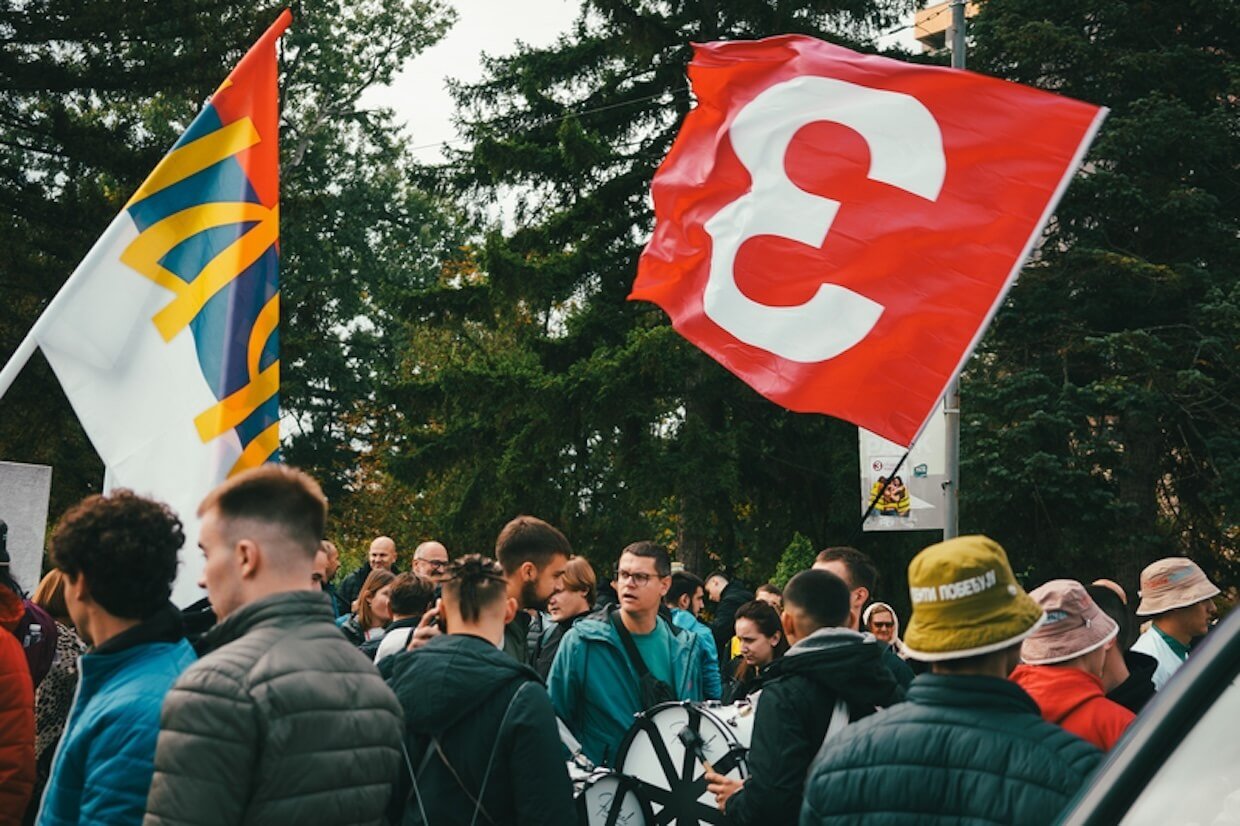
In such a lethargic climate, we had the canopy collapse and the emergence of the student movement, which was not based on the leadership principle that had been so typical of opposition parties in Serbia. Instead, what emerged was essentially a social movement.
Students formed a social movement in which decisions were made democratically. They voted on every decision, respected the outcomes, and managed to overcome obstacles that opposition parties had been unable to overcome when they organized protests. Previously, opposition-led protests would usually reach a point where the organizers asked, “Well, all right, we are walking around the city, we have a large number of people behind us, but what do we do next?” They were never able to agree on the next step. Some wanted to act violently, others wanted to remain peaceful, and some thought that protesting was no longer necessary. Eventually, everything would fall apart.
This time, however, we had students acting as a unified group with decision-making plenums. All these units respected the decisions of the plenums and the will of the majority. They deliberated, exchanged ideas, and usually the best idea would win by receiving the most votes. The protests would then continue with new vigor and new ideas. I believe this is what made these protests potent and ultimately successful.
The Vučić Regime Did Not Know How to Fight a Leaderless Movement
In Glasovi promene, which you co-edited, the student movement emerges as an experiment in direct democracy and collective political agency. How did student plenums, horizontal decision-making, and rotating representation sustain mobilization, and what limitations did these practices reveal?
Andrej Ševo: Of course, as with anything, there are pros and cons. The most important advantage of such a system was that the government did not know how to respond to something so new and original. The government was accustomed to having political parties and their leaders as its main opponents. It was relatively easy to attack opposition leaders, label them with horrible names, publish false articles about them, and so on. Political labeling was easy. The Serbian Progressive Party controlled most of the media and was able to create and control narratives, making it easy to discredit opposition parties. Not to mention that the opposition parties themselves had made some horribly wrong moves for which they could legitimately be criticized.
But much of the hostility they received was the result of government propaganda. When the students emerged with this new decision-making process, the government was confused. It did not know whom to attack. Who could it blame for everything? Who were these students? Could the government attack all the students? They represented a very large social group. They had parents and grandparents who loved them. They were, as I like to say, the flower of Serbian youth. Their families loved them, and it was not easy to attack them by claiming they were traitors, Ustasha terrorists, and so on. Figuring out how to attack these people therefore became a major problem for the government.
Another significant advantage was that the student movement somehow created a democratic spirit. Even when you disagreed with a decision, as a member of the student movement, you still valued participating, despite being in the minority, because you respected the mechanism. This is something I heard while conducting focus groups with students in Serbia. They would often say, “I would propose something, but it wouldn’t be voted for. I was angry, I hated the movement, and I wanted to leave. But eventually, I would accept the outcome because I knew that the mechanism we had was something new, potent, and original—something that should be cherished.” And eventually, those people stayed, even though their proposals were rejected and others voted against them. These were the main advantages: the government’s inability to attack the students effectively and a decision-making process that created a spirit of democracy, which participants respected and cherished, and whose outcomes they accepted.
I also think the constant rotation was important. The students would regularly change the people who moderated discussions, appeared in the media, and led the protests. These roles always rotated. There was never a stable, recognizable face who could be identified as the leader. So, it remained a leaderless movement until the end. In Serbian politics, the prevailing political logic is authoritarian and very leader-based, not only among government parties but also among opposition parties. The students managed to move beyond that logic, completely confusing both the government and the opposition parties and creating something uniquely new.
The Students United People Across Class and Geographical Divisions
The movement expanded beyond university campuses through marches, blockades, rural outreach, and alliances with teachers, farmers, and other social groups. How did this geographical and social expansion overcome the traditional divide between urban opposition constituencies and provincial Serbia?
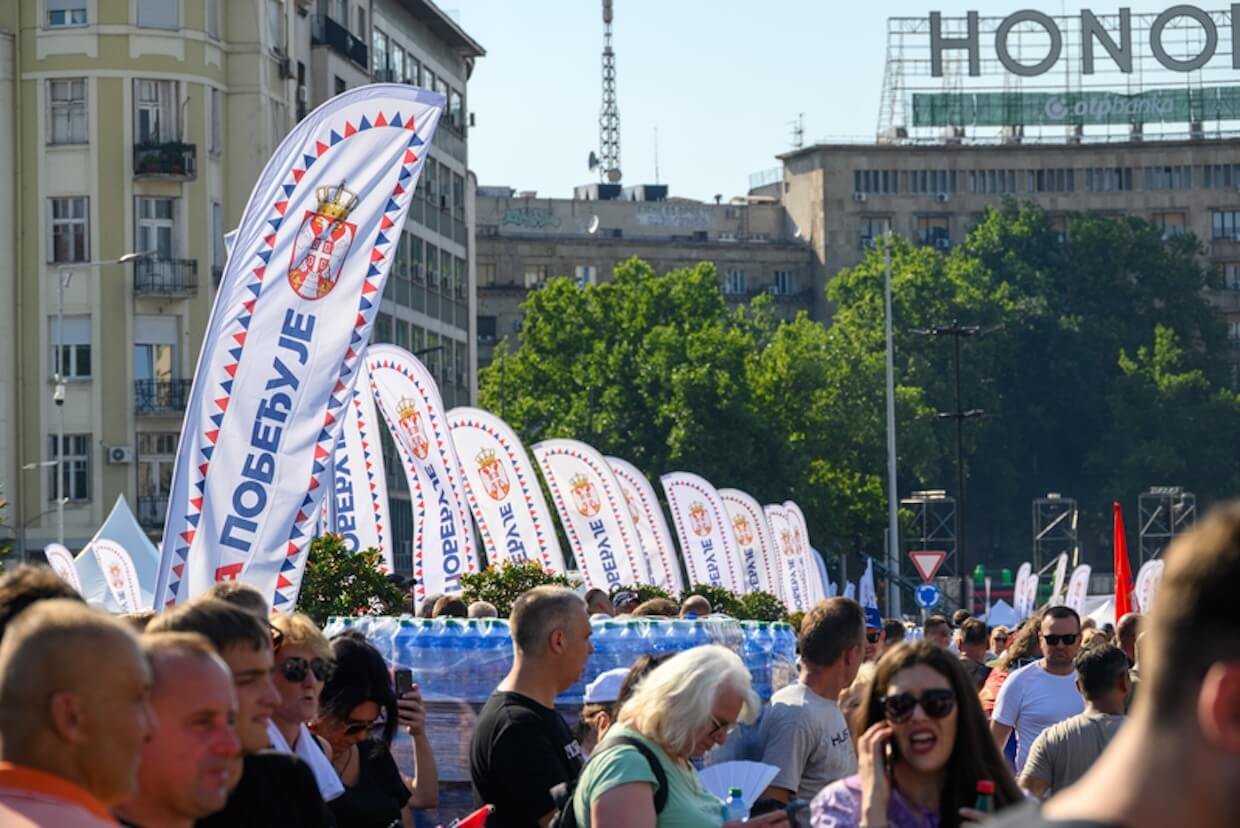
Andrej Ševo: The outreach of the student movement was spectacular. They were able to gain votes in places where the opposition had previously been unable to do so. We now have data to prove this, and it’s really striking. For example, I was involved in the 2025 local elections in Kosjerić, in southwestern Serbia, where we lost by about 30 votes. The result was roughly 3,500 votes on each side. It’s a small town surrounded by villages, and now, in these parliamentary elections, we were able to swing more than 1,000 votes in that municipality and win there.
The students, as a social group, brought together people from cities, villages, rural areas, and small-town Serbia, as well as people from beyond Serbia, including Montenegro and Bosnia and Herzegovina. There were students from wealthy families, poorer families, and working-class backgrounds. The movement as a whole incorporated people of different geographical origins and class backgrounds, and this diversity was reflected in the election results.
For example, if a student active in the movement comes from a working-class family, that student will influence their parents and grandparents, who, in turn, will influence their neighbors. So, the word spreads not only among the wealthy and the middle class but also among the working class. This was very important. The students’ decision to communicate with farmers, education workers, trade unions, and other groups also had a significant impact. They were more successful in reaching these groups than the opposition parties had been.
The students emerged as a popular movement, beloved by people from various backgrounds, and virtually no one refused to speak with them. This contrasted with the opposition parties, which were usually concentrated in cities and urban centers and had been unable to overcome the barriers separating them from rural and small-town Serbia.
Gen Z Creativity Was Crucial to Defeating Vučić Regime
In your research with Krisztina Rácz and Mirjana Nećak Gavrilović, you analyze political memes as instruments of protest mobilization. How did humor, visual symbolism, and digital communication undermine the regime’s narratives, and what ethical challenges emerged with AI-generated content?
Andrej Ševo: The creativity of the student movement was one of the most important and substantial factors that brought down the government in Serbia. Gen Z creativity—the creation of memes, interesting visual content, songs, and promotional videos, such as those produced by students at the Faculty of Dramatic Arts—was immensely important.
This creativity helped a great deal because the government did not know how to respond to it. It was a completely new experience, and the government was confused. Eventually, they began copying the student movement, essentially repeating everything we did. For example, we would make a video ridiculing government members, and they would respond by creating a similar video ridiculing us. But you could clearly see that they lacked the creativity and organic drive to produce such content. We were angry and disappointed, but we were also full of hope, creativity, and original ideas. They simply could not compete with that.
Of course, there was also AI-generated content, which pushed ethical boundaries. AI-generated content is everywhere on the internet, and the question of how to address its ethical challenges is something we still need to resolve. But I would emphasize the immense originality of the content created on social networks and during protests, including billboards, messages written on paper, and drawings used by protesters. There was a strong and substantial creative spirit that the government could not emulate. This only confused them further and prompted them to make more and more mistakes.
The Collapse of the Established Opposition and Party-System Restructuring
The Students’ List won 140 parliamentary seats on October 25, while the established opposition failed to secure representation. Does this result signify a fundamental restructuring of Serbia’s party system, or a temporary convergence of otherwise heterogeneous anti-incumbent forces?
Andrej Ševo: We are witnessing a historic restructuring of Serbia’s political landscape, at least since 1990 and the establishment of the multiparty system. Why do I think that? The opposition parties had a chance to survive. Although they made many mistakes and were not competent enough to challenge the previous government, they were also frequently subjected to a very harsh media campaign. So, it would not be fair to attribute their inability to challenge the government solely to their lack of competence. They were also victims of a huge media machinery that knew how to deal with them.
The opposition still had a chance to unite and form a common front. You should understand that in Serbia, even though the student movement was very popular, there was still a significant proportion of people, somewhere between 8% and 10%, who believed that the students were wonderful but also believed in political parties. They believed that political parties should lead and that we needed established party structures to challenge the government. These people wanted to vote for the opposition parties.
The only condition was that the opposition parties unite and form a single front, just as they did in the 2023 elections, when they managed to secure around 950,000 votes—almost a million. That was not an insignificant result. They secured approximately 24% of the vote. So, people were still willing to vote for a unified opposition. However, the opposition failed to unite. They projected an image of people who were not serious, who did not understand the importance of the moment, and who were too preoccupied with their own internal strife, hatreds, and resentments. People simply concluded, “Well, these are not serious actors. They cannot unite, they are fighting among themselves, and they do not understand the importance of this situation, so I am not going to vote for them.”
Eventually, part of the opposition decided to support the students because they knew they could not cross the 3% electoral threshold. Another part decided to contest the elections and failed miserably. So, we are witnessing a restructuring, and I am happy that we were also able to defeat the opposition parties. As we like to say here in Serbia, the student movement not only defeated the government; it also defeated the opposition. If you ask me, I hope we will not have to see these people in politics again. They had their chance to demonstrate responsibility, but they failed to do so. It is time for them to go. Honestly, I cannot imagine who would vote for them if they decided to run in future elections after what happened here.
Even Vučić’s Own Voters Understood That It Was Time for Change
Vučić’s governing model combined personalized leadership, media dominance, patronage, and nationalist rhetoric. Which mechanisms of this system proved most vulnerable to student-led mobilization, and which remain entrenched despite the electoral defeat of the Serbian Progressive Party?
Andrej Ševo: The Serbian Progressive Party remained entrenched in some media outlets, and some of its local party coordinators managed to retain their influence and voters. But the biggest success of the student movement was that we managed to bring so many more voters to the polls. That was our most important achievement. We mobilized people who had previously abstained from voting, as well as first-time voters, including many young people. Most of them voted for the Students’ List, so that was our biggest success.
Our second-biggest success was persuading around 350,000 regime voters to switch sides. That is also quite important. Compared with the 2023 elections, the Serbian Progressive Party lost around 60,000 voters, which may not seem like much. But you should bear in mind that they had absorbed many satellite parties into their electoral list. They included the Serbian Radical Party, which represents somewhere between 50,000 and 100,000 voters. They also managed to attract many voters from the Socialist Party of Serbia.
When we conduct public polling in Serbia, we usually group parties such as the Serbian Progressive Party, the Socialist Party of Serbia, the Movement of Socialists, the Serbian Radical Party, and several smaller parties together under the category of “regime voters.” In previous elections, these parties collectively received between 2.2 and 2.3 million votes. In these elections, they received around 1.8 million votes altogether. So, the Serbian Progressive Party managed to avoid losing a significant number of voters by absorbing satellite parties and attracting voters from its coalition partners. But when you count all these parties together as the regime’s voting base, they suffered significant losses, with around 350,000 people persuaded to vote for us rather than for them.
We now have some data, although I cannot claim they are particularly precise, indicating that around 12% of those who voted for the Serbian Progressive Party in 2023 voted for the Students’ List this time.
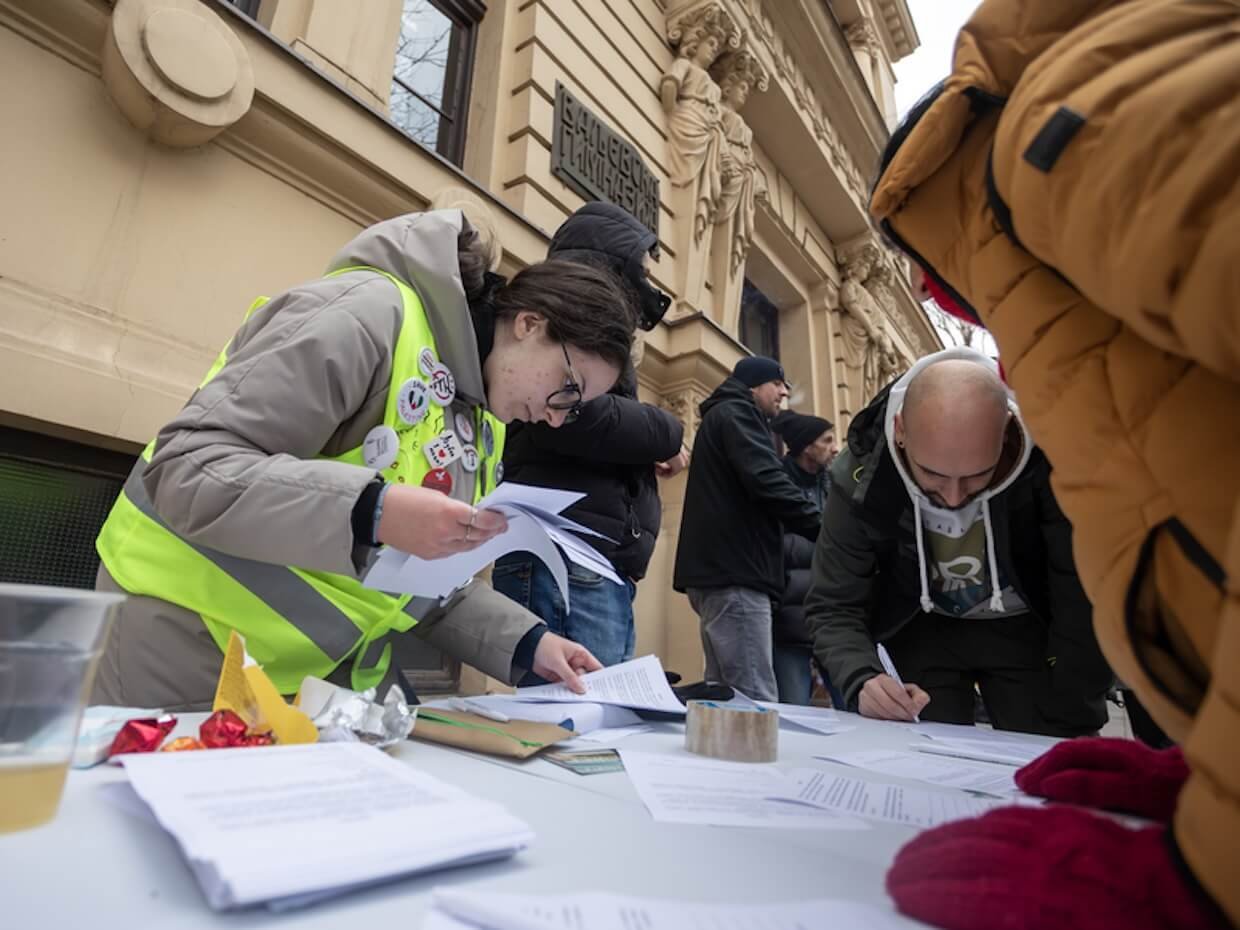
I believe our campaigning was very important. We campaigned at a really serious level. We had call centers, called people constantly, and conducted door-to-door campaigning. We campaigned the way campaigning should be done. I could sense on the ground that many Progressive Party voters were reconsidering whom to support in these elections. They understood that it was time for a change. But the only factor keeping them from voting for change was their fear of what would happen if Vučić lost.
Democratic Awakening Is Challenging the Appeal of Authoritarian Leadership
The student movement successfully articulated a broad opposition to corruption and state capture without adopting a comprehensive ideological program. From a populism-theory perspective, does its appeal to citizens against a corrupt ruling elite represent democratic counter-populism, or a form of civic mobilization that transcends populist logic?
Andrej Ševo: That’s definitely a good question. I recognize populist elements in the Students’ List as well. For example, the proposed law banning reality television is a very populist policy, and it’s not the only one. There are others, but this is the first that comes to mind.
However, when it comes to direct democracy or a democratic revolution—perhaps “revolution” is too strong a word, or maybe it’s overused—we experienced a certain revolution of the spirit, in the sense that people now realize that democracy is cool. The students made democracy seem cool again. You can see this empirically when you conduct polls among young people. Young people previously tended to believe that Serbia needed a firm hand, an authoritarian leader. But now, most of them believe that we do not need an authoritarian leader but rather democracy. That’s a huge change.
So, the democratic spirit that emerged here in Serbia is populist in the sense that it seeks to involve a very large number of people in participation, voting, and decision-making. If a very large number of people participate in making decisions, we might describe that as populism per se. Populism not only in the sense that everyone participates but also in the sense that the former political party elites are now being replaced by plenums and zborovi—citizens’ assemblies—by citizens themselves, by the people.
By definition, this movement has a certain populist basis. We were against the elites and the established political parties, and you could even argue that this is an anti-political movement because it fits the definitions of both populism and anti-politics. However, it also transcends the typical understanding of populism because the decision-making processes the students created are very open. We genuinely allow all voices to be heard, even those expressing unpopular views. I know for a fact that sometimes unpopular proposals, when argued convincingly enough in student plenums, were able to pass and were promoted by the student movement, even though they were not necessarily what you would imagine people wanted.
Our democratic spirit also made it important for participants to argue for their proposals. You have to struggle to win people’s votes, to persuade them. If you’re good enough at argumentation, you can swing the votes and even secure support for something unpopular. So, even though the democratic spirit in Serbia is populist per se, in the sense that it attracts large numbers of people and challenges the former political structures and party elites, it also allows us to push through unpopular decisions when they are argued well enough.
The practice of good argumentation developed among students who participated in the movement. It was cherished and praised as a very good and useful skill. So, in a sense, the student movement, although it has a certain populist basis, also possesses mechanisms to overcome populist urges.
Serbia’s Students Must Invent a Political System Without Precedent
Serbia’s transition from decentralized protest to electoral politics raises a fundamental organizational dilemma. How can the Students’ List institutionalize political leadership, parliamentary accountability, and internal pluralism without reproducing the personalization and hierarchical practices it originally opposed?
Andrej Ševo: This is the million-dollar question, and it remains unanswered. To be honest with you, as far as I’m informed, the student movement is still discussing it. I’m not currently participating in the movement, although I did before. But I’m well informed, and I can tell you that we’re still trying to figure out how to make all this work. You have to understand that we haven’t been able to find examples in the literature of anything similar to what happened here in Serbia. This is a unique and experimental situation, and we need to be genuinely original and innovative if we want to make everything work.
I can answer your question with several follow-up questions. We have the student movement, which created its own electoral list of people who are now in the National Assembly, or who will be in a few days. So, the question now is: Should the student movement continue to exist? If it does, should it become some sort of guardian of the revolution? I don’t mean “Guardians of the Revolution” in a literal sense, of course, but as a metaphor. Or should it perhaps become a political party? Should it evolve into one?
The student movement definitely has the infrastructure to become a political party. It has databases, the capacity to call hundreds of thousands of people, and the logistical resources for door-to-door campaigning. It also has many small donors whose combined contributions amount to a significant sum of money. So, it could become a political party. Alternatively, it could persuade those who are now in the National Assembly to form a political party and then provide them with all the resources it has. Or it might simply decide to disband and say, “Well, we did our part. We don’t care anymore. We’re done.” Maybe there’s a fifth possibility. There are probably several others I haven’t mentioned, but we’re still deciding. The question remains unanswered.
The uniqueness of our situation requires us to be very innovative and original. We simply have to try to create a system that has never existed before, one without precedent or an example in the literature to show us what it might look like. It’s completely new territory, and it will take us some time to find an answer. Right now, I have to be honest with you, I still don’t have one. And if I did, I would be the luckiest man alive.
Unprecedented Civic Mobilization Was Crucial to Serbia’s Electoral Breakthrough
Reports of extensive citizen election monitoring suggest that civic mobilization helped compensate for distrust in electoral institutions. To what extent did this bottom-up oversight protect electoral integrity, and can such civic vigilance become a lasting mechanism of democratic accountability?
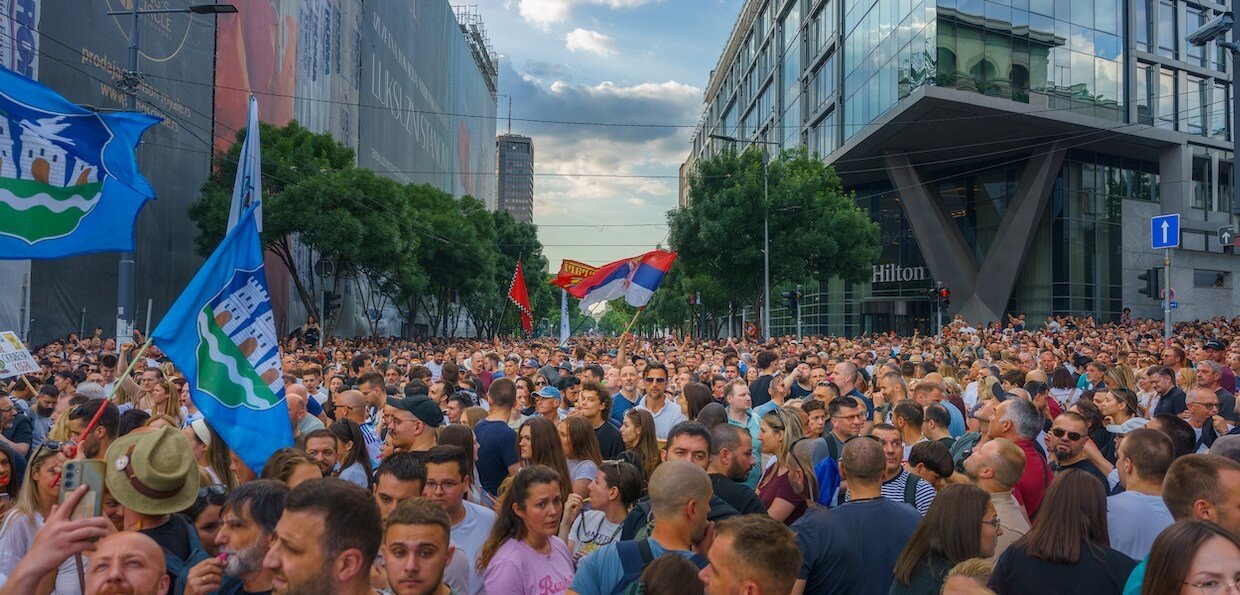
Andrej Ševo: Social mobilization in Serbia was crucial to winning this election. What was the difference? Unlike in previous elections, when political parties participated, we were able to cover virtually every polling station in Serbia with our election monitors. Only a few polling stations lacked Students’ List monitors. These were very small and located in southwestern Serbia, including parts of Sandžak, where Bosniaks live, and some areas of southeastern Serbia, around Kuršumlija. Almost every other polling station in Serbia was covered by Students’ List monitors.
This was made possible by an unprecedented level of social mobilization. We’re talking about tens of thousands of people across Serbia who voluntarily signed up to undergo training as election monitors, join mobile teams, participate in door-to-door campaigning, work in call centers, and so on. Having such a large base of people willing to participate and help allowed us to fill all the necessary positions in our campaign. We were able to monitor the voting process and run a very efficient campaign, perhaps even more efficiently than the Serbian Progressive Party.
And bear in mind that the Serbian Progressive Party and Vučić knew how to organize and run solid political campaigns. They ran top-notch campaigns. Yet we were able to outclass them even on that ground. We outperformed them in the very areas where they had been strongest: mobilizing people and running campaigns. This was made possible by the students and the Students’ List. The opposition had never managed to generate so much interest among so many people. Never. It was the students’ uniqueness, appeal, and popularity that made people genuinely excited to participate.
For example, I was a member of a mobile team on election day. I also served as an observer and participated in door-to-door campaigning, both as a coordinator and personally. I did all of that willingly. I didn’t do it for money; I didn’t even receive a single dinner for my efforts. Nor did I do it for social popularity or anything of that sort. I did it because I realized this was a great opportunity and that I had to contribute. I wanted to contribute, and I was happy to contribute to something I believed in. I truly believe that the same feeling was shared by all those tens of thousands of people who volunteered as well.
The System Vučić Built Is Collapsing Much Faster Than Anticipated
With the new parliament scheduled to convene on November 17, the Students’ List faces the challenge of translating its parliamentary majority into effective governing authority. How vulnerable is this transition to resistance from entrenched networks within the bureaucracy, police, judiciary, and security services?
Andrej Ševo: If you had asked me that question a month ago, I would probably have told you that the transition would be seriously threatened by people entrenched in Serbia’s political, administrative, and media structures. However, I’m now more optimistic. Since October 25, we have witnessed an awakening of Serbia’s institutions. People who were appointed by the Serbian Progressive Party and had remained silent for years have suddenly begun to realize that they need to do their jobs properly. Now we have prosecutors, judges, digital media regulators, and others who have suddenly started functioning as they should.
Some members of the Serbian Progressive Party have already been arrested, even though, technically, the party still runs the country. After all, the government ministers are still from that party. But the judicial system and digital media regulators have actually woken up. I understand that many of these people, including prosecutors, are trying to make up for years of silence. They’re trying to demonstrate, “Well, here we are, and we’re actually doing a good job, so you should believe in us now.” I’m not sure that’s going to work for them. I think they’ll eventually be replaced.
But I didn’t expect them to be so efficient and thorough in prosecuting members of the old regime, to the point that I genuinely believe the Progressives are afraid. They’re severely afraid. Even Vučić has been called to testify before a court regarding the drug-dealing business, among other things, which is something you couldn’t have imagined happening a month ago.
So, although I expect resistance, particularly at the local level, where some Serbian Progressive Party officials remain influential in their communities and will pose significant obstacles, I believe we will be able to overcome these obstructionist efforts by the Progressives. This is especially true because the system they imposed on Serbia has begun to collapse much faster than we anticipated.
If you had asked anyone in Serbia, no one would have believed that just three weeks after the election, we would already be prosecuting Serbian Progressive Party members at such a pace. It was unimaginable. We are literally arresting municipal leaders, former ministers, and media moguls. We are also regulating their media in ways that should have been implemented long ago. All of this definitely makes me optimistic. It will be difficult, especially when it comes to forming the government—the executive branch.
We will face challenges, but I think those challenges stem more from our own organizational structure. We have the student movement and the representatives on the Students’ List, and the question is how to make it all work. I believe that organizing ourselves and creating the mechanisms necessary to make things function will be a harder task than dealing with obstruction from the Progressives. Those obstructions will certainly exist, however, and we will still have to be careful.
Vučić Will Try to Reinvent Himself as a Trumpist Far-Right Opposition Leader
In “Global Influence of the Contemporary American Far Right: A Case Study of Serbia,” you trace the diffusion of Trumpist narratives, including the “deep state” and anti-globalist discourse. Has the Students’ List victory weakened these ideological networks, or might they reconstitute themselves as a nationalist opposition to the new government?
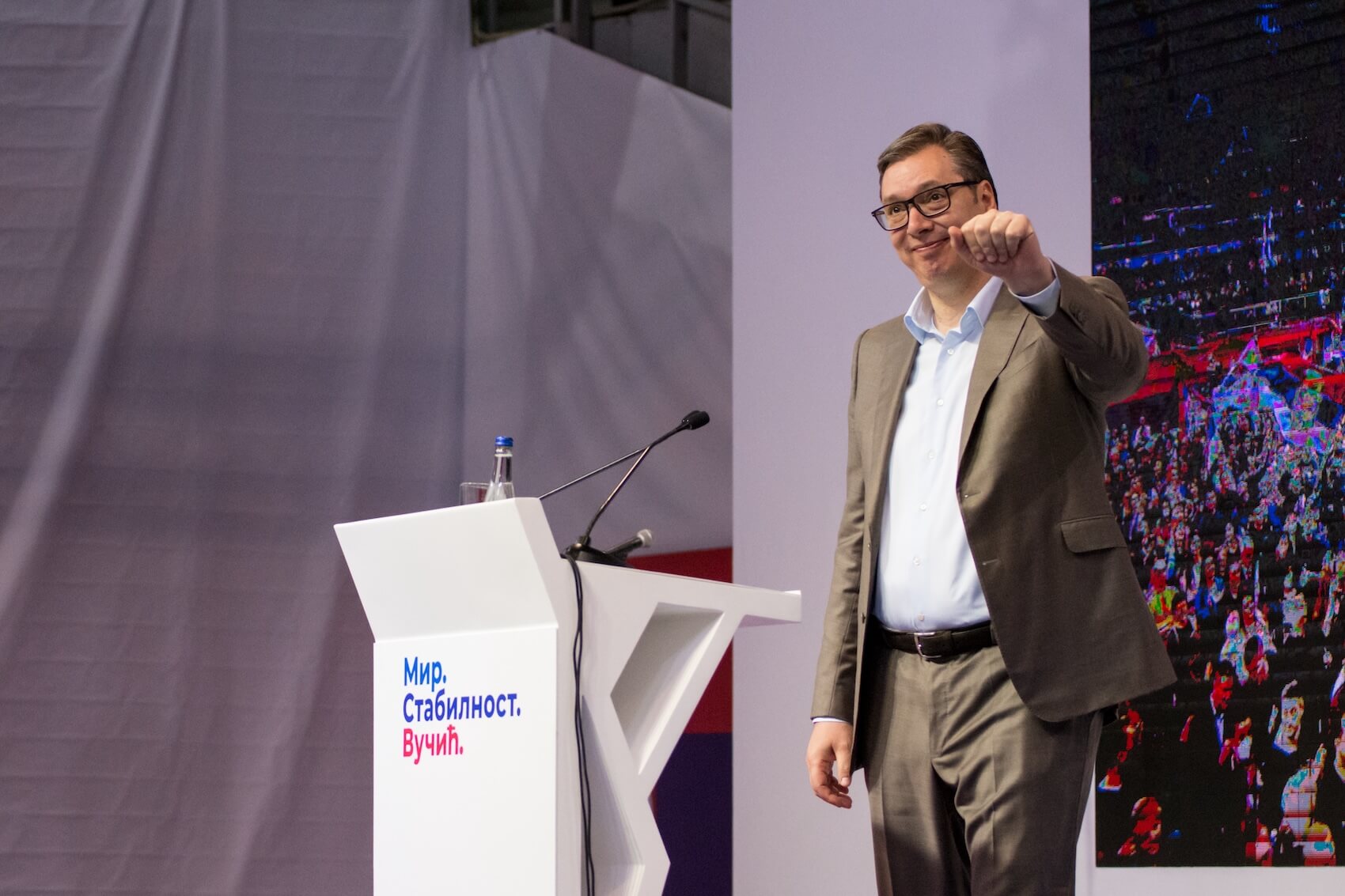
Andrej Ševo: They will certainly try to do so. They will also try to maintain contacts with the far right in Europe and the United States. One of the reasons Vučić lost is that he had always run in elections as a catch-all candidate—someone who was somewhat nationalist but also pro-European and willing to cooperate with the West. Now, however, we can clearly see that he has shifted completely to the far right. There is absolutely no trace of centrism left in Aleksandar Vučić. He’s no longer a Serbian Progressive; he’s a Serbian Radical. He has come full circle, returning to his Radical roots. I no longer see any difference between Vojislav Šešelj and Aleksandar Vučić. They’re the same again.
Under these circumstances, he’s trying to maintain contacts with the far right in Europe and the United States, and he will attempt to position himself as a nationalist, far-right, Trumpist, or alt-right opposition figure, aligned with Alternative for Germany, Trump’s Republicans, the National Rally in France, and so on. He will try to present himself as that kind of ideological and political force. However, I’m not certain that the Serbian Progressive Party will constitute the future nationalist and far-right opposition, because I’m not even sure the party will exist in a year or two.
I sincerely believe that Vučić will eventually face trial. There is simply too much corruption associated with him, and I find it difficult to imagine that he could somehow survive all of that without consequences. I would be disappointed if we failed to criminally prosecute Vučić, his brother, and his closest associates, whom I consider not only politically corrupt but also, as we have discovered through the Sky communications of mafia members here, heavily involved with mafia chieftains and the drug trade. This is something we really have to pursue until the end. If all these people are prosecuted, I really don’t see how the Serbian Progressive Party could continue to exist. People will simply leave and abandon it.
However, there is still an electoral base for a far-right party in Serbia, and I imagine someone else will eventually take over and keep the spirit of Serbian radicalism, associated with the Serbian Radical Party, alive. But I don’t see how Vučić and his associates could be the ones to do that. They’re simply too compromised, and I sincerely believe that, in the near future, they will probably either leave the country or face criminal charges. The opposition will certainly exist, but I don’t see Vučić and the Serbian Progressive Party leading it in the future, no matter how much they try to present themselves in that light. They do this for their own membership, to reassure their supporters that “we’re still here, we’re going to come back.” But I don’t think they will.
Student Movement Has Broken Down Longstanding Ethnic Barriers
The student movement mobilized citizens across ideological, generational, and ethnic divisions, including Bosniak students from Sandžak. Can this solidarity evolve into a genuinely inclusive conception of Serbian citizenship, or will unresolved questions of minority rights and Serbian nationalism constrain its transformative potential?
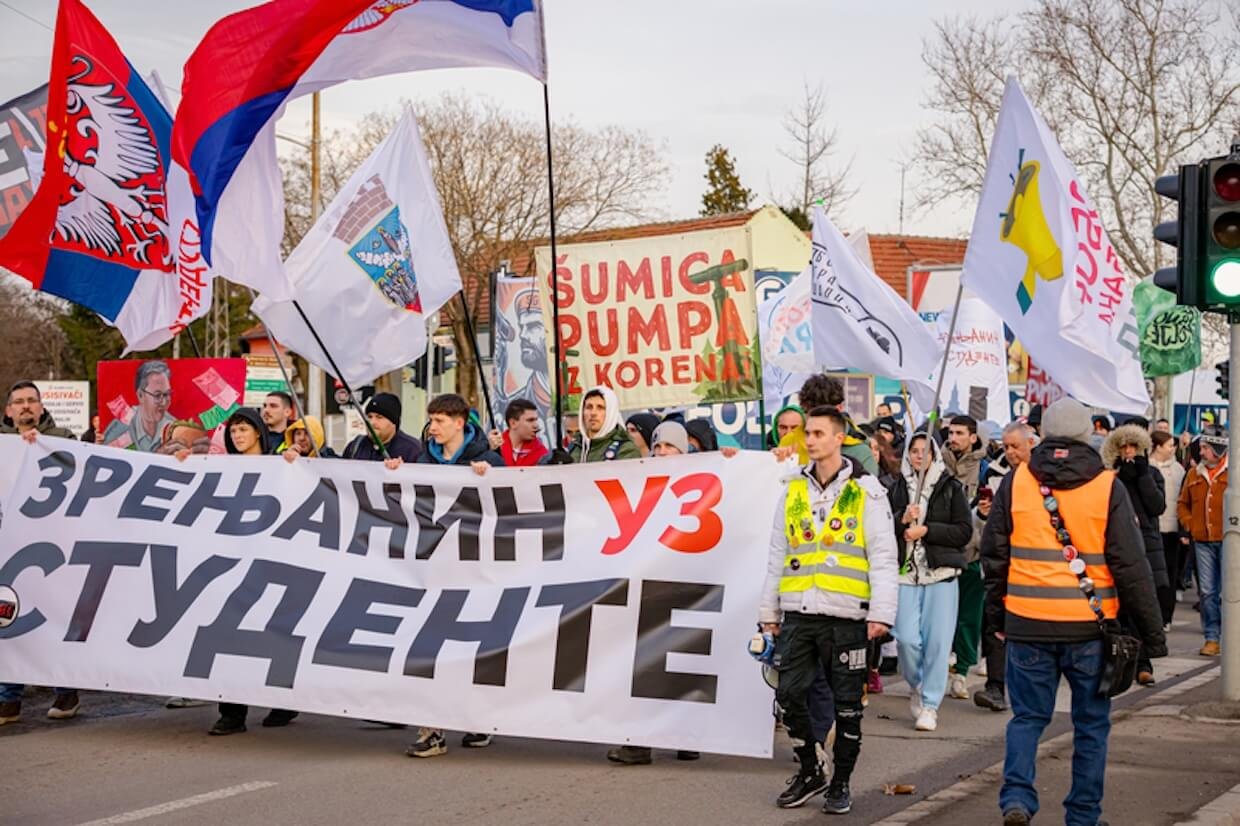
Andrej Ševo: The students have made significant advances in incorporating minorities into their ranks. There was a video produced by the student movement in which members of Serbia’s ethnic minorities spoke in their own languages, including Bosniaks, Hungarians, Slovaks, and others. The only minority that has remained somewhat excluded is the Albanian community. Albanians still haven’t played an important role in the student movement, unlike, for example, the Bosniaks from Novi Pazar, who have played a very prominent role.
They were widely accepted across Serbia, and people generally liked them. In Novi Pazar, you had Bosniaks waving Serbian flags, while in Belgrade, you had Bosniaks waving the flags of Sandžak. No one really cared. We tolerated each other. We said, “Fine, these two flags can work together,” and they did. The Students’ List eventually won the most votes in Novi Pazar, the main center of the Bosniak community in Serbia. They didn’t win in every Bosniak community, but they did win in the largest and most important one.
This spirit of interethnic cooperation within the student movement represents a significant change. We have witnessed things we had never seen before, acts of solidarity we had never experienced before. For example, Muslim students from Sandžak were offered accommodation at the medieval Serbian monastery of Studenica by an important figure in the Serbian Orthodox Church who supported the students. Unfortunately, most of the Serbian Orthodox clergy remained passive or were even opposed to the movement, although many were supportive. This particular clergyman opened the monastery’s doors to the students. They literally slept in a medieval Serbian monastery. No one had a problem with that. Everyone was happy, shared the news, and was thrilled that it had happened.
I had a similar experience when I went to protest in Novi Pazar. People welcomed me and offered me food. Your name is Selçuk, so I assume you’re familiar with baklava, tulumba, and all those sweets. Novi Pazar is the epicenter of that kind of cuisine in Serbia. It’s delicious, and I enjoyed all of it. Everything was free for me, even though I’m neither Bosniak nor Muslim. So, we have created a beautiful spirit. How will it unfold? Will it produce political results? And will those results be significant in the future? That remains to be seen.
However, I believe that certain barriers in interethnic relations have been overcome in the minds of many people. That’s not something that can easily be undone. It cannot be reversed by a single election or a single political statement. Of course, unresolved issues and divisions remain. I don’t have to mention them; we all know what they are, particularly those concerning the 1990s and the wars. So, the situation remains problematic. Nevertheless, many mental boundaries and obstacles in interethnic relations have been overcome, and I believe this is definitely a good investment in the future. We have created a solid foundation for further change, and we have already achieved some changes.
When you see war veterans in Serbia literally standing in front of students from Novi Pazar and saying, “We were in the wars and everything, but we will protect you with our bodies. You’re our children; we love you as much as we love our own,” it’s a profoundly cathartic event, especially coming from war veterans. Let us hope that it will bring even more positive developments in the future.
Serbia Must Prevent the Former Regime’s Return to Political Power
And finally, Andrej Ševo, Serbia’s October 25 election has been compared with the democratic breakthrough of October 5, 2000, whose incomplete institutional transformation you examine in your work on lustration. What must the student-led majority accomplish to prevent another unfinished democratic transition—and ensure that the defeat of personalized authoritarian rule becomes a durable transformation of Serbia’s political system?
Andrej Ševo: Just to return briefly to the previous question, we also managed to attract a significant number of Hungarian votes. Hungarians voted for us in large numbers, as did Slovaks. So, it wasn’t only the Bosniak minority but also Croats and others.
To answer your question, the answer is quite straightforward. First, thorough criminal prosecutions. We need to fill the judicial system with new people who will do their jobs properly and remain persistent in their efforts. Criminal prosecutions are essential, but I also believe in lustration. That’s the second part: lustration understood as an administrative and political measure whereby people responsible for human rights violations are prohibited from participating in political life and accessing public funds. They can work in the private sector. They can establish their own companies and sell whatever they want—clothes, electronic devices, or anything else—but they cannot engage in politics.
This should apply to the entire top hierarchy of the Serbian Progressive Party, its media moguls, businessmen, and others. We really have to be persistent. We have to prosecute them and ban them from politics because these were people who ruled without any restraint. They did whatever they wanted. They created a system in which the state simply does not function; the state effectively does not exist. They created a system in which the mafia serves as a substitute for the state.
I do not see any future for these people in Serbian politics. Their manipulations and control over the media, as well as their entrenched political and administrative positions, were all established through violations of the law and criminal activities. If we allow these people to return to politics as though nothing happened, and if we allow them to retain the positions they built through criminal activities, we will face another great disappointment. These people have accumulated enormous amounts of money. They still control certain media outlets and retain entrenched positions, and we really have to eradicate that influence. We have to ban them from ever engaging in politics again. We have to be persistent and see it through to the end.
To repeat what I’ve already said, because it deserves emphasis, the resources these people possess are substantial. They are by no means insignificant. If we allow them to return to politics, to business as usual, we risk seeing them return to power one day. That risk is very real. They have billions of euros. So, despite all the resources they possess, we have to make sure they cannot return to political life in Serbia. We should do everything we can to criminally prosecute every one of them and do so thoroughly. That’s what we have to do. Otherwise, we will be disappointed.
(*) This interview was academically curated and edited by Dr. Bulent Kenes.