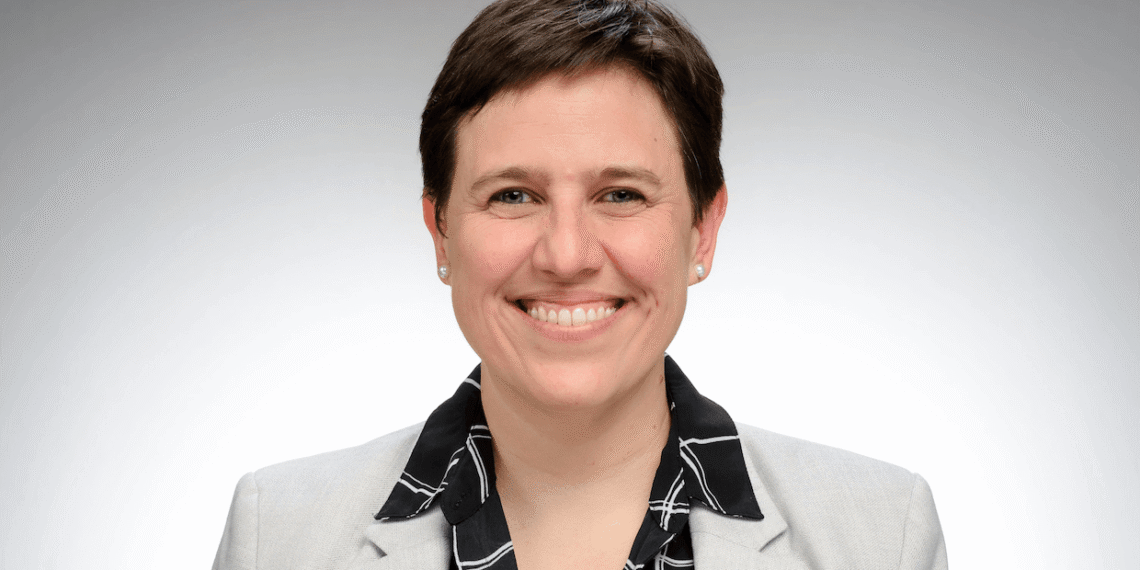
Drawing on comparative evidence from Colombia, Venezuela, Guatemala, Mexico, and beyond, Associate Professor Laura Gamboa offers a compelling rethinking of democratic resilience in an age of gradual authoritarianism. Rather than viewing democratic backsliding solely through the ambitions of would-be autocrats, she demonstrates that democratic survival depends equally on the strategic choices of opposition parties, constitutional courts, and civil society. Reflecting on Colombia’s 2026 presidential election, Assoc. Prof. Gamboa argues that the results present “a mixed story,” simultaneously revealing institutional resilience and new democratic vulnerabilities. She warns that contemporary authoritarianism advances incrementally—often becoming visible only when “it’s usually too late”—while urging democratic actors to address citizens’ grievances, strengthen institutional legitimacy, reduce polarization, and defend constitutional democracy without abandoning democratic principles.
Interview by Selcuk Gultasli
The contemporary crisis of democracy rarely unfolds through dramatic coups or sudden constitutional collapse. Instead, democratic erosion increasingly advances through legal reforms, institutional manipulation, and the gradual concentration of executive power. This slow-moving process has transformed democratic backsliding into one of the defining political challenges of the twenty-first century, raising urgent questions about how constitutional democracies can defend themselves against elected leaders who weaken democratic institutions from within. Few scholars have contributed more to answering these questions than Associate Professor Laura Gamboa of the University of Notre Dame, whose work has fundamentally reshaped our understanding of democratic resilience.
Unlike much of the earlier literature, which focused primarily on aspiring autocrats, Assoc. Prof. Gamboa redirects attention to the democratic opposition itself. In Resisting Backsliding: Opposition Strategies against the Erosion of Democracy and New Forms of Democratic Erosion in Latin America, she argues that democratic survival depends not only on the ambitions of authoritarian leaders but also on the strategic choices of opposition parties, constitutional courts, legislatures, and civil society. By shifting the analytical focus from autocrats to democratic resistance, her scholarship offers one of the most original frameworks for explaining why some democracies withstand authoritarian pressures while others gradually succumb.
The timing of this interview is especially significant. Colombia’s 2026 presidential election has reignited debates about democratic accountability, populism, institutional resilience, and constitutional government across Latin America. While many observers interpreted the election as a straightforward ideological shift to the political right, Assoc. Prof. Gamboa argues that “the 2026 elections give us a mixed story.” She highlights both the resilience of Colombia’s democratic institutions and troubling warning signs, emphasizing that “both the candidate who won the election and the president’s unwillingness to recognize the election results are not good news for democracy.” Her assessment reminds us that electoral alternation alone neither guarantees democratic renewal nor necessarily signals democratic decline.
A recurring theme throughout the interview is the changing nature of authoritarianism. Contemporary autocrats rarely destroy democracy overnight. Instead, they rely on constitutional reforms, elections, plebiscites, and legal mechanisms to weaken liberal democracy incrementally. As Assoc. Prof. Gamboa warns, “by the time the threat becomes evident, it’s usually too late.” Because democratic erosion often proceeds under the appearance of constitutional legality, recognizing the danger of autocratization before institutions are fundamentally weakened has become increasingly difficult.
The interview also challenges conventional assumptions about populism. Rather than treating it as inherently incompatible with democracy, Assoc. Prof. Gamboa describes populism as “a double-sided coin,” capable of expanding political inclusion while simultaneously encouraging personalistic leadership and executive aggrandizement. Equally important, she argues that democratic oppositions must resist dismissing populist voters. “All of these would-be autocrats come to power because they tap into some kind of discontent,” she explains, emphasizing that democratic forces must address underlying grievances rather than simply condemn their political expression. Ultimately, her message is one of strategic democratic resilience: defend institutions, broaden coalitions, reduce polarization, and remember that “doing politics in a society that is not polarized is significantly easier than doing politics in a society that is polarized.” In an era of democratic uncertainty, Assoc. Prof. Gamboa offers a compelling roadmap for understanding—and resisting—the gradual erosion of constitutional democracy.
Here is the revised version of our interview with Associate Professor Laura Gamboa, edited lightly to enhance clarity, readability, and overall flow for publication.
Colombia’s 2026 Elections Give Us a Mixed Story
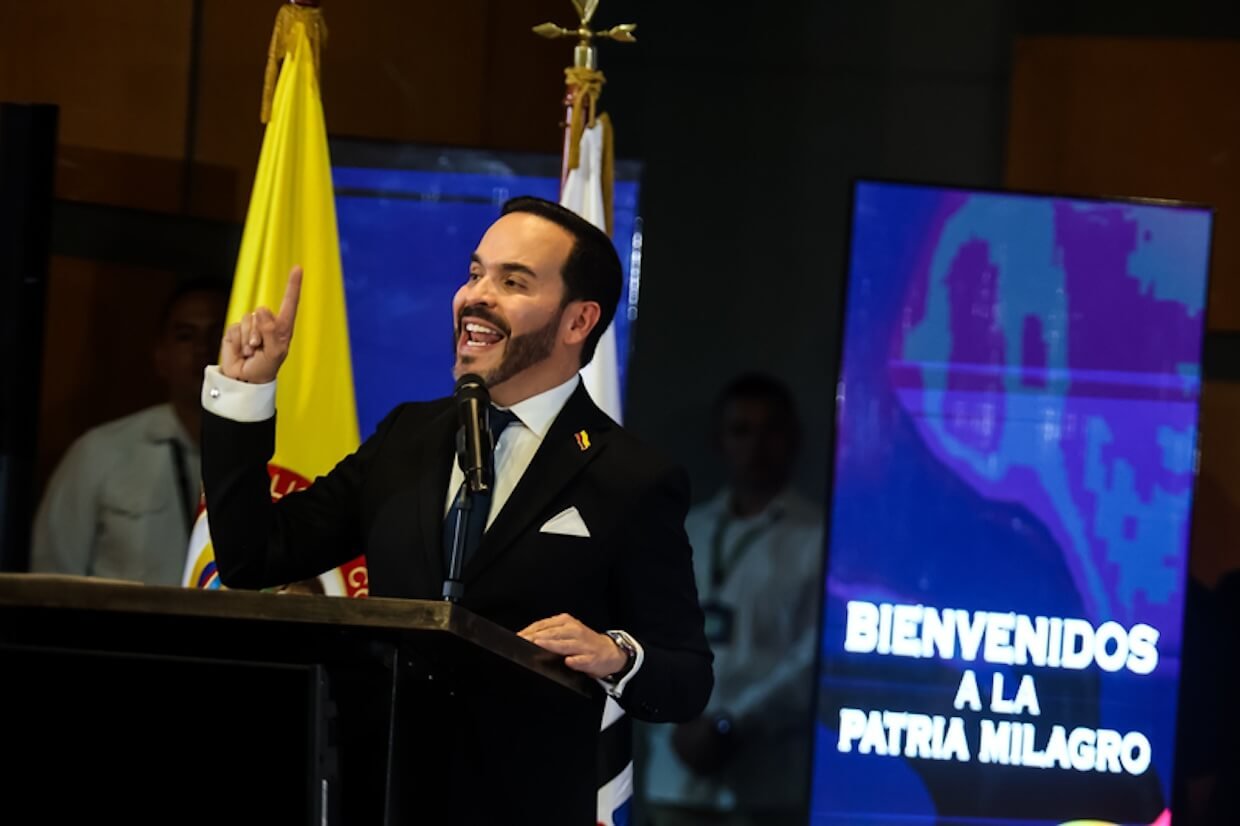
Professor Gamboa, welcome, and let me begin with Colombia’s recent presidential election. This election has been widely interpreted as a decisive shift to the political right following Gustavo Petro’s presidency. Yet throughout your scholarship, you have consistently argued that electoral alternation should not be confused with democratic deterioration or democratic recovery. What do the election results ultimately tell us about the health of Colombian democracy? Should this election be understood primarily as ideological realignment, democratic accountability in action, or as another manifestation of the broader anti-establishment politics reshaping contemporary democracies?
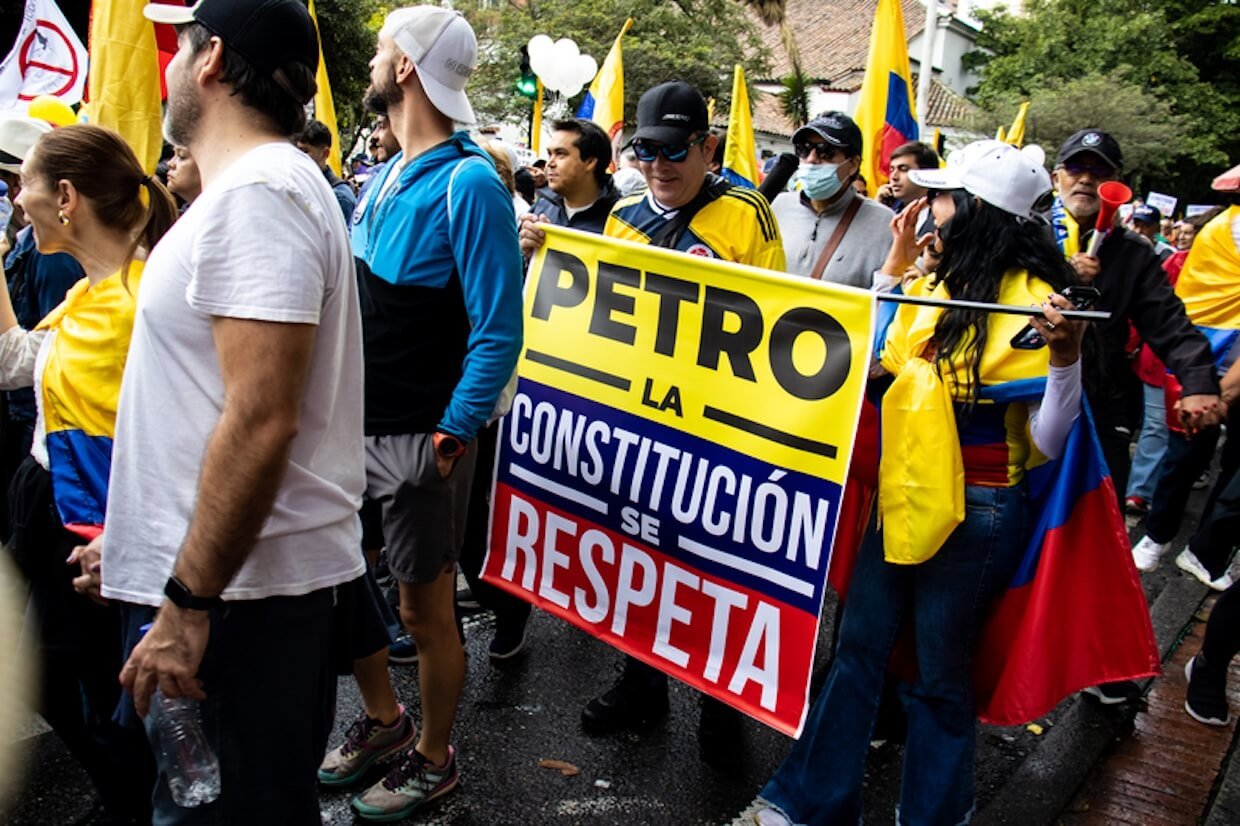
Assoc. Prof. Laura Gamboa: The 2026 elections give us a mixed story. On the one hand, when Gustavo Petro came to power, many Colombians were very worried that he was going to become “the second Chávez”—that he was not going to step down. And here we are. As far as I can tell, he’s planning to step down. Now, there’s the minor issue of his not recognizing the election results, which I’ll get into in a second. But he is stepping down, and Colombia’s main institutional infrastructure remains intact. Congress and the courts were able to check the president whenever they needed to, while also allowing some of his proposals to move forward. So I think that’s good news.
I also think this has probably been true since 2018, and it became significantly clearer in 2022, but these last four years have been, in many ways, a sort of spring for Colombian politics. For the longest time, Colombian politics revolved around security: How did we deal with the armed conflict? Over these past four years—and certainly during this past election—we’ve been discussing healthcare and pension reform. We’ve also been questioning, for good or for bad—you can agree or disagree with these questions—what used to be regarded as unquestionable macroeconomic orthodoxy, something we simply weren’t supposed to touch. For the first time, these issues have become part of the political conversation, and I think that’s important in any democracy. So I do think that there has been some kind of ideological realignment. We no longer have the simple pro-peace versus anti-peace divide, but rather a much more complicated political landscape in our electoral arena.
That being said, I also think that both the candidate who won the election and the president’s unwillingness to recognize the election results are not good news for democracy. I don’t remember ever seeing a president fail to recognize election results. Our elections are not perfect, by any means, but they’re pretty good. Our electoral system works well, and people generally trust the election results. So I think that’s bad news.
I also think Abelardo de la Espriella, who won the election, is a far-right candidate who ran a campaign based on emotions, outlandish statements, and sweeping proposals. He has claimed that he wants to govern by decree. He has appointed members of his cabinet who are anti-globalists and promoters of conspiracy theories. So I think none of that is good news for democracy.
The Path from Democratic Victory to Democratic Breakdown
Throughout Resisting Backsliding, you caution against equating electoral victories by controversial or populist leaders with democratic breakdown. What analytical criteria should scholars use to distinguish between ordinary democratic alternation, constitutional conflict, and genuine democratic erosion? At what point does vigorous democratic competition become a threat to democracy itself?
Assoc. Prof. Laura Gamboa: I depart from the principle that, no matter how crazy someone may be, if you win a democratic election—one that is free and fair and won without cheating—you deserve to govern for whatever period the law provides, whether that’s a presidential term or a prime minister’s term. This is true for presidents like Joe Biden, who I believe has a normative preference for democracy. I also think it’s true for Donald Trump, who I really don’t think has a normative preference for democracy.
What I don’t think, however, is that you get to govern like a king. In a democracy, presidents, prime ministers, legislatures, and judiciaries are subject to constitutions and the rule of law. In that regard, authoritarian leaders who try to evade or ignore these constraints are a danger to democracy. That’s when we’re facing genuine threats to democracy.
Between someone being a danger to democracy and someone actually eroding democracy, however, there are two distinct steps. First, there is a person trying; then there is a person succeeding in those attempts. In many ways, we have to think about this sequentially.
Why Democratic Erosion Is Harder to Recognize Than Ever
You argue that twenty-first-century democracies rarely collapse through classic military coups but instead erode gradually through legal and constitutional means. Why has democratic backsliding become such a slow-moving institutional process rather than an abrupt rupture, and does this gradualism paradoxically make contemporary authoritarianism more difficult both to recognize and to resist?
Assoc. Prof. Laura Gamboa: This is one of the great achievements of the end of the Cold War. All of a sudden, we all like democracy, and we all want to be democrats. Citizens, foreign governments, and international organizations have all become supporters of democracy, broadly conceived, and no leader wants to be labeled undemocratic or anti-democratic. There are important symbolic and practical consequences to being “a dictator.” In order to avoid being called a dictator, leaders with authoritarian tendencies generally don’t resort to overtly abrasive actions like coups, self-coups, or the kinds of moves we used to see in the past. Instead, they turn to methods that are much more covert.
They still want to gain control over other branches of government. They still want to govern without limits. But they don’t want to do so in a way that would brand them as authoritarians or dictators. Of course, the problem with this kind of democratic backsliding is that, when these leaders try to undermine democracy without appearing to be dictators, they usually use and abuse the very levers of democracy. They try to change the rules. They invoke popular power to bypass other institutions. They resort to false information and other practices that are not necessarily visibly undemocratic, but are nevertheless undemocratic.
Precisely because these actions are not visibly undemocratic, they are very difficult to identify. It’s hard for someone who is concerned about democracy to say, “You are trying to undermine democracy,” when the only thing the president appears to be doing is proposing a constitutional reform. Or when the only thing the president appears to be doing is calling for a plebiscite. After all, plebiscites are supposed to be highly democratic. A lot of people are voting, so it’s really difficult to convey where the threat lies. And by the time the threat becomes evident, it’s usually too late.
The Double-Edged Nature of Populist Politics
Much of the public debate assumes that populism inevitably produces democratic backsliding. Yet your work suggests a more nuanced relationship. Under what political and institutional conditions does populism become compatible with democratic inclusion, and when does it evolve into a vehicle for executive aggrandizement and democratic erosion?
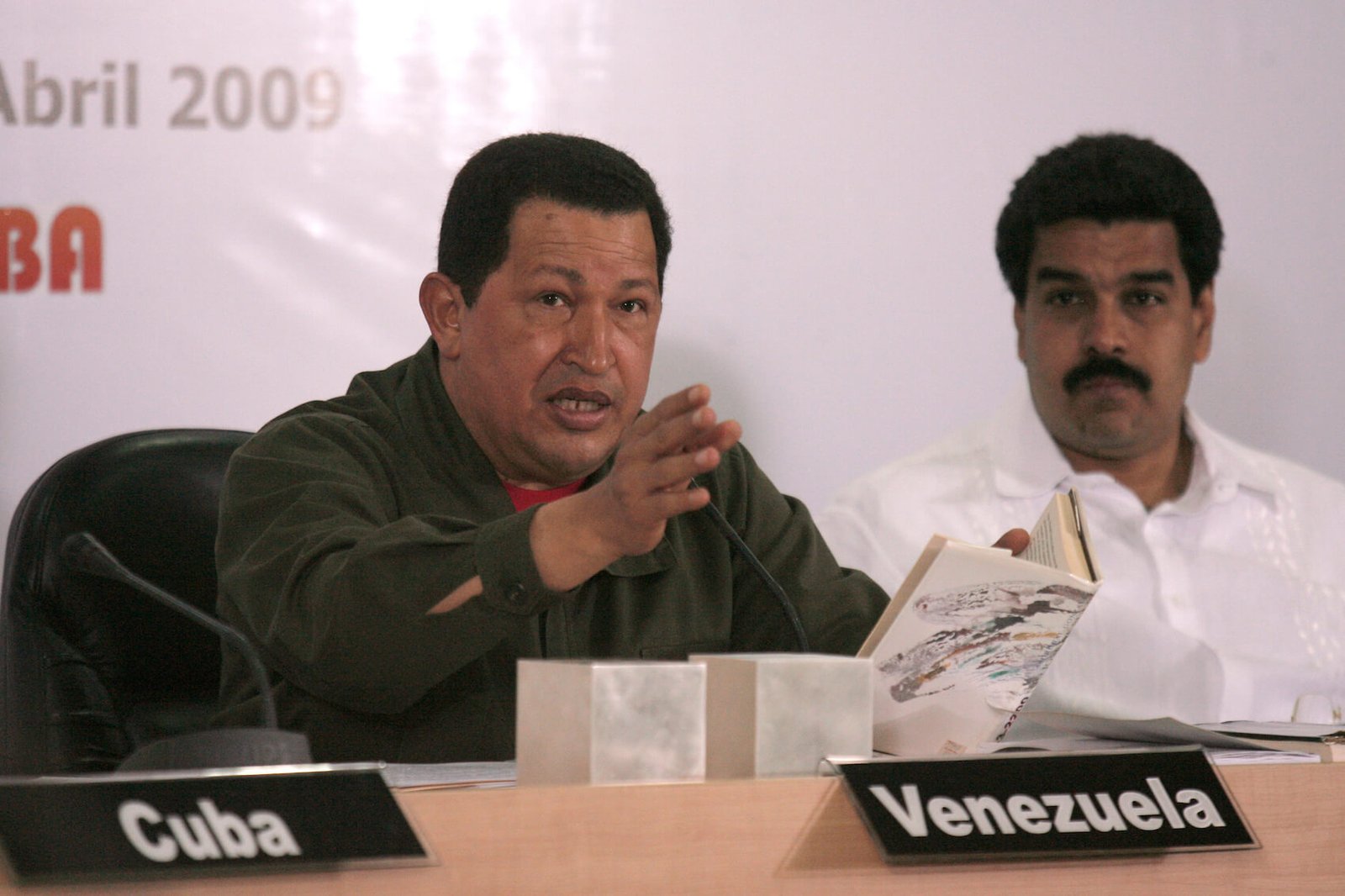
Assoc. Prof. Laura Gamboa: Populism is a double-sided coin. I don’t think you get one without the other. On the one hand, all populists are vehicles for inclusion. They tend to mobilize people who were previously outside the political arena. This was true of Juan Domingo Perón in Argentina in the 1940s. It was true for Hugo Chávez in the 1990s and early 2000s, and it is also true for Donald Trump.
We see something similar in Colombia. The recent election, with Abelardo de la Espriella and Iván Zepeda running, produced an unprecedented turnout in Colombia’s recent history. These leaders clearly know how to speak to groups that have not been incorporated into the political arena. The problem is that their ability to bring these groups into politics is closely tied to the way they connect with people. They don’t rely on institutional channels—particularly political parties—to relate to their constituencies. Instead, they operate outside those channels. Not only that, but sometimes—and more often than not—they actively delegitimize those institutional channels, which makes them, and only them, the sole viable leader. That, in turn, makes them incredibly dangerous for democracy because, if you see yourself as the only translator of the popular will, then you can never leave office.
So, I think populism is, in that sense, a double-sided sword. On the one hand, populists tap into some kind of grievance, perhaps an unfulfilled need or a lack of representation. In doing so, they mobilize people who were not part of the political conversation before. But the way they do so is incredibly personalistic, charismatic, and ultimately authoritarian.
So, when they become presidents, you have this inherent tension: a leader who is able to mobilize large numbers of people who were previously outside the political arena, but also a leader who wants to remain in power because he sees himself as the translator of the popular will.
Democratic Survival Depends on Opposition Strategy
One of your book’s most original contributions is shifting attention away from aspiring autocrats toward the democratic opposition itself. Why do you believe the behavior of opposition parties is so frequently underestimated in explaining democratic survival? More fundamentally, can democratic oppositions unintentionally accelerate democratic erosion even while believing they are defending democracy?
Assoc. Prof. Laura Gamboa: Although my book was published in 2022, the analytical lens has increasingly shifted toward the opposition ever since Donald Trump came to power. If you ask me why scholars didn’t pay much attention to the opposition before, my first instinct is that these kinds of phenomena—populists coming to power, undermining institutions, and eroding democracy—were largely seen as phenomena of the Global South. So we simply didn’t think very much about democratic survival. But when Donald Trump came to power—when this became something that was happening in the United States—all of a sudden scholars, activists, and practitioners were forced to think seriously about democratic survival.
To a certain extent, the prevailing attitude toward the Hugo Chávezes, Evo Moraleses, and Rafael Correas of the Global South was: “Oh, yeah, those people gain power there. Of course they’re going to win there. These countries are poor, they’re weak, they have weak parties.” When Donald Trump won the election in the United States, however, we were suddenly confronted with the fact that these kinds of leaders could also win office in countries we considered consolidated democracies. And all of a sudden, we were confronted with a new question: We have to think about democratic survival. This has to be a real possibility.
There’s something about the way we think about dictators in general that makes it very difficult to see successes and failures as a byproduct of opposition strategies. The academic world has largely split into two camps. One camp believes that when would-be autocrats or dictators fail, it’s because the dictator was weak. So, of course, they were going to fail. It doesn’t matter who the opposition was or what the opposition did. The dictator was simply weak. Likewise, when dictators succeed, it becomes a kind of fait accompli: of course, the dictator was going to win because the dictator was strong.
Then, there’s the camp in which I position myself. But I’m really standing on the shoulders of some incredibly important scholarship, including one of my favorite books, Valerie J. Bunce and Sharon L. Wolchik’s work on the color revolutions in Eastern Europe. That scholarship looks at the other side of the bottle. Rather than focusing on strong or weak dictators, it focuses on strong or weak oppositions, or on strategically smart and well-organized oppositions.
If you’re in one camp, it’s very difficult to see what the other camp is seeing. So I think those are the two reasons why the opposition was so often overlooked.
The only reason I started thinking about the opposition is because I’m originally from Colombia. In 2012, we had a visitor here at Notre Dame, where I was doing my PhD, who was talking about how Hugo Chávez and Evo Morales who were able to erode democracy because they were so popular. At the time, I had just come out of Álvaro Uribe’s government. Of course, any Colombian knows that Uribe was incredibly popular, at least until fairly recently.
So all of a sudden, I found myself asking, “Okay, but hold on. If popularity is all that matters, then we should have expected Álvaro Uribe to succeed.” That question, of course, led me to start looking at what Tom Ginsburg and Aziz Huq call the “near misses.” Why do some countries succeed while others fail?
But I don’t think that question would have been obvious to anyone who wasn’t thoroughly familiar with the Colombian case. The assumption was simply that Álvaro Uribe was never going to succeed because he ultimately did not succeed. There’s a kind of tautological logic underlying many of these cases.
Ignoring Citizens’ Grievances Strengthens Would-Be Autocrats
Your typology distinguishes between moderate institutional opposition and radical extra-institutional resistance. Yet when democratic institutions themselves become increasingly captured by elected autocrats, many opposition actors argue that extraordinary measures become necessary. How should democratic forces determine when institutional resistance remains democratic—and when radical resistance risks giving autocratizers the pretext they need to repress, delegitimize, or criminalize the opposition?
Assoc. Prof. Laura Gamboa: This is a very complicated question because, to a certain extent, it is connected to this duality, this double-sided nature of democratic backsliding. The fact that it happens slowly provides opportunities for the opposition. But the fact that it happens so slowly also makes it very difficult to identify exactly where the threat lies.
My book mostly analyzes presidents who come to power democratically. In other words, I don’t analyze Nicolás Maduro because he never came to power democratically. Nor would I analyze the later terms of Erdoğan, who I don’t think has come to power democratically in the past two elections. I focus on presidents who come to power democratically. And, to the extent that these presidents come to power democratically, it is incredibly important to respect the electoral process.
Not only because that’s the democratic thing to do—you cannot claim that the other side is violating democracy if you’re not willing to respect its basic tenets—but also because many of these leaders come to power by tapping into real grievances. They don’t come to power out of thin air. There’s something missing in the system that these leaders are responding to, and the people they represent deserve to have their voices heard.
When Hugo Chávez came to power, he did not inherit a perfect Venezuela. He came to power in a country where the political class had become corrupt, the economy was collapsing, inequality was through the roof, and the mechanisms of representation—particularly the political parties—had become deeply delegitimized. Yes, Hugo Chávez certainly contributed to the further de-legitimization of institutions. But the weakness of Venezuela’s traditional parties long predated Chávez’s arrival on the political scene.
So, I think these leaders tap into something that is real, and I don’t think we can simply ignore those grievances because we disagree with them. The same is true of the people who voted for Donald Trump. Yes, Donald Trump is a would-be autocrat, and I really don’t agree with—or think that—his positions on immigration or LGBTQ+ communities are going to make this country any better. But I do think the grievances that propelled him to power are real. People felt that their towns were changing because, all of a sudden, there were many newcomers. People felt that opportunities were going to someone else. Those feelings are real, and they need to be grappled with.
So, if you simply say, “Well, this president that you elected democratically is not a legitimate president,” you’re ignoring the grievances of those citizens. That’s a mistake. It’s much smarter to grapple with those grievances and figure out how to address them—not how to embrace the policies, but how to address those feelings of not being seen and not being heard, which are actually at the core of many of these problems.
Of course, as I mentioned before, autocrats don’t get to govern like kings. If they commit crimes or do things in office that they shouldn’t do, there are constitutional mechanisms to deal with them and remove them. Sometimes those mechanisms work, and sometimes they don’t. Most constitutions include some form of impeachment process. Parliamentary systems have votes of no confidence. There are institutional mechanisms for dealing with these situations that don’t require organizing in the streets, launching a coup, or organizing a strike to force the president to resign.
I think using institutions is, in general, a good idea, regardless of repression. I don’t think, however, that institutions, in and of themselves, function the same way in the early stages of democratic erosion as they do in the later stages. I hear this criticism all the time when people read my book. They come back and say, “Well, institutions weren’t going to work in Venezuela in 2015.” My response is: of course, they weren’t. Those institutions had already been co-opted. They were no longer impartial referees of political competition. That doesn’t mean you shouldn’t participate in elections.
Choosing not to use those institutions simply means abandoning political space that you could still occupy. It does mean, however, that institutions alone are not enough. At that point, you have to think about whether it makes sense to combine them with certain extra-institutional strategies, as we saw, for example, in Guatemala in 2023. Bernardo Arévalo entered an election that he was very unlikely to win. The stars aligned, he made it into the runoff, and he ultimately won. But because the system had already been co-opted—and because, more specifically, the electoral authorities were effectively controlled by the attorney general—he was unlikely to actually become president unless something else happened. And that something else happened in the streets. Indigenous communities, peasant organizations, and urban groups mobilized to defend the election.
So, to answer the question, when there is a democratic electoral process and one of these leaders becomes president, they have earned the right to govern within the limits of the law. I also think that using institutions is a good idea regardless. And I cannot think of a single example in which extra-institutional strategies pursuing radical goals actually helped promote democracy.
In Latin America, we had one successful coup, the one against Manuel Zelaya. What ended up happening was that Zelaya was removed from office, but another authoritarian leader was installed in his place. Honduras remained close to authoritarianism during the first few years afterward and has been authoritarian ever since. So, I just don’t think that advances democracy. It may advance one side of the political spectrum, but it doesn’t advance democracy.
Successors Can Become Democracy’s Unexpected Defenders

Your comparison of Colombia under Álvaro Uribe and Venezuela under Hugo Chávez shows that similar institutional pressures can produce radically different outcomes depending on opposition strategy. Looking back from today’s vantage point, what is the most important lesson Colombia offers about resisting democratic erosion without abandoning democratic legitimacy?
Assoc. Prof. Laura Gamboa: The first lesson is the one I pointed out earlier. I think that kind of opposition protects democracy in the long term. By the time Álvaro Uribe stepped down, we still had a Constitutional Court, we still had a Congress that had not been co-opted, and we still had oversight agencies. I think that, in and of itself, is incredibly important.
There’s another lesson here, and I sometimes get criticized for it. People who read my book say, “How can you say that?” They argue that I end the Colombian chapter on an overly optimistic note, as though Colombia somehow just lived happily ever after in this blessed democracy, which is really not true.
So, let me put it this way. I don’t think moderate institutional strategies that stop democratic erosion are designed to advance democracy. They stop the bleeding. They stop the immediate threats to democracy. In doing so, they create windows of opportunity for others, later on, to deepen and expand democracy. That’s what happened in Colombia. Juan Manuel Santos came to power, pushed forward the peace agreement, and Colombia became a better democracy afterward than it had been when Álvaro Uribe stepped down.
There’s another criticism I sometimes receive about the Colombian case. People say, “What are you talking about? It was a member of Uribe’s coalition who actually came to power.” Uribe himself couldn’t run, but Juan Manuel Santos—his former minister of defense—won the presidency. To that, I would simply say: yes, but successors are not the autocrat.
We’ve been pleasantly surprised by a number of successors in Latin America and elsewhere. Lenín Moreno, who succeeded Correa, was not Correa’s puppet. Santos was not Uribe’s puppet. Luis Arce has had a more mixed trajectory, but, to a certain extent, after coming to power, he also veered away from Evo Morales and his attempts to remain in office. So, successors are not necessarily the same as their charismatic predecessors. That’s something we need to keep in mind, because sometimes those successors are our best chance to protect democracy.
Legitimacy Makes Courts Democracy’s Strongest Guardrails
In your recent work on “courts against backsliding,” you argue that independent courts can engage in “constitutional balancing” and slow or stop autocratization. What makes courts effective defenders of democracy in some contexts, while in others they become captured, politicized, or unable to contain executive power?
Assoc. Prof. Laura Gamboa: I’ll make a distinction first, and I don’t think it’s one we make often enough. Courts can be, and often are, potential guardrails against democratic erosion. But sometimes they are the drivers of democratic backsliding. To a certain extent, democratic erosion in countries like Guatemala—and, I say this more cautiously, the United States—has been driven by certain courts. Definitely not all courts, but certain ones.
So, when I talk about constitutional balancing, I’m talking about courts that are designed to be guardrails for democracy, not courts that are pushing the process forward.
This research—which is still ongoing—is something I’m conducting with Ezequiel González-Ocantos from Oxford and Benjamín García Holgado from the University of Delaware.
For these courts to be successful, they need to have some kind of legitimacy. One of the lessons from the Colombian case is that, to a certain extent, the Constitutional Court was able to curb Álvaro Uribe’s attempts to undermine democracy because the court itself enjoyed a high degree of legitimacy. It was in a position that, for instance, the Venezuelan Supreme Court—before Chávez changed the Constitution—was not.
So the first thing I would say is that it’s not so much about the court being independent or autonomous as it is about the court being legitimate in the eyes of the public and about people being willing to defend that legitimacy. I also think there’s something about how the court rules that is very important.
In the article you’re referring to, we talk about constitutional balancing. What we mean by constitutional balancing is that, when democracy is threatened by violations of horizontal accountability—that is, attempts by the executive, or others, to undermine checks and balances—the court can rely on a more orthodox jurisprudence to rule against those attempts and preserve the constitutional balance.
This orthodox approach to threats against checks and balances is usually more effective than a more heterodox approach because it is easier to defend and support. If you think about it, what usually happens is that you have a very popular incumbent trying to change the Constitution while claiming some kind of democratic mandate. Then you have an unelected court trying to stop that incumbent.
If the court relies on existing written law or long-standing jurisprudence, it can act much more forcefully than if it relies on some kind of out-of-the-blue theory to rule against the incumbent. This becomes very clear when you compare the case of Mexico with the case of Colombia, although it’s also true of Argentina and other countries.
In Colombia, during Álvaro Uribe’s government, the Constitutional Court relied on a constitutional provision stating that constitutional reforms had to follow a particular procedure. What the opposition did inside Congress was to signal to the court when Congress was violating that procedure. The court therefore ruled primarily on those procedural irregularities.
During Álvaro Uribe’s government, the court and some of its allies were developing what we call the constitutional substitution theory. That theory suggested that if constitutional reforms went beyond a certain point, they were no longer reforms but attempts to replace the Constitution, and that the Constitution could not be replaced through ordinary constitutional amendment. On that basis, the court could rule against those reforms. But in the early 2000s, this was still a very new theory, so the Constitutional Court in Colombia invoked it only very rarely in its rulings against Uribe. Today, we see the court invoking it left and right, but twenty years have passed.
Some scholars believed that the Mexican Supreme Court could invoke the same theory to stop the judicial reform that ultimately dismantled judicial independence in Mexico. The Mexican Court, to a certain extent, played with that possibility. But because the theory had never been used in Mexico, it was very difficult for the court suddenly to argue, almost out of thin air, that this judicial theory justified ruling against a very popular incumbent. So, we think jurisprudence matters.
There’s also other work that points to two additional factors I think are important. One is that the Colombian Constitutional Court has been very good at ruling even-handedly. In Spanish, we have a saying that the court gives to both God and the devil. The justices understood that they needed to protect both themselves and the institution, so they were very careful not only to constrain the government but also to present themselves as a balanced court.
The other line of research that is very important focuses on how courts build legitimacy through networks of allies, both inside and outside the judiciary. We’re talking not only about justices, but also lawyers, legal NGOs, and activists who have a vested interest in preserving the court. These actors help support the justices and make it much more difficult for an incumbent to fire them, dismantle the court, or undermine it in other ways.
Why Constitutional Constraints Matter More Than Speed
Your work with Sandra Botero shows how Colombia’s Constitutional Court indirectly expands the strategic repertoire of minority coalitions in Congress by allowing them to document procedural irregularities and challenge legislation. Can institutional obstruction be a democratic tool of resistance, and how can we distinguish legitimate constitutional defense from anti-democratic sabotage?
Assoc. Prof. Laura Gamboa: Like populists, institutional controls—or these kinds of institutional checks—are two-sided coins. On the one hand, they’re really good at curbing potential autocrats who leverage majorities, and they’re really good at protecting minorities, regardless of who those minorities are, from abuses of power. I think that’s a good thing. But, on the other hand, this also means that they sometimes curb the will of the majority and, in doing so, constrain policy reforms that many of us might regard as beneficial for the community or for the country.
I don’t know if you can have one without the other. I think this is a trade-off. If you want institutions that are able to check other branches of government—in this case, a court that can check both the executive and Congress—that court inevitably becomes a source of moderation for public policy. I don’t think there’s a way to have one without the other.
And I also don’t think this is an entirely bad thing. Let me explain why. Colombia has had many presidents, some of whom I supported and some of whom I didn’t. In 2016, Juan Manuel Santos was pushing for the peace process, which I strongly supported. He wanted to pass a reform that would have allowed him to introduce the legislation implementing the peace agreements to Congress and turn it into law while curtailing the ability of members of Congress to add amendments or modify it in any way, shape, or form.
This would have significantly sped up the implementation of the peace agreements and probably would have changed the ability of subsequent governments—both Iván Duque’s and Gustavo Petro’s—to undermine those agreements. That being said, it would also have created an incredibly dangerous precedent for future presidents, one that I fear could be used for purposes I would consider less “democratic” or beneficial for the community.
The court ruled against it. Indeed, implementing the peace agreement and turning it into law was arduous and complicated, and it certainly diluted some of its provisions. There’s no doubt about that. But I would rather have that than allow a president whom I don’t trust, and whom I think is inherently authoritarian, like Abelardo de la Espriella, to use that same power to push through measures that would violate human rights or allow him to govern without any meaningful constraints. That is incredibly dangerous.
As a matter of fact, it’s one of the reasons why I’m very hesitant—or very ambivalent—about my view of the filibuster in the United States. Most Democrats, and most of my colleagues, will tell you that the filibuster is terrible because Republicans have mostly used it to obstruct the Obama and Biden administrations—to block judicial appointments, obstruct policy agendas, and prevent the implementation of Democratic priorities. And I think they’re right. But I also think that the filibuster today is the last institutional tool Democrats in Congress have to stand on if they are to have any chance of even minimally curtailing what I see as an incredibly dangerous and authoritarian agenda on the part of the current government.
So, I don’t think you can have one without the other. But if I have to choose, I’d rather have a court that moderates the policy agenda while also protecting me from people whom I consider to be autocrats than a court that does not moderate the policy agenda and is also unable to protect me from people whom I think are authoritarian.
Lowering Polarization Is One of Democracy’s Strongest Defenses
Finally, drawing together your work on Colombia, Venezuela, Latin America, courts, opposition strategy, and democratic resilience, what would a global “democratic resistance playbook” look like today? What are the core mistakes opposition actors must avoid, and what principles should guide democratic forces confronting elected leaders who erode democracy from within?
Assoc. Prof. Laura Gamboa: I have a couple of ideas: One of the core mistakes—and I see this happening time and time again—is dismissing the reasons why the autocrat comes to power. All of these would-be autocrats come to power because they tap into some kind of discontent. Opposition parties and pro-democratic movements should take that discontent seriously. They should ask themselves how they can address it. My understanding is that, more often than not, this discontent reflects a lack of representation.
It’s not about whether people prefer stricter or more permissive immigration policies, or whether they support reproductive rights. It’s about people wanting to be seen by those who govern them and wanting to be understood by those who govern them.
What Hugo Chávez had that other politicians lacked was the ability to present himself as one of the people he represented. Álvaro Uribe had a similar strength. He, too, presented himself as one of the people he represented. The same is true of Trump. The same is true of leaders like Abelardo de la Espriella, and even Gustavo Petro, who is, in some ways, a Colombian populist on the left.
We really need to think very carefully about representation. When confronting one of these populist leaders in the executive, we need to reflect on what we’re missing and what we failed to tap into.
If we do this as pro-democratic activists, practitioners, and scholars—if we take these questions seriously—it will enable us to approach opposition differently.
Rather than approaching opposition as a mechanism for getting rid of everything the other side represents, we can approach it in a more respectful manner toward the voters—not the autocrat, but the voters who put that person into office.
It will allow us to see the coalition that brings these autocrats to power as more diverse than we often assume, and perhaps find allies at the margins. And allies at the margins are a great idea because they help us build broader coalitions. They are the Juan Manuel Santoses of the story.
That also reduces the feeling that you need to get rid of this guy today. In doing so, it allows you to develop longer-term strategies that protect democracy while also lowering polarization.
To have a polarized society, you need two sides. You need the polarizer, but you also need somebody to respond to that polarization. If you don’t respond to that polarization, it’s really hard to polarize. Ask Gustavo Petro. Doing politics in a society that is not polarized is significantly easier than doing politics in a society that is polarized.
A society that is not polarized allows you to build coalitions with the other side. It allows you to highlight the importance of protecting institutions beyond immediate policy interests. It allows you to draw voters toward more moderate candidates. So, in the long run, it allows you to accomplish much more.
Those are the two mistakes that I see opposition actors making time and time again when confronting these kinds of situations.