In this interview with ECPS, Dr. Thomas Carothers offers a nuanced reassessment of contemporary democratic backsliding, challenging dominant explanations that prioritize socioeconomic grievances over political agency. He argues that elite opportunism and institutional permissiveness are central drivers of democratic erosion, cautioning against overgeneralizing from Western experiences. Emphasizing that “when institutions fail, protest becomes the last line of democratic defense,” Dr. Carothers highlights the enduring role of civic mobilization in constraining authoritarian drift. At the same time, he resists declinist narratives, noting that democratic “guardrails” continue to hold in many contexts. The interview ultimately frames global democracy as entering a new phase of contested resilience, shaped by the dynamic interplay of elites, institutions, and citizen action.
Interview by Selcuk Gultasli
At a time when democracies across the globe face mounting pressures—from intensifying polarization in the United States and Europe to the growing assertiveness of authoritarian powers—the question of how democratic systems erode, endure, and renew themselves has taken on renewed urgency. In this context, Dr. Thomas Carothers, Director of the Democracy, Conflict, and Governance Program and Harvey V. Fineberg Chair for Democracy Studies at the Carnegie Endowment for International Peace, offers a timely and nuanced intervention. Speaking to the European Center for Populism Studies (ECPS), Dr. Carothers challenges prevailing explanatory frameworks and calls for a more differentiated understanding of democratic backsliding and resilience.
Central to his analysis is a critique of the widely invoked “democracy-not-delivering” thesis. As he observes,“democratic backsliding has been spreading around the world for over 20 years, but we’re still struggling to figure out why it’s occurring,” urging “a bit of humility” from both scholars and policymakers. Rather than attributing democratic erosion primarily to socioeconomic grievances, Dr. Carothers emphasizes the role of “power holders—elites and elite agency” in actively constraining democratic choice. He cautions against generalizing from the American and European experience, noting that in many contexts, citizens are not opting for extremist alternatives but are instead “not being allowed to make those choices” due to authoritarian interventions.
This analytical shift foregrounds the importance of political agency and institutional dynamics over structural determinism. Dr. Carothers expresses skepticism toward rigid dichotomies, arguing that the “structure-versus-agency framework… is not a particularly useful way” to understand contemporary democratic crises. Instead, he advocates for context-sensitive analysis that recognizes the interplay between institutional vulnerabilities and strategic elite behavior.
It is within this framework that Dr. Carothers advances one of his most compelling claims: “When institutions fail, protest becomes the last line of democratic defense.” In settings where courts, media, and civil society are systematically undermined, public protest emerges as a residual yet powerful mechanism of accountability. While acknowledging that even protest can be violently suppressed—as in cases like Tanzania or Nicaragua—he underscores that, in many democracies, mass mobilization continues to function as a critical constraint on executive overreach.
At the same time, Dr. Carothers resists overly pessimistic narratives. While democratic backsliding persists, he notes that “the rapid wave of backsliding has slowed somewhat,” and that in numerous cases institutional “guardrails have been holding up.” Drawing on comparative examples from Brazil, Senegal, and beyond, he highlights the capacity of civic mobilization and institutional resilience to counteract authoritarian drift.
Taken together, this interview situates contemporary democratic challenges within a broader landscape of contestation, adaptation, and uneven resilience. Rather than signaling an inevitable decline, Dr. Carothers suggests the emergence of a more complex equilibrium—one in which democratic erosion and renewal coexist, and where the future of democracy will depend on the dynamic interaction between elites, institutions, and citizens.
Here is the edited version of our interview with Dr. Thomas Carothers, revised slightly to improve clarity and flow.
We Still Don’t Fully Understand Democratic Backsliding
Dr. Carothers, welcome. Let me begin with the broader picture: In your recent work, you challenge the “democracy-not-delivering” thesis by emphasizing elite opportunism and institutional permissiveness over socioeconomic failure. In light of current developments—from democratic strain in the United States to governance crises elsewhere—how does this shift reshape dominant explanatory frameworks, and what does it imply for the balance between structural and agency-based accounts?
Dr. Thomas Carothers: I appreciate this broad question. It’s surprising if we step back. Democratic backsliding has been spreading around the world for over 20 years, but we’re still struggling to figure out why it’s occurring. It’s interesting, and in a way surprising, that we haven’t really figured it out yet, and that there isn’t as much consensus as you might think there would be. I start with that. I think a bit of humility for all of us is in order here. If the policy community is looking to experts and saying, “Give us some answers,” I’m not sure the expert community is doing all that well, and I count myself in that.
But I would start by saying that, in a broad sense, Americans and Europeans—who have been experiencing a lot of democratic uncertainty and tremors, and in the case of the United States, some real backsliding in the last 5–10 years—are tending to take a pattern of events in their own countries and turn that into a very general explanation that I don’t think works very well in many places. What do I mean by that?
In the United States and Europe, broadly speaking, what you have seen over the last 20 years are societies where economic growth has slowed. A lot of people are angry about that, especially middle classes who don’t feel they are doing very well. At the same time, there has been significant sociocultural change in the form of immigration and broader progressive shifts across these societies. It turns out that many people are uncomfortable with that. So, many people are not happy economically, they feel quite unsettled socio-culturally, and in some cases they are opting for politicians or parties outside the mainstream, on both the right and the left. They are moving away from conventional center-left and center-right parties toward alternatives at the extremes, and that is unsettling for democracy.
But this is not a good explanation for what is happening with democratic backsliding in many other parts of the world. Let me take one case: Tanzania. Tanzania was a kind of so-so democracy in Africa—not very democratic, but not very autocratic—for a fairly long time.
Western Explanations Misread Global Democratic Decline
In the last year, however, it has undergone severe backsliding. There was an election, and people challenged the president, seeking some change. The president and her team essentially stole the election. When people protested, she cracked down in an unprecedented way. Hundreds of people were killed by security services. That is democratic backsliding. It had nothing to do with the Tanzanian middle class choosing alternatives at the extremes. They simply wanted decent reform and governance. What we see instead is a predatory power holder hanging onto power and violently suppressing dissent.
This is similar to what we see in Nicaragua, where Daniel Ortega, over the last 10 years, has been challenged because he governs for the benefit of himself, his family, and a small circle of allies. When large-scale protests erupted in 2018, there was a severe crackdown—violence, repression, and more.
So, taking the American-European experience and assuming that this must be what is happening everywhere—that people are choosing the “wrong” politicians because they are unhappy with democracies not delivering—is misleading. Yes, people are unhappy in many countries, but in large parts of the world they are not choosing extremes; rather, they are choosing democratic alternatives and are not being allowed to make those choices because power holders—elites and elite agency—block them.
For this reason, I am very uncomfortable with the structure-versus-agency distinction. If we come in as analysts and say, “I think it’s mostly structure” or “I think it’s mostly agency,” we risk oversimplifying. Instead, we should take each case on its own terms, try to understand what is happening, and relax the insistence on categorizing it as one or the other. It is usually a combination of both.
Moreover, the concept of “structure” often covers a range of analytic ambiguities. Do we mean religious divisions? Immigration patterns? Social class structures? The term itself is quite vague.
In short—though I realize this is a long opening—the American-European experience is quite different from that of many other parts of the world. In those contexts, democratic backsliding often involves predatory power holders cracking down and steamrolling countervailing institutions and public protests. And the structure-versus-agency framework, in my view, is not a particularly useful way to approach such situations.
Public Protest Remains the Hardest Constraint on Elite Power
If democratic erosion is primarily elite-driven, how should we reconceptualize citizen agency today—especially in highly polarized societies like the US and parts of Europe—where publics may appear simultaneously mobilized, constrained, and politically fragmented?
Dr. Thomas Carothers: If we recognize the power of elites to overturn constraints on their power—which is what’s happening in a lot of places, and it startles us when it happens, say, in India—we had tended to think that the rule of law in India was pretty well established. India had a very good court system for a long time. It had a high degree of judicial independence and a judicial excellence. Of course, there is a lot at the lower levels, a lot of backlogs, and all that kind of stuff, but India was a country with pretty solid rule of law in certain ways.
However, Modi has been able to undercut that in ways that have really unsettled people in India and that they did not expect. That’s through elite agency—through structure, it’s through his determined decision-making to think, I can say this, I can do that, I can put these people here, I can defy this—that’s elite agency in action.
Given that, what we have to think is: wow, the power of elite agency in many cases is formidable. And what can stop that? What can stop that is a very strong fortification of those norms, and also people protesting when that is happening, and people saying, we won’t take this. That’s why I focus so much on protests, because when elites steamroller the different institutions, they undercut the courts, they close down the media, they strangle civil society, they go through all the independent sources of power, strangle them one by one, asphyxiate them, cut them off.
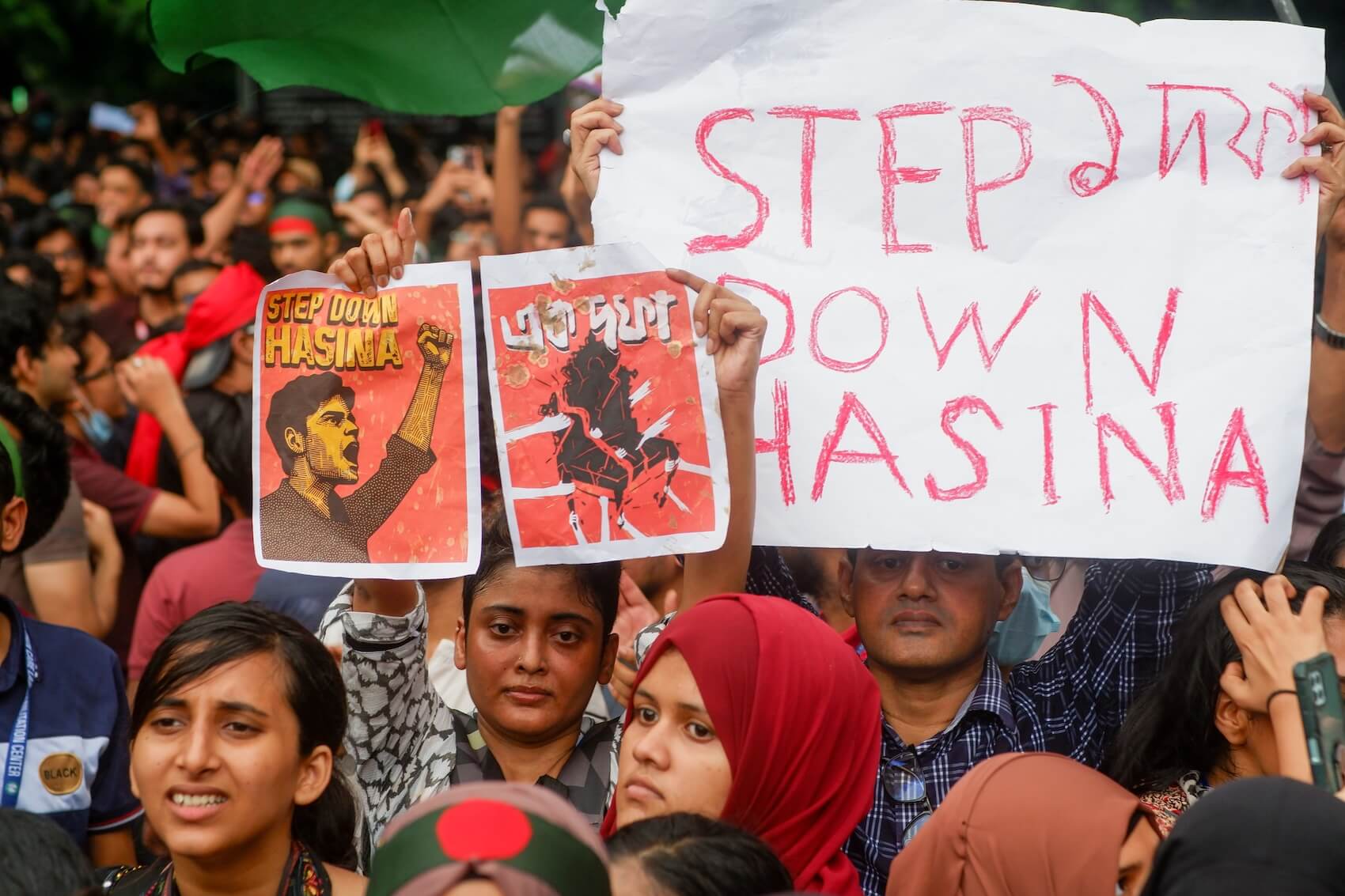
The one thing they have trouble overcoming is public protest, because it’s not really an institution they can just undercut. Now, they can, once it happens, as in Tanzania or Nicaragua, get police and security services of different types to come out, detain people, arrest them, beat them up, and kill them. Unfortunately, they can override public protest. But that is, fortunately, at least in some democracies, a line that leaders don’t cross. They don’t go that far, and protests therefore have a really powerful effect, as in Nepal or Bangladesh, where protesters were able to overcome attempts to stop them, and they pushed for some really democratic change. So elite agency—the power of it—should make us think hard about what powers can stop it, and what we can do, if we care about democracy, to try to fortify those things that can limit elite agency.
Economic Development Still Stabilizes Democracy
To what extent does ongoing backsliding in relatively affluent democracies challenge modernization theory’s assumption that economic development stabilizes democracy, particularly under conditions of cultural backlash and identity-driven politics?
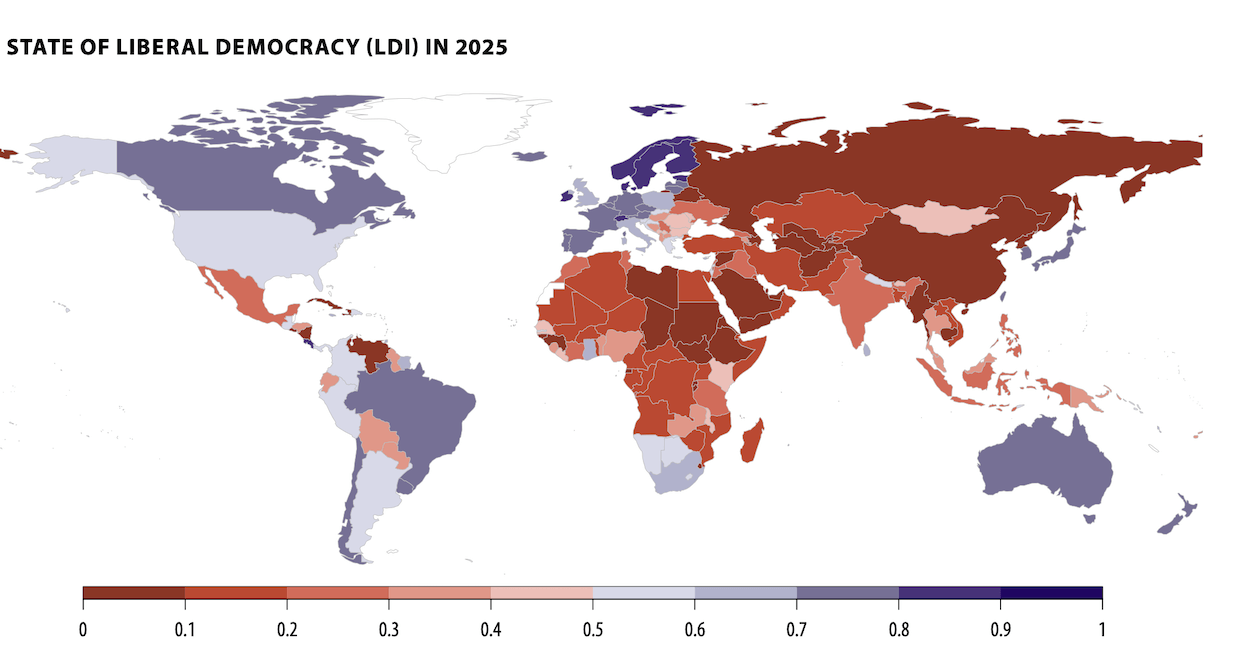
Dr. Thomas Carothers: It has certainly been a surprise for many political scientists that the United States is experiencing significant backsliding. The recent V-Dem report on democracy in the world charted an 18-point decline for the United States, which is a very large drop in the last year. The Freedom House report shows only a 3-point decline, but even 3 points is quite significant in the Freedom House methodology. So, we do have the case of the United States, which raises questions about the crucial work that Adam Przeworski did—showing the relationship between the level of economic development and the absence of democratic breakdown—but I think we need to be very careful.
The United States is the only wealthy established democracy—other than perhaps Israel. By “established,” I mean a pre-1989 democracy. I am not including Hungary and Poland in that category, as they are post-1989. Among long-established democracies at a certain level of wealth, it is the only one that has experienced significant backsliding in the last 10 to 15 years.
It is true that many Europeans feel unsettled by the rise of illiberal political forces in their societies, but none of those countries is experiencing significant backsliding yet. Now, it may come—there is no question that it might. So, I do not think modernization theory, or the idea that once you reach a certain level of economic development you are bound to be more stable democratically, has been overturned by events. Rather, I think the United States is a head-scratching case as to why this is happening there. What is more interesting analytically is not to discard modernization theory, but instead to ask: what is it about the United States that is so different from all the other wealthy established democracies—Canada, Australia, Ireland, the Netherlands, Italy, Greece, and so on—that makes it so democratically fragile at this moment?
So, modernization theory, or at least the theory about the relationship between economic development and democracy, is still holding. However, we do have this powerful and unusual case of the United States, which requires very careful thought.
Executive Aggrandizement, Not Populism, Drives Backsliding
How can we analytically disentangle populism as a discursive logic from executive aggrandizement as an institutional process, especially when contemporary leaders employ formally legal mechanisms to incrementally erode democratic norms?
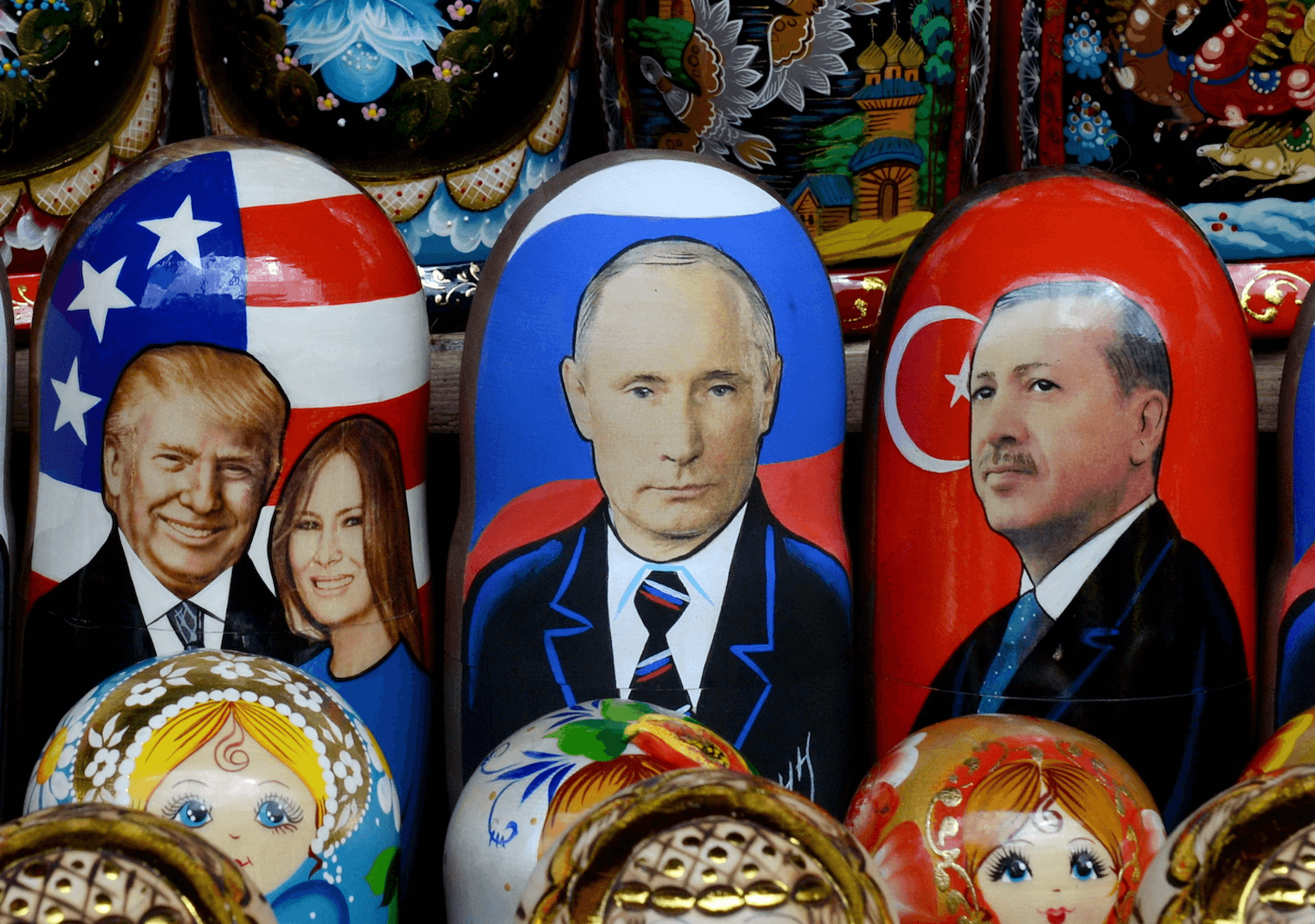
Dr. Thomas Carothers: Wow, there are a lot of questions here; they’re very compact. Executive aggrandizement, which is the core pattern of backsliding that we see in many places, is where an executive amasses overweening power that is able to subvert the rest of the democratic system. Executive aggrandizement is the tool by which de-democratization and greater autocratization are occurring in a whole bunch of countries. But that’s not the same as populism, and we have to be really careful here. Some of these leaders who are carrying out executive aggrandizement are populists. Hugo Chávez was such a leader—he was elected, dismantled democracy, and engaged in executive aggrandizement; he was populist to the core.
Vladimir Putin has been aggrandizing the power of the executive in Russia over the last 25 years. In my view, he is not a populist. President Putin came from within the system. A populist is someone who comes from outside the system, divides, and says, “I’m going to attack the elite; I represent the people.” President Putin was not about the people versus the elite. He was the security service rising back up and asserting its power over Russian life—hardly a populist. He rode around on a horse once with his shirt off and had a picture taken, which some Russians felt made him look pretty good. I guess you could call that a populist technique. But I hardly think of him as a populist.
President Xi in China has been carrying out executive aggrandizement by removing term limits and by attempting, for example, to bring the military under greater political control. It is classic executive aggrandizement. Again, President Xi is not someone from outside the system who is dividing the country into old elites and the new people. He is the system. He rose up—his father was a grandee—he is a very well-integrated, well-embedded part of the system.
Therefore, executive aggrandizement is a process that leaders are using, both elected leaders and non-elected leaders, as in the case of President Xi. It is a form of taking over systems that is different from military coups and from state collapse, and so forth. It is the process that is defining democratic backsliding and autocratization in many countries. It is not the same thing as populism. Some populists engage in executive aggrandizement, not all. Some figures who engage in executive aggrandizement are populist, not all. So, it is very important to keep these concepts fairly clearly separate from each other.
Deep Structural Divides Drive America’s Polarization
In the current US context—marked by renewed Trumpism, institutional contestation, and electoral polarization—should we interpret developments as a case of “backsliding from within,” or as the exposure of long-standing structural vulnerabilities in American democracy?
Dr. Thomas Carothers: That gets to the question of what constitutes a structural vulnerability. The United States has some very basic fissures in society that have long been at the root of severe episodes of polarization in American life. The country has experienced waves of extreme polarization throughout its history. The Civil War was a period of intense polarization, and the country later moved beyond it. There was less polarization afterwards. The 1930s and the New Deal were also tremendously polarizing, followed by a period of lower polarization through World War II. In the 1960s and 1970s, polarization began increasing again and has reached very high levels over the past 10 to 20 years. So, the United States has this recurrent pattern of extreme polarization.
These waves tend to be rooted in the same underlying fissures—three in particular. One is a racial divide, which has been deeply divisive, not only in Black-white terms but also in a broader sense between those who support a more inclusive society and those who prefer a less inclusive one.
Second, religion in politics. The United States is, in many ways, a fairly religious society, and there has long been debate over the role of religion in public and political life. This debate continues today and remains highly divisive. Some believe religion should play a greater role, while others advocate for a clearer separation between religion and the state.
Third, the question of federal versus state control. Should the country have a strong federal government, or should power reside primarily with the states? This debate goes back to the founding of the Republic and was deeply embedded in the Civil War. It has remained a persistent and contested issue.
So, the United States has these structures. You could describe racial realities as a structure. You could consider federal versus state power as a structure. Religion—can that be called a structure? In some sense, yes. These factors provide a foundation that is distinct from Europe, where all three are generally less pronounced as basic fissures. They help explain why the United States, unlike many European countries, has experienced recurring waves of polarization.
I think what we are seeing in the United States today is the product of the latest episode of extreme polarization. Is this due to structure or agency? As I noted, there are underlying structural features of American society that contribute to the current divisions. At the same time, elite agency is clearly playing a role. When people discuss polarization in the United States, they often point to specific political actors—this politician did this, that politician did that—as polarizing forces. So, elite agency is also part of the picture.
When Politics Turns Tribal, Democracy Suffers
To what degree does affective polarization—visible in both US and European politics—function as a permissive condition for democratic erosion, enabling citizens to tolerate or justify norm violations by co-partisan leaders?
Dr. Thomas Carothers: Affective polarization—when one side basically hates the other, doesn’t trust it, and doesn’t think it should be allowed to come to power—is no longer just “I don’t like their tax policy.” Instead, it becomes, “I think they are bad Americans and would do terrible things to the country if they came to power, and I don’t want my daughter or son marrying one of them.” Affective polarization of that type is incredibly corrosive.
Because if it is based on the idea that the people on the other side—I hate them, I don’t trust them, and I think they are going to do harm to the country if they run it—then, when an election comes along, I may say: well, the choice is between a leader who is tidy-whitey and is going to follow every democratic norm but might let the other side in, versus someone who is really strong and willing to break the dishes needed to stay in power and keep those dangerous other people out. In that case, unfortunately, people trade off democratic norms for the sake of protecting their tribe, as people like to say.
In the United States, the very distinguished political scientist at Yale University, Milan Svolik, has done fundamental work showing that under conditions of extreme polarization, people are willing to trade away democratic norms for the sake of protecting their side.
Citizen Mobilization Can Halt Democratic Backsliding
Your work suggests that protests serve both as indicators of democratic strain and as potential agents of renewal. How should we theorize this dual role in light of recent protest waves in the United States, the United Kingdom, and other countries?
Dr. Thomas Carothers: At Carnegie, we run something called the Global Protest Tracker, which tries to keep track of every major anti-government protest in the world. If you go to it, you’ll see a list, and you can click on a country, and it turns out, oh, look, the Philippines just had major protests last month. Why? What were they about? And so forth. So, we’ve been watching protests very closely for a while. We’ve been running the tracker for seven years, and you learn a lot just by reading it every month.
Our researchers produce—Judy Lee, who works with us, is our main researcher on this—a tremendous memo every month analyzing the latest protests around the world. And you see that a good share of protests is about democracy. They are about citizens responding to executive overreach, often in the form of a stolen or compromised election. Sometimes they respond to attempts by a leader to remove a constitutional limit on power – “I’m going to serve a third or fourth term, no matter what the Constitution says. My ally at the Supreme Court will say that’s perfectly fine.”
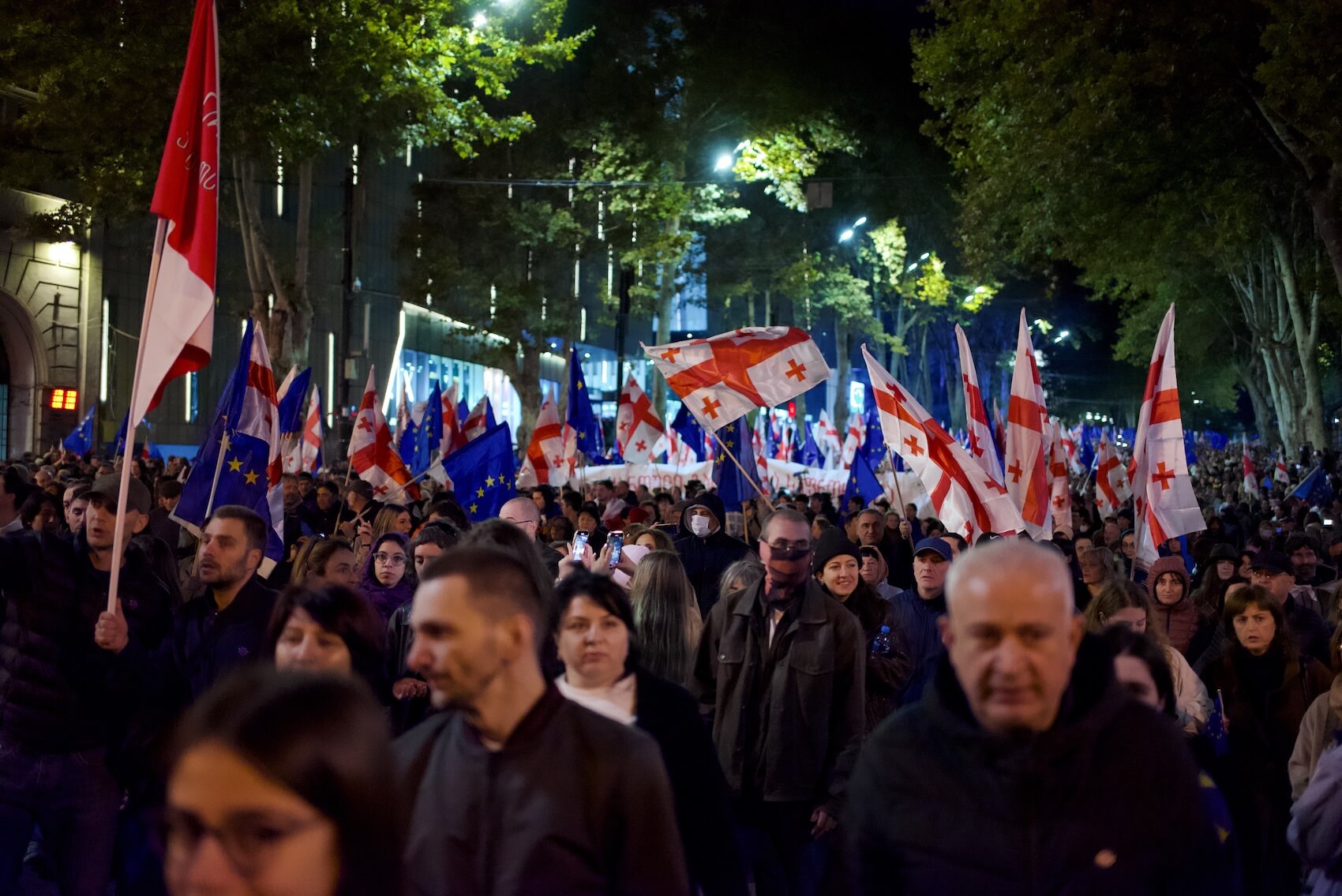
So, citizens are protesting a great deal about democratic backsliding. Those protests are a sign of democratic strain, as you put it in your question, or even a sign of democratic breakdown. In many cases, they are also a major source of hope for stopping that process. They have stopped a number of efforts to extend constitutional term limits and have blocked some attempts to manipulate elections, although unfortunately not in other cases, such as Georgia or Belarus.
Protests like these reflect democratic strain, but they are also an embodiment of hope for something better. In more extreme cases, such as Bangladesh—extreme in the sense that events went very far—protesters swept out an autocratic regime and called for a return to a period when the country was at least reasonably democratic. Protests are key here.
Of course, many protests today are driven by economic grievances—fuel prices rise, people cannot afford to feed their families, and they protest about that, understandably. But there are linkages. In many places, protests are sparked by some kind of economic or governance trigger. In Serbia, for example, a specific incident occurred—a train station roof collapse, if I recall correctly. People then took to the streets and said, “This government stinks, it ought to go—I’ve had it with this regime.” A protest that begins over a particular trigger can then snowball into a broader anti-regime movement that pushes a government out or at least tries to.
Nepal was somewhat similar—an initial spark related to a government attempt to limit access to social media platforms. People began protesting, and one thing led to another, and soon the prime minister was out.
So, protests are critical in this age—particularly in an era of hard-headed leaders dismantling many of the institutions that might otherwise constrain them. As I said before, protests are critical here.
Some Movements Make Democracy More Exclusionary
In these contexts, how can we distinguish between mobilizations that deepen democratic accountability—such as rights-based or institutional reform protests—and those that instead amplify anti-system, populist, or illiberal dynamics?
Dr. Thomas Carothers: Be careful about that distinction. You can have an anti-system protest that is quite rights-based. For example, the Serbian protests have turned into anti-system protests, but they are also based on the idea that there should be greater rights. Nepal was similar – “Don’t take away our right to access this information”—and that, too, turned into an anti-system protest.
Now, as you are alluding to, there are protests that, if you look at their goals or the issues that have stirred them up, may be quite different. There might be an anti-immigrant protest—an immigrant is involved in a crime, and people go out and protest, saying, “We hate these people who look like this or talk like this.” That is not especially good for democracy; it could shrink democracy and make it more exclusive.
Or people may protest against efforts to make vaccines widely available, arguing that they are dangerous and opposing public health policies. That could be described as rights-based in some sense, but it is probably not going to do much to further democracy in that country.
There are certainly many protests that pursue goals other than what we would consider core democratic rights. It is more a matter of looking at the cause—what people are trying to advance through the protest—and then deciding whether it is pro-democratic or whether it is pushing democracy in a more exclusive or limited direction.
Decentralization Empowers Protest but Weakens Strategy
With the growing prevalence of decentralized, leaderless movements, does organizational horizontality enhance democratic inclusivity and resilience, or does it risk weakening strategic coherence and long-term political impact?
Dr. Thomas Carothers: A lot of protest movements are what analysts like to call leaderless protests these days, and leaderless protests are often a reality in countries that are fairly repressive, where people are afraid or unable to form leadership councils or to organize in a very visible way, and so they are leaderless by necessity. Some are more leaderless; others are leaderless simply because that is how they arose. They may begin with a group of students who are very unhappy about something, and someone texts, “Let’s all meet at the square at 9 p.m.,” and people surge out and start protesting. Then someone else says, “Tomorrow at 3 o’clock in the afternoon, let’s meet here,” and it starts to grow. The protest becomes a movement, but there was no real guiding council at any point.
Because of technology that facilitates organization in many countries, this encourages a decentralization of authority within protest movements, which can make for quick, unpredictable, and, in some cases, powerful protests. But as you suggest in your question, once a protest is successful, there comes a point when demands have to be formulated. There also comes a point when negotiations with those in power become necessary, or when something must happen to focalize the discontent into a platform for specific change.
I remember Tahrir Square during the protests in Egypt and the Arab Spring. It was a surge of people. There were many civic groups involved, so it was not entirely leaderless, but there were many different actors trying to mobilize. At a certain point, the military said to the protesters, “We need to talk seriously about what is going to happen with Mubarak—we are ready to talk. With whom do we talk?”
A group of people did emerge within the protest. One of them happened to be a friend of mine, an Egyptian. I remember being in my office in Washington, picking up the phone, and it was him calling me from Cairo. He said, “I’m with a group of protesters, and we’ve been asked to go talk to the military. What should we ask for? What is our demand with respect to Mubarak?” That was the moment when I thought that what had started as a kind of leaderless protest—or a protest with many different elements—was now focalizing. The military wanted to negotiate with someone and say, “If we agree that Mubarak is going to step down and go to Sharm el-Sheikh or somewhere else, will you leave Tahrir Square and go home?” They needed to negotiate with someone.
It is hard to negotiate with a leaderless octopus. So, there is a moment when these movements have to coalesce, and then, if they are successful—as in Nepal, where the government is out—who is in charge? Something has to happen. Leaderlessness can be beneficial for a while, but then things need to move forward, and there needs to be a concretization of the movement into some form of institutionalized action and development.
How States Respond to Protest Defines Democracy
How do different state responses—from accommodation and co-optation in liberal democracies to repression in more authoritarian settings—shape protest trajectories, and what do these patterns reveal about regime adaptability?
Dr. Thomas Carothers: There is a pretty sharp line. A protest occurs in a country; it is large, it challenges the system, and it asks for fundamental change. And here is the line: do you turn the security services on the protest and say, “We are going to detain you, arrest you, beat you up, and kill you”? Or do you say, “We are a democracy, people have rights here, and you have the right to protest, and we will talk with you and try to address your concerns so that you will go away?” At that moment, when the regime really has its back to the wall and protests are surging, do they respond with repression, or do they respond through negotiation, patience, or some other non-repressive approach? That is a defining test of whether you are in a democracy or not.
In Georgia—Georgia was a democracy for a while—protests emerged and were then fueled by the alleged stealing of elections by Georgian Dream. The political system, or the regime, began cracking down on this protest movement, detaining and arresting people and allowing a certain degree of violence. That is a sign that Georgia was moving off the democratic path and into a more repressive direction.
This is a defining moment—how protests are treated—and I pay very close attention to it. There is not always a clear threshold: sometimes three protesters are killed—is that enough? But in extreme cases like Iran, where tens of thousands appear to have been killed by security services, that is a clear sign of a profoundly repressive, anti-democratic regime in which democracy has been entirely suffocated. Georgia is suffocating its democracy. Belarus has asphyxiated and suffocated its democracy.
Whereas other countries have remained on the other side of that line. Hungary, for example, has had significant protests over the last 5–10 years. Many people are unhappy with the Fidesz government, but it has not responded with outright repression. It has taken many steps to undercut civic groups, tilt the playing field, and use state resources for party purposes. These are anti-democratic actions, but it has not turned the guns on protesters, because Hungary is still on this side of that repressive line. So that line is very fundamental to understanding the overall trajectory of a country.
Broad Mobilization Creates a Firewall Against Authoritarianism
Your research highlights the importance of civil society mobilization and opposition coordination in reversing backsliding. How do these factors interact with institutional legacies in determining whether democratic erosion can be halted or reversed?
Dr. Thomas Carothers: It relates to what I’m saying. Civil society mobilization is critical in many places, such as Brazil in 2022. Bolsonaro had been in power for four years; he was an anti-democratic leader, disrespectful of democratic norms. He sought to undercut the courts, and there were real doubts about whether he would respect an electoral outcome. Later evidence suggested that he was trying to overturn the electoral result through coup planning and so forth.
In early 2022, as elections were on the horizon, there was very broad-scale citizen mobilization. It was civic mobilization, which included a political role for established political actors, but it was civic in the sense that it brought together a broad tent of people with many different views, united around the idea that Brazil should reject an undemocratic path and pursue a democratic one. Most of those involved believed this meant voting for Lula da Silva, but it was nonetheless a civic mobilization that proved quite effective in creating a firewall against the de-democratization of Brazil.
Poland was somewhat similar before the 2023 elections. There was extensive civic mobilization, with people frustrated by the PiS government and its anti-democratic characteristics.
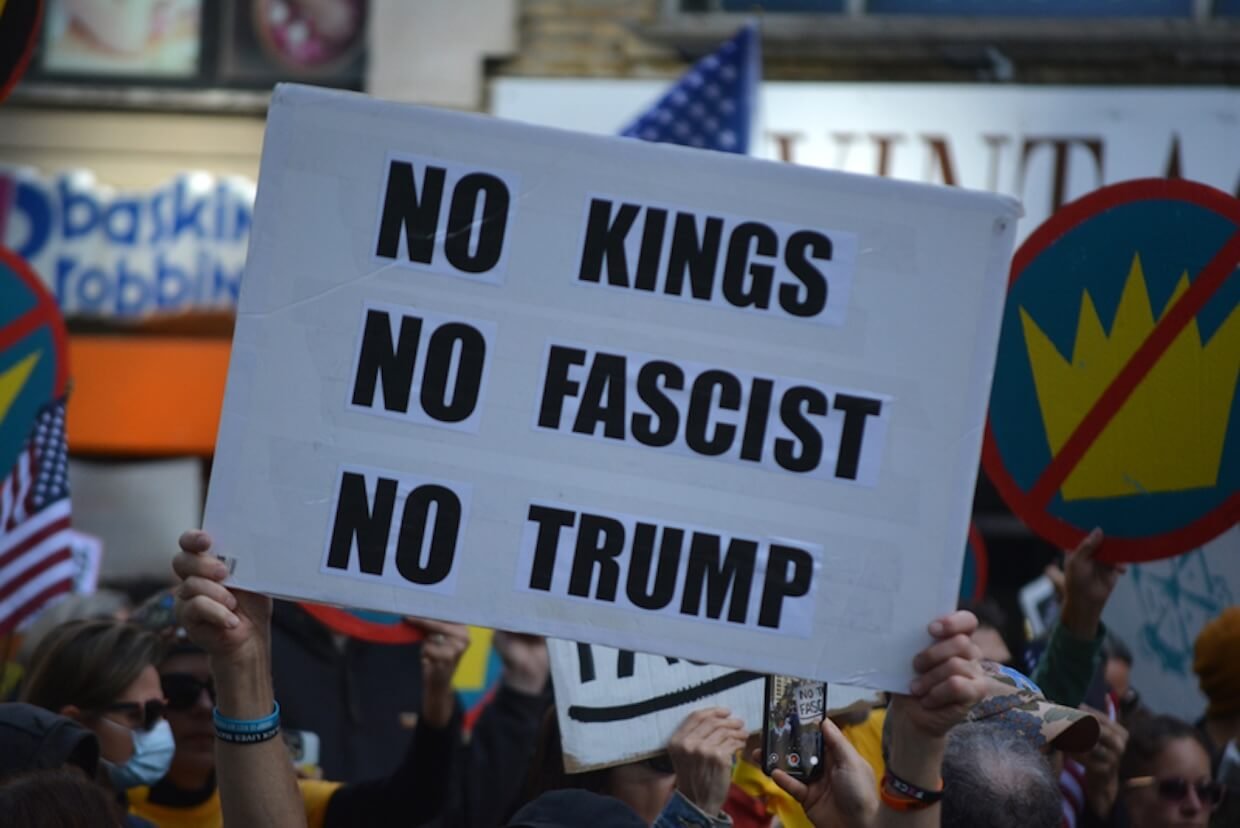
Civic mobilization in cases of significant backsliding is very important. In the United States, you are seeing an increasing number of protests. Recently, there was another round of the “No Kings” protests; I think up to 8 million people were involved last time. That is a significant number—about 2–3 percent of the US population—engaged in protest activity. This kind of broad-based civic mobilization is often a critical element in pushing back against democratic erosion.
Democracy Support Faces a Moment of Profound Rethink
In an international environment shaped by intensifying great-power competition, declining Western commitment, rising authoritarian influence, and intensifying geopolitical competition and conflicts such as the Iran crisis, and the global diffusion of authoritarian practices, how should democracy promotion be reimagined—does it require normative re-legitimation, institutional reinvention, or a fundamentally new model of transnational democratic support?
Dr. Thomas Carothers: International democracy support needs a lot of things. International democracy support had been struggling for 10 or 15 years in the face of democratic backsliding in the world. Backsliding was happening, and people were saying that whatever amount of democracy support we were giving—both the amount and the nature of it—was not solving the problem. Backsliding was still spreading. What we were doing was not enough, and maybe it was also not the right thing.
There was already a lot of questioning of international democracy support and then came the arrival to power of Donald Trump in January 2025. He and his team rapidly put an end to almost all US democracy aid that was directly sponsored by the government. The United States had been, by far, the largest funder of such aid in the world. It simply walked away from that field and said: no election monitoring support—we do not do that anymore; support to civic groups—we do not do that anymore; we are going to close down our public broadcasting in other places; human rights support—no, we do not do that anymore. So that was a tremendous blow to the field of international democracy support.
Unfortunately, in that same year, a number of European governments, for different reasons, also faced significant pressure on their aid budgets. There was a great deal of strain on those budgets, partly because of the need to allocate resources to support Ukraine in its war against Russia. As a result, aid budgets in Europe were tight, and 2025 was a bad year for international democracy support.
Now the field, a year on, is in a period of reassessment. My colleague Richard Youngs and I, together with Rachel Kleinfeld, are working on this issue. We published a paper last year titled What Future for International Democracy Support?, and we are preparing an updated version later this year to assess how the field is evolving.
What we are finding so far is that there is a great deal of ferment. You mentioned the need for institutional rejuvenation, normative re-legitimation, and new methods. People are actively asking these questions: what narratives should we use to describe democracy more effectively? Given the sharp decline in available aid dollars and euros, we need new forms of engagement that are more localized and more network-oriented. We need to move away from the traditional model of “the West has the answers, and the rest of the world has the problems.” Today, everyone faces challenges. How can we work on a more horizontal basis? How can we move beyond the notion of aid as a one-way process and instead recognize that we are all confronting shared difficulties?
There is a great deal happening in the field, but it is constrained by limited resources. It is on the back foot and still in a state of shock after developments over the past year or two. Many people are out of work, many are frustrated, and many are disappointed. The field is therefore in a period of reconsolidation.
At the same time, it is not disappearing. Many organizations and democratic governments still want to support democracy beyond their borders. There are also regional organizations in Africa, Latin America, Europe, and elsewhere that maintain pro-democratic norms. There are multilateral institutions at the global level that remain engaged, as well as numerous international non-governmental organizations. So, there is still a substantial international democracy support community, but it is undergoing a profound process of rethinking and reorientation.
Democratic Backsliding Has Slowed—but Risks Remain

And lastly, Dr. Carothers, looking ahead, given the coexistence of democratic erosion, persistent polarization, and emerging forms of resistance, do you foresee a trajectory of continued democratic decline, adaptive resilience, or the emergence of a new equilibrium of “contested democracy” in the coming decade?
Dr. Thomas Carothers: That last question of yours is common in the final questions that I get, which are basically, you’re walking across a bridge as a democracy specialist—do you jump off into the river in despair, or do you keep walking and think, we’ll probably come through this? But you put it much more elegantly than I just did.
I think over the last 5 to 7 years, the rapid wave of backsliding has slowed somewhat. There is still a lot of backsliding occurring, but there are also a number of countries where guardrails have been holding up. Brazil was an important case of that in 2022–23. One could name many others. Senegal managed to withstand a fairly concerted attack on its democratic institutions by its president in the last couple of years. The Philippines came out of the Duterte period. The successor leader is not the world’s most democratic leader, but he is not Duterte. Bangladesh is undergoing some kind of renovation. Bolivia came through a period in which the government was trying to undercut democratic norms and institutions. So, there are many countries where democracy is holding up.
I was in a conversation the other day with the research director at Freedom House, who made the important observation that about three-quarters of the countries in the world do not change their democratic status year in, year out. We tend to think, it’s like our phone, where every app is jiggling and moving around. The world is not really like that. There is actually a fair amount of stability, and the number of cases that are moving rapidly in one direction or the other is quite small. So, I’m walking across the bridge—I’m not jumping off—but, it’s going to be difficult.