

In an interview with the ECPS, Professor Joseph Wright (Penn State University) warns that the most alarming development of “Trump 2.0” is the rapid personalization of the state’s coercive apparatus. “The most troubling aspect… is the personalization of the security forces. That is the single most damaging thing that can happen to a country,” he cautions. Professor Wright notes that ICE has evolved into “a fully militarized internal security organization,” now poised to become one of the world’s largest such forces—capable, he warns, of being deployed “to seize ballot boxes” or “shoot protesters.” While federalism still offers partial safeguards, Professor Wright argues the United States is witnessing early signs of institutional capture characteristic of personalist regimes worldwide.
Interview by Selcuk Gultasli
In a wide-ranging and sobering interview with the European Center for Populism Studies (ECPS), Professor Joseph Wright of Penn State University offers a stark assessment of the United States’ democratic trajectory under a second Trump administration. Drawing on his extensive comparative research on personalist rule, bureaucratic erosion, and autocratization, Professor Wright argues that the defining danger of “Trump 2.0” lies in the accelerating personalization of the state apparatus, and especially of the coercive arms of government. As he warns, “What appears to me to be the most troubling aspect of the personalization of the government [is] the personalization of the security forces. That is the single most damaging thing that can happen to a country.”
Professor Wright situates his analysis within a broader global pattern in which elected strongmen—figures such as Erdoğan, Orbán, and other personalist executives—transform political parties, bureaucracies, and security institutions into instruments of personal power. Applying these insights to the contemporary United States, he identifies three markers of personalist party consolidation: a leader’s control of financial resources, control over candidate nominations, and the elevation of loyalists who depend entirely on the leader for their political survival. “He controls the money… he controls nominations, and… he appoints loyalists,” Professor Wright explains, noting that together these dynamics render party elites “basically unwilling to stand up to him.”
While the United States remains far from the fully consolidated autocracies seen in Turkey or Hungary, Professor Wright warns that early signs of bureaucratic hollowing and selective purges have already emerged. The Department of Justice, he argues, is the clearest example, where loyalist appointments and the abandonment of legal enforcement norms have created “a green light to lots of actors to be able to break the law.” Particularly concerning is the rise of a militarized internal security force centered on ICE, which he describes as “a fully militarized internal security organization” now positioned to become one of the largest coercive bodies in the world. Such a force, he cautions, could be deployed “to seize ballot boxes, to shoot protesters… or deter people from showing up at the voting booths,” mirroring patterns observed in autocratizing regimes elsewhere.
Yet, Professor Wright also emphasizes the continued importance of federalism as a barrier to total centralization. Local law-enforcement autonomy and decentralized election administration remain crucial buffers. Still, he stresses that the danger is not hypothetical but unfolding: “We don’t know where it’s going to go… things have progressed rapidly.”
Taken together, Professor Wright’s analysis offers one of the clearest comparative warnings to date: the durability of American democracy now hinges not only on electoral outcomes, but on whether the country can resist the deepening personalization of its most powerful state institutions.

Here is the edited transcript of our interview with Professor Joseph Wright, slightly revised for clarity and flow.
The GOP’s Transformation: Money, Nominations, and Loyalists
Professor Joseph Wright, thank you very much for joining our interview series. Let me start right away with the first question: Your book titled “The Origins of Elected Strongmen: How Personalist Parties Destroy Democracy from Within” shows that personalist parties centralize nominations and sideline experienced elites. In the wake of the 2024–25 US political cycle, what indicators most clearly demonstrate that the GOP has consolidated into a personalist party rather than a traditional programmatic organization?
Professor Joseph Wright: That’s a great question. There are three indicators of personalist parties that we can observe across many different cases, and that vary between parties. When we apply those indicators to the current Republican Party, it becomes easier to see how they pop out and show that the party is increasingly personalist.
The first indicator is simply that Trump and his family appear to control the party’s funding apparatus. For example, during the 2024 campaign, his daughter-in-law controlled the Republican National Committee, which basically runs and distributes money to candidates in legislative elections. The current head of that same group is a close ally of Trump who owes his political career to him—a politician who lost multiple elections in Florida before Trump boosted him to a victory a couple of years ago.
That funding organization, the main one in the party, is actually small peanuts compared to the war chest Trump himself has gathered in MAGA Inc. It’s his personal election funding mechanism, which currently has over $200 million in it, even though he is constitutionally barred from running for president again. No president has ever had this after their second term: a personal vehicle for funding the political party they lead after their last presidential election, and certainly nothing of this scale.
So, he controls the money, and that gives him the power within the party to pick candidates to run under the Republican label. That’s a second key feature of the party that stands out as highly personalist right now. Trump has the power to decide who runs in primary elections in his party, and he often picks the primary winner ahead of time. That is, he controls candidate selection within the party. That’s very different from what the Republican Party—and US parties in general—have historically been like.
A good illustration of this nomination power is that legislators and elites in the party don’t want to stand up to Trump because they fear he may finance a candidate to run against them in a primary. So, they often back his policies even when they don’t like him. A good example is when one legislator did stand up to Trump—during the Epstein files vote in the US legislature. Marjorie Taylor Greene, a Trump backer and prominent elite in the Republican Party, stood up to him. When she did, others followed, which would normally be a sign that this isn’t a very personalist party. But after successfully pressuring him—Trump backed down—she immediately announced that she was quitting the party because she didn’t want to fight Trump next year in a primary to retain her seat. So that’s the second thing: he controls nominations, and through that control, he influences the behavior of legislators.
The last characteristic is that most of the senior elected elites in the party, and nearly all appointed elites in the executive branch, are loyalists. These are people who would have no political power without Trump. They are not individuals who worked their way up through the party by winning local, then national elections, and then being selected for higher office once they had demonstrated political strength. Rather, these are people who perpetually lose elections, and he picks such candidates because they are more dependent on him for their power, making them highly motivated to do his bidding.
So it’s these three factors—Trump’s control over funding, his control over nominations, and his appointment of loyalists—that make elites in the party basically unwilling to stand up to him.
We can look at a couple of elites who have stood up to him, at least on the margins. John Thune, a senior party leader in the Senate, and John Roberts, the head of the Supreme Court, both first won office well before Trump was on the scene. They gained political power without him and will probably still have it after he is gone. That gives them very different incentives to stand up to Trump.
Whereas if your political career is completely dependent on Trump, then you’re always going to do what he wants. And so, looking at these three features of personalist parties that we see around the globe, I see them increasingly present in the United States within the Republican Party.
Why 2025’s State Races Don’t Predict National Trends

State-level election results in 2025—particularly in Virginia, New Jersey, and New York—show mixed reactions to Trumpist politics. Do these outcomes represent meaningful resistance to personalization, or are they short-lived fluctuations within an increasingly captured party system?
Professor Joseph Wright: These elections are off-cycle, and where they take place—and certainly when they take place—means they’re not very informative in the US electoral context for understanding how national-level elections will transpire. We look at places like New York City, which is completely unrepresentative of the rest of the United States, and Northern Virginia. Northern Virginia is a place where the local economy has taken a huge hit from the government shutdown and from Trump’s efforts to fire tens of thousands of government workers.
A lot of those people live in Northern Virginia, and so the local economy has really been hurt by Trump’s policies. These two places, Northern Virginia and New York City, are just not good places to look for broader national political trends. I would take these as important victories for the Democratic Party, but nonetheless not very informative about what’s going to happen in the next congressional elections.
The Growing Personalization of America’s Security Forces
Your work with Erica Frantz and Kendall-Taylor suggests personalism erodes bureaucratic impartiality. Which US administrative arenas—civil service, regulatory agencies, or security services—appear most resilient, and which show signs of politicization consistent with personalist capture?
Professor Joseph Wright: That’s a good question. I wish I had good data on it. That’d be a great data collection project, in real time, using the US case. The bureaucratic civil service—obviously Trump has largely gutted parts of that. But parts of it are still going, and parts of it are still providing public services to American citizens throughout the country. Certainly the Justice Department is the one Trump has the most control over, insofar as he has put loyalists in charge, sometimes without following the rules. Judges have had to basically throw out some of his appointees. His appointees are probably breaking the law, and so there you see a clear sign of personalization.
It’s harder to see it in the security sector, and the reason for that is we just don’t have very good information, and there are no mechanisms for people in the military—aside from resigning. There are no mechanisms for them to register their dissent to these moves. People who work in the civil service oftentimes have unions, and those unions can sue the government. Soldiers don’t have a union, and they don’t sue the government when the government asks them to do illegal things or purge them. So, the only recourse people in the security sector have is basically to quit, and we have seen some of that.
What appears to me to be the most troubling aspect of the personalization of the government is the personalization of the security forces. That is the single most damaging thing that can happen to a country, because it creates a basically partial group that is loyal to certain segments of the population, and that is the main armed force. In the United States, this is happening most clearly with the internal militia that Trump is forming, essentially out of the border guard unit. Immigration enforcement and the Customs Enforcement Agency—what in the United States is called ICE—used to be housed in a department that managed land. But then in 2001, after the al-Qaeda attacks on the United States, the Republican Party formed an entirely new security branch within the United States called Homeland Security. Then they put border guards and immigration enforcement under that larger security branch.
This shift in the structure of the security apparatus came in the same decades that police enforcement in the United States became militarized. They began accepting a lot of used military equipment. So, police officers in the United States oftentimes look like what soldiers in other countries look like, and that’s certainly true of ICE. ICE has become a fully militarized internal security organization that Trump has deployed in Democratic strongholds to hunt unarmed residents of the US and to lock them in prison camps. Perhaps as troubling as what has happened to this point is actually what will happen in the future, as this militia is now going to receive hundreds of millions of dollars in funding.
This is a militia that appears to be breaking the law, attacking basic civil liberties such as the right to movement, the right to protest, the right to private property. They’re destroying people’s private property without compensation. They’re detaining people, they’re breaching people’s religious freedom, people can’t go to places of worship, they’ve attacked religious leaders—openly attacked them. So, they’re destroying individual liberties in the United States, and they’re about to become the 15th largest security organization in the world. The amount of funding that Congress has appropriated for this militia is the 15th or 16th largest military in the world—roughly the same size as the military of Turkey or Canada. And that’s not the US military; that’s this internal security organization called ICE that appears to be breaking the law on behalf of Trump. So, that’s the thing that’s most concerning to me about the personalization of the government and the civil service—actually this internal security organization.
And it has the potential to really disrupt free and fair elections in the United States if Trump decides to deploy that security service to seize ballot boxes, to shoot protesters who protest against electoral abuse, or basically to deter people from showing up at the voting booths. We see that in lots of countries, a lot of dictatorships. We see internal security services deployed precisely at times when they can be disruptive to elections to keep the ruling party in power.

Can Federalism Still Contain Trumpist Centralization?
Federalism has been viewed as a structural buffer against democratic erosion. Based on current GOP centralization, do you see subnational institutions serving as genuine counterweights, or are personalist dynamics penetrating state-level politics as well?
Professor Joseph Wright: I think both are happening, actually. And federalism, in a large country like the United States, has worked quite well to restrain excesses of executive power. That’s what it was designed to do, and historically it’s done a pretty good job of that, even if there are downsides to it—like the dictatorship that ruled the US South for about a century during the Jim Crow period. But it is, today, working as a check on the ruling party’s power to repress its citizens and undermine basic civil liberties. So, for example, the main internal security forces up to this point in the United States have actually been local police forces, and the United States does not have a national police force or a set of interior troops outside of border enforcement, unlike most other countries. This means that internal security is mostly provided by local police units. They are controlled by subnational governments.
What that means is that the most proximate armed security service in opposition strongholds—no matter what party holds power in the United States—is controlled by the people in that subnational unit. For example, in Chicago, a large city in the United States, the Democrats control that. It’s an opposition stronghold that has resisted Trump’s attempts to undermine civil liberties in the United States. The local police there are controlled by the local Democratic politicians. So they don’t work for Trump; they work for those local politicians, which means that they have mostly not followed Trump’s orders to do his bidding and work alongside Trump’s militia. So, that’s a good thing. And that’s an example of how federalism works in practice as a check on the ruling party’s power. In fact, one of the reasons why the Trump administration has failed to detain so many US residents en masse—he wants to detain millions of people, and he hasn’t come close to that—is precisely because he doesn’t have control over local security forces.
The second way in which federalism works well in the United States is actually election administration. This is a local event in the US, where local elected officials administer elections. There’s no national election board that administers and counts votes. It’s done as a local affair; they report it up the food chain. It happens at the county level, and the county goes up to the state level. Again, in opposition areas, those election counts are controlled by people in the opposition party. So whether the Democrats are president or the Republicans are president, there are Republicans and Democrats all over the country who are counting votes, and it’s not simply an election administration group that’s appointed by the ruling party. So, this is a really good thing.
The downside right now—the place where the Republican Party is interfering in local politics—is that local elections themselves have increasingly been based on national issues. So, many people now vote in local elections based on how much they like or dislike Trump. That’s a big factor, when the local elections really have nothing to do with Trump himself. If Trump increasingly controls local politicians because he controls the party, this is going to prevent constitutional Republicans—people in the ruling party, local politicians in the ruling party who still believe in the rule of law and the protection of civil liberties—from having a voice. They’re going to have less voice within the party if Trump is able to control nominations at a very local level.
How Backsliding Fuels America’s Polarization Loop
Your recent research argues that democratic backsliding itself generates polarization rather than simply resulting from it. How does this insight help explain the entrenchment of Trumpist support even amid institutional damage and declining democratic norms?
Professor Joseph Wright: It is important, in answering this question, to restate what political scientists have long understood. Voters tend to interpret basic economic facts and broader economic realities through a partisan lens. This occurs because citizens rely heavily on cues from partisan elites to evaluate whether the economy is performing well or poorly. We observe this consistently: Democratic voters often shift from a positive assessment of the economy when a Democrat holds the presidency to a negative one when a Republican wins, and Republican voters exhibit the same pattern in reverse.
In other words, most voters perceive economic conditions in ways shaped by their partisan identities and the interpretive cues they receive from party leaders. Given this dynamic, there is little reason to expect that voters would suddenly abandon these partisan cues when assessing basic political facts—particularly when judging whether an action taken by the leader of their own party constitutes a violation of democratic norms or practices.
So, our take on this, building on theories of motivated reasoning, is that when partisan voters see their own party’s leader doing something that is ostensibly and objectively bad for democracy, they don’t necessarily justify it by saying it’s not a violation of democracy. They interpret it as a milder violation, but they continue to justify their support for their own party by hating the other party more. This increased antipathy toward the other party, when their own party is doing harmful things to democracy, is the individual-level mechanism by which attempts to undermine democracy—actions of executive power that are unconstitutional, for example—can breed further polarization.
So, every time Trump does something to undermine democracy, it makes Democrats mad, and it doesn’t necessarily make Republicans happy, but it does make Republicans hate Democrats more. And so, for Trump, he’s often doing something and then justifying it by basically saying, “well, the Democrats are even worse, and we have to do this to get at the Democrats.” It’s this kind of messaging that transforms what he’s doing into not necessarily a good thing, but something people will tolerate precisely because now they have to hate the other team more. That’s what breeds polarization.
Trump’s Digital Machine: Power Without a Party
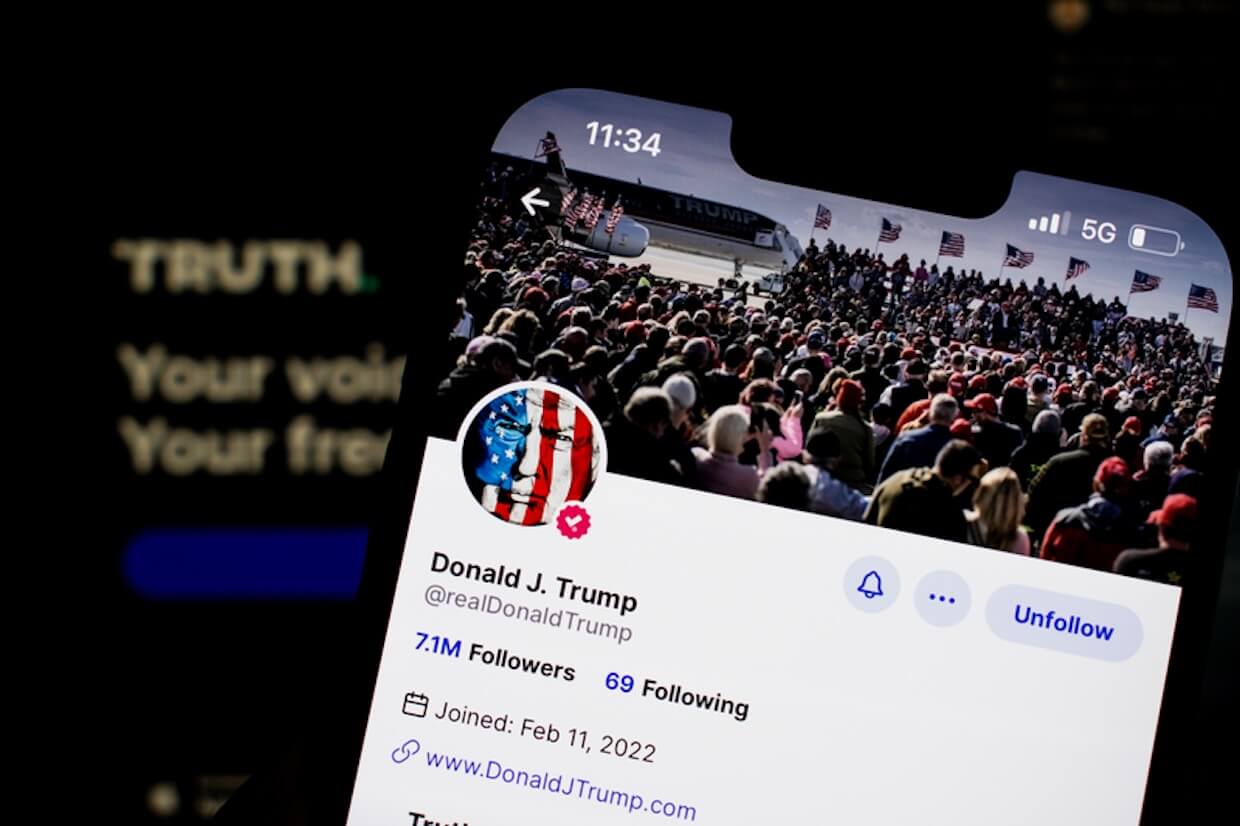
You argue that leaders today do not need traditional party organizations to win—they can build personalist electoral vehicles using social media. Which US developments most clearly illustrate this shift, and what regulatory approaches could protect democratic competition without empowering state censorship over online mobilization?
Professor Joseph Wright: Obviously, Trump can get his own message out because he runs his own social media platform. It’s not the biggest social media platform, but it’s a big one. One of his biggest political allies does run the biggest media platform, and so Twitter—what is now called X—certainly can censor on his behalf and use its algorithms to promote certain views over others.
Of course, Trump was actually brilliant at this. He used Twitter masterfully in 2016, not just to get his own message out but to win free and pretty much nonstop coverage from the mainstream media. Most candidates in US elections would have to buy time in the media and work to earn coverage, but he was able to circumvent that by talking on Twitter and saying outrageous things, and then every newspaper journalist in the country wanted to cover it. So, you can just bypass that infrastructure. Actually, we saw that with the newly elected mayor of New York City, who used a somewhat similar strategy. He basically got his start not because he had a lot of money, not because he had the backing of the political establishment in his party, not because senior elites in his party wanted him there, but because he was effective at using TikTok and knew how to craft a low-resource message—you didn’t need a lot of resources to do it.
These are good examples of how you do not necessarily need a lot of resources to run an effective campaign and ultimately do not need the backing of a strong political party to do that. Trump continues to rule in that way. There are surrogates on social media, in the manosphere, on TikTok, and these guys come cheap. They don’t get their money from Trump. They get paid by the platforms so long as they get eyeballs. All Trump has to do is give them an occasional nod to keep them working for him and on his behalf to carry out his message, and his message gets amplified—from whatever he says on his own platforms to the mainstream media and to all these surrogates on other platforms.
I think social media has a big impact on that. Individuals’ controlling either media platforms or media companies is certainly not new. An early personalist strongman leader who was elected multiple times was Berlusconi in Italy. He owned his own media company before entering politics. So, being effective on social media to circumvent the need for resources, or having your own media company—or the combination of both, in Trump’s case—is really quite helpful.
What can be done about it? I wish I had a silver-bullet answer. I’ll throw some stuff out there. I’m not going to say these solutions would work, but they are intuitions I’ve had, mostly based on ideas from others. I certainly don’t think state censorship of public discourse is the way to go. Laws banning disinformation, for example, give a big advantage to governments—and they do in countries where governments use them—and make it very difficult for citizens to express or mobilize dissent.
Instead, I’d argue that the state could give more property-rights protections to citizens’ data. So, you’d give individuals and voters the right to their own data and ultimately force media companies, including social media companies, to pay individuals for that data. A company—rather than retaining the rights to data every time I use a platform like Gmail or any social media service—would have to pay me for that data. It may mean I’d have to pay nominal fees to use some services, just like I pay for a subscription to a streaming platform. But those companies would not be able to collect data on me unless they paid for it. That’s the first thing—reconfiguring the property-rights regime throughout the Western world to give property rights to individuals that are now retained, without meaningful legal constraint, by media companies. The lifeblood is the data, and if you give that right to individuals, companies won’t have so much economic power, because they wouldn’t own that data unless they paid for it.
The second intuition, based on others’ ideas, is enforcing competition laws. We know large corporations in the social media and data sphere are able to gobble up lots of sources of data and merge to become information oligopolies—what we now call media companies. So, enforcing competition—assigning individuals property rights to their data and applying basic free-market principles that we’ve drifted away from in the digital world.
MAGA Inc. and the Rise of Personalist Party Finance
Personalist parties rely on personalized funding networks rather than institutionalized party finance. To what extent has Trump succeeded in subordinating Republican fundraising channels to his personal control, and how significant is this shift for long-term democratic resilience?
Professor Joseph Wright: He’s been pretty successful, and I alluded to that when answering an earlier question. He has this organization—I think it’s called MAGA Inc.—a large, $200 million operation that’s essentially a pot of money he’s waiting to deploy in elections to fund the next round of Republican campaigns. My guess is that something like that will continue going forward, and what it will do is give Trump control over the party even if he leaves the presidency in 2028. He and his family may not relinquish control over that funding mechanism.
Of course, they’re amassing a ton of private wealth now through corruption, and they may deploy that wealth in future elections as well, in an effort to influence who controls the Republican Party. That’s not any different from what happens in other countries, where oligarchs, political tycoons, and economic tycoons dominate politicians by controlling financial resources.
This would mark a significant shift from how parties in the United States have traditionally been funded. Historically, most of that influence has come through large corporations. The government gives corporations limited liability, and the Supreme Court has granted them free speech rights that the Constitution assigns to individuals. The Republican Supreme Court extended those rights to limited liability companies that can make a profit and are shielded from certain legal liabilities, giving them a substantial government-conferred benefit.
So, while the last few decades of American politics have been dominated by large corporate donors, we may now see the Trump family exerting substantial control over political financing. That would be a departure for the United States and would make the system resemble places like Ukraine before the invasion, Indonesia, Malaysia, or the Philippines, where oligarchs and political families dominate politics through their financial power.
Where Trumpist Personalization Threatens US Institutions Most
Your recent article shows personalist parties undermine impartial state administration but not necessarily fiscal capacity or territorial control. Which elements of the US state—central bank, federal agencies, law-enforcement structures—face the greatest vulnerability to personalized politicization under the Trumpist GOP?
Professor Joseph Wright: The two that I see—he’s making attempts to do this all over the place, and some of the agencies are able to fight back better than others. As I mentioned earlier, the Justice Department and its lawyers have been a major target. Trump has largely purged people who followed the rule of law and appointed loyalists to those positions, who don’t seem particularly interested in upholding the rule of law anymore. We see that prominently; that’s what a lot of the news is about. And while some of it looks like Trump trying to get revenge, it could also serve the longer-term goal of using the Justice Department to interfere in elections, to ensure the opposition party can never win again—essentially preventing elections from being free and fair.
Another very problematic aspect is that when the Justice Department stops enforcing the rule of law, it effectively gives a green light to many actors to break the law. We’re seeing this in at least two ways right now. Armed members of American security forces—whether in the military or the ICE militia—are breaking the law, and there seems to be complete impunity for that, aside from a few isolated cases. The government is essentially not enforcing its own laws when groups within the government break them on behalf of the president.
Second, bribery and corruption laws are no longer being enforced, which gives wealthy people a powerful incentive to engage in corruption, accumulate economic power, and rig property rights in their favor. It also encourages many wealthy individuals to avoid or cheat on their taxes because Trump has signaled he won’t enforce tax law for rich people. That’s problematic for revenue. It’s part of the long-term Republican strategy to shift the US revenue base from income taxes to consumption taxes. That’s what the tariffs are about—funding the government by taxing consumption, which is regressive, and effectively eliminating the progressive income tax, even if they can’t change the law, by simply not enforcing it. We see that as well.
As for the central bank, there has been more resistance there, partly because undermining the Federal Reserve’s independence has huge ramifications for capital owners. When central bank independence erodes, capitalists get very nervous, since it makes long-term investments much more precarious. So, there has been pushback within the broader Republican coalition, especially from economic elites—capital owners—pressuring Trump not to completely destroy the Federal Reserve’s independence.
Another institution that has retained some autonomy and has not been extensively purged is the judiciary, particularly the federal judiciary. It’s decentralized—there’s a degree of decentralization in the US system—but even at the federal level there hasn’t been a total purge yet. Trump has faced real resistance there, even—and this is important—from judges who are elites within his own party. That’s extremely important.
America vs. Turkey and Hungary: How Far Has Personalization Gone?

In your cross-national work, leaders like Erdogan and Orbán used personalization to degrade bureaucratic professionalism. Does the United States exhibit early signs of bureaucratic hollowing resembling these cases, or are US institutions still fundamentally differentiated?
Professor Joseph Wright: I don’t think we’re anywhere near what’s going on in Turkey or Hungary, for sure. I mean, within a matter of months in 2016, Erdogan had purged something like 100,000 civil servants. That’s a lot in a country that size. The United States doesn’t come close to purging that many.
One issue is simply hollowing out the government so that it stops doing basic things—like enforcing the law or providing public goods. The other is transforming the bureaucracy into a personal vehicle that can exert power over citizens to keep the ruling party in power indefinitely.
That’s essentially state capture—where the merger of the state and the ruling party becomes complete, and the state’s primary function is to preserve the ruling party in power. That’s certainly what we see in a place like China.
We don’t know where this is going to go. We’re not even 12 months into the Trump administration. Things have progressed rapidly, but they’re nowhere near the scale we’ve seen elsewhere. Erdogan was in power for well over a decade before he carried out his major purge, and Orbán was also in power for quite some time before he fully transformed the civil bureaucracy.
The other possibility is not just hollowing out, but turning the bureaucracy into a vehicle to preserve the ruling party’s power.
